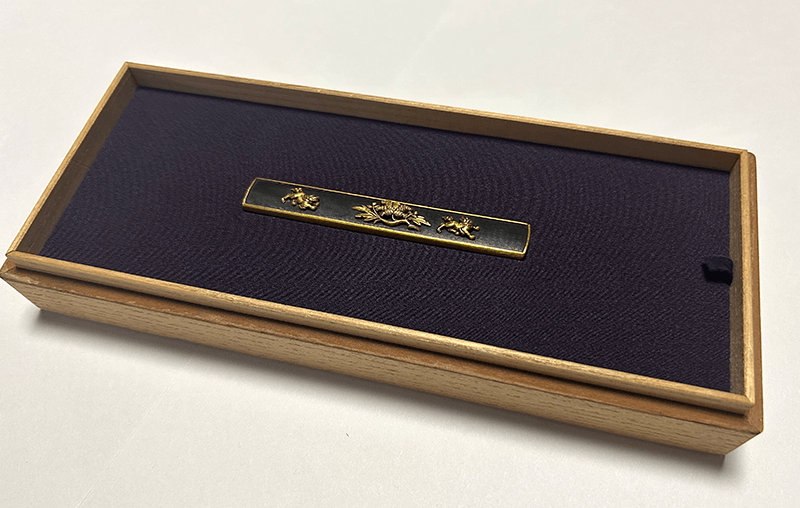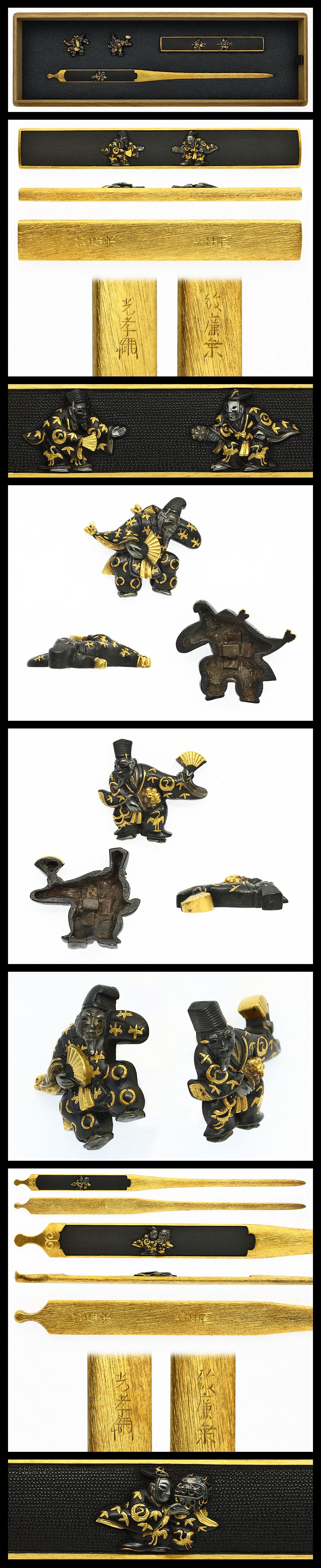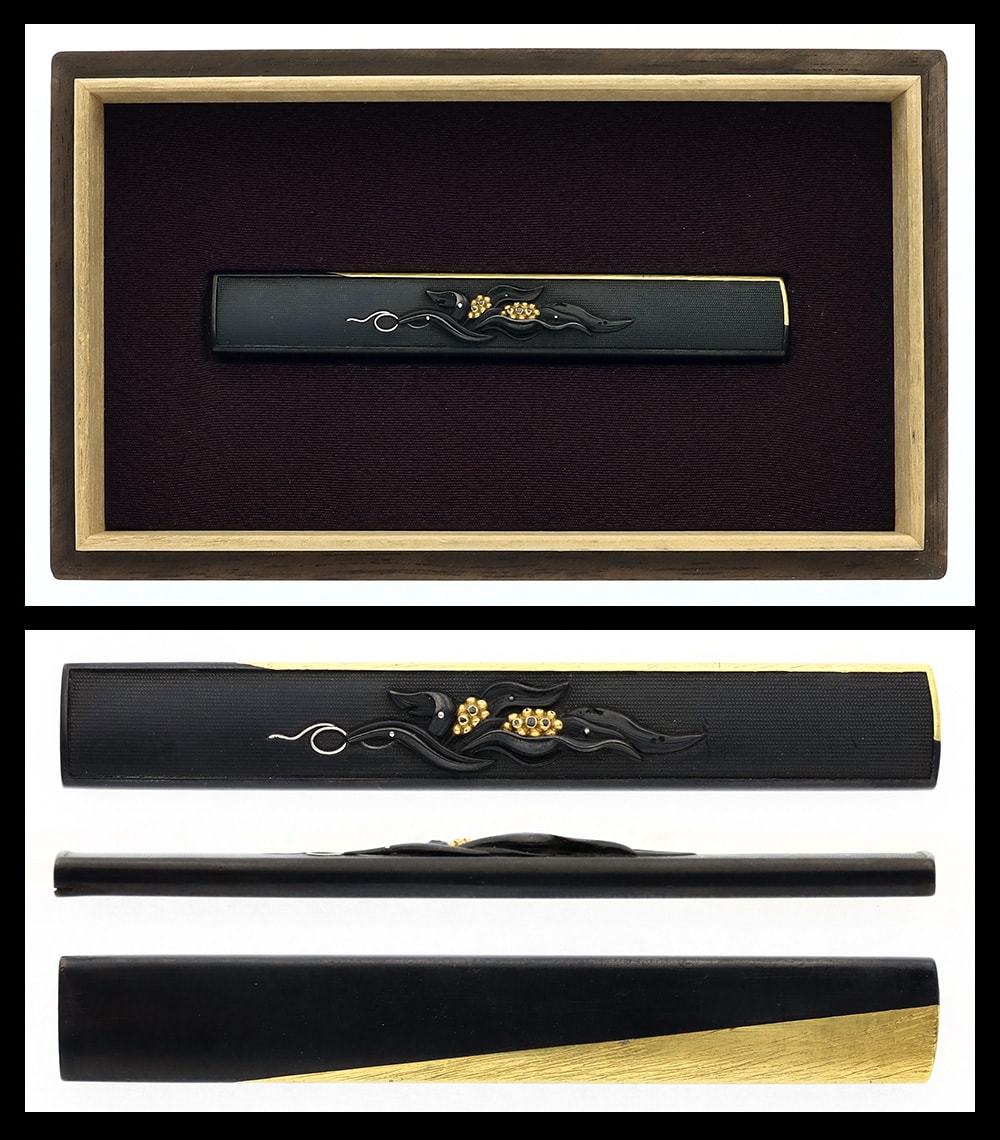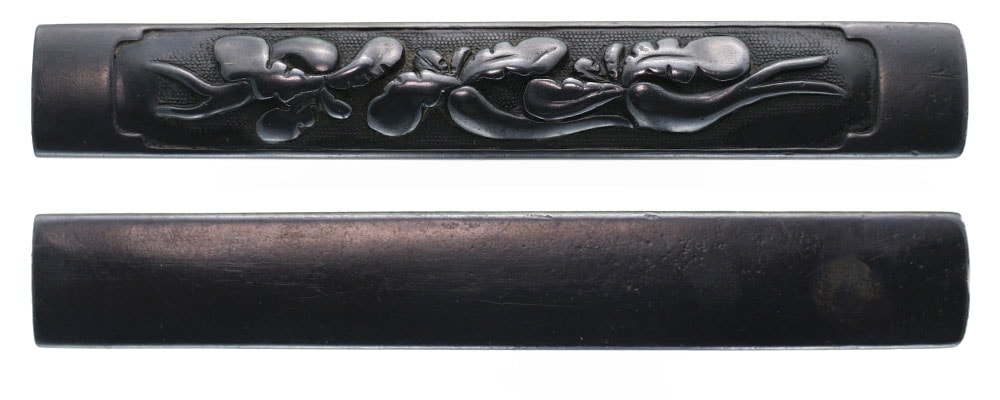
-Tōsōgu, 28th Session — Designated December 1, 1981
, : Funada Ikkin (船田一琴) ()
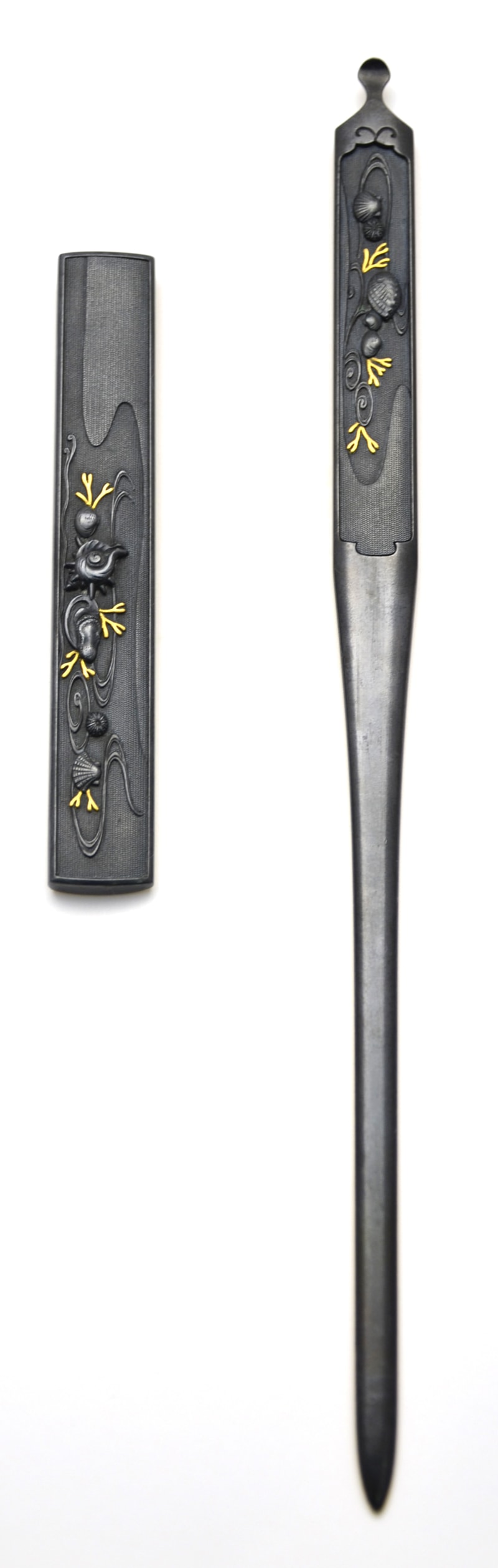
Measurements Length: 9.7 cm Width: 1.5 cm
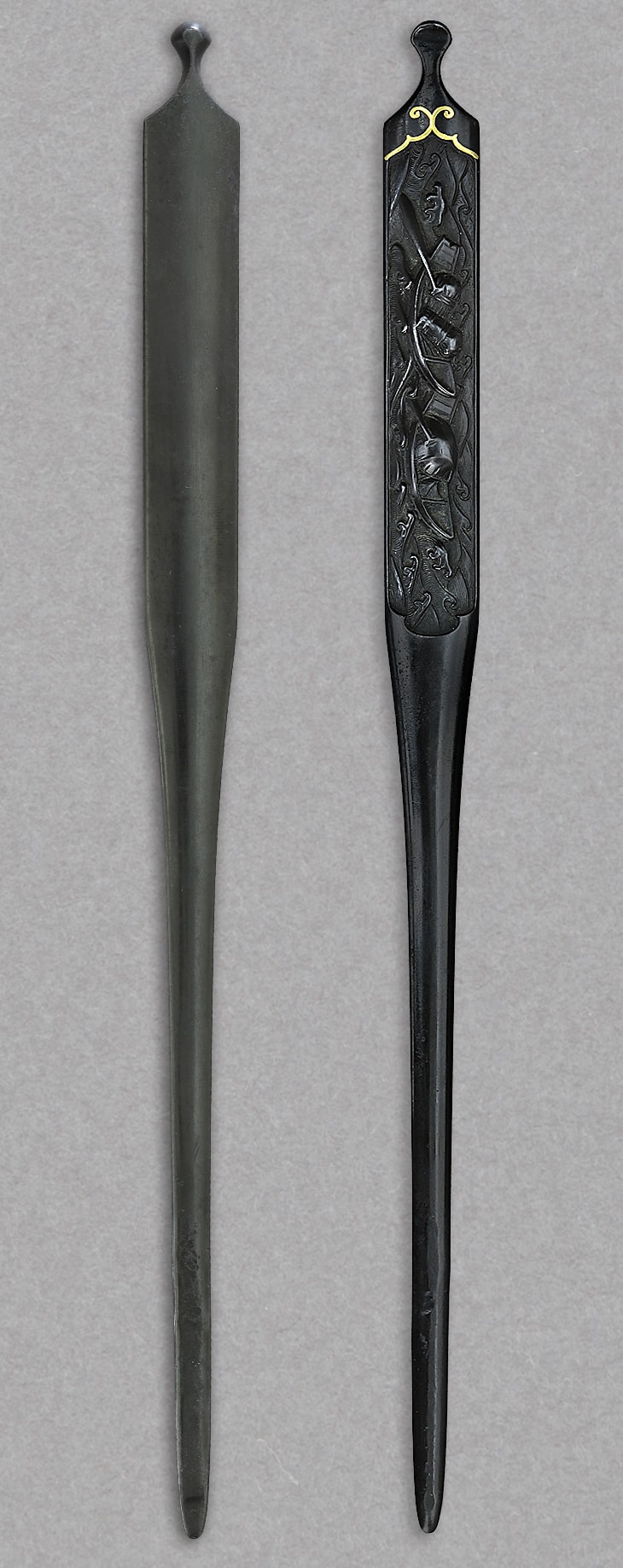
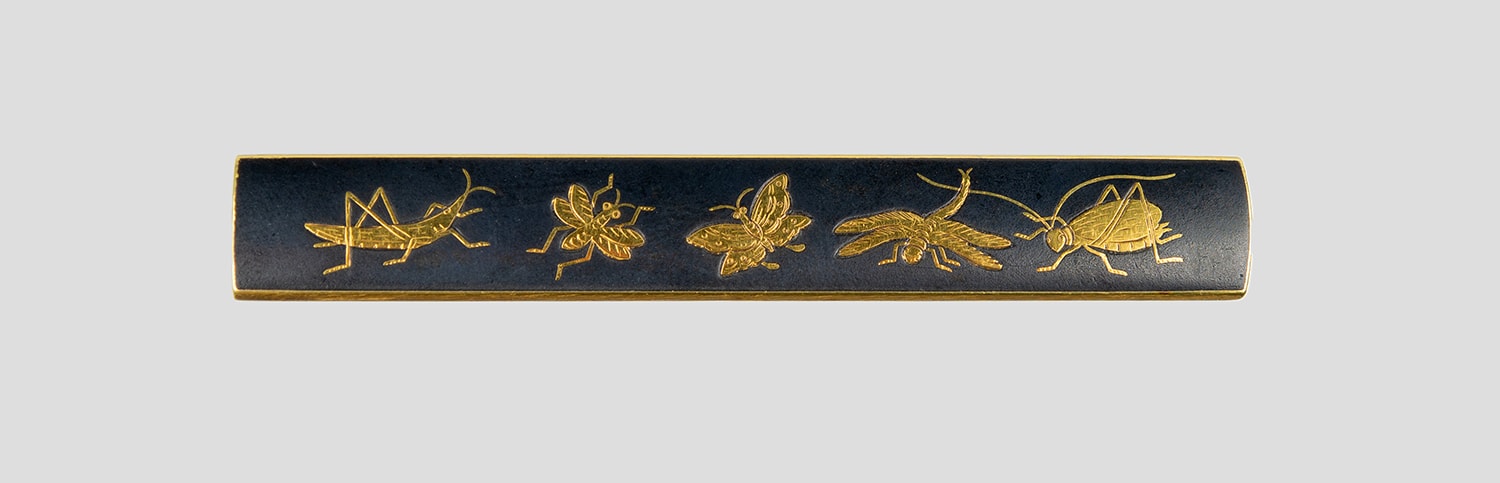
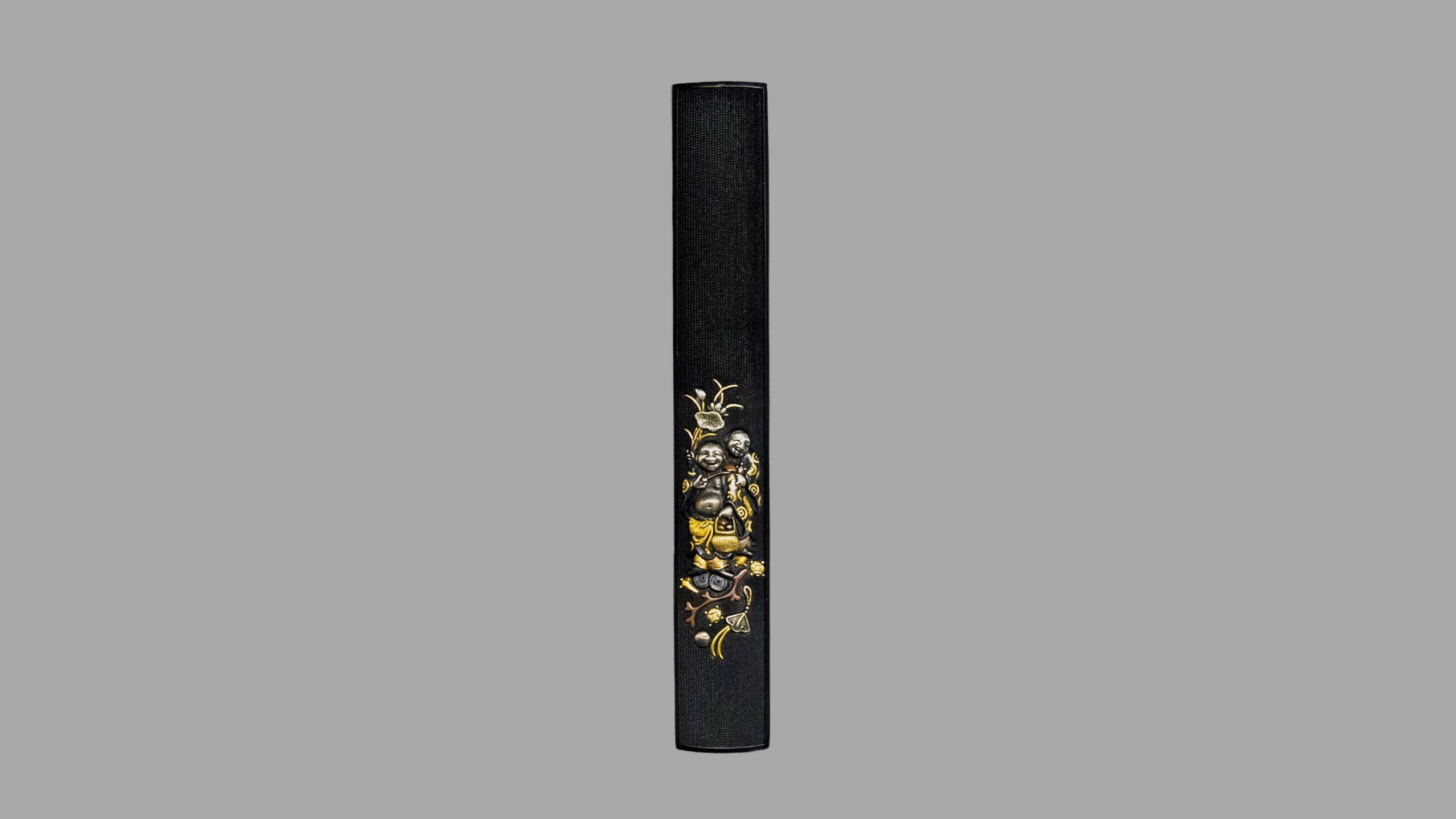
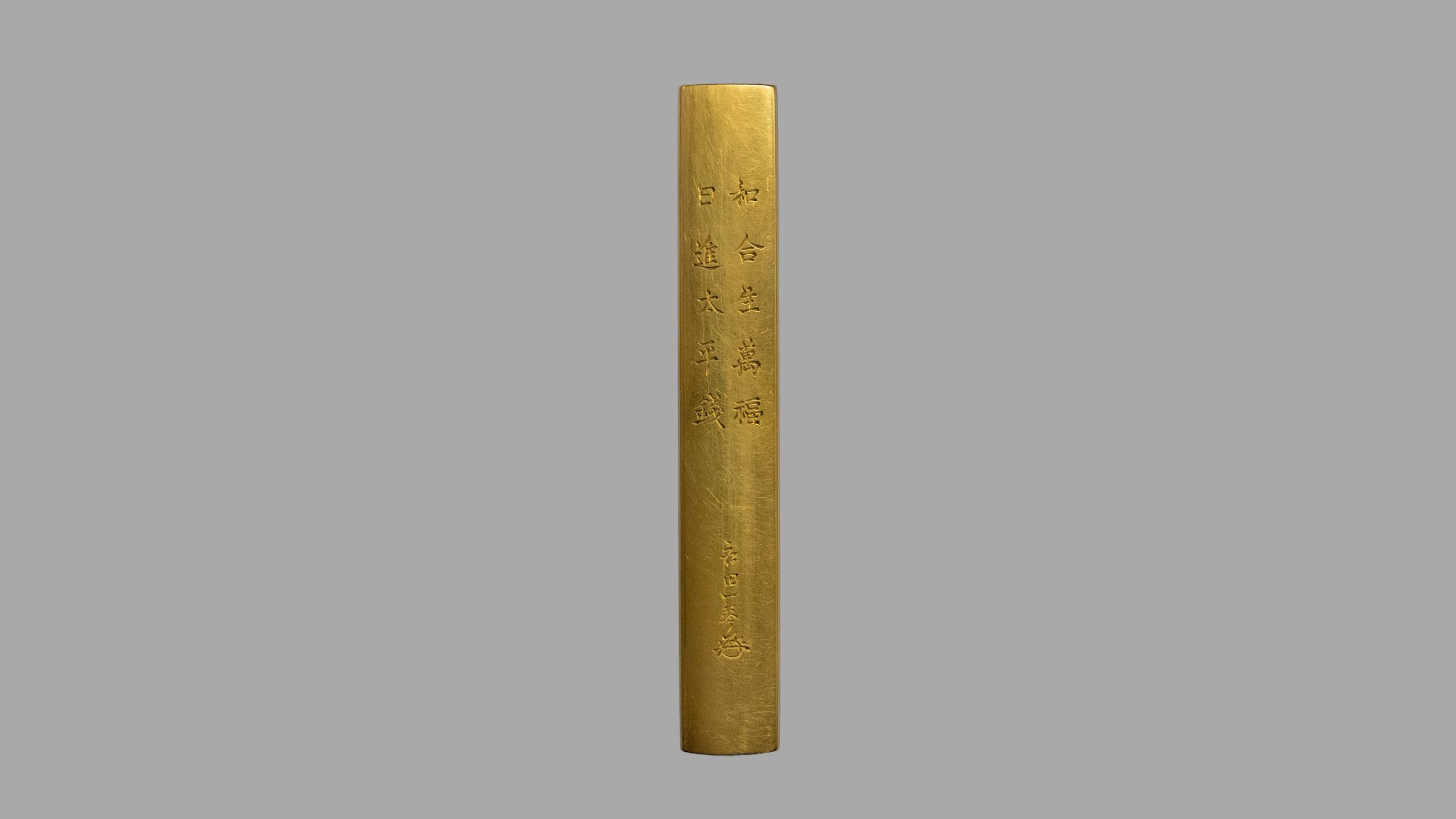
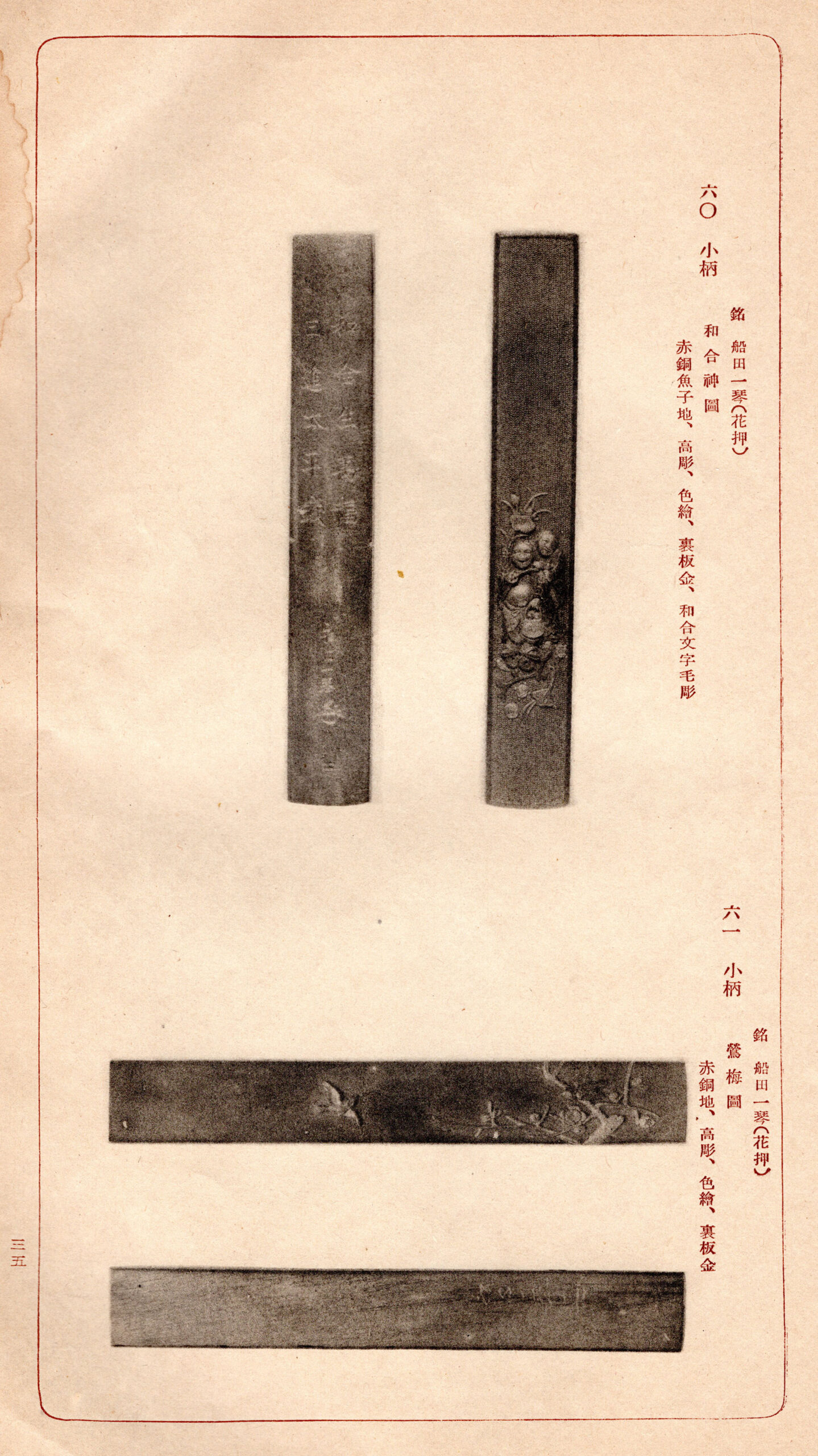
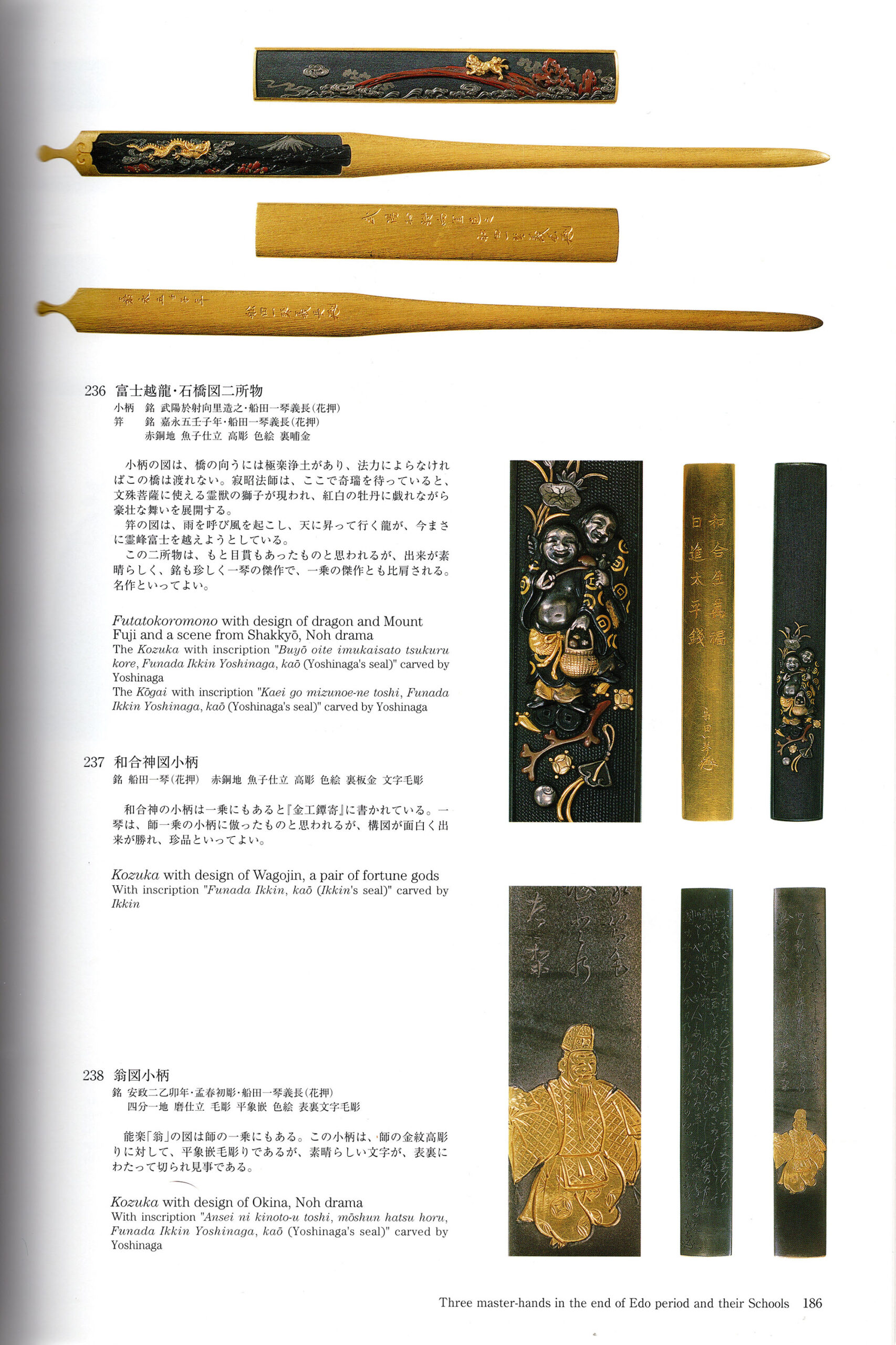
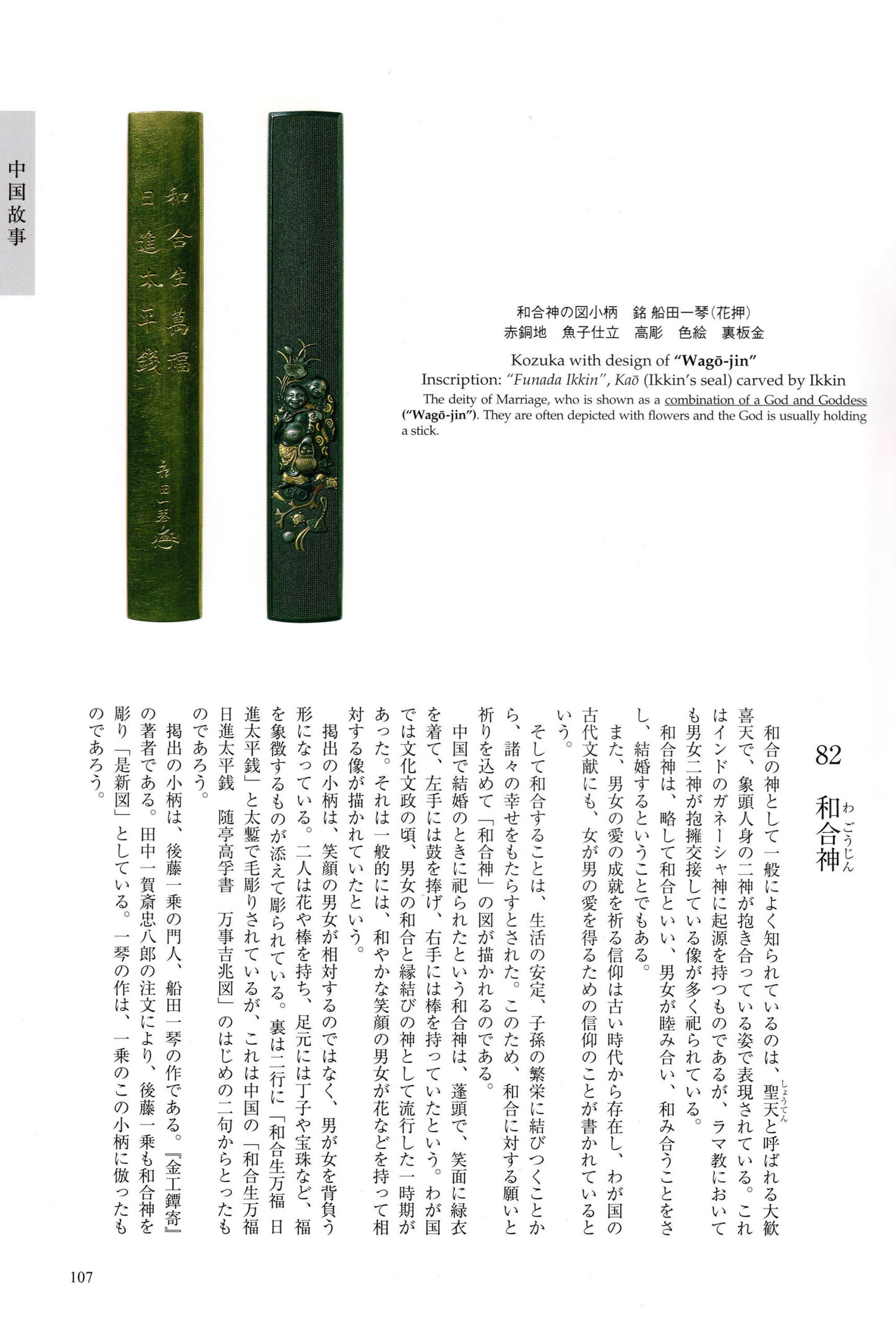
Description Form: (knife-hilt handle) Material: Surface: Design: The deity of harmony (Wagō-) Decoration: with ; inscription executed in ; gold back-plate (’) Signature: “Funada Ikkin” with
Artisan Funada Ikkin (船田一琴), foremost technician among the students of Gotō Ichijō.
Era Late period.
Explanation The Wagō- is also referred to simply as Wagō (“harmony”). It is said that when harmony is achieved it brings stability in daily life, flourishing descendants, and happiness in all directions; thus images of the Wagō- were made as objects of wish and prayer. In China, it is said that this deity is enshrined at weddings—surely an expression of the desire for concord between the two families.
In this composition, a man carries a woman on his back; the pair hold a staff and flowers, and at their feet are arranged such auspicious objects as cloves (), the wish-granting jewel (), and linked-treasures (takara-tsunagi), in short, items that symbolize good fortune.
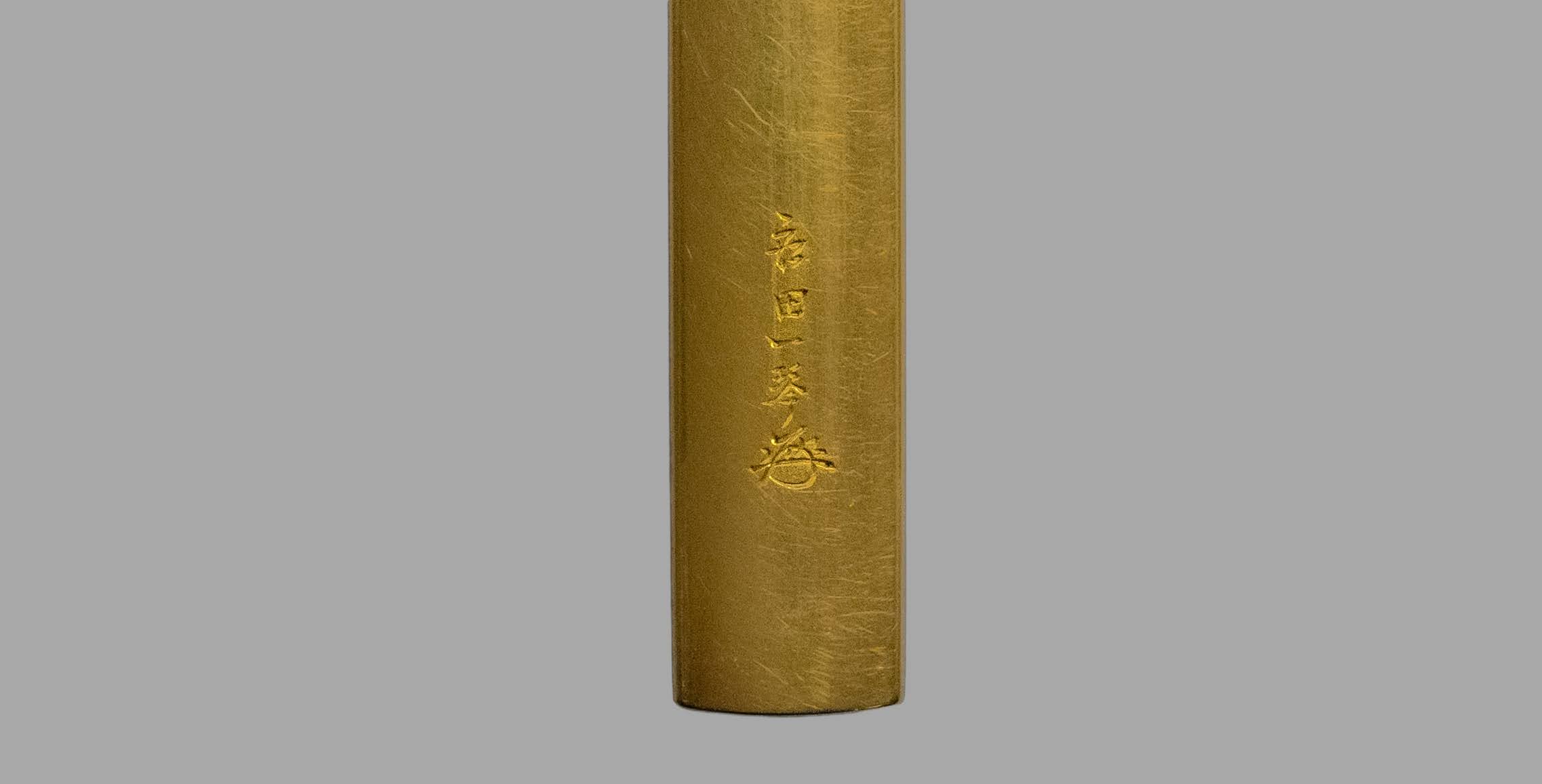
On the gold back-plate there is a two-line inscription reading: “Wagō gives rise to myriad blessings; daily progress; coins of great peace” (和合生万福日進太平銭). The latter portion—“Zuitei Kōfu sho, ‘Banji kisshō zu’” (随亭高孚書万事吉兆図)—is omitted.
This is a painstaking work by Funada Ikkin, demonstrating the highest level of skill among the disciples of Gotō Ichijō.