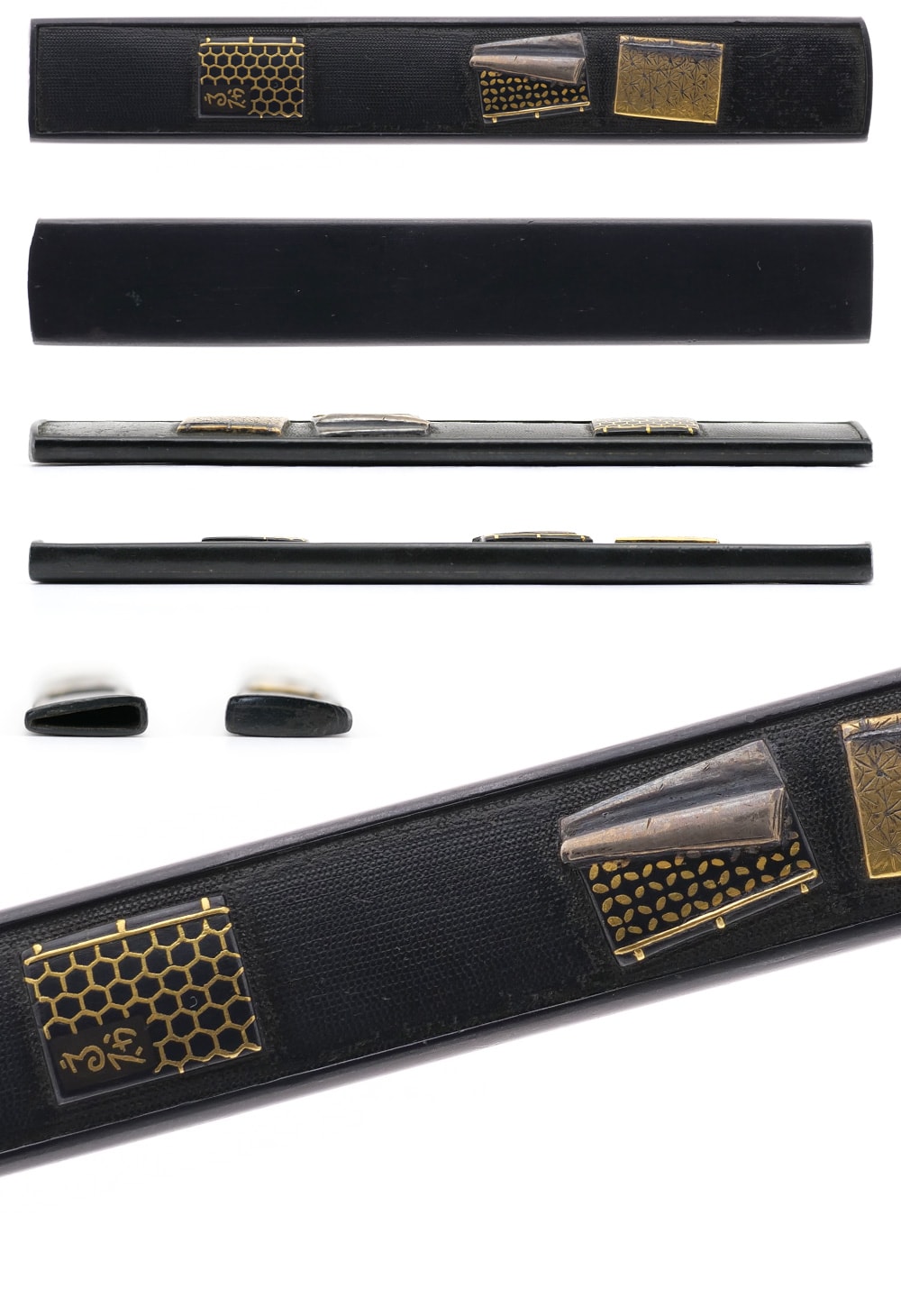
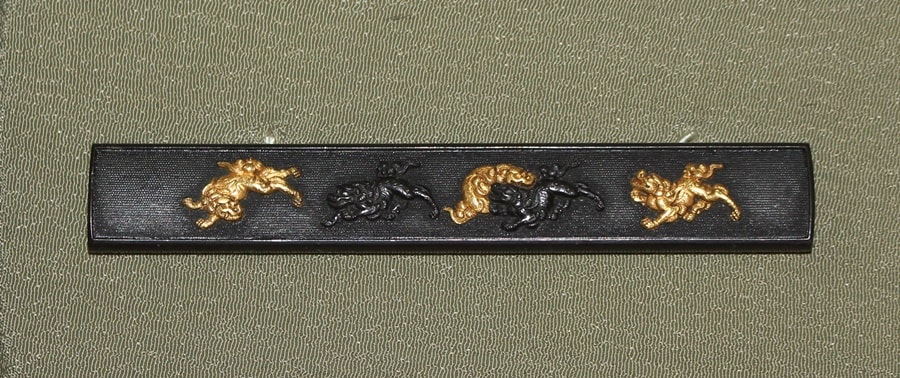
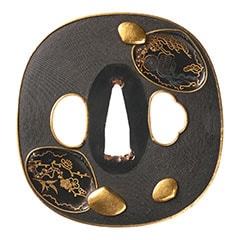
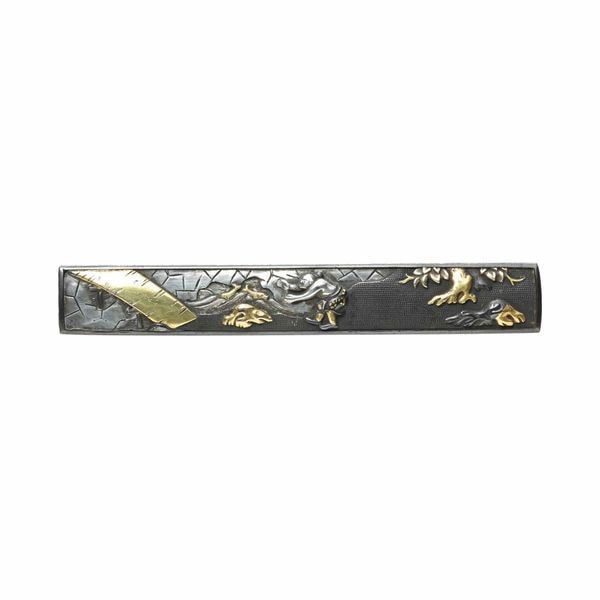
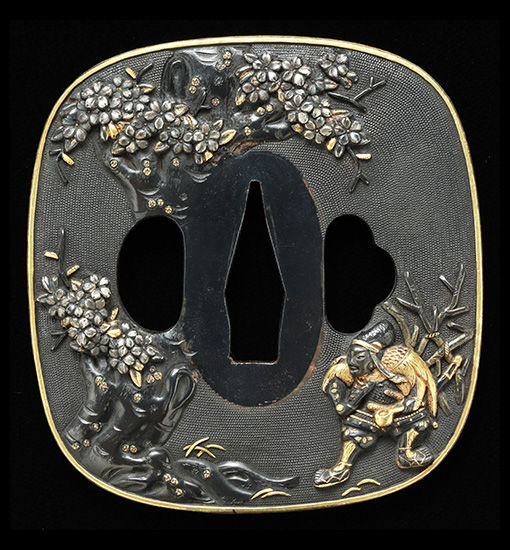
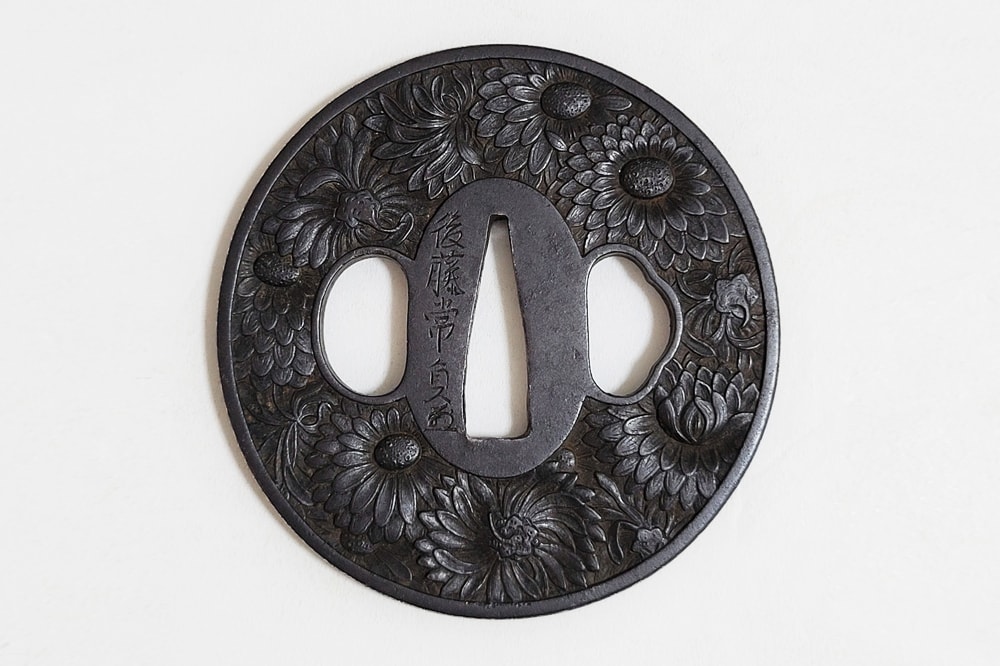
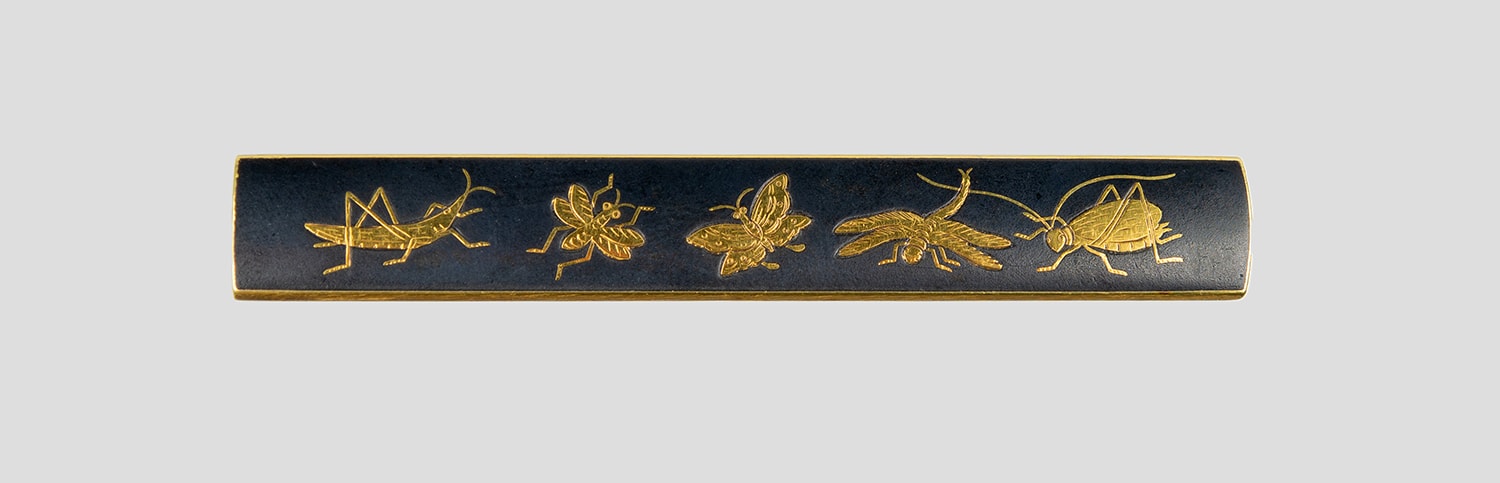
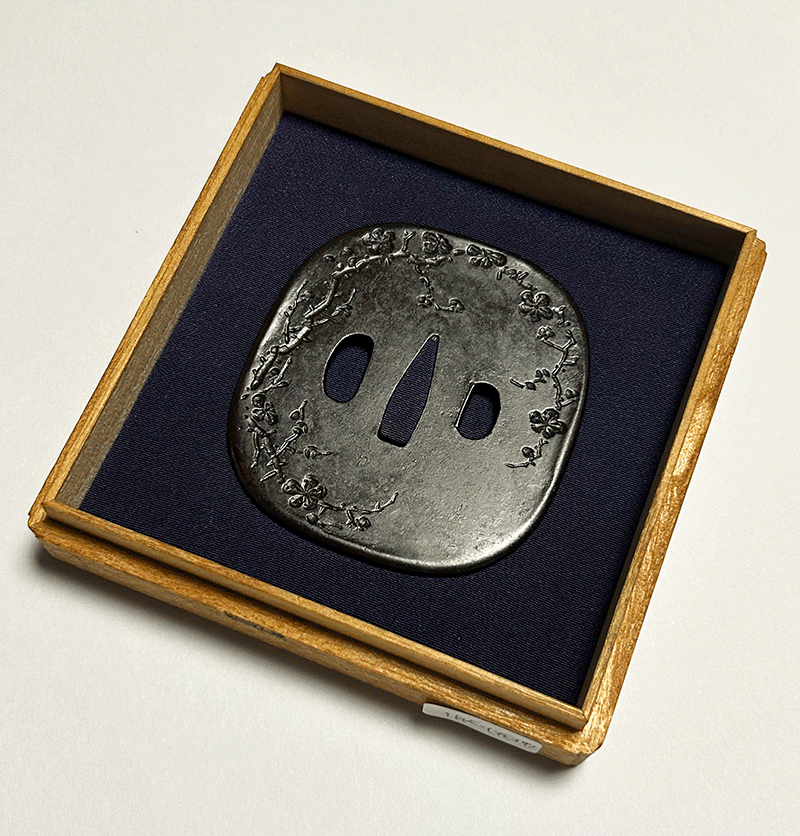
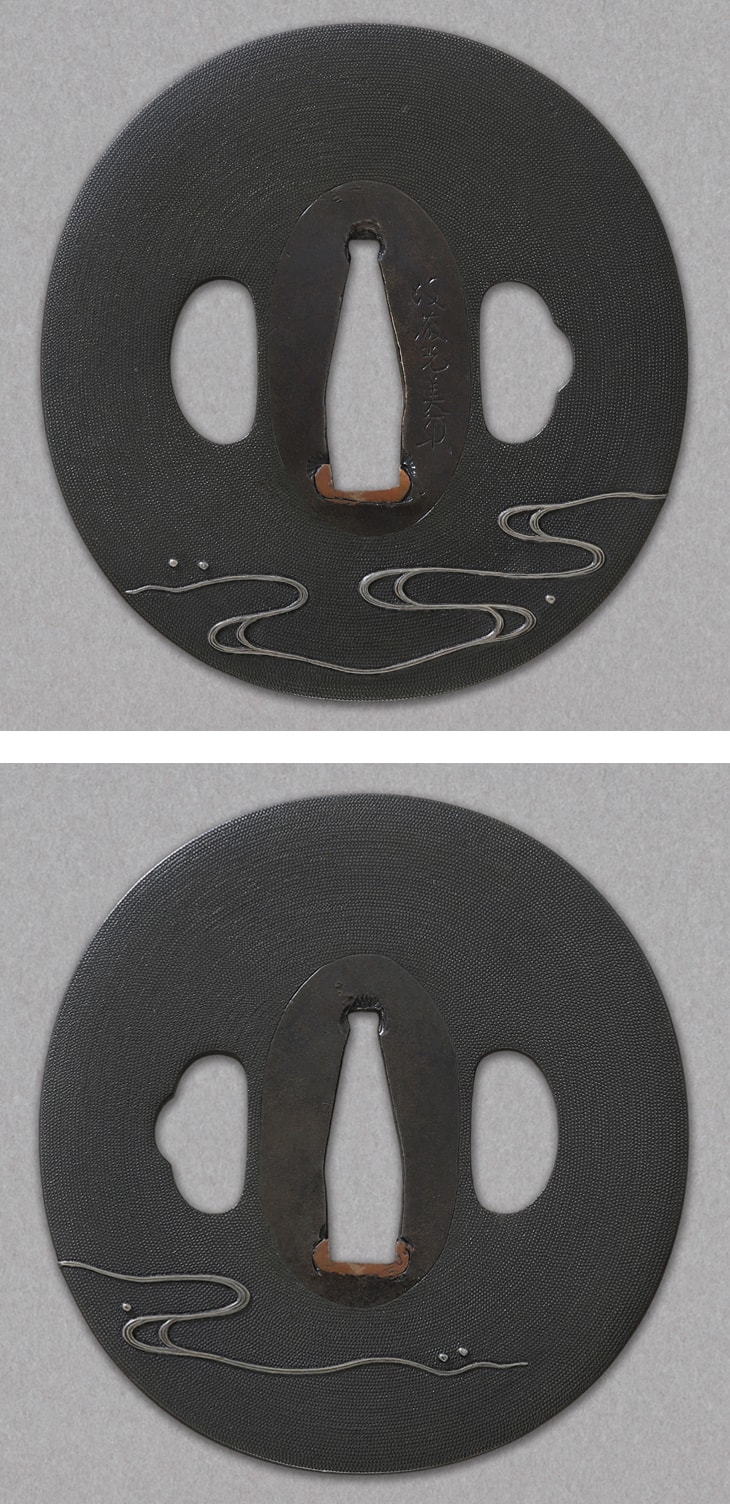
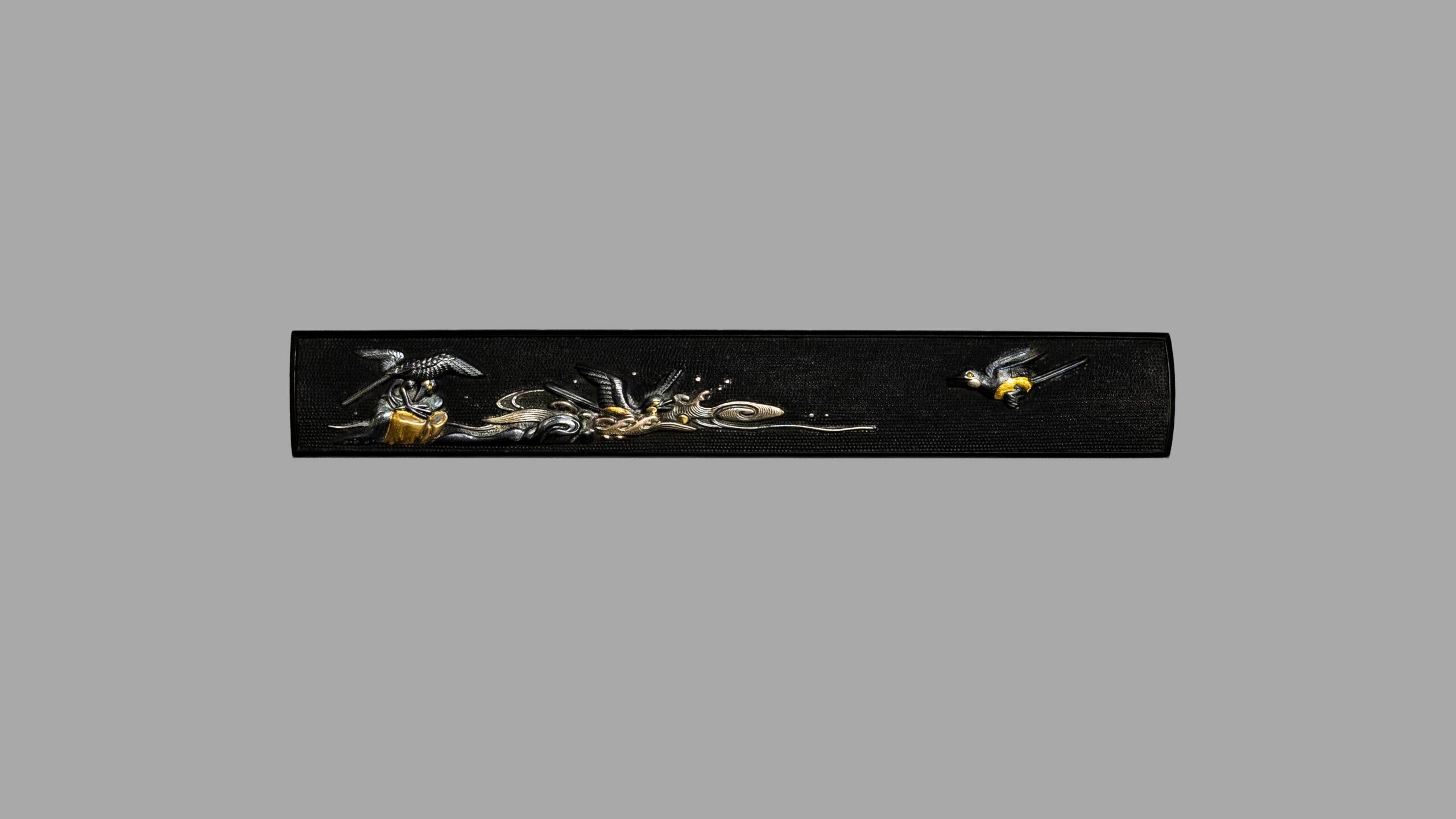
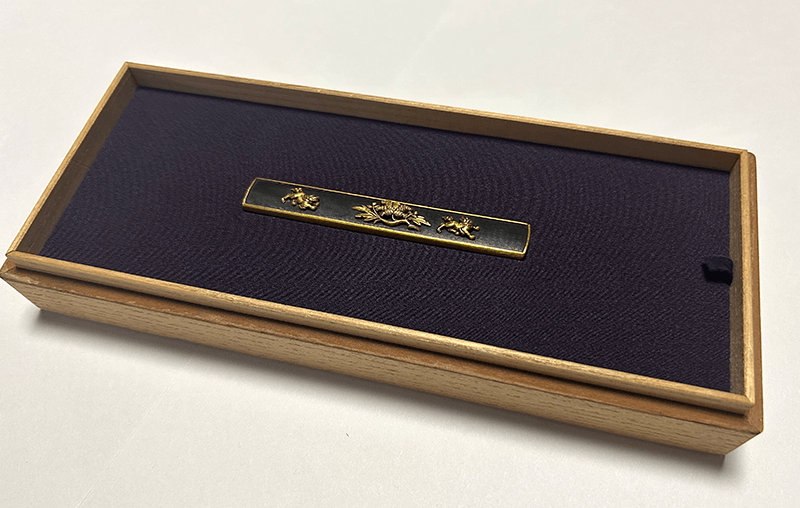
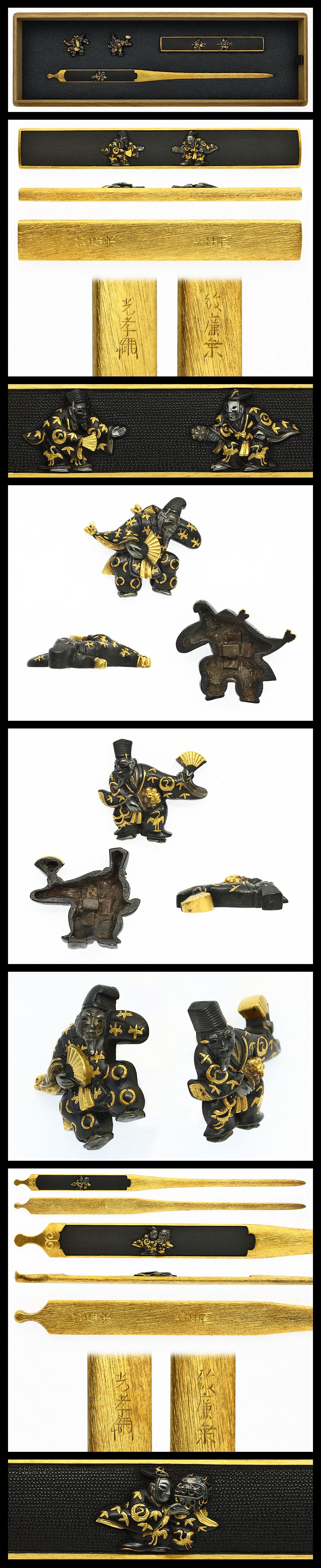
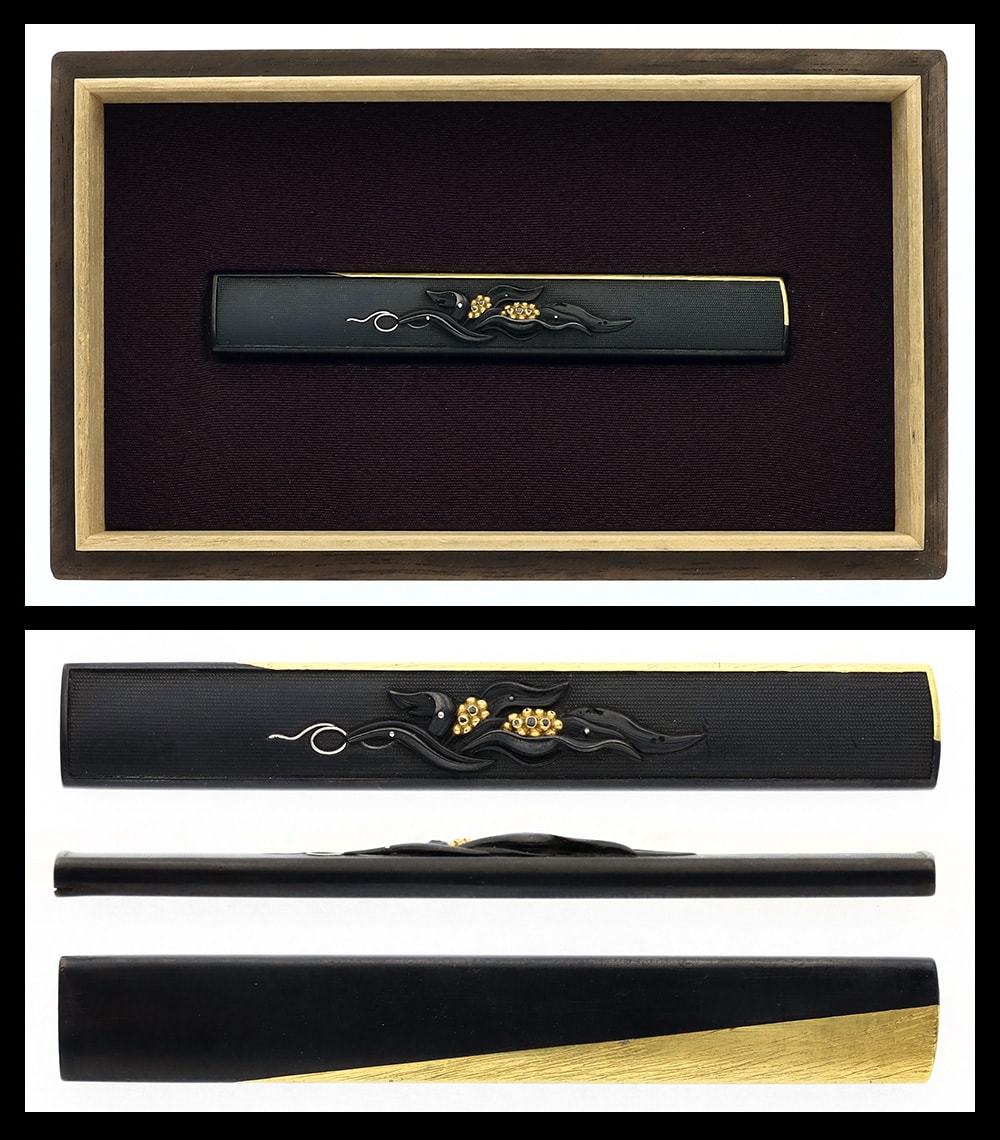
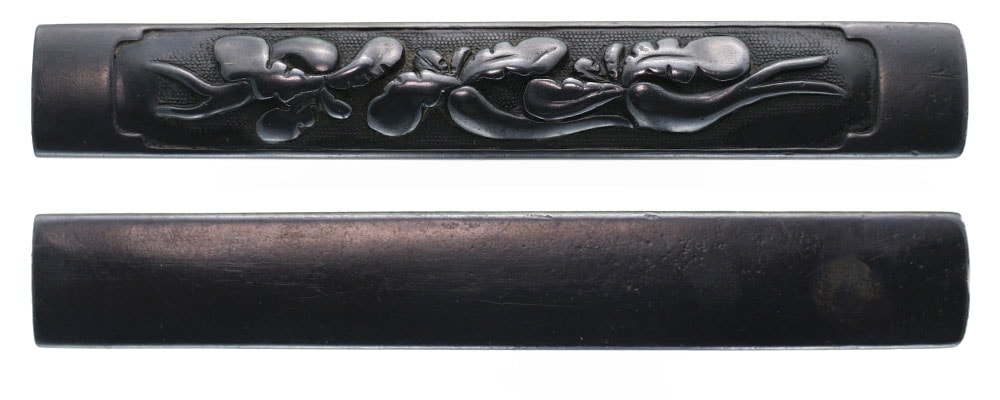
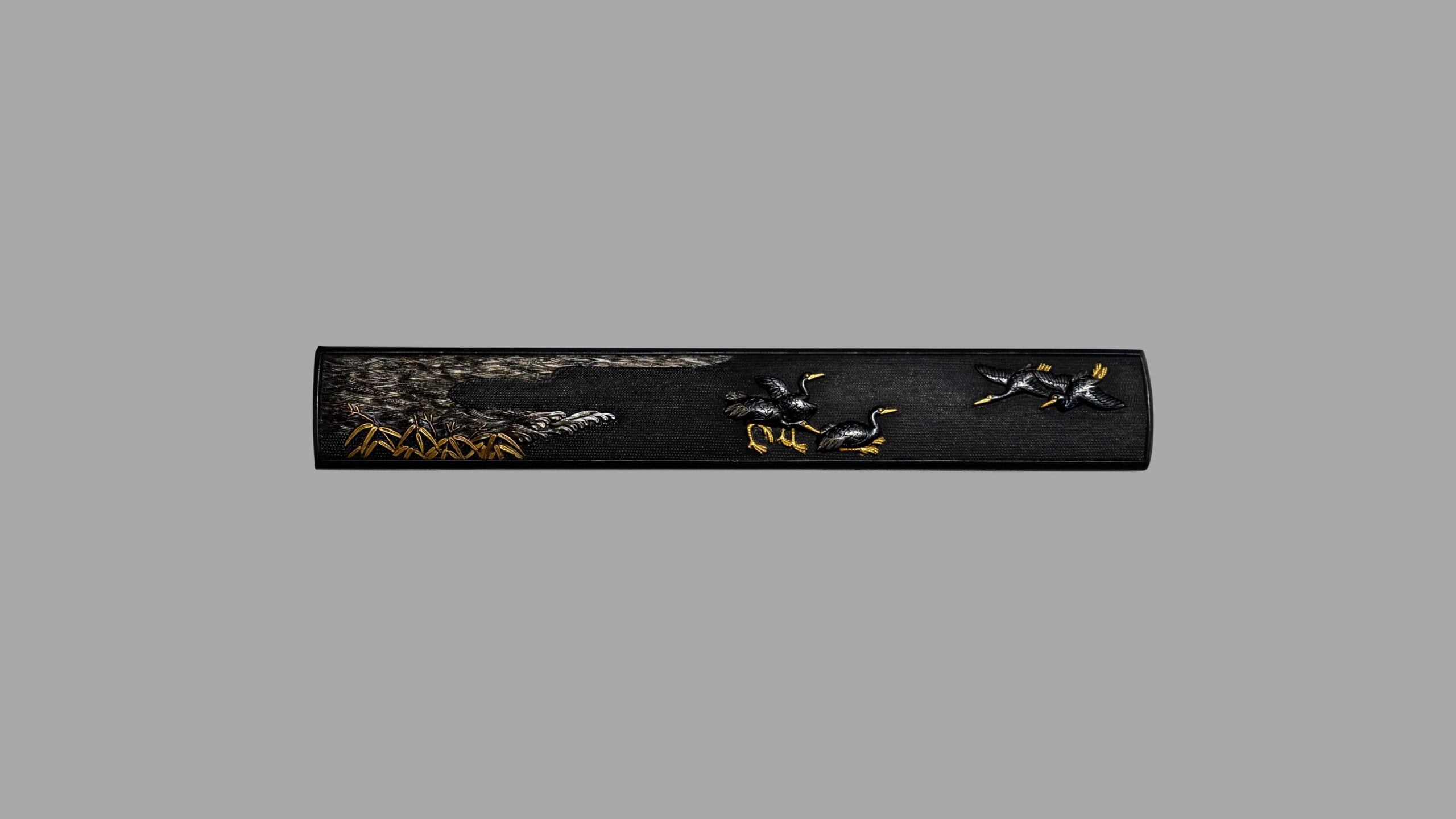
Goto Etsujo Mitsukuni was the second son of Teijo, ninth head of the main Goto house, and succeeded as the third master of the Rihei house, the branch line that anchored the Goto tradition in Province. Born in Kyoto in 'ei 19 (1642), he received a stipend of 150 from the Maeda of and alternated yearly with Enjo of the Kanbei house in residence at Kanazawa, where he entered the service of the Maeda, trained many disciples, and devoted himself to the development of metalwork. In his later years he was granted a residence in Shitaya, , and together with the main house served the Tokugawa shogunate. He died in Hoei 5 (1708) at the age of sixty-seven.
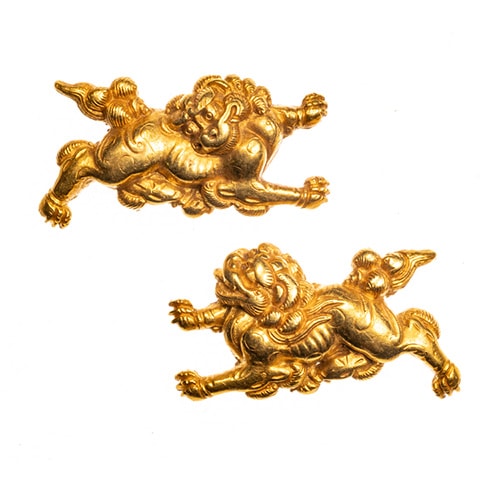
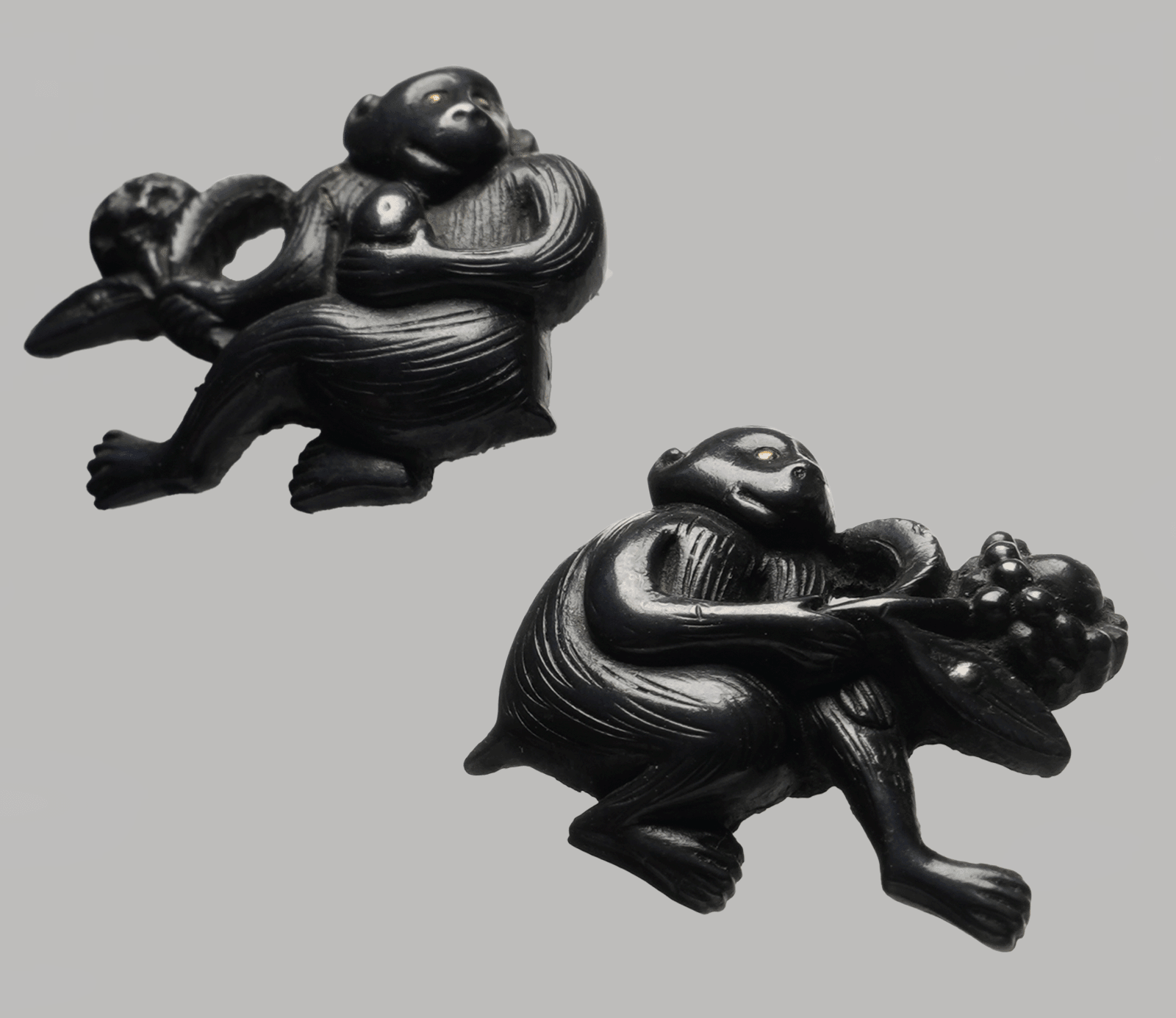
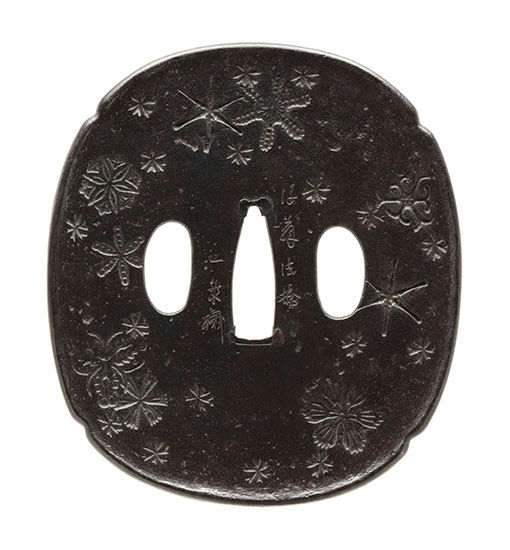
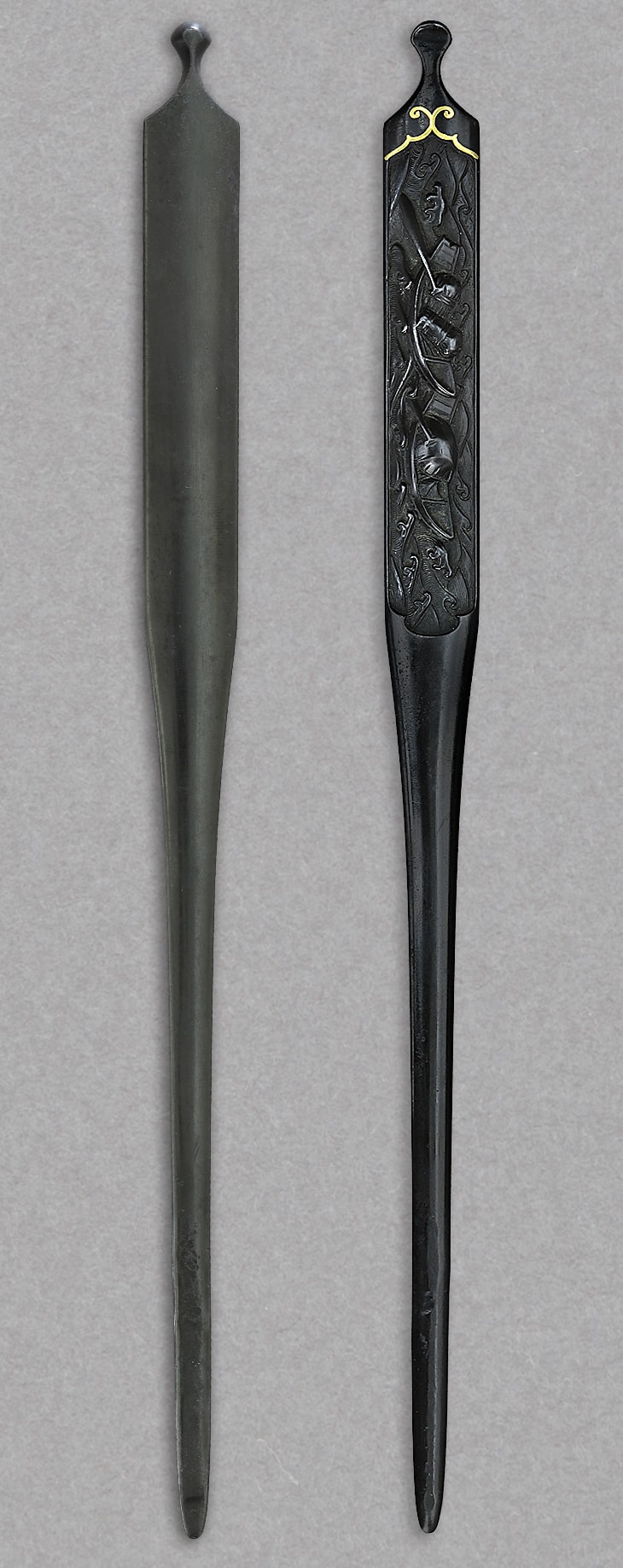
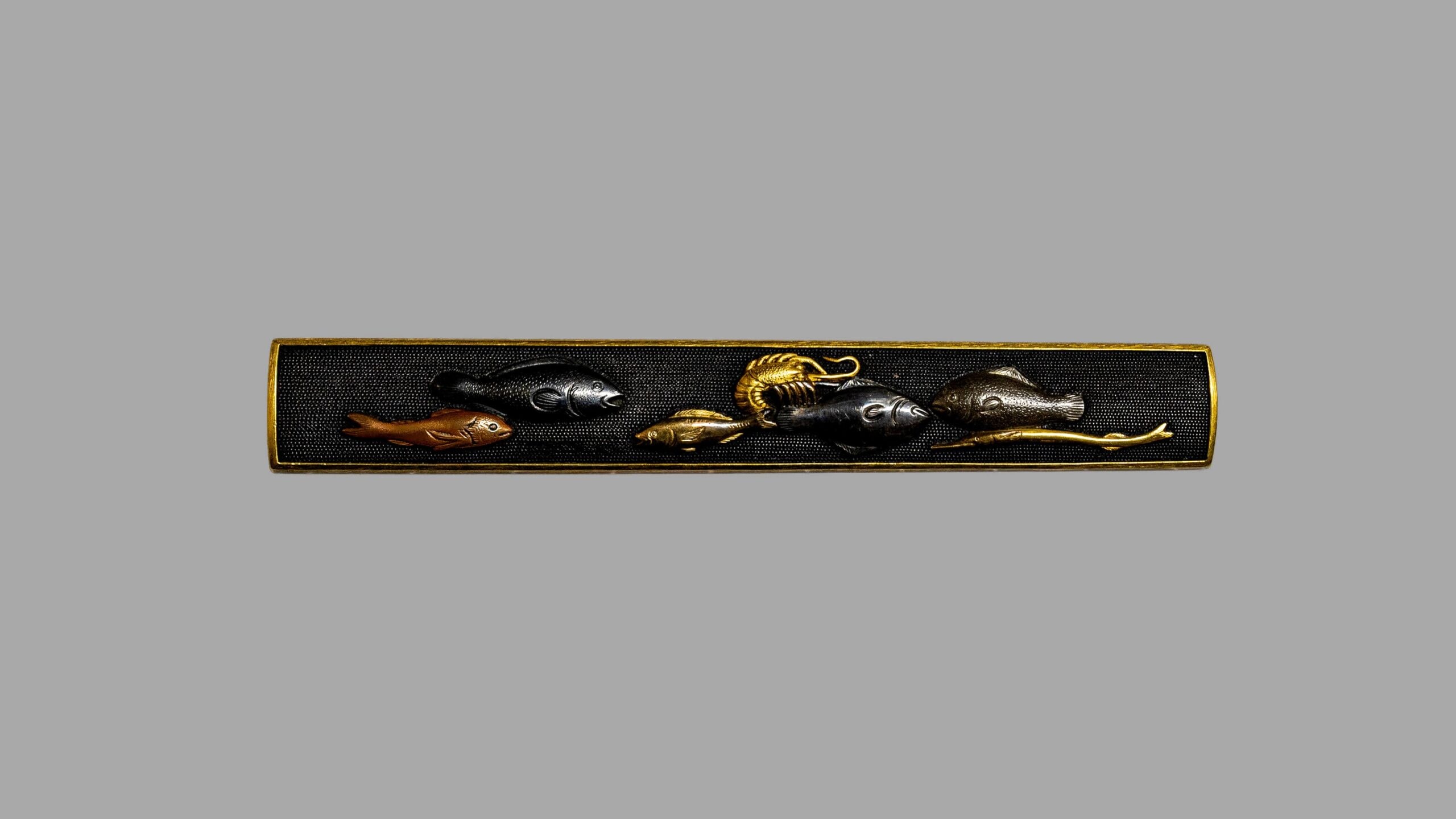
Etsujo's manner of work adheres entirely to the orthodox Goto house style, the o-ie-ryu, and his skill is described as in no way inferior to that of his father Teijo. He worked principally in enriched by high-relief carving () and gold , as well as gold - and solid gold nikubori. His handling of closely matches that of Teijo. Even in boldly scaled compositions his meticulous chiselwork is alive in the smallest details, and gold crests stand out brilliantly against the ground. He signed both "Goto Mitsukuni" and "Goto Etsujo," each accompanied by ; signed bearing his name are noted as extremely few.
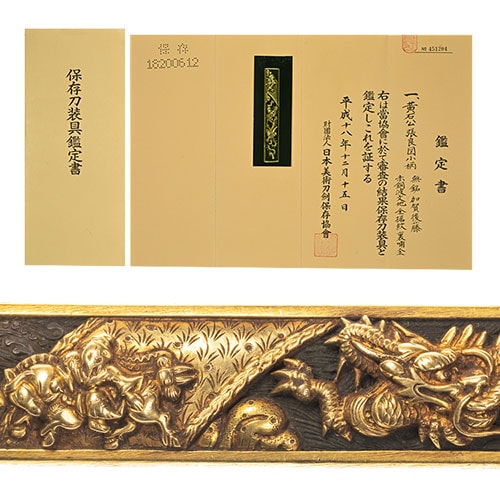
The has recognized Etsujo's finest work as both a model example of the artist's output and an outstanding peak achievement, while his contributions to the flourishing of metalwork are consistently acknowledged. His scabbard lacquer ensembles display refinement and dignity, and his signed pieces are praised for their high documentary value, providing valuable material for the study of the Goto family. Etsujo stands as a pivotal figure in the transmission of the mainline Goto aesthetic into the provincial workshops of .