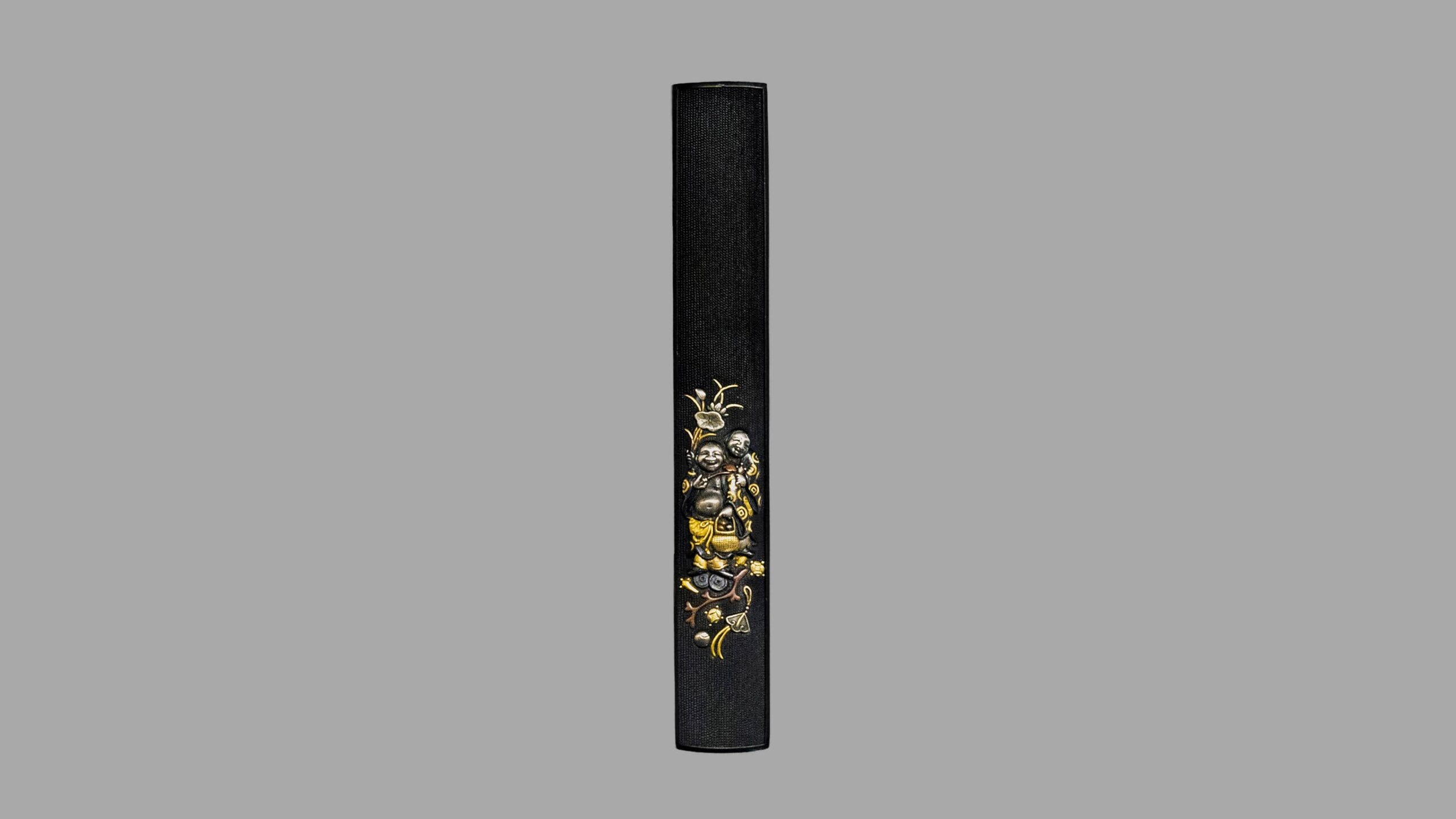
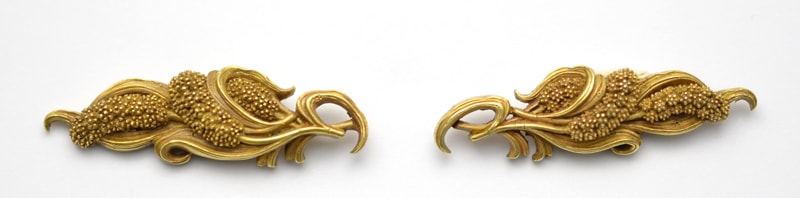
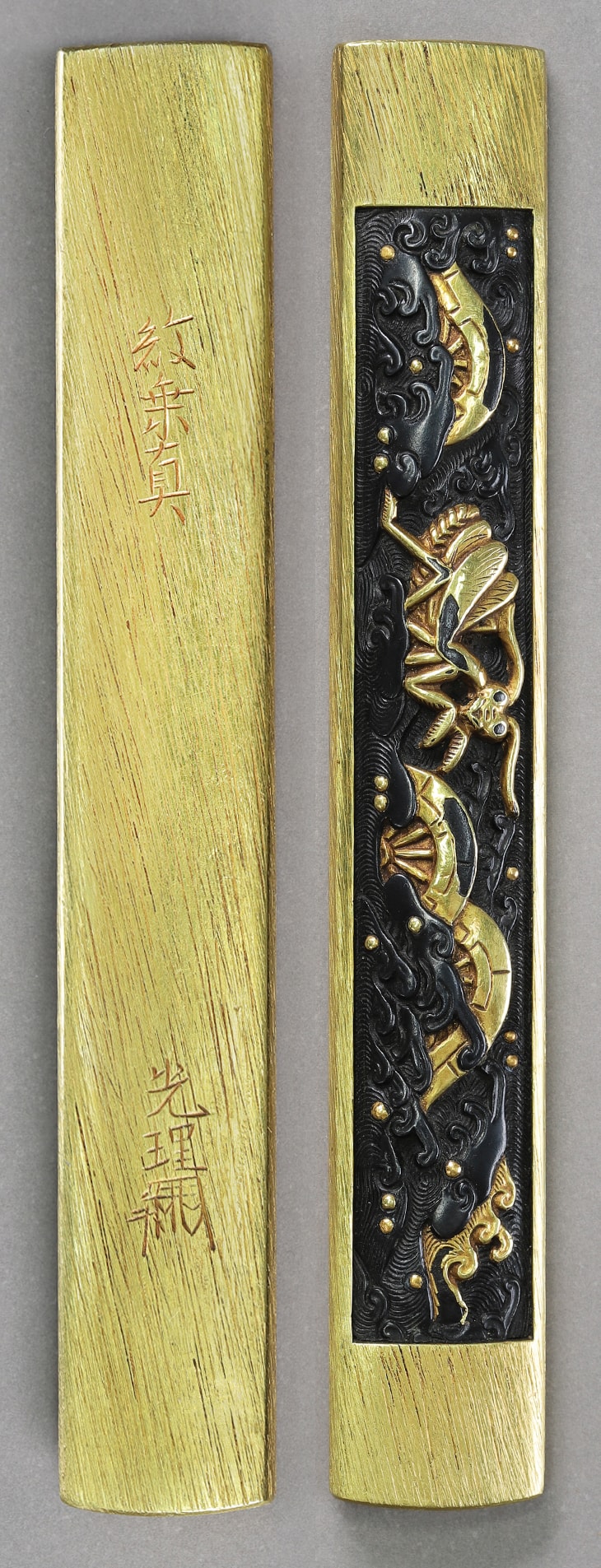
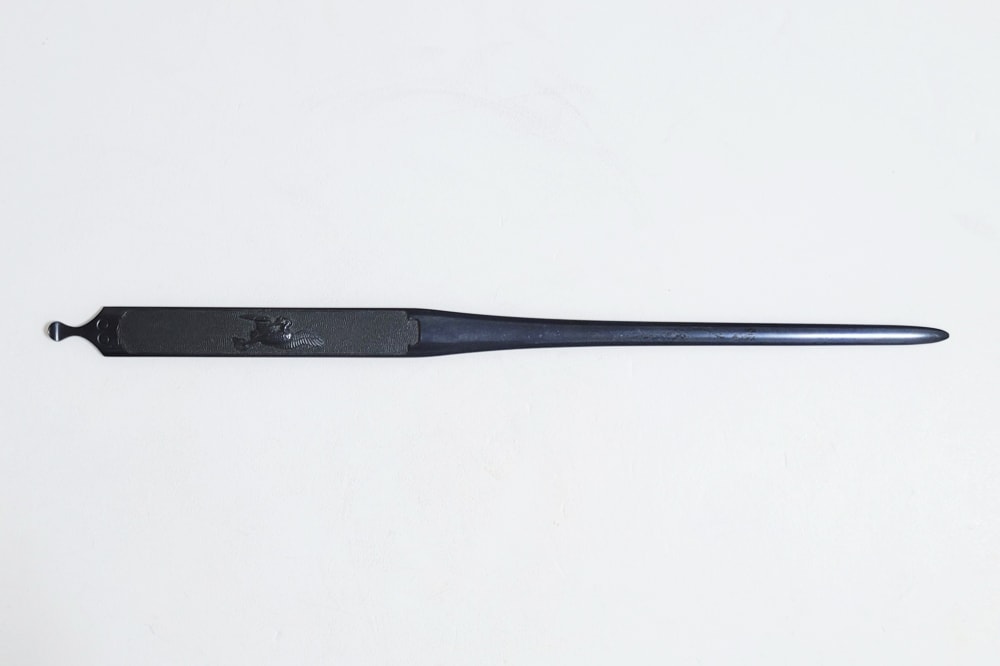
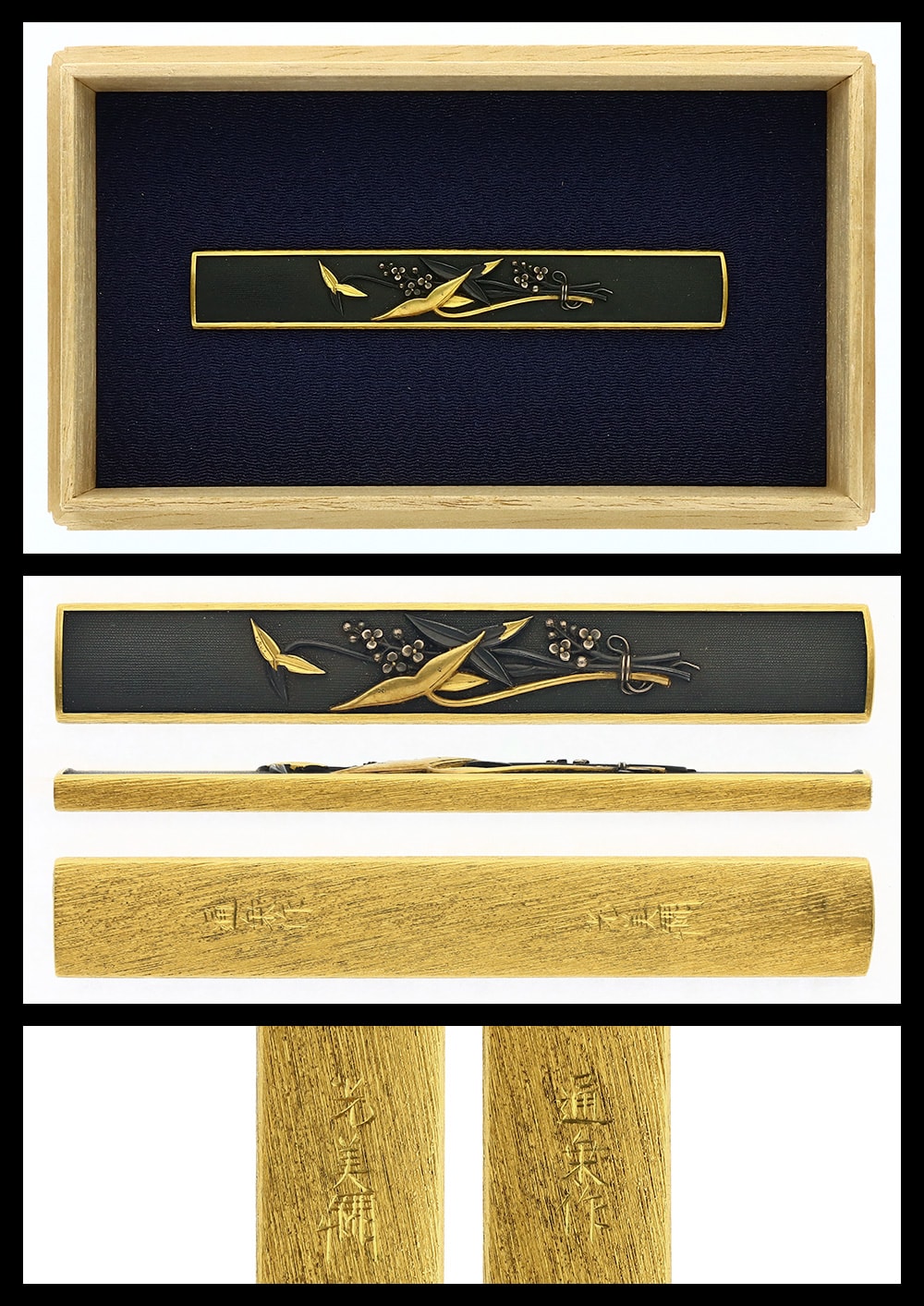
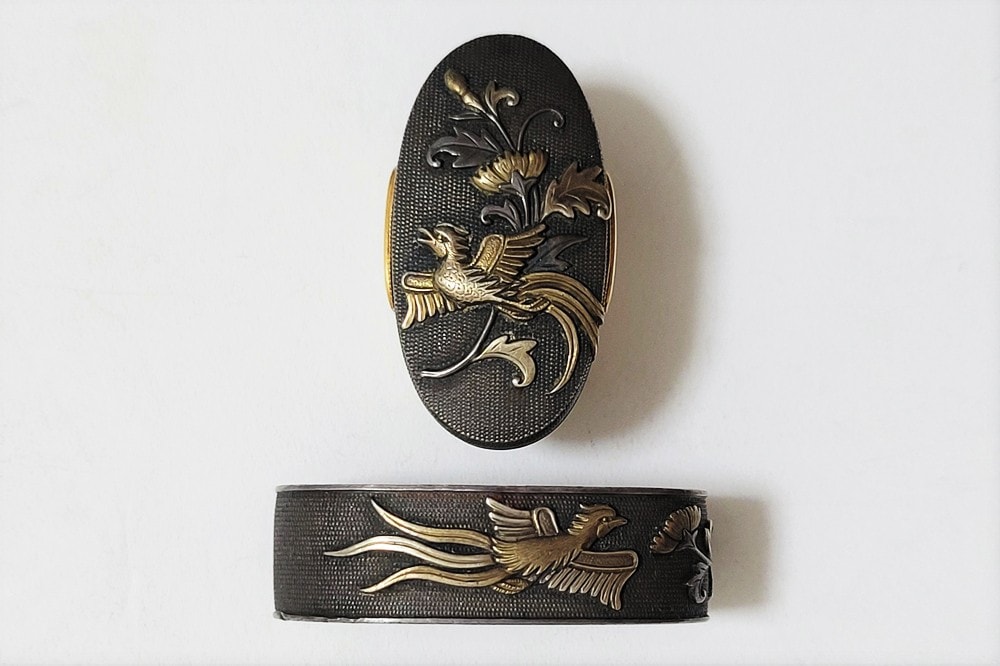
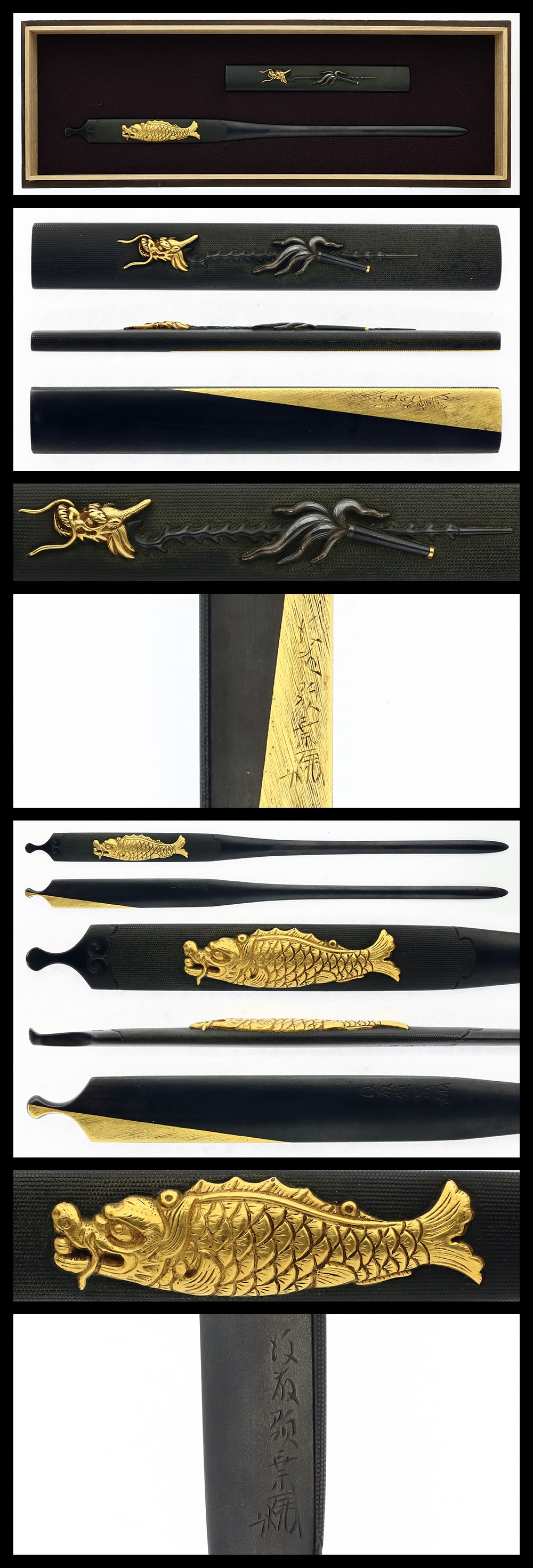
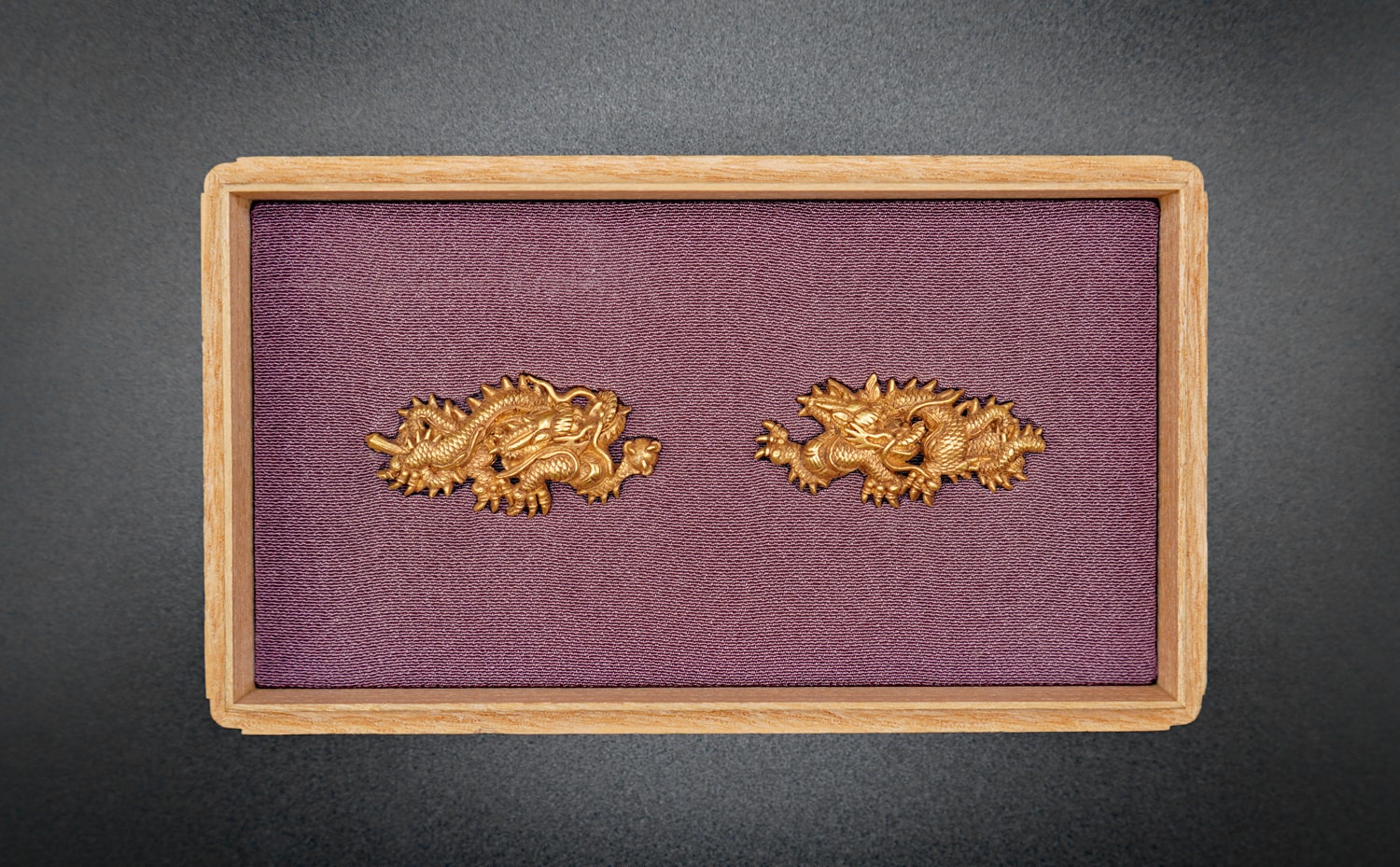
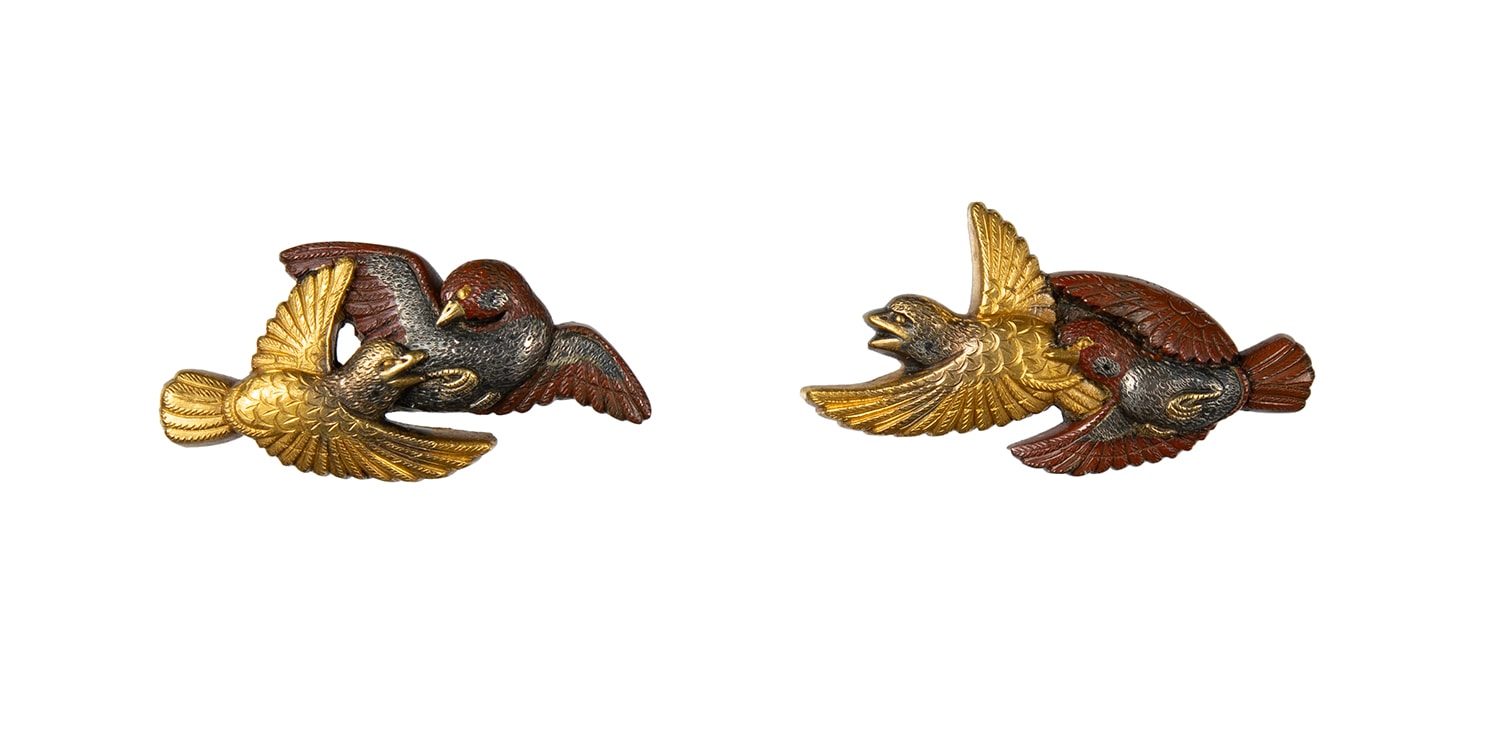
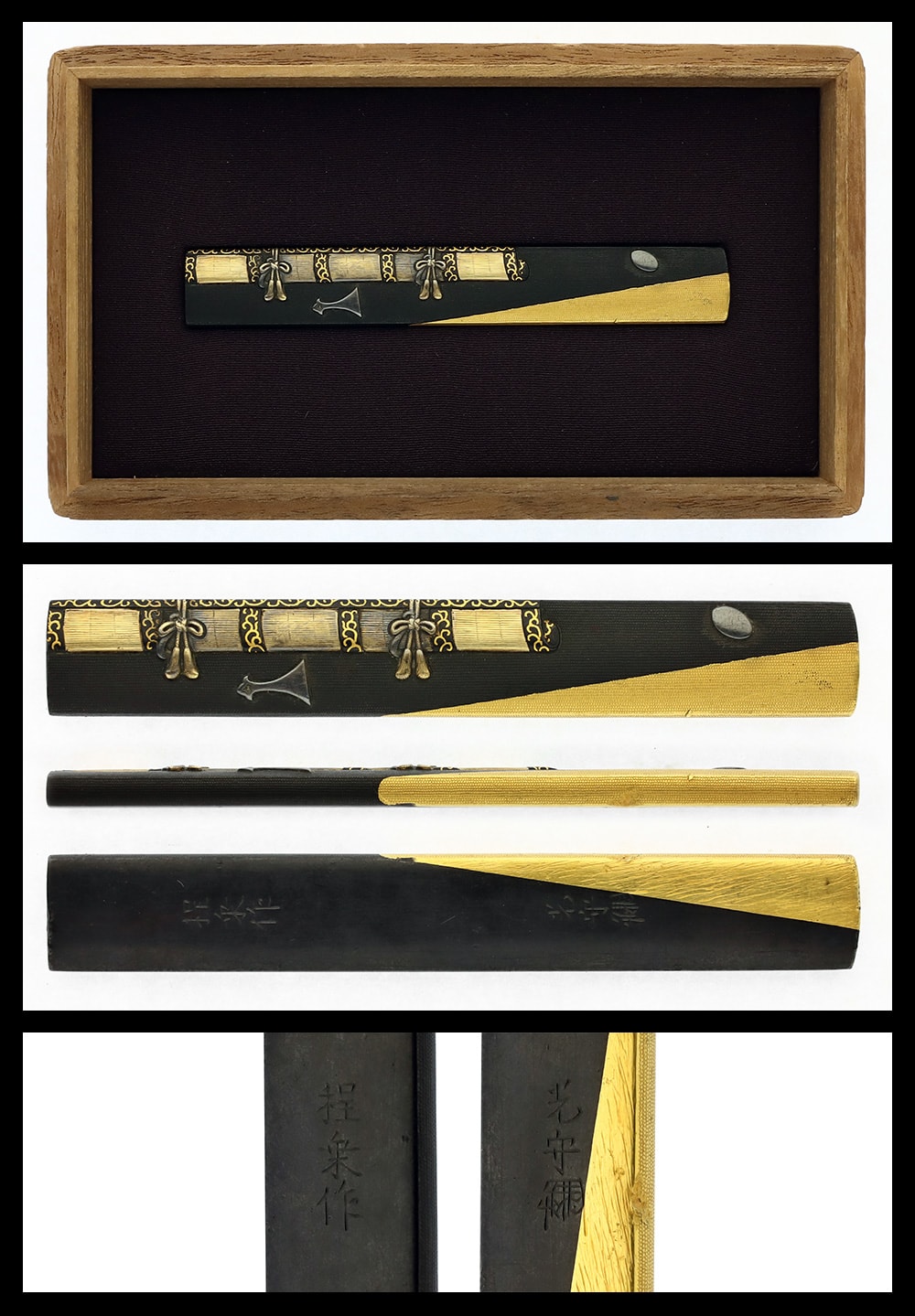
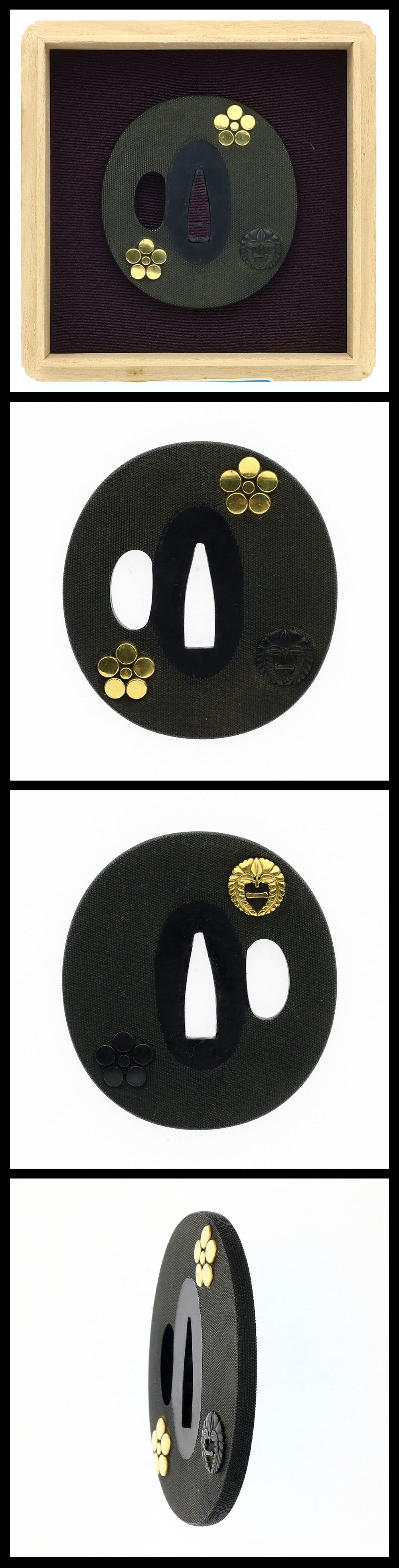
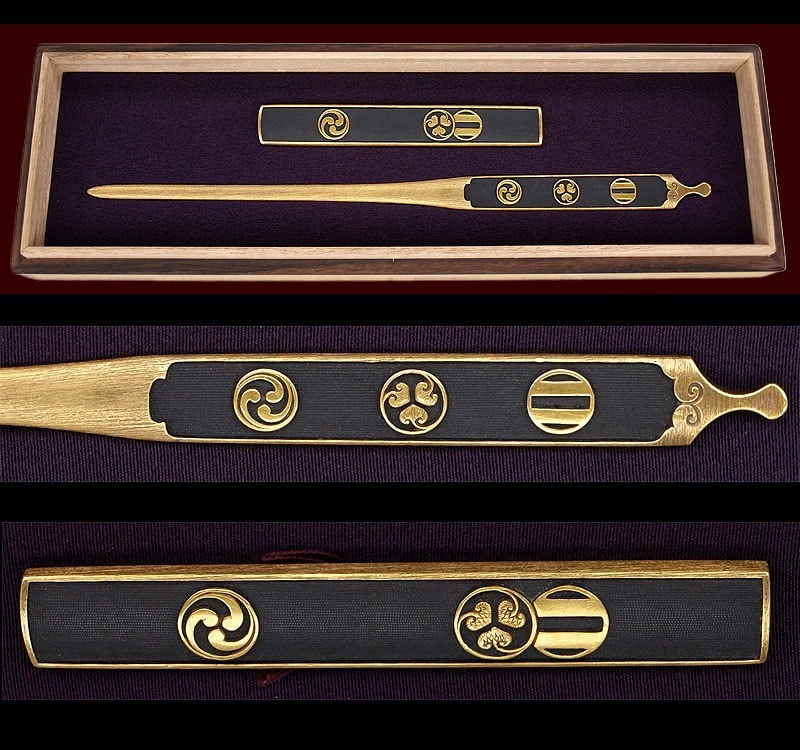
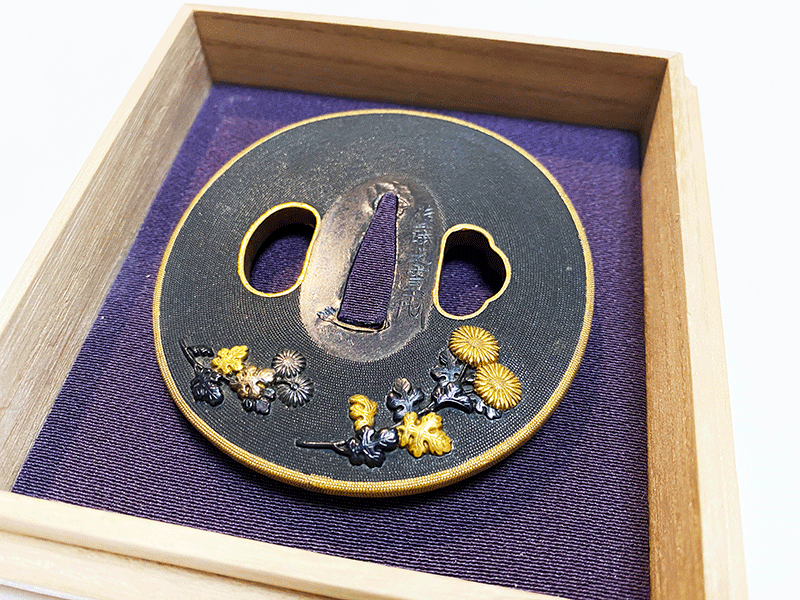
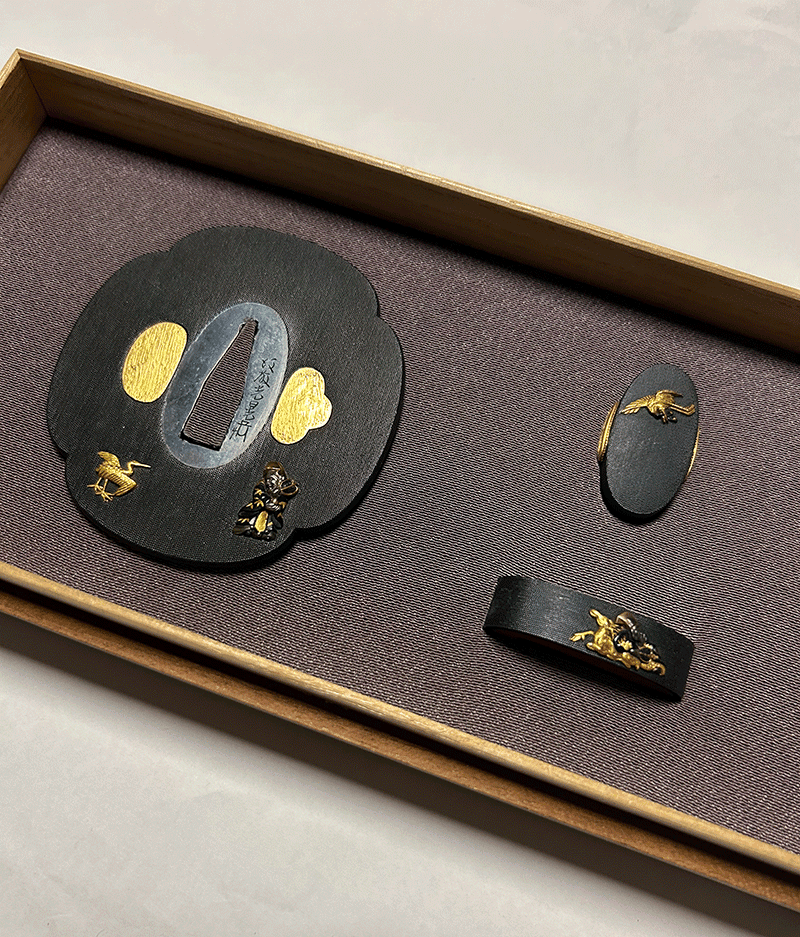
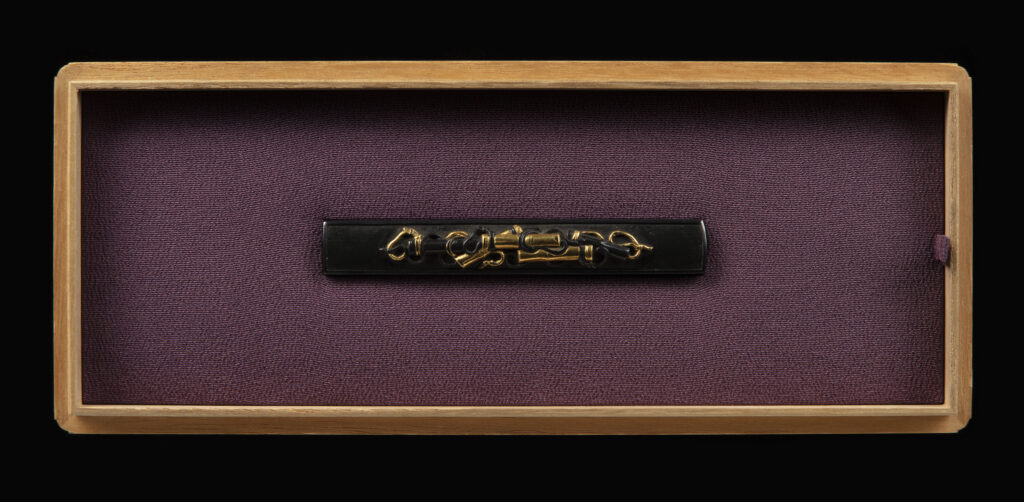
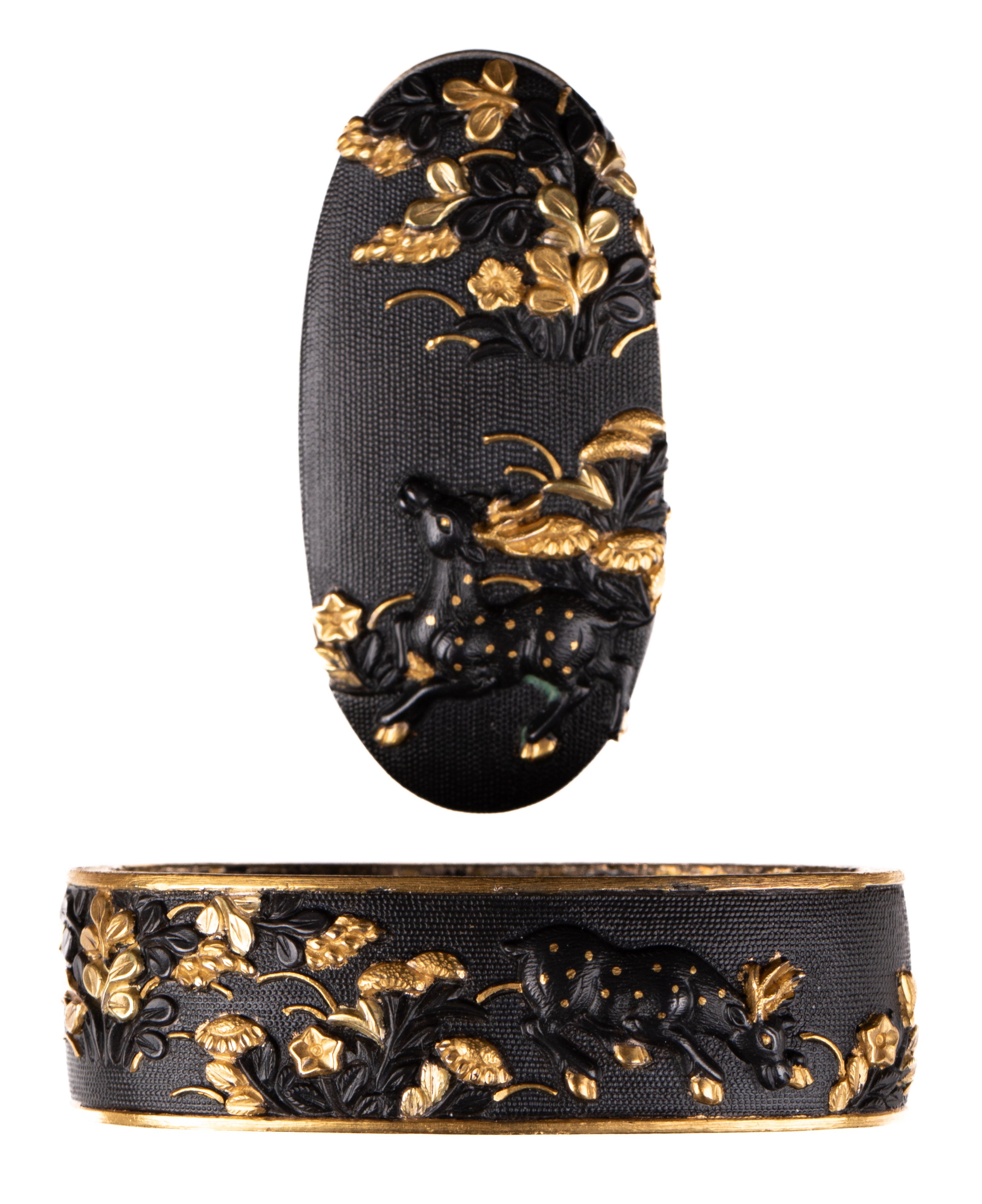
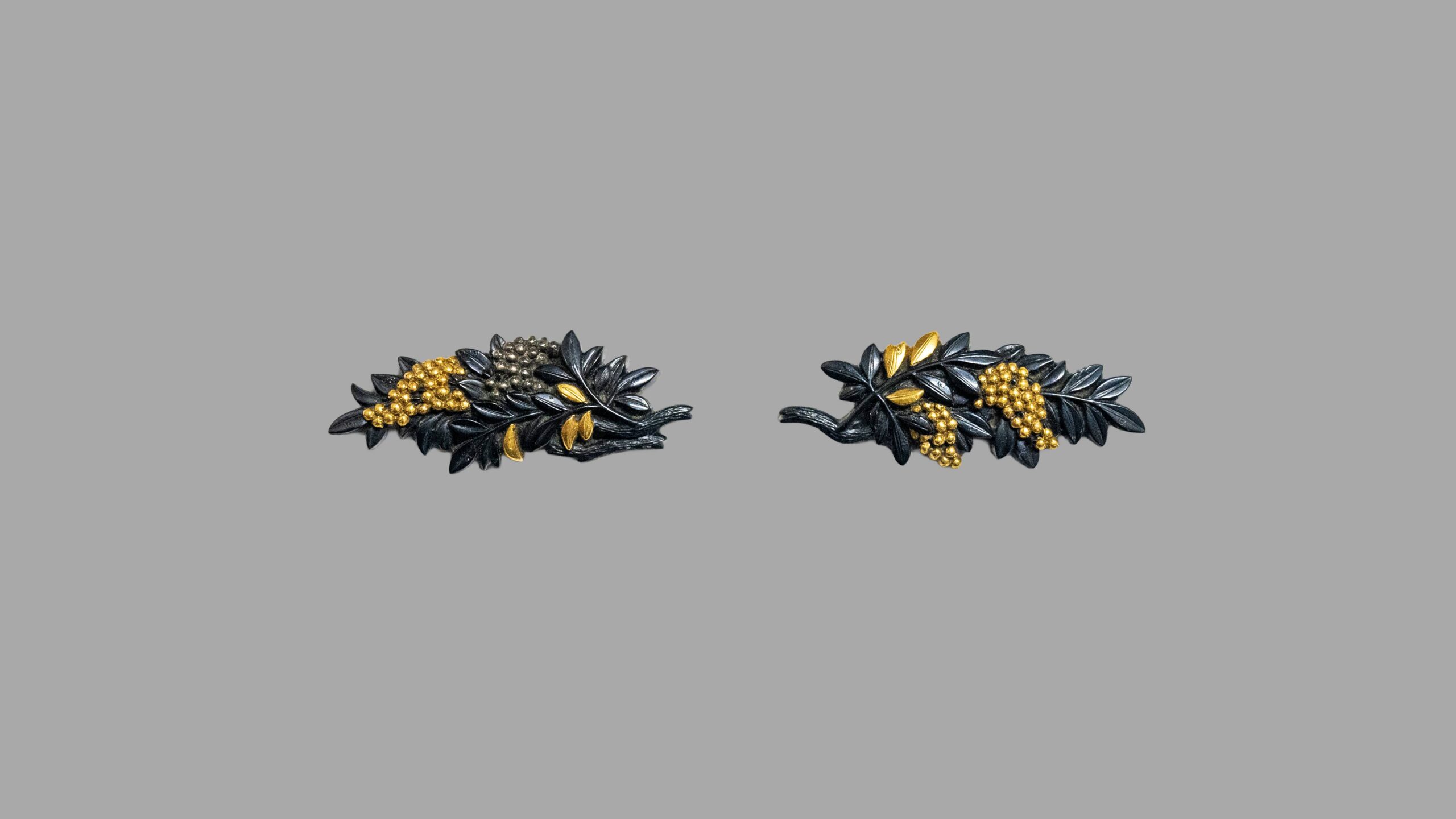
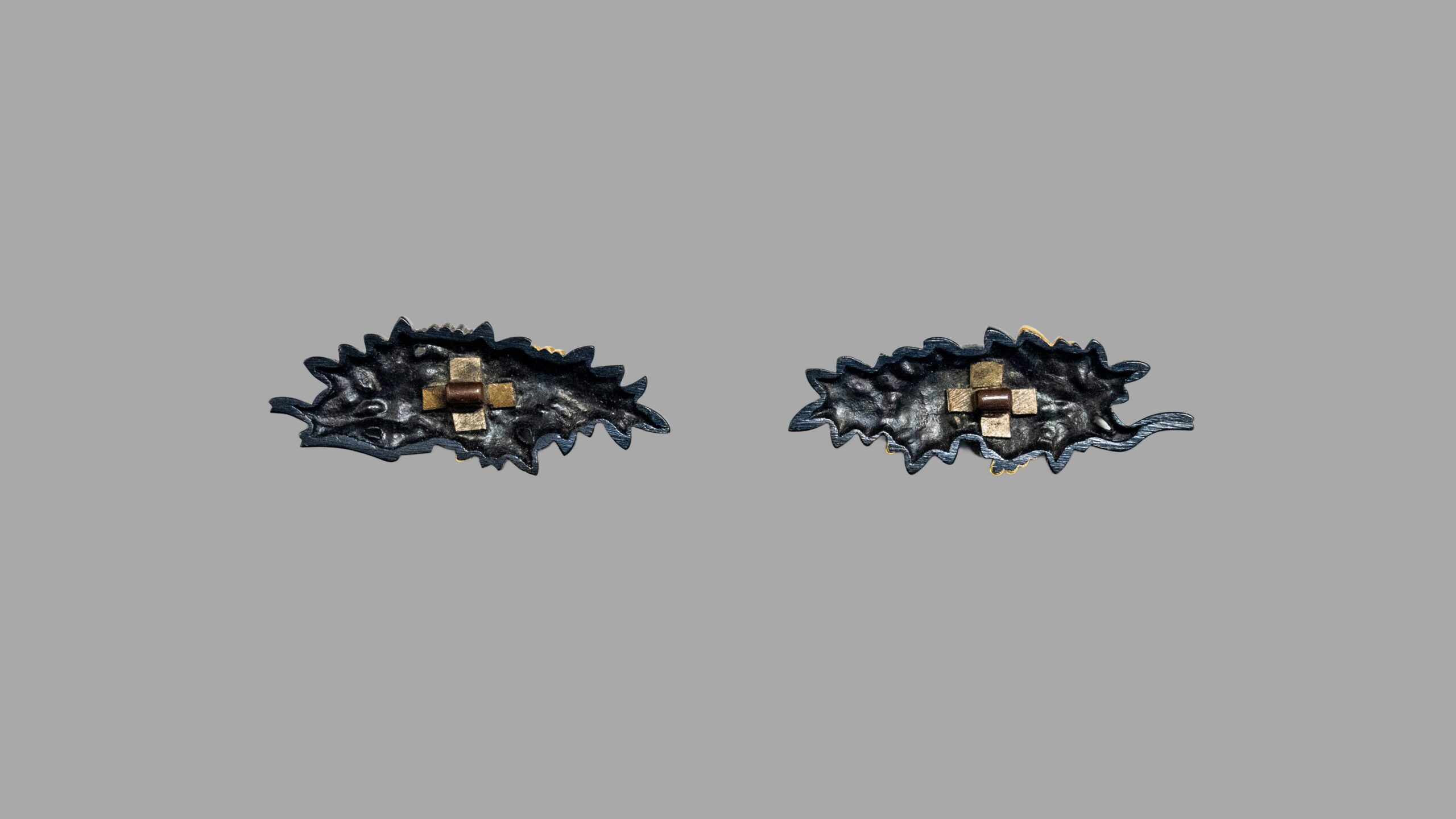
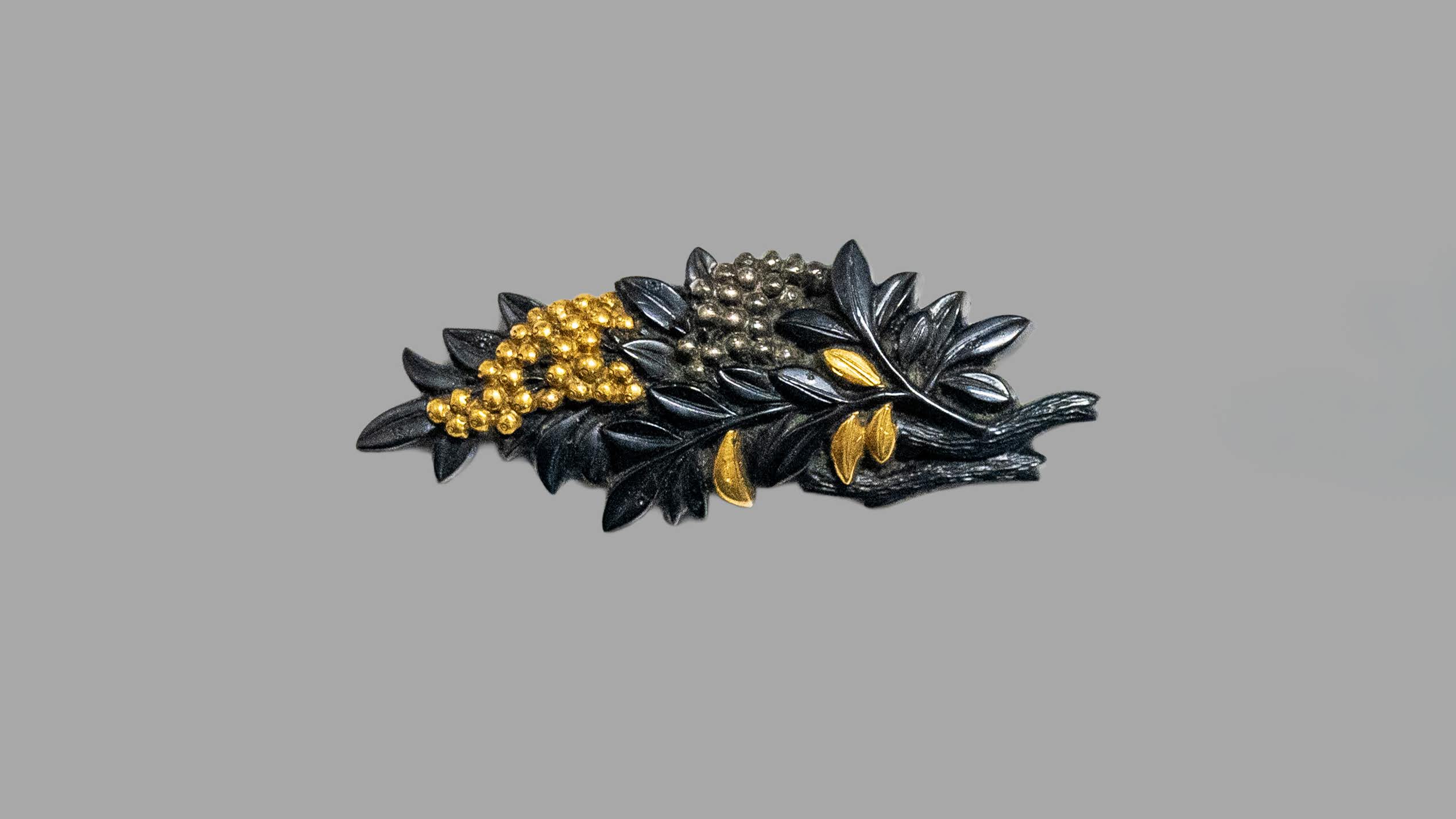
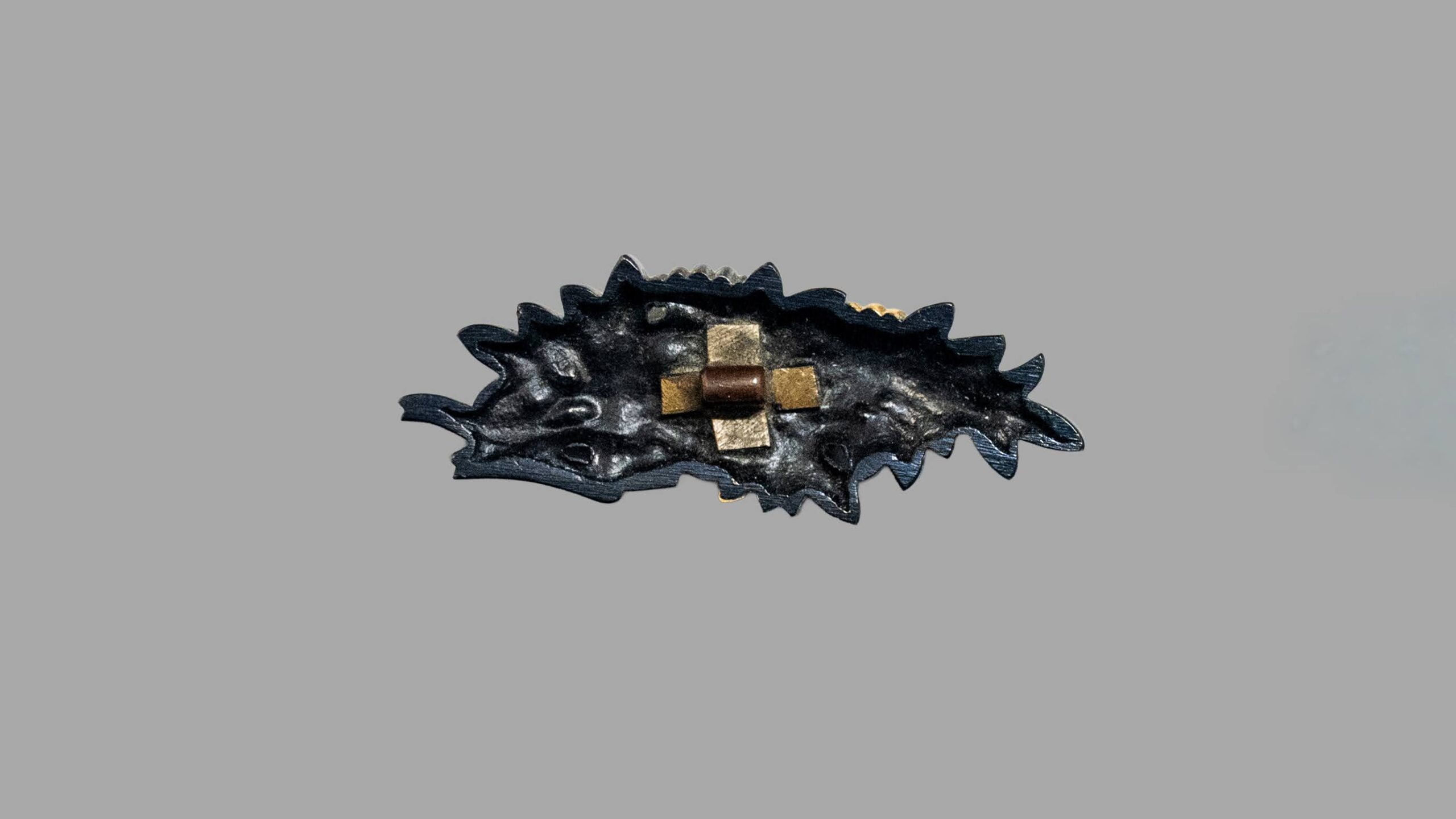
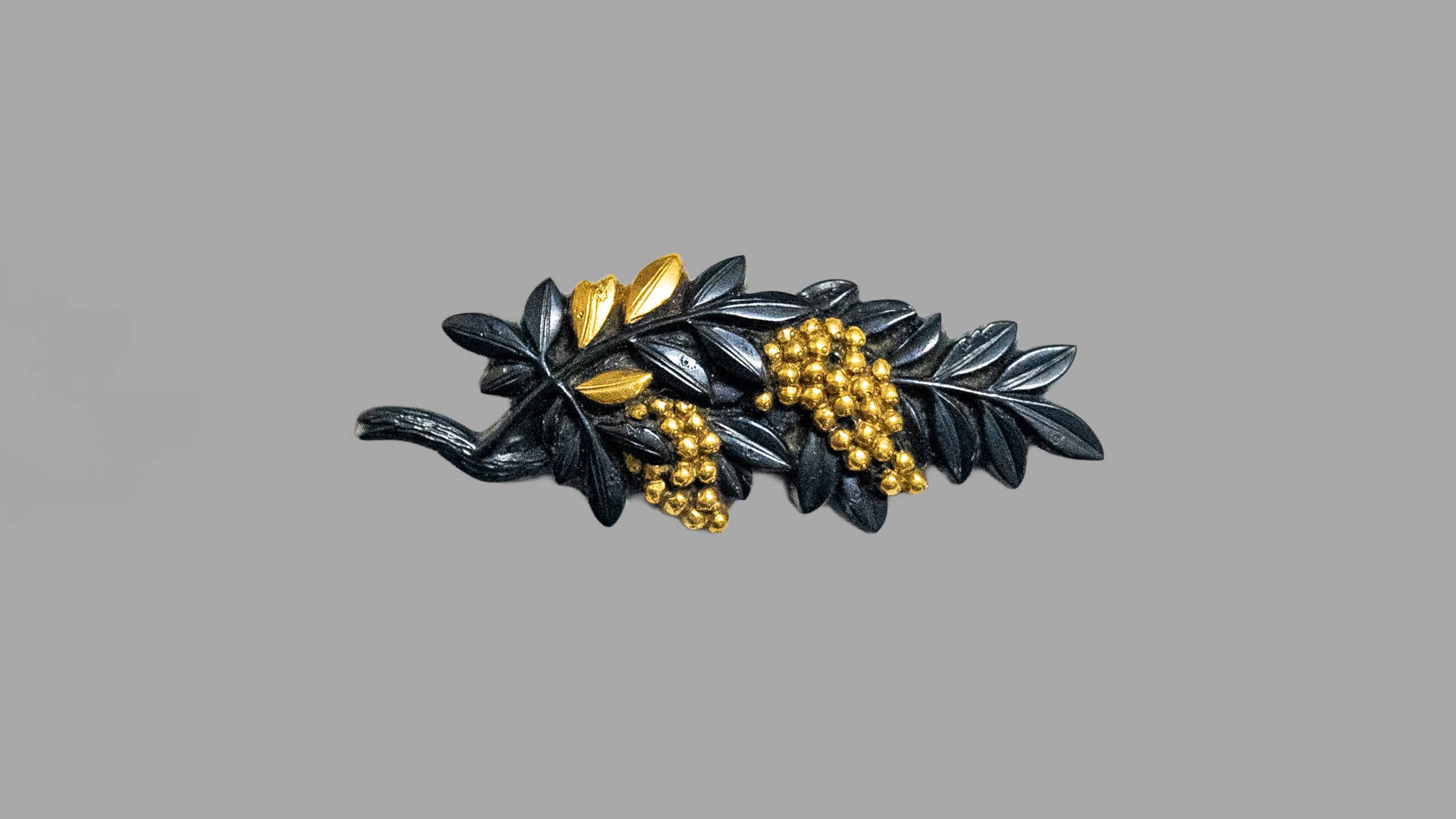
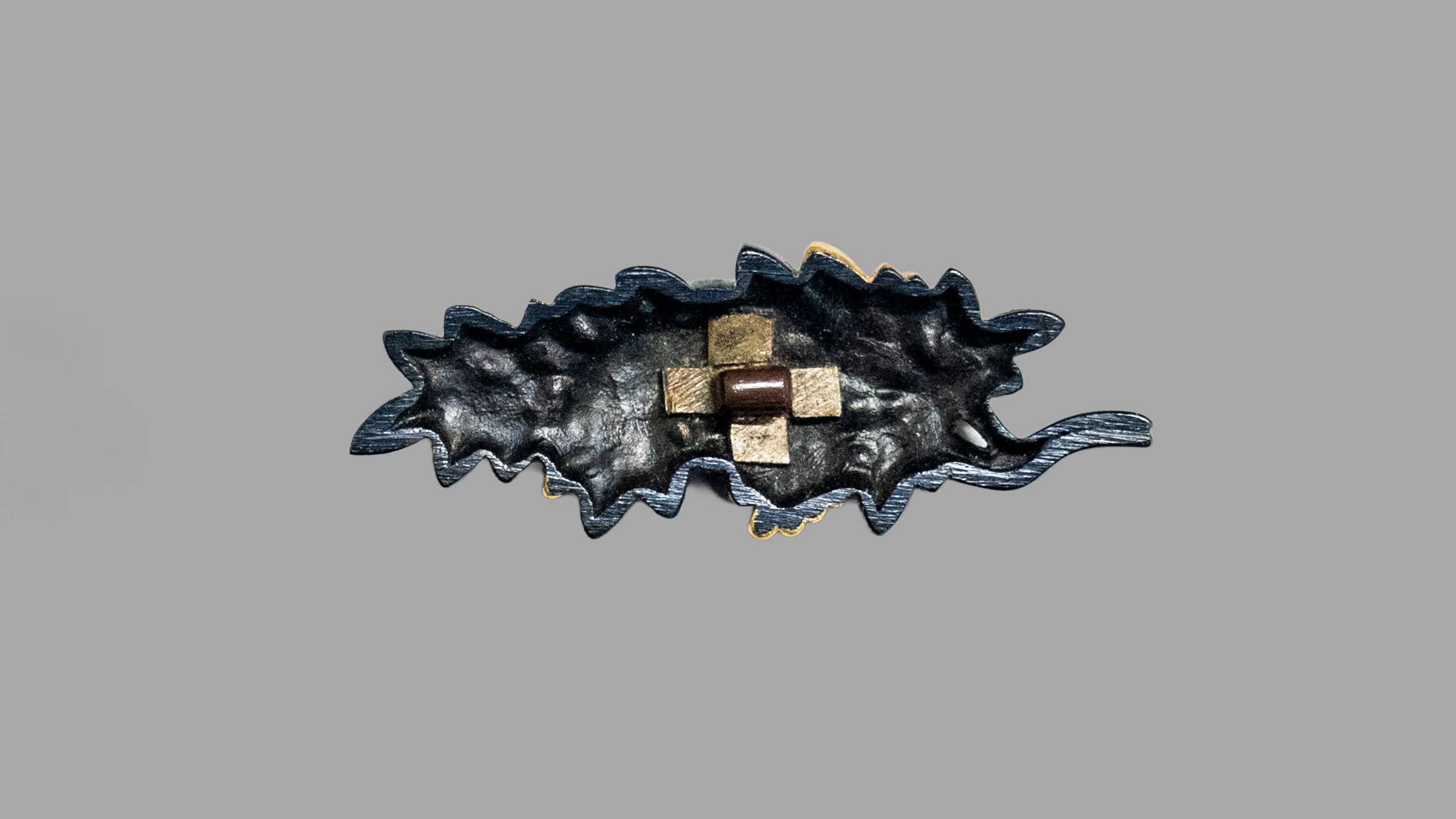
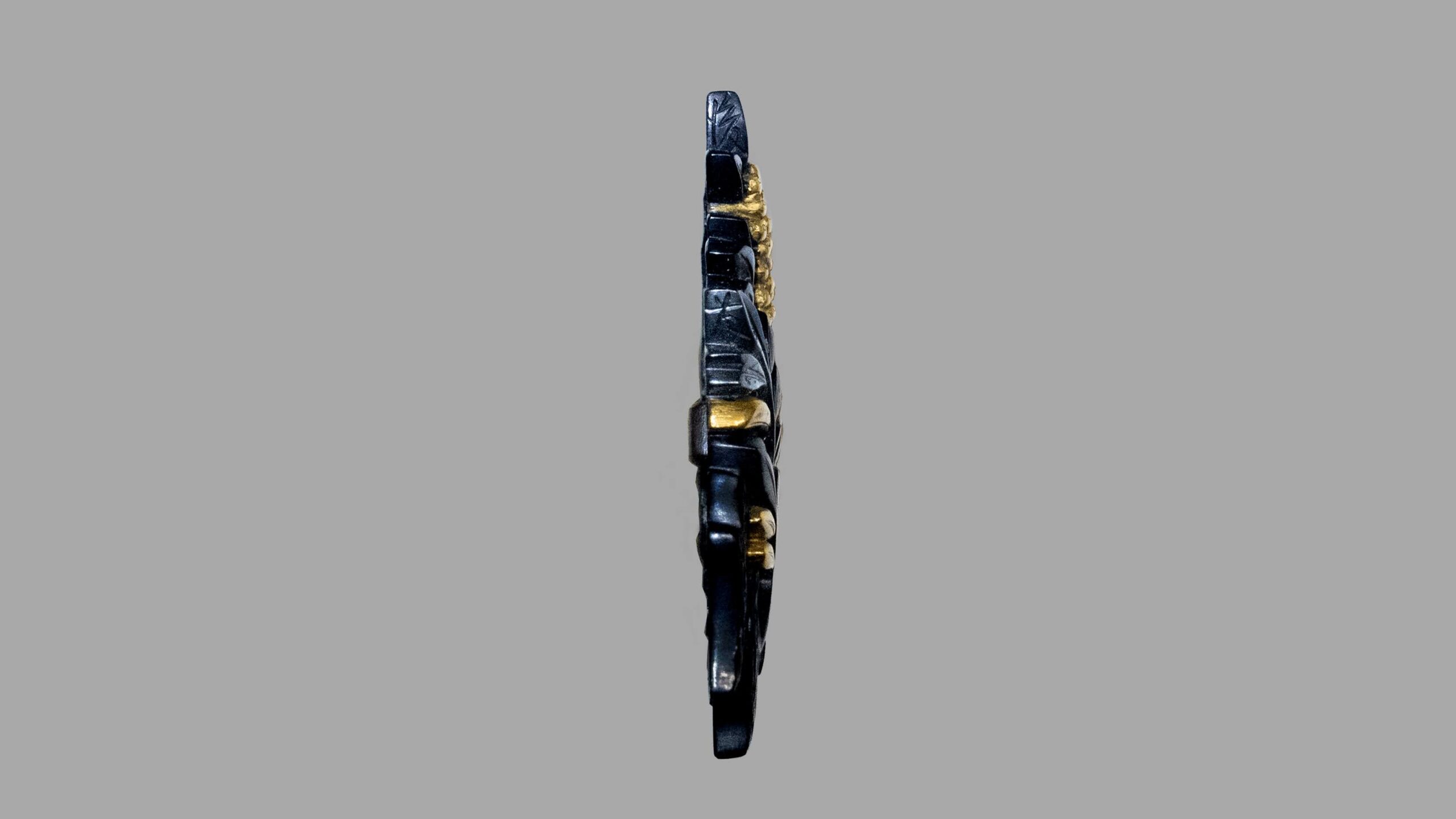
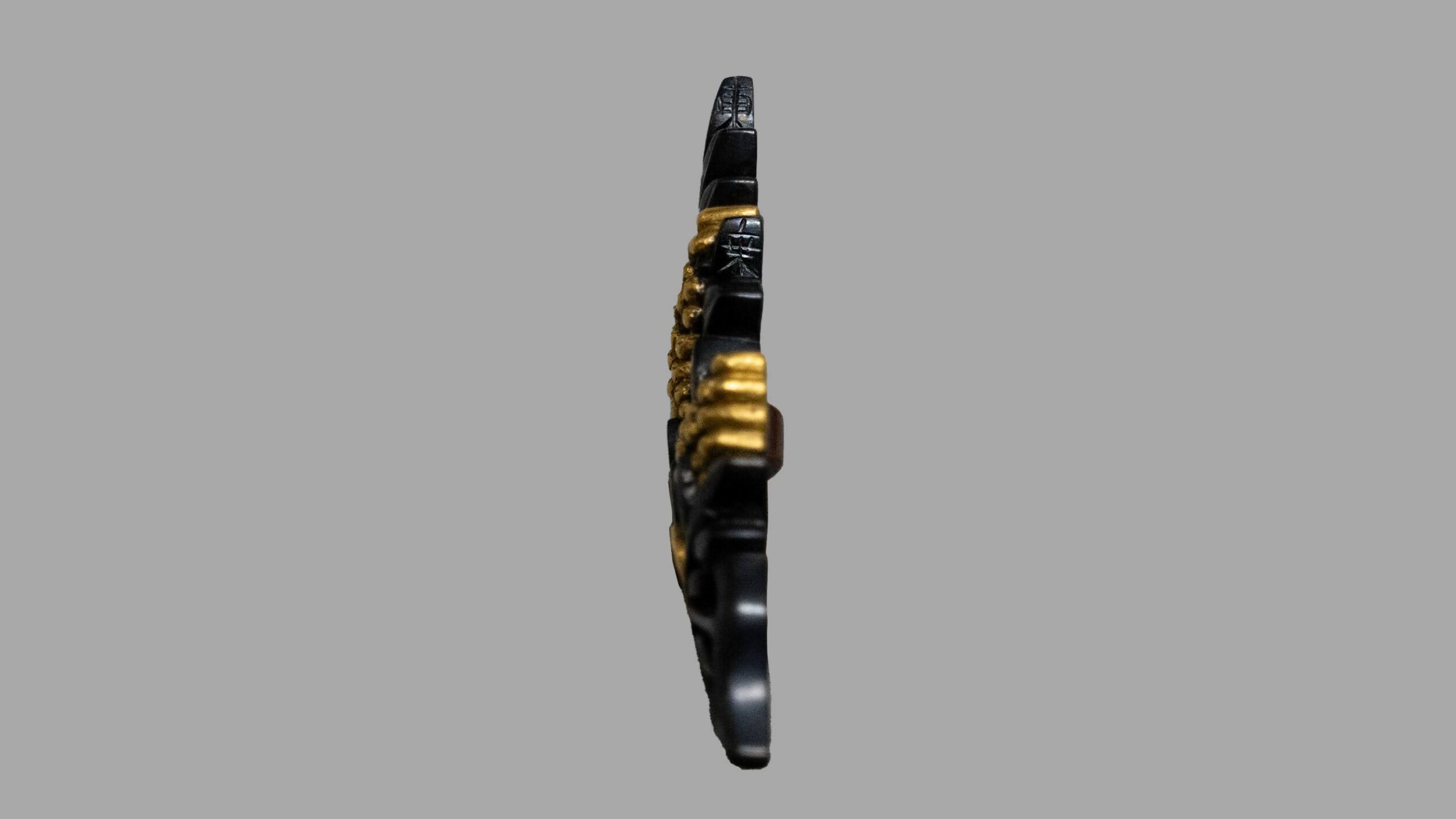
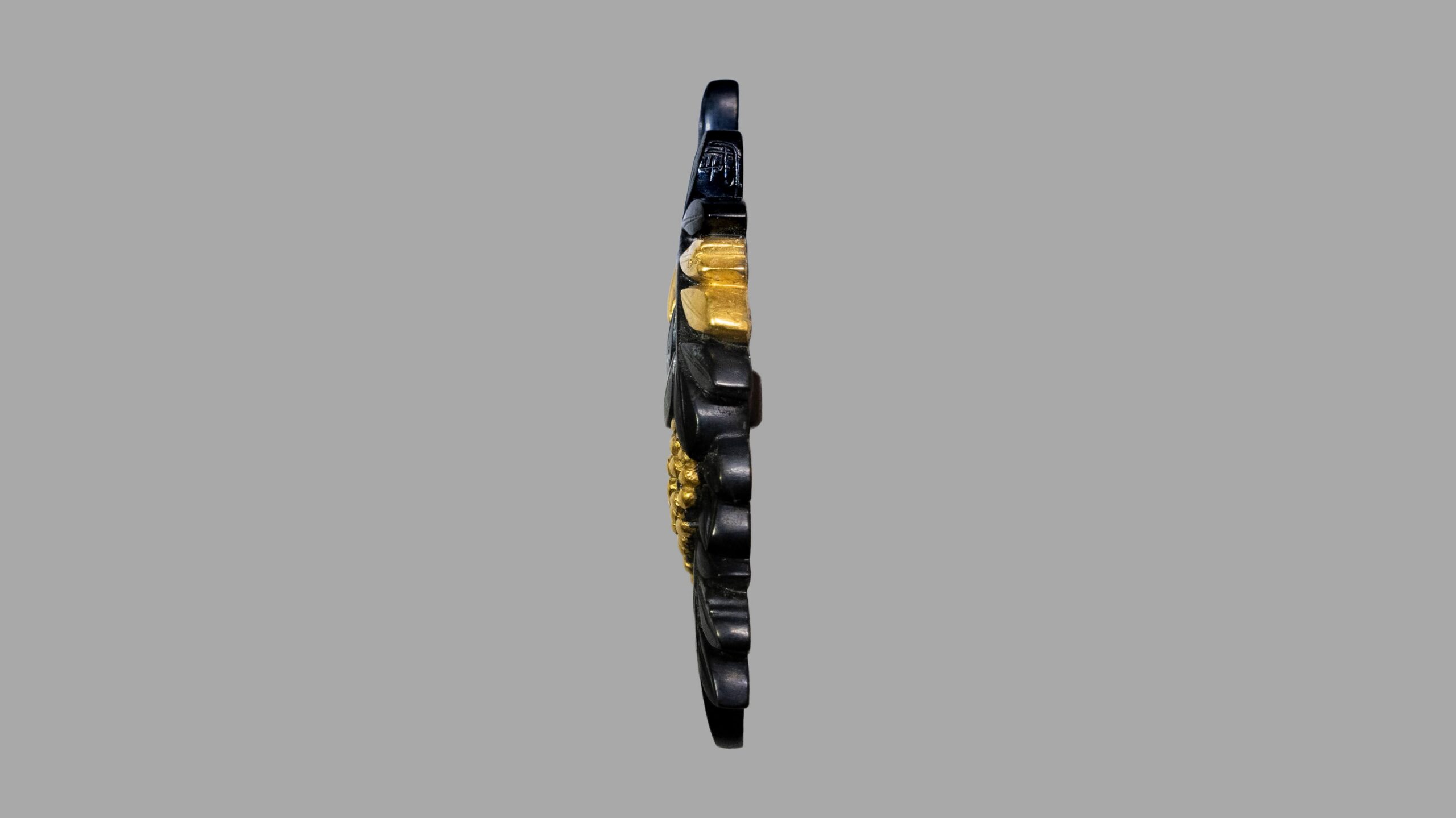
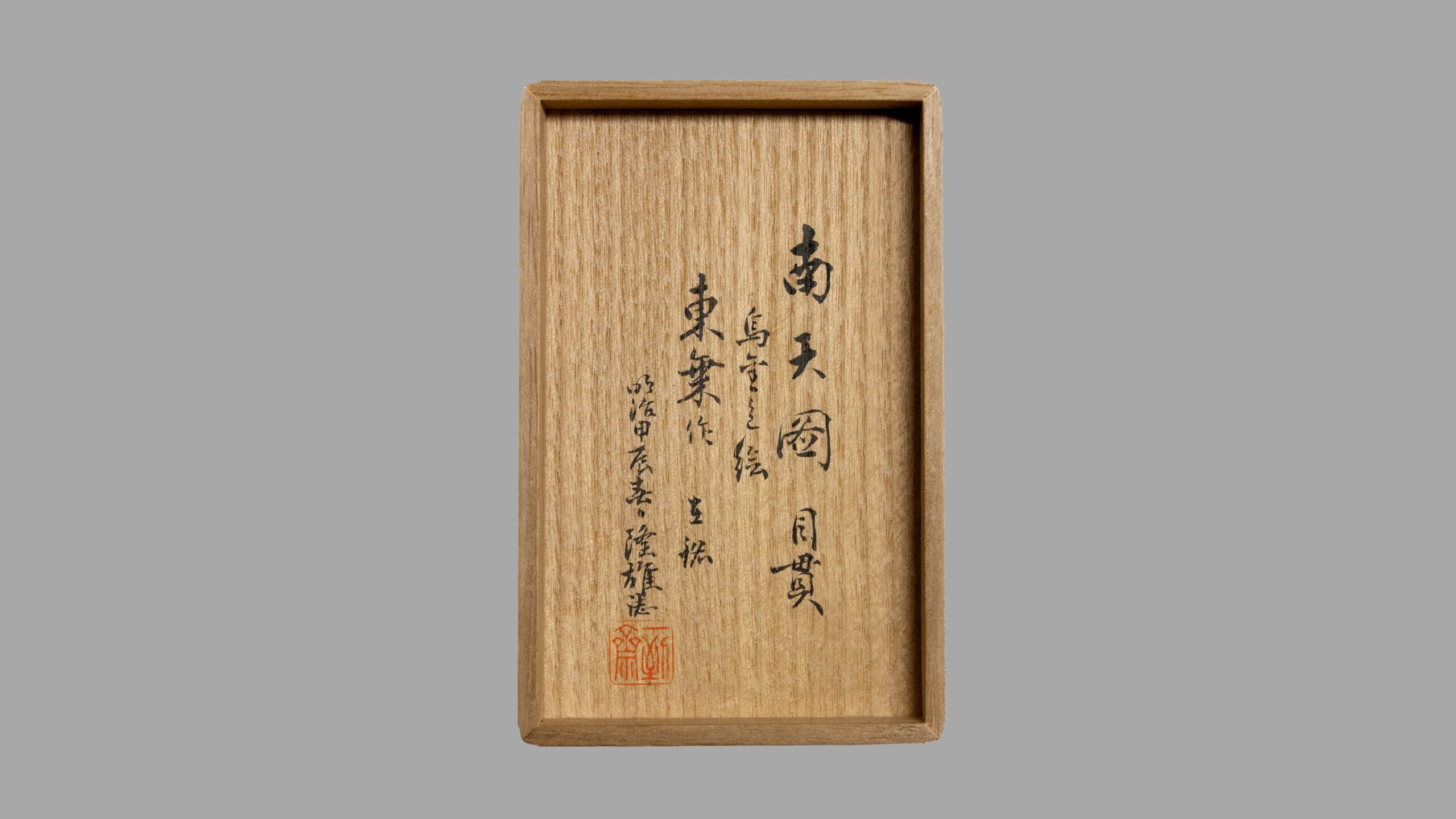
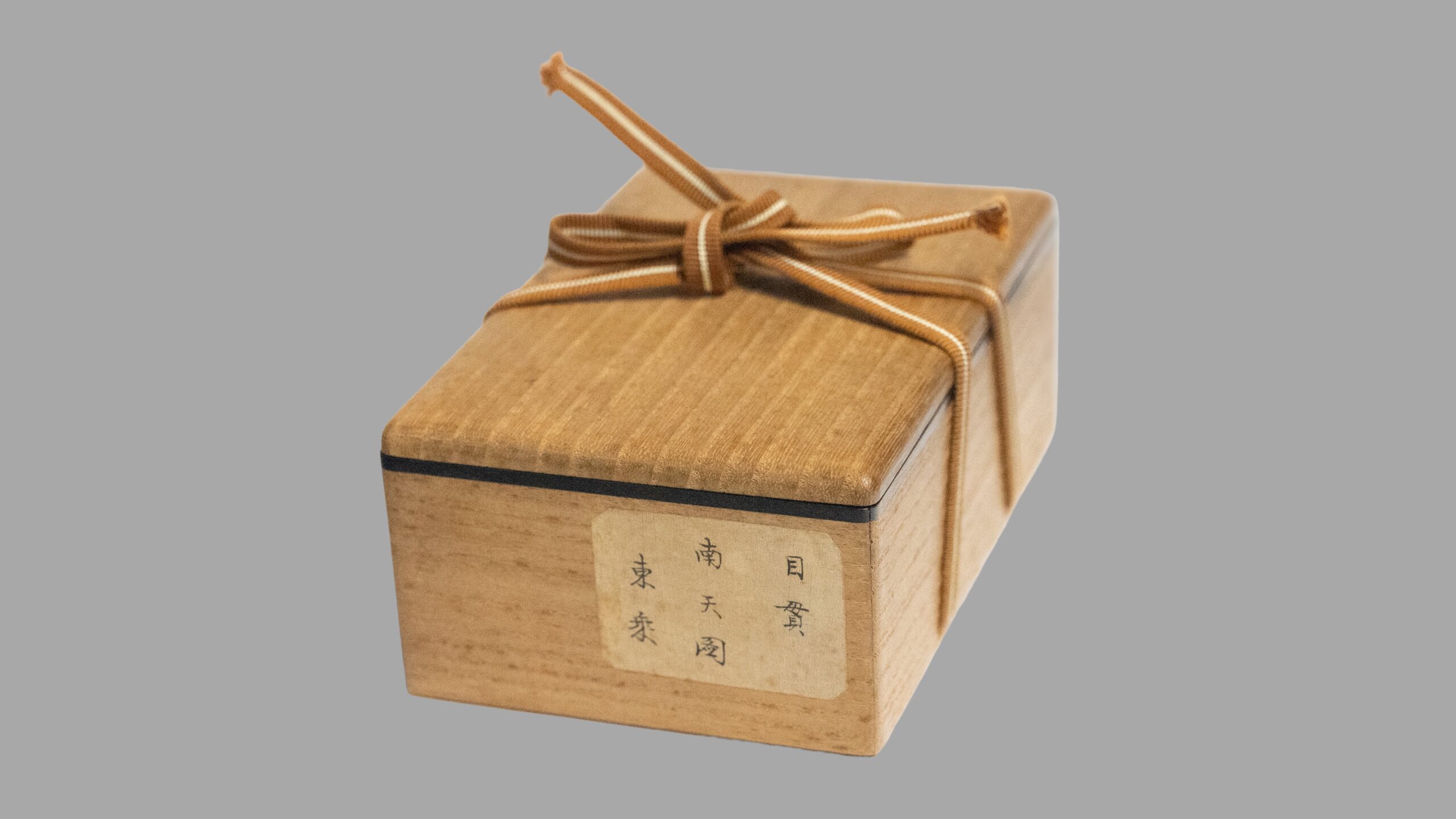
This exceptional pair of menuki, from the renowned Ryushido and Mitsumura Collections, depicts a graceful spray of nandina. Finely carved in shakudo by Goto Tojo Mitsuyuki, the 18th generation master of the Kanbei branch of the Goto family, they exemplify the refined elegance and outstanding technical mastery associated with his artistry. The piece is accompanied by an NBTHK Tokubetsu Hozon certificate.
 NihontoWatch
mei · Goto · Edo (1670)
Waki-Goto Tojo
Edo
Signed
Tokuho (NBTHK)
Iebori · Yamashiro · around 1670
1 piece on the market now
Where Tojo stands among comparable artisans: across all of nihontō, and within tradition, era, and period. The tiers (Foremost · Leading · Major · Notable) weigh official designations from the NBTHK and Japan's Agency for Cultural Affairs, together with historical honors of lasting repute such as the Sansaku and Meibutsu-chō.
Select a lens to see how it's measured.
Iebori · Kyoto
73 pieces on the market now
The Waki-Goto tradition designates the branch and collateral lines of the Goto mainline (soke) that sustained the family's metalworking legacy across generations while extending its reach beyond the central house in Kyoto and later Edo. The Goto family itself constituted the preeminent dynasty of sword-fitting craftsmen in Japanese history, serving successive shogunal families from the Muromachi period through the Edo era. Learn more →
| Smith | Era | Designated |
|---|---|---|
| Kojo光乗 | 1480-1670 | 5 |
| Munetomo/Sochi宗知 | — | 0 |
| Morimura Atsutaka守邨厚隆 | — | 0 |
| Taijo泰乗 | — | 0 |
| Mitsuharu光治 | — | 0 |
A Hozon-certified fitting of notably superior craftsmanship and condition, often with signature or workmanship of high reference value.
The NBTHK (Nihon Bijutsu Tōken Hozon Kyōkai, the Society for the Preservation of Japanese Art Swords) is a public-interest incorporated foundation founded in 1948 and supervised by Japan’s Agency for Cultural Affairs (Bunkachō); it is based at the Japanese Sword Museum in Tokyo. Its expert panels physically examine each submitted work (shinsa) and issue a certificate (kanteishō) ranking it by artistic and historical merit. NBTHK papers are the most widely recognized standard of authentication for Japanese swords and fittings.
NBTHK official siteReturns accepted within 7 days of receipt (JP terms; EN page states 3 days). Customer must contact within the window and return at own cost. Refund after items confirmed in original condition; repair fees charged if damage occurs.
This exceptional pair of menuki, from the renowned Ryushido and Mitsumura Collections, depicts a graceful spray of nandina. Finely carved in shakudo by Goto Tojo Mitsuyuki, the 18th generation master of the Kanbei branch of the Goto family, they exemplify the refined elegance and outstanding technical mastery associated with his artistry. The piece is accompanied by an NBTHK Tokubetsu Hozon certificate.
NihontoWatchmei · Goto · Edo (1670)
Waki-Goto Tojo
Edo
Signed
Tokuho (NBTHK)
Iebori · Yamashiro · around 1670
1 piece on the market now
Where Tojo stands among comparable artisans: across all of nihontō, and within tradition, era, and period. The tiers (Foremost · Leading · Major · Notable) weigh official designations from the NBTHK and Japan's Agency for Cultural Affairs, together with historical honors of lasting repute such as the Sansaku and Meibutsu-chō.
Select a lens to see how it's measured.
Iebori · Kyoto
73 pieces on the market now
The Waki-Goto tradition designates the branch and collateral lines of the Goto mainline (soke) that sustained the family's metalworking legacy across generations while extending its reach beyond the central house in Kyoto and later Edo. The Goto family itself constituted the preeminent dynasty of sword-fitting craftsmen in Japanese history, serving successive shogunal families from the Muromachi period through the Edo era. Learn more →
| Smith | Era | Designated |
|---|---|---|
| Kojo光乗 | 1480-1670 | 5 |
| Munetomo/Sochi宗知 | — | 0 |
| Morimura Atsutaka守邨厚隆 | — | 0 |
| Taijo泰乗 | — | 0 |
| Mitsuharu光治 | — | 0 |
A Hozon-certified fitting of notably superior craftsmanship and condition, often with signature or workmanship of high reference value.
The NBTHK (Nihon Bijutsu Tōken Hozon Kyōkai, the Society for the Preservation of Japanese Art Swords) is a public-interest incorporated foundation founded in 1948 and supervised by Japan’s Agency for Cultural Affairs (Bunkachō); it is based at the Japanese Sword Museum in Tokyo. Its expert panels physically examine each submitted work (shinsa) and issue a certificate (kanteishō) ranking it by artistic and historical merit. NBTHK papers are the most widely recognized standard of authentication for Japanese swords and fittings.
NBTHK official siteReturns accepted within 7 days of receipt (JP terms; EN page states 3 days). Customer must contact within the window and return at own cost. Refund after items confirmed in original condition; repair fees charged if damage occurs.