NihontoWatch MonNihontoWatchBETA
MarketEncyclopedia
NihontoWatch Mon

NihontoWatchBETA

Market
Encyclopedia
Overview·Kantei·Designations·Provenance·Work Types·Signatures·Lineage·School
OverviewKanteiDesignationsProvenanceWork TypesSignaturesLineageSchool
  1. Schools
  2. Goto
  3. Goto Main Line
  4. Goto Hojo

Goto Hojo

後藤方乗

Jūyō
Vol. 53, No. 177 · Mitokoromono

Goto Hojo

後藤方乗

16 ranked works

ProvinceYamashiroEraLate Edo (1816–1856)PeriodEdoSchoolGotoTraditionIeboriGeneration16TeacherGoto ShinjoSpecialtiesmitokoromono, kozuka, kogai, menuki, fuchi-kashiraTypeTosogu MakerCodeGOT016
1Tokubetsu Jūyō15Jūyō Tōken

Overview

Goto Mitsuaki was born in Bunka 13 (1816) as the third son of Goto Mitsuyoshi, the fifteenth head of the Goto main line, who bore the art name Shinjo. In the seventh month of Tempo 6 (1835), upon his father's retirement at the age of fifty-six, Mitsuaki succeeded to the family headship, assumed the hereditary name Shirobei Mitsuaki, and became the sixteenth and penultimate master of the Goto soke. He died in the sixth month of Ansei 3 (1856) at the age of forty-one, having served as head for twenty-one years. His childhood name was Mitsutoshi; his common names included Shinjiro and later Gennojo. According to his own records, in Tempo 8 (1837) he manufactured Tempo five-ryo gold coin issues and produced 1,887 pieces of oban large gold plates by shogunal order. Mitsuaki is universally regarded in evaluations as possessing the finest technical skill among the successive generations from the twelfth master onward, a judgment repeated with striking consistency across his designated works.

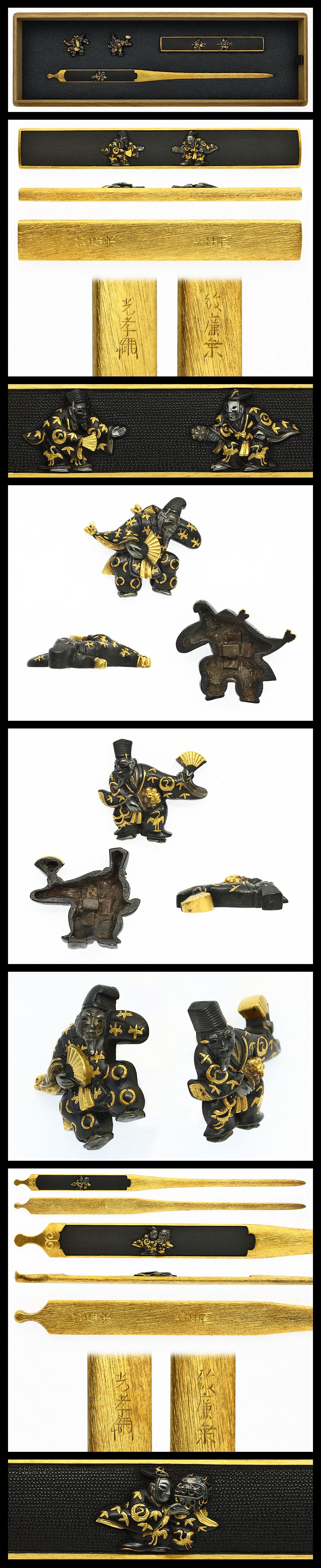
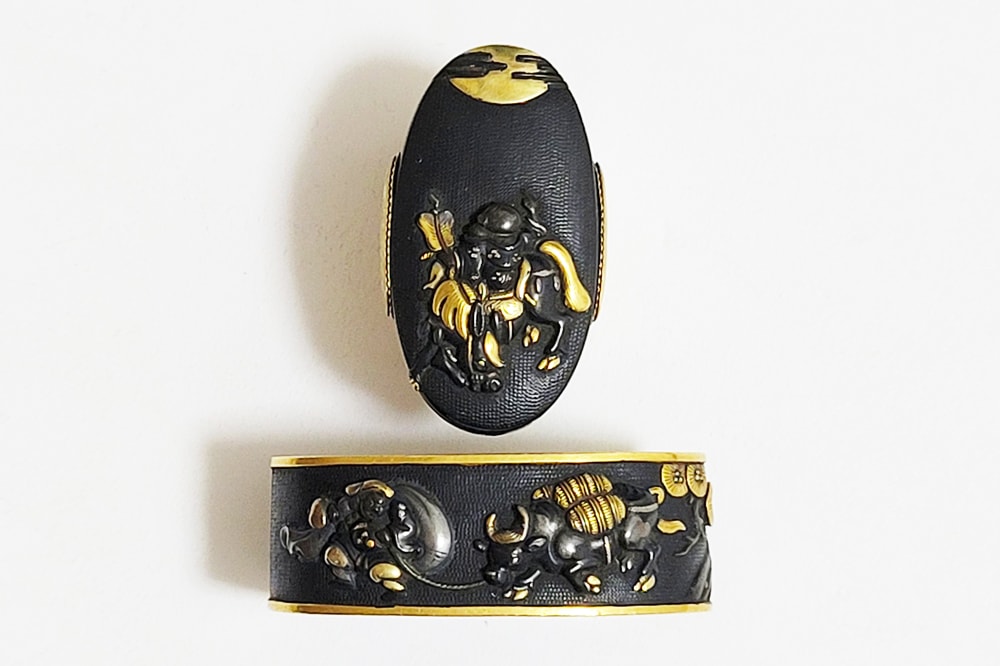
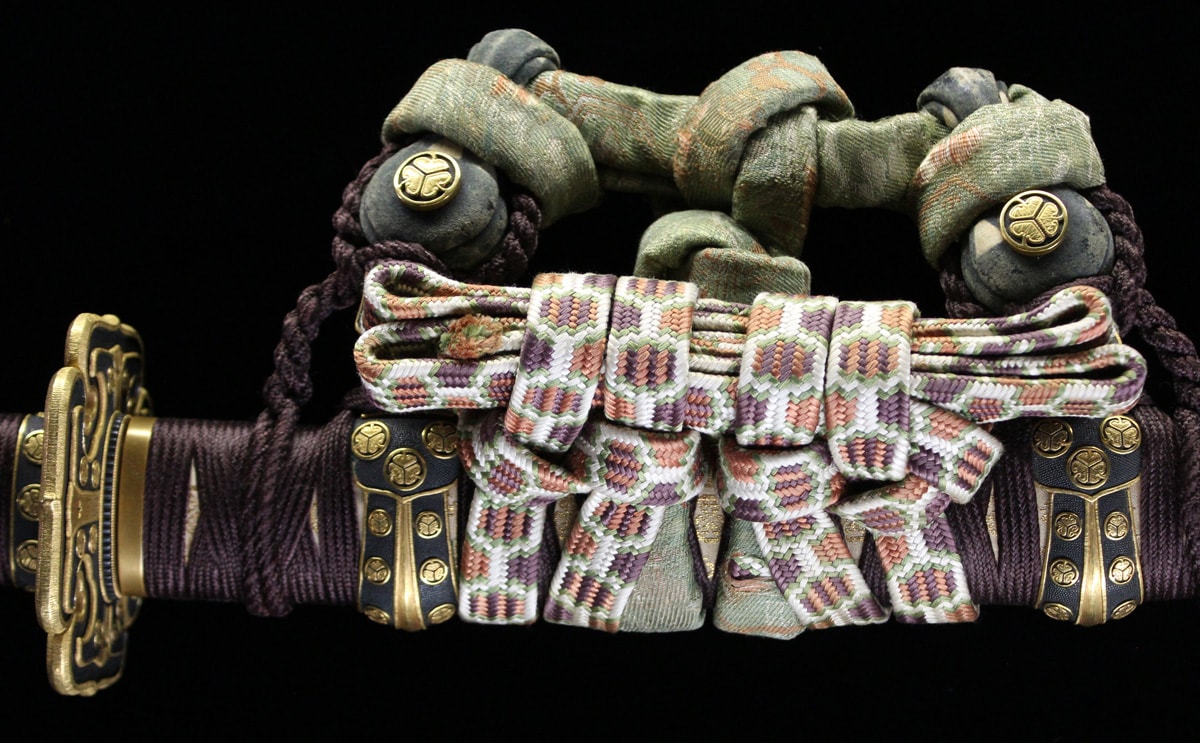
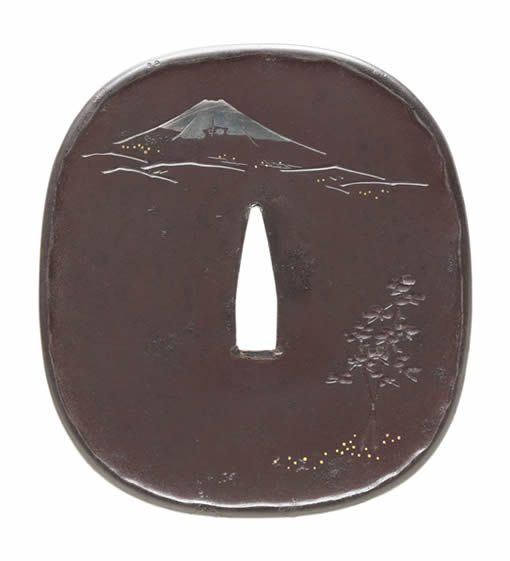
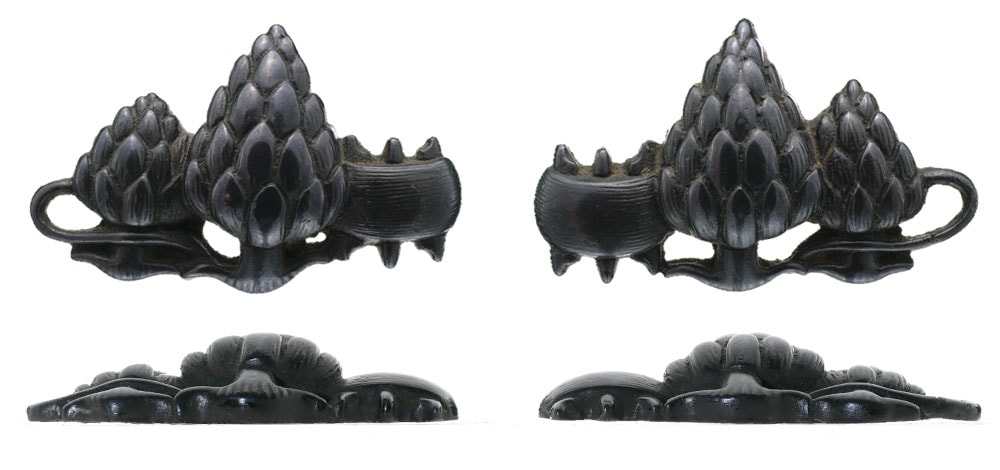
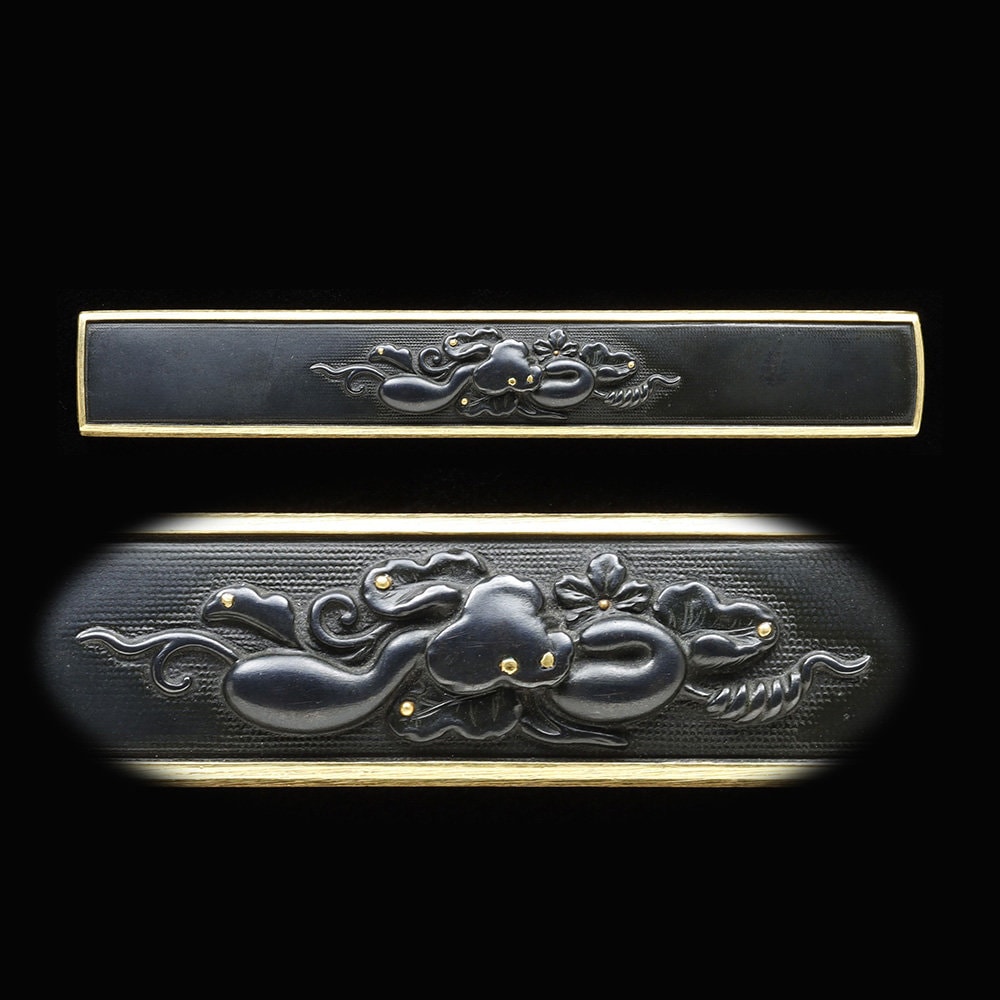
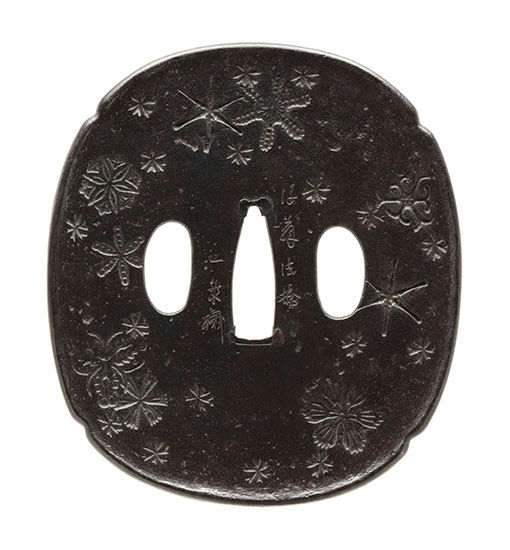
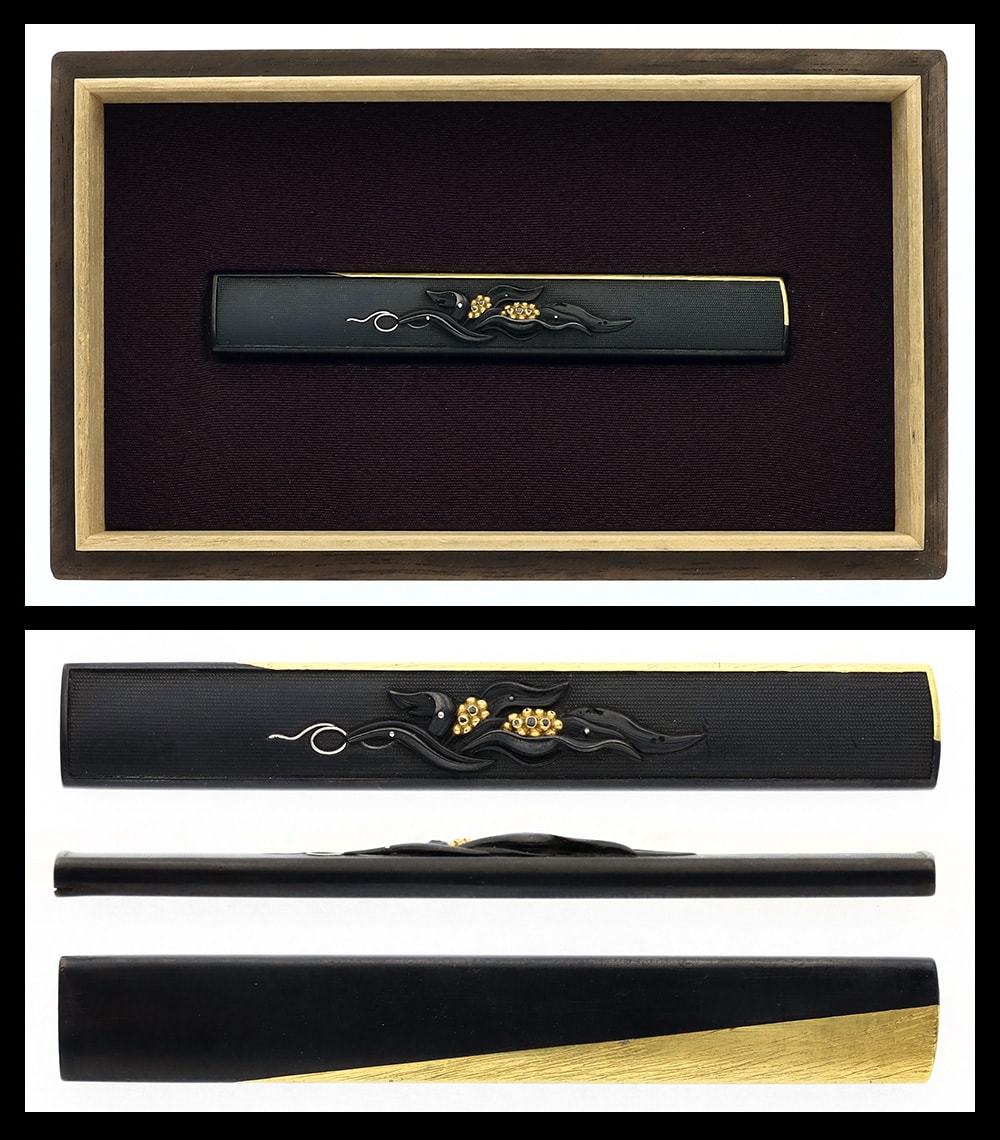
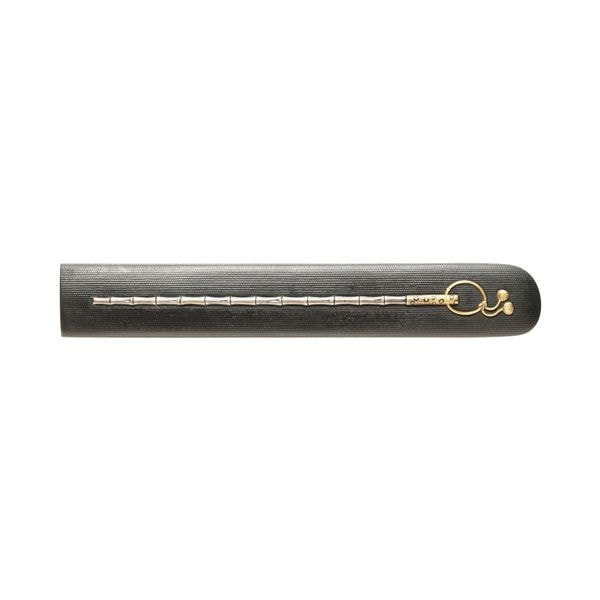
Mitsuaki's oeuvre is dominated by and mitsudogu sets executed in the canonical Goto iebori idiom: grounds, with gold and silver , and ' gold-foil backing on the reverse. His chromatic planning is noted for its deliberate sophistication; beyond painstaking gold and silver , he introduced to impart what the characterizes as a rustic, natural accent (yashu), and on occasion employed -do, a scarlet copper rarely seen within the Goto tradition. His are carved in nikubori or yobori with wari-giwa hashi- split signatures, and the and bear his full inscription "Goto Shirobei Fujiwara Mitsuaki" with . His signature conventions are handled with notable sophistication, with the long form reserved for especially careful, deliberate productions. Thematic range encompasses court implements, falconry accoutrements, seasonal festivals (sekku), salt-making landscapes, four-seasons flowers with shikishi papers, Sanbaso ritual dance figures, zodiac animals, and auspicious subjects such as Fukurokuju and Jurojin. The further observes a strong influence from aesthetics in the arrangement of figures and the expression of open space, suggesting the emergence of a new style of official Goto carving after the family's residence in had been formally established. His works are known for their rich, dense manner, yet individual sets are distinguished by extraordinarily meticulous treatment in monochrome black or by dignified, refined overall unity.

Across the body of designated works, the consistently applies such evaluative phrases as "elevated dignity," "lofty refinement," and "workmanship that may rightly be called a masterpiece." Mitsuaki's production is characterized as spirited and bracing, betraying not the slightest hint of the approaching conclusion of the unbroken Got line, which would end after only one more generation. His carving evokes "high mountains and deep valleys" in the Got family manner, and his chisel work is described as outstandingly accomplished. The commissioned by the Sannohe family, executed with court themes scattered across every fitting, each bearing , is singled out as a celebrated piece in which one can directly appreciate his technical excellence, with lacquer work conveying a deep, weighty presence and the set as a whole displaying workmanship of the highest order. That Mitsuaki could sustain this standard across both intimate and grand ensemble mountings confirms the 's recurring assessment: he represents the summit of Goto mainline craftsmanship in its final era, an artist whose technical command and refined sensibility gave the soke tradition its last full measure of creative authority.
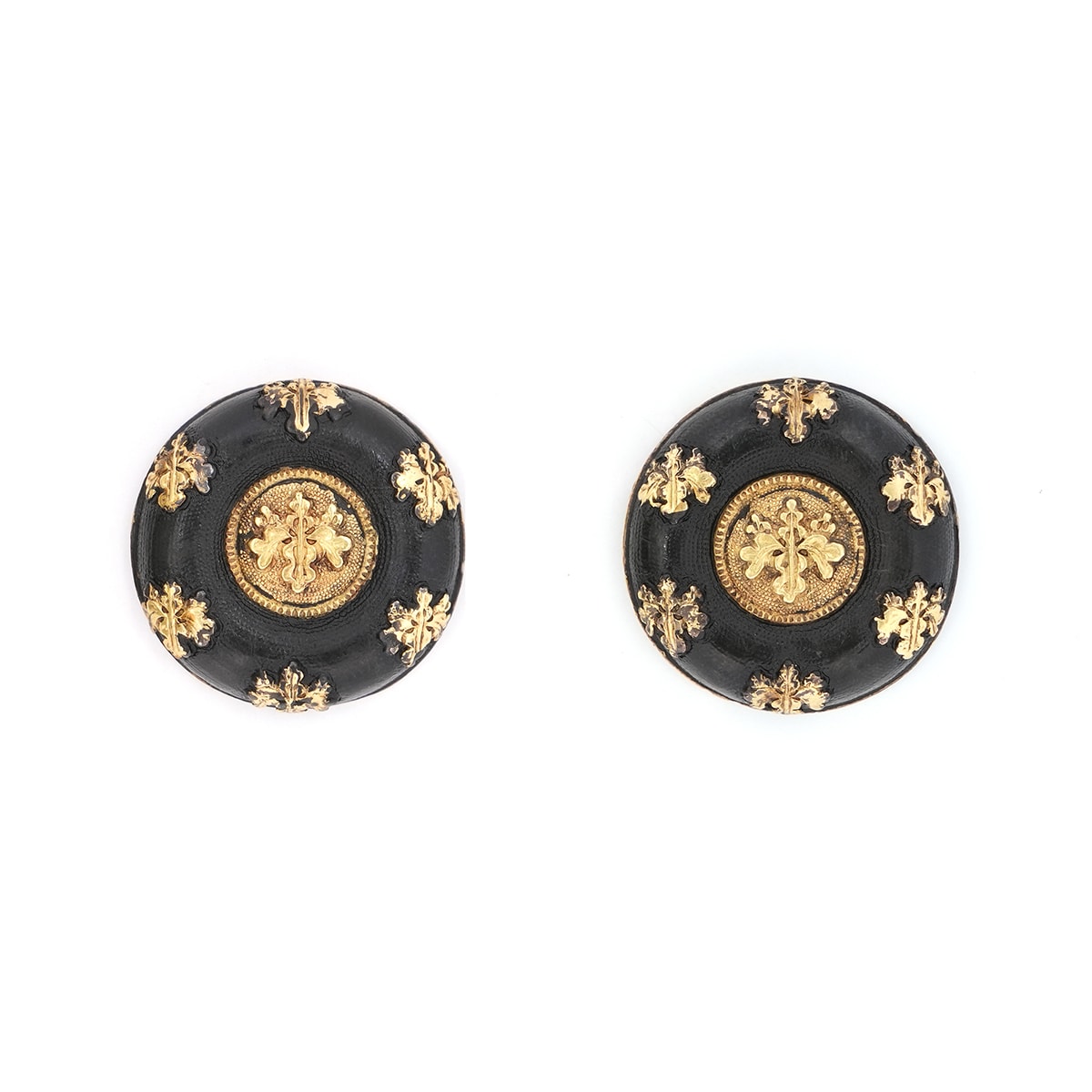
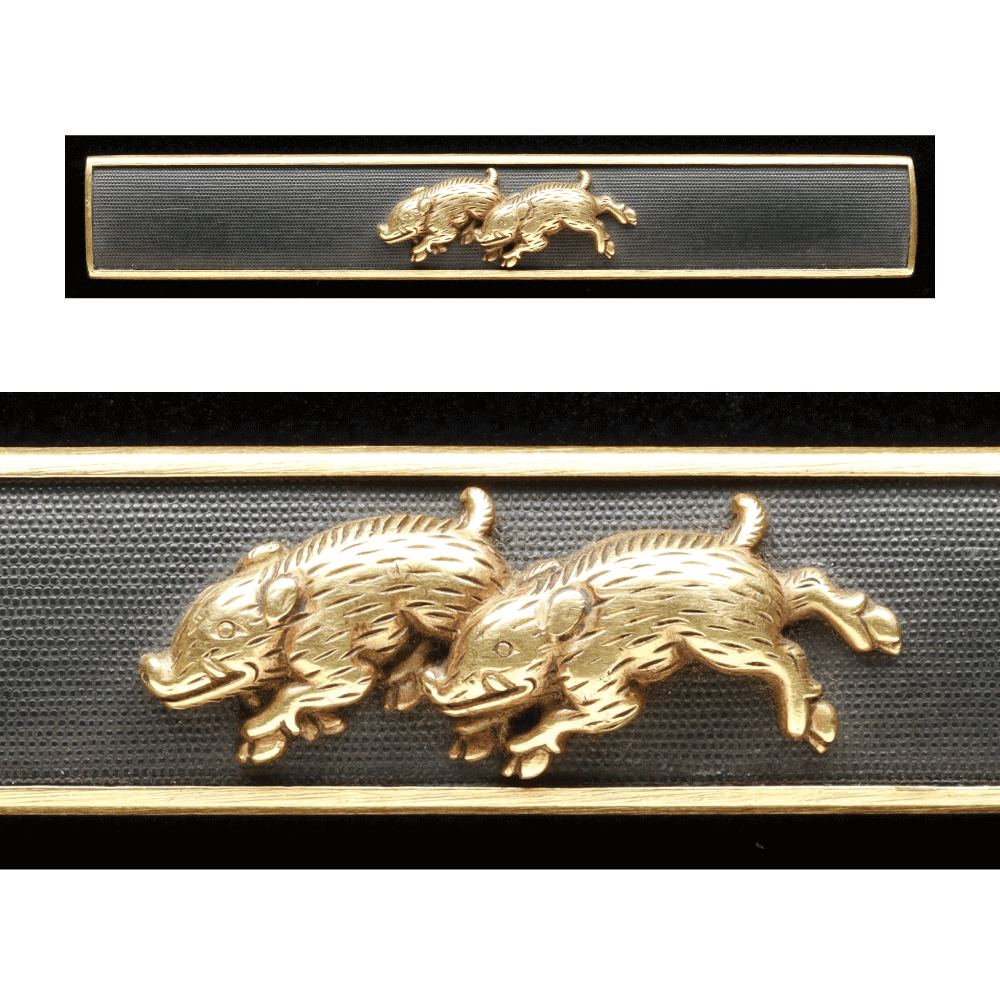
Kantei

3 descriptive axes: material (the shakudo-nanako house grounds, with all-gold and shibuichi grounds besides) x technique (the orthodox takabori and katachibori with iro-e, gold and shakudo inlay and applied-relief crest work, the hand dense, fine and well finished) x themes (the seasonal-festival sets, courtly and ceremonial implements, the house lions and auspicious deities, and the naturalist subjects of the late Edo and Bakumatsu taste). His one load-bearing discriminator is that he signs with regularity, read Goto Mitsuaki, against the mumei early-Goto norm. The corpus offers few clean per-piece separators beyond the signature, because his documented individuating character, that he is the most technically skilled of all the heads from the twelfth master onward, is recited in the biography of nearly every setsumei rather than read off any single piece, and he is not credited with a distinctive personal innovation the way the records single out Renjo's shibuichi ground or Tsujo's left-and-right composition; that praise is therefore kept below in scholarship and not used as a discriminator. The rest is the orthodox house foundation, carried into the townsman-carving-inflected new house style of the Edo-resident later Goto. As a late certifying head his bare light-name 光晃 also appears as a kiwame-mei on an earlier head's piece he appraised, which must be distinguished from his own self-signed work.

Goto Hojo, given name Mitsuaki (read 光晃), is the sixteenth-generation head of the orthodox Goto house and its last working master but one, born in Bunka 13 (1816), the son of the fifteenth master Shinjo Mitsuyoshi (read 光美); the records vary on whether he was the third or the fourth son. His childhood name was Mitsutoshi, his common names Shinjiro and later Gennojo. When his father Mitsuyoshi retired at fifty-six in Tenpo 6 (1835) he succeeded to the headship as the sixteenth master and changed his name to Shirobei Mitsuaki, serving as head for twenty-one years until he died at forty-one in Ansei 3 (1856). By his own memorandum he struck coinage on shogunal command from Tenpo 8 (1837), the Tenpo five-ryo plate and a great number of oban. He signs his own work with regularity, read by his given name Goto Mitsuaki with a , or in his full formal long-signature Goto Shirobei Fujiwara Mitsuaki; on he splits the given name as a , 光 and 晃. The records repeatedly praise him as the most technically skilled of all the heads from the twelfth master Mitsumasa (read 光理) onward, his subjects the seasonal-festival sets, courtly and ceremonial implements, and the auspicious and naturalist motifs favoured in the late and Bakumatsu age, worked up with dense, refined carving in the orthodox house manner. As one of the late certifying heads his light-name 光晃 also stands as the on an earlier head's piece he appraised, which must be distinguished from his own self-signed work.

Diagnostic discriminators

fourteen of the sixteen corpus objects carry his genuine signature, read 後藤光晃(花押) by his given name Mitsuaki, used across his career, or in the full formal long-signature 後藤四郎兵衛藤原光晃(花押); two pieces are explicitly called jishin-mei (self-signature), and on menuki he splits the given name as a wari-mei, 光・晃. By his late-Edo and Bakumatsu generation the Goto heads sign with regularity, against the mumei norm of the early house attributed only by origami and later-head appraisal-signatures. The bare 光晃 is NOT counted as his self-signature: it stands BOTH as the base of his own 後藤光晃 self-signature (and of the 光・晃 menuki wari-mei) AND, as one of the late certifying heads, as Hojo's own kiwame-mei light-name on an EARLIER head's piece he appraised (紋程乗 光晃, certifying the gold-crests of the ninth-house master Teijo); conversely the bare 延乗 appears as the attributed name on a kiwame-mei Hojo himself cut (延乗作 光晃, the sixteenth master certifying a piece as the thirteenth master Enjo's), where it is Enjo being appraised, not Hojo's own self-signature

Material (grounds)

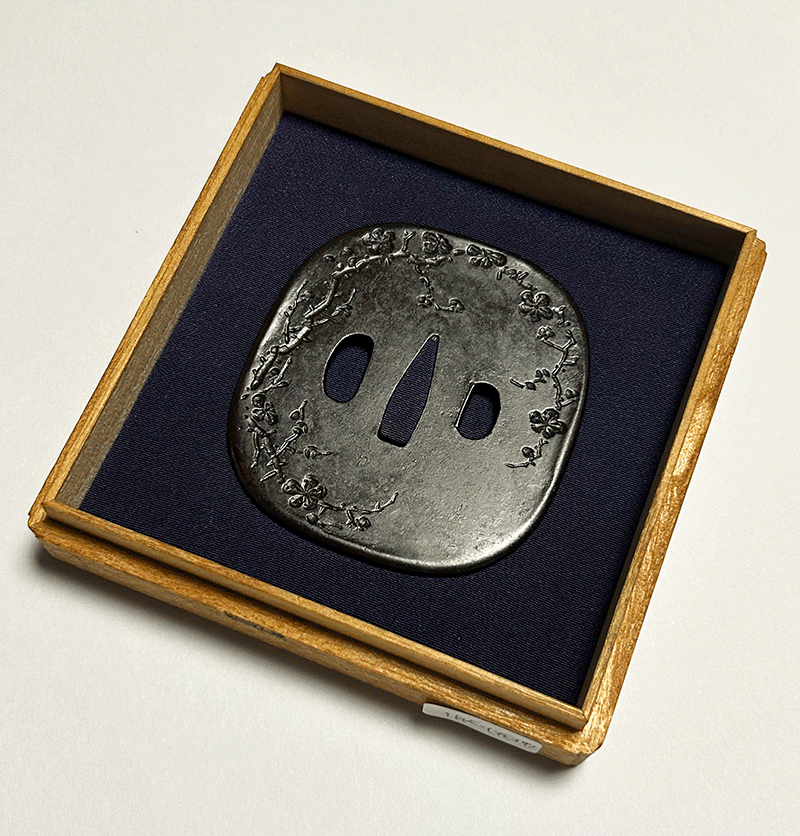
The orthodox house grounds, in fine above all on the , , and , with all-gold grounds on several , and besides, and a stone-grain or plain ground on a few pieces.

赤銅地

Technique

for the , and with gold, silver, and iro-e and inlay, for the , the gold-crest set in relief and motifs struck in flat inlay, the backs finished with fill-gold or plate-gold, fine on the details, the hand dense and well finished in the orthodox house manner.

Themes (seasonal festivals, courtly implements and the house canon)

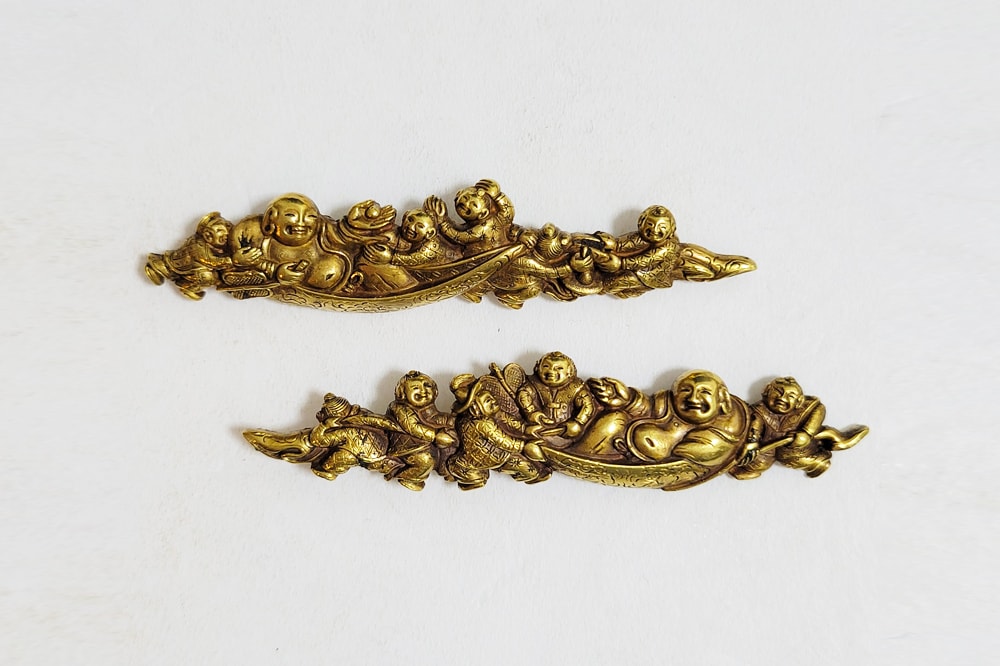
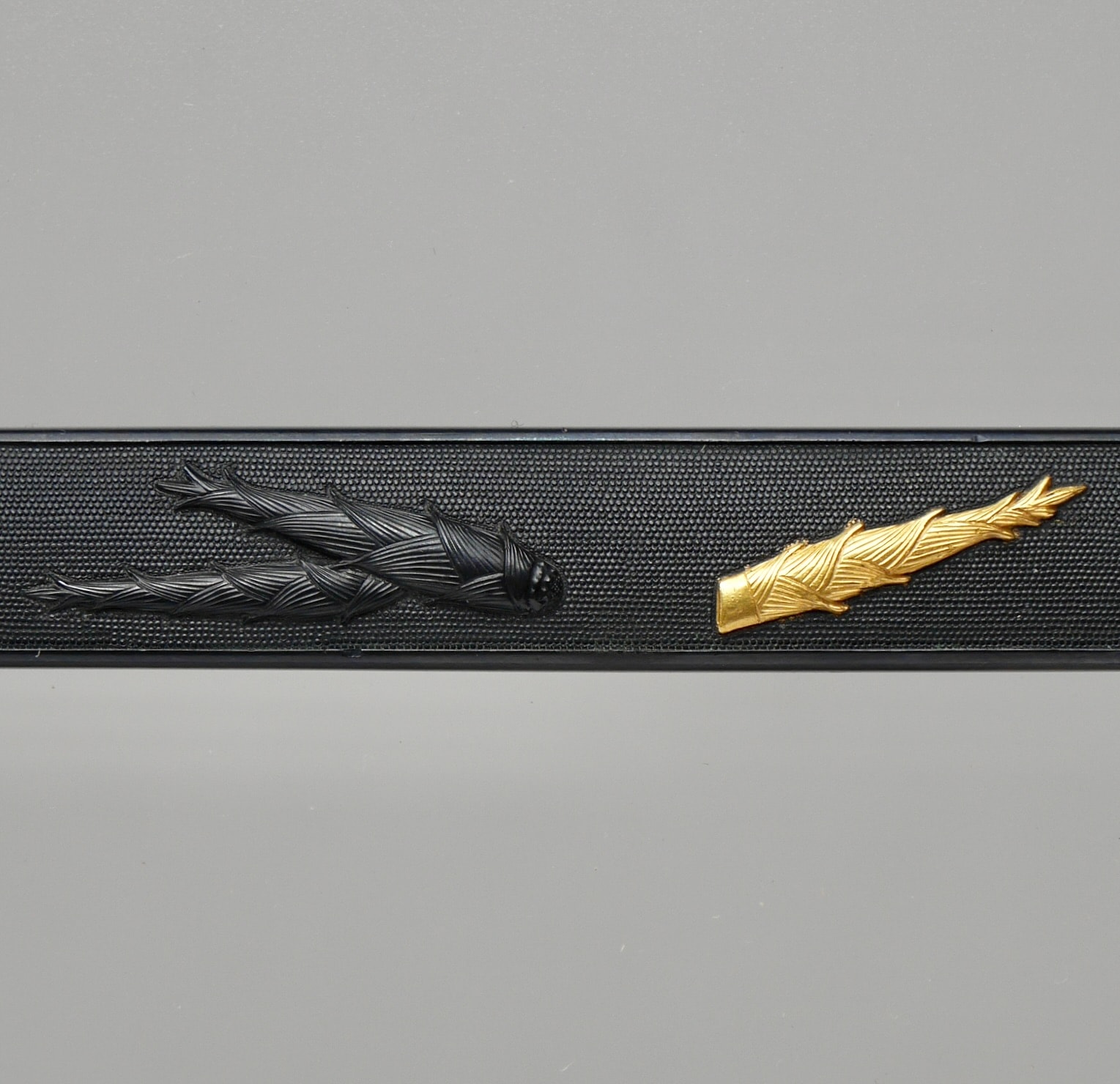
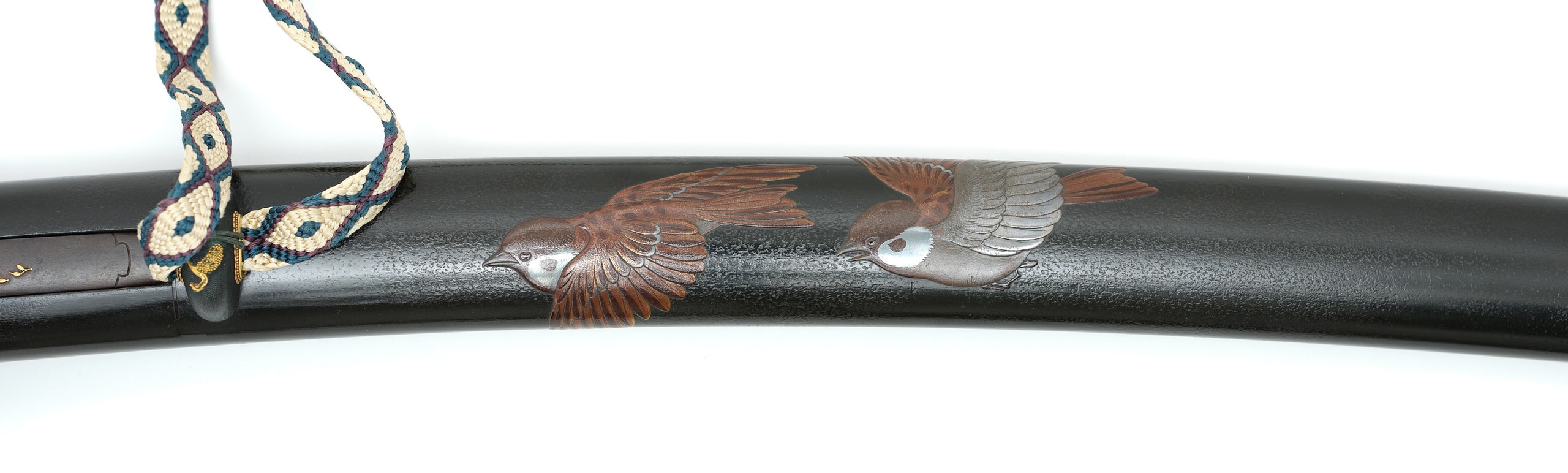
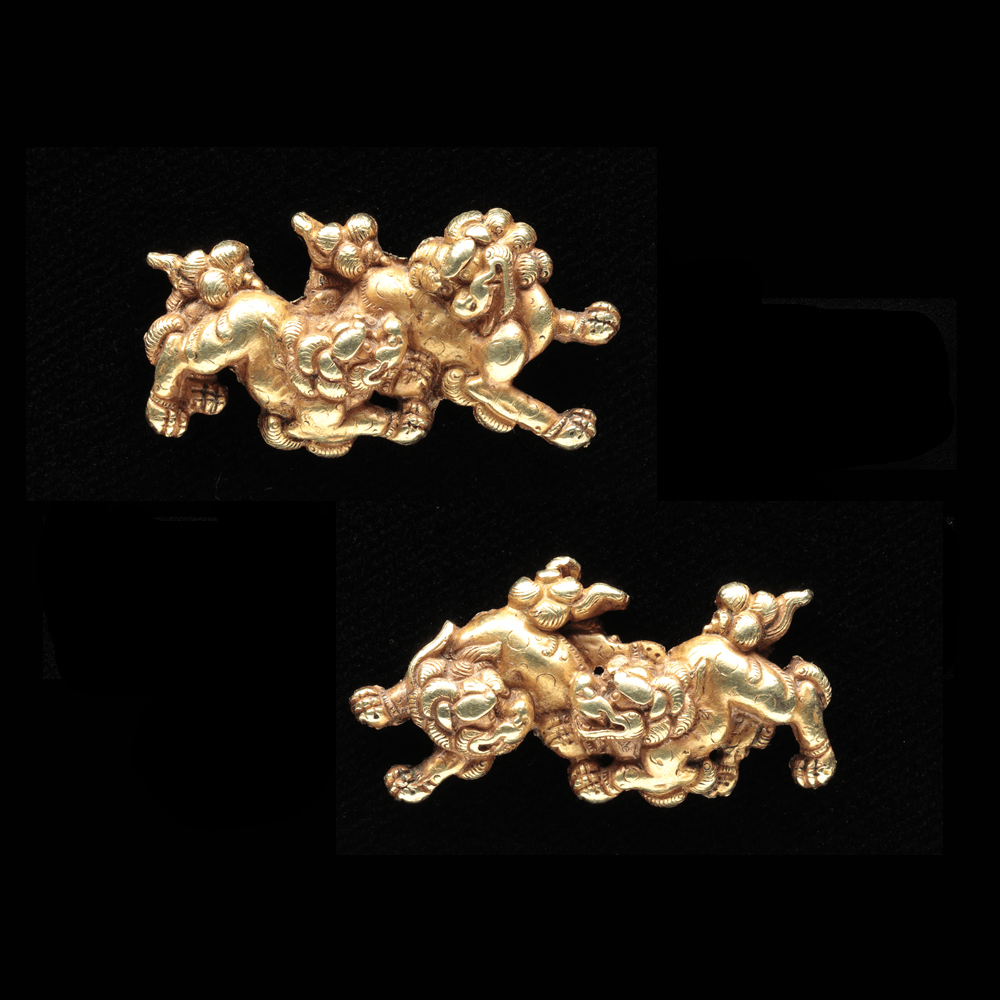
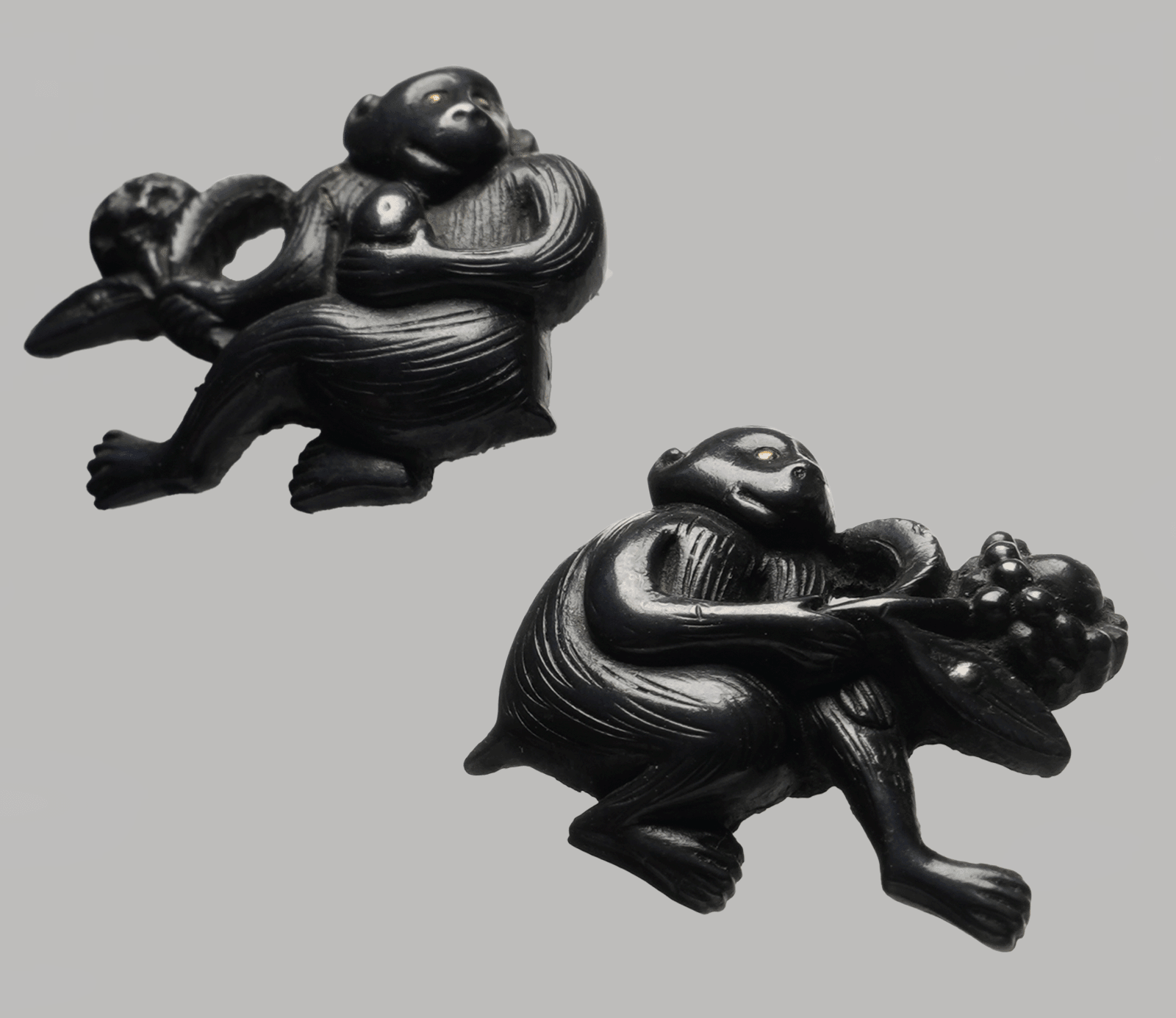
The five seasonal festivals, the standing hina, court and Noh and falconry implements, court music instruments, with the house lions and the auspicious deities Fukurokuju and Jurojin, and naturalist subjects, bamboo-and-sparrow, the zodiac animals, the wild boar and the salt-makers' shore, worked up to the dense, refined taste of the late and Bakumatsu age.

Seasonal festivals and courtly implements

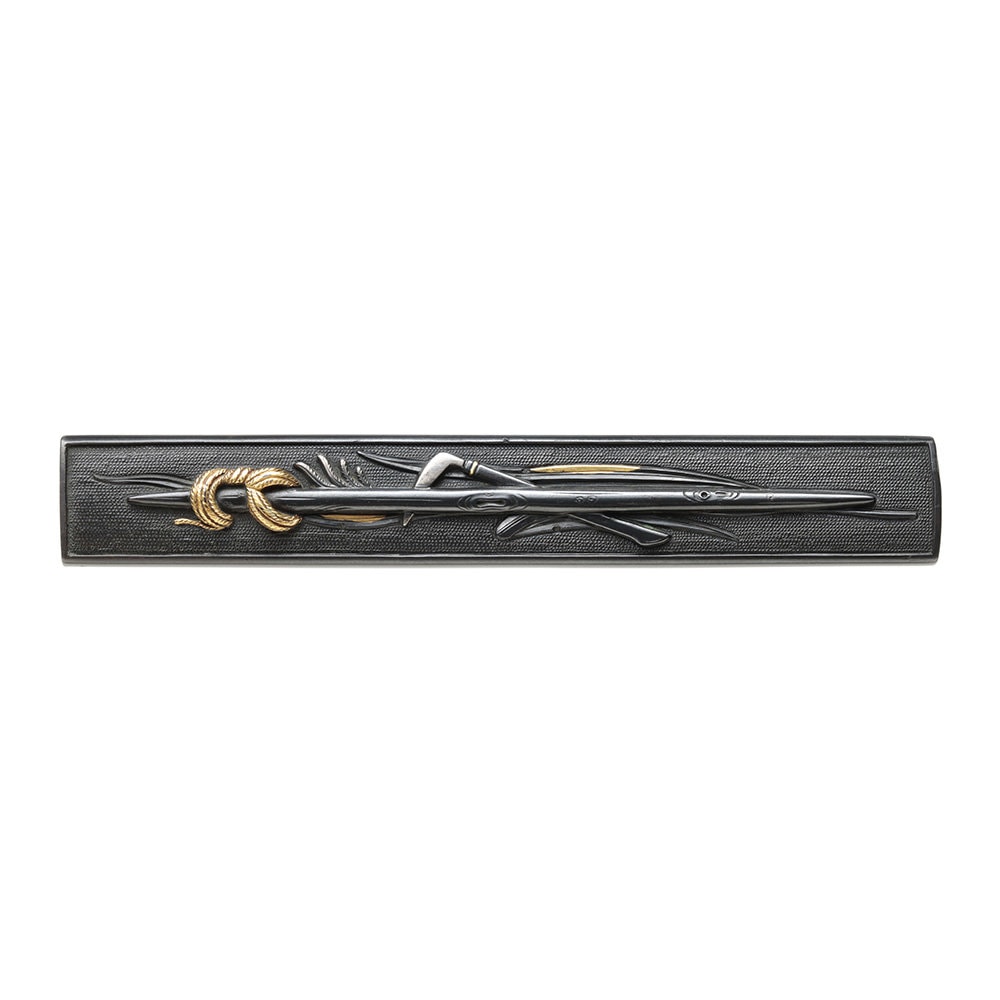
The five seasonal festivals, the standing hina of the third-month doll festival above all, with the court music instruments, the Noh and falconry implements and other courtly accoutrements among his repeated subjects, dense and refined.

立雛鷹taka
Lions, auspicious deities and naturalist subjects

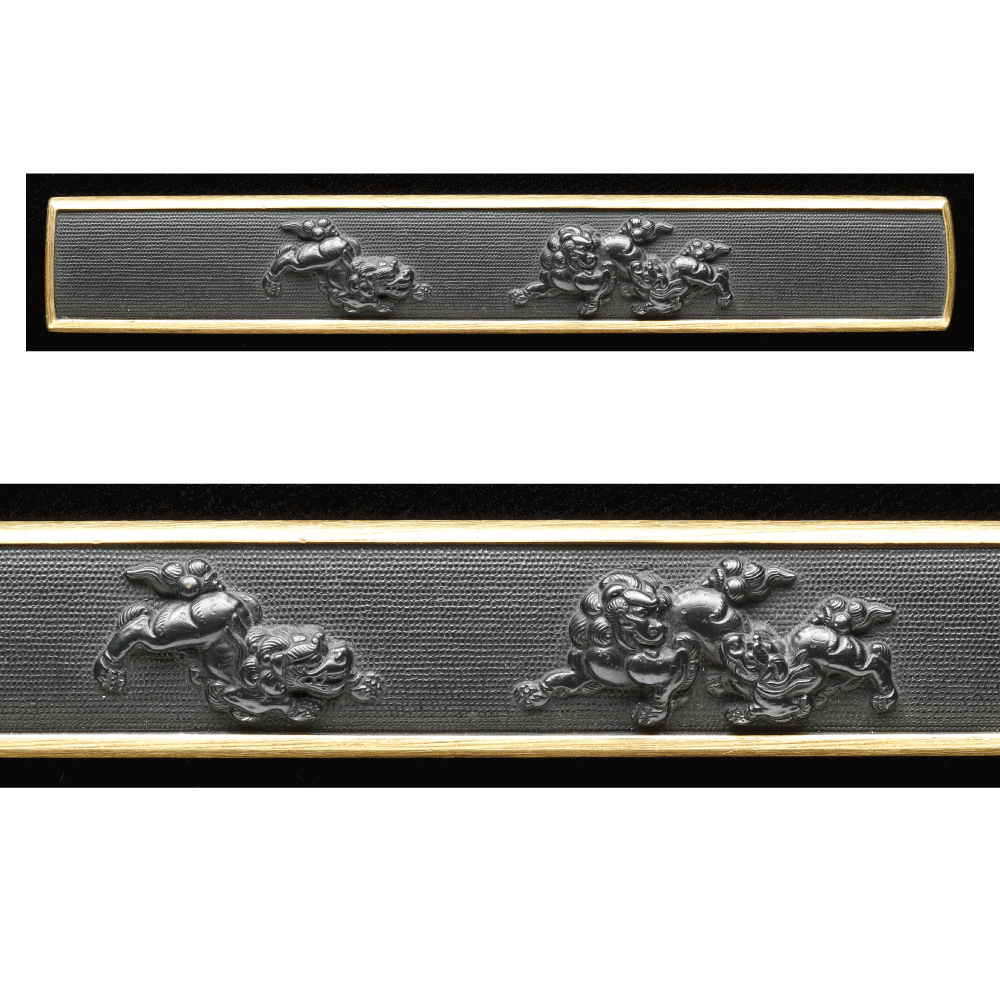
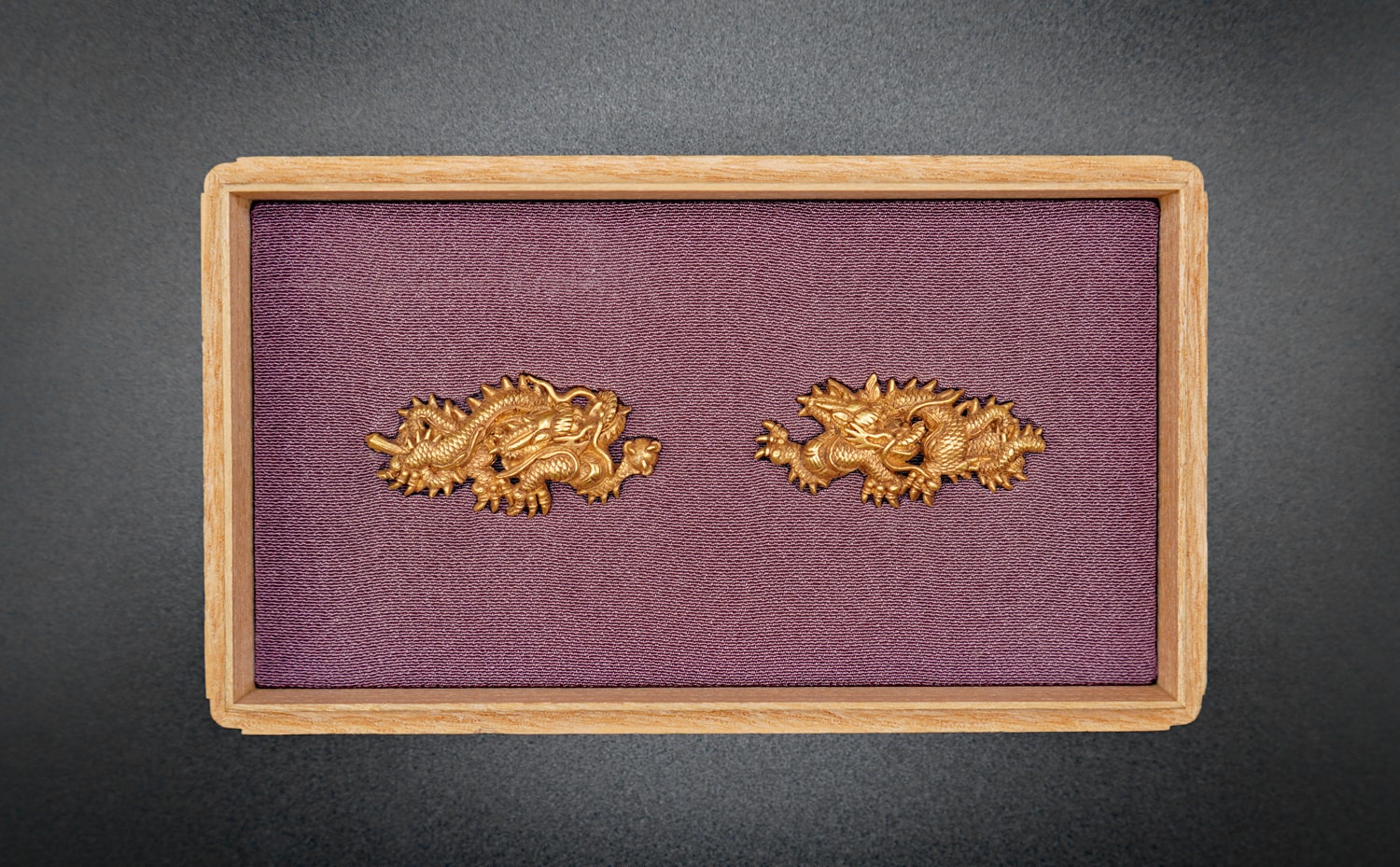
The house lions of the okite repertoire and the auspicious longevity deities Fukurokuju and Jurojin, with naturalist subjects, bamboo-and-sparrow, the zodiac animals and the wild boar, that the records connect to the townsman-carving inflection of the -resident later Goto.

福禄寿
Full iconography

Signature chronology

Placement
Dated signatures
Recorded signatures

Documentary note

Hojo signs with regularity, read 後藤光晃(花押) by his given name Mitsuaki, used across his career, or in the full formal long-signature 後藤四郎兵衛藤原光晃(花押); on the and he sometimes adds the commission formula 応需 with a year-date, the most valuable being 応需嘉永三年春三月後藤四郎兵衛藤原光晃(花押) on a five-festival set of Kaei 3 (1850), and on a banded small-sword he signs 後藤四郎兵衛藤原光晃彫之(花押). On his Tokuju great-and-small set, made on the commission of one Mito (応需三戸氏) and worked after Tsujo's design (以通乗図造之), every fitting carries a gold-inlay signature broken across the mounts, the whole reading 後藤四郎兵衛藤原光晃. As one of the late certifying heads, his own light-name 光晃 also stands as a on an earlier head's piece he appraised, never as his own carving: he certified the gold-crests of the litchi three-piece set to the ninth-house master Teijo (紋程乗 光晃, 名 程乗), and is recorded as himself having made the ground and the back-gold of that set while leaving the crests as Teijo's appraised work. Conversely, where the bare given name 延乗 stands as the attributed name on a Hojo himself cut (延乗作 光晃), it is the thirteenth master Enjo being appraised by Hojo, not Hojo's own self-signature. One small-sword in his group carries other fittings by other hands, the total-set gold mounts being the work of the Kyoto kinko Sato Yoshiteru (縁銘 義照彫之), a pupil of Araki Tomei, which should not be read as Hojo's sole work.

Scholarship

The records repeatedly say he is the most technically skilled of all the heads from the twelfth master Mitsumasa onward; this is his documented individuating character, but it is recited in the biography of nearly every setsumei rather than read off any one piece, so it is kept here and not used as a per-piece discriminator.

On a single bamboo-and-sparrow set the records say the strong influence of the townsman-carving is to be seen in the arrangement of the branches, the placement of the birds and the spatial treatment of the ground, which they connect to the new house-carving established after the Goto were settled in Edo; this reading rests on that one piece, so it is kept here as a single-source, piece-scoped observation rather than a general discriminator.

Designations

Kokuhō—
Jūyō Bunkazai—
Jūyō Bijutsuhin—
Gyobutsu—
Tokubetsu Jūyō1
Jūyō Tōken15

Elite Standing

0.08 across 16 designated works

Top 17% among makers

Provenance

1 documented provenance across certified works by Goto Hojo

Provenance Standing

0 works held in elite collections across 1 documented provenances

Top 50% among makers

Raw score: 2.00 / 10

Work Types

Distribution across 16 ranked works

Mitokoromono
956%
Other
744%

Signatures

Signature types across 16 ranked works

Currently Available

Lineage

TeacherGoto Shinjo
Goto Hojo
Students (3)
  1. 1.Goto Tenjo後藤典乗1 for sale2designated
  2. 2.Nobukiyo信清1 for sale6designated
  3. 3.Goto Mitsumasa後藤光正1designated

Goto School

Other artisans of the Goto school

  1. 1.Goto Joshin後藤乗真6 for sale67designated
  2. 2.Goto Yujo後藤祐乗1 for sale41designated
  3. 3.Goto Kenjo後藤顕乗1 for sale45designated
  4. 4.Goto Sojo後藤宗乗53designated
  5. 5.Goto Tokujo後藤徳乗1 for sale31designated
  6. 6.Goto Eijo後藤栄乗9 for sale31designated
  7. 7.Goto Teijo後藤程乗9 for sale41designated
  8. 8.Goto Renjo後藤廉乗3 for sale33designated
  9. 9.Goto Tsujo後藤通乗1 for sale29designated
  10. 10.Goto Kojo後藤光乗1 for sale25designated
  11. 11.Goto Enjo後藤延乗3 for sale19designated
  12. 12.Goto Sokujo後藤即乗11designated