応仁の乱が足利の体制を砕いた後、戦国の一世紀はほとんどすべての国を武装させた。この時代は選ぶ目に報いる。並の作は多いが、その傍らには第一級の注文打ちが立っている。
 NihontoWatchNihontoWatch
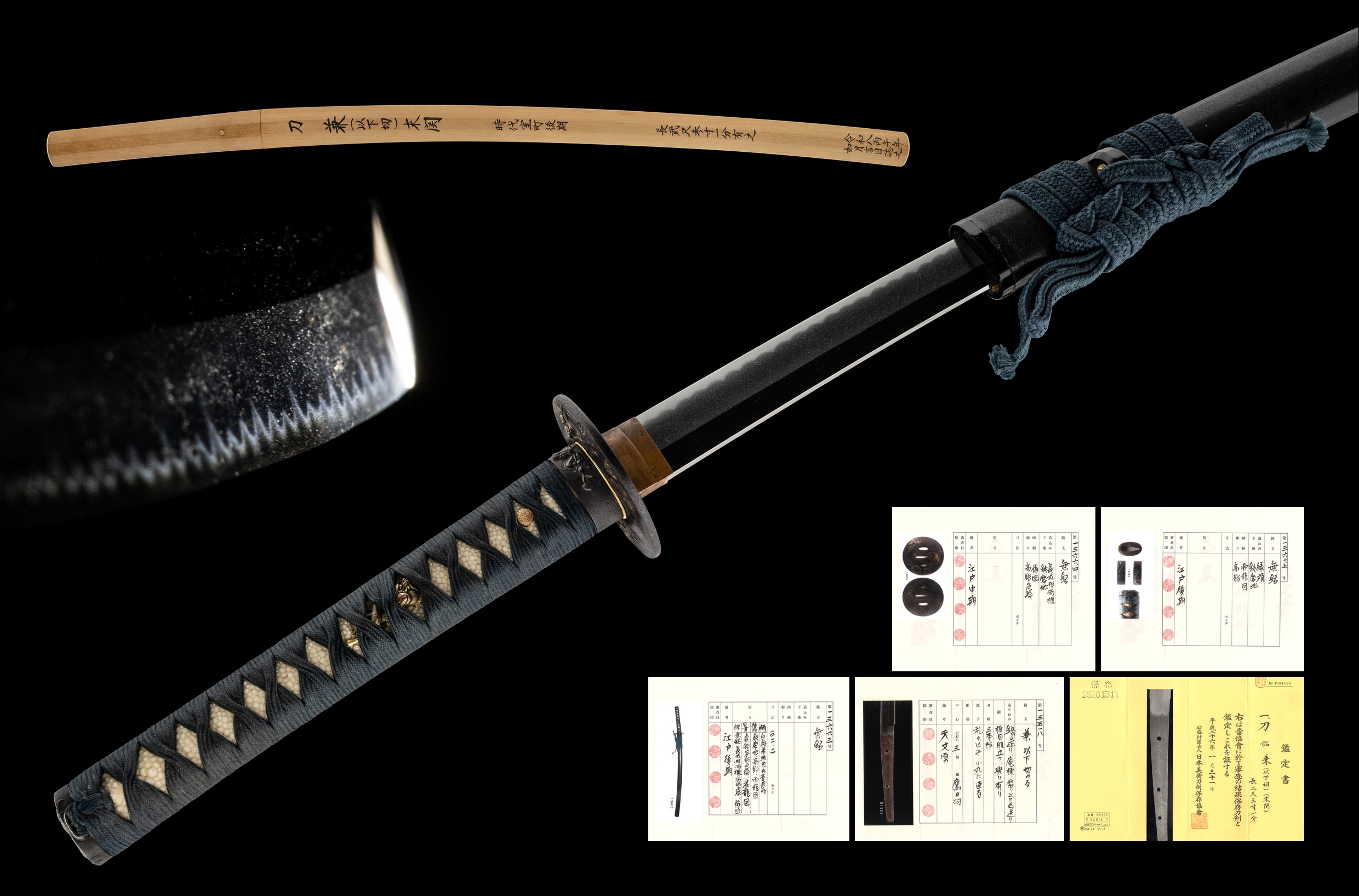
Sword production in Seki, in Mino province, traces its roots to smiths of the Kaneshige lineage who settled there toward the end of the Kamakura period, and by the late Muromachi period the district had become one of the great forging centres of Japan. The smiths active there after the Ônin War (1467-1477) are known collectively as Sue-Seki, prized for producing dependable blades built for the realities of the battlefield rather than for display. This katana carries that legacy directly: a shortened tang that once bore a fuller signature today preserves only a single bold character, 兼 (Kane), cut some five hundred years ago and still confidently struck. The blade has been reduced from an original cutting edge of over 80cm, and while the NBTHK has left the smith unnamed, the NTHK-NPO has attributed the work to Kanemoto, one of the most celebrated names to emerge from the Sue-Seki tradition. The jihada is a well-forged itame-hada mixed with mokume-hada, threaded with chikei and touched by shirake-utsuri, and the hamon is a textbook sanbonsugi, its togari peaks rising every third pass like a heartbeat, a pattern synonymous with the Kanemoto line since the second-generation Magoroku Kanemoto originated it in the 1520s. The bôshi turns back in a soft midare-komi with a slight ko-maru kaeri, a hallmark of Mino swordsmithing. The koshirae carries a story of its own. On the tsuba, the work of Nara Muneyoshi, fifth-generation head of the Nara school, a hawk stares down from among plum blossoms, gold-inlaid and sharp-eyed. That same hawk reappears in the takanoha yasurime cut into the nakago itself, hawk-feather file marks that echo the fitting above. The fuchi-kashira carries a young rain dragon caught mid-motion, still growing into its strength, while gilt copper menuki depict the dragon in its earlier, earthbound form. A sayagaki by Nozomi-san confirms the piece’s story in ink as well as in steel. For a collector taking their first step into Japanese swords, or seasoned hands drawn to a five-hundred-year-old blade with genuine presence, this is a rewarding place to start.
取扱店 Unique Japan
この作品は売約済みです
販売店の記載のまま
室町時代
応仁の乱が足利の体制を砕いた後、戦国の一世紀はほとんどすべての国を武装させた。この時代は選ぶ目に報いる。並の作は多いが、その傍らには第一級の注文打ちが立っている。
銘が正しい、または無銘でも年代・国・系統を確実に指摘できる、保存に値する真正の作と鑑定されたものです。
日本美術刀剣保存協会(NBTHK)は、1948年に設立され、文化庁の監督を受ける公益財団法人で、東京・刀剣博物館に本部を置きます。専門の審査員が出品作を直接審査し、美術的・歴史的価値に応じた鑑定書を発行します。NBTHKの鑑定書は、日本刀および刀装具の真正性を示す最も広く認知された基準です。
NBTHK公式サイトAll swords come with a three-day inspection period beginning from the date of delivery. If not satisfied, the sword may be returned within this period for a full refund of the purchase price. Outside of this period, all sales are final. Swords purchased on a layaway payment plan are not eligible for the three-day inspection period.