応仁の乱が足利の体制を砕いた後、戦国の一世紀はほとんどすべての国を武装させた。この時代は選ぶ目に報いる。並の作は多いが、その傍らには第一級の注文打ちが立っている。
 NihontoWatchNihontoWatch
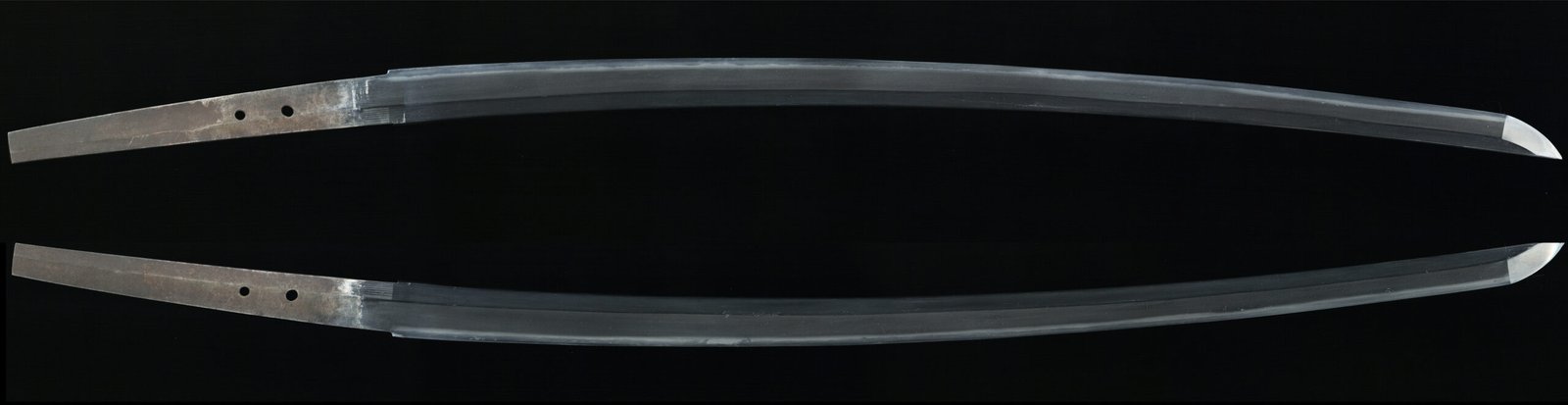
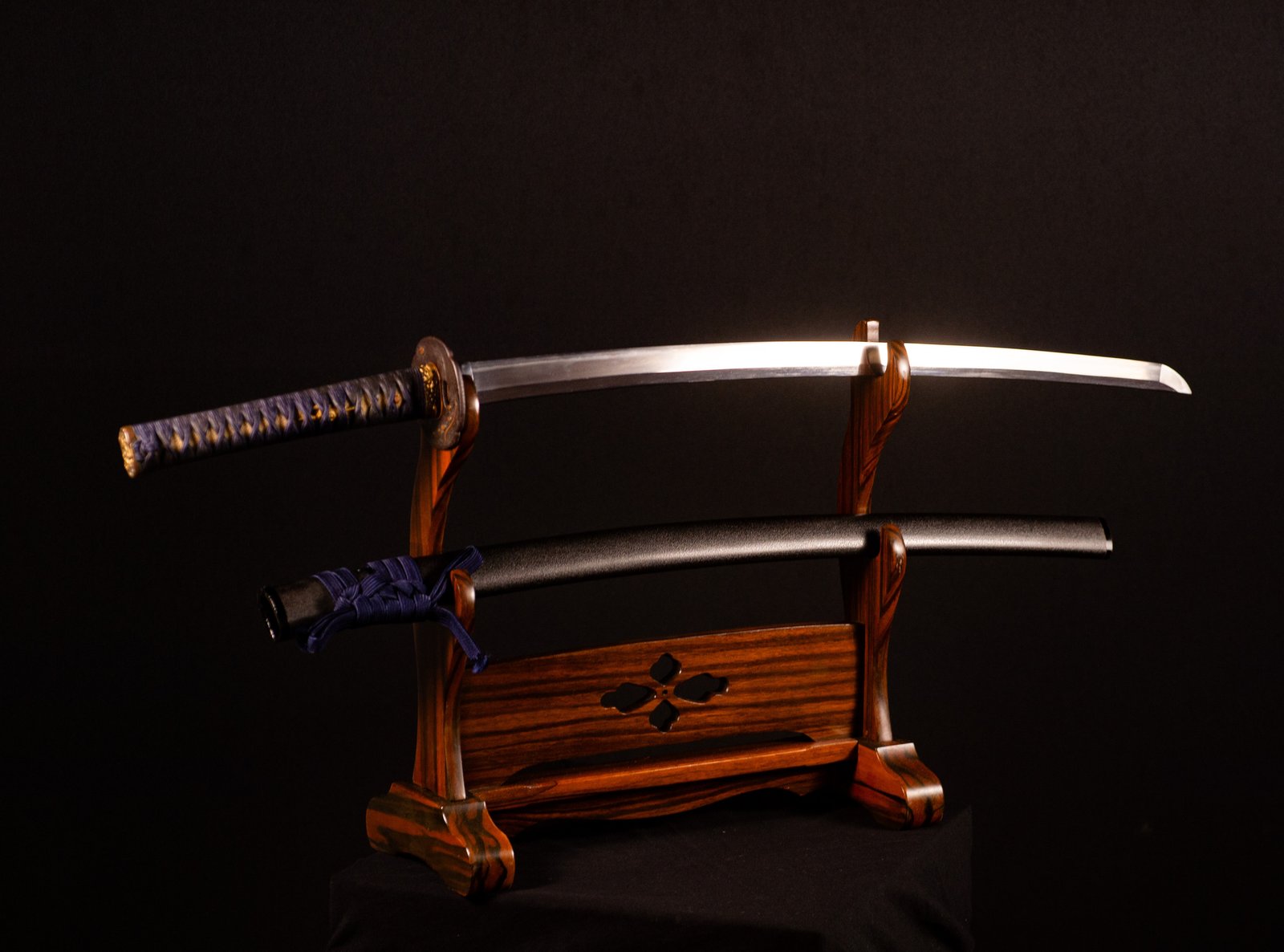
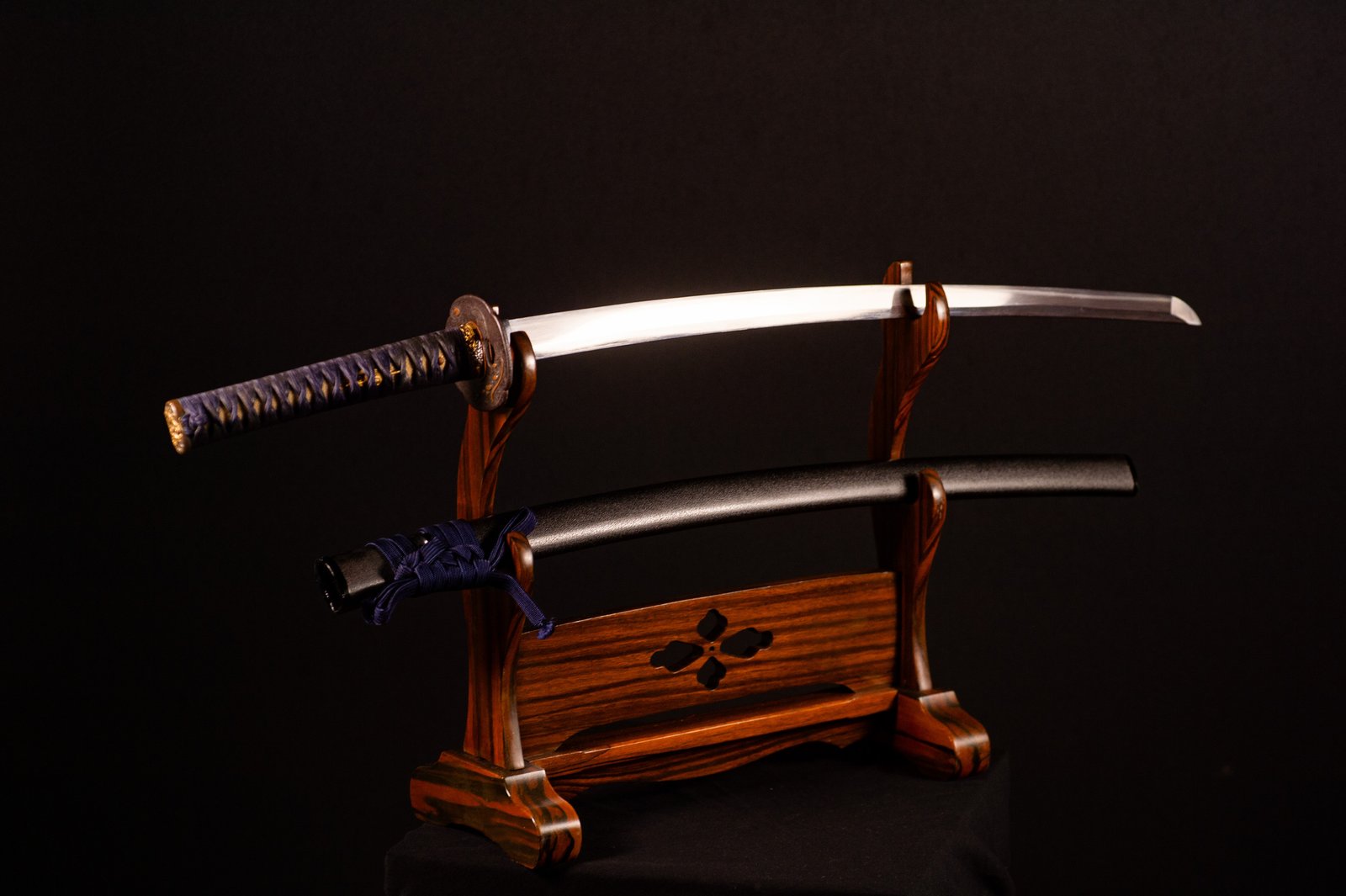
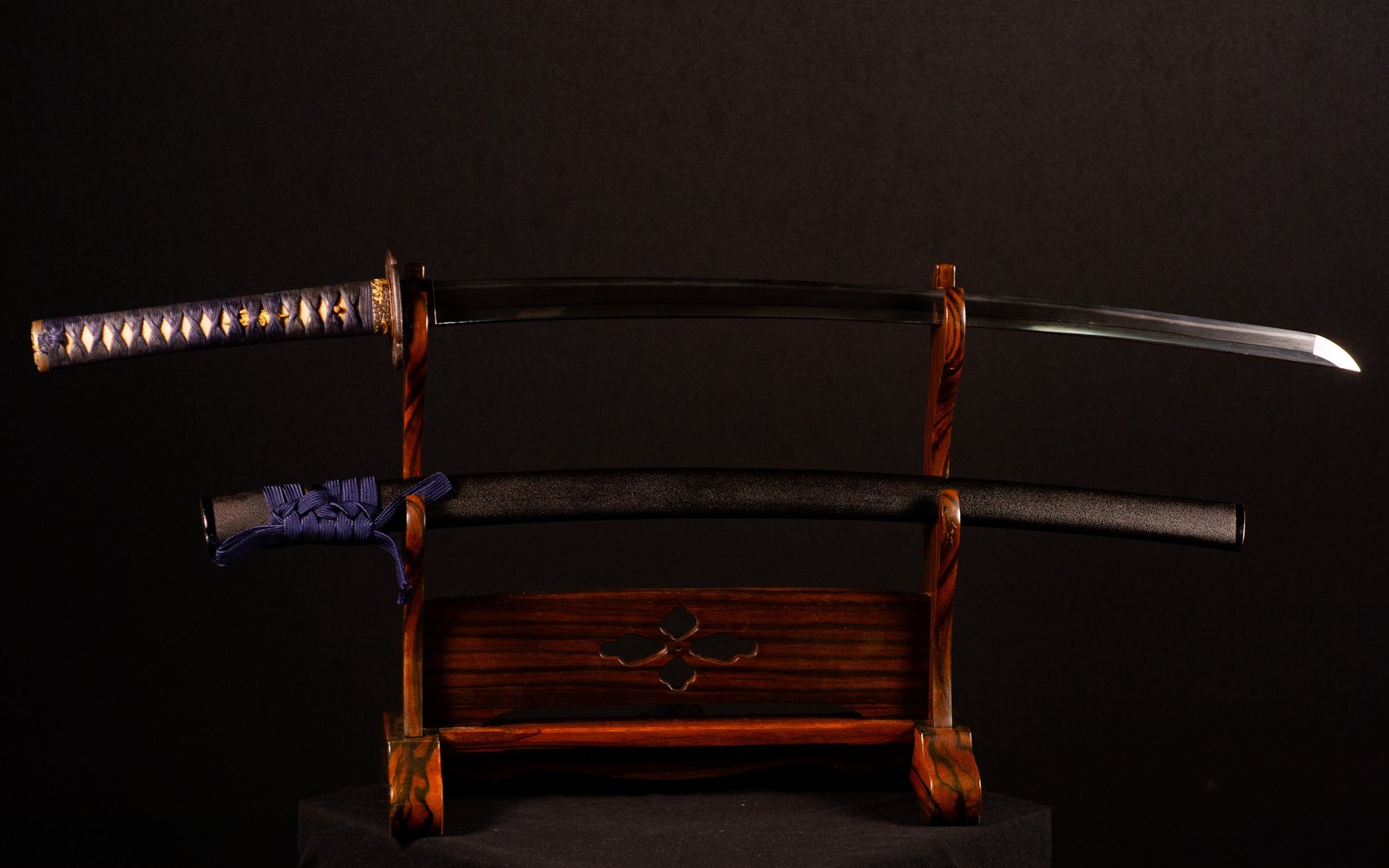
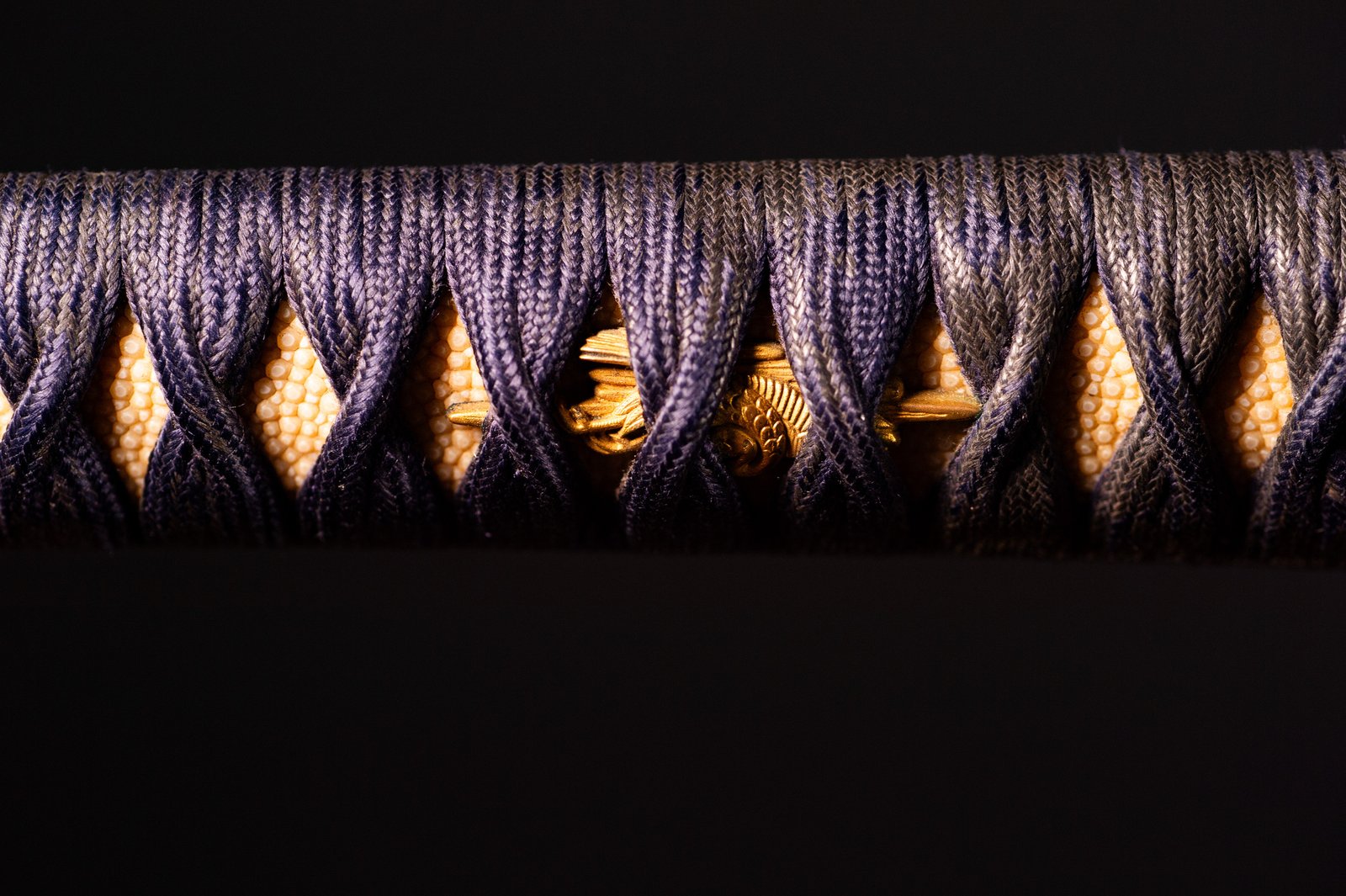
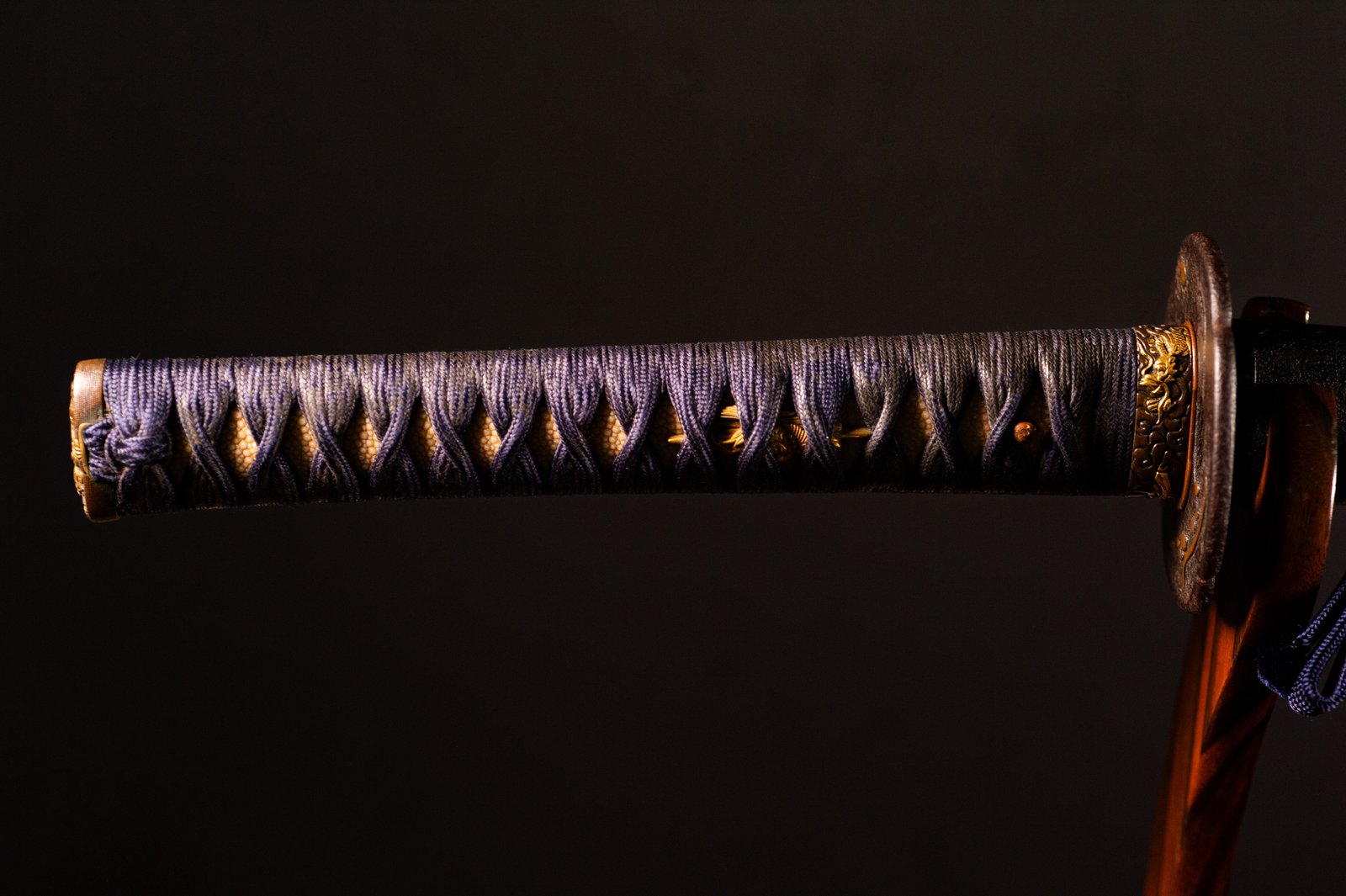
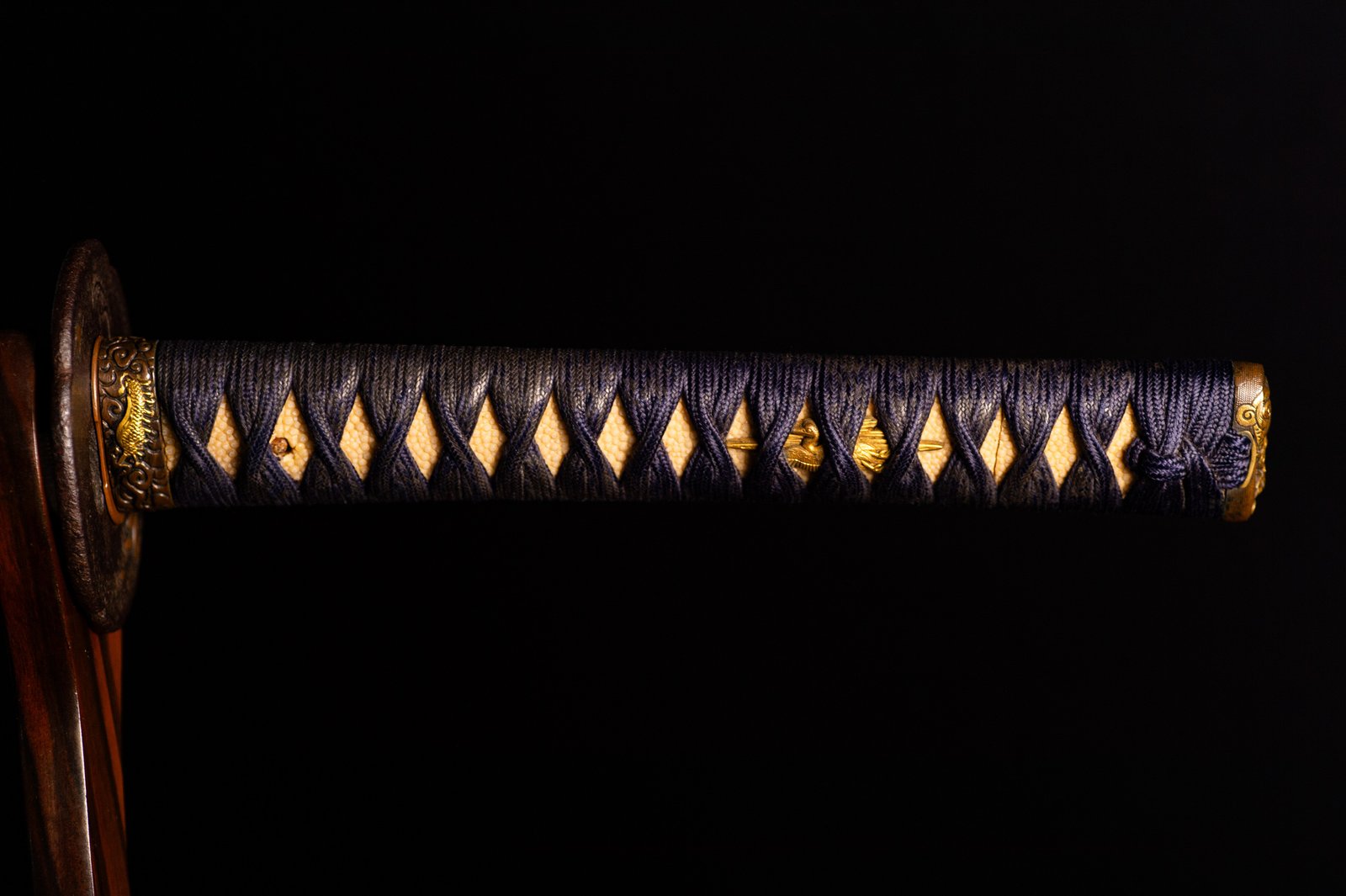
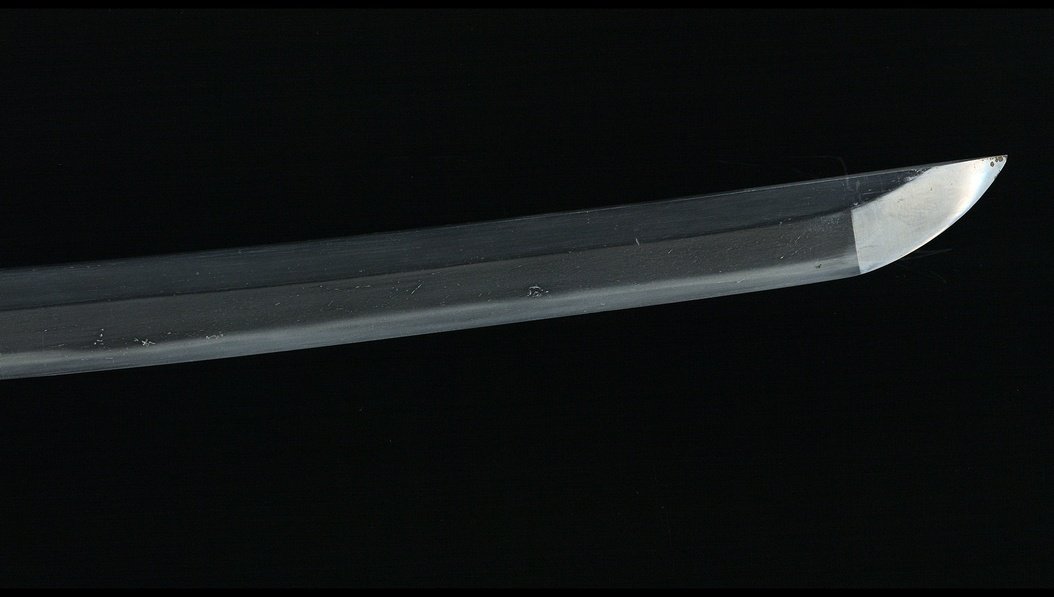
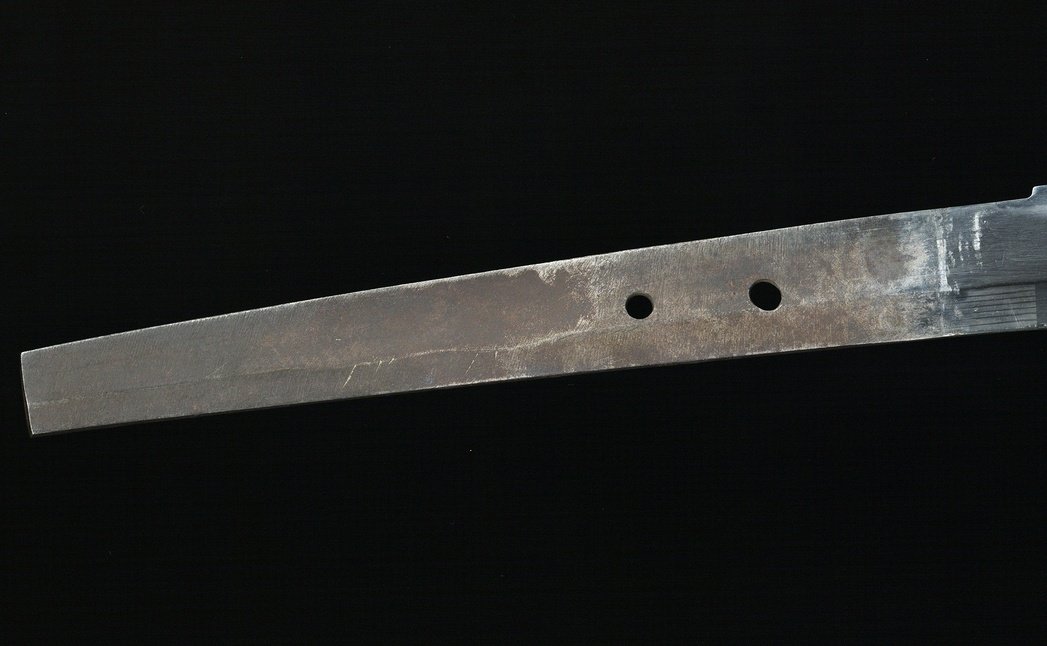
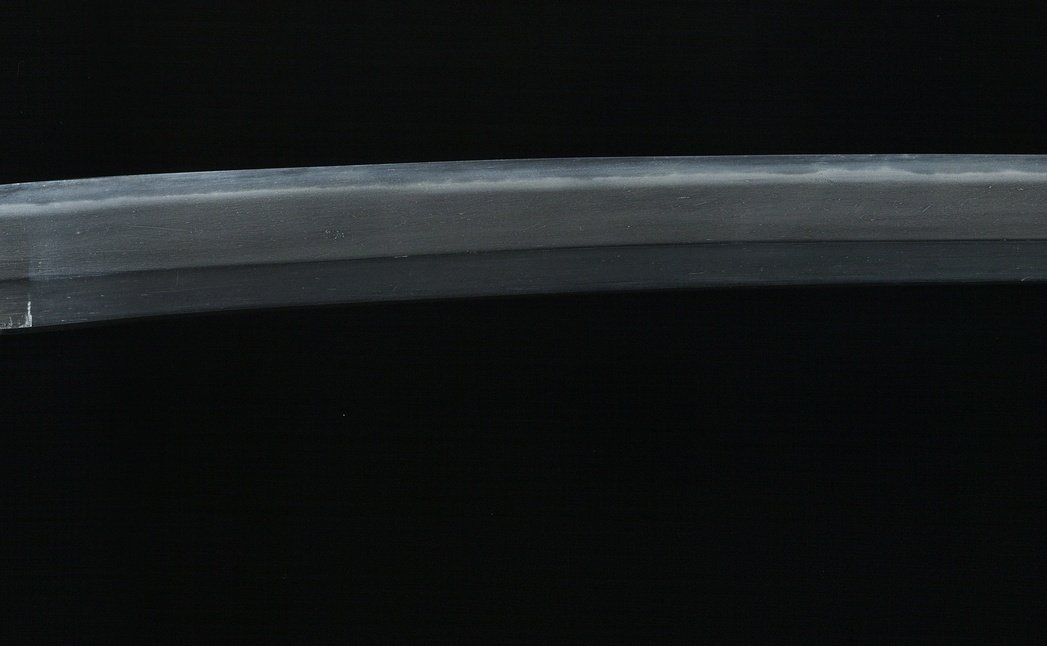
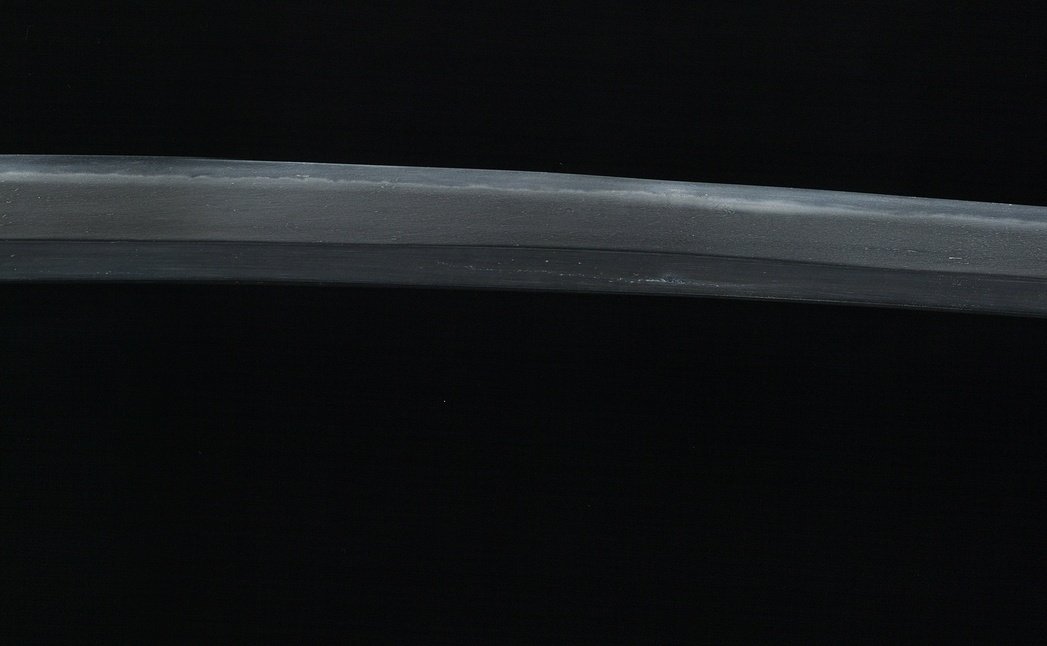
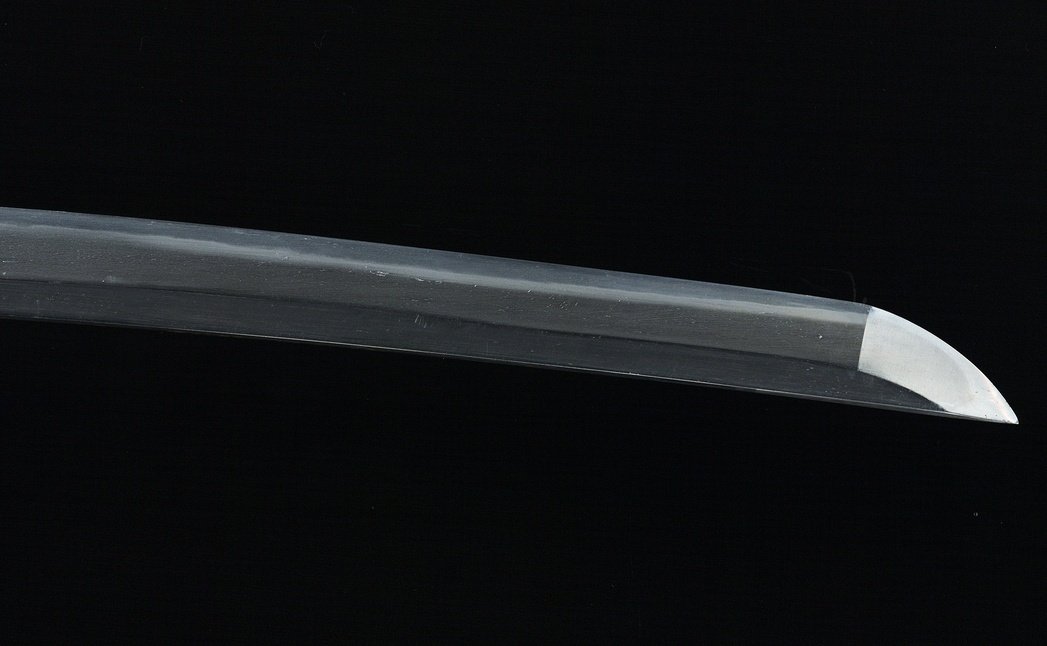
Shinshintō Period · Awa Province · NBTHK Hozon · 65.9 cm Nagasa · Complete Purple & Gold Koshirae A refined and highly distinctive Japanese katana from the late Edo period, attributed by the NBTHK to the Kaifu tradition (海部) of Awa Province, present-day Tokushima. The unsigned blade is accompanied by NBTHK Hozon Tōken certification and its original Japanese registration document from Kagawa Prefecture, providing a strong documentary foundation for this historically significant shinshintō sword. With a registered nagasa of approximately 65.9 cm, a well-defined sori of 1.7 cm and two mekugi-ana, the blade possesses substantial and elegantly curved proportions characteristic of a full-length katana. Of particular interest is its attribution to the Kaifu tradition, one of Japan’s longest-lived regional swordmaking lineages. Originating in Awa Province, Kaifu smiths maintained an active tradition spanning several centuries and became particularly associated with the military culture of the region and the maritime forces of Awa. The blade is complemented by a striking and unusually coloured koshirae, combining purple-indigo silk, pale samegawa, black lacquer and an elegant decorative programme dominated by dragons and gilt metalwork. The result is a sword combining historical interest, recognised Japanese certification and an exceptionally attractive mounting with a character markedly different from more conventional black-mounted katana. The Kaifu Tradition (海部) The NBTHK attributes this unsigned blade to the Kaifu tradition of Awa Province. Kaifu occupies a particularly interesting position in the history of Japanese swordmaking. Rather than representing a short-lived workshop or isolated lineage, it developed into one of Japan’s longest-running regional sword traditions, with production extending across several historical periods. The tradition originated in southern Awa Province, in what is now Tokushima Prefecture on the island of Shikoku. Kaifu smiths continued producing swords from the medieval period through the Edo era, with only a significant interruption following the fall of Kaifu Castle in 1575. During the Edo period, the ruling Hachisuka family brought Kaifu smiths into the castle town of Tokushima, where the tradition continued through the later years of the Tokugawa shogunate. This chronology corresponds naturally with the NBTHK attribution of the present blade to the Shinshintō period. Kaifu and the Maritime Tradition of Awa One of the most distinctive historical aspects of the Kaifu school is its association with the maritime forces of Awa Province. Kaifu smiths traditionally supplied blades to warriors connected with the regional naval forces, giving the school an unusual relationship with Japan’s maritime military culture. Certain Kaifu blades became famous for incorporating highly unusual practical features, including examples with a saw-like spine known as nokogiri-ba, reportedly associated with cutting ropes and rigging aboard vessels. Although the present katana does not display such a feature, this historical association provides important context for understanding the distinctive identity of the Kaifu tradition. Among the best-known historical swords associated with the school is the celebrated Iwakiri Kaifu, traditionally connected with the warlord Miyoshi Chōkei and later with the Kuroda family. The Blade (Tōshin) The blade has a registered length of approximately 65.9 cm, equivalent to 2 shaku 1 sun 7.5 bu. Its sori of 1.7 cm creates a clearly defined and elegant curvature, giving the sword a balanced full-length katana profile. The overall sugata is substantial without appearing excessively heavy, combining practical proportions with the flowing silhouette expected from a traditionally forged Japanese sword. The blade remains unsigned and should therefore be understood according to the attribution established by the NBTHK rather than assigned to an individual smith. Unsigned Blade (Mumei) The nakago bears no surviving smith’s signature and the blade is therefore classified as mumei. In Japanese sword scholarship, an unsigned blade is not necessarily unattributable. Characteristics including shape, construction, forging, tempering and regional workmanship can allow specialist organisations to identify a blade with a particular school or tradition. In this case, the NBTHK has attributed the sword to the Kaifu tradition and to the Shinshintō period. This attribution should be considered the principal scholarly identification of the blade. The Nakago The nakago presents an aged surface consistent with an antique Japanese sword and displays two mekugi-ana. The presence of multiple mounting holes records changes in the way the blade has been mounted during its history. No signature is present. The historical surface and patination of the nakago should be preserved, as these characteristics form an important part of the sword’s physical history. The Hamon The blade displays a restrained but clearly visible hardened edge whose movement develops along the length of the sword. Rather than relying upon an excessively flamboyant temper pattern, the visual character of the blade is defined by the relationship between its curvature, polished surface and subtle activity along the cutting edge. Under suitable directional lighting, the transition between hardened edge and body of the blade becomes considerably more apparent, revealing the workmanship that contributed to the NBTHK’s attribution to the Kaifu tradition. The Kissaki The blade terminates in a well-defined kissaki whose geometry remains balanced with the proportions of the sword. The curvature continues naturally toward the point, giving the blade a controlled and cohesive profile from the base through to the tip. The polished point provides a clear conclusion to the overall sugata and contributes to the elegant appearance of the sword. The Koshirae The katana is accompanied by an unusually attractive complete koshirae distinguished by its combination of purple-indigo silk, black lacquer and gold decoration. This palette immediately sets the sword apart from the more conventional black or brown mountings commonly encountered on Edo-period Japanese swords. The fittings follow a broadly coherent decorative programme centred around dragons, animals and natural motifs executed in gold against dark metal surfaces. The restrained black saya serves as a visual counterbalance to the more elaborate handle fittings, allowing the gold decoration and purple textile elements to remain the principal accents of the mounting. The Tsuka The tsuka is wrapped in distinctive purple-indigo tsuka-ito arranged in traditional fashion over pale samegawa. The contrast between the deep coloured silk and the lighter ray skin produces a particularly striking visual effect. This colour choice gives the mounting a more individual character than conventional black wrapping while remaining entirely compatible with the refined aesthetic of traditional Japanese sword furniture. The diamond-shaped openings of the wrapping reveal the pale samegawa and the small decorative menuki beneath. The Menuki The menuki are small gilt fittings depicting bird figures. Their warm golden colour appears through the openings of the purple-indigo wrapping, creating subtle points of contrast along the handle. The scale of the decoration remains restrained, ensuring that the menuki enrich the mounting without visually dominating it. These small naturalistic figures add another layer to the decorative vocabulary of the complete koshirae. The Fuchi The fuchi is richly decorated with a scaled dragon rendered in gilt relief. The dragon extends dynamically across the fitting, its scales and body carefully modelled against the darker ground. The contrast between gold and the surrounding dark metal creates a strong visual focal point immediately adjacent to the tsuba. Dragons occupy a central position in Japanese decorative arts and are traditionally associated with power, water, protection and supernatural authority. Its inclusion here establishes the principal iconographic theme of the mounting. The Kashira The matching kashira continues the gilt decorative programme. Its surface combines scrolling cloud forms with a small animal figure, executed in relief against the darker metal background. The workmanship visually connects the end of the handle with the more elaborate fuchi, producing a coherent pair of terminal fittings. Together, the fuchi-kashira give the handle a sophisticated decorative character while maintaining the strong dark-and-gold palette of the mounting. The Tsuba The tsuba is constructed from iron and presents different decorative treatments on its two faces. One side features a dragon highlighted in gold takazōgan, continuing the principal dragon theme established by the fuchi. The opposite side incorporates vegetal decoration executed with gold nunome-style detailing. This contrast between figurative and foliate decoration gives the guard additional visual complexity while retaining a unified material palette of dark iron and gold. The naturally aged iron surface provides an appropriate historical counterpoint to the brighter gilt elements. The Saya The saya is finished in glossy black lacquer. Unlike the elaborate handle fittings, the scabbard remains deliberately plain and undecorated. This restraint is highly effective within the complete composition, preventing the mounting from becoming visually excessive and allowing the gold metalwork and unusual purple-indigo textile elements to attract attention. The polished black surface also reinforces the formal character of the sword. The Sageo The saya is accompanied by a matching purple-indigo sageo. Its colour closely corresponds to the tsuka-ito, creating visual continuity between handle and scabbard. This coordinated use of textile colour is one of the most distinctive aesthetic elements of the complete mounting. NBTHK Hozon Tōken Certificate The blade is accompanied by an official NBTHK Hozon Tōken certificate. The Nihon Bijutsu Tōken Hozon Kyōkai is the principal Japanese organisation dedicated to the study and preservation of traditionally manufactured Japanese art swords. The certificate identifies the blade as: Mumei – Kaifu (無銘・海部) and places it within the Shinshintō period. The Hozon designation confirms that the blade has passed NBTHK examination and has been recognised as an authentic Japanese sword worthy of preservation. For collectors, this specialist attribution is particularly important for an unsigned blade because it provides a recognised scholarly identification of its tradition and historical period. Japanese Registration (Torokusho) The sword retains its original Japanese Jūhō Tōken Rui Tōrokushō registration document from Kagawa Prefecture. The document records the blade as a Japanese sword with a length of approximately 65.9 cm, a curvature of approximately 1.7 cm and two mekugi-ana. The surviving registration dates to 16 September 2010. The torokusho forms part of Japan’s national system for the legal registration and preservation of traditionally manufactured swords. Together with the NBTHK certificate, it provides an important documentary history for the blade. Condition The blade remains in a state that allows its overall geometry, hardened edge and principal metallurgical characteristics to be appreciated. The nakago retains its historical surface and shows two mekugi-ana, while remaining unsigned as recorded by the NBTHK. The koshirae retains a particularly attractive overall appearance, with its purple-indigo textile work, pale samegawa, gold-highlighted fittings and glossy black saya forming a visually coherent ensemble. As expected from an antique Japanese sword and historical mounting, natural signs of age and use are present and should be regarded as part of the object’s history. Collector’s Value This katana offers an attractive combination of documented attribution, regional historical interest, recognised Japanese certification and a highly distinctive complete mounting. The attribution to the Kaifu tradition is particularly compelling. With a history spanning centuries and a close association with Awa Province and its maritime military culture, Kaifu represents one of the more individual regional traditions within Japanese swordmaking. The blade’s Shinshintō dating demonstrates that this long-established tradition remained active into the final decades of the Edo period. Its NBTHK Hozon certification is especially important because the blade is unsigned. Rather than relying upon a speculative commercial attribution, its identification as Kaifu comes directly from the recognised Japanese appraisal organisation responsible for the preservation and study of the Japanese art sword. The original Kagawa torokusho adds another layer of Japanese documentation and records the physical characteristics of the blade. From an aesthetic perspective, the complete koshirae provides substantial additional appeal. Purple-indigo silk over pale samegawa, gilt bird menuki, dragon fittings, dark iron and glossy black lacquer create a memorable combination that distinguishes this sword immediately from more conventionally mounted examples. A distinctive and well-documented Shinshintō katana attributed by the NBTHK to the historic Kaifu tradition of Awa Province. Combining a well-proportioned 65.9 cm blade, NBTHK Hozon certification, original Japanese registration and an unusually elegant purple-and-gold dragon koshirae, this sword represents an attractive opportunity for collectors seeking a certified nihontō with strong regional identity, historical interest and exceptional display character.

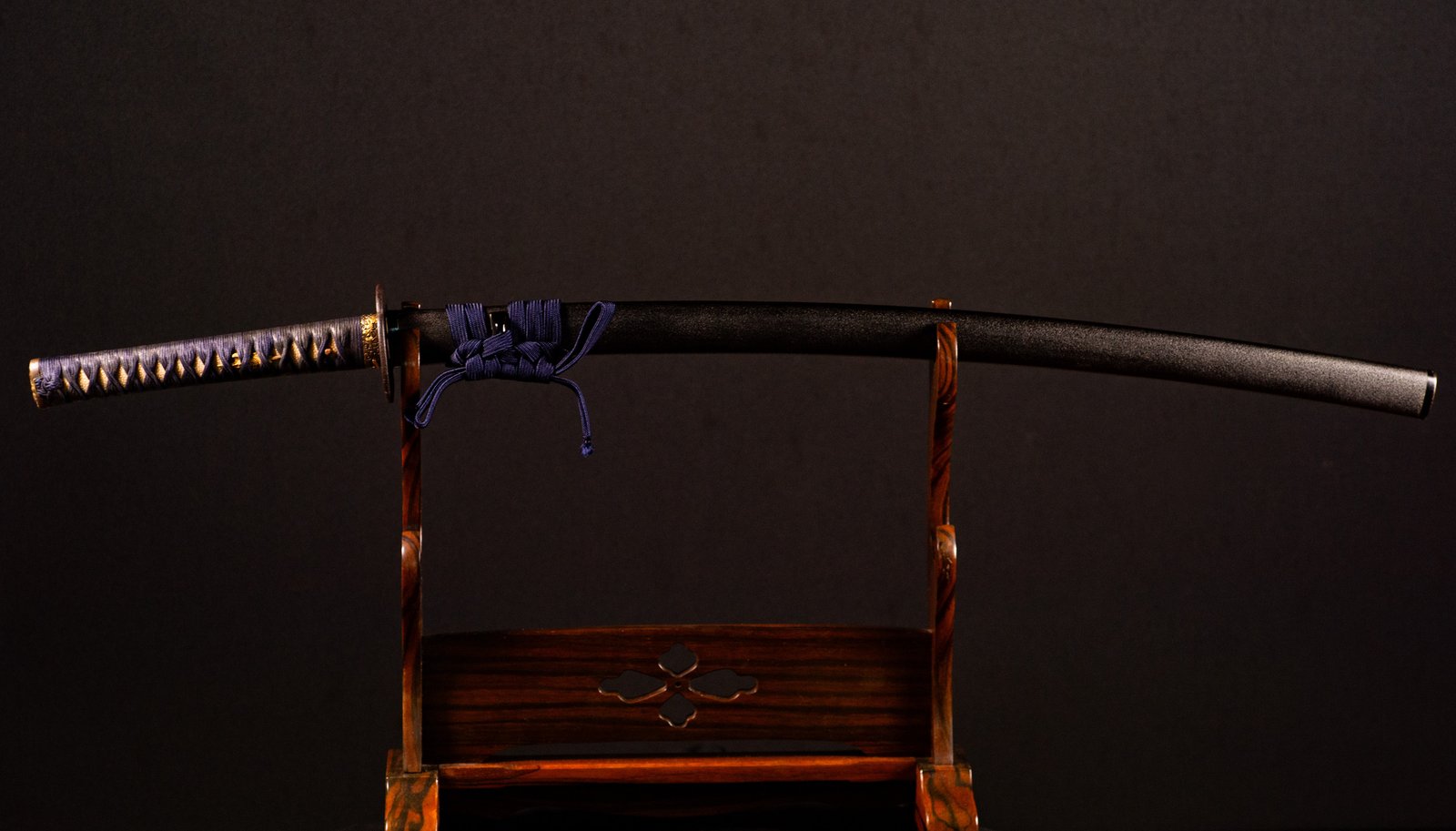
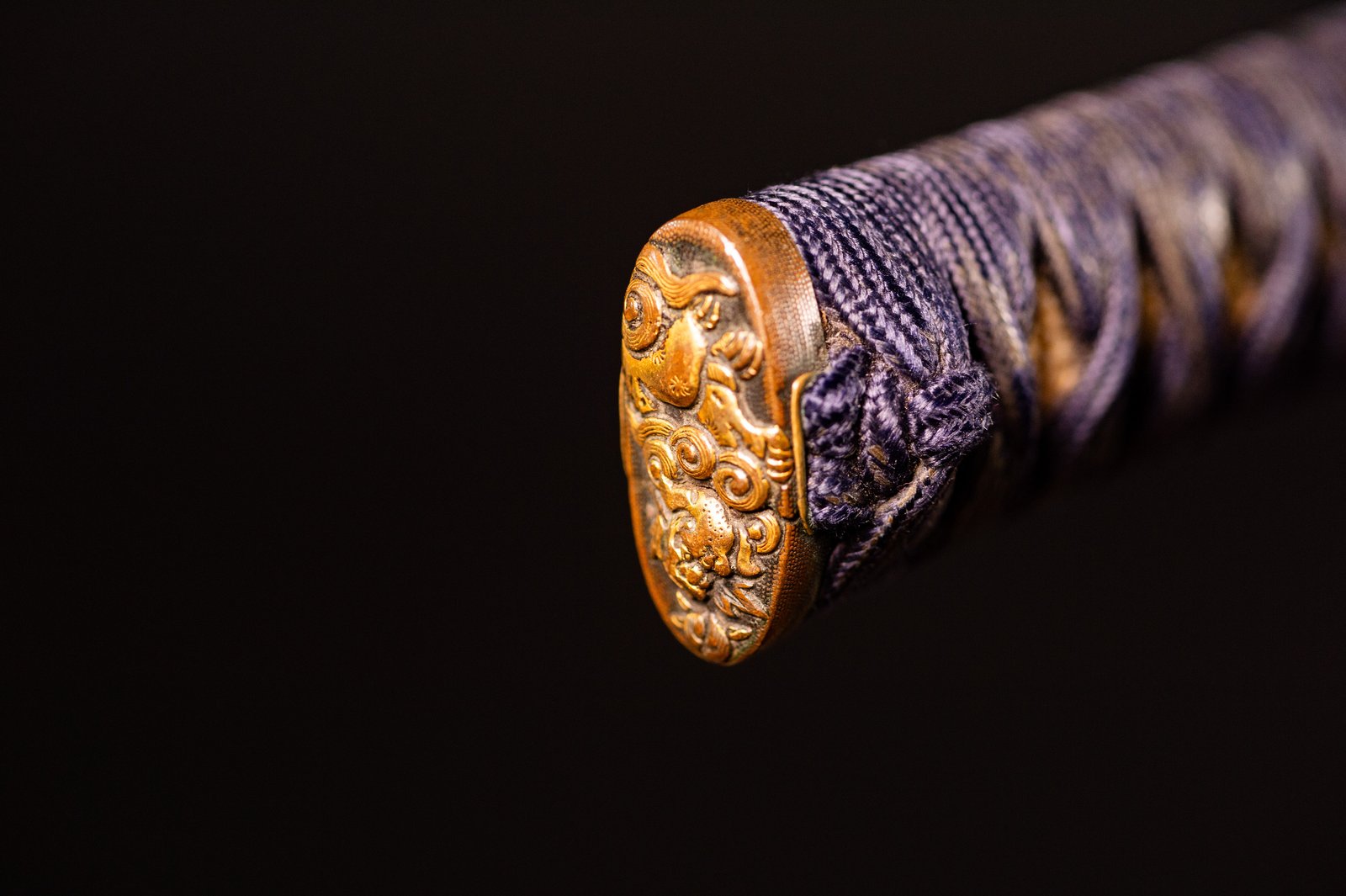
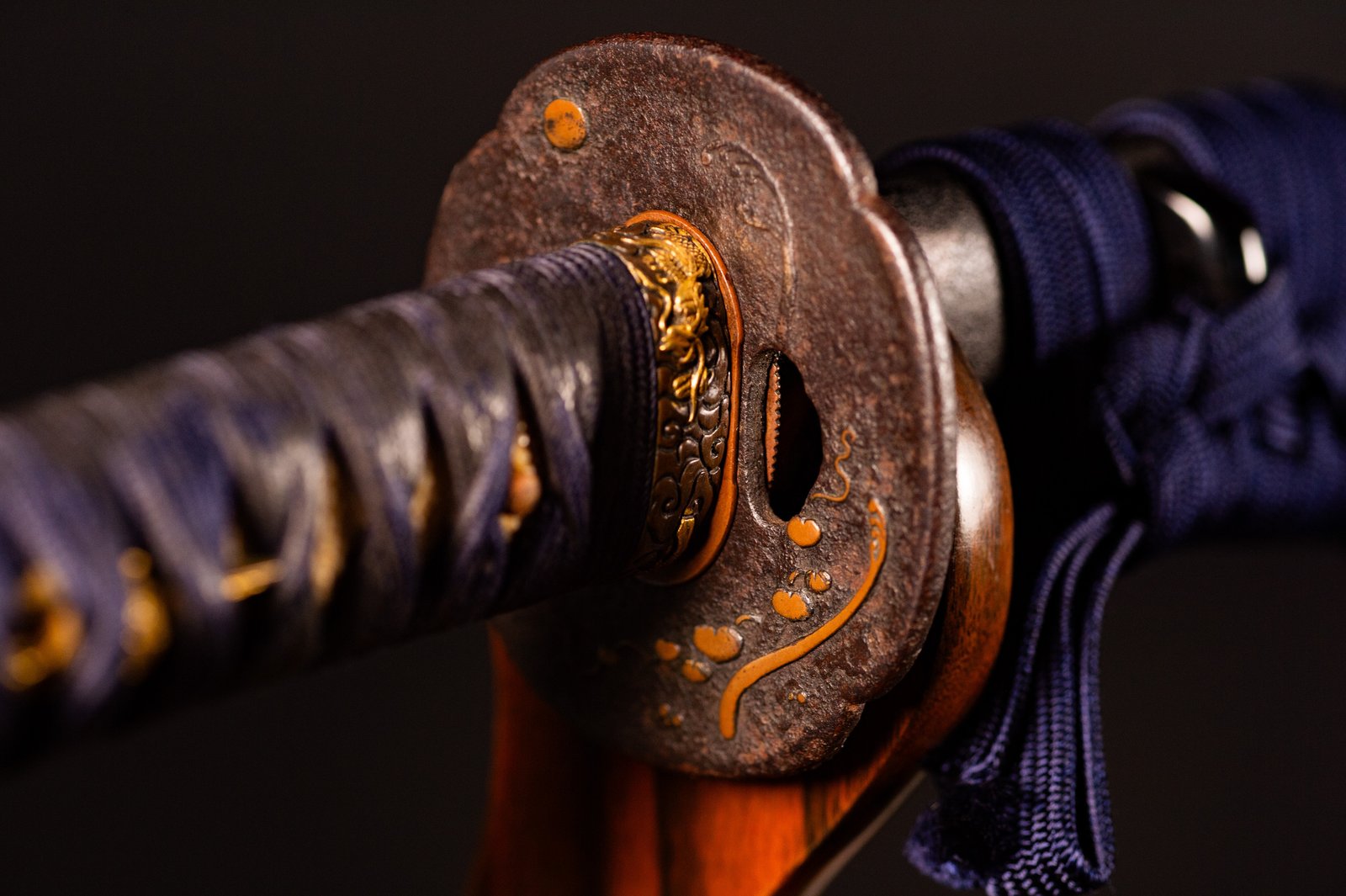
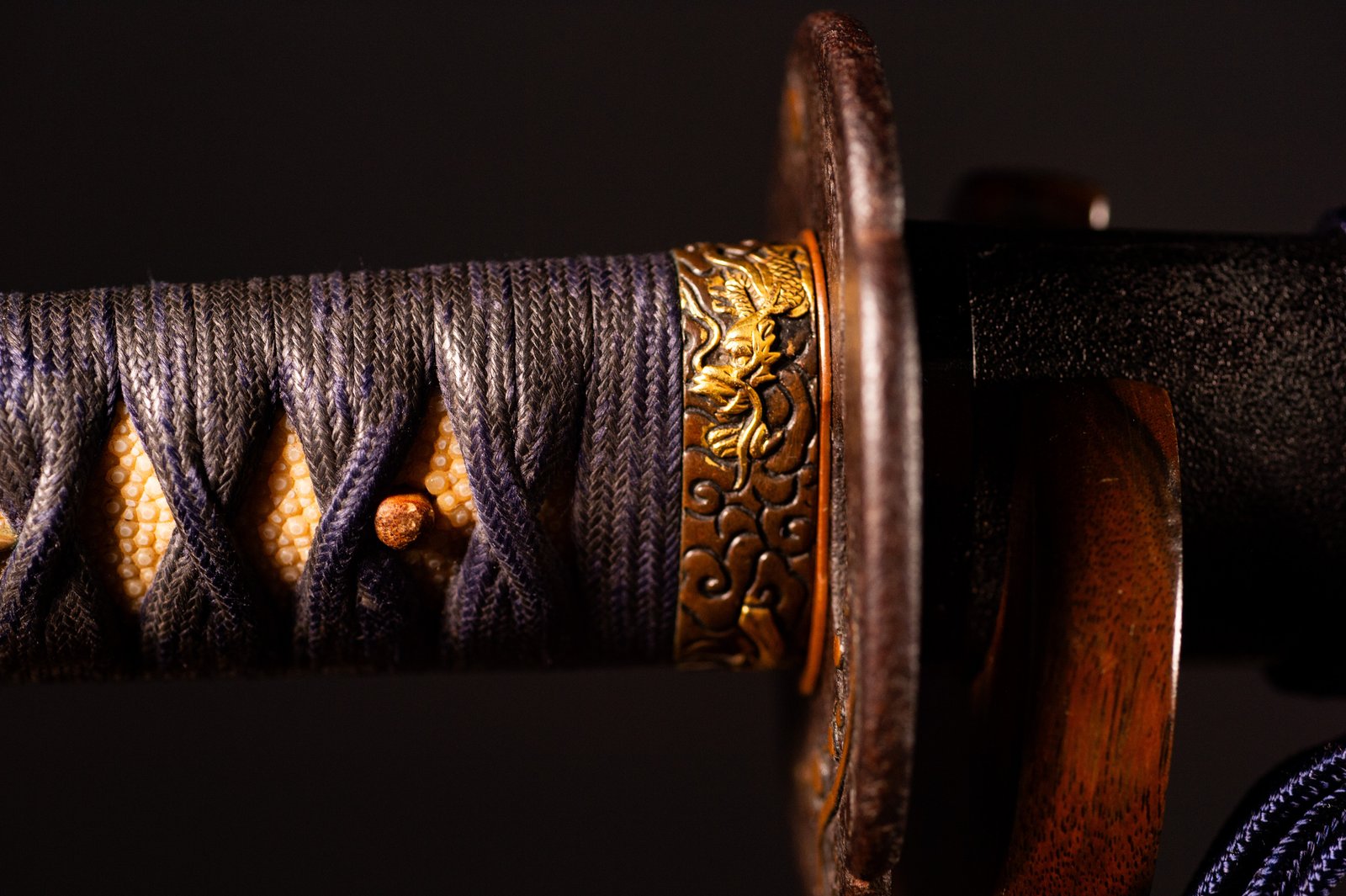

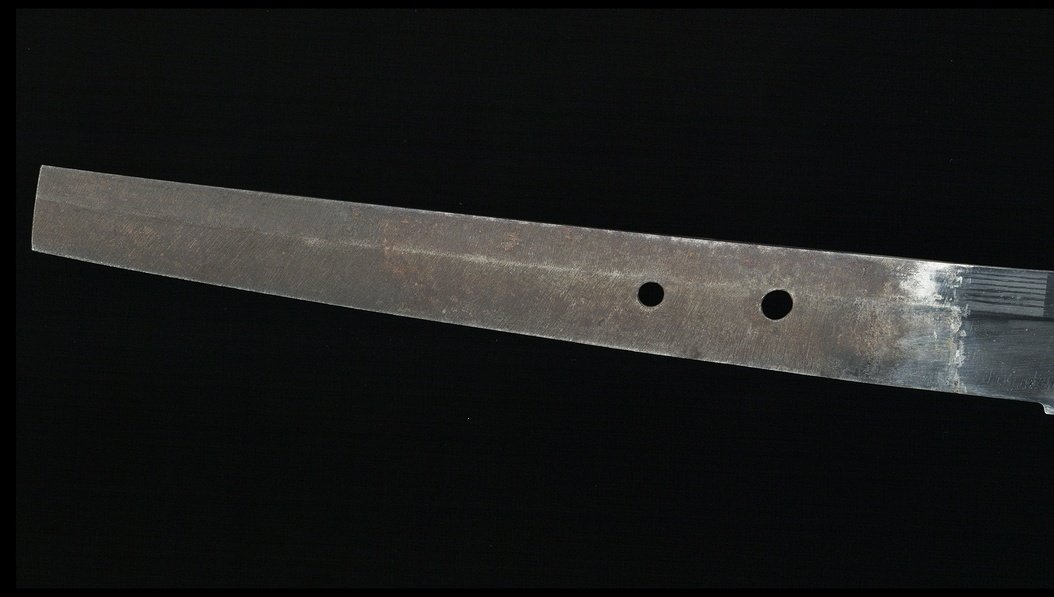
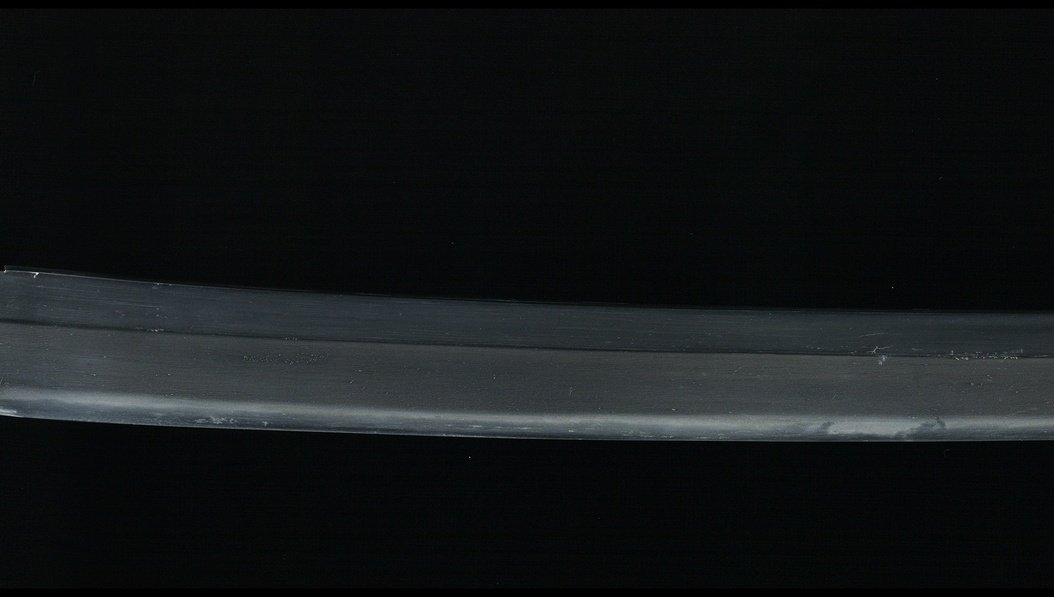
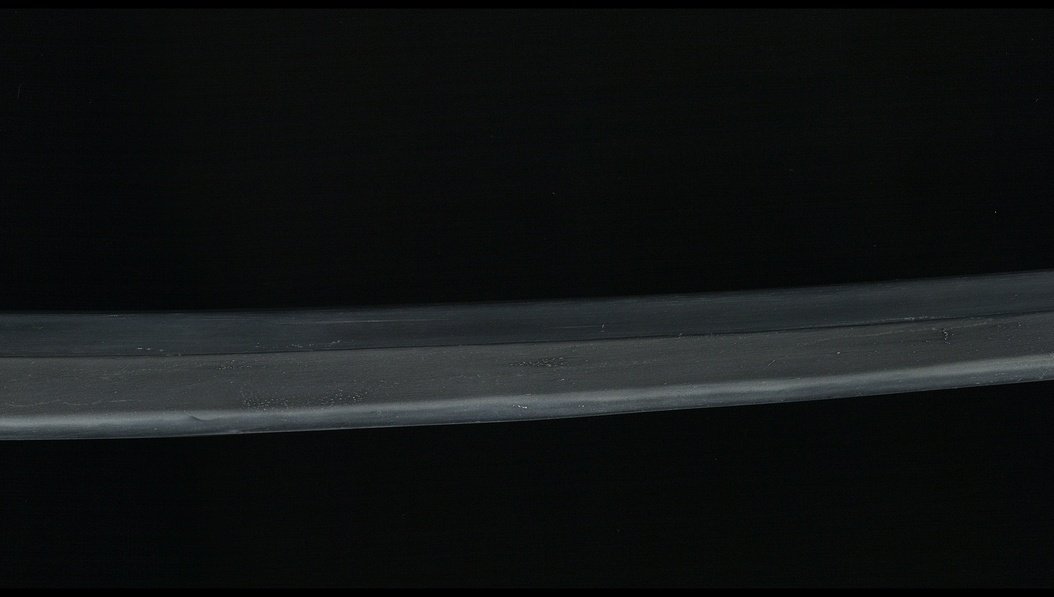

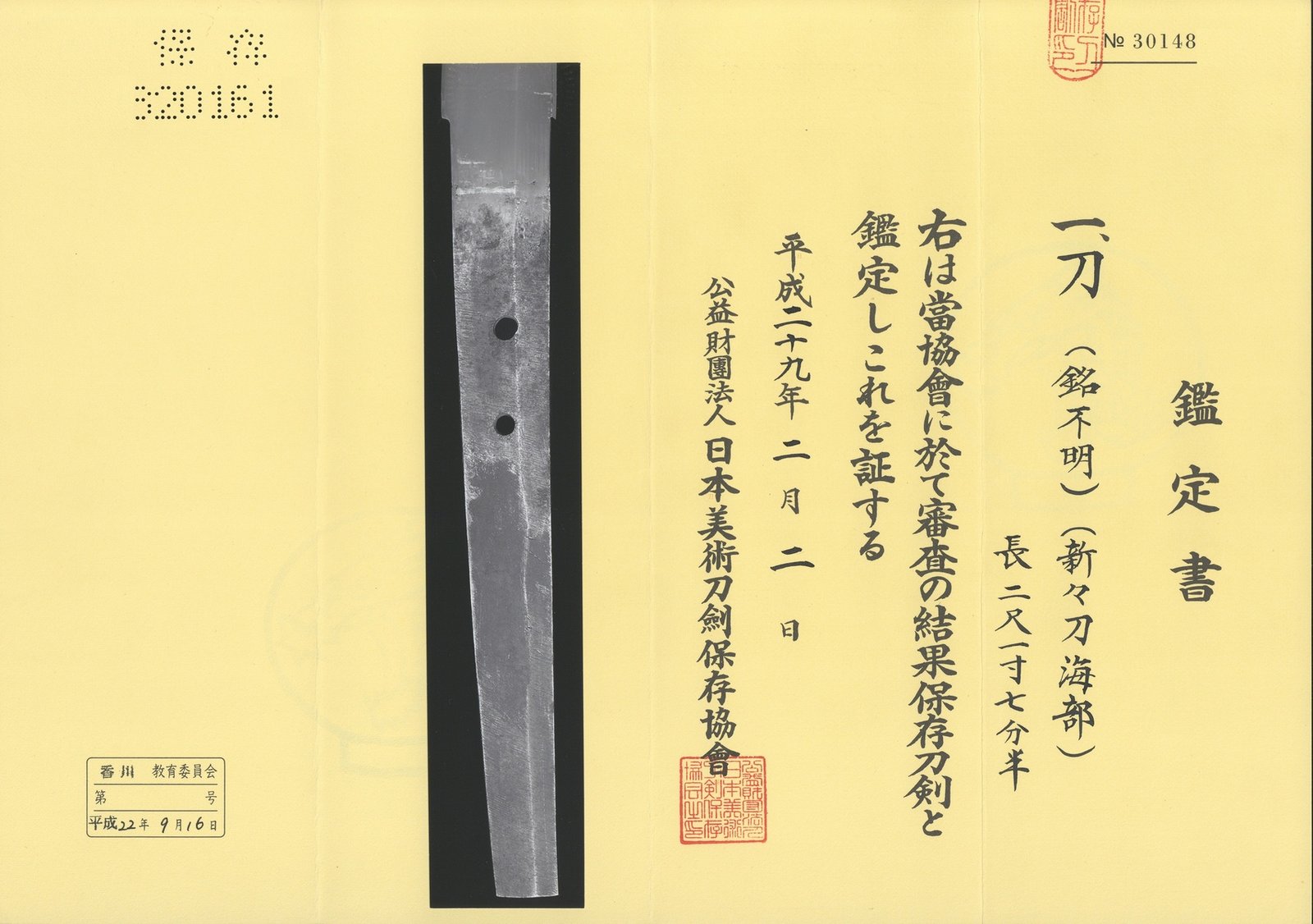
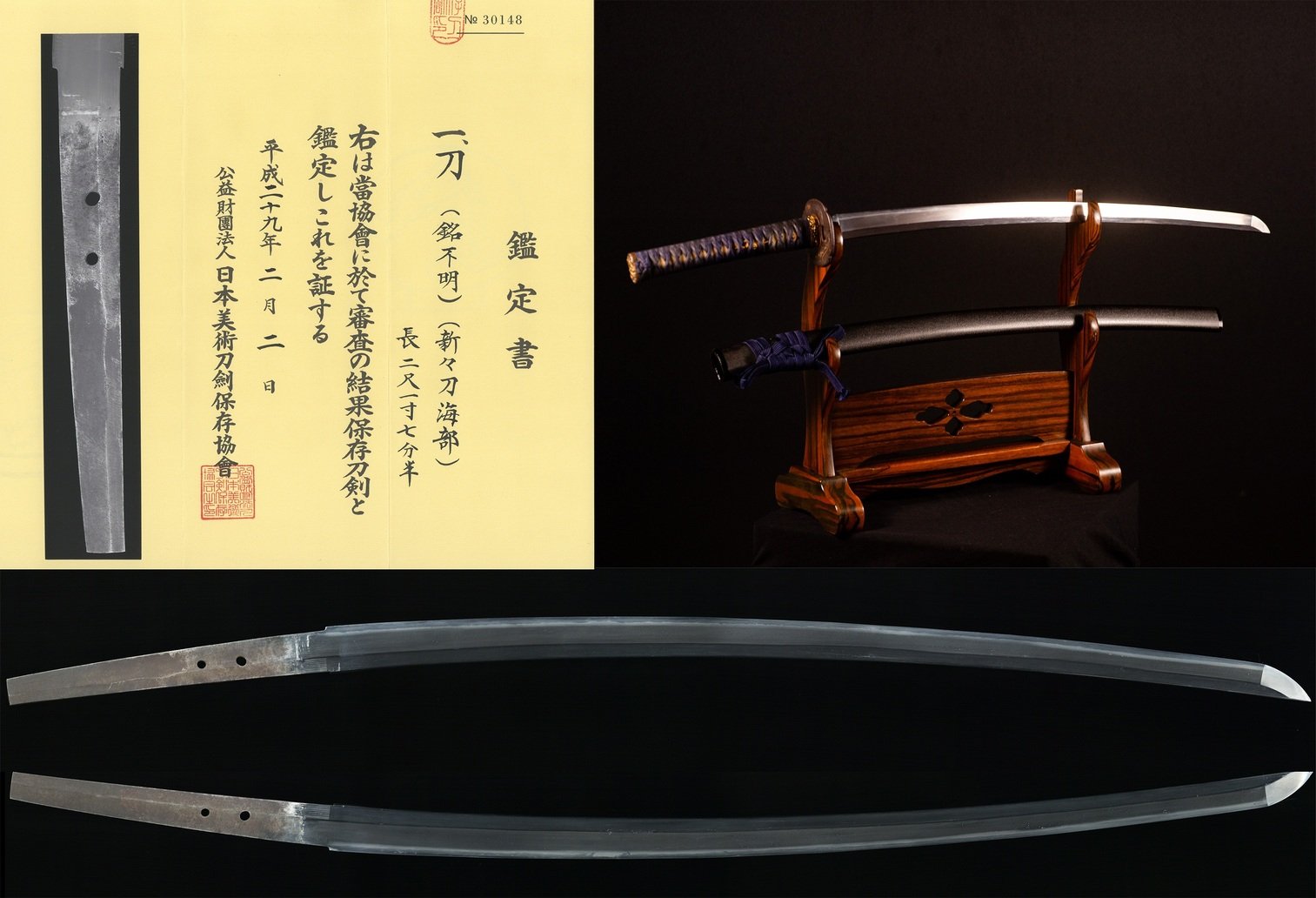
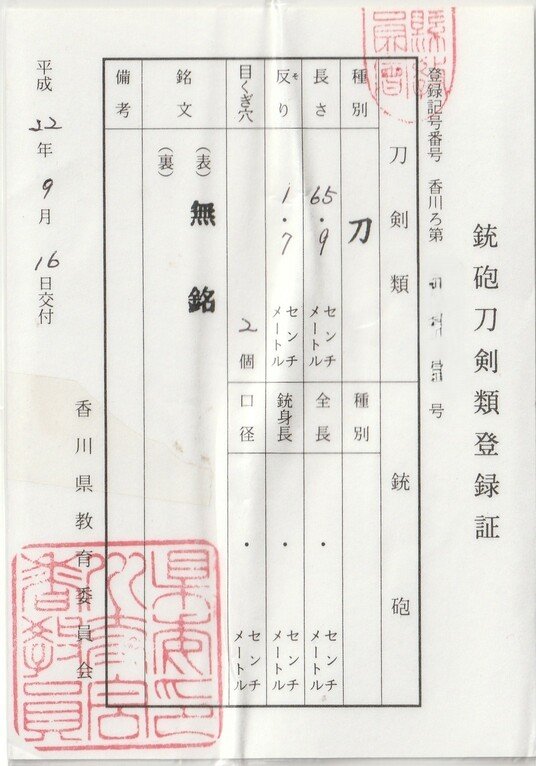
販売店の記載のまま
脇物 · 阿波
現在10点販売中
海部派は阿波国、すなわち現在の徳島を中心とする四国の地に興った刀工の一群である。説示は『古今銘尽』『古刀銘尽』を引いて、この派に二つの系統があったことを伝える。その一は康暦頃の海部太郎氏吉を祖とする系であり、いま一つは応安頃の波平の弟子と伝え、「藤」と一字を銘する者を祖とする系である。もっとも祖と仰がれる氏吉の作は現存せず、現存する作品にも南北朝時代まで時代の遡るものはなく、世に海部物と呼ばれる作の多くは室町時代のものとされる。活躍が目立つのは室町時代の後半からであり、説示に名を挙げる工としては、氏吉、藤原氏吉、阿州開府氏吉と銘する一群のほか、明応頃と天文頃の二工が知られる氏重、大永年紀を残す泰吉、同じく大永頃の海部鍛冶である泰長がある。氏重については、後に播州姫路に移り大和大掾を受領した初代、通称三木新五郎の名が伝えられ、その末裔に手柄山正繁が出たことも記される。 作風について説示はおおむね二様を記す。一つは、光の弱い地景が目立ち、大のたれ・小のたれを焼いて、匂口が望洋としてしまらず、地景と同調する金筋がかかるものである。いま一つは、板目に柾気が交じって鍛えがやや軟らかく、少しく白け、働きのあまり見られない直刃を焼く、波平風と評されるものである。短刀には、平造、三ッ棟で身幅広く寸延び、重ね薄めに僅かに内反りのついた大柄な姿が見られ、板目に杢を交え、刃寄りが流れて柾がかり、地沸が微塵につき、白け映りが立つなかに細直刃を焼いて枯淡の趣を醸す作がある。彫物には棟寄りの梵字に素剣・護摩箸を掻き流したものや棒樋があり、刀身によく調和する。脇指には海部の山刀と呼ばれる切刃造のものが知られ、地刃の出来に見劣りするものが多いと説示は述べる。海部を見分ける手がかりは、光の弱い地景、白け映りと柾がかった鍛え、しまりに乏しい匂口、そして直刃に波平風の趣を帯びる点にある。 鑑定にあたっては、これら地景・白け・匂口の性格に加え、銘字を太鏨で大振りに刻む茎の様子が拠りどころとなる。海部物は実用に即した性格が強く、その切れ味の鋭さを語る作が伝わる。氏吉作の名物岩切海部は享保名物帳に所載され、名はその切れ味の鋭利さに由来すると伝え、もとは阿波の豪族三好家にあって長慶がこの刀で武功をたて、後に福岡の黒田家に伝わったという。また泰吉や泰長の作には、海部の作が江に化したと語られるごとく、地刃や帽子に物語を生む要素を含むものがある。氏吉作の短刀には『光山押形』に所載され伊東巳代治の旧蔵にかかる一口もある。有銘の作は総じて少なく、それゆえ氏重・氏吉・泰吉・泰長らの遺例は、各工のみならず海部派全般を研究するうえで貴重な資料であり、阿波の地に根ざした実用刀の一系として位置づけられる。 詳しく見る →
室町時代
応仁の乱が足利の体制を砕いた後、戦国の一世紀はほとんどすべての国を武装させた。この時代は選ぶ目に報いる。並の作は多いが、その傍らには第一級の注文打ちが立っている。
銘が正しい、または無銘でも年代・国・系統を確実に指摘できる、保存に値する真正の作と鑑定されたものです。
日本美術刀剣保存協会(日刀保)は、1948年に設立され、文化庁の監督を受ける公益財団法人で、東京・刀剣博物館に本部を置きます。専門の審査員が出品作を直接審査し、美術的・歴史的価値に応じた鑑定書を発行します。日刀保の鑑定書は、日本刀および刀装具の真正性を示す最も広く認知された基準です。
日刀保公式サイト14-day return if items arrive damaged or in unexpected condition; customer bears return shipping + insurance; items returned in original condition with all accessories; antique armour non-returnable; only regular priced items refundable; shipping costs non-refundable.