応仁の乱が足利の体制を砕いた後、戦国の一世紀はほとんどすべての国を武装させた。この時代は選ぶ目に報いる。並の作は多いが、その傍らには第一級の注文打ちが立っている。
 NihontoWatchNihontoWatch
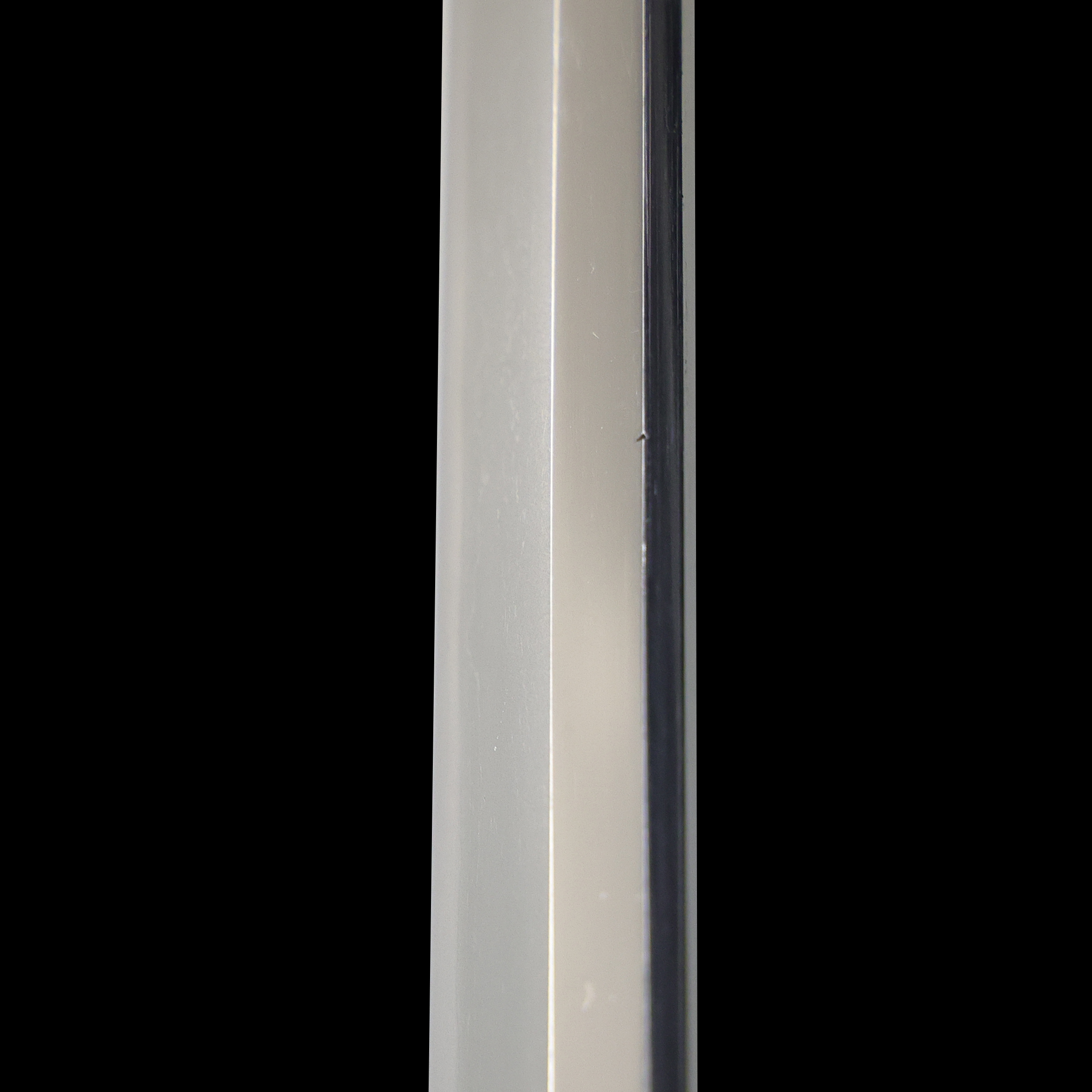
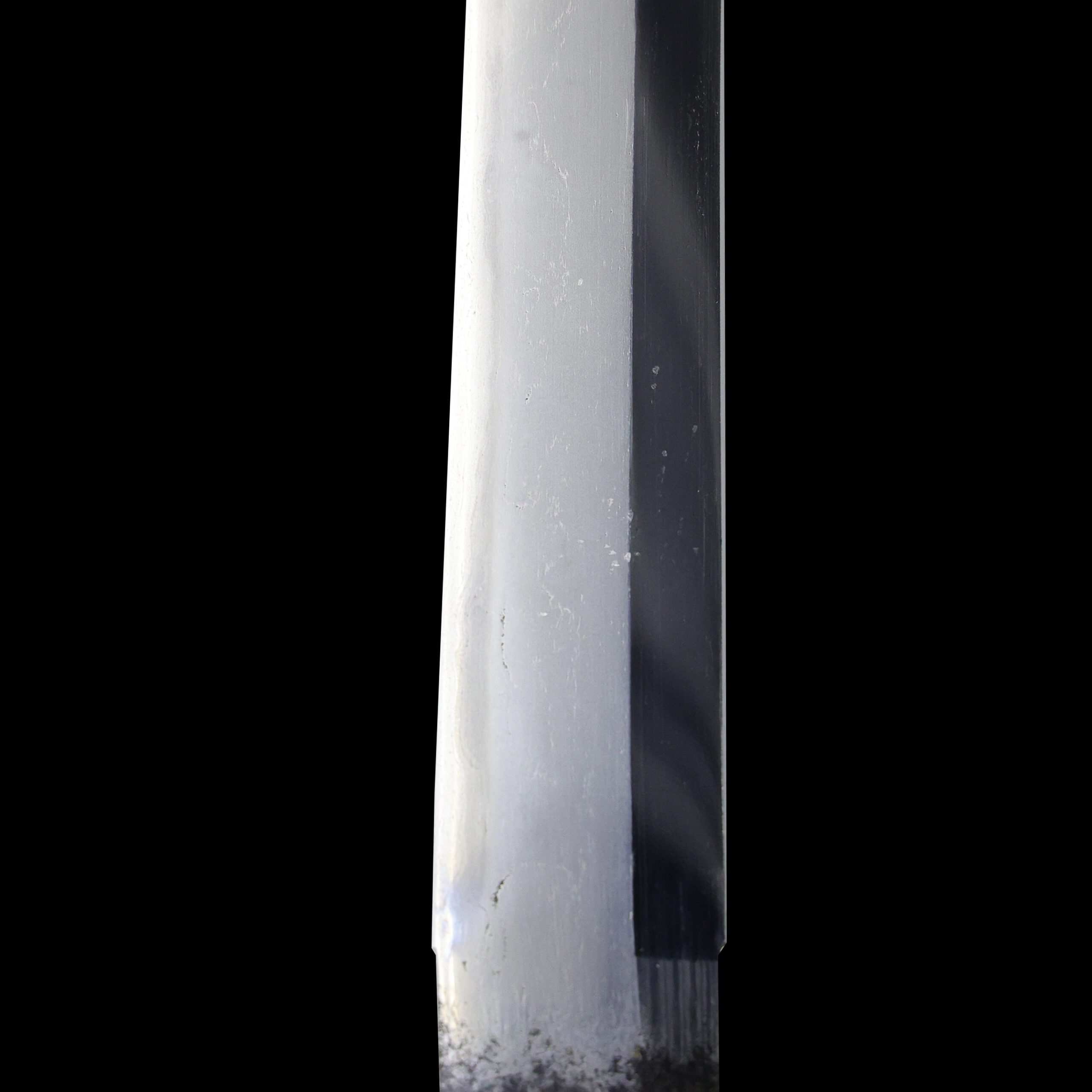
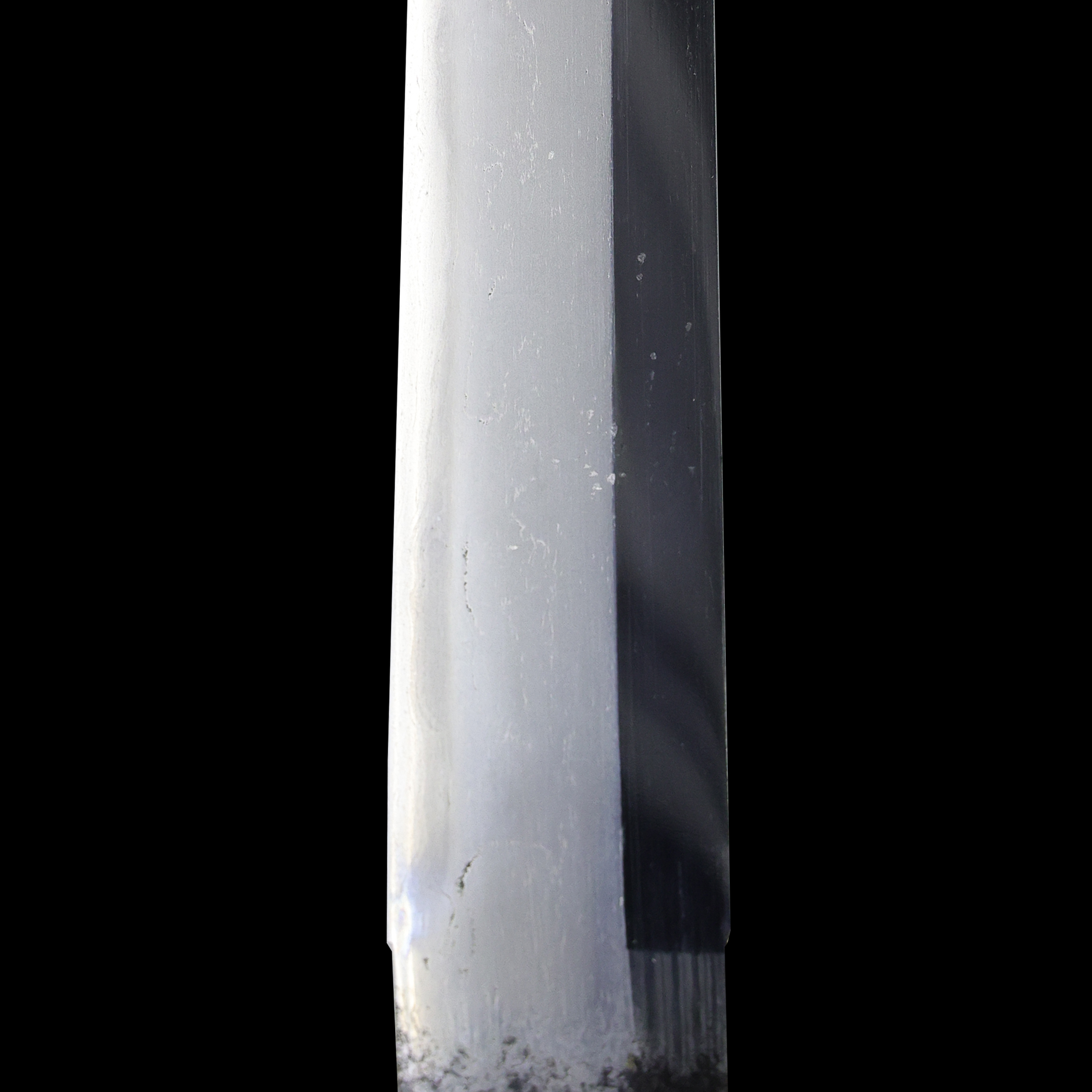
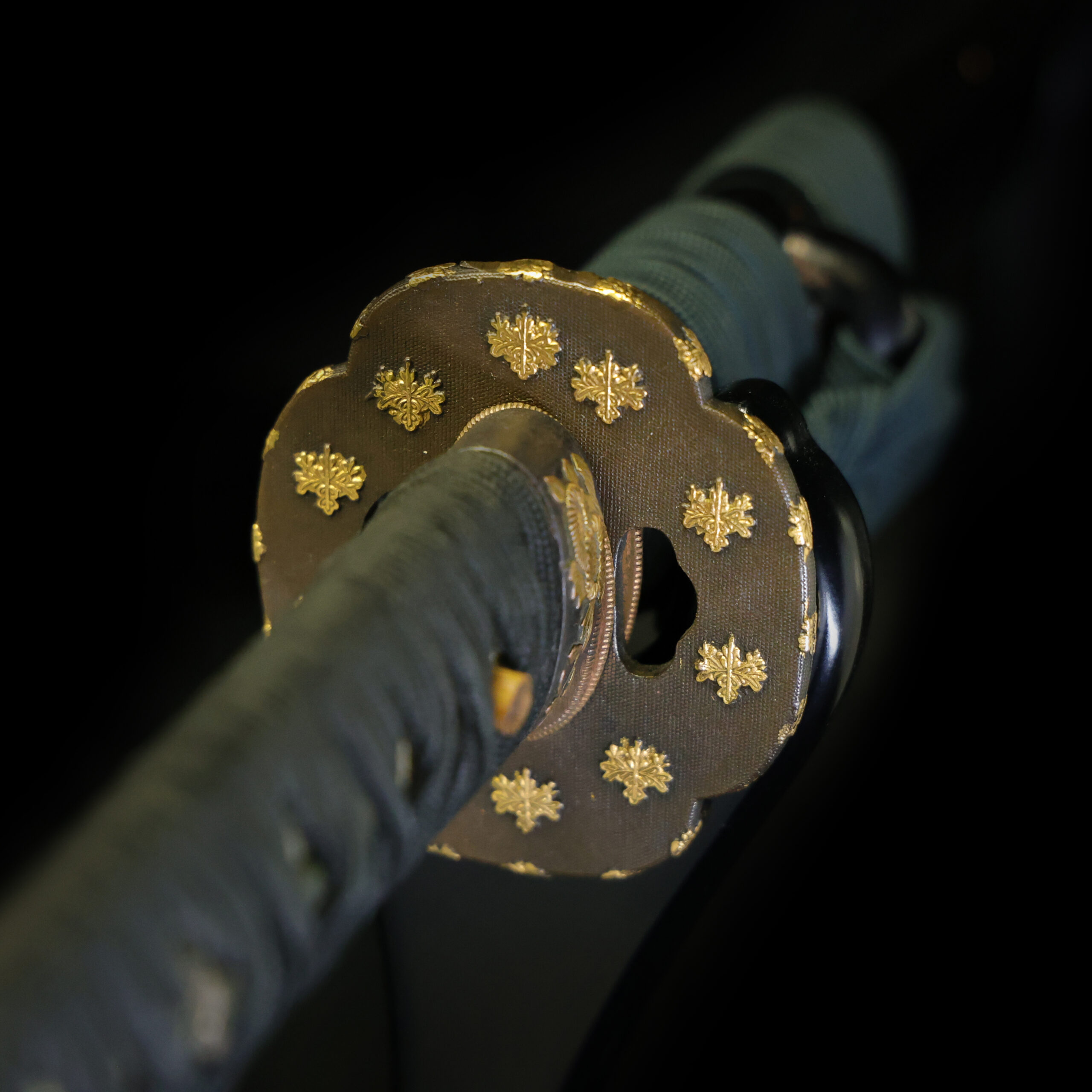
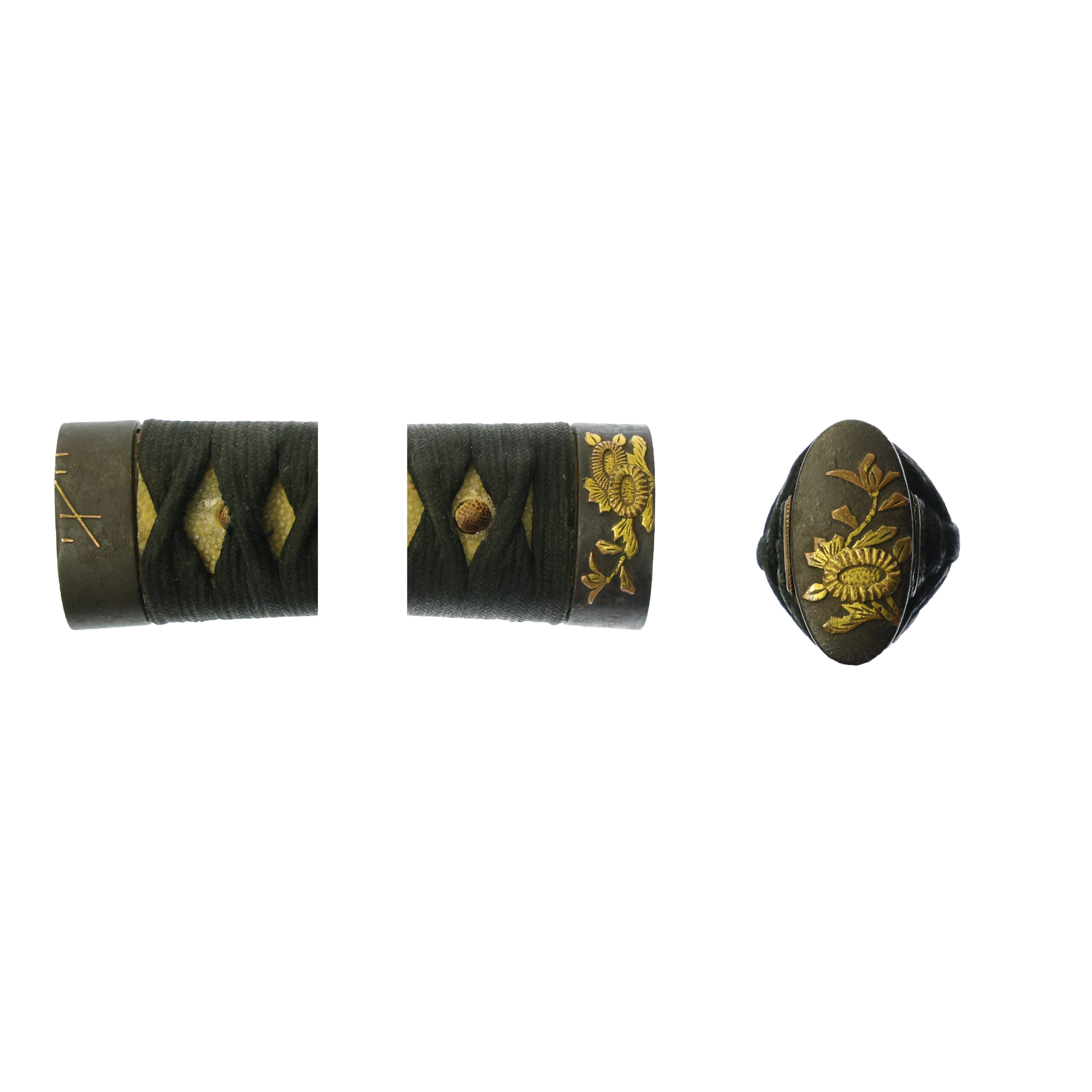
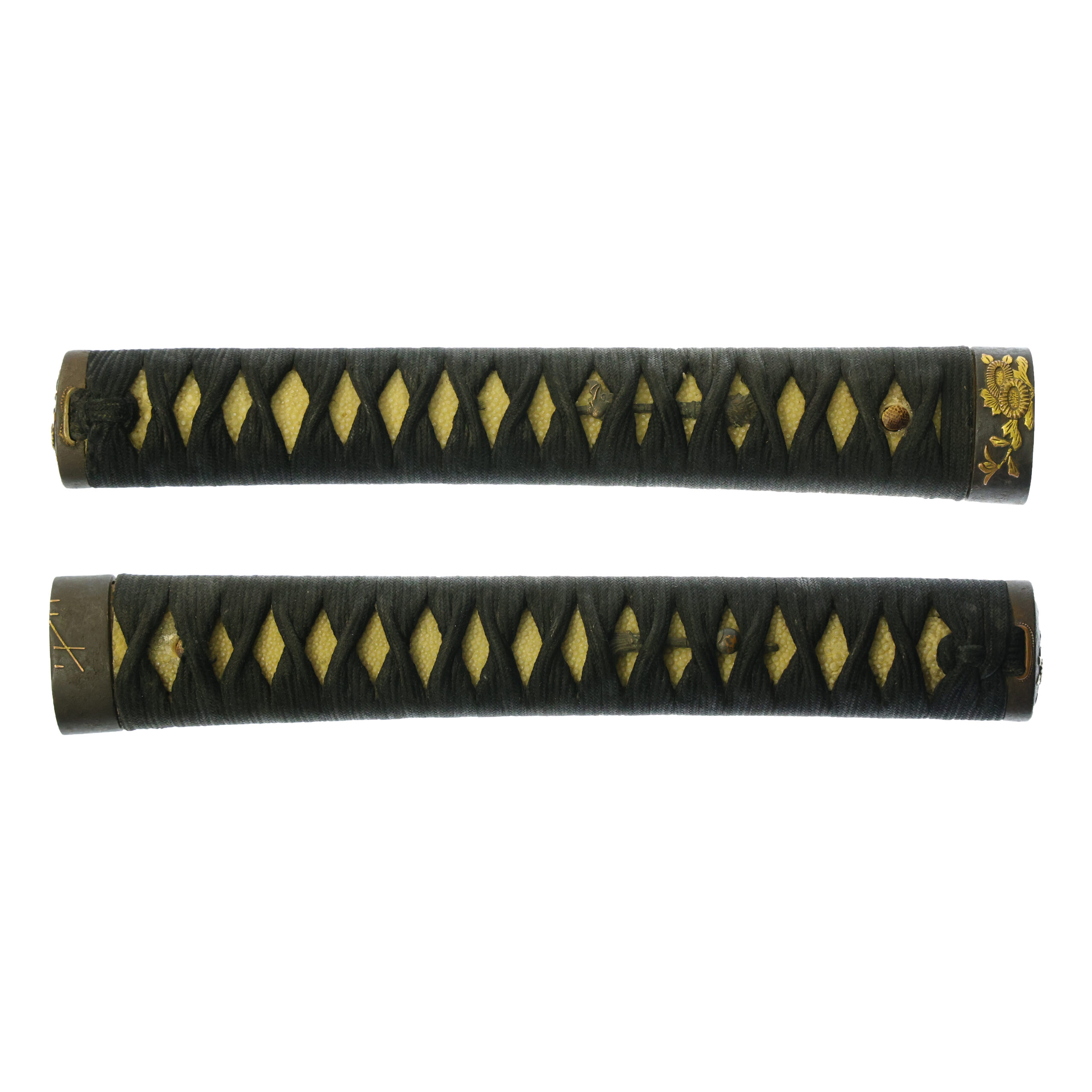
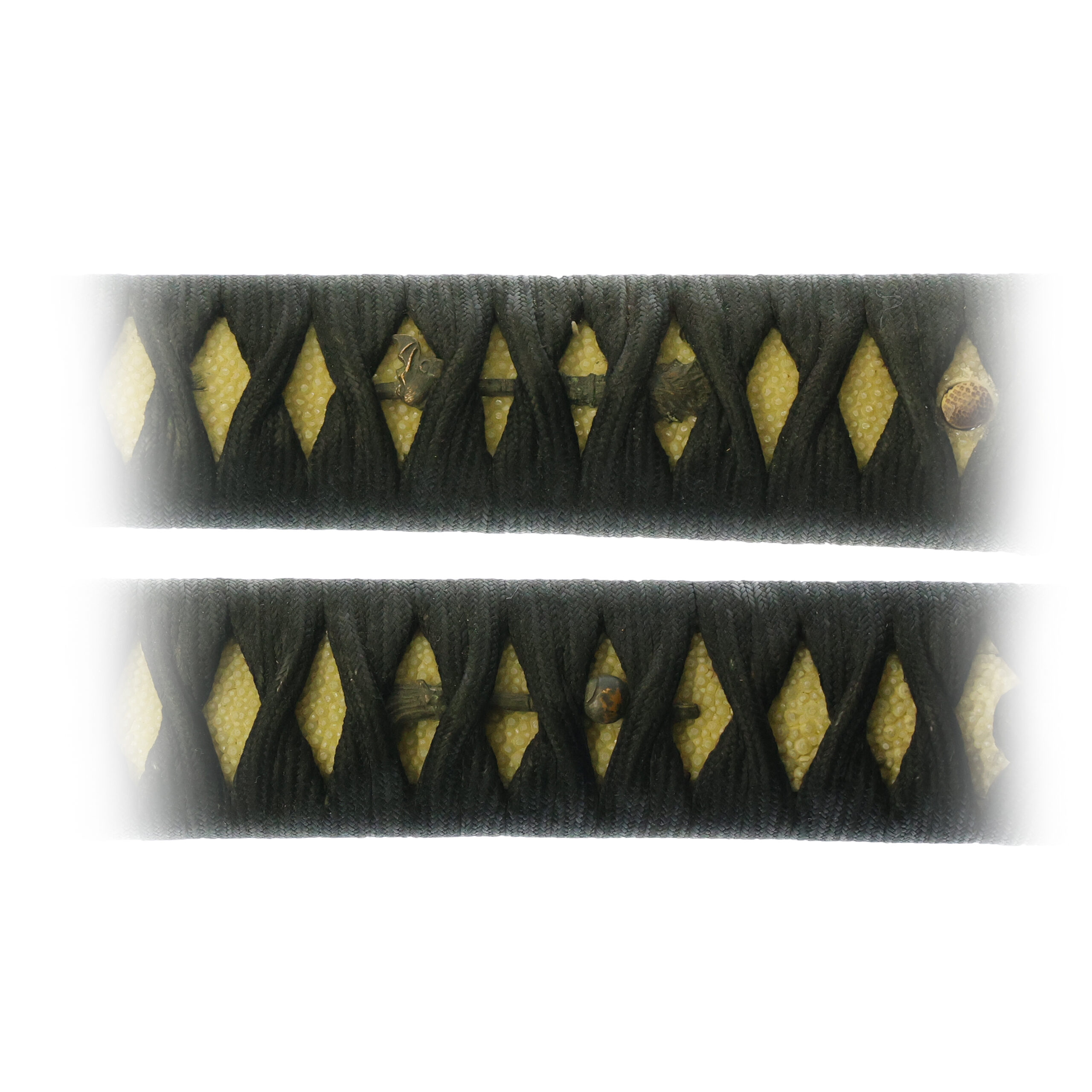
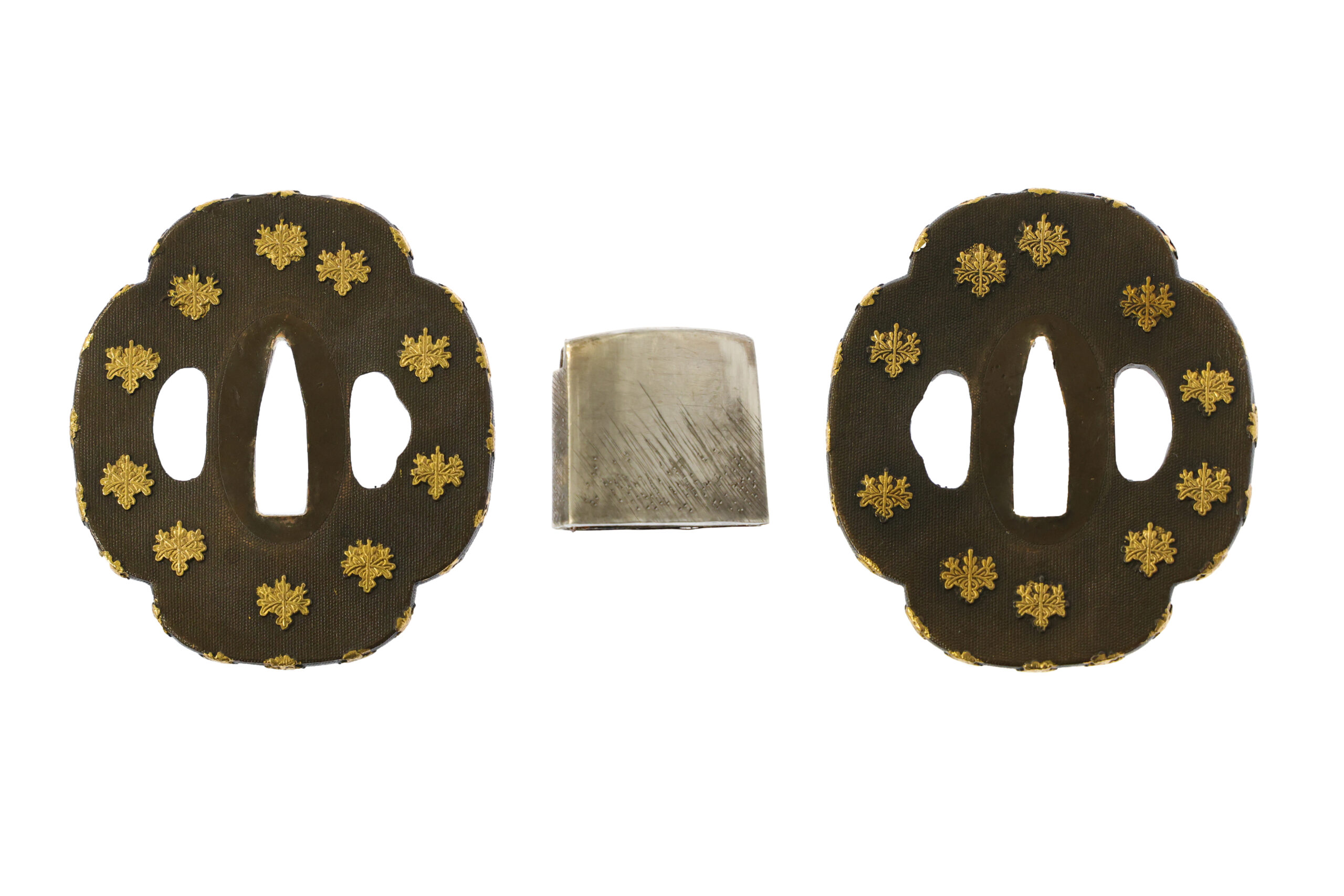
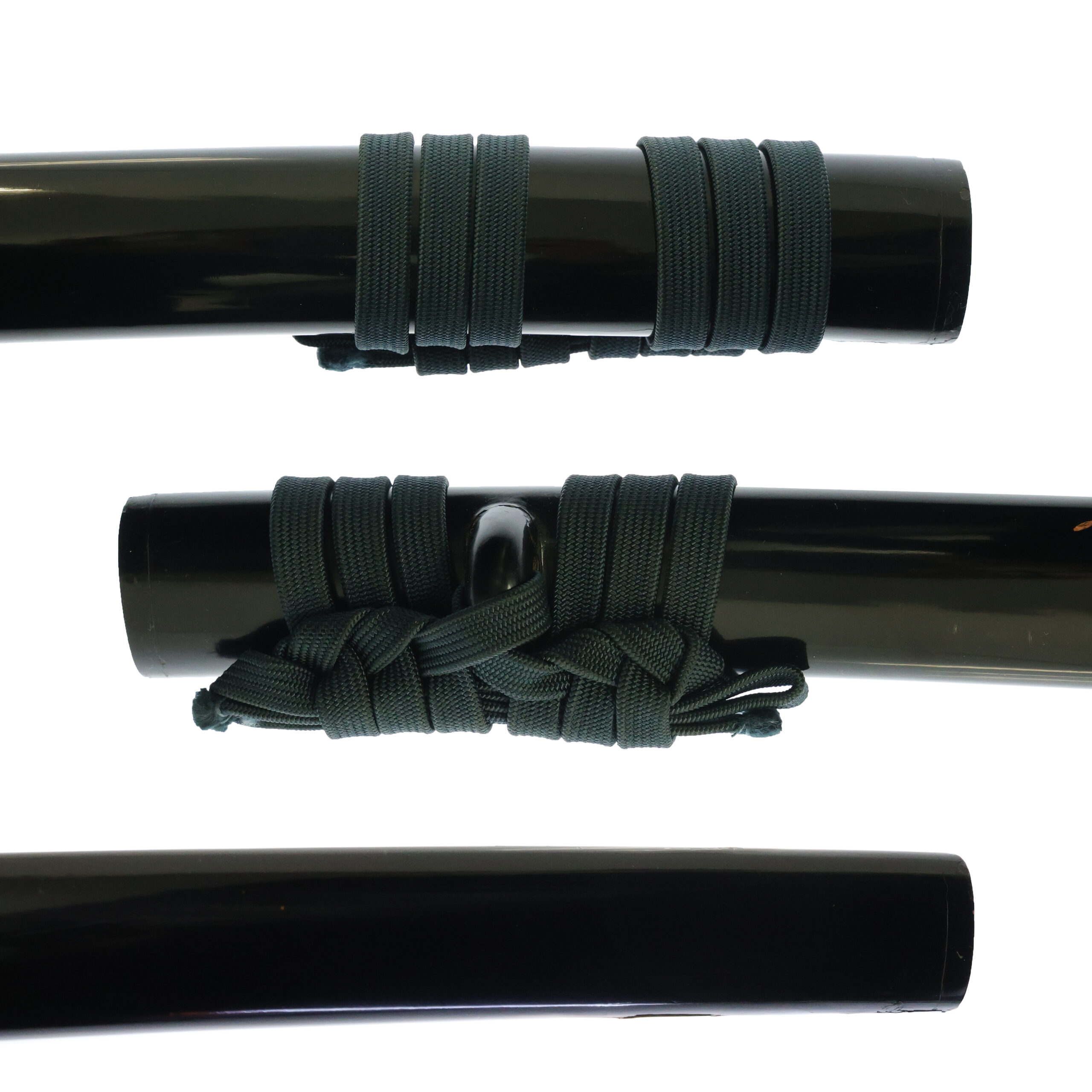
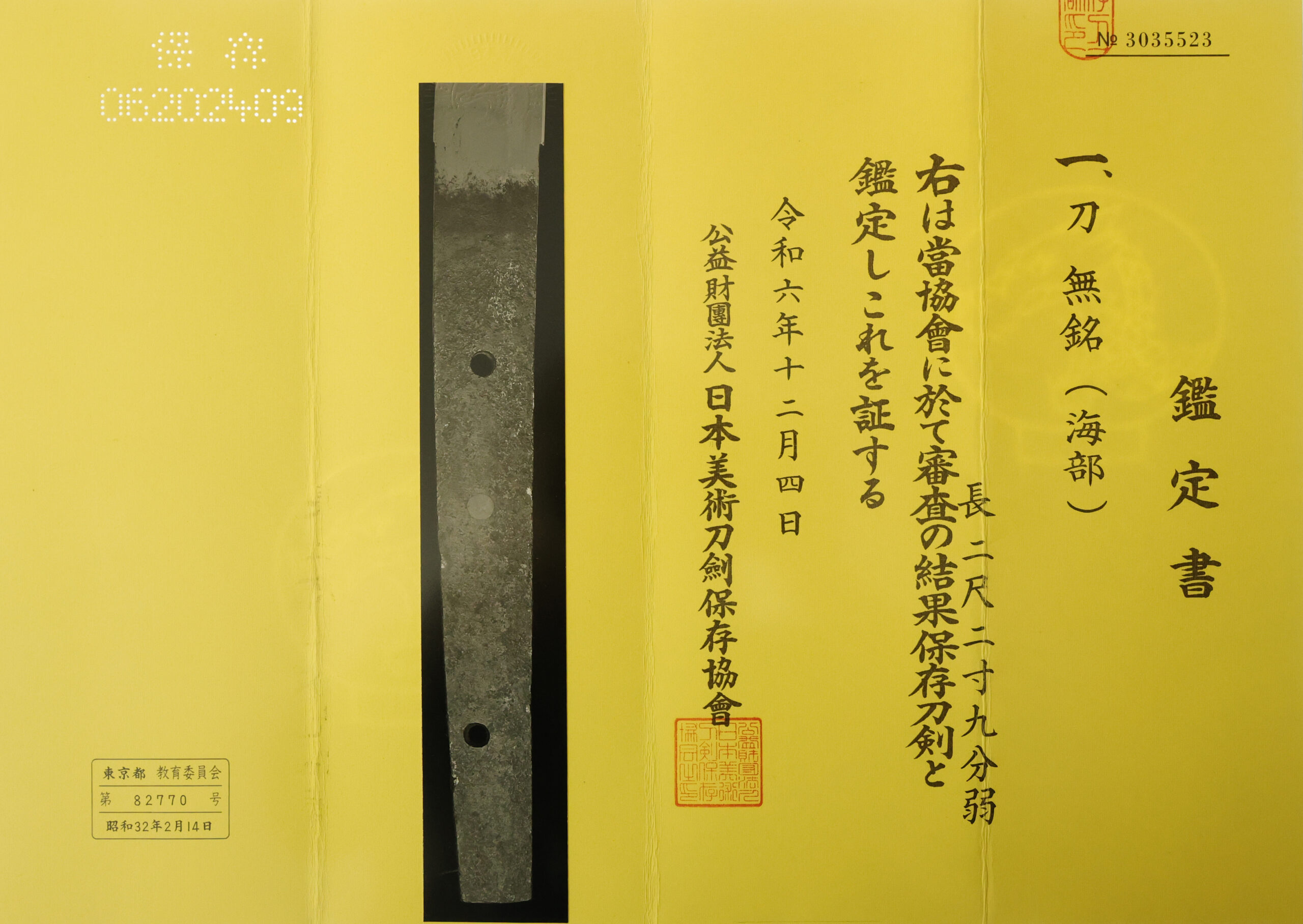
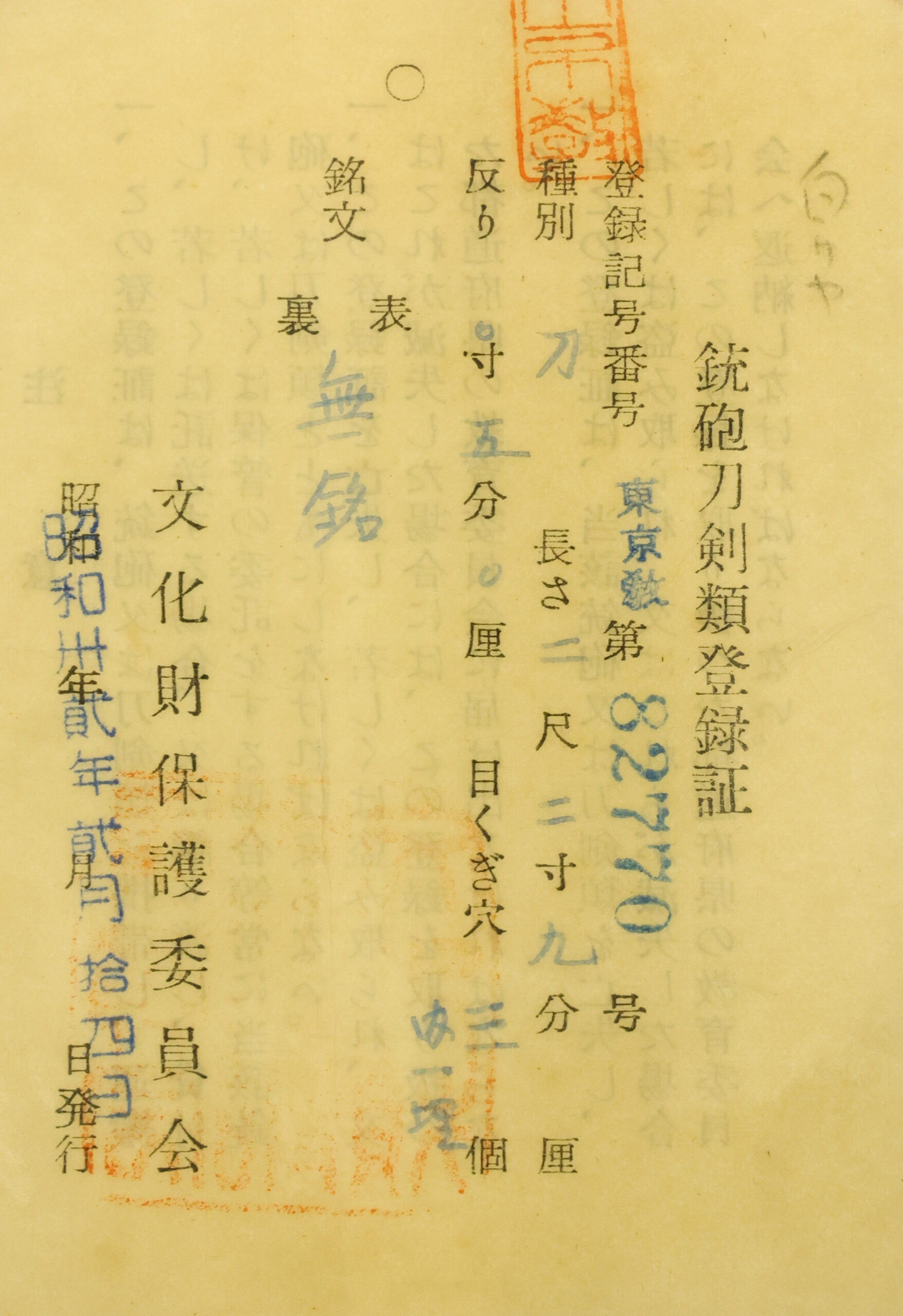
This blade is attributed to Kaifu (海部) during the Muromachi period (late 15th-mid 16th century). Kaifu is the name of the clan and school that ruled Awa province (Today’s Tokushima prefecture). From the beginning of the Kamakura period (late 12th century), they started sword-forging by taking advantage of its geographical location where iron sand was abundant near the Kaifu River. Their sword-forging was active and reached its heyday during the Sengoku Jidai (Warring state period in the late 15th-early 16th century). Kaifu clan was destroyed by Chosokabe Motochika in 1575. After the event, the school’s presence was hindered in the region. However, when the Hachisuka clan took control of Awa province, the clan invited the members of the Kaifu school and let them live near the Tokushima castle, forging blades for the clan. The school continued at the end of the Edo period. Historical Background The late Muromachi period overlaps with the Sengoku period (戦国時代, “Warring States Period”), a time marked by ongoing military conflict and political fragmentation across Japan. In this turbulent era, the samurai class played a central role as both warriors and political actors. Swords were vital to the samurai not just as weapons but also as symbols of personal honor and status. A well-forged sword was regarded as an extension of the samurai’s soul, used in both battle and ceremonial practices. As warfare intensified, demand for high-quality blades grew rapidly. Feudal lords (大名, daimyō) sought to equip their armies with superior weapons, turning to renowned swordsmiths like Moritaka for craftsmanship that combined functionality with aesthetic value. It is appraised as a Hozon Token (保存刀剣) issued by NBTHK (Nihon Bijutsu Touken Hozon Kyokai: 日本美術刀剣保存協会). *Please keep in mind that there are a few Kitae Kizu on the blade of this Katana. Fuchi-Kashira This Fuchi-Kashira (縁頭) is decorated with a kiku design (菊, chrysanthemum). Chrysanthemum is one of the flowers that symbolize fall, and people have appreciated it very much since ancient times. A long time ago, the chrysanthemum was used as a medicine to obtain a long life in China, and it was brought to Japan with this thought in the Nara period (648-781). As its petals form radially, the chrysanthemum has been likened to the sun. That is why this flower pattern is treated as the symbol of perpetual youth and longevity or good health. “Kiku no Gomon (菊の御紋)” is a kind of chrysanthemum pattern, and it has been used as the crest of the Emperor and the royal family in Japan, so it is well-known as a noble pattern. Tsuka and Menuki The motif of this Menuki appears to be a feather broom (羽根箒, Hanebouki). The feather broom, traditionally made with bird feathers bound to a handle, was used in Shinto rituals and for dusting delicate objects such as artworks or altars. In a decorative context, it can carry connotations of purity, cleansing away dust or spiritual impurity. Tsuba and Habaki This mokko-shaped tsuba features a family crest known as Gosan-no-Kiri (五三の桐). The Kiri (paulownia) motif typically consists of three upright clusters of blossoms and three leaves, and the number of flowers in each cluster indicates the rank of the design. This crest is famously associated with Toyotomi Hideyoshi, one of Japan’s most prominent Samurai leaders. According to historical accounts, Hideyoshi originally used the Omodaka (arrowhead) crest, but Oda Nobunaga—his lord and a major warlord of the Warring States period—granted him permission to use the Kiri design. The paulownia motif was once reserved for the imperial family and high-ranking officials; today, it is widely recognized as the emblem of the Japanese government. The Gosan-no-Kiri pattern later became popular among Samurai families, and ordinary households are now permitted to adopt it as their family crest. A traditional belief holds that the sacred bird Hōō (鳳凰, Fenghuang) rests upon the paulownia tree, which is why the plant came to be regarded as holy. Additionally, the surface of the tsuba is decorated using the nanako-ji technique (魚々子地), a meticulous method that creates a dense field of tiny, evenly raised dots. Saya This Saya is covered with black lacquer. Due to its high waterproof effect, lacquer has been used since ancient times in Asia. The blade of a Japanese sword is made of iron, and moisture is the greatest enemy of iron. For the purpose of carrying the blade without degrading it, people devised a method of coating the scabbard with lacquer. To prevent not only moisture but also rain and snow from penetrating the inside of the scabbard, it was necessary to apply multiple layers of lacquer. The Nushi (塗師, lacquerers) was born precisely because advanced techniques were required to handle the complicated processes. Authentication Paper They authenticated the blade on December 4th in the 6th year of Reiwa (2024). They appraised it as Hozon Touken, the blade worth preserving for Japanese society.

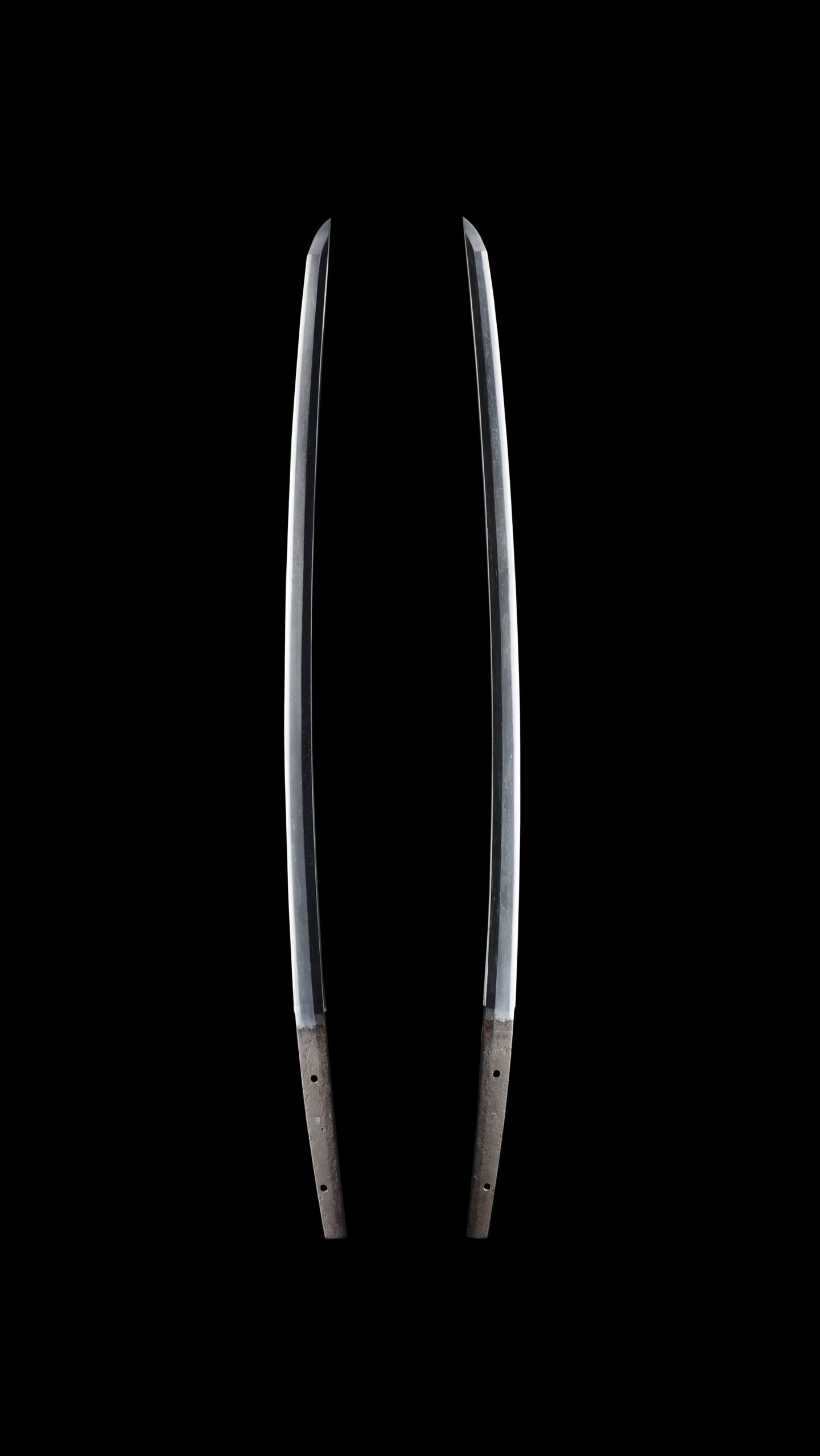
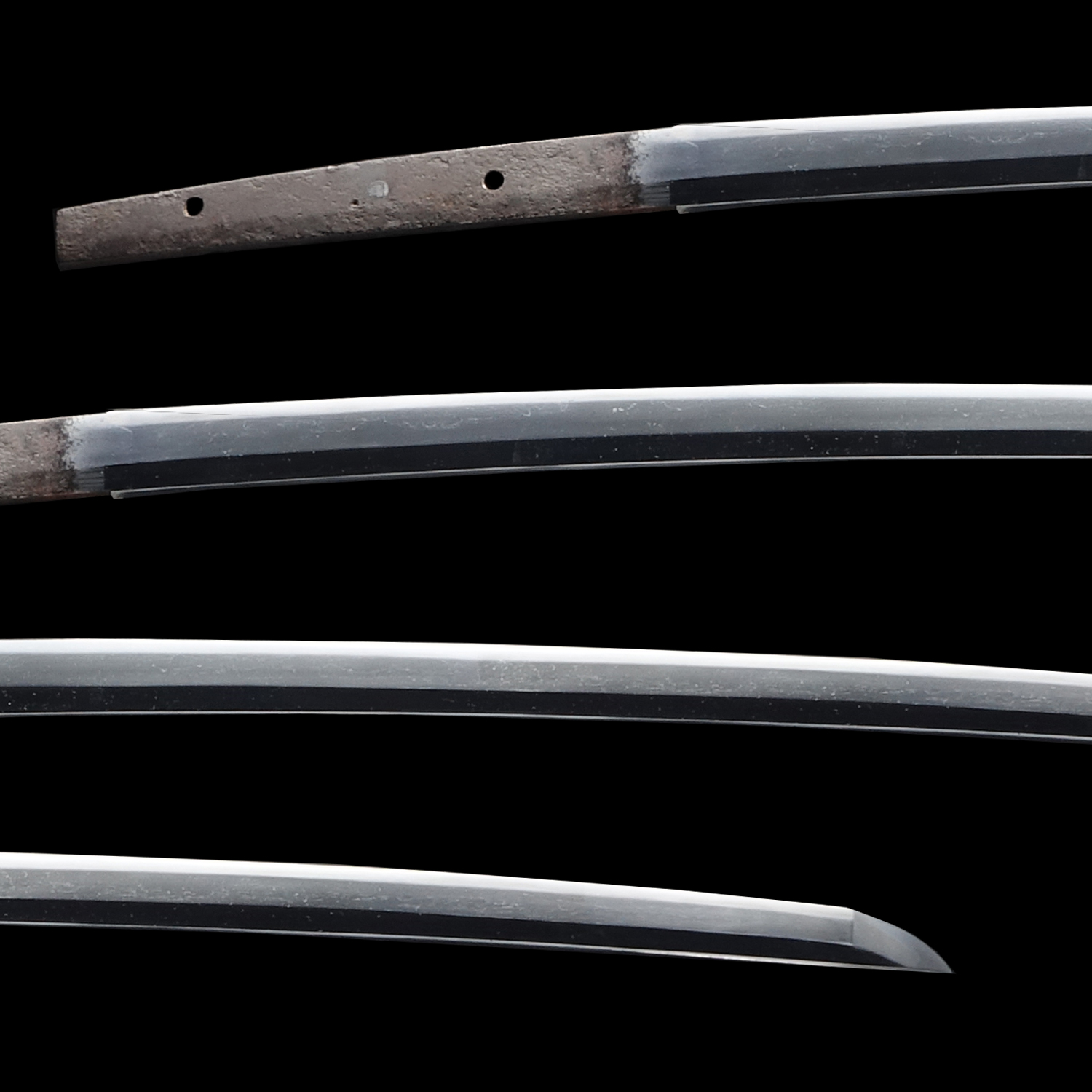
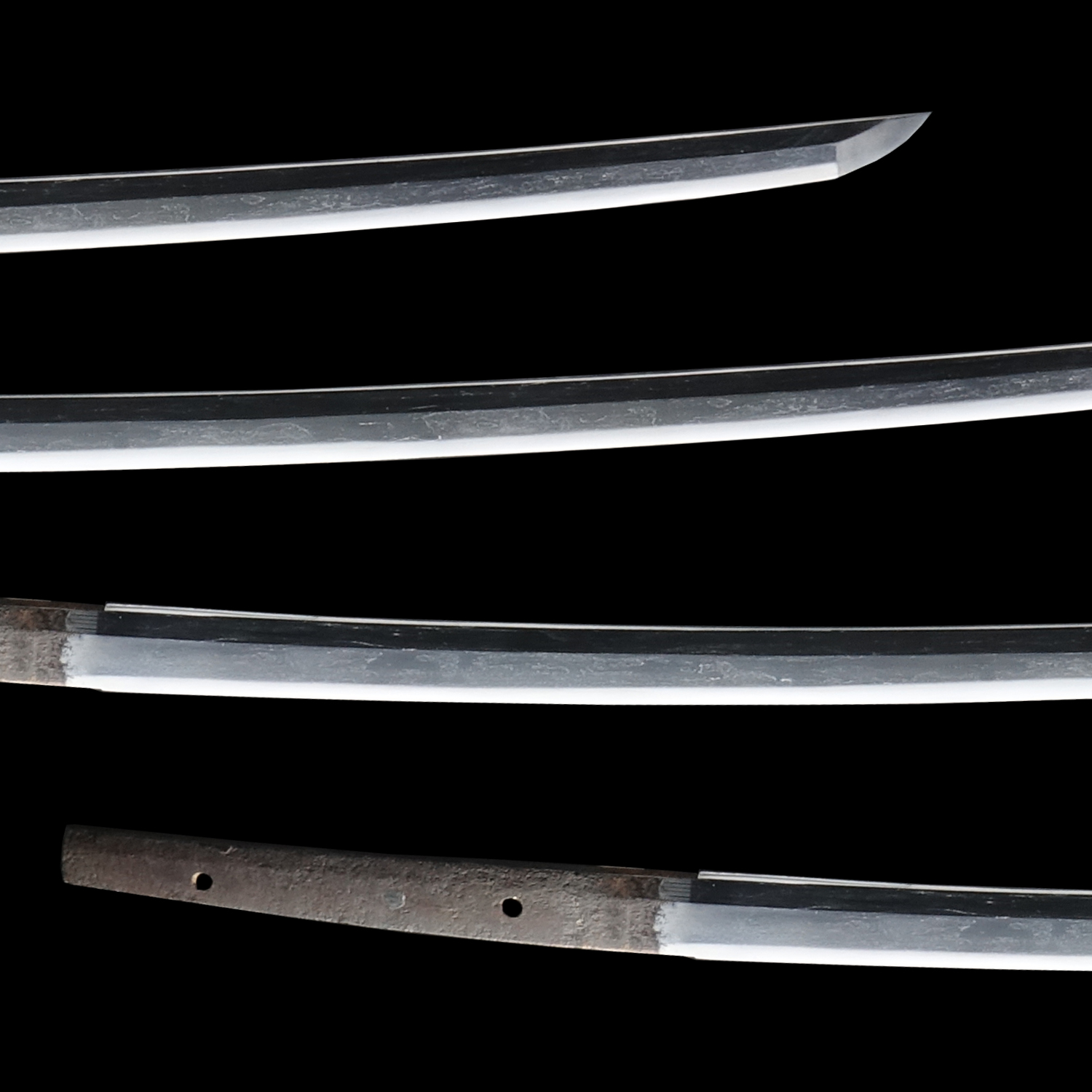
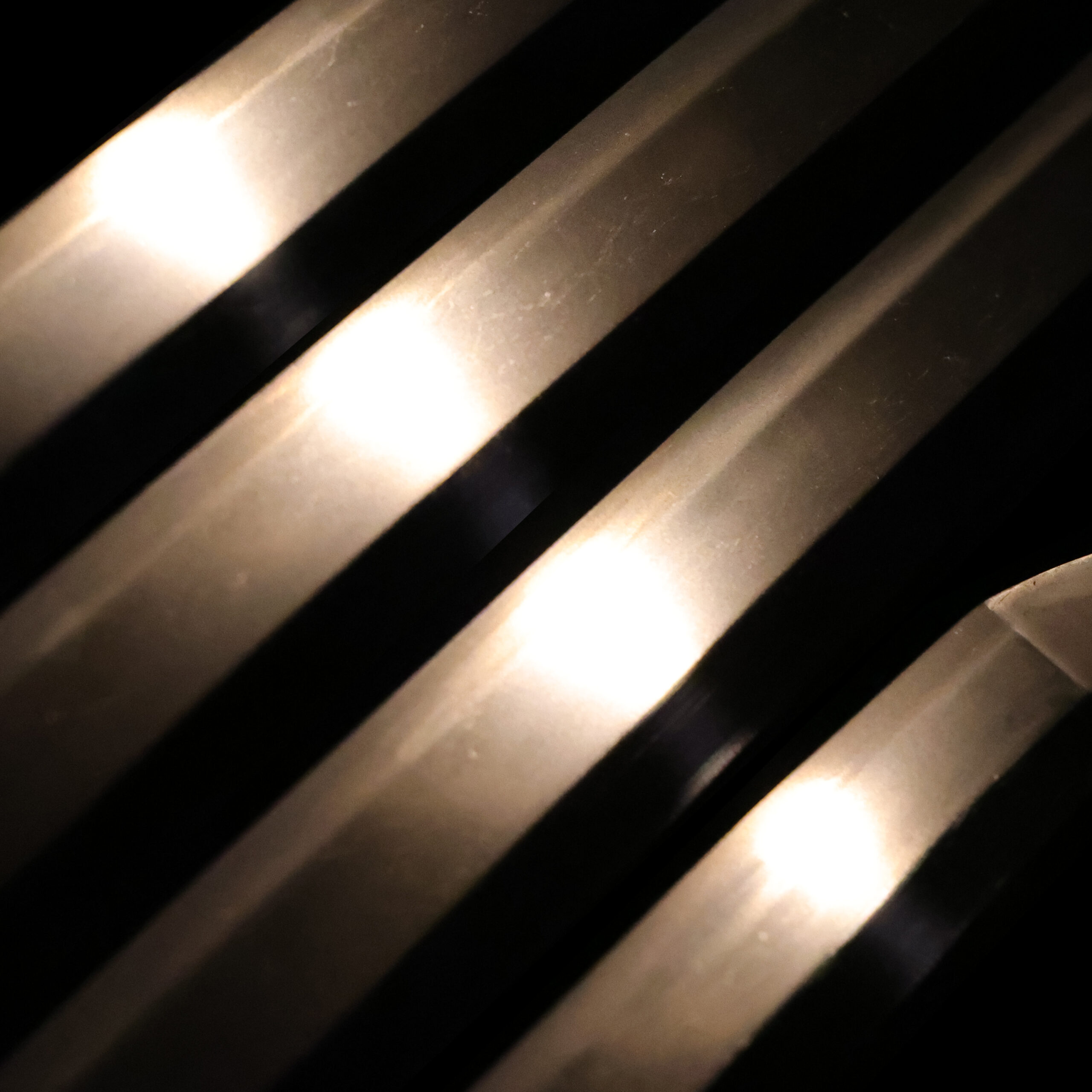
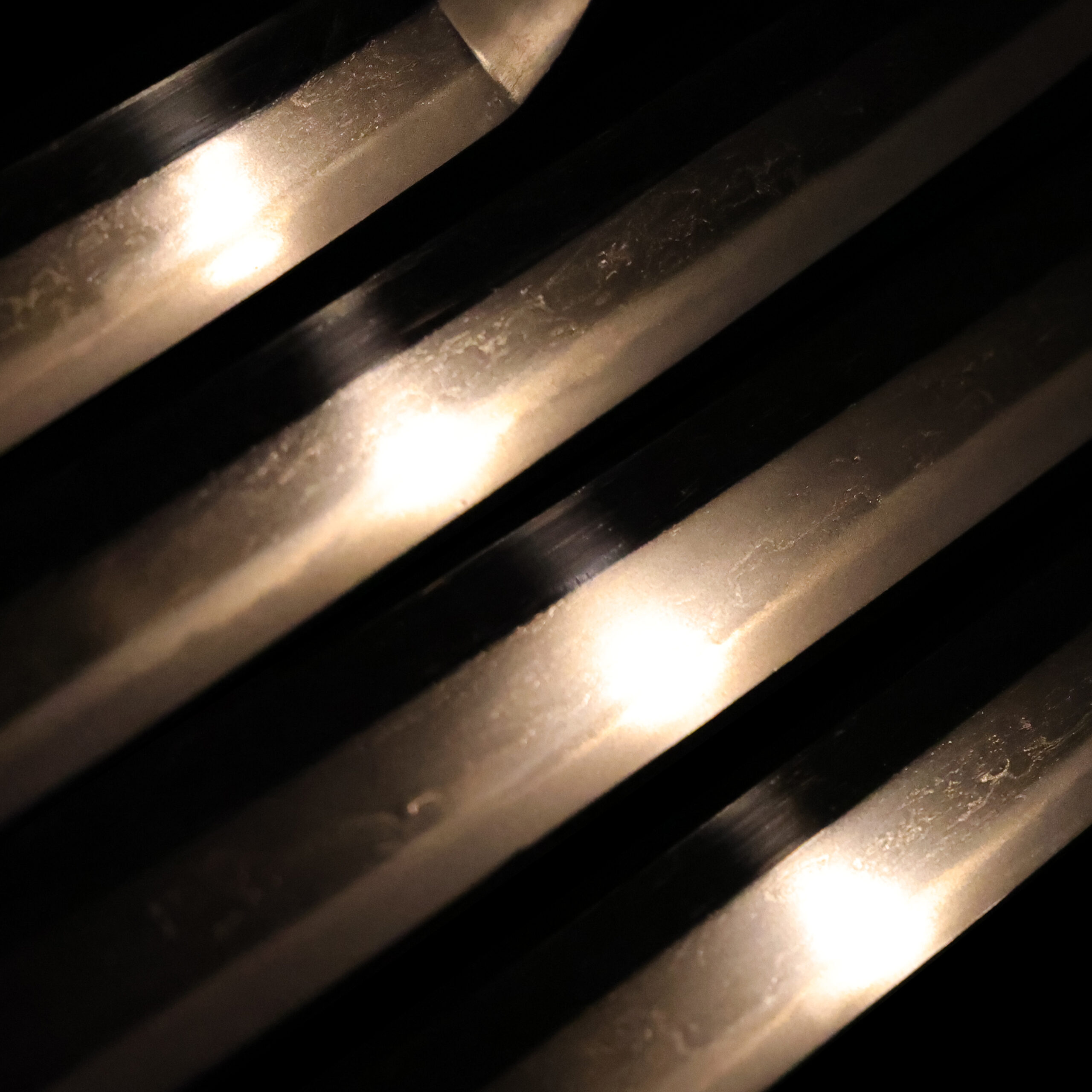
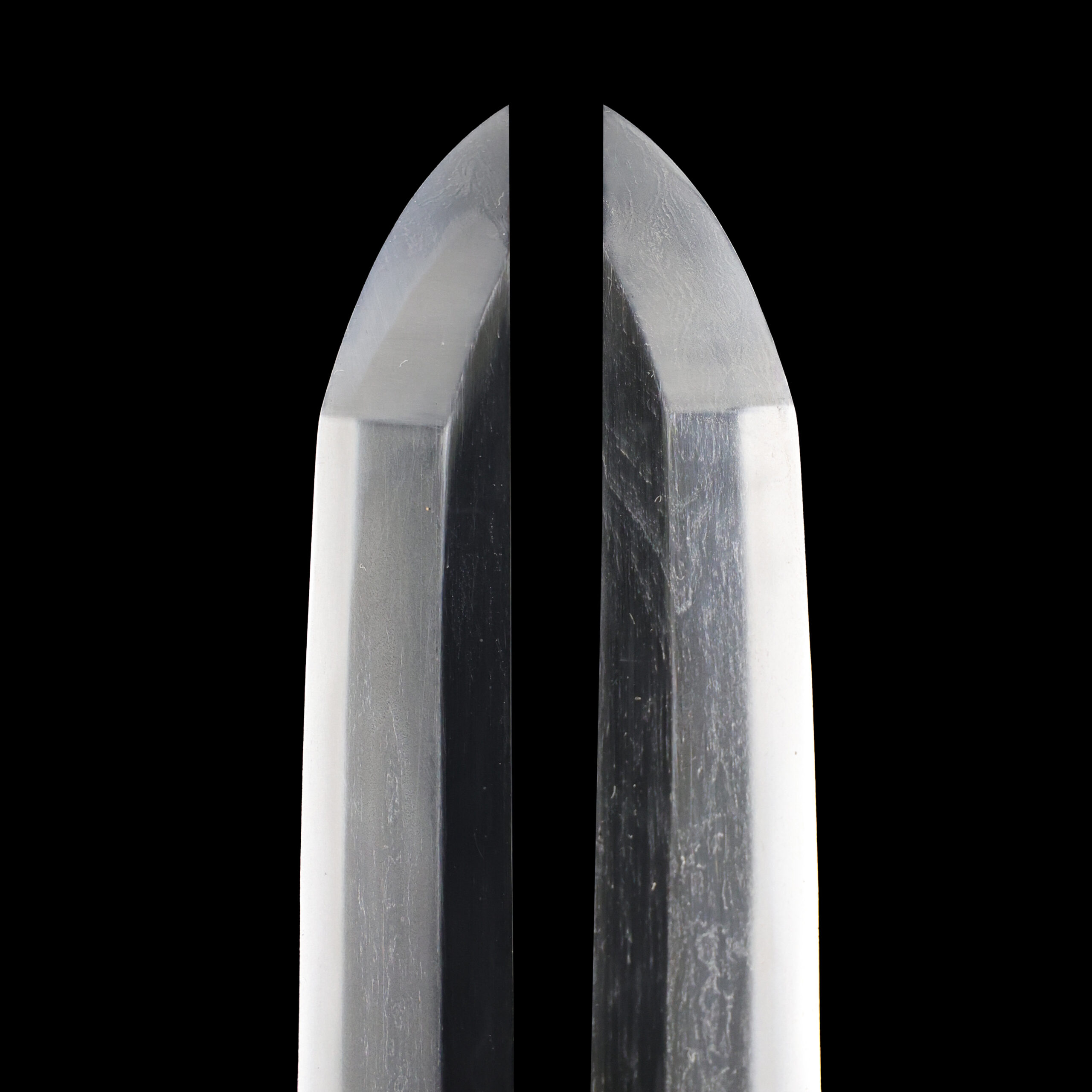
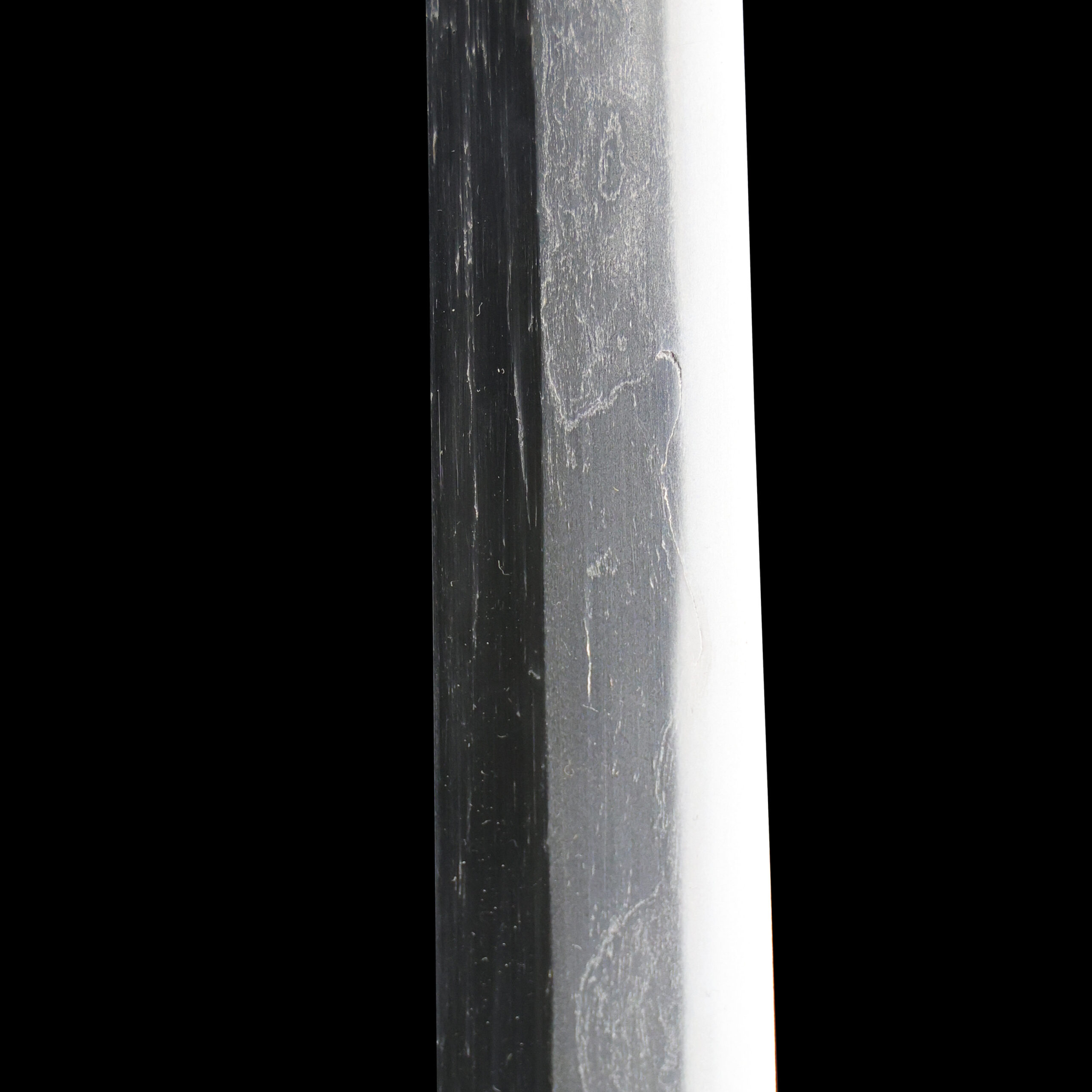
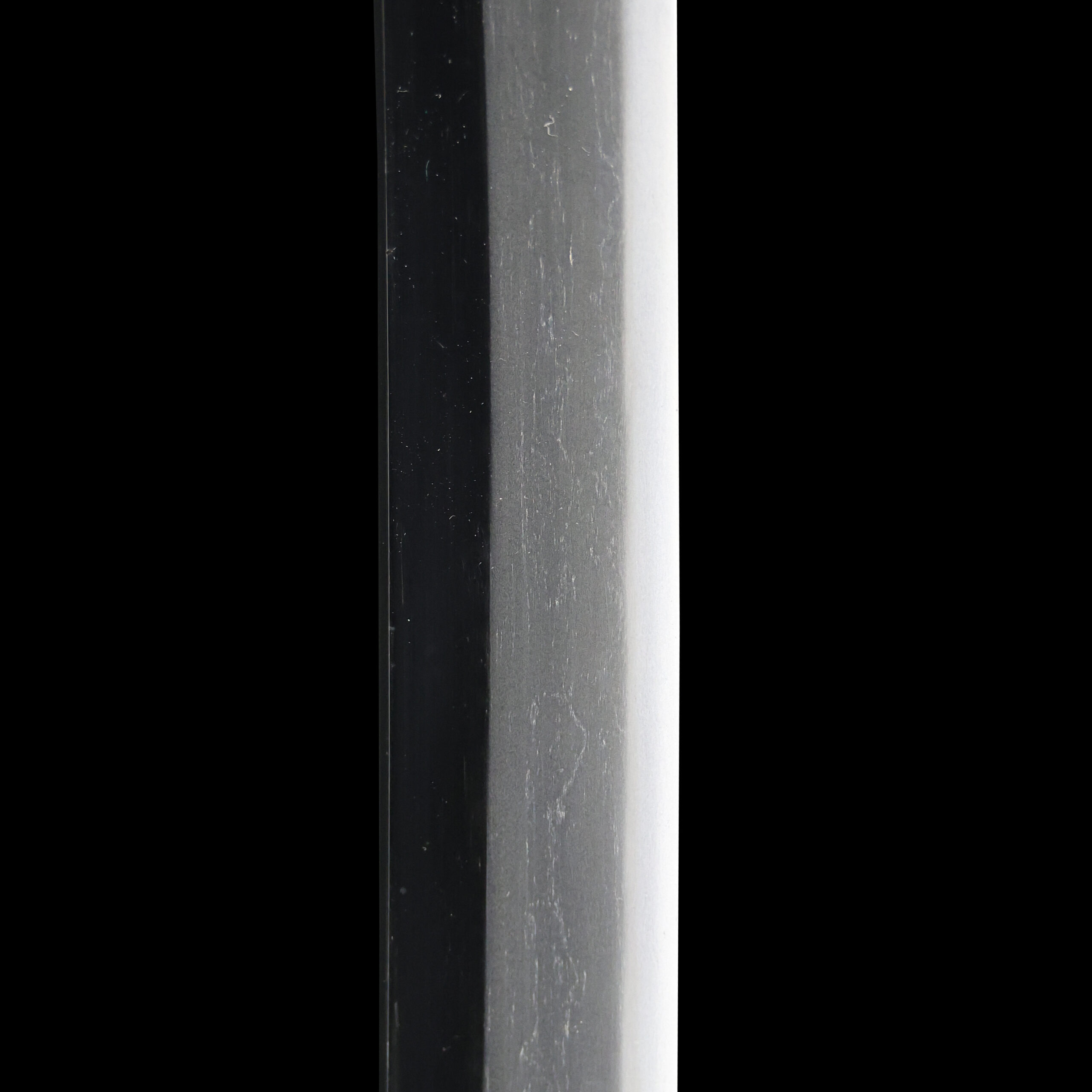
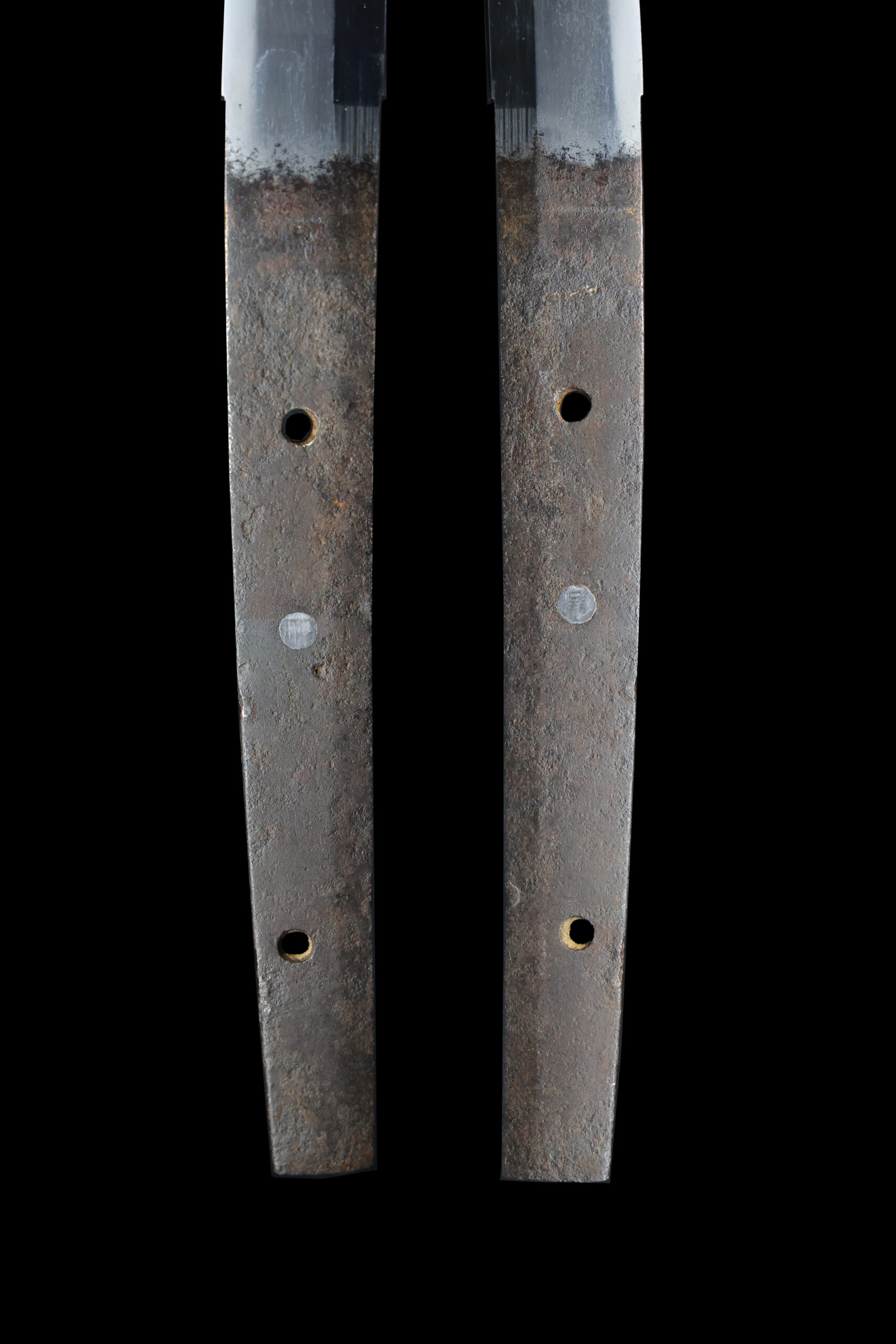
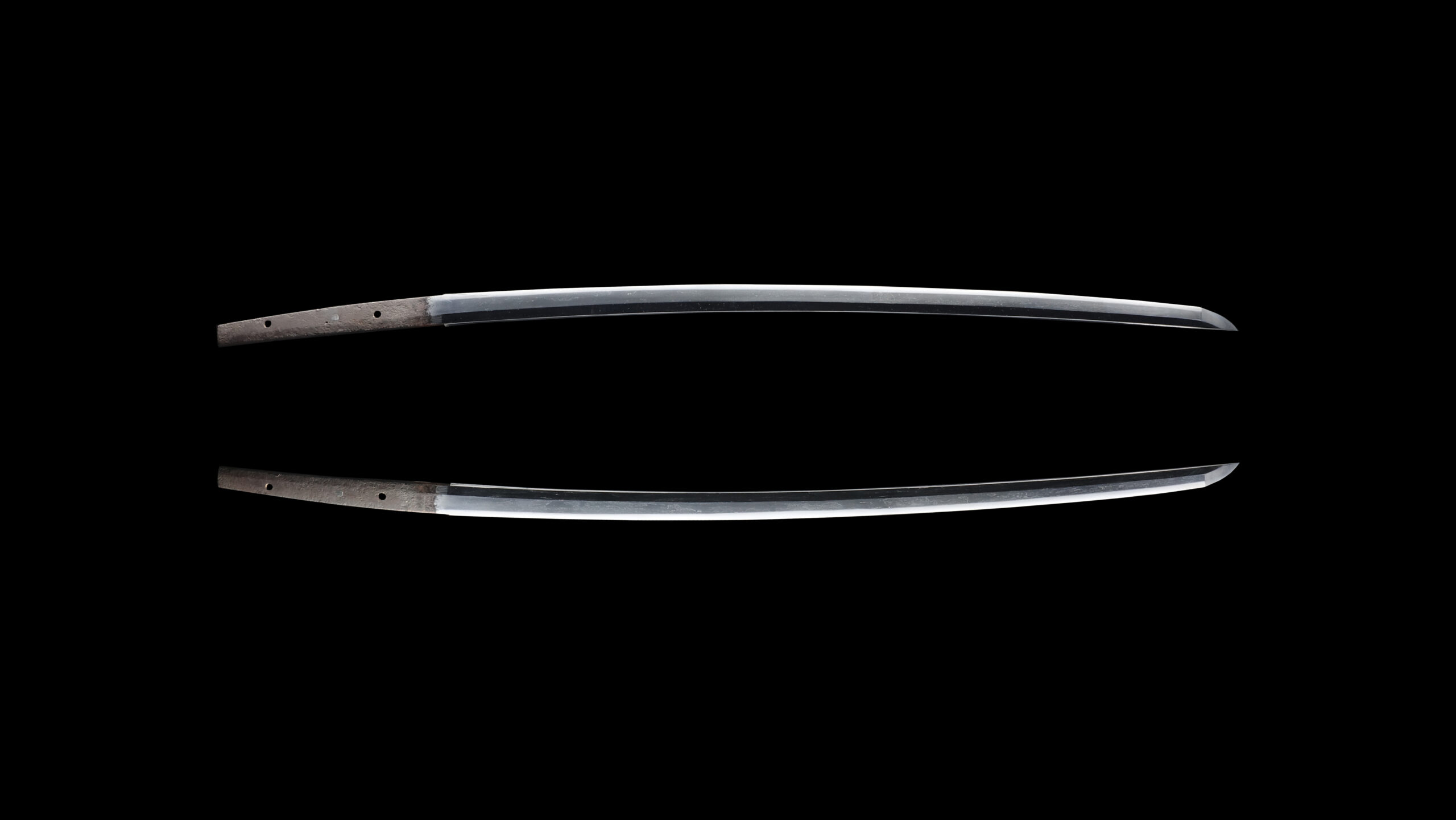
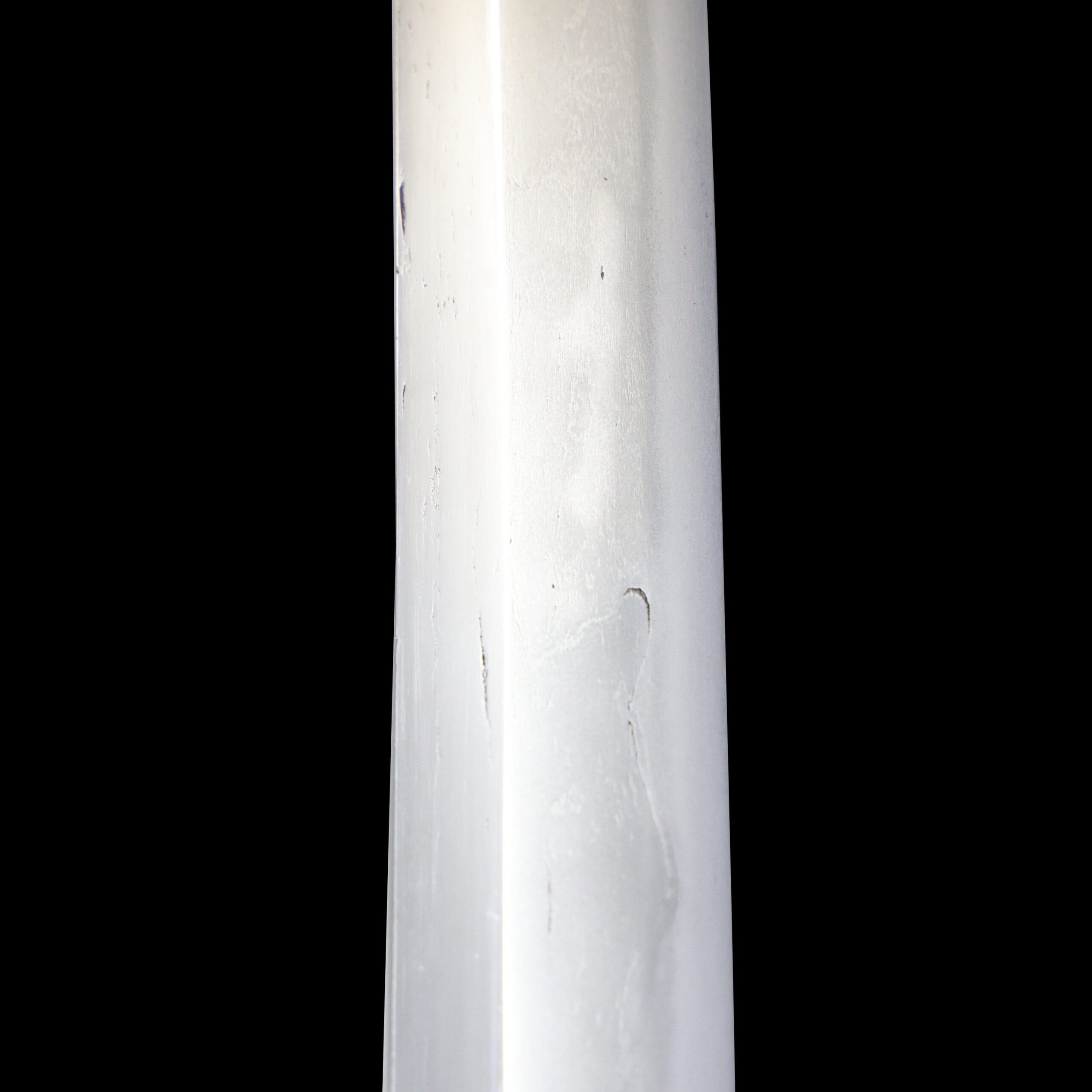
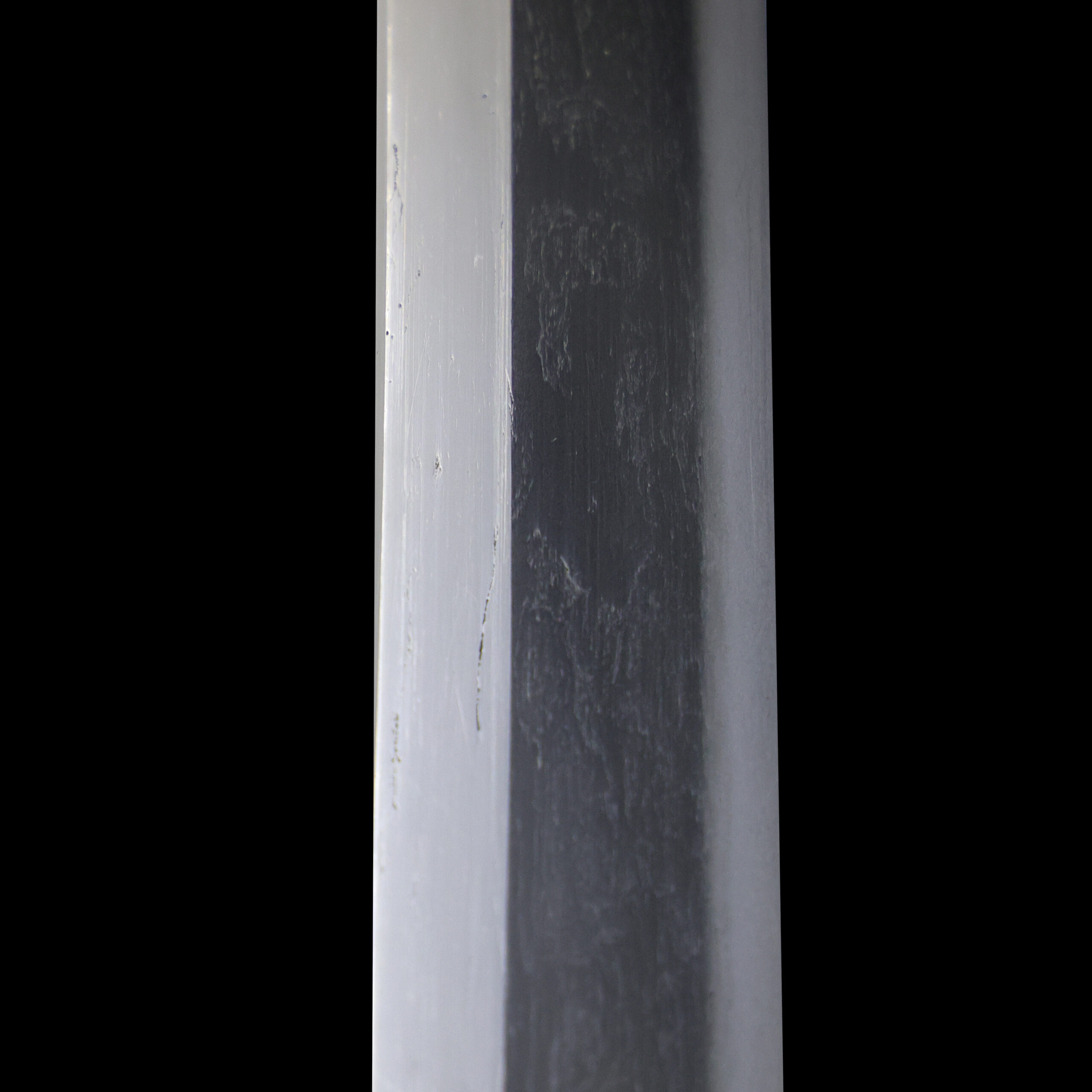
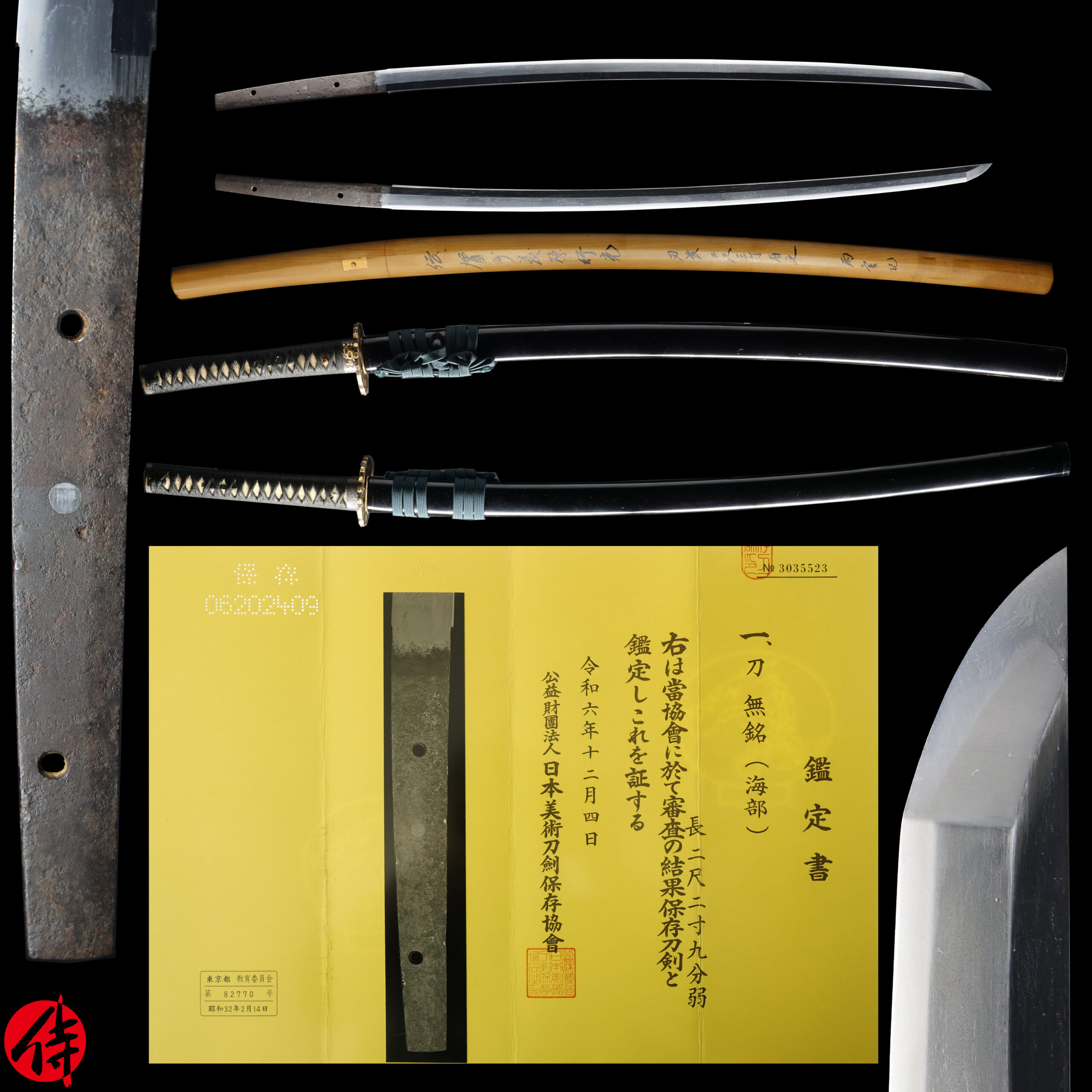
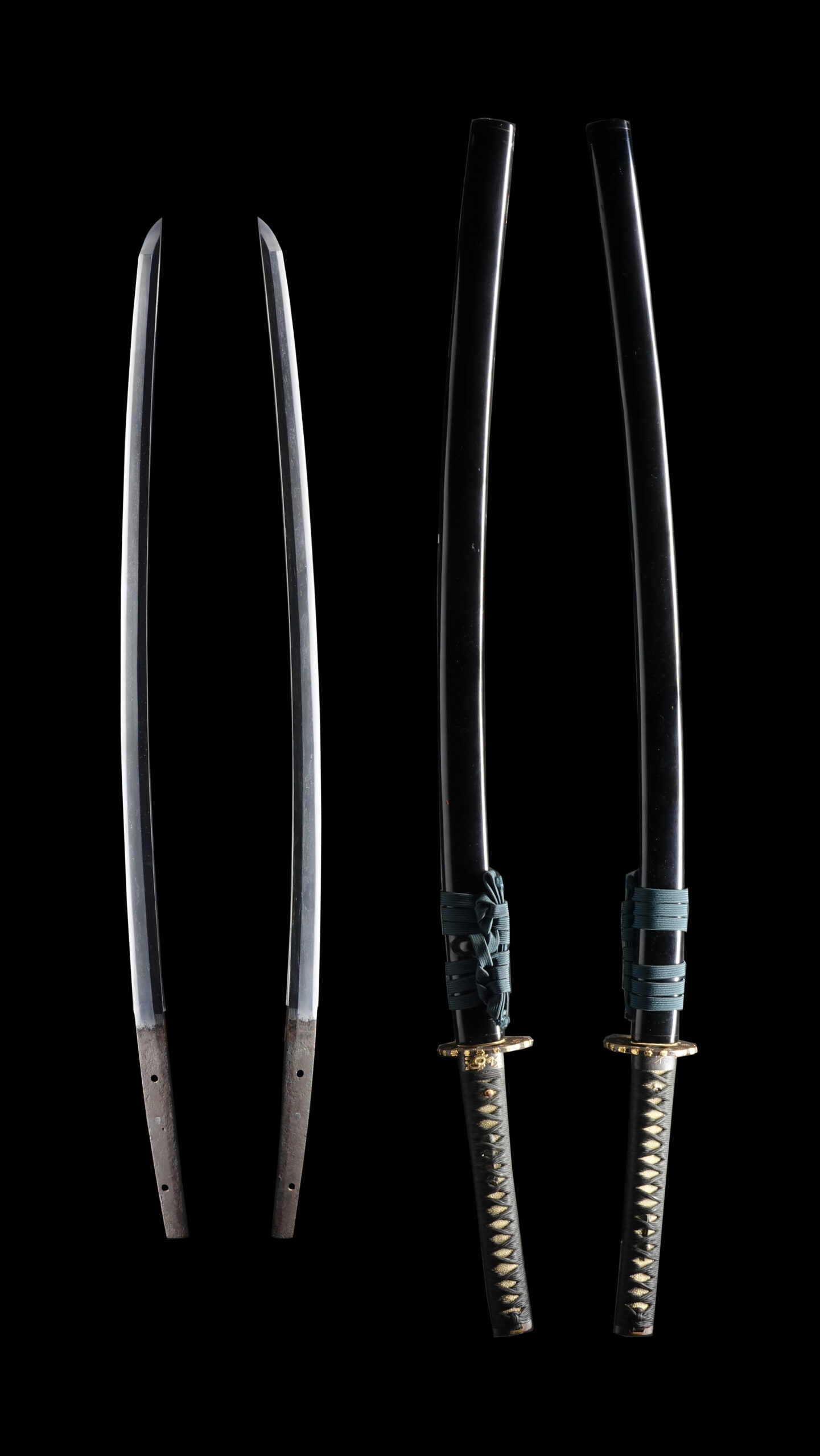
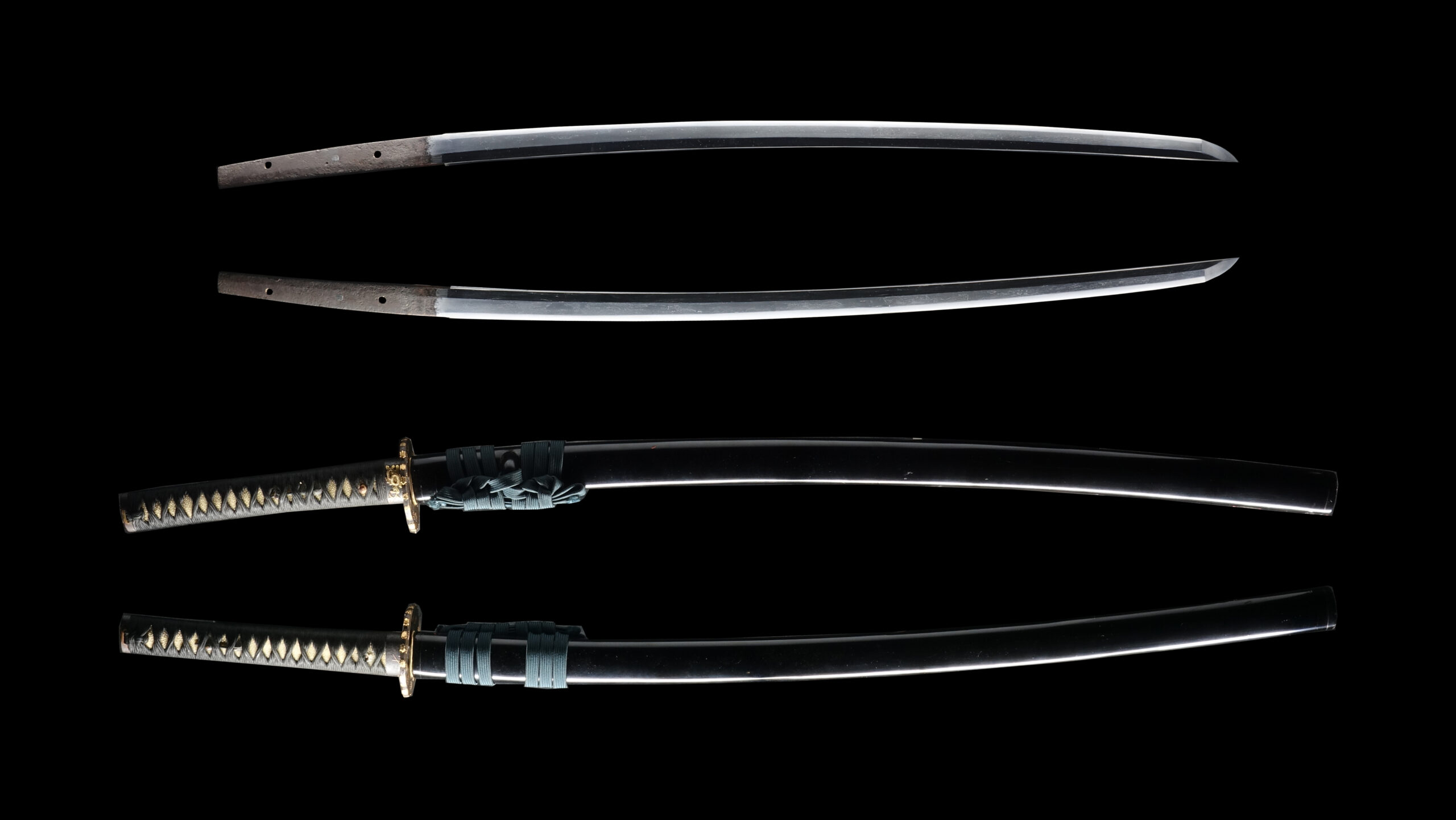
販売店の記載のまま
脇物 · 阿波
現在10点販売中
海部派は阿波国、すなわち現在の徳島を中心とする四国の地に興った刀工の一群である。説示は『古今銘尽』『古刀銘尽』を引いて、この派に二つの系統があったことを伝える。その一は康暦頃の海部太郎氏吉を祖とする系であり、いま一つは応安頃の波平の弟子と伝え、「藤」と一字を銘する者を祖とする系である。もっとも祖と仰がれる氏吉の作は現存せず、現存する作品にも南北朝時代まで時代の遡るものはなく、世に海部物と呼ばれる作の多くは室町時代のものとされる。活躍が目立つのは室町時代の後半からであり、説示に名を挙げる工としては、氏吉、藤原氏吉、阿州開府氏吉と銘する一群のほか、明応頃と天文頃の二工が知られる氏重、大永年紀を残す泰吉、同じく大永頃の海部鍛冶である泰長がある。氏重については、後に播州姫路に移り大和大掾を受領した初代、通称三木新五郎の名が伝えられ、その末裔に手柄山正繁が出たことも記される。 作風について説示はおおむね二様を記す。一つは、光の弱い地景が目立ち、大のたれ・小のたれを焼いて、匂口が望洋としてしまらず、地景と同調する金筋がかかるものである。いま一つは、板目に柾気が交じって鍛えがやや軟らかく、少しく白け、働きのあまり見られない直刃を焼く、波平風と評されるものである。短刀には、平造、三ッ棟で身幅広く寸延び、重ね薄めに僅かに内反りのついた大柄な姿が見られ、板目に杢を交え、刃寄りが流れて柾がかり、地沸が微塵につき、白け映りが立つなかに細直刃を焼いて枯淡の趣を醸す作がある。彫物には棟寄りの梵字に素剣・護摩箸を掻き流したものや棒樋があり、刀身によく調和する。脇指には海部の山刀と呼ばれる切刃造のものが知られ、地刃の出来に見劣りするものが多いと説示は述べる。海部を見分ける手がかりは、光の弱い地景、白け映りと柾がかった鍛え、しまりに乏しい匂口、そして直刃に波平風の趣を帯びる点にある。 鑑定にあたっては、これら地景・白け・匂口の性格に加え、銘字を太鏨で大振りに刻む茎の様子が拠りどころとなる。海部物は実用に即した性格が強く、その切れ味の鋭さを語る作が伝わる。氏吉作の名物岩切海部は享保名物帳に所載され、名はその切れ味の鋭利さに由来すると伝え、もとは阿波の豪族三好家にあって長慶がこの刀で武功をたて、後に福岡の黒田家に伝わったという。また泰吉や泰長の作には、海部の作が江に化したと語られるごとく、地刃や帽子に物語を生む要素を含むものがある。氏吉作の短刀には『光山押形』に所載され伊東巳代治の旧蔵にかかる一口もある。有銘の作は総じて少なく、それゆえ氏重・氏吉・泰吉・泰長らの遺例は、各工のみならず海部派全般を研究するうえで貴重な資料であり、阿波の地に根ざした実用刀の一系として位置づけられる。 詳しく見る →
室町時代
応仁の乱が足利の体制を砕いた後、戦国の一世紀はほとんどすべての国を武装させた。この時代は選ぶ目に報いる。並の作は多いが、その傍らには第一級の注文打ちが立っている。
銘が正しい、または無銘でも年代・国・系統を確実に指摘できる、保存に値する真正の作と鑑定されたものです。
日本美術刀剣保存協会(日刀保)は、1948年に設立され、文化庁の監督を受ける公益財団法人で、東京・刀剣博物館に本部を置きます。専門の審査員が出品作を直接審査し、美術的・歴史的価値に応じた鑑定書を発行します。日刀保の鑑定書は、日本刀および刀装具の真正性を示す最も広く認知された基準です。
日刀保公式サイトReturns/exchanges limited to defects caused by shipping (except willful misconduct or gross negligence by the company); customers must contact within 72 hours of receiving the product.
Certificate reading — 無銘(海部)