新刀の時代は、その大部分が京都で発明された。埋忠明寿の工房が運動を育て、堀川国広が一世代を鍛え、鎚を持たぬ本阿弥家が名刀の意味を司った。
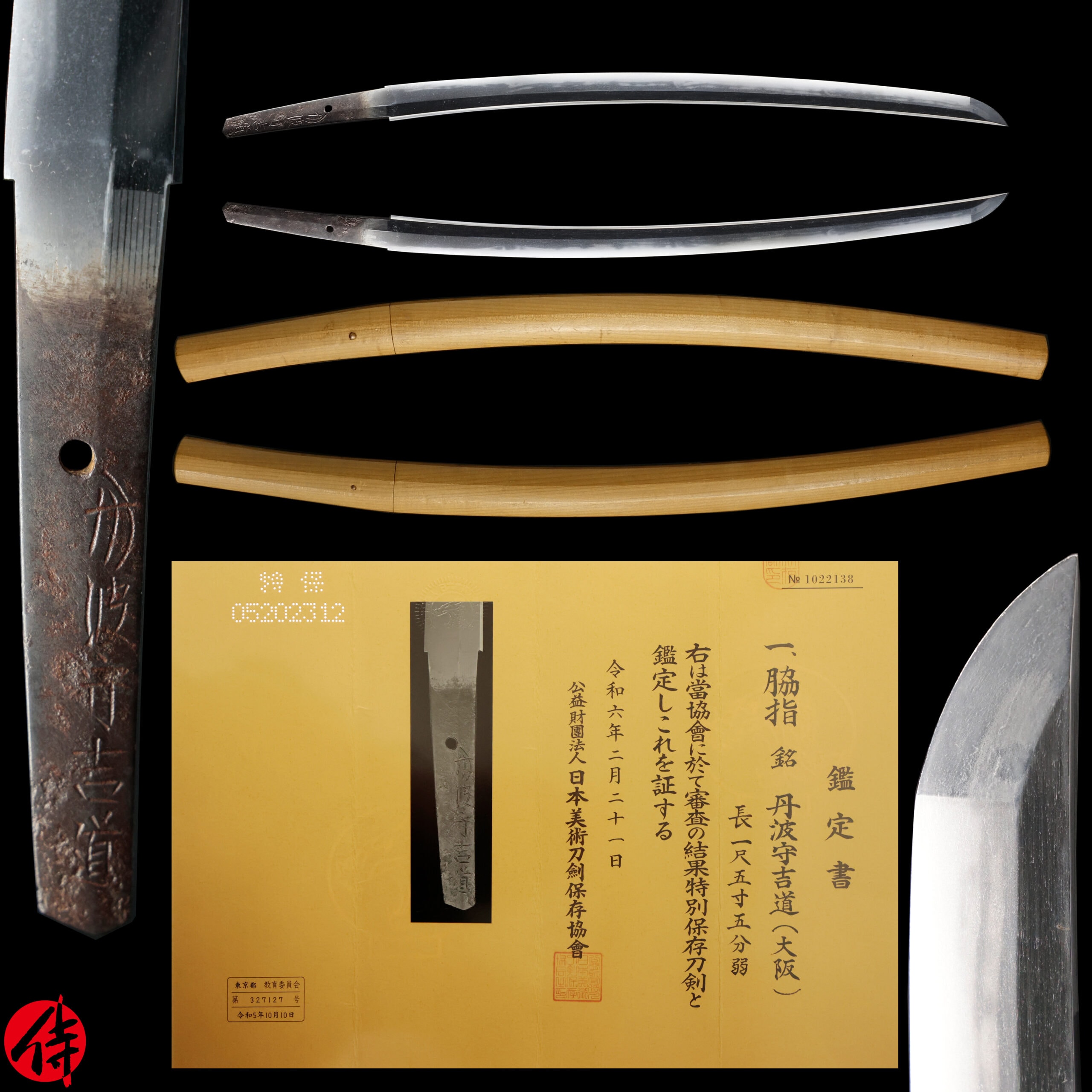
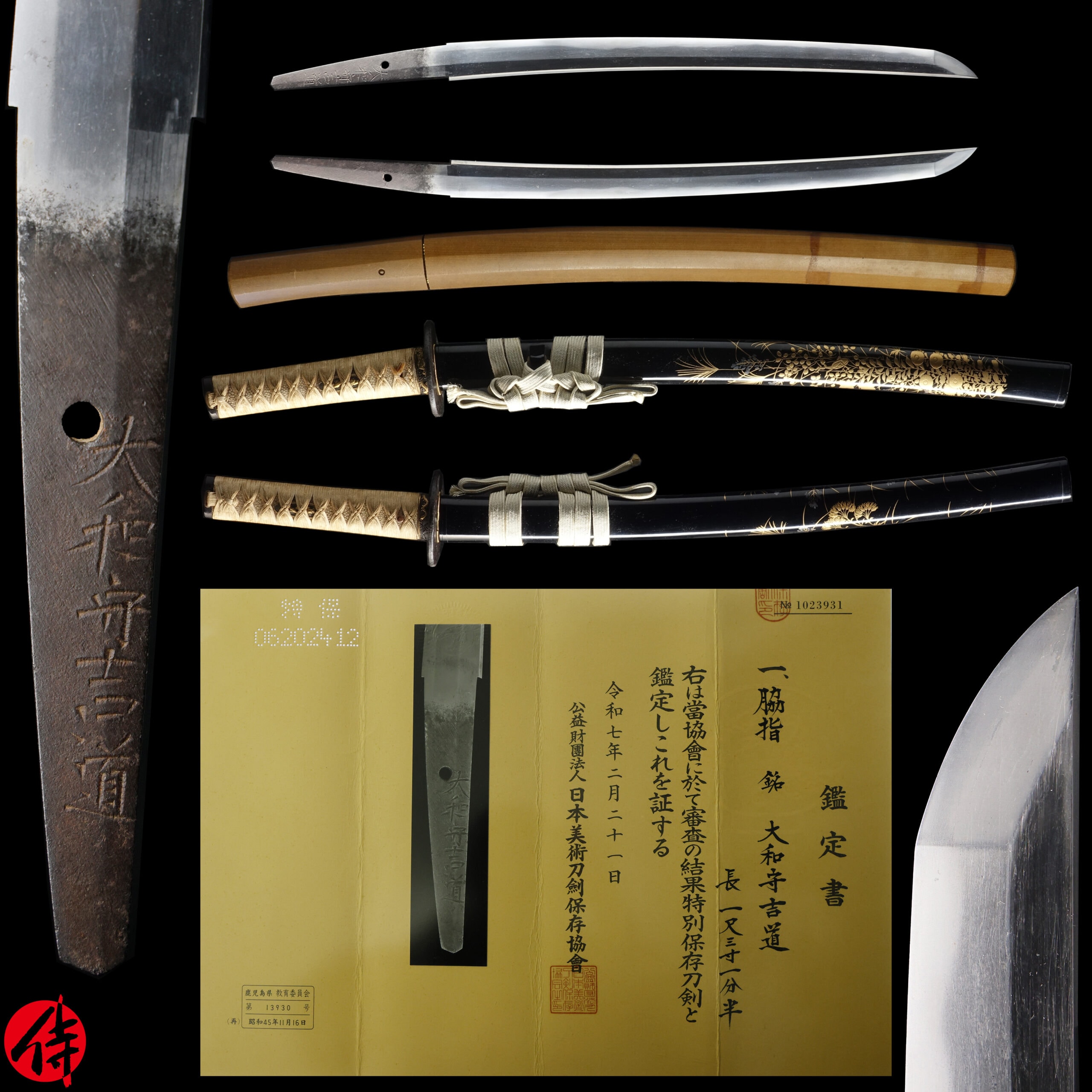
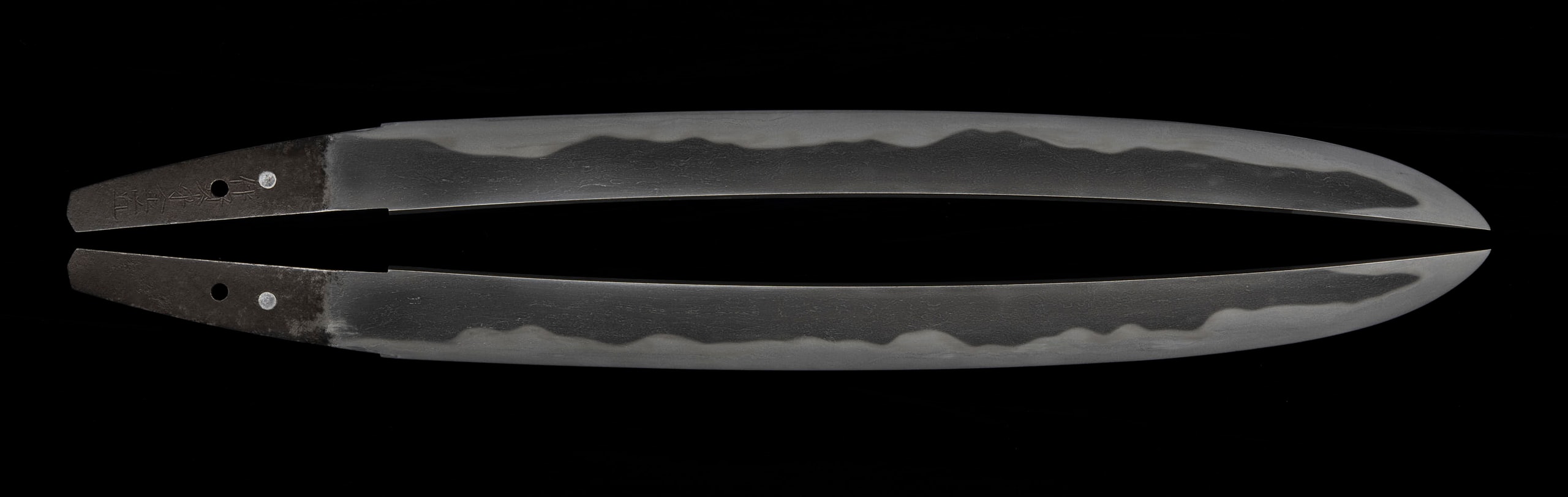
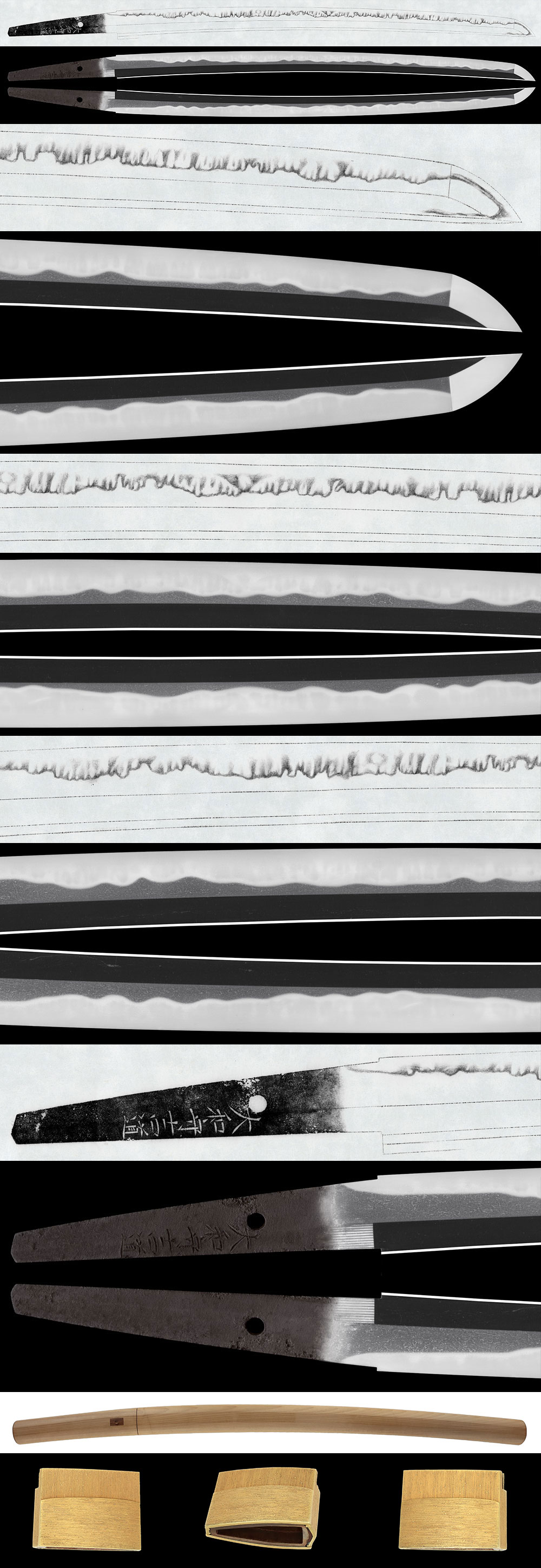
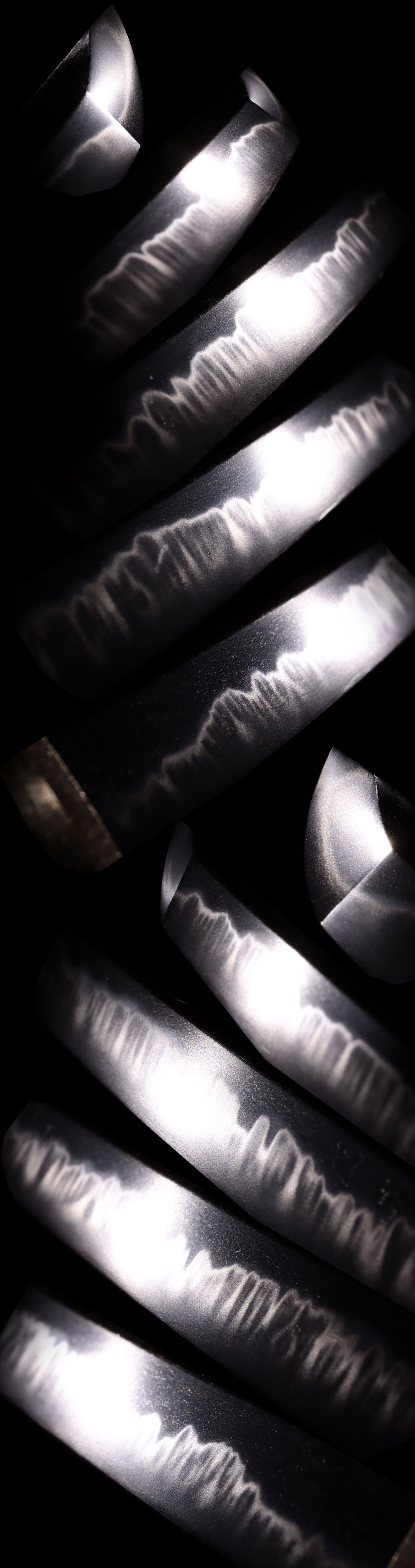
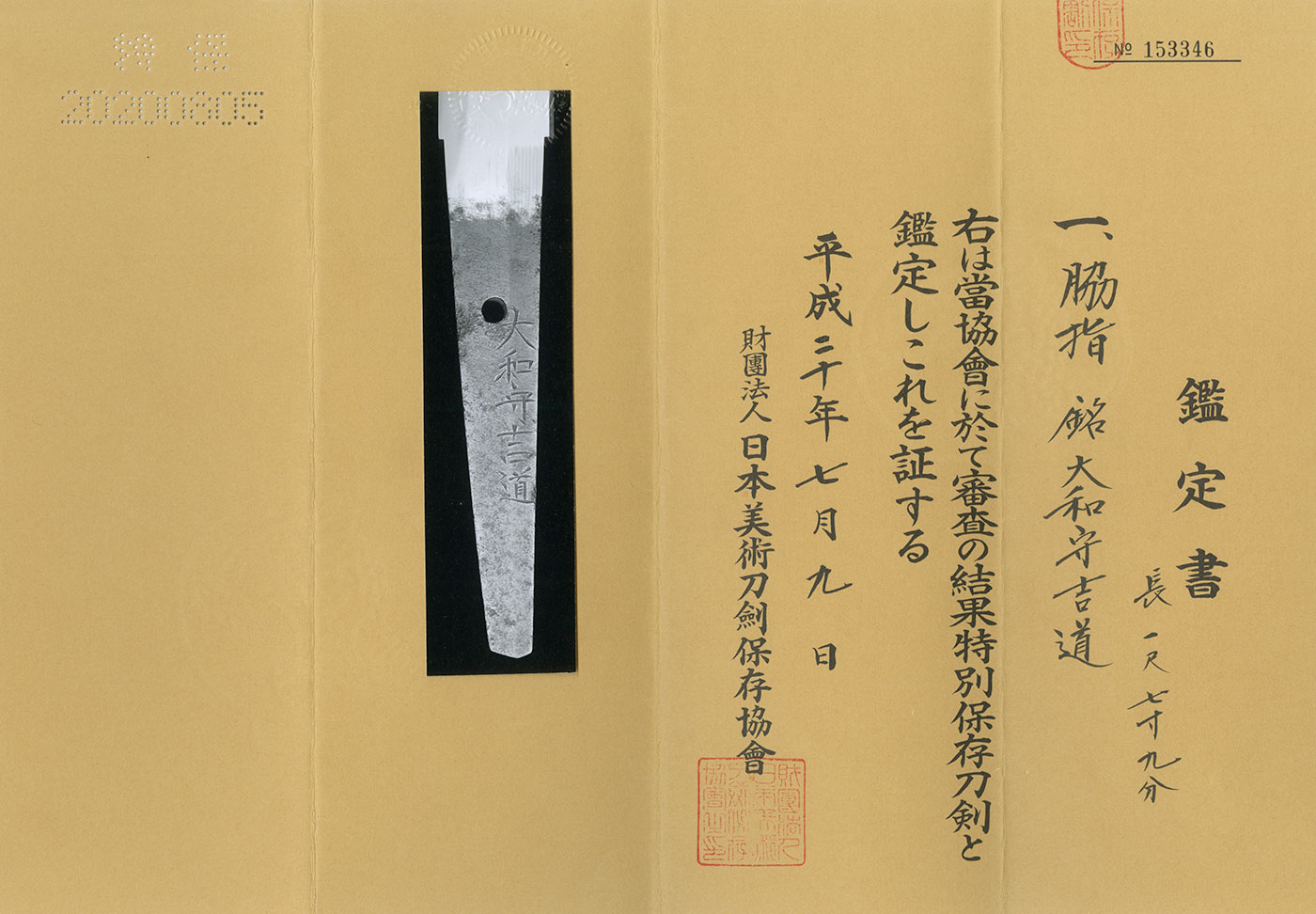
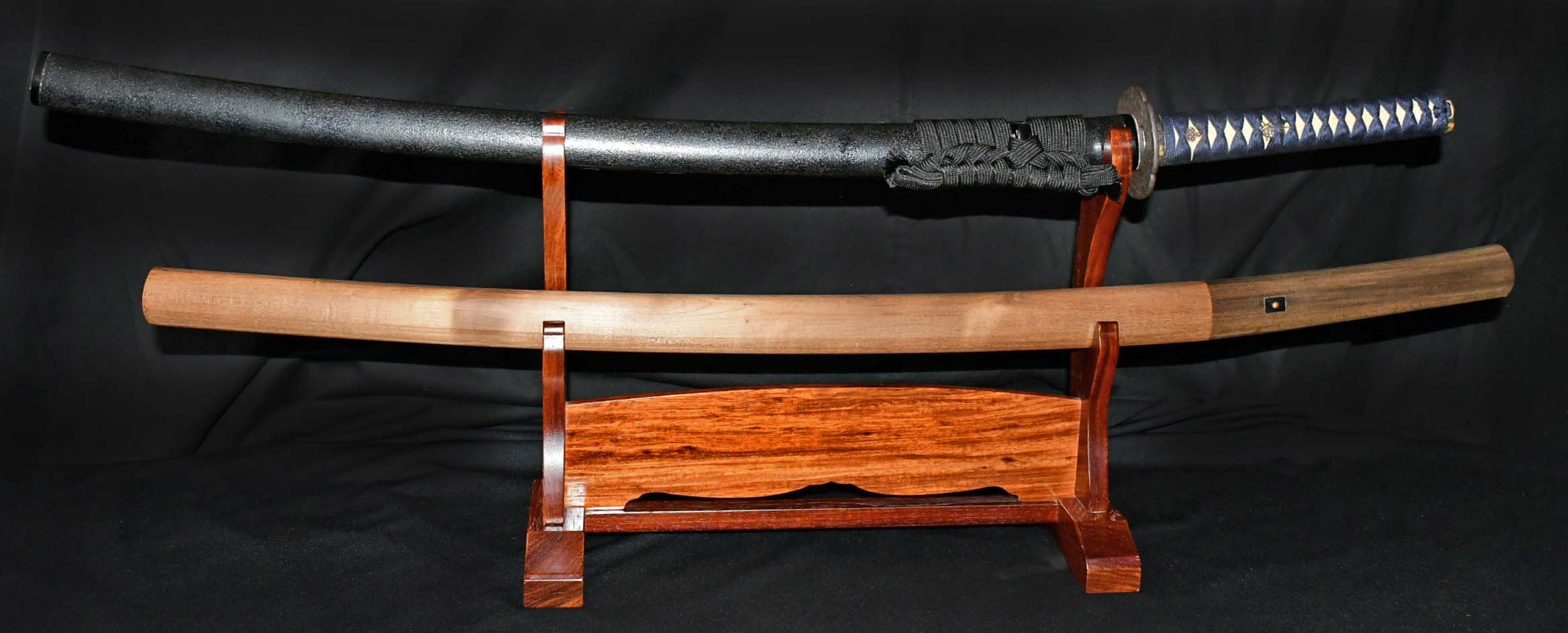
刀剣番号:AS26287 脇差:白鞘入り(日本美術刀剣保存協会 特別保存刀剣) 銘文:大和守吉道(初代) 新刀:上作:武蔵:摂津 (弊社では刀剣の出来映えにより、最上作、上々作、上作、普通作の4段階に評価しております。本作は大和守吉道の作品の中でも、上々作にランクされる一振りです。) ハバキ:金着二重ハバキ 長さ:54.2 cm (1尺7寸9分) 反り:1.1 cm (3分6寸) 目釘穴:1個 元幅:3.09 cm 先幅:2.09 cm 重ね:0.73 cm 刀身重量:570 g 時代:江戸時代 寛文頃(1661-1673年) 体配:身幅広く重ね厚い、しっかりとした造り込みの脇差です。反りは適度で、姿の整った一振りです。 地鉄:小板目肌よく練れ、精良な地鉄となります。 刃文:区より互の目乱れを焼き、刃中には足がよく働きます。帽子は丸く返ります。 特徴:初代大和守吉道は、本名を三品右衛門と称し、大坂初代丹波守吉道の次男にあたります。特に拳形丁子乱れの刃文を焼くことで知られる名工です。 歴史的背景:天和年間(1681-1684年)は、徳川綱吉が五代将軍に就任して間もない時期であり、徳川幕府の統治が武断政治から儒教的理想に基づく文治政治へと大きく転換した時代です。 この時代の象徴的な出来事として、天和3年(1683年)の「八百屋お七」の処刑が挙げられます。恋人に再会したい一心で放火事件を起こし、火あぶりの刑に処された15、16歳の少女の悲劇は、後に歌舞伎や浄瑠璃の題材として広く語り継がれました。 また、同年に発布された「天和令(武家諸法度の改訂)」も重要な出来事です。綱吉のもと、武士の規範は「文武弓馬の道」から、儒教的な徳目を重視する「文武忠孝を励まし」へと改められました。
Certificate reading — 銘 大和守吉道
 NihontoWatch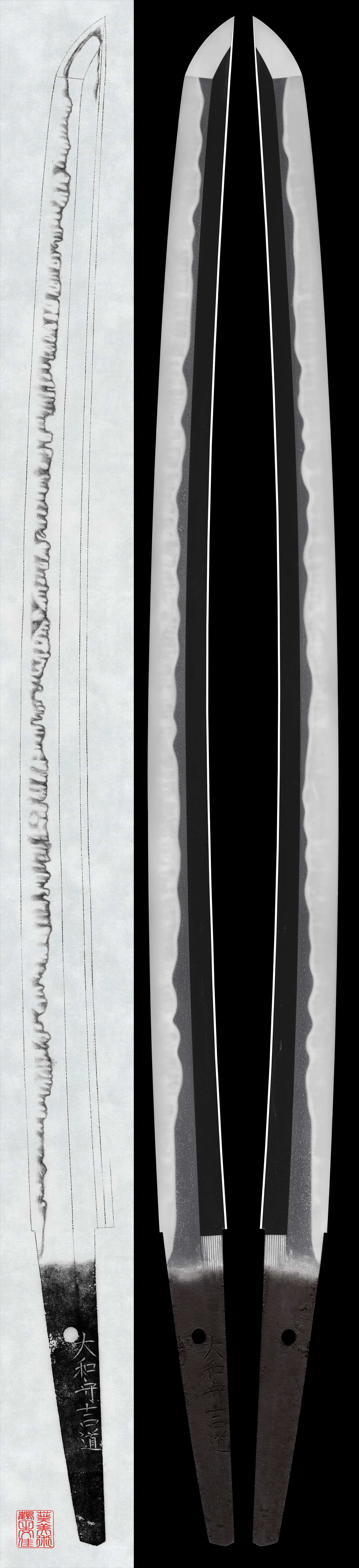
Settsu (Osaka), the Mishina school, the Tanba no Kami Yoshimichi name-line · 摂津 · 1661-1673頃
藤代 Jo saku · 刀剣大鑑 上位31%
現在5点販売中
吉道は三品派の最も著名な名跡で、関兼道の子に始まる京を本拠とする新刀の一派である。初代丹波守吉道とその兄弟、伊賀守金道・越中守正俊は説明に並んで「三品系の巨匠」と称され、三品の作を江戸初期の上位へと押し上げた三工である。本記録はその名跡の大坂の系統を収める。中心に立つのは初代大坂丹波守吉道で、慶長三年に生まれて「三品金右衛門」と称し、京初代の次男として大坂に移住し大坂丹波の祖となった工であり、その周囲に、三品宇右衛門と呼ばれた子の大和守吉道と、説明が二代に極める一口が置かれる。兄金道・弟正俊が多岐な作風を見せたのに対し、吉道は一つの本領の銘に拠り、一派はその本領で記憶される。
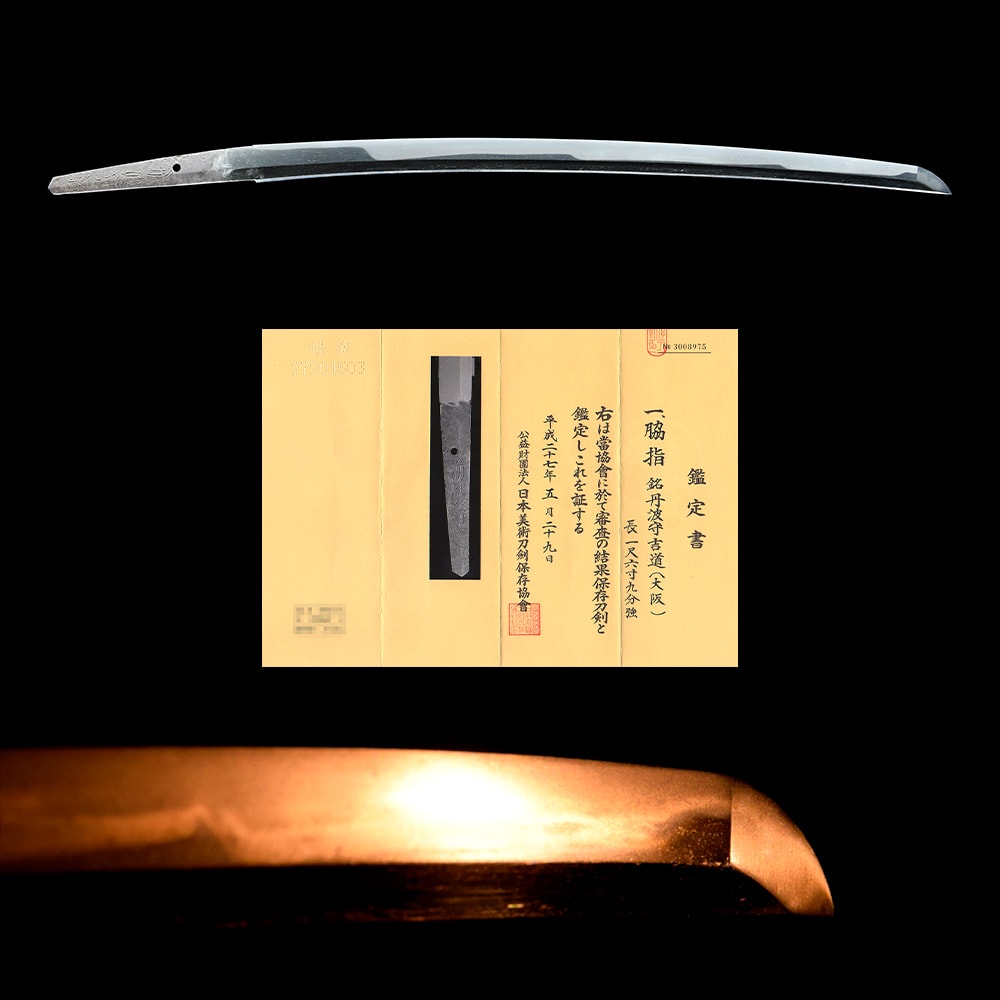
その本領が簾刃である。のたれ・互の目の乱れに砂流しと金筋を幾重にも通し、簾の如く平行に縞がかるまで焼くもので、説明はこれを一派の代名詞と呼び、大坂丹波が他のいかなる作風よりも頻りに且つ巧みに焼いたとする。幅広く、やや寸延び、重ね厚い慶長新刀の体配の平造脇指に、初代は腰元へ直ぐの焼出しを長く取り、その上で焼幅を一段と広げ、小のたれを基調に互の目を交えて大きく華やかに乱れる。湯走りが長くさかんに通り、砂流しが二重・三重と重なって縞がかり簾刃となり、足が入り、沸が強くついて処々むらづき、金筋が部分的に長く入り、棟焼・飛焼を交える。帽子は浅く尖って突き上げ、頻りに掃きかけて火焰風となり、長く焼き下げる。説明はこれを常にも増して華やかで放胆な様と読み、お家芸の作域でありながら「京初代丹波守吉道を髣髴とさせるものがあり」[[c:1]]と評する。
地鉄が刃を支える。初代の脇指の鍛えは杢を交えた小板目がつみ、地沸が微塵に厚くつき、地景が細かによく入り、流れて柾がかり処々肌立つ。焼出しそれ自体が一個の見どころである。説明は初代の直ぐの簾刃の焼出しを、上へ広まる大坂焼出しと区別し、ここでは上に行っても焼幅が均一の幅を保つ点を記す。大坂丹波の手の内の判別である。二代に極める細身の刀は同じ語彙を低く見せ、流れごころの板目に地沸つき、砂流し・互の目・足を交えた大乱れが簾刃となり、帽子は浅く濡れて大丸、先掃きかける。刃文が常で、体配と沸の強弱が、ここに収めた諸手の間の変数である。
名跡は単一の編年ではなく手と銘で読まれる。初代大坂丹波が簾刃の本領の手であり、子の大和守吉道は時代を並行する対照の一手をなす。元先の幅差つく幅広の鎬造の刀に、大和守は家の簾刃ではなく説明のいう「中河内風の丁子乱れ」[[c:2]]を焼き、足繁く入り、小沸つき、砂流し処々かかり、帽子は僅かに湾れて先小丸とし、時に僅かに家伝の刃を交え、稀に瀾の中に丁子を交えた一竿子風の濤瀾を見せる。説明はこの刀を同作中の出色とし、中河内に比してやや沸が強いとし、大坂初・二代丹波守吉道、二代河内守国助との合作を記して、これら大坂の刀工の交流を辿らせる。二代の一口が継承を閉じる。説明は「同工の特色ある簾刃を焼いて」[[c:3]]賤しからず、細身ながら出来がよいと記す。
一派の中では、この系統はその銘によって最もよく位置づけられる。初代の簾刃は「一派のお家芸である簾刃を最も得意としており」[[c:4]]、直ぐで均一の焼出しと尖って掃きかける帽子が、近隣の上へ広まる大坂焼出しからも、子の好んだ丁子からも、その手を分かつ。京初代とは最も混同されやすく、最も注意して分けられる。大坂は菊紋をきらず京は二代以降これをきるため、説明は銘の「守」の字を決め手とし、ウ冠の下の「寸」を大坂は真っすぐ、京は斜に打つとする。説明は後代の歩みにも率直で、「代が下るに従って」[[c:5]]作風が一層技巧的で一律となり、刃文が一つの型へ落ち着いて祖の個性が薄れたと観る。
初代大坂は藤代の上作に位し、本記録ではこれら四口が重要刀剣の列にあって、それ以上の指定はない。伝来は僅かながら名誉あるもので、一口は皇室の蔵に伝わる――売買されるよりも護られる類の伝来であり――いま一口にも伝来の記録がある。本記録には国宝・重要文化財と呼べるものはなく、所在も数少ないため、指定を受けた大坂丹波吉道はしばしば現れる刀ではない。現れるとすれば多くは平造の慶長新刀の体配の重要の脇指または刀であり、個人の蔵へ来るのは折にふれ、忍耐を以てである。一つの銘を数代が継いだ名にあって、遺る指定作は各々が線上の記された一点であって通例ではなく、健全な刀に焼かれた簾刃が、三品派のこの大坂の系統を知る最も確かな標である。
吉道の位置づけを、日本刀全体および伝統・時代・時期ごとに示します。各位(随一・屈指・有数・著名)は、NBTHK および文化庁による指定に加え、三作や名物帳などの歴史的栄誉を加味したものです。
各項目を選ぶと評価方法が表示されます。
新刀 · 山城
現在71点販売中
三品派は、美濃国関の兼道を源流とし、その子らが京へ上って興した新刀の一門である。説明書は、兼道の四子すなわち長兄伊賀守金道、来金道、丹波守吉道、末弟越中守正俊が父と共に美濃より上京し、西洞院夷川に住して三品派の名を大いに高めたと記す。長兄金道は京五鍛冶の頭領にして、その家は刀工の受領を朝廷に推薦する権を世襲し、銘に「日本鍛冶宗匠」と添えて幕末に及んだ。やがて一門は京にとどまらず大坂へも枝を張り、京初代丹波守吉道の子が大坂に移って大坂丹波の祖となり、その周囲に大和守吉道が連なり、丹後守兼道のごとく大坂に住して元禄頃に活躍した工も出た。末関の量産地に発しながら、堀川派と並ぶ京新刀の一大勢力に育ち、さらに大坂へと展開した点に、この一門の歩みがある。 作風を貫くのは、工と世代の差を越えて繰り返される三品の共通語法である。地鉄は板目に杢や流れ肌を交えて棟寄りに強く流れ、刃寄りで柾がかって肌立ち、地沸微塵に厚くつき地景のよく入るもので、美濃関の継承を京の作にまで伝える。京の古い手が肌立つ板目を見せるのに対し、大坂の系では小板目をよくつめ清く澄んだ地に転ずる差がある。刃文は美濃由来の互の目と尖り刃を基調に、これを京風に洗練して小のたれの大乱れに展開し、沸が強く時に荒くむら立ち、砂流しさかんに金筋長く入る。最も明快な見どころは帽子で、のたれ込みに先尖って掃きかける三品帽子は一門の標識をなし、末弟正俊にことに顕著である。いま一つの標識が丹波守吉道の創案した簾刃で、湯走り・飛焼・砂流しが幾重にも縞がかって簾の如く焼かれる。金道と正俊が志津風を共に得意として作域広く、吉道はこの簾刃の一手に己を結び、大坂の系はその簾刃を最もよく継いだ。同じ語法のうちに、各工の手が読み分けられる。 収集の観点では、三品派は新刀草創の格と明快な鑑定の勘所をあわせ持つ一門である。先尖って掃きかける三品帽子と、縞がかって平行に焼かれる簾刃の二つの見どころは、地と刃のいずれにも紛れなく現れて工と作域を定める手懸りとなり、大坂の直ぐで均一の焼出しは京の手と分かつ目印となる。主要工の格は説明書の評にそのまま現れ、初代伊賀守金道は一派中最も優れた手とされ、初代丹波守吉道は初期新刀屈指の名工に数えられ、末弟正俊は器用さ兄弟中第一と評される。一門の作はおおむね在銘で、銘そのものが時の標識となり、由緒の確かさをもって賞翫される。来歴の知られる作は谷干城の愛刀、佐竹家、織田有楽斎、北野天満宮、皇室、大坂城代青山家の蔵を経て伝わり、一口は京都国立博物館に納まる。最上手の在銘作が市に現れるのは折々のことで容易ではないが、一たび相見えれば、三品派が美濃関より京・大坂へいかに展開したかを語る確かな証となる。 詳しく見る →
新刀の時代は、その大部分が京都で発明された。埋忠明寿の工房が運動を育て、堀川国広が一世代を鍛え、鎚を持たぬ本阿弥家が名刀の意味を司った。
保存刀剣のうち、出来が一層優れ、保存状態も良好と認められたものです。再刃や、室町・江戸期の多くの無銘作は対象外となり、保存刀剣より高い基準が課されます。
日本美術刀剣保存協会(NBTHK)は、1948年に設立され、文化庁の監督を受ける公益財団法人で、東京・刀剣博物館に本部を置きます。専門の審査員が出品作を直接審査し、美術的・歴史的価値に応じた鑑定書を発行します。NBTHKの鑑定書は、日本刀および刀装具の真正性を示す最も広く認知された基準です。
NBTHK公式サイト返品をご希望の場合、お客様が受領されてから3日以内にお知らせください。この期間を過ぎますとキャンセルはお受けできかねますので何卒ご了承ください。なお当社へのご返送は、5営業日以内の発送をお願いしております。なおキャンセルは販売した当時の状態がそのまま保持されている事が条件となりますのでお取り扱いには十分ご注意下さい。
刀剣番号:AS26287 脇差:白鞘入り(日本美術刀剣保存協会 特別保存刀剣) 銘文:大和守吉道(初代) 新刀:上作:武蔵:摂津 (弊社では刀剣の出来映えにより、最上作、上々作、上作、普通作の4段階に評価しております。本作は大和守吉道の作品の中でも、上々作にランクされる一振りです。) ハバキ:金着二重ハバキ 長さ:54.2 cm (1尺7寸9分) 反り:1.1 cm (3分6寸) 目釘穴:1個 元幅:3.09 cm 先幅:2.09 cm 重ね:0.73 cm 刀身重量:570 g 時代:江戸時代 寛文頃(1661-1673年) 体配:身幅広く重ね厚い、しっかりとした造り込みの脇差です。反りは適度で、姿の整った一振りです。 地鉄:小板目肌よく練れ、精良な地鉄となります。 刃文:区より互の目乱れを焼き、刃中には足がよく働きます。帽子は丸く返ります。 特徴:初代大和守吉道は、本名を三品右衛門と称し、大坂初代丹波守吉道の次男にあたります。特に拳形丁子乱れの刃文を焼くことで知られる名工です。 歴史的背景:天和年間(1681-1684年)は、徳川綱吉が五代将軍に就任して間もない時期であり、徳川幕府の統治が武断政治から儒教的理想に基づく文治政治へと大きく転換した時代です。 この時代の象徴的な出来事として、天和3年(1683年)の「八百屋お七」の処刑が挙げられます。恋人に再会したい一心で放火事件を起こし、火あぶりの刑に処された15、16歳の少女の悲劇は、後に歌舞伎や浄瑠璃の題材として広く語り継がれました。 また、同年に発布された「天和令(武家諸法度の改訂)」も重要な出来事です。綱吉のもと、武士の規範は「文武弓馬の道」から、儒教的な徳目を重視する「文武忠孝を励まし」へと改められました。
Certificate reading — 銘 大和守吉道
NihontoWatchSettsu (Osaka), the Mishina school, the Tanba no Kami Yoshimichi name-line · 摂津 · 1661-1673頃
藤代 Jo saku · 刀剣大鑑 上位31%
現在5点販売中
吉道は三品派の最も著名な名跡で、関兼道の子に始まる京を本拠とする新刀の一派である。初代丹波守吉道とその兄弟、伊賀守金道・越中守正俊は説明に並んで「三品系の巨匠」と称され、三品の作を江戸初期の上位へと押し上げた三工である。本記録はその名跡の大坂の系統を収める。中心に立つのは初代大坂丹波守吉道で、慶長三年に生まれて「三品金右衛門」と称し、京初代の次男として大坂に移住し大坂丹波の祖となった工であり、その周囲に、三品宇右衛門と呼ばれた子の大和守吉道と、説明が二代に極める一口が置かれる。兄金道・弟正俊が多岐な作風を見せたのに対し、吉道は一つの本領の銘に拠り、一派はその本領で記憶される。
その本領が簾刃である。のたれ・互の目の乱れに砂流しと金筋を幾重にも通し、簾の如く平行に縞がかるまで焼くもので、説明はこれを一派の代名詞と呼び、大坂丹波が他のいかなる作風よりも頻りに且つ巧みに焼いたとする。幅広く、やや寸延び、重ね厚い慶長新刀の体配の平造脇指に、初代は腰元へ直ぐの焼出しを長く取り、その上で焼幅を一段と広げ、小のたれを基調に互の目を交えて大きく華やかに乱れる。湯走りが長くさかんに通り、砂流しが二重・三重と重なって縞がかり簾刃となり、足が入り、沸が強くついて処々むらづき、金筋が部分的に長く入り、棟焼・飛焼を交える。帽子は浅く尖って突き上げ、頻りに掃きかけて火焰風となり、長く焼き下げる。説明はこれを常にも増して華やかで放胆な様と読み、お家芸の作域でありながら「京初代丹波守吉道を髣髴とさせるものがあり」[[c:1]]と評する。
地鉄が刃を支える。初代の脇指の鍛えは杢を交えた小板目がつみ、地沸が微塵に厚くつき、地景が細かによく入り、流れて柾がかり処々肌立つ。焼出しそれ自体が一個の見どころである。説明は初代の直ぐの簾刃の焼出しを、上へ広まる大坂焼出しと区別し、ここでは上に行っても焼幅が均一の幅を保つ点を記す。大坂丹波の手の内の判別である。二代に極める細身の刀は同じ語彙を低く見せ、流れごころの板目に地沸つき、砂流し・互の目・足を交えた大乱れが簾刃となり、帽子は浅く濡れて大丸、先掃きかける。刃文が常で、体配と沸の強弱が、ここに収めた諸手の間の変数である。
名跡は単一の編年ではなく手と銘で読まれる。初代大坂丹波が簾刃の本領の手であり、子の大和守吉道は時代を並行する対照の一手をなす。元先の幅差つく幅広の鎬造の刀に、大和守は家の簾刃ではなく説明のいう「中河内風の丁子乱れ」[[c:2]]を焼き、足繁く入り、小沸つき、砂流し処々かかり、帽子は僅かに湾れて先小丸とし、時に僅かに家伝の刃を交え、稀に瀾の中に丁子を交えた一竿子風の濤瀾を見せる。説明はこの刀を同作中の出色とし、中河内に比してやや沸が強いとし、大坂初・二代丹波守吉道、二代河内守国助との合作を記して、これら大坂の刀工の交流を辿らせる。二代の一口が継承を閉じる。説明は「同工の特色ある簾刃を焼いて」[[c:3]]賤しからず、細身ながら出来がよいと記す。
一派の中では、この系統はその銘によって最もよく位置づけられる。初代の簾刃は「一派のお家芸である簾刃を最も得意としており」[[c:4]]、直ぐで均一の焼出しと尖って掃きかける帽子が、近隣の上へ広まる大坂焼出しからも、子の好んだ丁子からも、その手を分かつ。京初代とは最も混同されやすく、最も注意して分けられる。大坂は菊紋をきらず京は二代以降これをきるため、説明は銘の「守」の字を決め手とし、ウ冠の下の「寸」を大坂は真っすぐ、京は斜に打つとする。説明は後代の歩みにも率直で、「代が下るに従って」[[c:5]]作風が一層技巧的で一律となり、刃文が一つの型へ落ち着いて祖の個性が薄れたと観る。
初代大坂は藤代の上作に位し、本記録ではこれら四口が重要刀剣の列にあって、それ以上の指定はない。伝来は僅かながら名誉あるもので、一口は皇室の蔵に伝わる――売買されるよりも護られる類の伝来であり――いま一口にも伝来の記録がある。本記録には国宝・重要文化財と呼べるものはなく、所在も数少ないため、指定を受けた大坂丹波吉道はしばしば現れる刀ではない。現れるとすれば多くは平造の慶長新刀の体配の重要の脇指または刀であり、個人の蔵へ来るのは折にふれ、忍耐を以てである。一つの銘を数代が継いだ名にあって、遺る指定作は各々が線上の記された一点であって通例ではなく、健全な刀に焼かれた簾刃が、三品派のこの大坂の系統を知る最も確かな標である。
吉道の位置づけを、日本刀全体および伝統・時代・時期ごとに示します。各位(随一・屈指・有数・著名)は、NBTHK および文化庁による指定に加え、三作や名物帳などの歴史的栄誉を加味したものです。
各項目を選ぶと評価方法が表示されます。
新刀 · 山城
現在71点販売中
三品派は、美濃国関の兼道を源流とし、その子らが京へ上って興した新刀の一門である。説明書は、兼道の四子すなわち長兄伊賀守金道、来金道、丹波守吉道、末弟越中守正俊が父と共に美濃より上京し、西洞院夷川に住して三品派の名を大いに高めたと記す。長兄金道は京五鍛冶の頭領にして、その家は刀工の受領を朝廷に推薦する権を世襲し、銘に「日本鍛冶宗匠」と添えて幕末に及んだ。やがて一門は京にとどまらず大坂へも枝を張り、京初代丹波守吉道の子が大坂に移って大坂丹波の祖となり、その周囲に大和守吉道が連なり、丹後守兼道のごとく大坂に住して元禄頃に活躍した工も出た。末関の量産地に発しながら、堀川派と並ぶ京新刀の一大勢力に育ち、さらに大坂へと展開した点に、この一門の歩みがある。 作風を貫くのは、工と世代の差を越えて繰り返される三品の共通語法である。地鉄は板目に杢や流れ肌を交えて棟寄りに強く流れ、刃寄りで柾がかって肌立ち、地沸微塵に厚くつき地景のよく入るもので、美濃関の継承を京の作にまで伝える。京の古い手が肌立つ板目を見せるのに対し、大坂の系では小板目をよくつめ清く澄んだ地に転ずる差がある。刃文は美濃由来の互の目と尖り刃を基調に、これを京風に洗練して小のたれの大乱れに展開し、沸が強く時に荒くむら立ち、砂流しさかんに金筋長く入る。最も明快な見どころは帽子で、のたれ込みに先尖って掃きかける三品帽子は一門の標識をなし、末弟正俊にことに顕著である。いま一つの標識が丹波守吉道の創案した簾刃で、湯走り・飛焼・砂流しが幾重にも縞がかって簾の如く焼かれる。金道と正俊が志津風を共に得意として作域広く、吉道はこの簾刃の一手に己を結び、大坂の系はその簾刃を最もよく継いだ。同じ語法のうちに、各工の手が読み分けられる。 収集の観点では、三品派は新刀草創の格と明快な鑑定の勘所をあわせ持つ一門である。先尖って掃きかける三品帽子と、縞がかって平行に焼かれる簾刃の二つの見どころは、地と刃のいずれにも紛れなく現れて工と作域を定める手懸りとなり、大坂の直ぐで均一の焼出しは京の手と分かつ目印となる。主要工の格は説明書の評にそのまま現れ、初代伊賀守金道は一派中最も優れた手とされ、初代丹波守吉道は初期新刀屈指の名工に数えられ、末弟正俊は器用さ兄弟中第一と評される。一門の作はおおむね在銘で、銘そのものが時の標識となり、由緒の確かさをもって賞翫される。来歴の知られる作は谷干城の愛刀、佐竹家、織田有楽斎、北野天満宮、皇室、大坂城代青山家の蔵を経て伝わり、一口は京都国立博物館に納まる。最上手の在銘作が市に現れるのは折々のことで容易ではないが、一たび相見えれば、三品派が美濃関より京・大坂へいかに展開したかを語る確かな証となる。 詳しく見る →
新刀の時代は、その大部分が京都で発明された。埋忠明寿の工房が運動を育て、堀川国広が一世代を鍛え、鎚を持たぬ本阿弥家が名刀の意味を司った。
保存刀剣のうち、出来が一層優れ、保存状態も良好と認められたものです。再刃や、室町・江戸期の多くの無銘作は対象外となり、保存刀剣より高い基準が課されます。
日本美術刀剣保存協会(NBTHK)は、1948年に設立され、文化庁の監督を受ける公益財団法人で、東京・刀剣博物館に本部を置きます。専門の審査員が出品作を直接審査し、美術的・歴史的価値に応じた鑑定書を発行します。NBTHKの鑑定書は、日本刀および刀装具の真正性を示す最も広く認知された基準です。
NBTHK公式サイト返品をご希望の場合、お客様が受領されてから3日以内にお知らせください。この期間を過ぎますとキャンセルはお受けできかねますので何卒ご了承ください。なお当社へのご返送は、5営業日以内の発送をお願いしております。なおキャンセルは販売した当時の状態がそのまま保持されている事が条件となりますのでお取り扱いには十分ご注意下さい。



![Wakizashi - Tokuho - by Mishina Yoshimichi - 脇差[大和守吉道]日本美術刀剣保存協会 特別保存刀剣](/_next/image?url=https%3A%2F%2Fitbhfhyptogxcjbjfzwx.supabase.co%2Fstorage%2Fv1%2Fobject%2Fpublic%2Flisting-images%2Fworld-seiyudo%2FL31826%2F00.jpg&w=2560&q=90)

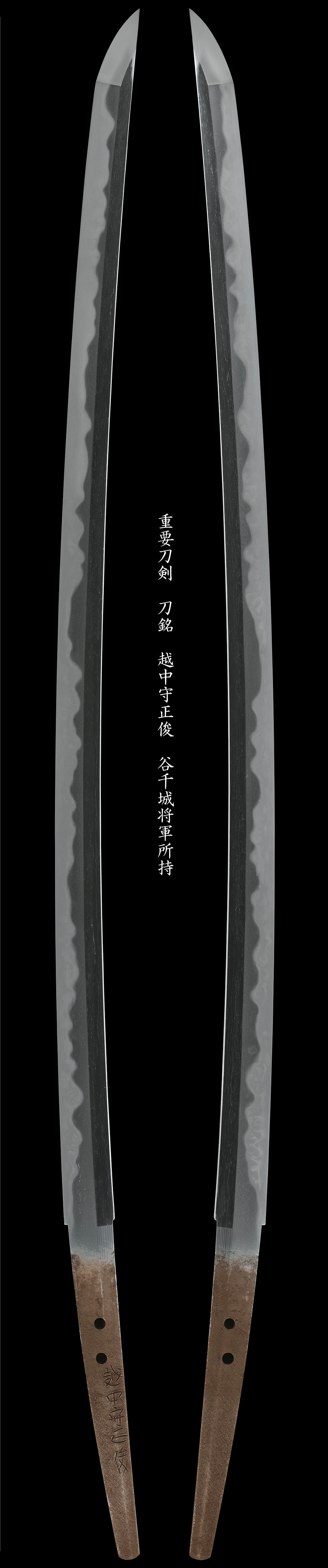
![Katana - Hozon - by Mishina Yoshimichi - 刀[大和守吉道(良業物)]日本美術刀剣保存協会 保存刀剣](/_next/image?url=https%3A%2F%2Fitbhfhyptogxcjbjfzwx.supabase.co%2Fstorage%2Fv1%2Fobject%2Fpublic%2Flisting-images%2Fworld-seiyudo%2FL31288%2F00.jpg&w=2560&q=90)