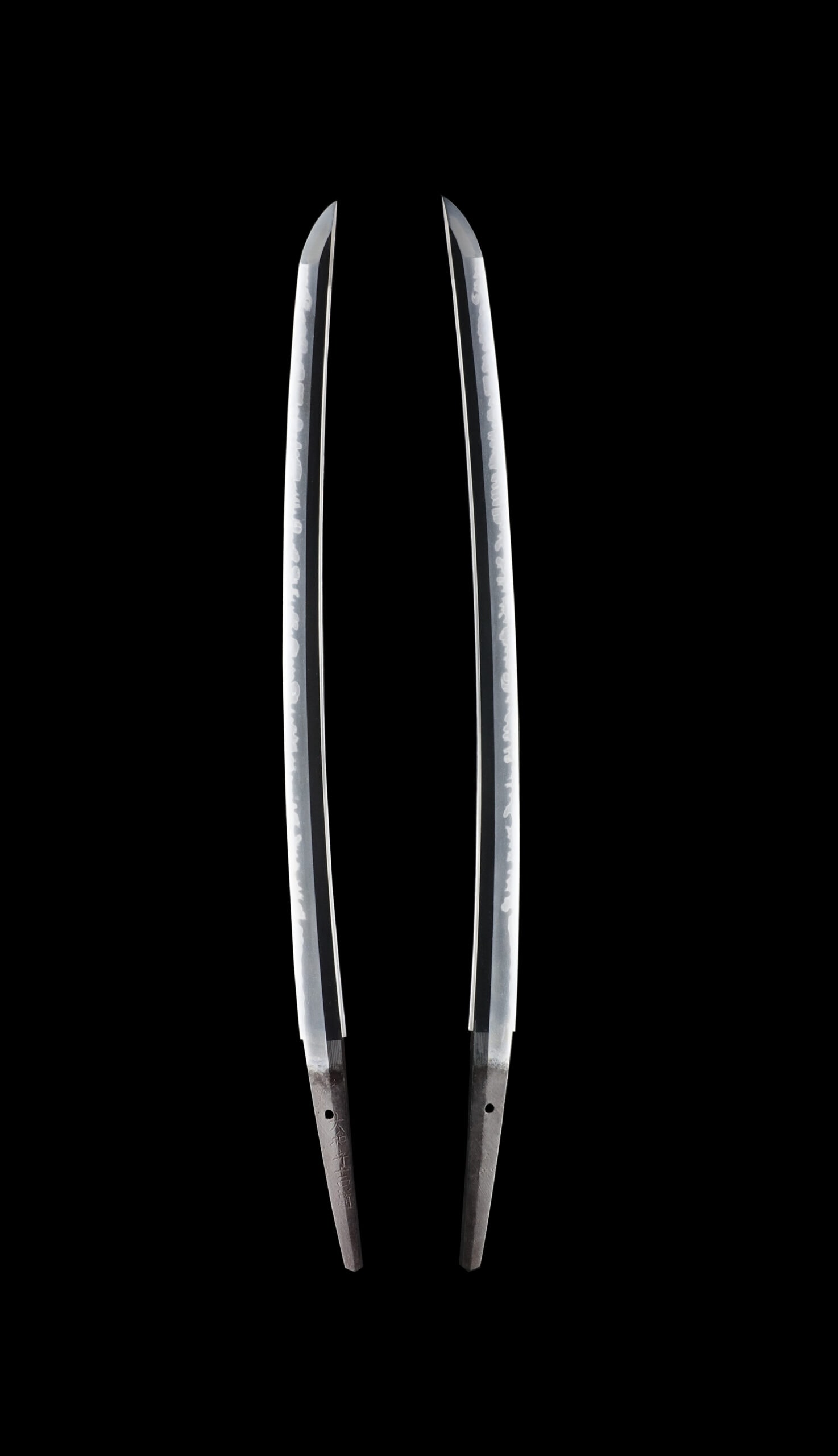
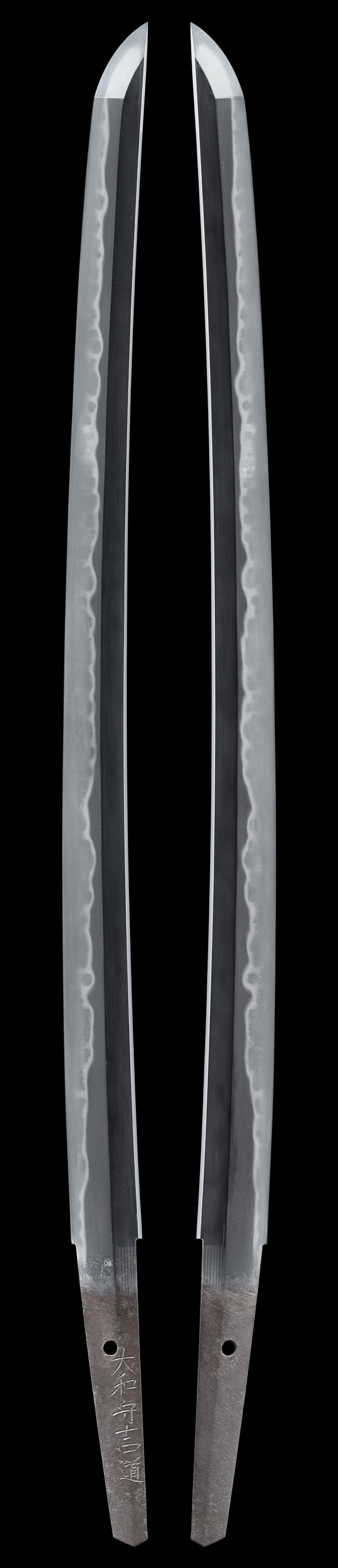
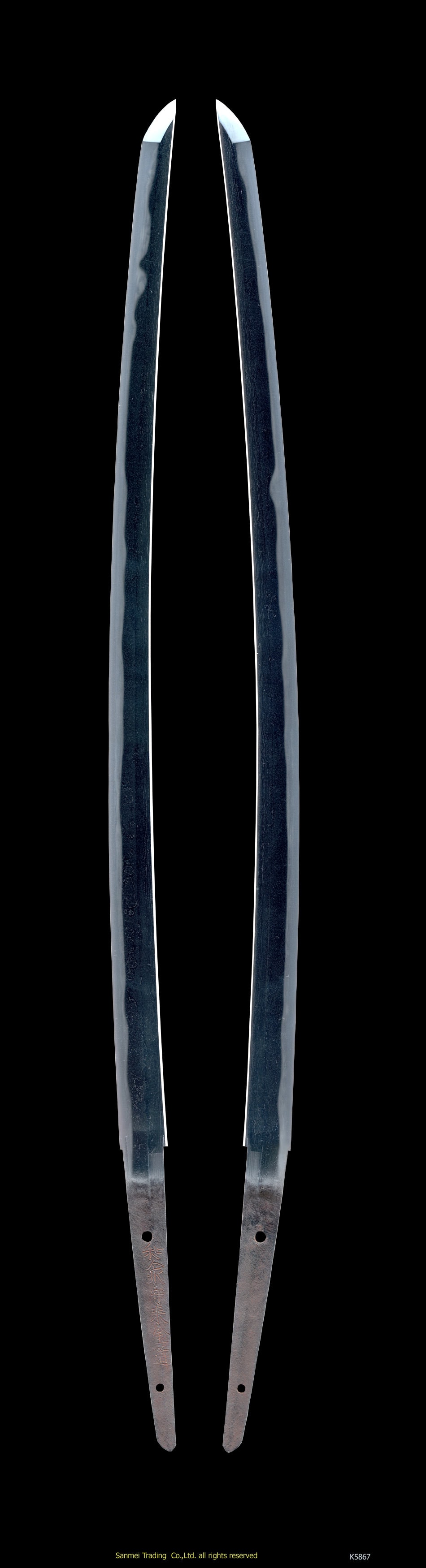
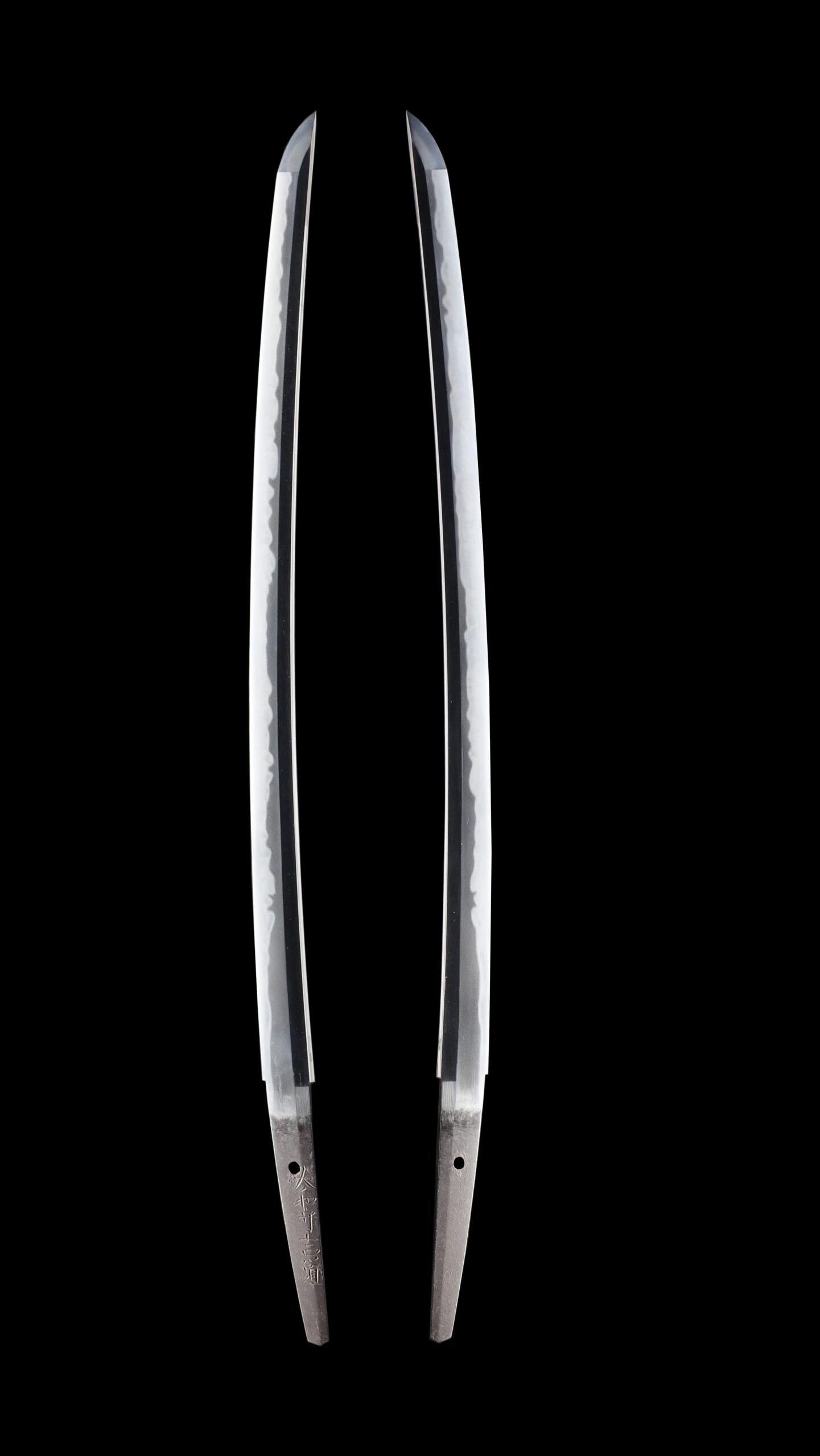
The Tanba no Kami Yoshimichi devised , the basket-weave temper that became the signature of the school and one of the most immediately recognizable in all of . The published sources are explicit that the pattern was his own invention. He was the third son of Kanemichi of -Seki, and together with his father and his brothers Iga no Kami Kinmichi, Kinmichi and no Kami Masatoshi he came up from to Kyoto, settling there in the closing decades of the sixteenth century and raising the name to its height. The commentary places him among the leading hands of his moment, counting him on one blade "among the foremost master smiths even of early ." His blades carry a robust early- bearing, wide in body and thick in the , the shallow, the extended and on the broadest pieces reaching an .
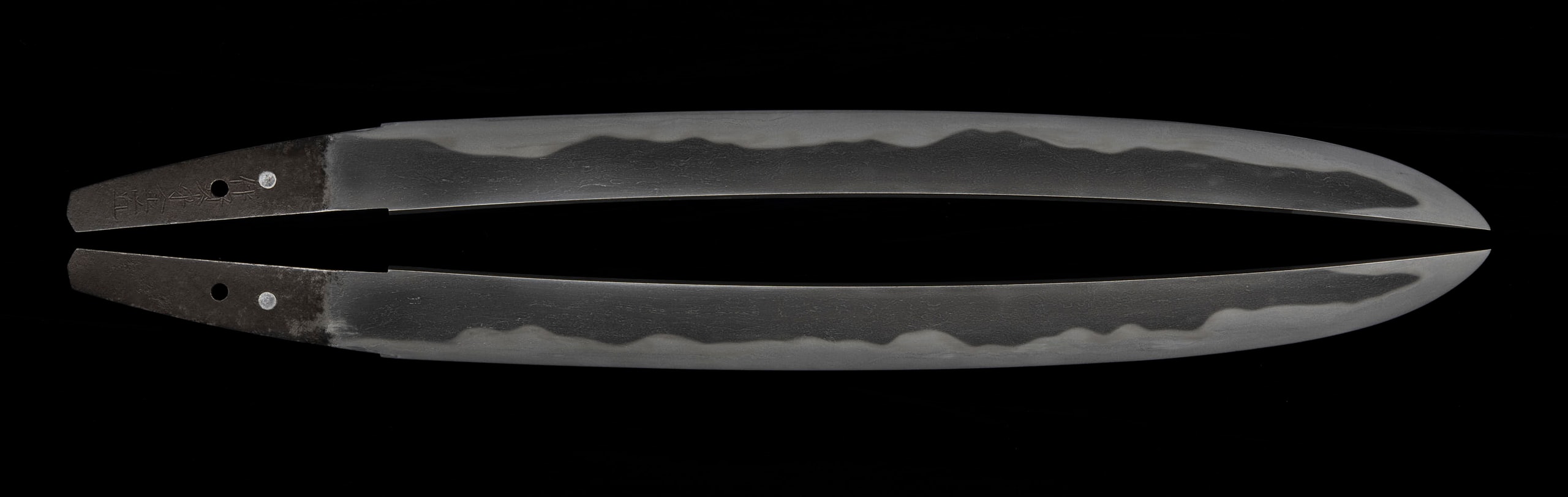
His recognized hand is read off a single tell. Over an that flows into toward the , the grain standing, the published sources set thick and often coarse with , then open the temper with a long before widening it into a -based of large and small . Into that line , and run in two and three rows, and frequent striped gathers until the whole takes on the bamboo-blind look of , the strong and somewhat coarse and uneven, long entering, the tending to sink. The rises in a pointed sweep and turns back deeply with vigorous , the form the sources name the .
The is the constant beneath all of this. A standing flowing to , with rough and , carries the -Seki inheritance into his Kyoto work and underpins the above it. His , far heavier than on a blade and worked together with the and , is the very material out of which the temper is built. On his finest signed the published commentary reads the abundant as suggesting "the wellspring of the seen in later generations," the activity that would harden into the school's hallmark.
The heart of his connoisseurship lies in the incompleteness of that . Where his successors regularized it into a technical, almost mannered pattern, the first generation's is still a free, semi-cursive disorder. The judges return to the point again and again, holding on one blade that "the place where it has not yet settled into a fully established is the point of interest in the first generation, and therein lie its strength and savor." They cite the Bengi that in his work "within the patterned arrangement of the there is the intent of " rather than the fixed lattice of his heirs. Relatively many of his blades survive, but dated examples are rare; no Keicho-dated piece has been encountered, and only a single dated , of Genna 7, has been examined firsthand. The signature whose tan character is shaped like a sail is the celebrated Hokake Tanba.
What separates him from the rest of the house is exactly this manner. Against his brothers Kinmichi and Masatoshi, who worked across a wider range of styles, Yoshimichi is the individualist, the one hand bound to the and the bright striped that builds it. Apart from that manner he made only very rarely, a register the sources call "an extremely rare case within the Kanemichi house, the so-called family," and one in which they discern the Yamato tradition that lies as a fountainhead beneath the style, the somewhat frayed with and laid with well-adhering . He stands at the head of his own line, the Kyo-Tanba Yoshimichi name continuing through several generations in Kyoto and Osaka, none of whom the published sources rank with the first.
For the collector he is a signed, knowable name, all of his recorded blades carrying a . Two of his works on record reach the rank and a further thirty-three the , with examples also among the prewar Bijutsuhin; one such Bijutsuhin is called by Honma "the finest workmanship among the first-generation Tanba no Kami Yoshimichi I have examined." The recorded provenance runs through samurai and collector hands rather than great museums: the made for Naito Kuroemon, inscribed to be handed down through his descendants generation after generation, the blade certified to Kashiwara Jinbe of Osaka, and a piece from the Satake family, with one now held by the Kyoto National Museum. He has no National Treasures or Important Cultural Properties on record, so his work is, unusually for a name of his standing, one a private collector may realistically hope to encounter. A signed Tanba no Kami Yoshimichi comes to market only from time to time and at the upper end of it, but it does come, the rare chance to hold the blade in which the most famous temper of the era was first being worked out.