NihontoWatch Mon

NihontoWatchBETA

マーケットオークション
事典
NihontoWatch Mon

NihontoWatchBETA

マーケットオークション
事典

説明

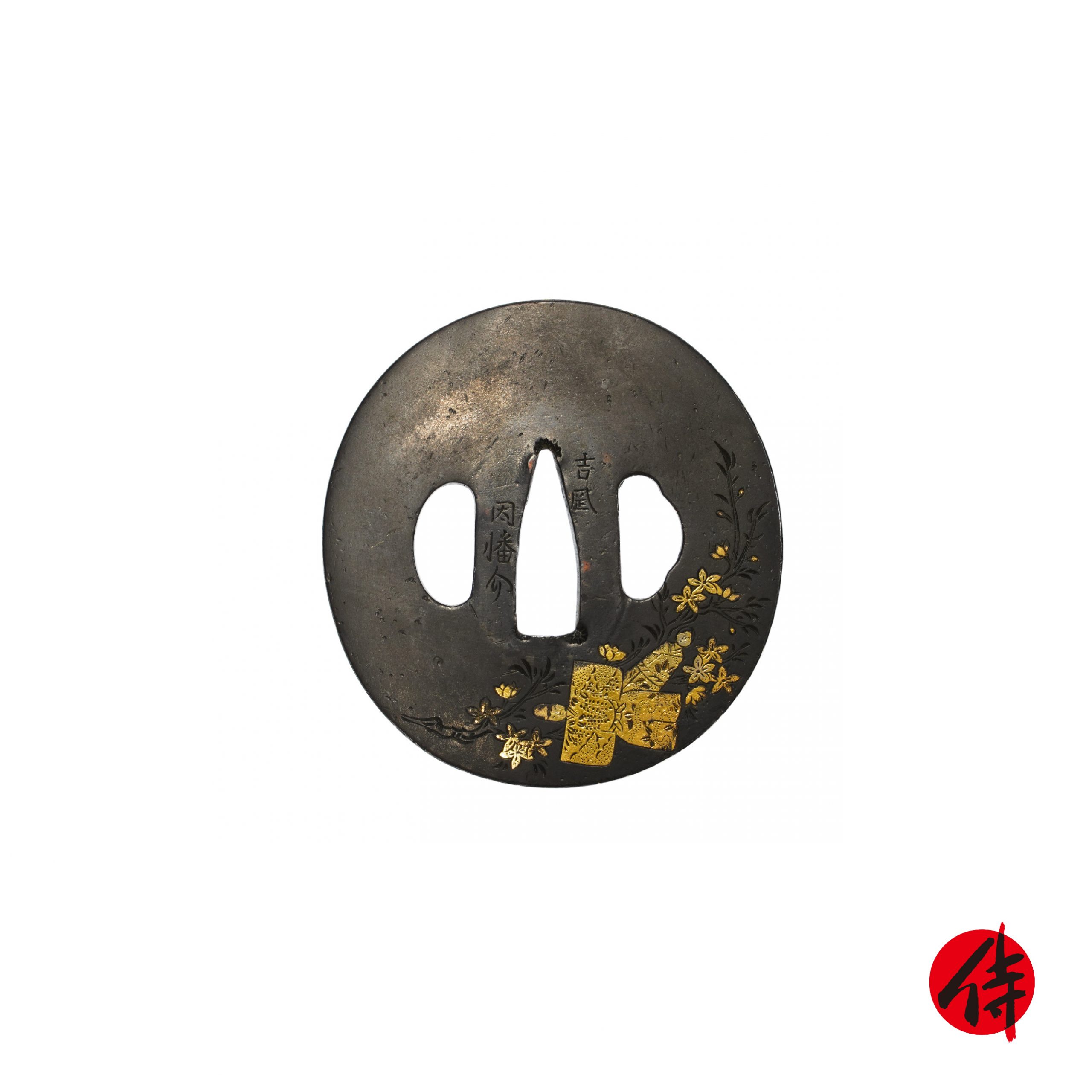
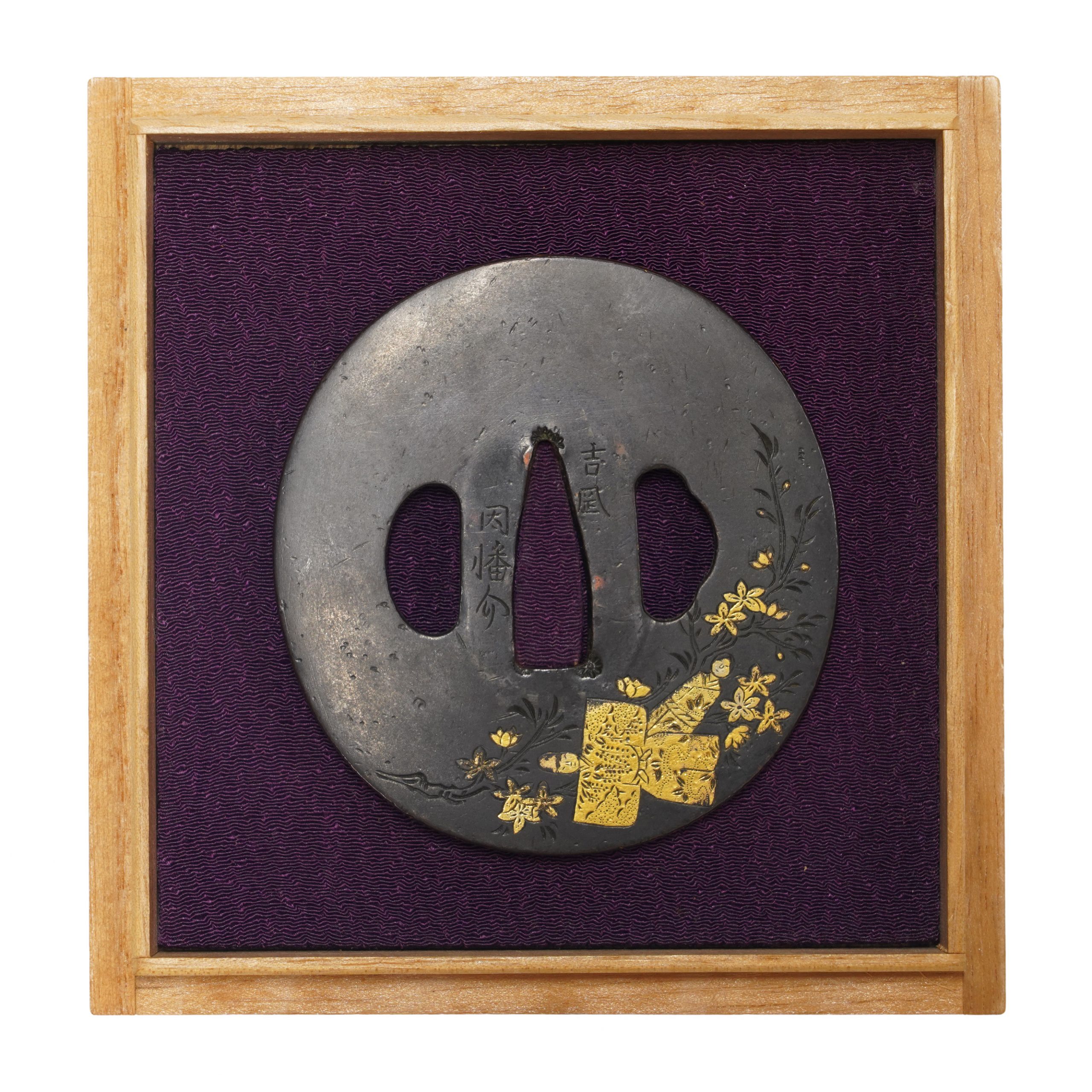
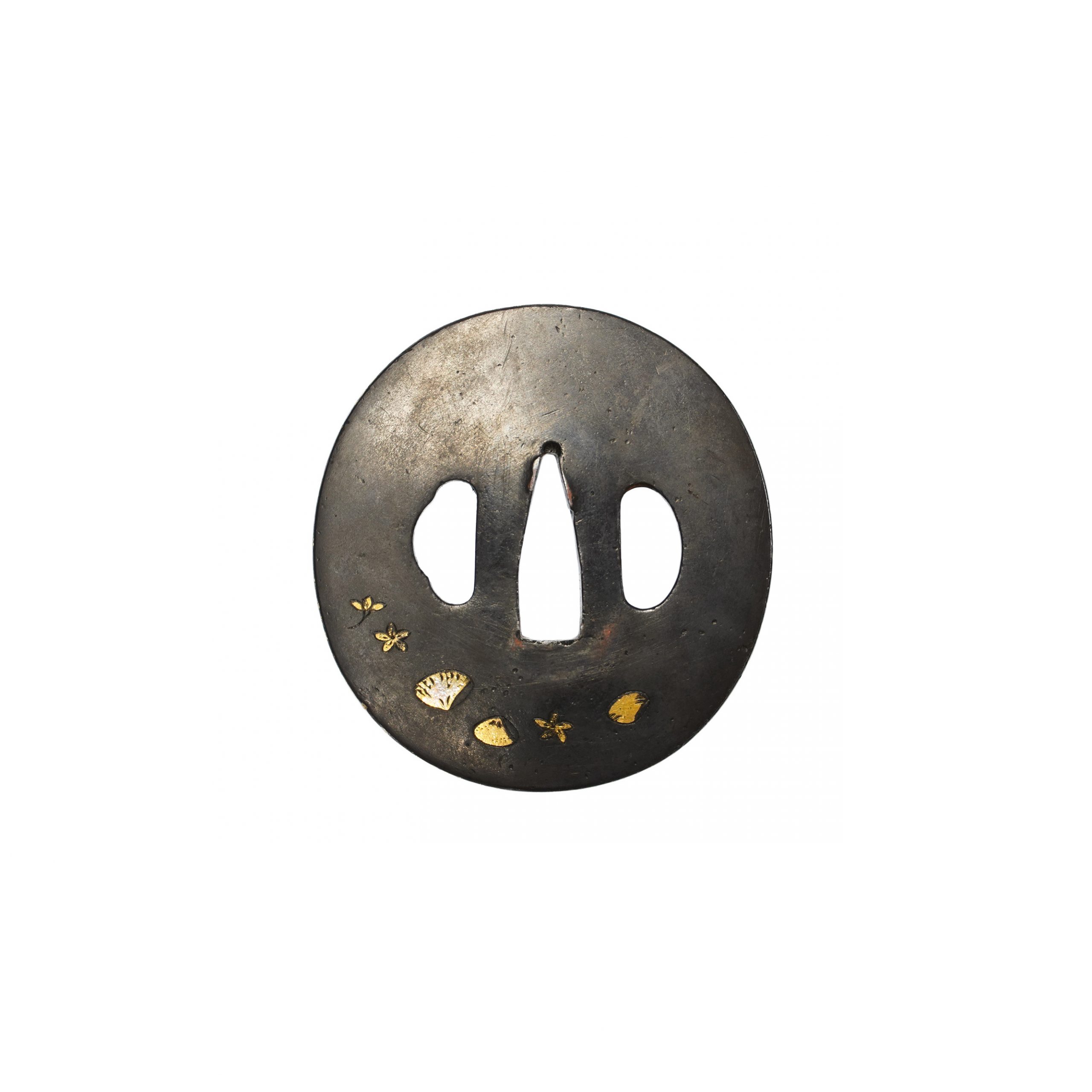
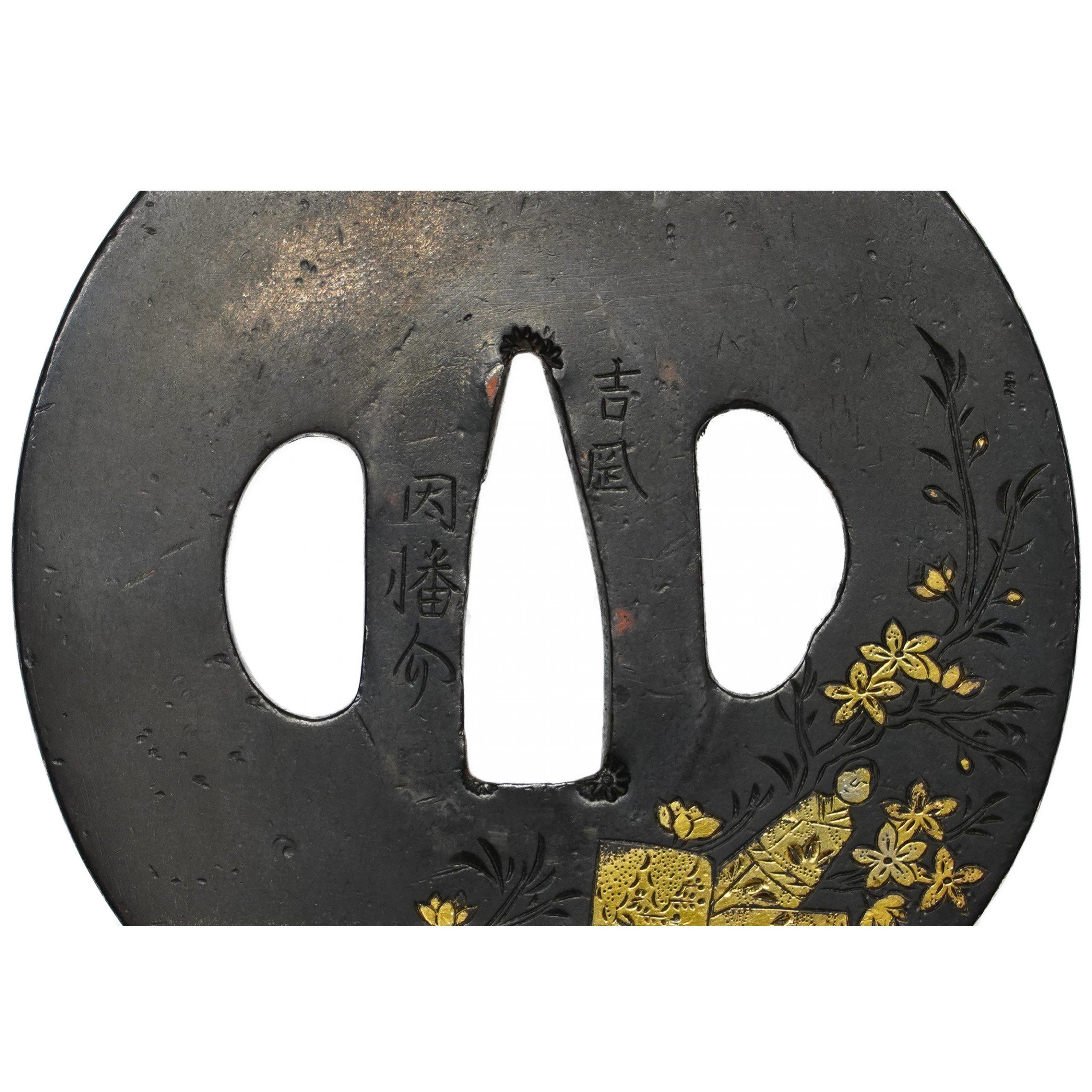
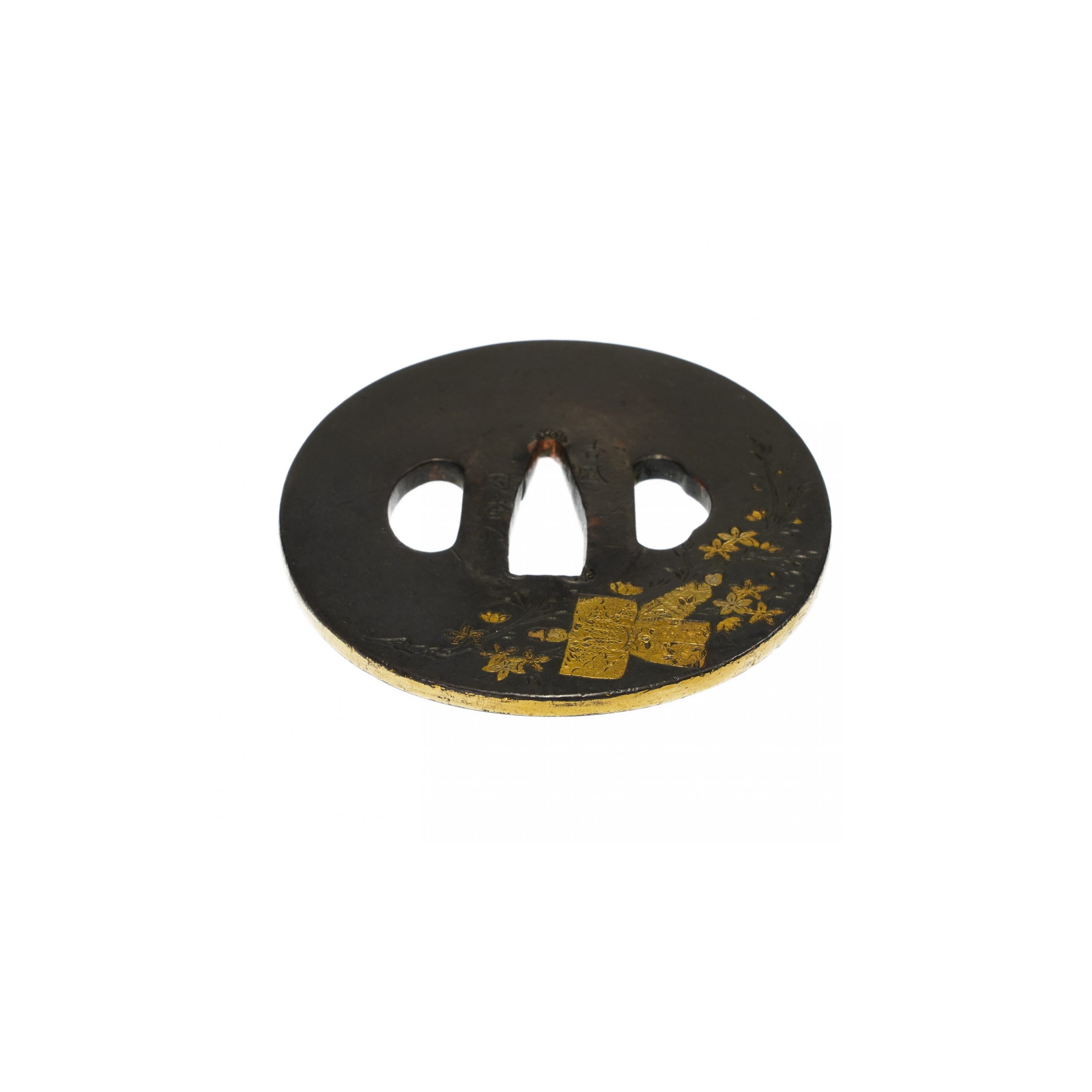
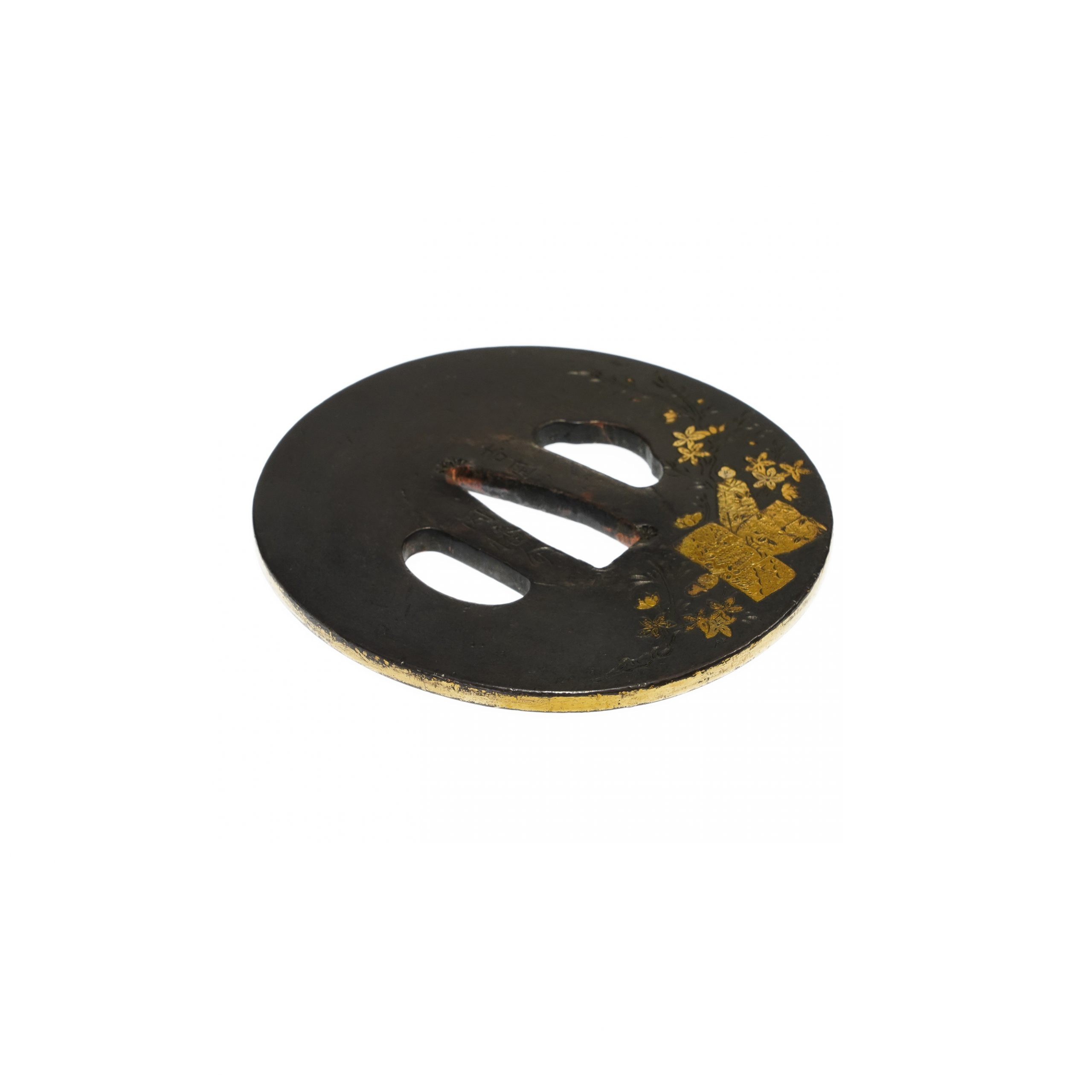
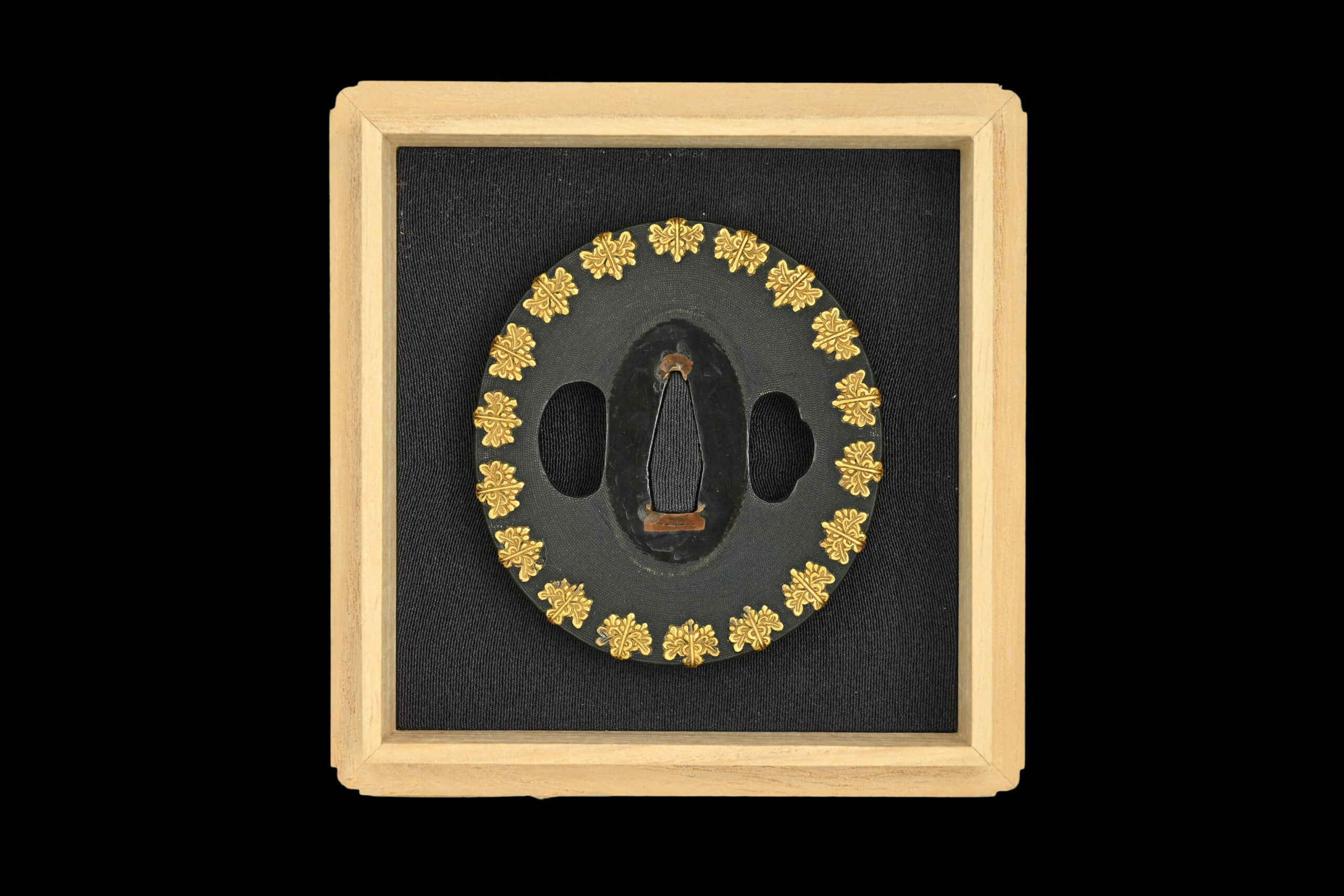
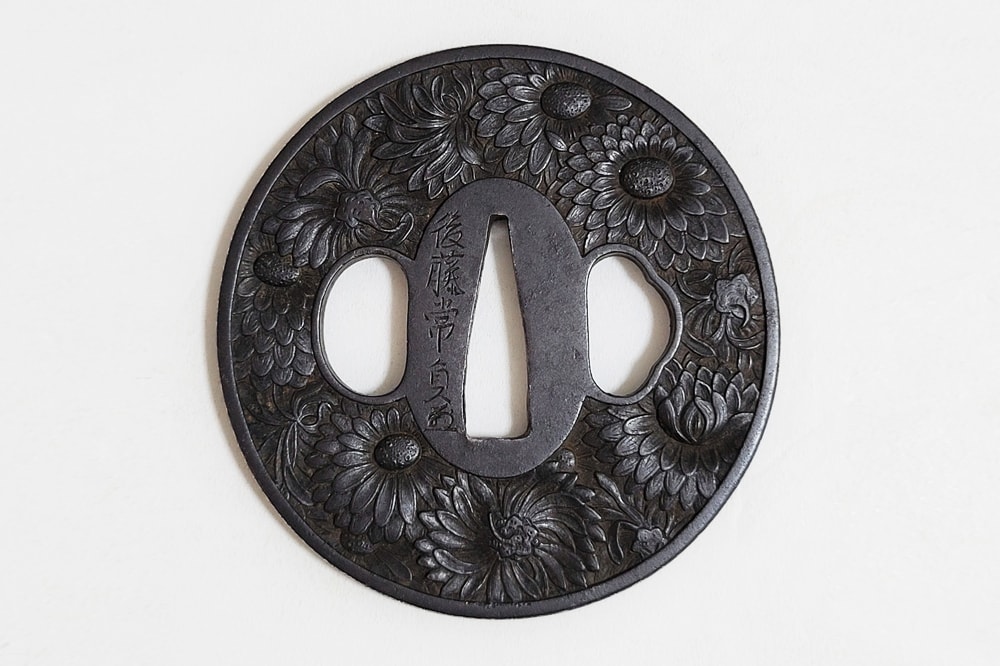
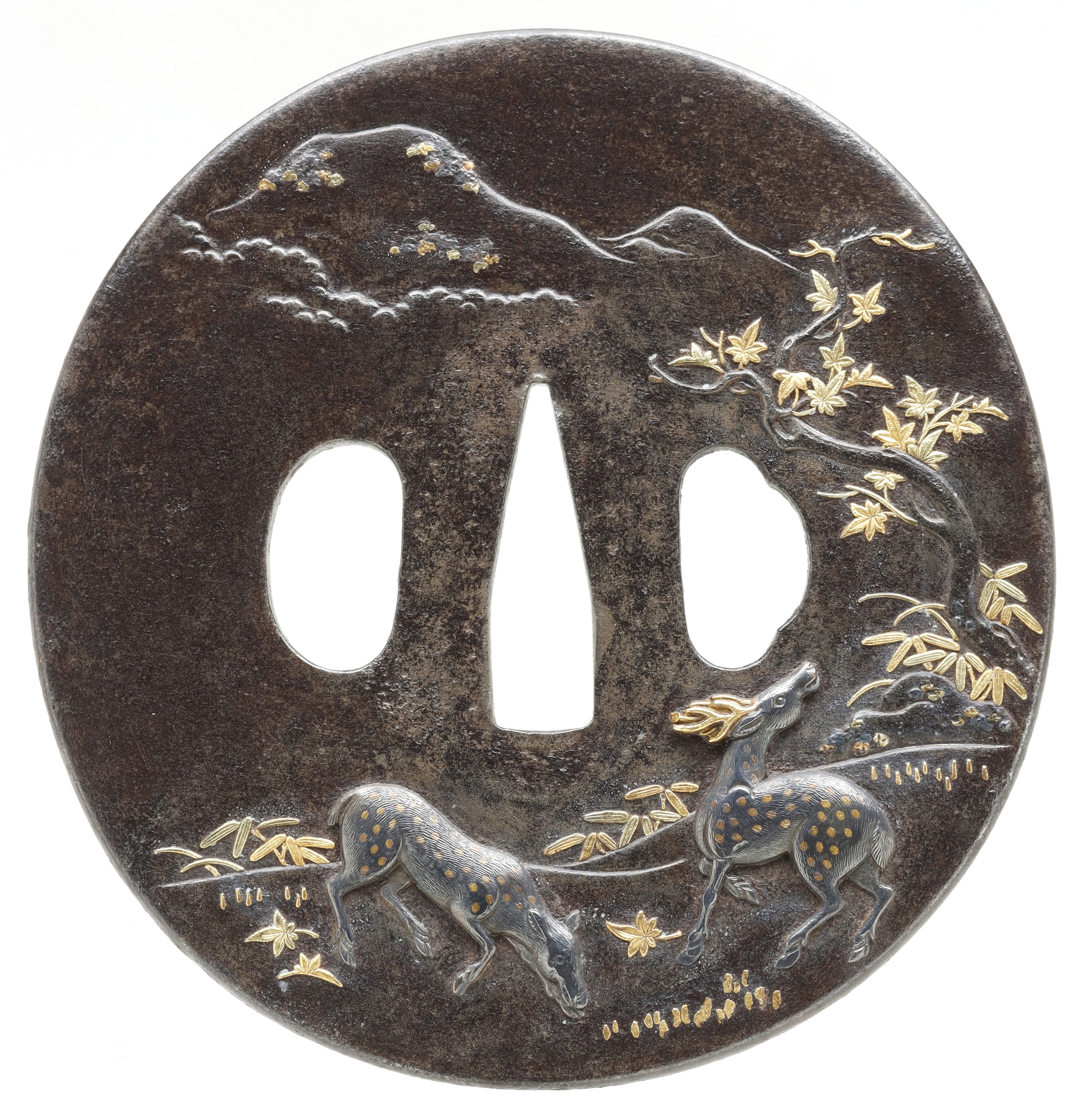
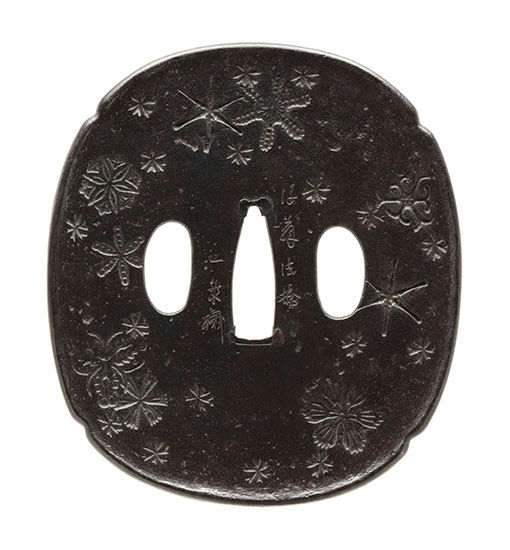
Title: Yoshioka-style, Hina Ningyou Zu Description Oval-shaped Tsuba that has Kozuka and Kougai holes. A pair of the Hina Ningyou (雛人形, Hina doll) is designed for this Tsuba. The branch of cherry blossom is depicted at the back of these dolls. The golden paint is applied to each motif and the edge of the Tsuba; it gives an elegant impression for this work. According to the signature, this Tsuba was made by Yoshioka Inabanosuke (吉岡 因幡介). The first Yoshioka school was Shigetsugu (重次, 1569-1653), and this school continued until 9th Shigesada (重貞), in total, it was around 260 years. This school worked for the Edo Shogunate and made sword mountings. It is said there were specialty craftsmen who engraved inscriptions. That is why it is not easy to judge the exact maker by seeing each signature. The culture of the Hina doll began in the Heian period (794-1185). People have played house with Hina dolls made of paper. It is said they enjoyed it by reproducing the couple’s life in the Imperial Court. A theory says that the style of the Hina doll became similar to today’s style in the late Edo period to the Showa period. People believed that the Hina doll would suffer disasters, substituting children. Today, people display the Hina dolls when they celebrate the Girl’s Festival, wishing for children’s healthy growth and happiness. Flowers and seashells are engraved at the backside of this Tsuba. These seashells are bivalves. In the Heian period, the Kaiawase (貝合わせ, a game that uses clams) became popular among aristocrats. Each clam matches only with its pair shell. Therefore, people consider that the clam pattern represents a happy marriage. Based on the meaning and story of each motif, we think it is an excellent idea to give this Tsuba as a gift, especially as a wedding gift or a present for the wedding anniversary. Of course, it would match the purpose of the gift for children to wish their good health. *As this item is an antique, please check each photo and ensure its condition. What is Tsuba? Tsuba is the hand-guard of the Japanese sword. High-class Samurai wore his Katana sword with its beautiful sword mountings such as Tsuba. Tsuba’s front design tends to be more decorative as this part was often seen by other Samurais when he was walking on the streets. Why is it that the sword mounting was important for Samurai? The sword mountings of the Japanese sword have many kinds of decorations such as handguards (Tsuba), sword hilt (Menuki), pommel (Fuchi Kashira). The Japanese sword worked as a weapon and as an object to show who he was. For example, it shows their personalities and beliefs. You could say that it is like decorations for smartphones today. We recommend you zoom in on the pictures of the sword fittings. When you do so, you can see the skill of Japanese metal engraving techniques. They are mainly made of iron and copper with inlays of gold, silver, and bronze. When it comes to handguard (Tsuba), each one has a different outline and weight. These sword fittings that have lived with Japanese swords of the same age might be worth as much as the Japanese swords. They are inconspicuous parts of the Japanese sword. Nevertheless, if you are knowledgeable or particular about it, you will become a connoisseur of the Samurai. 【About us】 Samurai Museum is located in Tokyo, Japan, exhibiting antique artifacts related to the Samurai history. Samurai Museum Shop is the place for those who are interested in Japanese culture and craftsmanship. We deal with antique Samurai swords/armor, traditional crafts made in Japan and so on. 【Payment method】 We accept payment through Stripe (Credit card), PayPal , Apple Pay or ChromePay, all of which are secure payment methods. Also, you don’t need to make an account on Stripe for the checkout. If you prefer other payment method, please contact us. You may either pay in JPY , USD , AUD , CAD , EUR , CHF or GBP . The price is set in Japanese Yen. Prices in other currencies are automatically calculated b

NihontoWatch MonNihontoWatchBETA
MarketAuctionsEncyclopedia
刀装具›家彫›吉岡›Edo period antique Yoshioka Tsuba for Samurai Sword (T-409)
鍔
吉岡派

Edo period antique Yoshioka Tsuba for Samurai Sword (T-409)

在銘 · Yoshioka · 江戸

売却済
吉岡派 — 1 of 6
吉岡派 — 2 of 6
吉岡派 — 3 of 6
吉岡派 — 4 of 6
吉岡派 — 5 of 6
吉岡派 — 6 of 6
1 / 6
1 / 6
吉岡派 — 1 of 6吉岡派 — 2 of 6吉岡派 — 3 of 6吉岡派 — 4 of 6吉岡派 — 5 of 6吉岡派 — 6 of 6
法量・詳細
作者

吉岡派

時代

江戸

銘

在銘

説明

Title: Yoshioka-style, Hina Ningyou Zu Description Oval-shaped Tsuba that has Kozuka and Kougai holes. A pair of the Hina Ningyou (雛人形, Hina doll) is designed for this Tsuba. The branch of cherry blossom is depicted at the back of these dolls. The golden paint is applied to each motif and the edge of the Tsuba; it gives an elegant impression for this work. According to the signature, this Tsuba was made by Yoshioka Inabanosuke (吉岡 因幡介). The first Yoshioka school was Shigetsugu (重次, 1569-1653), and this school continued until 9th Shigesada (重貞), in total, it was around 260 years. This school worked for the Edo Shogunate and made sword mountings. It is said there were specialty craftsmen who engraved inscriptions. That is why it is not easy to judge the exact maker by seeing each signature. The culture of the Hina doll began in the Heian period (794-1185). People have played house with Hina dolls made of paper. It is said they enjoyed it by reproducing the couple’s life in the Imperial Court. A theory says that the style of the Hina doll became similar to today’s style in the late Edo period to the Showa period. People believed that the Hina doll would suffer disasters, substituting children. Today, people display the Hina dolls when they celebrate the Girl’s Festival, wishing for children’s healthy growth and happiness. Flowers and seashells are engraved at the backside of this Tsuba. These seashells are bivalves. In the Heian period, the Kaiawase (貝合わせ, a game that uses clams) became popular among aristocrats. Each clam matches only with its pair shell. Therefore, people consider that the clam pattern represents a happy marriage. Based on the meaning and story of each motif, we think it is an excellent idea to give this Tsuba as a gift, especially as a wedding gift or a present for the wedding anniversary. Of course, it would match the purpose of the gift for children to wish their good health. *As this item is an antique, please check each photo and ensure its condition. What is Tsuba? Tsuba is the hand-guard of the Japanese sword. High-class Samurai wore his Katana sword with its beautiful sword mountings such as Tsuba. Tsuba’s front design tends to be more decorative as this part was often seen by other Samurais when he was walking on the streets. Why is it that the sword mounting was important for Samurai? The sword mountings of the Japanese sword have many kinds of decorations such as handguards (Tsuba), sword hilt (Menuki), pommel (Fuchi Kashira). The Japanese sword worked as a weapon and as an object to show who he was. For example, it shows their personalities and beliefs. You could say that it is like decorations for smartphones today. We recommend you zoom in on the pictures of the sword fittings. When you do so, you can see the skill of Japanese metal engraving techniques. They are mainly made of iron and copper with inlays of gold, silver, and bronze. When it comes to handguard (Tsuba), each one has a different outline and weight. These sword fittings that have lived with Japanese swords of the same age might be worth as much as the Japanese swords. They are inconspicuous parts of the Japanese sword. Nevertheless, if you are knowledgeable or particular about it, you will become a connoisseur of the Samurai. 【About us】 Samurai Museum is located in Tokyo, Japan, exhibiting antique artifacts related to the Samurai history. Samurai Museum Shop is the place for those who are interested in Japanese culture and craftsmanship. We deal with antique Samurai swords/armor, traditional crafts made in Japan and so on. 【Payment method】 We accept payment through Stripe (Credit card), PayPal , Apple Pay or ChromePay, all of which are secure payment methods. Also, you don’t need to make an account on Stripe for the checkout. If you prefer other payment method, please contact us. You may either pay in JPY , USD , AUD , CAD , EUR , CHF or GBP . The price is set in Japanese Yen. Prices in other currencies are automatically calculated b

流派について

吉岡

家彫

現在15点販売中

›

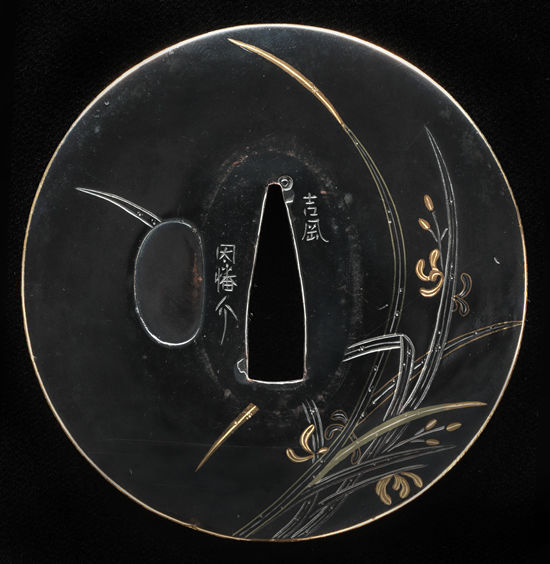
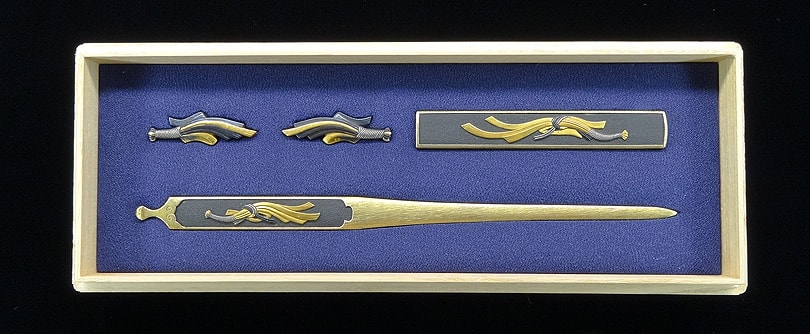
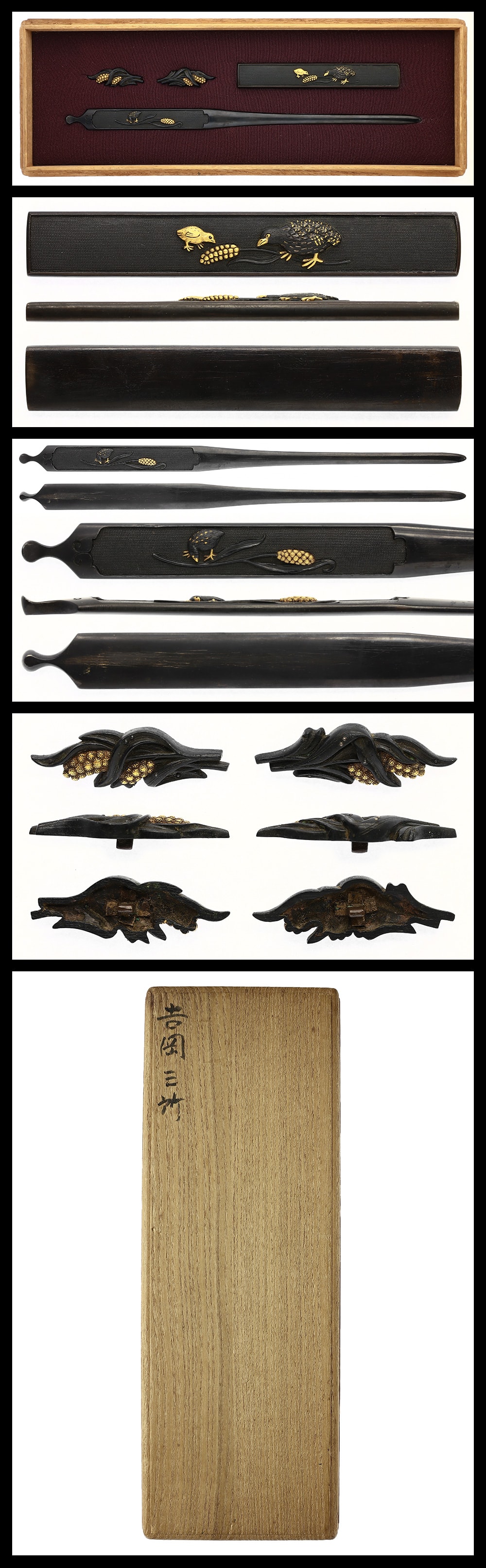
吉岡家は徳川幕府の抱え金工として百俵十人扶持を支給された権威ある家柄である。初代重次が慶長年間に徳川家康に召し出されて以来、幕末の九代重貞に至るまで繁栄を誇った。歴代にわたって藤原姓を冠称し、二代からは因幡介の官位を受領している。しかし上代の作は幕府への納品であったため全て無銘であり、「吉岡因幡介」と五字銘に切るようになったのは五代易次あたりからと考えられる。個銘を切らぬため代別は困難であるが、宝永三年に先代重長の隠居により理左衛門を襲名し、宝永七年に因幡介に叙任された四代重廣、および個銘と行年銘を添えた作品が現存する七代照次が、指定作品群において特に重要な存在として浮かび上がる。 吉岡流の作風は、赤銅魚子地に高彫・金色絵を施す堅実精巧な彫口を最大の特色とする。後藤家と同様の素材と技法を用いながらも、将軍家御用の品格にふさわしい格調の高さを一貫して保っている。その技術の幅は広く、金据文・金平象嵌・金象嵌を巧みに使い分け、時に墨絵風の筆勢をそのまま金象嵌で表現する妙技も見せる。また金・銀・四分一・素銅など多種の色金を用いた色絵を的確に施し、豪華さの中にも格調に満ちた出来口を示す。制作の特筆すべき点は、鐔・縁頭・小柄・笄・目貫を同一の意匠と技法で統一した一作金具・総金具の制作に秀でていることである。丸に三葉葵紋散し、立沢瀉紋、稲穂文、竜虎図など、主題を全ての金具に一貫させ、赤銅魚子地に金色絵で格調高く仕上げる手法は吉岡家の真骨頂といえる。糸巻太刀拵や大小拵といった武家の儀仗に用いる拵形式において、総金具を一手に担う力量は、幕府抱え金工としての真価を遺憾なく発揮したものである。 吉岡家は装剣金工界の名門として、徳川将軍家および有力大名家の最も格式高い刀装を担った。紀州徳川家二代光貞の好みにより貞享三年に制作されたと伝える糸巻太刀拵、五代将軍綱吉の指料であった太刀の拵で後に十四代将軍家茂が所用したもの、加賀前田家伝来の糸巻太刀拵など、将軍家・御三家・有力外様大名への納品が指定品に確認される。説示において「後藤本家にも劣らぬ格調を備え持った」と評される点は、幕府お抱えの家彫として到達した芸格の高さを端的に示している。七代照次による個銘・行年銘を備えた親子鶏図三所物は、吉岡家の代別研究に不可欠な資料的価値を有し、四代重廣の在銘作もまた江戸中期の製作年代を知る上で貴重な金工資料とされる。将軍家の御用を務めた吉岡因幡介の真価を十分に発揮した作品群は、幕府抱え金工の頂点に位置する家系の力量と矜持を今日に伝えている。

3名の刀工指定12口
主要刀工
刀工時代指定
因幡介16706
照次16702
重貞—0
清次—0
師次—0
吉岡流派を見る →
ご注意 — 鑑定書が見つかりません

販売店の出品ページで鑑定書を確認できませんでした。日本刀および刀装具は通常、NBTHK(または NTHK)の鑑定を受けます。鑑定書がない場合、極めは販売店の見解にとどまり、第三者による確認は行われていません。ご購入前に販売店へ鑑定書の有無をお問い合わせのうえ、慎重にご判断ください。

販売店
サ
サムライミュージアム
🇯🇵日本から発送
›
✓認証販売店samuraimuseum.jp
✓海外発送可✓英語対応PayPalクレジットカード
返品ポリシー

Returns/exchanges limited to defects caused by shipping (except willful misconduct or gross negligence by the company); customers must contact within 72 hours of receiving the product.
サムライミュージアムの出品一覧を見る→販売店サイトでこの商品を見る→

吉岡派の売約済み

美術刀剣松本
保存
Kogai - Hozon - by Yoshioka School - 稲穂図 笄Kogai - Hozon - by Yoshioka School - 稲穂図 笄
売切れ

笄

作吉岡派
江戸
売却済
銀座誠友堂
特別保存
Tsuba - Tokuho - by Yoshioka School - Tsuba [Mumei Yoshioka Kirimon-Sukashi-Tsuba][N.B.T.H.K] Tokubetsu Hozon TousouguTsuba - Tokuho - by Yoshioka School - Tsuba [Mumei Yoshioka Kirimon-Sukashi-Tsuba][N.B.T.H.K] Tokubetsu Hozon Tousougu
売切れ

鍔

作吉岡派
江戸
売却済
Tetsugendo
Kogai - by Yoshioka School - 桐紋割小柄Kogai - by Yoshioka School - 桐紋割小柄
売切れ

笄

作吉岡派
江戸
売却済
銀座長州屋
特別保存
Koshirae - Tokuho - by Yoshioka School - 一分刻黒漆塗鞘打刀拵 牡丹勝虫図鐔 無銘 吉岡因幡介Koshirae - Tokuho - by Yoshioka School - 一分刻黒漆塗鞘打刀拵 牡丹勝虫図鐔 無銘 吉岡因幡介
売切れ

拵

作吉岡派
江戸
売却済
サムライミュージアム
保存
Kozuka - Hozon - by Yoshioka School - 保存刀剣鑑定書付(K-18) 江戸期 刀装具 小柄Kozuka - Hozon - by Yoshioka School - 保存刀剣鑑定書付(K-18) 江戸期 刀装具 小柄
売切れ

小柄

作吉岡派
江戸
売却済
飯田高遠堂
保存
Futatokoro - Hozon - by Yoshioka School - 二所 隅切角葵紋三双図 無銘 吉岡Futatokoro - Hozon - by Yoshioka School - 二所 隅切角葵紋三双図 無銘 吉岡
売切れ

二所物

作吉岡派
江戸
売却済

吉岡派の作

すべて見る →
葵美術
特別保存
Kozuka - Tokuho - by Yoshioka Inaba no Suke - 小柄:吉岡因幡介(特別保存刀装具)Kozuka - Tokuho - by Yoshioka Inaba no Suke - 小柄:吉岡因幡介(特別保存刀装具)

小柄

作因幡介
Edo (1670)
¥250,000
成蹊堂
保存
Kozuka - Hozon - by Yoshioka Inaba no Suke - 熨斗図三処物Kozuka - Hozon - by Yoshioka Inaba no Suke - 熨斗図三処物

小柄

作因幡介
江戸
¥300,000
Nihon Collection
保存
Tsuba - Hozon - by Yoshioka School - 桐紋鍔Tsuba - Hozon - by Yoshioka School - 桐紋鍔

鍔

作吉岡派
江戸
¥3,250
Nihon Collection
保存
Kozuka - Hozon - by Yoshioka School - 吉岡 菊図Kozuka - Hozon - by Yoshioka School - 吉岡 菊図

小柄

作吉岡派
江戸
¥890
銀座長州屋
保存
Tsuba - Hozon - by Yoshioka Inaba no Suke - 蘭図鐔 銘 吉岡因幡介Tsuba - Hozon - by Yoshioka Inaba no Suke - 蘭図鐔 銘 吉岡因幡介

鍔

作因幡介
江戸
¥450,000
葵美術
保存
Kozuka - Hozon - by Yoshioka Inaba no Suke - 小柄:吉岡因幡介Kozuka - Hozon - by Yoshioka Inaba no Suke - 小柄:吉岡因幡介

小柄

作因幡介
Edo (1670)
¥95,000
葵美術
保存
Kozuka - Hozon - by Yoshioka School - 小柄・小刀:吉岡因幡介(日本美術刀剣保存協会 特別保存刀装具)Kozuka - Hozon - by Yoshioka School - 小柄・小刀:吉岡因幡介(日本美術刀剣保存協会 特別保存刀装具)

小柄

作吉岡派
12.7cm·江戸
¥300,000
Nihonto US
Tsuba - by Yoshioka School - 吉岡因幡介 鍔Tsuba - by Yoshioka School - 吉岡因幡介 鍔

鍔

作吉岡派
江戸
¥2,800

家彫の伝統

すべて見る →
葵美術
保存
Tsuba - Hozon - by Yasuda School - 鐔:無銘(安田)(日本美術刀剣保存協会 保存刀装具)Tsuba - Hozon - by Yasuda School - 鐔:無銘(安田)(日本美術刀剣保存協会 保存刀装具)

鍔

作安田派
江戸
開始価格¥150,000
葵美術
特別保存
Mitokoromono - Tokuho - by Goto Ichijo - 二所物(小柄・笄):後藤一乗(日本美術刀剣保存協会 特別保存刀装具)Mitokoromono - Tokuho - by Goto Ichijo - 二所物(小柄・笄):後藤一乗(日本美術刀剣保存協会 特別保存刀装具)

三所物

作後藤一乗
late Edo–early Meiji (1791–1876)
¥1,250,000
飯田高遠堂
特別保存
Tsuba - Tokuho - by Goto Ichijo - 刀装具Tsuba - Tokuho - by Goto Ichijo - 刀装具

鍔

作後藤一乗
江戸
¥1,320,000
葵美術
特別保存
Kozuka - Tokuho - by Goto Eijo - 小柄:栄乗作 光孝(花押)(日本美術刀剣保存協会 特別保存刀装具)Kozuka - Tokuho - by Goto Eijo - 小柄:栄乗作 光孝(花押)(日本美術刀剣保存協会 特別保存刀装具)

小柄

作後藤栄乗
Early Edo (1577-1617)
¥400,000
丸英刀剣
特別保存
Futatokoro - Tokuho - by Goto Ichijo - 後藤一乗 流水に藻貝図二所Futatokoro - Tokuho - by Goto Ichijo - 後藤一乗 流水に藻貝図二所

二所物

作後藤一乗
21.1cm·江戸
¥2,200,000
Nihontocraft
重要
Mitokoromono - Jūyō - by Goto Hojo - 後藤方乗 三所物Mitokoromono - Jūyō - by Goto Hojo - 後藤方乗 三所物

三所物

作後藤方乗
江戸
¥27,000
丸英刀剣
特別保存
Menuki - Tokuho - by Araki Tomei - 荒木東明 短冊銘 粟穂図目貫Menuki - Tokuho - by Araki Tomei - 荒木東明 短冊銘 粟穂図目貫

目貫

作東明
江戸
¥2,200,000
山城屋
特重
Koshirae - Tokuju - by Kaga-Goto Etsujo - 【太刀拵】 金梨子地葵紋散金貝蒔絵鞘糸巻太刀拵 / 鐔(銘)後藤悦乗(花押)Koshirae - Tokuju - by Kaga-Goto Etsujo - 【太刀拵】 金梨子地葵紋散金貝蒔絵鞘糸巻太刀拵 / 鐔(銘)後藤悦乗(花押)

拵

作悦乗
江戸
お問い合わせ

刀剣

  • 刀
  • 脇差
  • 短刀
  • 太刀
  • 薙刀
  • 槍

刀装具

  • 鍔
  • 縁頭
  • 小柄
  • 目貫

鑑定別

  • 特重
  • 重要
  • 特別保存
  • 保存

リソース

  • 刀剣商一覧
  • 刀工一覧
  • すべて見る
Nihontowatch© 2026
利用規約プライバシーCookie運営者情報

説明

Title: Yoshioka-style, Hina Ningyou Zu Description Oval-shaped Tsuba that has Kozuka and Kougai holes. A pair of the Hina Ningyou (雛人形, Hina doll) is designed for this Tsuba. The branch of cherry blossom is depicted at the back of these dolls. The golden paint is applied to each motif and the edge of the Tsuba; it gives an elegant impression for this work. According to the signature, this Tsuba was made by Yoshioka Inabanosuke (吉岡 因幡介). The first Yoshioka school was Shigetsugu (重次, 1569-1653), and this school continued until 9th Shigesada (重貞), in total, it was around 260 years. This school worked for the Edo Shogunate and made sword mountings. It is said there were specialty craftsmen who engraved inscriptions. That is why it is not easy to judge the exact maker by seeing each signature. The culture of the Hina doll began in the Heian period (794-1185). People have played house with Hina dolls made of paper. It is said they enjoyed it by reproducing the couple’s life in the Imperial Court. A theory says that the style of the Hina doll became similar to today’s style in the late Edo period to the Showa period. People believed that the Hina doll would suffer disasters, substituting children. Today, people display the Hina dolls when they celebrate the Girl’s Festival, wishing for children’s healthy growth and happiness. Flowers and seashells are engraved at the backside of this Tsuba. These seashells are bivalves. In the Heian period, the Kaiawase (貝合わせ, a game that uses clams) became popular among aristocrats. Each clam matches only with its pair shell. Therefore, people consider that the clam pattern represents a happy marriage. Based on the meaning and story of each motif, we think it is an excellent idea to give this Tsuba as a gift, especially as a wedding gift or a present for the wedding anniversary. Of course, it would match the purpose of the gift for children to wish their good health. *As this item is an antique, please check each photo and ensure its condition. What is Tsuba? Tsuba is the hand-guard of the Japanese sword. High-class Samurai wore his Katana sword with its beautiful sword mountings such as Tsuba. Tsuba’s front design tends to be more decorative as this part was often seen by other Samurais when he was walking on the streets. Why is it that the sword mounting was important for Samurai? The sword mountings of the Japanese sword have many kinds of decorations such as handguards (Tsuba), sword hilt (Menuki), pommel (Fuchi Kashira). The Japanese sword worked as a weapon and as an object to show who he was. For example, it shows their personalities and beliefs. You could say that it is like decorations for smartphones today. We recommend you zoom in on the pictures of the sword fittings. When you do so, you can see the skill of Japanese metal engraving techniques. They are mainly made of iron and copper with inlays of gold, silver, and bronze. When it comes to handguard (Tsuba), each one has a different outline and weight. These sword fittings that have lived with Japanese swords of the same age might be worth as much as the Japanese swords. They are inconspicuous parts of the Japanese sword. Nevertheless, if you are knowledgeable or particular about it, you will become a connoisseur of the Samurai. 【About us】 Samurai Museum is located in Tokyo, Japan, exhibiting antique artifacts related to the Samurai history. Samurai Museum Shop is the place for those who are interested in Japanese culture and craftsmanship. We deal with antique Samurai swords/armor, traditional crafts made in Japan and so on. 【Payment method】 We accept payment through Stripe (Credit card), PayPal , Apple Pay or ChromePay, all of which are secure payment methods. Also, you don’t need to make an account on Stripe for the checkout. If you prefer other payment method, please contact us. You may either pay in JPY , USD , AUD , CAD , EUR , CHF or GBP . The price is set in Japanese Yen. Prices in other currencies are automatically calculated b

NihontoWatch MonNihontoWatchBETA
MarketAuctionsEncyclopedia
刀装具›家彫›吉岡›Edo period antique Yoshioka Tsuba for Samurai Sword (T-409)
鍔
吉岡派

Edo period antique Yoshioka Tsuba for Samurai Sword (T-409)

在銘 · Yoshioka · 江戸

売却済
吉岡派 — 1 of 6
吉岡派 — 2 of 6
吉岡派 — 3 of 6
吉岡派 — 4 of 6
吉岡派 — 5 of 6
吉岡派 — 6 of 6
1 / 6
1 / 6
吉岡派 — 1 of 6吉岡派 — 2 of 6吉岡派 — 3 of 6吉岡派 — 4 of 6吉岡派 — 5 of 6吉岡派 — 6 of 6
法量・詳細
作者

吉岡派

時代

江戸

銘

在銘

説明

Title: Yoshioka-style, Hina Ningyou Zu Description Oval-shaped Tsuba that has Kozuka and Kougai holes. A pair of the Hina Ningyou (雛人形, Hina doll) is designed for this Tsuba. The branch of cherry blossom is depicted at the back of these dolls. The golden paint is applied to each motif and the edge of the Tsuba; it gives an elegant impression for this work. According to the signature, this Tsuba was made by Yoshioka Inabanosuke (吉岡 因幡介). The first Yoshioka school was Shigetsugu (重次, 1569-1653), and this school continued until 9th Shigesada (重貞), in total, it was around 260 years. This school worked for the Edo Shogunate and made sword mountings. It is said there were specialty craftsmen who engraved inscriptions. That is why it is not easy to judge the exact maker by seeing each signature. The culture of the Hina doll began in the Heian period (794-1185). People have played house with Hina dolls made of paper. It is said they enjoyed it by reproducing the couple’s life in the Imperial Court. A theory says that the style of the Hina doll became similar to today’s style in the late Edo period to the Showa period. People believed that the Hina doll would suffer disasters, substituting children. Today, people display the Hina dolls when they celebrate the Girl’s Festival, wishing for children’s healthy growth and happiness. Flowers and seashells are engraved at the backside of this Tsuba. These seashells are bivalves. In the Heian period, the Kaiawase (貝合わせ, a game that uses clams) became popular among aristocrats. Each clam matches only with its pair shell. Therefore, people consider that the clam pattern represents a happy marriage. Based on the meaning and story of each motif, we think it is an excellent idea to give this Tsuba as a gift, especially as a wedding gift or a present for the wedding anniversary. Of course, it would match the purpose of the gift for children to wish their good health. *As this item is an antique, please check each photo and ensure its condition. What is Tsuba? Tsuba is the hand-guard of the Japanese sword. High-class Samurai wore his Katana sword with its beautiful sword mountings such as Tsuba. Tsuba’s front design tends to be more decorative as this part was often seen by other Samurais when he was walking on the streets. Why is it that the sword mounting was important for Samurai? The sword mountings of the Japanese sword have many kinds of decorations such as handguards (Tsuba), sword hilt (Menuki), pommel (Fuchi Kashira). The Japanese sword worked as a weapon and as an object to show who he was. For example, it shows their personalities and beliefs. You could say that it is like decorations for smartphones today. We recommend you zoom in on the pictures of the sword fittings. When you do so, you can see the skill of Japanese metal engraving techniques. They are mainly made of iron and copper with inlays of gold, silver, and bronze. When it comes to handguard (Tsuba), each one has a different outline and weight. These sword fittings that have lived with Japanese swords of the same age might be worth as much as the Japanese swords. They are inconspicuous parts of the Japanese sword. Nevertheless, if you are knowledgeable or particular about it, you will become a connoisseur of the Samurai. 【About us】 Samurai Museum is located in Tokyo, Japan, exhibiting antique artifacts related to the Samurai history. Samurai Museum Shop is the place for those who are interested in Japanese culture and craftsmanship. We deal with antique Samurai swords/armor, traditional crafts made in Japan and so on. 【Payment method】 We accept payment through Stripe (Credit card), PayPal , Apple Pay or ChromePay, all of which are secure payment methods. Also, you don’t need to make an account on Stripe for the checkout. If you prefer other payment method, please contact us. You may either pay in JPY , USD , AUD , CAD , EUR , CHF or GBP . The price is set in Japanese Yen. Prices in other currencies are automatically calculated b

流派について

吉岡

家彫

現在15点販売中

›

吉岡家は徳川幕府の抱え金工として百俵十人扶持を支給された権威ある家柄である。初代重次が慶長年間に徳川家康に召し出されて以来、幕末の九代重貞に至るまで繁栄を誇った。歴代にわたって藤原姓を冠称し、二代からは因幡介の官位を受領している。しかし上代の作は幕府への納品であったため全て無銘であり、「吉岡因幡介」と五字銘に切るようになったのは五代易次あたりからと考えられる。個銘を切らぬため代別は困難であるが、宝永三年に先代重長の隠居により理左衛門を襲名し、宝永七年に因幡介に叙任された四代重廣、および個銘と行年銘を添えた作品が現存する七代照次が、指定作品群において特に重要な存在として浮かび上がる。 吉岡流の作風は、赤銅魚子地に高彫・金色絵を施す堅実精巧な彫口を最大の特色とする。後藤家と同様の素材と技法を用いながらも、将軍家御用の品格にふさわしい格調の高さを一貫して保っている。その技術の幅は広く、金据文・金平象嵌・金象嵌を巧みに使い分け、時に墨絵風の筆勢をそのまま金象嵌で表現する妙技も見せる。また金・銀・四分一・素銅など多種の色金を用いた色絵を的確に施し、豪華さの中にも格調に満ちた出来口を示す。制作の特筆すべき点は、鐔・縁頭・小柄・笄・目貫を同一の意匠と技法で統一した一作金具・総金具の制作に秀でていることである。丸に三葉葵紋散し、立沢瀉紋、稲穂文、竜虎図など、主題を全ての金具に一貫させ、赤銅魚子地に金色絵で格調高く仕上げる手法は吉岡家の真骨頂といえる。糸巻太刀拵や大小拵といった武家の儀仗に用いる拵形式において、総金具を一手に担う力量は、幕府抱え金工としての真価を遺憾なく発揮したものである。 吉岡家は装剣金工界の名門として、徳川将軍家および有力大名家の最も格式高い刀装を担った。紀州徳川家二代光貞の好みにより貞享三年に制作されたと伝える糸巻太刀拵、五代将軍綱吉の指料であった太刀の拵で後に十四代将軍家茂が所用したもの、加賀前田家伝来の糸巻太刀拵など、将軍家・御三家・有力外様大名への納品が指定品に確認される。説示において「後藤本家にも劣らぬ格調を備え持った」と評される点は、幕府お抱えの家彫として到達した芸格の高さを端的に示している。七代照次による個銘・行年銘を備えた親子鶏図三所物は、吉岡家の代別研究に不可欠な資料的価値を有し、四代重廣の在銘作もまた江戸中期の製作年代を知る上で貴重な金工資料とされる。将軍家の御用を務めた吉岡因幡介の真価を十分に発揮した作品群は、幕府抱え金工の頂点に位置する家系の力量と矜持を今日に伝えている。

3名の刀工指定12口
主要刀工
刀工時代指定
因幡介16706
照次16702
重貞—0
清次—0
師次—0
吉岡流派を見る →
ご注意 — 鑑定書が見つかりません

販売店の出品ページで鑑定書を確認できませんでした。日本刀および刀装具は通常、NBTHK(または NTHK)の鑑定を受けます。鑑定書がない場合、極めは販売店の見解にとどまり、第三者による確認は行われていません。ご購入前に販売店へ鑑定書の有無をお問い合わせのうえ、慎重にご判断ください。

販売店
サ
サムライミュージアム
🇯🇵日本から発送
›
✓認証販売店samuraimuseum.jp
✓海外発送可✓英語対応PayPalクレジットカード
返品ポリシー

Returns/exchanges limited to defects caused by shipping (except willful misconduct or gross negligence by the company); customers must contact within 72 hours of receiving the product.

サムライミュージアムの出品一覧を見る→販売店サイトでこの商品を見る→

吉岡派の売約済み

美術刀剣松本
保存
Kogai - Hozon - by Yoshioka School - 稲穂図 笄Kogai - Hozon - by Yoshioka School - 稲穂図 笄
売切れ

笄

作吉岡派
江戸
売却済
銀座誠友堂
特別保存
Tsuba - Tokuho - by Yoshioka School - Tsuba [Mumei Yoshioka Kirimon-Sukashi-Tsuba][N.B.T.H.K] Tokubetsu Hozon TousouguTsuba - Tokuho - by Yoshioka School - Tsuba [Mumei Yoshioka Kirimon-Sukashi-Tsuba][N.B.T.H.K] Tokubetsu Hozon Tousougu
売切れ

鍔

作吉岡派
江戸
売却済
Tetsugendo
Kogai - by Yoshioka School - 桐紋割小柄Kogai - by Yoshioka School - 桐紋割小柄
売切れ

笄

作吉岡派
江戸
売却済
銀座長州屋
特別保存
Koshirae - Tokuho - by Yoshioka School - 一分刻黒漆塗鞘打刀拵 牡丹勝虫図鐔 無銘 吉岡因幡介Koshirae - Tokuho - by Yoshioka School - 一分刻黒漆塗鞘打刀拵 牡丹勝虫図鐔 無銘 吉岡因幡介
売切れ

拵

作吉岡派
江戸
売却済
サムライミュージアム
保存
Kozuka - Hozon - by Yoshioka School - 保存刀剣鑑定書付(K-18) 江戸期 刀装具 小柄Kozuka - Hozon - by Yoshioka School - 保存刀剣鑑定書付(K-18) 江戸期 刀装具 小柄
売切れ

小柄

作吉岡派
江戸
売却済
飯田高遠堂
保存
Futatokoro - Hozon - by Yoshioka School - 二所 隅切角葵紋三双図 無銘 吉岡Futatokoro - Hozon - by Yoshioka School - 二所 隅切角葵紋三双図 無銘 吉岡
売切れ

二所物

作吉岡派
江戸
売却済

吉岡派の作

すべて見る →
葵美術
特別保存
Kozuka - Tokuho - by Yoshioka Inaba no Suke - 小柄:吉岡因幡介(特別保存刀装具)Kozuka - Tokuho - by Yoshioka Inaba no Suke - 小柄:吉岡因幡介(特別保存刀装具)

小柄

作因幡介
Edo (1670)
¥250,000
成蹊堂
保存
Kozuka - Hozon - by Yoshioka Inaba no Suke - 熨斗図三処物Kozuka - Hozon - by Yoshioka Inaba no Suke - 熨斗図三処物

小柄

作因幡介
江戸
¥300,000
Nihon Collection
保存
Tsuba - Hozon - by Yoshioka School - 桐紋鍔Tsuba - Hozon - by Yoshioka School - 桐紋鍔

鍔

作吉岡派
江戸
¥3,250
Nihon Collection
保存
Kozuka - Hozon - by Yoshioka School - 吉岡 菊図Kozuka - Hozon - by Yoshioka School - 吉岡 菊図

小柄

作吉岡派
江戸
¥890
銀座長州屋
保存
Tsuba - Hozon - by Yoshioka Inaba no Suke - 蘭図鐔 銘 吉岡因幡介Tsuba - Hozon - by Yoshioka Inaba no Suke - 蘭図鐔 銘 吉岡因幡介

鍔

作因幡介
江戸
¥450,000
葵美術
保存
Kozuka - Hozon - by Yoshioka Inaba no Suke - 小柄:吉岡因幡介Kozuka - Hozon - by Yoshioka Inaba no Suke - 小柄:吉岡因幡介

小柄

作因幡介
Edo (1670)
¥95,000
葵美術
保存
Kozuka - Hozon - by Yoshioka School - 小柄・小刀:吉岡因幡介(日本美術刀剣保存協会 特別保存刀装具)Kozuka - Hozon - by Yoshioka School - 小柄・小刀:吉岡因幡介(日本美術刀剣保存協会 特別保存刀装具)

小柄

作吉岡派
12.7cm·江戸
¥300,000
Nihonto US
Tsuba - by Yoshioka School - 吉岡因幡介 鍔Tsuba - by Yoshioka School - 吉岡因幡介 鍔

鍔

作吉岡派
江戸
¥2,800

家彫の伝統

すべて見る →
葵美術
保存
Tsuba - Hozon - by Yasuda School - 鐔:無銘(安田)(日本美術刀剣保存協会 保存刀装具)Tsuba - Hozon - by Yasuda School - 鐔:無銘(安田)(日本美術刀剣保存協会 保存刀装具)

鍔

作安田派
江戸
開始価格¥150,000
葵美術
特別保存
Mitokoromono - Tokuho - by Goto Ichijo - 二所物(小柄・笄):後藤一乗(日本美術刀剣保存協会 特別保存刀装具)Mitokoromono - Tokuho - by Goto Ichijo - 二所物(小柄・笄):後藤一乗(日本美術刀剣保存協会 特別保存刀装具)

三所物

作後藤一乗
late Edo–early Meiji (1791–1876)
¥1,250,000
飯田高遠堂
特別保存
Tsuba - Tokuho - by Goto Ichijo - 刀装具Tsuba - Tokuho - by Goto Ichijo - 刀装具

鍔

作後藤一乗
江戸
¥1,320,000
葵美術
特別保存
Kozuka - Tokuho - by Goto Eijo - 小柄:栄乗作 光孝(花押)(日本美術刀剣保存協会 特別保存刀装具)Kozuka - Tokuho - by Goto Eijo - 小柄:栄乗作 光孝(花押)(日本美術刀剣保存協会 特別保存刀装具)

小柄

作後藤栄乗
Early Edo (1577-1617)
¥400,000
丸英刀剣
特別保存
Futatokoro - Tokuho - by Goto Ichijo - 後藤一乗 流水に藻貝図二所Futatokoro - Tokuho - by Goto Ichijo - 後藤一乗 流水に藻貝図二所

二所物

作後藤一乗
21.1cm·江戸
¥2,200,000
Nihontocraft
重要
Mitokoromono - Jūyō - by Goto Hojo - 後藤方乗 三所物Mitokoromono - Jūyō - by Goto Hojo - 後藤方乗 三所物

三所物

作後藤方乗
江戸
¥27,000
丸英刀剣
特別保存
Menuki - Tokuho - by Araki Tomei - 荒木東明 短冊銘 粟穂図目貫Menuki - Tokuho - by Araki Tomei - 荒木東明 短冊銘 粟穂図目貫

目貫

作東明
江戸
¥2,200,000
山城屋
特重
Koshirae - Tokuju - by Kaga-Goto Etsujo - 【太刀拵】 金梨子地葵紋散金貝蒔絵鞘糸巻太刀拵 / 鐔(銘)後藤悦乗(花押)Koshirae - Tokuju - by Kaga-Goto Etsujo - 【太刀拵】 金梨子地葵紋散金貝蒔絵鞘糸巻太刀拵 / 鐔(銘)後藤悦乗(花押)

拵

作悦乗
江戸
お問い合わせ

刀剣

  • 刀
  • 脇差
  • 短刀
  • 太刀
  • 薙刀
  • 槍

刀装具

  • 鍔
  • 縁頭
  • 小柄
  • 目貫

鑑定別

  • 特重
  • 重要
  • 特別保存
  • 保存

リソース

  • 刀剣商一覧
  • 刀工一覧
  • すべて見る
Nihontowatch© 2026
利用規約プライバシーCookie運営者情報
NihontoWatch Mon

NihontoWatchBETA

マーケットオークション
事典
NihontoWatch Mon

NihontoWatchBETA

マーケットオークション
事典