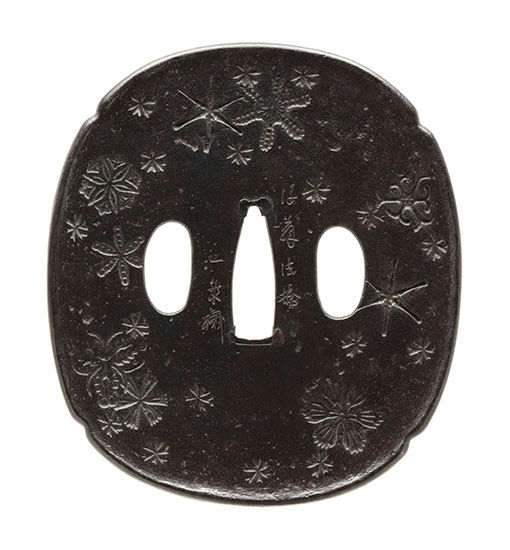
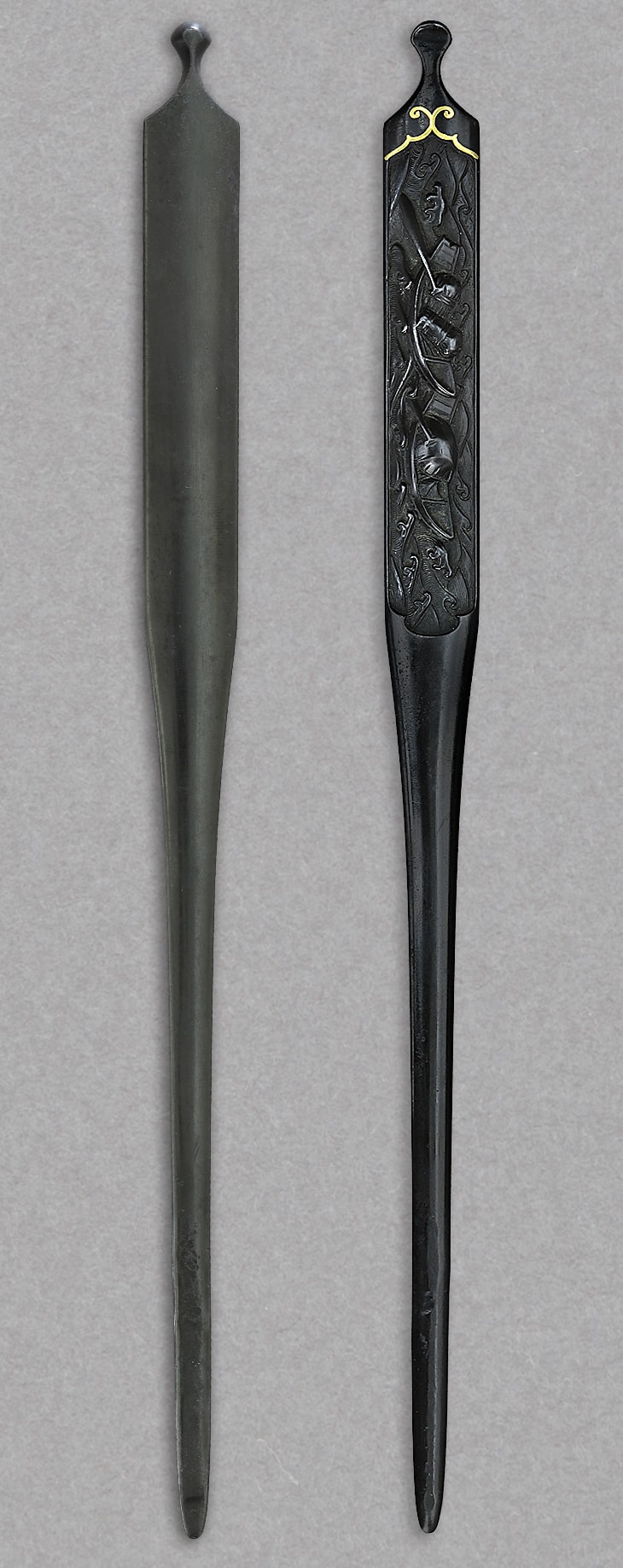
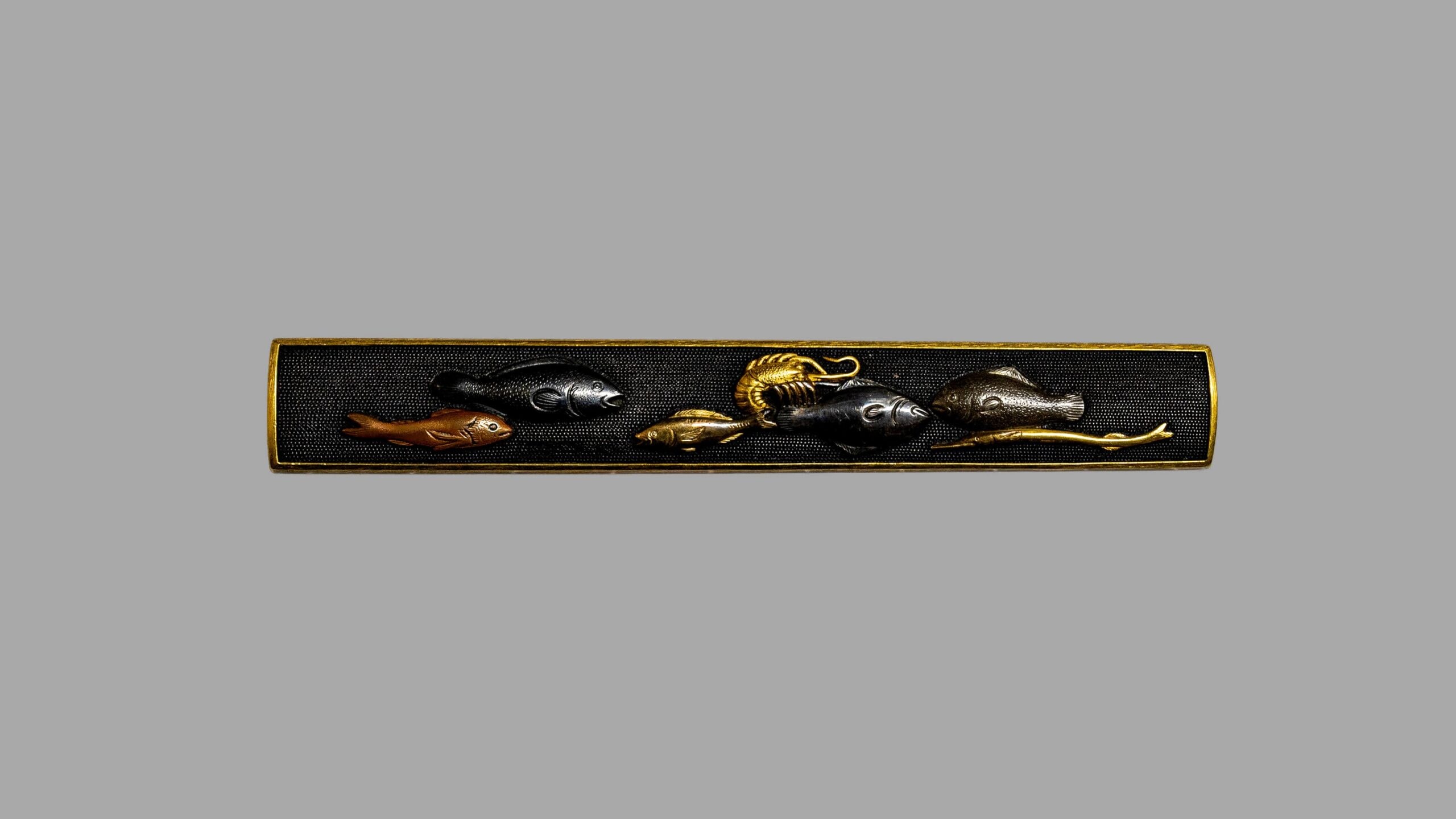
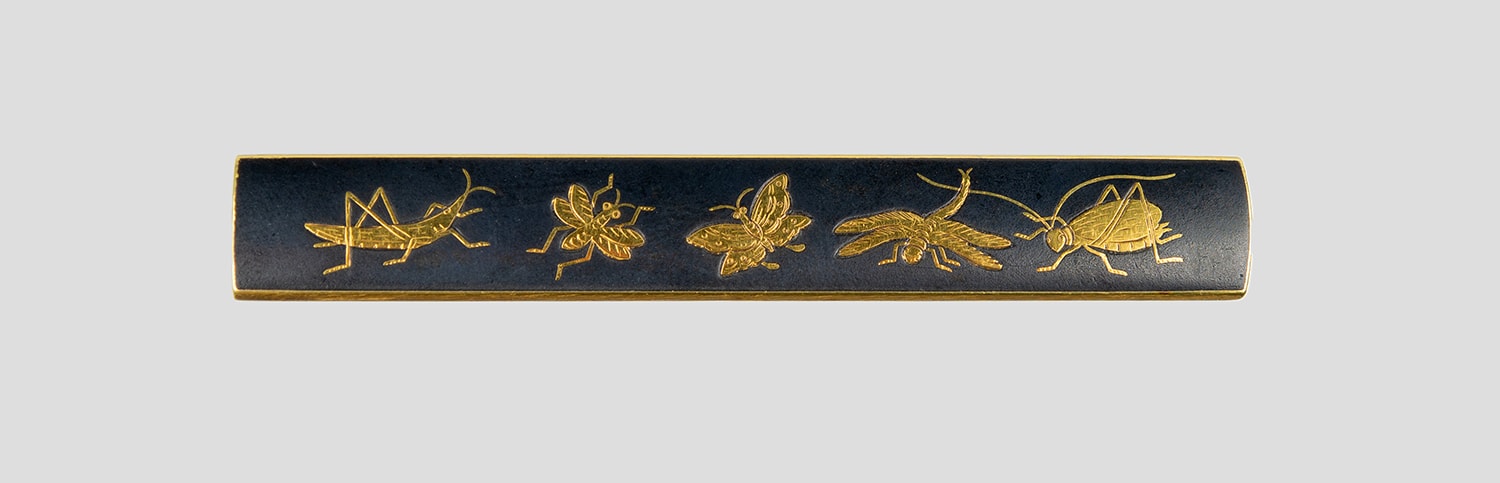
The Yoshioka family (Yoshioka-ryu) was a prestigious lineage of metalworkers retained by the Tokugawa shogunate, receiving a stipend of one hundred hyo (bales of rice) and rations for ten persons. The house flourished from the first-generation master Shigetsugu, who was summoned into service by Tokugawa Ieyasu during the Keicho era, through to the ninth-generation Shigesada at the close of the shogunate. Over successive generations they adopted the Fujiwara surname, and from the second generation onward they held the court title Inaba no . Because works produced in the earlier period were all delivered to the bakufu, they are entirely unsigned; the practice of cutting the five-character signature "Yoshioka Inaba no " is thought to have begun around the fifth generation, Yasutsugu, yet since personal names were not inscribed, distinguishing individual generations remains difficult.
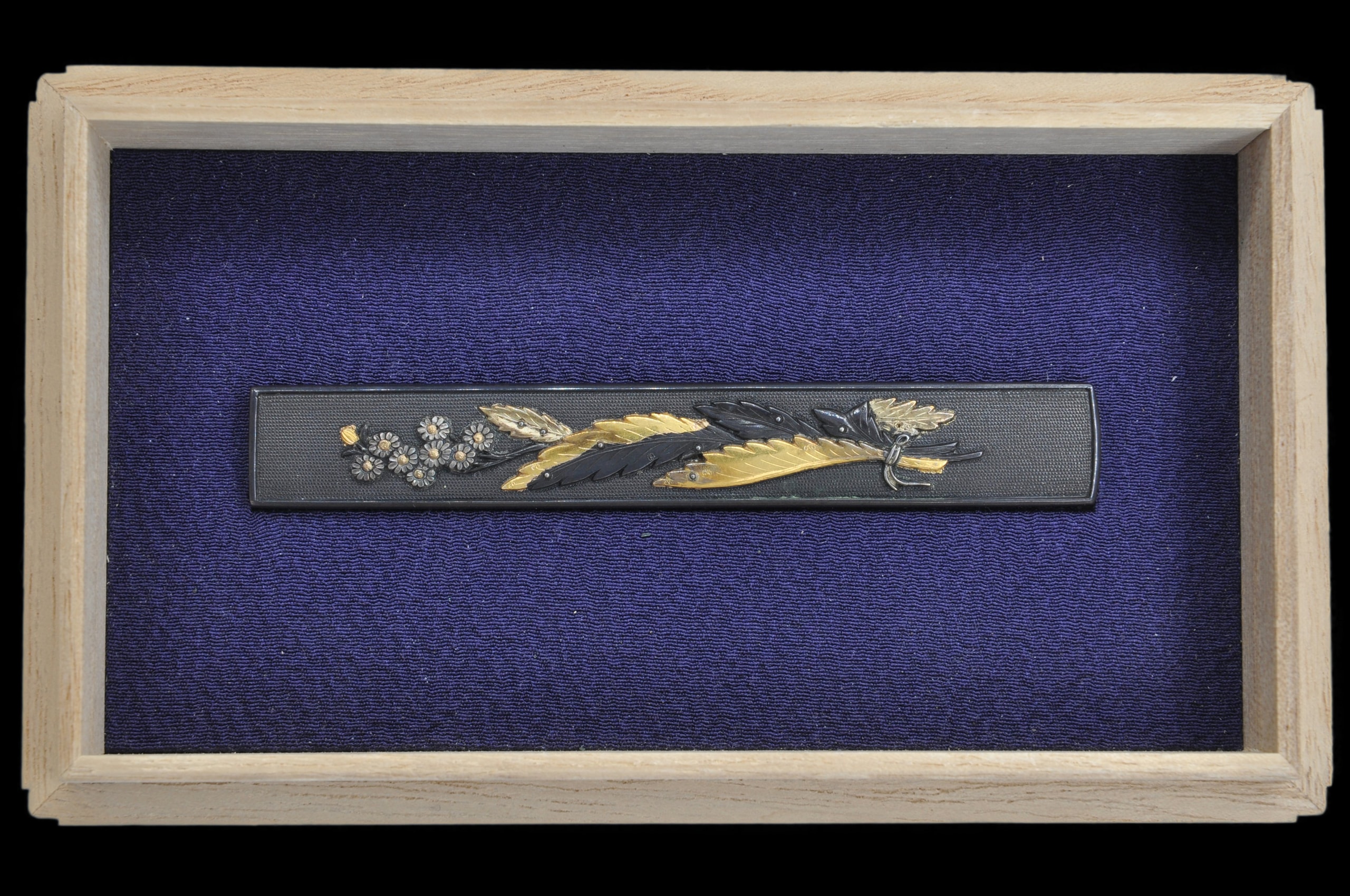
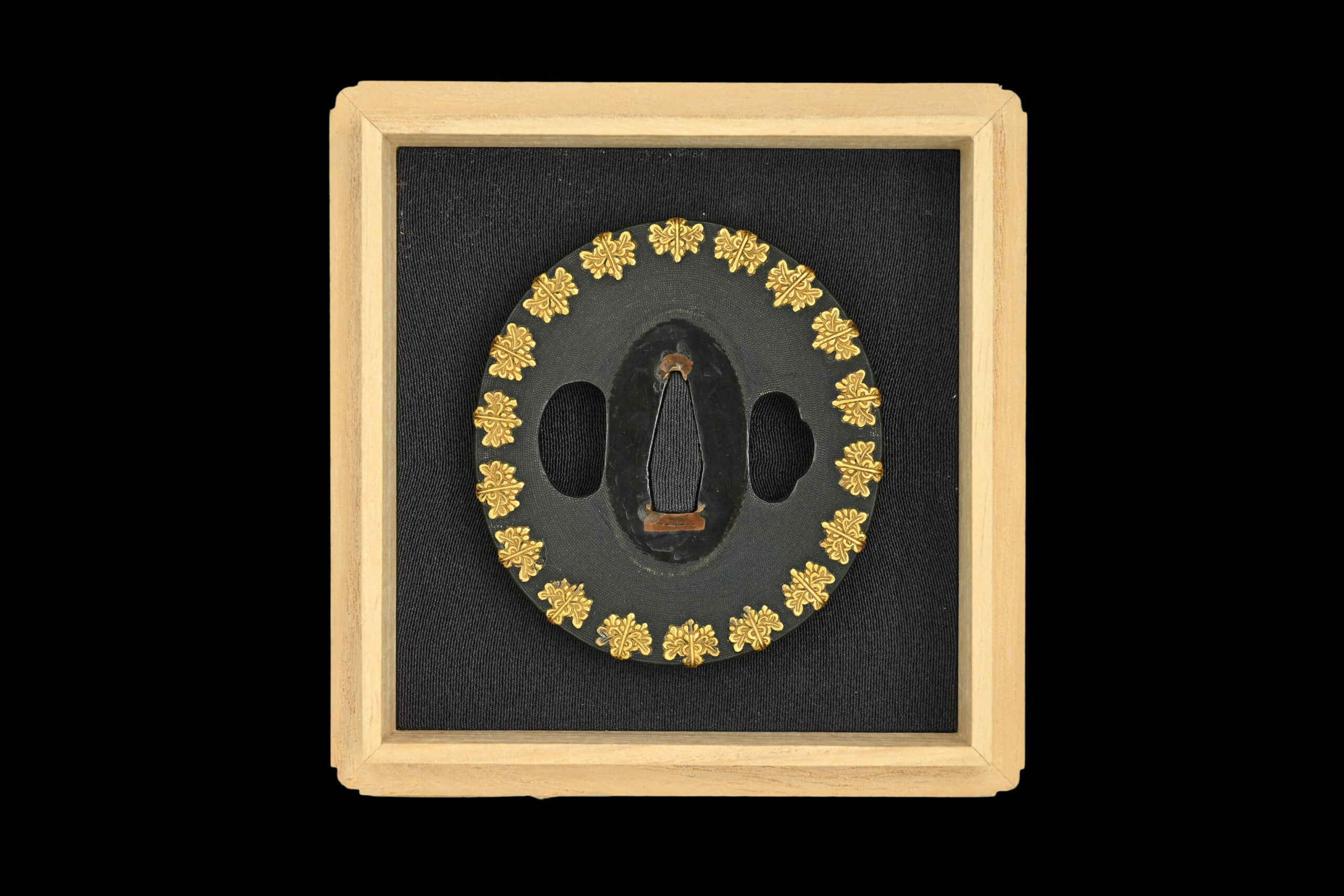
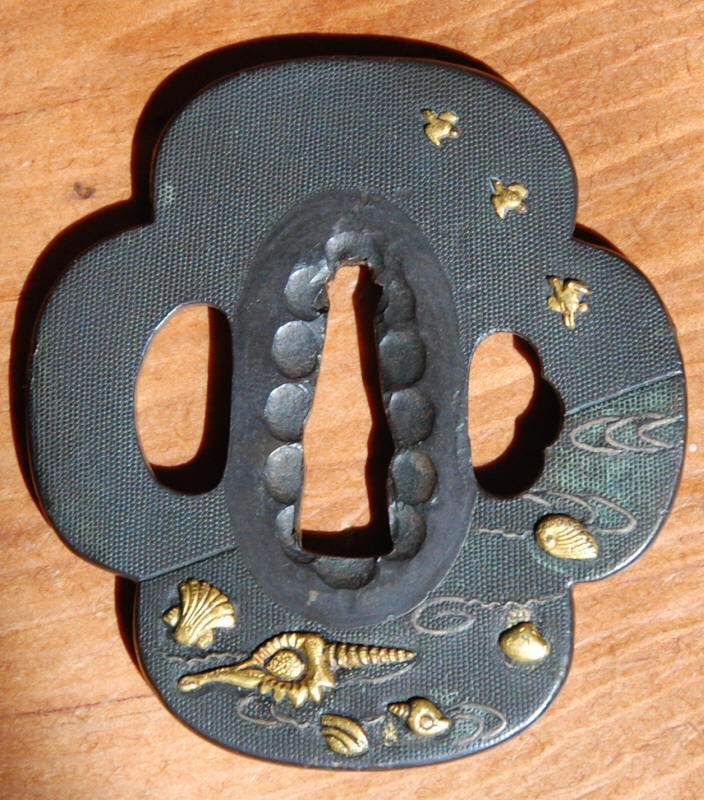
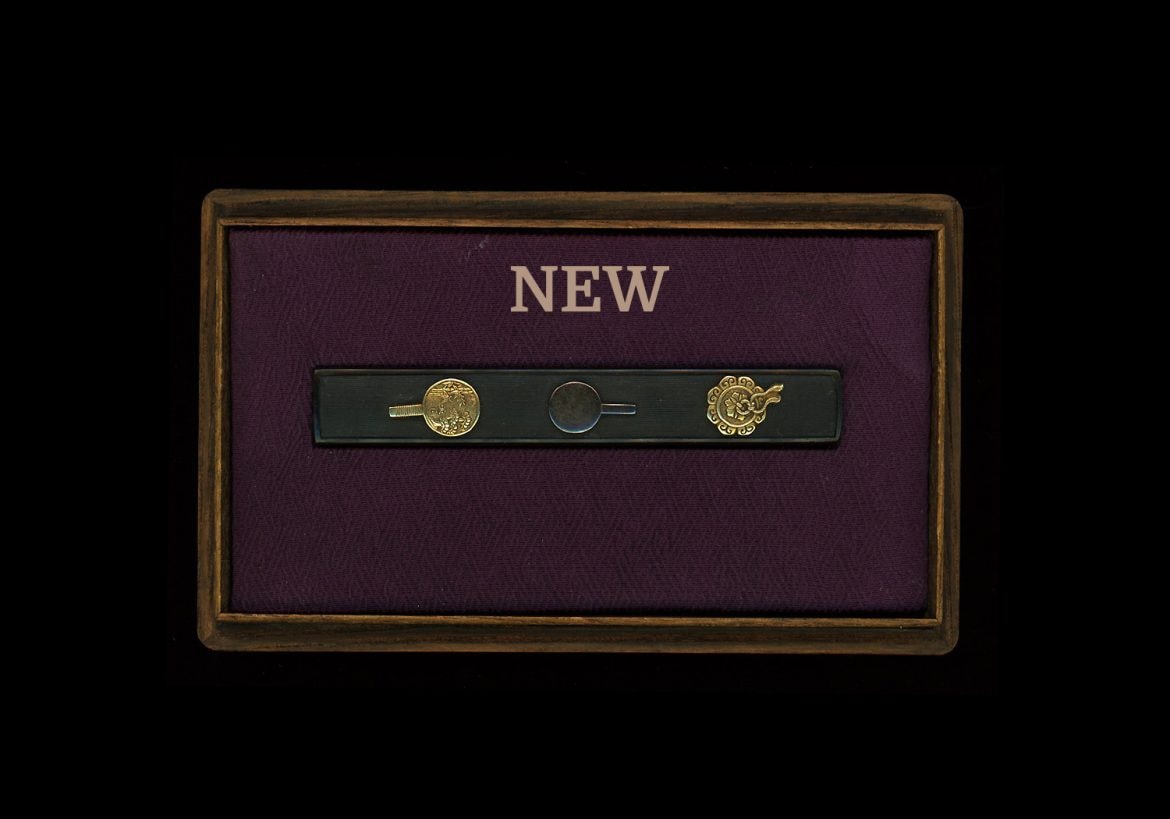
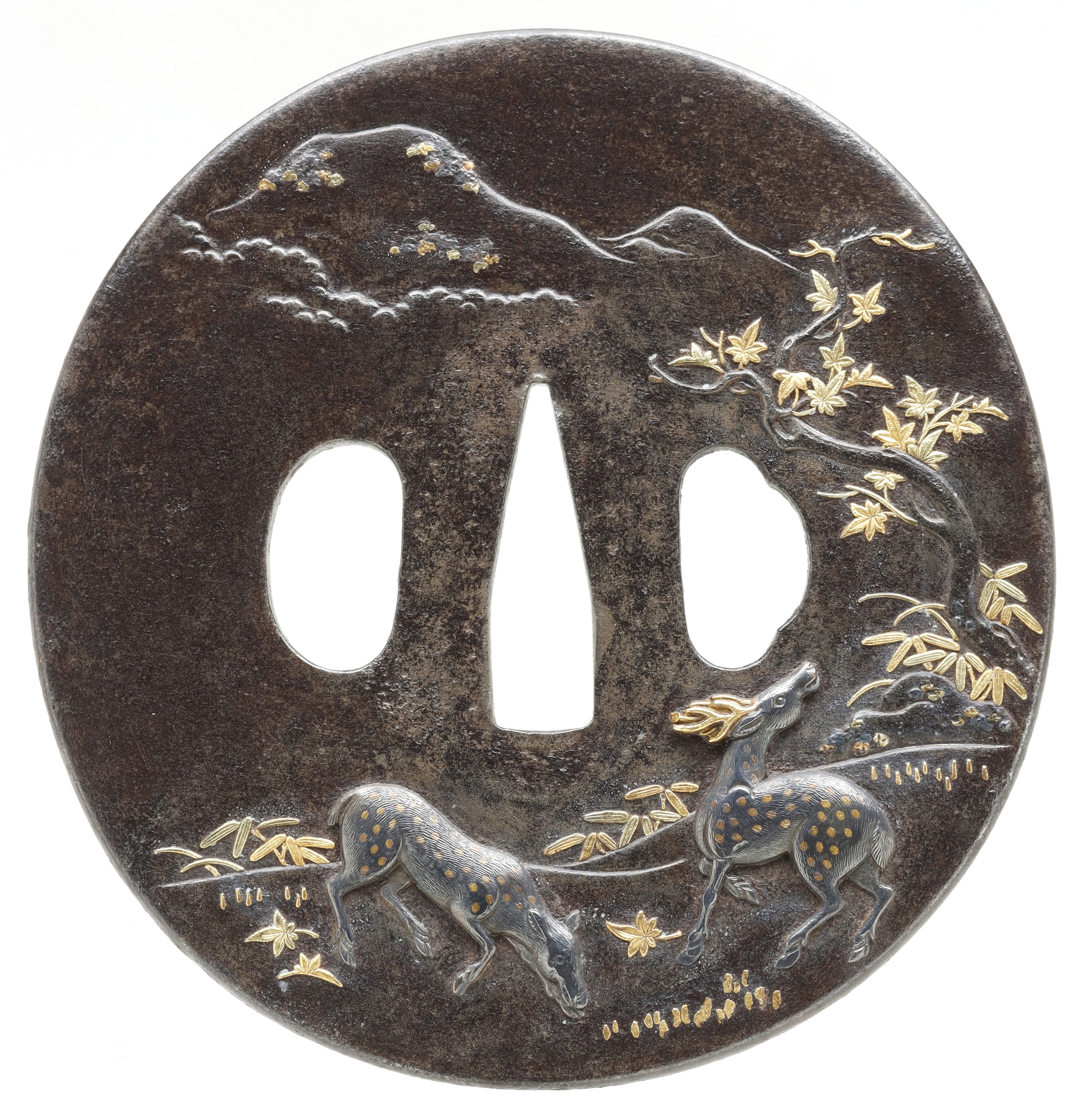
The Yoshioka school's characteristic manner centres on enhanced with (high-relief carving) and (gold colour inlay), producing workmanship that is solid and precise. Their steady, reliable carving is paired with meticulously applied using many kinds of coloured metals, yielding surfaces that, while sumptuous, remain filled with dignity and refinement. Compositions range from the Eight Views of Omi rendered in polychrome , to dragon-and-tiger programmes deployed across complete -soroi suites, to the restrained formality of ripened rice ears (inaho) unified across matched mountings. Techniques of -sue- (gold applied motifs) and (gold inlay) are employed to achieve striking contrasts between flat inlay that conveys the momentum of a brushstroke and higher-relief applied decoration.
The evaluations consistently characterise the Yoshioka house as producing work of elevated and formal tone, marked by a serious, straightforward manner. As official kakae-ko (shogunate-employed artisans), their output embodies the requirements of shogunal ceremonial culture, from made for the Tokugawa house to (unified-suite) mountings whose coherent thematic organisation demonstrates the true worth of a shogunate-employed master metalworker. Like the Goto family, to whom the draws direct comparison, the Yoshioka line occupies a central position within the institutional tradition of -period kinko metalwork.