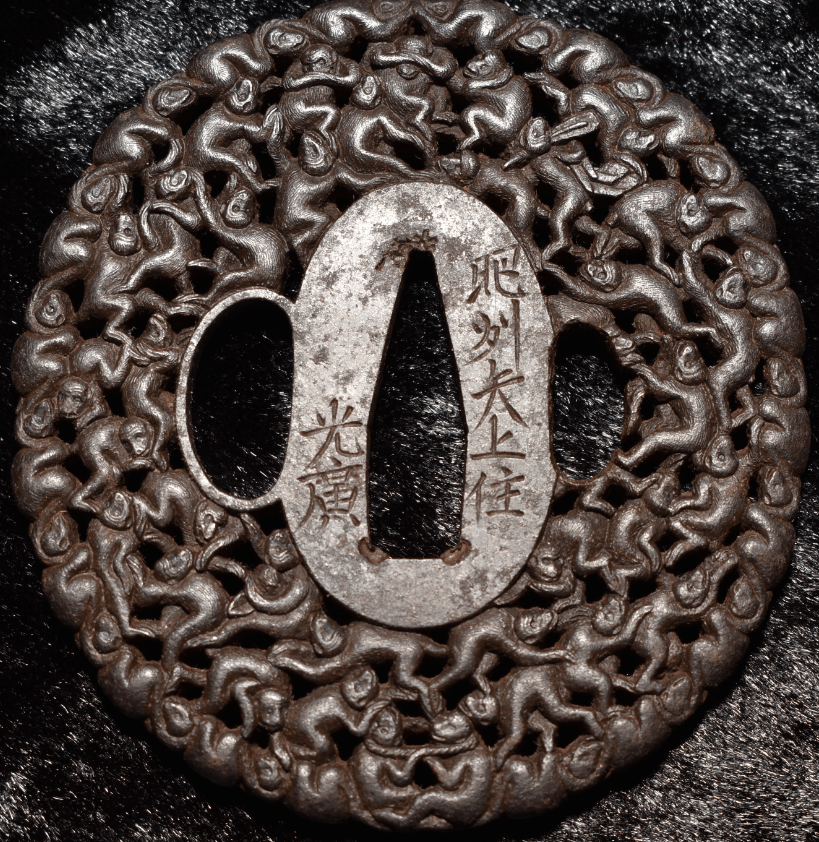
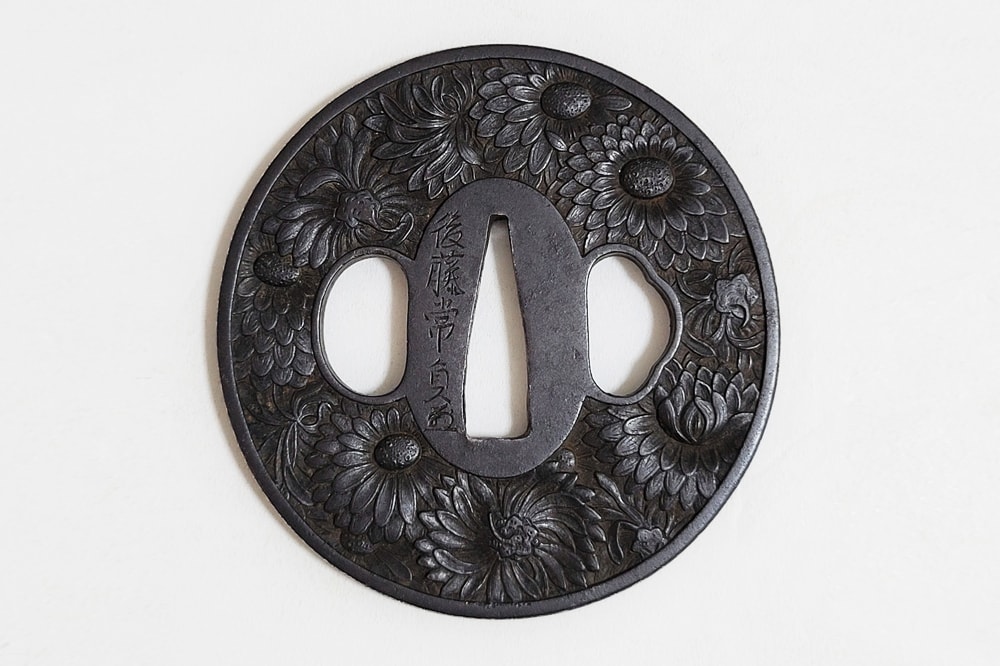
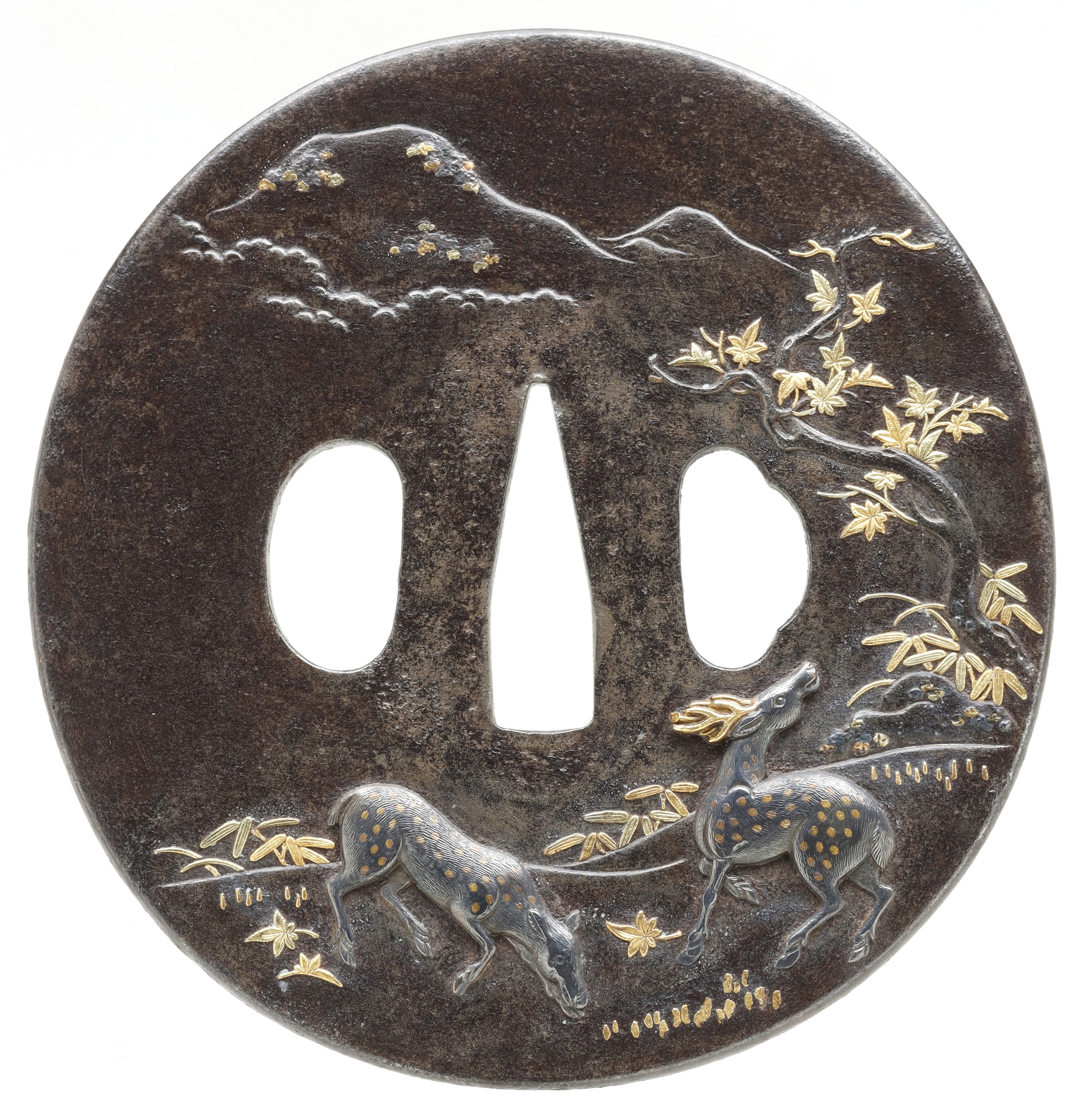
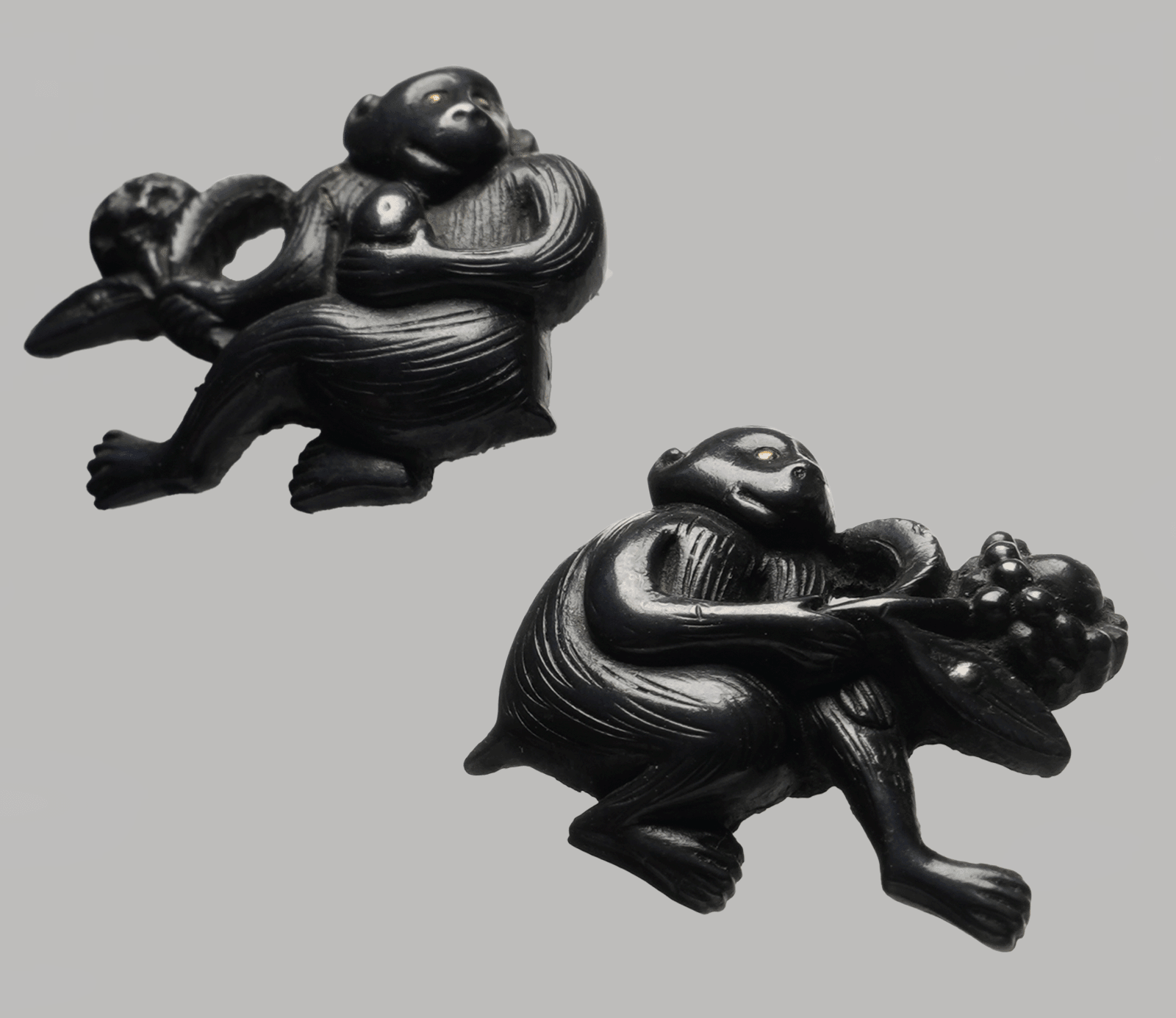
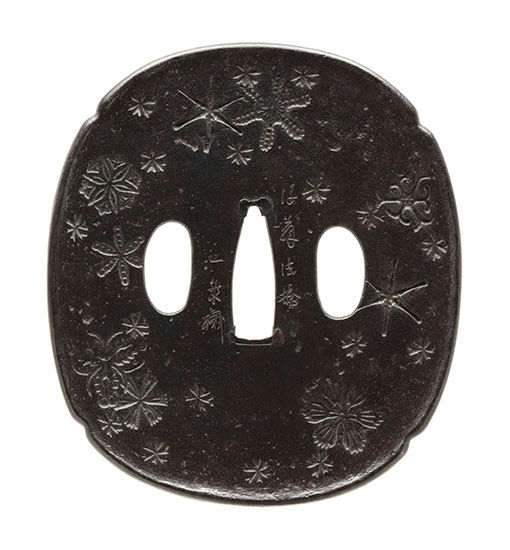
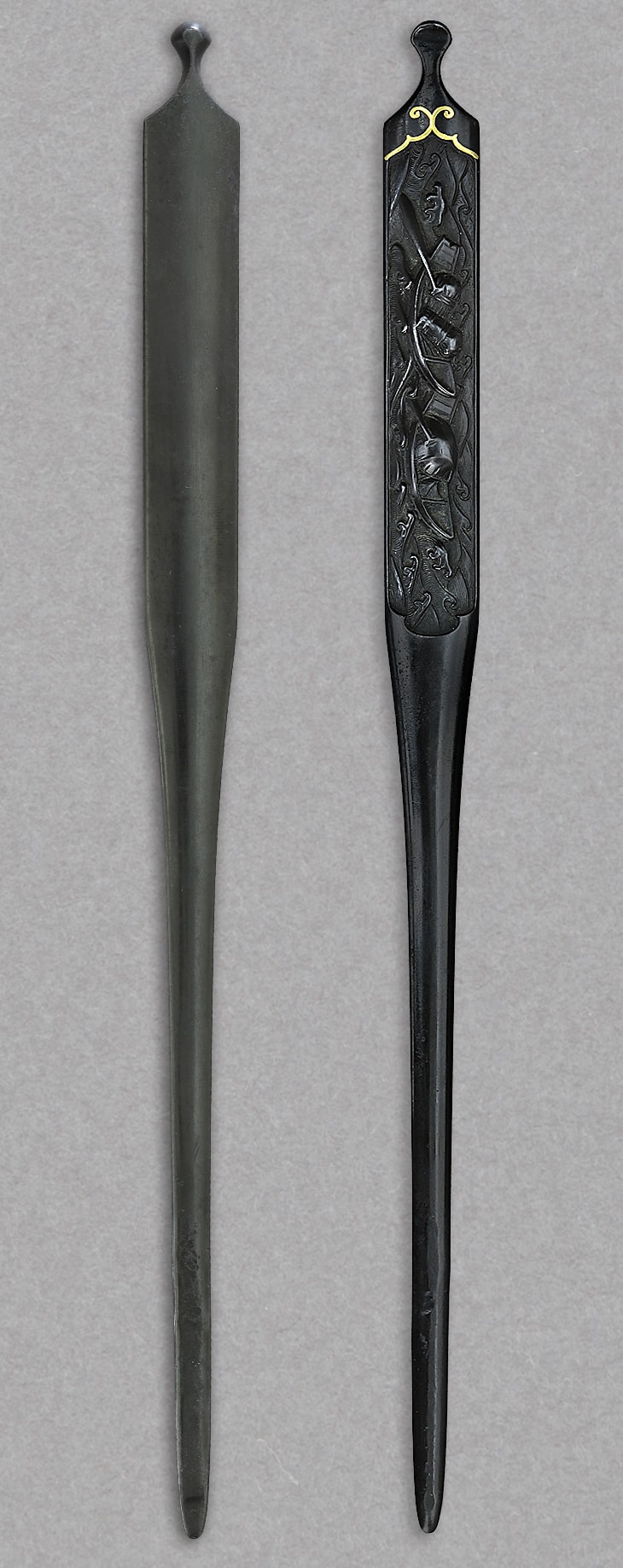
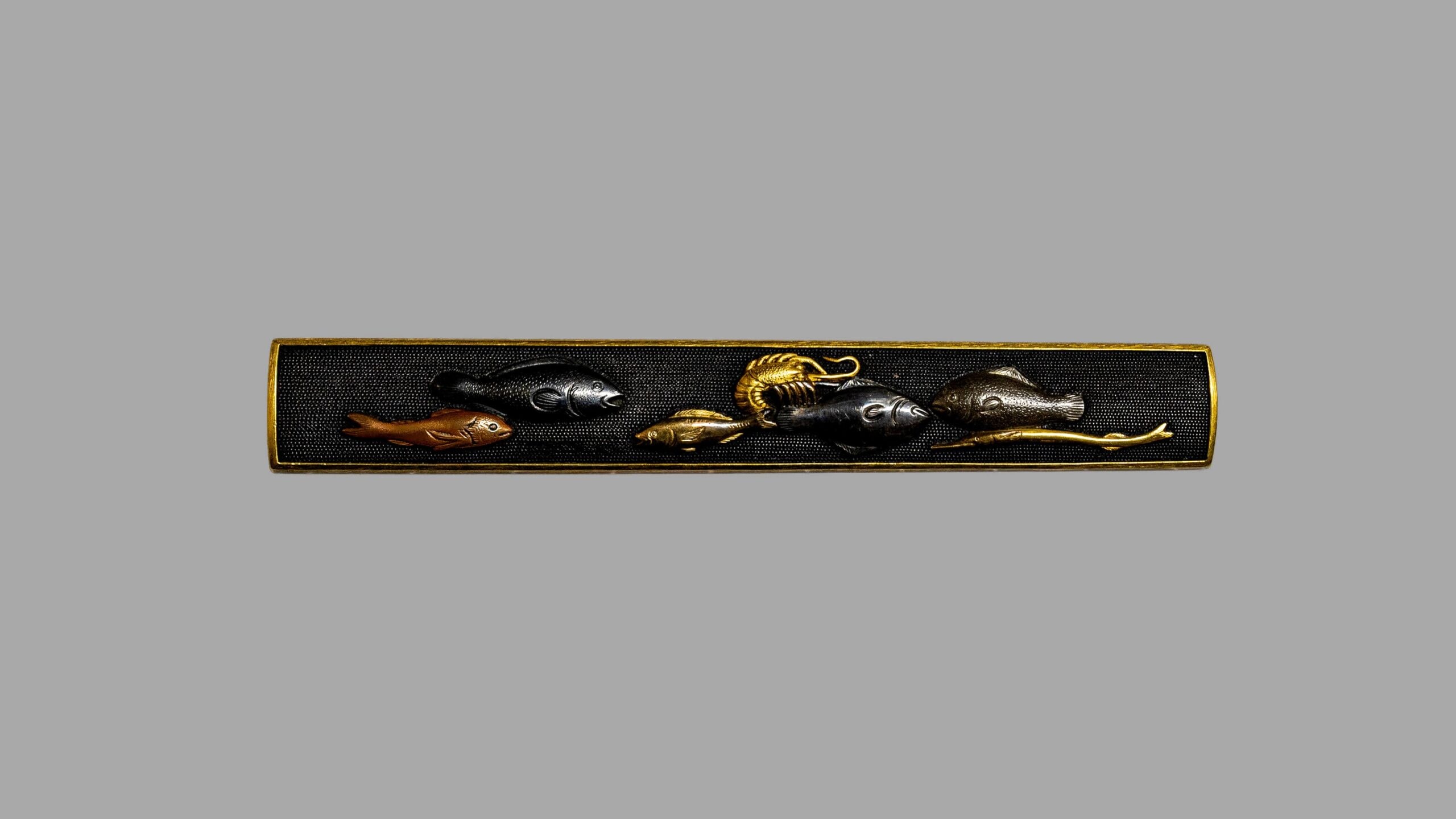
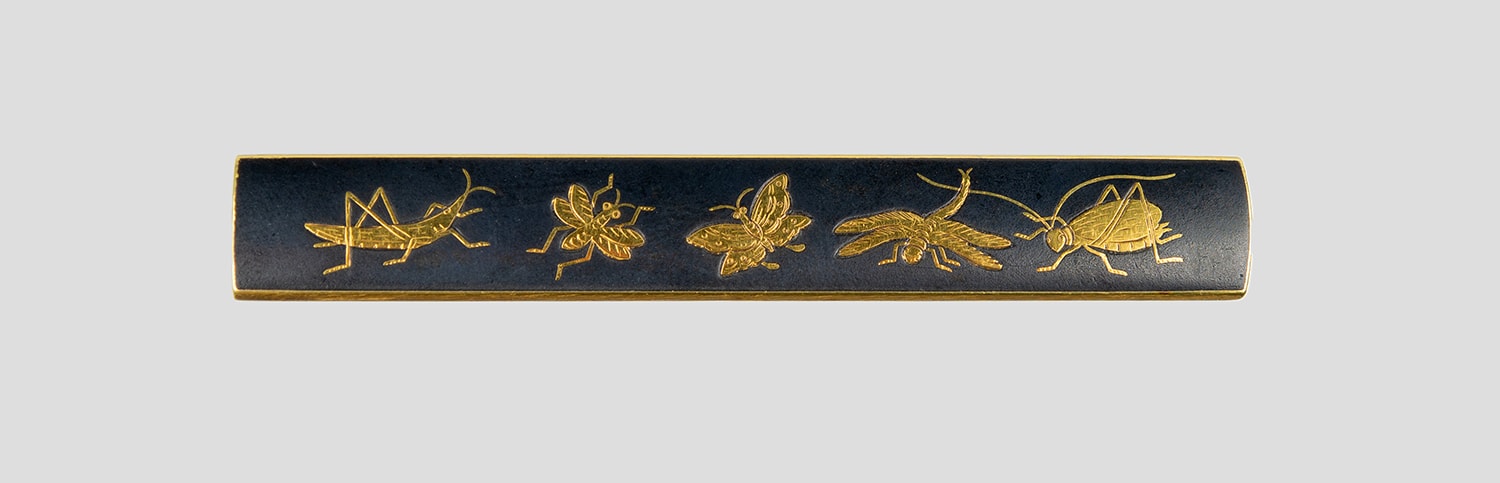
The Yoshioka family (Yoshioka-ryu) was a prestigious lineage of metalworkers retained by the Tokugawa shogunate, receiving a stipend of one hundred hyo (bales of rice) and rations for ten persons. The house flourished from the first-generation master Shigetsugu, who was summoned into service by Tokugawa Ieyasu during the Keicho era, through to the ninth-generation Shigesada at the close of the shogunate. Over successive generations they adopted the Fujiwara surname, and from the second generation onward they held the court title Inaba no . Because works produced in the earlier period were all delivered to the bakufu, they are entirely unsigned; the practice of cutting the five-character signature "Yoshioka Inaba no " is thought to have begun around the fifth generation, Yasutsugu, yet since personal names were not inscribed, distinguishing individual generations remains difficult.
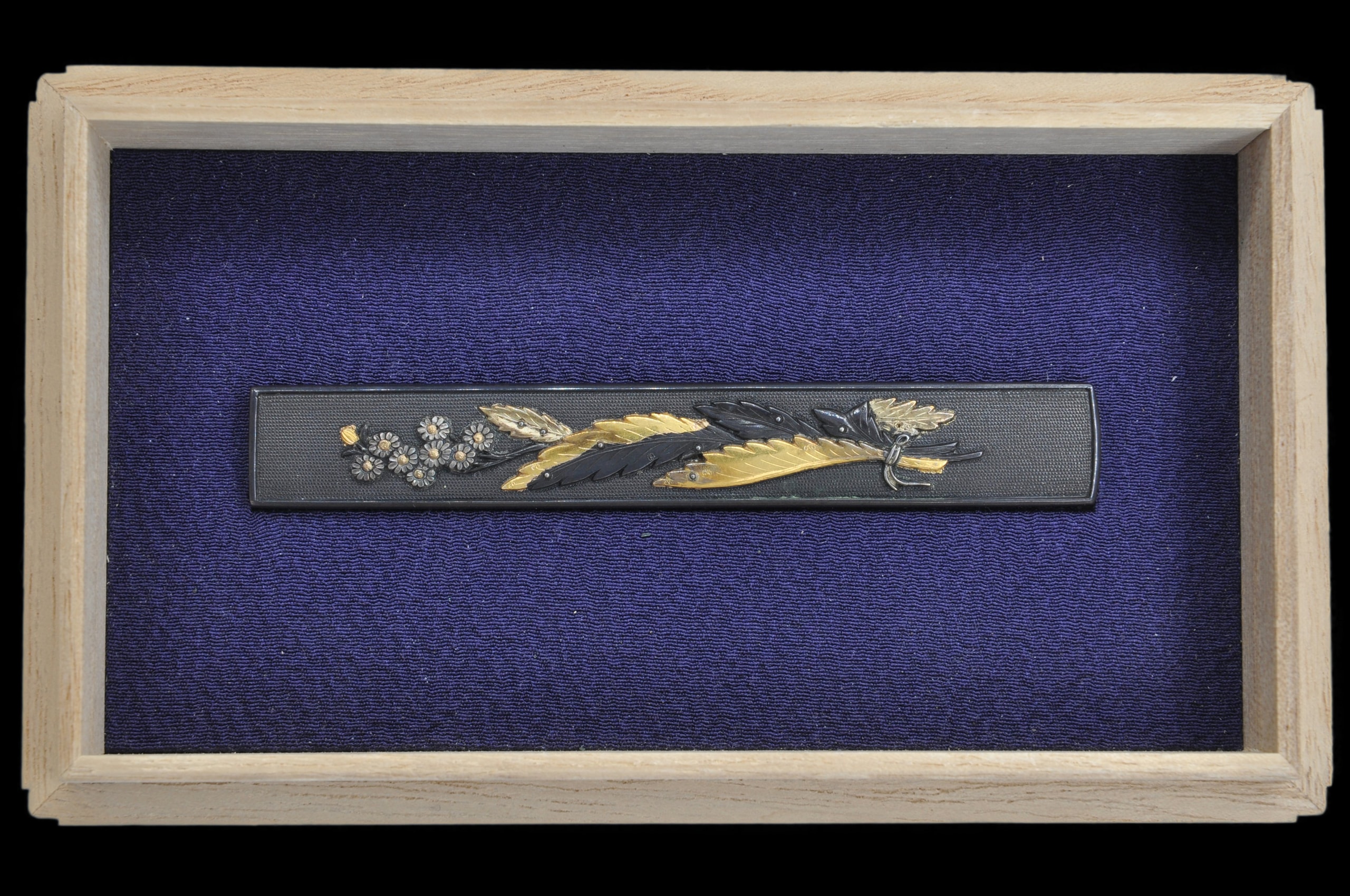
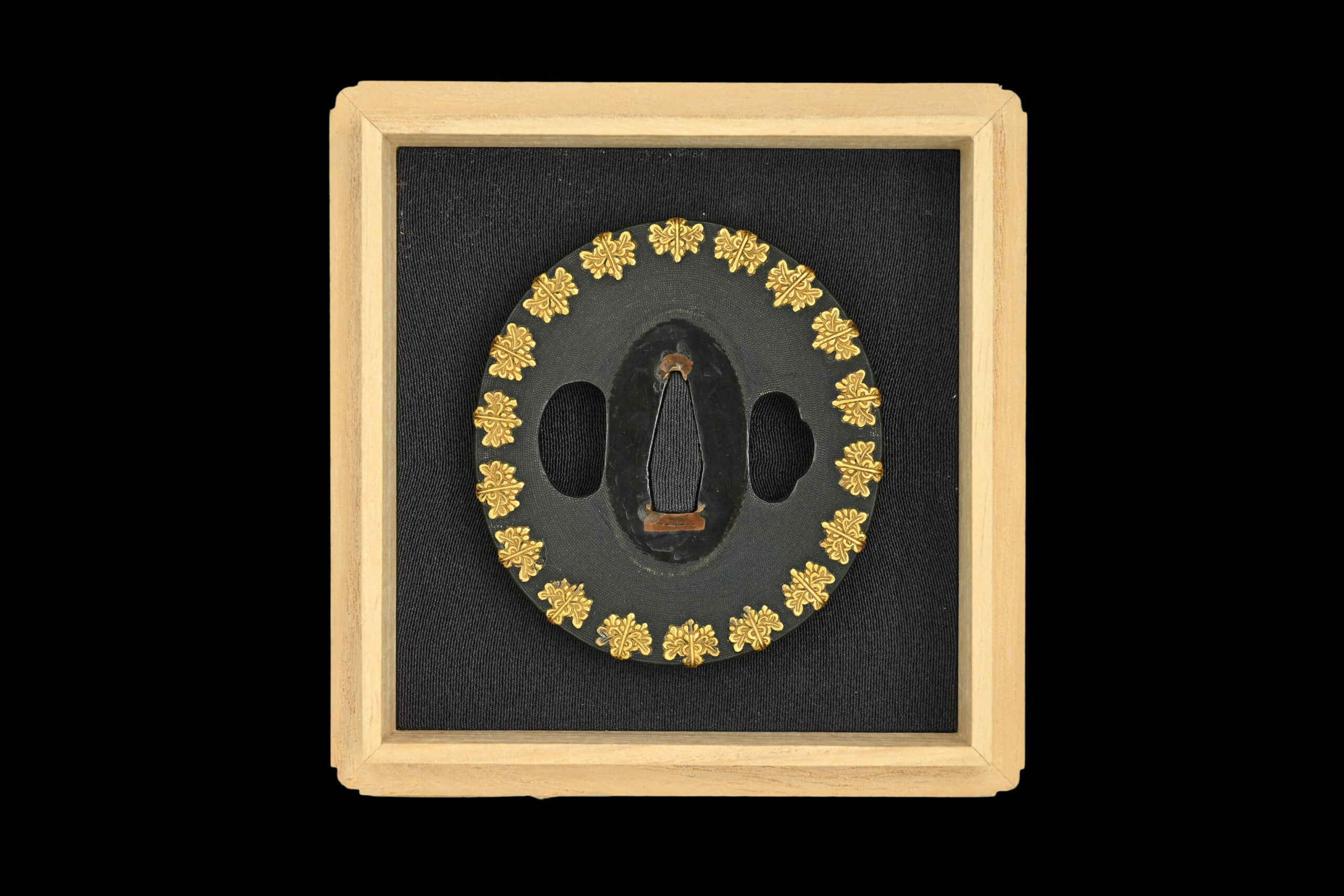
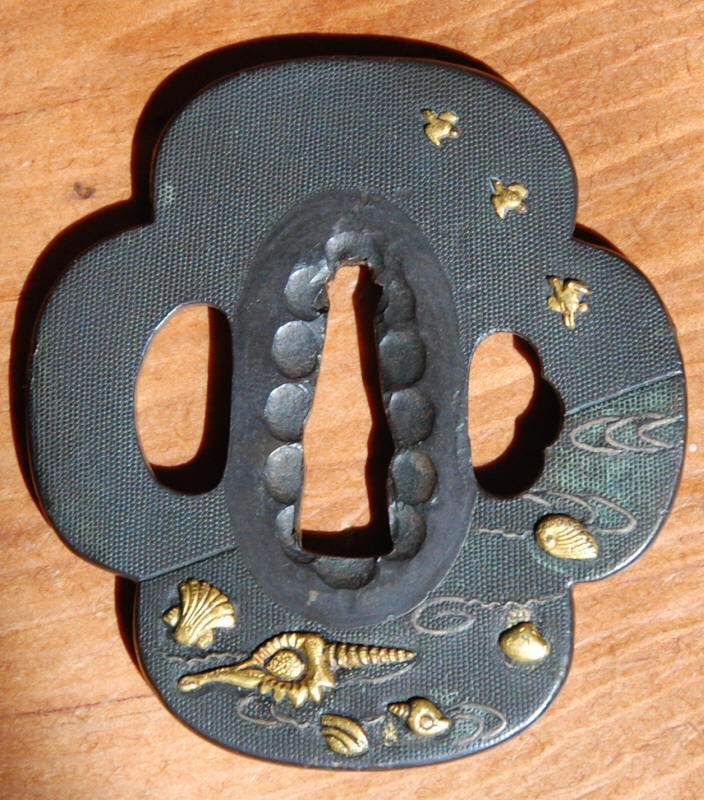
The Yoshioka school's characteristic manner centres on nanako-ji enhanced with takabori (high-relief carving) and kin-iroe (gold colour inlay), producing workmanship that is solid and precise. Their steady, reliable carving is paired with meticulously applied iroe using many kinds of coloured metals, yielding surfaces that, while sumptuous, remain filled with dignity and refinement. Compositions range from the Eight Views of Omi rendered in polychrome sukidashi-bori, to dragon-and-tiger programmes deployed across complete daisho-soroi suites, to the restrained formality of ripened rice ears (inaho) unified across matched mountings. Techniques of kin-sue-mon (gold applied motifs) and kin-zogan (gold inlay) are employed to achieve striking contrasts between flat inlay that conveys the momentum of a brushstroke and higher-relief applied decoration.
The NBTHK evaluations consistently characterise the Yoshioka house as producing work of elevated and formal tone, marked by a serious, straightforward manner. As official kakae-ko (shogunate-employed artisans), their output embodies the requirements of shogunal ceremonial culture, from ito-makitachi koshirae made for the Kii Tokugawa house to issaku (unified-suite) mountings whose coherent thematic organisation demonstrates the true worth of a shogunate-employed master metalworker1. Like the Goto family, to whom the NBTHK draws direct comparison, the Yoshioka line occupies a central position within the institutional tradition of Edo-period kinko metalwork.
Kantei
3 descriptive axes: material (the orthodox shakudo-nanako house grounds, with copper and a little shibuichi) x technique (high relief and applied suemon with gold colour-metal and flat inlay, the hand steady and precise) x themes (the Goto okite-mono canon, the dragon-and-tiger and beast subjects, and the formal family-crest and plant work of a shogunate-retained house). Because the Inaba-no-suke title is inherited and the line cut no individual names, the only load-bearing axis that separates this house from its Goto model is the steady, solid carving register; nothing in the corpus separates one Inaba-no-suke generation from another.
Yoshioka Inaba-no-suke is not one metalwork artist but the inherited house signature of the Yoshioka, a machibori family retained by the Tokugawa shogunate on a stipend of a hundred bales and ten men. The records hold that the first head Shigetsugu was called out by Ieyasu in the Keicho years and that the house prospered through to the ninth head Shigesada at the end of the Edo period; each generation took the Fujiwara surname, and from the second head on they received the honorary title Inaba-no-suke. Their early work, delivered to the shogunate, is all unsigned, and the five-character signature Yoshioka Inaba-no-suke is thought to begin around the fifth head Yasutsugu; because the line did not cut individual names, sorting the signed pieces by generation is difficult. Working in the orthodox Goto manner on shakudo-nanako in high relief with gold colour-metal, the house is marked by a steady, exacting hand and was entrusted with formal family-crest commissions for the shogunate and the great houses.
Diagnostic discriminators
堅実な彫口kenjitsu na horikuchi2
the setsumei name the Yoshioka hand as steady and precise (a steady, exacting carving in the Yoshioka school, solid and skilful like the Goto), the register that places the house beside, yet apart from, the Goto manner it imitates; it does NOT separate one Inaba-no-suke generation from another, since the records say the line cut no individual names and sorting the signed pieces by generation is difficult
Material (grounds)
The orthodox house grounds, shakudo in fine nanako above all, with plain shakudo, copper and a little shibuichi among the colour-metals.
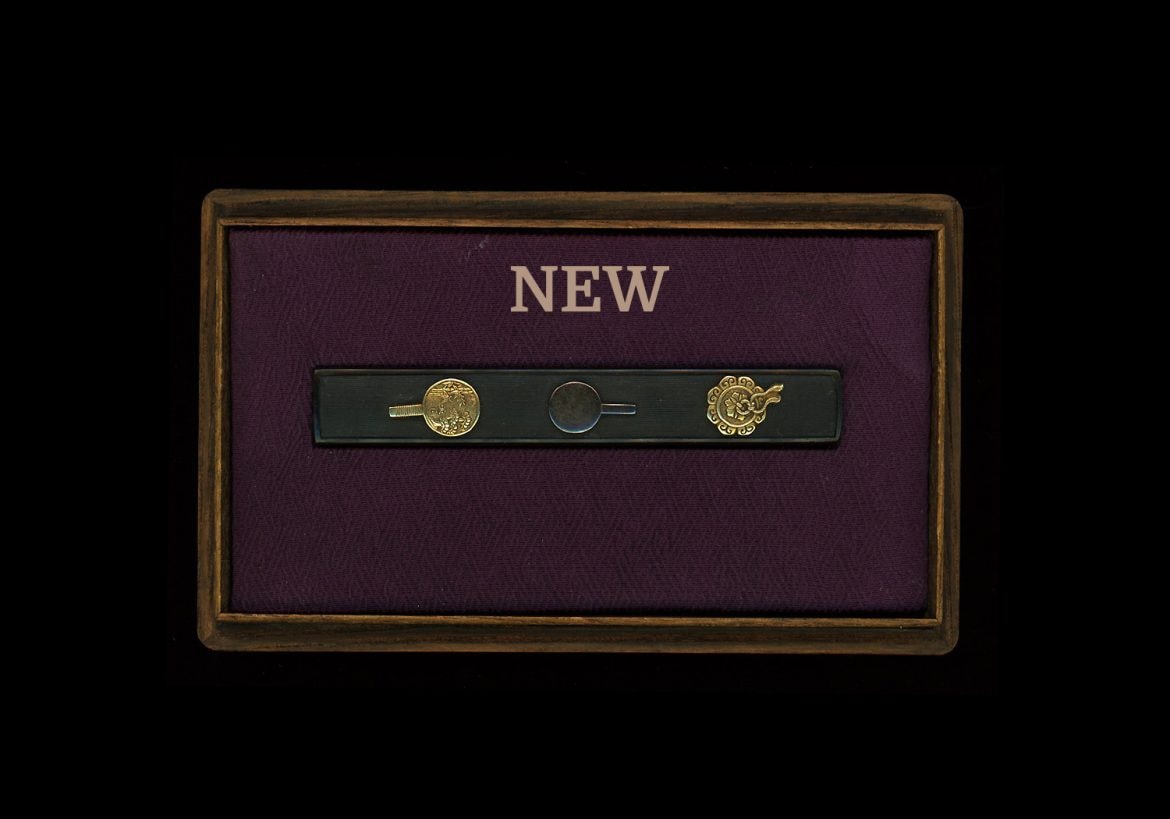
High relief and sukidashi-takabori with applied suemon and gold colour-metal, gold flat inlay and nunome inlay; the menuki are cut in katachibori, the hand praised as steady and precise.
The orthodox okite-mono canon, the dragon-and-tiger with leopards above all, and, as the work of a shogunate-retained house, formal family-crest and plant subjects: ears of rice, the standing arrowhead of the Mizuno crest among flowing water, and a tsuba carrying the Eight Views of Omi.
The Goto okite-mono canon
Dragon-and-tiger and grouped beasts of the orthodox house canon, with leopards added, worked in the formal Goto manner.
虎tora2竹take1
Family crests and plant subjectsless firmly established
The plant-and-crest work of a shogunate-retained house: ears of rice for abundance, the standing arrowhead of the Mizuno crest among flowing water, and the Eight Views of Omi.
Yoshioka (吉岡), tanzaku-mei on menukithe abbreviated house name cut as a tanzaku-mei on the menuki of a matched set4 pieces4
Yoshioka Inaba-no-suke (吉岡因幡介), five-character signaturethe house five-character signature, cut from around the fifth generation Yasutsugu; sometimes with kao1 pieces1
Recorded signatures
吉岡Yoshioka5 pieces5
吉岡因幡介Yoshioka Inaba-no-suke1 pieces1
Documentary note
Inaba-no-suke (因幡介) is an inherited honorary title, not a personal name: the Yoshioka heads bore it from the second generation on, so this maker stands for the whole house signature, not one artist. The early heads delivered to the shogunate unsigned; the five-character signature Yoshioka Inaba-no-suke is thought to begin around the fifth head Yasutsugu, and one menuki of a matched set is cut with the abbreviated tanzaku-mei Yoshioka alone. One tsuba adds a kao. Because the line cut no individual names, the records say outright that sorting the signed pieces by generation is difficult; one mounting is referred only loosely to the time of the seventh head Terutsugu by its date. The named generations, all recited in the biography and none securely separable by hand here, run from the first head Shigetsugu through the ninth and last head Shigesada.
Historical importance
Where Inaba no Suke stands among comparable artisans: across all of nihontō, and within tradition, era, and period. The tiers (Foremost · Leading · Major · Notable) weigh official designations from the NBTHK and Japan's Agency for Cultural Affairs, together with historical honors of lasting repute such as the Sansaku and Meibutsu-chō.
随一
Foremost
屈指
Leading
有数
Major
Kanbun
著名
Notable
All tōsōguIebori (Gotō)Shintō
Select a lens to see how it's measured.
Designations
Kokuhō—
Jūyō Bunkazai—
Jūyō Bijutsuhin—
Gyobutsu—
Tokubetsu Jūyō—
Jūyō Tōken6
Elite Standing
0.04 across 6 designated works
Top 25% among makers
Provenance
1 documented provenance across certified works by Inaba no Suke
Imperial—
▸Shogunal1
Premier Daimyō—
Major Daimyō—
Other Daimyō—
Zaibatsu—
Institutions—
Named Collectors—
Provenance Standing
1 works held in elite collections across 1 documented provenances