肥前刀は藩営の産業である。鍋島家は1596年頃、忠吉を京の埋忠明寿のもとに学ばせ、帰国したその工を核に公認の一門を築いた。小糠肌で名高いその作は、九代にわたり明治まで続いている。
 NihontoWatchNihontoWatch
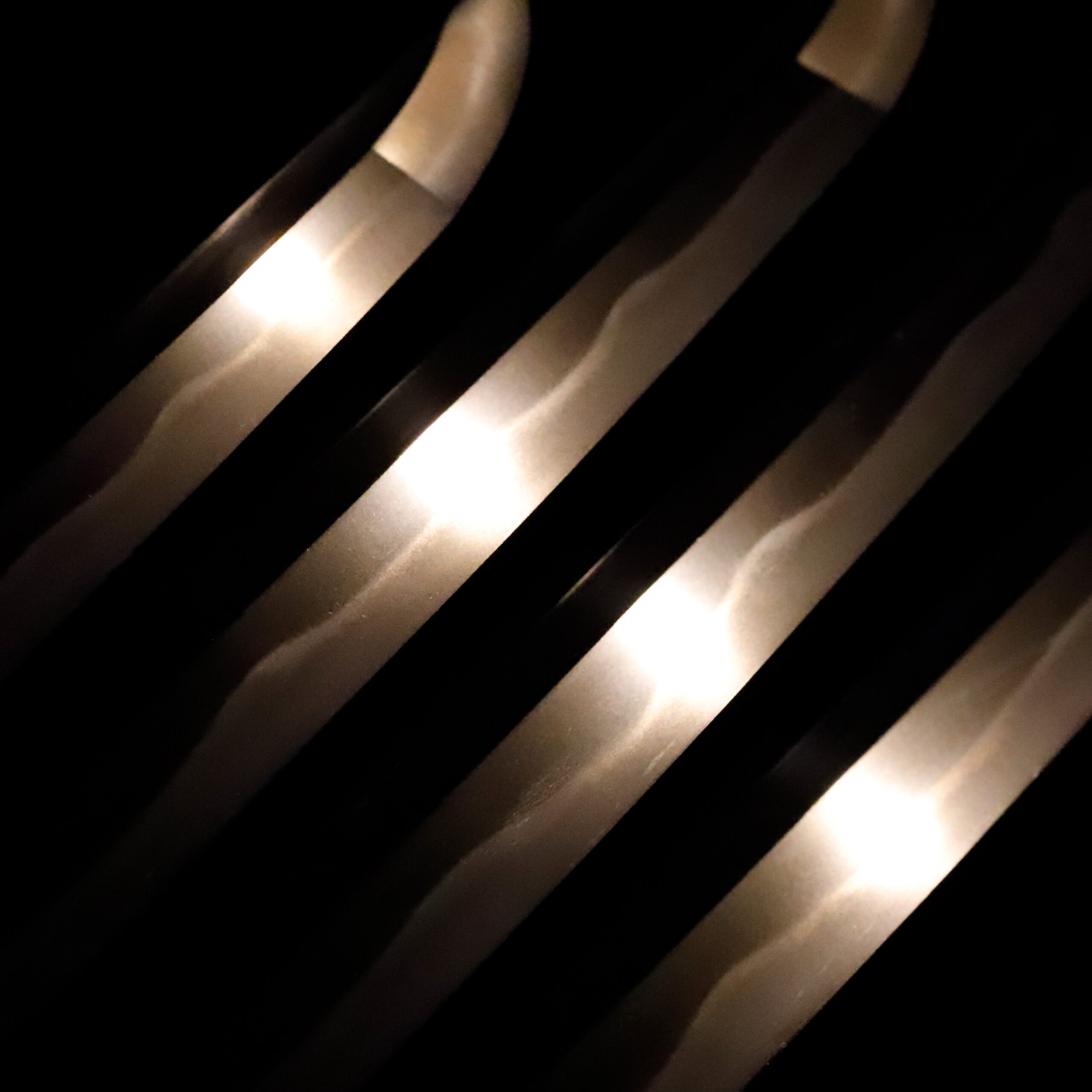
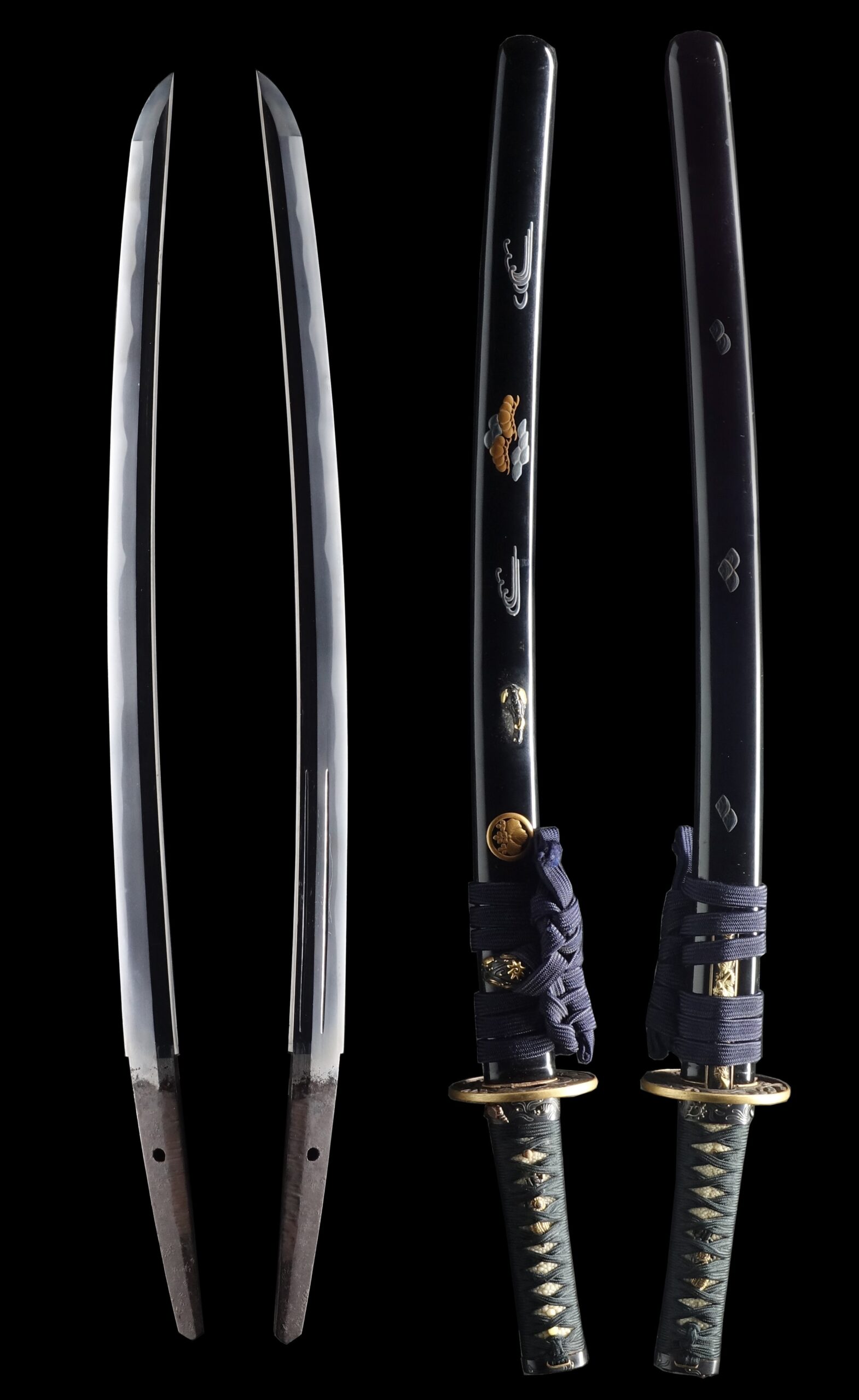
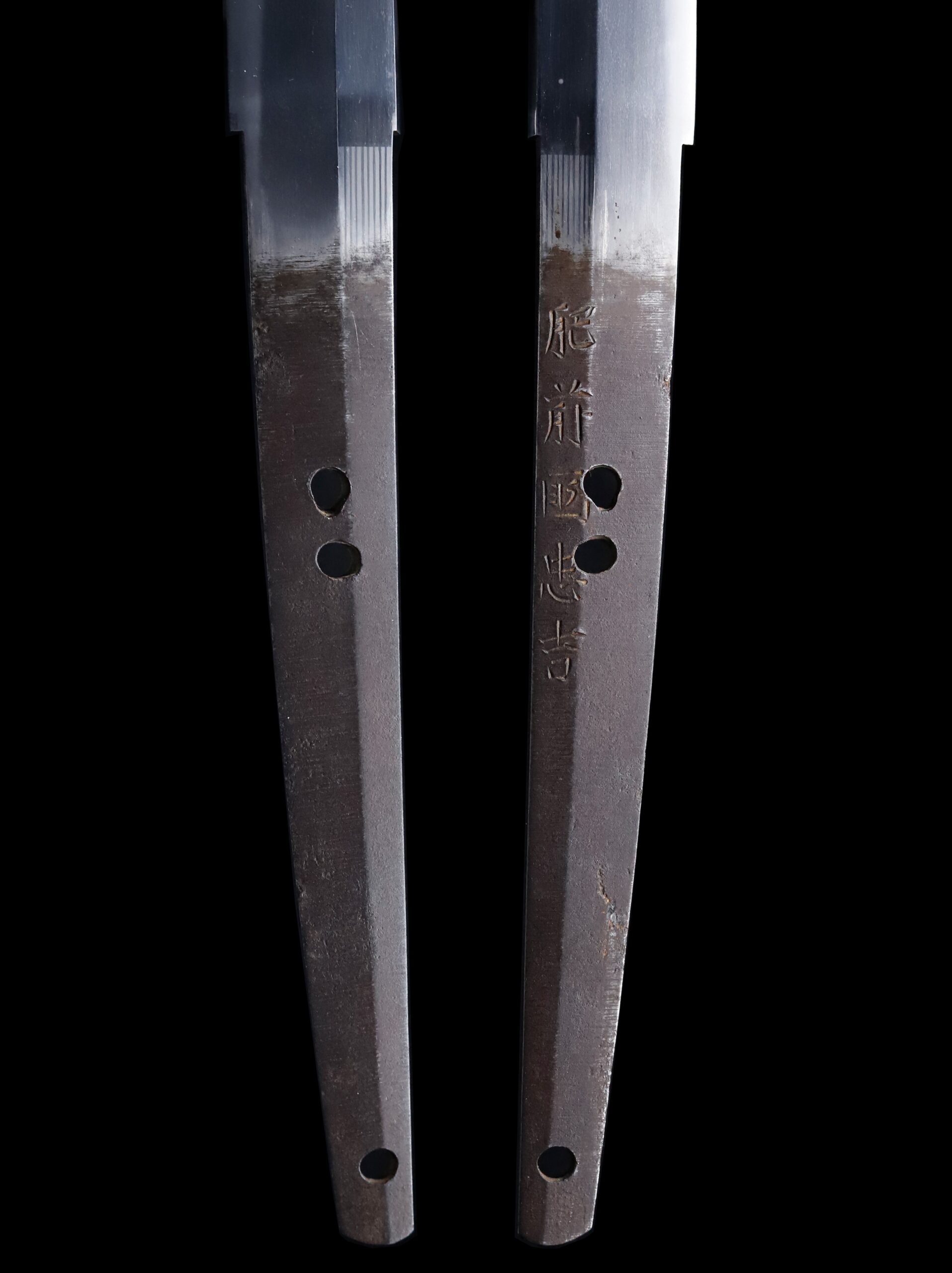
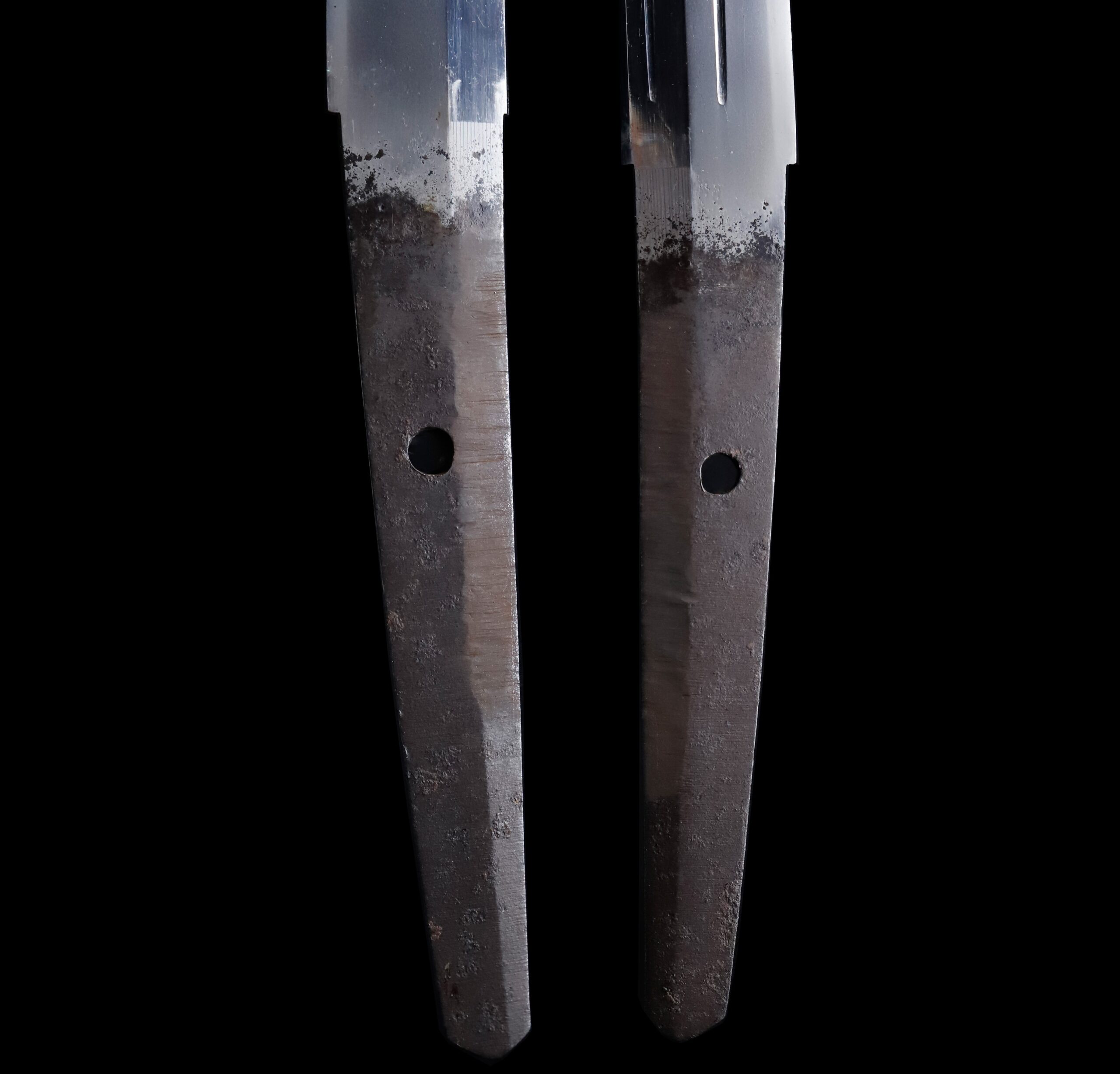
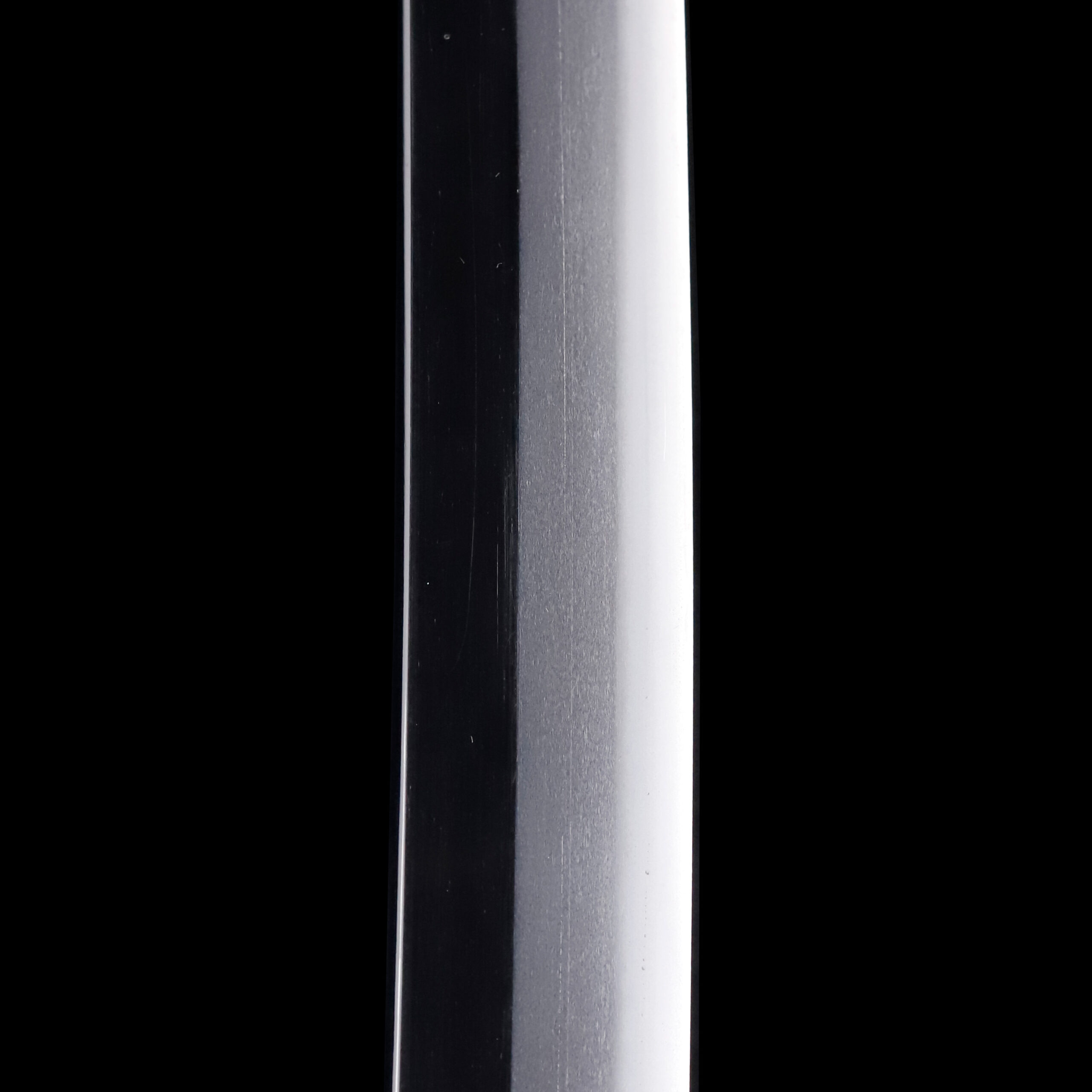
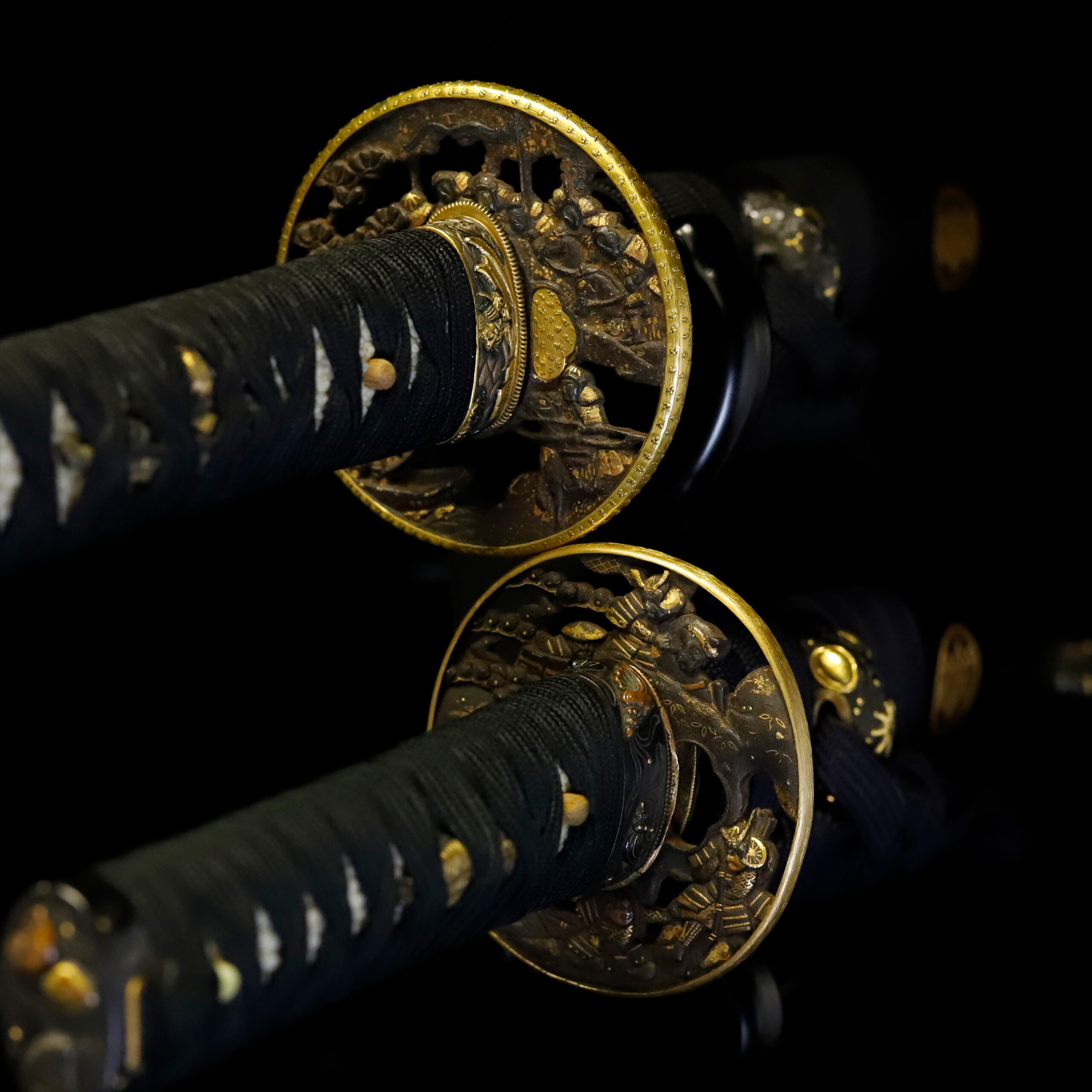
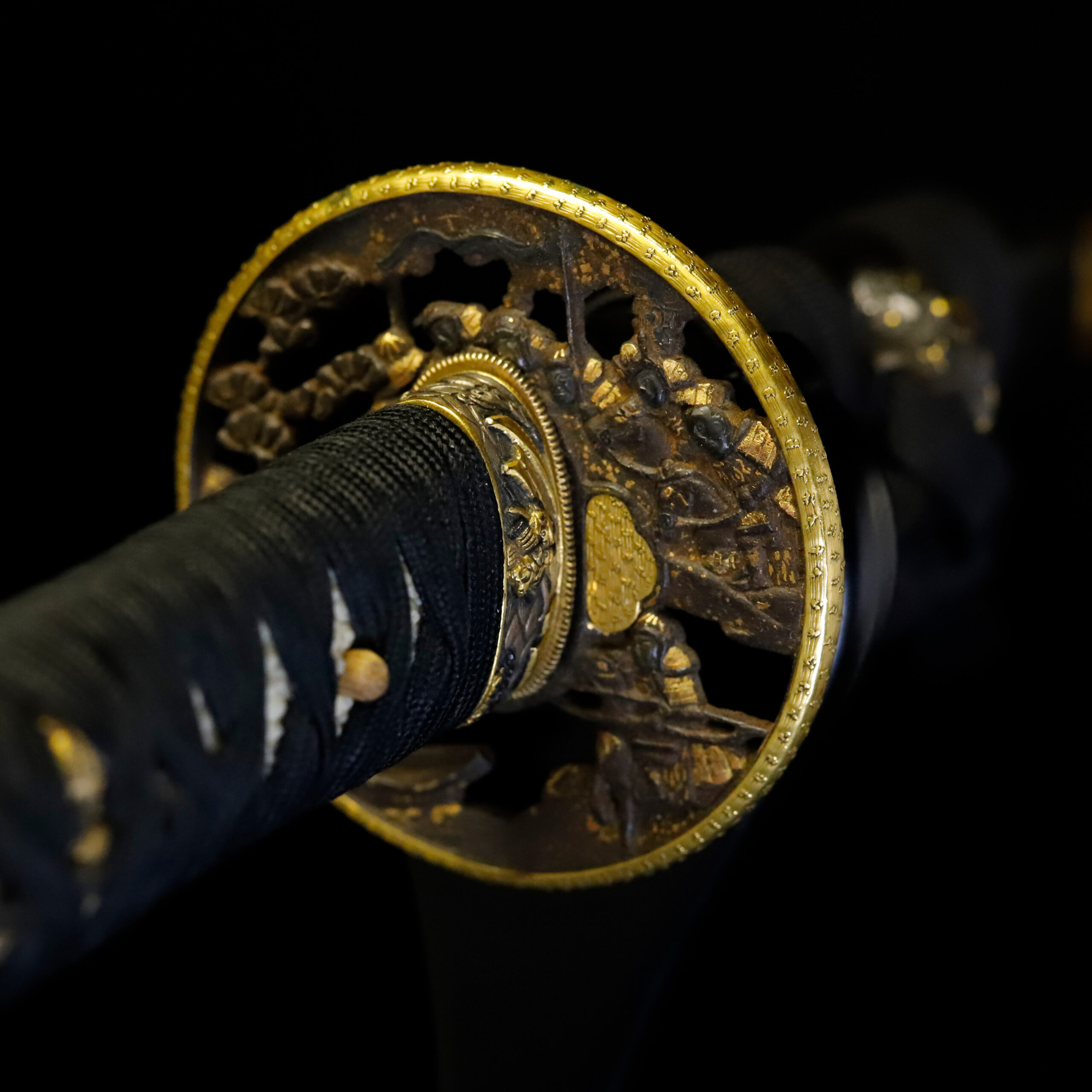
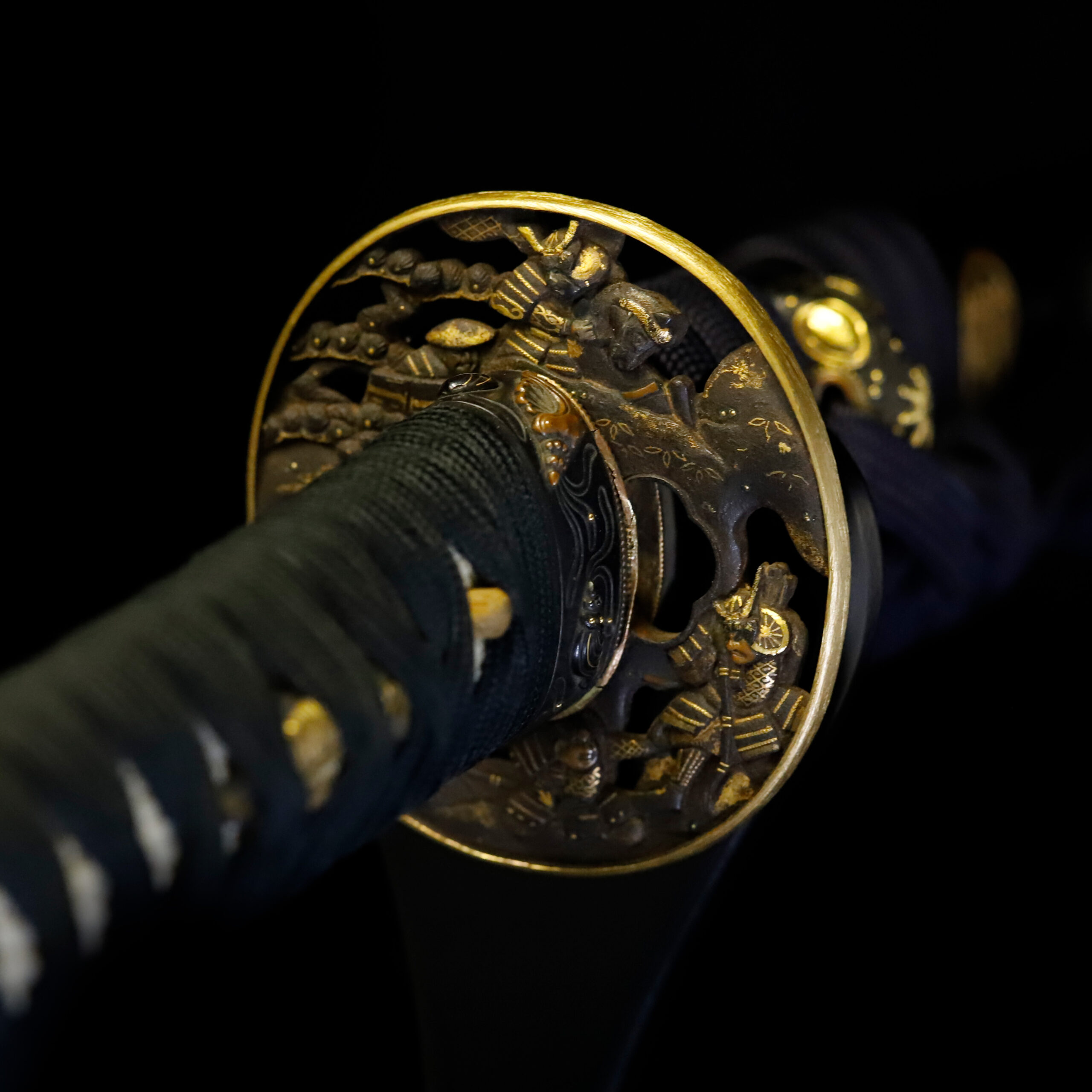
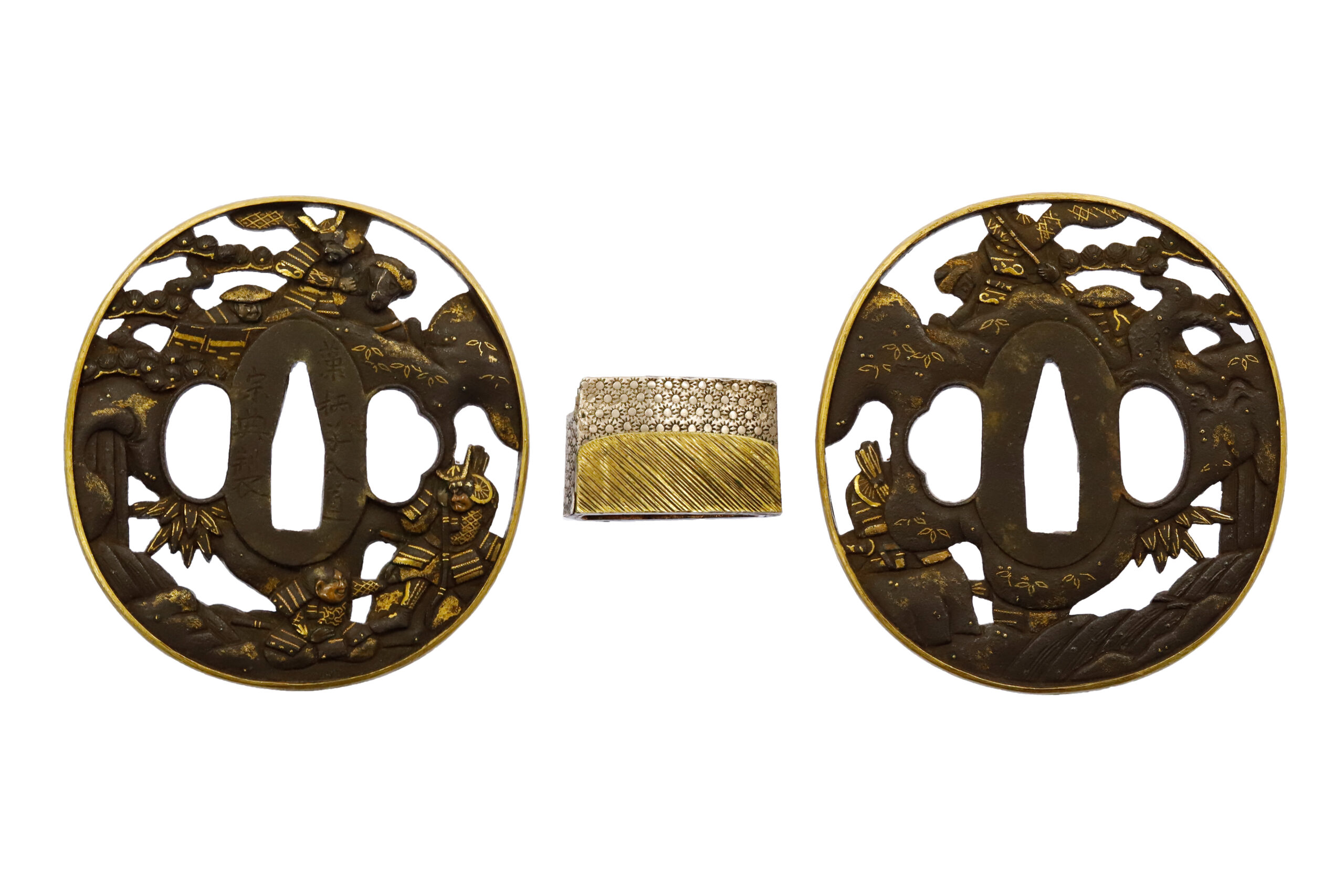
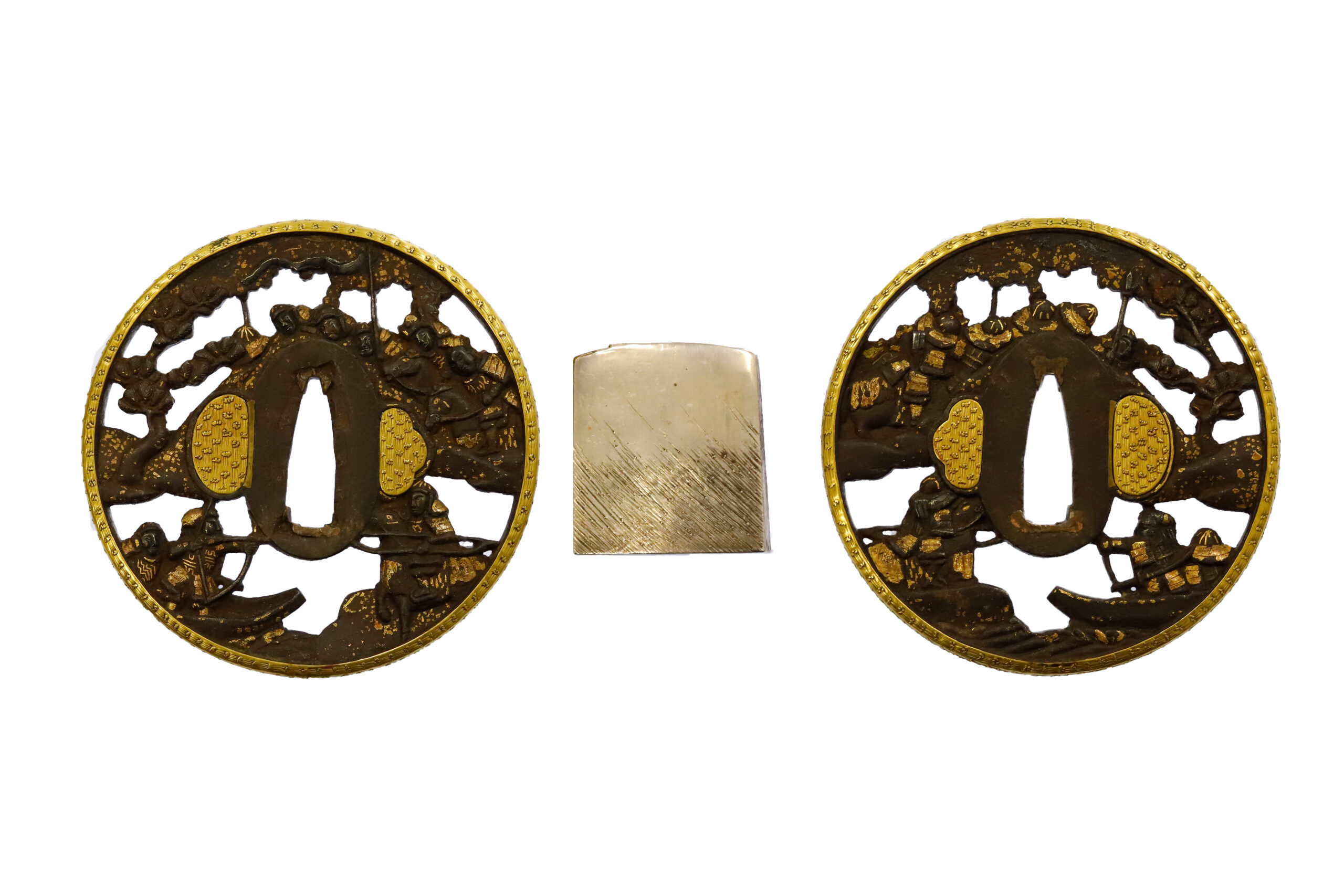
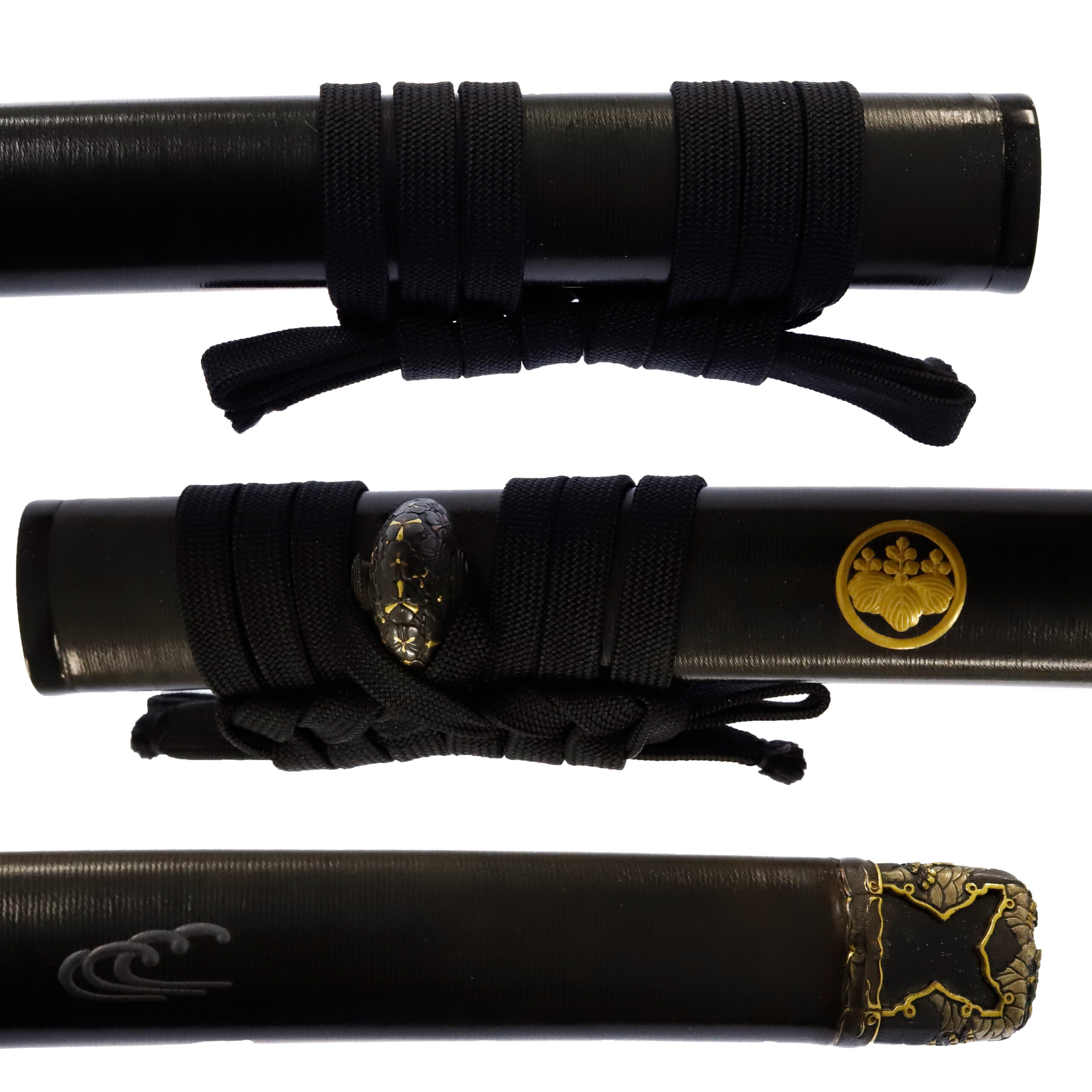
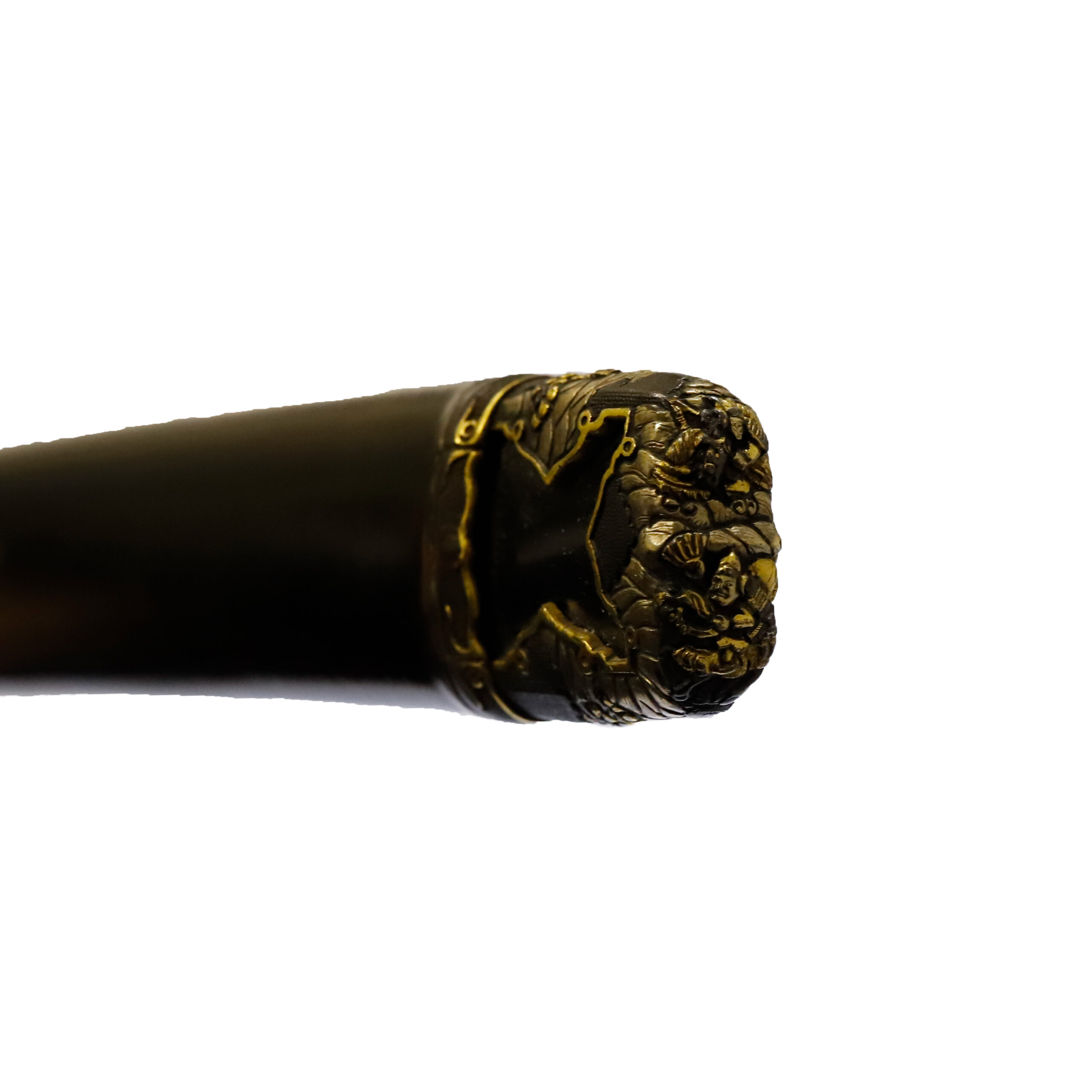
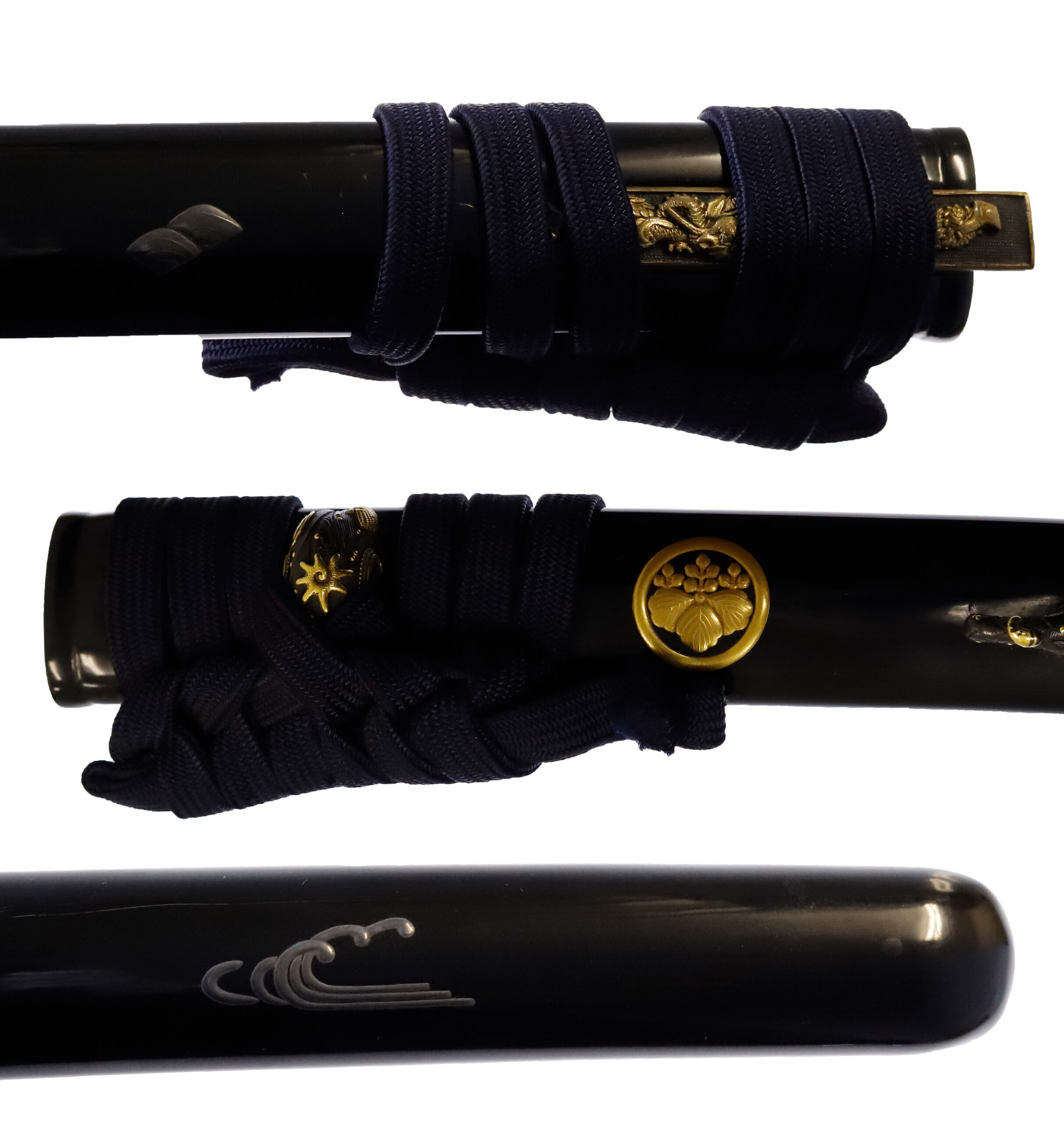
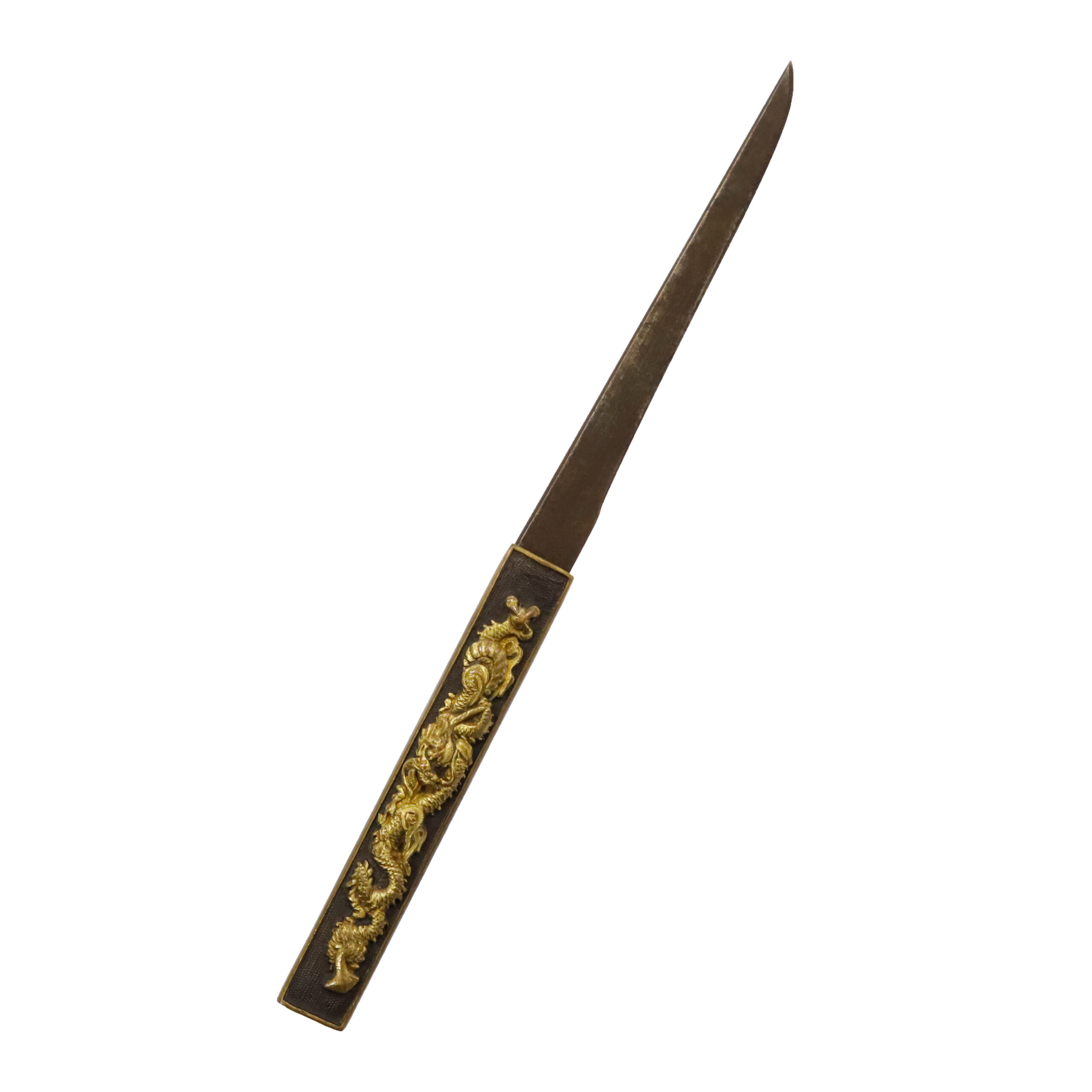
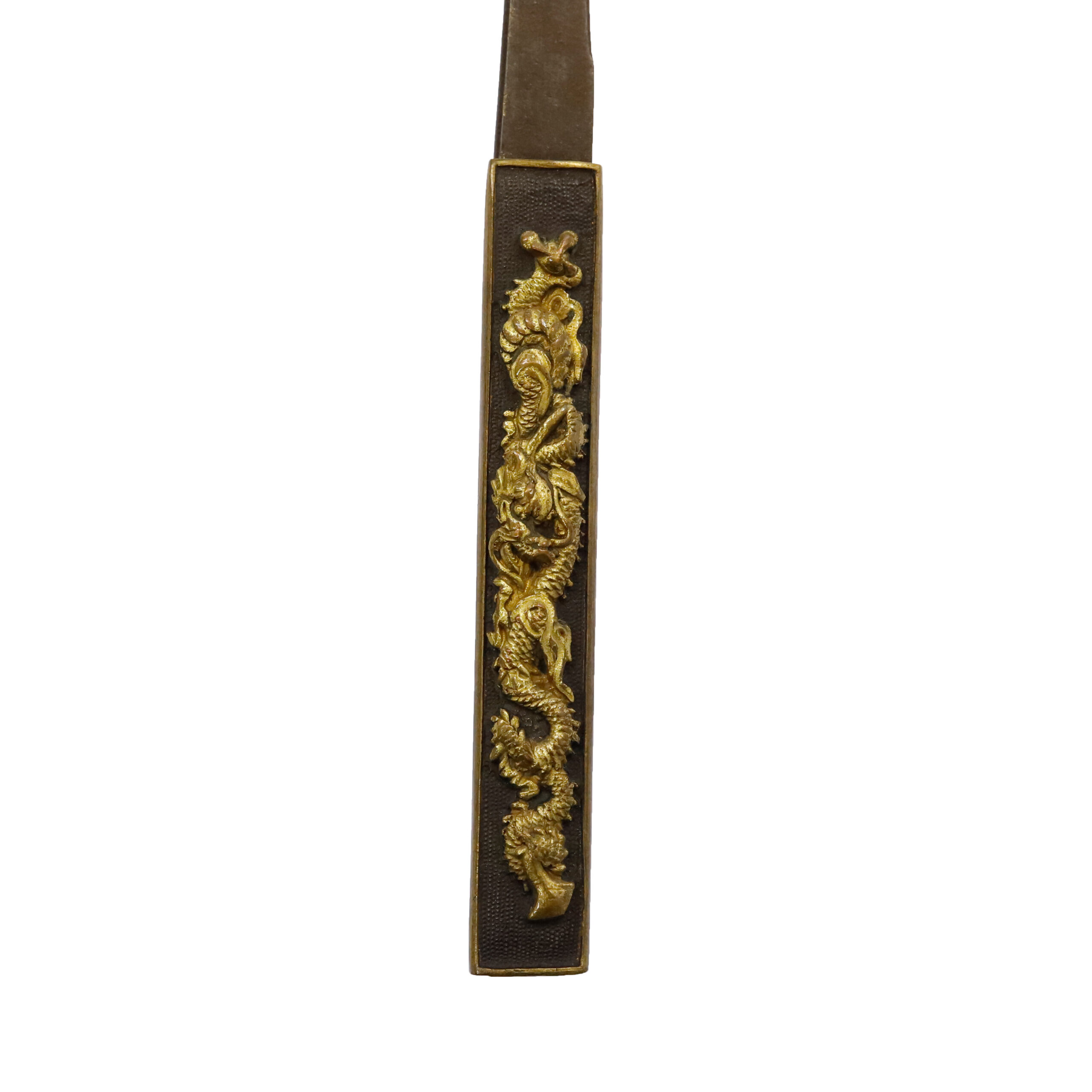
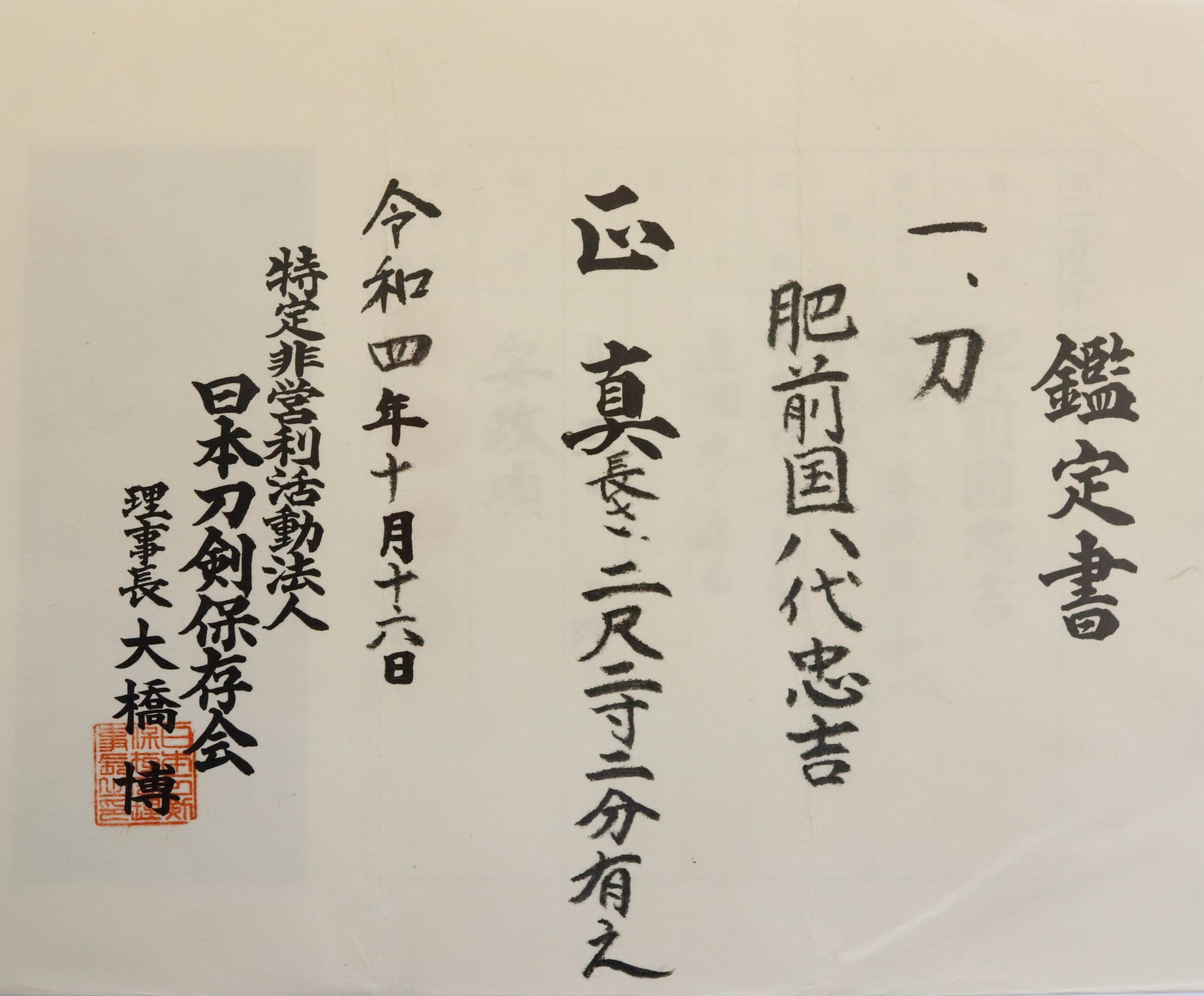
■Katana attributed to 8th gen Tadayoshi This blade was signed by Hizen Koku Tadayoshi (肥前国忠吉). The maker’s name Tadayoshi lasted nine generations during the Edo period. According to its NTHK’s appraisal, it was made by the 8th- gen Tadaysohi (八代忠吉) during the Ansei era (1855-1860). Among other generations of Tadayoshi, the eighth-gen was a renowned figure and mastered a high level of craftsmanship passed down from the previous generations. All the generations of Tadayoshi served Nabeshima clan, which controlled Saga domain (Today’s Saga prefecture). The 8th-gen Tadayoshi was born as the son of Furukawa family in Saga domain in 1801. He was eventually adopted by the 7th-gen Tadayoshi, and he changed his name to Hashimoto Shinzaemon (橋本新左衛門). He took over Tadayoshi school from the 7th-gen in the 13th year of the Bunka era (1816). The domain acknowledged his skill, and he played a vital role in modernizing the weaponry of Saga domain. In 1850, he was in charge of making a cannon for the domain because of his refined blacksmithing. He died at 59 in the 6th year of the Ansei era (1859). The first gen Tadayoshi school The first-gen Tadayoshi was born and raised in the Saga domain. In 1596, under the domain’s order, he went to Kyoto to learn the sword-forging technique from Umetada Myojyu(埋忠明寿), one of the greatest swordsmiths in the early Edo period. He improved his craftsmanship and returned to the Saga domain two years later (1598). The first head of the Nabeshima clan, Nabeshima Katsushige, appreciated the work of the first-gen Tadayoshi very much. Then, Katsushige appointed him as his Okakaekaji, a swordsmith who exclusively forged swords for a specific domain or clan. And Tadayoshi started to stay near Saga castle, which is the headquarter of the Nabeshima clan. And, he founded Hizen Tadayoshi school, which trained more than 100 swordsmiths during the Edo period. 5th gen Tadayoshi is one of them. Hizen Domain The swordsmiths in the Hizen province worked under the auspices of the Nabeshima clan like Tadayoshi. They could produce beautiful blades with Konuka Hada, whose steel surface is very smooth. This Hada is one of the most well-known characteristics of the blades produced in Hizen province. The swordsmiths also used and mixed carbon steel made in western countries. Since Hizenkoku had been flourishing through international trading, it had easy access to western carbon steel. ■Wakizashi attributed to Takada Teruyuki This blade was attributed to Hoshu Takada Teruyuki (豊州高田輝行) during the Enpo era (1673-1681: the mid-Edo period), according to NTHK’s appraisal this December. We are expecting to receive its authentication paper by next January 2023. Takada school was founded by Takada Tomoyuki in Takada village, Ohita prefecture, during the Nanbokucho period. (1334-1338 A.D). Tomoyuki went to Bizen province(today’s Okayama prefecture) to master the sword-forging techniques of BIZEN and came back to the village and trained his apprentices. That is how Takada school started. Those who forged swords in Takada village before the Edo period are called Taira Takada and Fujiwara Takada during the Edo period. This blade is categorized as a Fujiwara Takada sword. During Sengoku Period(the warring state period: from late 15 C to late 16 C), the Takada school forged many swords for feudal lords on Kyushu island. It is said that the reputation of the blades forged by Takada school was close to MINO or BIZEN swords, two of which are the most famous sword forging places. This highly skilled sword forging technique was passed down to later generations in the Edo period. Generally speaking, Kyushu island was prosperous in sword-making because of the long trading history with Asian countries. To gain an advantage in trading, many feudal lords on this island fought against each other. Takada school was able to receive many orders as the demand increased among those lords. The material of Japanese swords(high-quality iron sand and charcoal) was abundant in the mount Sobo Katamuki, located near Takada village. We believe Takada school prospered because of its geographic location and natural resources. *Please keep in mind that there is one noticeable Kitae Kizu near the straight grove and black rust on the Mune (backbone of the blade). ■What is Daisho? Daisho is a pair of two Japanese swords Samurai carried. During the Edo period, having Daisho in public places was considered social status for Samurai. Furthermore, Samurai were required to wear them under the law back then. Daisho is written as 大=Big and 小=Small. Dai part means Katana, and Sho part means Wakizashi. -Katana Jimon(Jihada) -Katana -Wakizashi Fuchi-Kashira The design of this Katana’s Fuchi Kashira is the Gunsen Zu (軍船図). It depicts ships used in naval battles. You could find Samurai warriors heading into battle on ships. And this theme is the same with this Katana’s Menuki as well. Uniquely, the Kashira part is designed with a Kabuto (兜, Samurai helmet) motif. This helmet has a gorgeous appearance of Suji Kabuto (筋兜) and has a dragon-designed front decoration. As described below, this Daisho Koshirae has a principal theme: Kassen Zu (合戦図). It depicts a scenery of a battlefield. Samurai warriors wear armor and bring weapons. They have stern expressions, and their brave appearance on the battlefields are expressed in detailed sculptures. Please continue to enjoy the following descriptions. The Wakizashi’s Fuchi Kashira is decorated with seashell patterns. Various types of shells, such as snails and bivalves, are designed. It is called the Kai Dukushi (貝尽くし). This pattern is a combination of different types of seashells. Bivalves, especially clams, their shells cannot be combined with any other clam’s frame; therefore, its pattern represents happy marriage. Seashell is called Kai (貝) in Japanese. Because of its pronunciation, the seashell has another meaning. There is a word Yarigai (やりがい, worthwhile). As a part of this word has the same accent as Kai (貝 is read Gai in some cases), Japanese people found this meaning. Also, since seashells are hard and combine only with their pair, people thought it represented a robust defense. Due to these meanings that inspire warriors who go to the battlefields, Samurai might have loved this motif. It has often been combined with a seaside scene or wave pattern. We think this design matches well with Katana’s Fuchi Kashira Gunsen Zu theme. Tsuka and Menuki As mentioned above, this Katana’s Menuki has the same theme as the Fuchi Kashira. In addition, you could find this theme on the Kojiri (鐺, a metal fitting that protects the tip of a scabbard). About Wakizashi’s Menuki, although we cannot see its entire shape, we could find a small chrysanthemum flower. And it seems golden paint was initially applied to its surface. A long time ago, the chrysanthemum was used as a medicine for obtaining a long life in the continent, and it was brought to Japan with this thought in the Nara period (648-781). Chrysanthemum symbolizes autumn, and people have greatly appreciated it since ancient times. As its petals form radially, the chrysanthemum has been likened to the sun. That is why this flower pattern is treated as the symbol of perpetual youth and longevity or good health. These ideas might have inspired this Menuki. Tsuba and Habaki You see the figure of fighting Samurai warriors. Both Tsubas have the same theme: the Genpei Kassen (源平合戦). It does not refer to one battle. This is a collective term for the civil wars heated in various parts of the country that continued over six years from 1180 until 1185. It is also called the Jishou Juei-no Ran (治承・寿永の乱). This was the battle between the Minamoto (源) clan (Genji family) and the Taira (平) clan (Heike family). By the call of Mochihito Ou (以仁王), many Samurai raised armies to overthrow the Taira family. It was the trigger of this protracted conflict. Mochihito Ou was unfortunately beaten by the Taira family and passed away in 1180. However, after that, Minamoto family side Samurai defeated the Taira side armies one after another. Finally, the Minamoto side won the battle and overthrew the Taira clan in 1185 at Dan-no Ura (壇ノ浦). It was the final battle of the Genpei Kassen, which led to the destruction of the Taira clan, who reached the height of glory. You would find the engraved inscription on the front of Wakizashi’s Tsuba. It is written as follows: 藻柄子入道 宗典製 (Mogarashi/Souheishi Nyudoh Souten Sei). Therefore, it shows this Tsuba’s maker is Mogarashi/Souheishi Nyudoh Souten (藻柄子入道 宗典). It is said he worked actively in the middle of the Edo period. He lived in Hikone (彦根) area, Oumi-no Kuni (近江国, today’s Shiga prefecture). He was good at the Takabori Iroe (高彫色絵) technique and originated the Hikone-Bori (彦根彫) style. He trained many disciples and played an active role in his longevity over 75 years old. The second Souten was the first’s son. He followed the first’s designs and created lots of excellent Tsubas. It is said many fake Souten Tsubas were made; it shows his works were highly appreciated. As additional information, please focus on the Mimi (耳, edge) part of each Tsuba. Both Tsubas’ Mimi parts are framed with golden metal. This decorative technique is called the Kin-Fukurin (金覆輪). It gives a gorgeous beauty to works, as seen in these Tsubas. It also has practicality, such as preventing the wear of the edge part. Also, it prevents wear and tears on the Kimono (着物, traditional Japanese costume) if the edge damages it by touching the cloth. Saya Pine and wave patterns are arranged alternatively on both scabbards. Also, you would find a golden crest. It is the Maru-ni Gosan Kiri (丸に五三桐), and we believe it was designed here as a family crest. The Kiri (桐, paulownia) pattern is generally composed of three standing straight inflorescences and three leaves. The number of blooming flowers at each inflorescence means the ranks of this design. The Gosan-no-Kiri (五三の桐) pattern is a popular design that the paulownia motif is used. This pattern was once used by the imperial family and people in authority at that time. Today, it is permitted to use by ordinary households and is appreciated as their family crests. According to a tradition, the Houou (鳳凰, Fenghuang, a kind of sacred beast) rests its wings at the paulownia tree; therefore, it has come to be regarded as a holy plant. About the pine tree pattern, since pine trees keep their green color throughout the years by withstanding severe heat and cold, people thought this plant pattern represents eternal youth. Furthermore, its color is called Tokiwa-Iro (常盤色, evergreen trees’ dark green color with brown), and pine trees have another name “Tokiwa-Gi (常盤木).” Tokiwa means immutability, so Tokiwa-Iro is a color that praises green with a wish for longevity and prosperity. And the wave pattern is intentionally drawn here, considering the combination with the theme of other sword mountings: Kassen Zu and Gunsen Zu. Also, this design itself has the following meanings. As waves’ movements continue endlessly, the wave pattern represents eternity, immortality, longevity, birth, etcetera. Also, since tides repeatedly change the shape and terrain of rocks, some people hoped for a strong will by using this motif. People used this pattern wishing for an indomitable spirit to rechallenge time and time without giving up. If we look at it this way, we can see that each design is deliberately placed there. Kozuka A Kozuka is attached to the Wakizashi’s handle, and a Kogatana (小刀, small knife) is stored. The dragon is designed and colored with golden paint. If you focus on this dragon’s hand, you will find that it brings a ball-shaped object in its hand. It is the Nyoi Houju (如意宝珠, Cintāmaṇi); a fantasy jewel that fulfills any desire and gives out treasure, clothes, food, and drinks. Moreover, it heals illness and suffering, removes evils, purifies muddy water, and prevents disasters. It is said this magical item is taken from the brain of the dragon king. Initially, the dragon was an imaginary creature found in ancient foreign traditions or myths. Furthermore, it is regarded as a symbol of auspicious signs. Its body is likened to nine animals: antlers are deer, the head is a camel, eyes are demons, the neck is a snake, the belly is the Mizuchi (蛟, a mythical animal in Japan that looks like a snake and has a horn and four legs), scales are fish, claws are falcons, palms are tigers, and ears are cows. It was thought that the dragon would reign at the top of all animals because of its odd-looking appearance. The dragon design is often seen in sword mountings. We imagine lots of Samurai favored this dignified beast motif. Authentication Paper NTHK, also known as NPO Nihon Touken Hozon Kai, is the oldest organization for sword authentication of Japanese swords in modern times. It was established in 1910 during the post-Samurai era. They authenticated the Katana and the Daisho Koshirae on October 16th in the 4th year of the Reiwa era (2022) and the Wakizashi was authenticated on December 18th in the forth year of the Reiwa (2022). We are expecting to receive the authentication paper for the Wakizashi in next January 2023. Registration Number The Board of Education in Kouchi prefecture issued a registration paper for the Katana blade and that in Tokyo issued one for the Wakizashi.

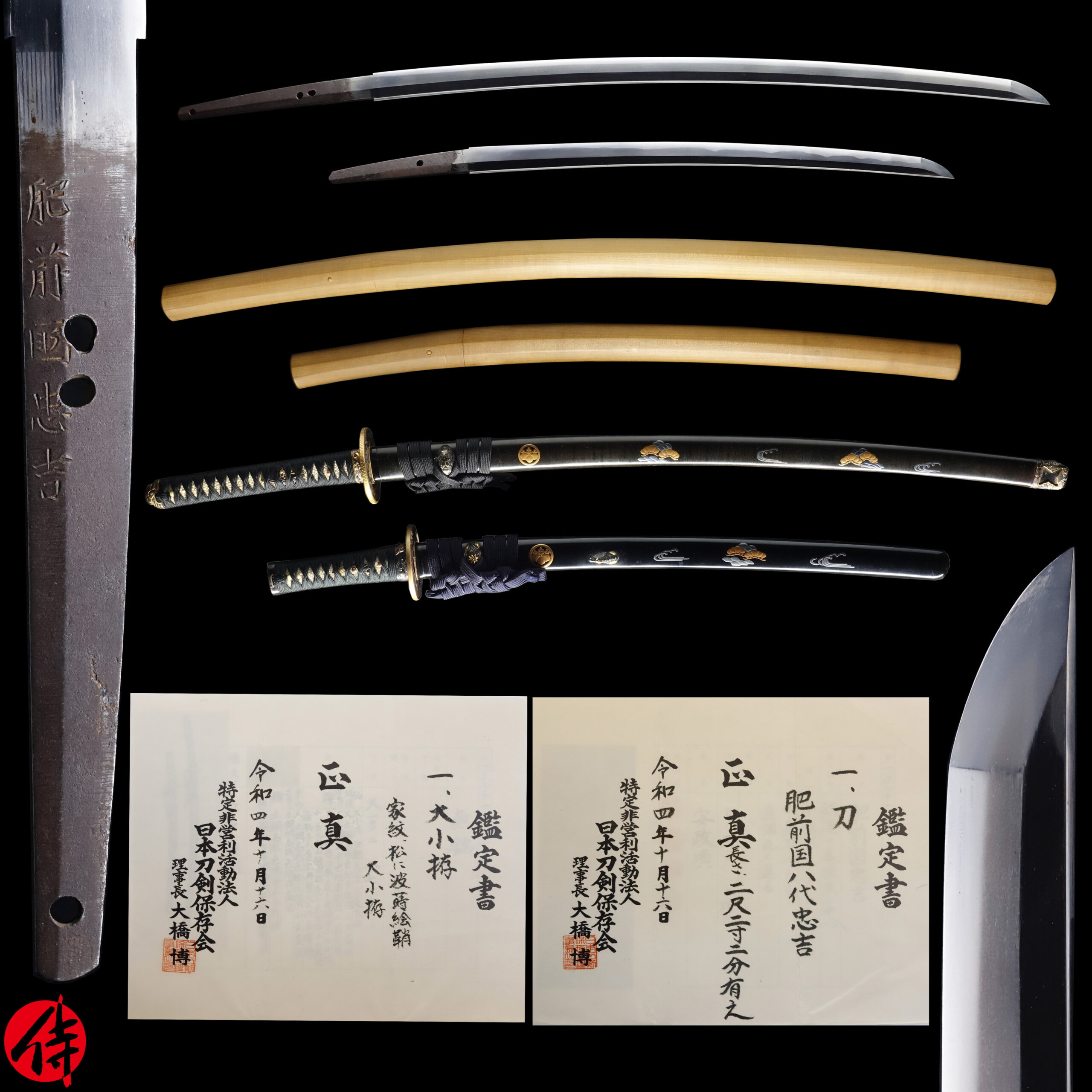
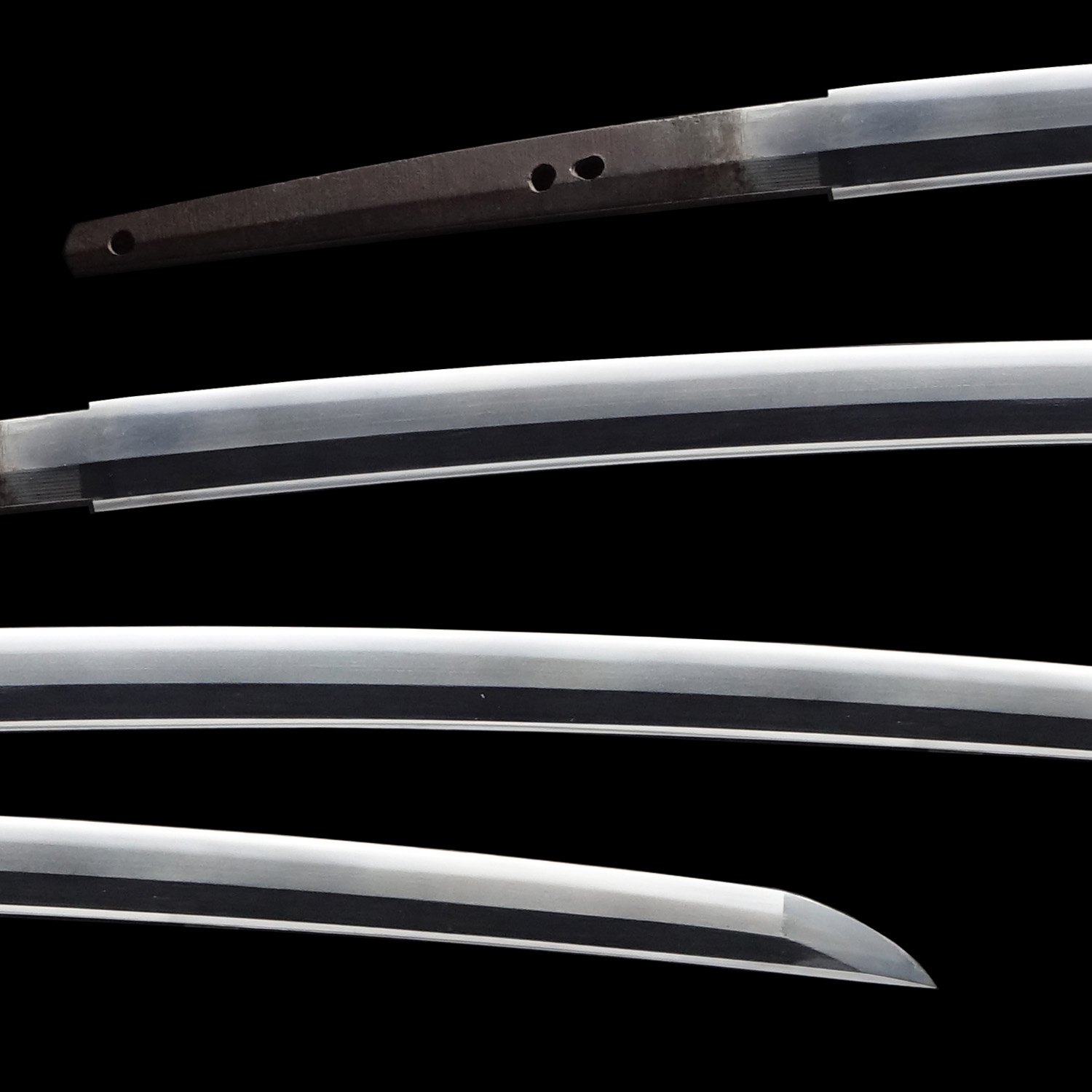
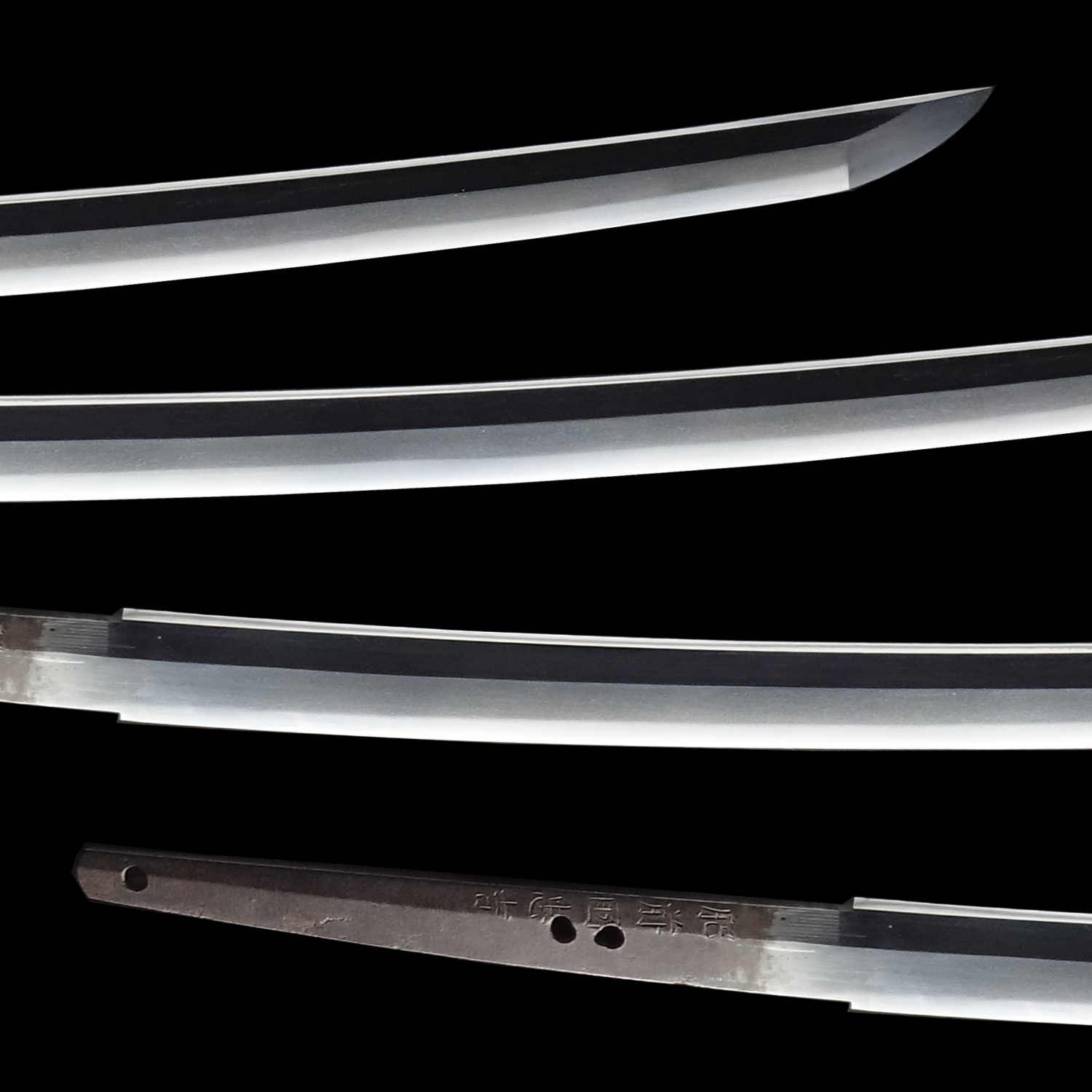
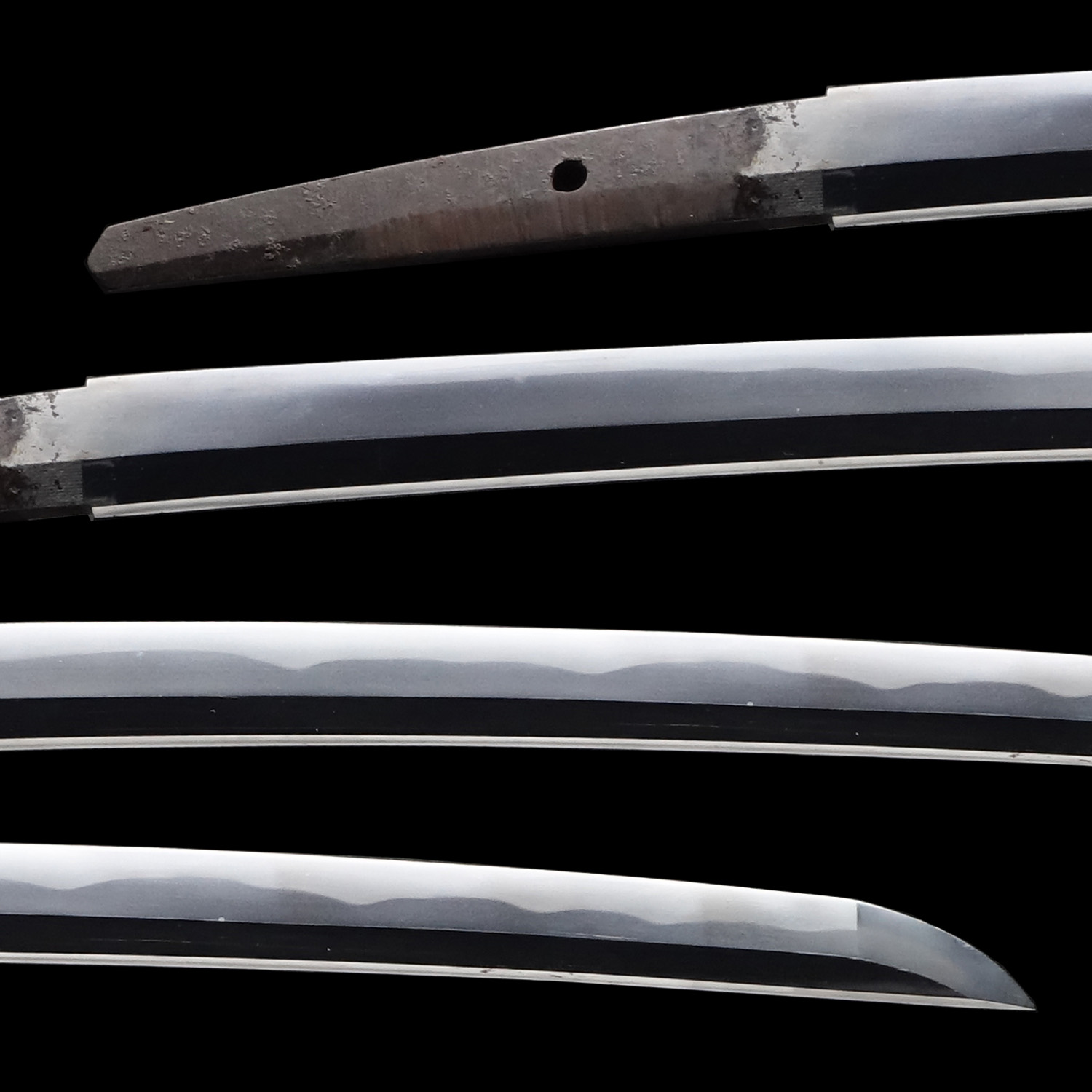
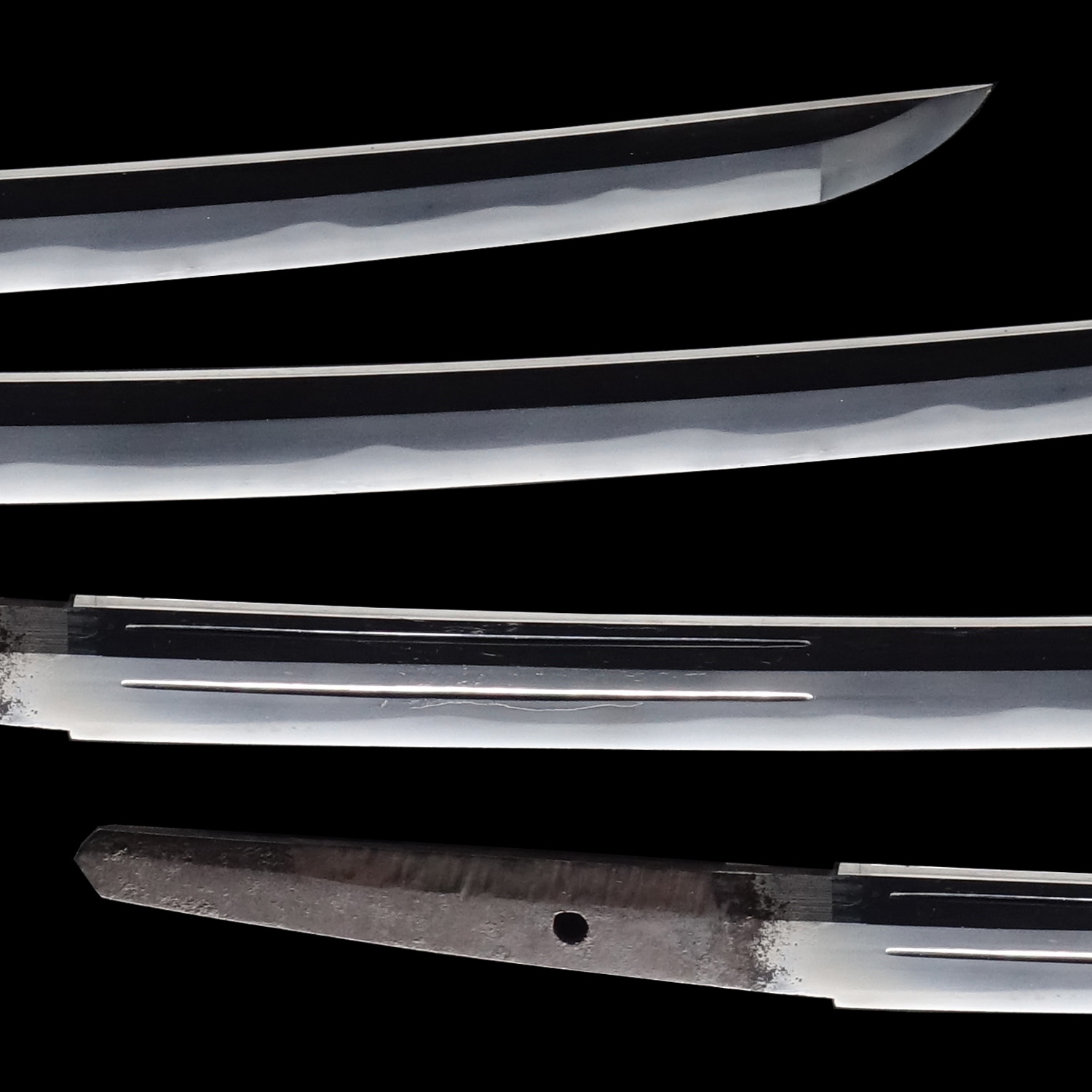
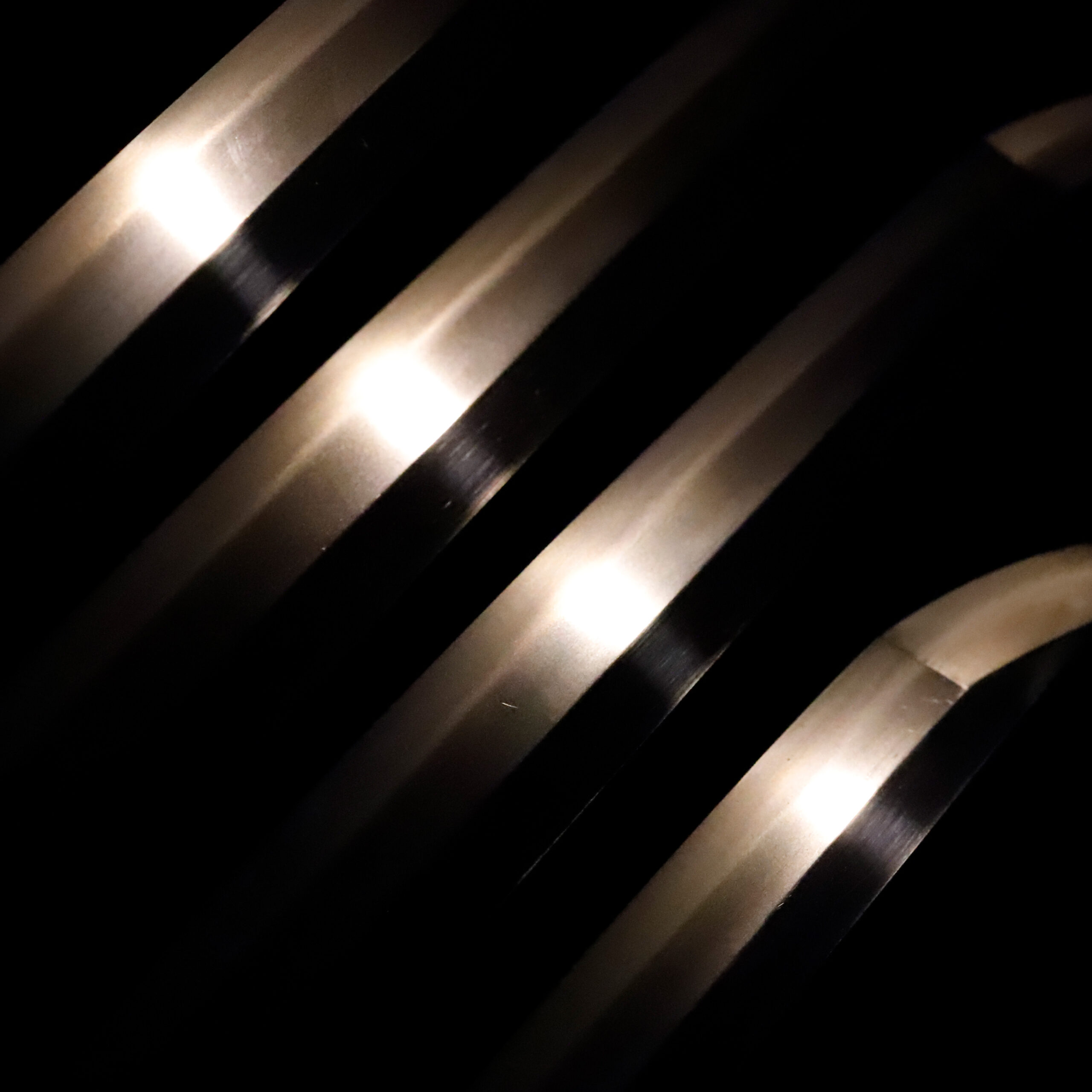
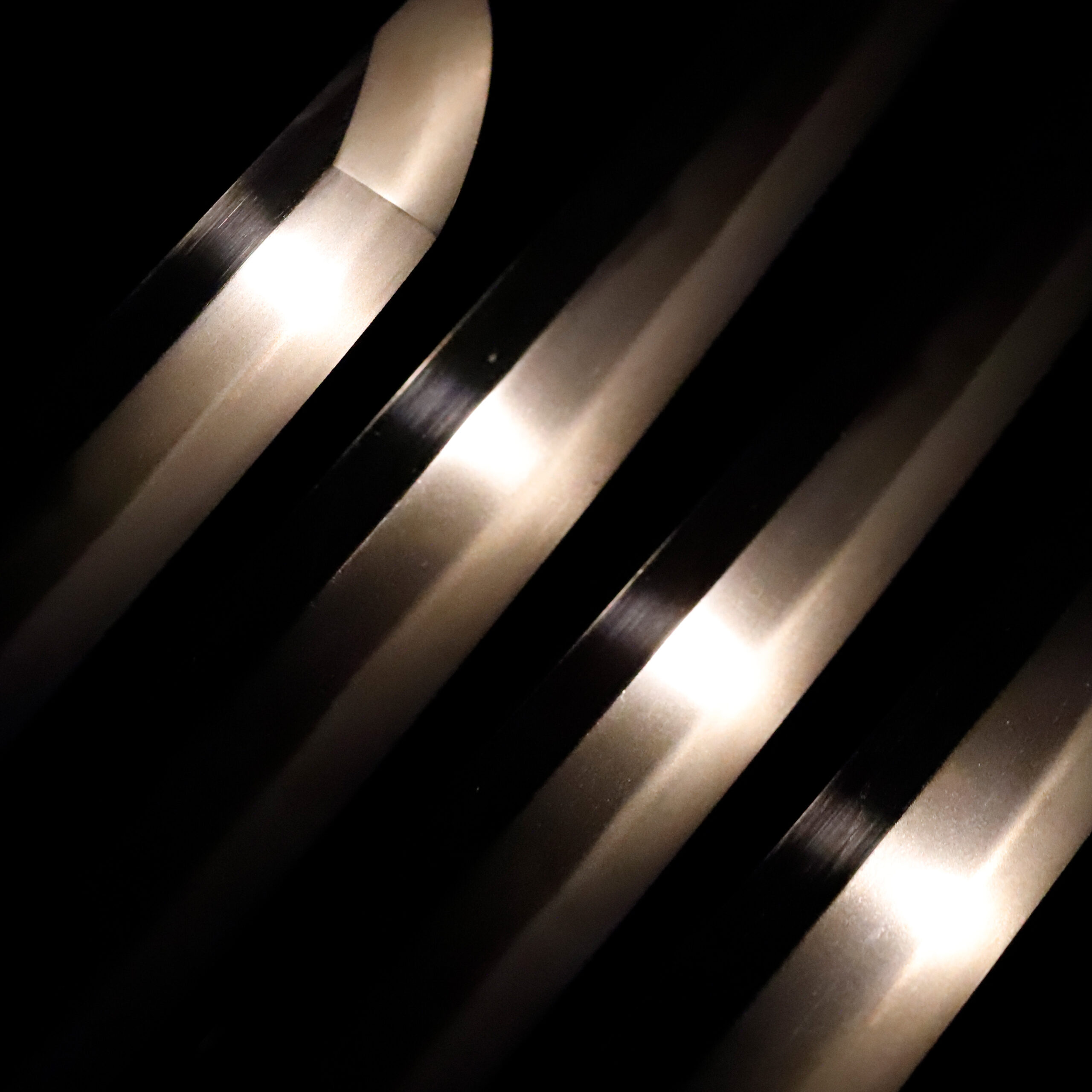
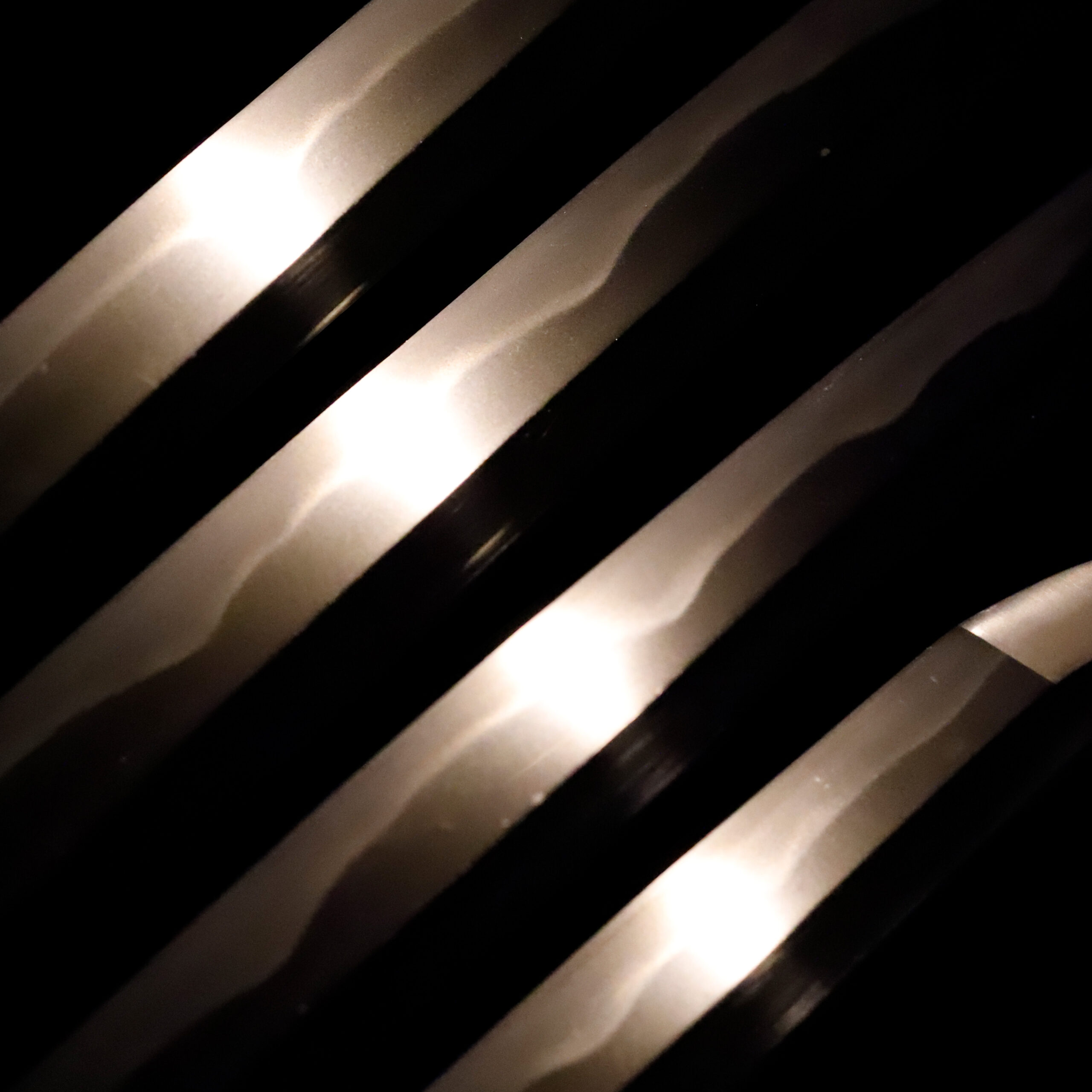
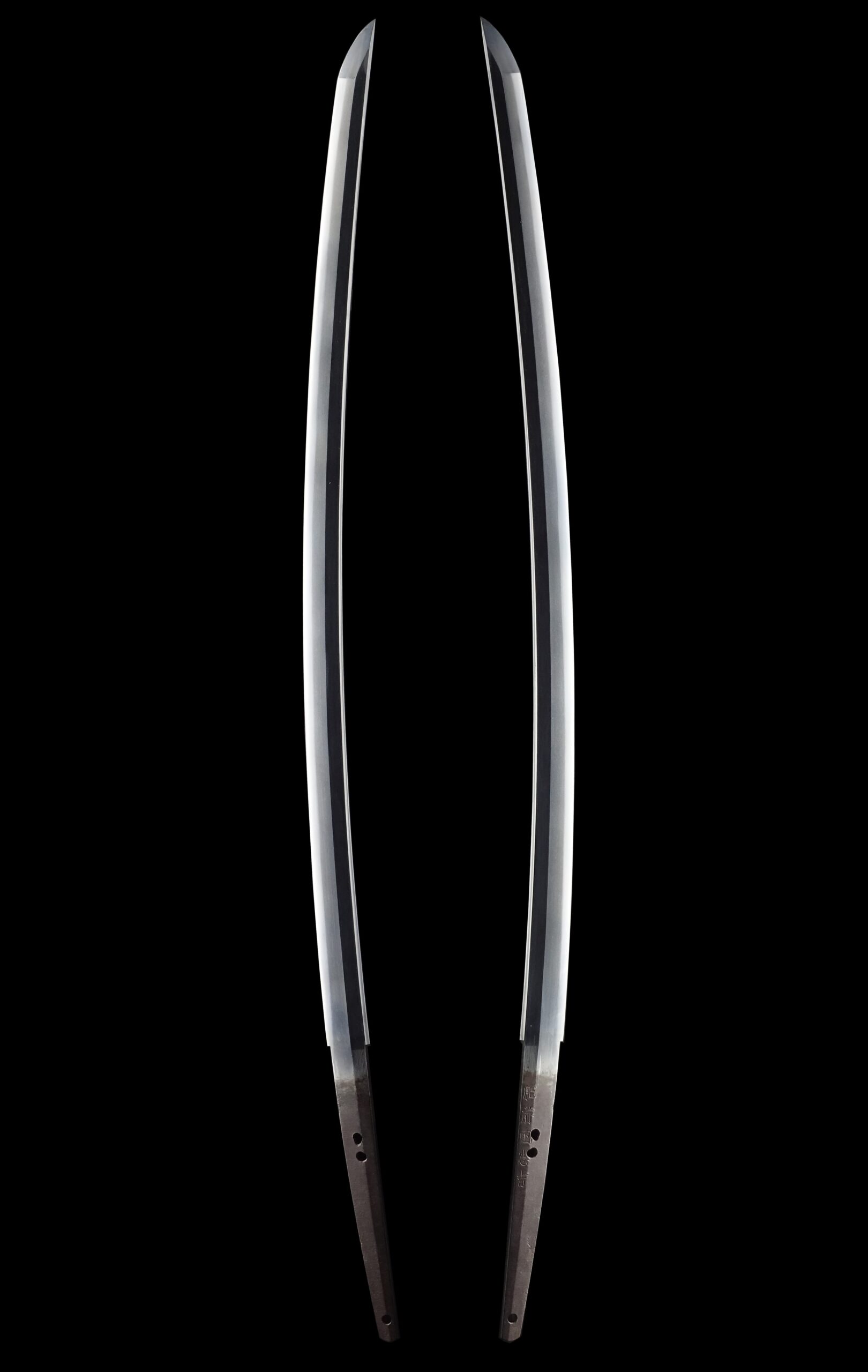
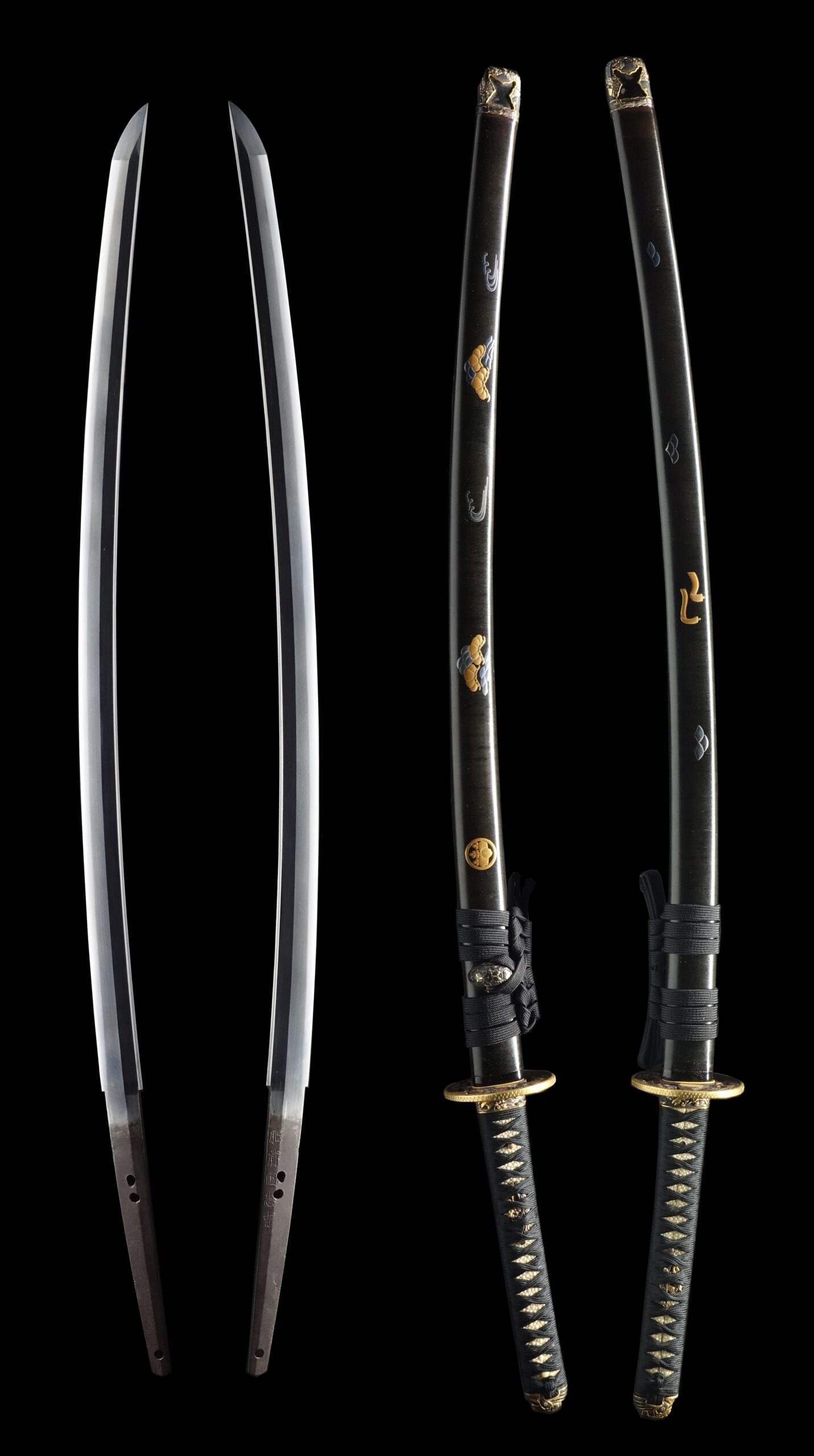
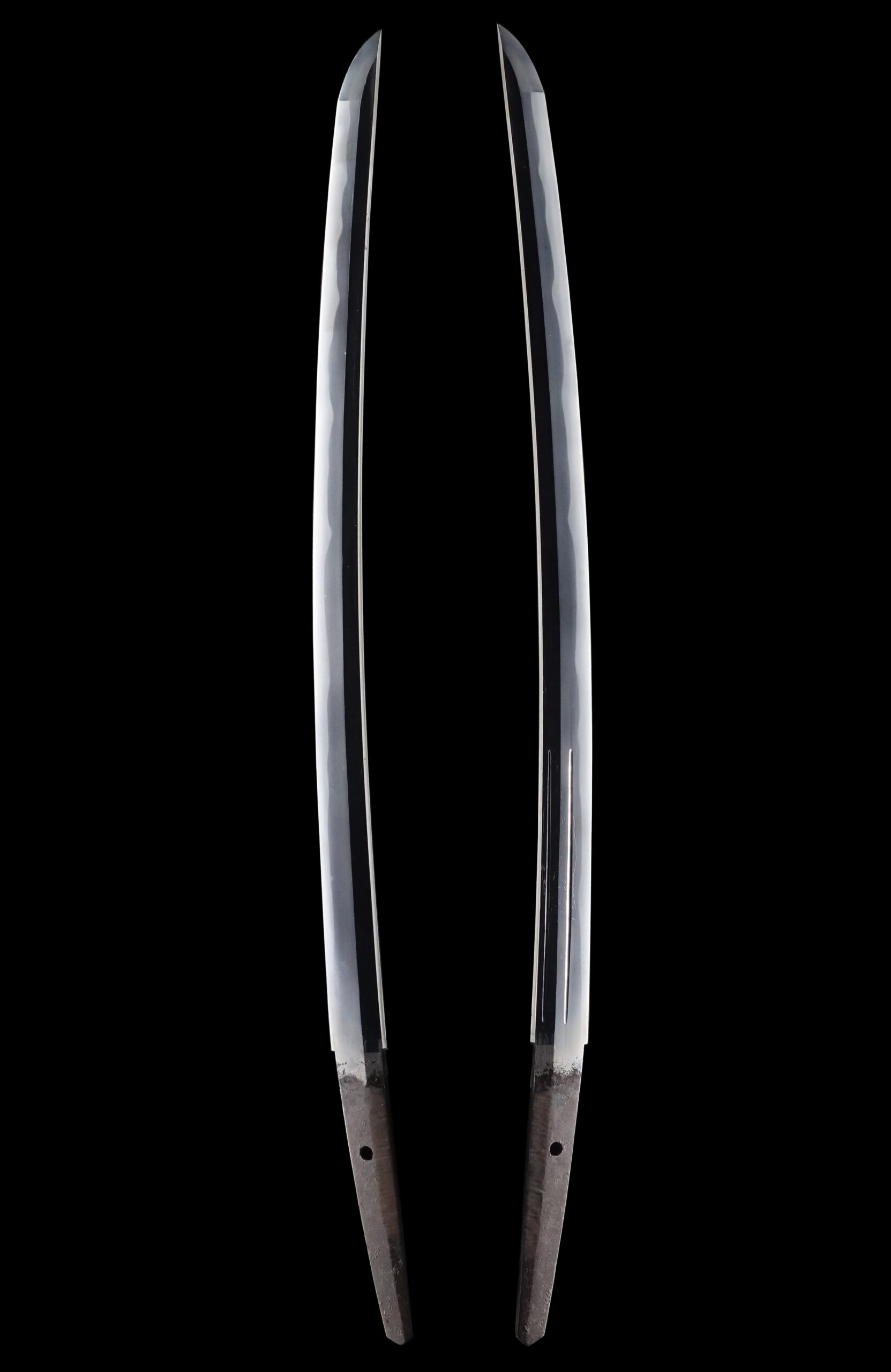
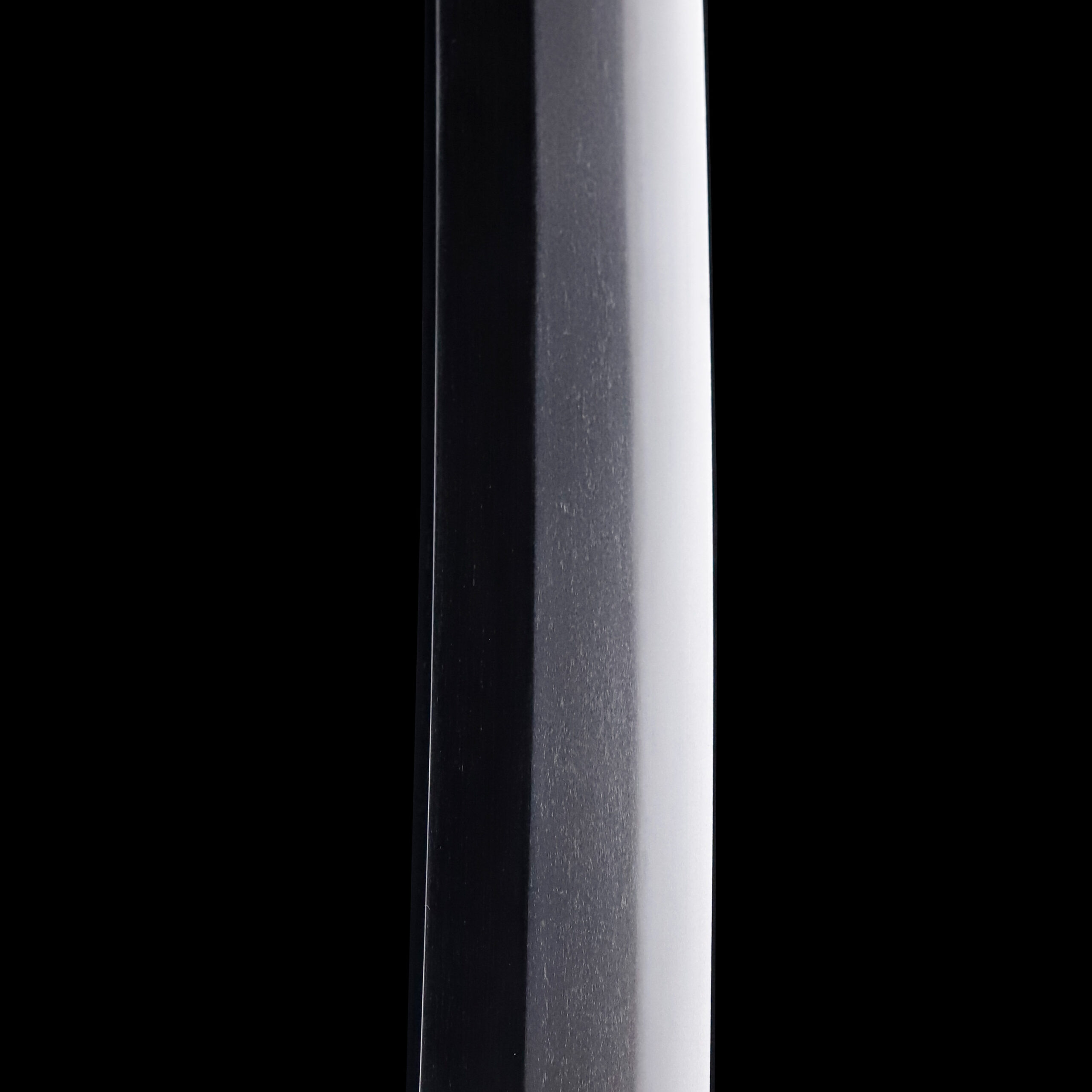
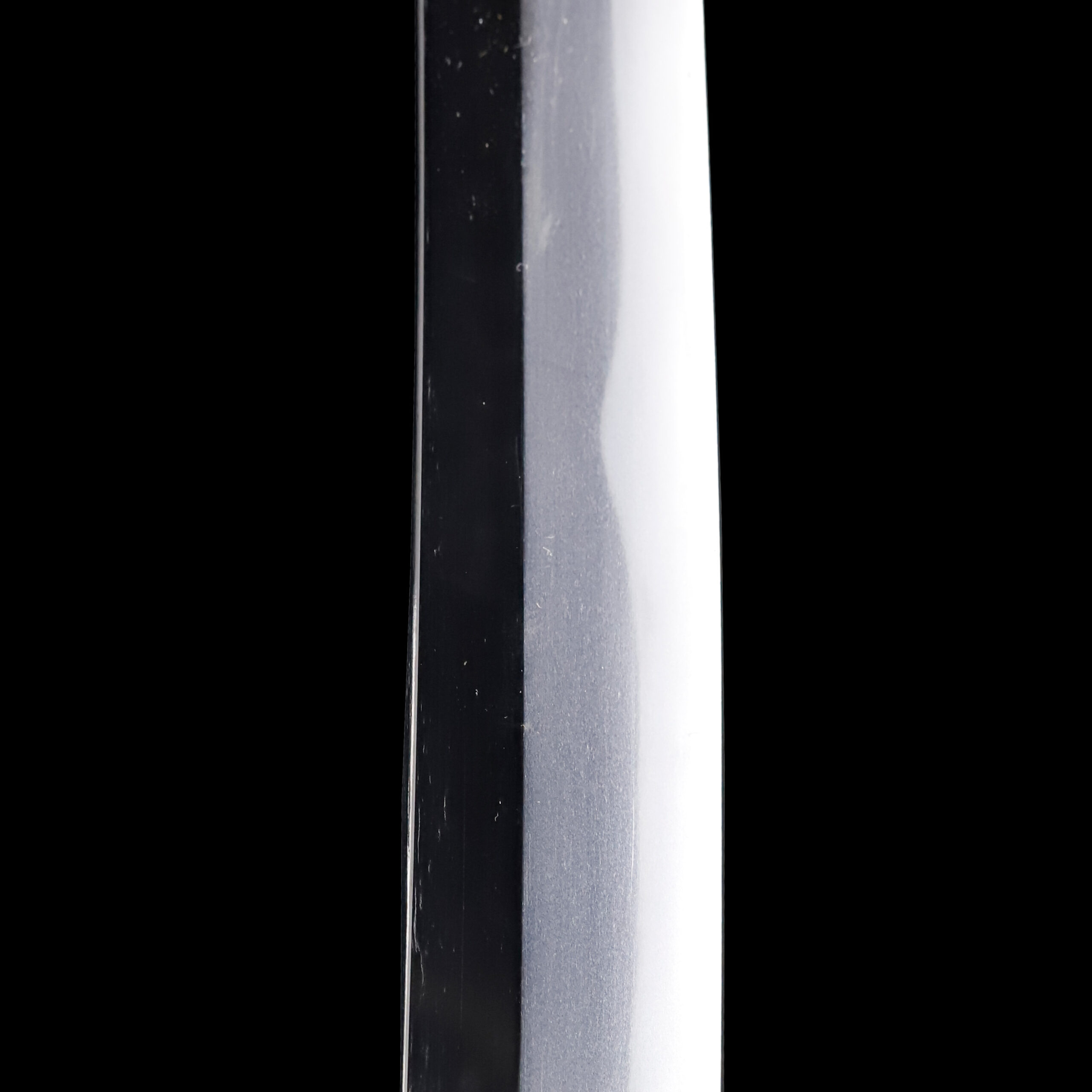
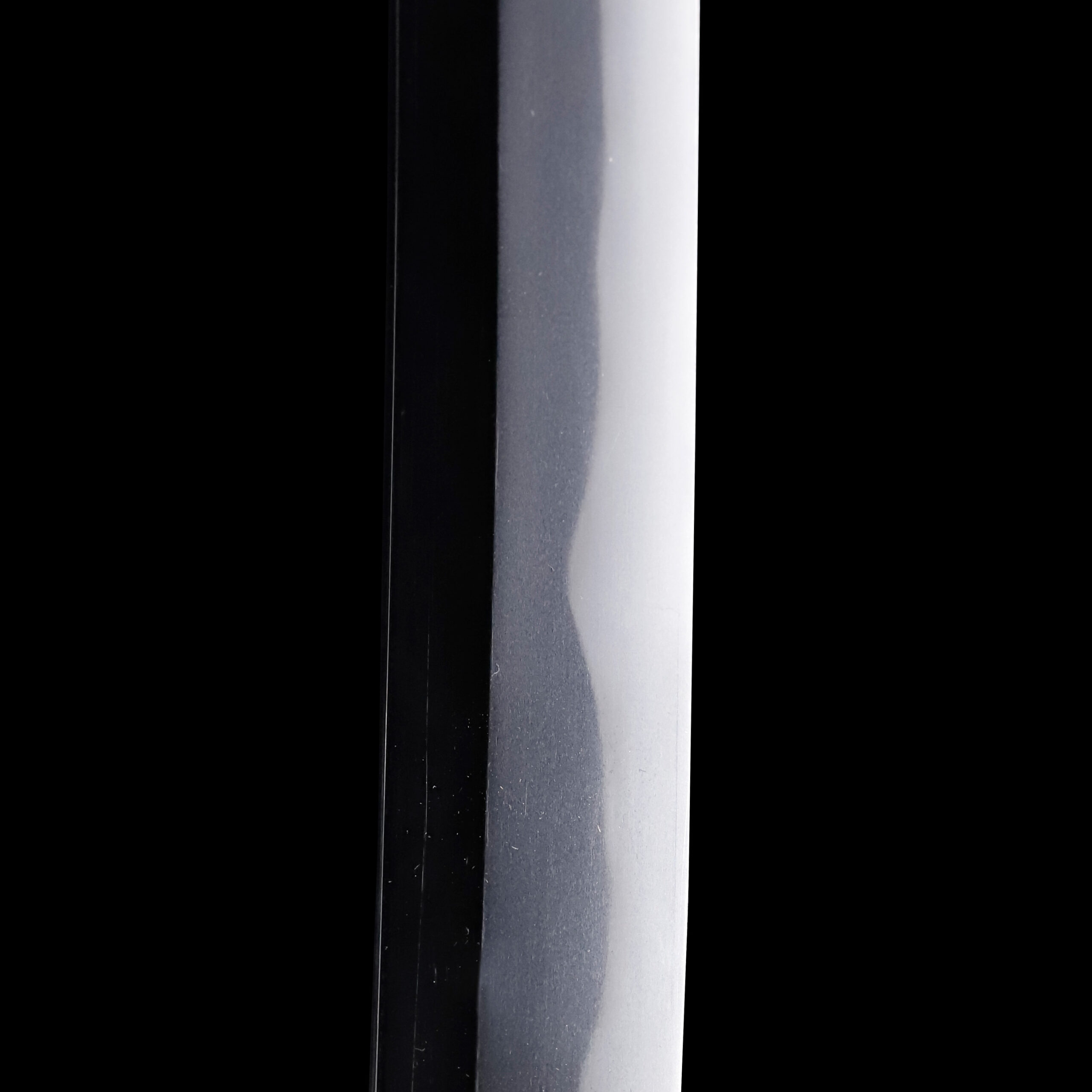
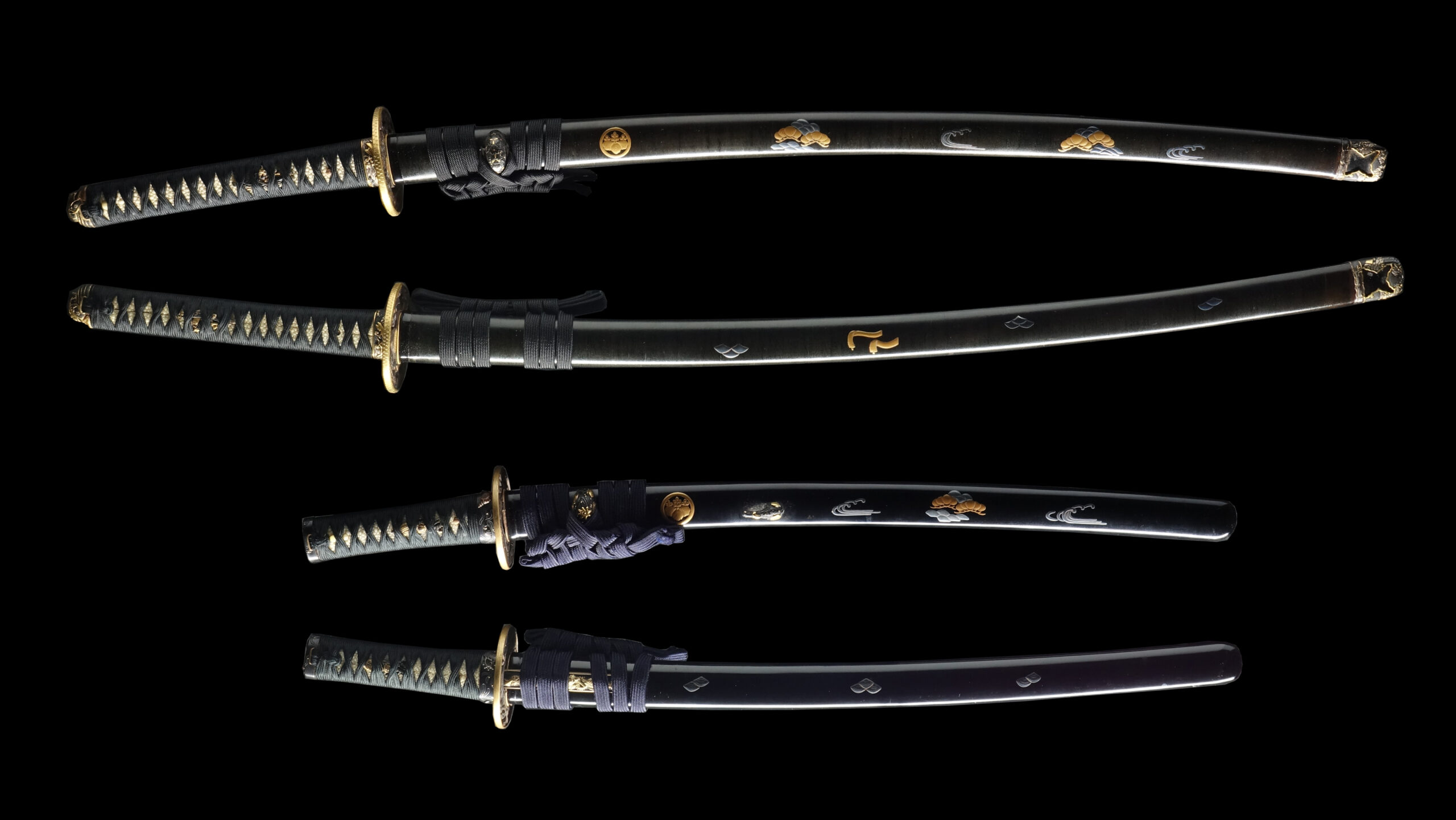
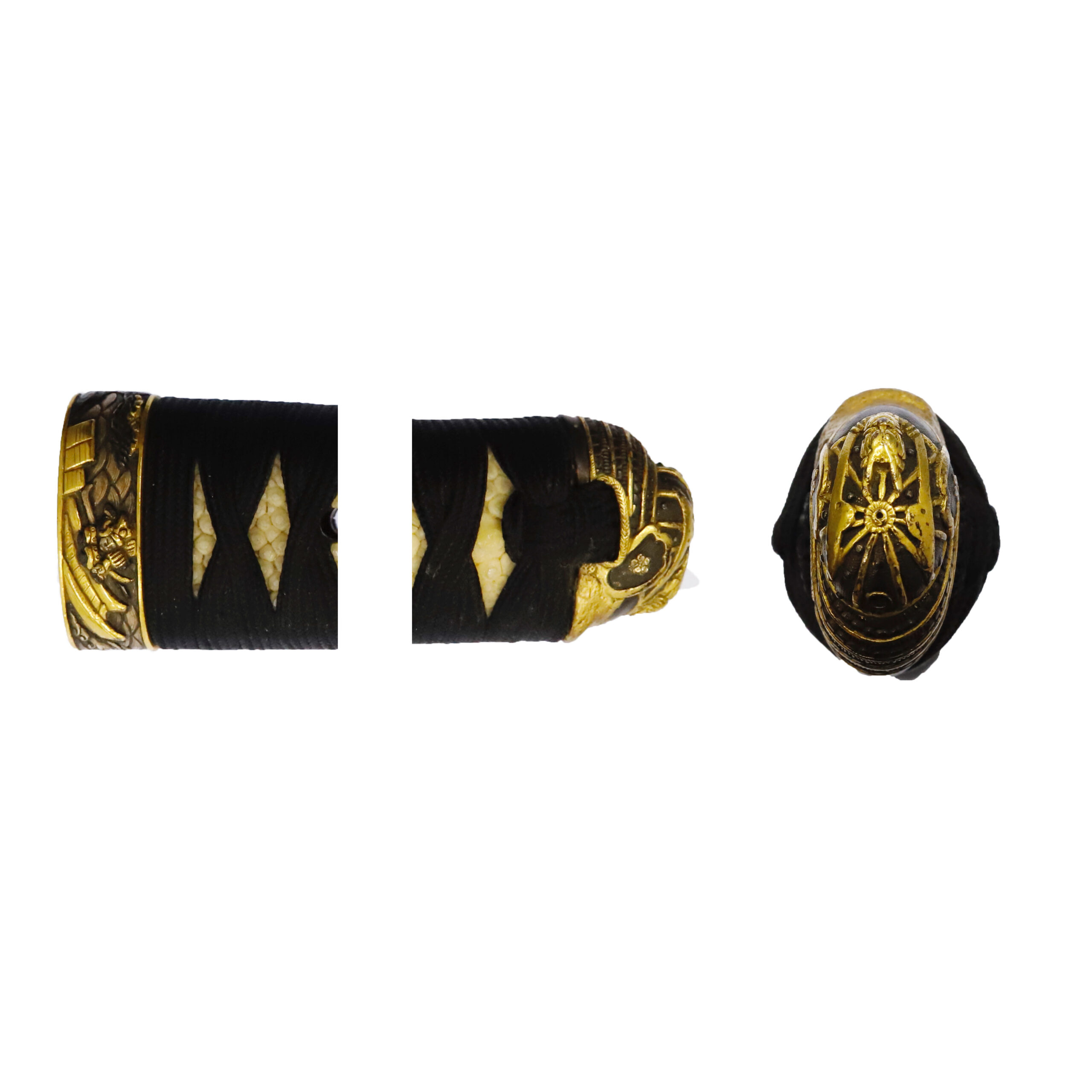
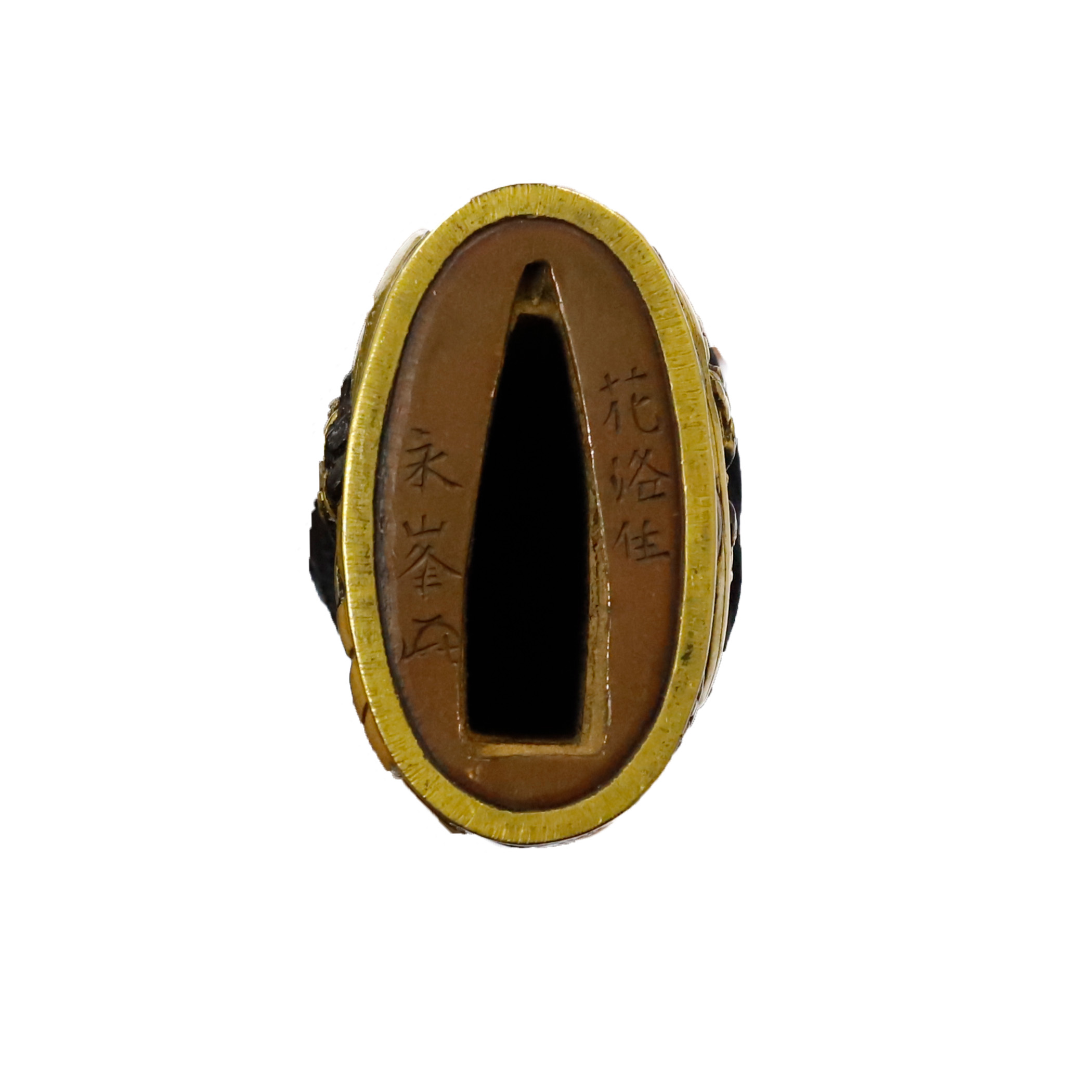
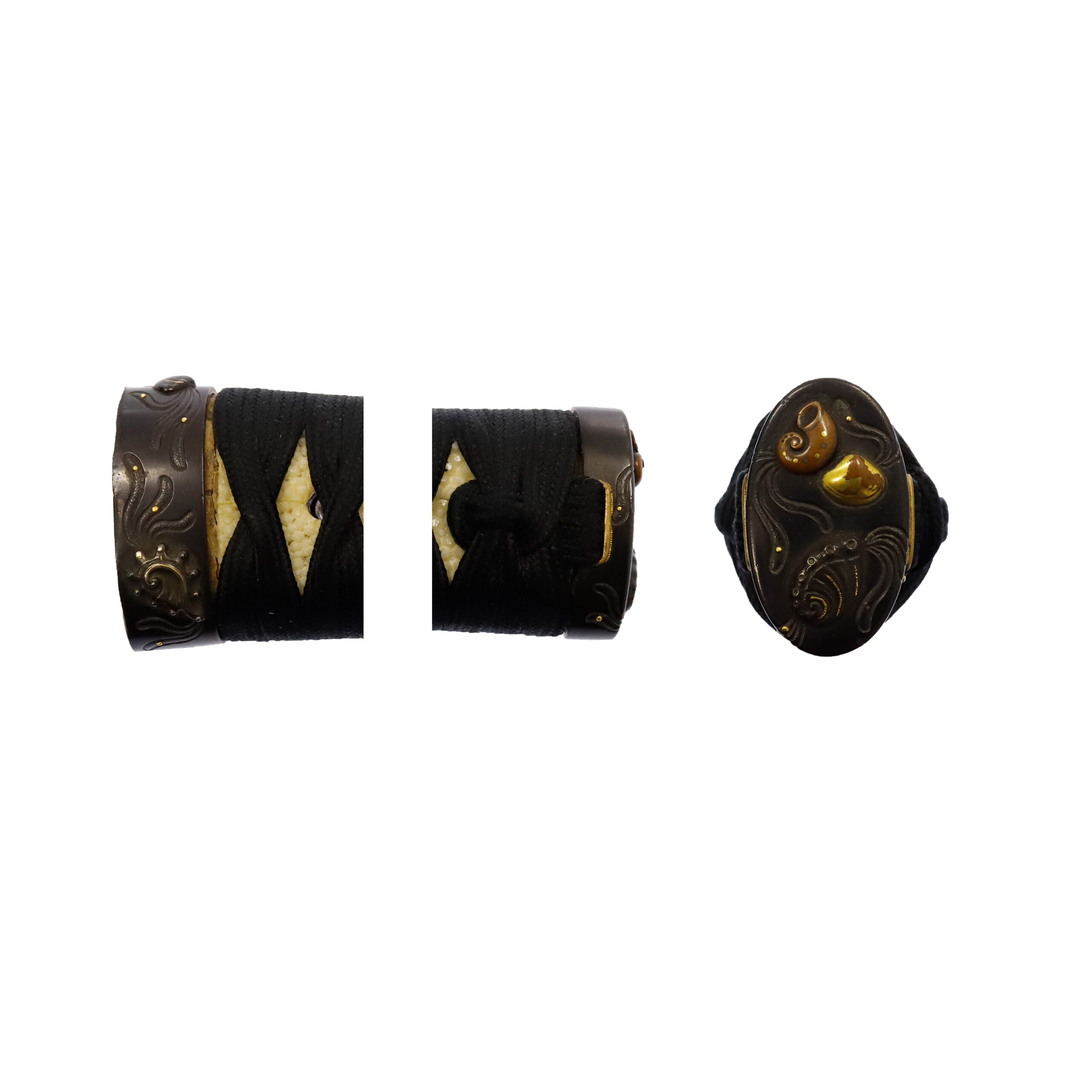
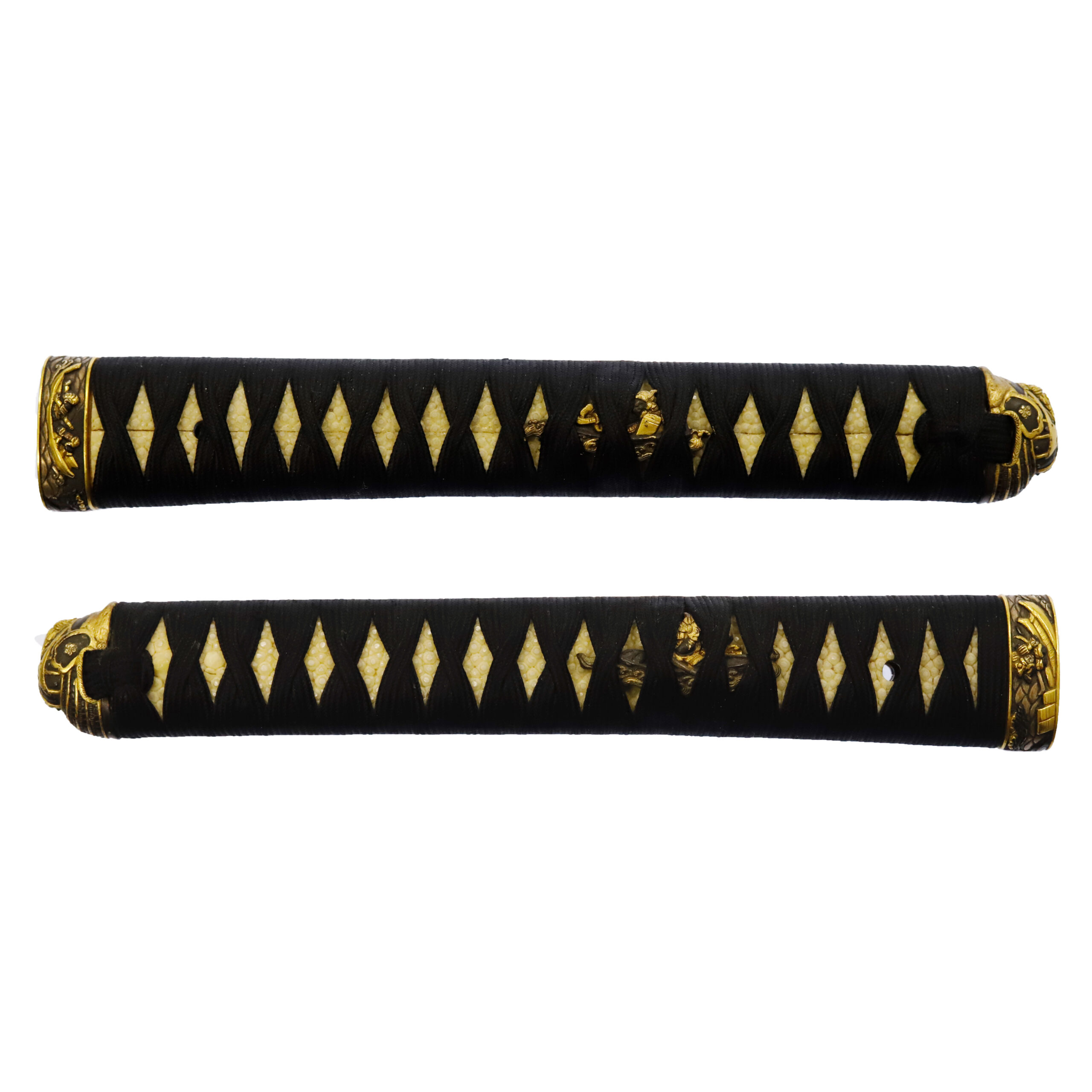
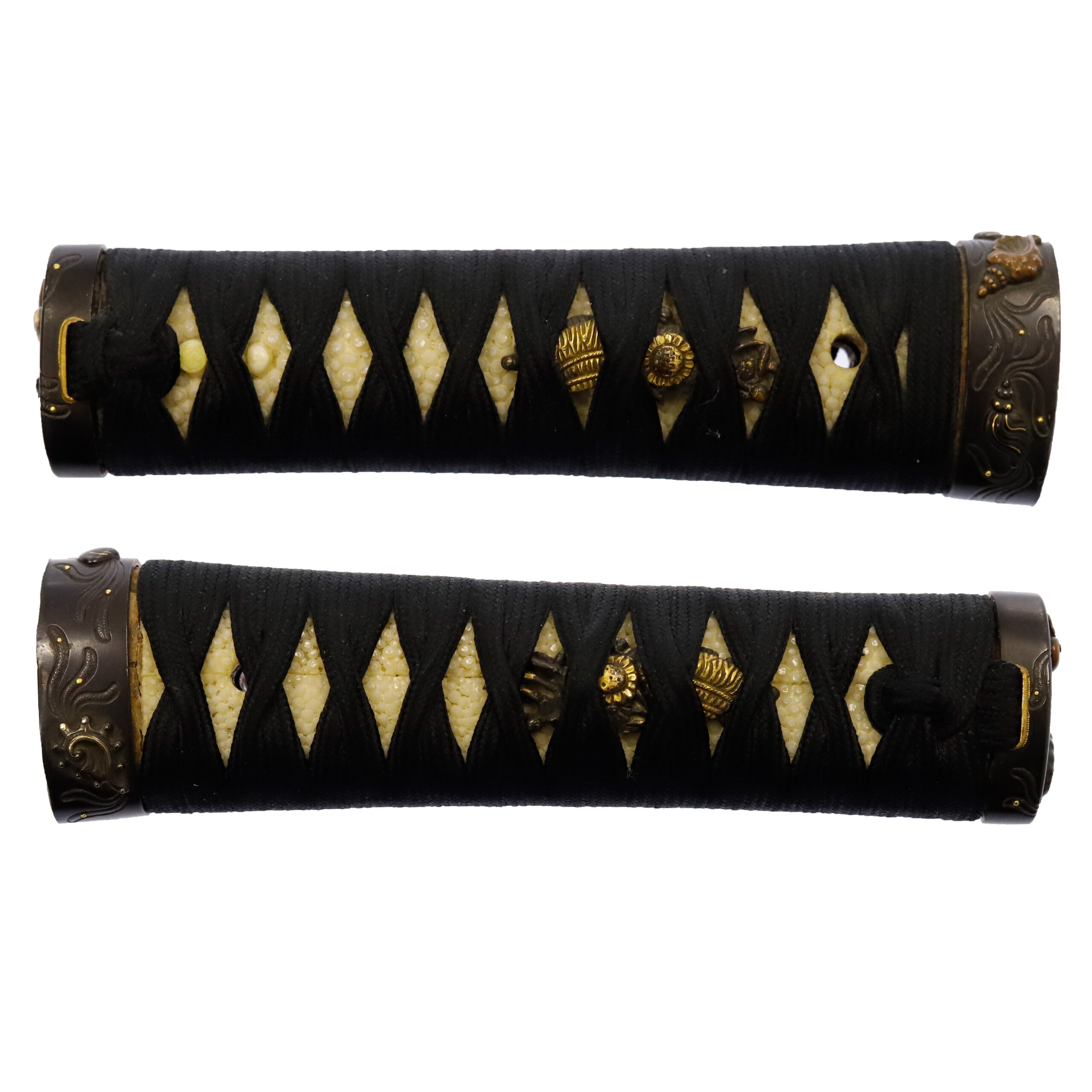
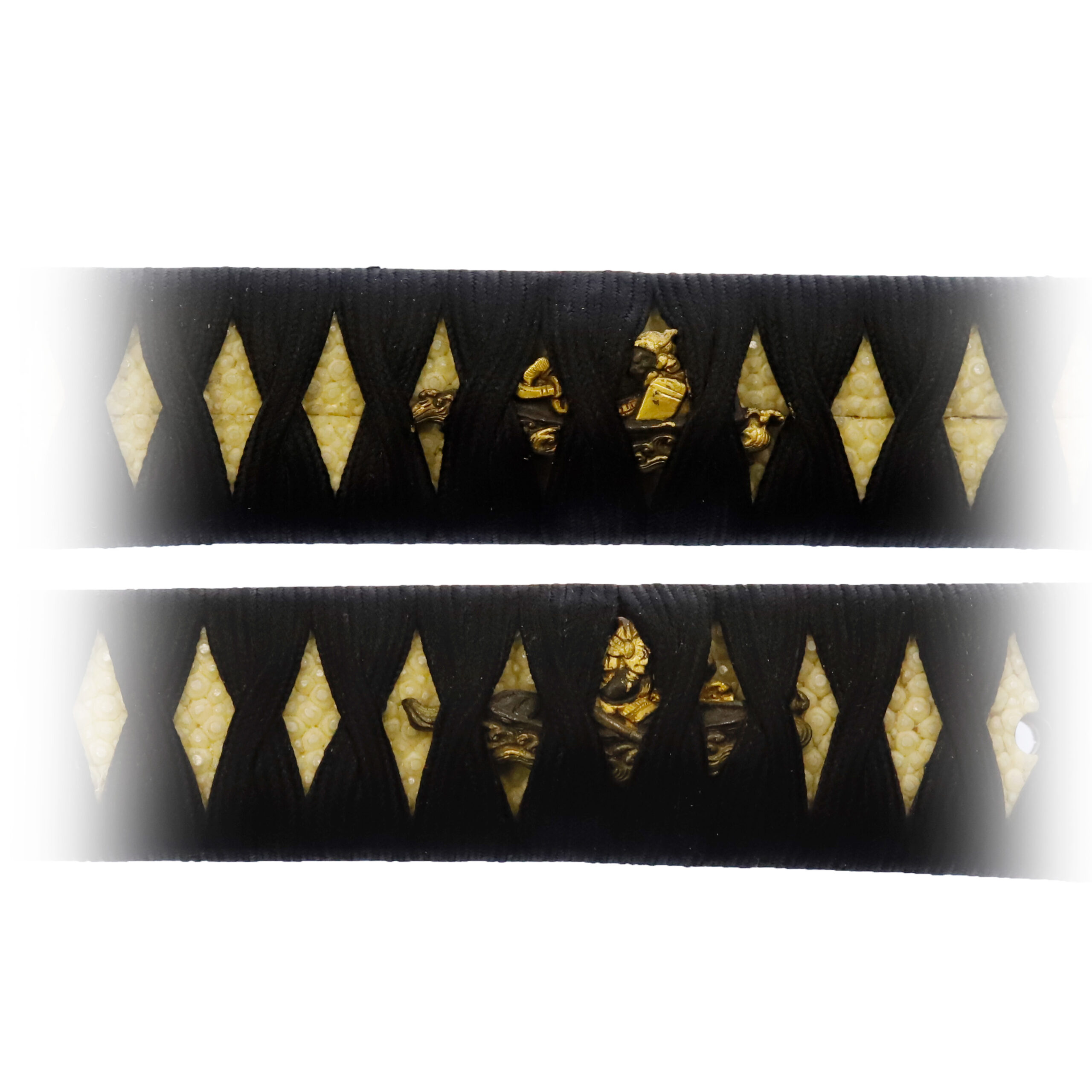
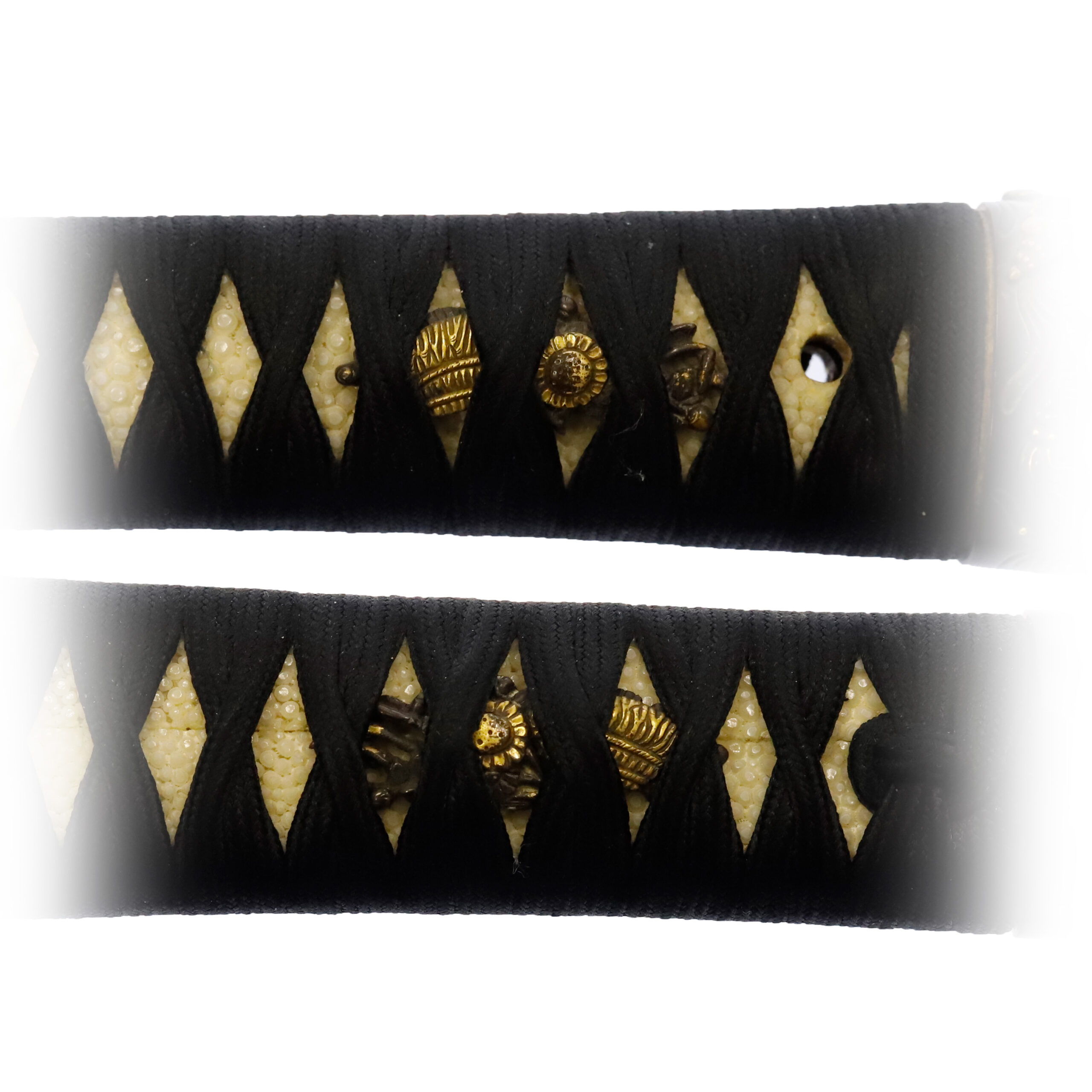
販売店の記載のまま
新刀 · 肥前 · 1830-1844頃
藤代 中上作 · 刀剣大鑑 上位76%
現在4点販売中
新刀 · 肥前
現在105点販売中
肥前派は、肥前佐賀の城下を中心に興った新刀期の一流であり、その祖は橋本新左衛門と称した初代忠吉である。資料によれば、初代は鍋島家の抱え工として、慶長元年に藩命により彫工宗長とともに上洛して京の埋忠明寿の門に入り、忠吉は鍛刀を、宗長は彫技を学んだという。同三年に帰国して佐賀城下に住し、鍋島藩の庇護のもとに一門は大いに栄えた。年紀は慶長五年に始まり、元和十年には再び上洛して武蔵大掾を受領し、名を忠吉から忠広に、氏を源から藤原に改めている。この改名は同一の手の変遷であって別人ではない。初代の嫡子たる二代近江大掾忠広は六十有余年に及ぶ作刀生活を送って肥前最多作の工となり、本家の忠吉銘は土佐守家を経て三代陸奥守忠吉へと返上襲名されて、上三代の本流を成した。これと並んで、初代の門人や身内から、播磨大掾忠国の系、河内大掾正広に発する正広の系、出羽守行広の系といった分家、すなわち傍肥前と汎称される諸工が興り、代を重ねて佐賀の工房は確立された。 一門の共通する作風は、まずその地鉄に表れる。よく約んだ小板目を緻密に鍛え、地沸が微塵に厚く均しくつき、地景が細かに頻りに入って、かね明るく冴える。資料はこれを肥前特有の米糠肌と名指し、他派の出さない細かく明るい肌であるとする。この精良な地の上に、本家の本領たる中直刃を焼く。浅くのたれごころを帯び、処々に小互の目を交え、小足・葉が入り、匂深く小沸が細かについて締まり明るく、帽子は直ぐに小丸へ静かに返る。本来狙った来一門の直刃に対しては、匂口がより締まって明るく、鍛えに覇気がある点で分かれると説く。一方、初代の初期作には直江志津・古作大和物・来一門・鎌倉名工を狙った多様な写し物があり、掃きかけの帽子など本家の通則の例外も見える。代や系統による差異も資料の支持する範囲で明らかである。二代忠広と三代忠吉は本家本領の静かな直刃を継ぎ、なかでも三代は祖父初代を想わせる強く精美な鍛えを身上とする。これに対し傍肥前の諸工は華やかな乱れ刃を好み、正広は丁子を主調とした乱れに互の目を交え、行広は竪長の足長丁子乱れを焼き、忠国は一門の中で最も砂流しが目立つ足長丁子をあらわした。本家が直刃で読まれるのに対し、傍系はその精良な地を覇気ある乱刃へ運んだのである。 肥前刀の鑑定の勘所は、何よりこの米糠肌にある。明るく冴えた小糠肌の上に締まった直刃を焼くという組合せこそ、収集家が肥前刀を求める核心であり、地鉄と刃文が相俟って同派同定の眼目を成す。さらに銘振りもまた鑑定の一部をなし、本家は刀に指裏すなわち太刀銘に切るのを常とし、五字銘・住人銘・受領銘の別が時期を語る。主要刀工の格は資料の伝える通りで、初代忠吉は藤代の極めで最上作、二代忠広・三代忠吉や正広・行広は上々作ないし上作に位置づけられる。代表作には鍋島家伝来の作が多く、来歴には尾張徳川家・佐竹家・皇室などの名が録され、初代の一口には師明寿の添銘が遺り、忠国・正広の作には山野加右衛門ら截断銘を金象嵌に帯びるものがあって、手のみならず刃味の証となる。指定を受けた作の多くは旧蔵家や公の収蔵に永く蔵されて市に現れることは少なく、傍系の作も折にふれて世に出るにとどまる。されば在銘の肥前忠吉は手の届かぬものではないが、祖その人の作や、最も精美な米糠肌に直刃を焼いた一口が現れることは時折のことであり、現れれば肥前刀の一里塚というべきものである。 詳しく見る →
肥前 藩営の刀
肥前刀は藩営の産業である。鍋島家は1596年頃、忠吉を京の埋忠明寿のもとに学ばせ、帰国したその工を核に公認の一門を築いた。小糠肌で名高いその作は、九代にわたり明治まで続いている。
NTHKの中心的な鑑定書で、相応の出来を備えた刀剣に発行されます。在銘作は銘の正真を、無銘作は審査員による刀工・流派の極めを示します。点数を記す詳細な審査表が付されます。
NTHK(日本刀剣保存会)は、NBTHK(1948年設立)に先立つ1910年に創立された、日本で最も古い刀剣鑑定団体です。長く会を率いた会長の没後、NTHKとNTHK-NPOの二つに分かれ、いずれも審査を続けています。刀剣に対するNTHKの鑑定書は、点数と審査員の所見を併記する詳細な審査表が特徴です(刀装具の鑑定書に点数は付されません)。特に無銘作の極めに定評があります。
Returns/exchanges limited to defects caused by shipping (except willful misconduct or gross negligence by the company); customers must contact within 72 hours of receiving the product.