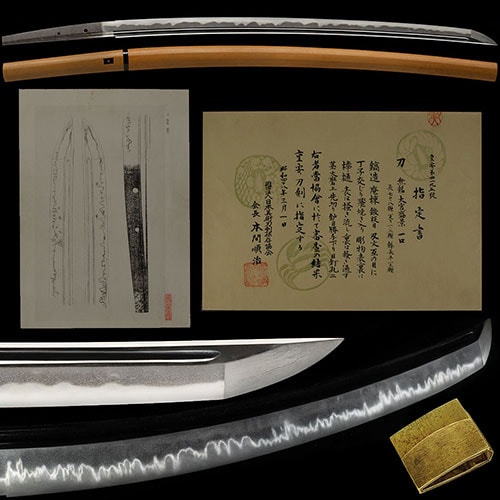
三人の天下人が戦国の世紀を終わらせ、刀は新しい秩序の道具となった。1588年の刀狩は刀を武士の標章とし、名刀は条約のごとく家々の間を行き交い、鑑定は以後この境で古刀と新刀を分かつ。
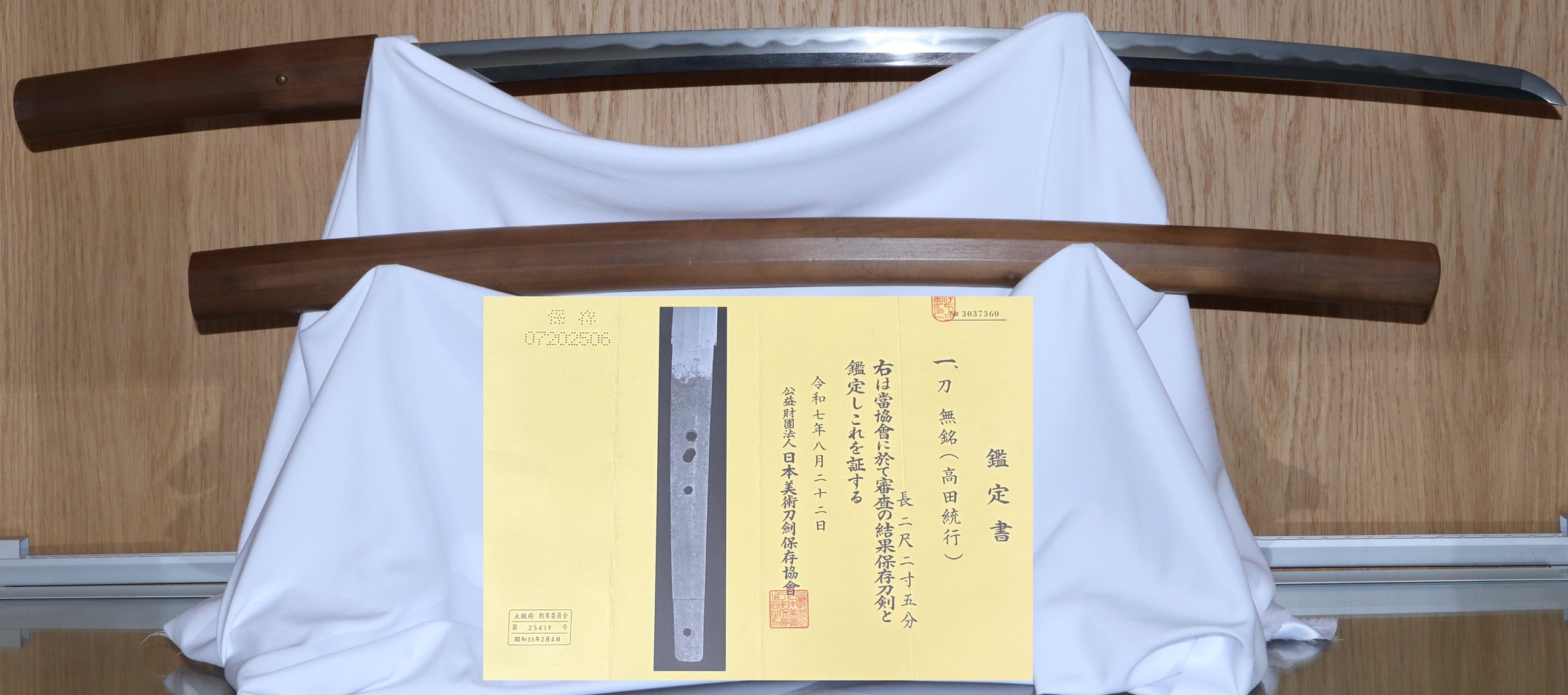
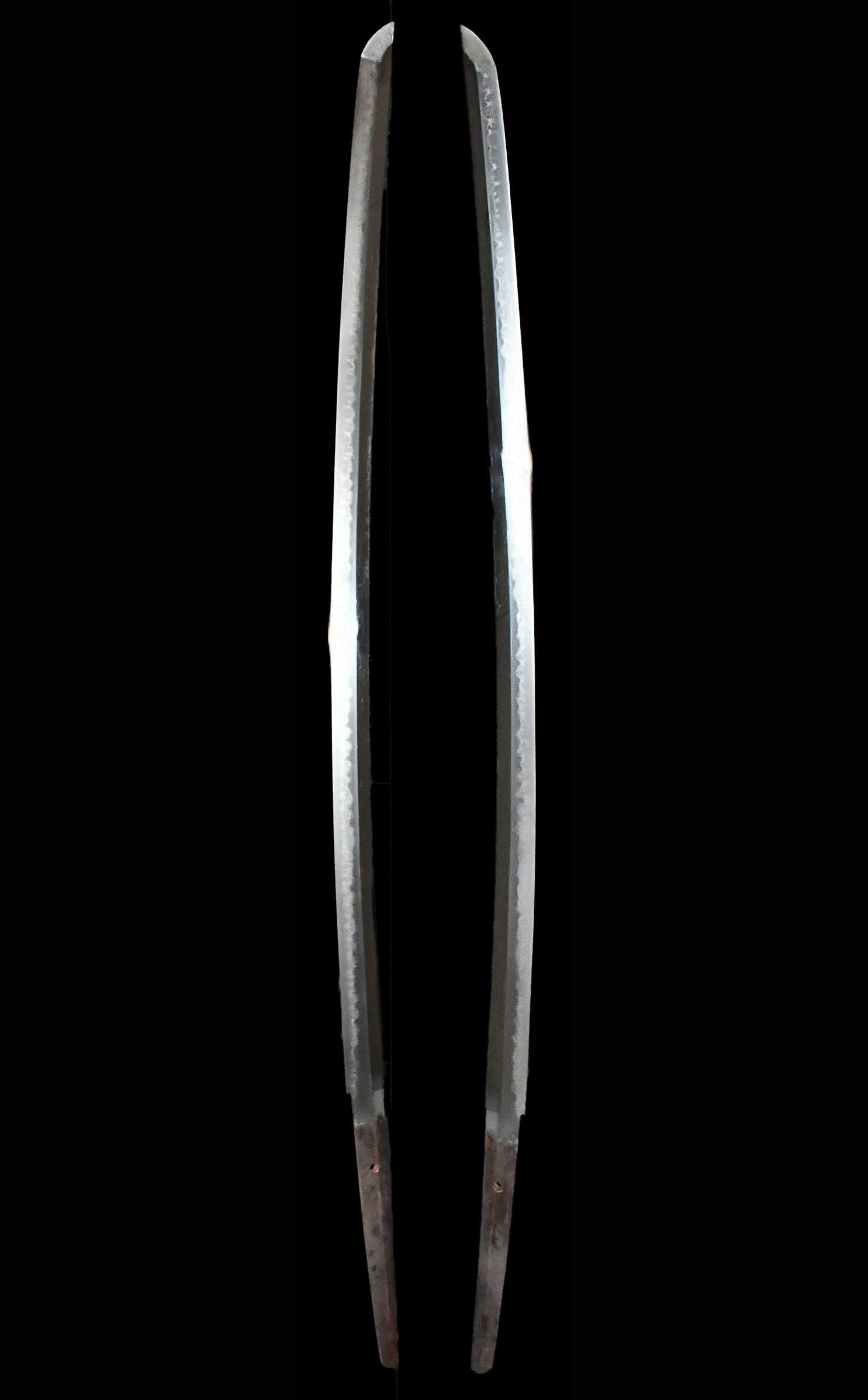
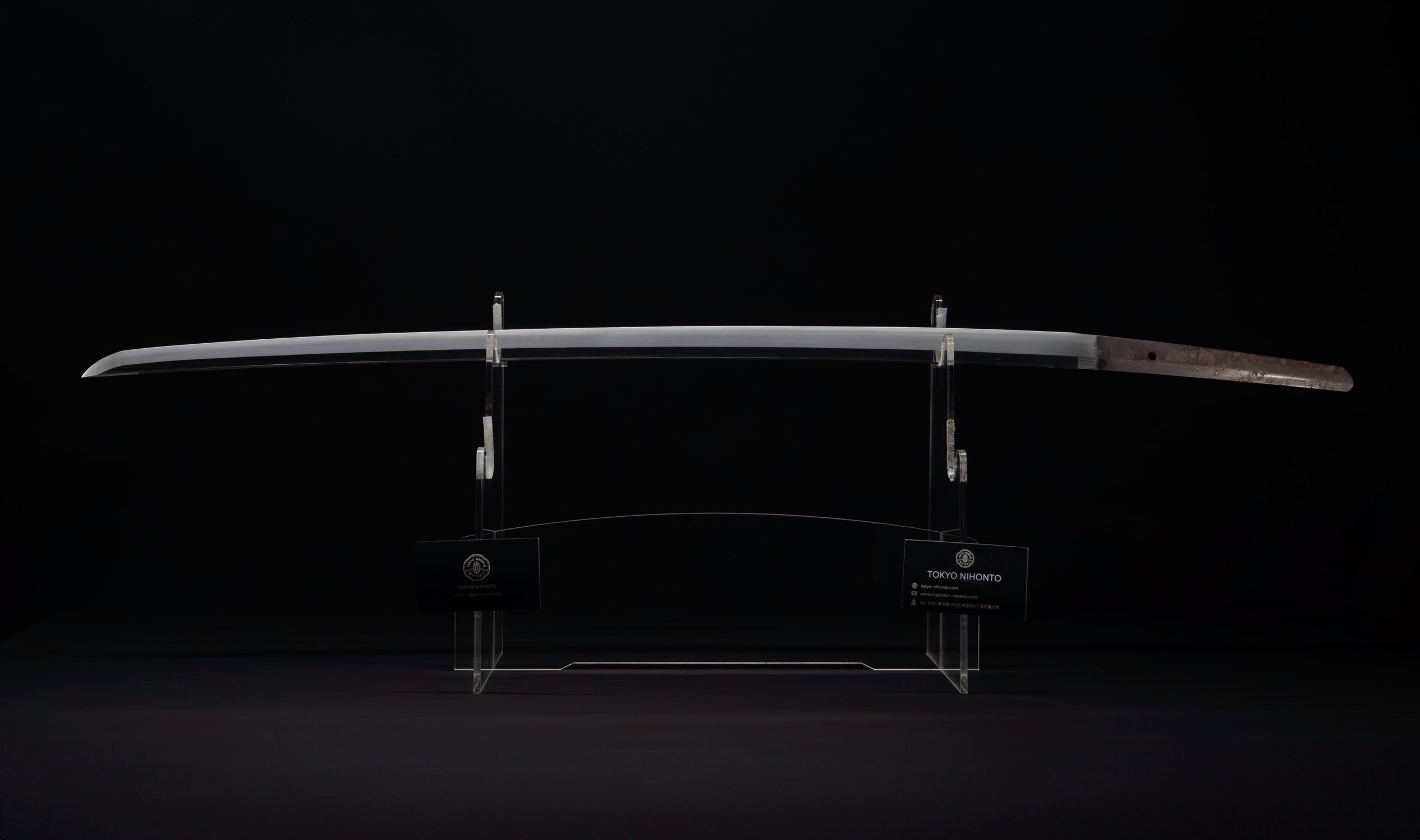
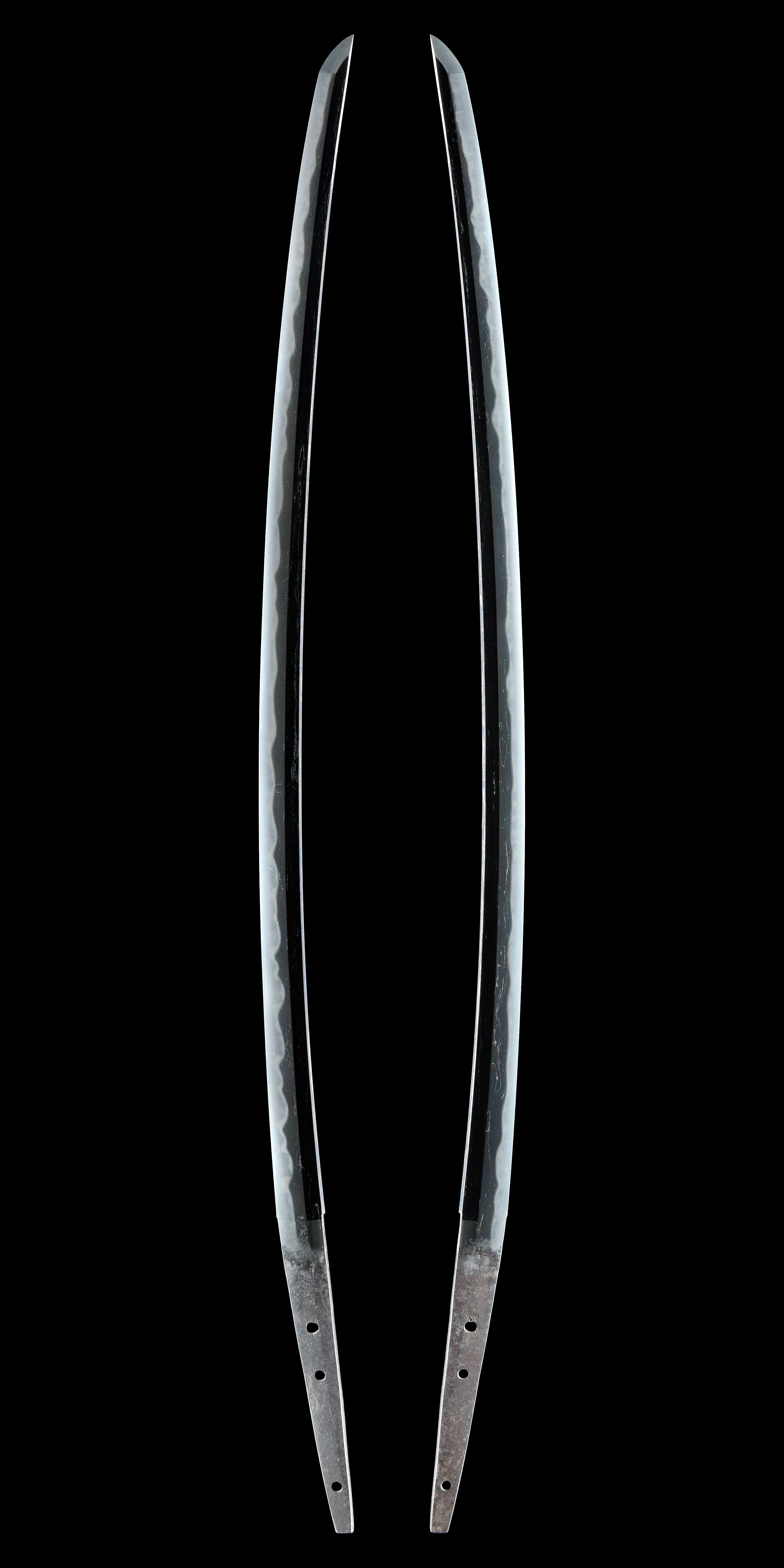
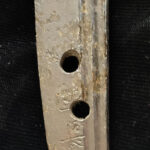
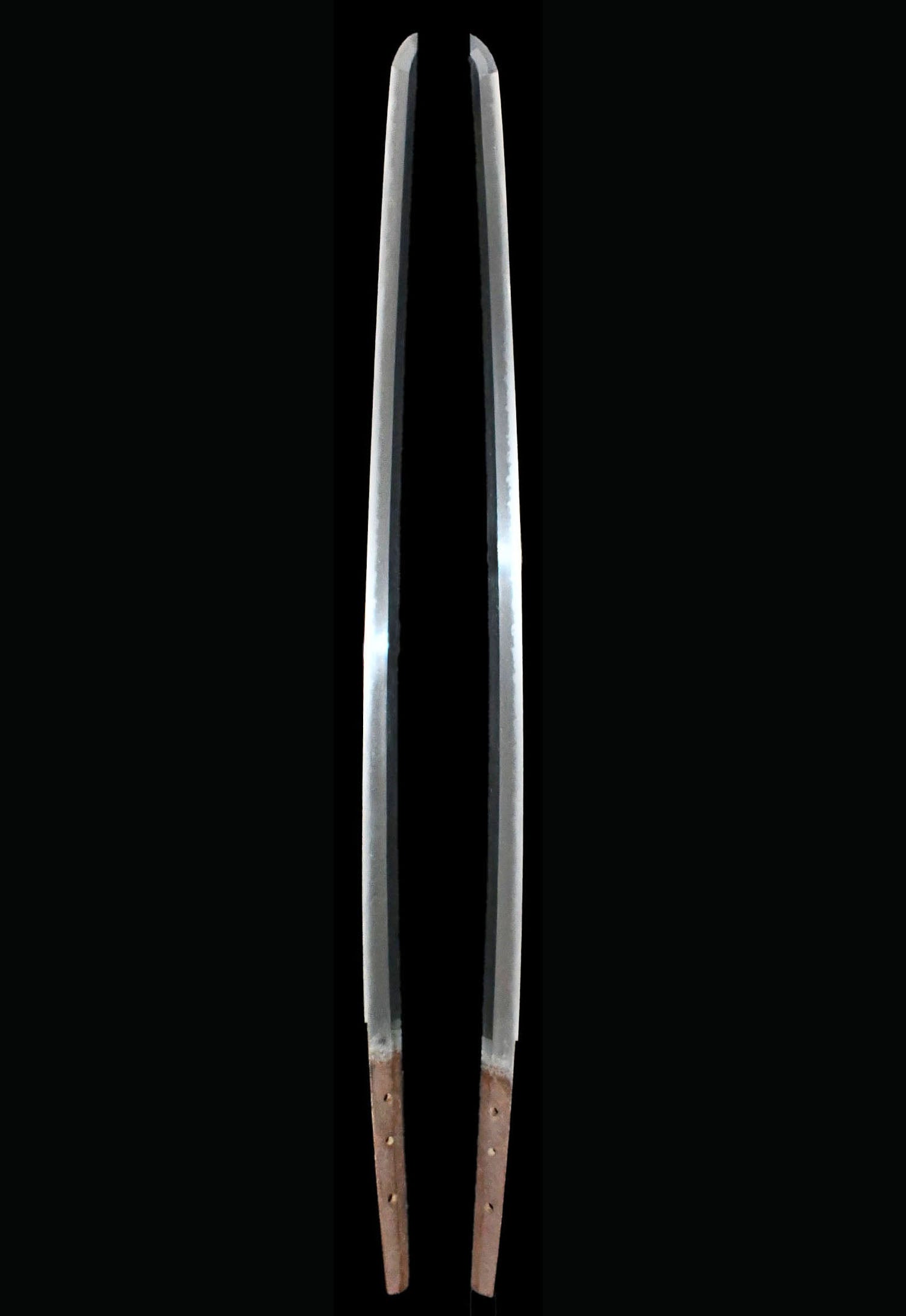
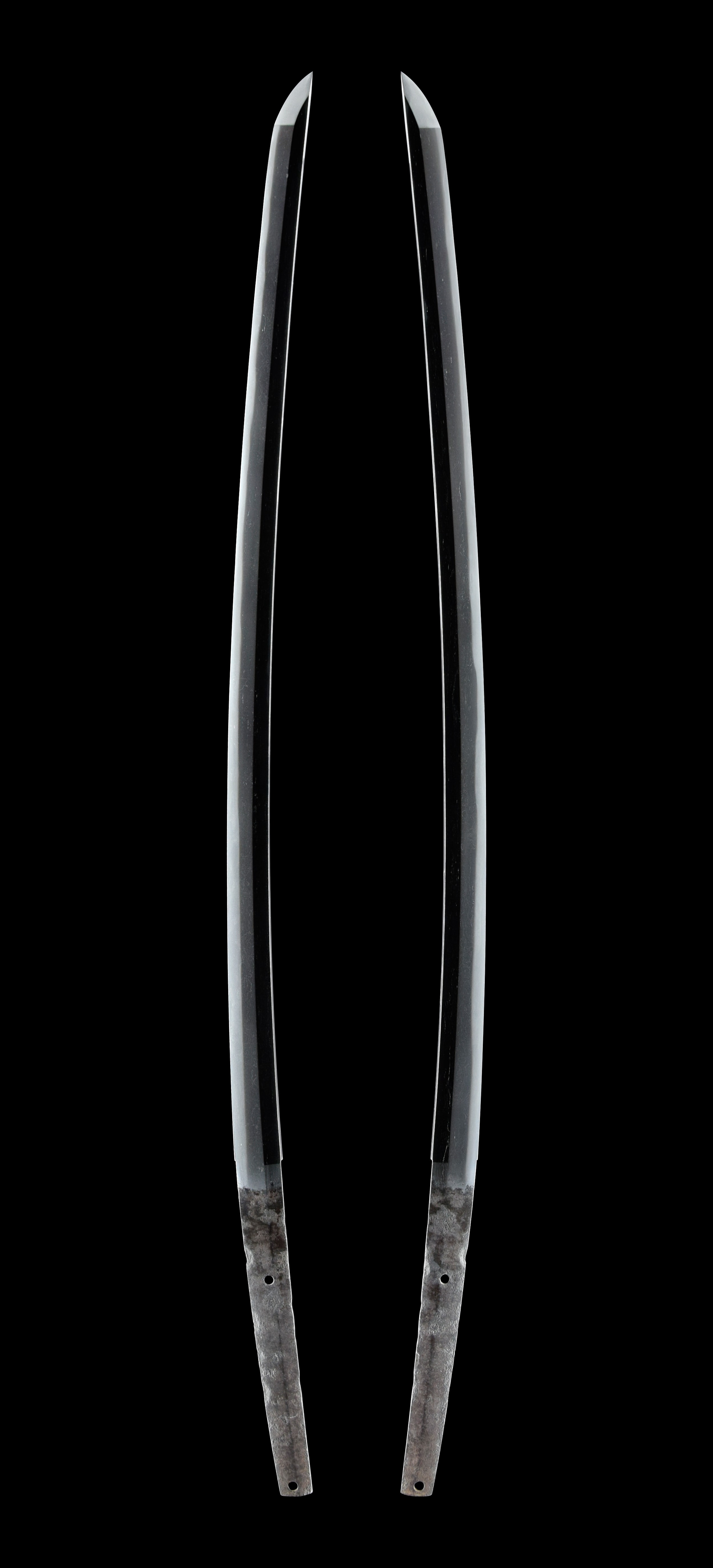
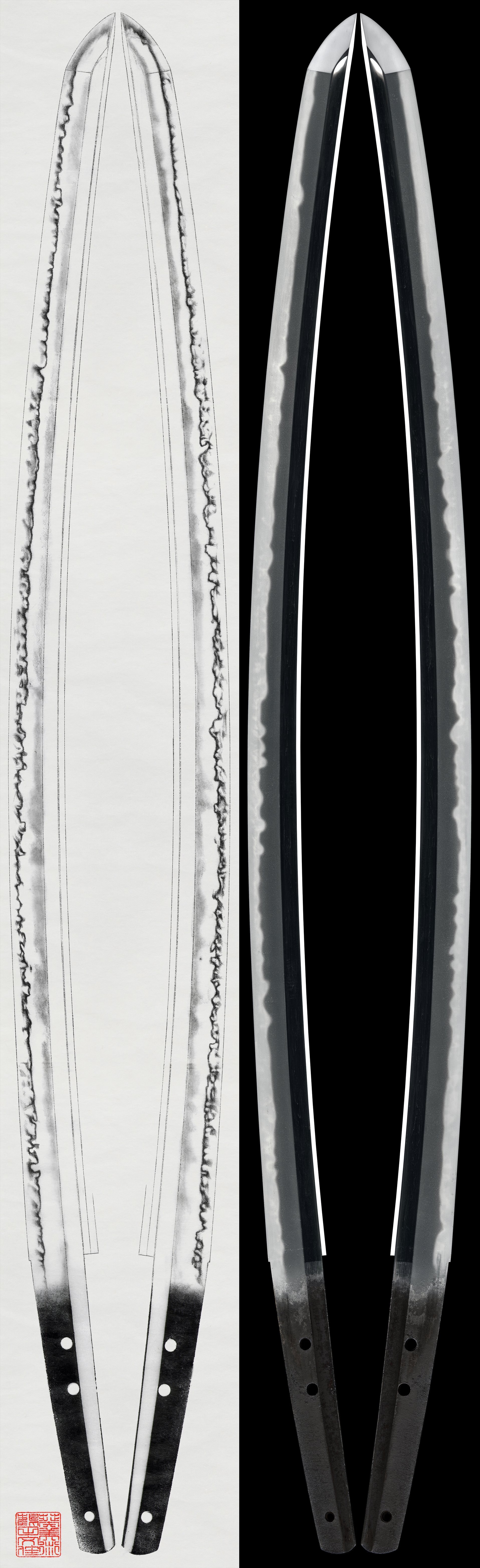
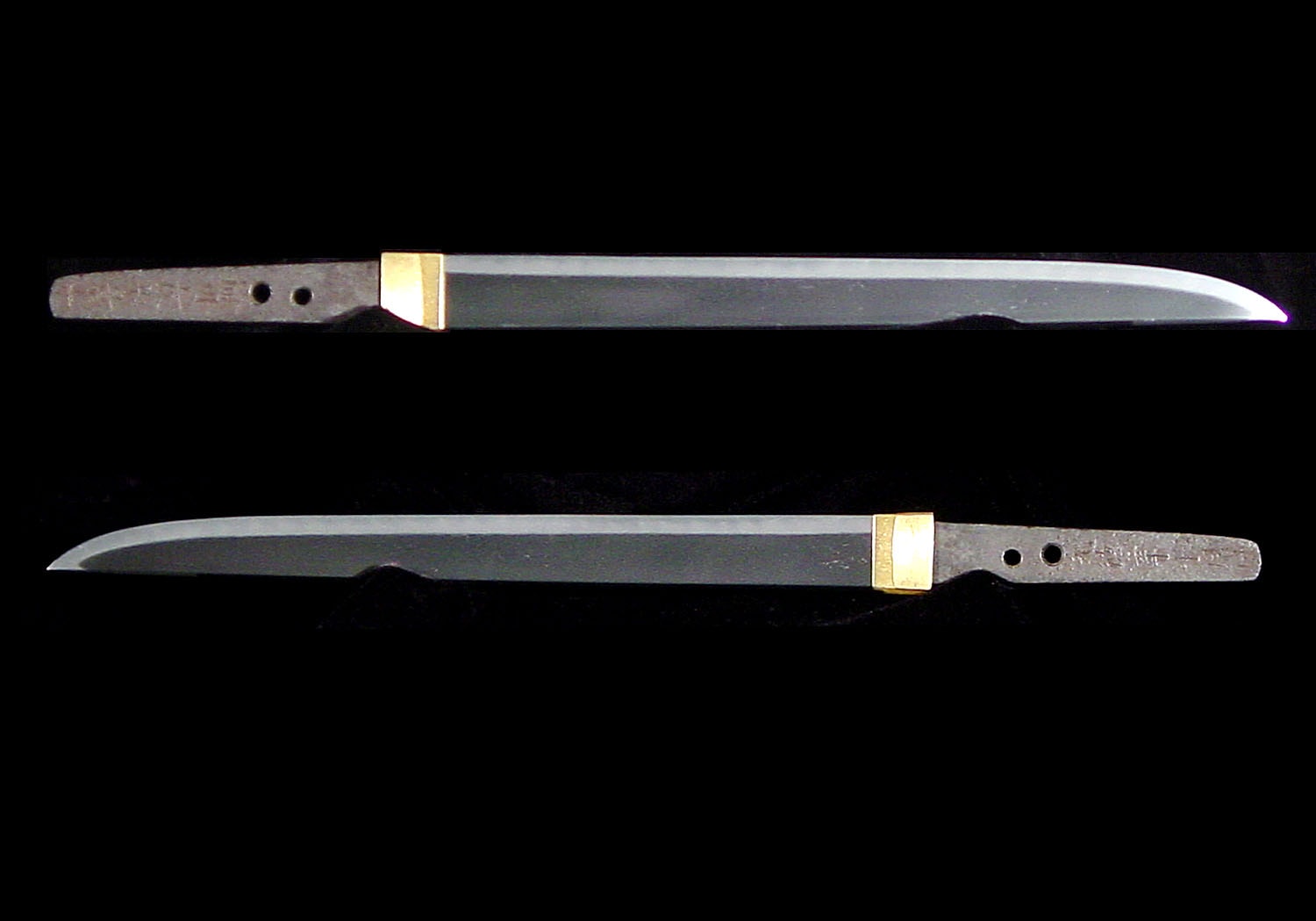
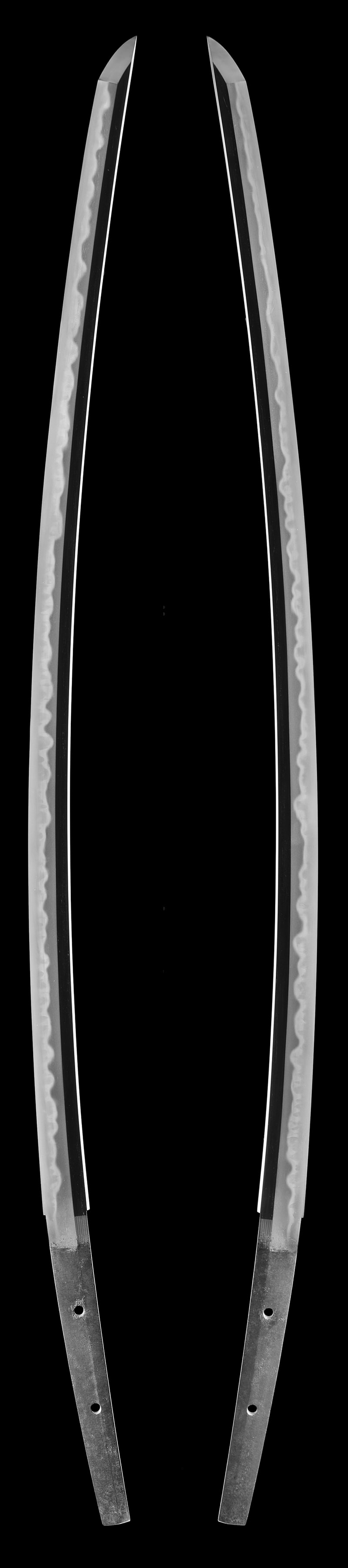
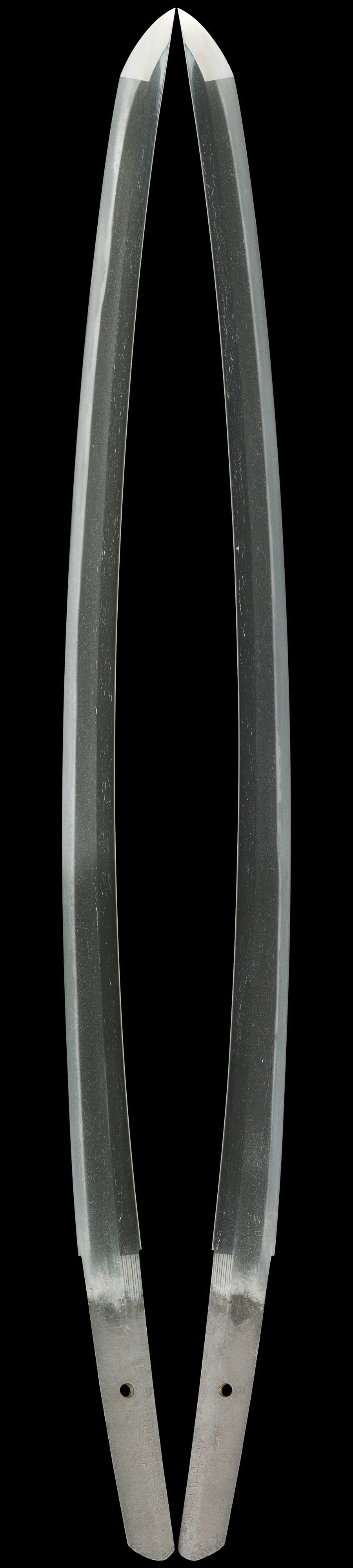
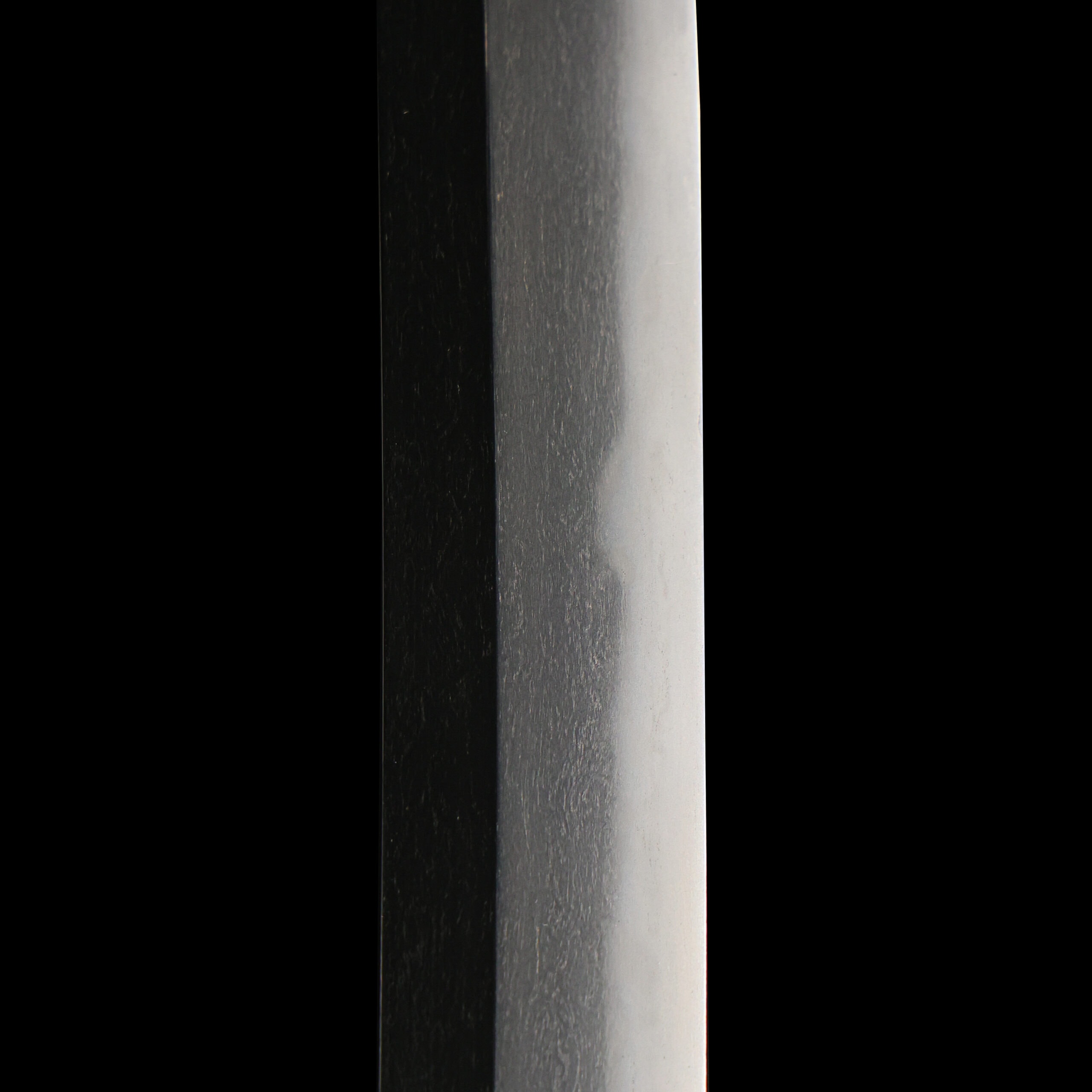
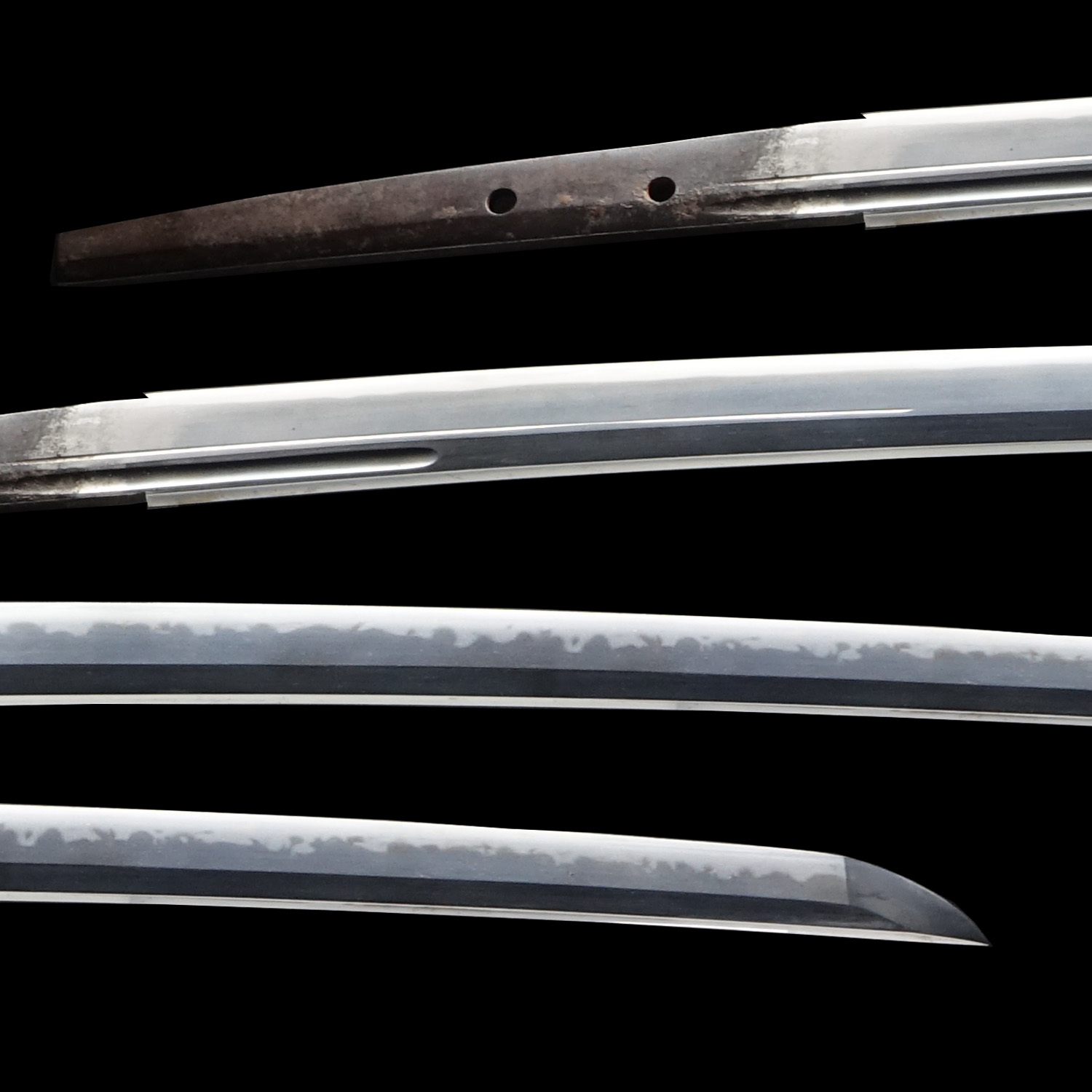
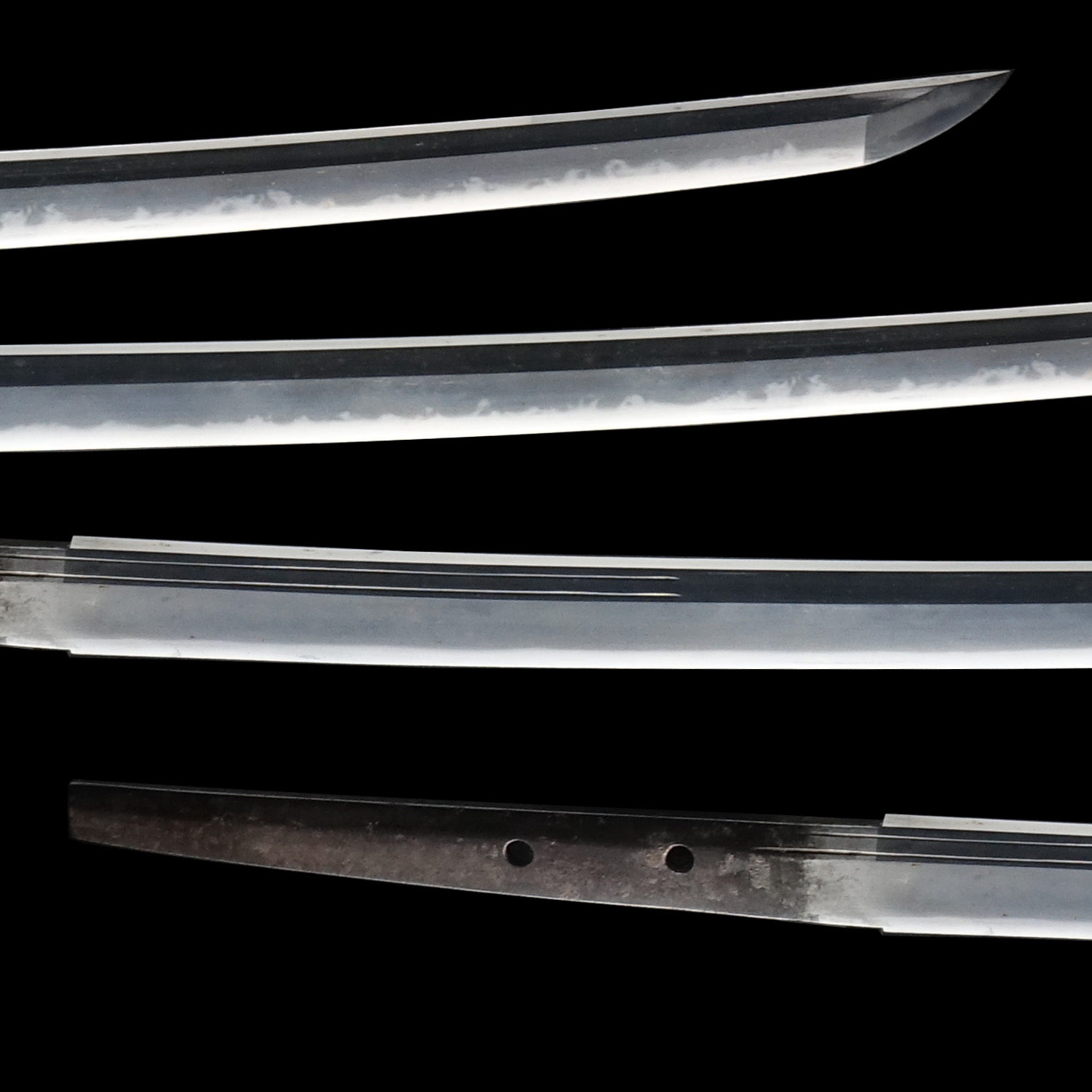
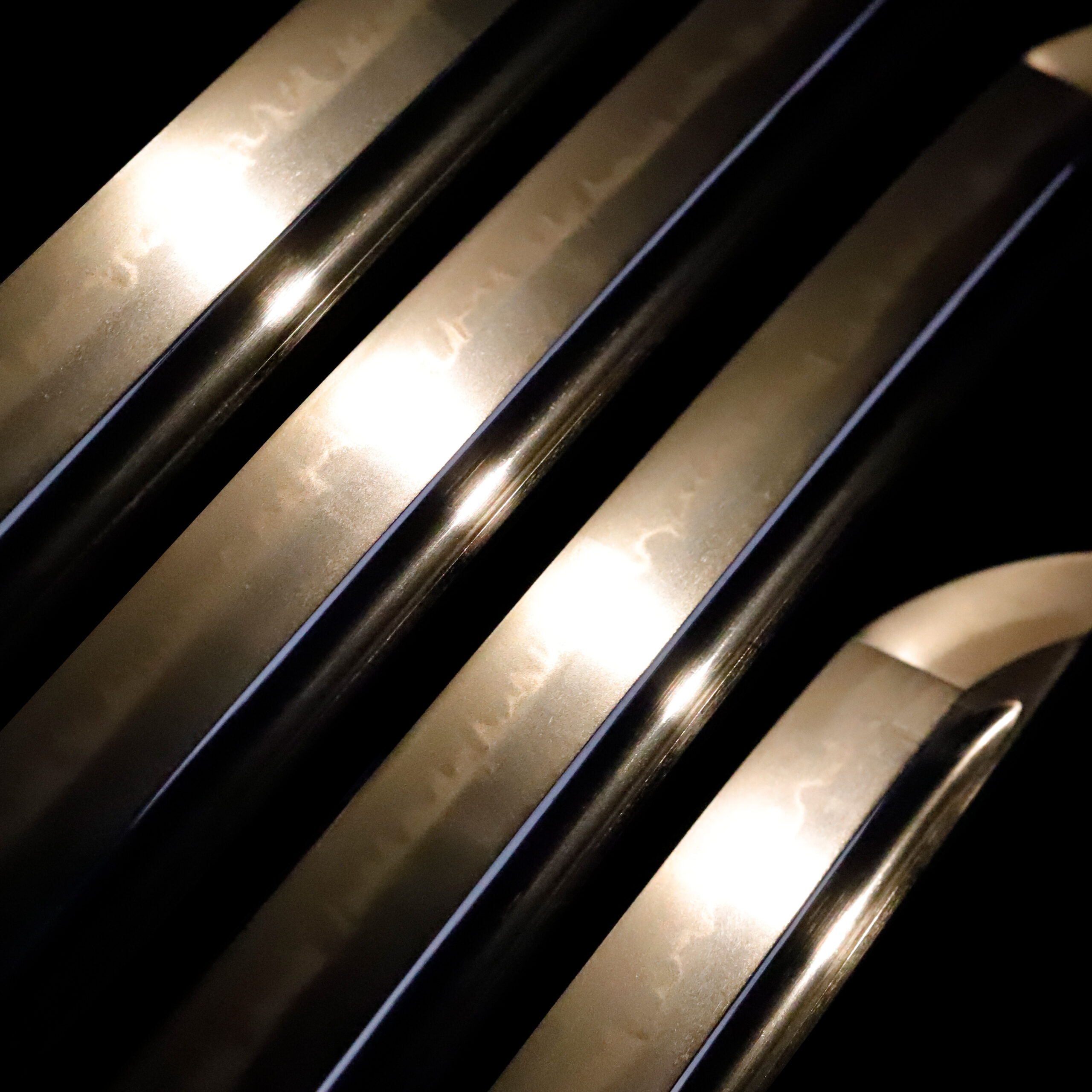
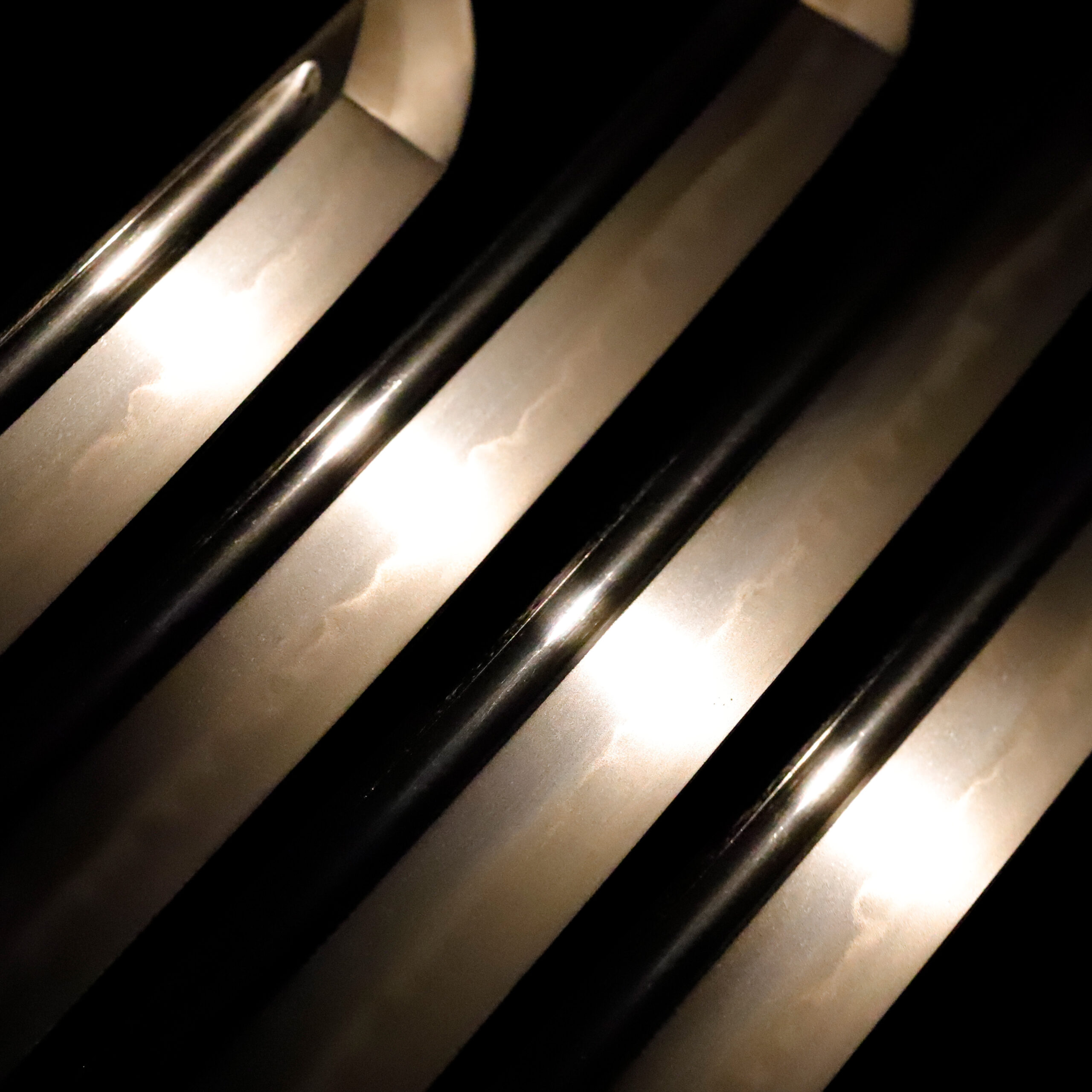
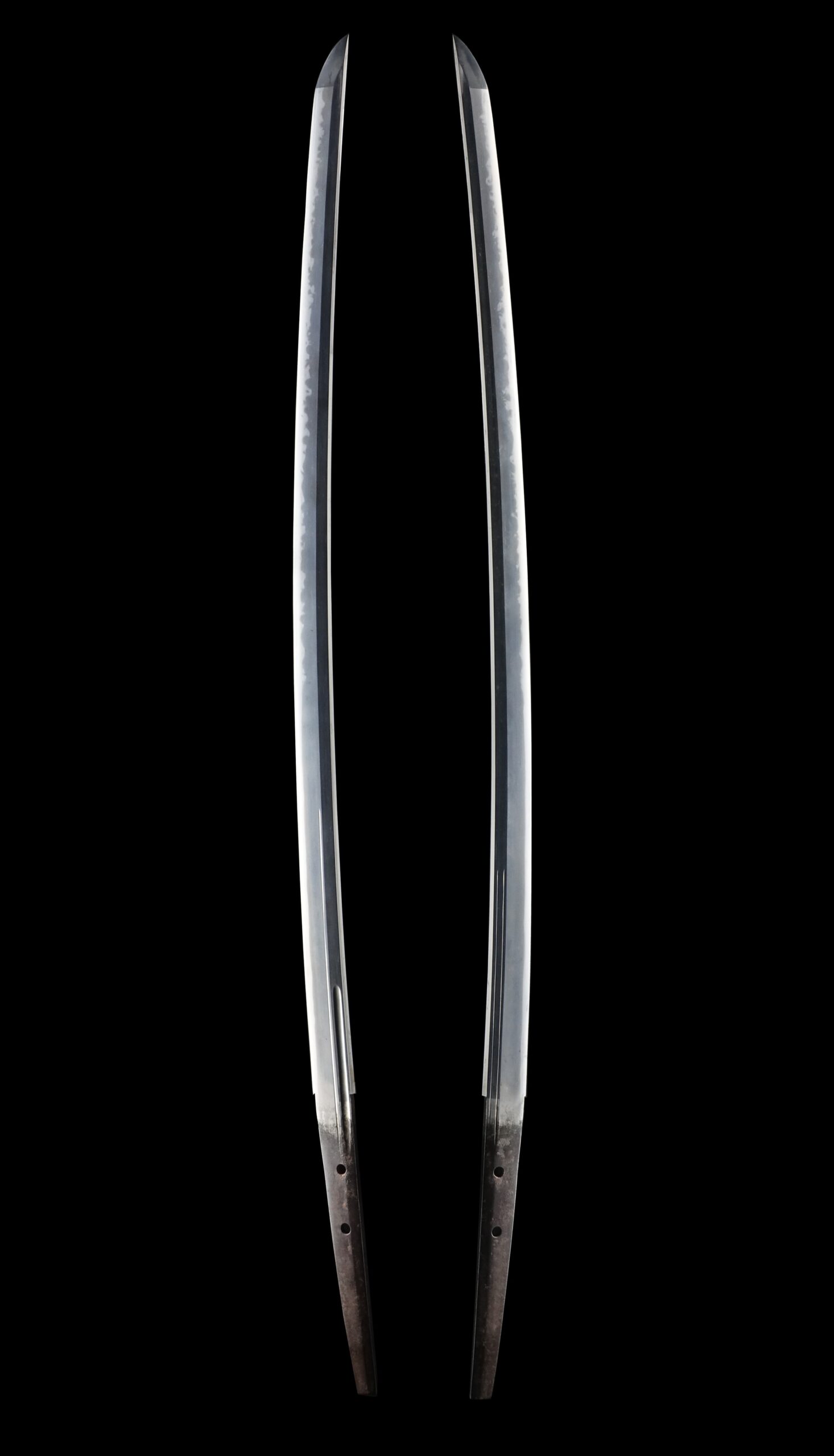
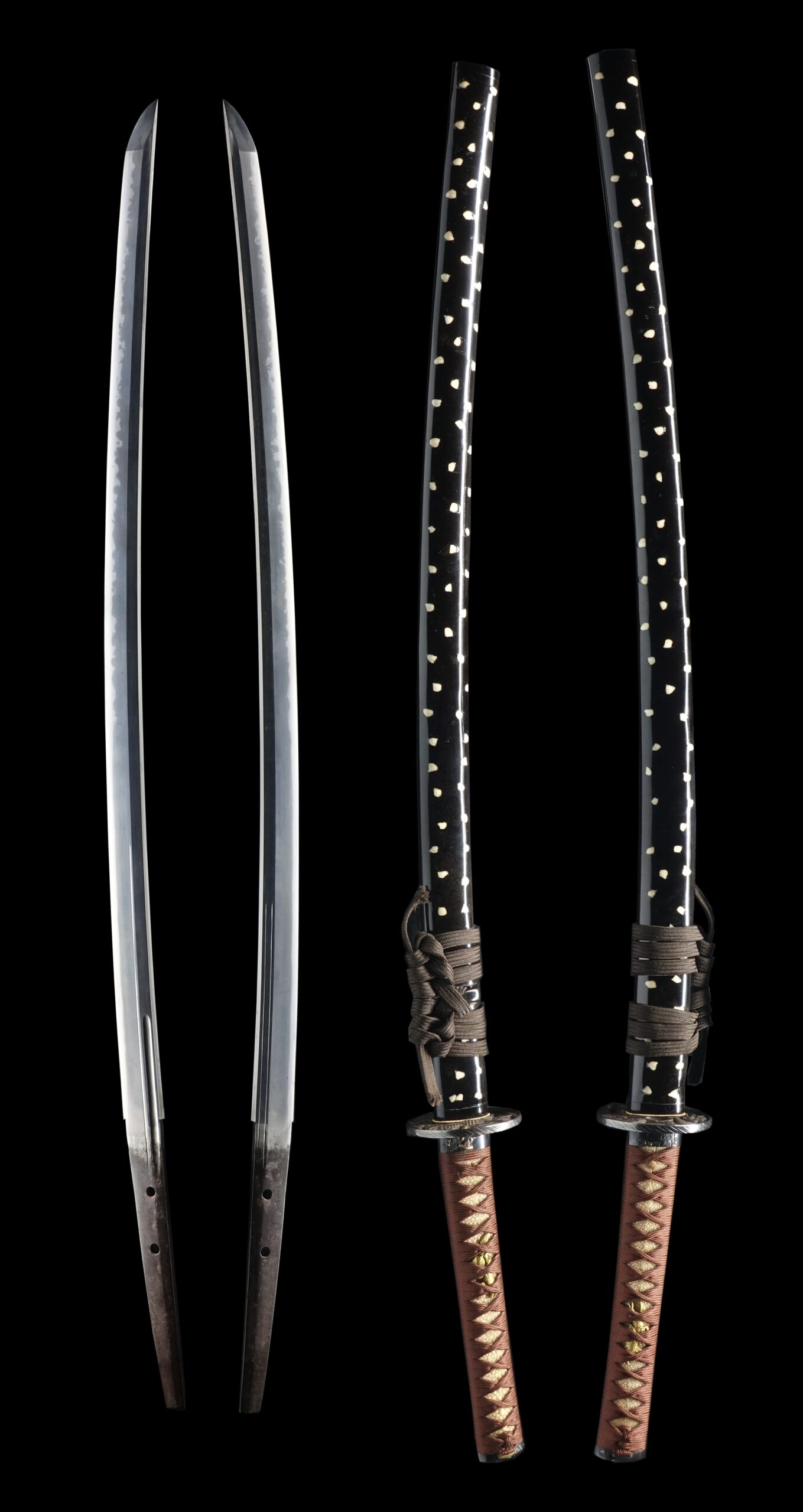
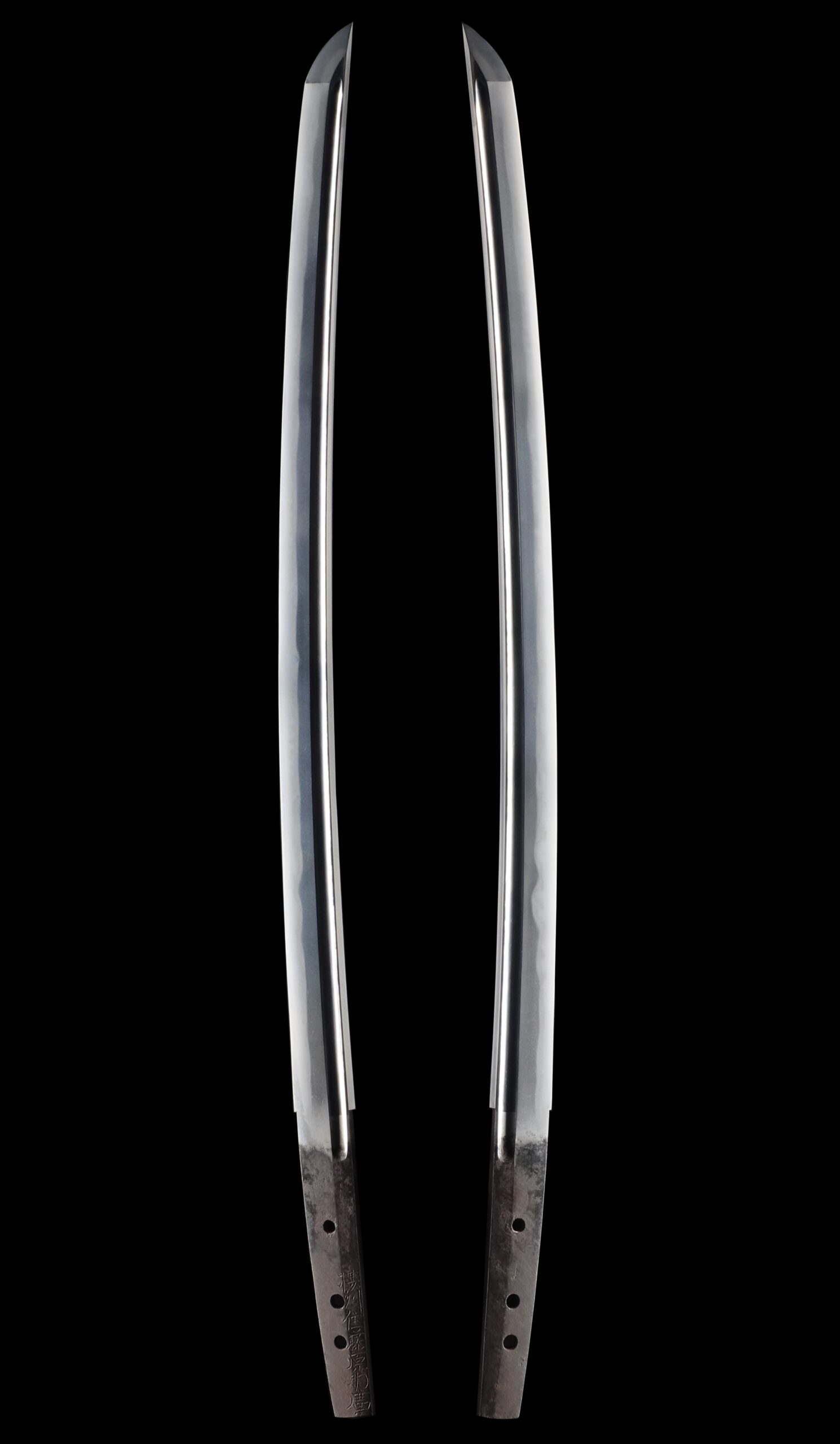
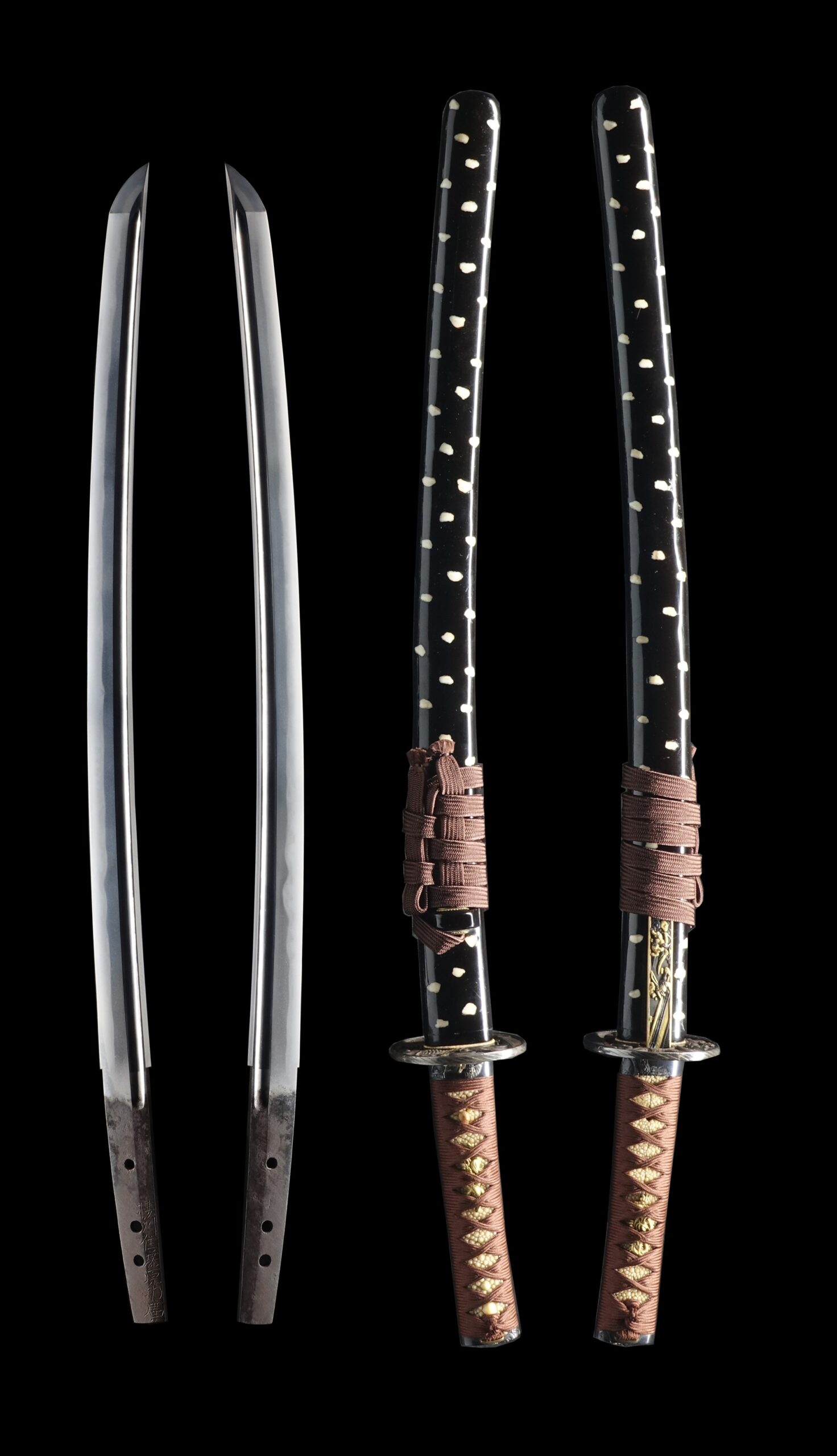
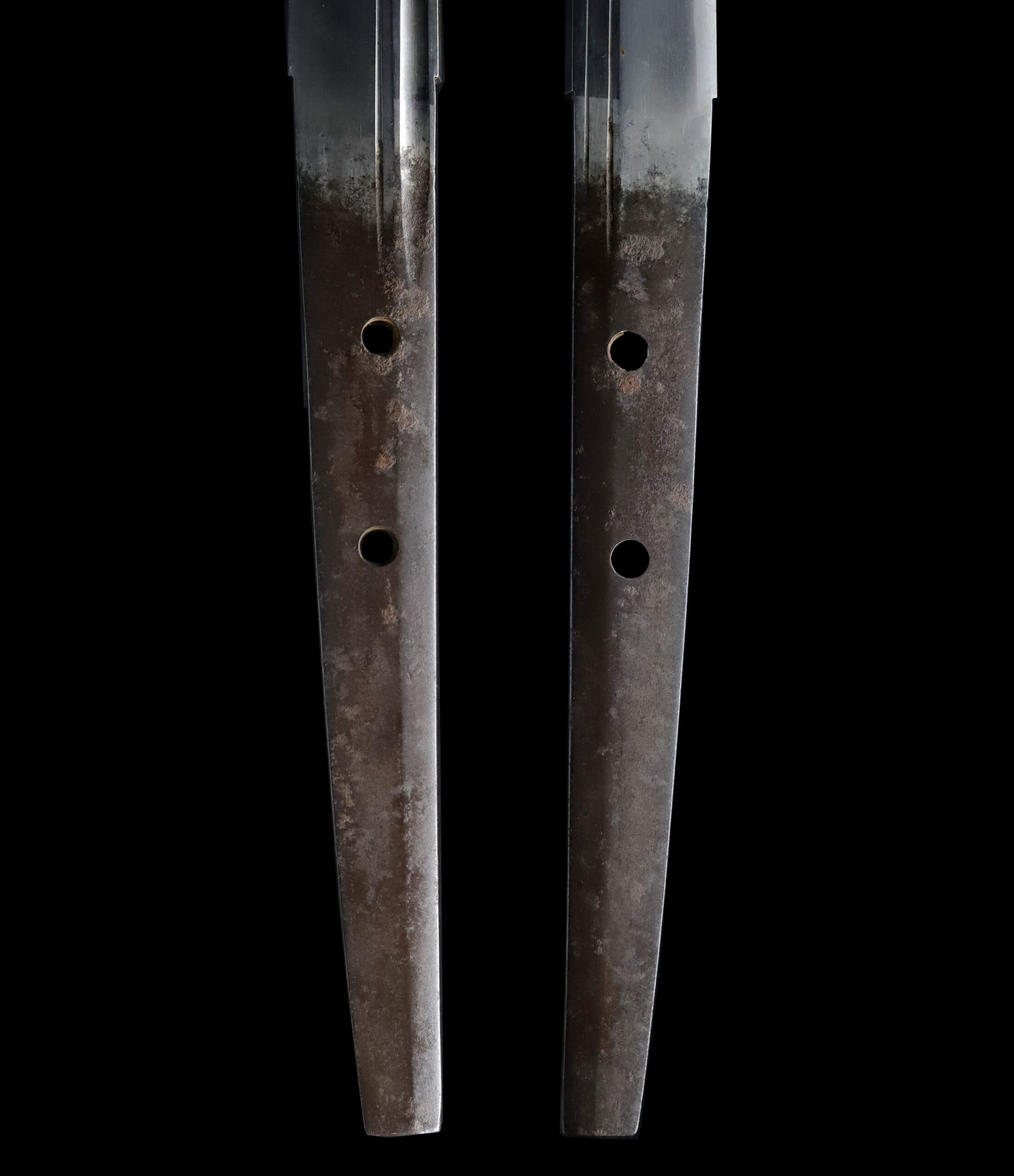
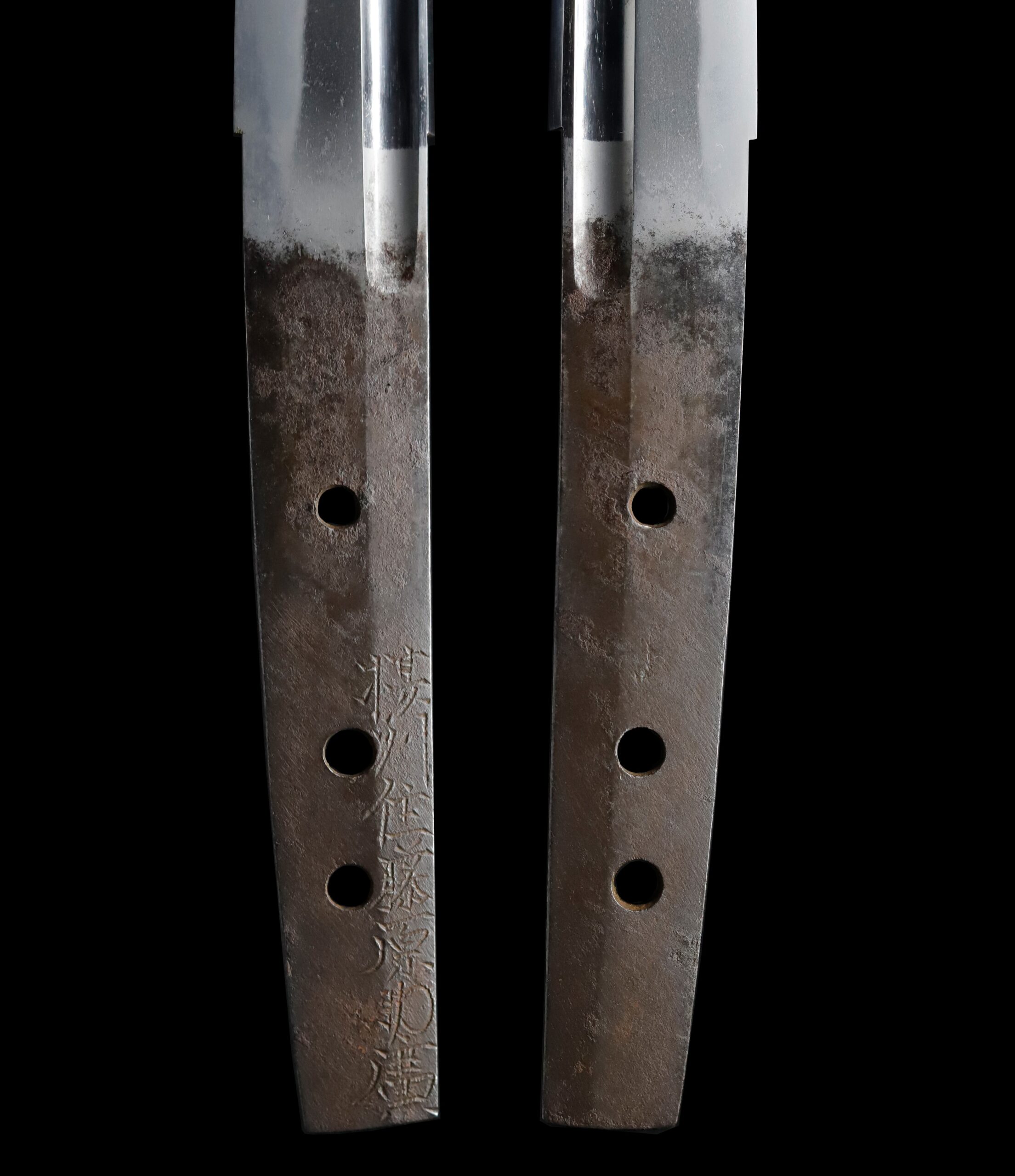
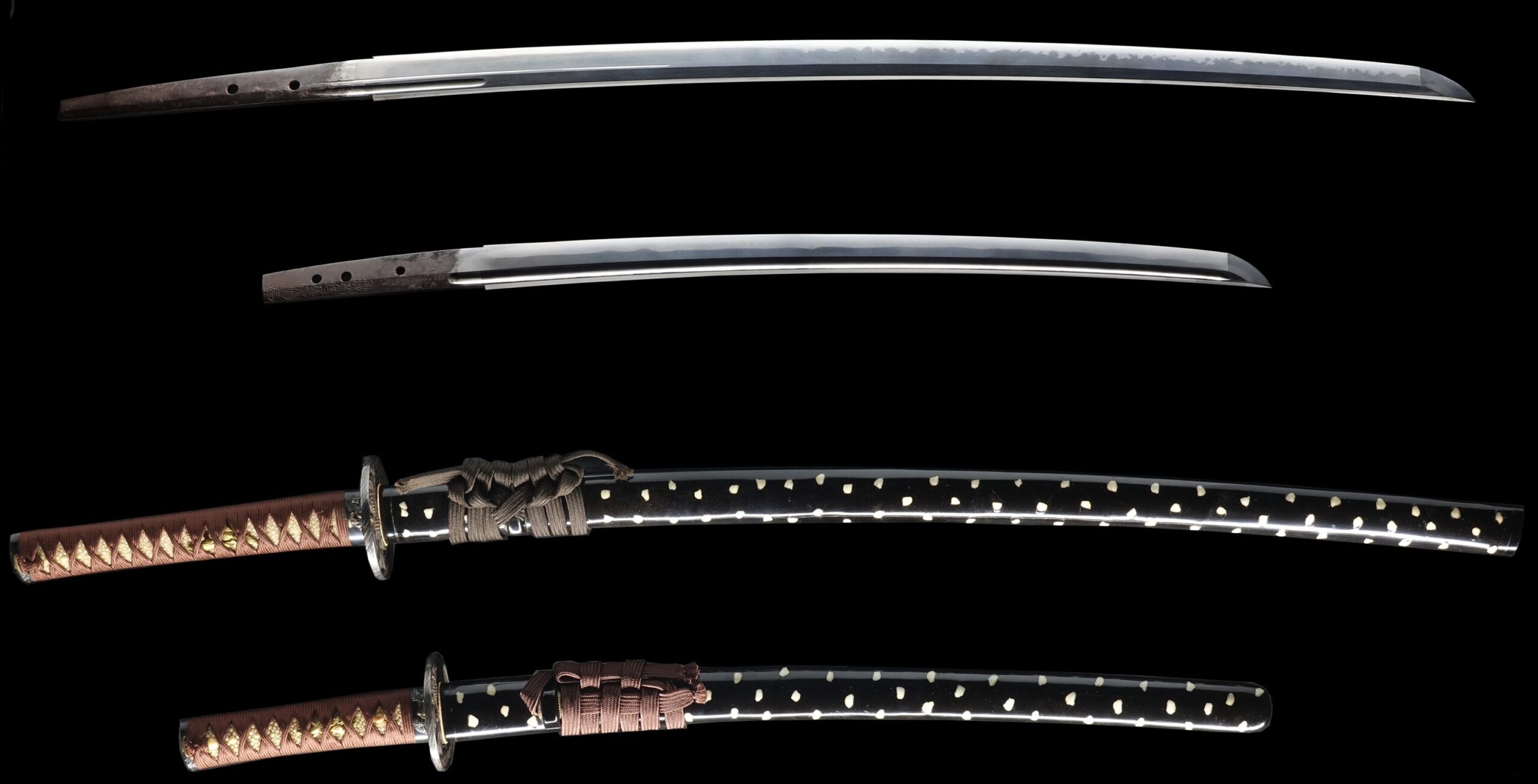
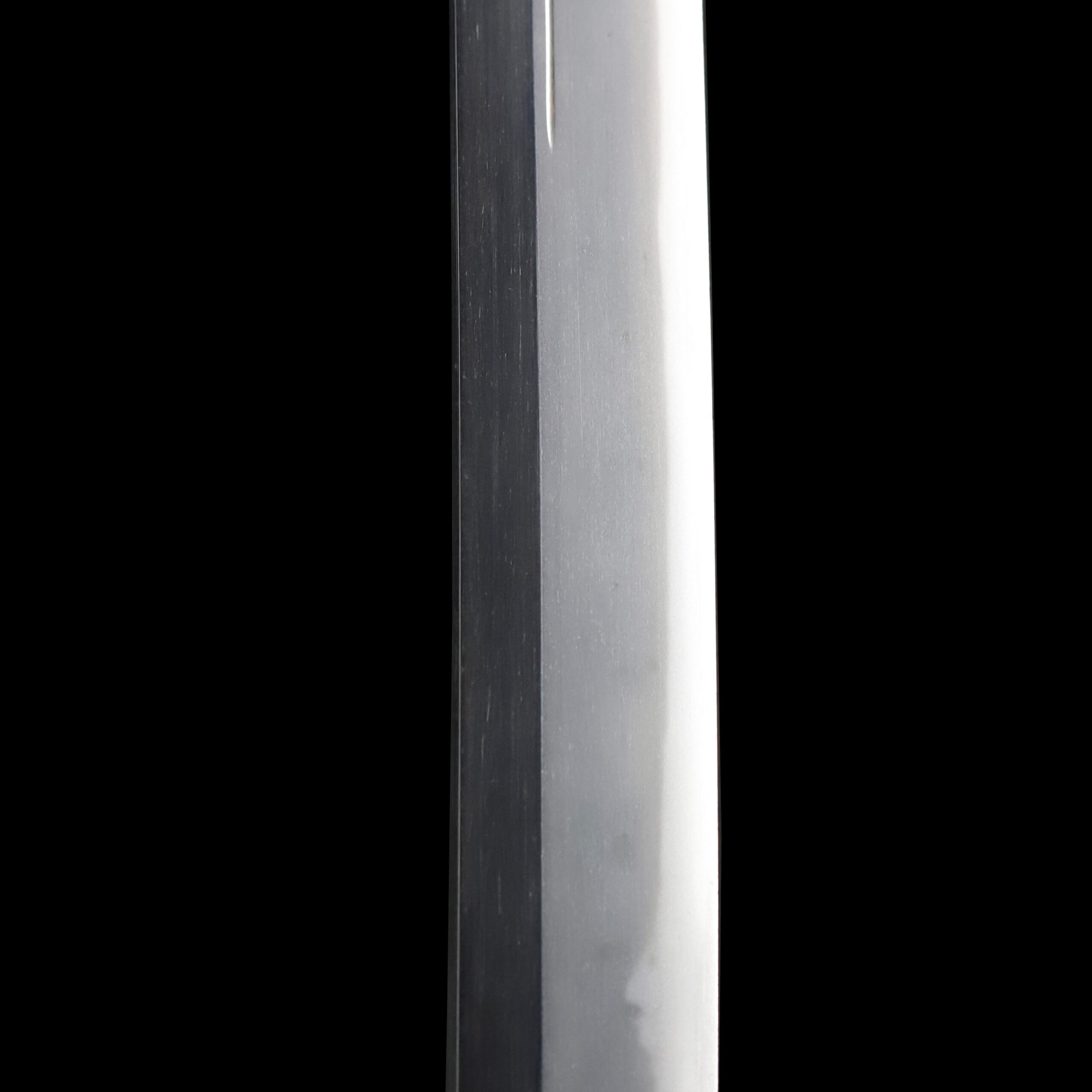
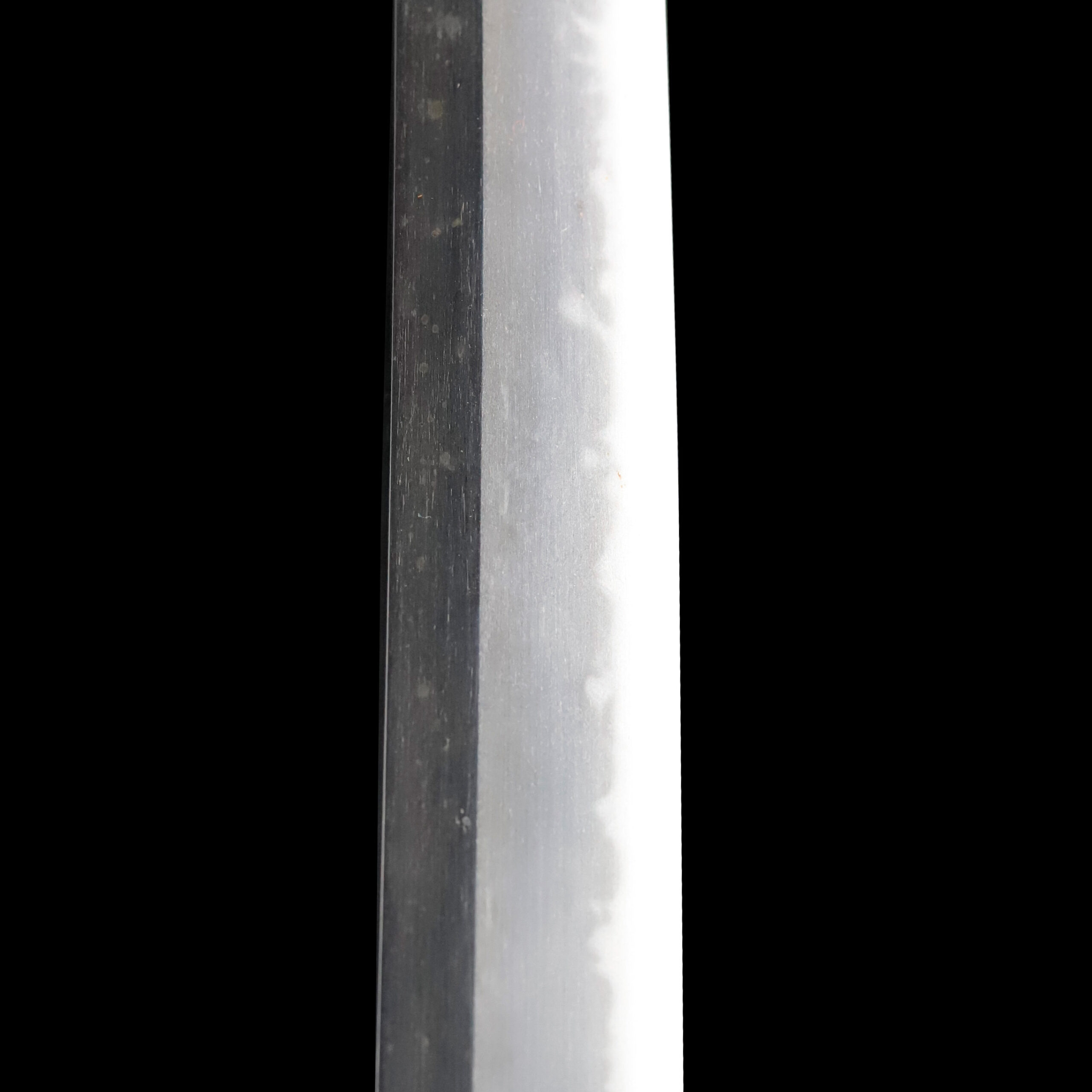
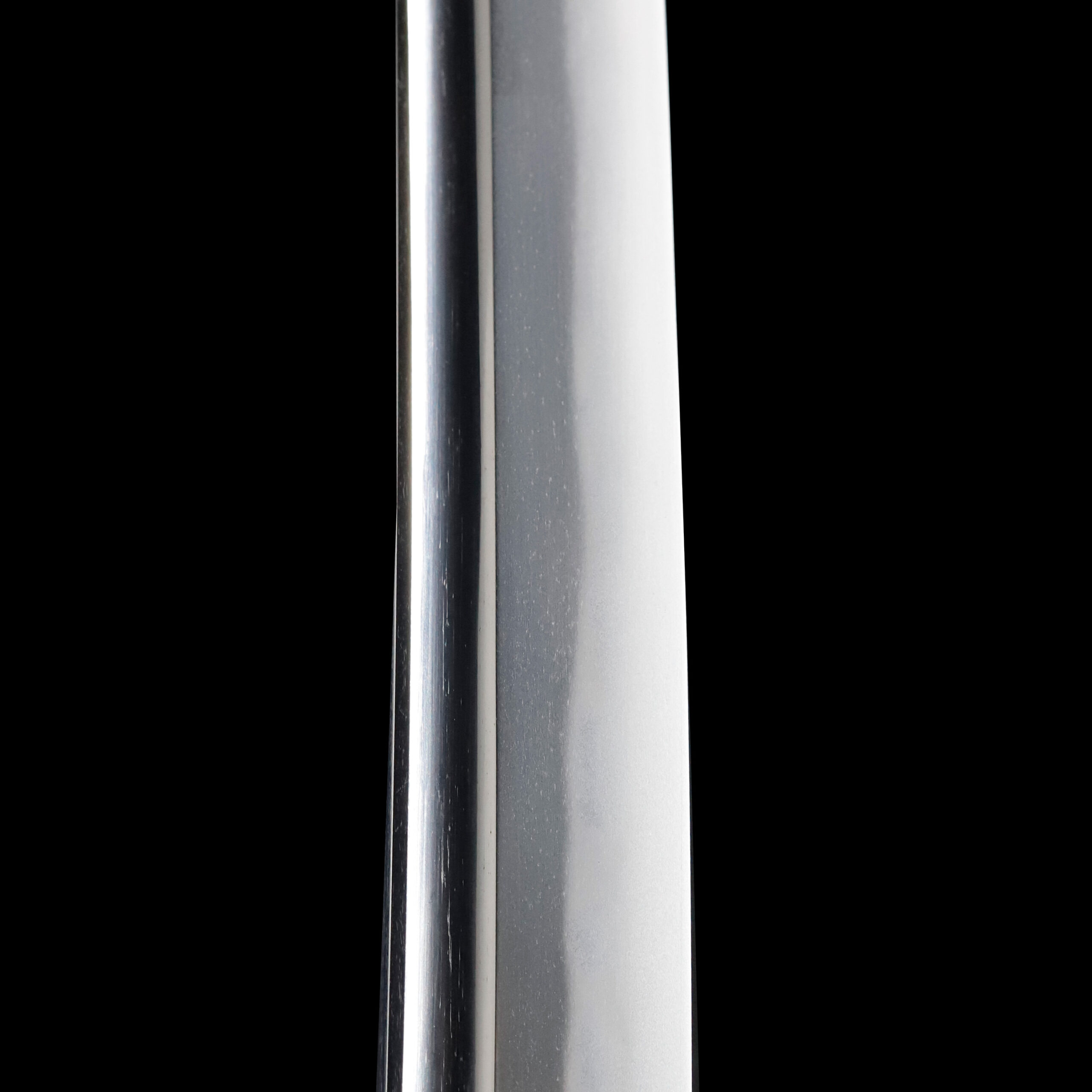
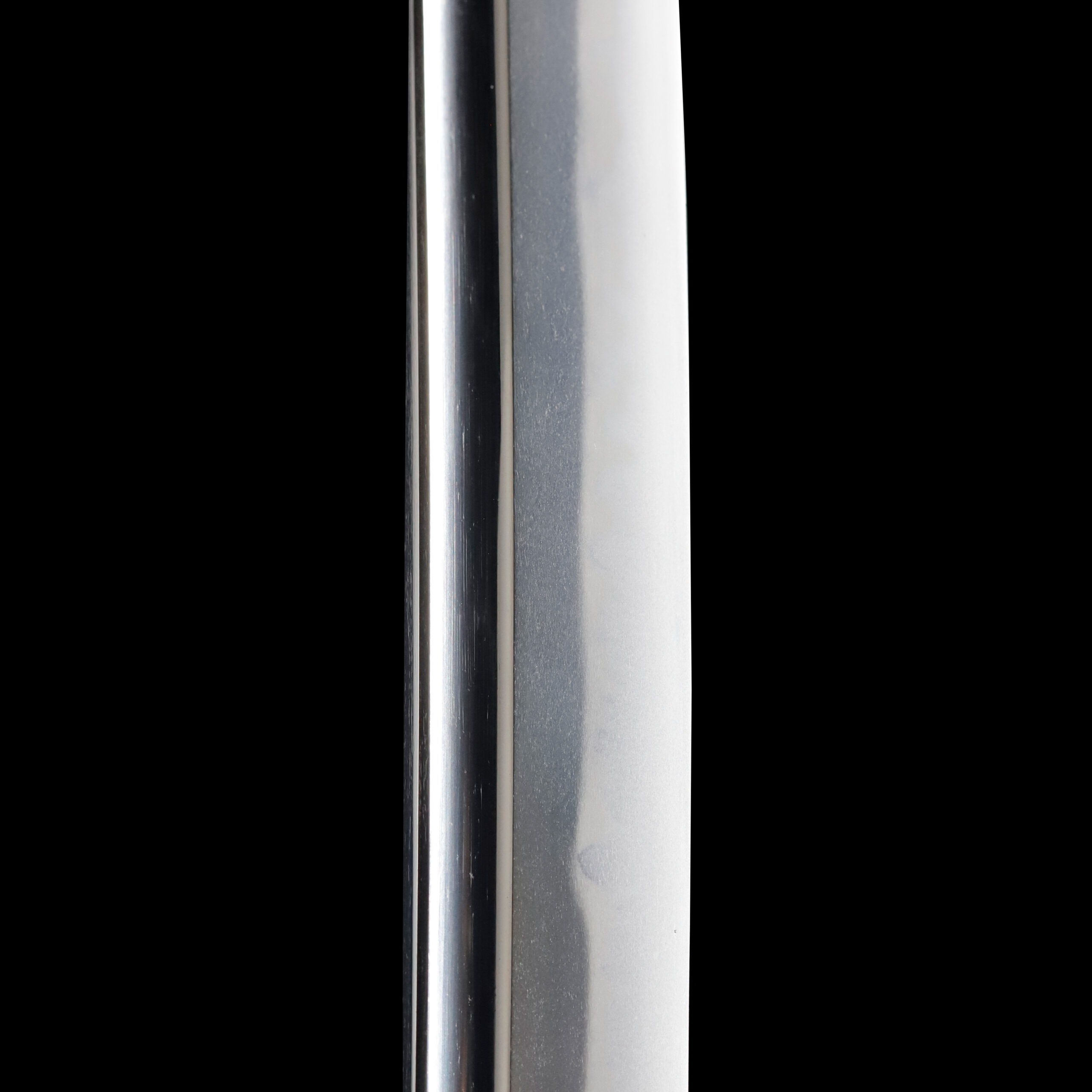
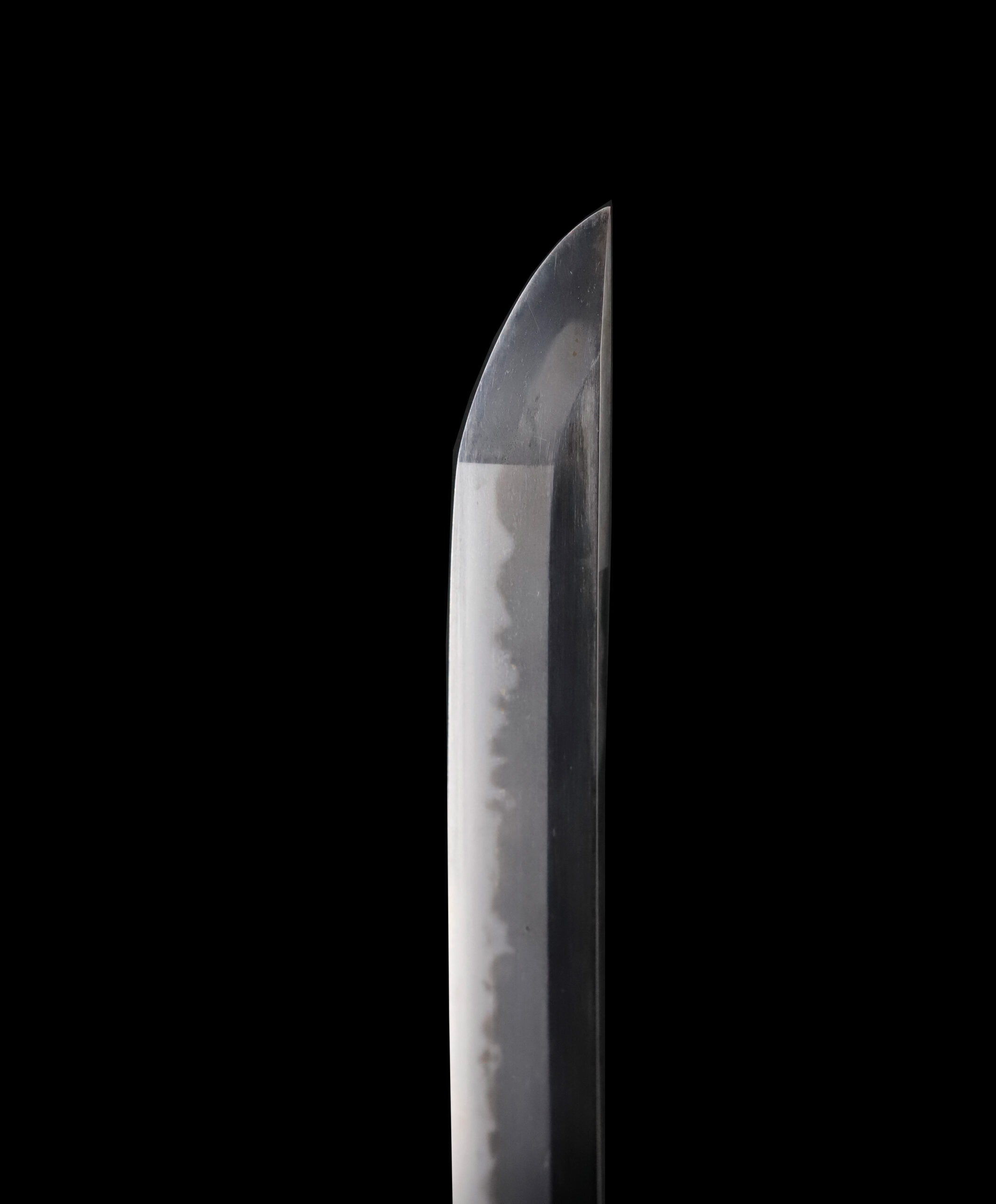
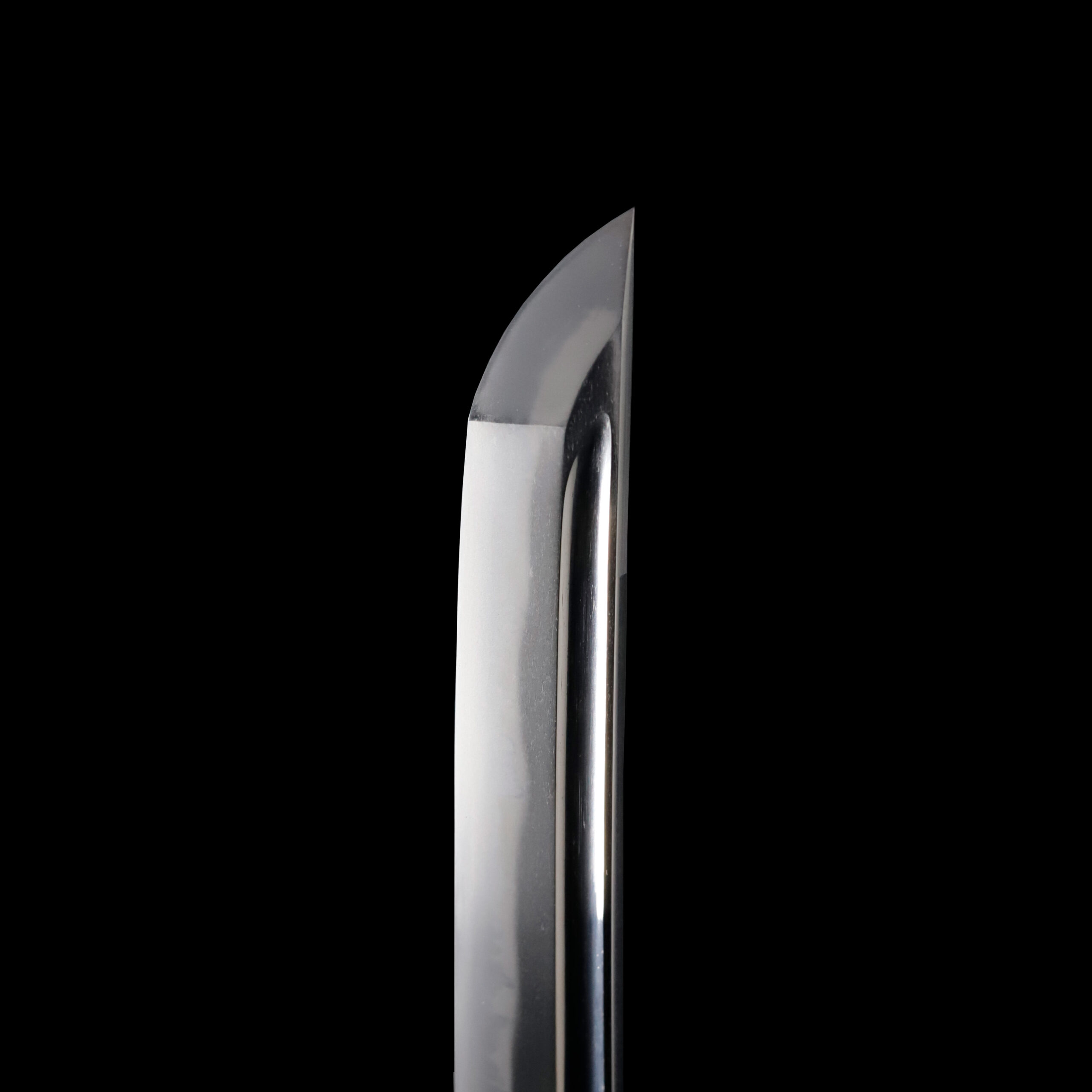
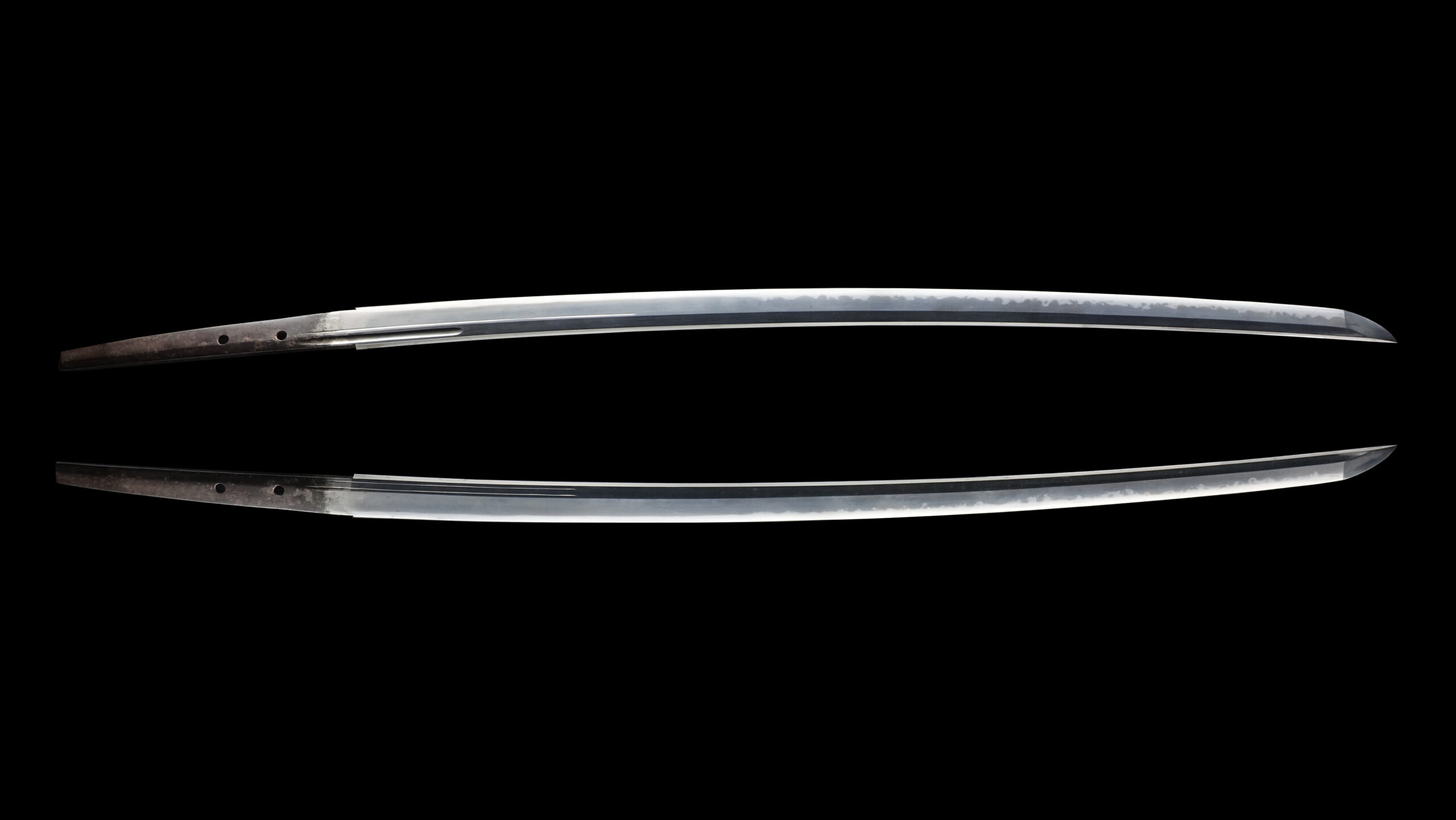
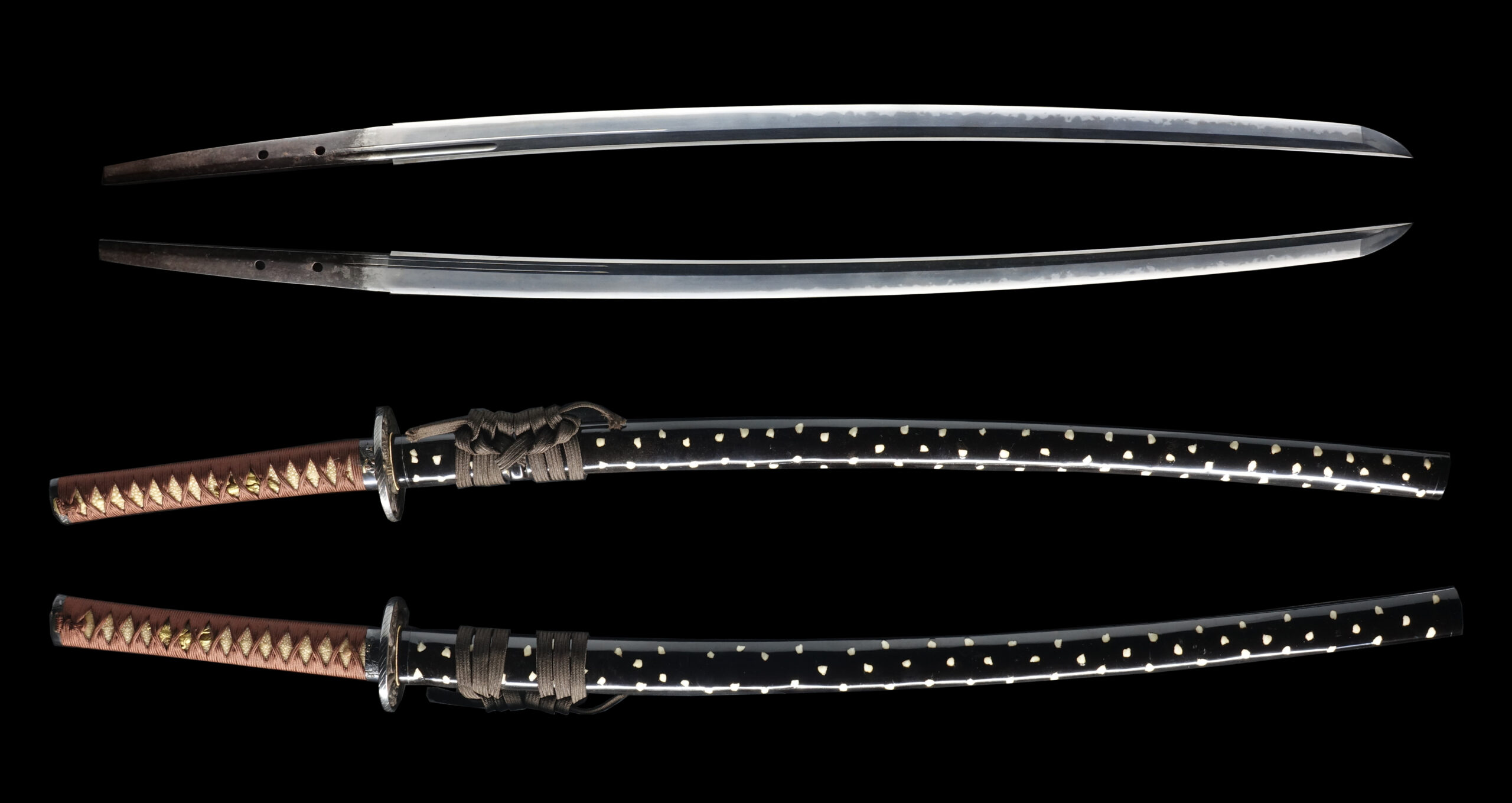
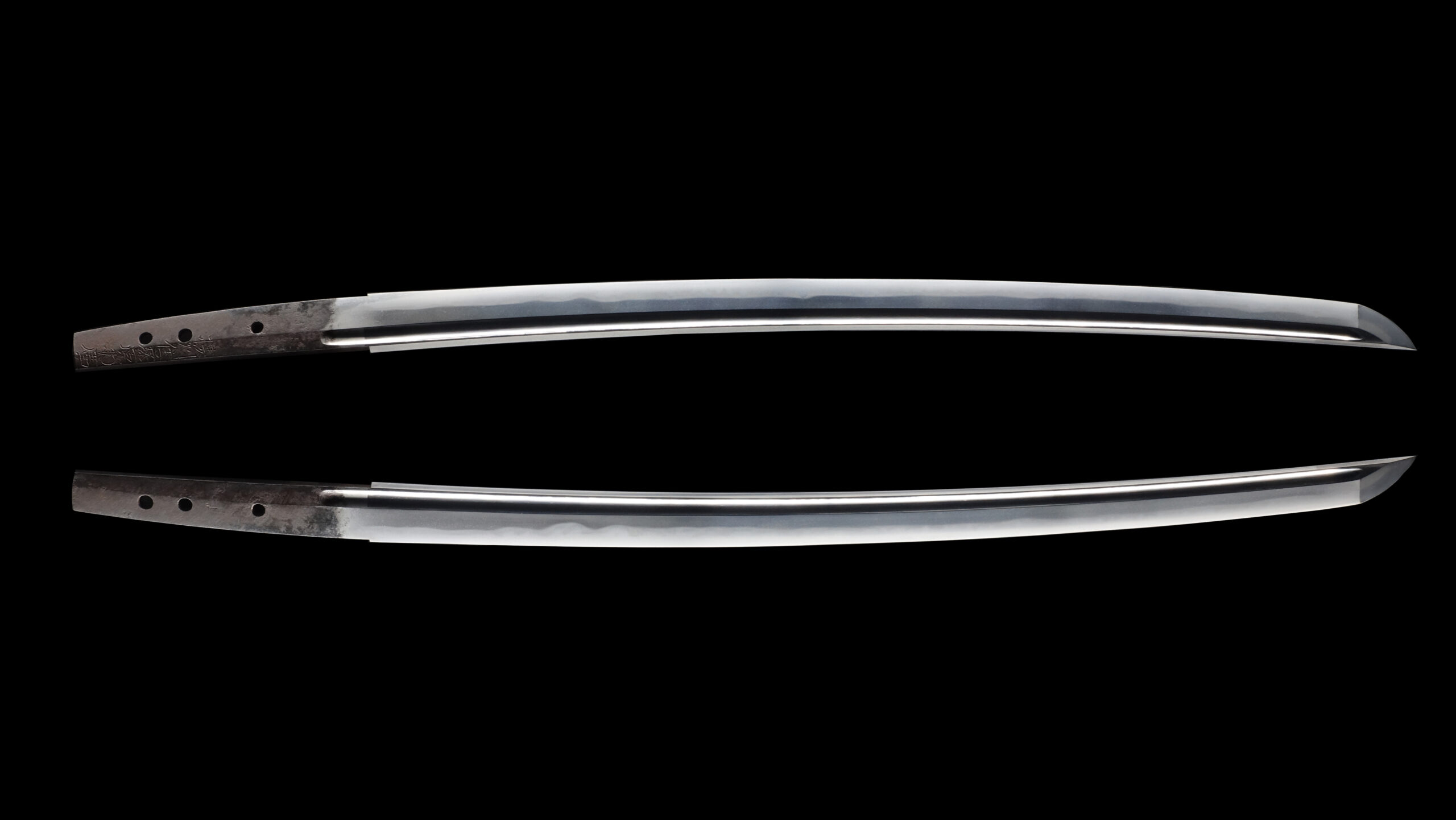
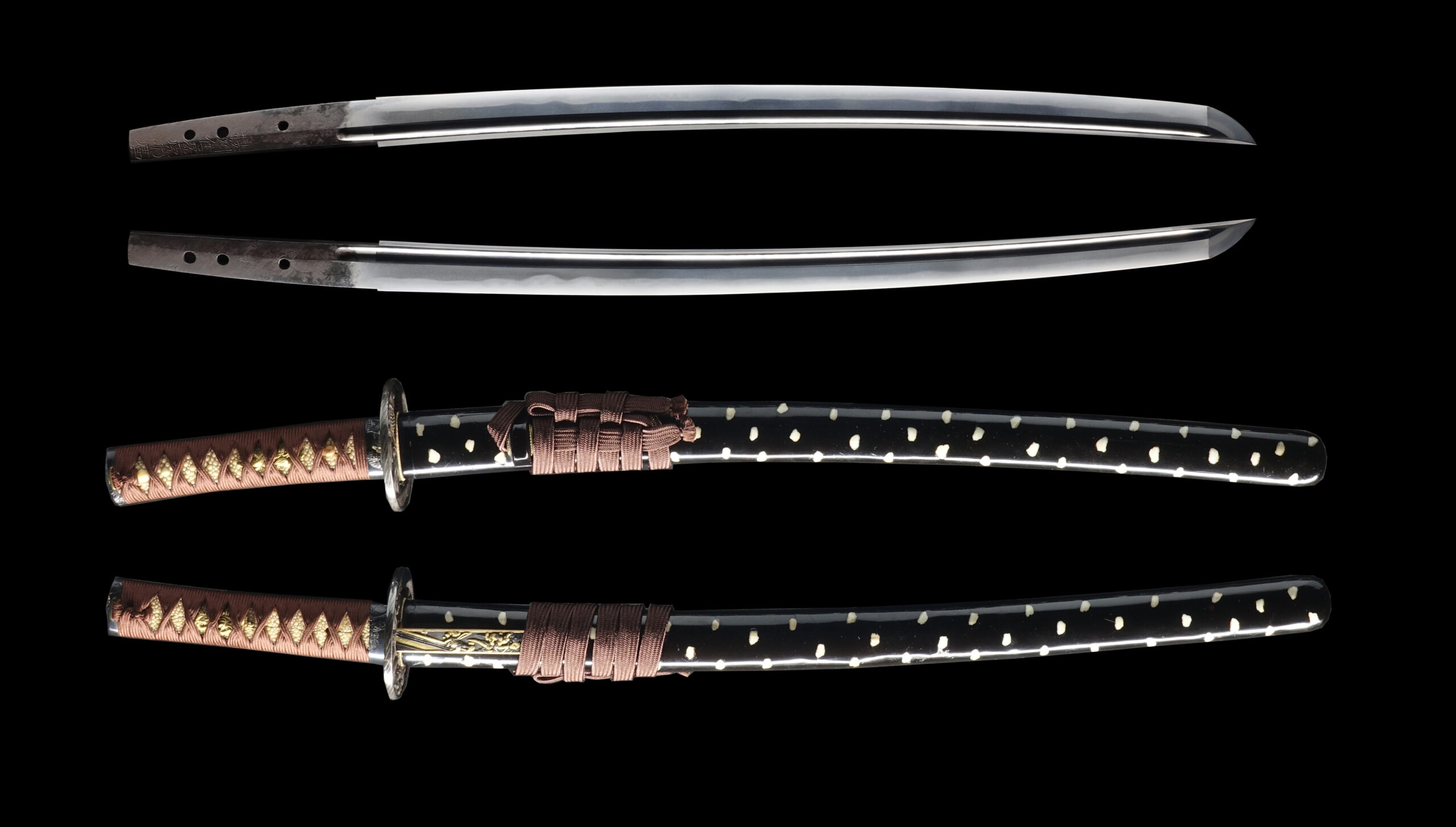
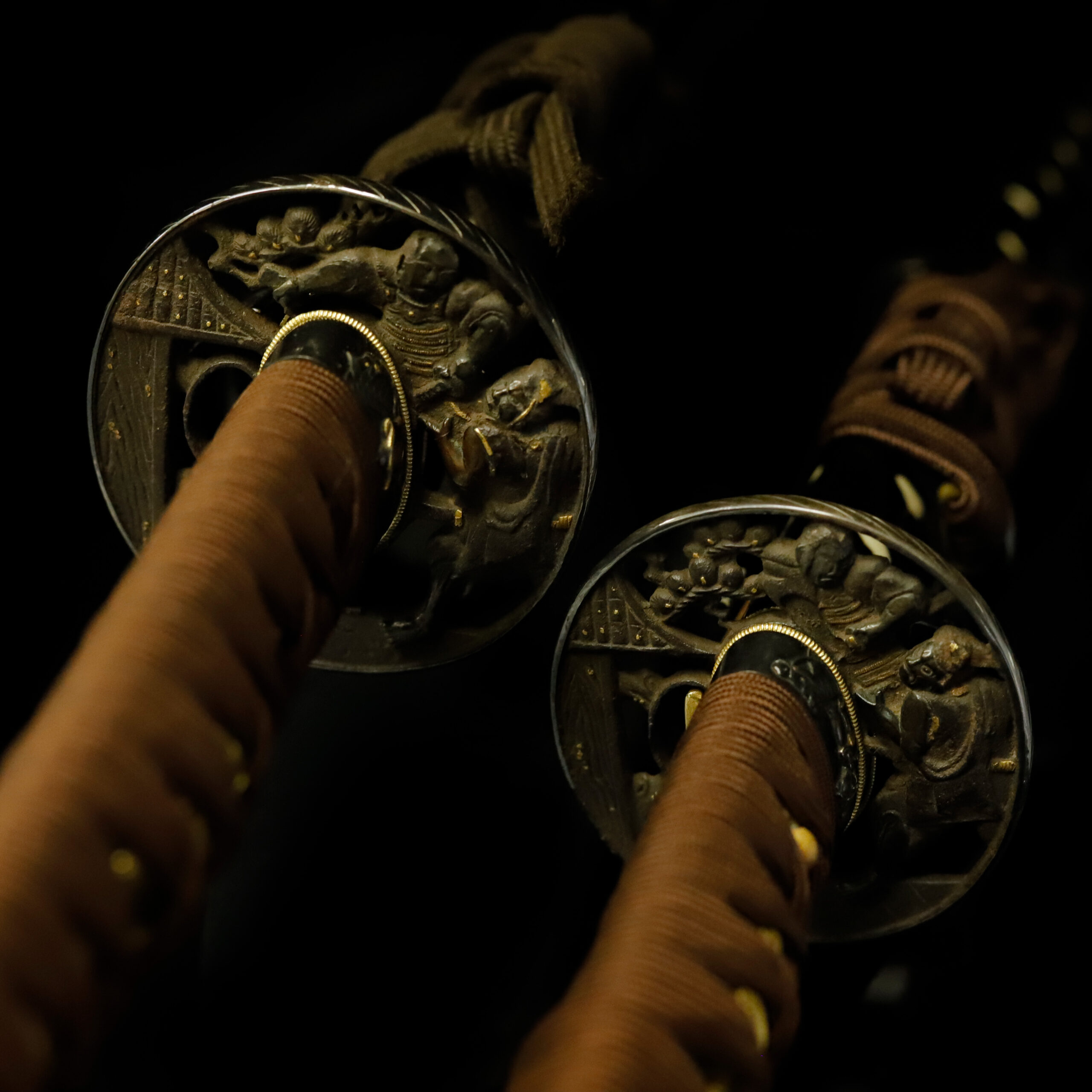
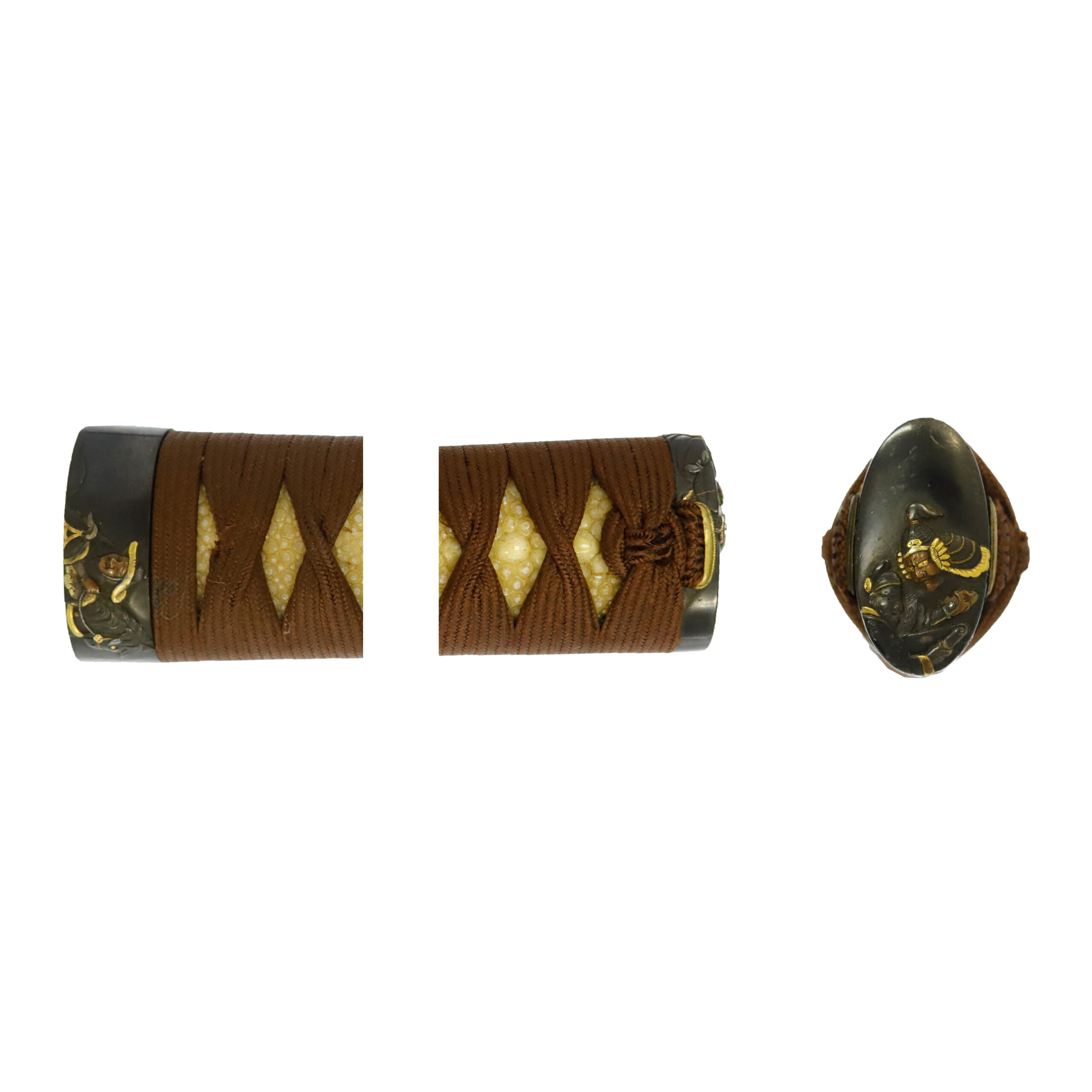
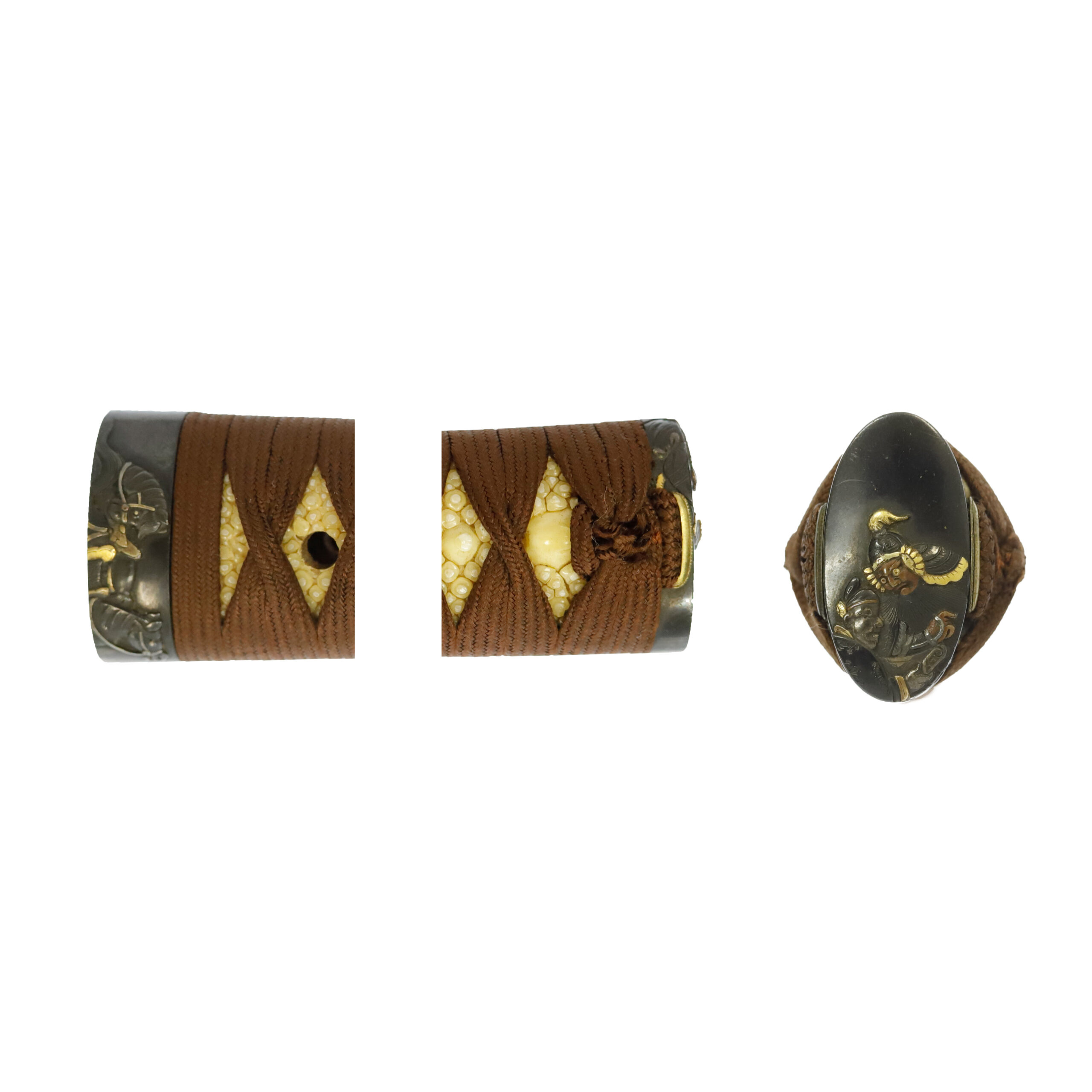
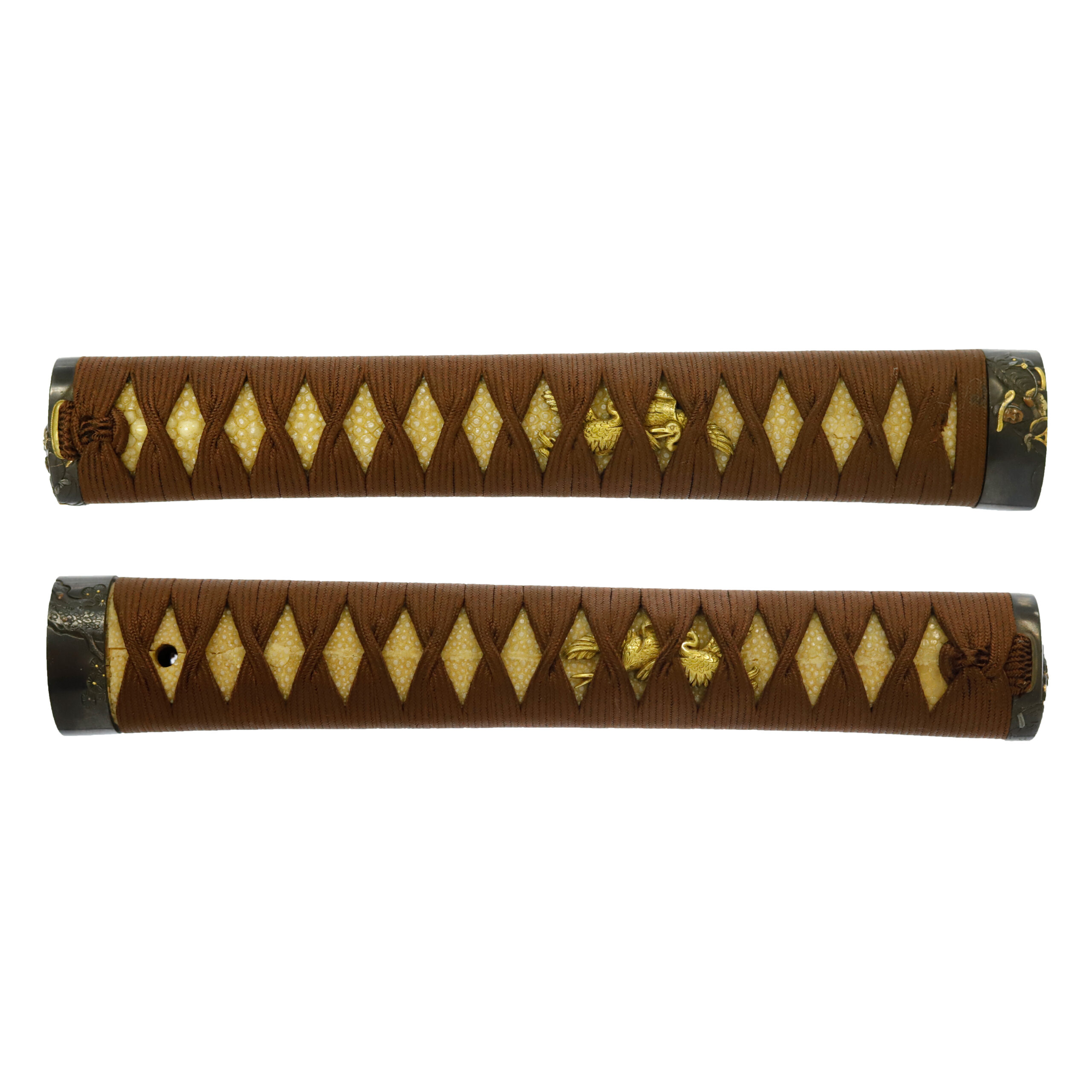
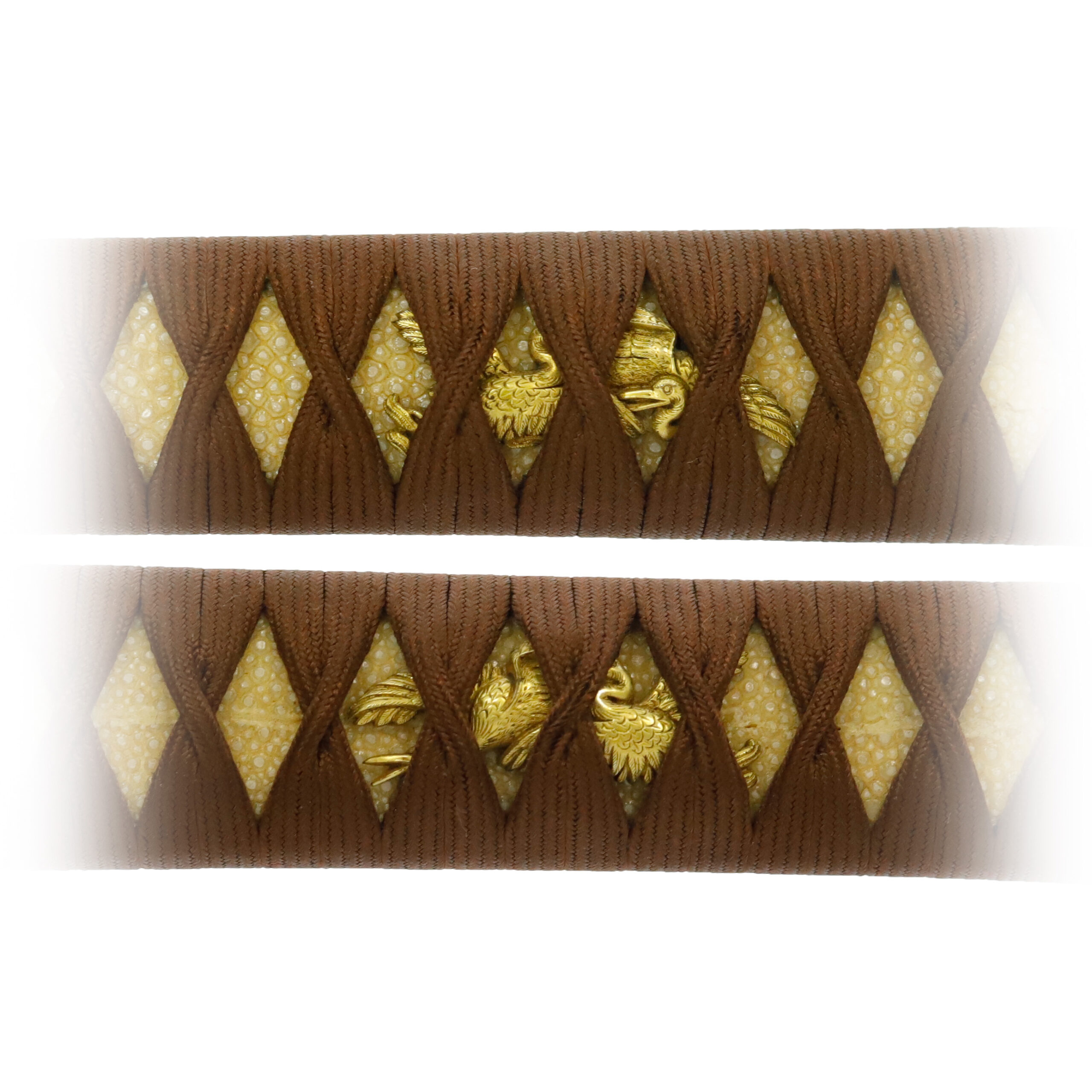
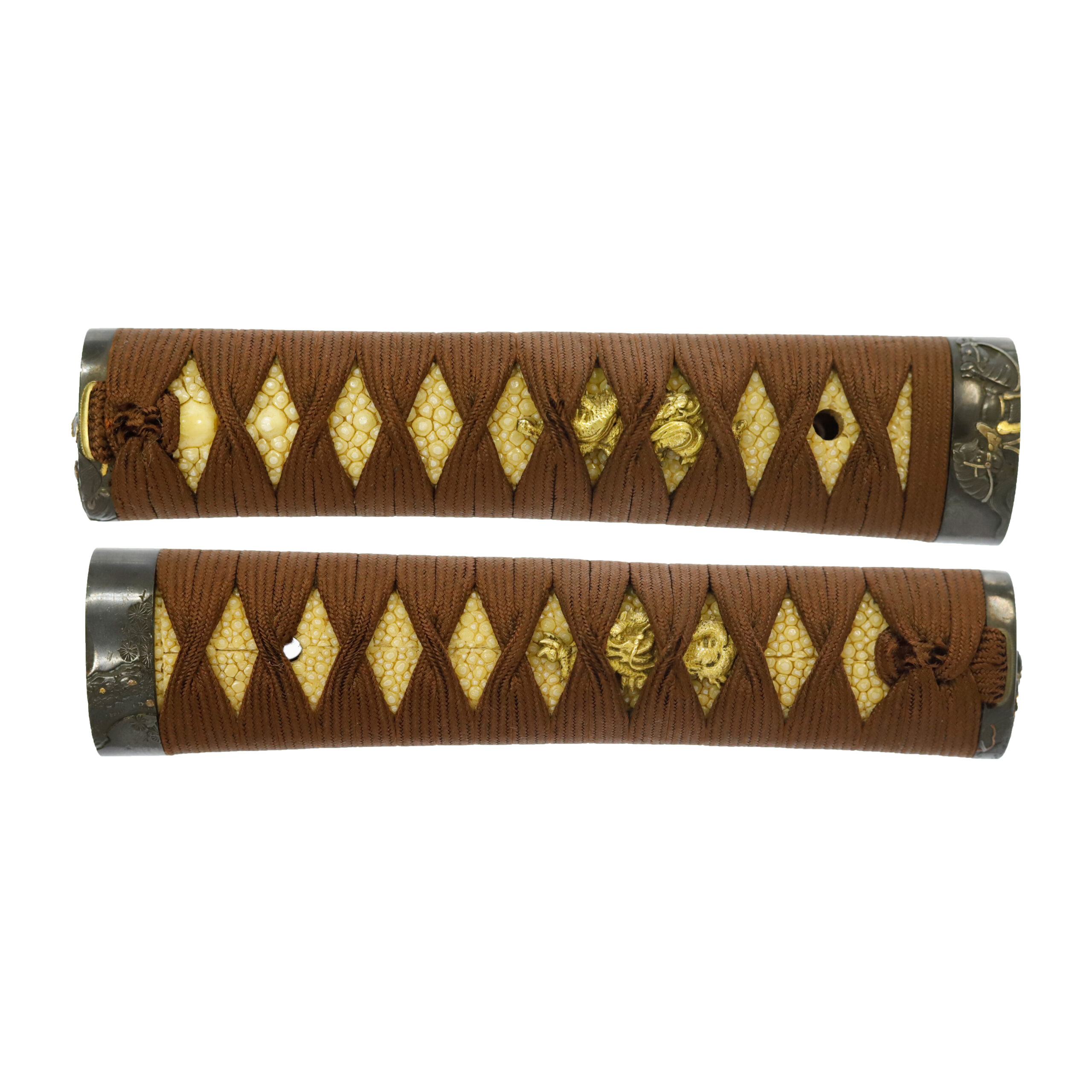
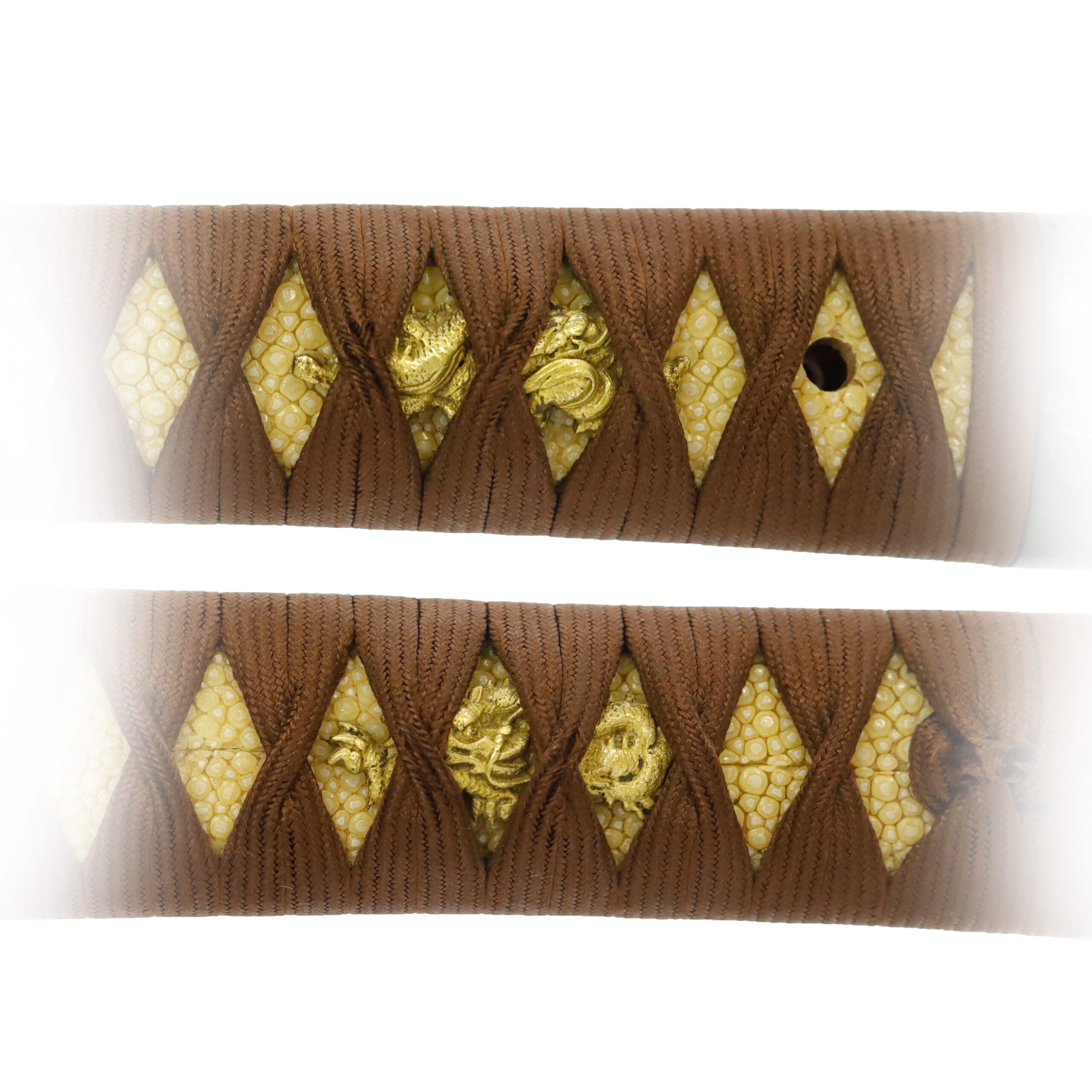
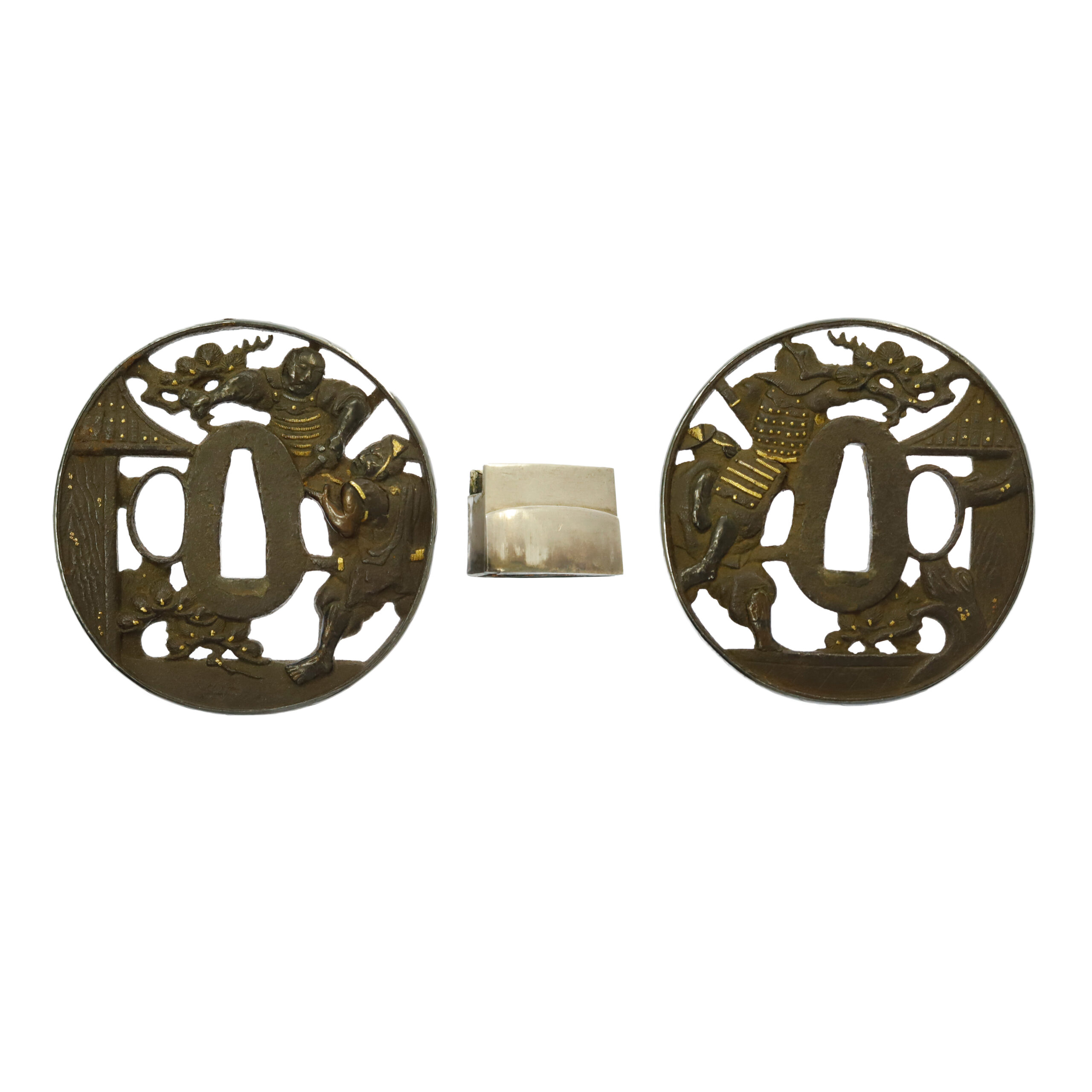
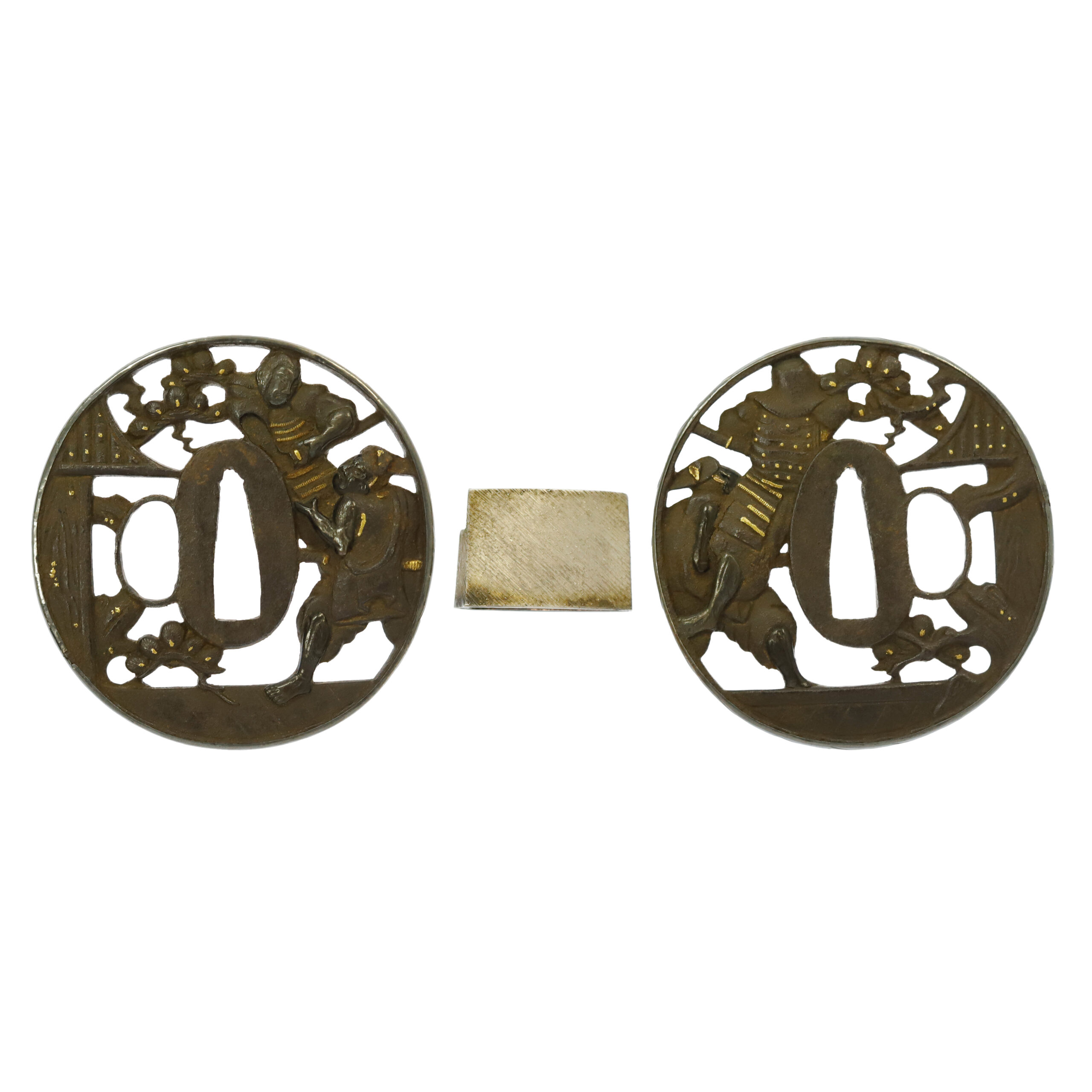
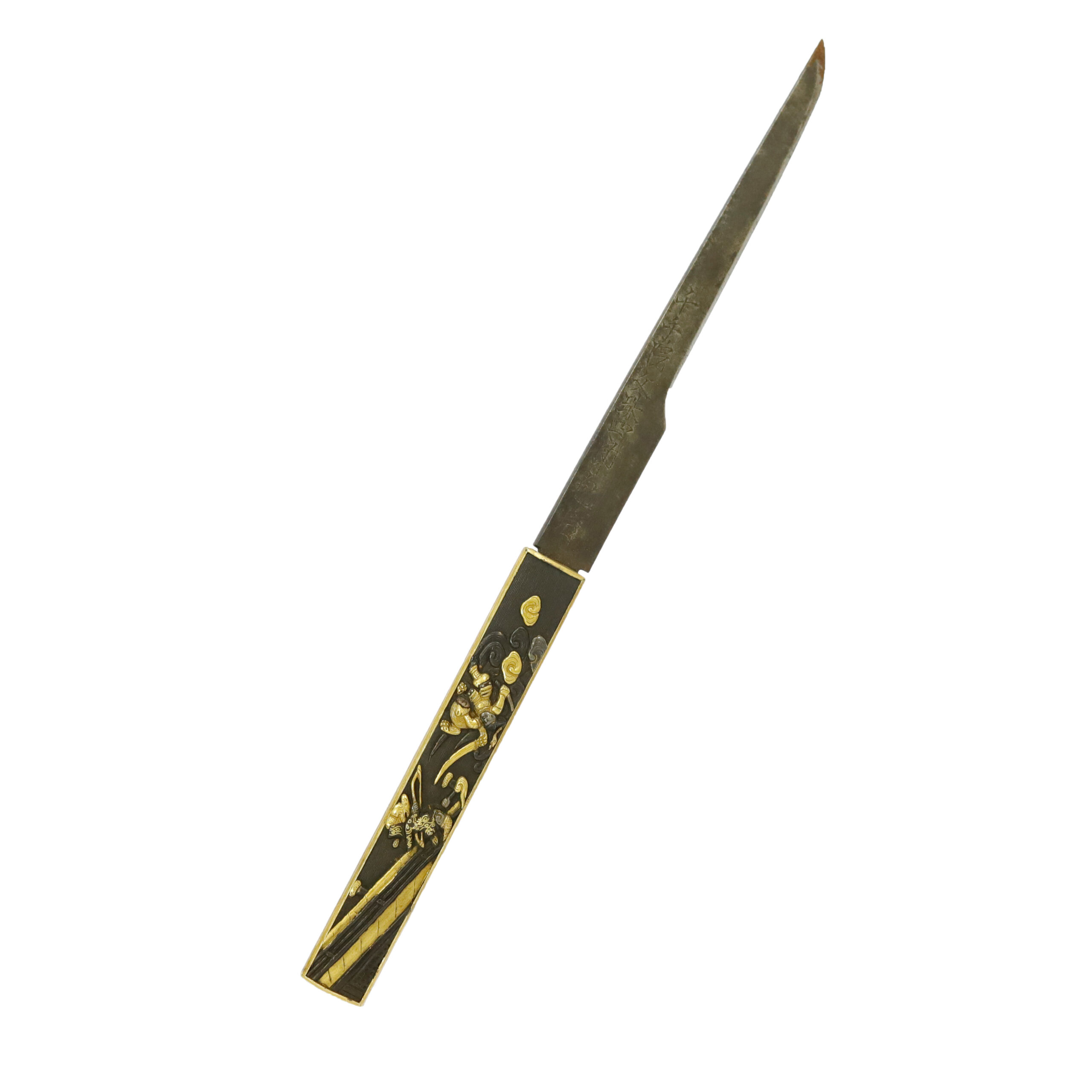
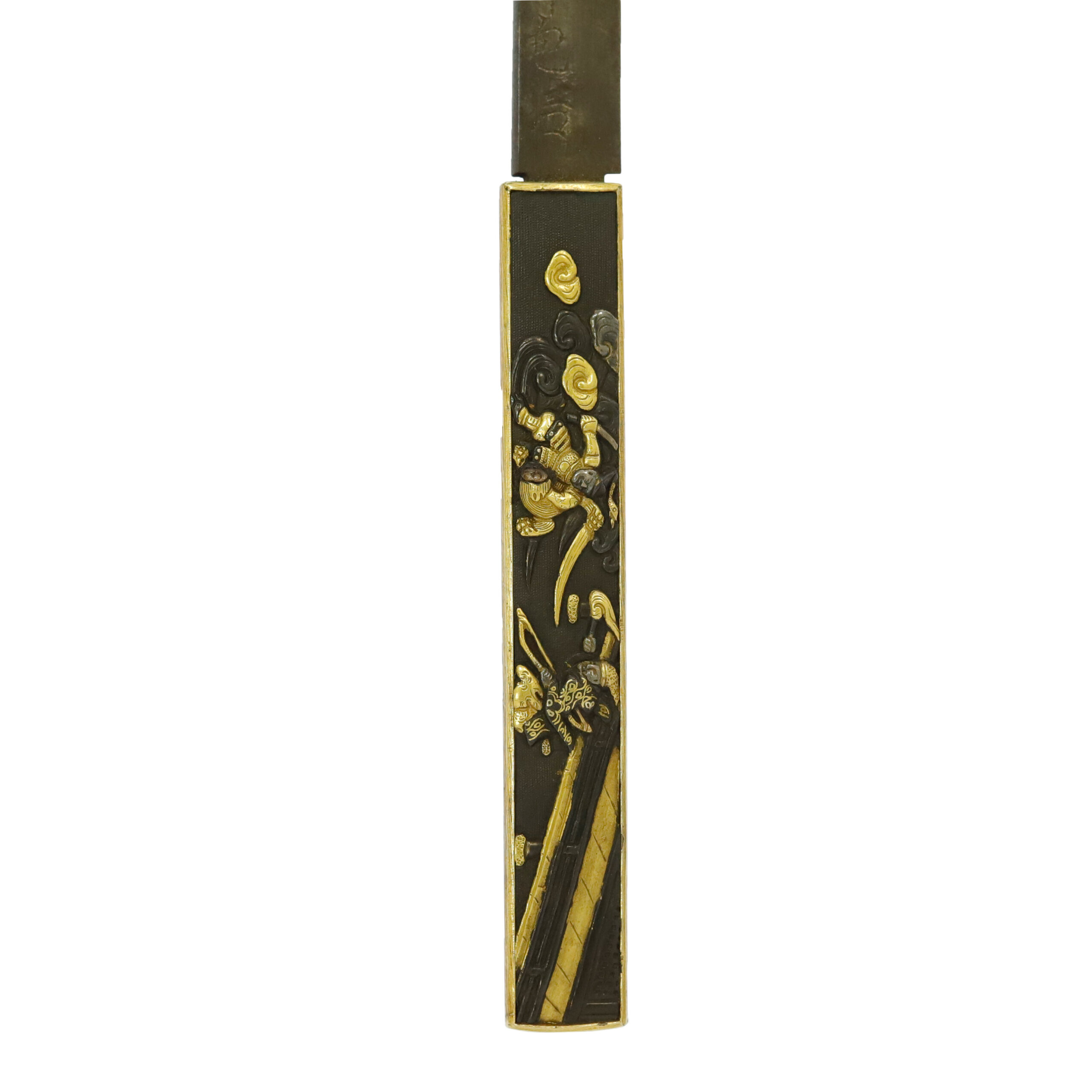
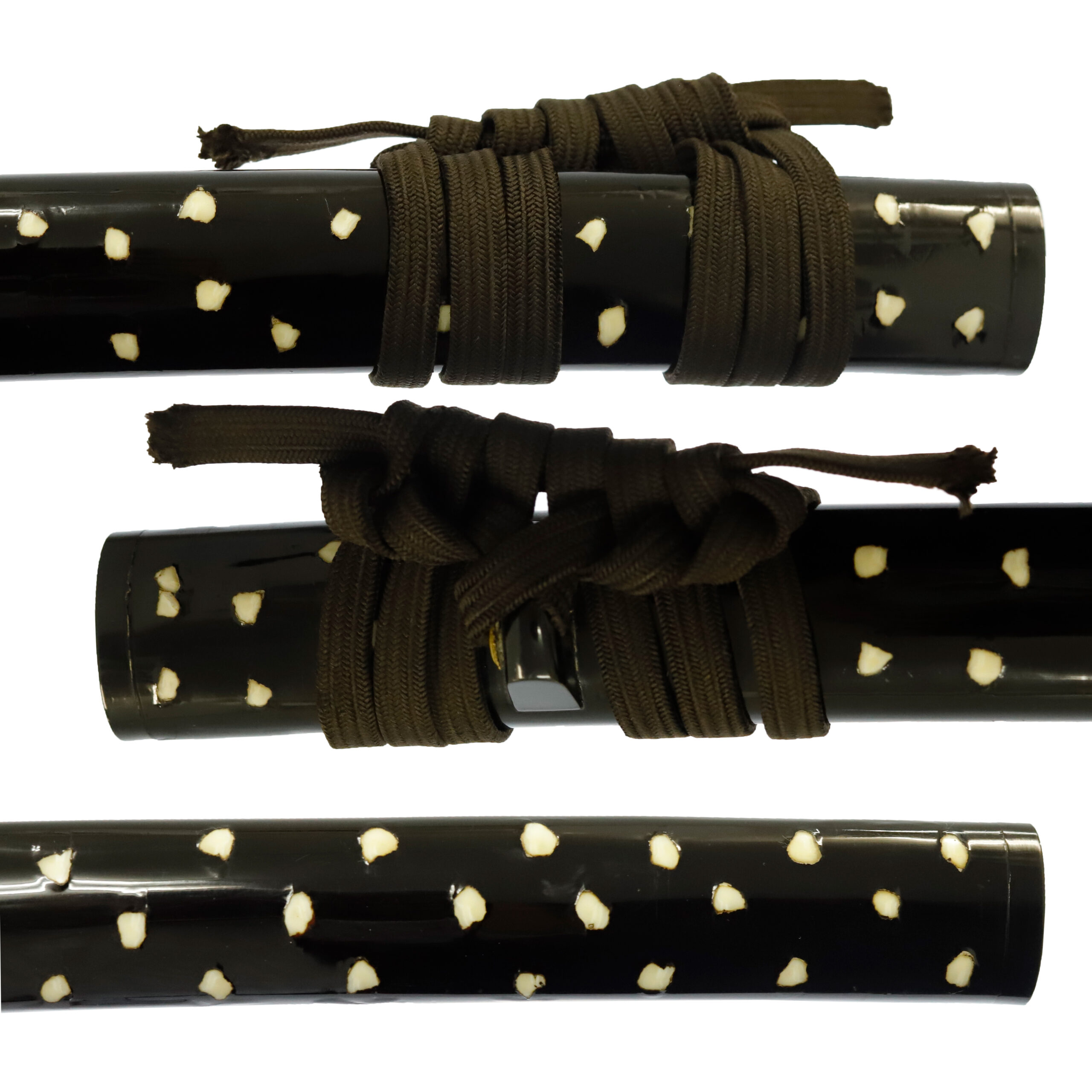
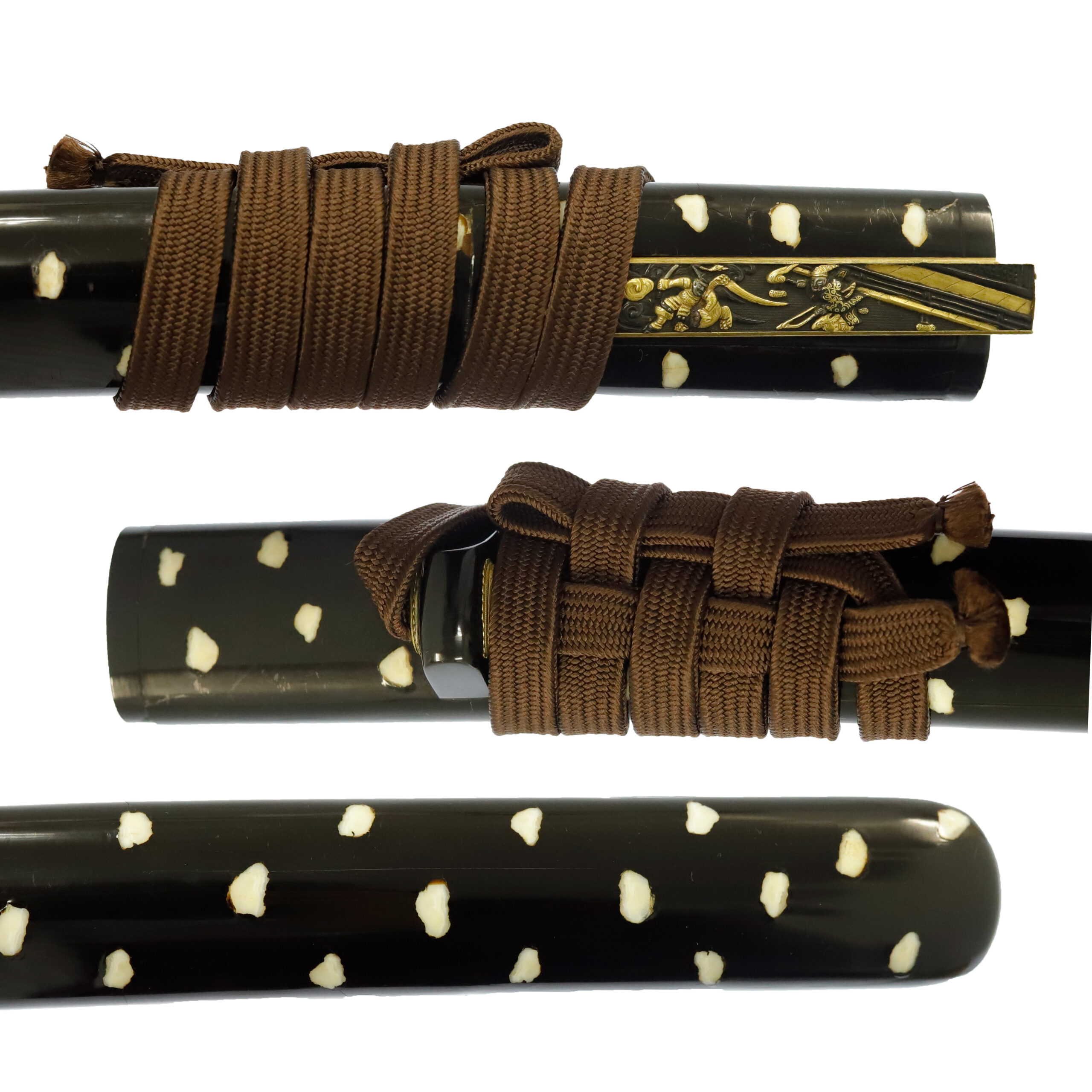
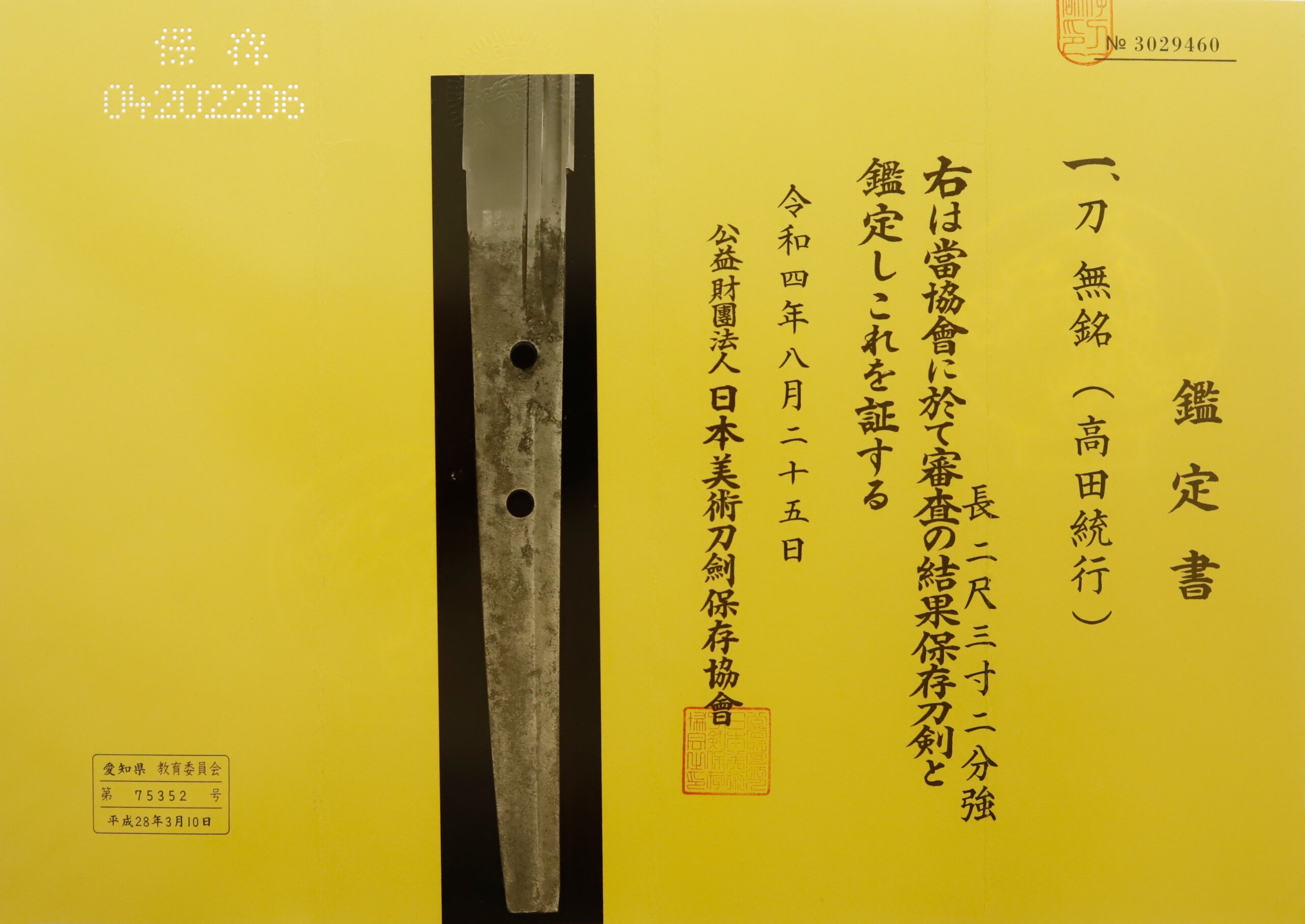
日本刀 大刀・脇差 大小一腰 大刀:無銘 高田統行(日本美術刀剣保存協会 保存刀剣鑑定書付) 脇差:銘 摂州住藤原助広(日本美術刀剣保存協会 特別保存刀剣鑑定書付) 【作品解説】 ■大刀(打刀) 本作は、豊後国(現在の大分県)の名門・高田派の刀工、高田統行(たかだむねゆき)と極められた一振りです。統行の名は天正から明暦年間(1573-1658年)にかけて三代続きますが、本作は安土桃山時代から江戸初期(1573-1615年頃)に活躍した初代の作と推察されます。 高田派は南北朝時代(1334-1338年頃)、高田友行によって豊後国高田郷で興されました。友行は備前国(現在の岡山県)へ渡って備前伝の作刀技術を修めた後、郷里に戻り門弟を育成しました。これが高田派の始まりです。 戦国時代(15世紀後半〜16世紀後半)には、九州の武士たちの需要に応え、数多くの刀剣を鍛造しました。その評価は極めて高く、当時二大産地として名を馳せた備前や美濃の刀剣に比肩すると謳われました。 戦国期の豊後国は大友宗麟(義鎮)が統治し、九州屈指の強大な軍事・政治基盤を築いていました。高田派の刀工は大友家に仕える武士たちの刀を多く手掛けており、統行の「統」の字は大友家より賜ったものと伝えられています。統行は江戸時代における高田派の隆盛を築く上で、極めて重要な役割を果たしました。 九州地方は古来よりアジア諸国との交易が盛んで、貿易の利権を巡る諸大名の抗争により刀剣の需要が絶えませんでした。また、高田郷の近隣に位置する祖母傾山系からは、良質な砂鉄や木炭が豊富に産出されました。こうした地理的条件と天然資源の恩恵が、高田派の繁栄を支えたと考えられます。 ■脇差 本作は「摂州住藤原助広」と銘があり、寛永から慶安年間(1624-1652年:江戸時代初期)に活躍した初代助広の作です。「摂州」は摂津国(現在の大阪府)を指し、助広が同地に居住して作刀したことを示しています。 日本美術刀剣保存協会(NBTHK)の鑑定により、本作は三代続く助広のうち、江戸初期の大阪を代表する名工である初代の手によるものと認められています。初代助広は播磨国津田(現在の兵庫県)に生まれ、後に大阪へ移り、名工・河内守国助の門下に入りました。また、江戸時代屈指の天才刀工として知られる津田越前守助広の父としても有名です。 江戸時代後期に山田浅右衛門が著した『懐宝剣尺』において、初代助広の刀は「最上大業物(極めて斬れ味が優れている刀)」に列せられています。幕府の御用試斬役であった浅右衛門によるこの格付けは、当時から助広の刀が実戦的な鋭さにおいて最高峰であったことを証明しています。 ■大阪新刀 助広の作品は「大阪新刀」に分類されます。「新刀」とは慶長から天明年間(1596-1781年)に打たれた刀を指し、その中でも豊臣秀吉による大坂城築城以降、経済の中心地として発展した大阪で打たれたものを大阪新刀と呼びます。活気あふれる城下町には、より良い機会を求めて多くの名工が集まり、互いに切磋琢磨することで華麗かつ洗練された作風が確立されました。
 NihontoWatch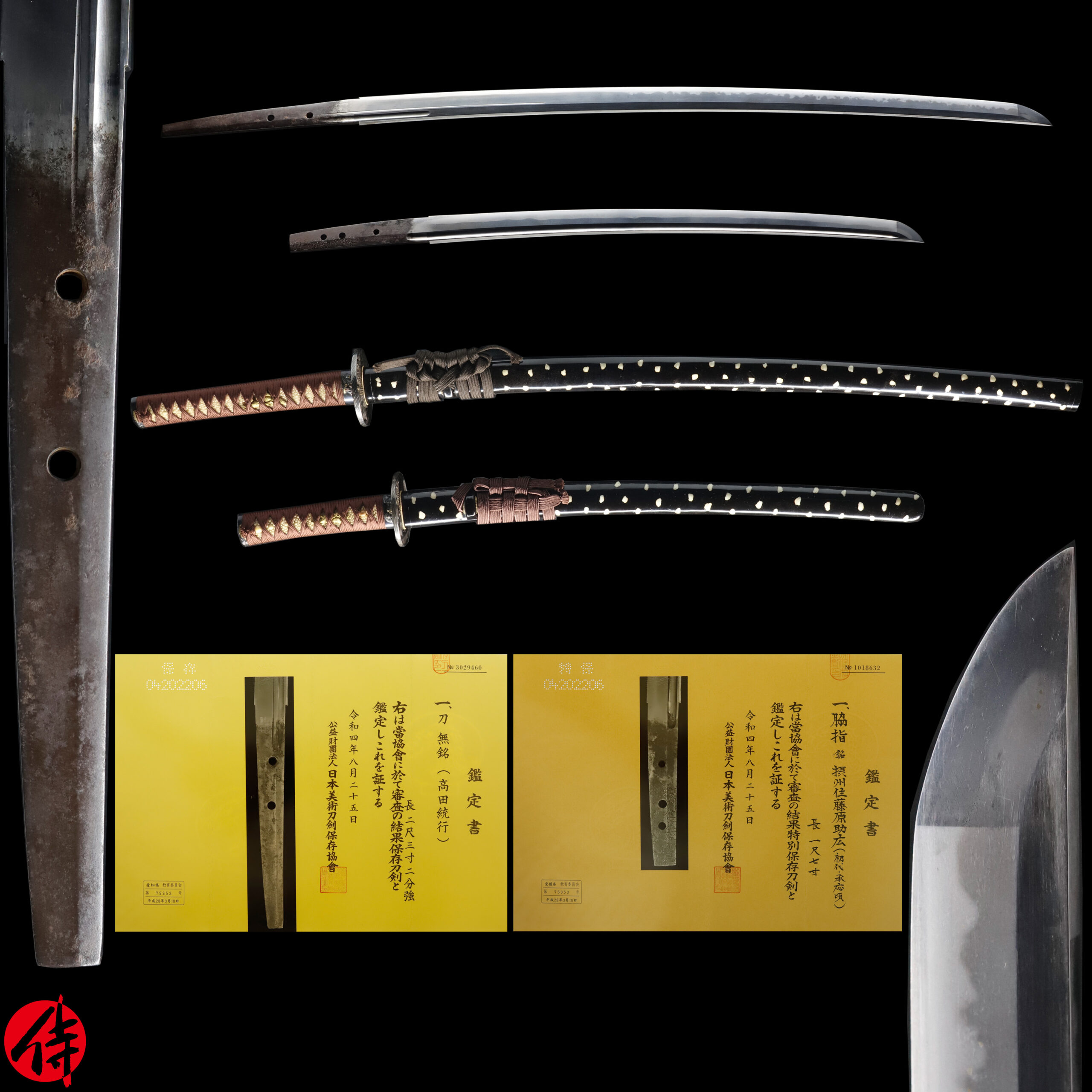
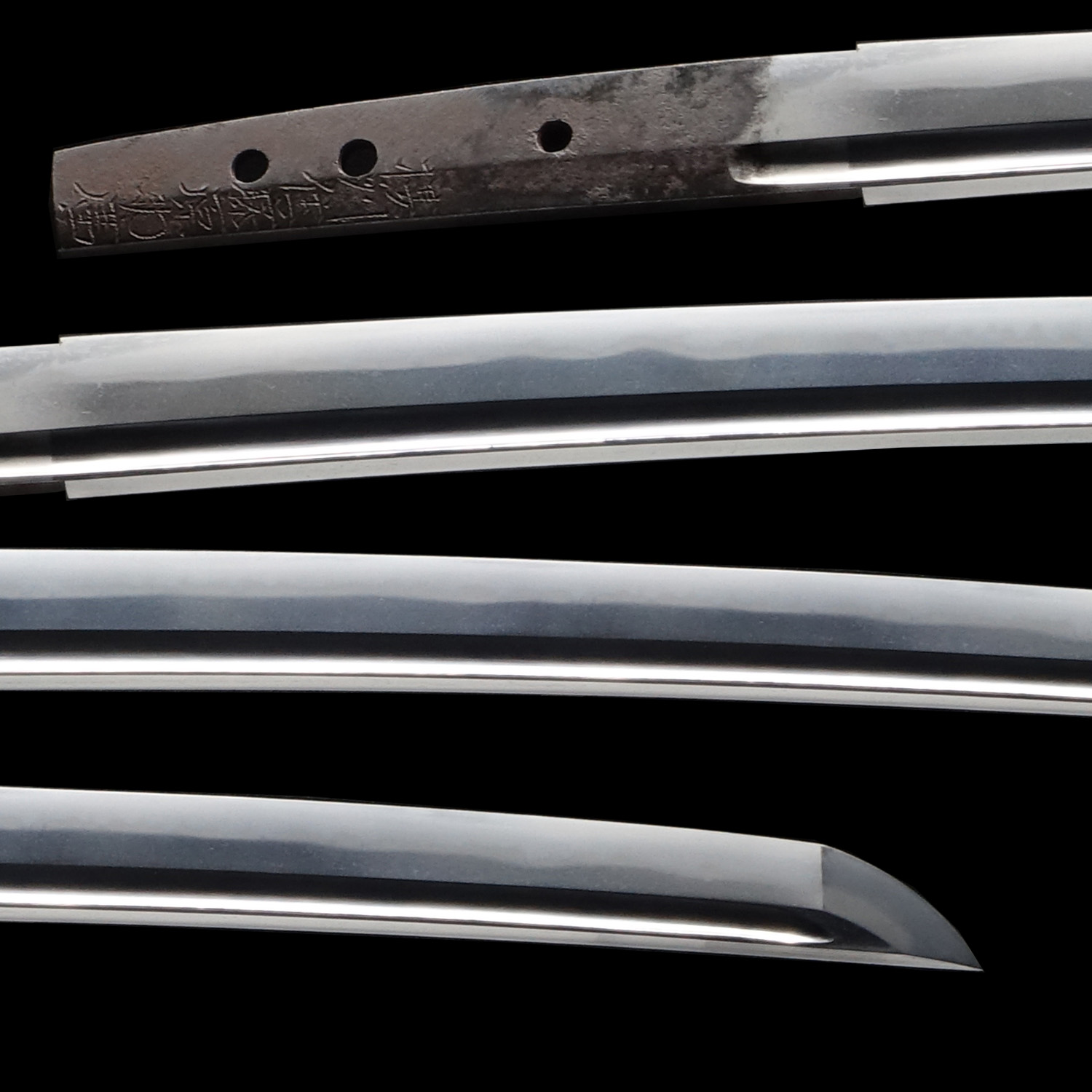
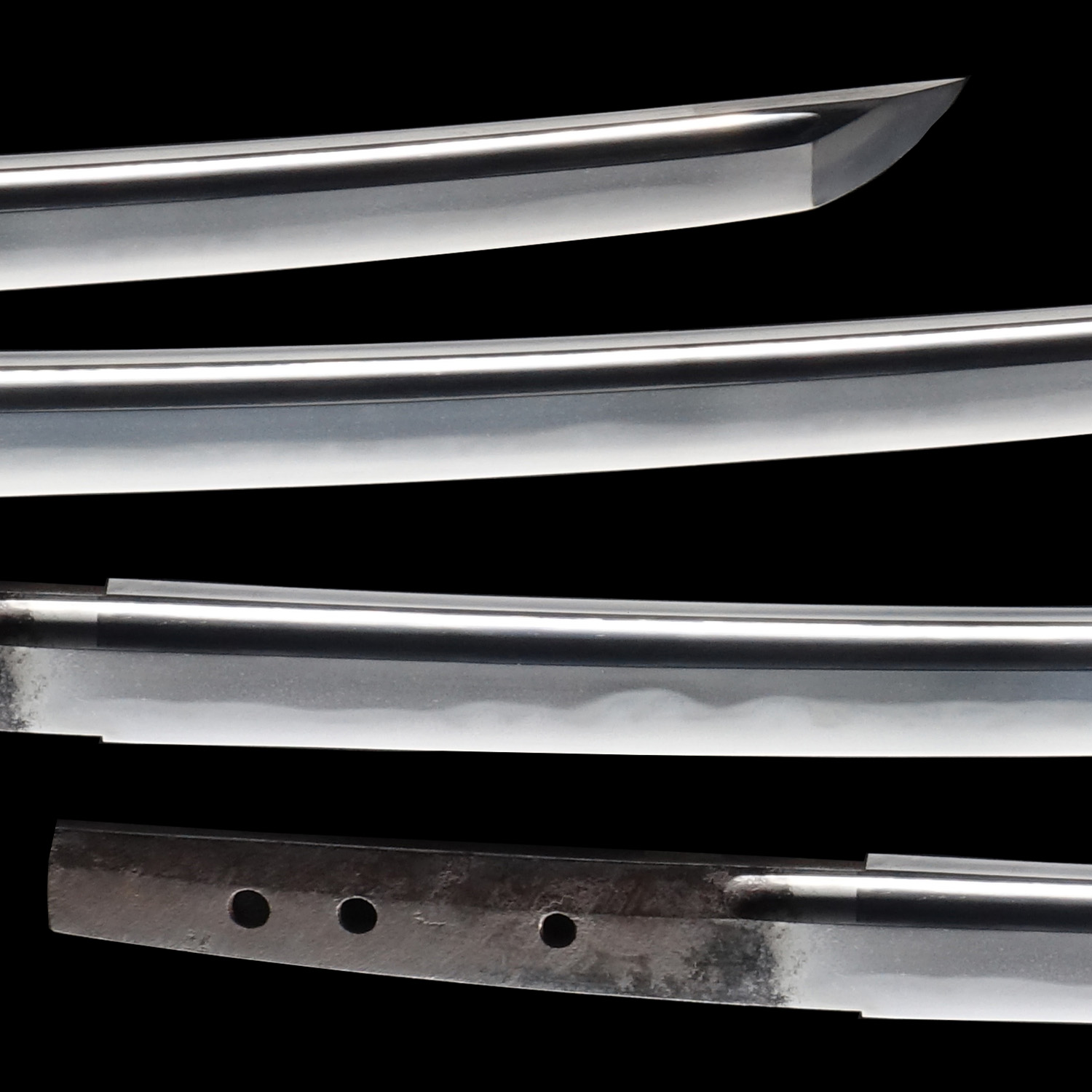
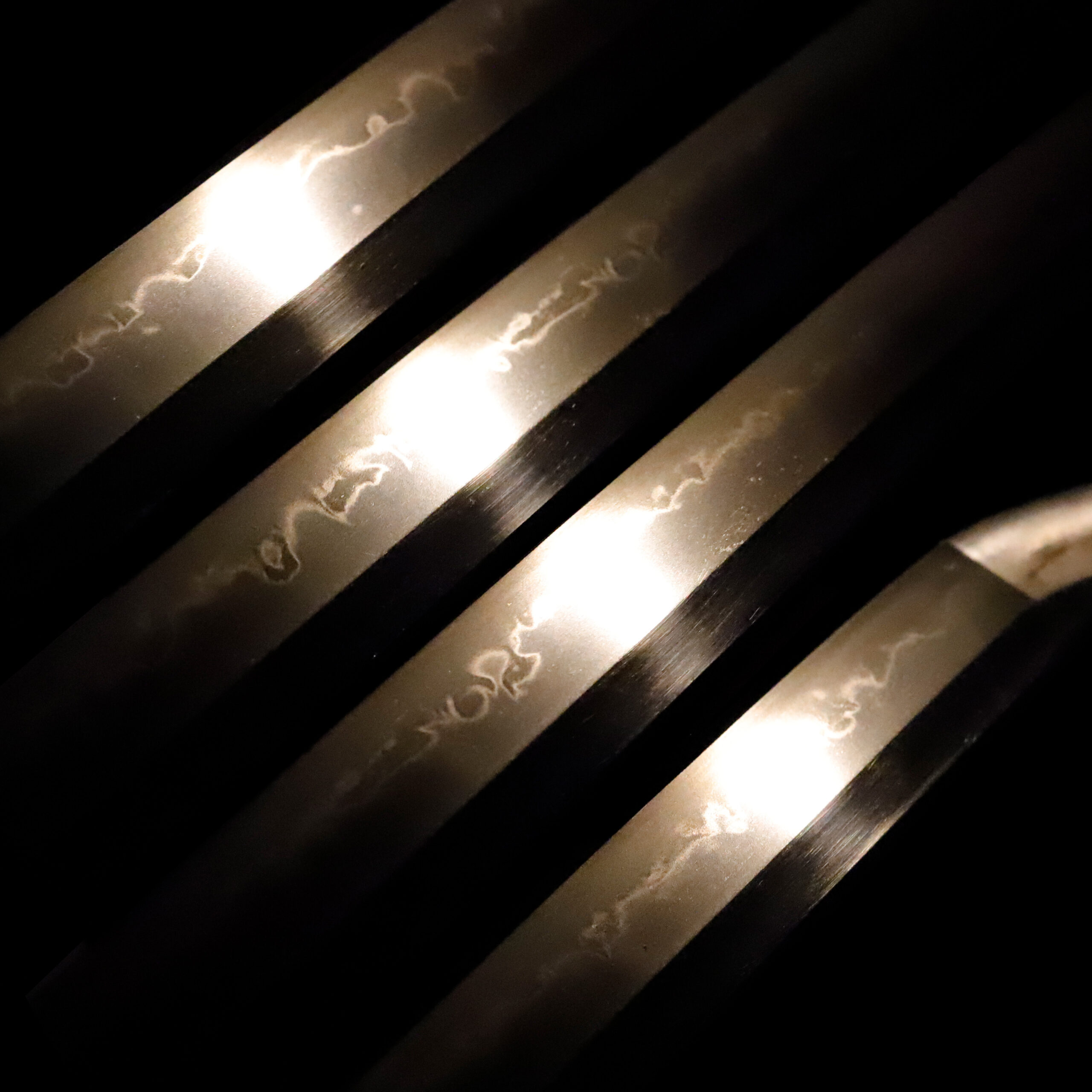
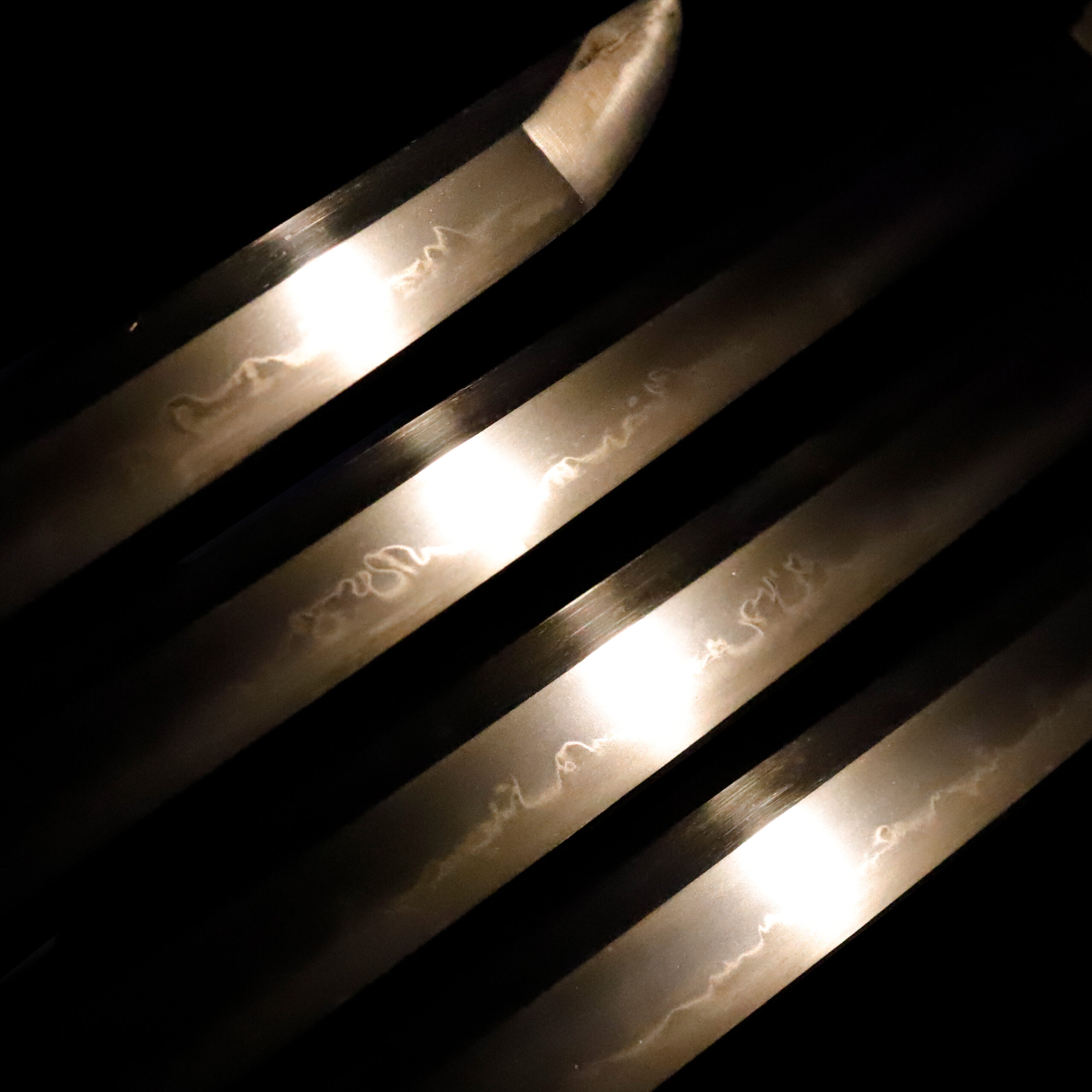
備前伝 · 豊後 · 1573-1592頃
刀剣大鑑 上位76%
現在1点販売中
備前伝 · 豊後
現在44点販売中
豊後国の高田派は、同国高田荘の地名を負う一門で、鎌倉初期に定秀・行平らの名工を出した九州刀の伝統が一時跡絶えた後、南北朝時代に友行が同地に現れて再興した鍛冶集団である。説示は友行をもって高田鍛冶の祖とし、現存する年紀作に貞治・正平の年号を伝える点を挙げる。友行のほか、その子あるいは門人と伝える時行が著名で、別系と思われる行政には建徳二年紀の短刀がある。南北朝期の作には「藤原」を冠し、室町期以降は「平」を銘じて「盛」「守」「鎮」「統」などを通字とし、これらを総じて平高田と汎称する。さらに末期に至って再び「藤原」を冠するようになり、江戸期以降もこれを踏襲して藤原高田と呼び習わされ区分される。この間に長盛・竪守・鎮教・鎮清・鎮正らを輩出し、鎮正の門からは伊予宇和島に移った国房が出て新刀期へと繋がるなど、室町後期から江戸期に及ぶ長い系譜を形づくった。 作風は説示の記すところ多彩で、一様には括れない。鍛えは板目に杢を交え、総じて肌立ちごころとなり、柾に流れる態を見せて、地沸つき地景入り、白気映りや乱れ映りが立つものが多い。刃文は直刃を基調とするものから、小互の目や角ばる互の目を交えて乱れるもの、腰の開いた複式風で末備前を彷彿とさせるもの、さらに皆焼に及ぶものまで幅がある。祖の友行は同時代の左文字一類に近似するが、刃中に角ばる互の目が間遠に連れ、地に白けが強く地斑を交える点が見どころとされる。室町期の作の多くに共通する要所として、刃中に針の先で突いたような固い葉が入ることが従来指摘されており、系統と時代の判別に資する。姿形は室町中期頃までは反りが深くついて反らせたものが多く、末期は身幅広めで反りが幾分浅く、中鋒が延びて時代を映した頑健な造込みとなる。行政の作のように、鍛えが大きく流れて古典色が濃く、櫃中に行平を踏襲した倶利迦羅の浮彫を施す例もみられる。 伝承の上では、高田物は実用刀として広く行き渡った一方、斯界の評価は決して高くないとされてきた。説示はその傾向を踏まえつつ、地刃に破綻なく締まりごころとなり、来国行を参考にしたとも言えるほどの出来を示す鎮教や、地鉄精良で匂口冴える鎮清の作をもって面目を挽回する出色の一口と評し、平高田中で最も技倆に優れ直刃を得意とした長盛を一派の代表として挙げる。伝来を備える品も少なくなく、行政の短刀は庄内酒井家に伝わって本阿弥光忠の折紙を添え、鎮教には黒田家の重宝となり享保名物追記に載る権藤鎮教の長刀があり、長盛の脇指には島津継豊から本田親章へ拝領された切付銘を持つものがある。中世豊後刀工の作域を今に伝える資料として、また実用に堪える堅牢さと九州古典派の余韻を併せ持つ一門として位置づけられる。 詳しく見る →
桃山時代
三人の天下人が戦国の世紀を終わらせ、刀は新しい秩序の道具となった。1588年の刀狩は刀を武士の標章とし、名刀は条約のごとく家々の間を行き交い、鑑定は以後この境で古刀と新刀を分かつ。
保存刀剣のうち、出来が一層優れ、保存状態も良好と認められたものです。再刃や、室町・江戸期の多くの無銘作は対象外となり、保存刀剣より高い基準が課されます。
日本美術刀剣保存協会(NBTHK)は、1948年に設立され、文化庁の監督を受ける公益財団法人で、東京・刀剣博物館に本部を置きます。専門の審査員が出品作を直接審査し、美術的・歴史的価値に応じた鑑定書を発行します。NBTHKの鑑定書は、日本刀および刀装具の真正性を示す最も広く認知された基準です。
NBTHK公式サイトReturns/exchanges limited to defects caused by shipping (except willful misconduct or gross negligence by the company); customers must contact within 72 hours of receiving the product.
日本刀 大刀・脇差 大小一腰 大刀:無銘 高田統行(日本美術刀剣保存協会 保存刀剣鑑定書付) 脇差:銘 摂州住藤原助広(日本美術刀剣保存協会 特別保存刀剣鑑定書付) 【作品解説】 ■大刀(打刀) 本作は、豊後国(現在の大分県)の名門・高田派の刀工、高田統行(たかだむねゆき)と極められた一振りです。統行の名は天正から明暦年間(1573-1658年)にかけて三代続きますが、本作は安土桃山時代から江戸初期(1573-1615年頃)に活躍した初代の作と推察されます。 高田派は南北朝時代(1334-1338年頃)、高田友行によって豊後国高田郷で興されました。友行は備前国(現在の岡山県)へ渡って備前伝の作刀技術を修めた後、郷里に戻り門弟を育成しました。これが高田派の始まりです。 戦国時代(15世紀後半〜16世紀後半)には、九州の武士たちの需要に応え、数多くの刀剣を鍛造しました。その評価は極めて高く、当時二大産地として名を馳せた備前や美濃の刀剣に比肩すると謳われました。 戦国期の豊後国は大友宗麟(義鎮)が統治し、九州屈指の強大な軍事・政治基盤を築いていました。高田派の刀工は大友家に仕える武士たちの刀を多く手掛けており、統行の「統」の字は大友家より賜ったものと伝えられています。統行は江戸時代における高田派の隆盛を築く上で、極めて重要な役割を果たしました。 九州地方は古来よりアジア諸国との交易が盛んで、貿易の利権を巡る諸大名の抗争により刀剣の需要が絶えませんでした。また、高田郷の近隣に位置する祖母傾山系からは、良質な砂鉄や木炭が豊富に産出されました。こうした地理的条件と天然資源の恩恵が、高田派の繁栄を支えたと考えられます。 ■脇差 本作は「摂州住藤原助広」と銘があり、寛永から慶安年間(1624-1652年:江戸時代初期)に活躍した初代助広の作です。「摂州」は摂津国(現在の大阪府)を指し、助広が同地に居住して作刀したことを示しています。 日本美術刀剣保存協会(NBTHK)の鑑定により、本作は三代続く助広のうち、江戸初期の大阪を代表する名工である初代の手によるものと認められています。初代助広は播磨国津田(現在の兵庫県)に生まれ、後に大阪へ移り、名工・河内守国助の門下に入りました。また、江戸時代屈指の天才刀工として知られる津田越前守助広の父としても有名です。 江戸時代後期に山田浅右衛門が著した『懐宝剣尺』において、初代助広の刀は「最上大業物(極めて斬れ味が優れている刀)」に列せられています。幕府の御用試斬役であった浅右衛門によるこの格付けは、当時から助広の刀が実戦的な鋭さにおいて最高峰であったことを証明しています。 ■大阪新刀 助広の作品は「大阪新刀」に分類されます。「新刀」とは慶長から天明年間(1596-1781年)に打たれた刀を指し、その中でも豊臣秀吉による大坂城築城以降、経済の中心地として発展した大阪で打たれたものを大阪新刀と呼びます。活気あふれる城下町には、より良い機会を求めて多くの名工が集まり、互いに切磋琢磨することで華麗かつ洗練された作風が確立されました。
NihontoWatch備前伝 · 豊後 · 1573-1592頃
刀剣大鑑 上位76%
現在1点販売中
備前伝 · 豊後
現在44点販売中
豊後国の高田派は、同国高田荘の地名を負う一門で、鎌倉初期に定秀・行平らの名工を出した九州刀の伝統が一時跡絶えた後、南北朝時代に友行が同地に現れて再興した鍛冶集団である。説示は友行をもって高田鍛冶の祖とし、現存する年紀作に貞治・正平の年号を伝える点を挙げる。友行のほか、その子あるいは門人と伝える時行が著名で、別系と思われる行政には建徳二年紀の短刀がある。南北朝期の作には「藤原」を冠し、室町期以降は「平」を銘じて「盛」「守」「鎮」「統」などを通字とし、これらを総じて平高田と汎称する。さらに末期に至って再び「藤原」を冠するようになり、江戸期以降もこれを踏襲して藤原高田と呼び習わされ区分される。この間に長盛・竪守・鎮教・鎮清・鎮正らを輩出し、鎮正の門からは伊予宇和島に移った国房が出て新刀期へと繋がるなど、室町後期から江戸期に及ぶ長い系譜を形づくった。 作風は説示の記すところ多彩で、一様には括れない。鍛えは板目に杢を交え、総じて肌立ちごころとなり、柾に流れる態を見せて、地沸つき地景入り、白気映りや乱れ映りが立つものが多い。刃文は直刃を基調とするものから、小互の目や角ばる互の目を交えて乱れるもの、腰の開いた複式風で末備前を彷彿とさせるもの、さらに皆焼に及ぶものまで幅がある。祖の友行は同時代の左文字一類に近似するが、刃中に角ばる互の目が間遠に連れ、地に白けが強く地斑を交える点が見どころとされる。室町期の作の多くに共通する要所として、刃中に針の先で突いたような固い葉が入ることが従来指摘されており、系統と時代の判別に資する。姿形は室町中期頃までは反りが深くついて反らせたものが多く、末期は身幅広めで反りが幾分浅く、中鋒が延びて時代を映した頑健な造込みとなる。行政の作のように、鍛えが大きく流れて古典色が濃く、櫃中に行平を踏襲した倶利迦羅の浮彫を施す例もみられる。 伝承の上では、高田物は実用刀として広く行き渡った一方、斯界の評価は決して高くないとされてきた。説示はその傾向を踏まえつつ、地刃に破綻なく締まりごころとなり、来国行を参考にしたとも言えるほどの出来を示す鎮教や、地鉄精良で匂口冴える鎮清の作をもって面目を挽回する出色の一口と評し、平高田中で最も技倆に優れ直刃を得意とした長盛を一派の代表として挙げる。伝来を備える品も少なくなく、行政の短刀は庄内酒井家に伝わって本阿弥光忠の折紙を添え、鎮教には黒田家の重宝となり享保名物追記に載る権藤鎮教の長刀があり、長盛の脇指には島津継豊から本田親章へ拝領された切付銘を持つものがある。中世豊後刀工の作域を今に伝える資料として、また実用に堪える堅牢さと九州古典派の余韻を併せ持つ一門として位置づけられる。 詳しく見る →
桃山時代
三人の天下人が戦国の世紀を終わらせ、刀は新しい秩序の道具となった。1588年の刀狩は刀を武士の標章とし、名刀は条約のごとく家々の間を行き交い、鑑定は以後この境で古刀と新刀を分かつ。
保存刀剣のうち、出来が一層優れ、保存状態も良好と認められたものです。再刃や、室町・江戸期の多くの無銘作は対象外となり、保存刀剣より高い基準が課されます。
日本美術刀剣保存協会(NBTHK)は、1948年に設立され、文化庁の監督を受ける公益財団法人で、東京・刀剣博物館に本部を置きます。専門の審査員が出品作を直接審査し、美術的・歴史的価値に応じた鑑定書を発行します。NBTHKの鑑定書は、日本刀および刀装具の真正性を示す最も広く認知された基準です。
NBTHK公式サイトReturns/exchanges limited to defects caused by shipping (except willful misconduct or gross negligence by the company); customers must contact within 72 hours of receiving the product.