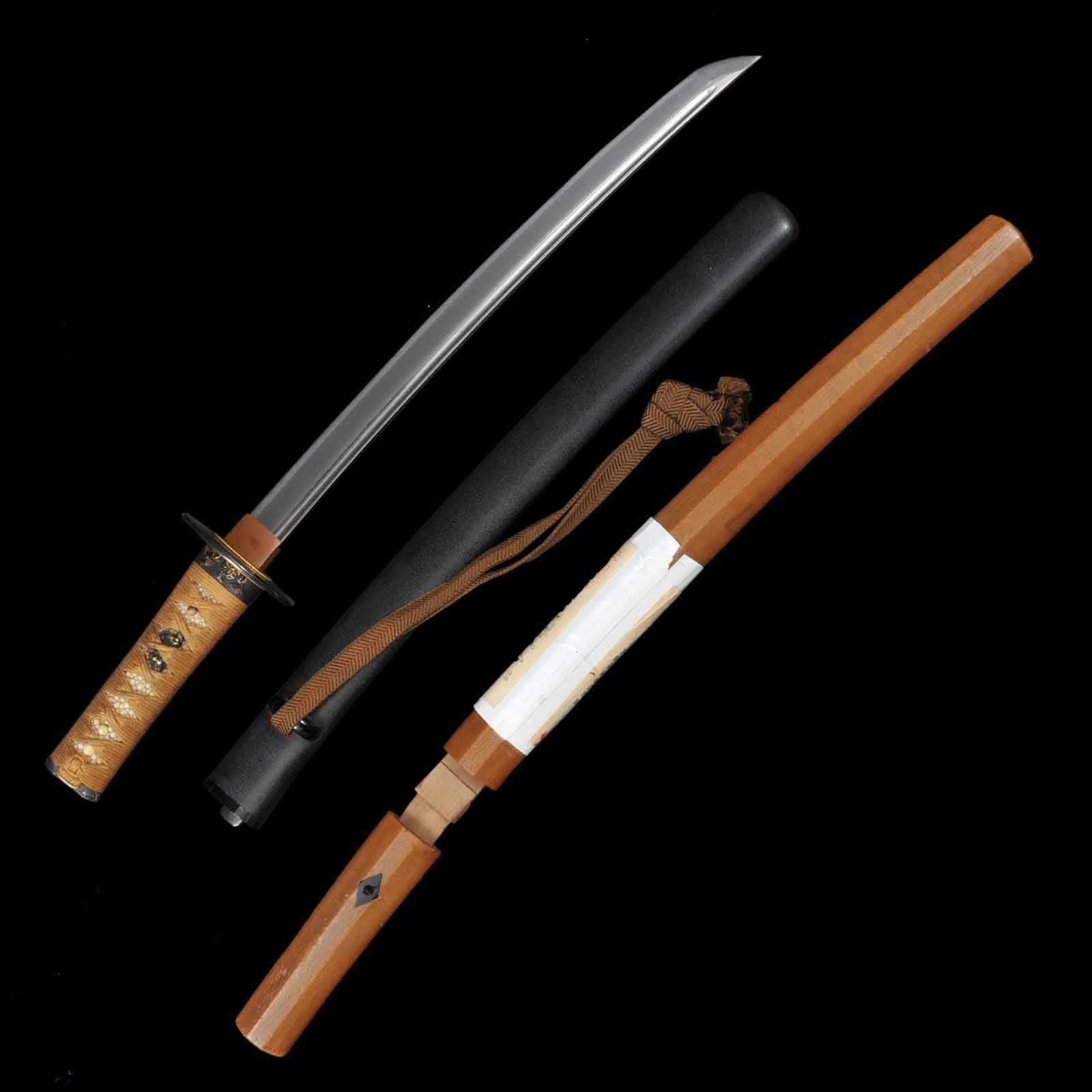
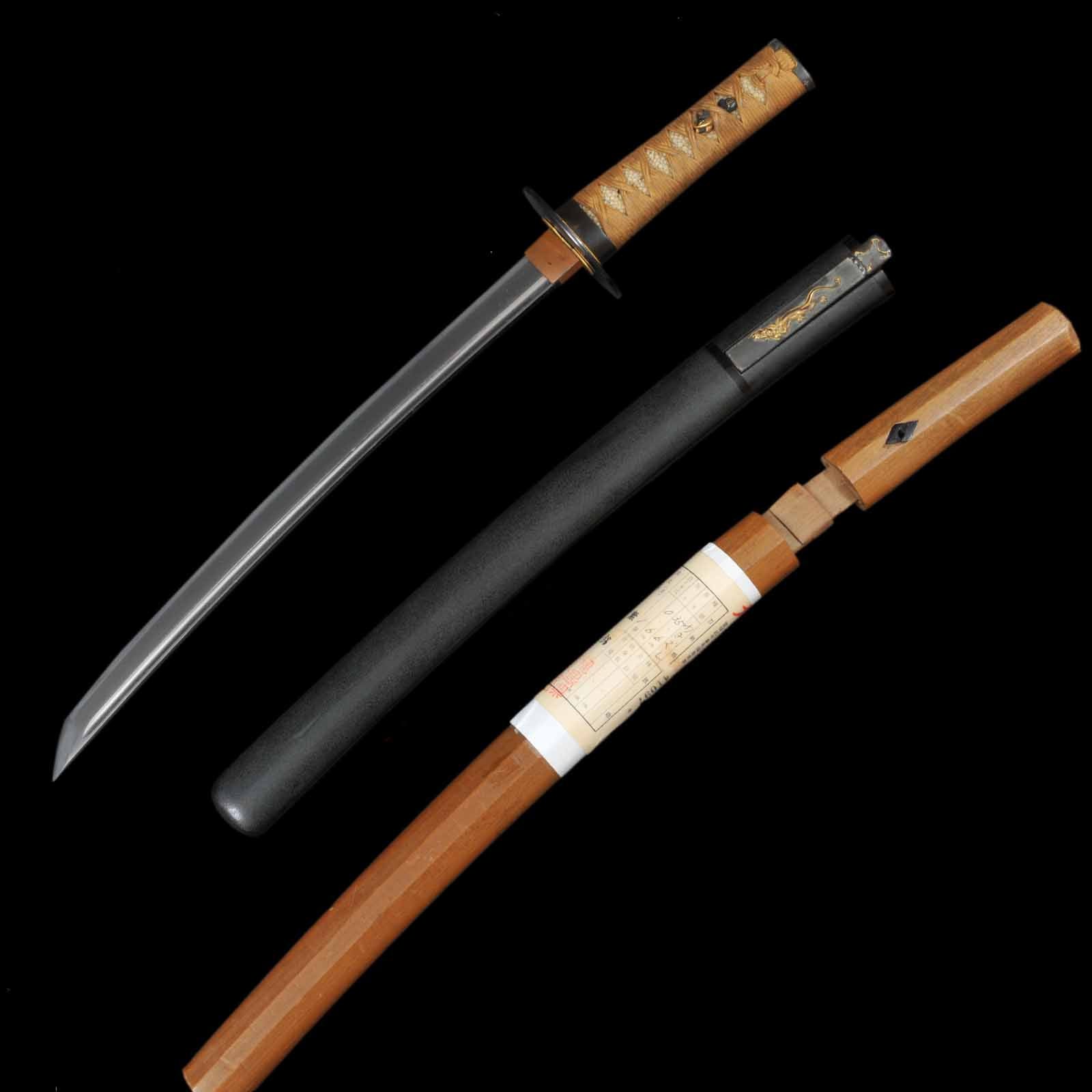
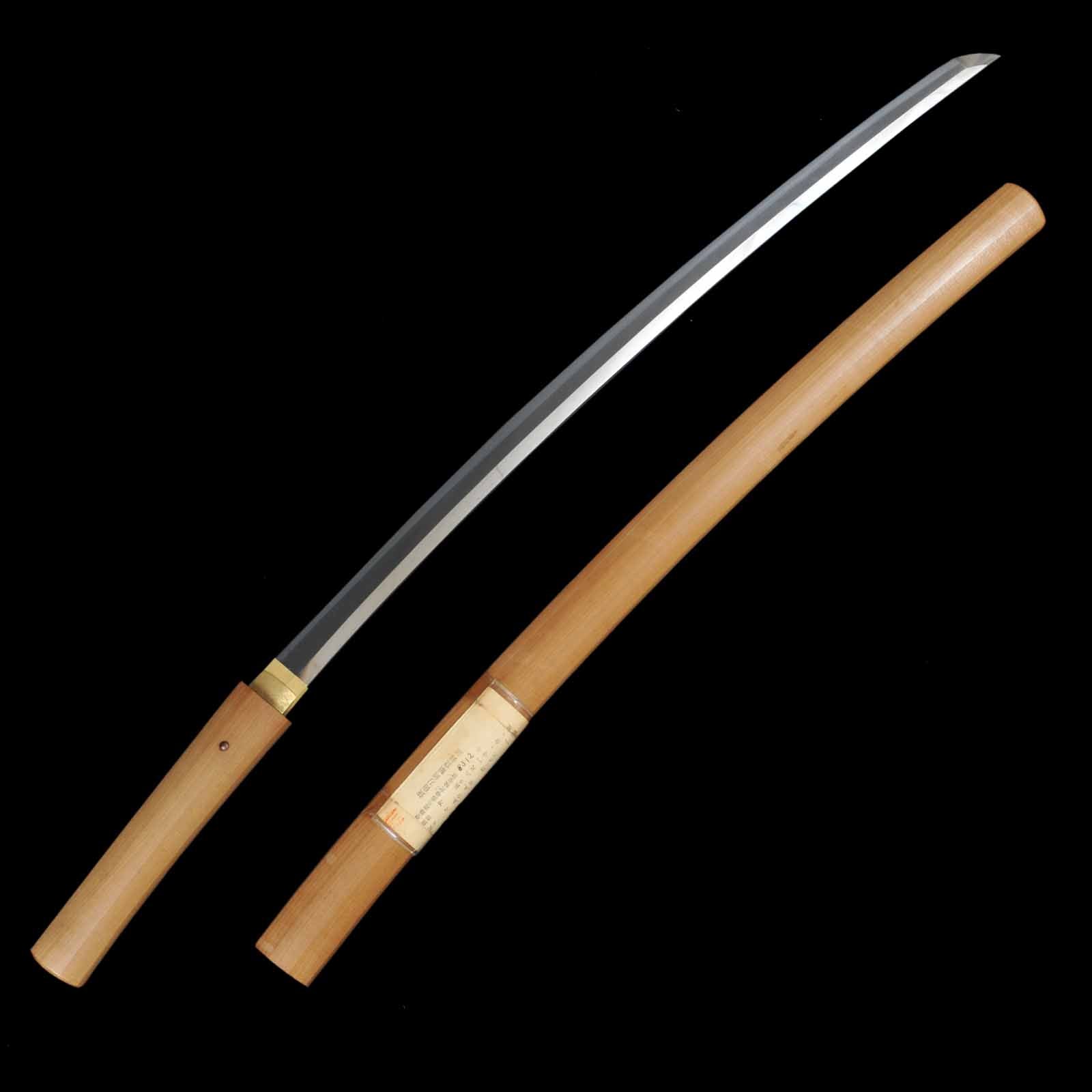
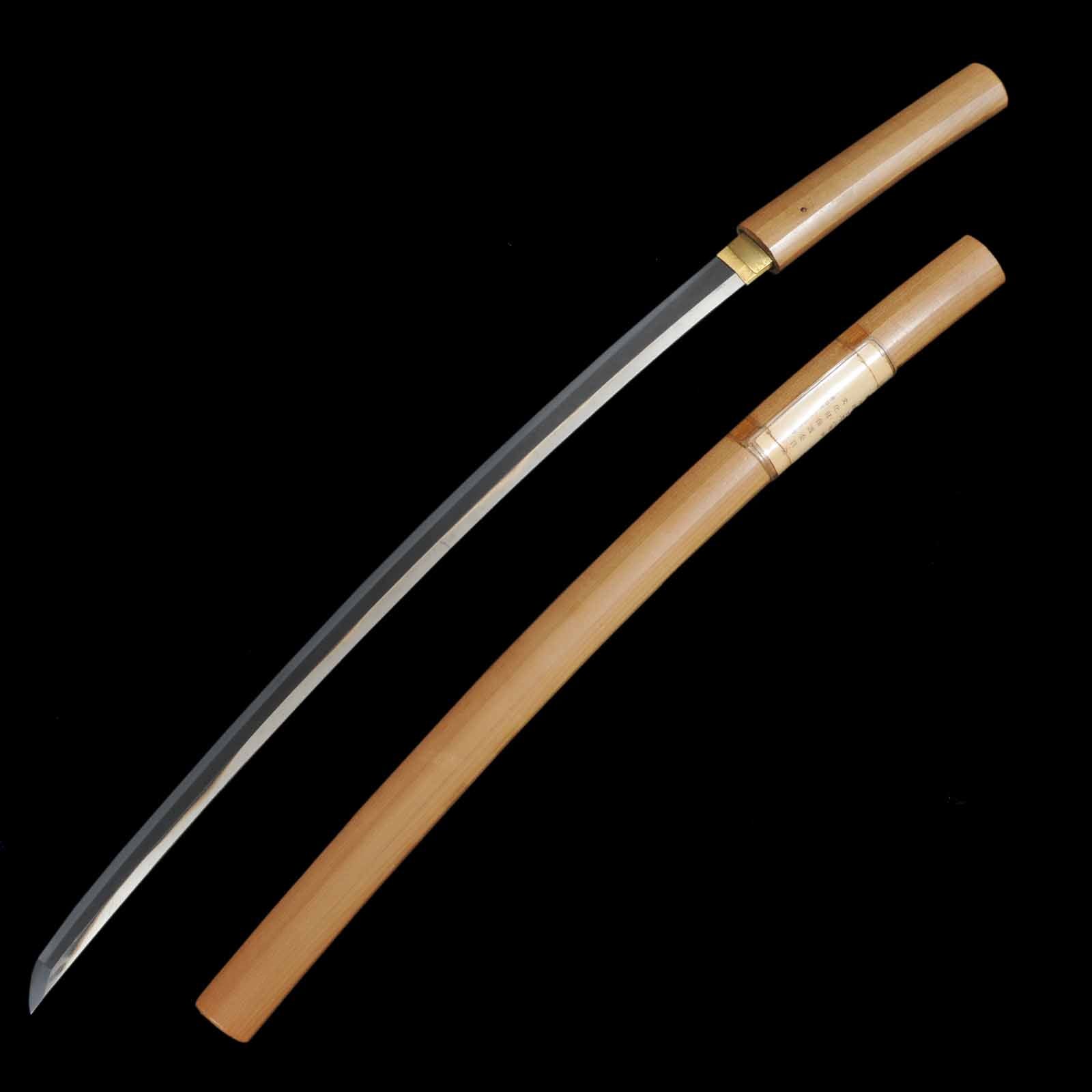
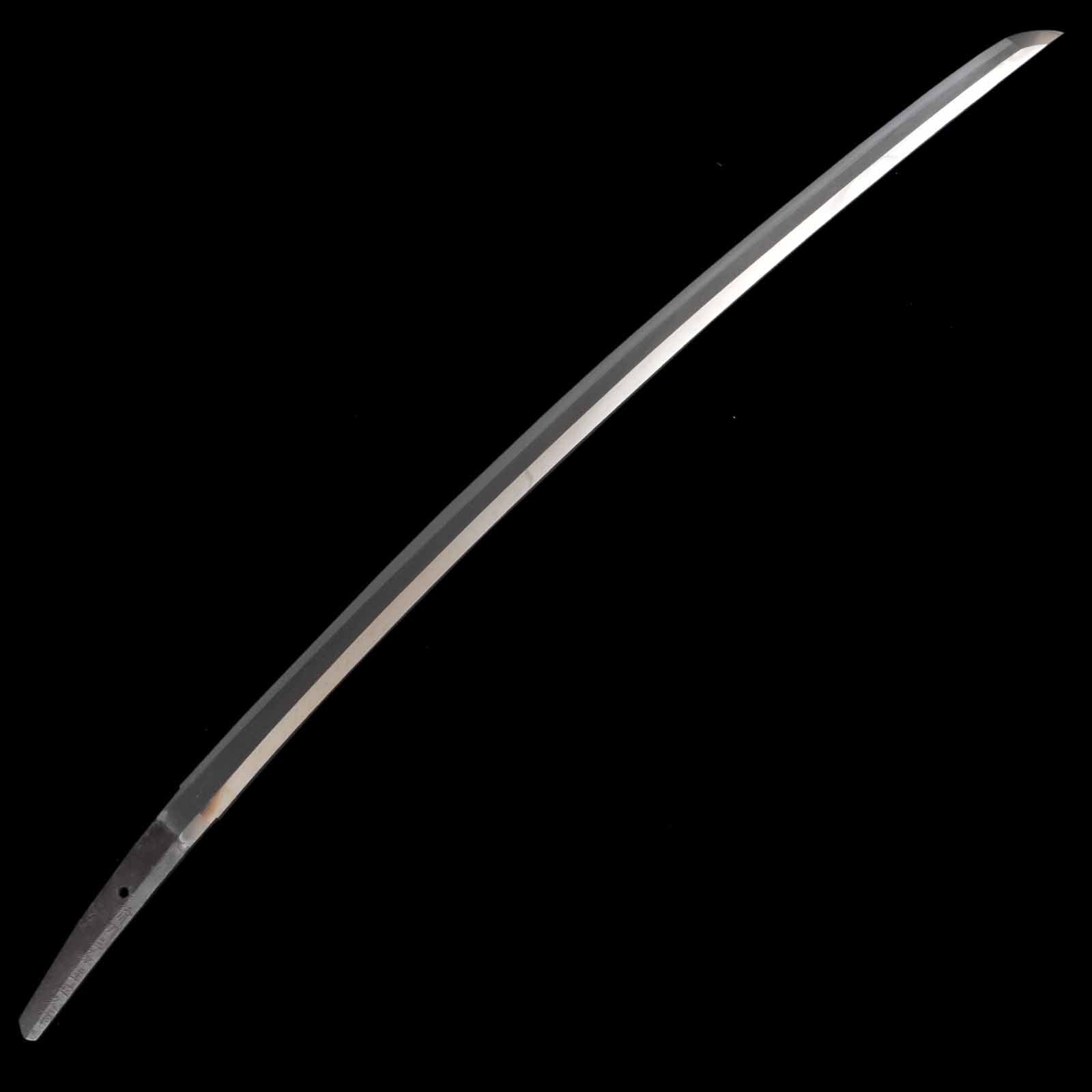
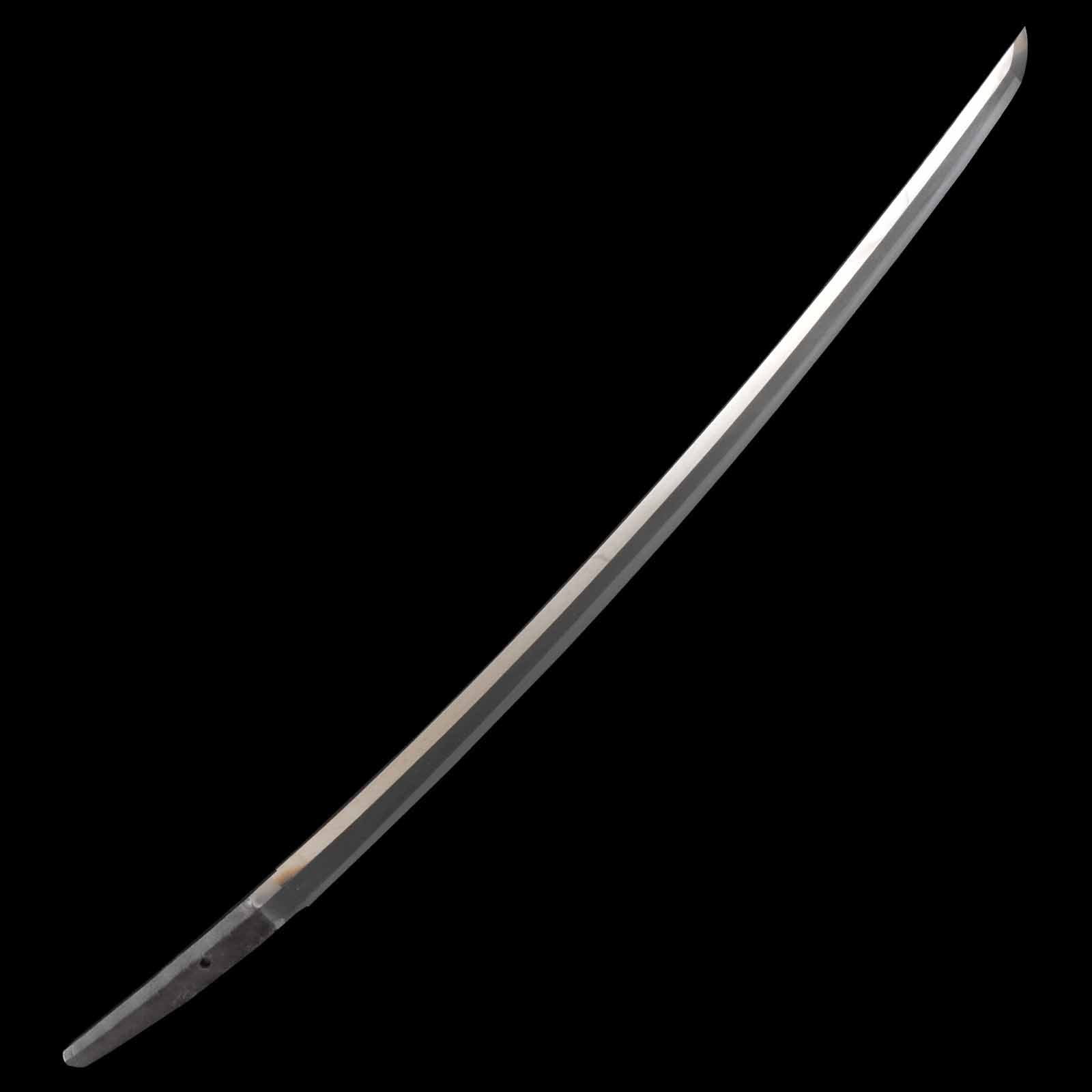
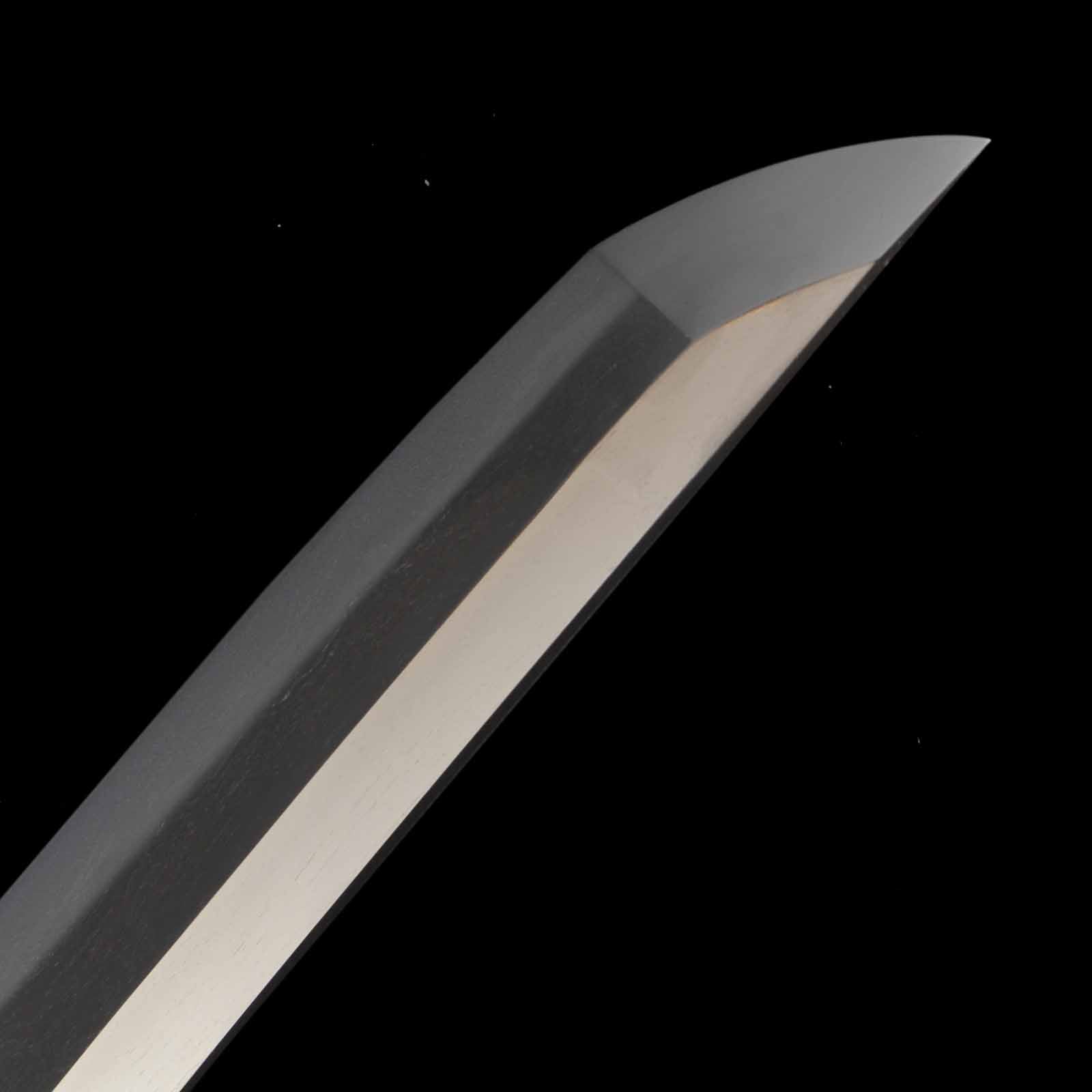
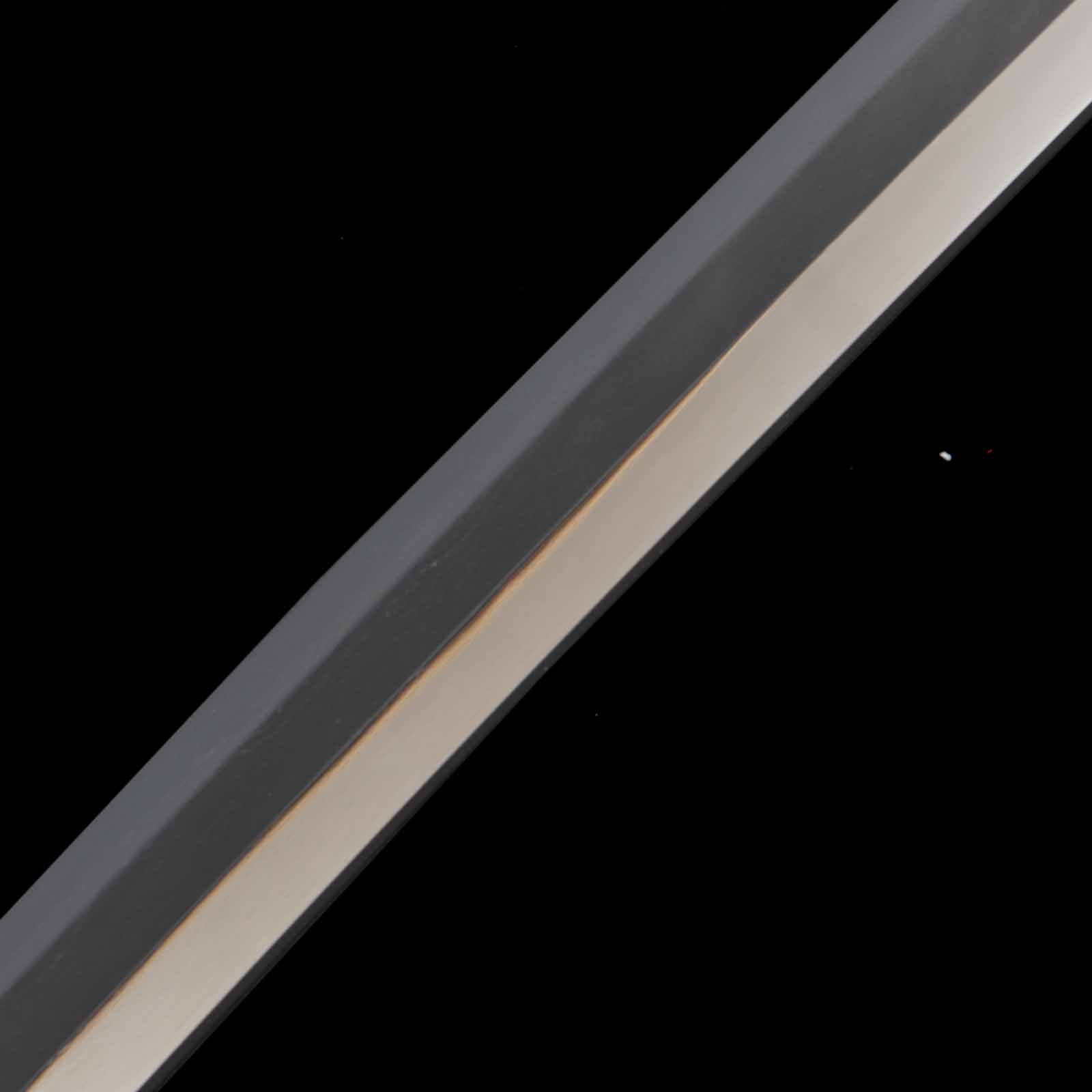
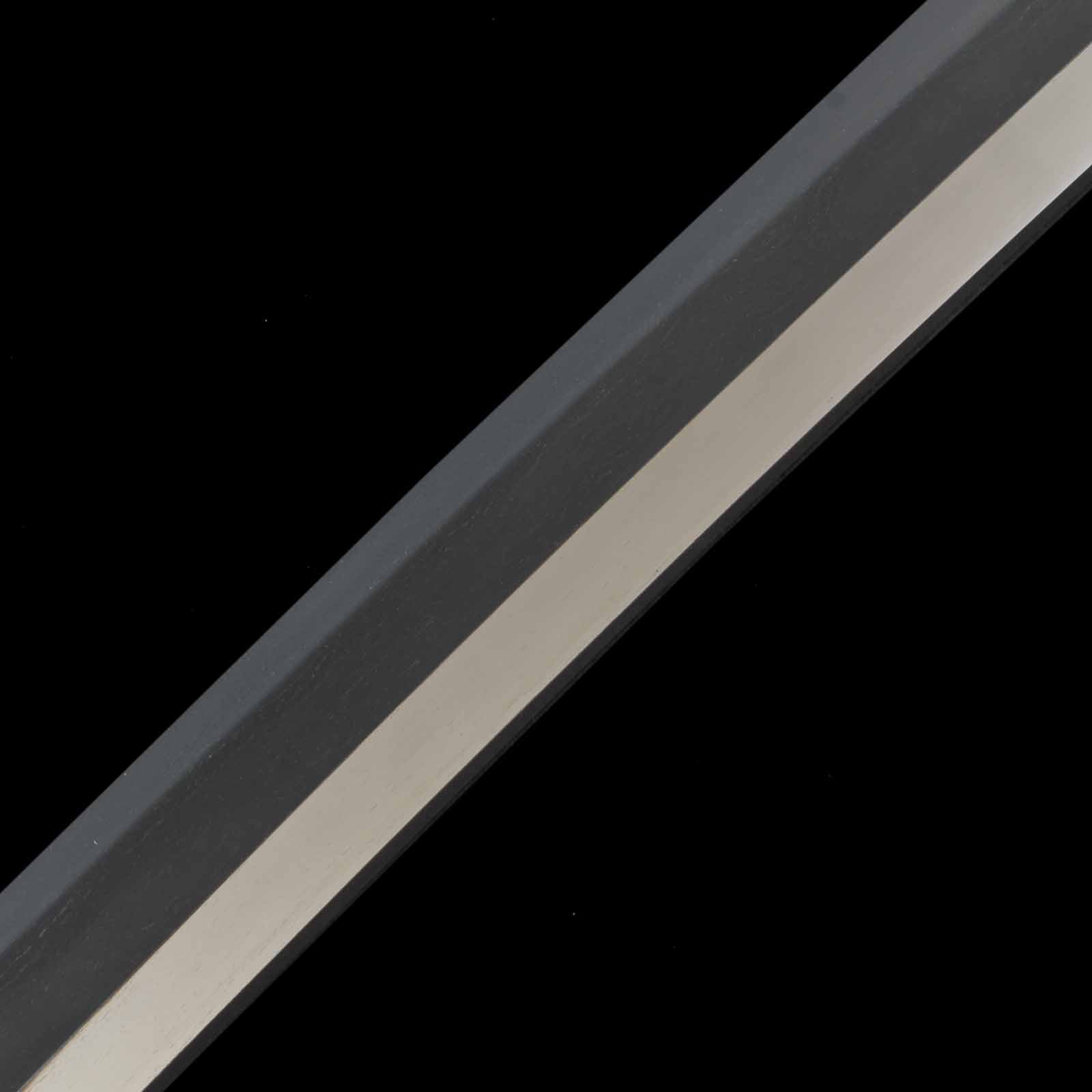
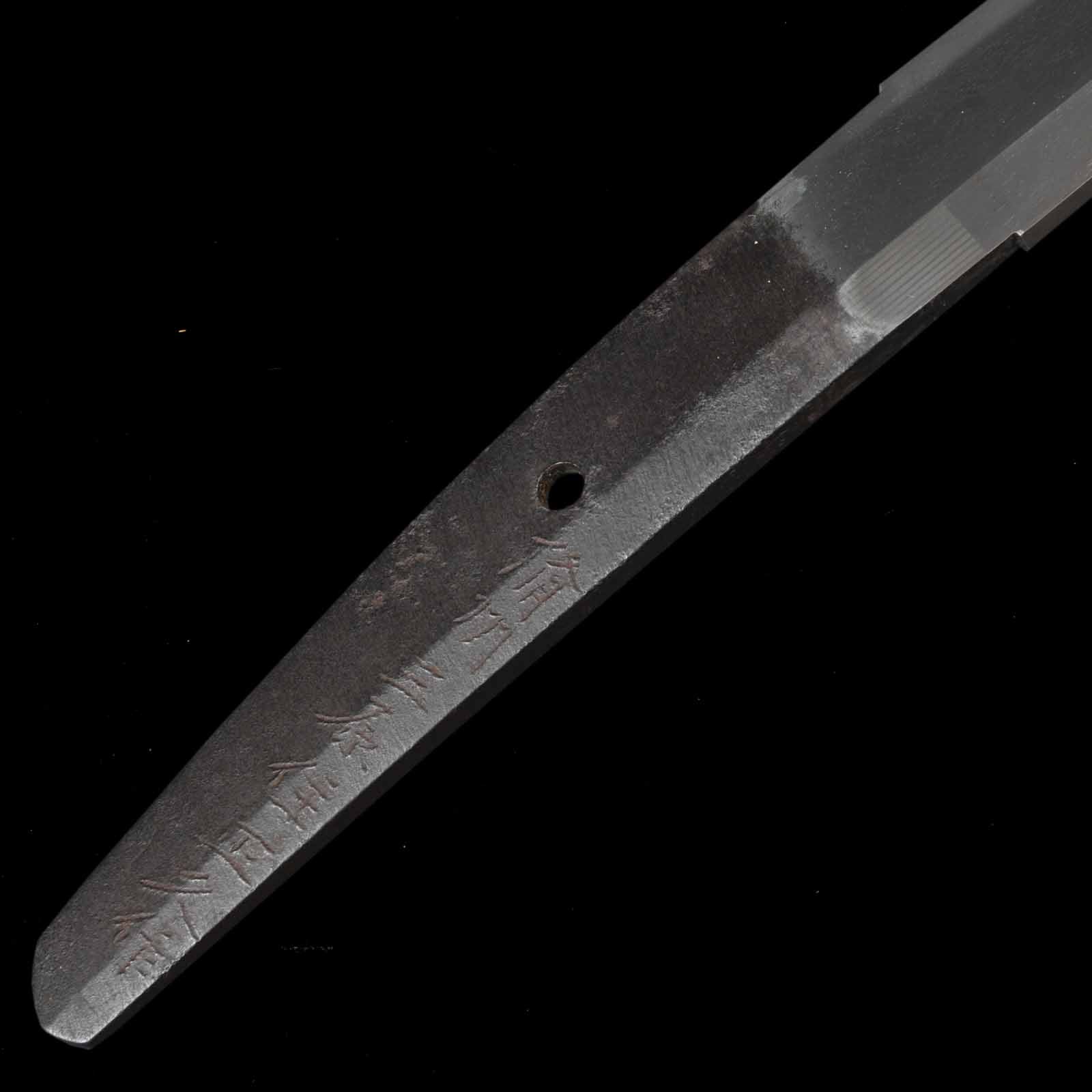
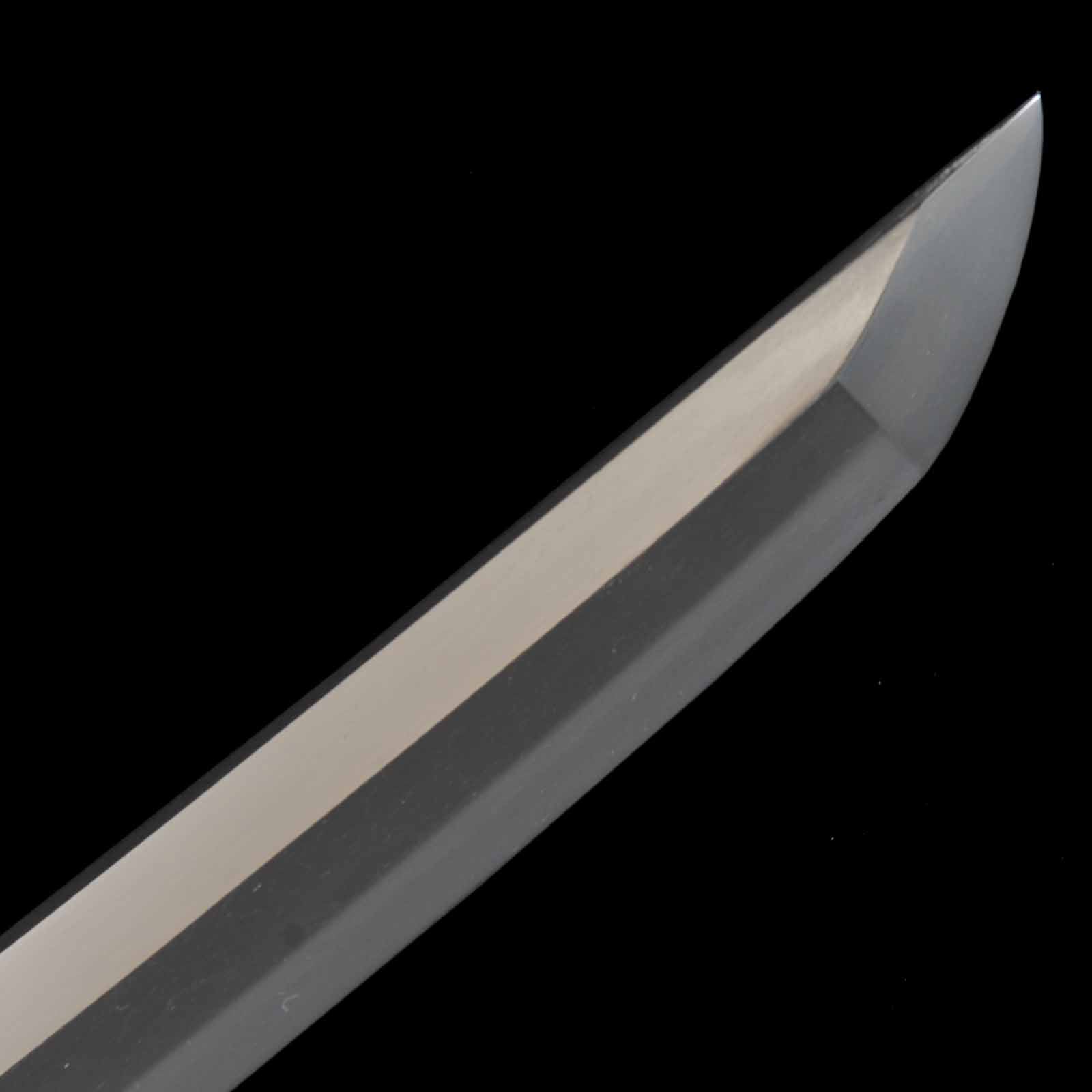
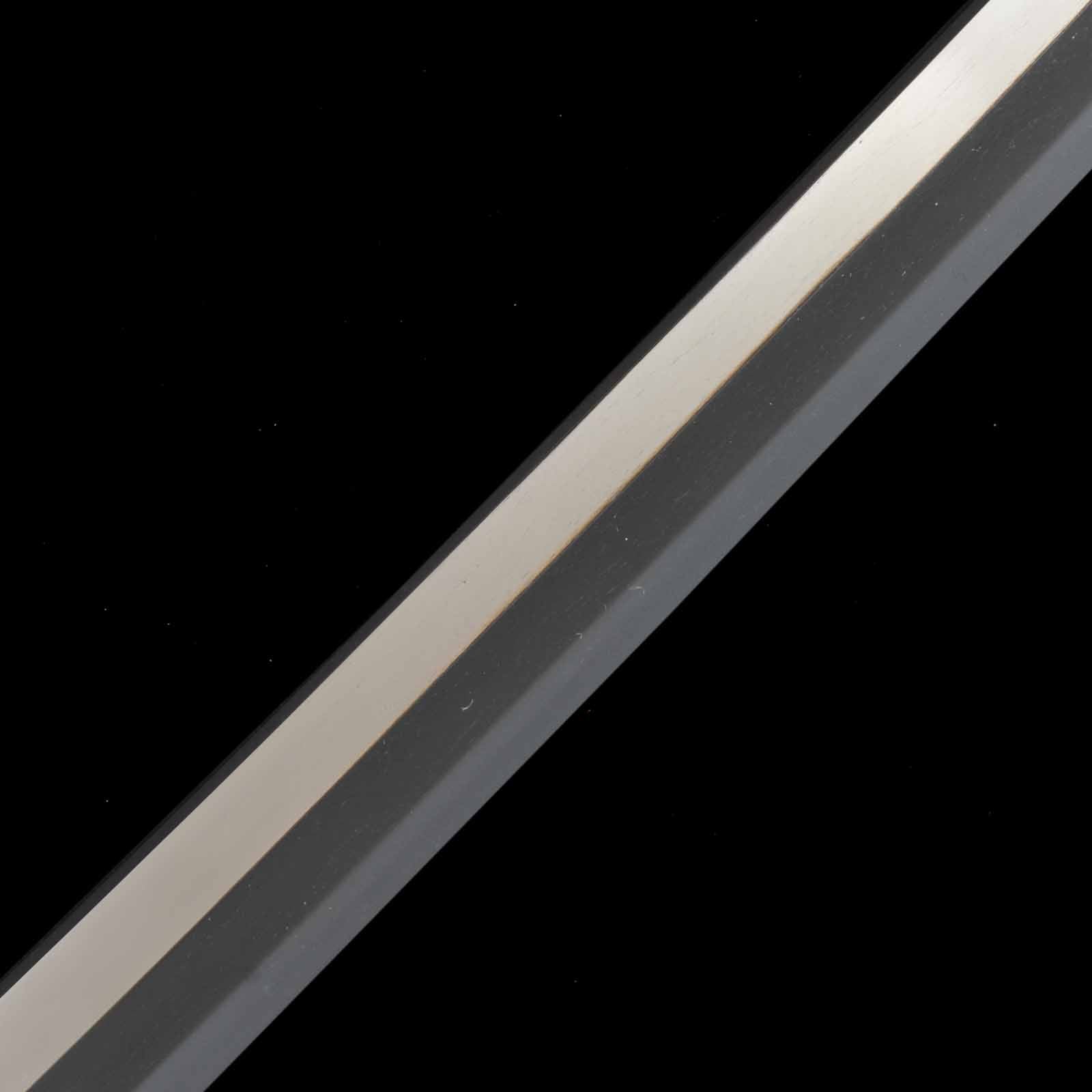
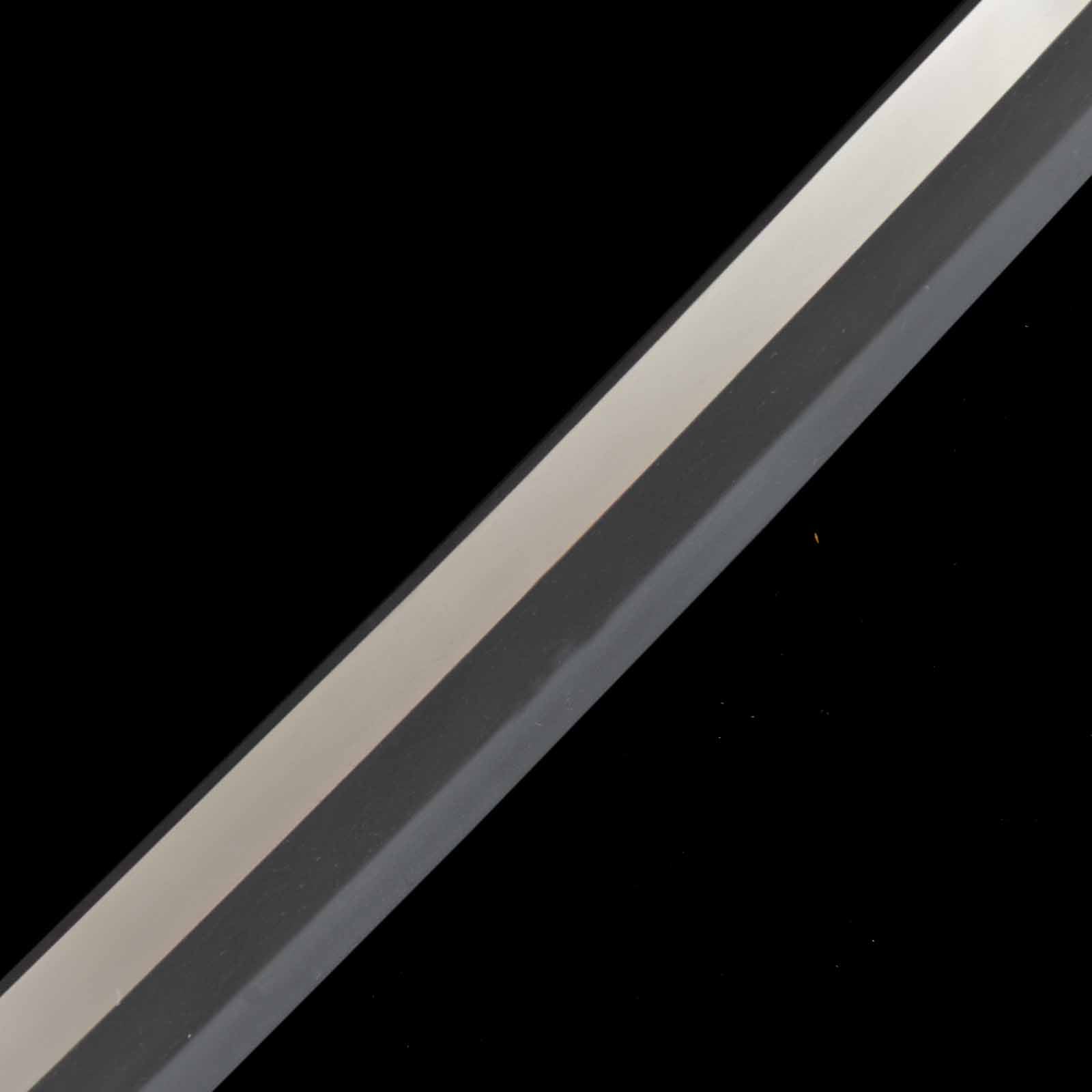
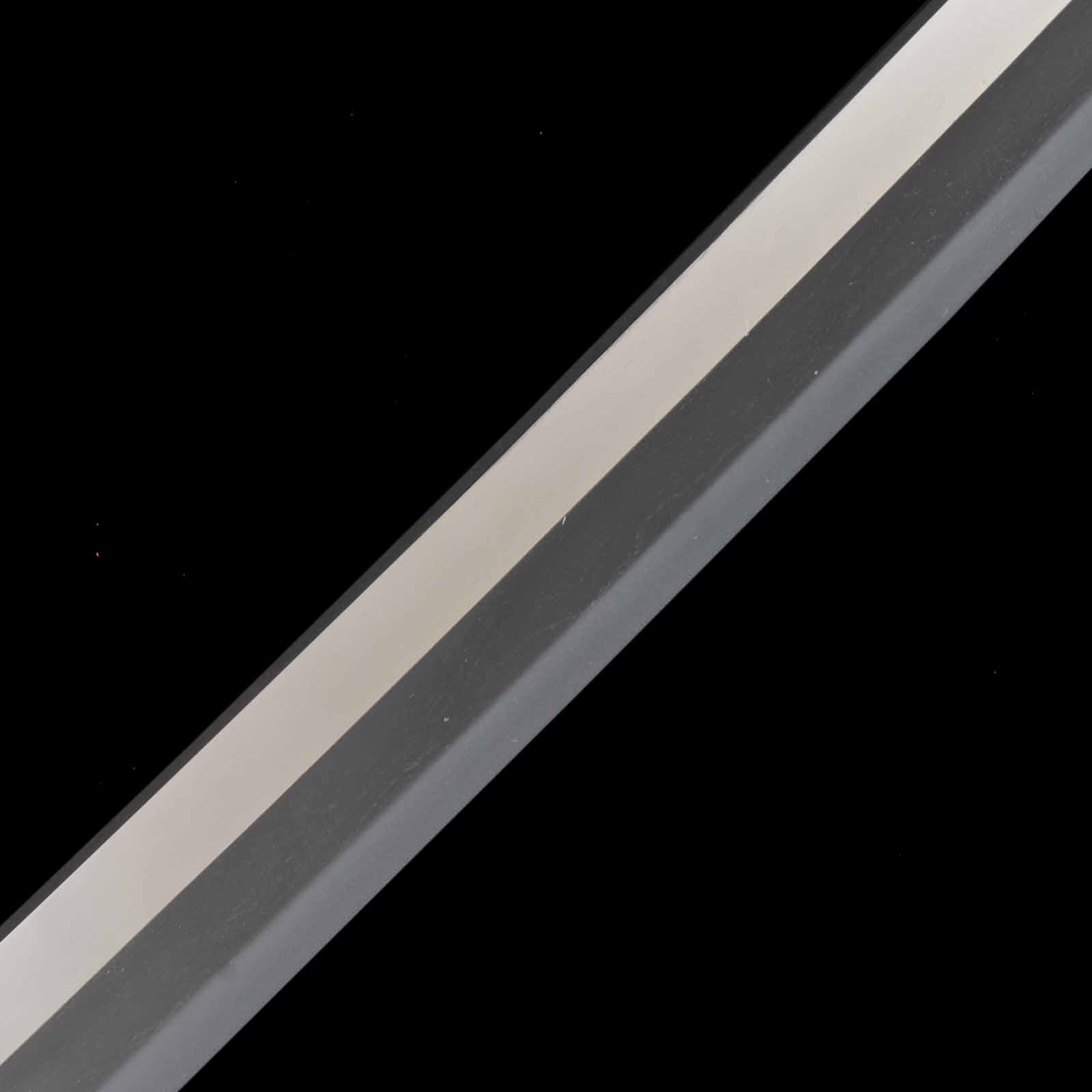
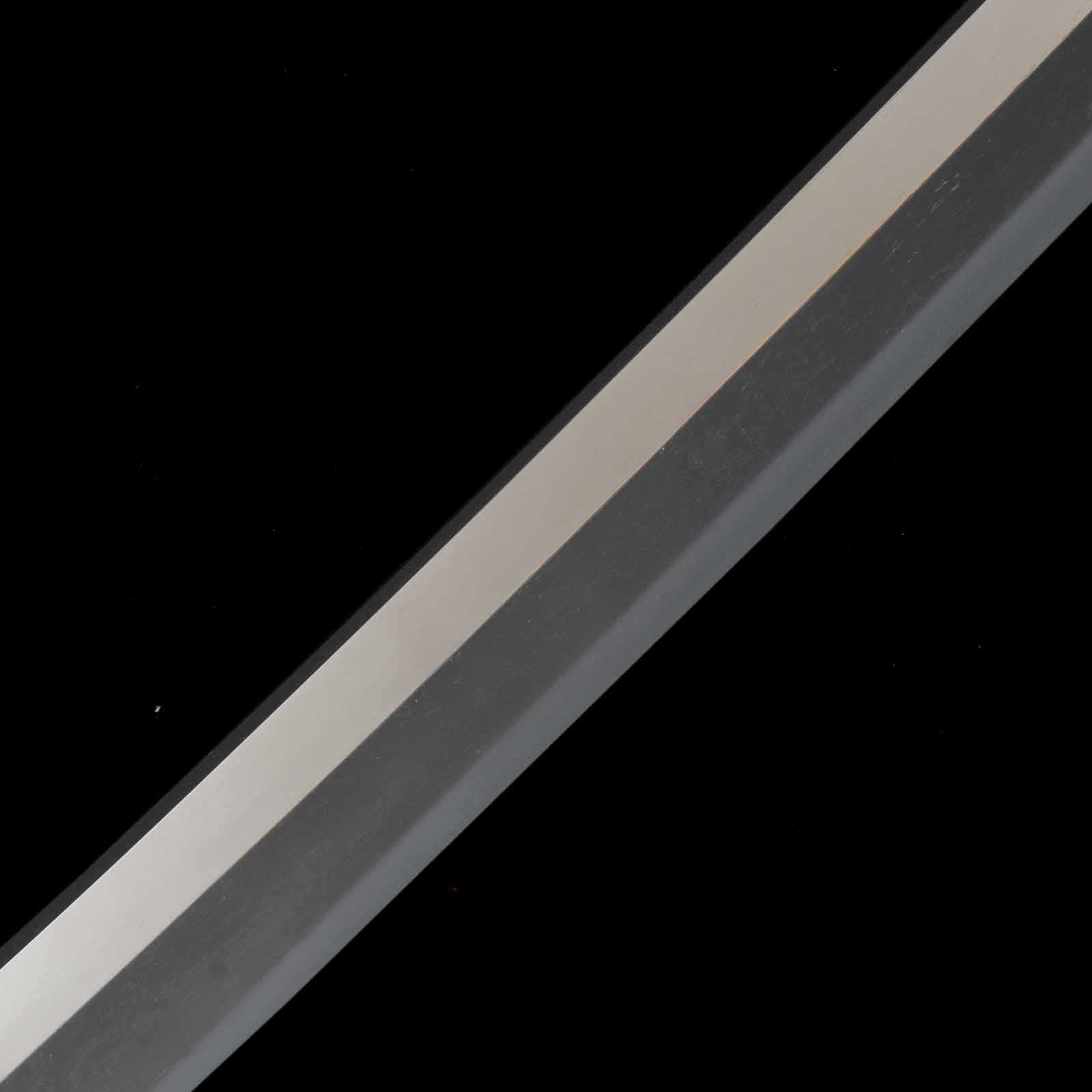
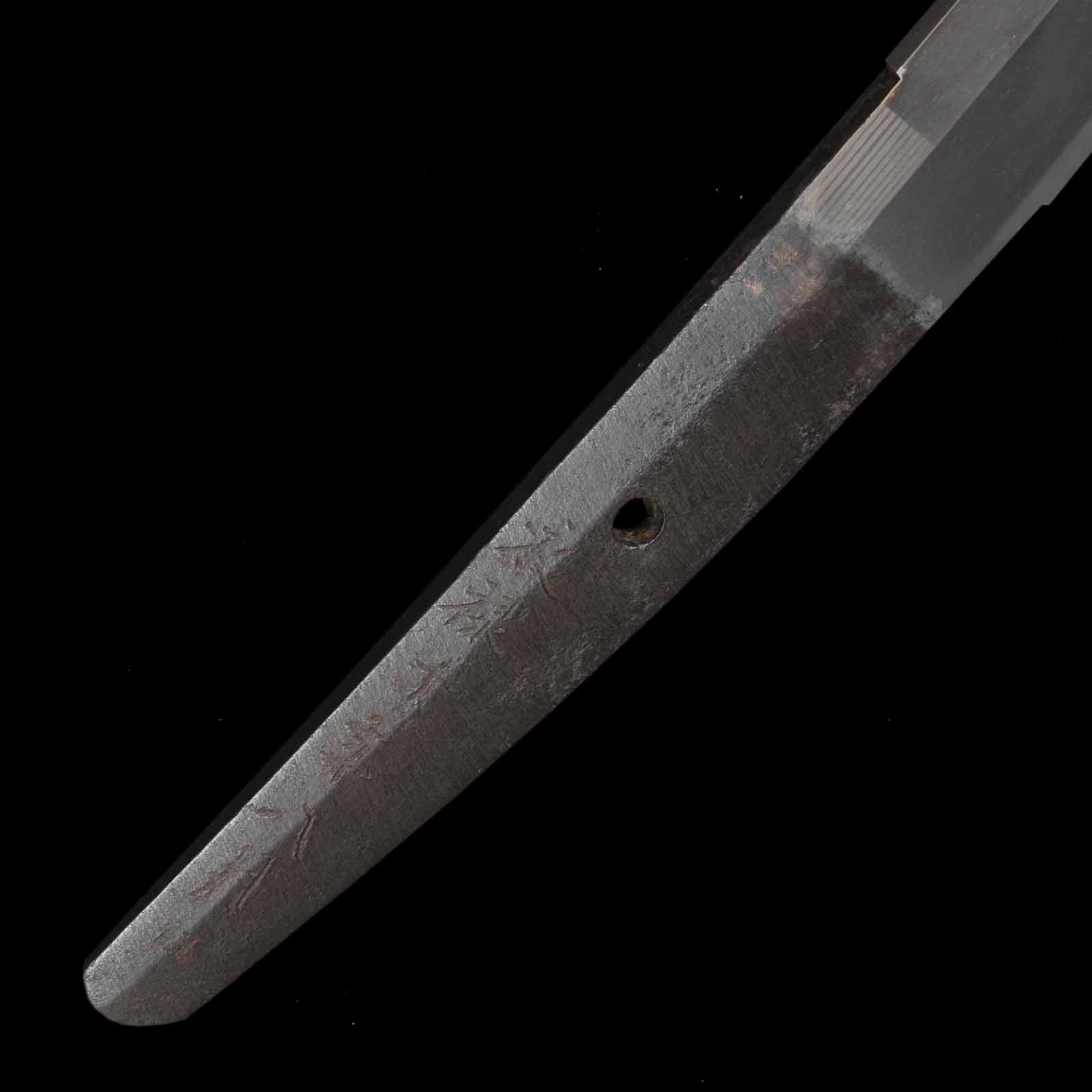
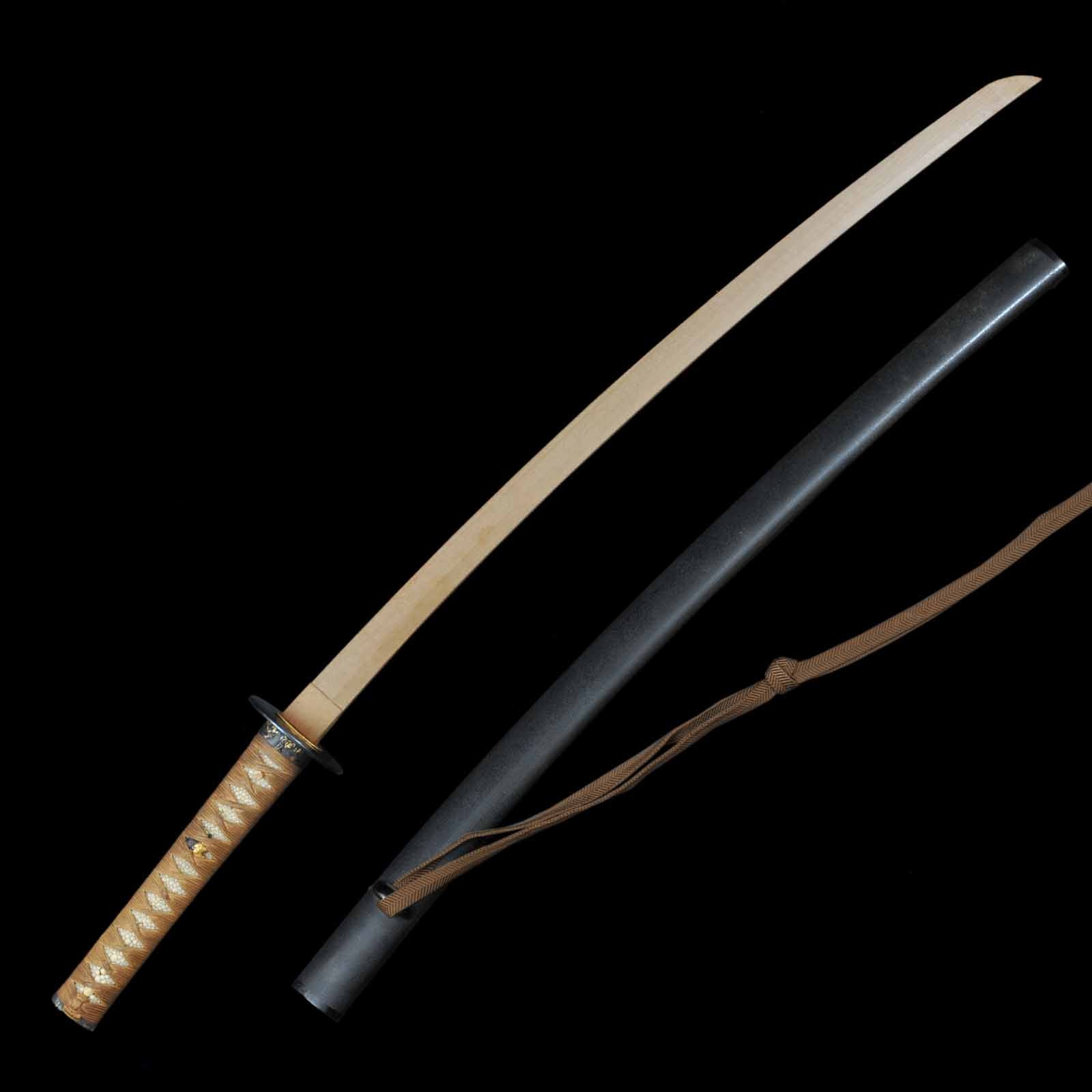
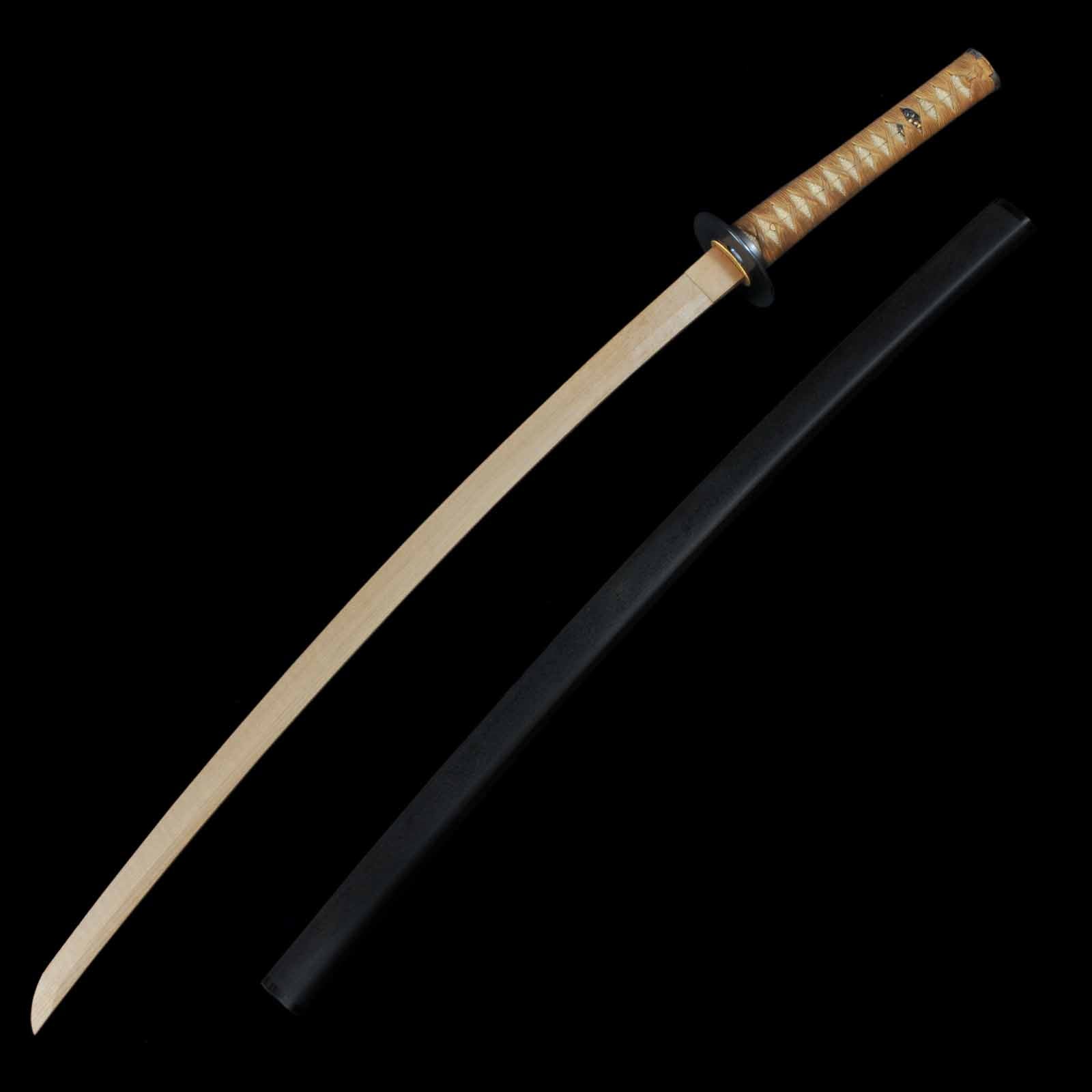
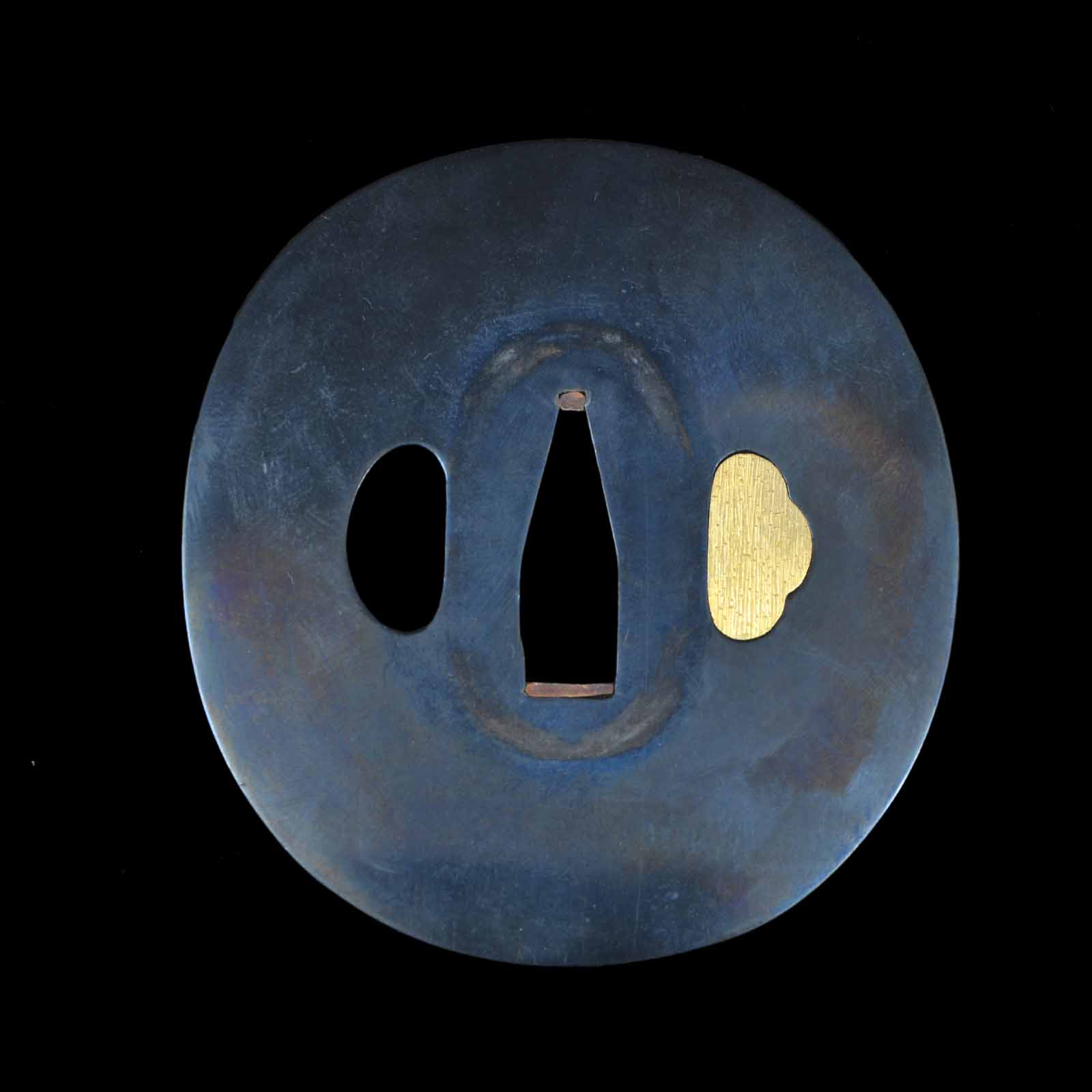
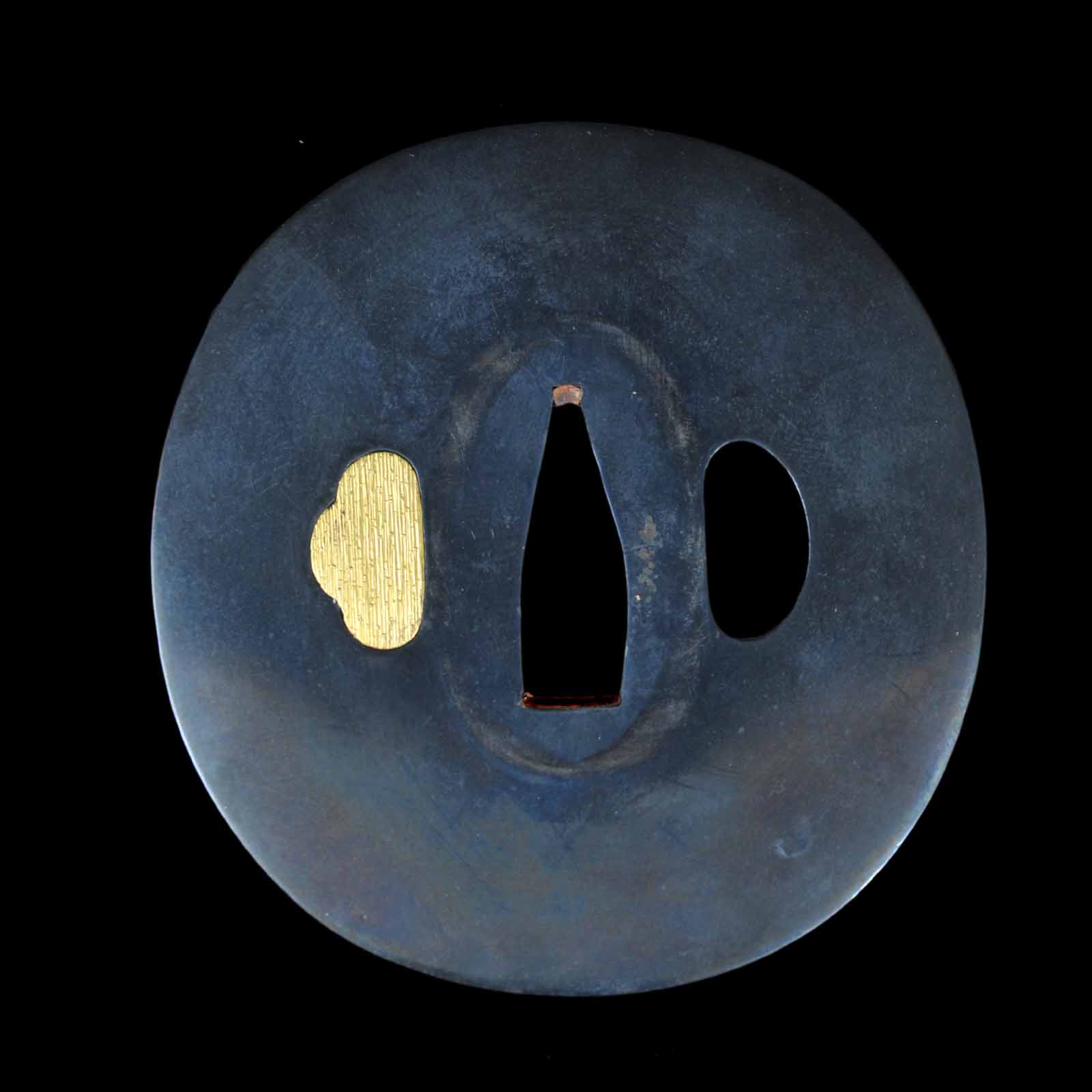
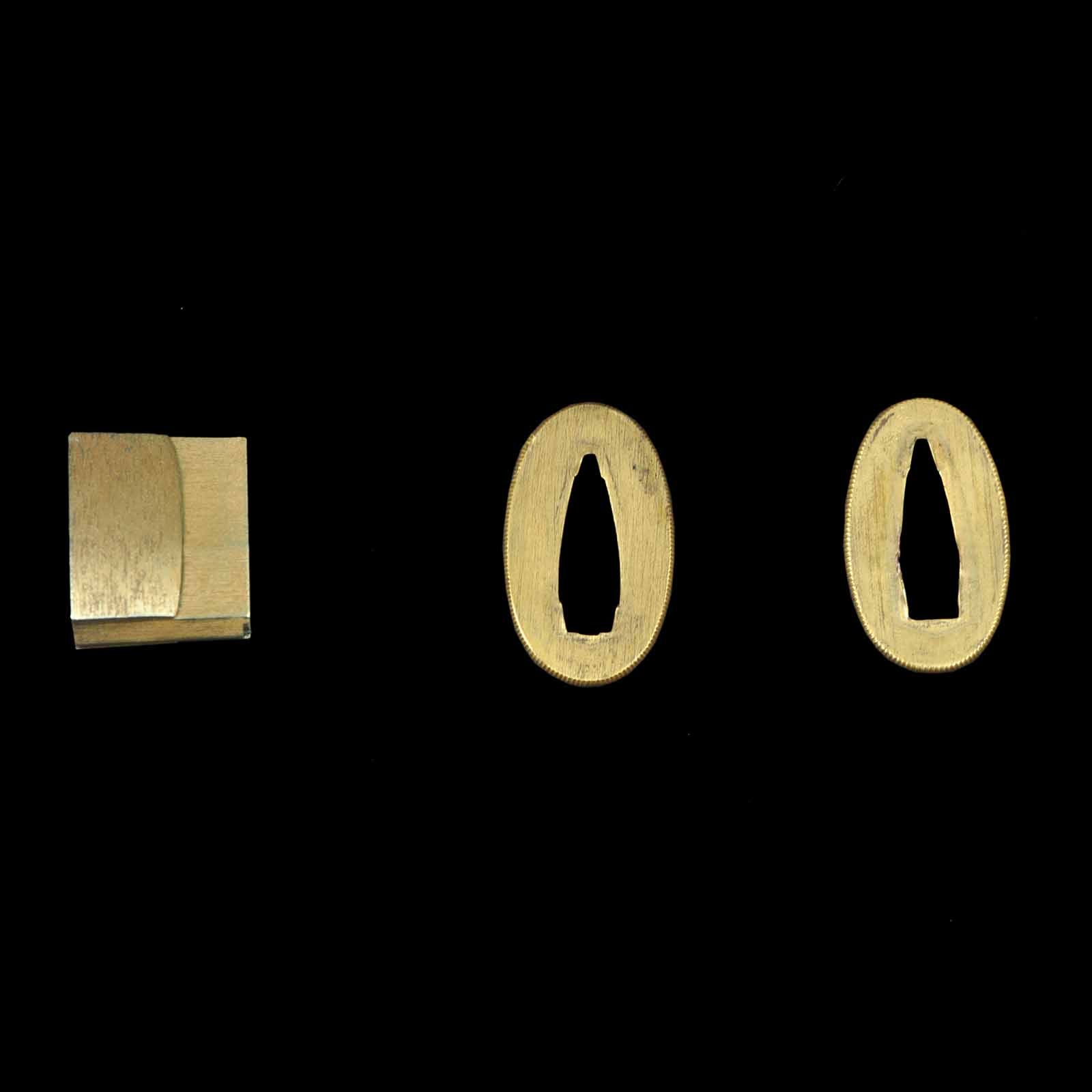
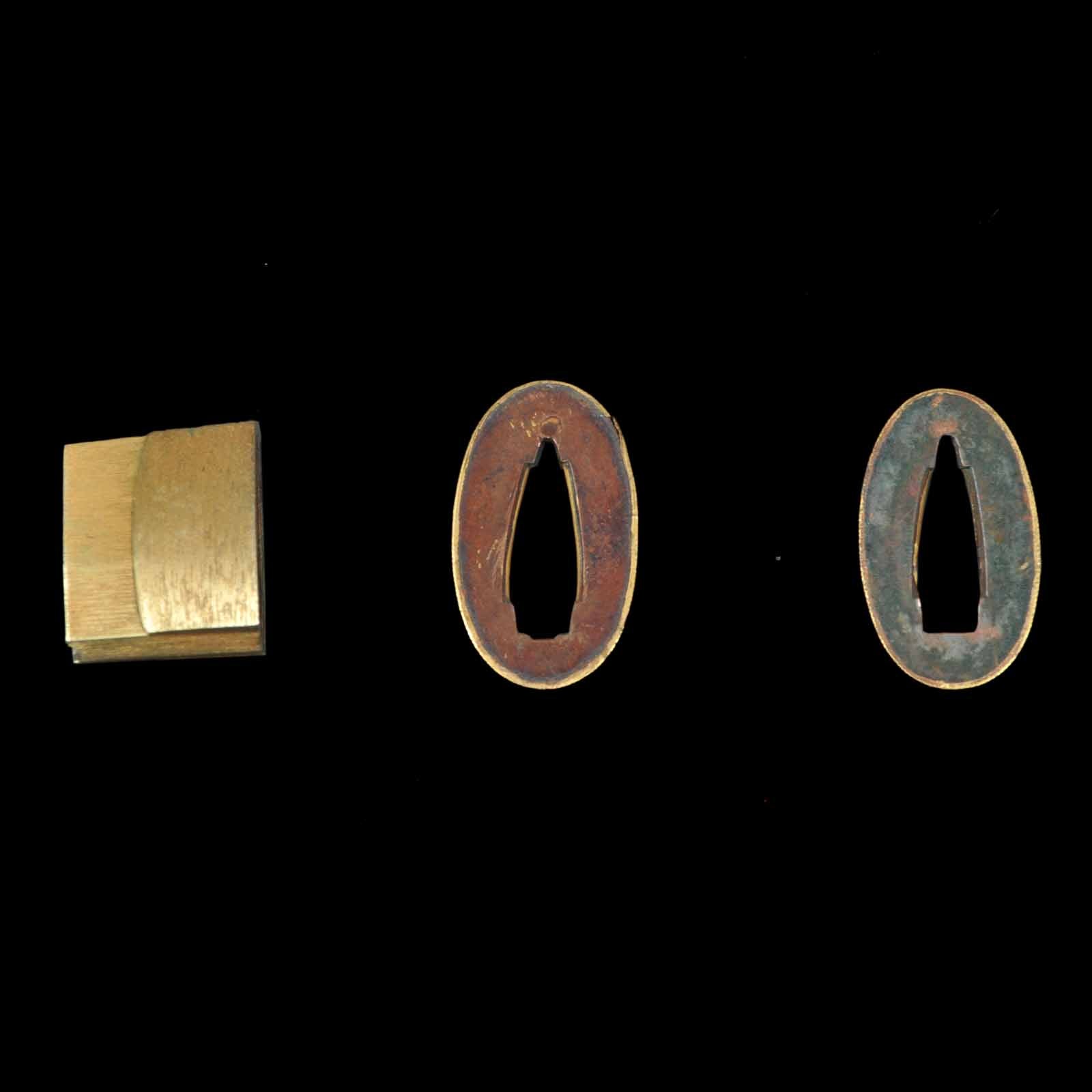
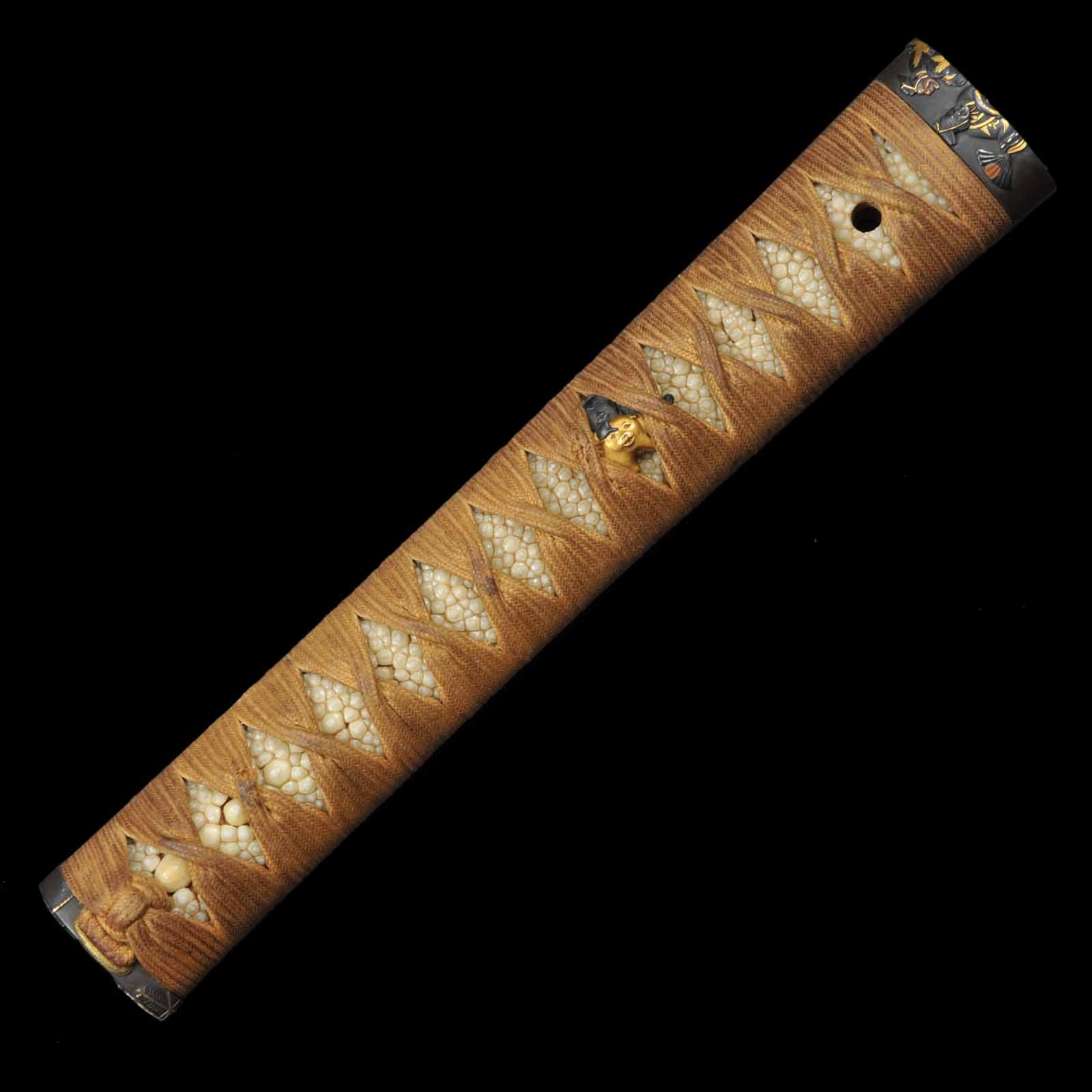
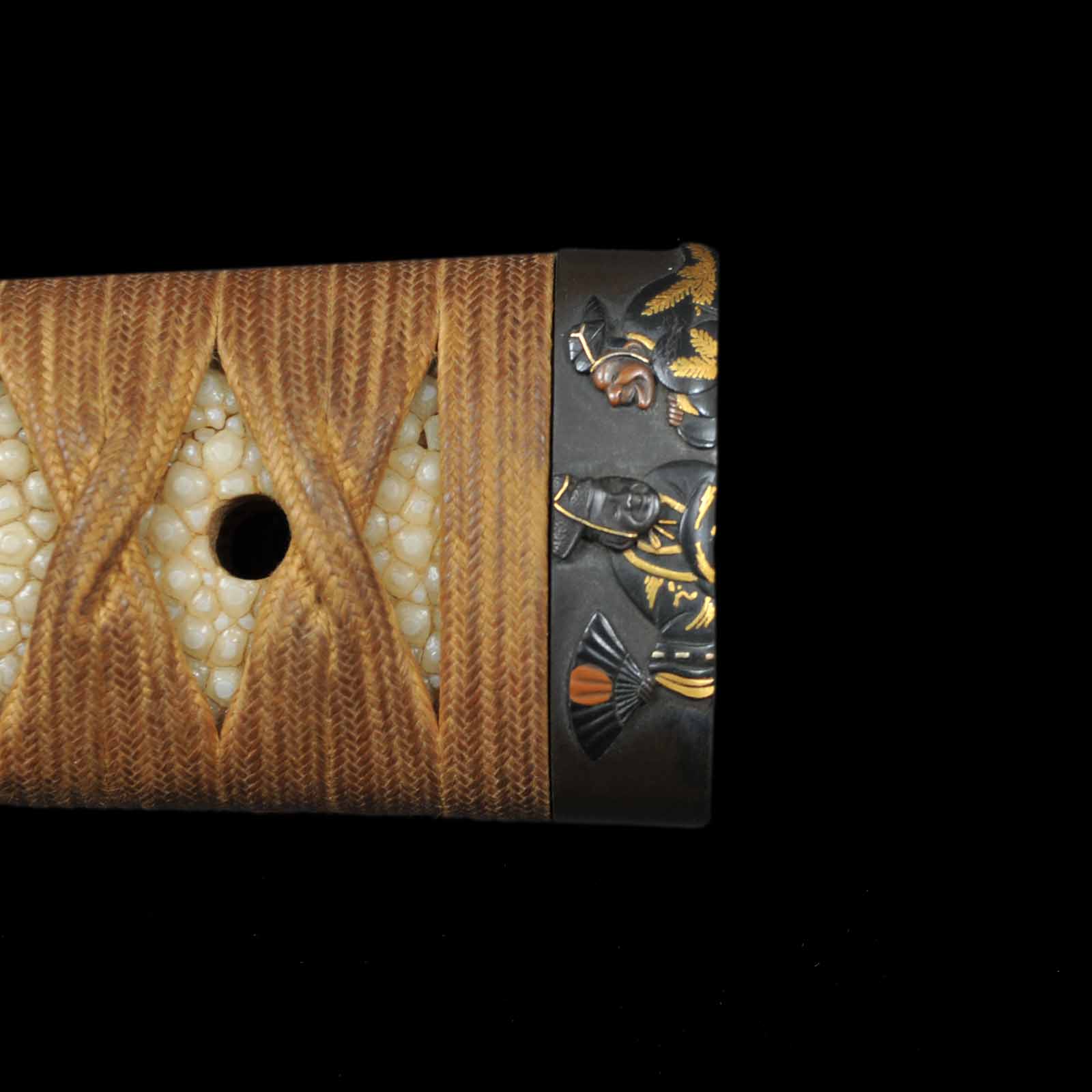
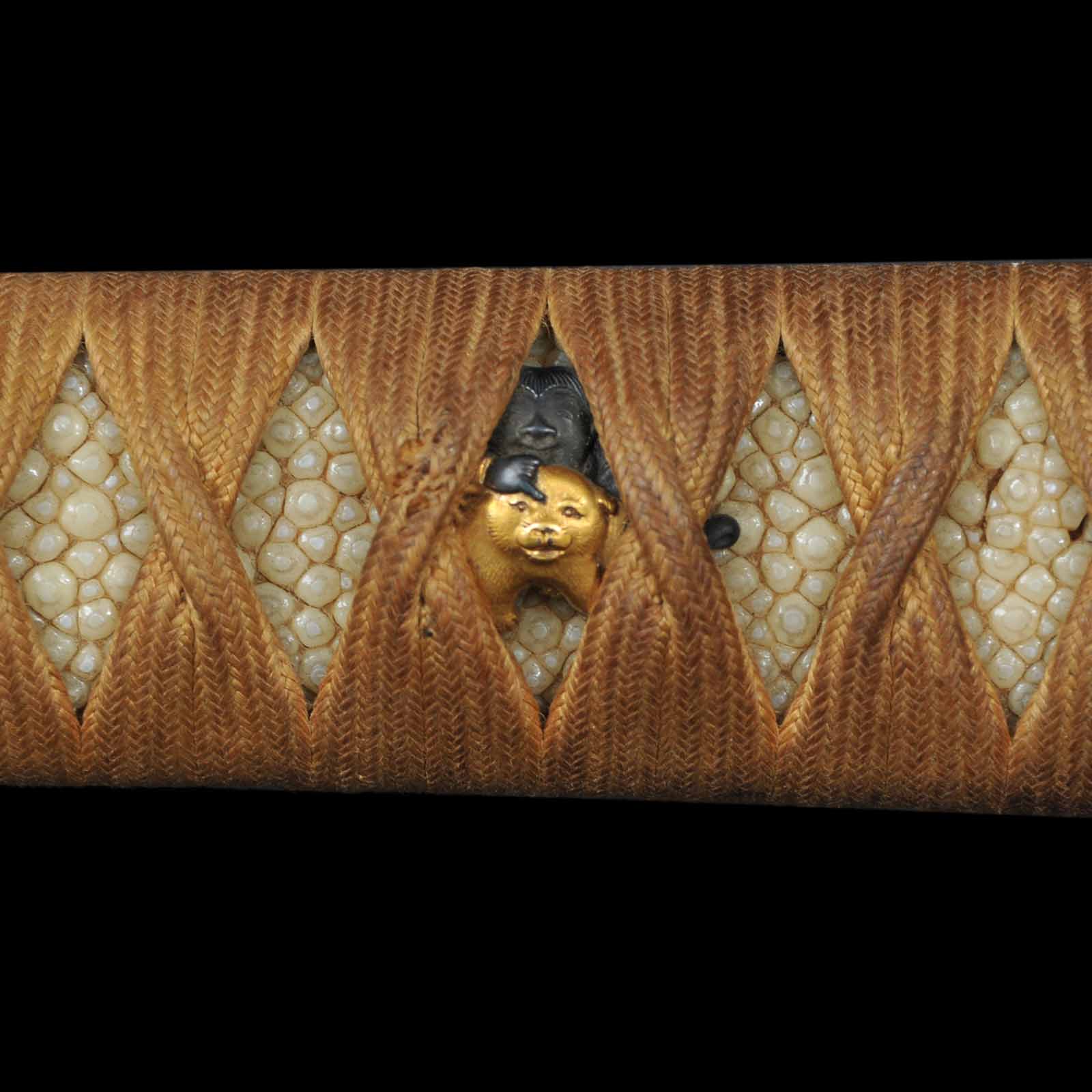
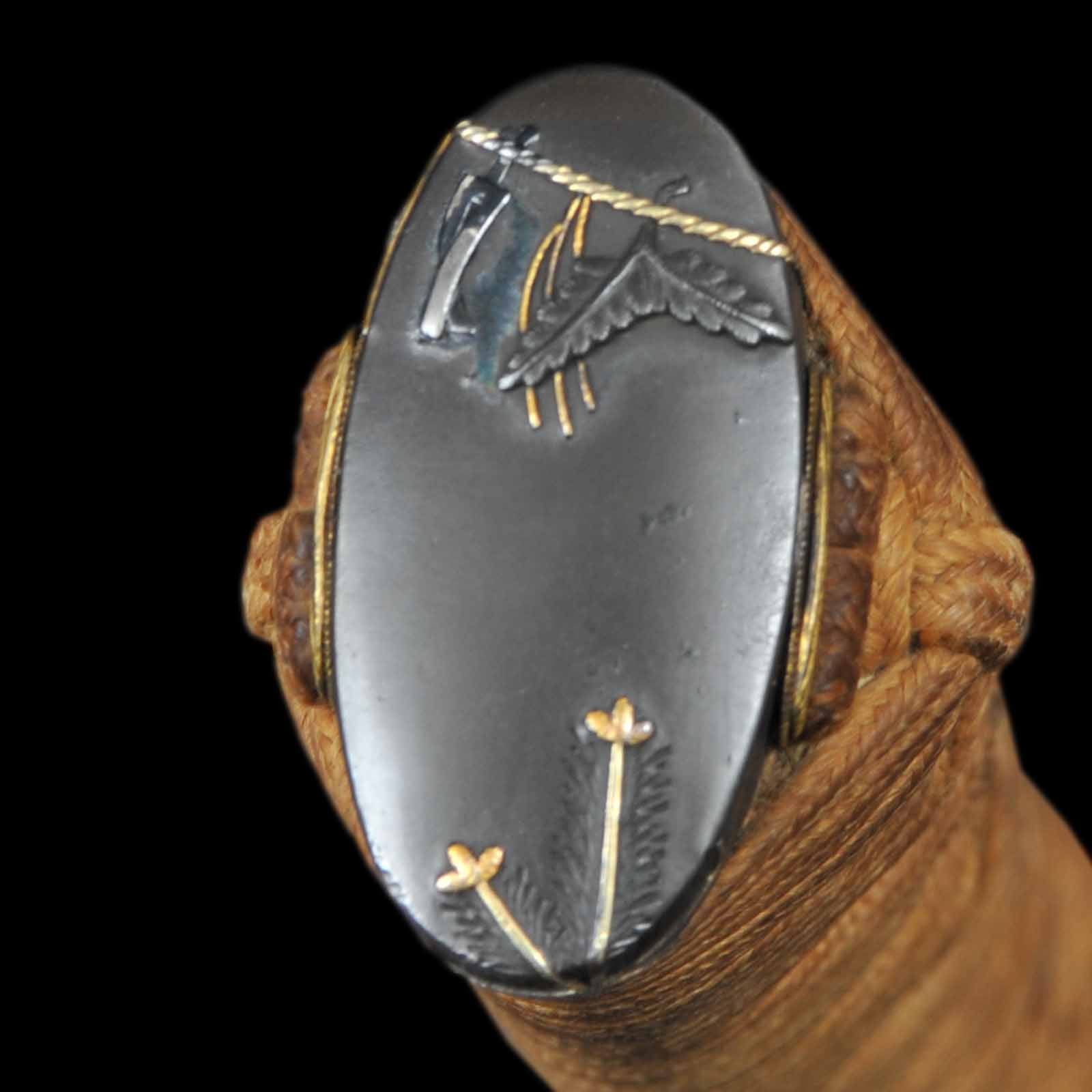
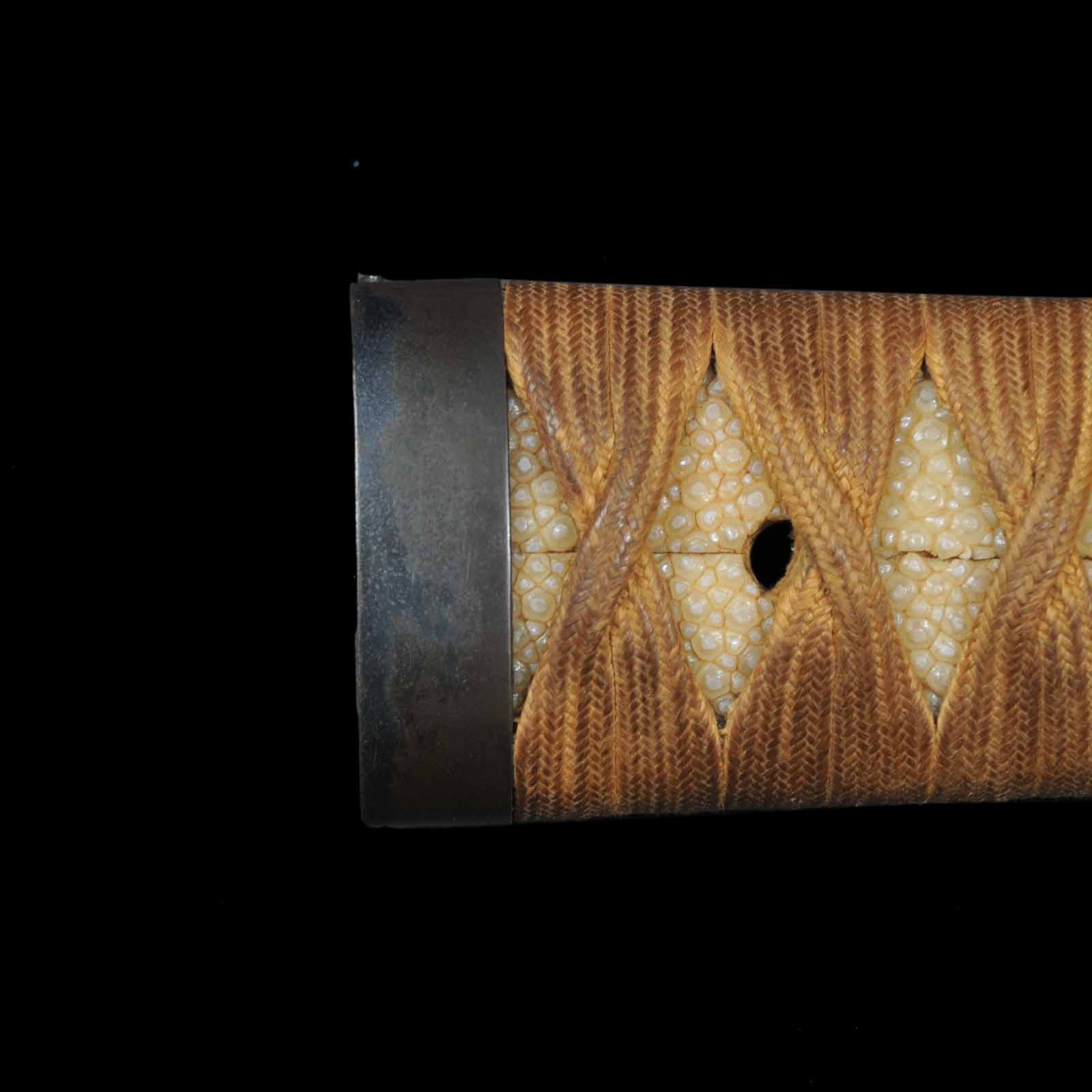
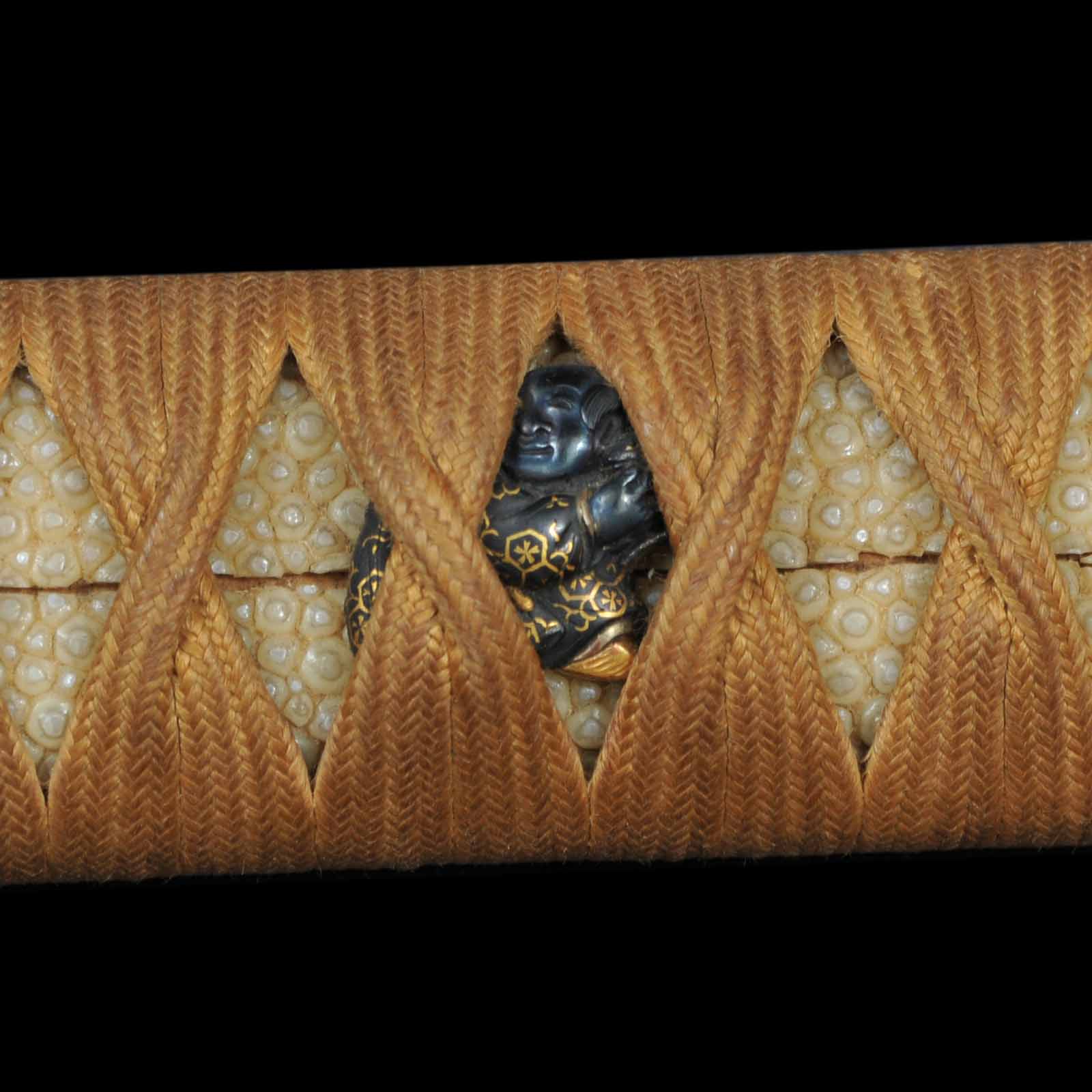
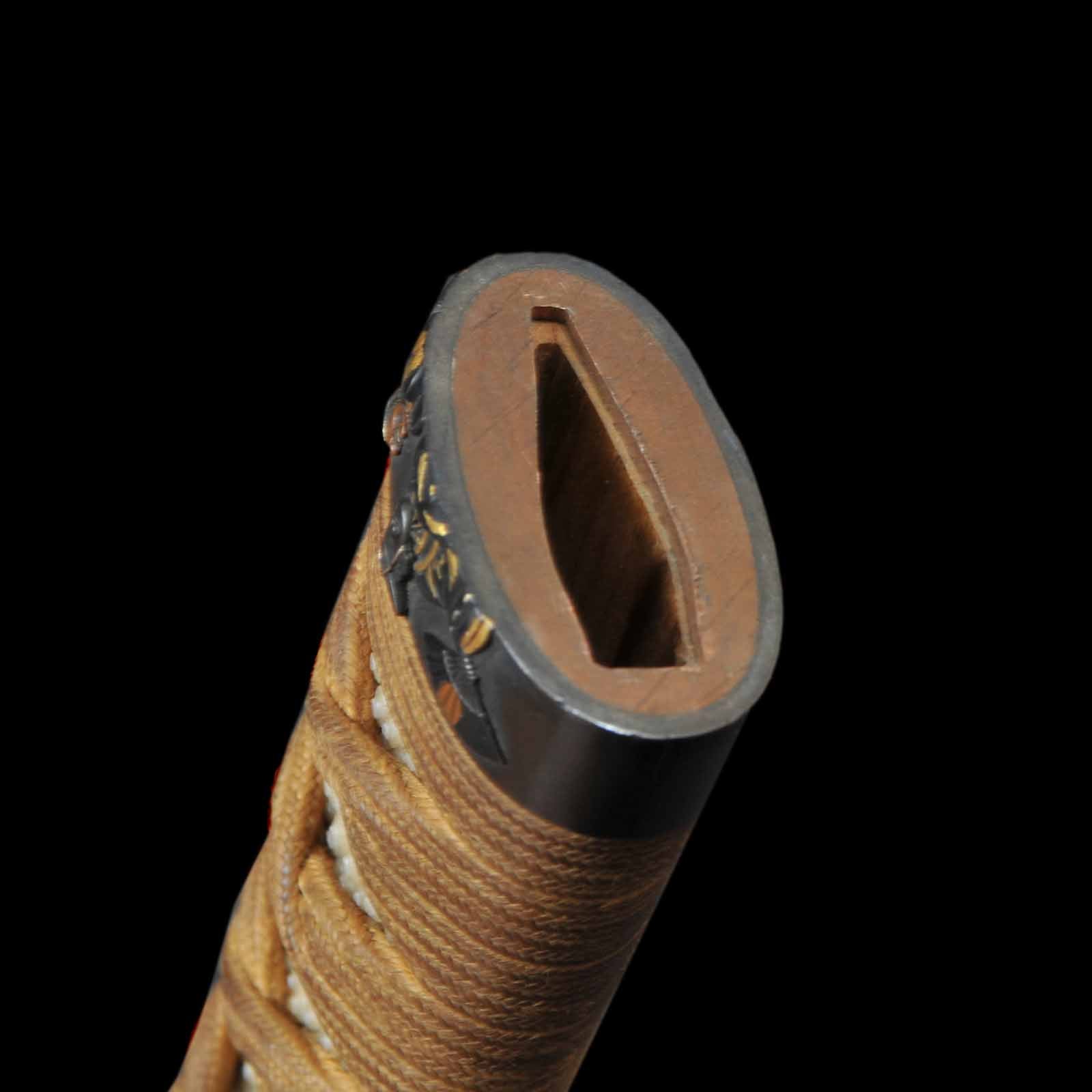
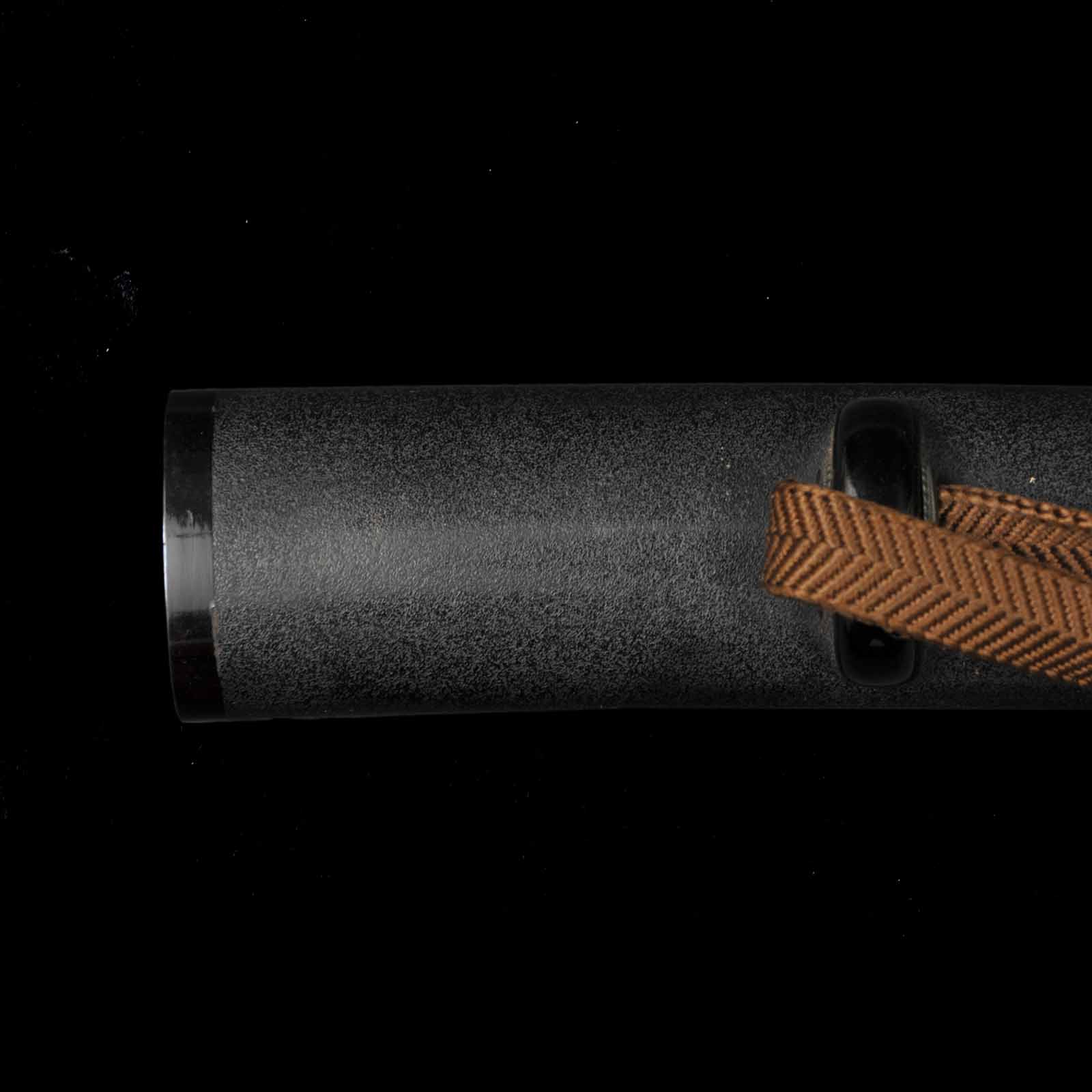
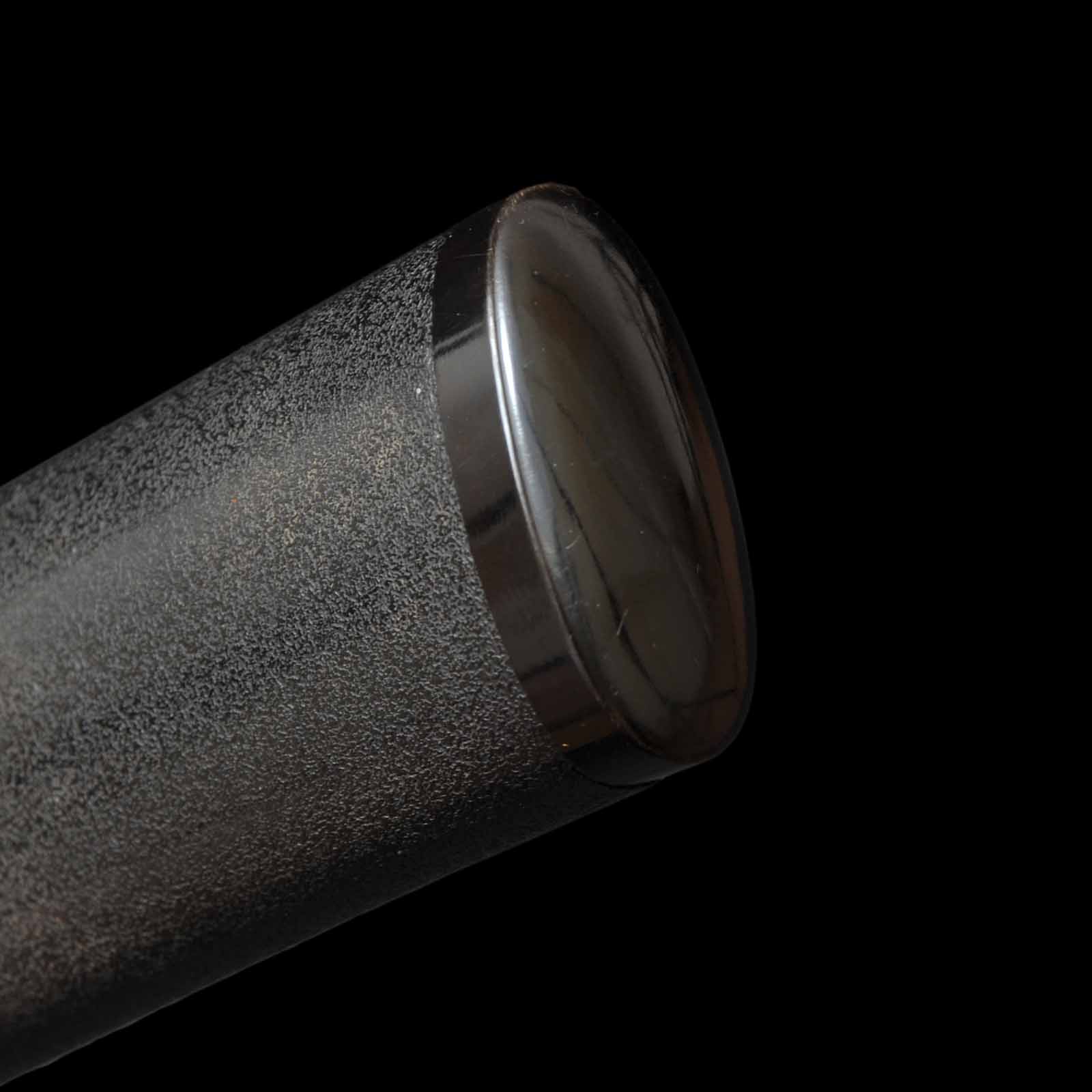
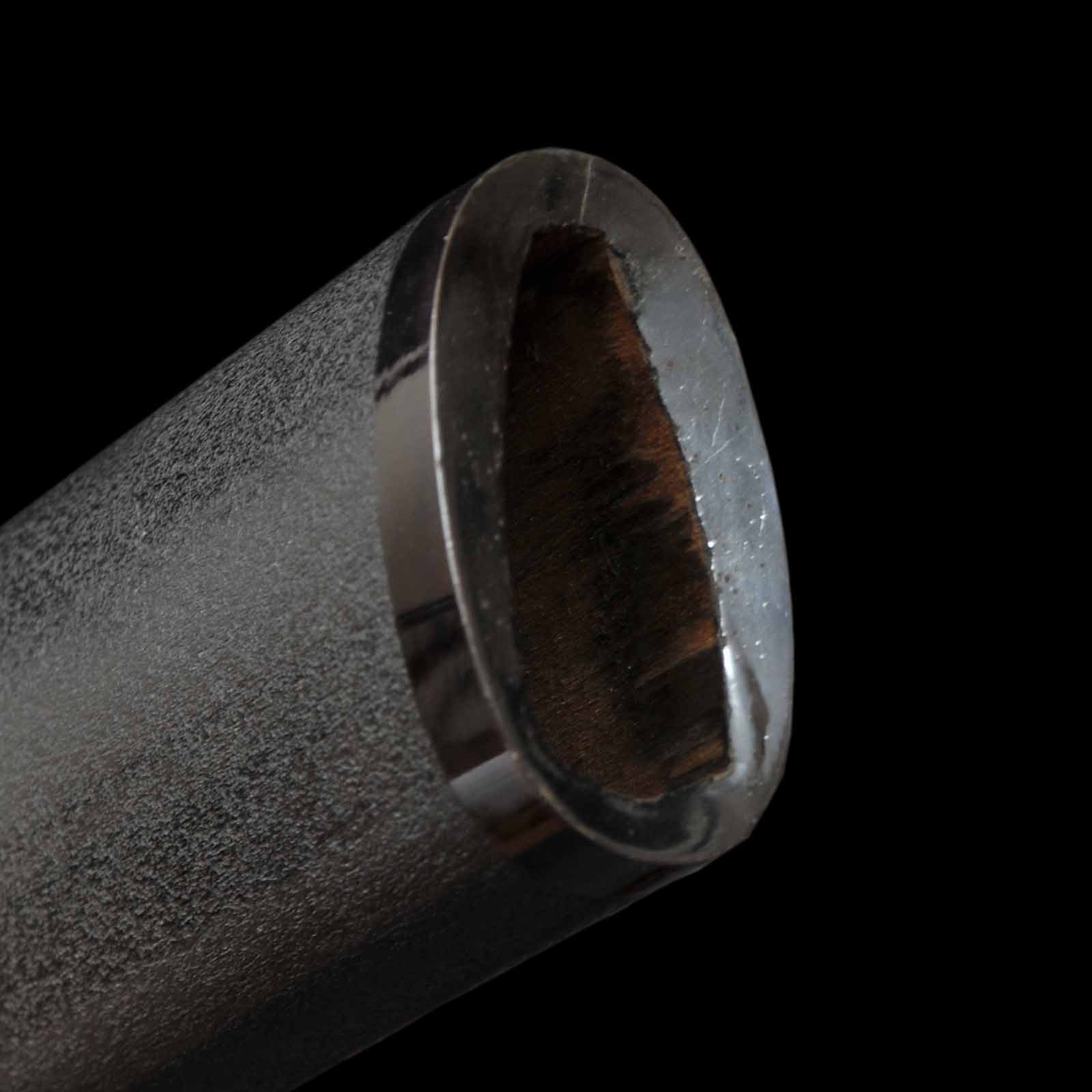
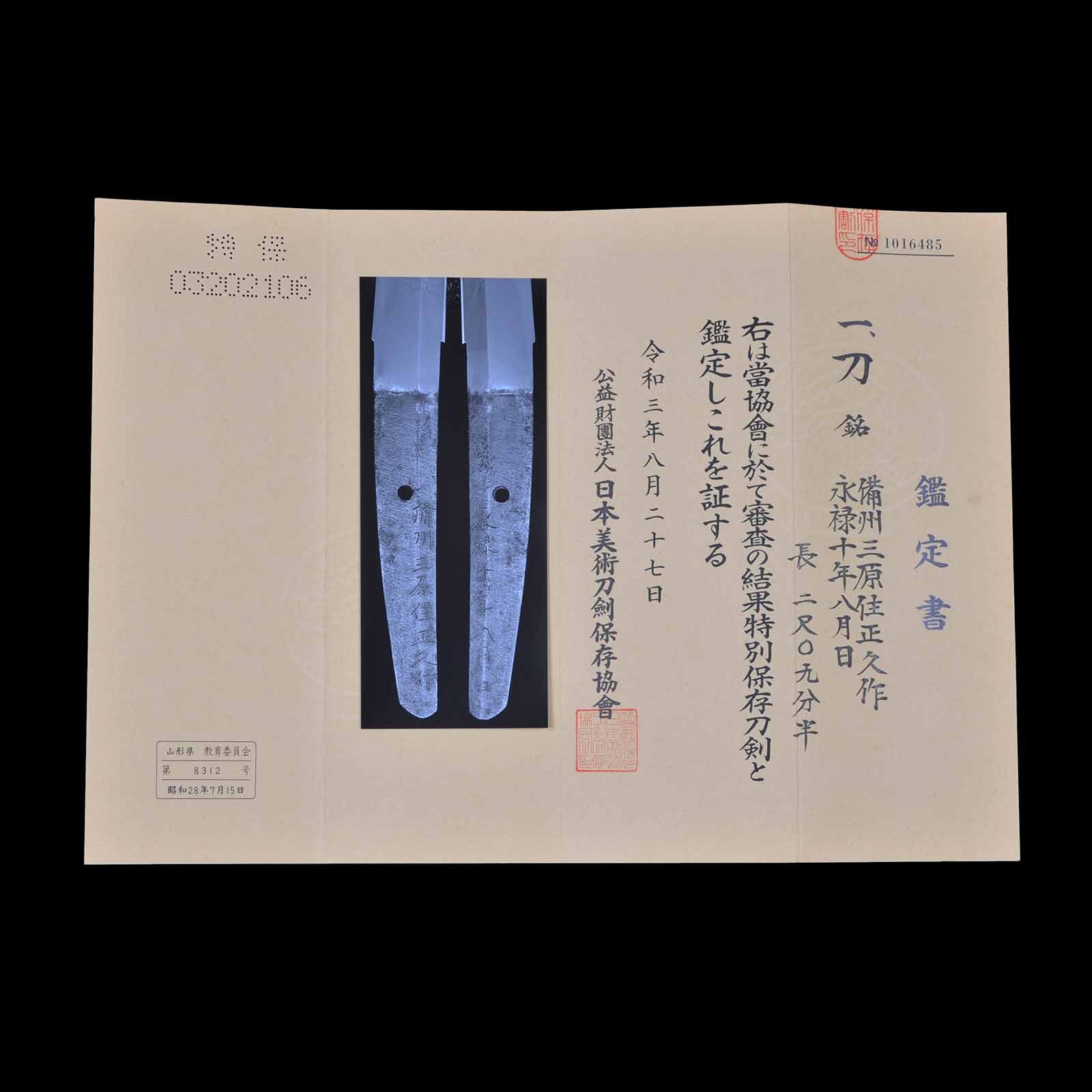
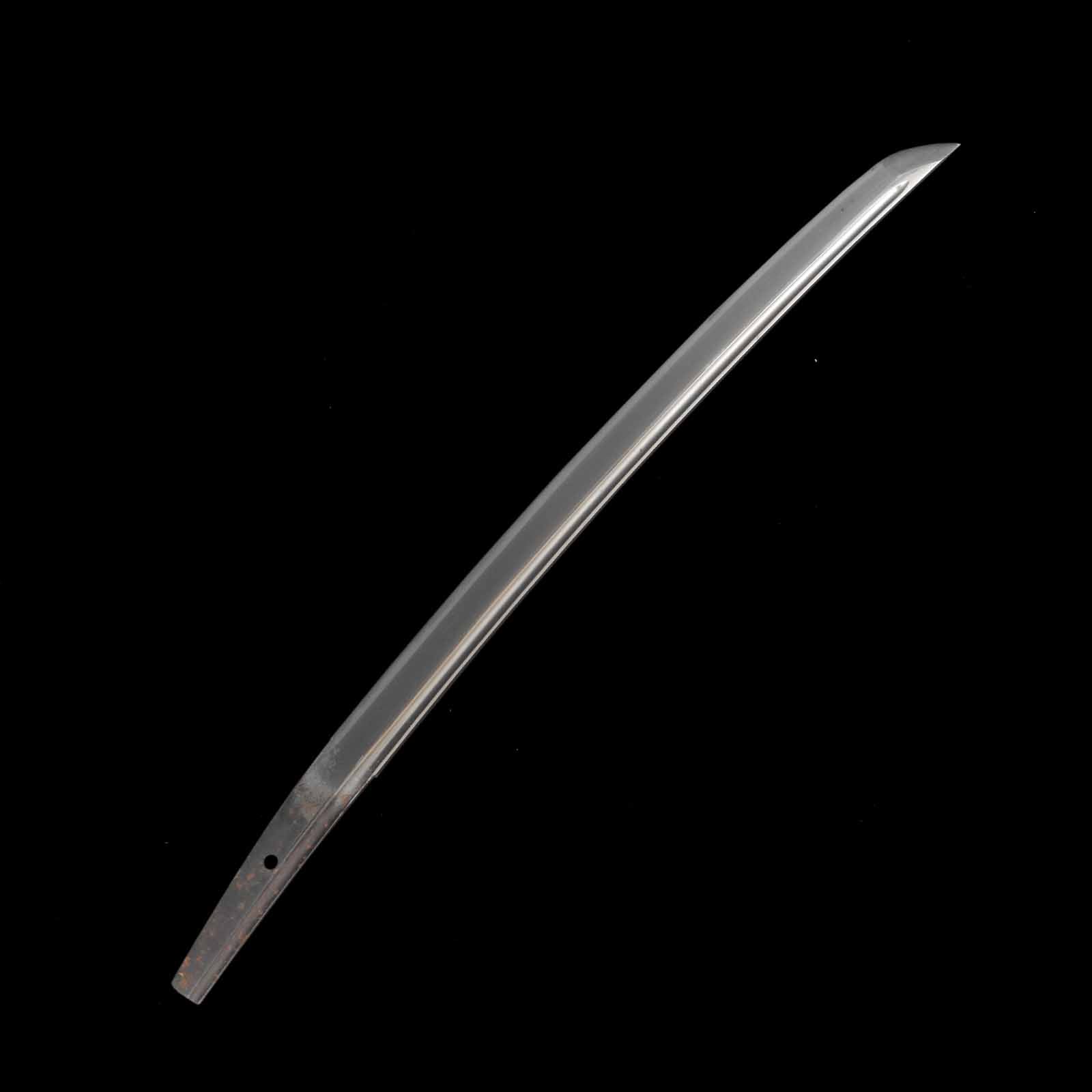
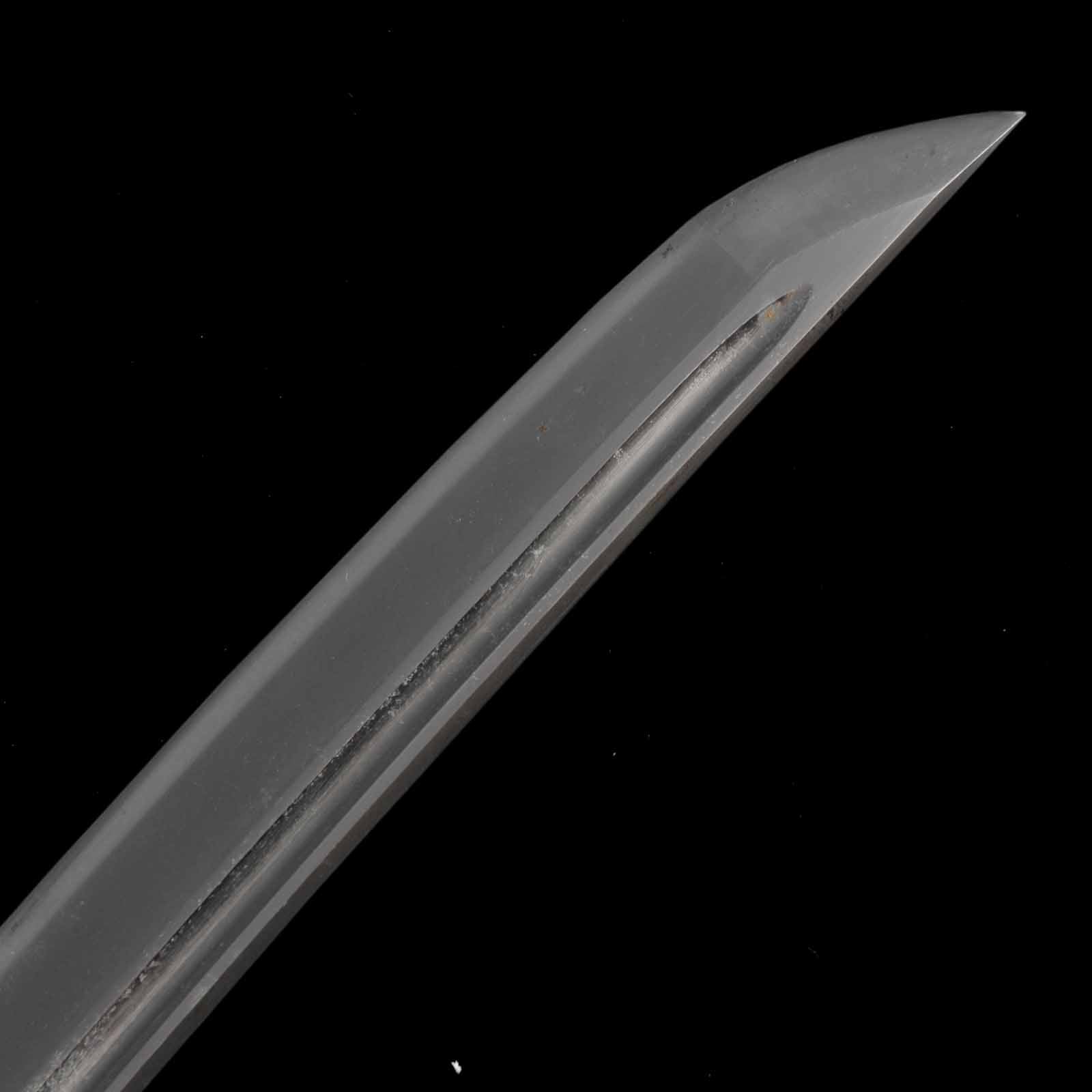
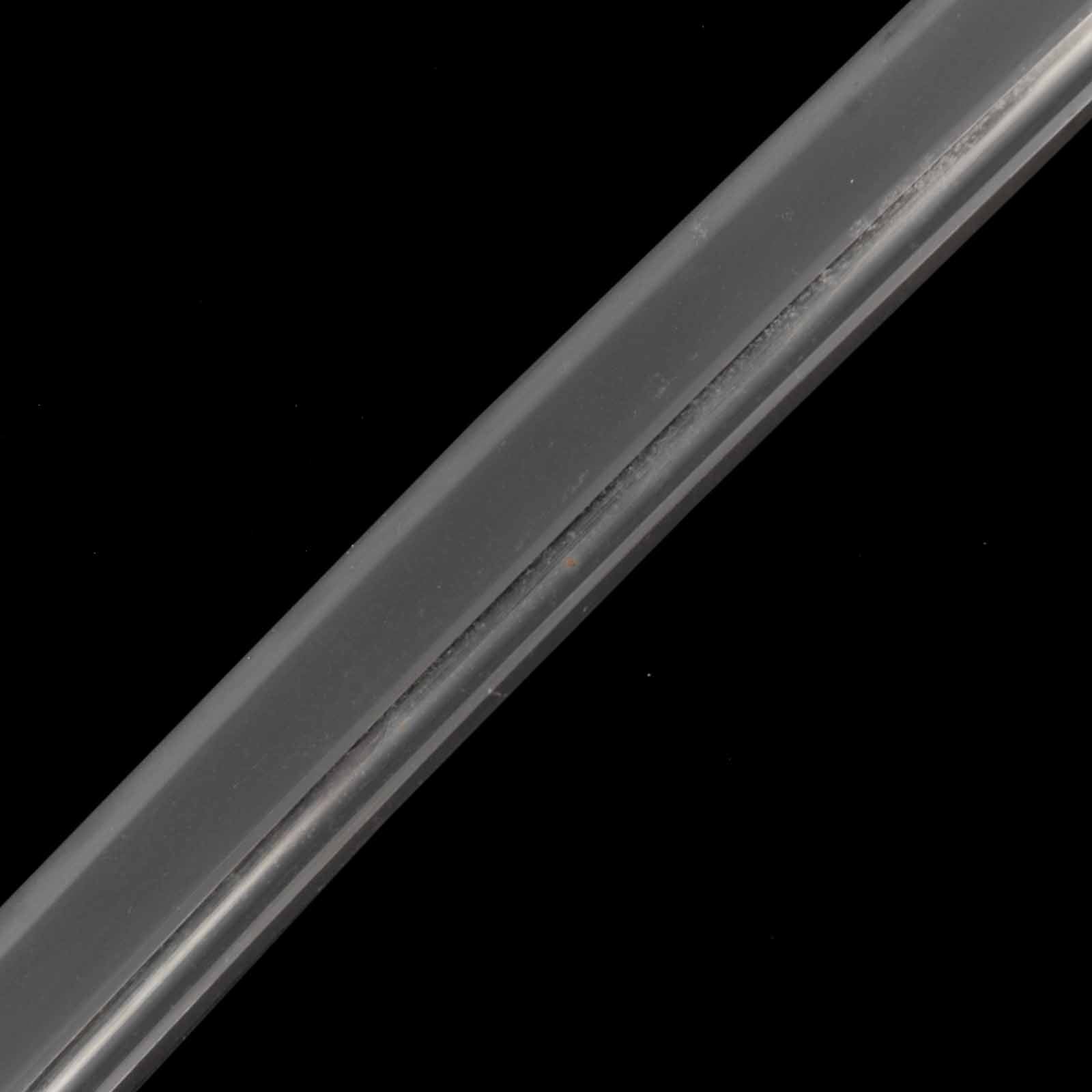
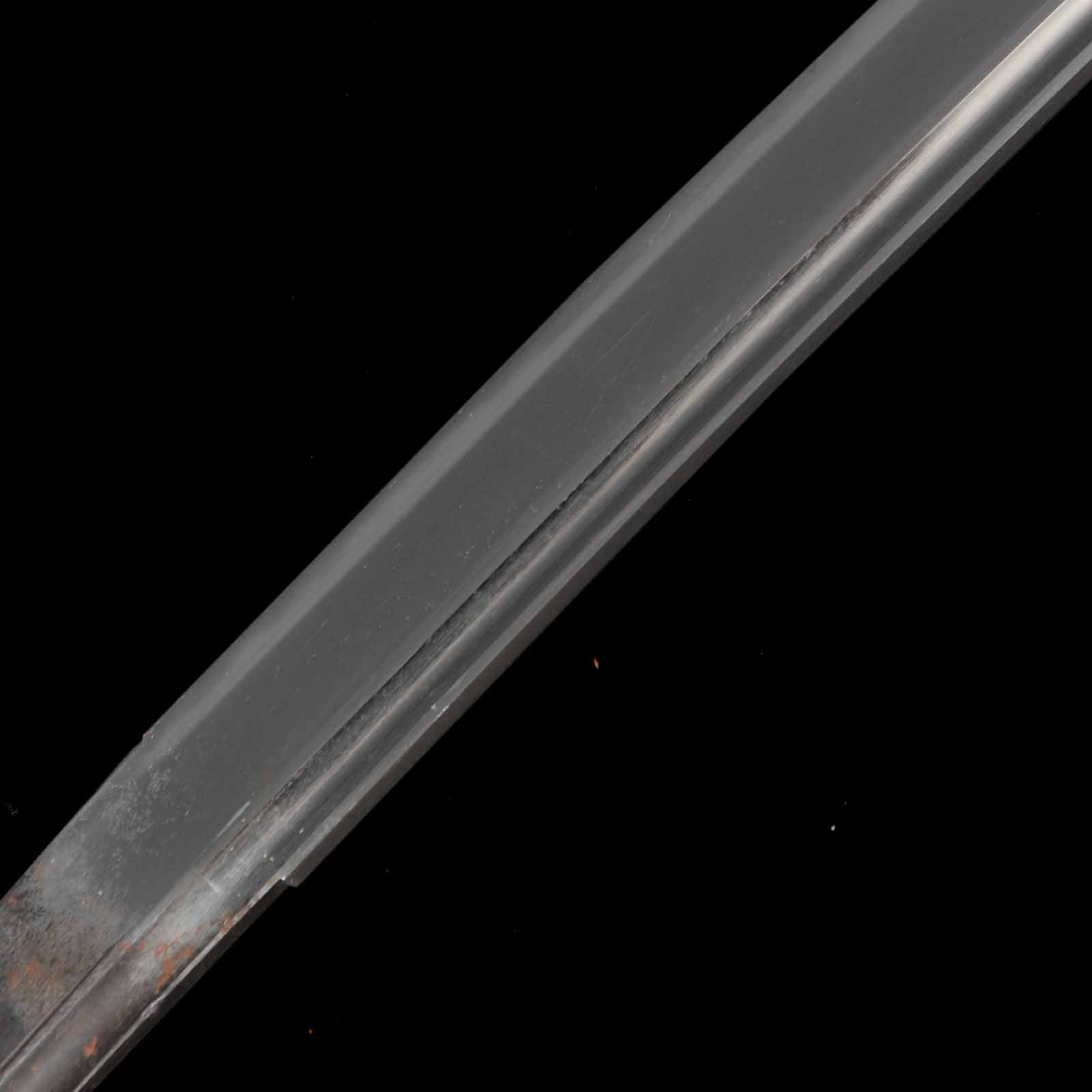
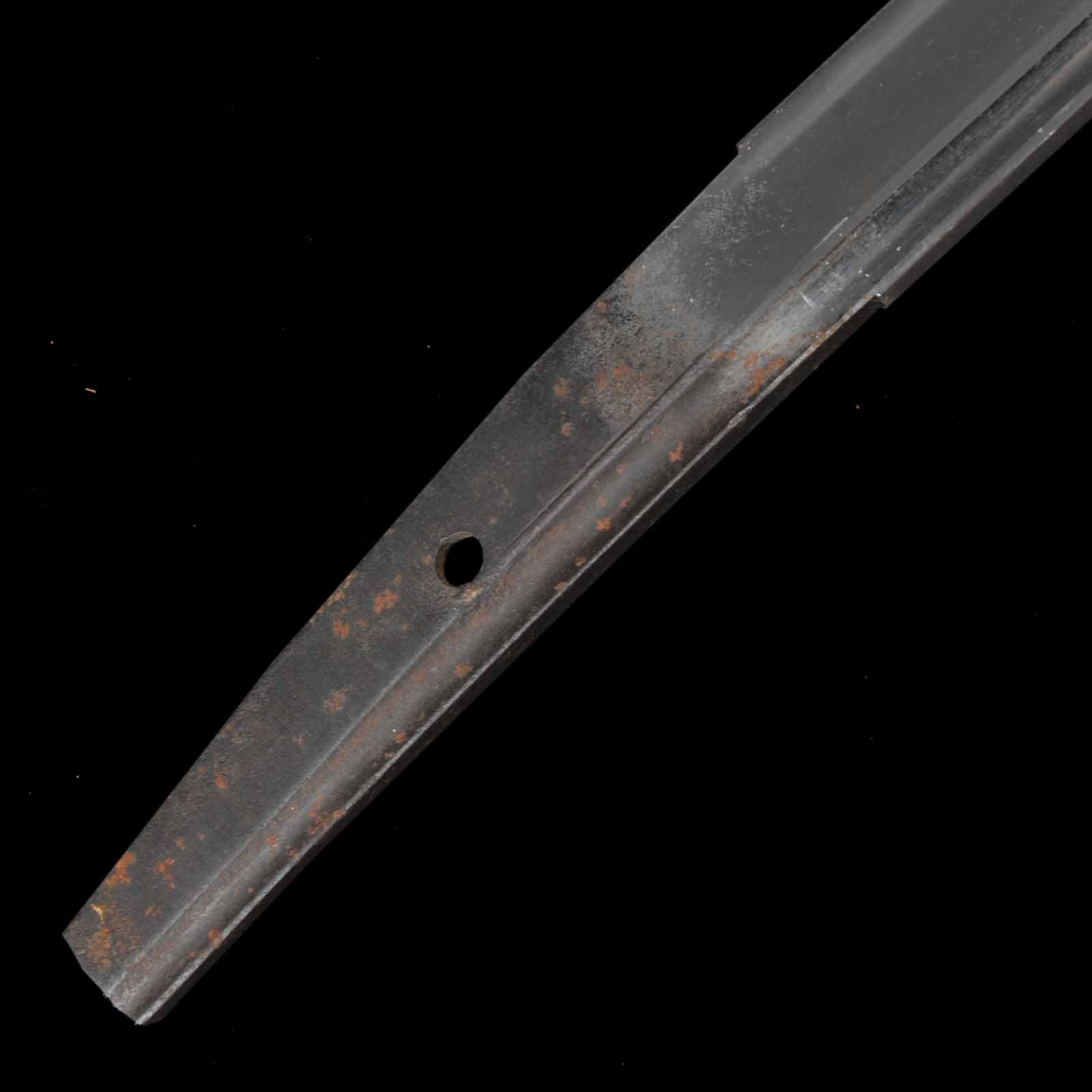
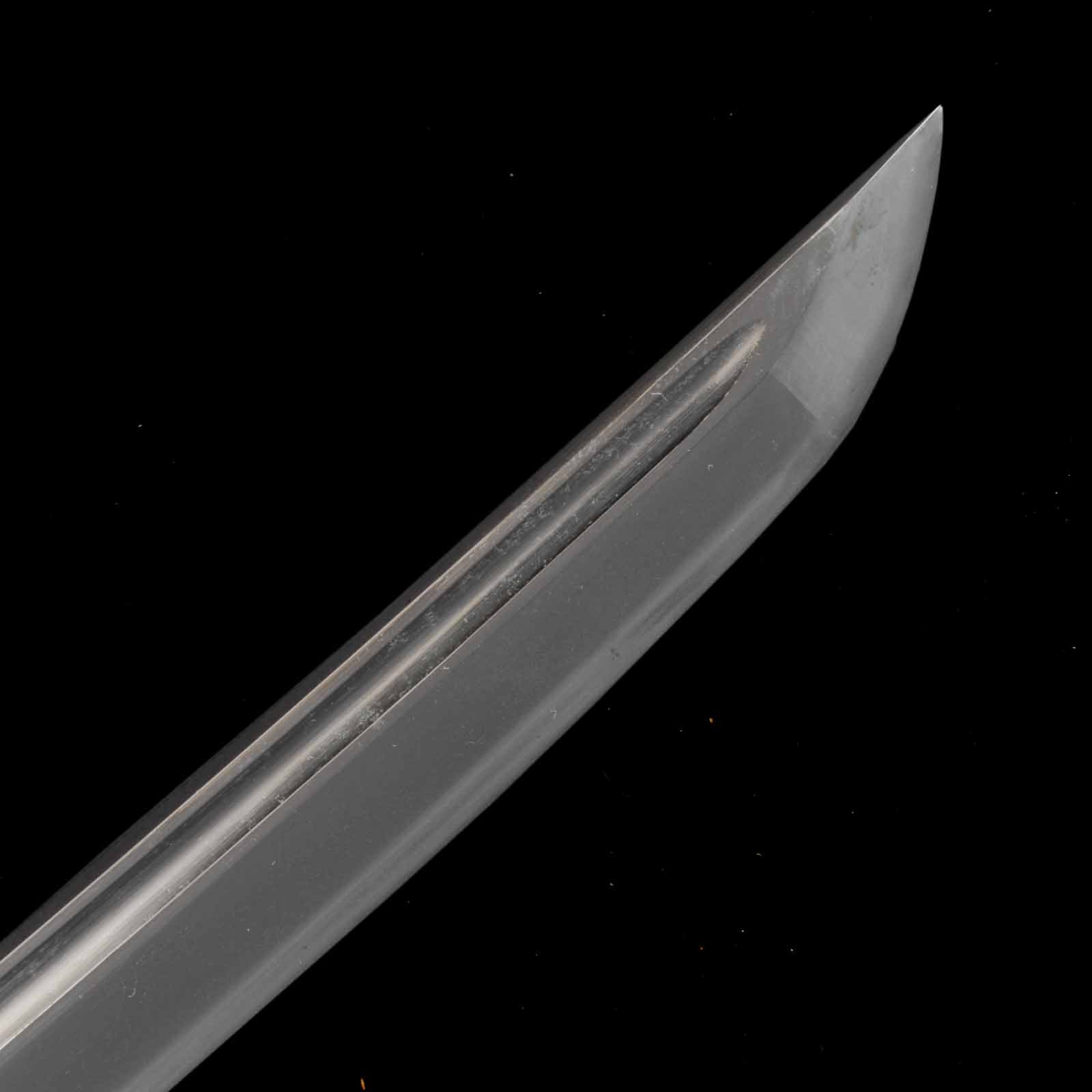
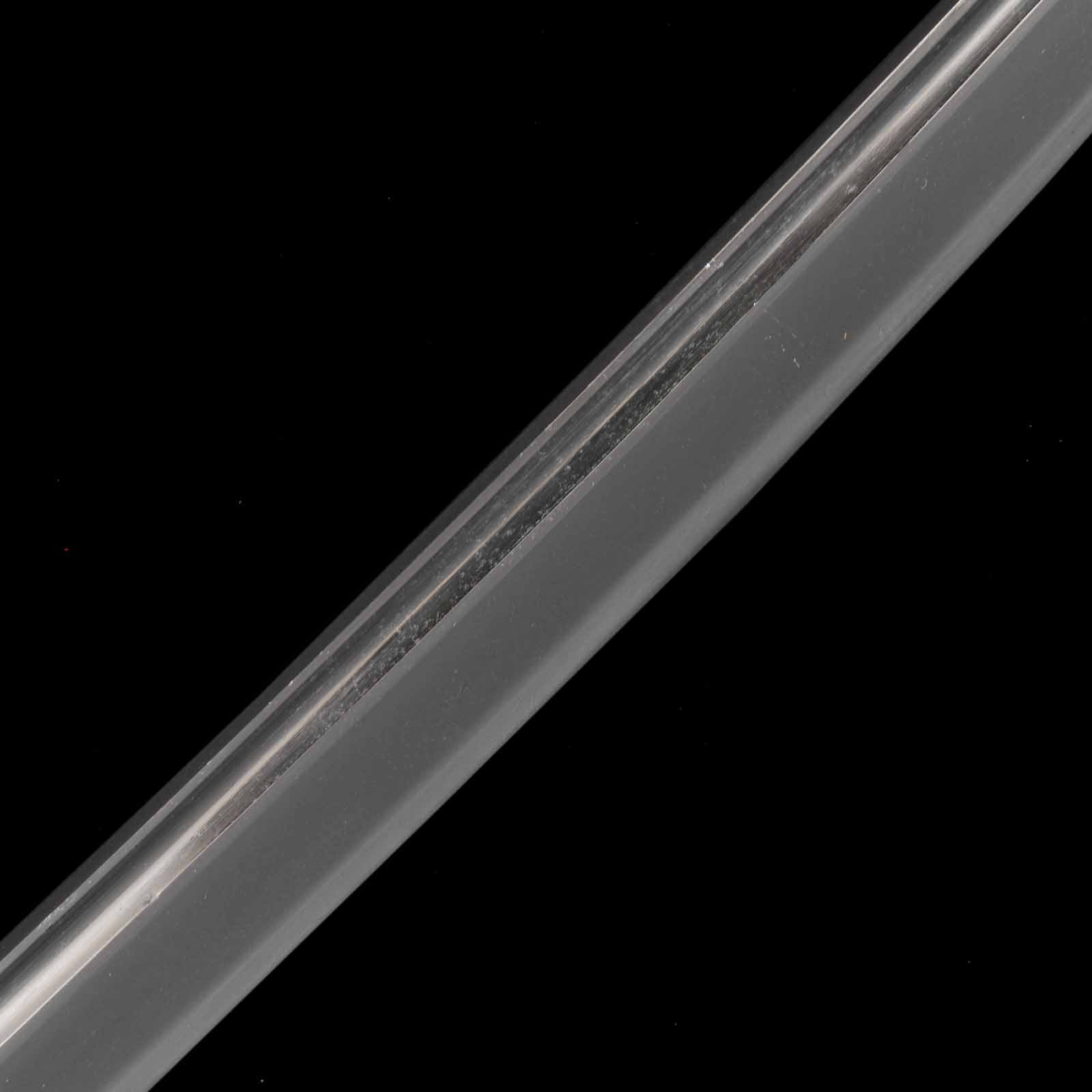
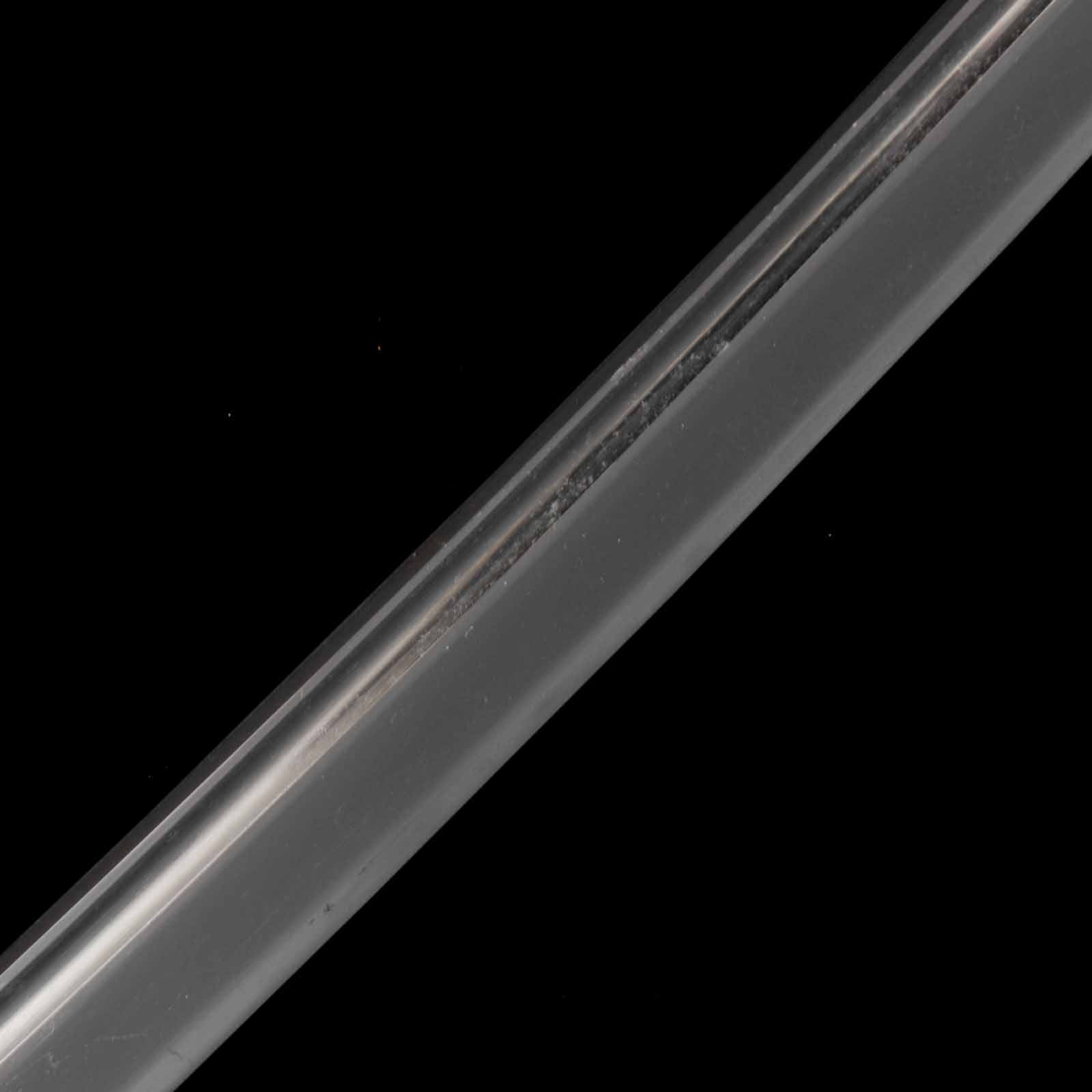
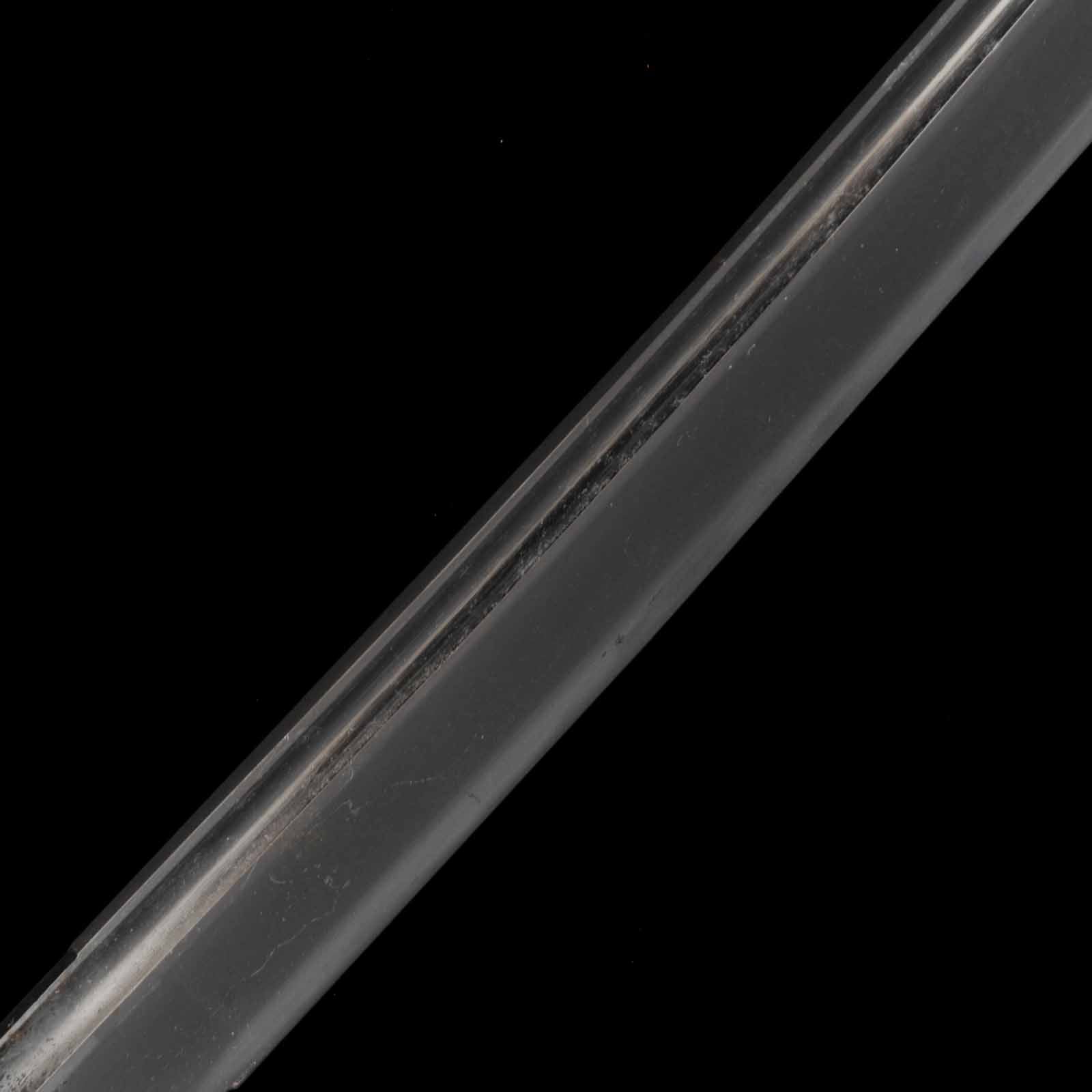
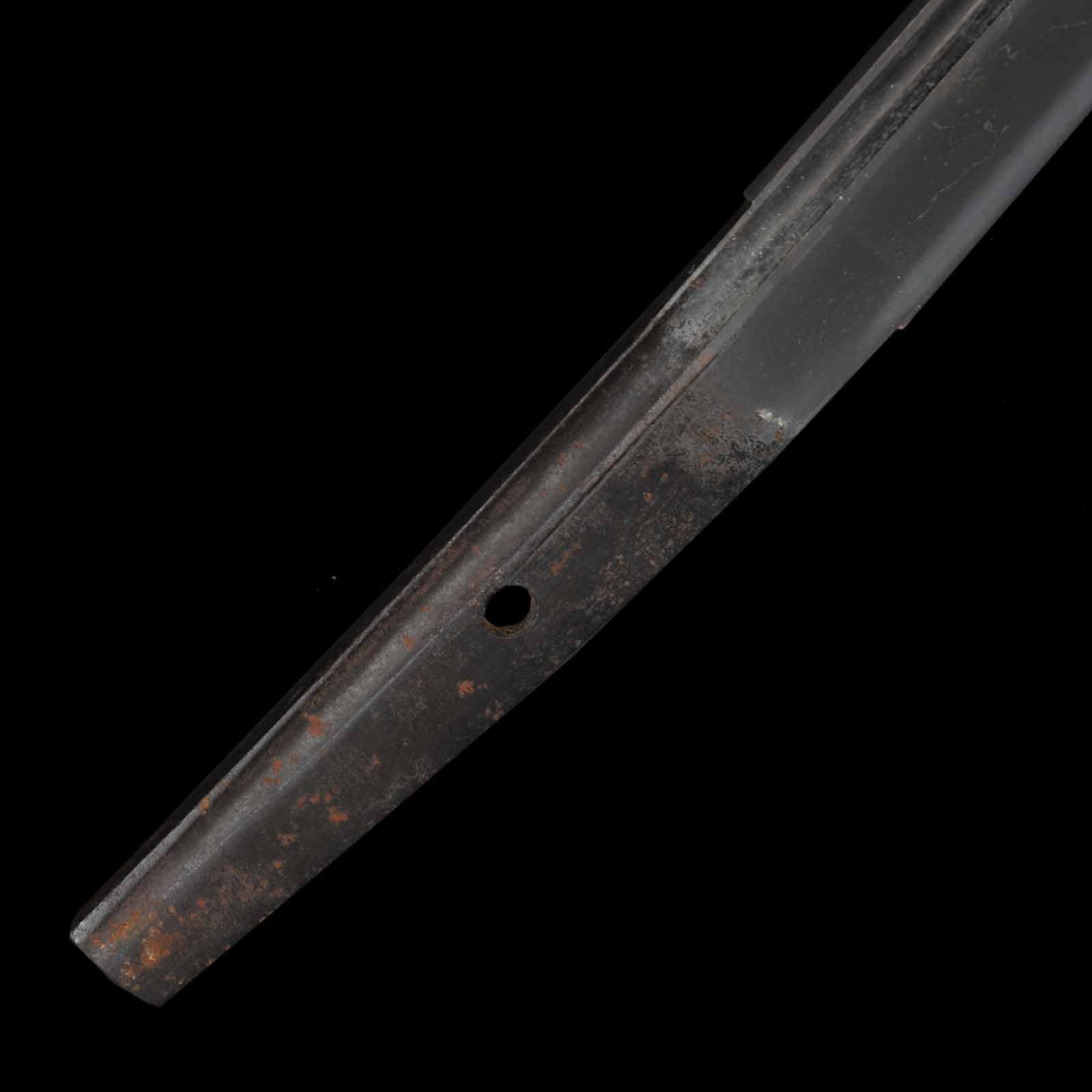
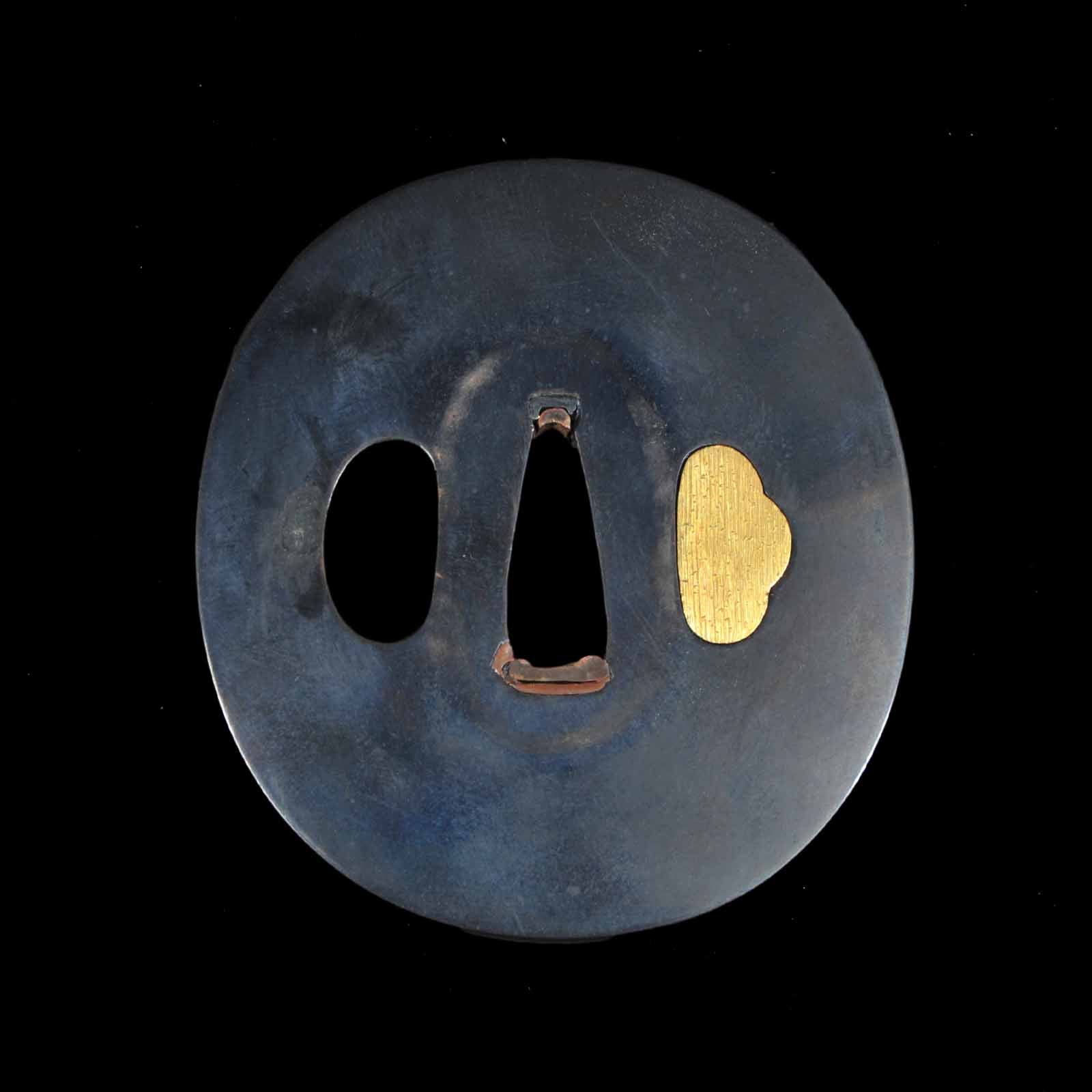
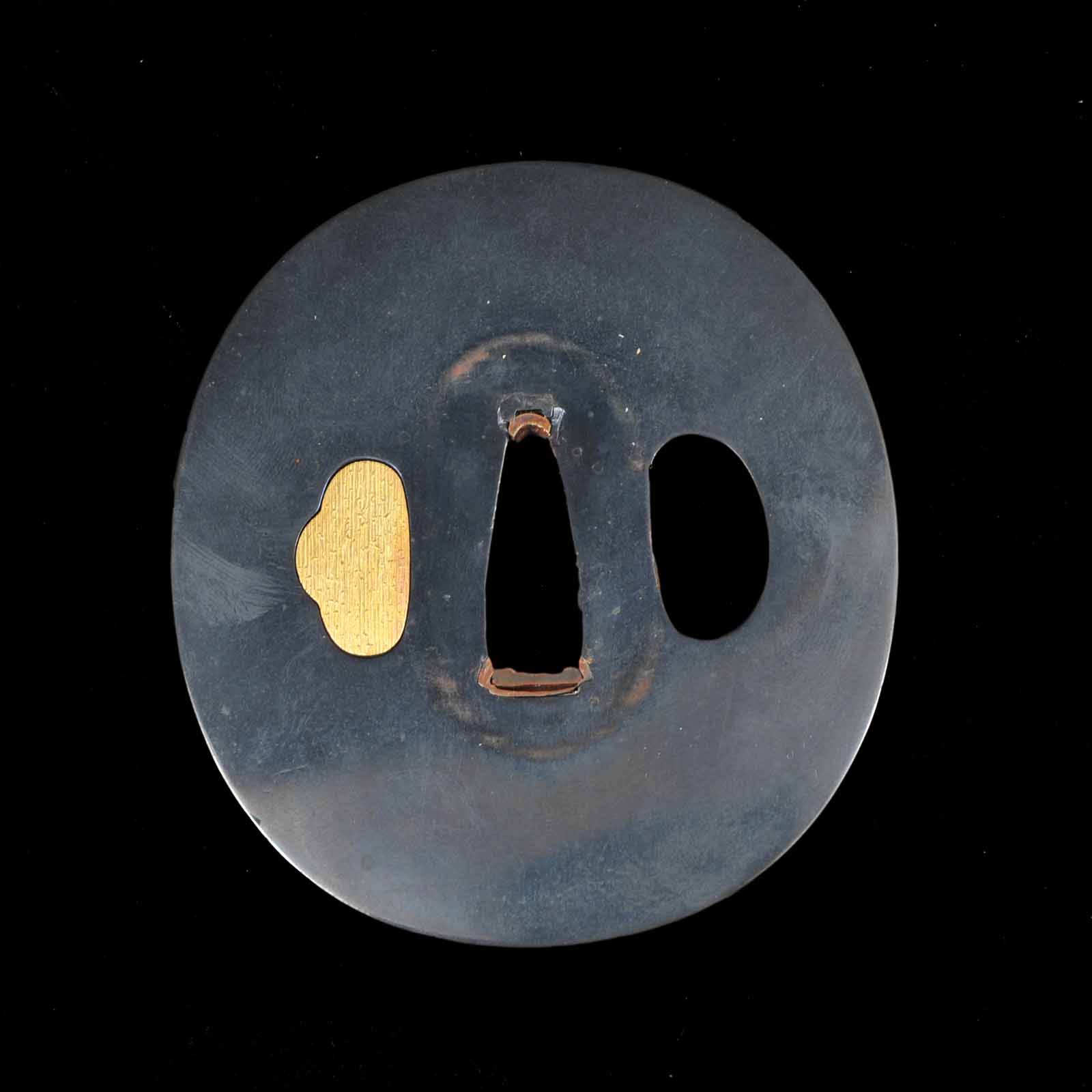
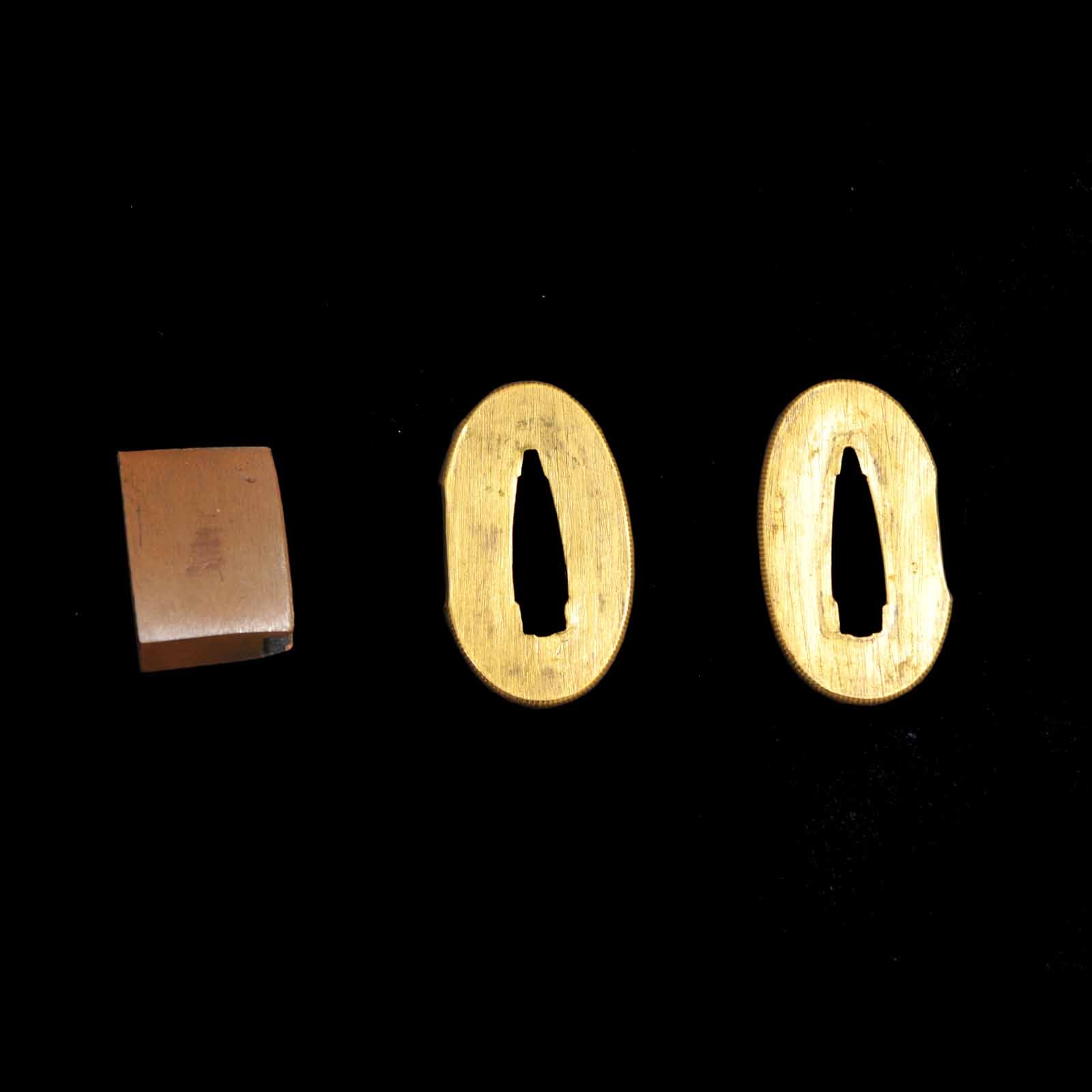
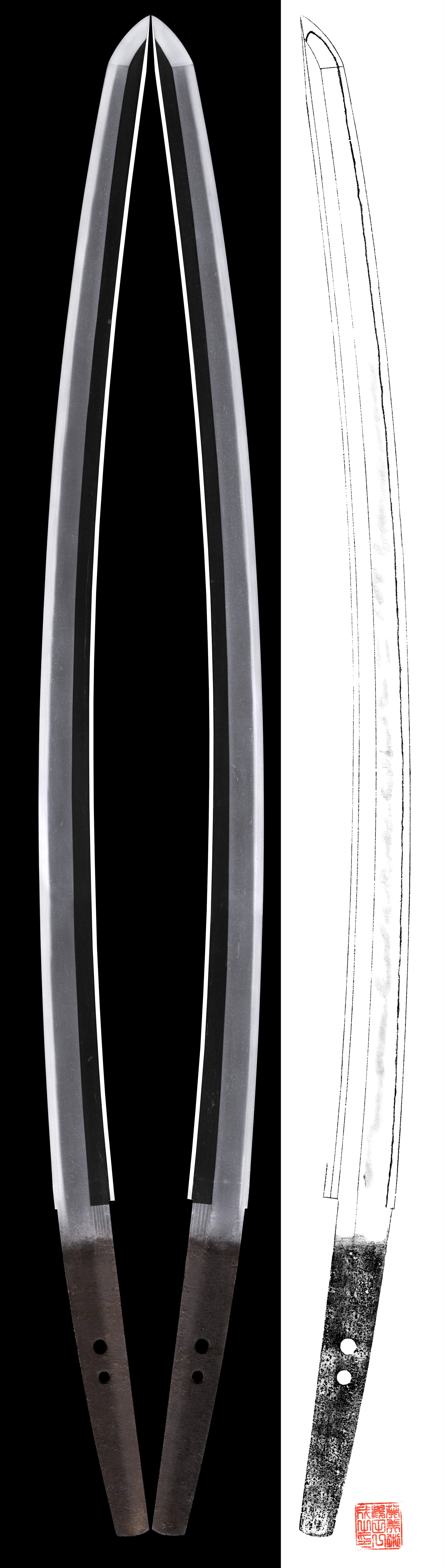
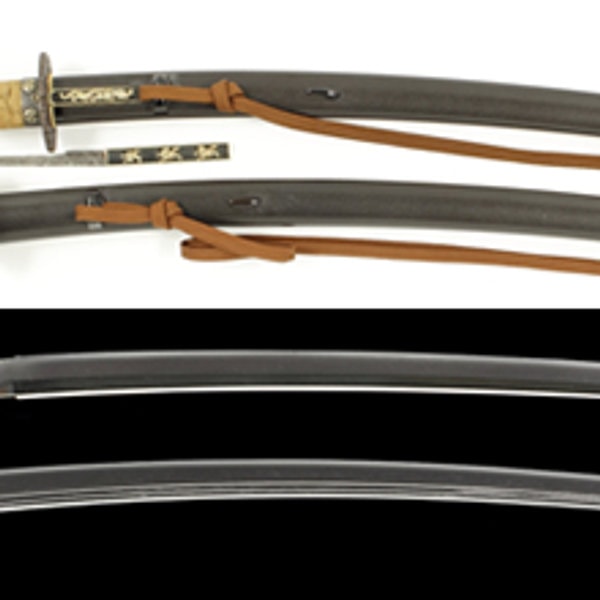
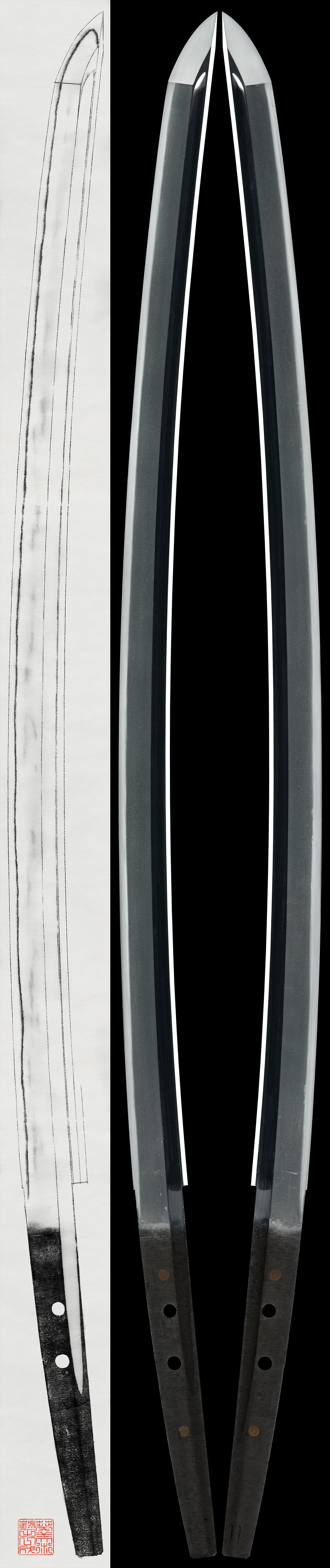
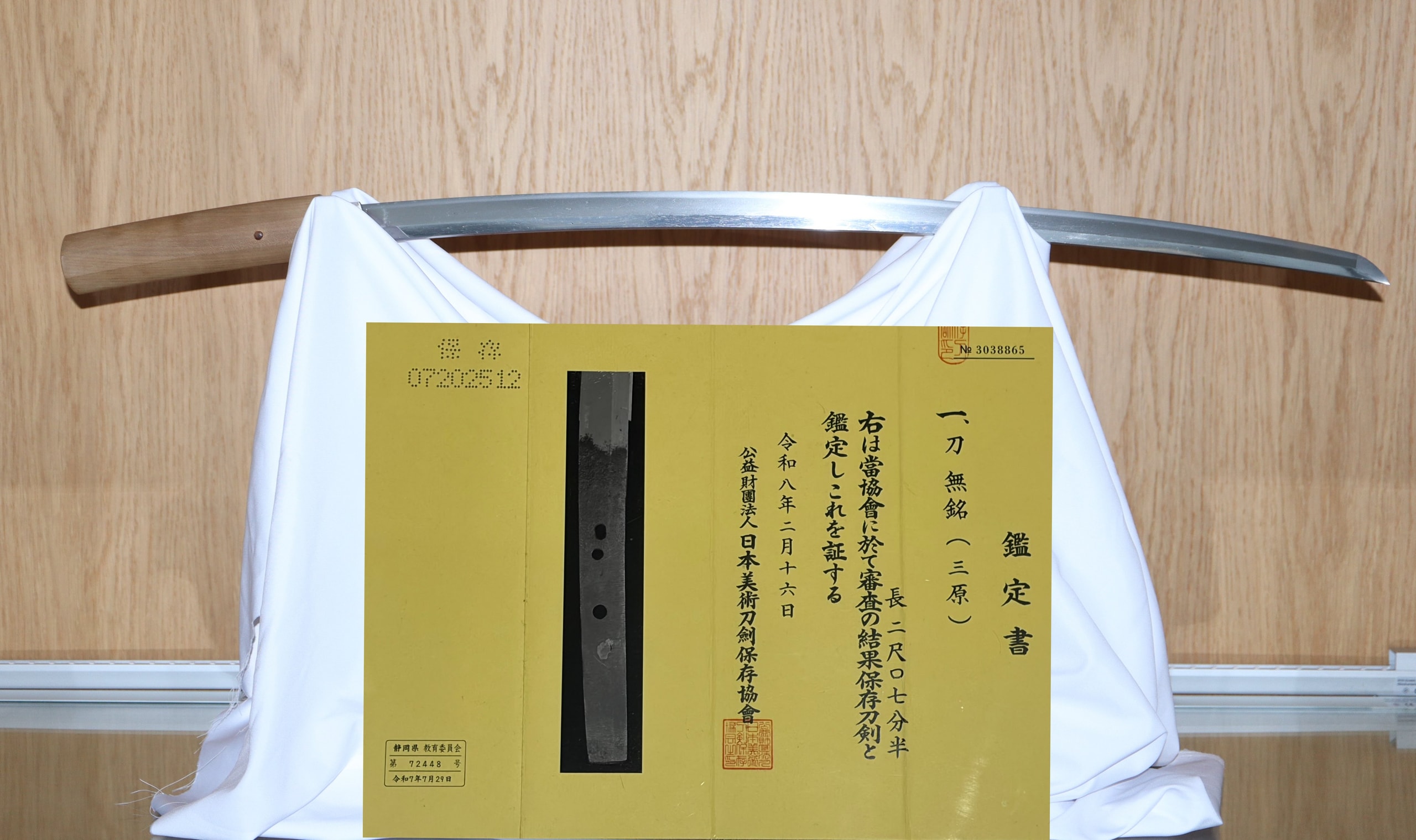
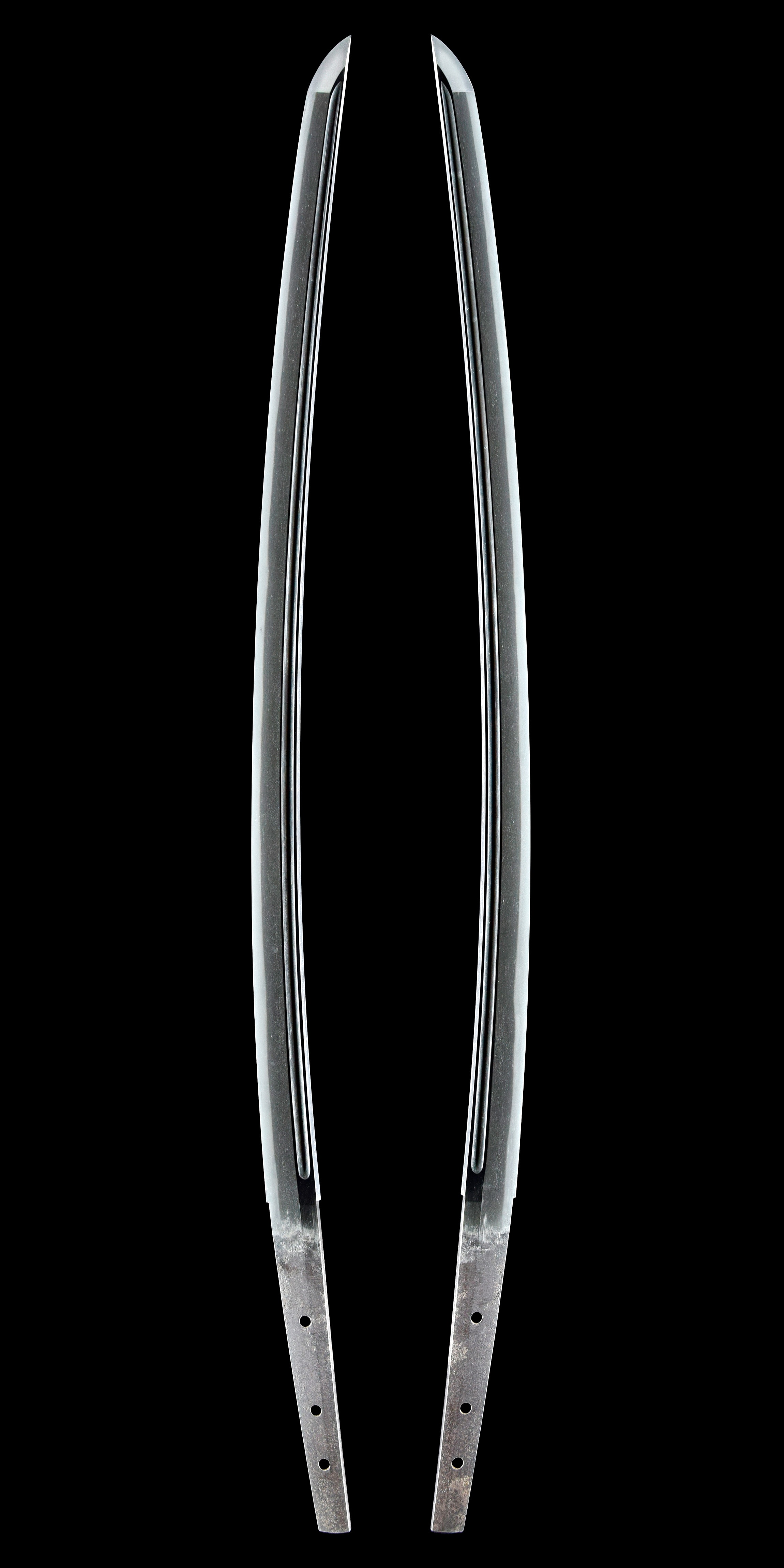
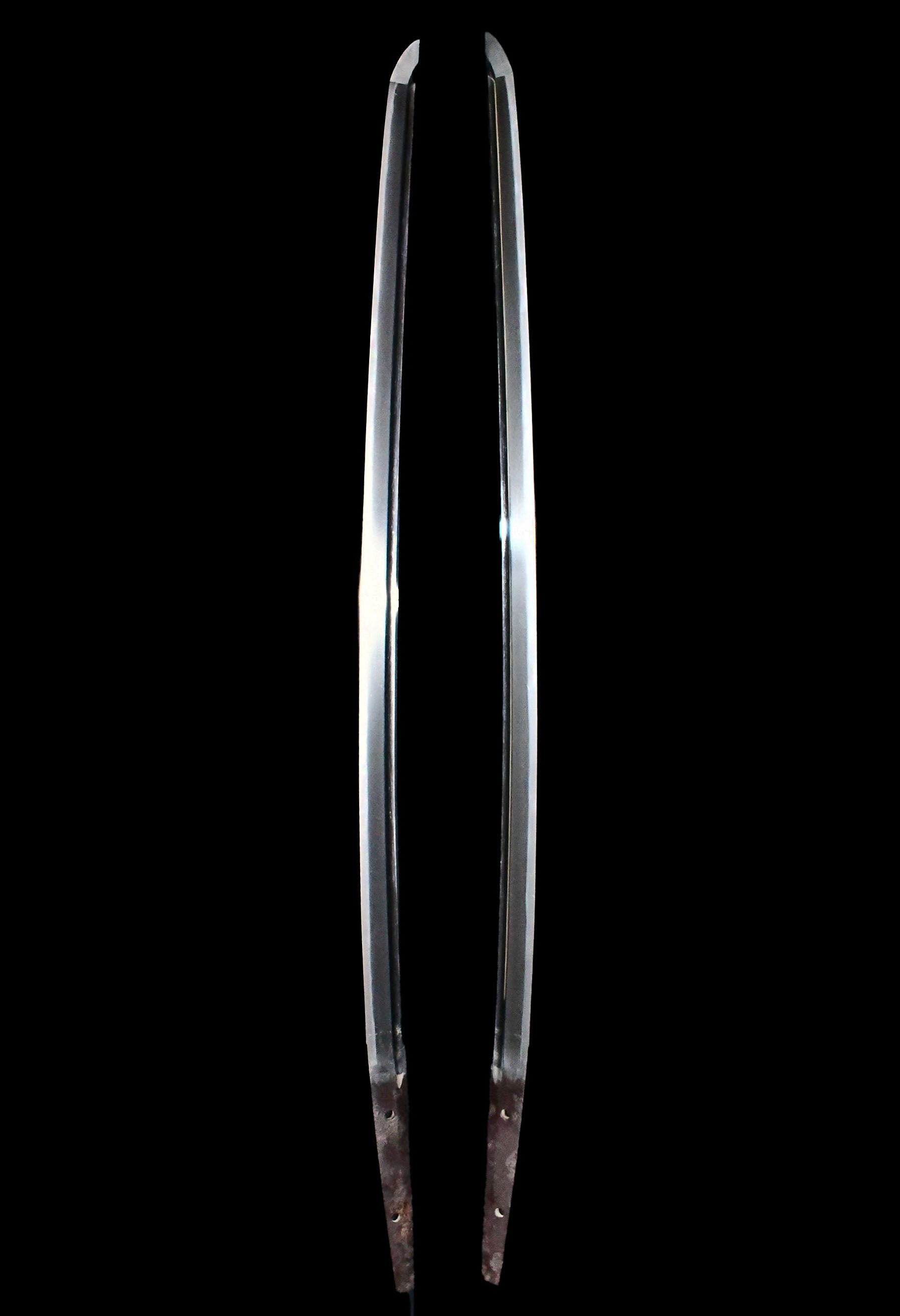
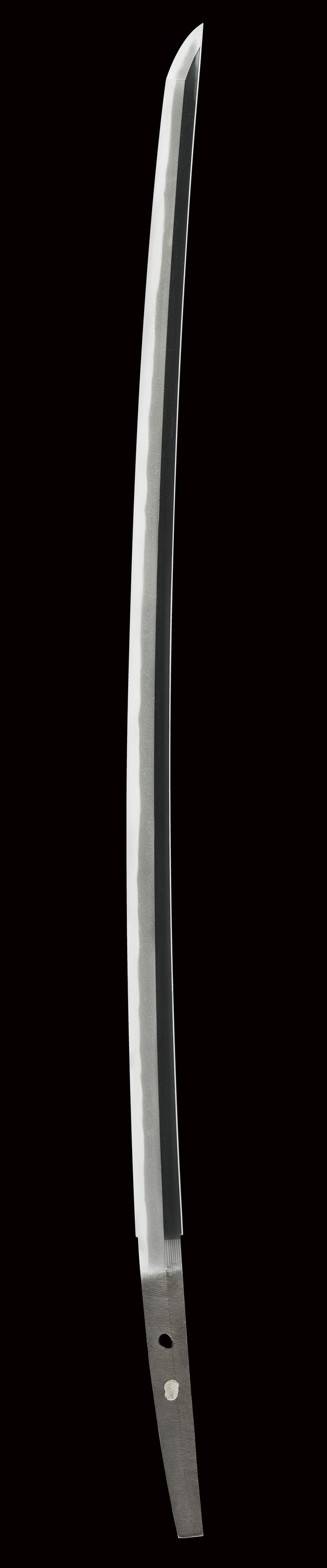
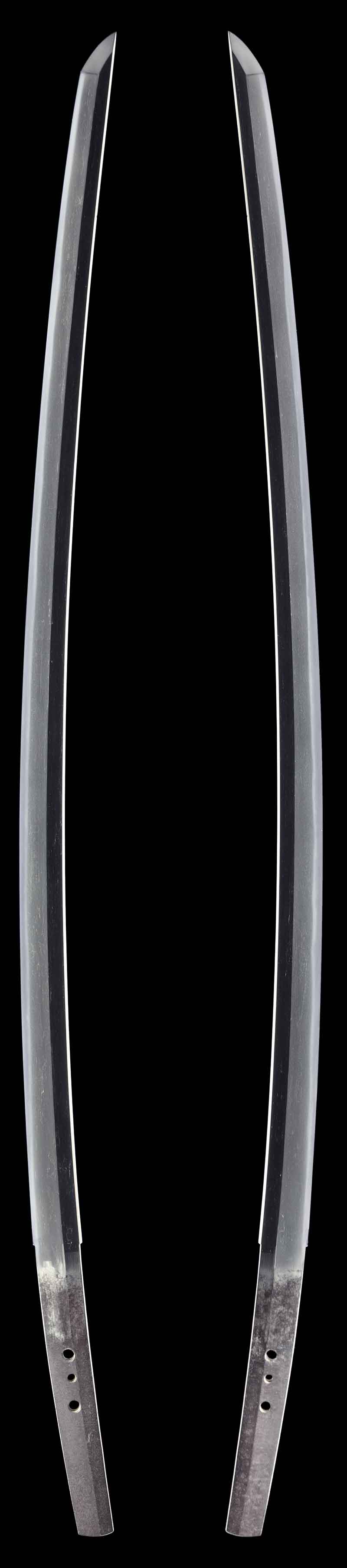
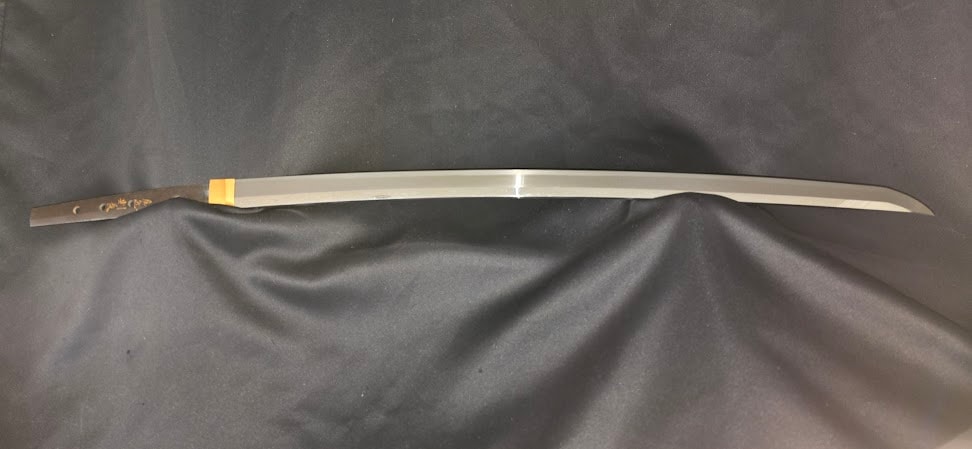
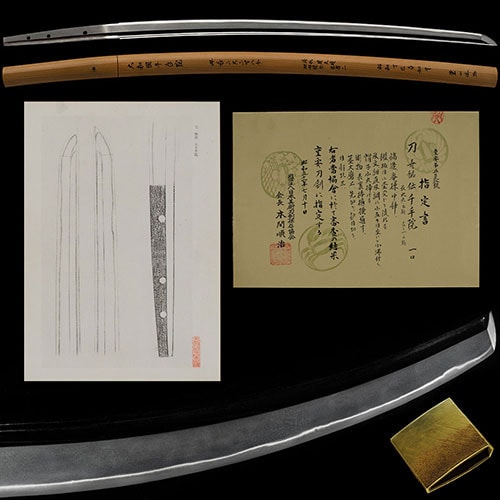
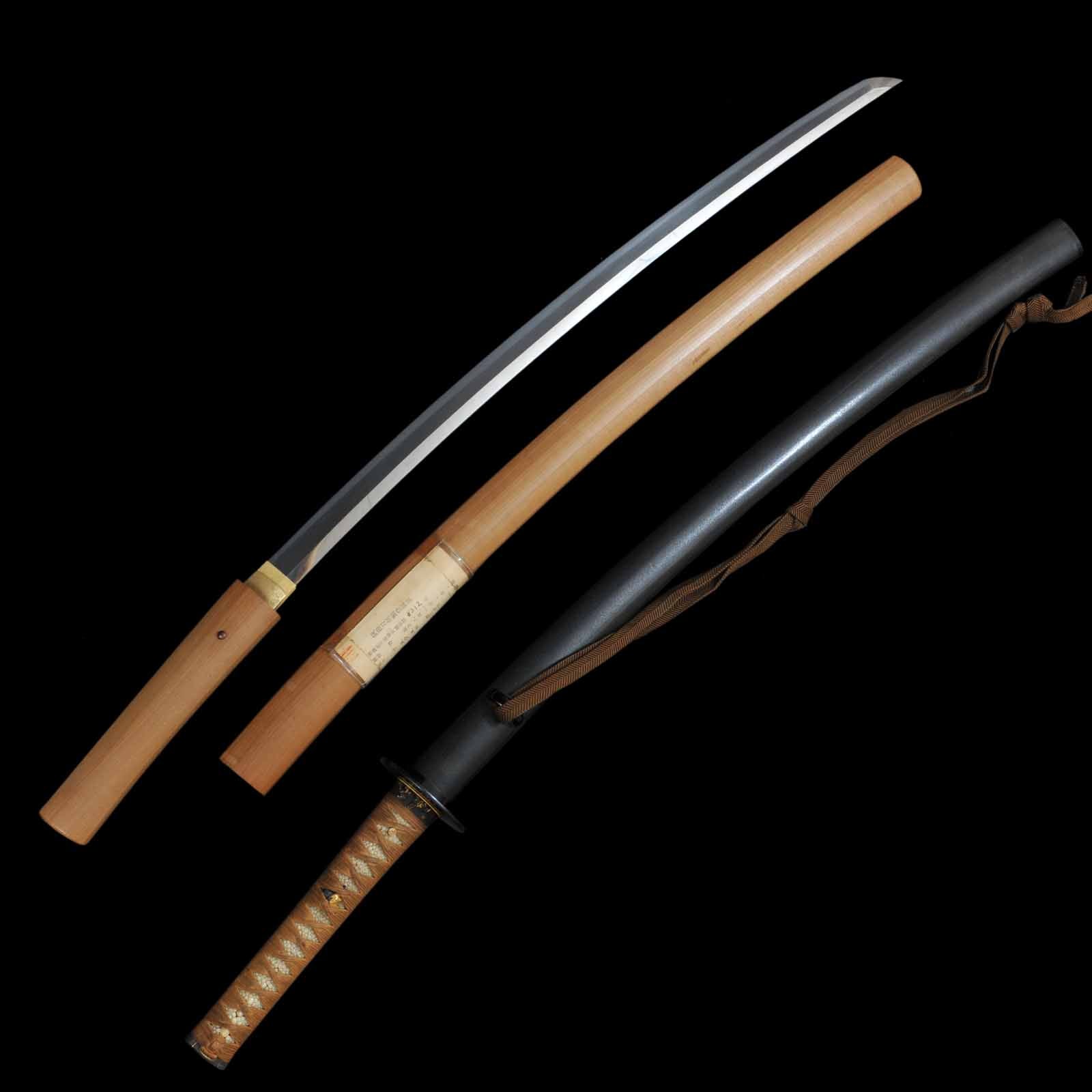
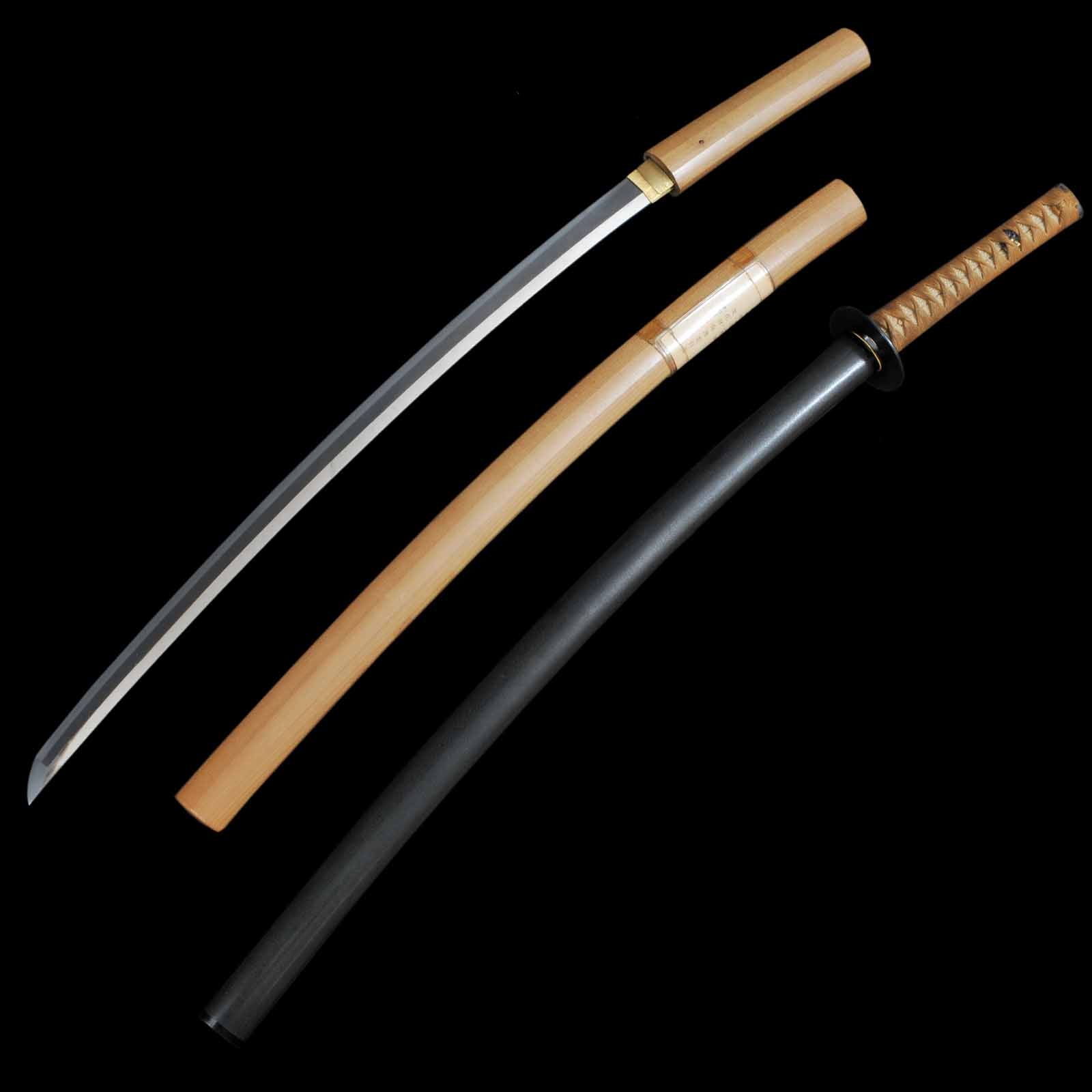
This Daisho set of Katana and Wakizashi is from the Mihara school, which was active in Bingo (present-day Hiroshima Prefecture). The Bingo region produced high-quality steel, so many swordsmiths who had inherited the Yamato-den style emigrated to the area at that time. Swords of the Mihara school are highly regarded for their sharpness, and the founder of the school was Masaie. Both Katana and the Wakizashi have been authenticated by NBTHK, with the Katana having a certificate of Tokubetsu Hozon(Special Preservation) and the Wakizashi having a certificate of Hzon(reservation). The condition of the swords is relatively well preserved considering the age, with some minor scratches and minor dents in places. There are no fatal flaws. The Katana has hada mixed with itame and mokume with jinie. Hamon is based on Chu-suguha, with koashi in places. The boshi is Komal. The front of the nakago is engraved with the inscription, "Made by Masahisa, a resident of the Mihara region of Bishu. The back of the nakago is engraved with the inscription August of the 10th year of Eiroku. Wakizashi is a very prestigious piece with Hoso-suguha on the masame hada. The boshi are hakikake style. Although unsigned, it shows the characteristics of the Mihara school. In addition to the Shirasaya fitting, both the Katana and the Wakizashi are equipped with a common theme koshirae. The round copper tsuba is plain and serene, and the holes in the kogai are filled with gold-colored metal. The fuchi-gashira and menuki are decorated with festive motifs. The scabbard is lacquered with high-grade Kanshitsu lacquer. The Wakizashi is equipped with a kozuka. This set, which is equipped with both Katana and Wakizashi in a unified theme, and the swords are in relatively well-preserved condition, will be sold at a very reasonable price. Don't miss out on this opportunity. Blade length: 63.6 cm(Katana)/35.6 cm(Wakizashi) Curvature: 1.7 cm(Katana)/0.6 cm(Wakizashi) Number of Mekugi hole: 1(Katana)/1(Wakizashi)
在銘 · Mihara · 新刀 · 長さ 63.6cm · 反り 1.7cm


大和伝 · 備後
現在32点販売中
備後国三原派の起源と展開 備後国三原派は、鎌倉時代末期の正和または正中年間(一三一二〜一三二六)頃に正家を祖として興り、南北朝時代を経て室町時代末期に至るまで繁栄した一派である。一派のうち鎌倉末期より南北朝期にかけてのものを古三原と汎称し、正家・正広を双璧とし、他に正光・政清・正信・政広などの工が知られる。備後国はもとより古代から鉄製品の産地として名高く、『政事要略』の延喜十四年(九一四)の条にもその記述が見られる。この地方は永く大和の東寺や蓮華王院、高野山など畿内中央の社寺の荘園が多く置かれており、大和との交流が頻繁に行われていた。三原派の作風に大和気質が色濃く窺われるのは、こうした地理的・社会的背景によるものと推察される。 三原派の作風と技術的特質 三原派の作風は前述の如く大和気質が顕著にあらわれるものであるが、大和本国のものに比べては地刃の沸が弱いのが一般的で、独特の特色を備えている。鍛えは板目に杢目や流れ肌が交じり、処々強く流れて柾がかり、総体に肌立ちごころとなり、地沸が微塵につき、淡く白け映りが立つ点が顕著である。刃文は直刃を基調とし、細直刃調に小互の目を交えて焼き、匂口が締まりごころとなり、小沸がつき、刃縁に細かなほつれや打のけ、喰違い刃などが頻りに交じり、匂口が沈みごころとなるのが特徴的である。帽子は直ぐに小丸または大丸風に返り、先を細かに掃きかける、いわゆる「三原もの独特の滝落とし風」となって穏やかな趣を示す。姿は南北朝時代の特色を反映し、身幅が広めで元先の幅差が目立たず、反りが浅くつき、中鋒または大鋒に結んだ堂々とした体配を呈するものが多く、また鎬が高めとなり、この点にも大和気質の影響が認められる。 伝承と文化的意義 古三原の作刀は、大和伝の技術的影響を受けながらも備後国独自の個性を確立した点において、日本刀史上重要な位置を占めている。その地刃の様相に大和色を強くあらわしながらも、白け映りの立つ独特の地鉄や締まった匂口など、大和本国とは異なる特質を顕現させており、大和伝亜流としての独自性を如実に物語っている。堂々とかつ雄渾な姿形には迫力があり、刃縁にあらわれた細かな働きは味わい深く、頑健な体配と相俟って武用に適した実践的な美を備えている。藩政時代には吉川家など諸大名家に伝来したものも多く、その評価の高さが窺われる。本阿弥家による鑑定においても三原極めの折紙が数多く伝存しており、江戸時代以降の刀剣鑑賞史においても重視されてきた一派である。
保存刀剣のうち、出来が一層優れ、保存状態も良好と認められたものです。再刃や、室町・江戸期の多くの無銘作は対象外となり、保存刀剣より高い基準が課されます。
日本美術刀剣保存協会(NBTHK)は、1948年に設立され、文化庁の監督を受ける公益財団法人で、東京・刀剣博物館に本部を置きます。専門の審査員が出品作を直接審査し、美術的・歴史的価値に応じた鑑定書を発行します。NBTHKの鑑定書は、日本刀および刀装具の真正性を示す最も広く認知された基準です。
NBTHK公式サイトAs a general rule, returns/exchanges are not accepted on Japanese sword orders unless damaged upon delivery. Other items: returns/exchanges accepted within 7 days of delivery. Cancellation for personal reasons incurs a 30% restocking fee (70% refunded). Return shipping must be prepaid and insured by the buyer; shipping/handling fees are non-refundable. Contact katana@tozando.co.jp to initiate a return.
This Daisho set of Katana and Wakizashi is from the Mihara school, which was active in Bingo (present-day Hiroshima Prefecture). The Bingo region produced high-quality steel, so many swordsmiths who had inherited the Yamato-den style emigrated to the area at that time. Swords of the Mihara school are highly regarded for their sharpness, and the founder of the school was Masaie. Both Katana and the Wakizashi have been authenticated by NBTHK, with the Katana having a certificate of Tokubetsu Hozon(Special Preservation) and the Wakizashi having a certificate of Hzon(reservation). The condition of the swords is relatively well preserved considering the age, with some minor scratches and minor dents in places. There are no fatal flaws. The Katana has hada mixed with itame and mokume with jinie. Hamon is based on Chu-suguha, with koashi in places. The boshi is Komal. The front of the nakago is engraved with the inscription, "Made by Masahisa, a resident of the Mihara region of Bishu. The back of the nakago is engraved with the inscription August of the 10th year of Eiroku. Wakizashi is a very prestigious piece with Hoso-suguha on the masame hada. The boshi are hakikake style. Although unsigned, it shows the characteristics of the Mihara school. In addition to the Shirasaya fitting, both the Katana and the Wakizashi are equipped with a common theme koshirae. The round copper tsuba is plain and serene, and the holes in the kogai are filled with gold-colored metal. The fuchi-gashira and menuki are decorated with festive motifs. The scabbard is lacquered with high-grade Kanshitsu lacquer. The Wakizashi is equipped with a kozuka. This set, which is equipped with both Katana and Wakizashi in a unified theme, and the swords are in relatively well-preserved condition, will be sold at a very reasonable price. Don't miss out on this opportunity. Blade length: 63.6 cm(Katana)/35.6 cm(Wakizashi) Curvature: 1.7 cm(Katana)/0.6 cm(Wakizashi) Number of Mekugi hole: 1(Katana)/1(Wakizashi)
在銘 · Mihara · 新刀 · 長さ 63.6cm · 反り 1.7cm


大和伝 · 備後
現在32点販売中
備後国三原派の起源と展開 備後国三原派は、鎌倉時代末期の正和または正中年間(一三一二〜一三二六)頃に正家を祖として興り、南北朝時代を経て室町時代末期に至るまで繁栄した一派である。一派のうち鎌倉末期より南北朝期にかけてのものを古三原と汎称し、正家・正広を双璧とし、他に正光・政清・正信・政広などの工が知られる。備後国はもとより古代から鉄製品の産地として名高く、『政事要略』の延喜十四年(九一四)の条にもその記述が見られる。この地方は永く大和の東寺や蓮華王院、高野山など畿内中央の社寺の荘園が多く置かれており、大和との交流が頻繁に行われていた。三原派の作風に大和気質が色濃く窺われるのは、こうした地理的・社会的背景によるものと推察される。 三原派の作風と技術的特質 三原派の作風は前述の如く大和気質が顕著にあらわれるものであるが、大和本国のものに比べては地刃の沸が弱いのが一般的で、独特の特色を備えている。鍛えは板目に杢目や流れ肌が交じり、処々強く流れて柾がかり、総体に肌立ちごころとなり、地沸が微塵につき、淡く白け映りが立つ点が顕著である。刃文は直刃を基調とし、細直刃調に小互の目を交えて焼き、匂口が締まりごころとなり、小沸がつき、刃縁に細かなほつれや打のけ、喰違い刃などが頻りに交じり、匂口が沈みごころとなるのが特徴的である。帽子は直ぐに小丸または大丸風に返り、先を細かに掃きかける、いわゆる「三原もの独特の滝落とし風」となって穏やかな趣を示す。姿は南北朝時代の特色を反映し、身幅が広めで元先の幅差が目立たず、反りが浅くつき、中鋒または大鋒に結んだ堂々とした体配を呈するものが多く、また鎬が高めとなり、この点にも大和気質の影響が認められる。 伝承と文化的意義 古三原の作刀は、大和伝の技術的影響を受けながらも備後国独自の個性を確立した点において、日本刀史上重要な位置を占めている。その地刃の様相に大和色を強くあらわしながらも、白け映りの立つ独特の地鉄や締まった匂口など、大和本国とは異なる特質を顕現させており、大和伝亜流としての独自性を如実に物語っている。堂々とかつ雄渾な姿形には迫力があり、刃縁にあらわれた細かな働きは味わい深く、頑健な体配と相俟って武用に適した実践的な美を備えている。藩政時代には吉川家など諸大名家に伝来したものも多く、その評価の高さが窺われる。本阿弥家による鑑定においても三原極めの折紙が数多く伝存しており、江戸時代以降の刀剣鑑賞史においても重視されてきた一派である。
保存刀剣のうち、出来が一層優れ、保存状態も良好と認められたものです。再刃や、室町・江戸期の多くの無銘作は対象外となり、保存刀剣より高い基準が課されます。
日本美術刀剣保存協会(NBTHK)は、1948年に設立され、文化庁の監督を受ける公益財団法人で、東京・刀剣博物館に本部を置きます。専門の審査員が出品作を直接審査し、美術的・歴史的価値に応じた鑑定書を発行します。NBTHKの鑑定書は、日本刀および刀装具の真正性を示す最も広く認知された基準です。
NBTHK公式サイトAs a general rule, returns/exchanges are not accepted on Japanese sword orders unless damaged upon delivery. Other items: returns/exchanges accepted within 7 days of delivery. Cancellation for personal reasons incurs a 30% restocking fee (70% refunded). Return shipping must be prepaid and insured by the buyer; shipping/handling fees are non-refundable. Contact katana@tozando.co.jp to initiate a return.