室町は刀剣業を産業に変えた。徒歩の集団戦とともに打刀が興り、長船と関は数打ち物と注文打ちを並行して産し、勘合貿易は日本刀を数万振の単位で海外へ運んだ。
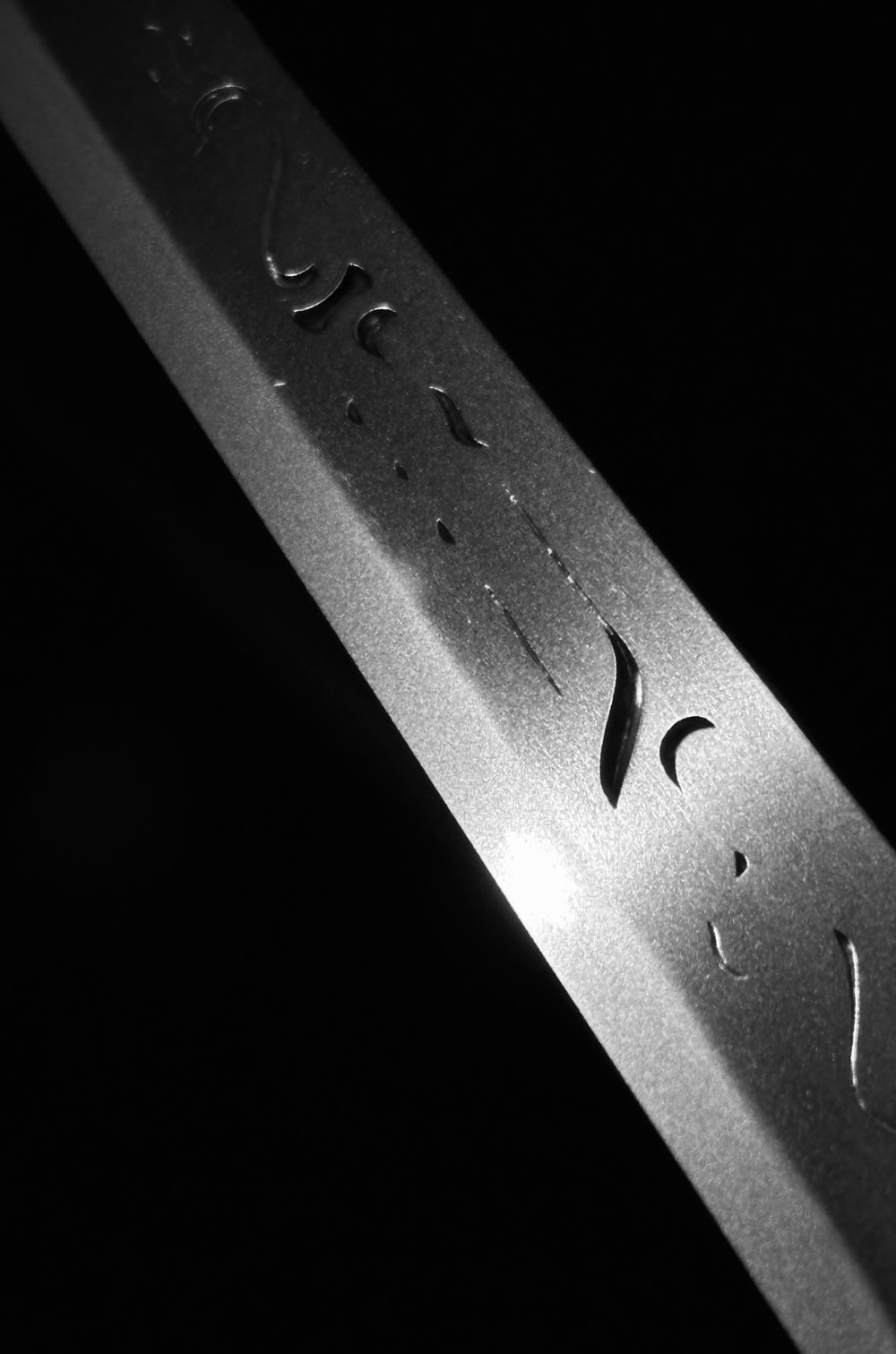
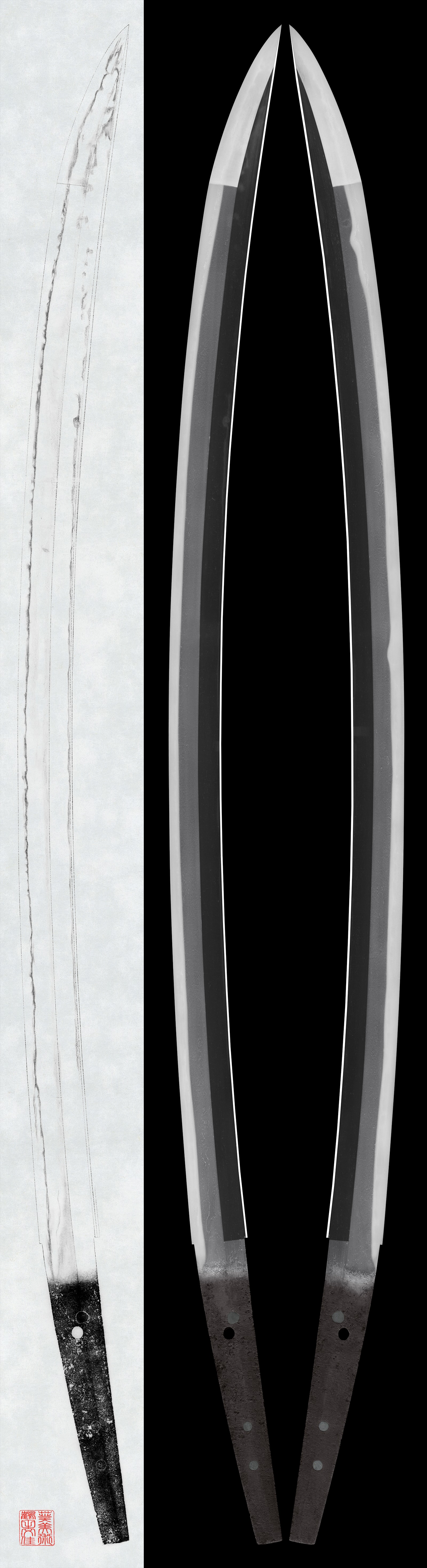
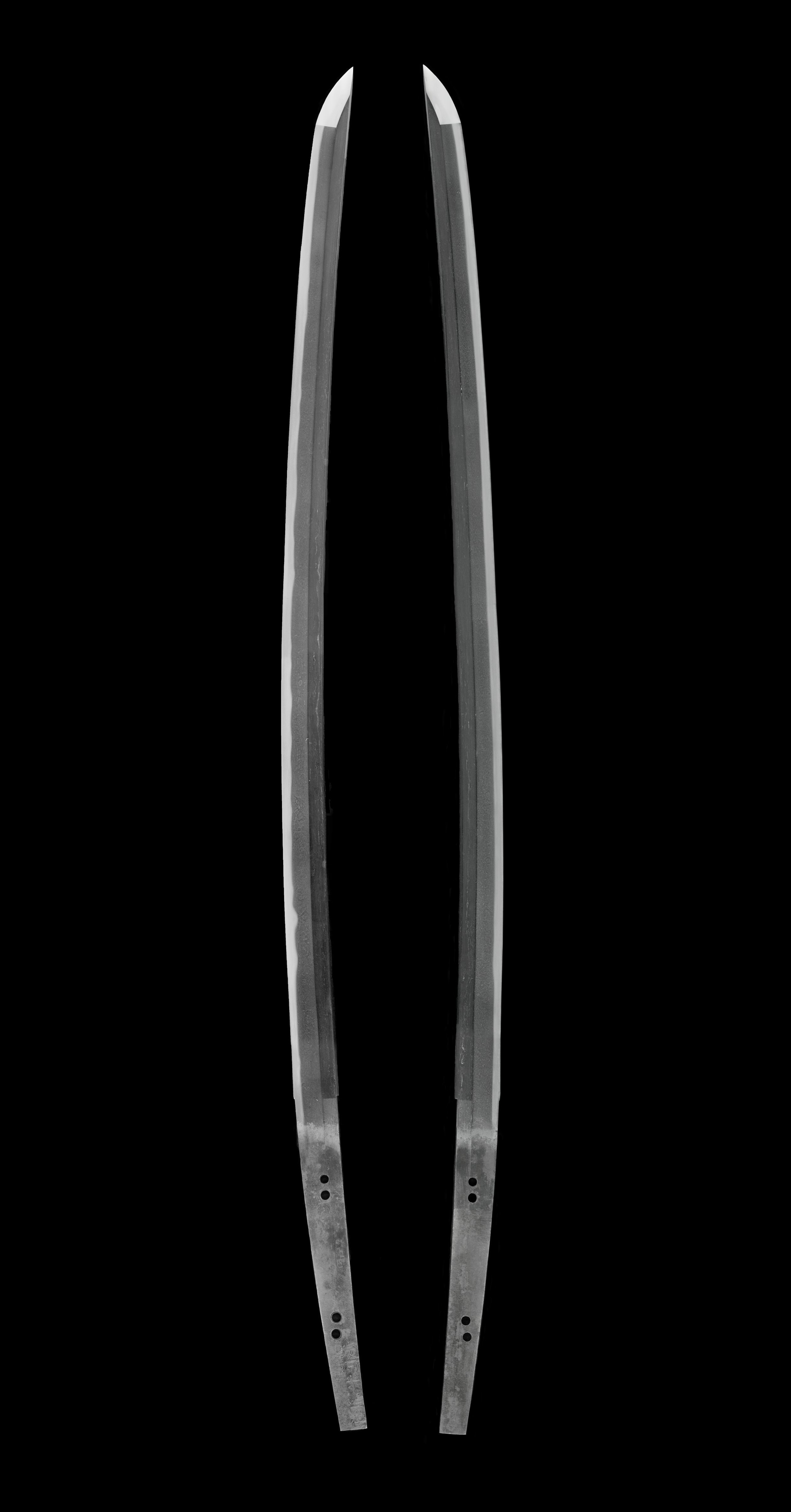
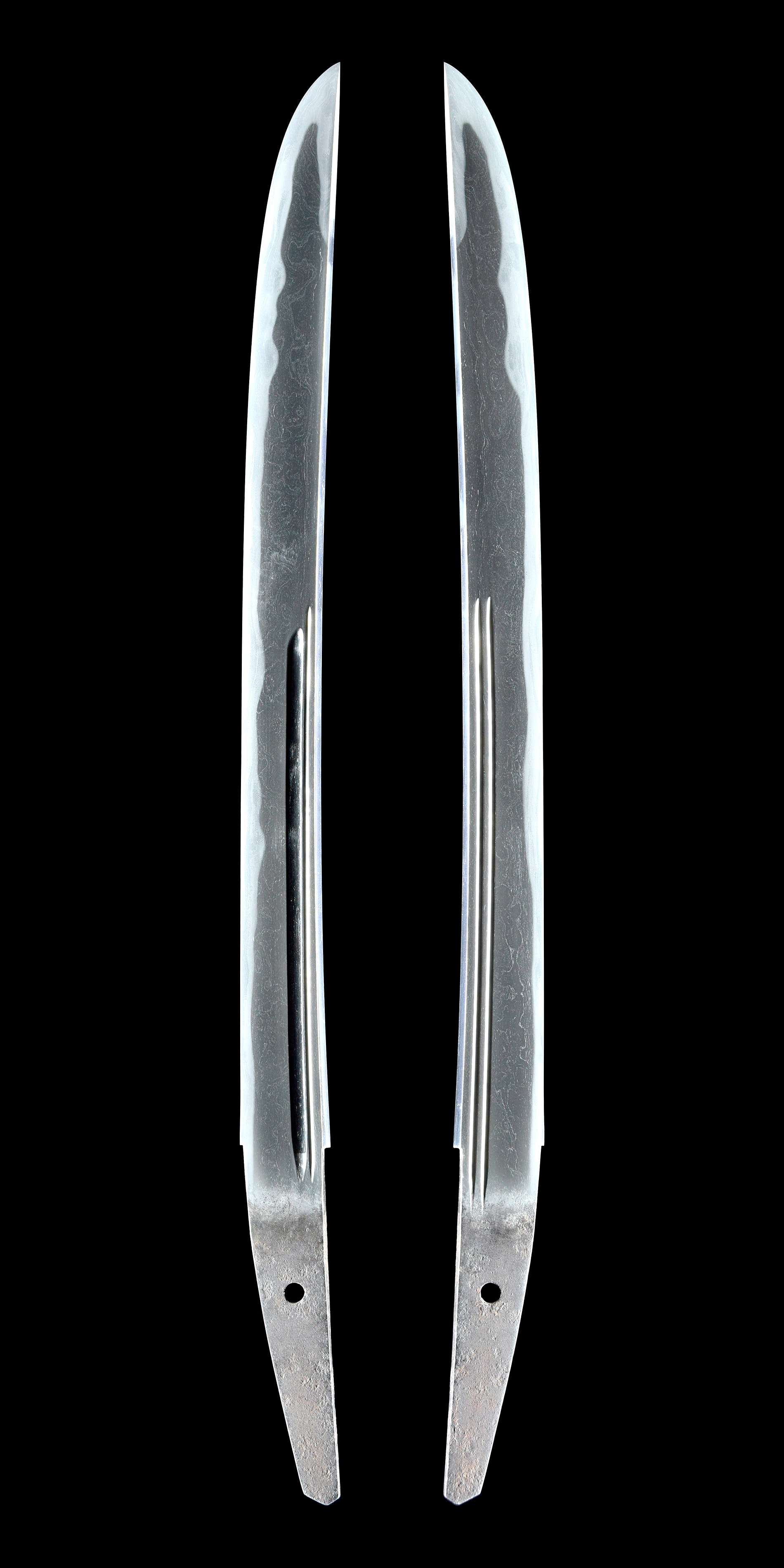
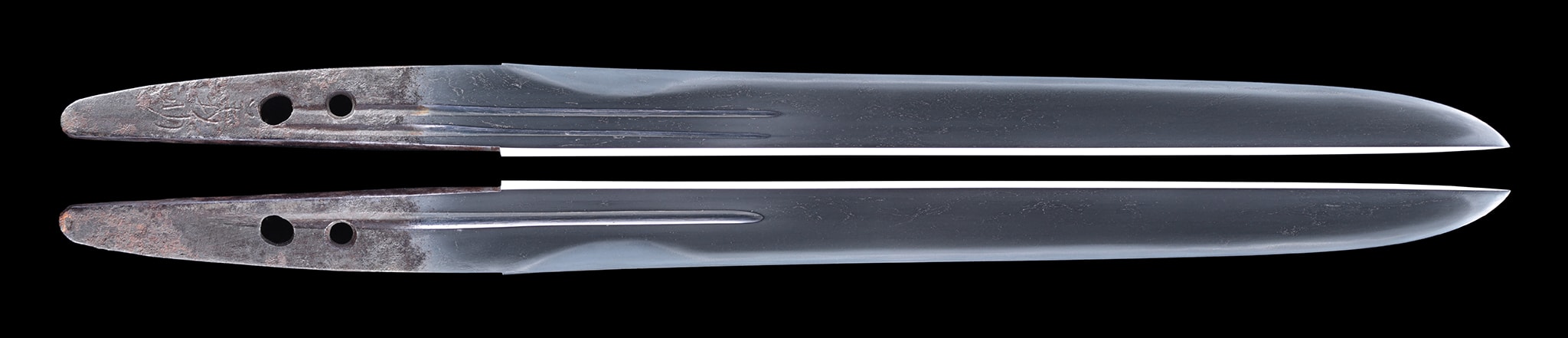
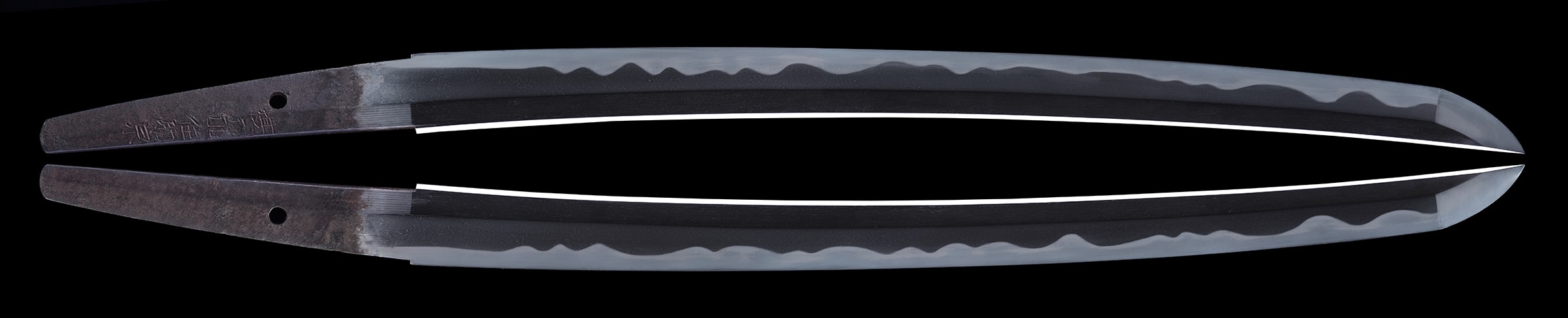
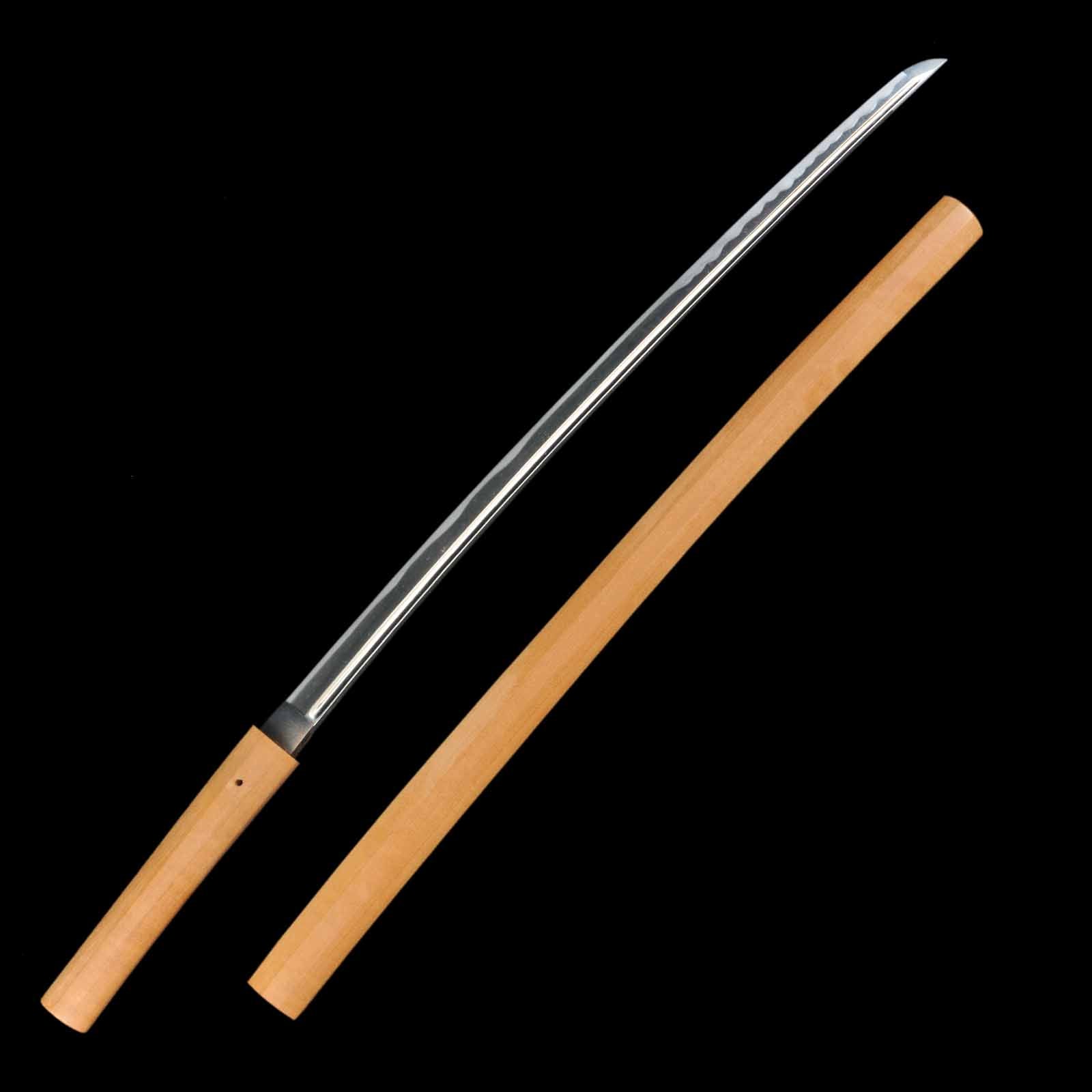
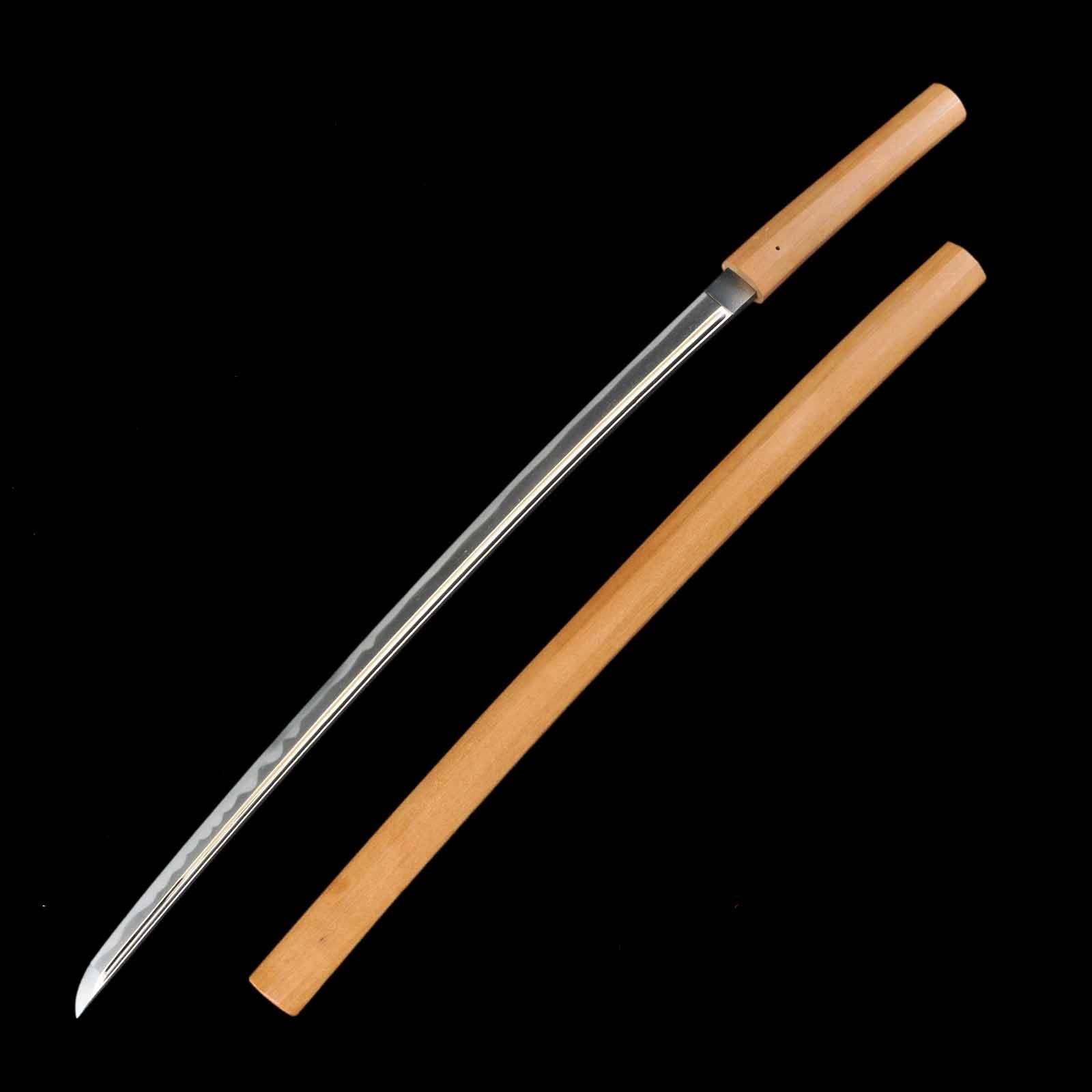
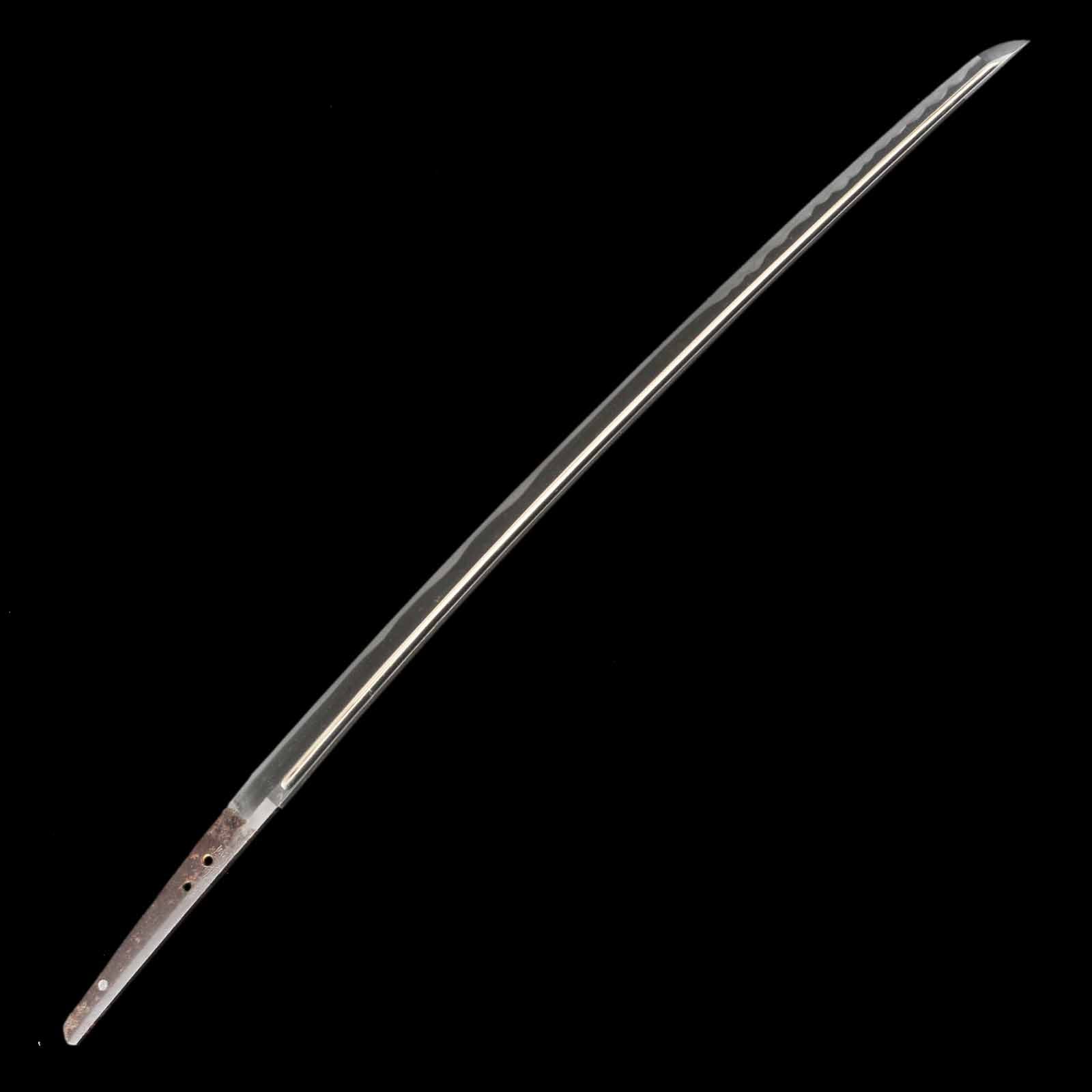
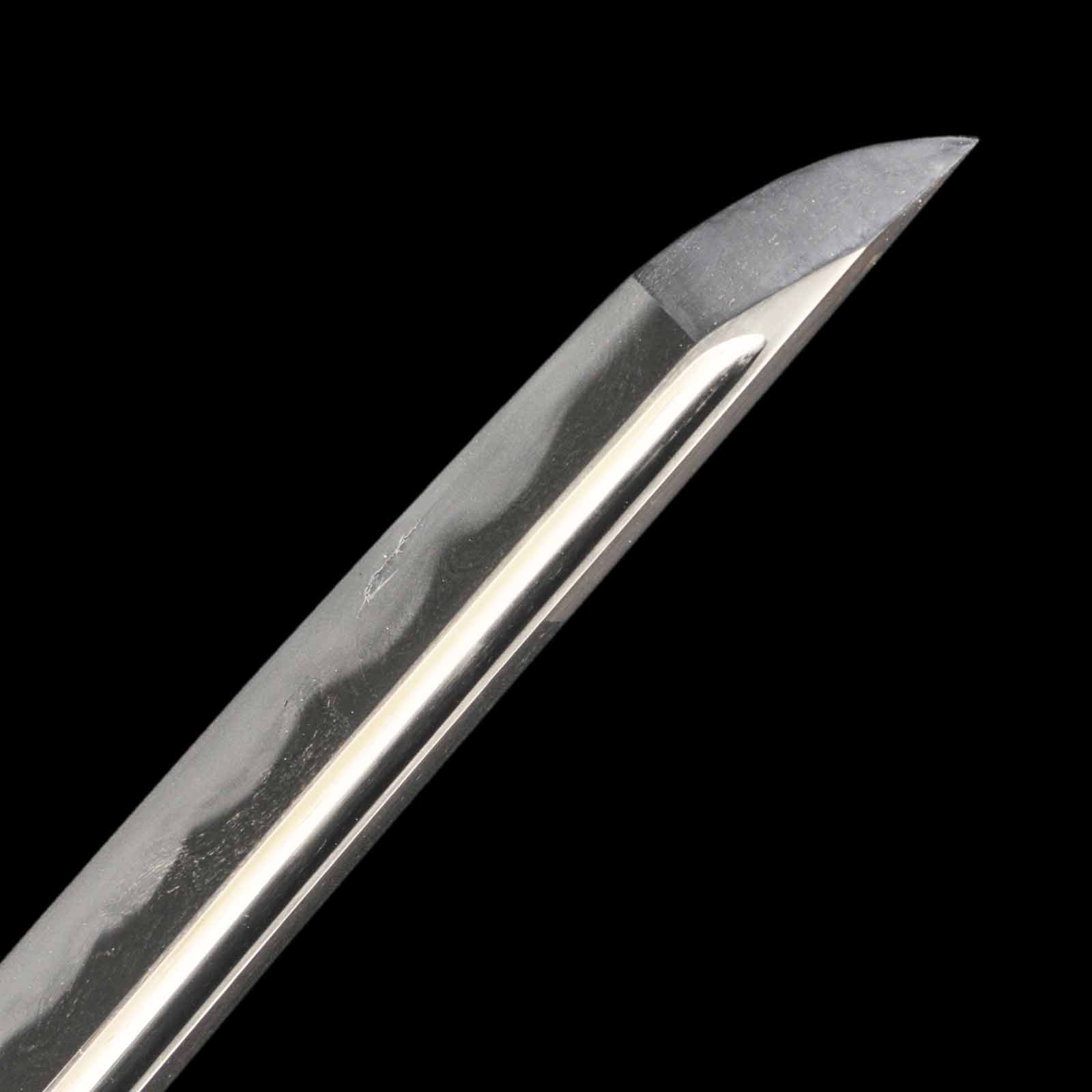
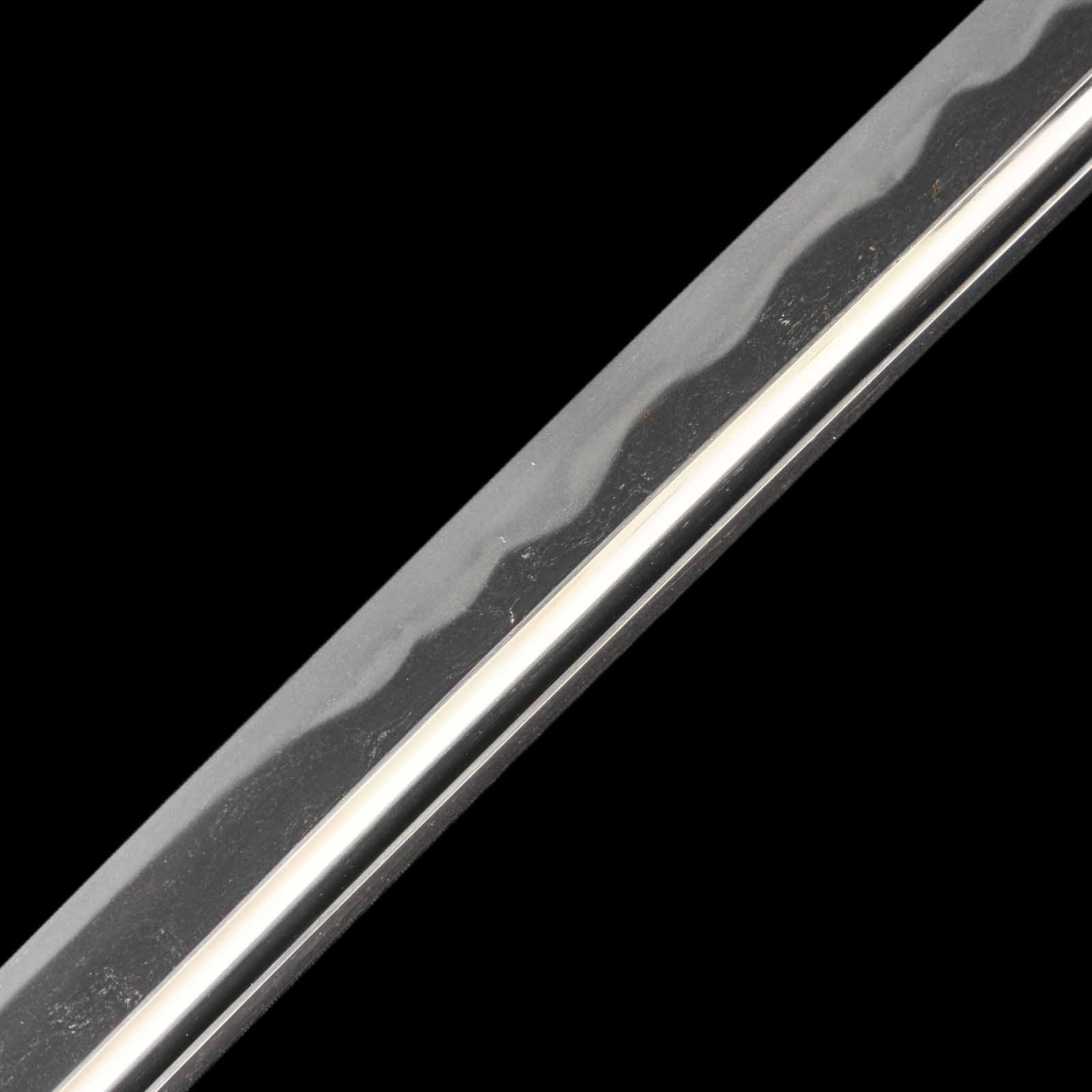
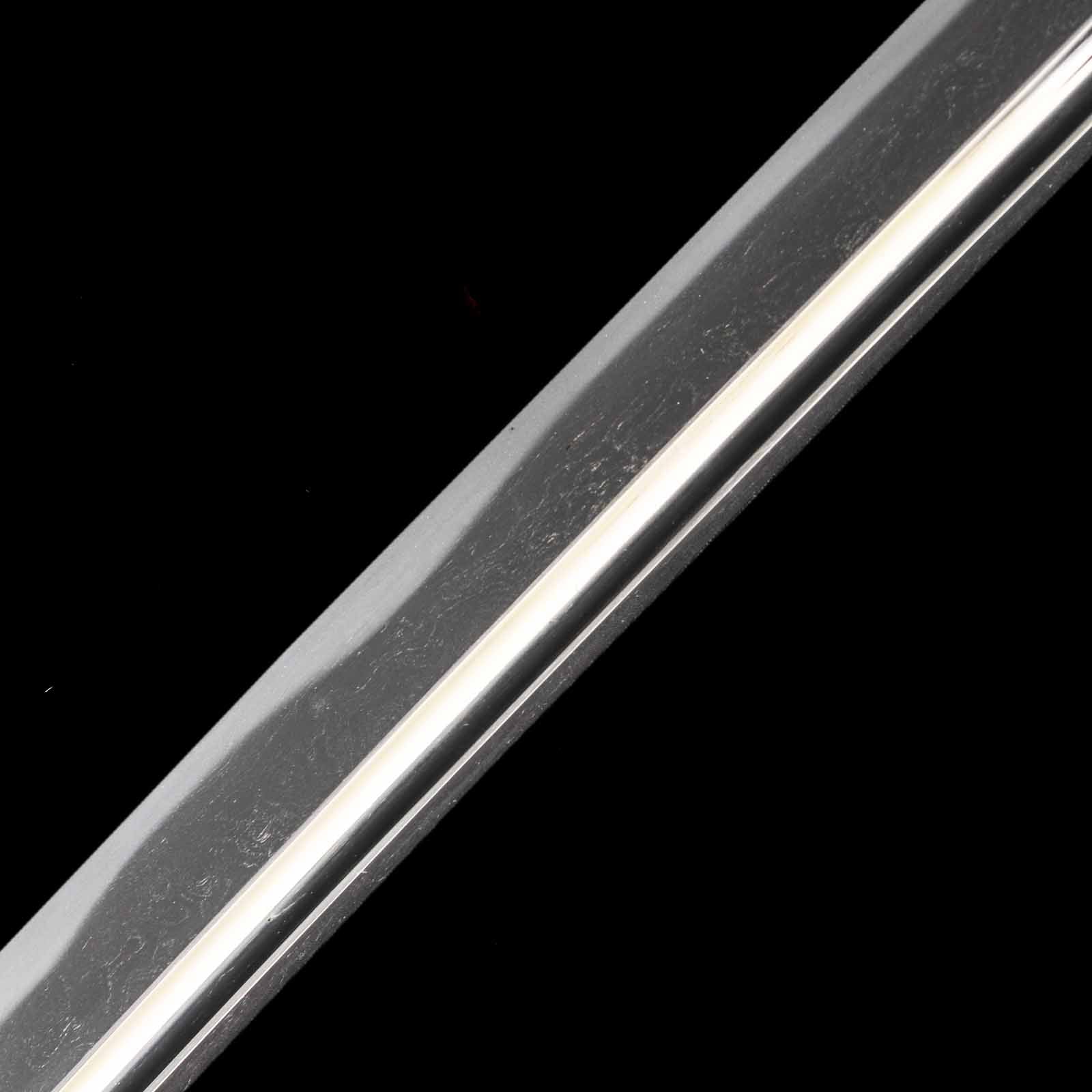
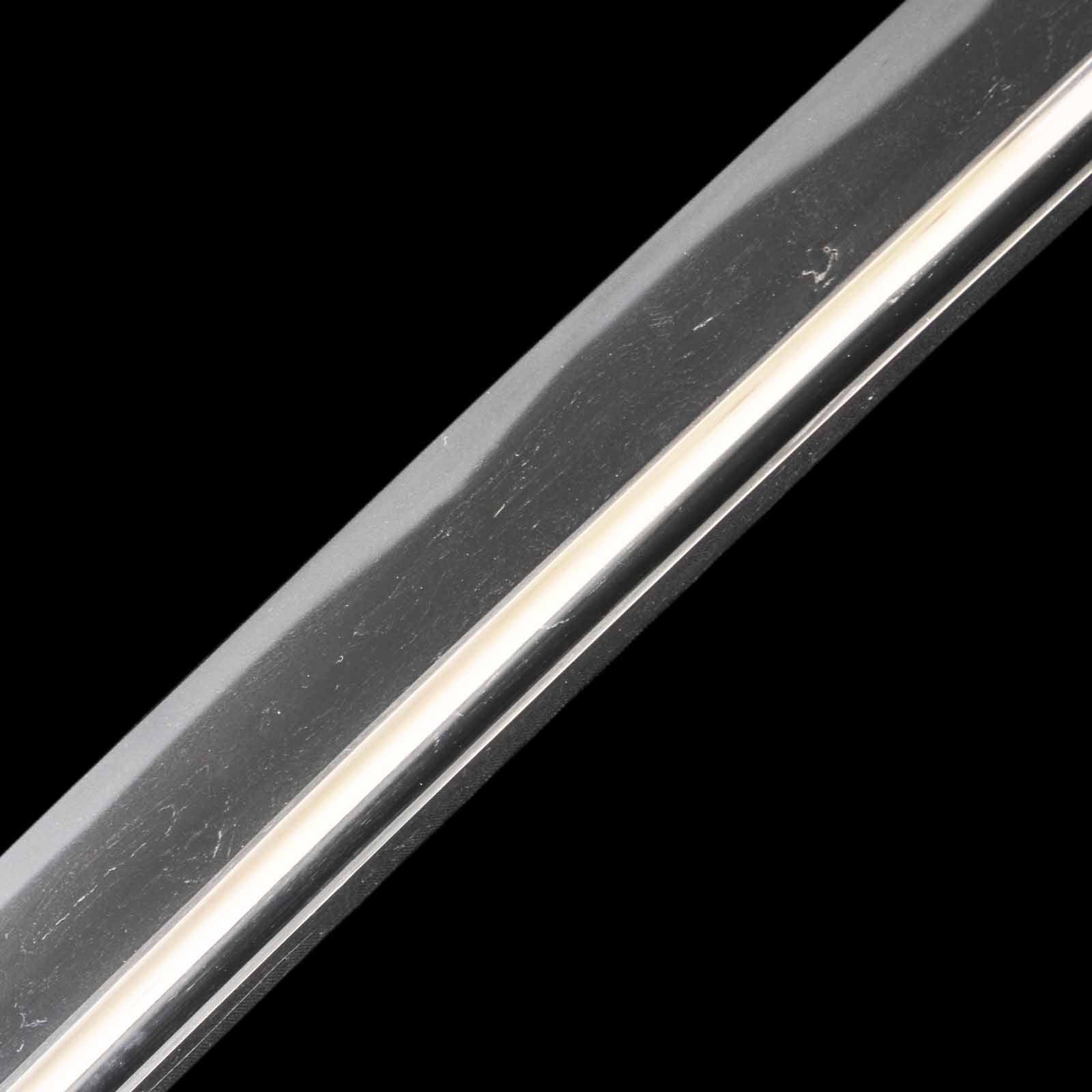
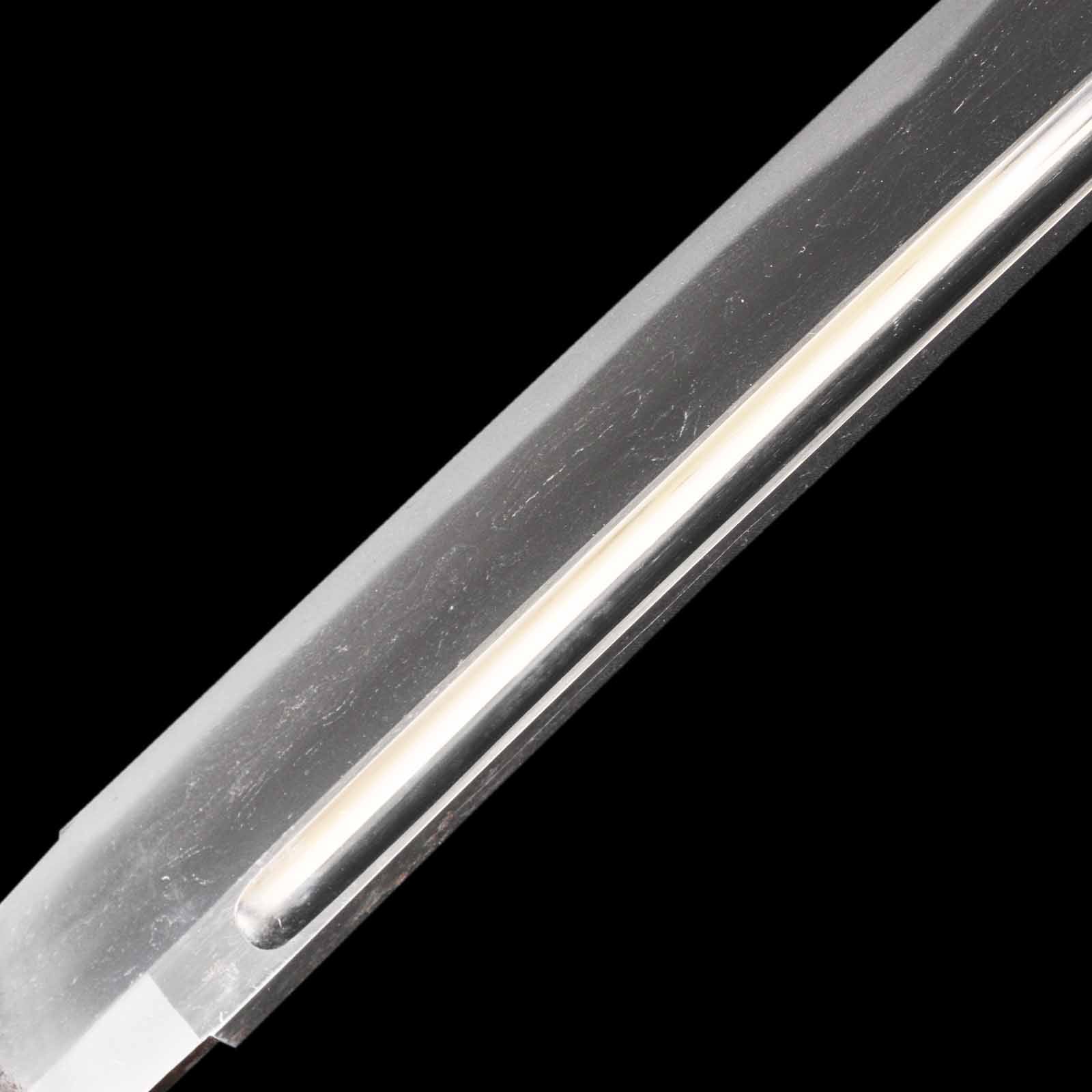
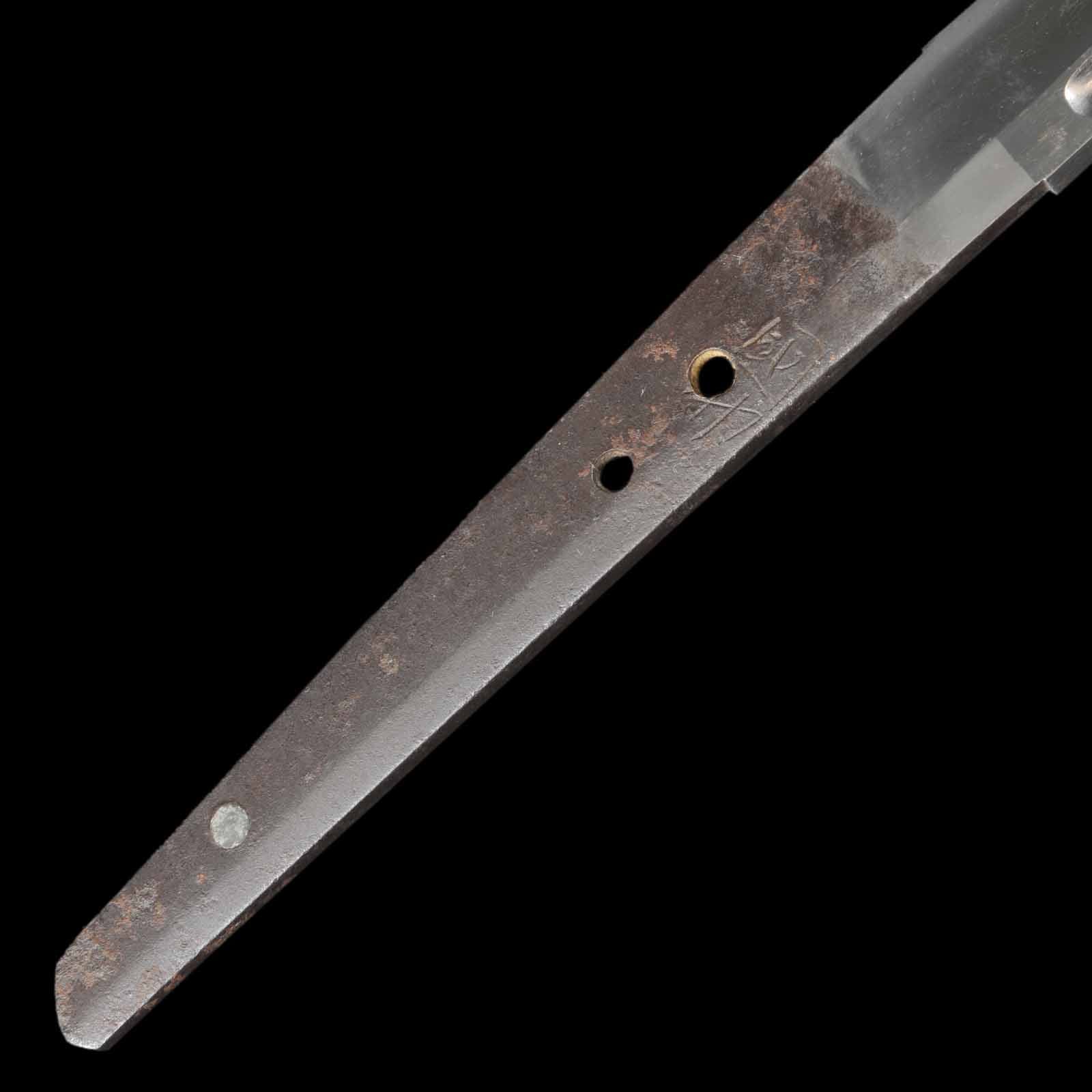
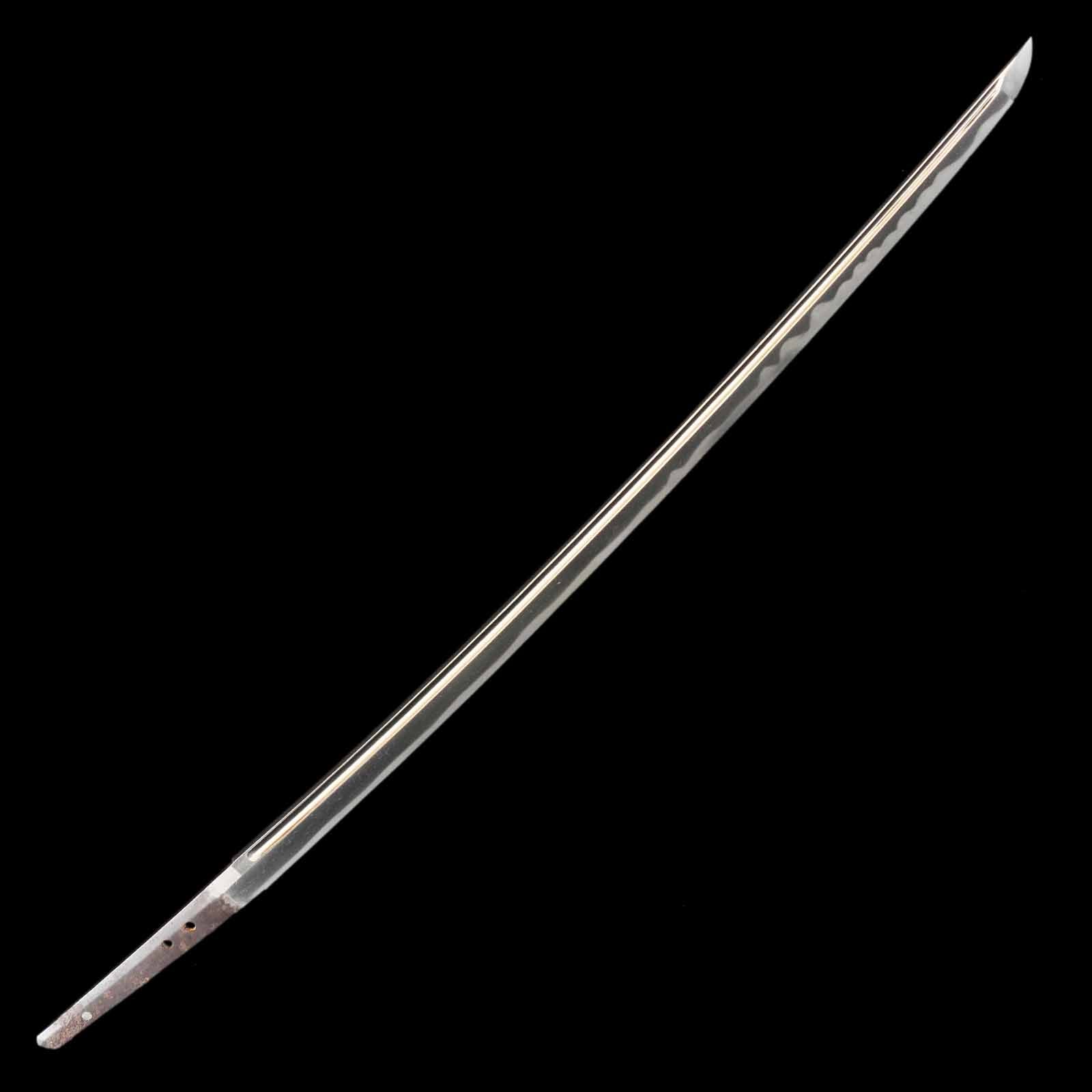
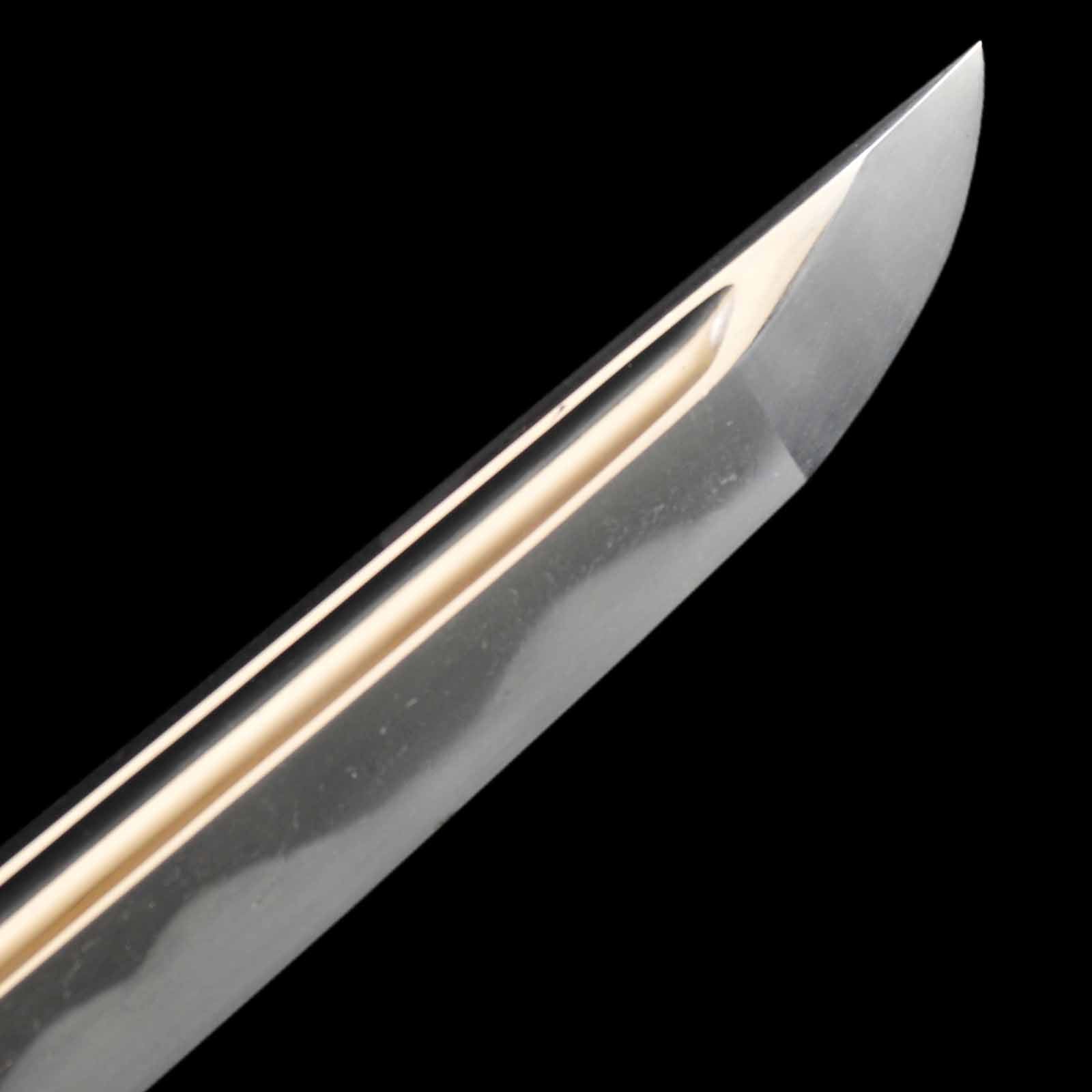
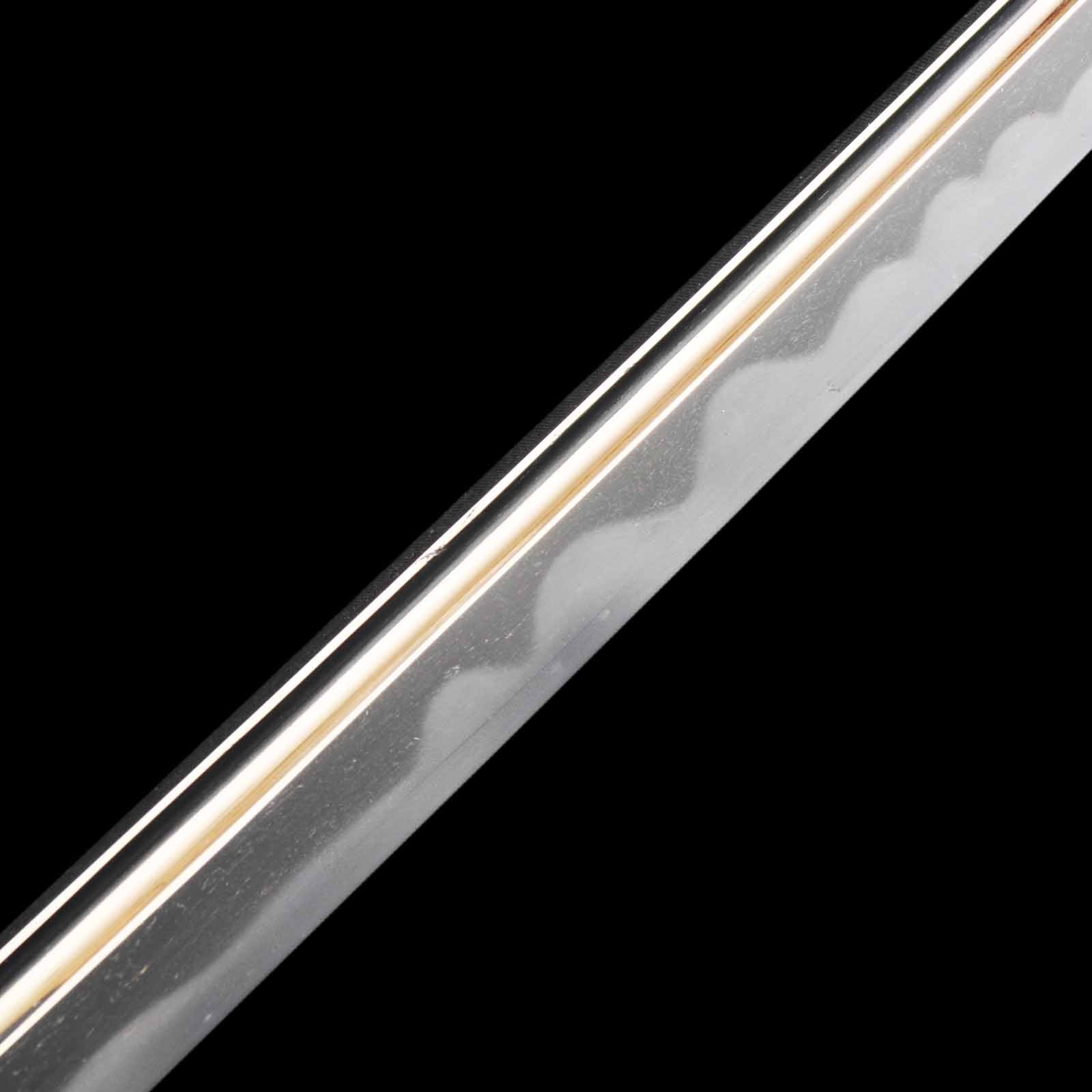
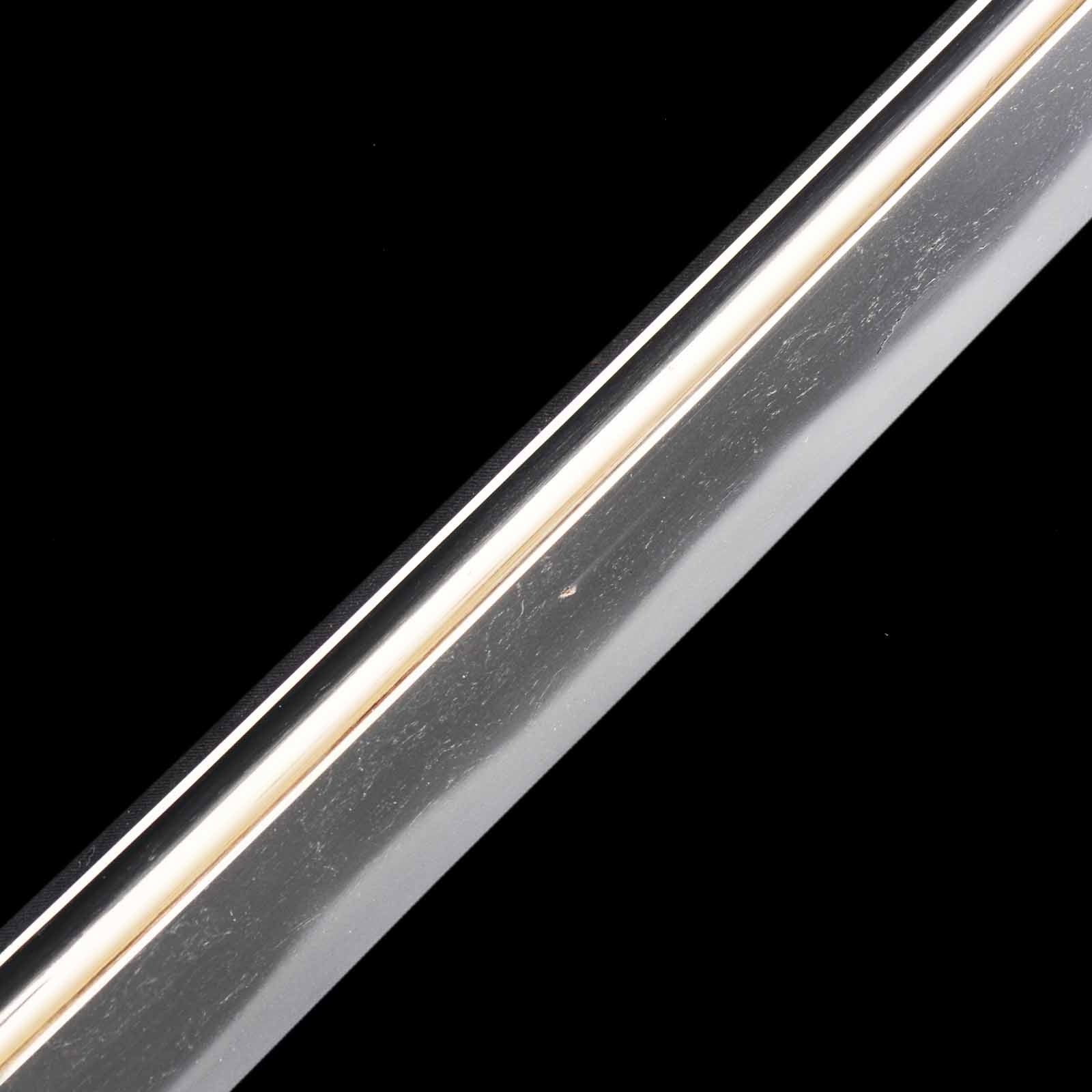
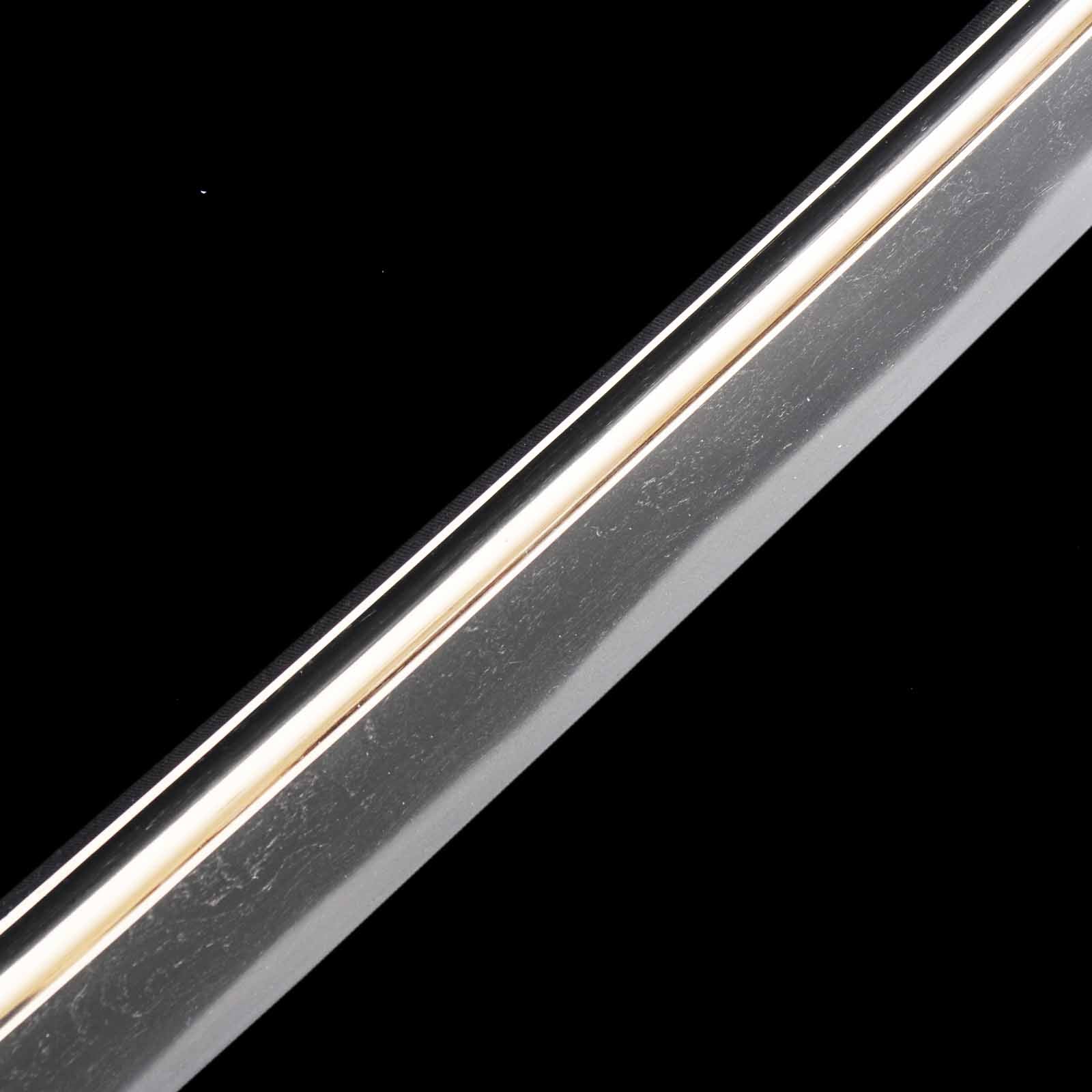
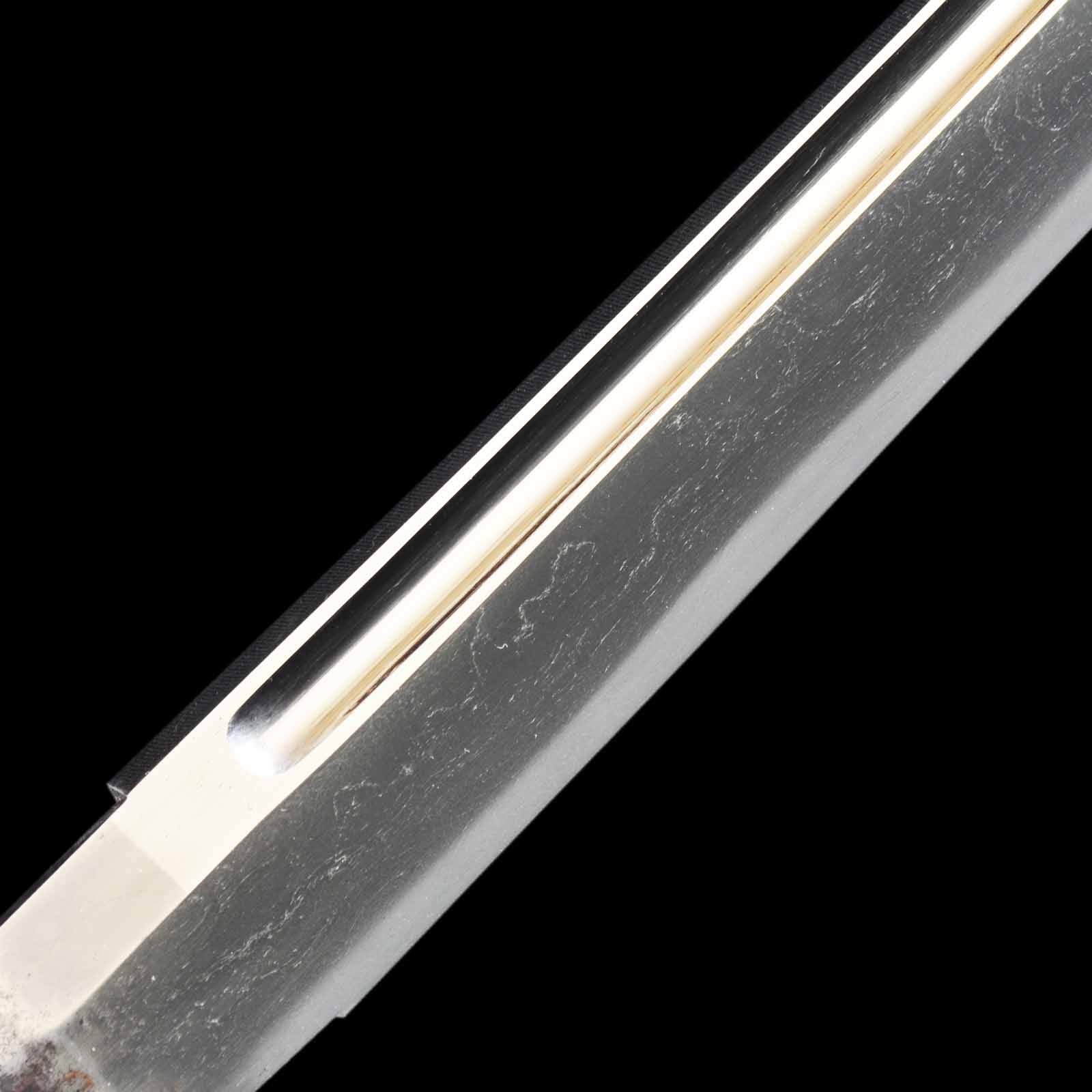
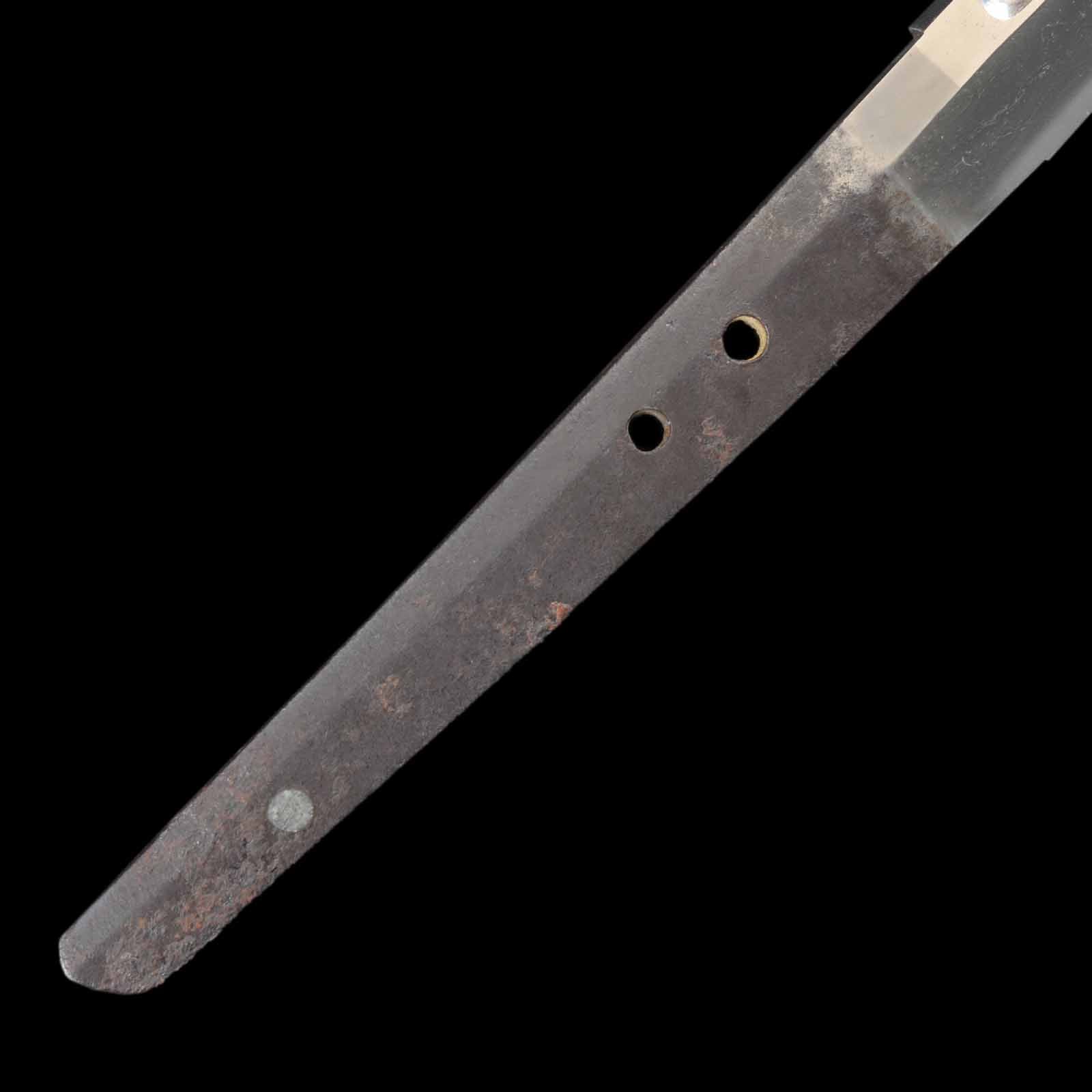
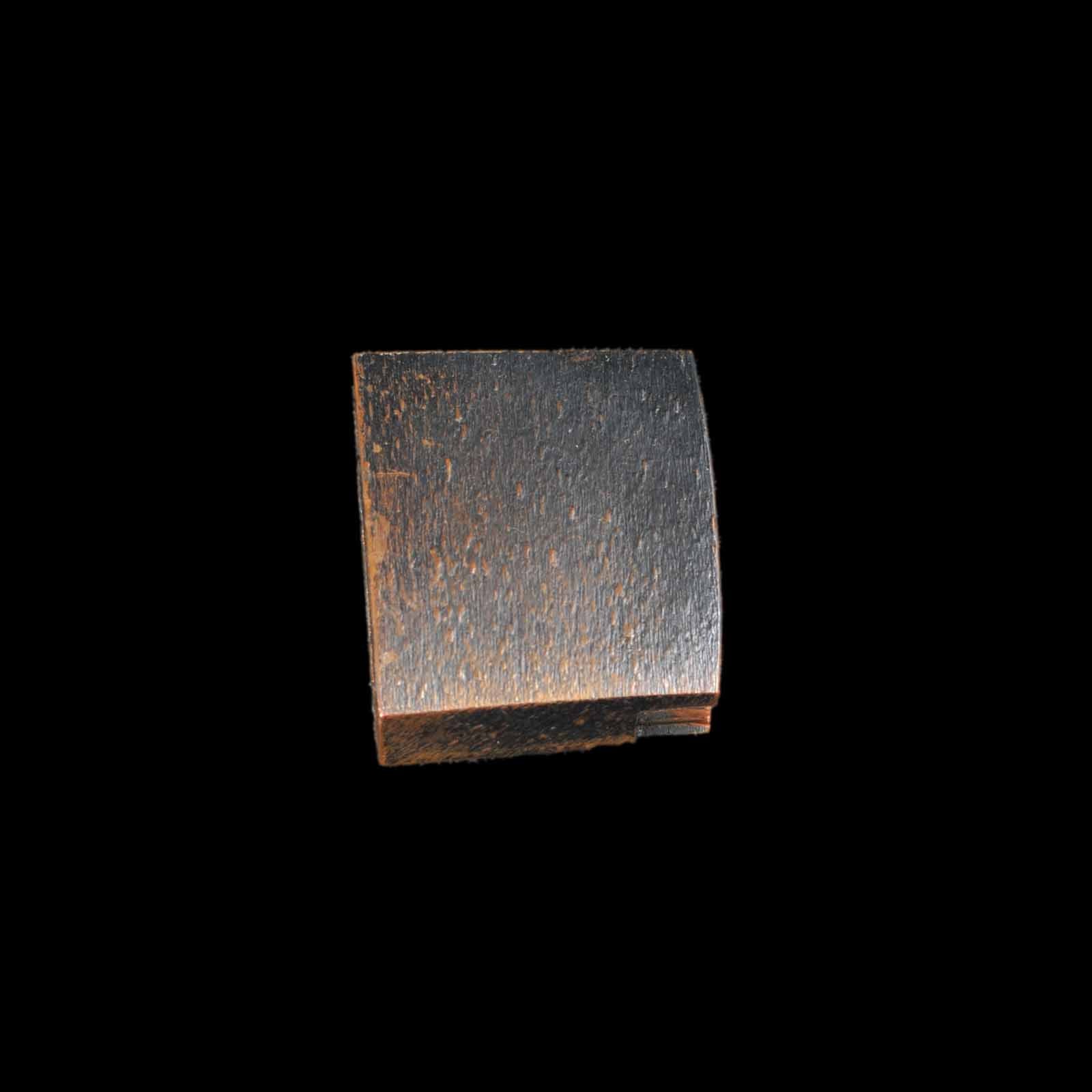
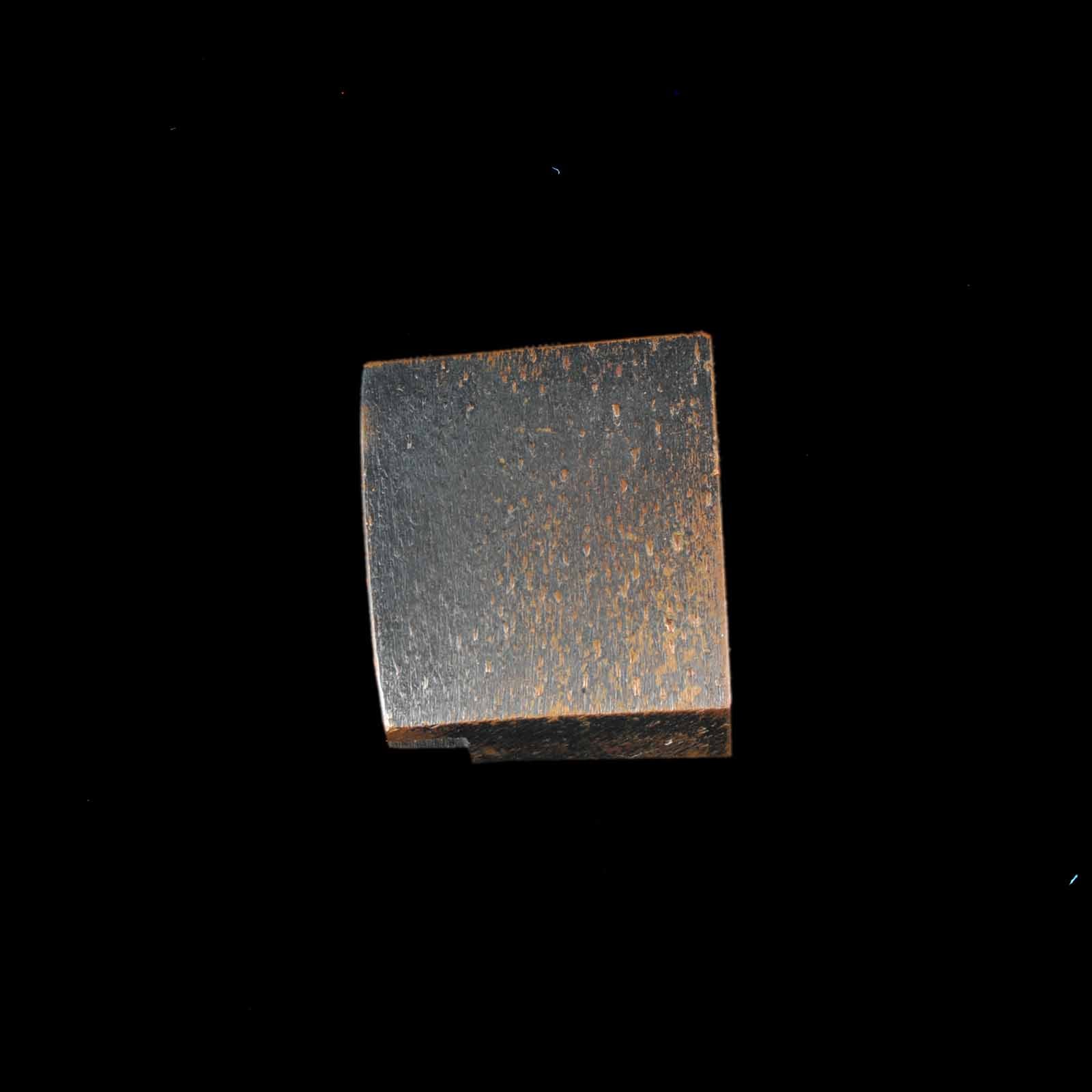
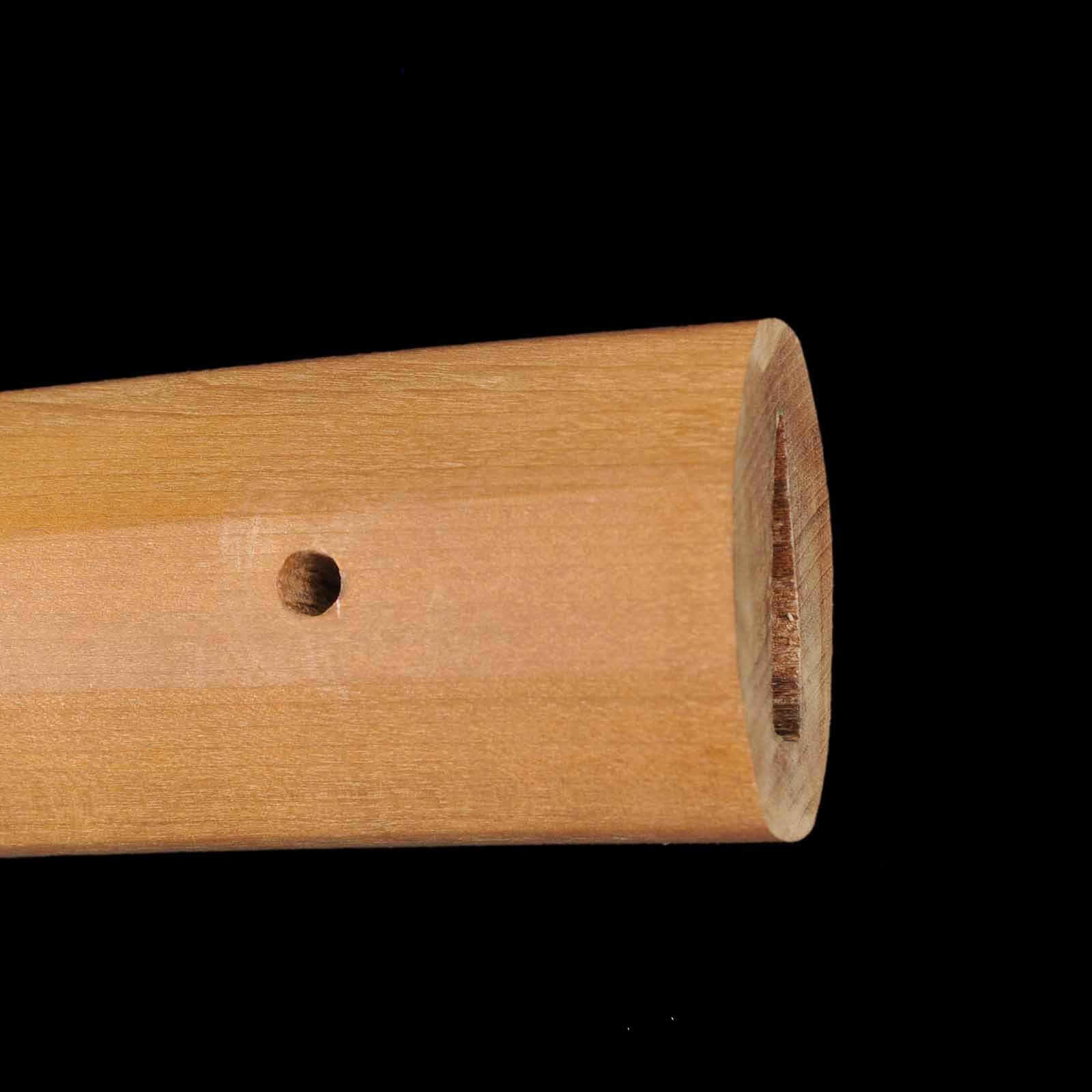
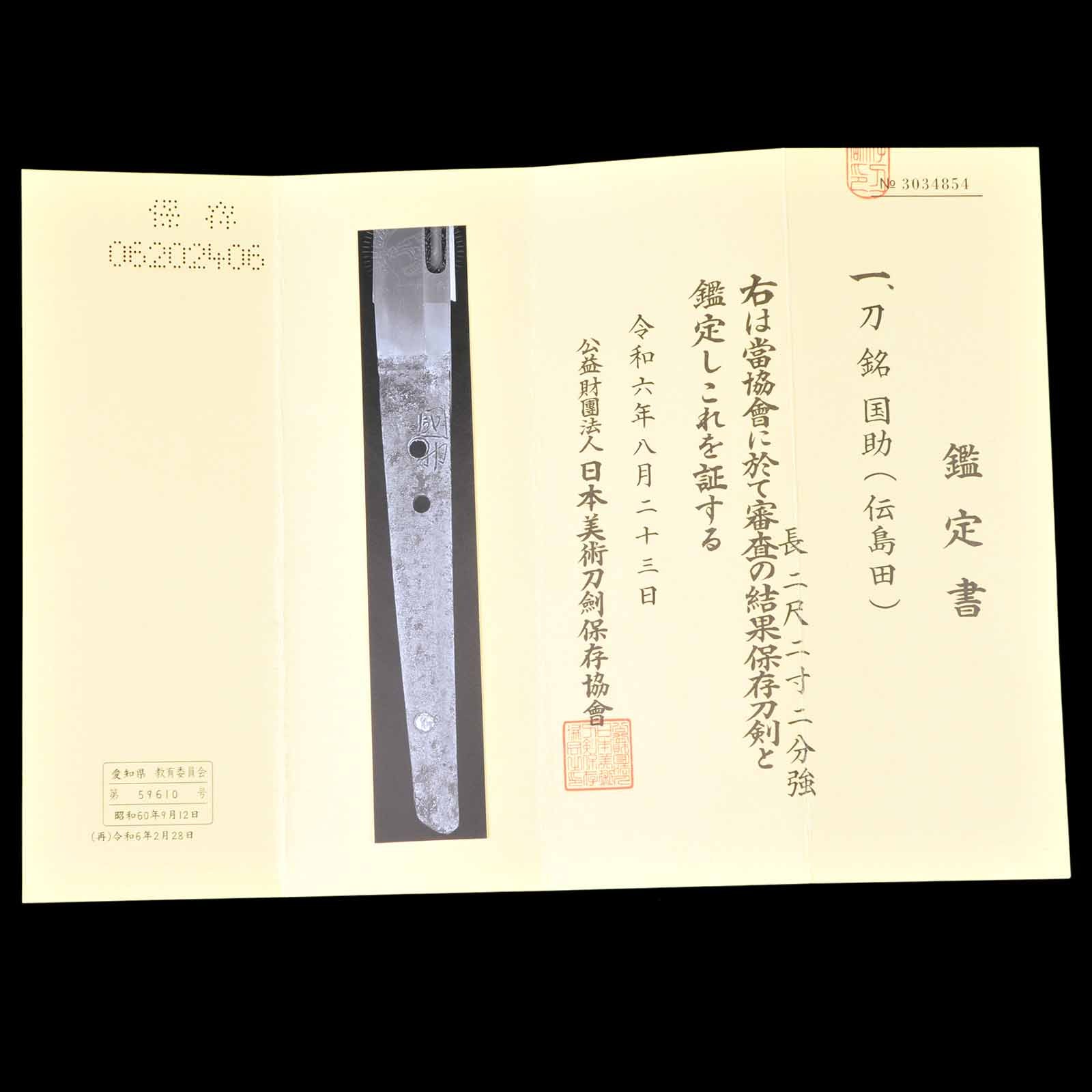
A newly acquired katana with its signature intact, discovered in the treasury of an old Japanese family and preserved in exceptionally fine condition, has arrived. The blade is fully polished throughout, with virtually no flaws, rust, or chips except for a single fukure-like imperfection about 15 centimeters along the shinogi from the machi on the sashimote side. True to its Koto period origins, the bright, vivid jigane displays a lively interplay of itame and mokume patterns, with chikei and yubashiri clearly visible to the naked eye. The hamon features a fine notare pattern extending from the machi to the monouchi, transitioning into a vigorous gunome pattern around the monouchi. The hataraki, including the nie, ashi, and yo, are also highly active. The nakago bears the name Kunisuke. In August 2024, the Society for the Preservation of Japanese Art Swords authenticated this work as a genuine Shimada Kunisuke, further issuing a Hozon certificate recognizing it as a piece of high preservation value for posterity. Shimada Kunisuke is the name of a swordsmith belonging to the Shimada school, a group of swordsmiths active primarily from the mid-Muromachi period to the mid-Edo period. It specifically refers to the individual known for the Shimada Hirosuke. He was the son of the first-generation Yoshisuke and was active in Shimada, Suruga Province (present-day Shizuoka Prefecture), characterized by a bold and ornate style. The Shimada school traces its origins to the founder, the first Yoshisuke, and produced master swordsmiths such as Sukemune and Hirosuke. They maintained close ties with the Soshu swordsmiths, and their practical, highly effective blades were favored by warlords throughout the Sengoku period. This signed katana with its appraisal certificate is making its debut on the market. If you are seeking a signed katana from the Koto period, this is an exceptional piece you absolutely must hold in your hands at least once. Blade length: 67.6 cm Curvature: 1.1 cm
 NihontoWatch
在銘 · Shimada · 天文 · 長さ 67.6cm · 反り 1.1cm
駿河 · 1532-1555頃
藤代 Jo saku · 刀剣大鑑 上位63%
現在1点販売中
室町時代
室町は刀剣業を産業に変えた。徒歩の集団戦とともに打刀が興り、長船と関は数打ち物と注文打ちを並行して産し、勘合貿易は日本刀を数万振の単位で海外へ運んだ。
銘が正しい、または無銘でも年代・国・系統を確実に指摘できる、保存に値する真正の作と鑑定されたものです。
日本美術刀剣保存協会(NBTHK)は、1948年に設立され、文化庁の監督を受ける公益財団法人で、東京・刀剣博物館に本部を置きます。専門の審査員が出品作を直接審査し、美術的・歴史的価値に応じた鑑定書を発行します。NBTHKの鑑定書は、日本刀および刀装具の真正性を示す最も広く認知された基準です。
NBTHK公式サイトAs a general rule, returns/exchanges are not accepted on Japanese sword orders unless damaged upon delivery. Other items: returns/exchanges accepted within 7 days of delivery. Cancellation for personal reasons incurs a 30% restocking fee (70% refunded). Return shipping must be prepaid and insured by the buyer; shipping/handling fees are non-refundable. Contact katana@tozando.co.jp to initiate a return.
A newly acquired katana with its signature intact, discovered in the treasury of an old Japanese family and preserved in exceptionally fine condition, has arrived. The blade is fully polished throughout, with virtually no flaws, rust, or chips except for a single fukure-like imperfection about 15 centimeters along the shinogi from the machi on the sashimote side. True to its Koto period origins, the bright, vivid jigane displays a lively interplay of itame and mokume patterns, with chikei and yubashiri clearly visible to the naked eye. The hamon features a fine notare pattern extending from the machi to the monouchi, transitioning into a vigorous gunome pattern around the monouchi. The hataraki, including the nie, ashi, and yo, are also highly active. The nakago bears the name Kunisuke. In August 2024, the Society for the Preservation of Japanese Art Swords authenticated this work as a genuine Shimada Kunisuke, further issuing a Hozon certificate recognizing it as a piece of high preservation value for posterity. Shimada Kunisuke is the name of a swordsmith belonging to the Shimada school, a group of swordsmiths active primarily from the mid-Muromachi period to the mid-Edo period. It specifically refers to the individual known for the Shimada Hirosuke. He was the son of the first-generation Yoshisuke and was active in Shimada, Suruga Province (present-day Shizuoka Prefecture), characterized by a bold and ornate style. The Shimada school traces its origins to the founder, the first Yoshisuke, and produced master swordsmiths such as Sukemune and Hirosuke. They maintained close ties with the Soshu swordsmiths, and their practical, highly effective blades were favored by warlords throughout the Sengoku period. This signed katana with its appraisal certificate is making its debut on the market. If you are seeking a signed katana from the Koto period, this is an exceptional piece you absolutely must hold in your hands at least once. Blade length: 67.6 cm Curvature: 1.1 cm
NihontoWatch在銘 · Shimada · 天文 · 長さ 67.6cm · 反り 1.1cm
駿河 · 1532-1555頃
藤代 Jo saku · 刀剣大鑑 上位63%
現在1点販売中
室町時代
室町は刀剣業を産業に変えた。徒歩の集団戦とともに打刀が興り、長船と関は数打ち物と注文打ちを並行して産し、勘合貿易は日本刀を数万振の単位で海外へ運んだ。
銘が正しい、または無銘でも年代・国・系統を確実に指摘できる、保存に値する真正の作と鑑定されたものです。
日本美術刀剣保存協会(NBTHK)は、1948年に設立され、文化庁の監督を受ける公益財団法人で、東京・刀剣博物館に本部を置きます。専門の審査員が出品作を直接審査し、美術的・歴史的価値に応じた鑑定書を発行します。NBTHKの鑑定書は、日本刀および刀装具の真正性を示す最も広く認知された基準です。
NBTHK公式サイトAs a general rule, returns/exchanges are not accepted on Japanese sword orders unless damaged upon delivery. Other items: returns/exchanges accepted within 7 days of delivery. Cancellation for personal reasons incurs a 30% restocking fee (70% refunded). Return shipping must be prepaid and insured by the buyer; shipping/handling fees are non-refundable. Contact katana@tozando.co.jp to initiate a return.