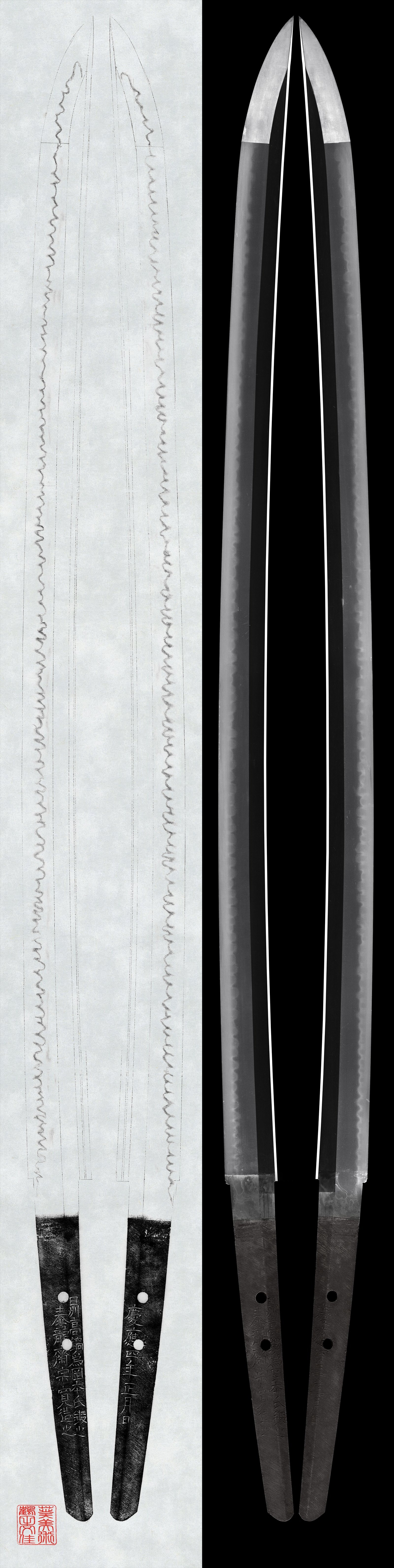
1853年のペリー来航は徳川の泰平をほどき、二世紀ぶりに実用刀の大量需要を生んだ。四谷正宗と呼ばれた清麿はその前夜に世を去り、宗次や行秀が最後の好況を担った。
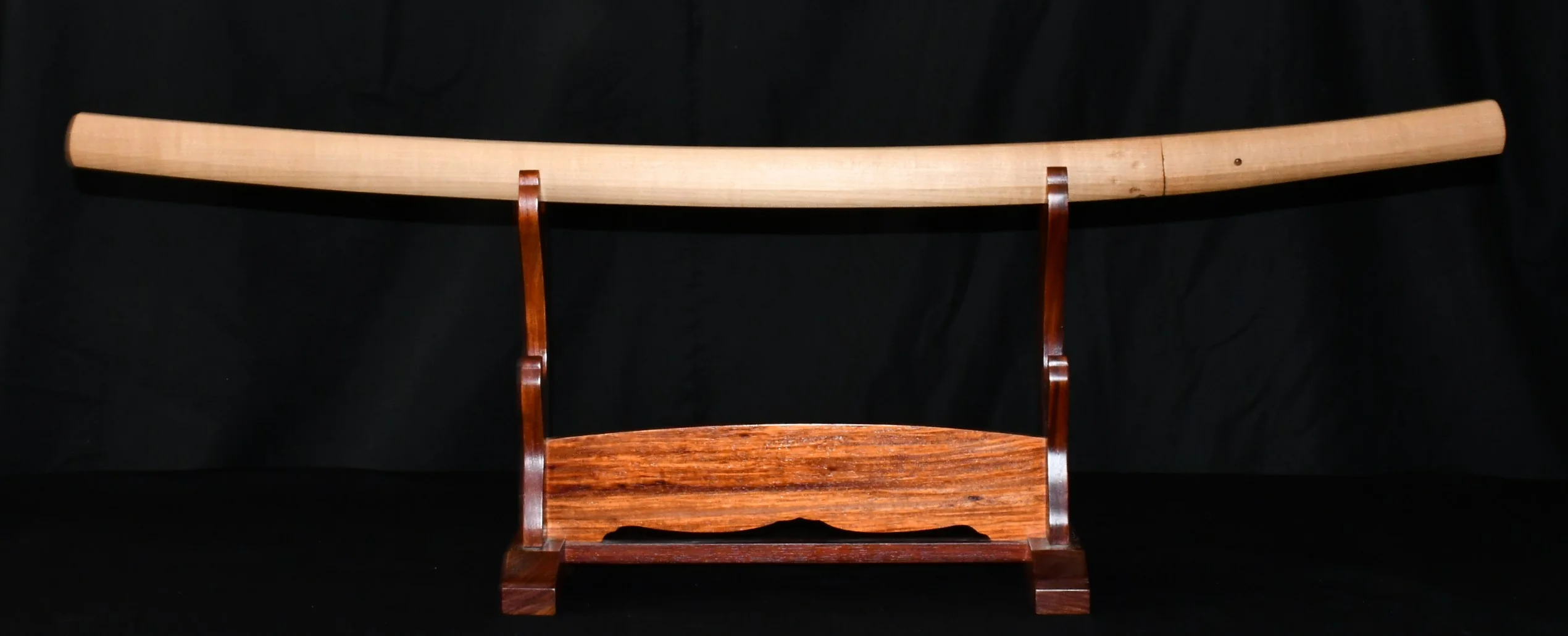
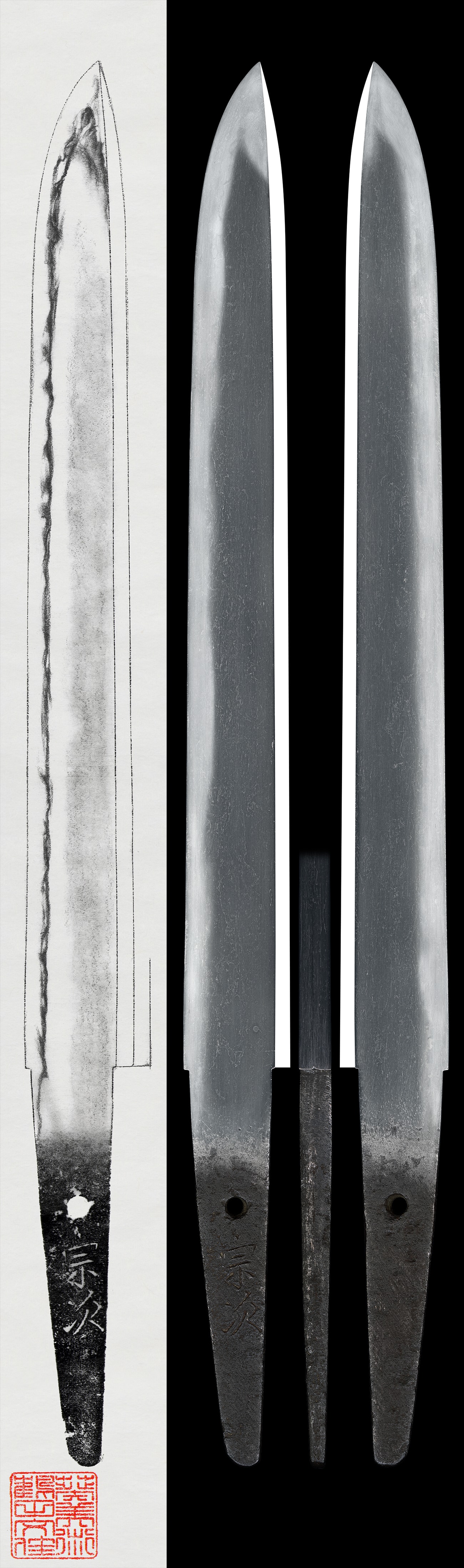
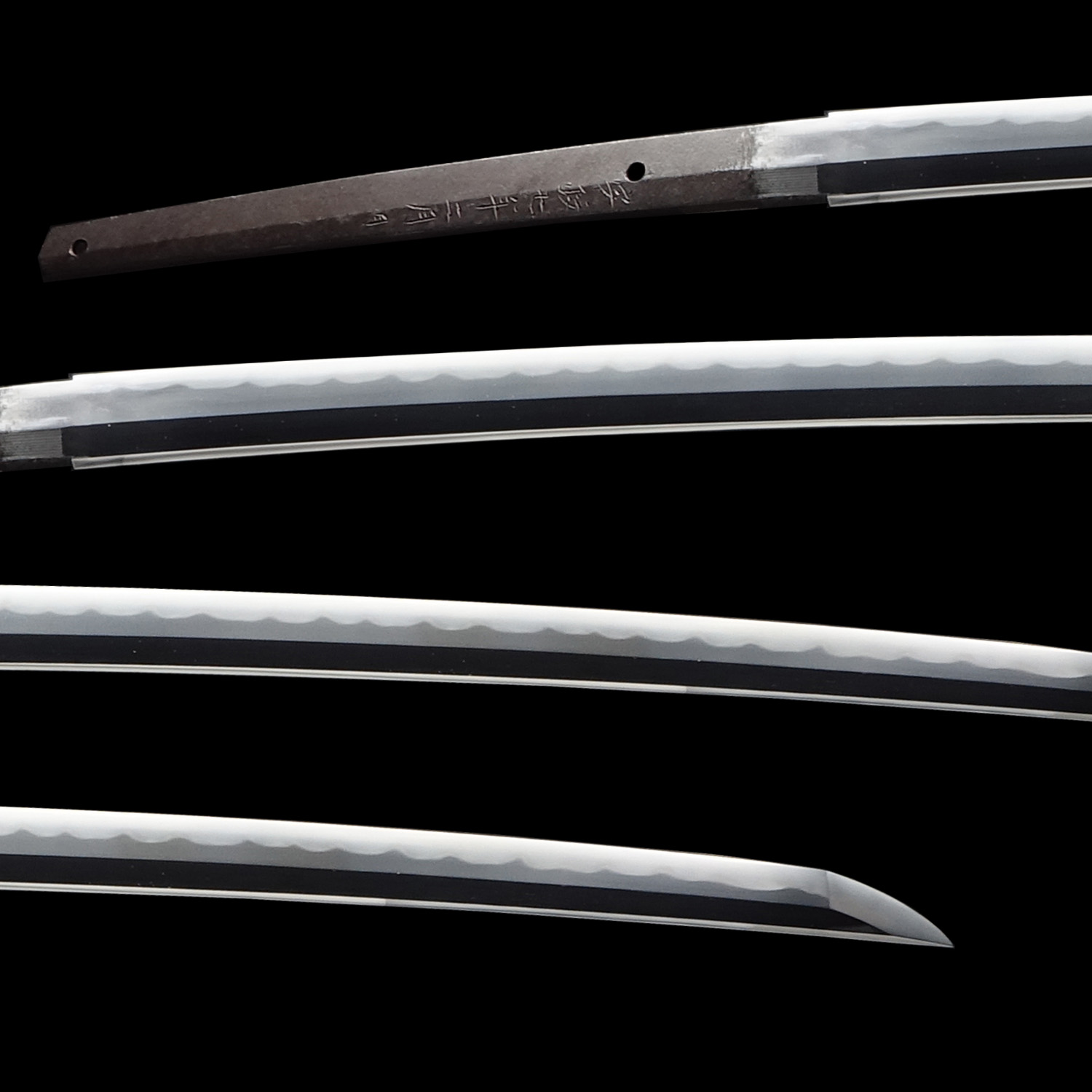
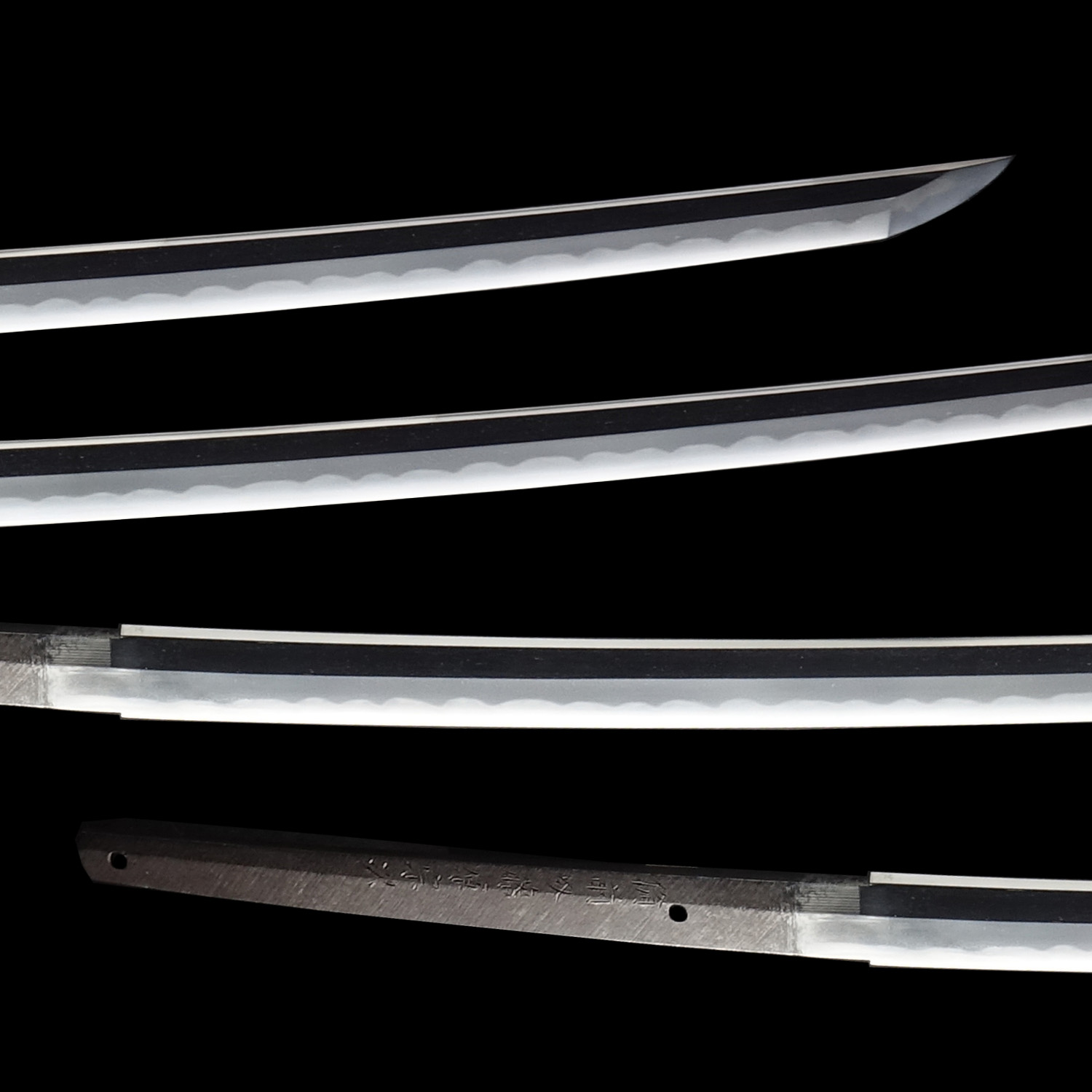
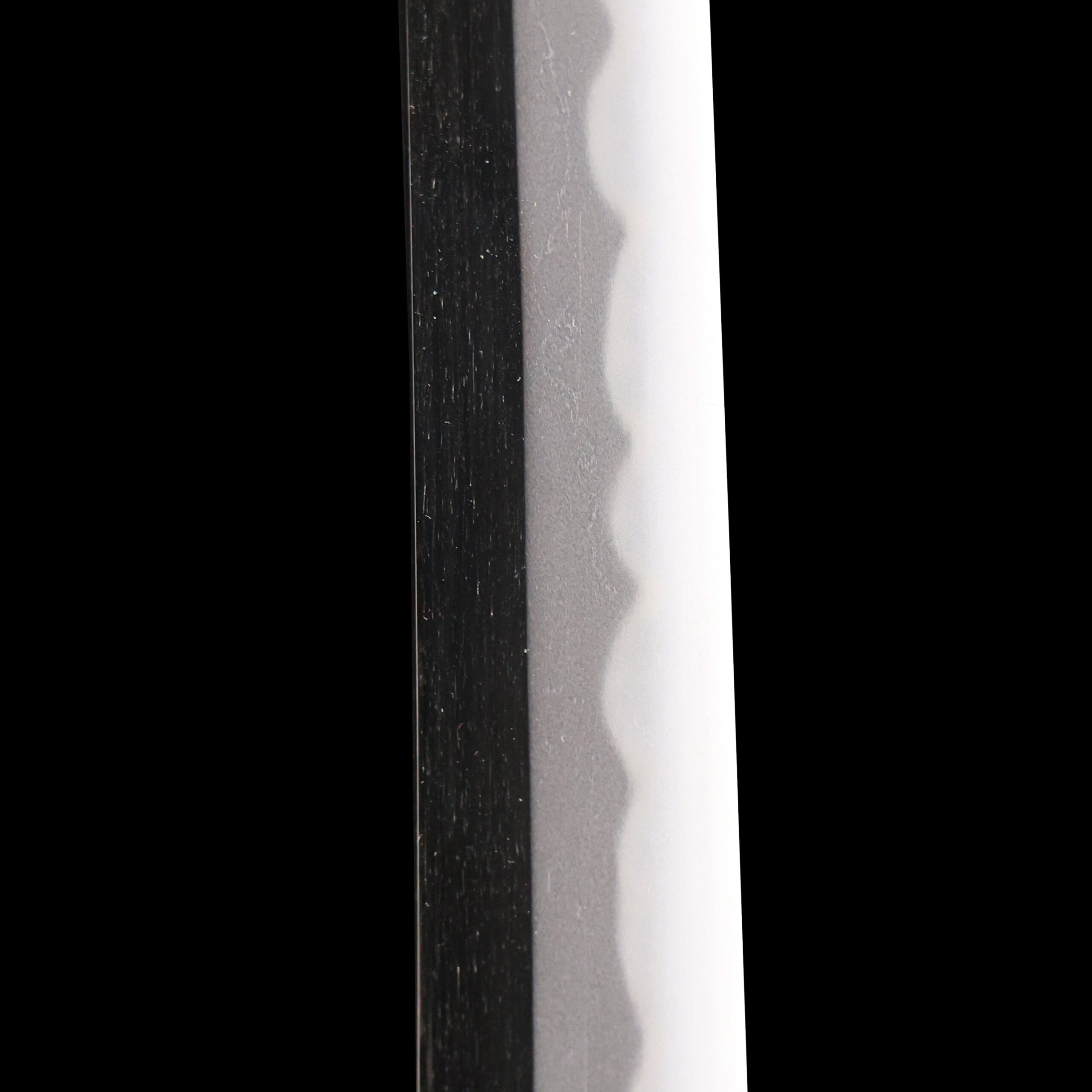
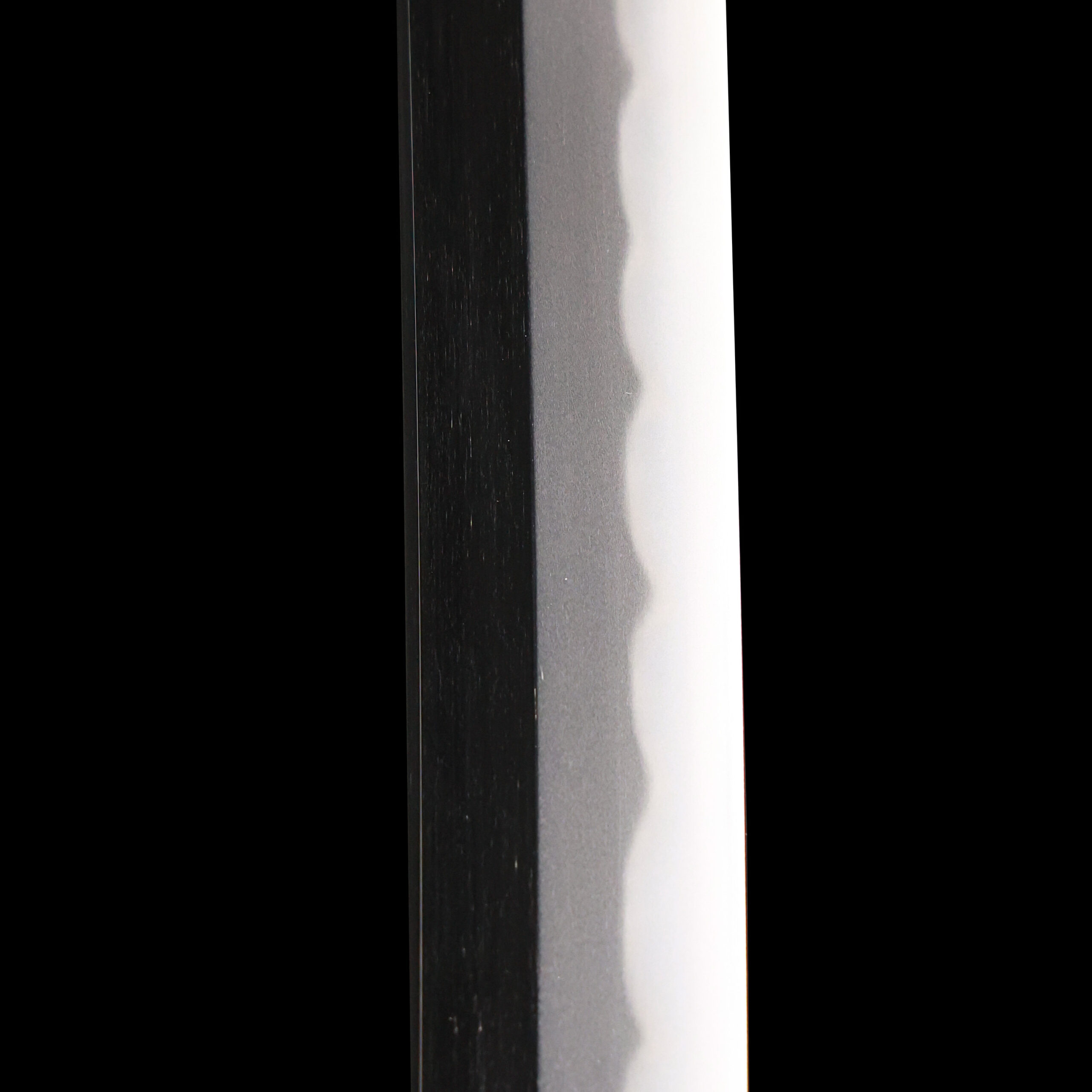
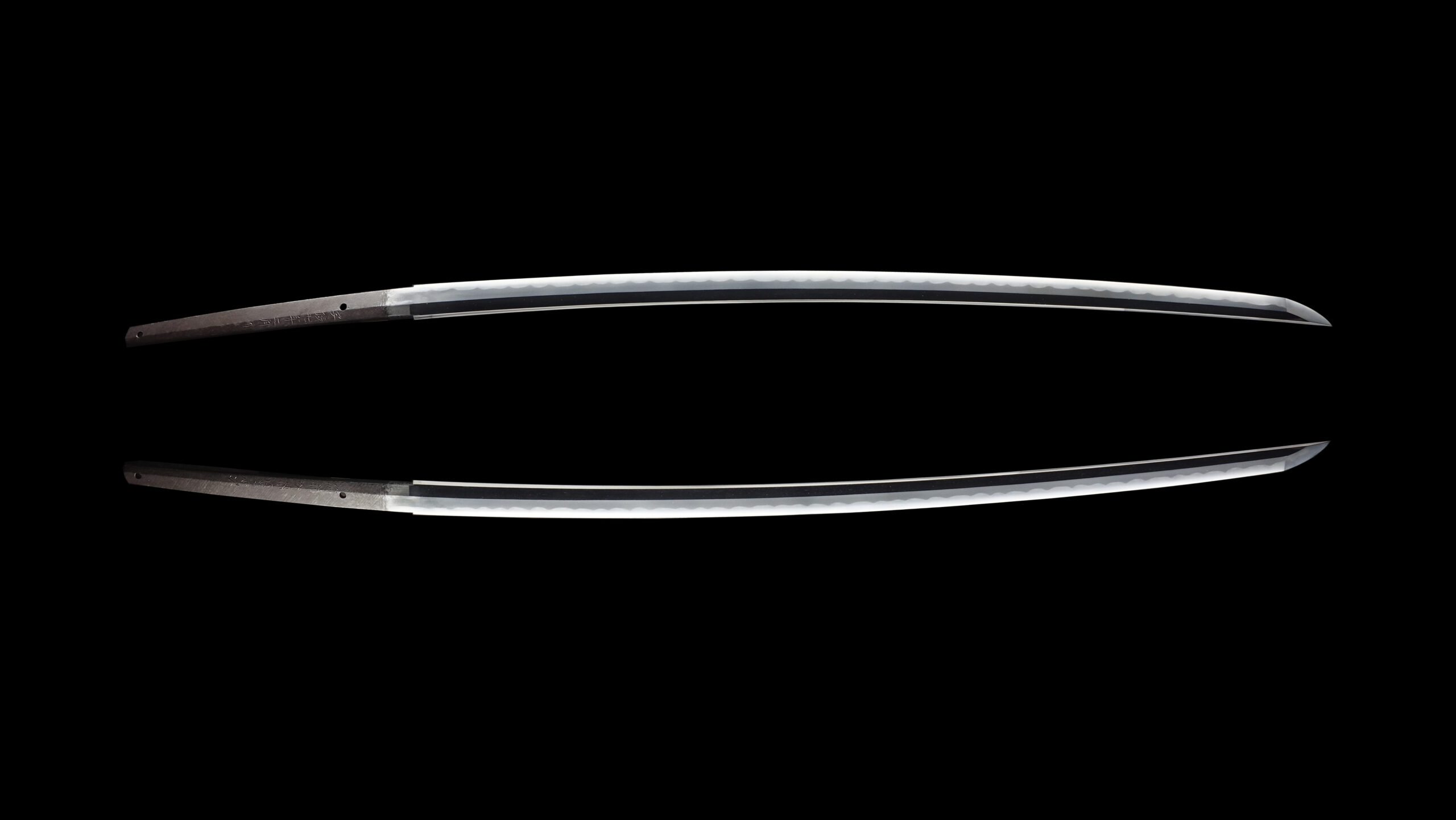
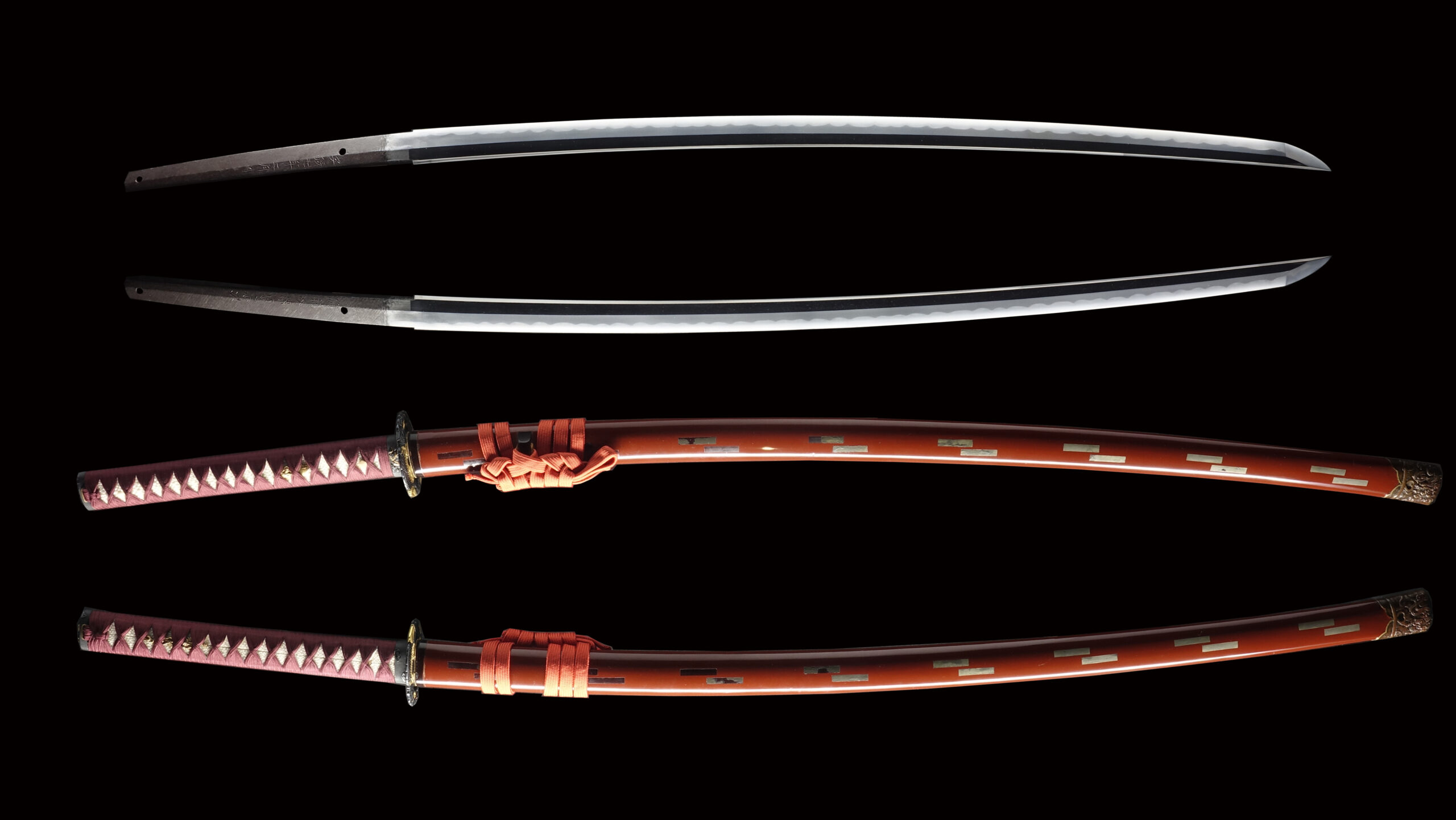
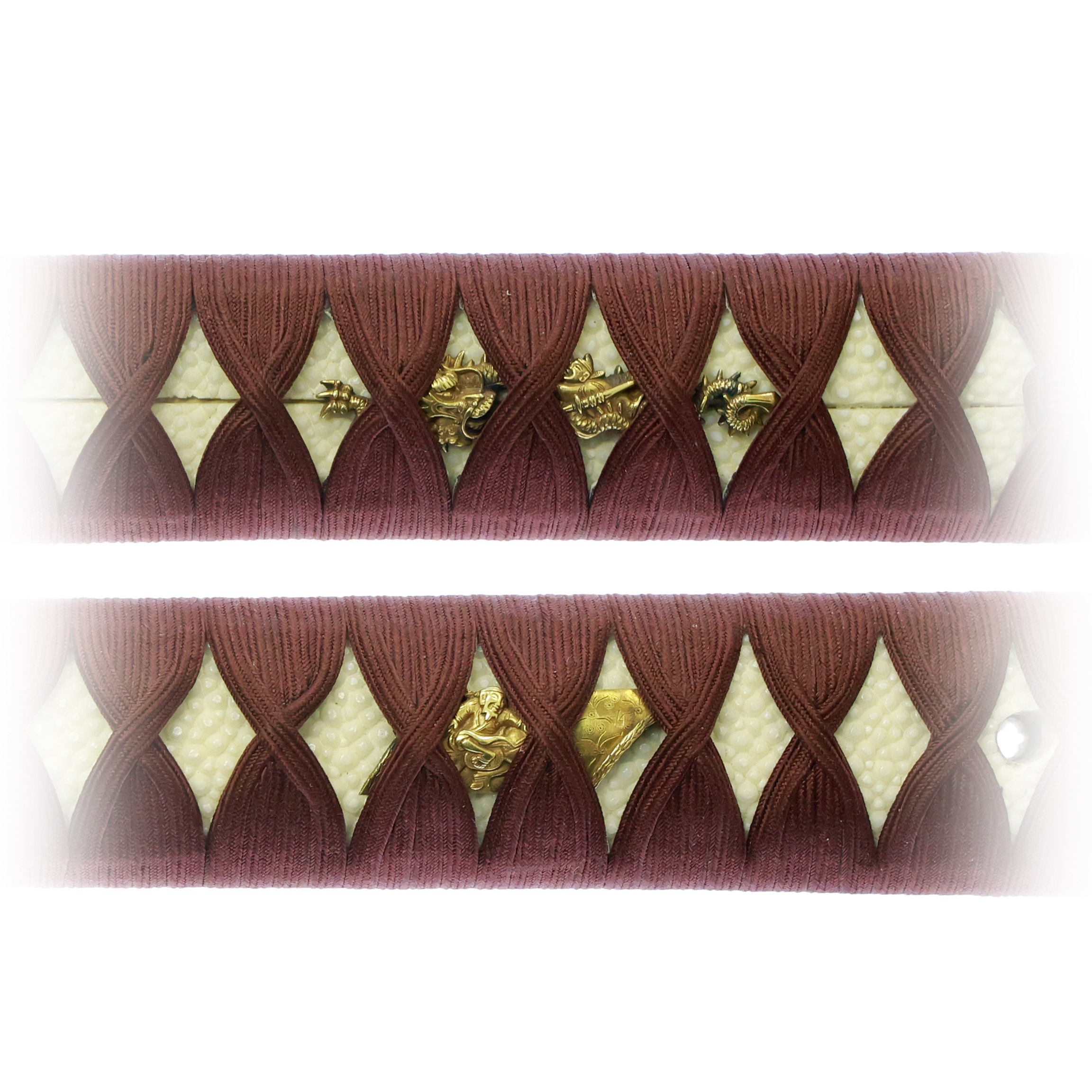
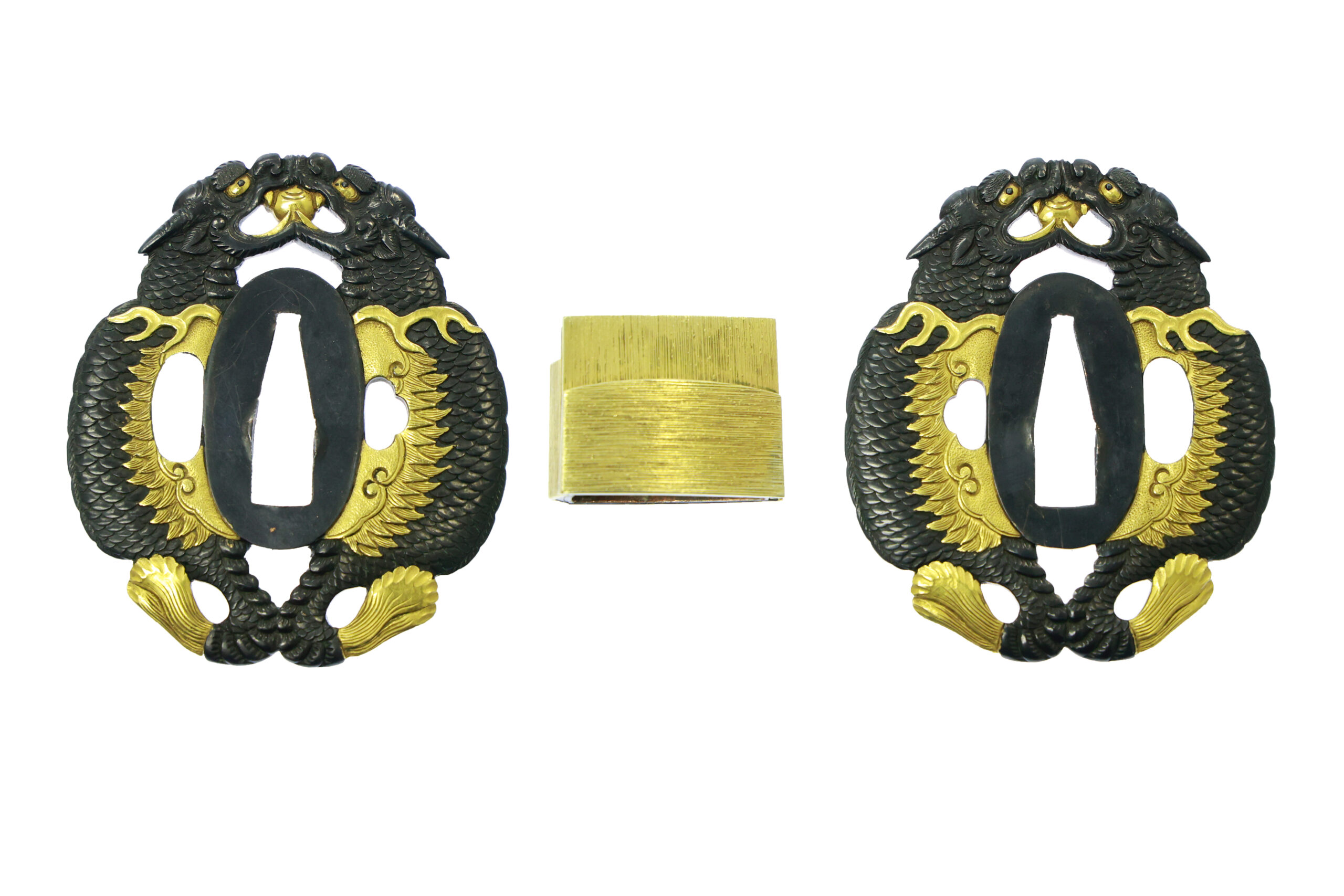
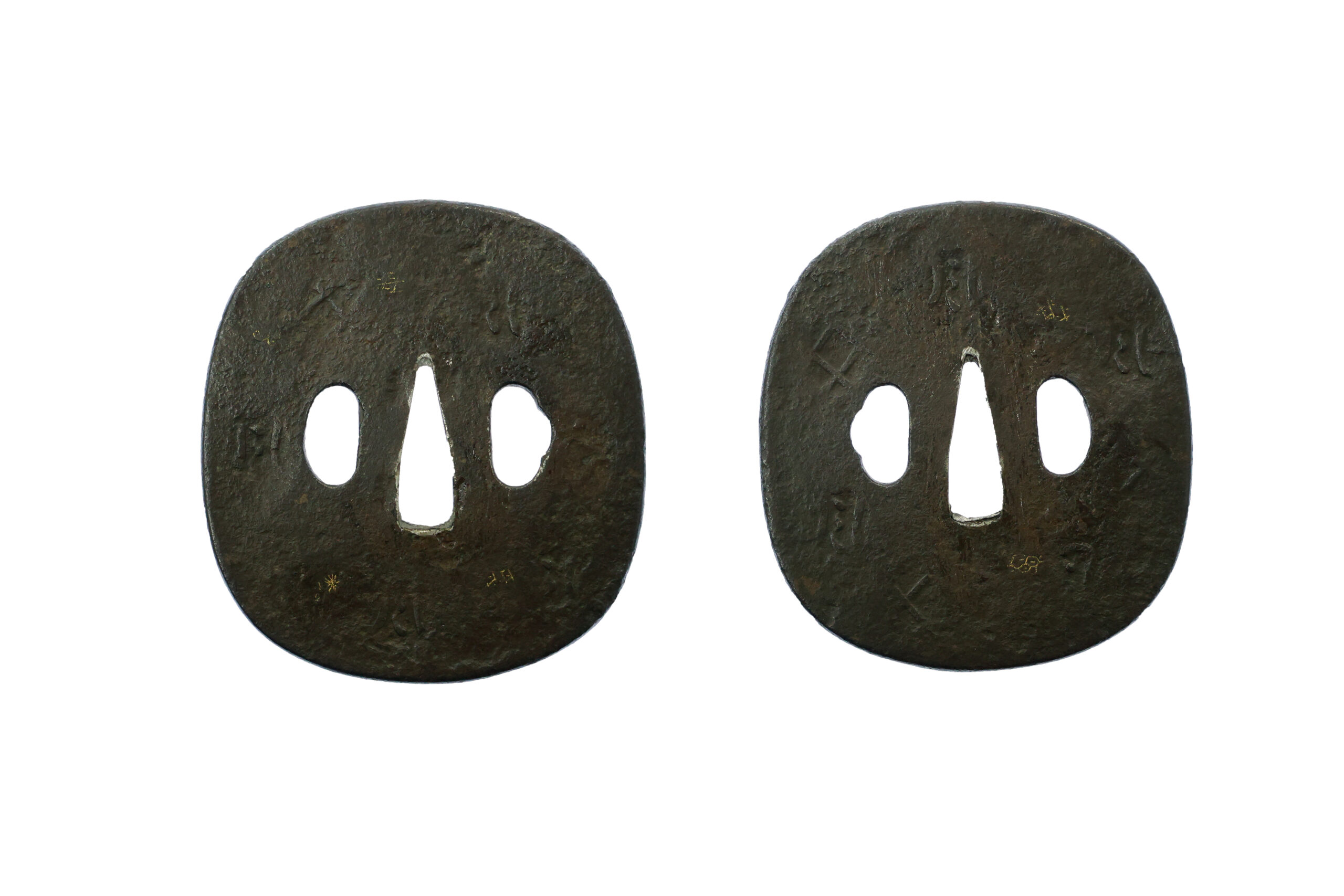
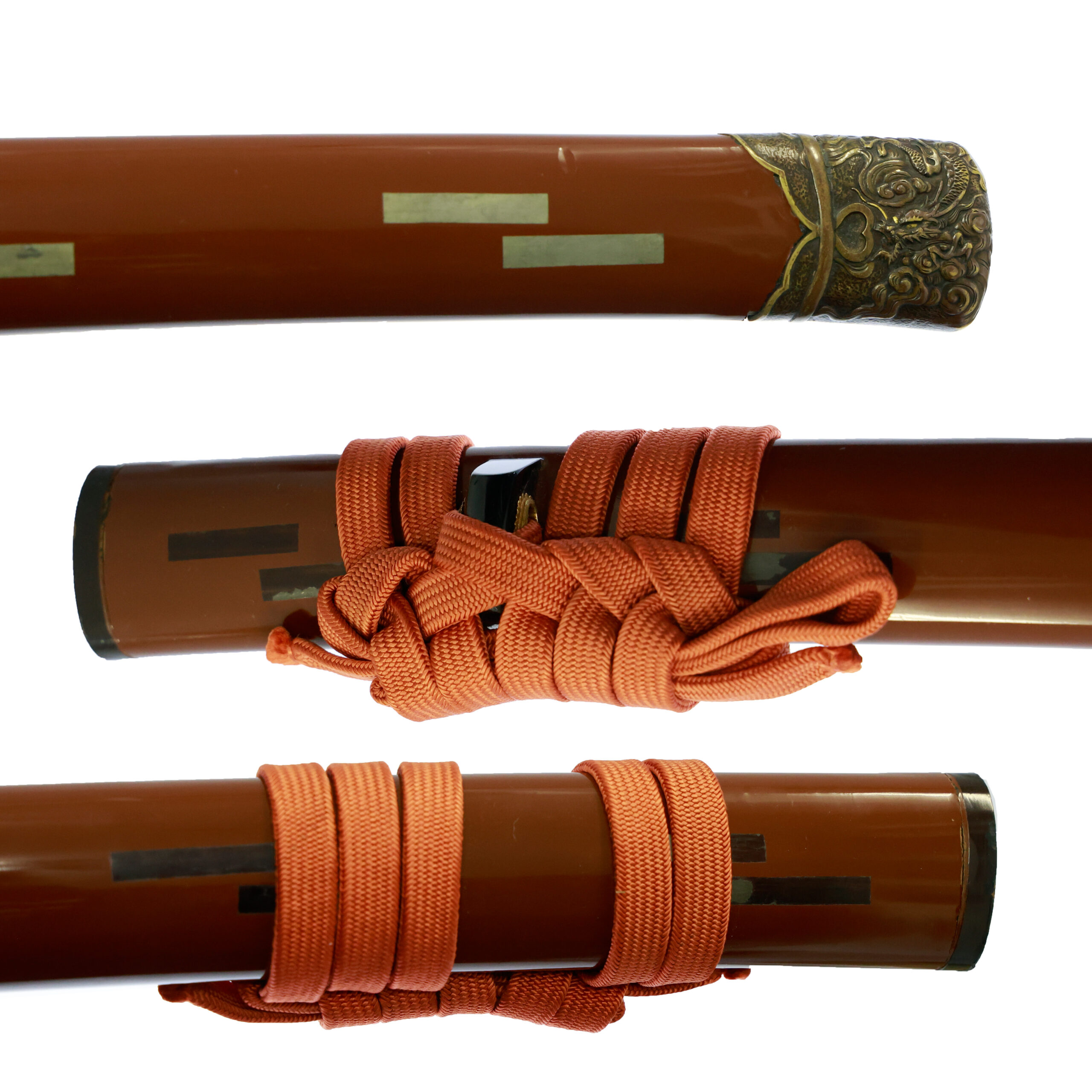
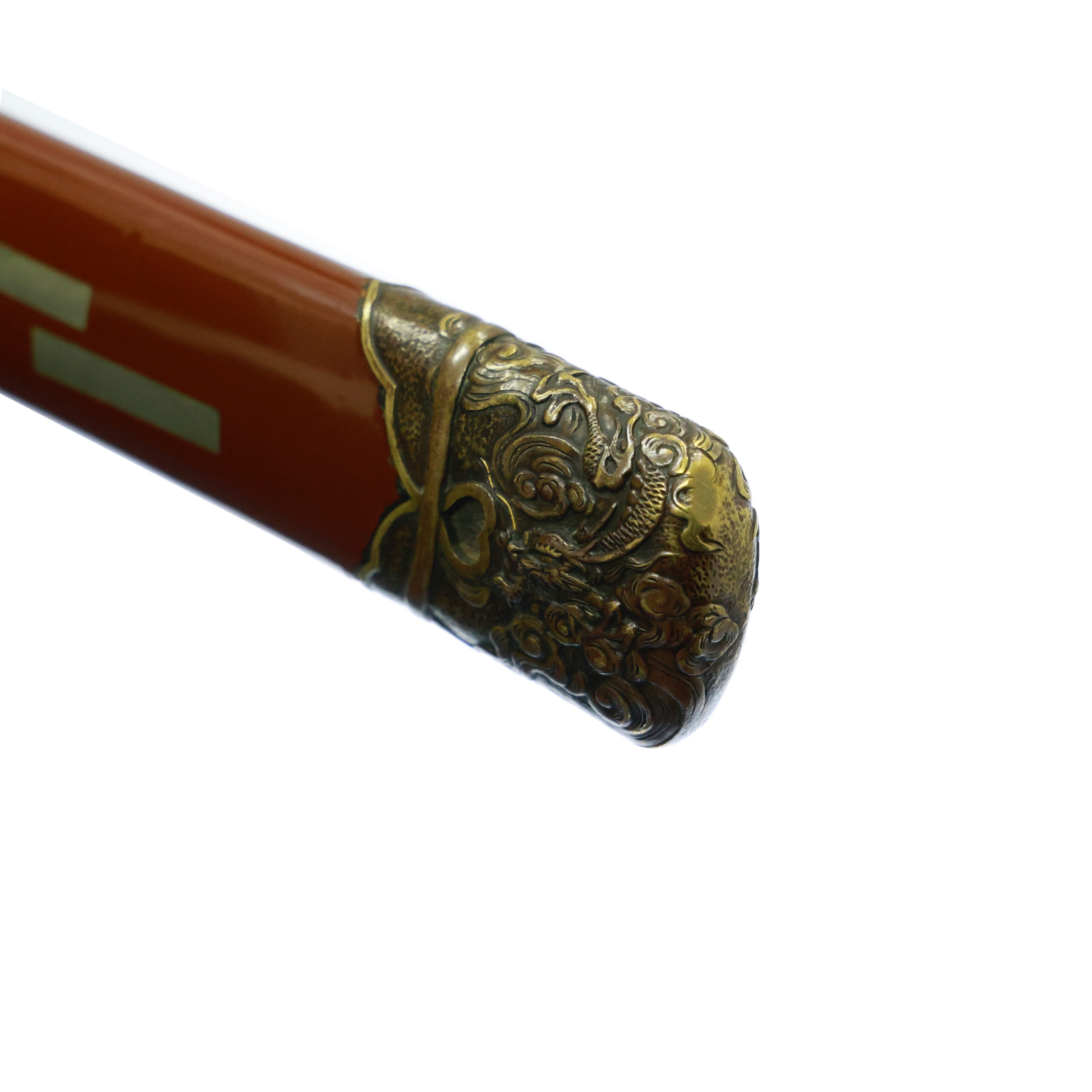
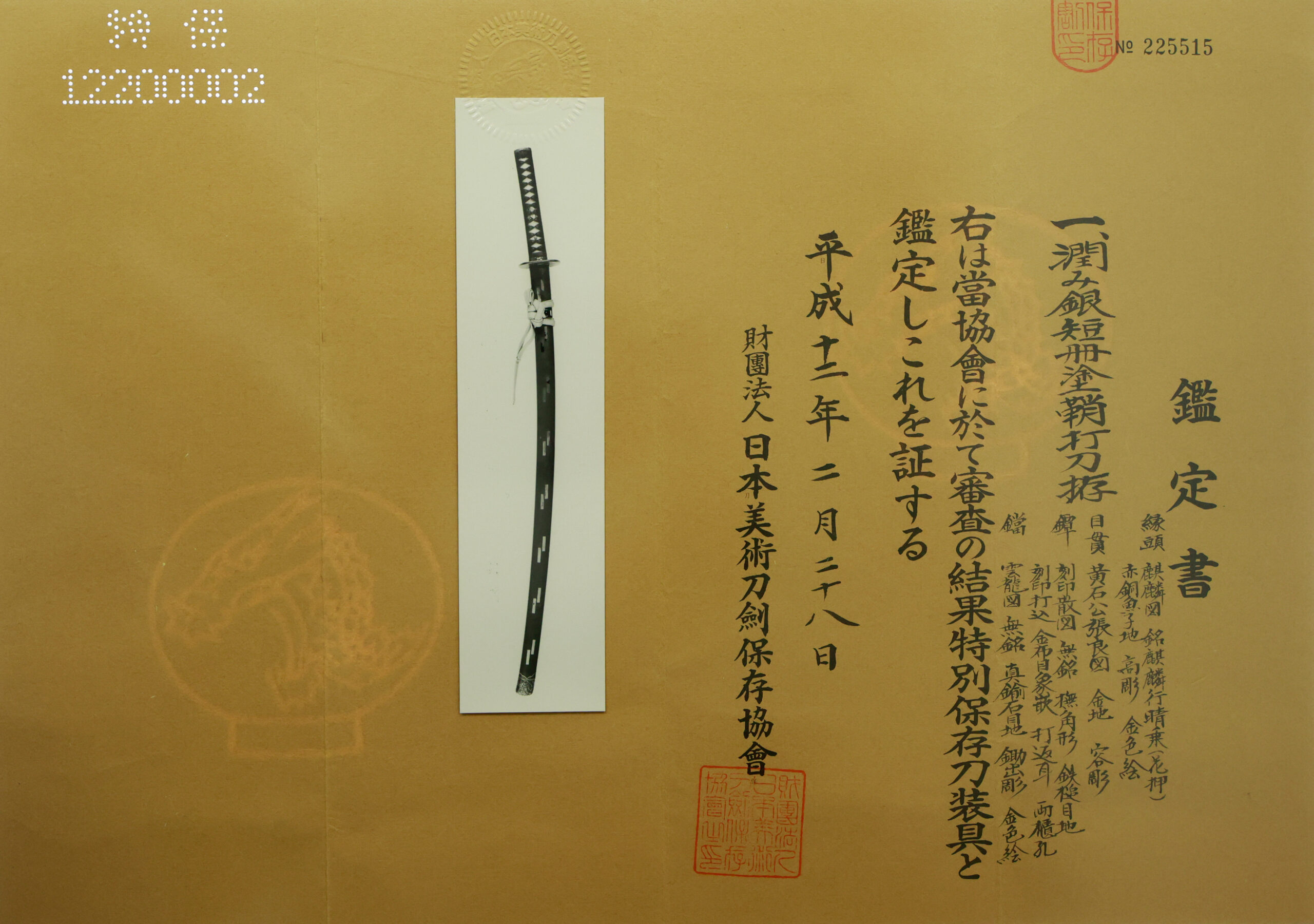
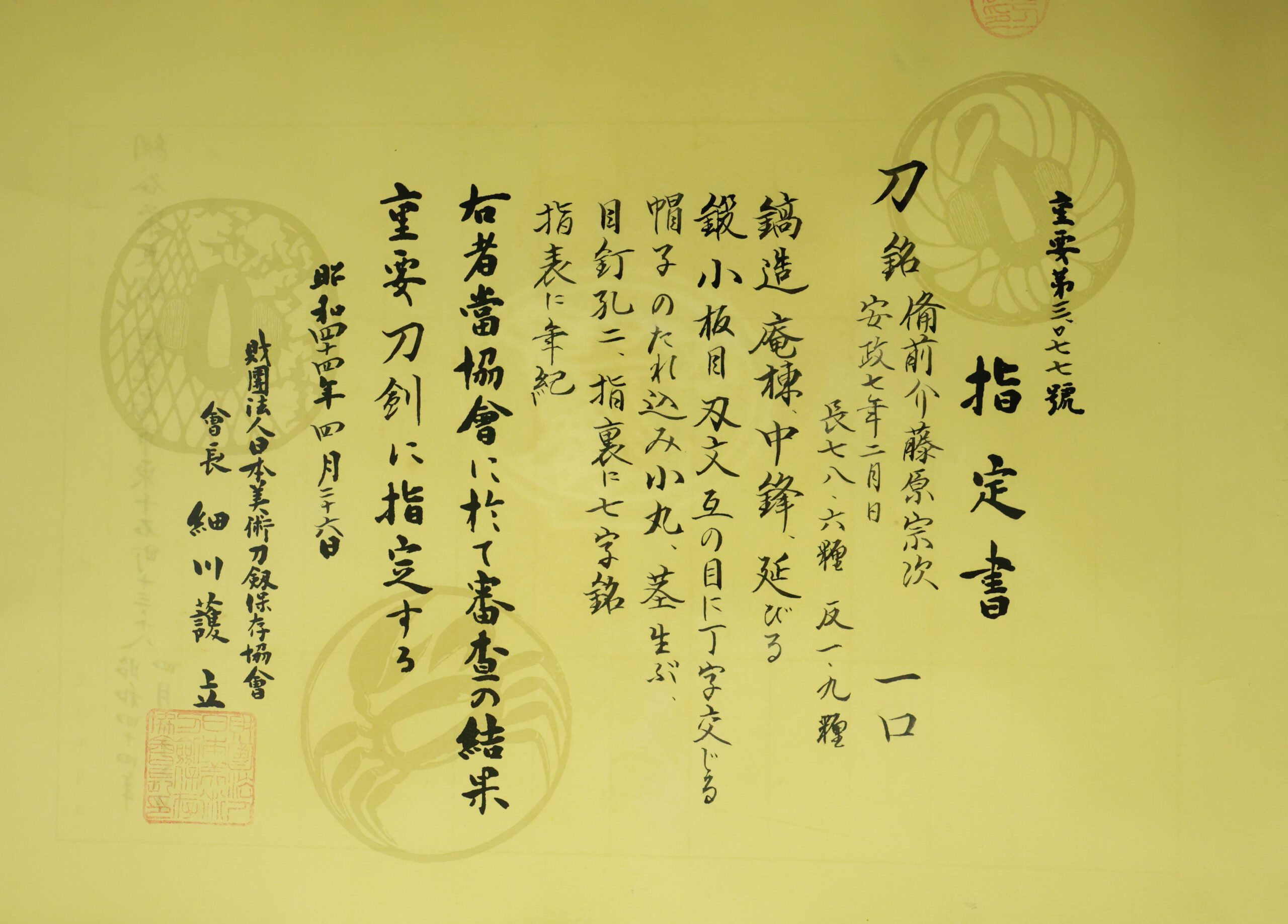
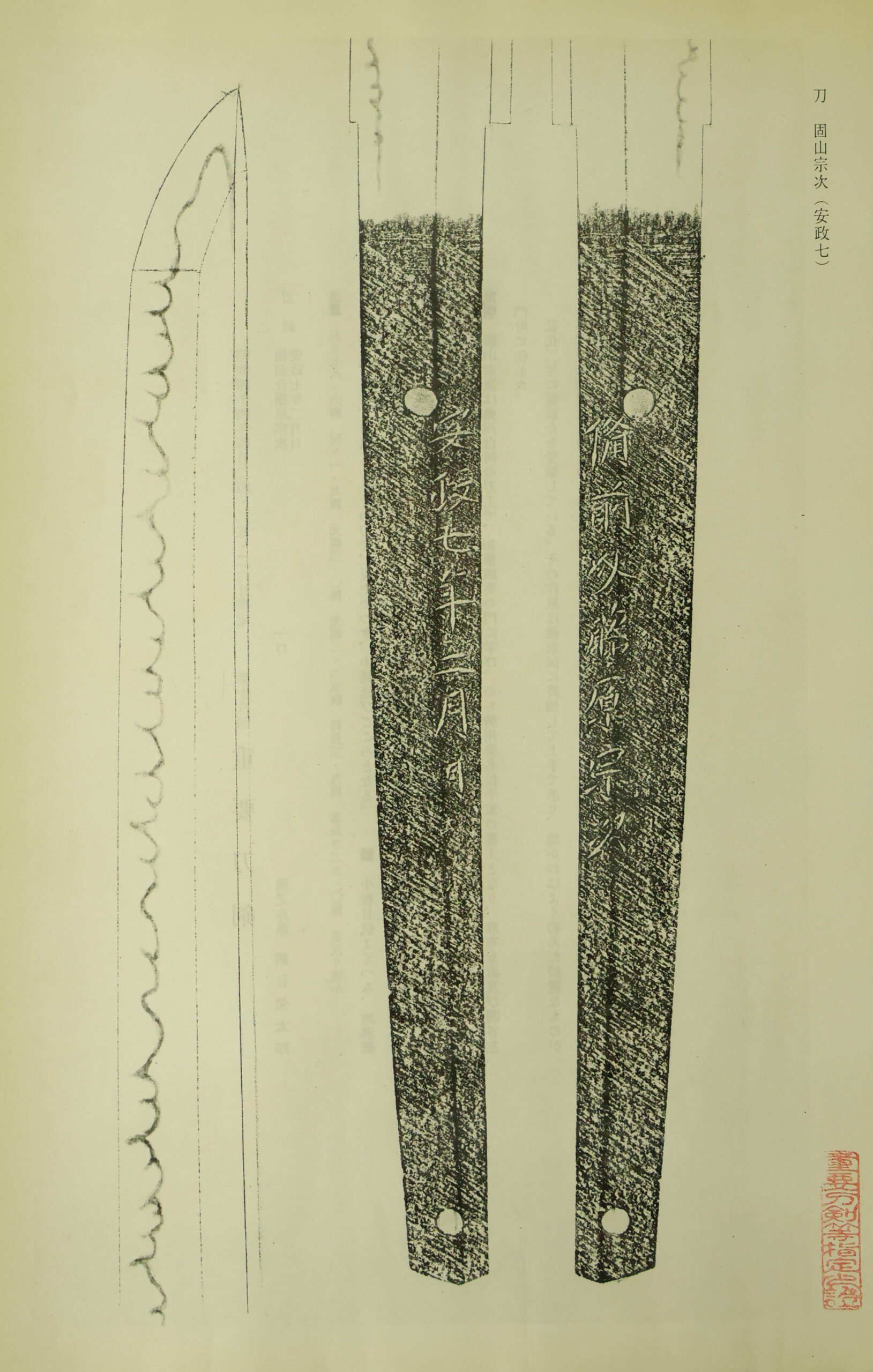
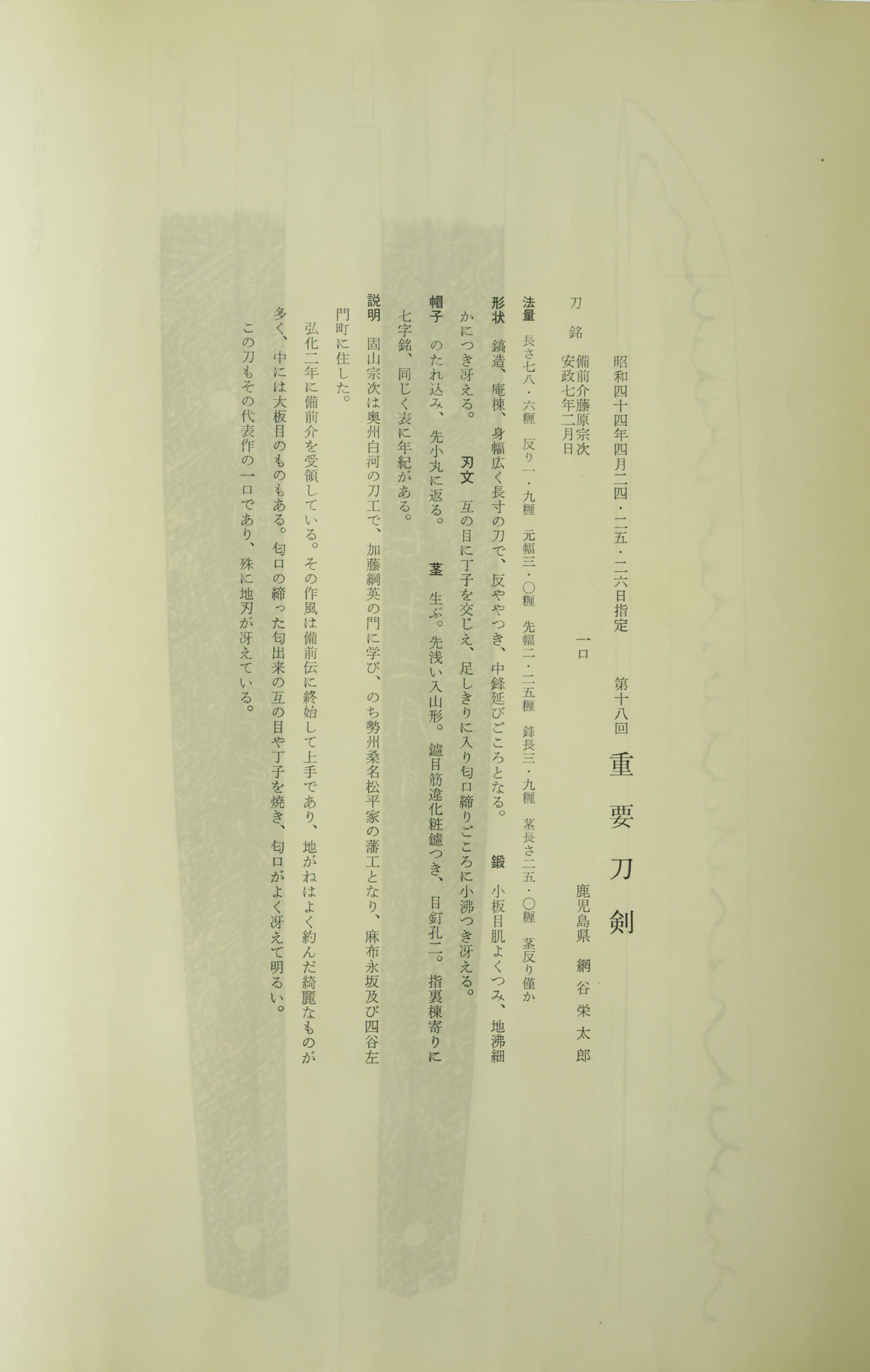
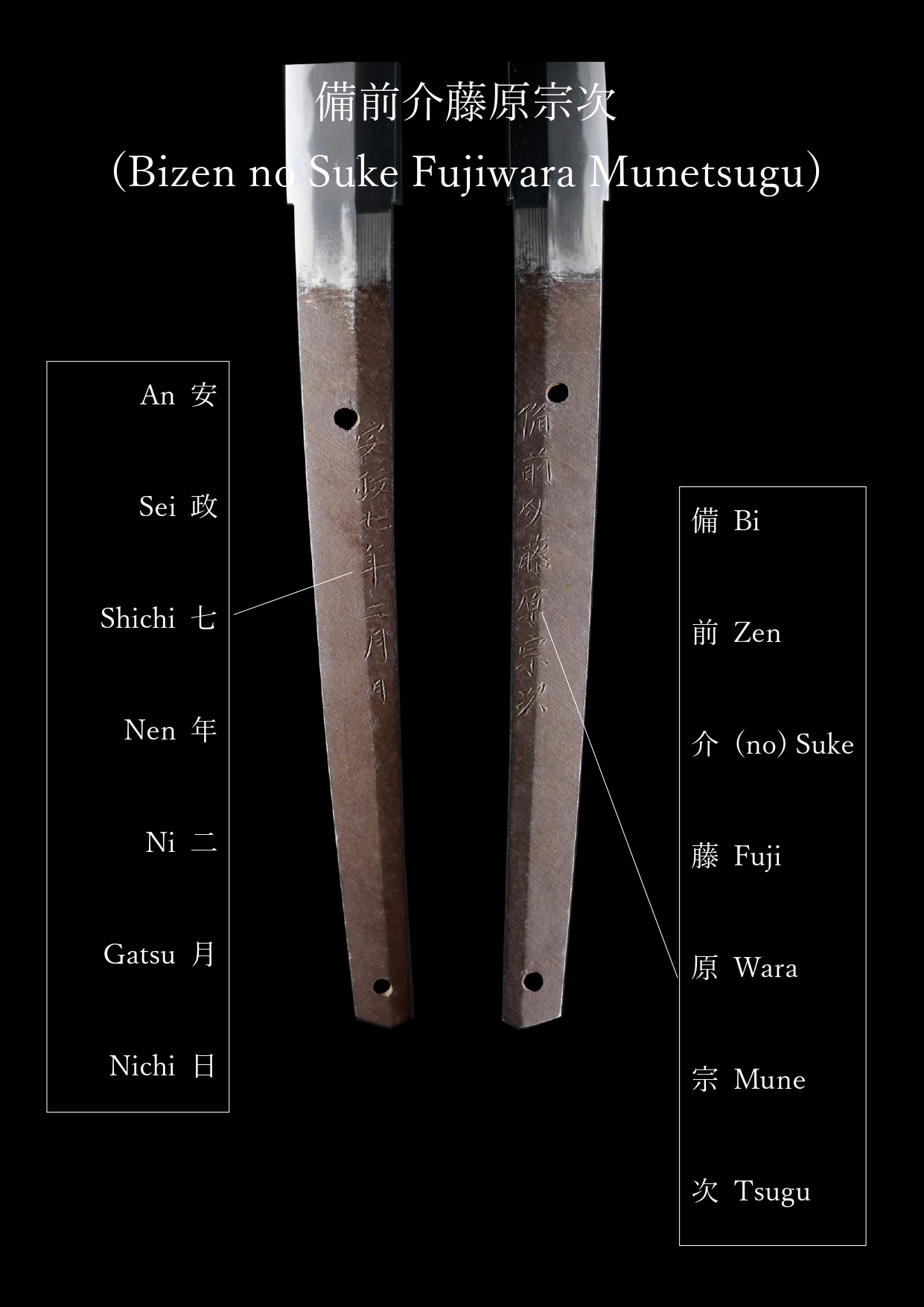
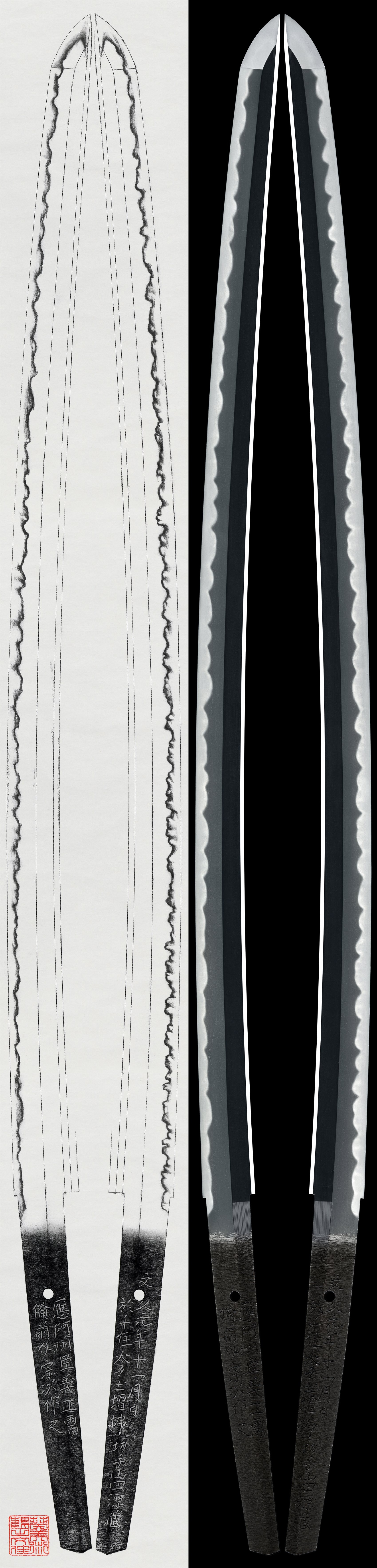
日本刀 備前介藤原宗次 安政七年庚申二月日 日本美術刀剣保存協会(NBTHK)重要刀剣指定品 【解説】 本作は安政七年(1860年)、幕末期に備前介藤原宗次によって打たれた一振りです。宗次は本名を固山宗兵衛といい、享和二年(1802年)に陸奥国白河(現在の福島県)にて固山宗平の三男として生まれました。作刀の技術は当初、加藤綱英に学び、後にその実弟である長運斎綱俊の門に入ってさらなる研鑽を積んだと伝えられています。 宗次は当初、白河松平家の藩工として仕えました。松平家の桑名(現在の三重県)転封に伴い、宗次も同地の藩工となりますが、弘化二年(1845年)からは江戸に定住して作刀に励みました。本作もその歴史的背景から、江戸にて製作されたものと考えられます。 江戸に移住した同年、宗次は「備前介」の受領銘を許されました。その作風は五箇伝の一つである「備前伝」を範としており、特に備前伝の大きな特徴である丁子乱れや互の目乱れの華やかな刃文を得意としました。天保から明治初期にかけて活躍した宗次は、幕末における備前伝の第一人者として揺るぎない地位を築いています。 また、宗次は幕末の江戸において最も高名かつ人気のあった刀工の一人です。その作品は極めて斬れ味が鋭いことで知られ、数多くの試斬銘(試し斬りの記録)が残されていることからも、実戦的な威力が証明されています。彼は藩の要求に応えるべく、実用性を追求した鋭い刀剣の研究に余念がなく、七代目山田浅右衛門(「懐宝剣尺」の著者であり試斬の達人)に師事して斬れ味の研究を重ねた記録も残っています。その卓越した技量は、大名家や幕末の志士たちからも高く評価されました。今日においても、水心子正秀や大慶直胤といった新々刀の巨匠たちに比肩する名工として、愛刀家や専門家の間で極めて高く評価されています。 【鑑定】 本作は、日本美術刀剣保存協会(NBTHK)により「重要刀剣」に指定されています。重要刀剣とは、保存状態が極めて良好であり、かつ美術的価値が特に高いと認められた真作の日本刀にのみ与えられる称号です。特別保存刀剣の上位ランクに位置し、重要刀剣の指定を受けるには厳格な審査を通過する必要があります。現存する刀剣の中でも重要刀剣に指定されるものは極めて稀であり、コレクターの間でも垂涎の的となっています。 【刀身諸元】 長さ(Nagasa):76.2 cm(二尺五寸一分) 反り(Sori):1.8 cm 刃文(Hamon):焼入れによって刃先に現れる結晶構造。 地鉄(Jihada):折り返し鍛錬によって現れる鋼の表面模様。 切先(Kissaki):刀身の先端部分。 茎(Nakago):柄に収まる持ち手にあたる部分。 日本刀の茎には、赤錆を防ぐために意図的に「黒錆」が残されます。この茎の錆色や経年変化は、専門家が製作年代を特定するための重要な指標となります。 拵(Koshirae):鞘、柄、鍔など、刀身を収めるための外装一式。
 NihontoWatch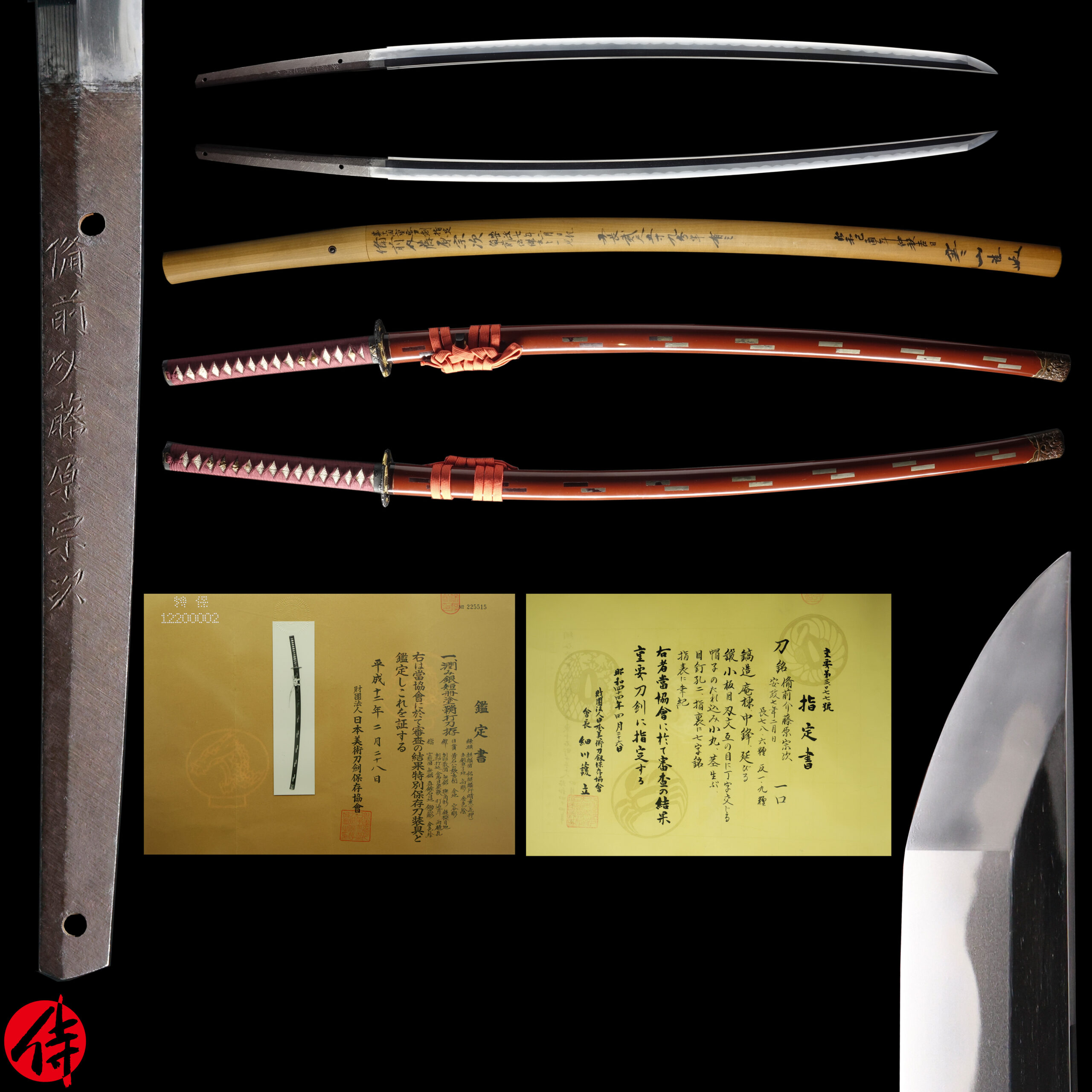


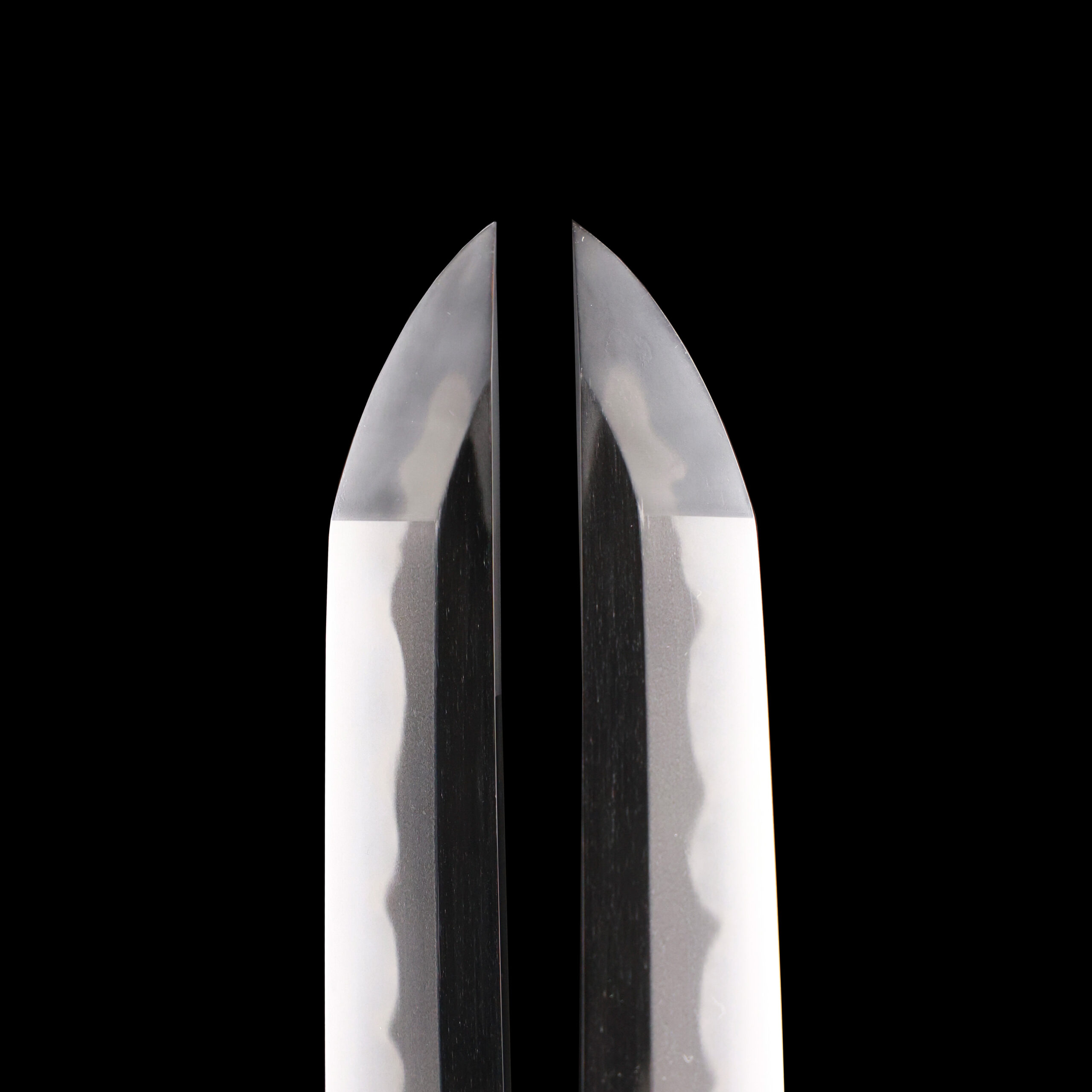
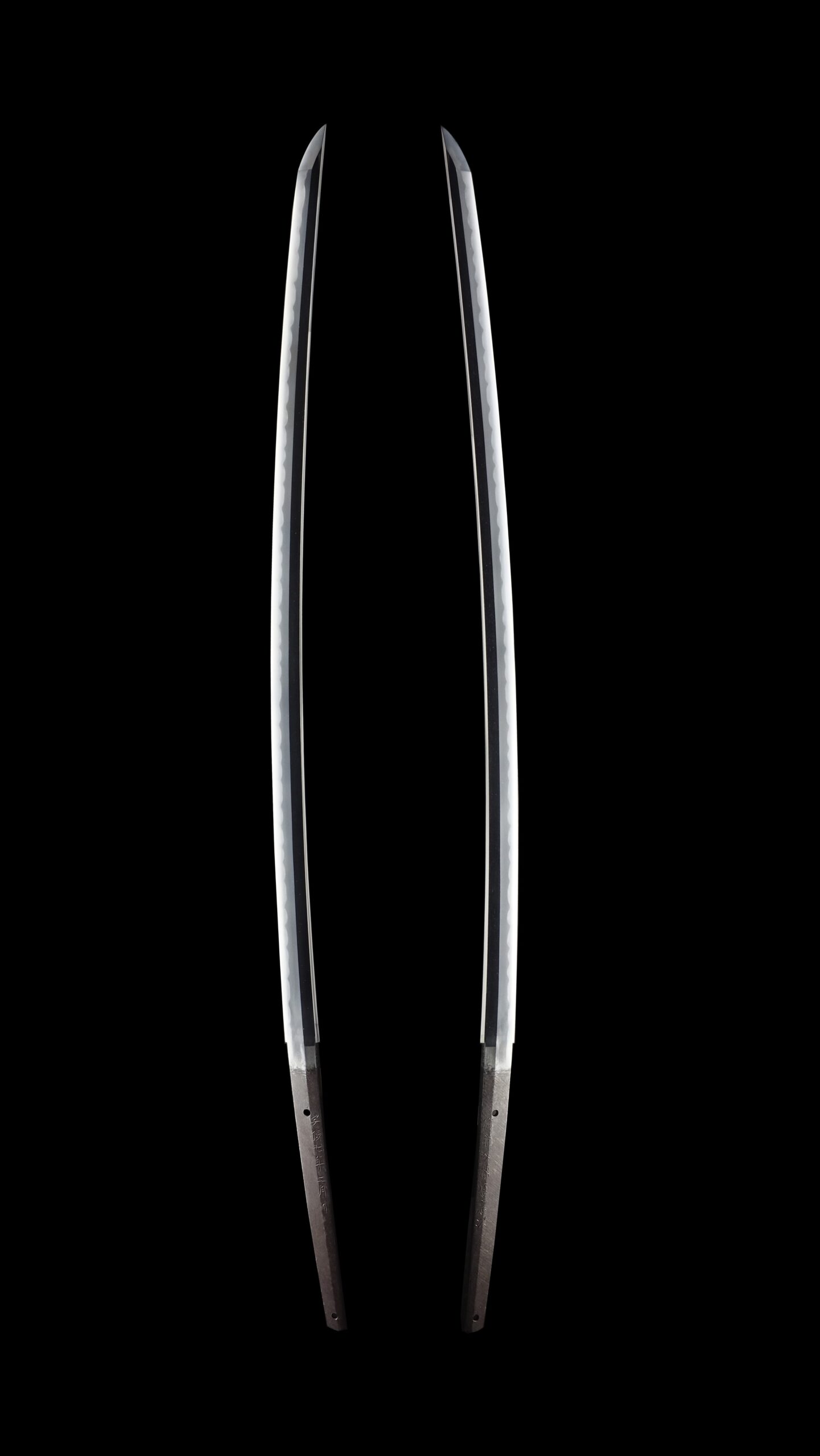
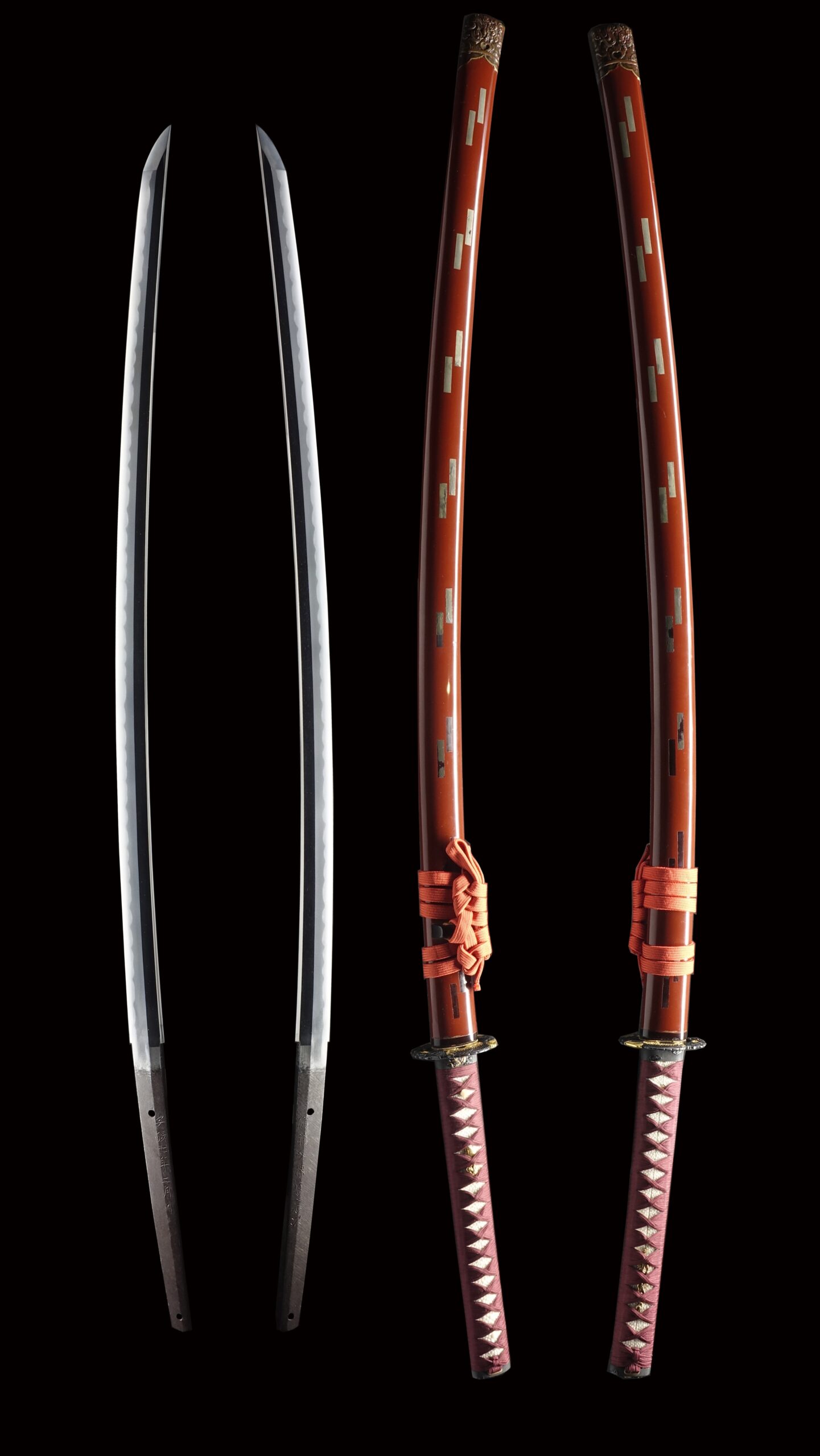
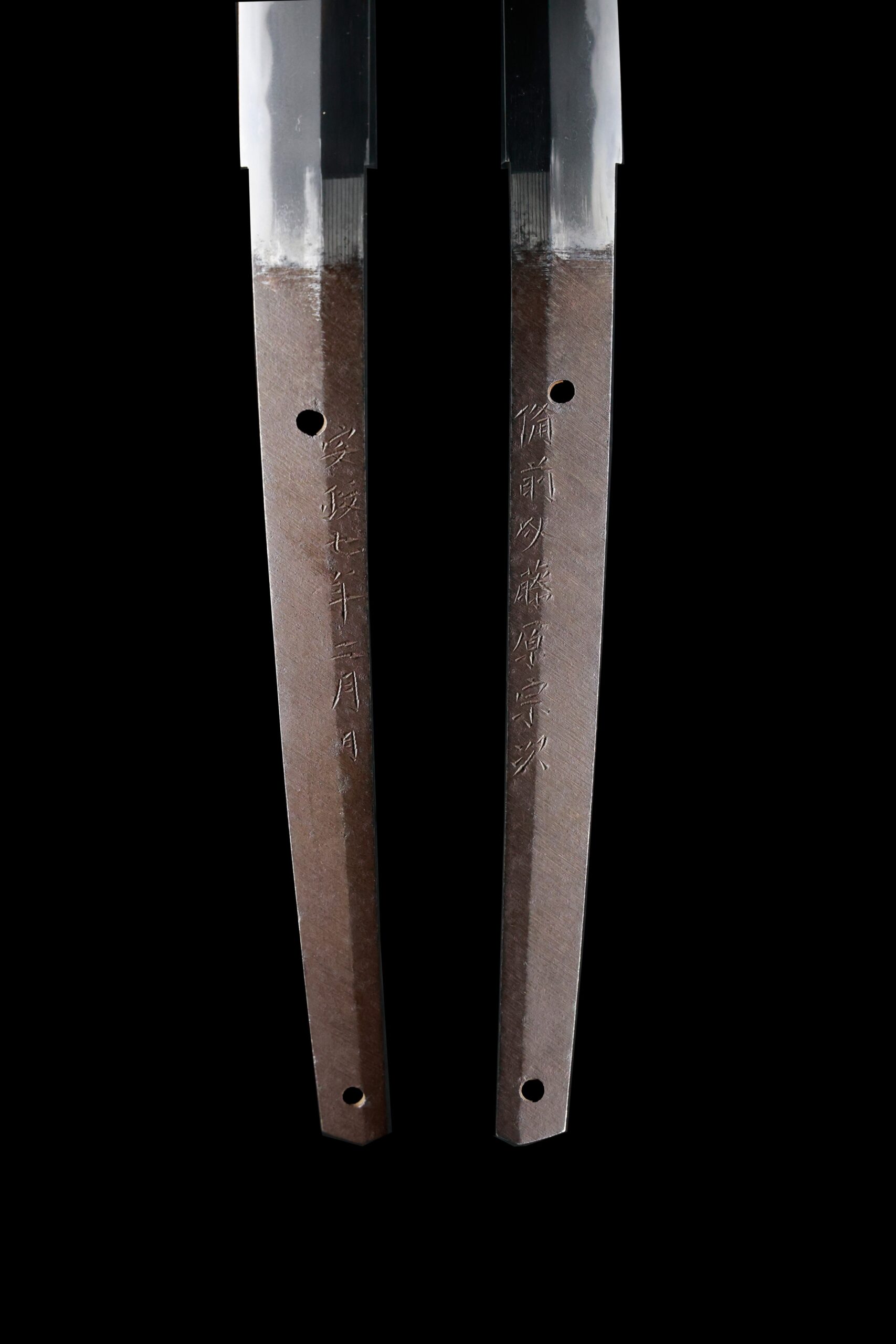
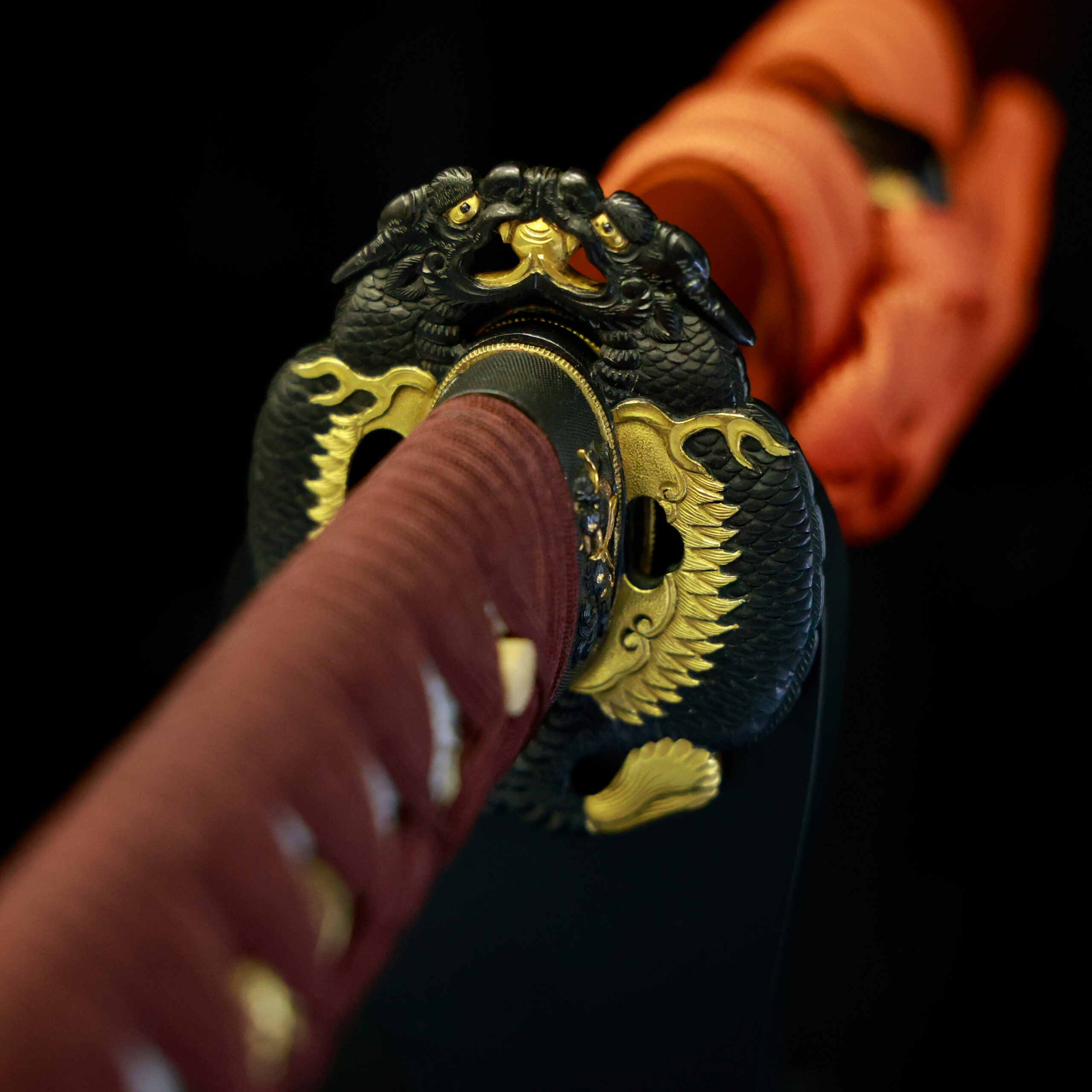
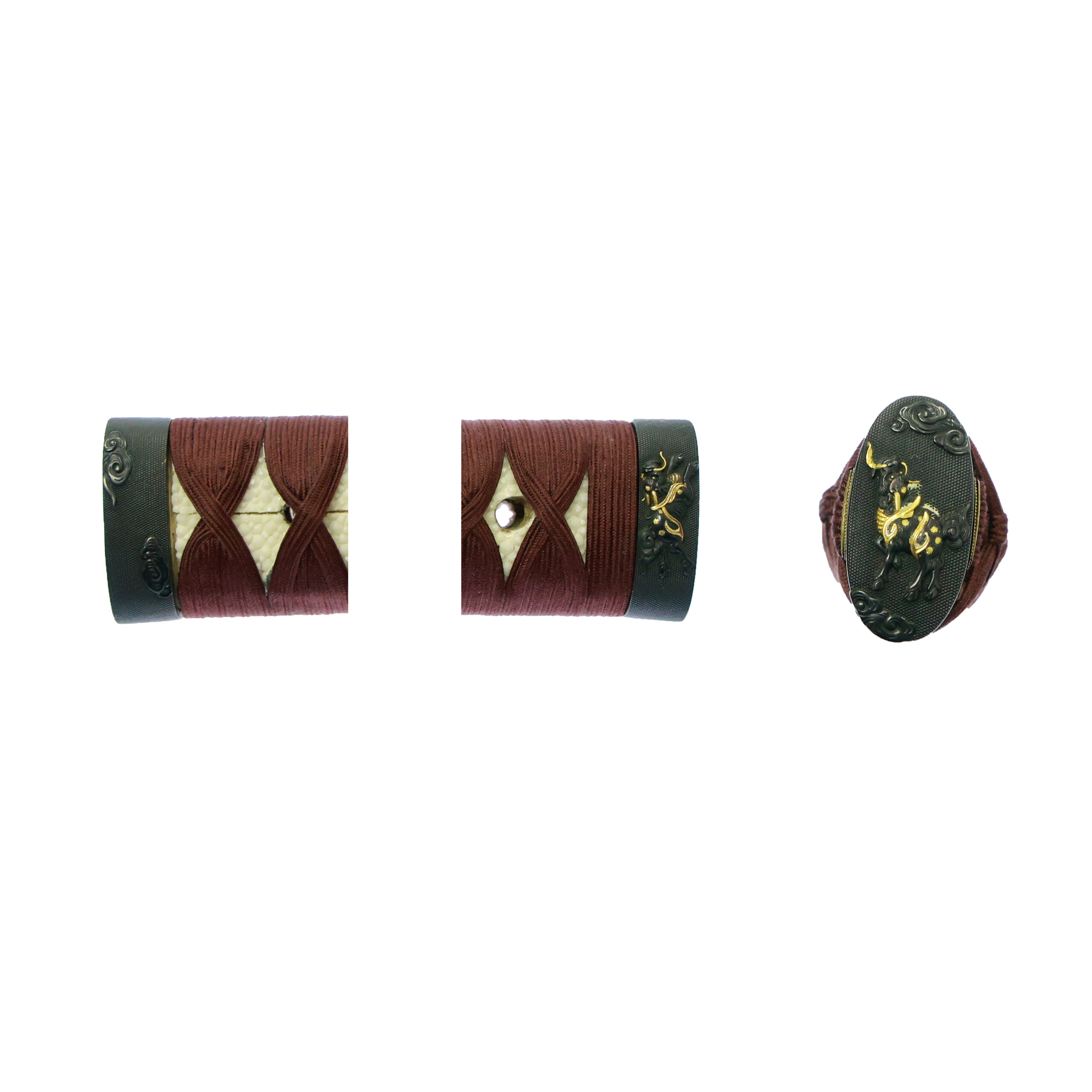
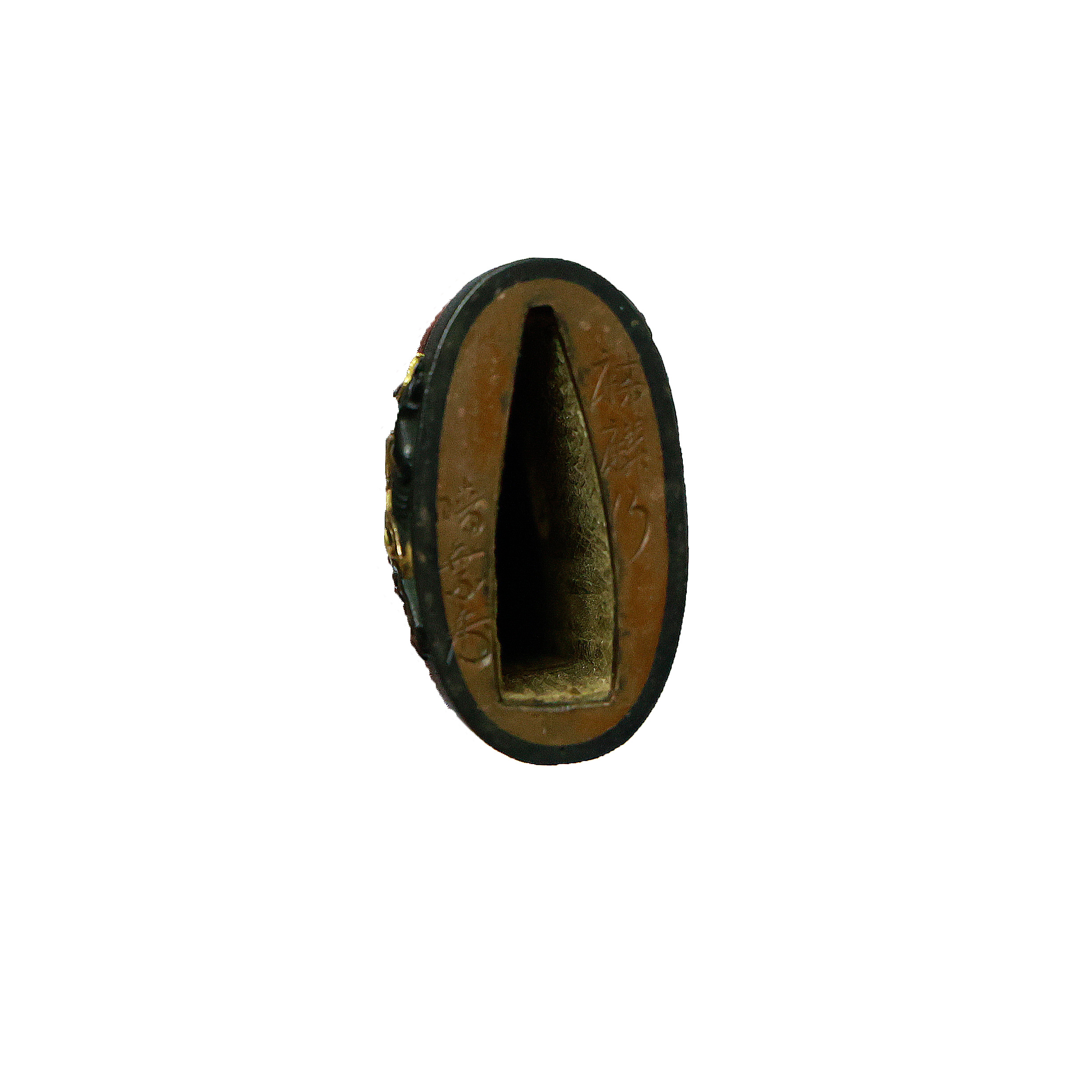
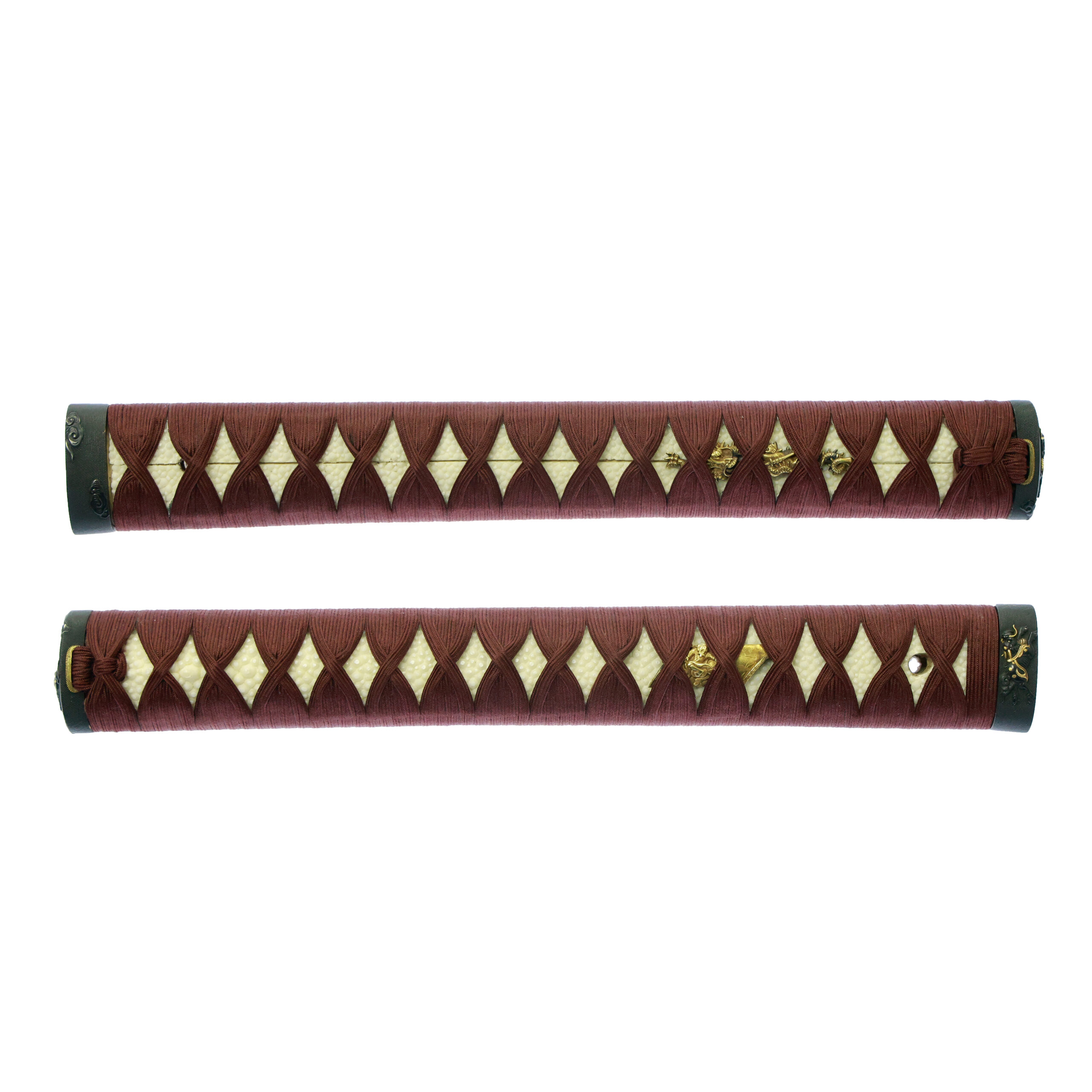
Koyama Munetsugu (shinshinto Bizen-den, Shirakawa / Edo) · 武蔵 · 1830-1870頃
藤代 Jo-jo saku · 刀剣大鑑 上位17%
現在7点販売中
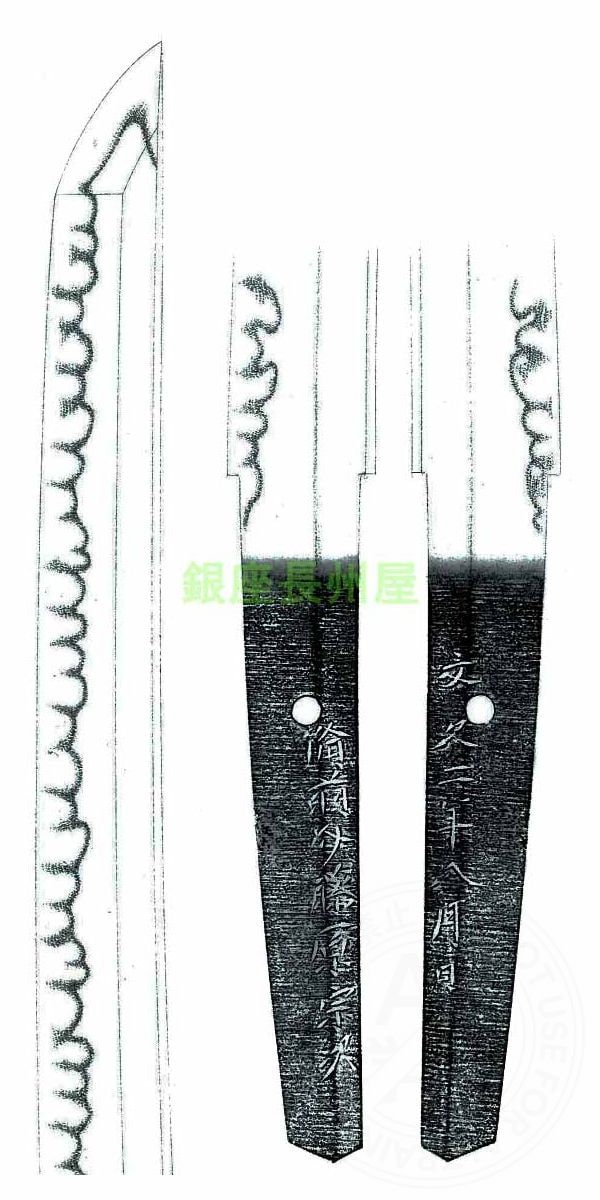
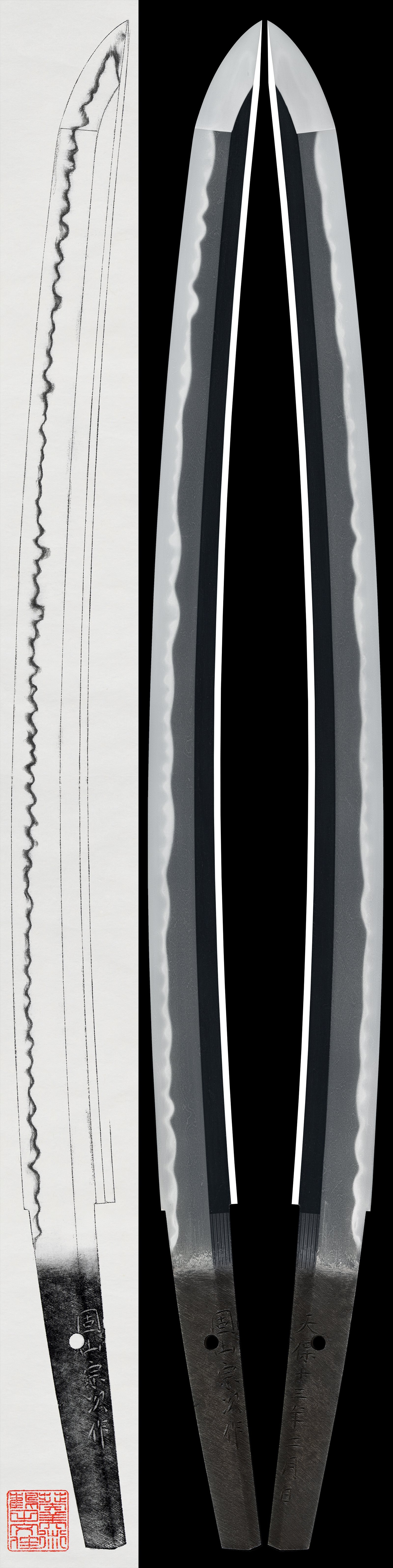
固山宗次は、享和三年に奥州白河に生まれ、俗名を宗兵衛、号を一専斎・精良斎といい、江戸時代の終わりに備前伝復古の第一人者となった。説明書は、その師は米沢の加藤綱英といわれると伝えつつ、その作風から勘案すれば「むしろ弟の加藤綱俊の影響力が大きい」[[c:1]]と慎重に付け加える。初め白河松平家に仕え、藩が移封されると勢州桑名藩の藩工となって江戸麻布永坂に住し、弘化二年に備前介を受領、文政後半から明治初年に至るまで作刀し、西山・固山・備前介藤原宗次など数様に銘を切った。その遺例は新々刀の工のうちでも甚だ多く、天保・嘉永・安政・慶応に亘って年紀が明らかであり、説明書はその作風が「作風は一貫して備前伝」[[c:2]]であったと評する。
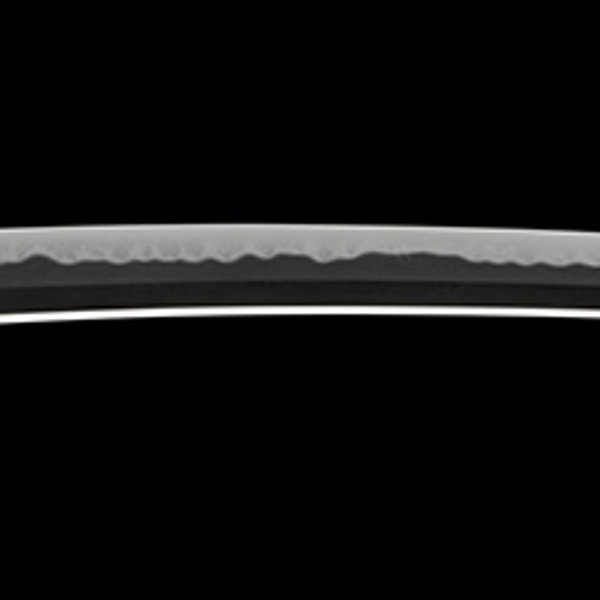
本工の特徴の手は備前風の丁子・互の目丁子で、その作を何よりも分かつ見どころである。丁子に互の目・尖りごころの刃・小丁子・小互の目を交え、足長くよく入り、説明書はこの作域を鎌倉の備前兼光に通うものとする。一貫して変わらず、彼が範を求めた古作と分かつのは匂口であって、匂勝ちに締まって明るく冴え、小沸よくつき、刃中の明るい点こそ極めの繰り返し挙げるところである。ある天保の刀を、最も華やかな調子に仕上げたものとして、説明書は「常にも増して華やかな丁子主調の乱れ刃に仕上げており」[[c:3]]と評し、匂口ふっくらとして柔らか味があり、刃中が明るいとする。
地鉄もまた終始変わらぬところである。常の地鉄はよくつんだ小板目で、細かに綺麗に鍛えて無地風に見えるほどであり、地沸細かにつき、時に細かな地景が入る。説明書はこの二つを併せて本工の成功を要約し、「地鉄のよくつんだ綺麗な鍛えに、匂勝ちの丁子乱れを焼いて成功している」[[c:4]]とする。つまり緊まって綺麗な地鉄に匂勝ちの丁子乱れを焼き上げた、というのである。帽子は乱れ込んで小丸に返り、時に先尖って掃きかけ、彫物はある場合棒樋に添樋、時に梵字・護摩箸・倶利迦羅や神号を伴う。
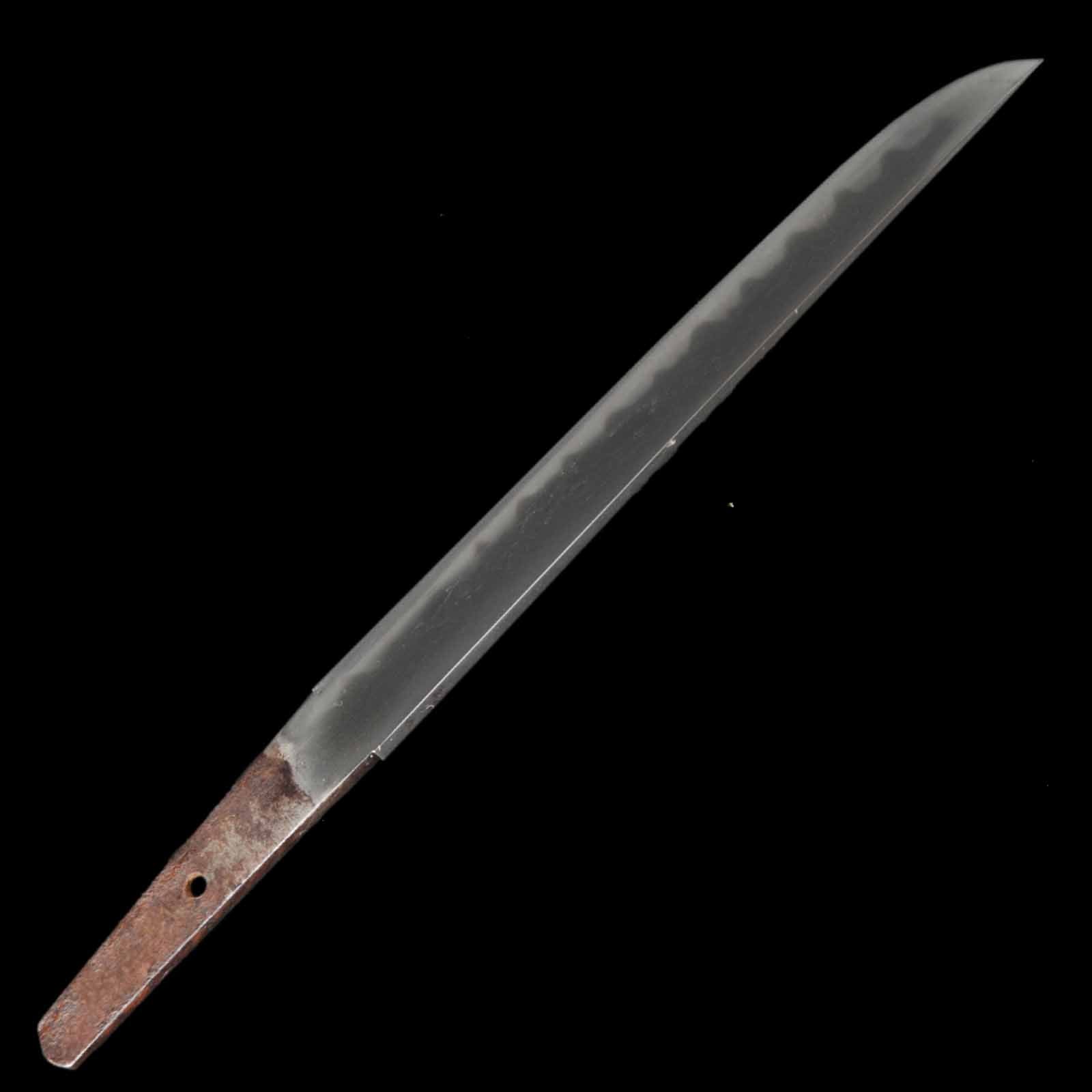
本流のかたわら、彼は意識的な写しの工でもあり、説明書はその写し物を直に記す。ある大小を写し物の典型とし、刀は末備前ことに与三左衛門尉祐定を、脇指は応永備前の盛光・光を写したもので、短い刀身に映りを出すことに成功しているとする。別の作域として、天保年間の幅広・長寸・大鋒の作があり、身幅広く重ね厚く、地鉄は常々の緊まった肌とは相違して、板目に杢・流れ肌を交えて肌立ち、地沸・地景が一段と力強い感を与え、説明書はこの態が天保の作にまま見るところとする。より静かな直刃・直刃調の小調子も残り、本工の手のうち最も稀なものである。在銘・年紀の明らかな工であるから、宗次をめぐる鑑賞の問いは極めにあらず、その出来の質にあり、師についても説明書は同じ正直さで、その手がむしろ加藤綱俊に負うところが大きいと記す。
彼の幕末における位置を示すのは、備前伝復古の完成度と、その刀身の記録の豊かさである。多くが千住などで試された山田家の截断銘を帯び、息義次がその一部に彫物を施した。一刀は予州宇和島藩主伊達宗城侯の命により、外国船の折れた桅の環鉄を以て鍛えられ、説明書はその銘文を「幕末史の上からも貴重」[[c:5]]とする。明るく締まった丁子乱れと、その下の無地風に近い小板目は、彼が写した鎌倉の手本の深く柔らかい匂口と分かち、新々刀の備前伝の工の筆頭に彼を据える。
収集の観点では、宗次は稀品というよりは在銘の豊かな名工である。藤代の極めは上々作。国宝はなく、重要文化財もない。記録の上の位置はもっぱら重要刀剣にあり、その作はよく代表され、幅広の丁子乱れの刀を本工の典型作・代表作とし、ことに匂深く匂口の明るいものを地刃ともに健全な優品とする。その作は美術館よりも来歴の明らかな手を経ており、記録される伝来は古河藩主、庄内藩家老松平親懐、宇和島の伊達宗城侯に及び、一口は鎌倉の荏柄神社に長く伝わった。多く作られて多く残り、いずれも取引の及ぶ級にあるため、出来のよい在銘・年紀の宗次は同格のいかなる名工よりも世に出ることが多く、記録の確かな、試し斬りまで備えた幕末備前伝の一刀を収集家が手にする、最も近づきやすい道の一つであり続けている。
宗次の位置づけを、日本刀全体および伝統・時代・時期ごとに示します。各位(随一・屈指・有数・著名)は、NBTHK および文化庁による指定に加え、三作や名物帳などの歴史的栄誉を加味したものです。
各項目を選ぶと評価方法が表示されます。
在銘年紀作が示す、確実に活動していた年代
新々刀 · 武蔵
現在16点販売中
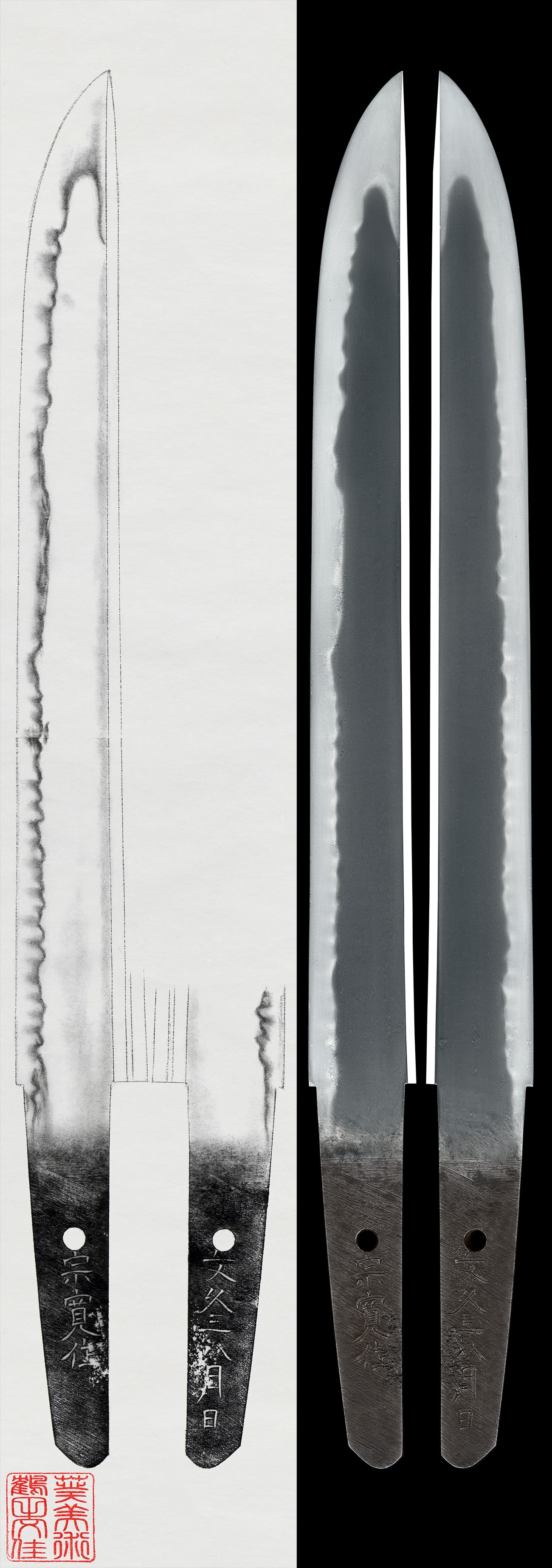
固山宗次は享和三年奥州白河に生まれ、俗名を宗兵衛(惣兵衛)といい、一専斎・精良斎と号した。兄に宗平・宗俊がいる。師は加藤綱英と伝えられるが、その作風から勘案すれば、むしろ加藤綱俊の影響力が大きいものと思われる。初めは白河松平家の抱え工であったが、藩が勢州桑名へ移封の後は、江戸に住して桑名藩工として作刀し、その居住地は麻布永坂であった。弘化二年に備前介を受領している。作刀期間は文政の後半から明治初年の頃までに亘り、その遺例は非常に多い。十九世紀中頃、新々刀の世にあって備前伝を一貫して標榜し、藩の庇護のもと奥州出身の一工が江戸において備前復古の作風を遂げた点に、本系の出発がある。門人の泰龍斎宗寛は文政初年に大野平蔵の子として奥州白河城下に生まれ、宗次を鍛刀の師とした。後に生まれ故郷の阿武隈川を姓に用いて阿武隈川宗寛と銘し、嘉永初年頃から下総国古河藩の抱え工となり、安政四年八月頃から銘を楷書体から隷書体へ改め、明治十六年一月に歿している。 作風は一貫して備前伝で、よくつんだ綺麗な鍛えに匂勝ちの丁子乱れを焼いて成功している。地鉄は小板目肌がよくつみ、ときに板目が総体に流れ、地沸が微塵に厚くつき、地景が細かに頻りに入り、淡く映り立つものがある。刃文は丁子・互の目丁子を基調に、小丁子・尖り刃・角ばる刃・小互の目など多種の刃を交え、足長くよく入り、匂勝ちに小沸つき、細かに砂流しや金筋がかかり、匂口が明るく冴える。見分けの要は、後期作に見る丁子の肩を並べて整然と焼いた型押し風の刃取りと、前期の天保年間に多い焼に高低のある変化に富んだ華やかな乱れとの差にあり、後者には沸の強くつくもの、肌目の立つ強い鍛えがまま見られる。帽子は乱れ込んで小丸、あるいは先がくびれて地蔵風に丸く返るものがあり、同工独特の見どころとされる。截断銘を伴う作が多く、千住での試し斬りに係り、伊賀乗重・山田浅右衛門・後藤新太郎・後藤利義らの名が銘に見える。門系には宗寛のほか、截断銘に名の挙がる舞鶴友英、また「宗」字を用い茎の鑢目を切りとする点から弟子と推される金剛斎宗弘がいる。 鑑定の要は、新々刀期の身幅広く重ね厚く大鋒に結んだ豪壮な姿に、明るく冴えた備前伝の丁子乱れを焼く点にあり、前期は変化に富み、後期は小模様の刃が連れて型押し風となる作域の推移を押さえることにある。代表作には、楠正成所持と伝える国宝小龍景光を生ぶの状態に再現して写し、門弟宗寛が倶利伽羅と長梵字を彫った弘化四年の一口があり、宗次が末備前・応永備前に倣う備前物を多く遺したことを示す。また相州荏柄天満宮の社宝たる正宗庖丁を写し、金工東龍斎清寿が本歌同様の彫を加えた天保十一年の奉納脇指は、江戸の両巨匠の合作として稀有であり、宗弘の同手の写しも存する。截断銘に見える伊賀乗重は尾張藩付家老成瀬家の臣で、様斬の技を山田浅右衛門に、鍛刀の技を固山宗次・泰龍斎宗寛・舞鶴友英に習い、幕末の武家目利き四天王の一人に数えられた人物である。江戸にあって備前丁子を復興し、多くの遺例と確かな技倆を伝えた本系は、新々刀備前伝の一典型として位置づけられる。 詳しく見る →
幕末 最後の需要
1853年のペリー来航は徳川の泰平をほどき、二世紀ぶりに実用刀の大量需要を生んだ。四谷正宗と呼ばれた清麿はその前夜に世を去り、宗次や行秀が最後の好況を担った。
特別保存刀剣の中から、特に出来が優れ、国認定の重要美術品に準ずると判断された名品です。年に一度の重要刀剣審査で選ばれます。
極めて選別的で、日本に登録された約250万口の刀剣のうち、重要刀剣に達したものは12,307口(約203口に1口)にすぎません。
日本美術刀剣保存協会(NBTHK)は、1948年に設立され、文化庁の監督を受ける公益財団法人で、東京・刀剣博物館に本部を置きます。専門の審査員が出品作を直接審査し、美術的・歴史的価値に応じた鑑定書を発行します。NBTHKの鑑定書は、日本刀および刀装具の真正性を示す最も広く認知された基準です。
NBTHK公式サイトReturns/exchanges limited to defects caused by shipping (except willful misconduct or gross negligence by the company); customers must contact within 72 hours of receiving the product.
日本刀 備前介藤原宗次 安政七年庚申二月日 日本美術刀剣保存協会(NBTHK)重要刀剣指定品 【解説】 本作は安政七年(1860年)、幕末期に備前介藤原宗次によって打たれた一振りです。宗次は本名を固山宗兵衛といい、享和二年(1802年)に陸奥国白河(現在の福島県)にて固山宗平の三男として生まれました。作刀の技術は当初、加藤綱英に学び、後にその実弟である長運斎綱俊の門に入ってさらなる研鑽を積んだと伝えられています。 宗次は当初、白河松平家の藩工として仕えました。松平家の桑名(現在の三重県)転封に伴い、宗次も同地の藩工となりますが、弘化二年(1845年)からは江戸に定住して作刀に励みました。本作もその歴史的背景から、江戸にて製作されたものと考えられます。 江戸に移住した同年、宗次は「備前介」の受領銘を許されました。その作風は五箇伝の一つである「備前伝」を範としており、特に備前伝の大きな特徴である丁子乱れや互の目乱れの華やかな刃文を得意としました。天保から明治初期にかけて活躍した宗次は、幕末における備前伝の第一人者として揺るぎない地位を築いています。 また、宗次は幕末の江戸において最も高名かつ人気のあった刀工の一人です。その作品は極めて斬れ味が鋭いことで知られ、数多くの試斬銘(試し斬りの記録)が残されていることからも、実戦的な威力が証明されています。彼は藩の要求に応えるべく、実用性を追求した鋭い刀剣の研究に余念がなく、七代目山田浅右衛門(「懐宝剣尺」の著者であり試斬の達人)に師事して斬れ味の研究を重ねた記録も残っています。その卓越した技量は、大名家や幕末の志士たちからも高く評価されました。今日においても、水心子正秀や大慶直胤といった新々刀の巨匠たちに比肩する名工として、愛刀家や専門家の間で極めて高く評価されています。 【鑑定】 本作は、日本美術刀剣保存協会(NBTHK)により「重要刀剣」に指定されています。重要刀剣とは、保存状態が極めて良好であり、かつ美術的価値が特に高いと認められた真作の日本刀にのみ与えられる称号です。特別保存刀剣の上位ランクに位置し、重要刀剣の指定を受けるには厳格な審査を通過する必要があります。現存する刀剣の中でも重要刀剣に指定されるものは極めて稀であり、コレクターの間でも垂涎の的となっています。 【刀身諸元】 長さ(Nagasa):76.2 cm(二尺五寸一分) 反り(Sori):1.8 cm 刃文(Hamon):焼入れによって刃先に現れる結晶構造。 地鉄(Jihada):折り返し鍛錬によって現れる鋼の表面模様。 切先(Kissaki):刀身の先端部分。 茎(Nakago):柄に収まる持ち手にあたる部分。 日本刀の茎には、赤錆を防ぐために意図的に「黒錆」が残されます。この茎の錆色や経年変化は、専門家が製作年代を特定するための重要な指標となります。 拵(Koshirae):鞘、柄、鍔など、刀身を収めるための外装一式。
NihontoWatchKoyama Munetsugu (shinshinto Bizen-den, Shirakawa / Edo) · 武蔵 · 1830-1870頃
藤代 Jo-jo saku · 刀剣大鑑 上位17%
現在7点販売中
固山宗次は、享和三年に奥州白河に生まれ、俗名を宗兵衛、号を一専斎・精良斎といい、江戸時代の終わりに備前伝復古の第一人者となった。説明書は、その師は米沢の加藤綱英といわれると伝えつつ、その作風から勘案すれば「むしろ弟の加藤綱俊の影響力が大きい」[[c:1]]と慎重に付け加える。初め白河松平家に仕え、藩が移封されると勢州桑名藩の藩工となって江戸麻布永坂に住し、弘化二年に備前介を受領、文政後半から明治初年に至るまで作刀し、西山・固山・備前介藤原宗次など数様に銘を切った。その遺例は新々刀の工のうちでも甚だ多く、天保・嘉永・安政・慶応に亘って年紀が明らかであり、説明書はその作風が「作風は一貫して備前伝」[[c:2]]であったと評する。
本工の特徴の手は備前風の丁子・互の目丁子で、その作を何よりも分かつ見どころである。丁子に互の目・尖りごころの刃・小丁子・小互の目を交え、足長くよく入り、説明書はこの作域を鎌倉の備前兼光に通うものとする。一貫して変わらず、彼が範を求めた古作と分かつのは匂口であって、匂勝ちに締まって明るく冴え、小沸よくつき、刃中の明るい点こそ極めの繰り返し挙げるところである。ある天保の刀を、最も華やかな調子に仕上げたものとして、説明書は「常にも増して華やかな丁子主調の乱れ刃に仕上げており」[[c:3]]と評し、匂口ふっくらとして柔らか味があり、刃中が明るいとする。
地鉄もまた終始変わらぬところである。常の地鉄はよくつんだ小板目で、細かに綺麗に鍛えて無地風に見えるほどであり、地沸細かにつき、時に細かな地景が入る。説明書はこの二つを併せて本工の成功を要約し、「地鉄のよくつんだ綺麗な鍛えに、匂勝ちの丁子乱れを焼いて成功している」[[c:4]]とする。つまり緊まって綺麗な地鉄に匂勝ちの丁子乱れを焼き上げた、というのである。帽子は乱れ込んで小丸に返り、時に先尖って掃きかけ、彫物はある場合棒樋に添樋、時に梵字・護摩箸・倶利迦羅や神号を伴う。
本流のかたわら、彼は意識的な写しの工でもあり、説明書はその写し物を直に記す。ある大小を写し物の典型とし、刀は末備前ことに与三左衛門尉祐定を、脇指は応永備前の盛光・光を写したもので、短い刀身に映りを出すことに成功しているとする。別の作域として、天保年間の幅広・長寸・大鋒の作があり、身幅広く重ね厚く、地鉄は常々の緊まった肌とは相違して、板目に杢・流れ肌を交えて肌立ち、地沸・地景が一段と力強い感を与え、説明書はこの態が天保の作にまま見るところとする。より静かな直刃・直刃調の小調子も残り、本工の手のうち最も稀なものである。在銘・年紀の明らかな工であるから、宗次をめぐる鑑賞の問いは極めにあらず、その出来の質にあり、師についても説明書は同じ正直さで、その手がむしろ加藤綱俊に負うところが大きいと記す。
彼の幕末における位置を示すのは、備前伝復古の完成度と、その刀身の記録の豊かさである。多くが千住などで試された山田家の截断銘を帯び、息義次がその一部に彫物を施した。一刀は予州宇和島藩主伊達宗城侯の命により、外国船の折れた桅の環鉄を以て鍛えられ、説明書はその銘文を「幕末史の上からも貴重」[[c:5]]とする。明るく締まった丁子乱れと、その下の無地風に近い小板目は、彼が写した鎌倉の手本の深く柔らかい匂口と分かち、新々刀の備前伝の工の筆頭に彼を据える。
収集の観点では、宗次は稀品というよりは在銘の豊かな名工である。藤代の極めは上々作。国宝はなく、重要文化財もない。記録の上の位置はもっぱら重要刀剣にあり、その作はよく代表され、幅広の丁子乱れの刀を本工の典型作・代表作とし、ことに匂深く匂口の明るいものを地刃ともに健全な優品とする。その作は美術館よりも来歴の明らかな手を経ており、記録される伝来は古河藩主、庄内藩家老松平親懐、宇和島の伊達宗城侯に及び、一口は鎌倉の荏柄神社に長く伝わった。多く作られて多く残り、いずれも取引の及ぶ級にあるため、出来のよい在銘・年紀の宗次は同格のいかなる名工よりも世に出ることが多く、記録の確かな、試し斬りまで備えた幕末備前伝の一刀を収集家が手にする、最も近づきやすい道の一つであり続けている。
宗次の位置づけを、日本刀全体および伝統・時代・時期ごとに示します。各位(随一・屈指・有数・著名)は、NBTHK および文化庁による指定に加え、三作や名物帳などの歴史的栄誉を加味したものです。
各項目を選ぶと評価方法が表示されます。
在銘年紀作が示す、確実に活動していた年代
新々刀 · 武蔵
現在16点販売中
固山宗次は享和三年奥州白河に生まれ、俗名を宗兵衛(惣兵衛)といい、一専斎・精良斎と号した。兄に宗平・宗俊がいる。師は加藤綱英と伝えられるが、その作風から勘案すれば、むしろ加藤綱俊の影響力が大きいものと思われる。初めは白河松平家の抱え工であったが、藩が勢州桑名へ移封の後は、江戸に住して桑名藩工として作刀し、その居住地は麻布永坂であった。弘化二年に備前介を受領している。作刀期間は文政の後半から明治初年の頃までに亘り、その遺例は非常に多い。十九世紀中頃、新々刀の世にあって備前伝を一貫して標榜し、藩の庇護のもと奥州出身の一工が江戸において備前復古の作風を遂げた点に、本系の出発がある。門人の泰龍斎宗寛は文政初年に大野平蔵の子として奥州白河城下に生まれ、宗次を鍛刀の師とした。後に生まれ故郷の阿武隈川を姓に用いて阿武隈川宗寛と銘し、嘉永初年頃から下総国古河藩の抱え工となり、安政四年八月頃から銘を楷書体から隷書体へ改め、明治十六年一月に歿している。 作風は一貫して備前伝で、よくつんだ綺麗な鍛えに匂勝ちの丁子乱れを焼いて成功している。地鉄は小板目肌がよくつみ、ときに板目が総体に流れ、地沸が微塵に厚くつき、地景が細かに頻りに入り、淡く映り立つものがある。刃文は丁子・互の目丁子を基調に、小丁子・尖り刃・角ばる刃・小互の目など多種の刃を交え、足長くよく入り、匂勝ちに小沸つき、細かに砂流しや金筋がかかり、匂口が明るく冴える。見分けの要は、後期作に見る丁子の肩を並べて整然と焼いた型押し風の刃取りと、前期の天保年間に多い焼に高低のある変化に富んだ華やかな乱れとの差にあり、後者には沸の強くつくもの、肌目の立つ強い鍛えがまま見られる。帽子は乱れ込んで小丸、あるいは先がくびれて地蔵風に丸く返るものがあり、同工独特の見どころとされる。截断銘を伴う作が多く、千住での試し斬りに係り、伊賀乗重・山田浅右衛門・後藤新太郎・後藤利義らの名が銘に見える。門系には宗寛のほか、截断銘に名の挙がる舞鶴友英、また「宗」字を用い茎の鑢目を切りとする点から弟子と推される金剛斎宗弘がいる。 鑑定の要は、新々刀期の身幅広く重ね厚く大鋒に結んだ豪壮な姿に、明るく冴えた備前伝の丁子乱れを焼く点にあり、前期は変化に富み、後期は小模様の刃が連れて型押し風となる作域の推移を押さえることにある。代表作には、楠正成所持と伝える国宝小龍景光を生ぶの状態に再現して写し、門弟宗寛が倶利伽羅と長梵字を彫った弘化四年の一口があり、宗次が末備前・応永備前に倣う備前物を多く遺したことを示す。また相州荏柄天満宮の社宝たる正宗庖丁を写し、金工東龍斎清寿が本歌同様の彫を加えた天保十一年の奉納脇指は、江戸の両巨匠の合作として稀有であり、宗弘の同手の写しも存する。截断銘に見える伊賀乗重は尾張藩付家老成瀬家の臣で、様斬の技を山田浅右衛門に、鍛刀の技を固山宗次・泰龍斎宗寛・舞鶴友英に習い、幕末の武家目利き四天王の一人に数えられた人物である。江戸にあって備前丁子を復興し、多くの遺例と確かな技倆を伝えた本系は、新々刀備前伝の一典型として位置づけられる。 詳しく見る →
幕末 最後の需要
1853年のペリー来航は徳川の泰平をほどき、二世紀ぶりに実用刀の大量需要を生んだ。四谷正宗と呼ばれた清麿はその前夜に世を去り、宗次や行秀が最後の好況を担った。
特別保存刀剣の中から、特に出来が優れ、国認定の重要美術品に準ずると判断された名品です。年に一度の重要刀剣審査で選ばれます。
極めて選別的で、日本に登録された約250万口の刀剣のうち、重要刀剣に達したものは12,307口(約203口に1口)にすぎません。
日本美術刀剣保存協会(NBTHK)は、1948年に設立され、文化庁の監督を受ける公益財団法人で、東京・刀剣博物館に本部を置きます。専門の審査員が出品作を直接審査し、美術的・歴史的価値に応じた鑑定書を発行します。NBTHKの鑑定書は、日本刀および刀装具の真正性を示す最も広く認知された基準です。
NBTHK公式サイトReturns/exchanges limited to defects caused by shipping (except willful misconduct or gross negligence by the company); customers must contact within 72 hours of receiving the product.

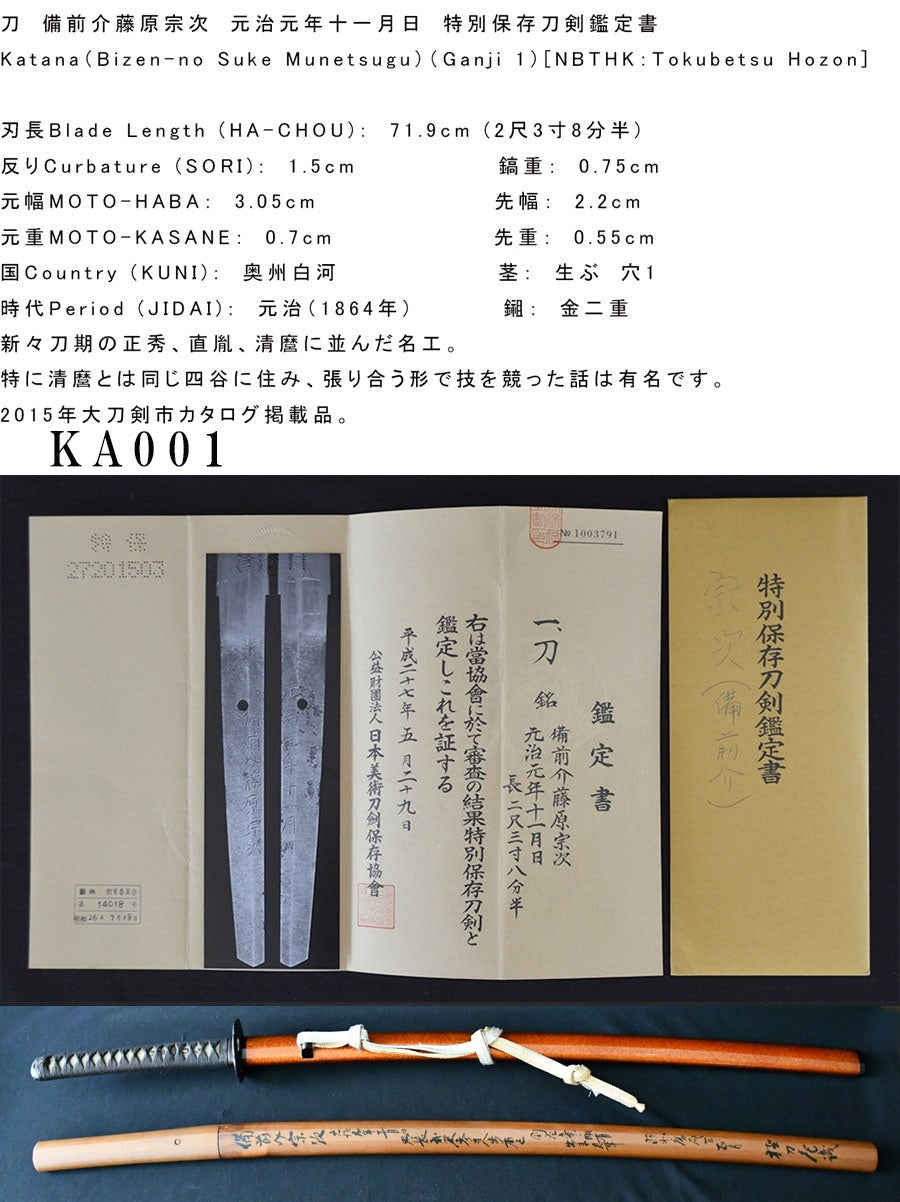
![Katana - Jūyō - 作 宗次 - 刀[固山宗兵衛宗次]重要刀剣(日本美術刀剣保存協会)](/_next/image?url=https%3A%2F%2Fitbhfhyptogxcjbjfzwx.supabase.co%2Fstorage%2Fv1%2Fobject%2Fpublic%2Flisting-images%2Fworld-seiyudo%2FL31361%2F00.jpg&w=2560&q=90)
![Tanto - Tokuho - 作 宗次 - 寸延短刀[備前介宗次(固山宗次)][日本美術刀剣保存協会]特別保存刀剣](/_next/image?url=https%3A%2F%2Fitbhfhyptogxcjbjfzwx.supabase.co%2Fstorage%2Fv1%2Fobject%2Fpublic%2Flisting-images%2Fworld-seiyudo%2FL73468%2F00.jpg&w=2560&q=90)

![Tanto - Tokuho - 作 宗次 - 短刀[備前介宗次(固山宗次)][日本美術刀剣保存協会]特別保存刀剣](/_next/image?url=https%3A%2F%2Fitbhfhyptogxcjbjfzwx.supabase.co%2Fstorage%2Fv1%2Fobject%2Fpublic%2Flisting-images%2Fworld-seiyudo%2FL31489%2F00.jpg&w=2560&q=90)



![Katana - Tokuho - 作 宗次 - 刀[備前介宗次(固山宗次)][日本美術刀剣保存協会]特別保存刀剣](/_next/image?url=https%3A%2F%2Fitbhfhyptogxcjbjfzwx.supabase.co%2Fstorage%2Fv1%2Fobject%2Fpublic%2Flisting-images%2Fworld-seiyudo%2FL31653%2F00.jpg&w=2560&q=90)