新刀の時代は、その大部分が京都で発明された。埋忠明寿の工房が運動を育て、堀川国広が一世代を鍛え、鎚を持たぬ本阿弥家が名刀の意味を司った。
 NihontoWatchNihontoWatch
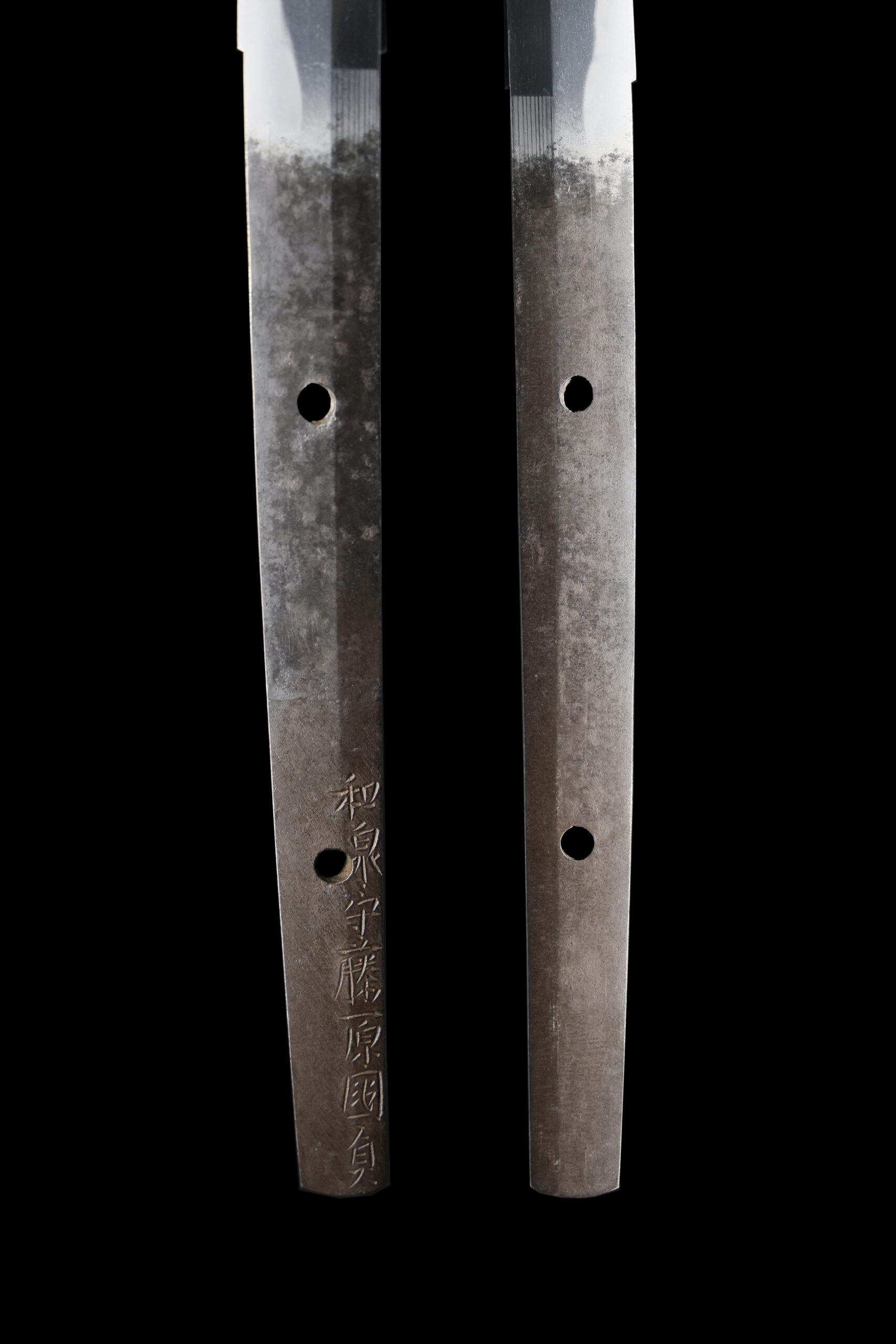
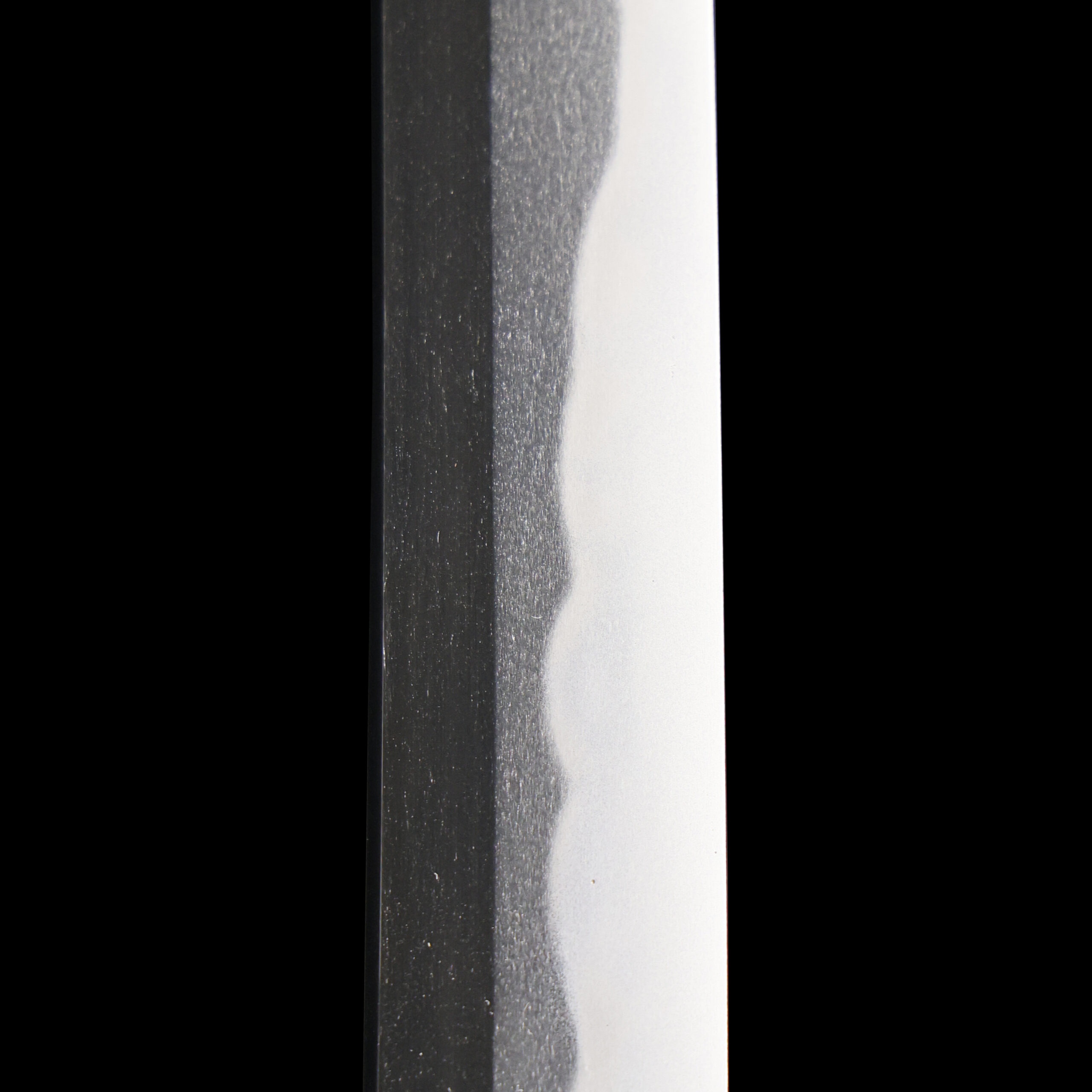
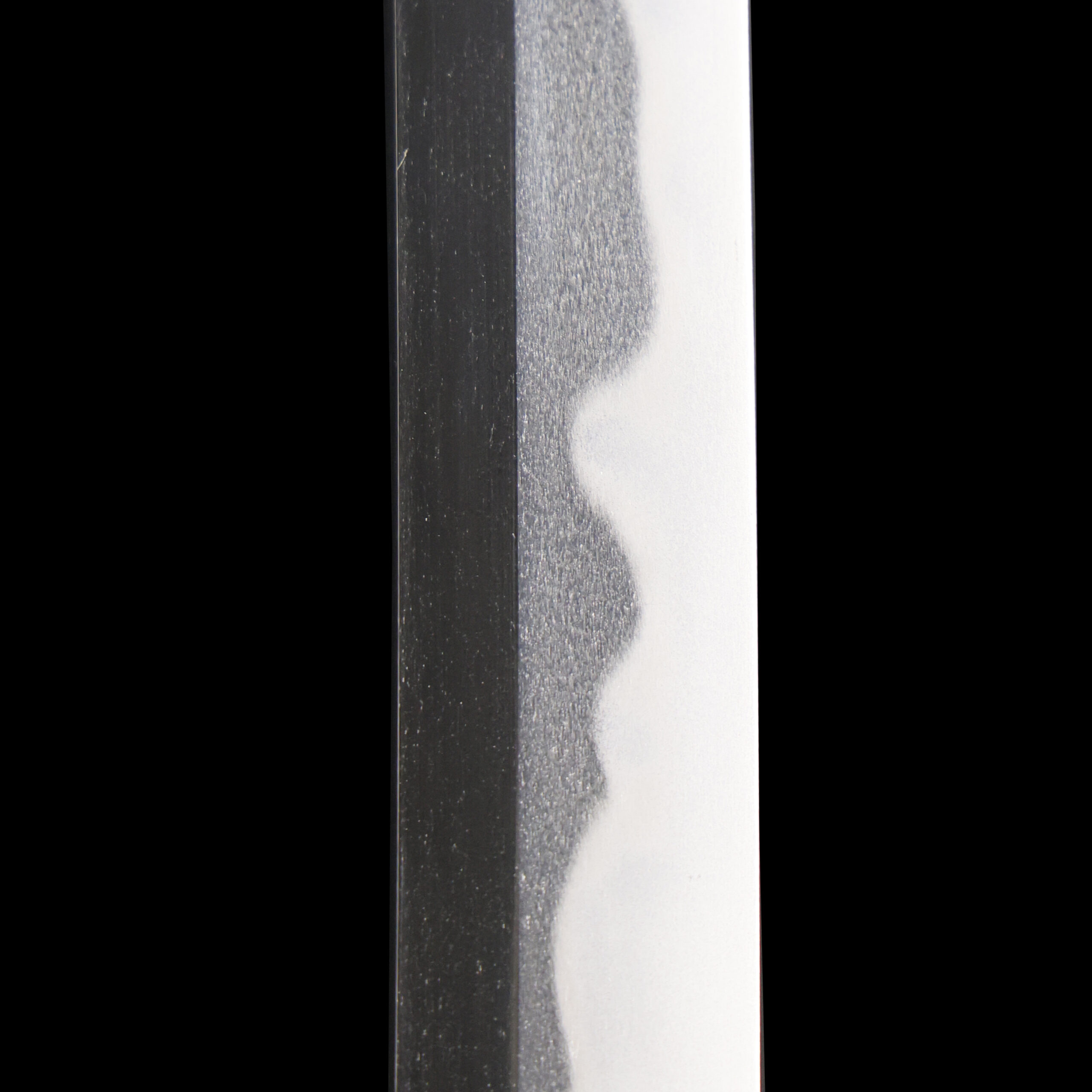
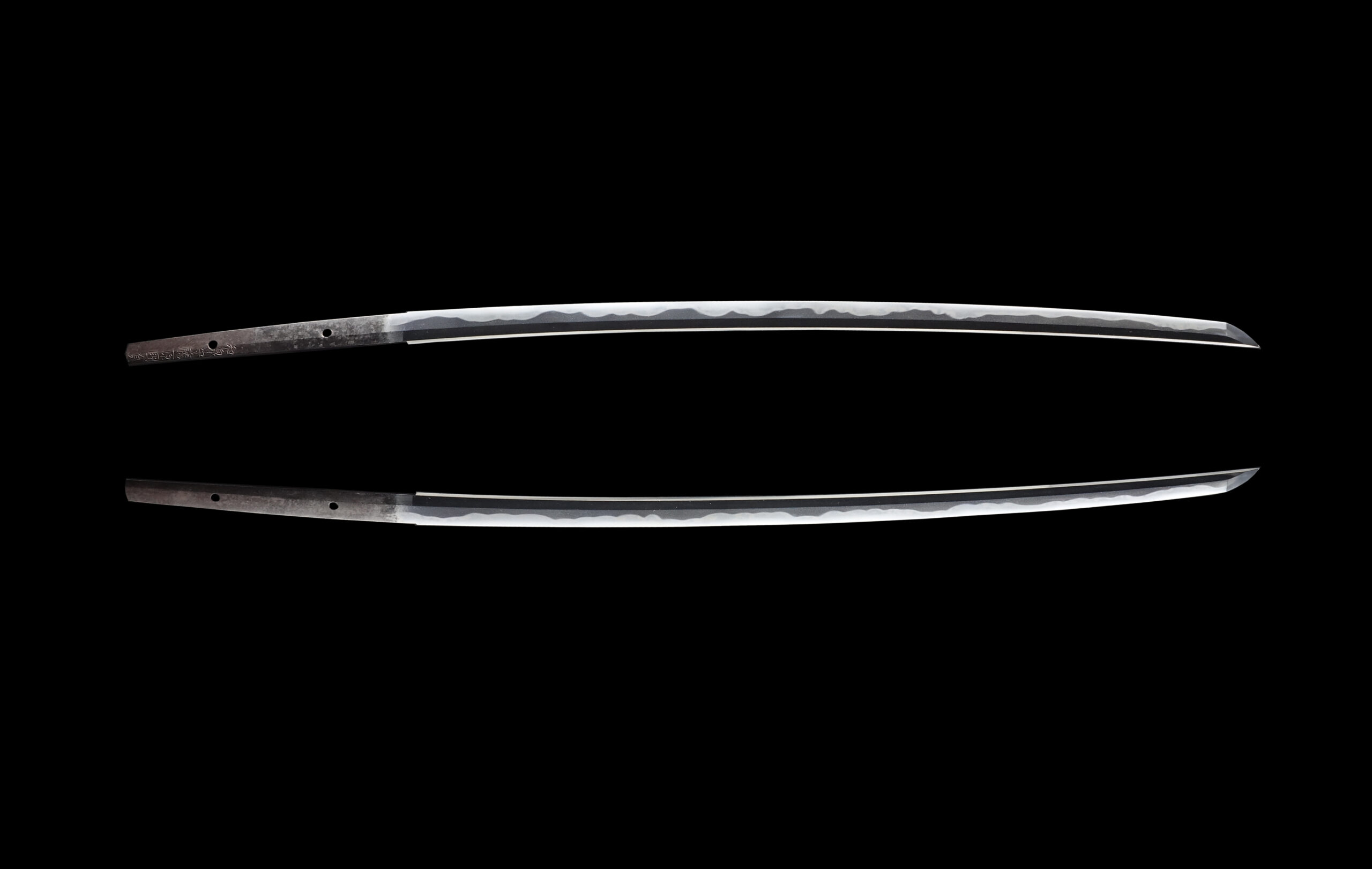
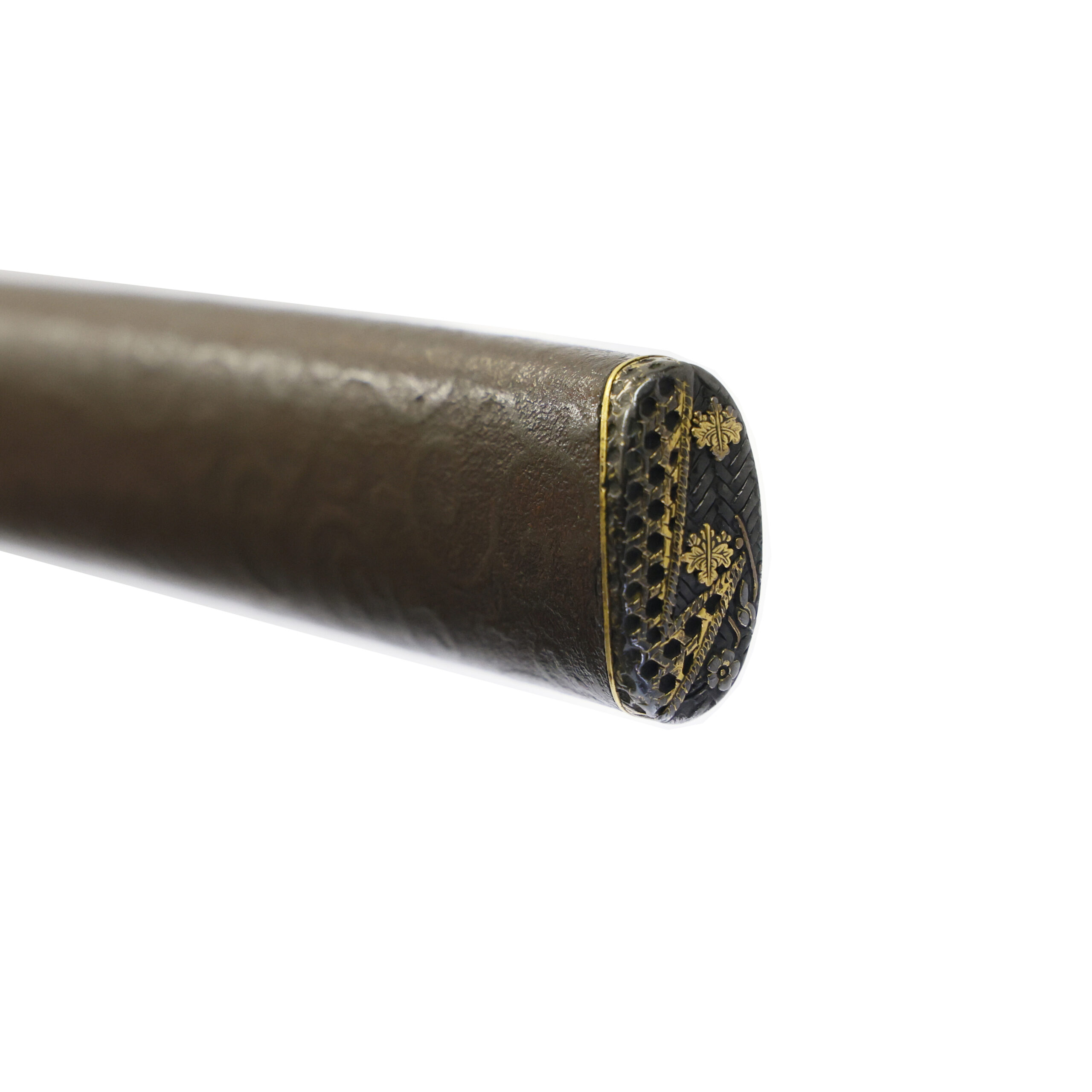
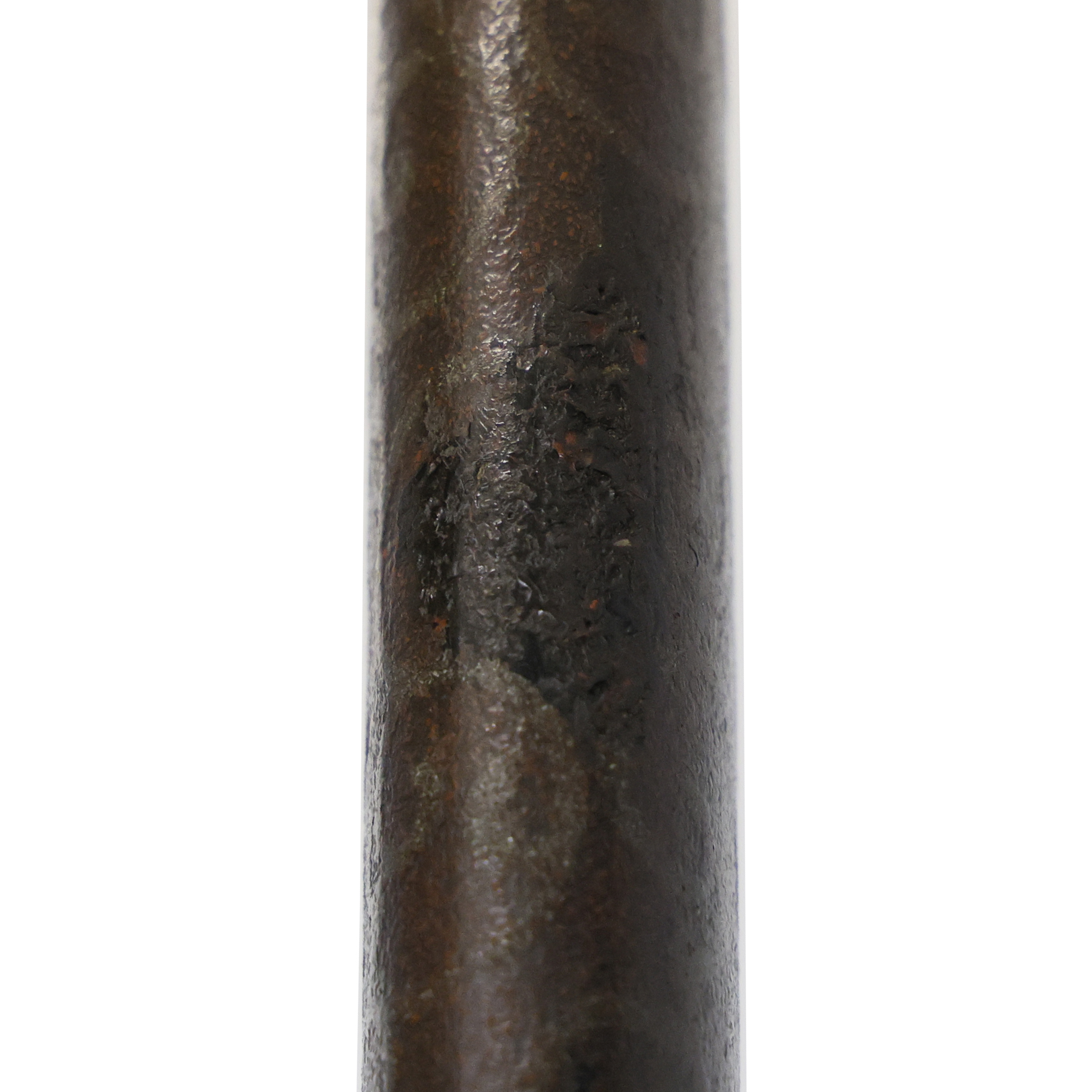
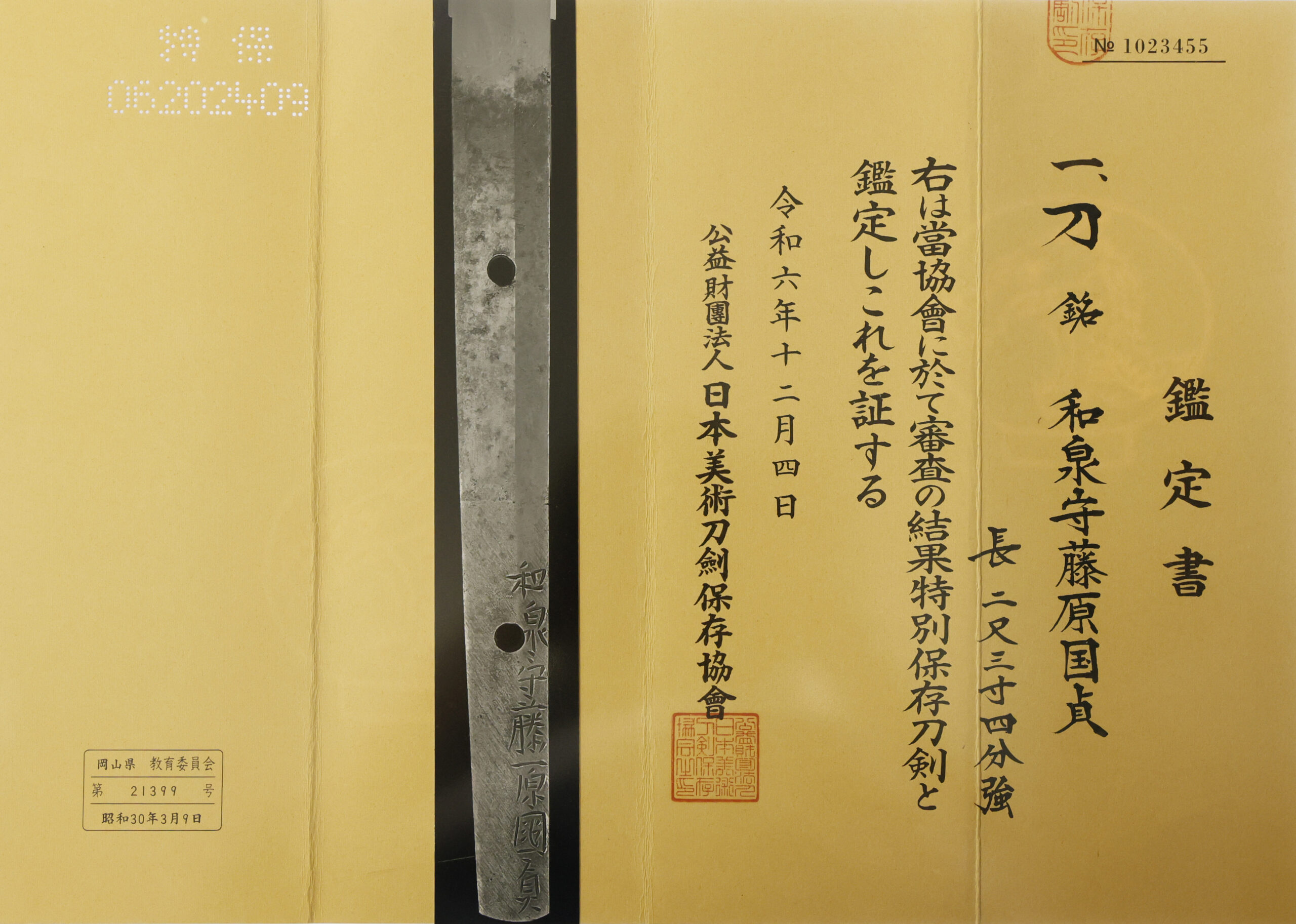
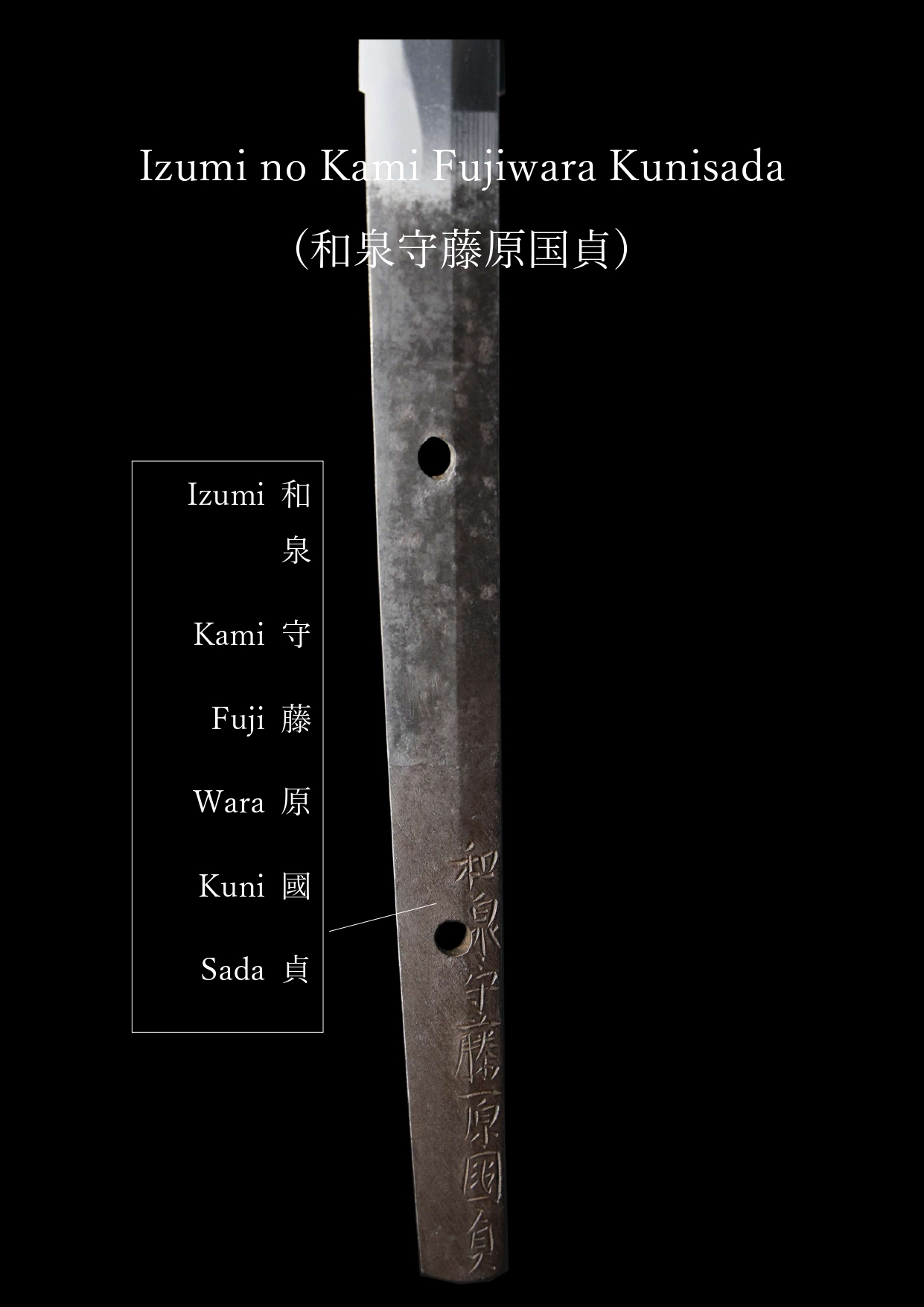
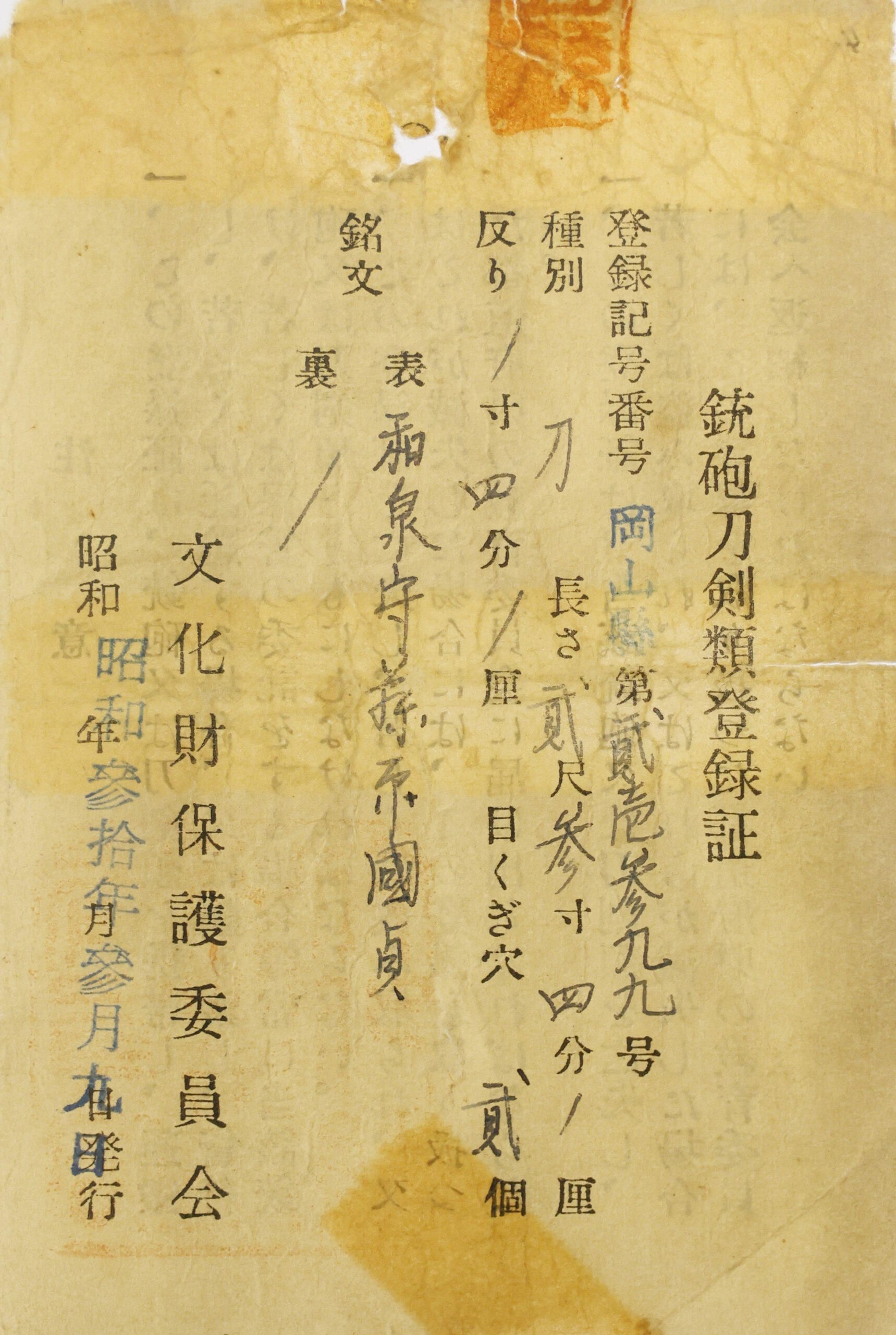
The first& second-gen Izumi no Kami Kunisada This blade was signed by Izumi no Kami Fujiwara Kunisada (和泉守藤原国貞), who was especially active during the early Edo period in Settsu province (today’s Osaka). The maker’s name, Kunisada, lasted the two generations. While NBTHK doesn’t mention which Kunisada forged this blade. The first-gen Kunisada, also known as Inoue Yoshihiro, was born in the 17th year of the Tensho era (1589) in the southern part of Miyazaki prefecture (Kyushu island). Later on, he moved to Kyoto and became an apprentice of Horikawa Kunihiro, one of the most famous swordsmiths in the early Edo period(early 17th century). He also learned the sword-forging technique from a senior apprentice, Echigo no Kami Kunitomo. Kunisada moved to Osaka in 1620 after his master, Kunihiro, was deceased. He became an independent swordsmith in Osaka city. He was trusted by the third-gen head of Obi domain (Miyazaki prefecture), Ito Sukehisa, and Kunisada was able to receive the title of Izuminoakami in 1623 because of Sukehisa’s support. He is known as one of the most influential swordsmiths to make Osaka a famous place for sword-forging in the early Edo period. Osaka was the center of business back then. Many renowned swordsmiths moved to Osaka to meet the demand from high-class Samurais. The second-gen Kunisada, more commonly known by his name Inoue Shinkai (井上真改). He was active during the early Edo period, primarily between the 1640s and 1680s, and is widely regarded as one of the greatest swordsmiths of Osaka. Shinkai was born in the 7th year of the Kan-Ei era (1630) as the second son of the first-generation Kunisada, who had been a prominent disciple of Horikawa Kunihiro. Shinkai inherited his father’s name “Kunisada” early in his career , signing his works with that name before later adopting the signature “Inoue Shinkai.” For this reason, to distinguish between the two generations, the father is referred to as “Oya Kunisada” (Father Kunisada), while the son is known as “Shinkai Kunisada.” He received Izumi no Kami (和泉守) title in the first year of the Jo-Ou era (1652). Kami is honorable official title given by the imperial court for one’s excellent craftsmanship. During the Kei-an era (1648-1652), Shinkai often did Daisaku for his father. Daisaku is a regular act where an apprentice or a child of the swordsmith signs his master’s name with his master’s permission or forges a blade on behalf of the master. That means that his master highly acknowledged Shinkai’s craftsmanship. Considering the fact that Shinkai did Daisaku for his father, they must have had a very close relationship and trusted each other. In 1661, he was allowed to inscribe Kikumon (chrysanthemum emblem) , which is the symbol of the Japanese emperor. After receiving this honor, he changed his maker’s name to Inoue Izumi no Kami Kunisada. It is said that he changed his maker’s name from Inoue Izumi no Kami Kunisada to Inoue Shinai after the 12th year of the Kanbun era (1672). Shinkai elevated the reputation of the Osaka school of swordsmithing with his refined technique, impeccable craftsmanship, and elegant hamon (temper lines). His swords are known for their exceptional sharpness and durability, and are classified as Ōwazamono, meaning “great cutting swords.” He trained many talented apprentices, helping to solidify Osaka as a major center for sword-making during the early Edo period. Shinkai passed away in 1682 at the age of 63, leaving behind a legacy that placed him among the finest smiths in Japanese sword history. Osaka Shinto The blades forged by the first-gen Kunisada are categorized as Osaka Shinto. Shinto is Japanese Sword terminology that refers to the swords forged during 1596-1781. The blades made in the Osaka area during this period are called Osaka Shinto. There are many famous swordsmiths in this Osaka Shinto era. After Hideyoshi Toyotomi built Osaka castle, Osaka city flourished as a castle town and became the business center. Many swordsmiths moved to Osaka to look for better opportunities. They not only forged swords for those Samurai who lived in Osaka but also for feudal lords nationwide. Ikanshi Tadatsuna (Awataguchi Omi no Kami Tadatsuna), Inoue Shinkai (his son), and Tsuda Sukehiro are the most famous among many swordsmiths. One of the most notable characteristics of Osaka Shinto is its beauty in Jigane. Jigane is a visible steel surface pattern created by folding and hammering during the forging process), which made it possible by the location of Osaka. Osaka had close access to the Tamahagane (special carbon steel to make Japanese swords) production sites. The swordsmiths residing in Osaka were able to get high-quality carbon steel from these sites. It is appraised as a Tokubetsu Hozon Token (特別保存刀剣) issued by NBTHK (Nihon Bijutsu Touken Hozon Kyokai:日本美術刀剣保存協会). *Please keep in mind that there are a couple of Kitae Kizu on this blade. Fuchi-Kashira The design of the fuchi-kashira features a Karajishi (唐獅子, lion dog) holding a temari (手鞠, decorative handball). One theory traces this motif to an ancient Chinese courtship custom, in which a woman would present a handball to a man as a proposal. If the man accepted it, the engagement was sealed—much like the modern custom of offering an engagement ring. The Karajishi typically has curly hair for its head, neck, body, and tail, as seen on this work. In Buddhism, the Karajishi is regarded as a symbol of wisdom, and Monju Bosatu (文殊菩薩, Manjushri Bodhisattva) rides lions. According to a theory, the Karajishi is the origin of Komainu (狛犬, stone guardian dogs that exorcize evil spirits). It shows this animal motif has been familiar to Japanese people since ancient times. Tsuka and Menuki The theme of this menuki is a dragon (龍, Ryu). In Japanese culture, dragons are deeply symbolic, representing strength, wisdom, and protection. Unlike the fire-breathing dragons of Western lore, Japanese dragons are often seen as benevolent guardians associated with water and the heavens. Dragons are also regarded as powerful symbols of good fortune and prosperity, believed to bring blessings and ward off misfortune. Their presence on the sword’s fittings reflects not only an artistic aesthetic but also a wish for the wielder to be endowed with the dragon’s revered qualities of strength and good luck. Tsuba and Habaki This tsuba features an intricate openwork design of Japanese apricot blossoms (Ume, 梅). Ume begin to bloom in winter that snow still covers its tree so that people thought this flower tells the arrival of spring. Same as cherry blossom, it has been appreciated for a long time in Japan. People enjoy its adorable petal shape and scent, gracefully branched tree, and compose many poems. As it comes out in the cold season, it symbolizes the power of perseverance and vitality. Authentication Paper They authenticated the blade on January 28th in the 23rd year of Heisei (2011). They appraised it as Tokubetsu Hozon Touken, the blade especially worth preserving for Japanese society.

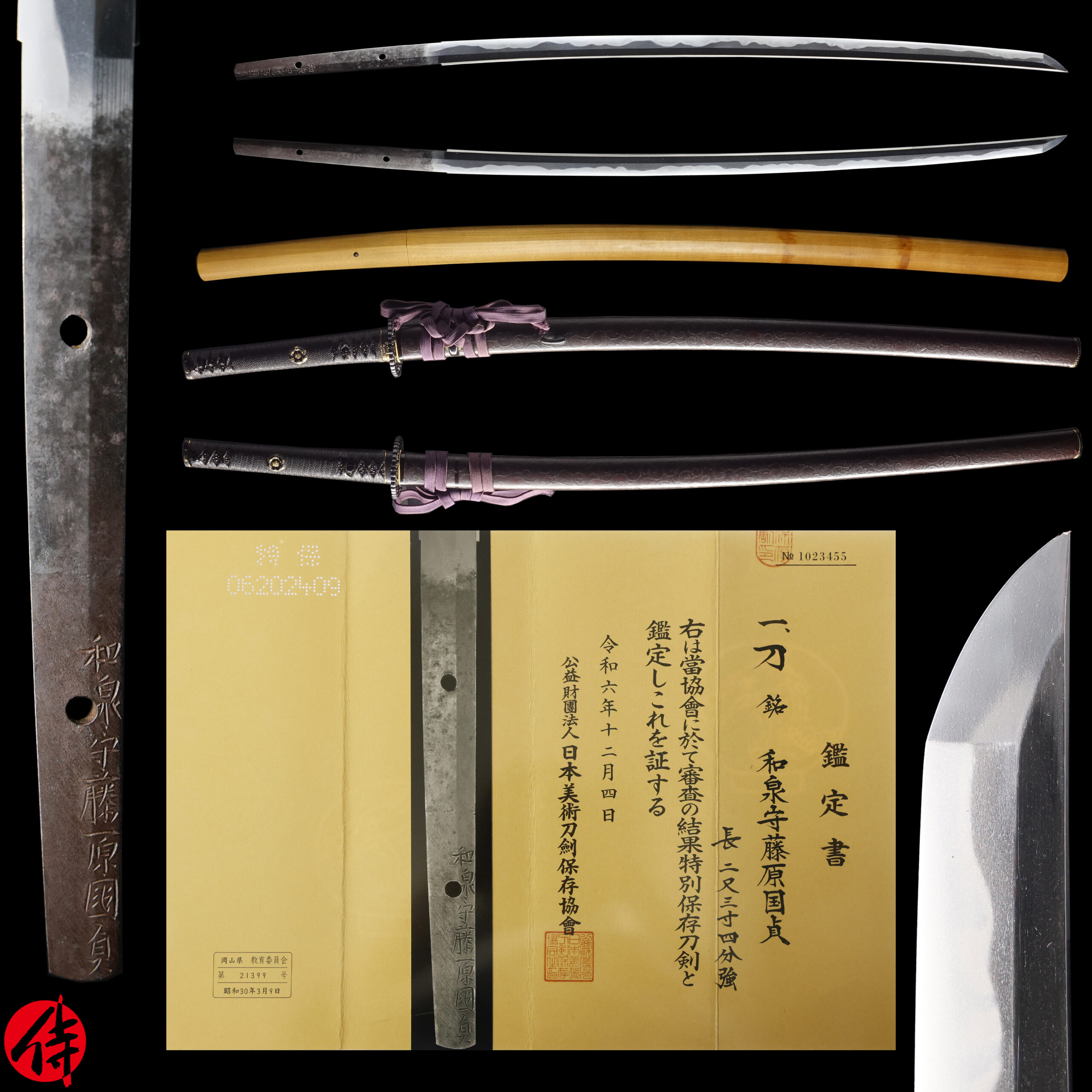
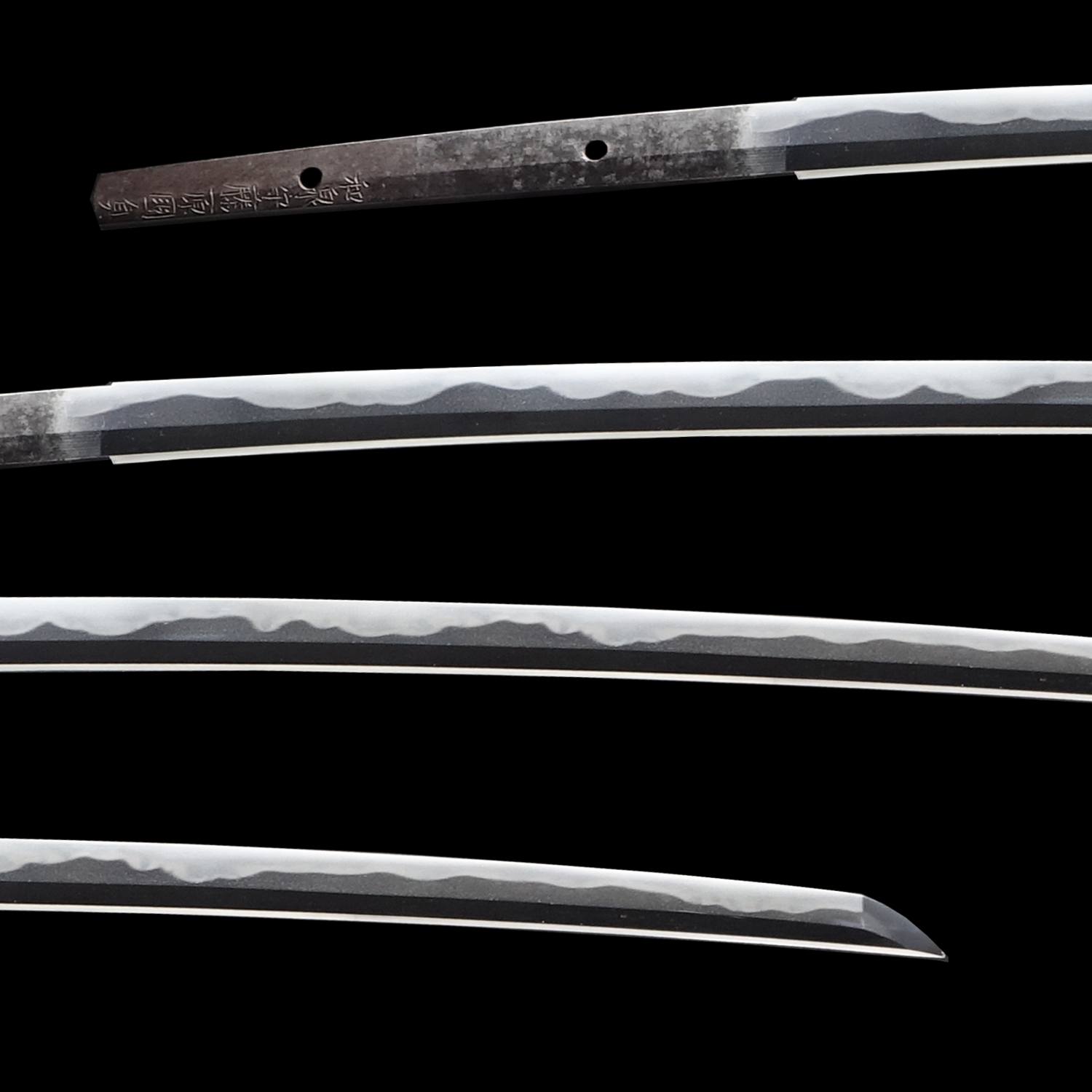
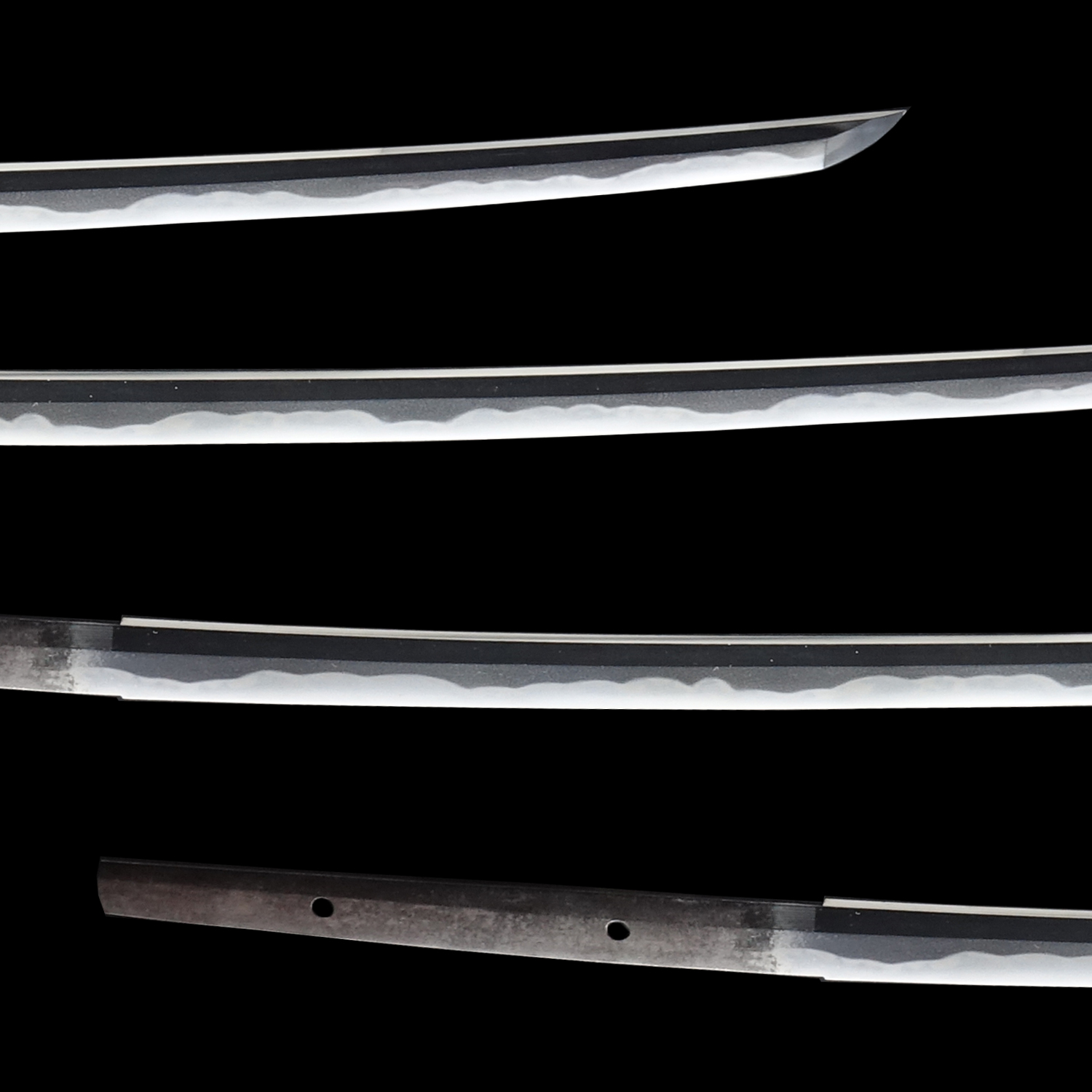
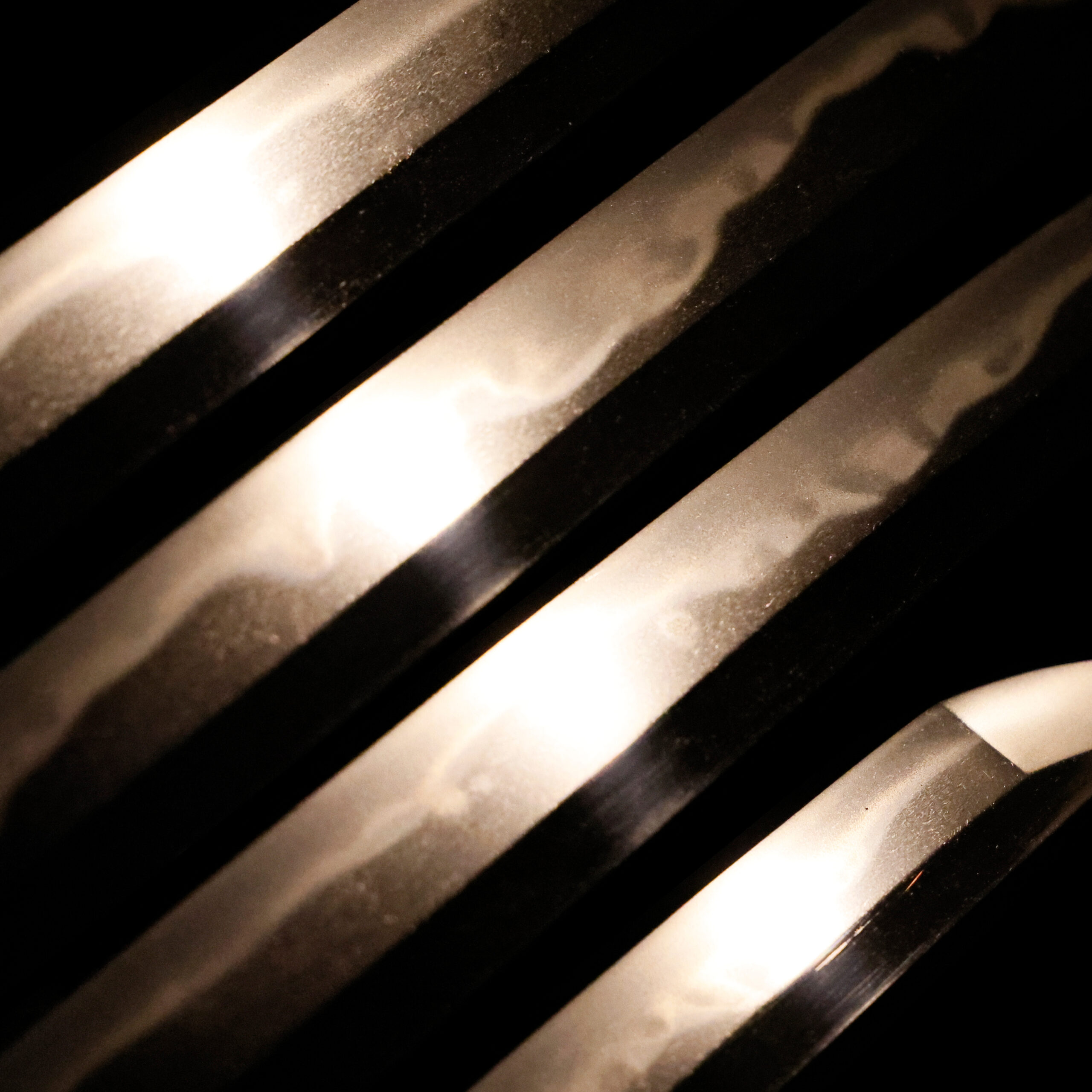
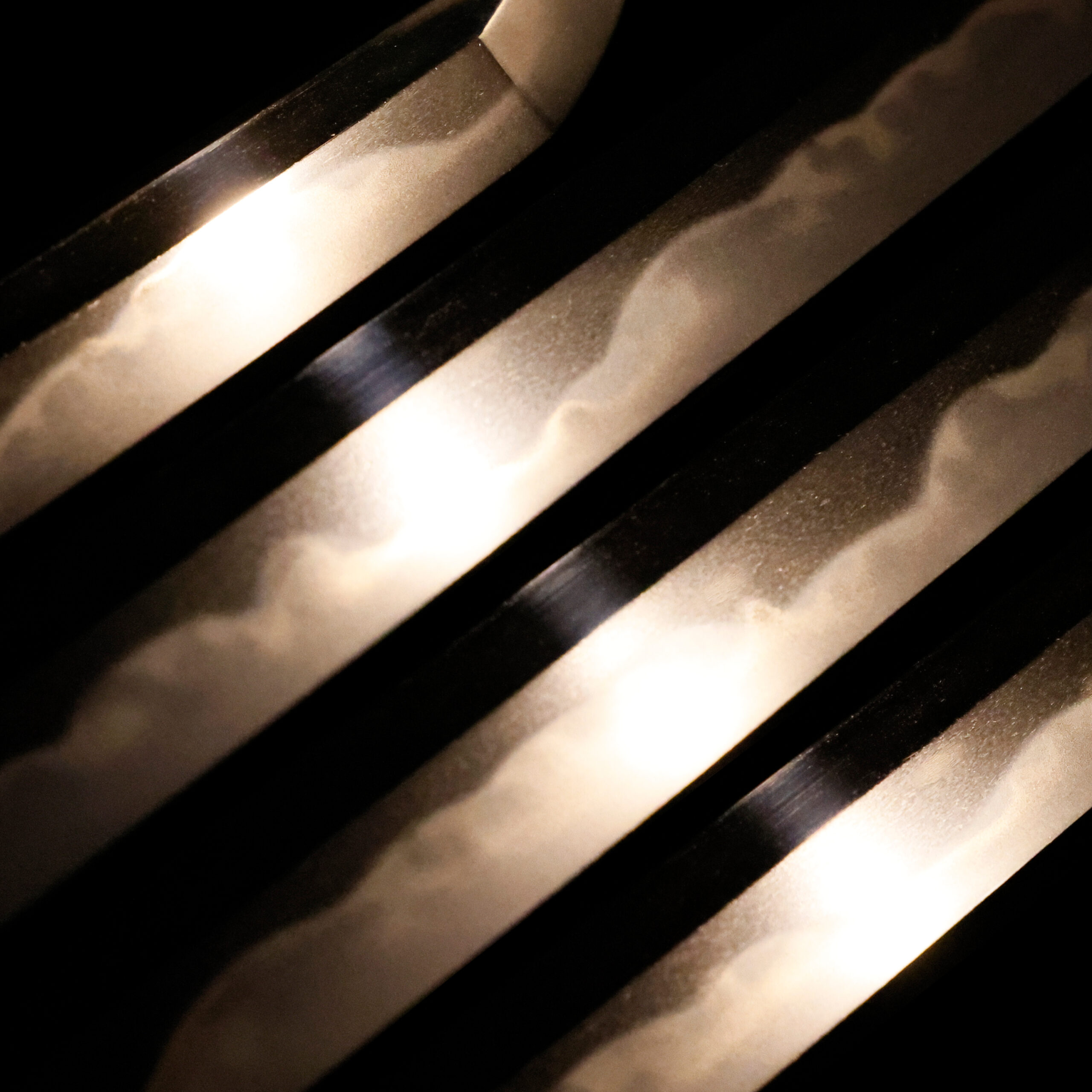
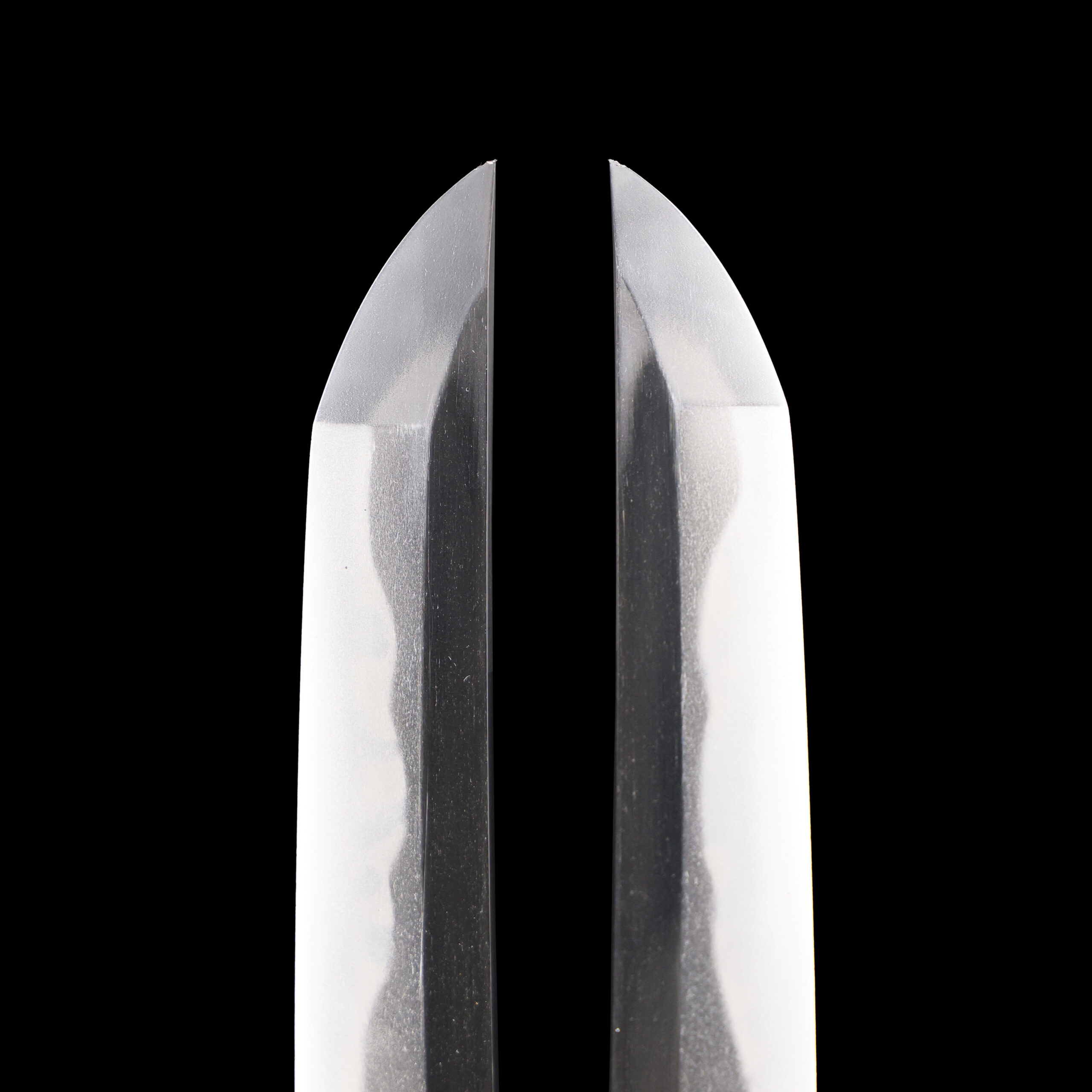
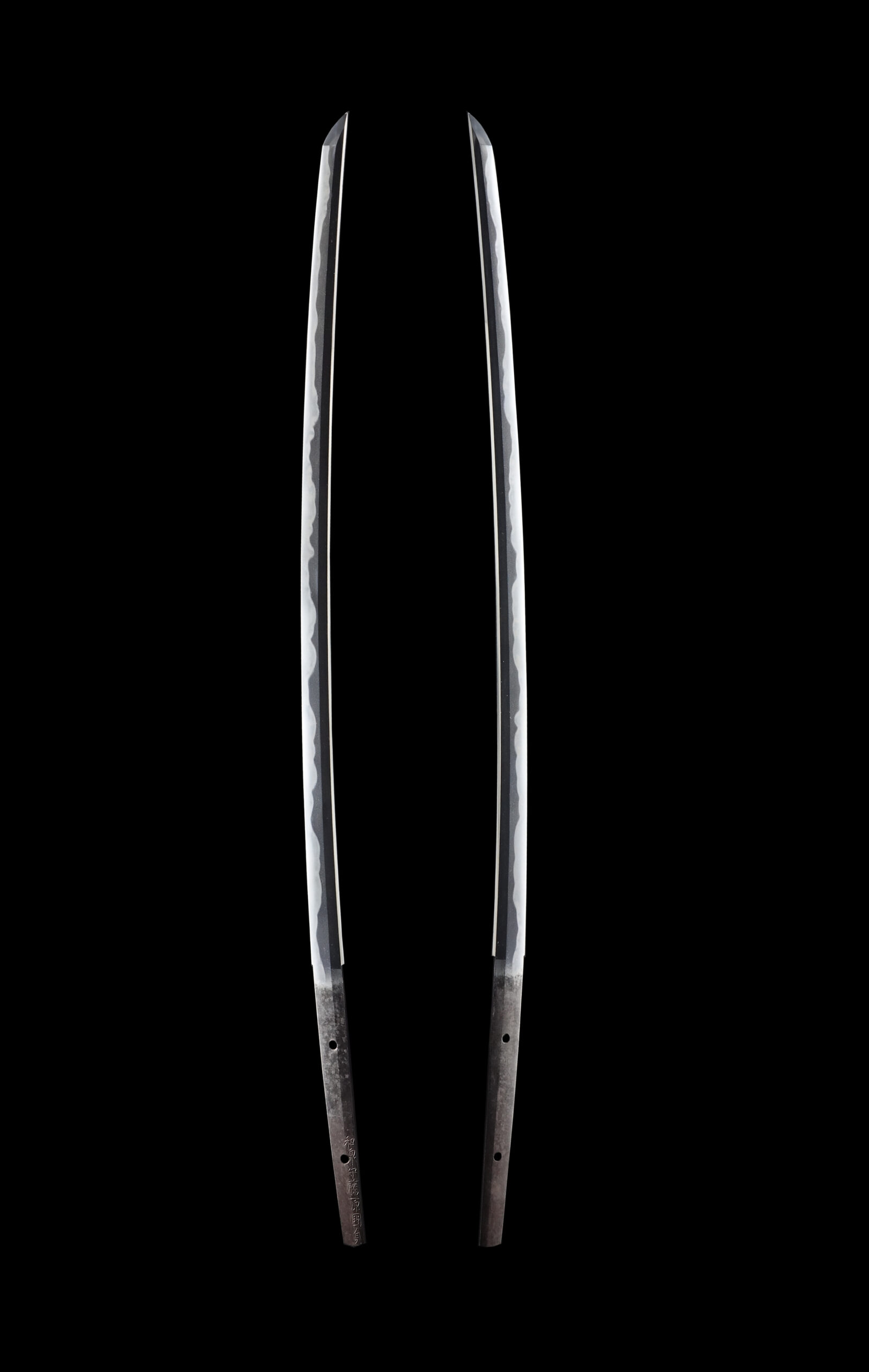
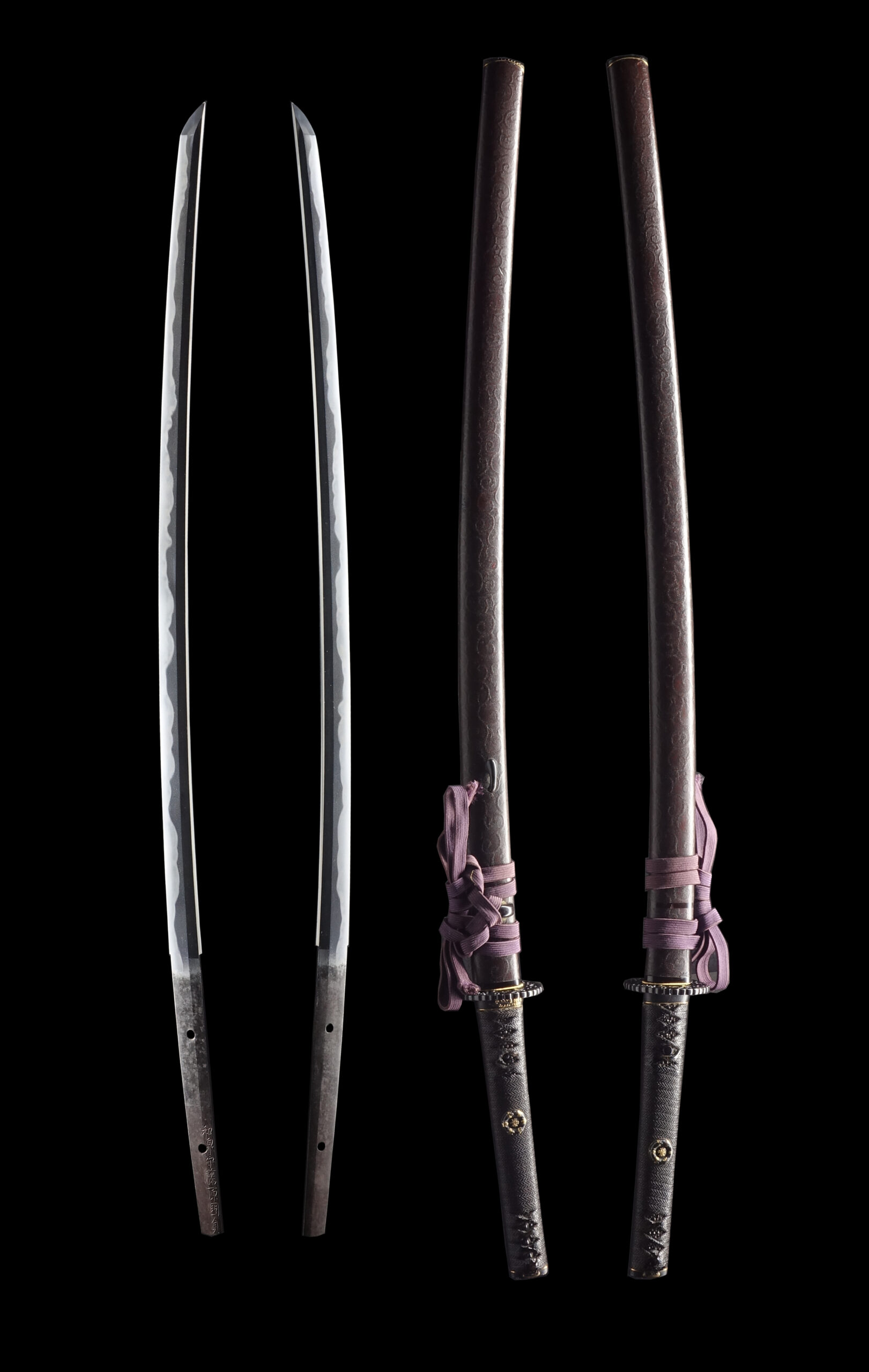
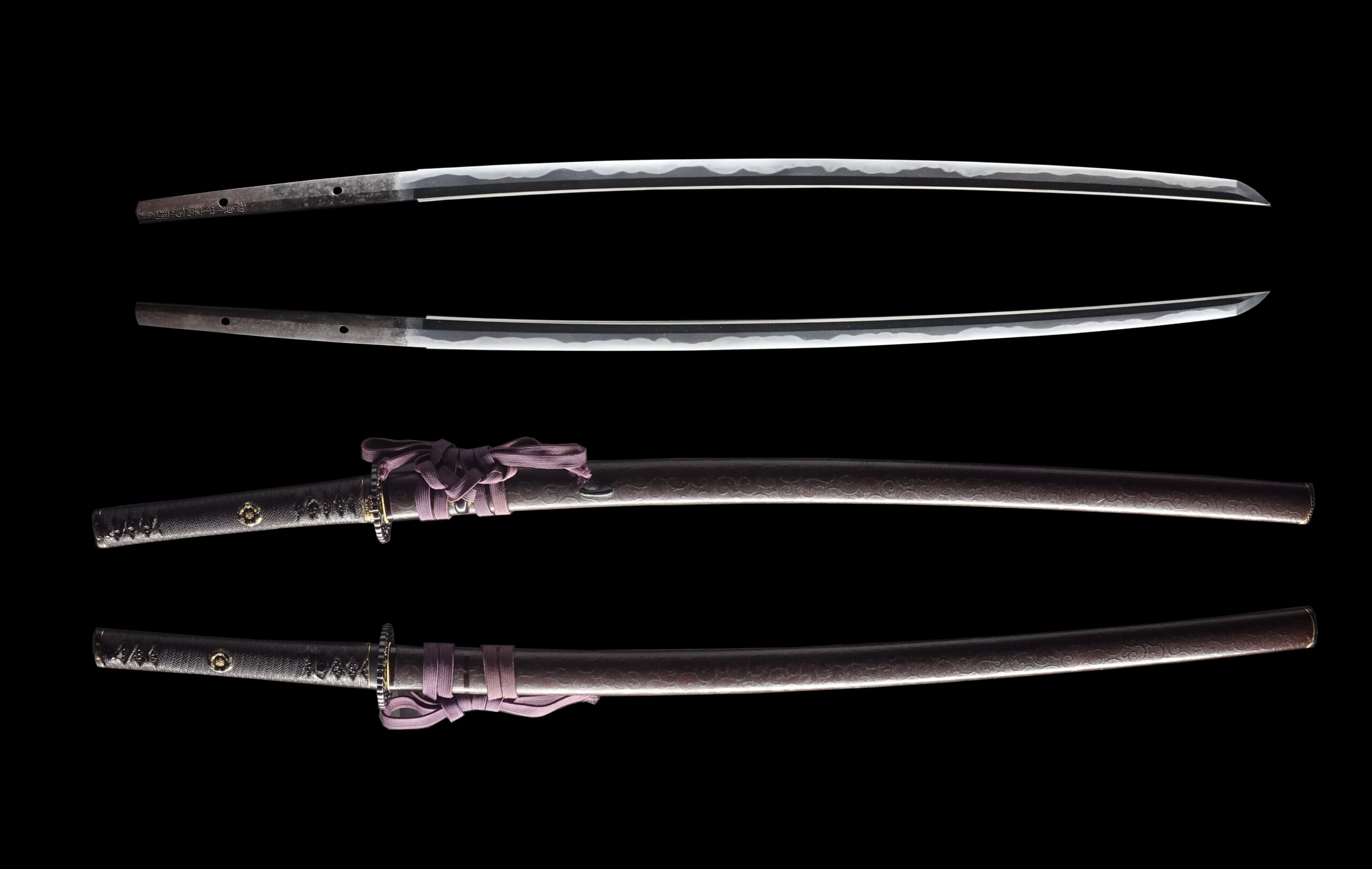
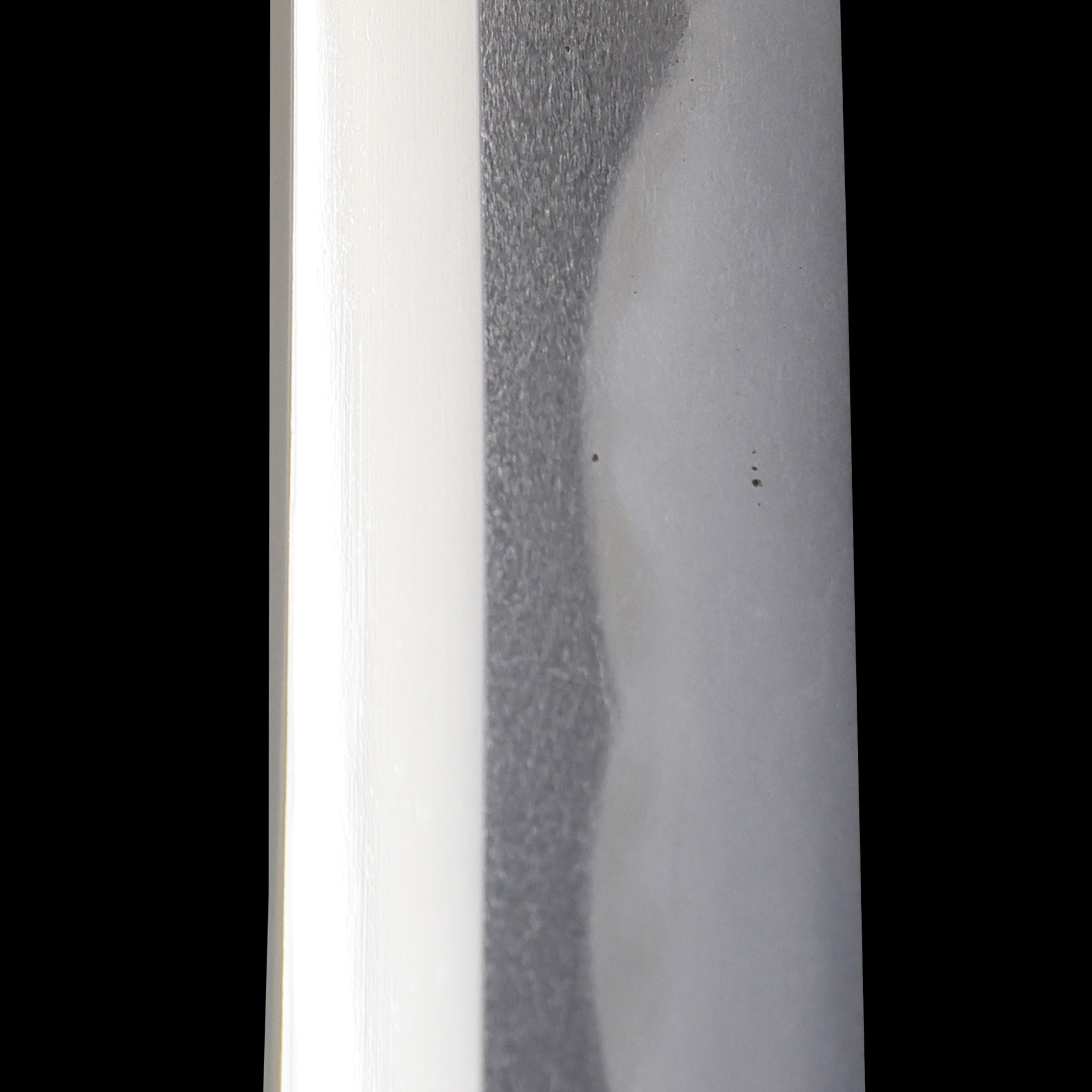
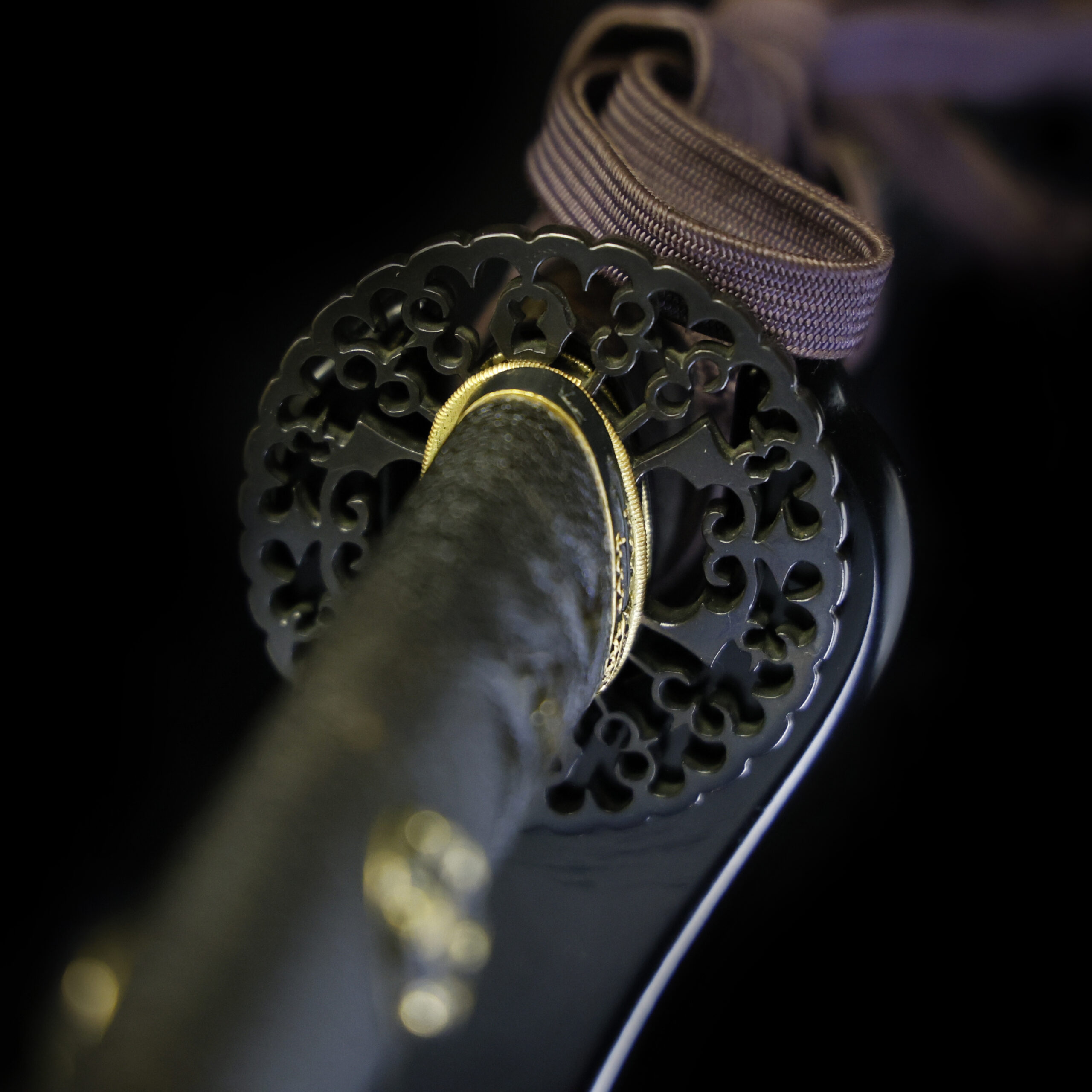
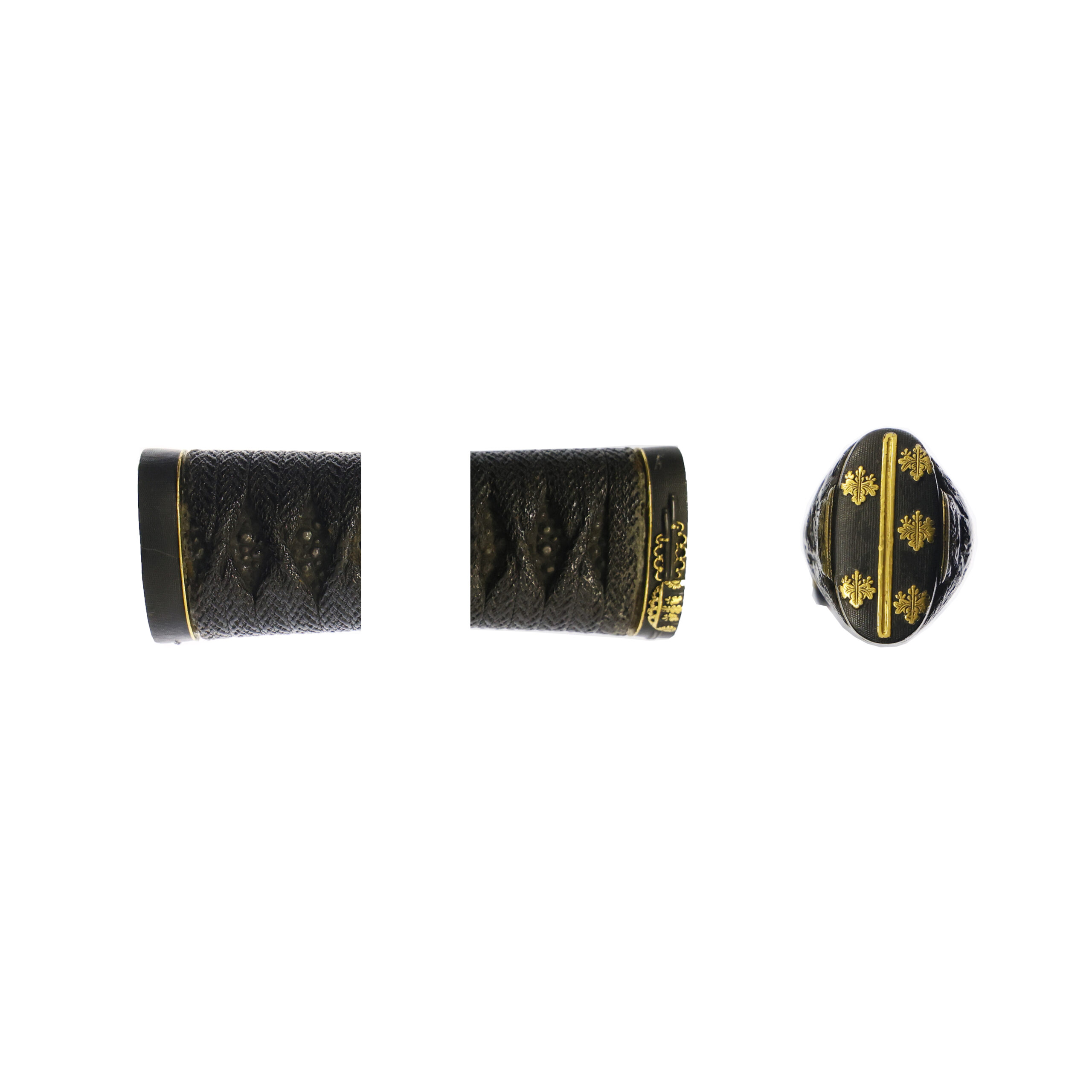
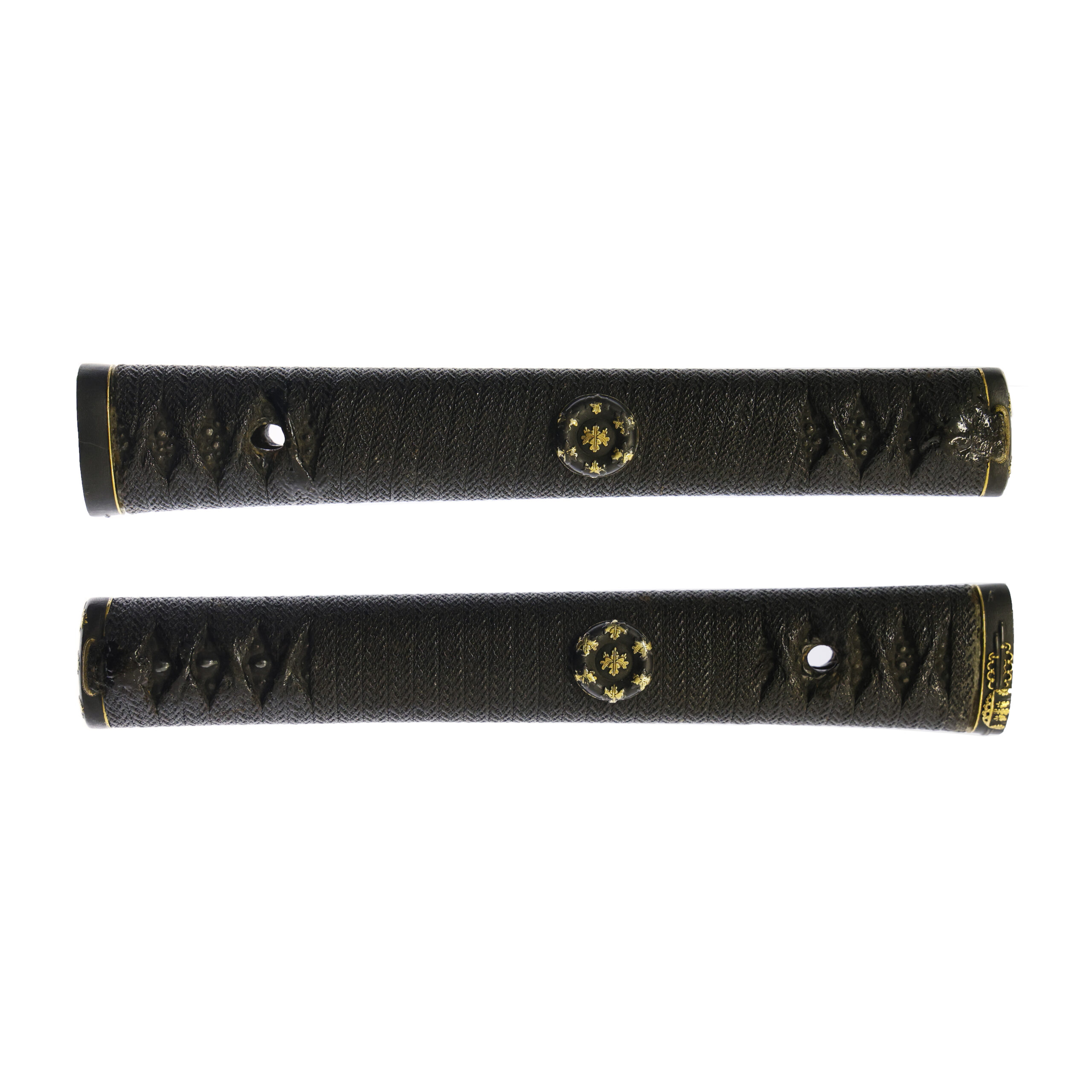
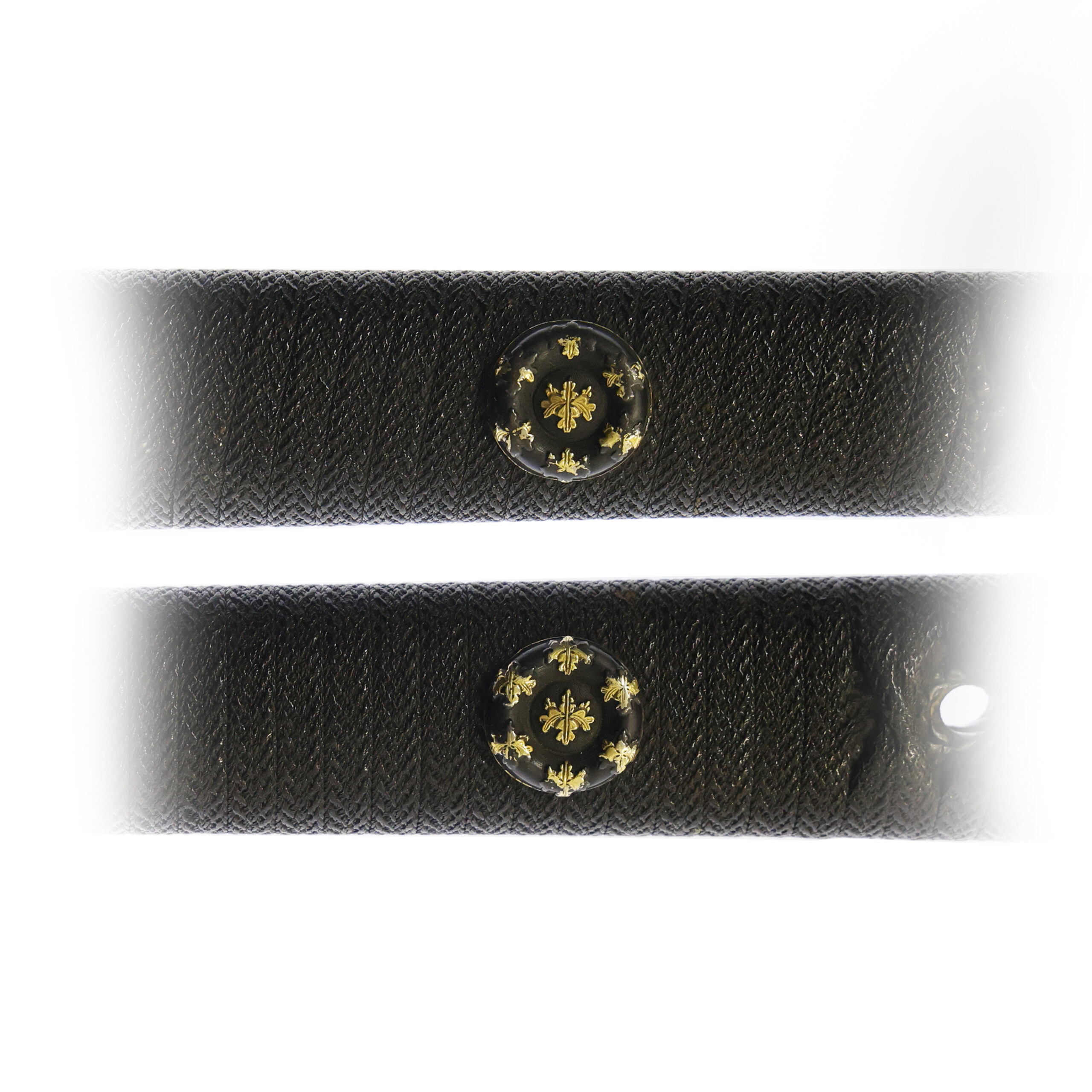
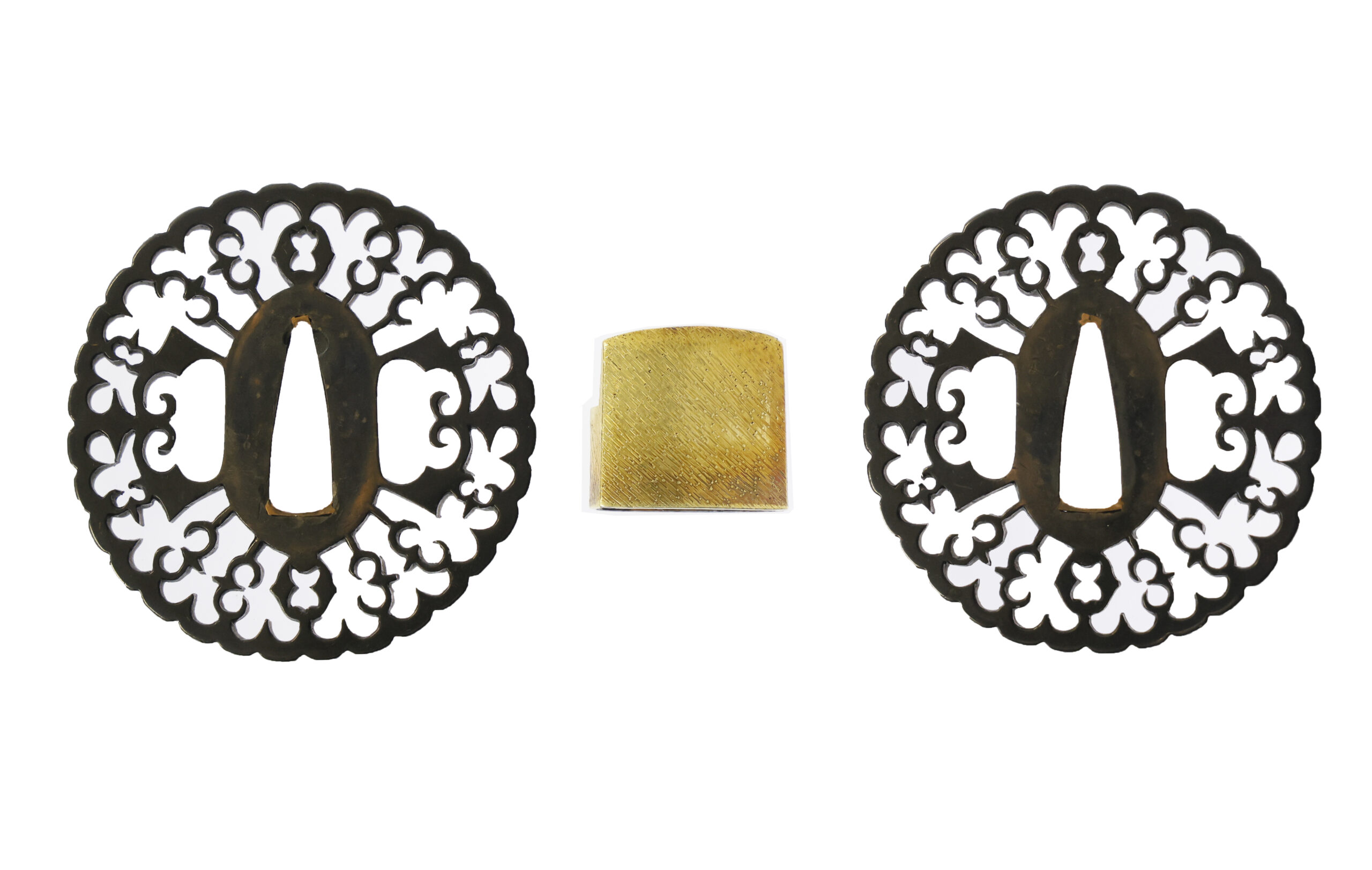
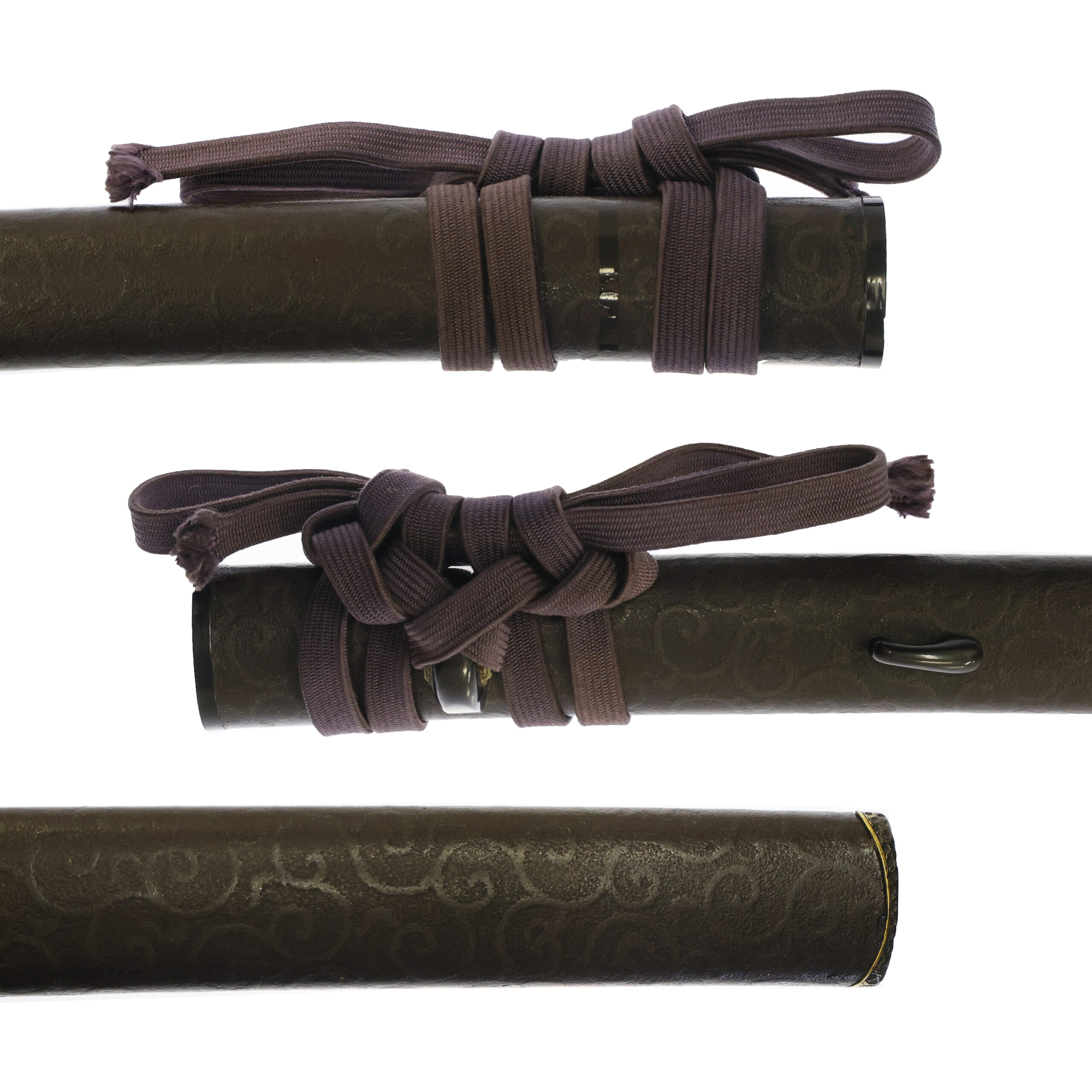
販売店の記載のまま
Horikawa school, Osaka Shinto (Settsu) · 摂津 · 1624-1646頃
藤代 上々作 · 刀剣大鑑 上位14%
現在6点販売中
和泉守国貞は、元和七年八月紀の刀に「摂州大坂住藤原国貞」[[c:8]]と銘を切っており、この一銘がその人と時とを定める。すなわち、すでに大坂に居を構えた堀川門の工であり、やがて大坂独自の鍛刀の伝統となるものの草創に立つ。世に「親国貞」と称するのは、説明書が明記するように、その嗣である後の井上真改、すなわち「養子井上和泉守国貞」[[c:1]]と区別するためである。本工は日向に生まれ、京に上って堀川国広の門に入ったというが、慶長十九年に国広が歿した時、国貞はわずか二十五歳であり、その初期の作風・銘振りから、実際には兄弟子の越後守国儔に倣ったものと鑑られる。師国広の没後、同門の河内守国助とともに大坂に移り、元和九年に和泉守を受領し、晩年は入道して道和と号し、慶安五年に六十三歳で歿した。まさに「大坂鍛冶の開拓者の一人」[[c:2]]である。
その典型は、慶長新刀の趣ある身幅広く堂々たる刀で、元先の幅差少なく、重ね厚く、中鋒または大鋒に延びる。鍛えは板目にしばしば杢を交え、やや肌立ちごころとなり、地沸厚く地景頻りに入る。肌の開くところを説明書はザングリとした堀川派の地と呼び、師の地鉄を大坂へ伝えたものとする。その地鉄の上に、のたれを基調として互の目・小互の目・丁子を交え、刃は江戸ぶりの直ぐな短い焼出しより起こり、匂深く小沸よくつき、砂流し・金筋かかり、しばしば棟焼や流れる飛焼を交える。帽子は直ぐに小丸、あるいは乱れ込んで掃きかけ、やや長く、または深く返る。最上手の作には彫物を加え、櫃中に真の倶利迦羅を浮彫にし、梵字に護摩箸を添える、説明書が特色ある見事と評し本工の見どころに数える彫である。
地鉄は刃の下に終始変わらぬ地である。板目に地沸厚く地景頻りに入る肌が各作に現れ、時にあのザングリとした肌に立ち、時によくつむ。匂口深く明るく、刃縁の小沸は変わらぬところで、その働きは高い丁子の房ではなく足・葉、砂流し・金筋に托される。第二十七回特別重要刀剣のある刀が幅広く覇気ある出来に向かうところを、説明書は、事実上の師である国儔よりむしろ国広自身の悠揚せまらざる作域に近いとし、小丸下がりの帽子と棟焼の頻出を親国貞自身の見どころとして挙げる。匂口は時に深く、時に沈みごころとなり、その匂口と沸のつき方に意を凝らした変化こそ、本工の手の一部である。
作には三つの面が通う。第一はこの堀川の地に焼く典型ののたれ互の目の刀である。第二は師たちを遡る相州風の手で、説明書はある重要刀剣を、丁子目立たずしかも盛んな、師に倣った志津風の作とし、ある脇指を「相州貞宗の風を模して出来がよい」[[c:3]]とする。第三は晩年の明るく穏やかな直刃で、説明書は「親国貞の直刃出来は上手ながら」[[c:4]]、現存するものは頗る少なく、その作が「一見してむしろ二代真改の作に近い」[[c:5]]と記す。この晩年に道和の草書銘が属し、説明書はこれを晩年の作とし、二代の井上真改が代作代銘に多く任じたと伝える。ある草書の刀が初代自身の作か真改の代銘か、またこうした作を二代真改国貞と読むべきか否かは、説明書がなお研究に委ねるところである。説明書が国貞銘の一口を真改の代作代銘と明らかに名指す場合、その作は親国貞ではなく真改の記録に属する。
本工を分かつものは、その極めの言うところである。古備前・山城のよくつんだ小板目に対して、立つザングリの地と直ぐの焼出しより起こるのたれは、備前丁子ならぬ大坂新刀の手であり、子真改の一層明るく精良な鉄に対して、初代の手は大坂の伝統が育つより粗く覇気ある根として読まれる。説明書は河内守国助とともに本工をその草創の頭に置き、事実上の師国儔をその背後に、師国広をさらにその背後に置き、嗣の真改がその名を最も名高い世代へと継ぐ。
収集の観点では、手の届くところにありながら稀な、大坂新刀の大名跡である。藤代の極めは上々作。国宝はなく、重要文化財もない。その記録は重要刀剣に数多く、特別重要刀剣三口と戦前の重要美術品数口に及び、特別重要刀剣・重要刀剣の級に八十二口が立つ。残る来歴は名高く、皇室、真田家、生国日向の伊東家を経た作があり、ある重要美術品は今佐野美術館に蔵される。説明書はその在銘刀に最上の言葉を惜しまず、ある一口を「初代国貞の典型作で殊に匂口が深く華やかで同作中傑出の一口」[[c:6]]とし、相州風の特別重要刀剣を端的に「親国貞会心の一口」[[c:7]]とする。その多くは伝えられて売買されず、特別重要刀剣・重要刀剣の級でも十年に数口が世に出るに過ぎない。健全な在銘の親国貞は、時に、根気をもって私蔵に入ることがあり、世に出れば確かな獲物であって、大坂の鉄の草創を語る一証である。
國貞の位置づけを、日本刀全体および伝法・時代・時期ごとに示します。各区分(随一・屈指・有数・著名)は、NBTHK および文化庁による指定に加え、三作や名物帳などの歴史的栄誉を加味したものです。
各項目を選ぶと評価方法が表示されます。
在銘年紀作が示す、確実に活動していた年代
新刀 · 山城
現在64点販売中
堀川派は、山城国京都の一条堀川を本拠として、十六世紀末から十七世紀初頭にかけて成立した新刀期の一門である。祖の堀川国広はもと日向飫肥の城主伊東家に仕えた武士で、主家没落の後は諸国を遍歴して鍛刀の技を磨き、足利学校打や美濃大道との合作などにその足跡を銘文へ残した。慶長四年(一五九九)以後は京一条堀川に定住し、多くの俊秀を糾合してこれを育てた。その門からは出羽大掾国路、和泉守国貞(親国貞)、河内守国助、越後守国儔、大隅掾正弘、堀川国安らが輩出する。国広以前の関や末相州の作風を経て、定住後の一門は相州伝、就中、志津や貞宗、左文字の復興を共通の理想に掲げた。慶長新刀の姿に南北朝期の大太刀を磨上げた趣を写し、明寿と並んで新刀の創始を称えられる祖を戴いて、この派は京の鍛冶を改めた起点に立つ。 一門の作風は、地鉄にまず標識を持つ。板目に杢や大板目を交えて肌立つ、いわゆる「ザングリとした」枯れた肌合を呈し、地沸が微塵に厚くつき、地景が細かに頻りに入る。区際より斜めに立つ水影は国広自身の手癖で、正弘や国安、国正にも伝わる。刃は浅いのたれを基調に互の目や尖り刃を交えて沸厚く、金筋や砂流しがかかり、処々に湯走りや飛焼を見せ、匂口が沈みごころとなるのが一派に通じる癖である。刃区を深く焼き込む態も国広に始まり門弟へ及ぶ。この共通の地刃の上に、各工は己の差を置く。国路は肌立ちザングリと枯れた地に厚く荒い沸の志津写しを焼き、浅くのたれ込んで先の尖る三品帽子を見せて、一門中随一の器用人と称された。国安は受領銘を用いず必ず二字に切り、左利きゆえに逆筋違の鑢目を切る唯一の工で、その手は最も祖に近い。正弘は大乱れを焼かず、焼を低く刃取りを抑えて目立つ杢を交え、作風も銘字の藤原の二字に至るまで祖に酷似する。国儔はかえって末関に向かい、頭の丸い互の目と締った匂口に兼之を思わせる美濃の一脈を担った。弘幸は一門ただ一人切り鑢を用い、黒みをおびた鉄に古作大和を想わせる直刃を本領とした。 蒐集家が堀川派を求める理由は、鑑定の勘所と、祖と高弟の格にある。在銘作を主体とし、慶長打は太鏨肩落の大振り二字銘や、日州古屋住から洛陽一条堀川住に至る受領銘を交えるため、銘そのものが工と時を定める手懸りとなる。国広の刀は、ザングリの地、斜めの水影、沈む匂口という手癖を写し物の中にすら宿し、相州伝復興の理想を最も高く体現する。高弟もまた、それぞれの極めの言うところで分かたれる。国路の三品帽子と長い金筋、国安の二字銘と逆鑢、正弘の抑えた焼と目立つ杢、国儔の頭の丸い互の目、弘幸の切り鑢と黒い鉄は、いずれも対手から借りた特徴ではなく己の地刃から引かれた標識である。代表作には伝後水尾天皇御寄進の拵を具して幡枝八幡宮に伝わる奉納太刀があり、伝来は日向伊東家、岡山藩家老伊木家、土佐山内家、大島津家、豊臣秀頼、皇室に及ぶ。最晩年の国広作は弟子の代作代銘と読まれるが、師の監督は厳重で偽物とは全く異なる。そして親国貞と河内守国助は国儔に学んで大坂へ下り、大坂新刀の草創に立った。国貞の嗣は井上真改として、その名を一層名高い世代へと継ぐ。京の堀川に始まった相州伝復興の手は、かくして後世の新刀へと流れていった。 詳しく見る →
京 新刀の源流
新刀の時代は、その大部分が京都で発明された。埋忠明寿の工房が運動を育て、堀川国広が一世代を鍛え、鎚を持たぬ本阿弥家が名刀の意味を司った。
保存刀剣のうち、出来が一層優れ、保存状態も良好と認められたものです。再刃や、室町・江戸期の多くの無銘作は対象外となり、保存刀剣より高い基準が課されます。
日本美術刀剣保存協会(NBTHK)は、1948年に設立され、文化庁の監督を受ける公益財団法人で、東京・刀剣博物館に本部を置きます。専門の審査員が出品作を直接審査し、美術的・歴史的価値に応じた鑑定書を発行します。NBTHKの鑑定書は、日本刀および刀装具の真正性を示す最も広く認知された基準です。
NBTHK公式サイトReturns/exchanges limited to defects caused by shipping (except willful misconduct or gross negligence by the company); customers must contact within 72 hours of receiving the product.