NihontoWatch MonNihontoWatch
MarketAuctionsEncyclopedia
NihontoWatch Mon

NihontoWatch

MarketAuctions
Encyclopedia
Overview·Historical importance·Designations·Kantei·Provenance·Work Types·Signatures·Lineage·School
OverviewHistorical importanceDesignationsKanteiProvenanceWork TypesSignaturesLineageSchool
  1. Schools
  2. Yokoya
  3. Omori
  4. Horie Okinari

Omori Horie Okinari

堀江興成

Jūyō
Vol. 36, No. 235 · Kozuka

Omori Horie Okinari

堀江興成

7 ranked works

Notable artist
Eraact. Meiwa–Tenmei (c. 1770s-80s)SchoolYokoya>OmoriTraditionMachiboriTypeTosogu MakerCodeMUR010
7Jūyō Tōken

Overview

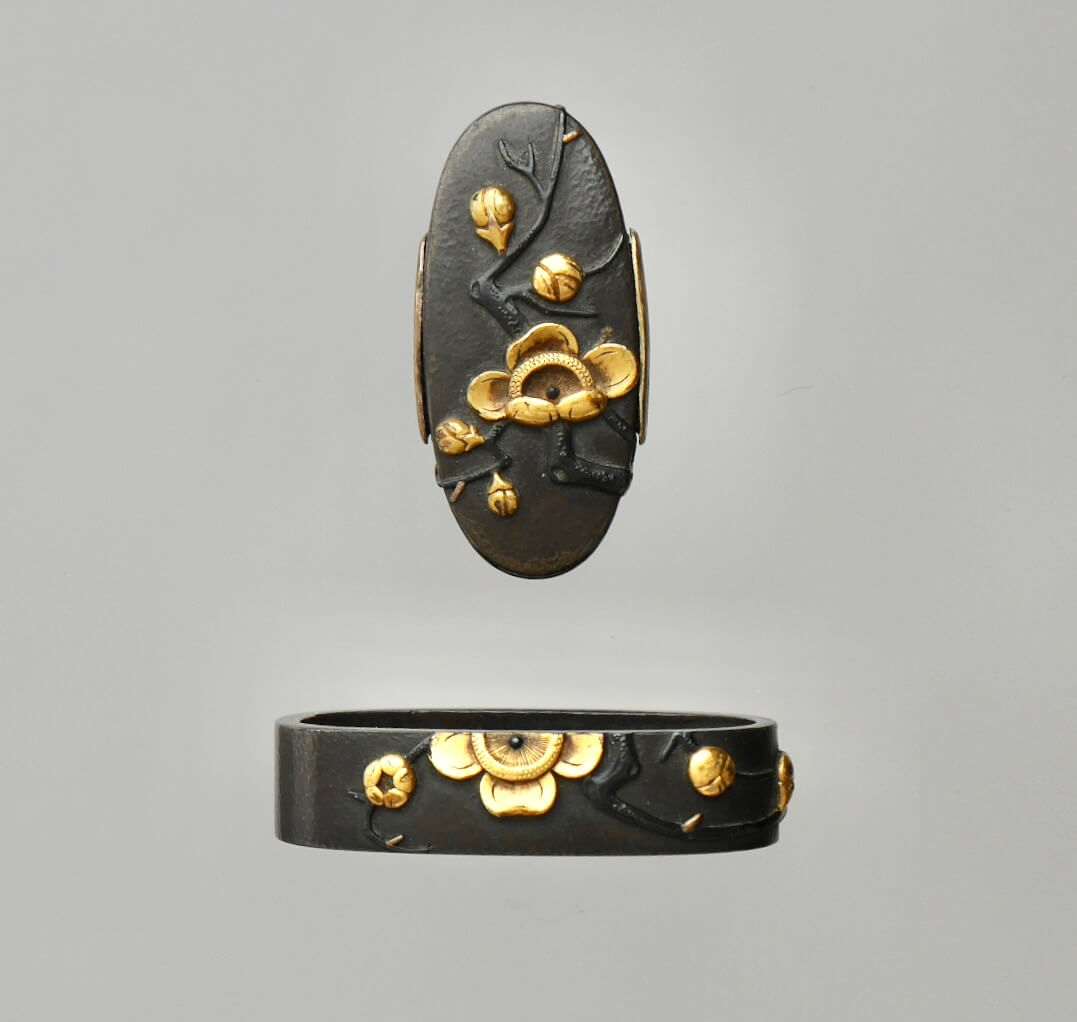
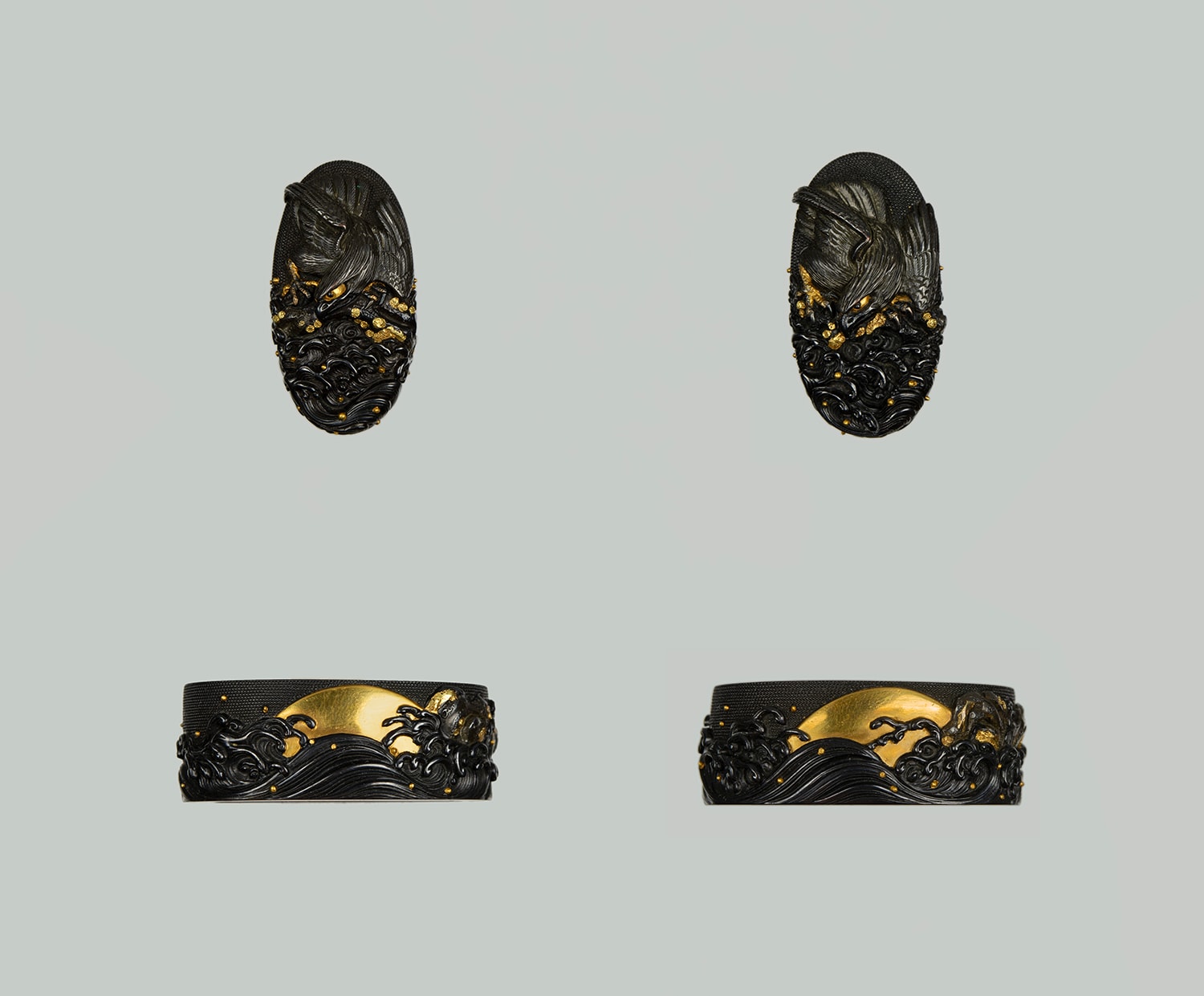
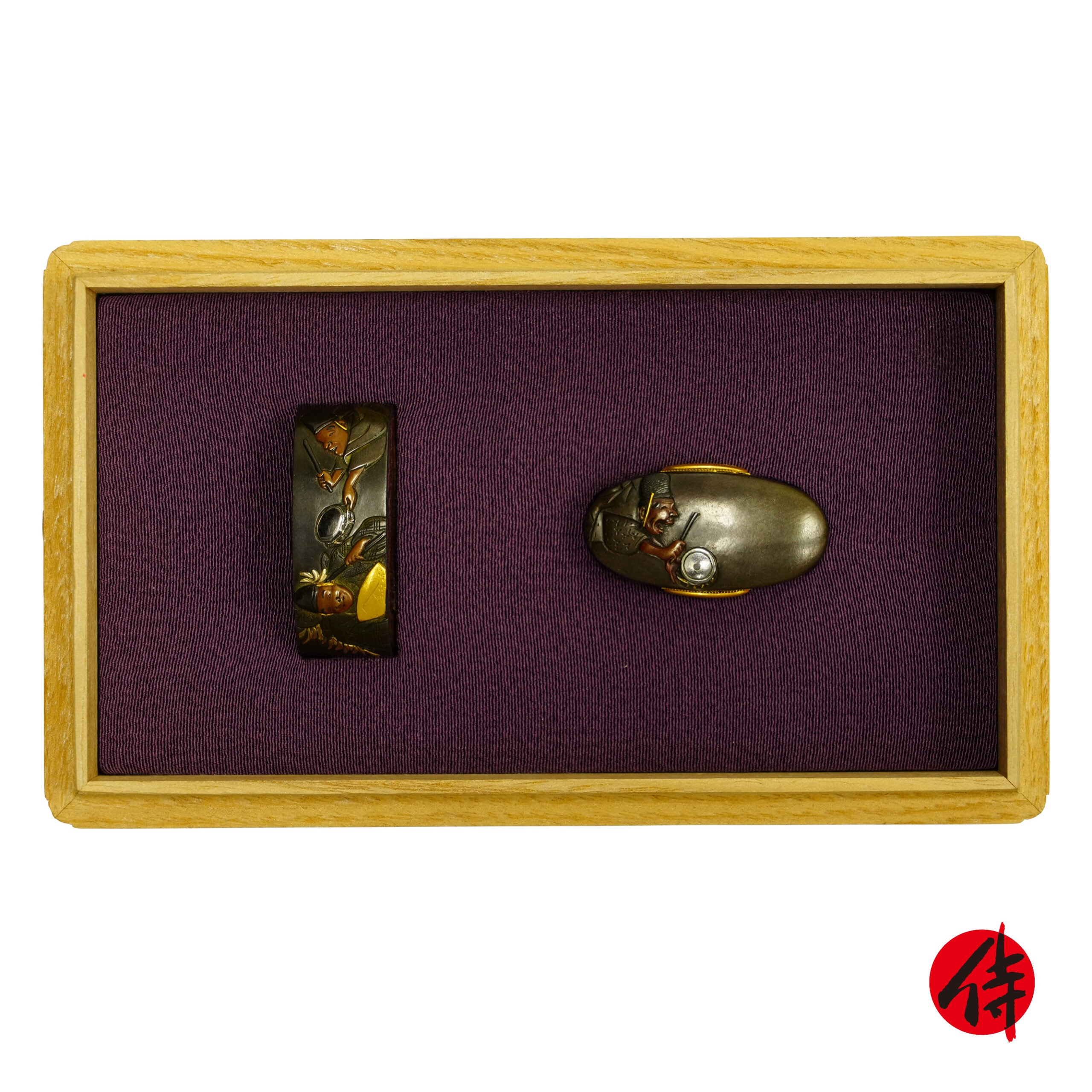
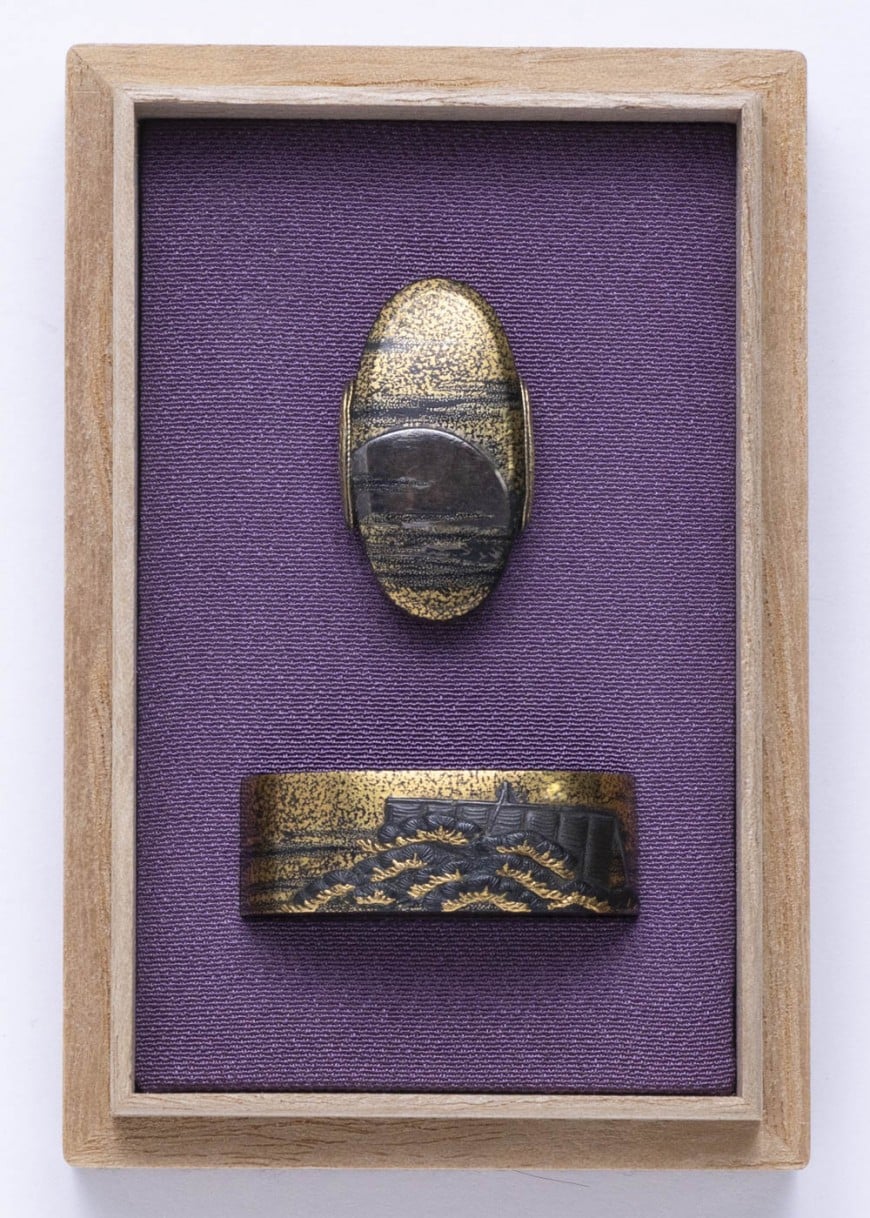
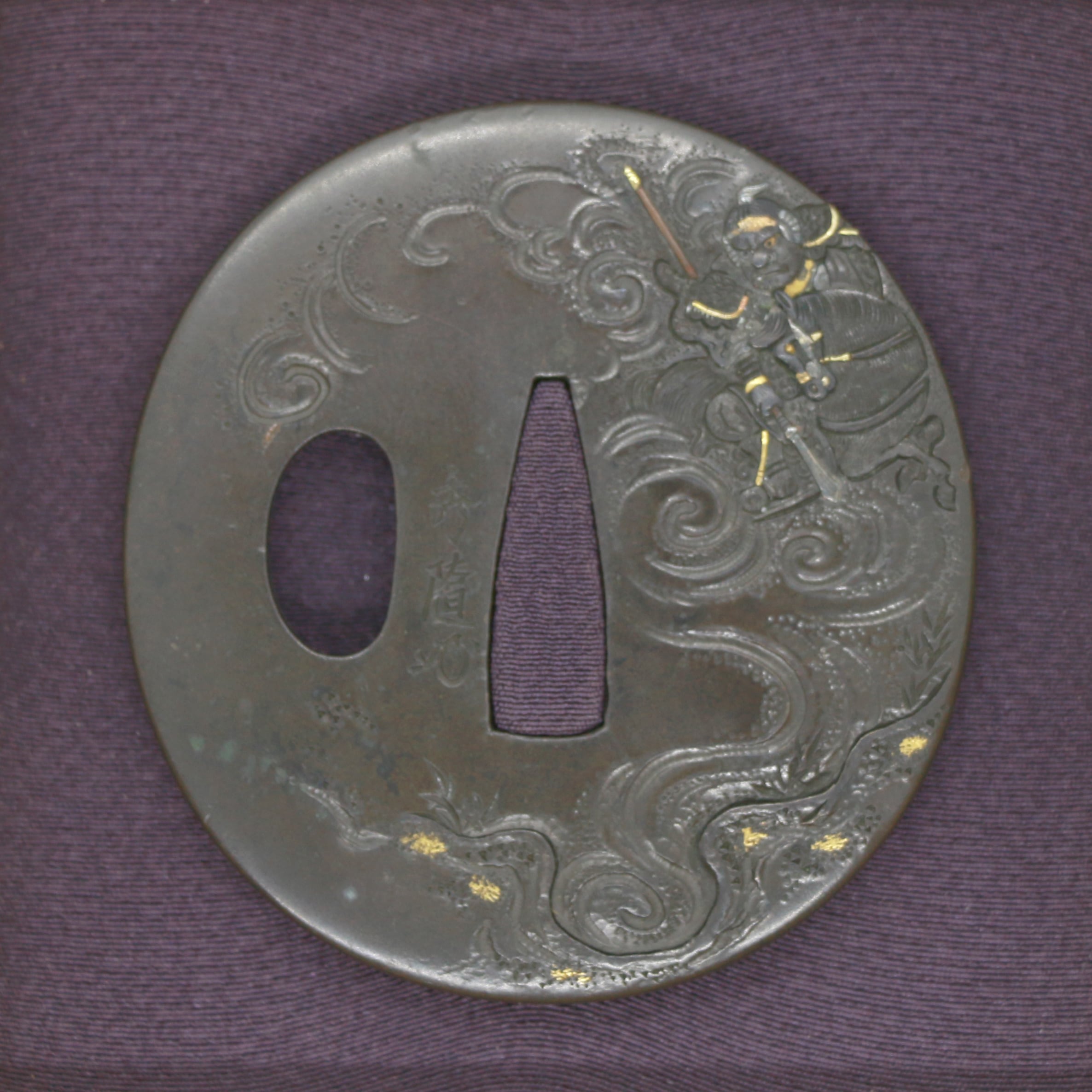
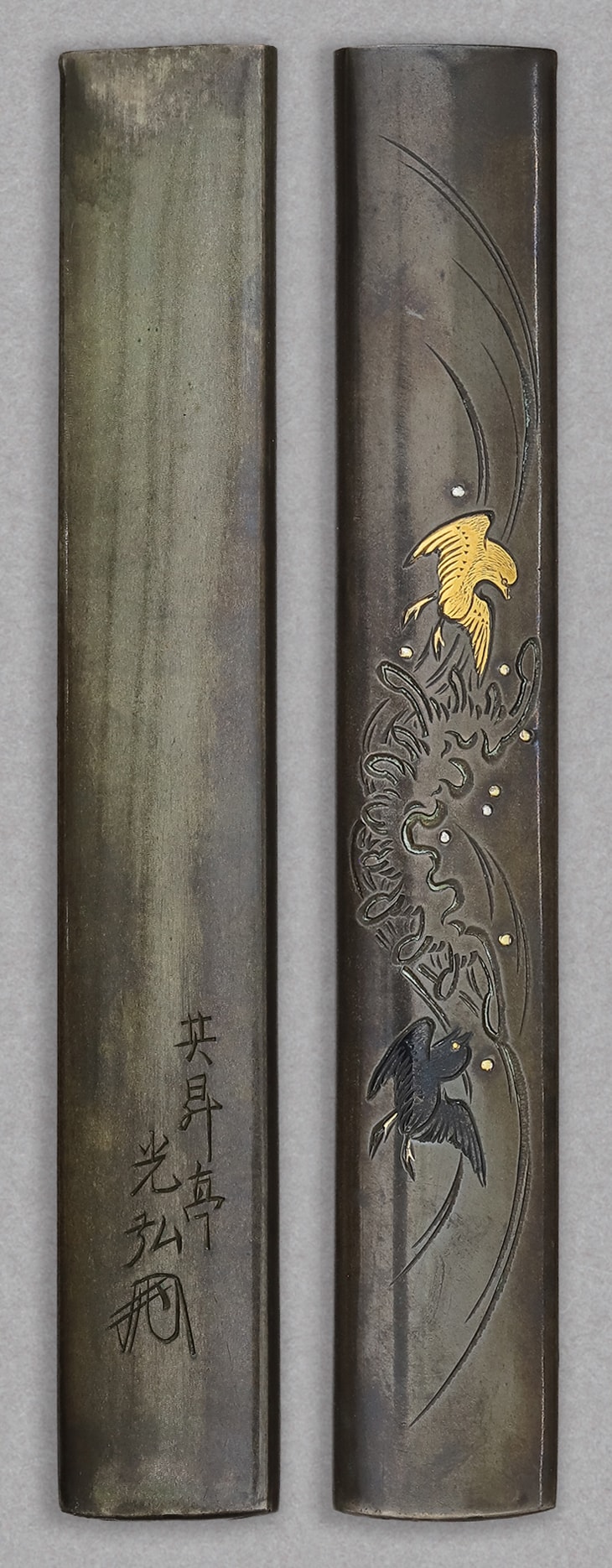
Horie Kosei first studied under Hamano Masayuki, using the name Masusui. In Meiwa 6 (1769), while still in his twenties, he encountered the death of his teacher Masayuki, after which he newly entered the school of Omori Eishu. He was granted permission to use one character from his master's name and changed his art name to Eishun. He also became affiliated as a disciple of Ozaki Naomasa, a craftsman of Goto lineage, absorbing the methods of the mainline house-carving tradition. After establishing himself independently he adopted the name Kosei. Later he served as a kakae-ko -- an officially retained craftsman -- of the Hachisuka house of Awa Province, and trained many pupils and successors within his circle.

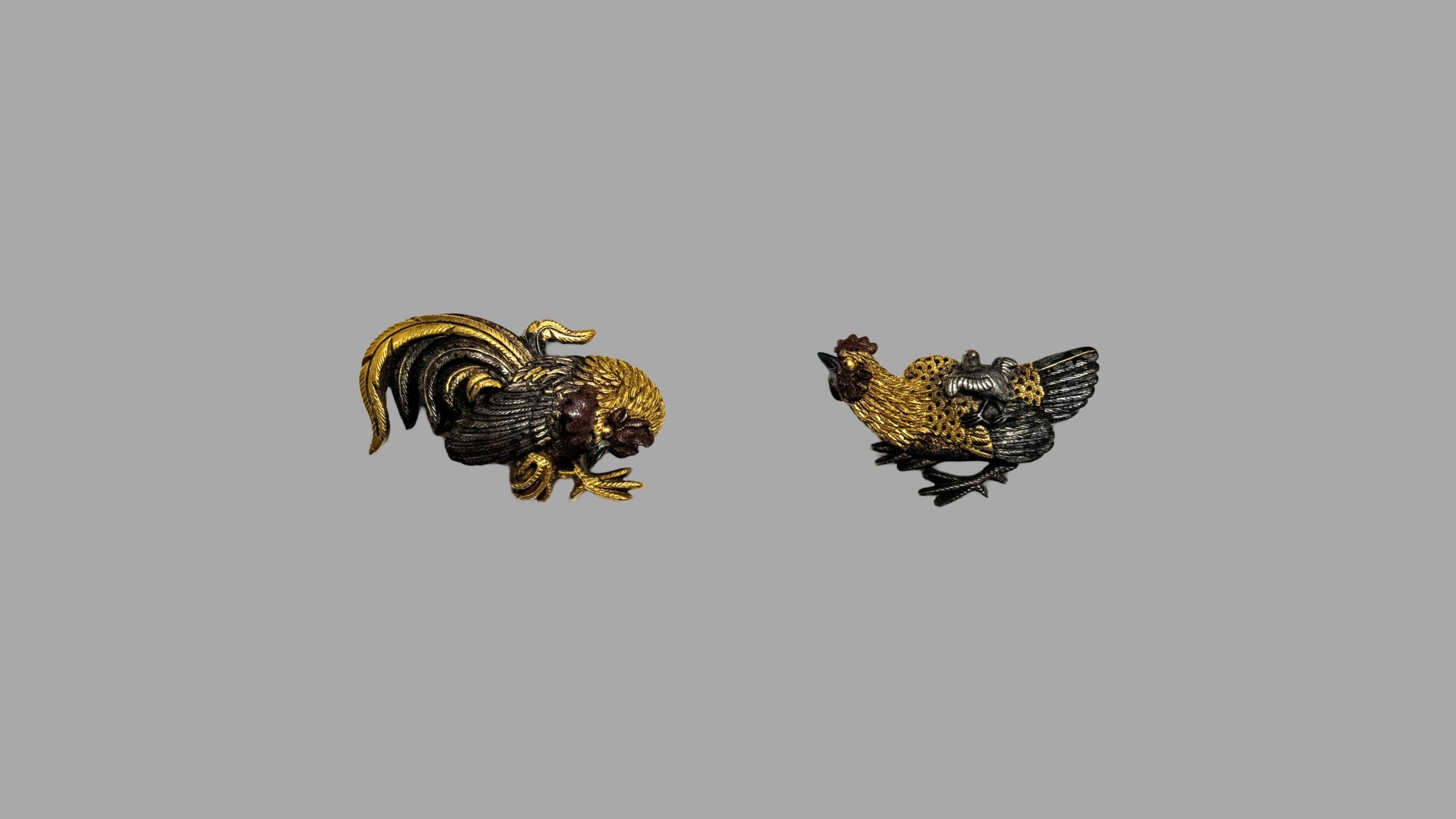
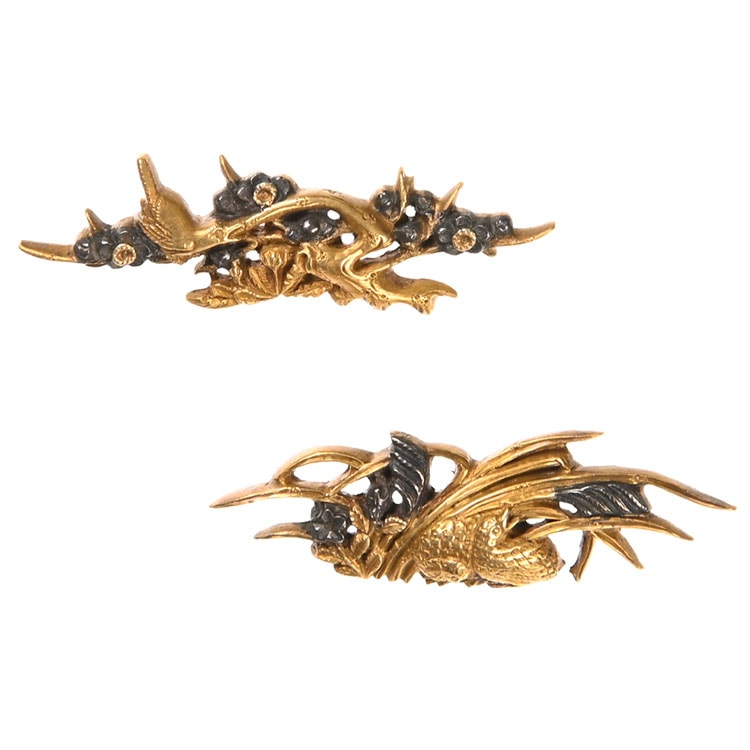
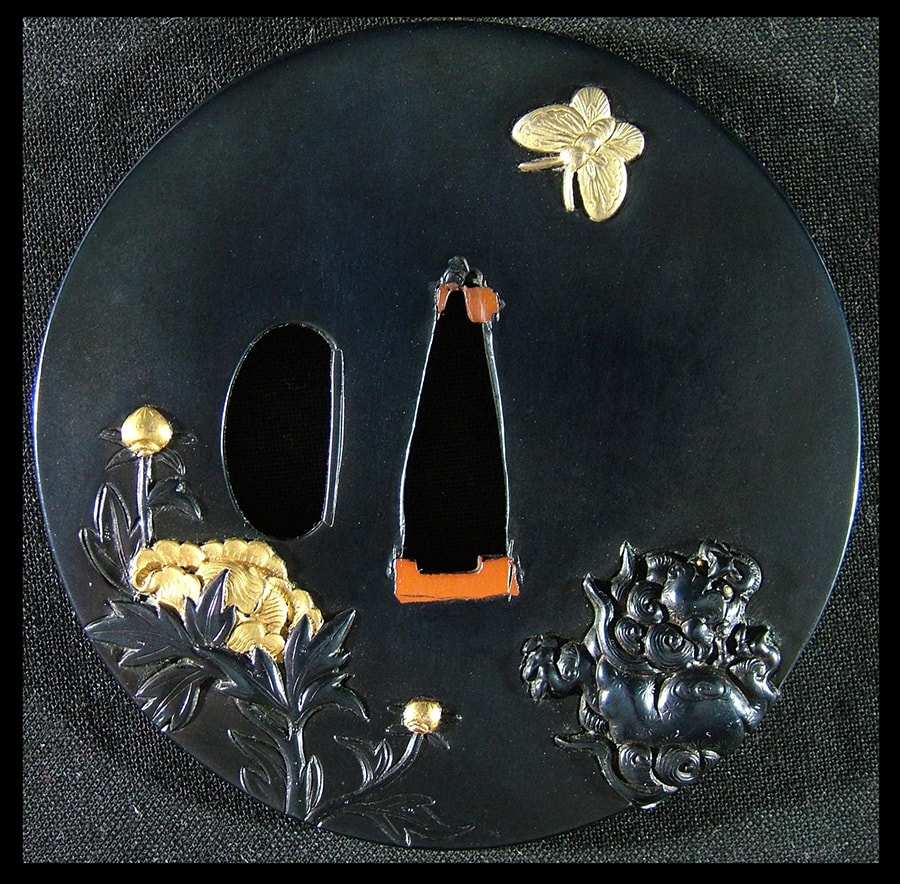
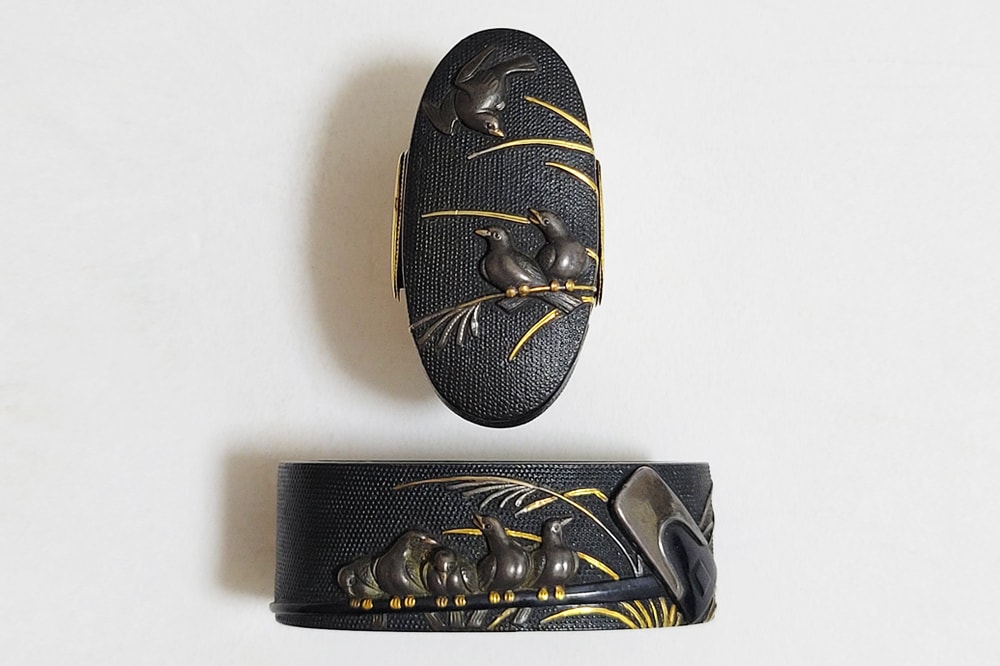
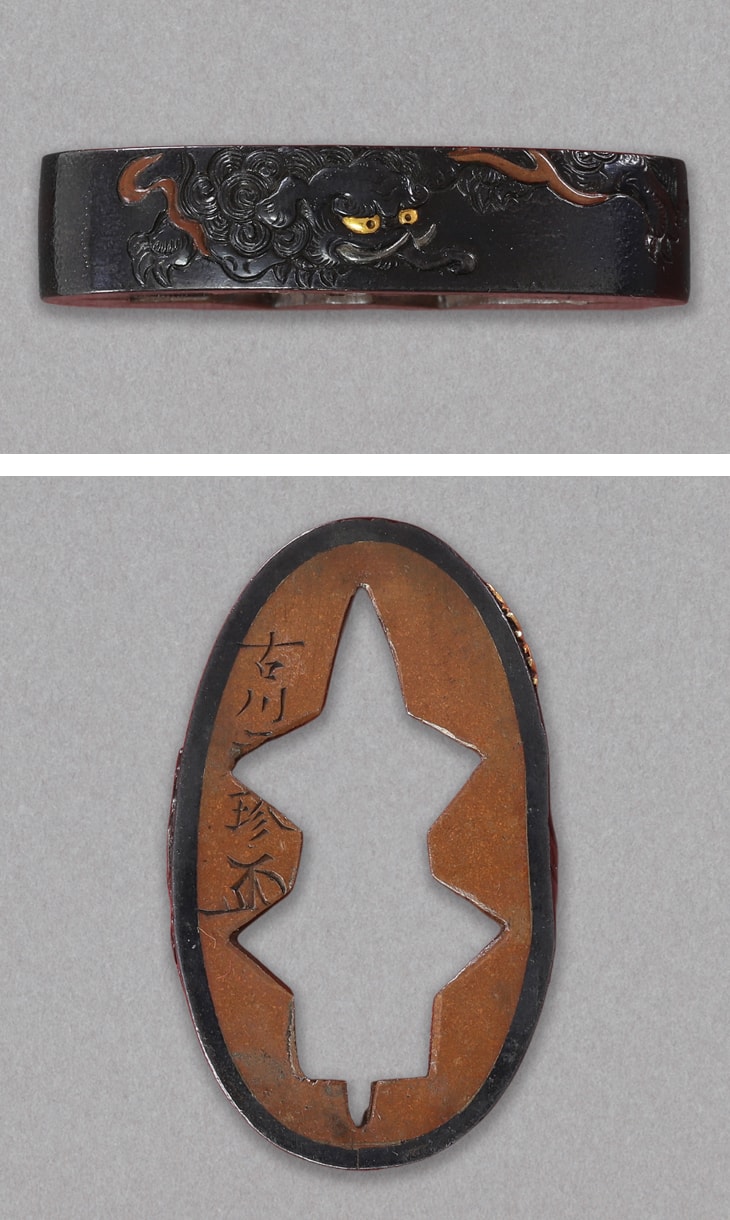
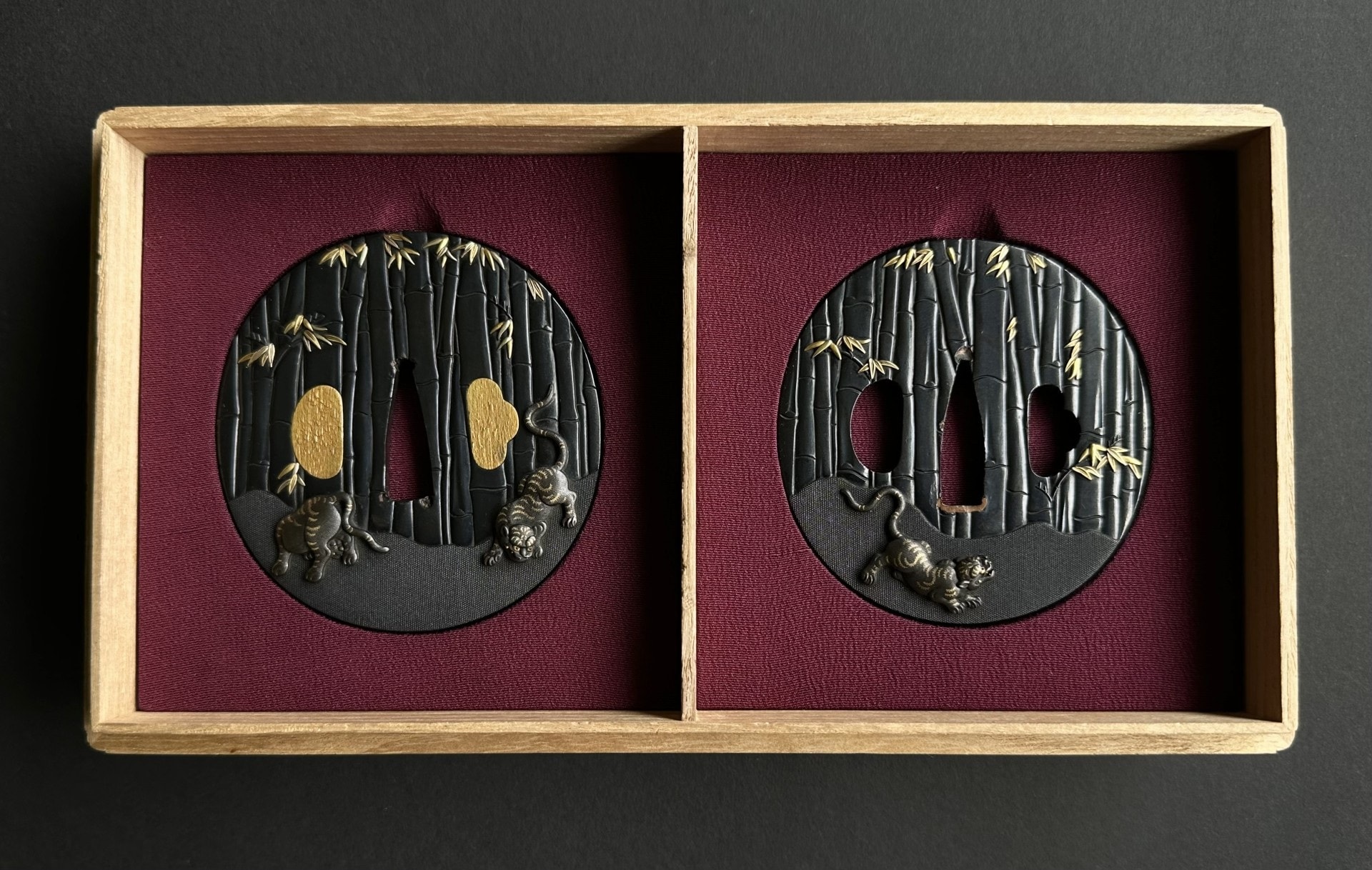
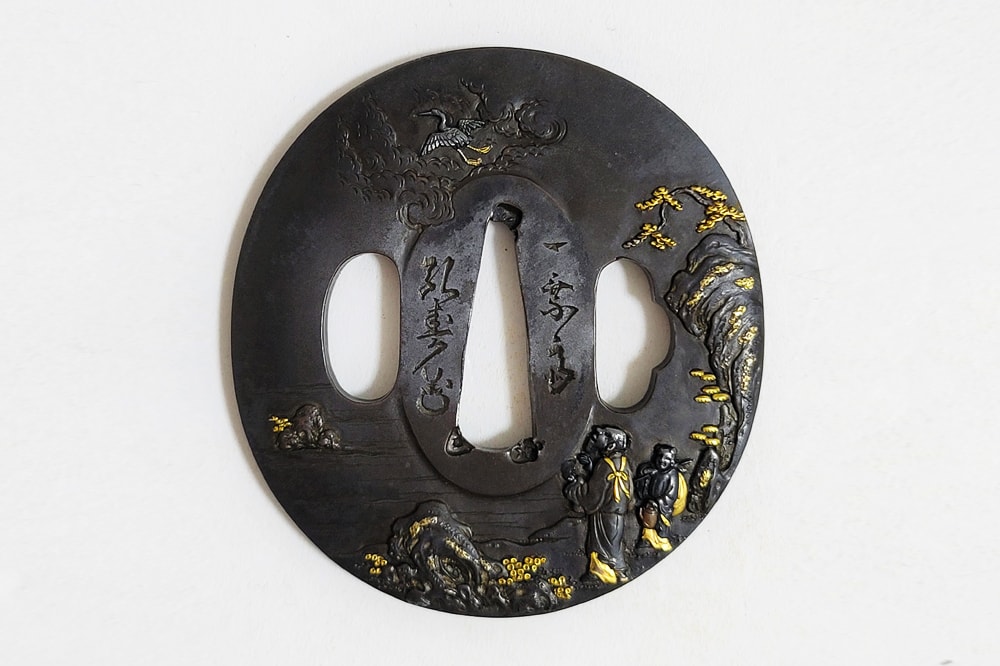
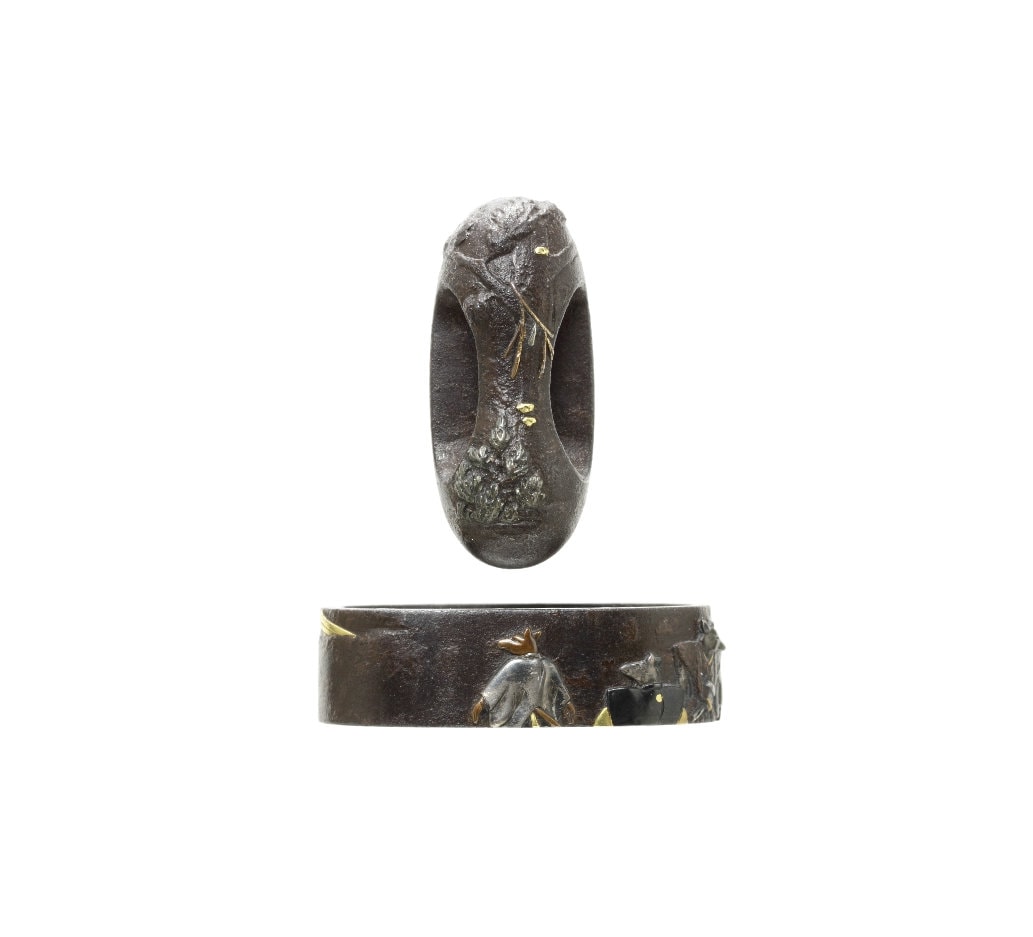
Kosei's technical command reflects the convergence of three lineages: the Hamano school's naturalism, the Omori school's structural discipline, and the Goto family's dignified and methods. His preferred materials are grounds enriched with polychrome inlay using gold, silver, and , often finished with reverse gilding ('). Compositions range from matched sets of saddled horses rendered with gold crests in the Goto manner, to the Twelve Months of Birds and Flowers -- an hereditary treasure of the Hachisuka house -- based on poetic designs from Fujiwara no Teika's . In his later years, works such as with shishi motifs employ kezuritsugi construction combining gold and to create visual variation. The , frequently executed in solid gold (), display richly modeled sculptural carving (yobori) of full, ample form.

The consistently characterizes Kosei's production as embodying a dignified style modeled after Goto taste, yet enlivened by the innovative character associated with . His works are described as possessing "high dignity" and "an elegant, courtly taste," with motifs treated in a "taut, crisp expression" that demonstrates "the full range of his abilities." Even in pieces that strongly emulate the Goto family style, the assessments note skill "well worth close attention" and a "chic, sophisticated design sense" with an "urbane, polished finish" -- qualities that distinguish Kosei as a consummate synthesizer of the major mid- metalworking traditions.

Historical importance

Where Horie Okinari stands among comparable artisans: across all of nihontō, and within tradition, era, and period. The tiers (Foremost · Leading · Major · Notable) weigh official designations from the NBTHK and Japan's Agency for Cultural Affairs, together with historical honors of lasting repute such as the Sansaku and Meibutsu-chō.

随一
Foremost
屈指
Leading
有数
Major
著名
Notable

Select a lens to see how it's measured.

Designations

Kokuhō—
Jūyō Bunkazai—
Jūyō Bijutsuhin—
Gyobutsu—
Tokubetsu Jūyō—
Jūyō Tōken7

Elite Standing

Kantei

Provenance

Work Types

Distribution across 7 ranked works

Signatures

Signature types across 7 ranked works

Currently Available

Lineage

Horie Okinari
Student
  1. 1.Horie Okiyoshi堀江興吉1designated

Omori School

Other artisans of the Omori school

  1. 1.Teruhide英秀1 for sale15designated
  2. 2.Chizuka Hisanori遅塚久則1 for sale9designated
  3. 3.Terumitsu英満4designated
  4. 4.Horie Okiyoshi堀江興吉1designated
  5. 5.Kazutomo一知1designated
  6. 6.Mitsutoki満辰1designated
  7. 7.Hidetomo秀知2 for sale2designated
  8. 8.Hidetoshi秀寿2designated

Horie Okinari

Horie Okinari(堀江興成) was a maker of Japanese sword fittings (tōsōgu) of the Omori school, active during the act. Meiwa–Tenmei (c. 1770s-80s) period.

The work follows the Machibori tradition.

Designated works by Horie Okinari include 7 Jūyō.