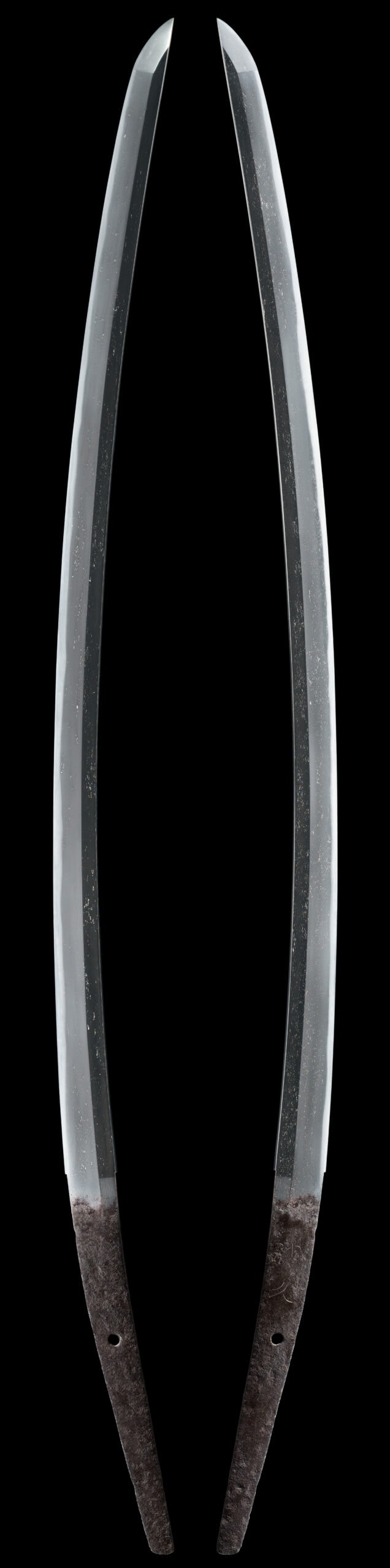
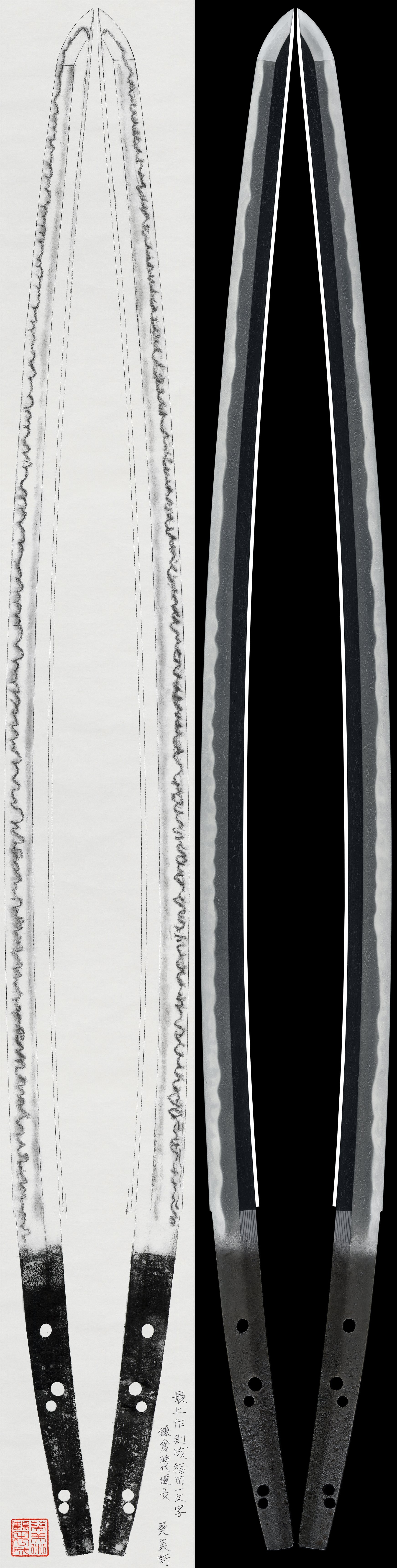
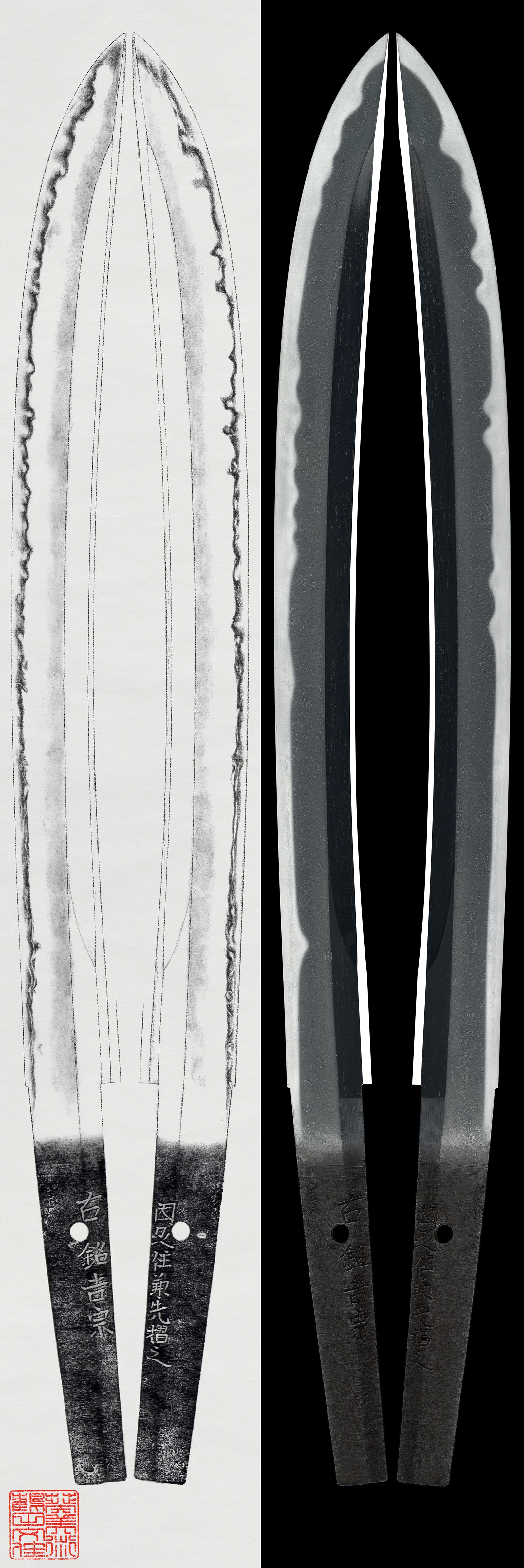
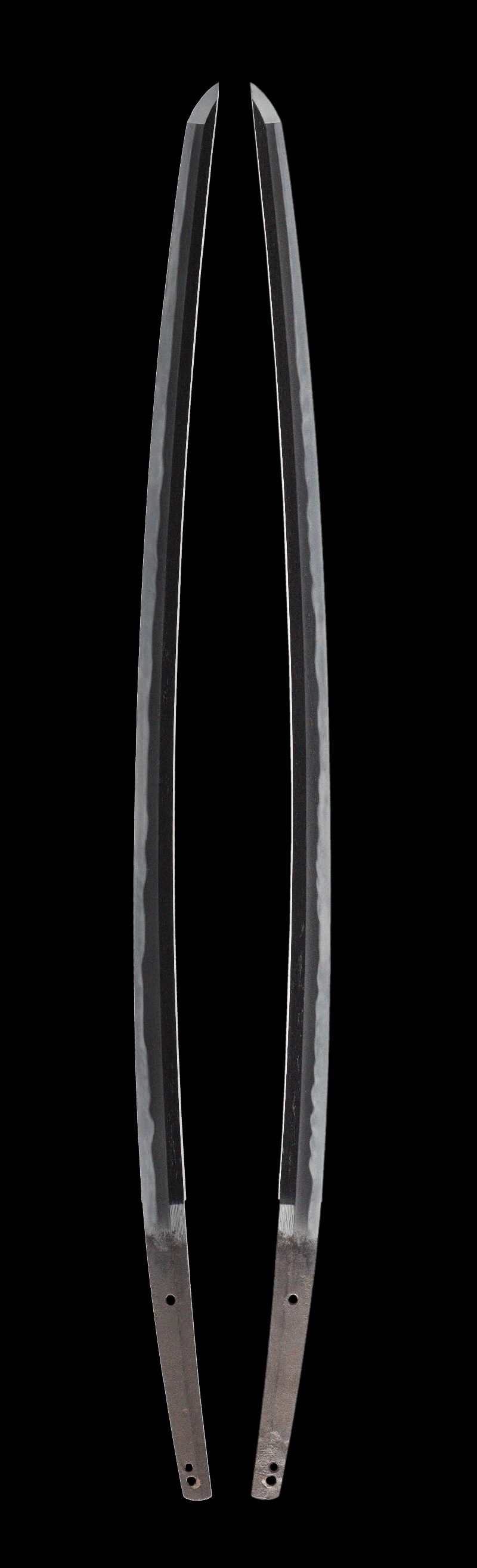
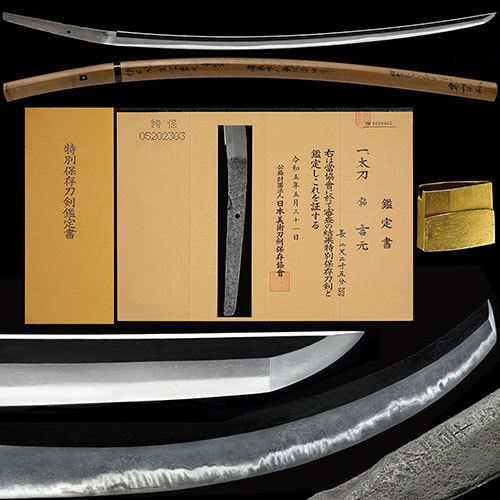
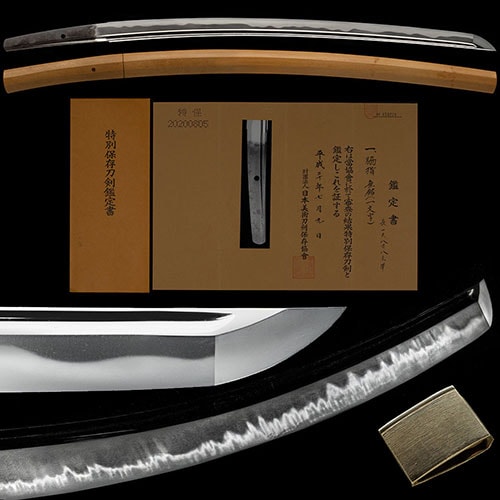
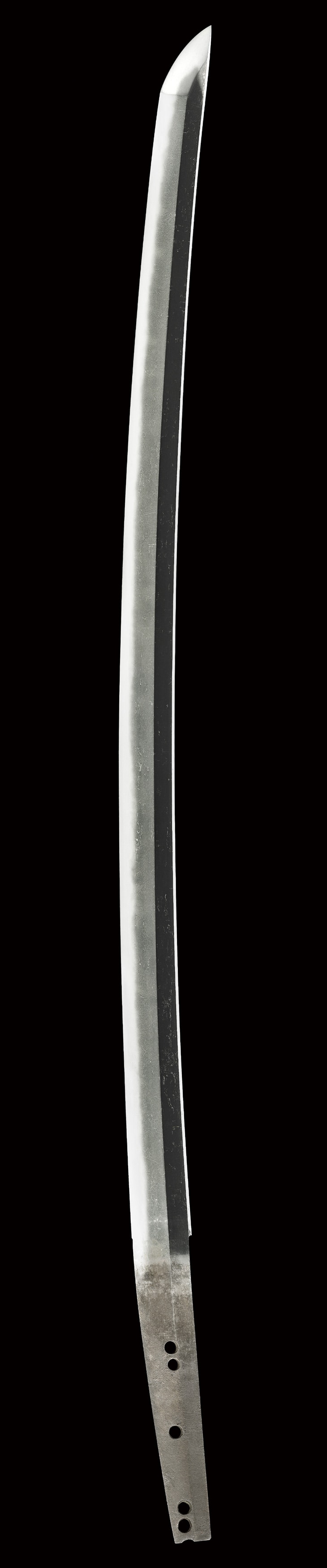
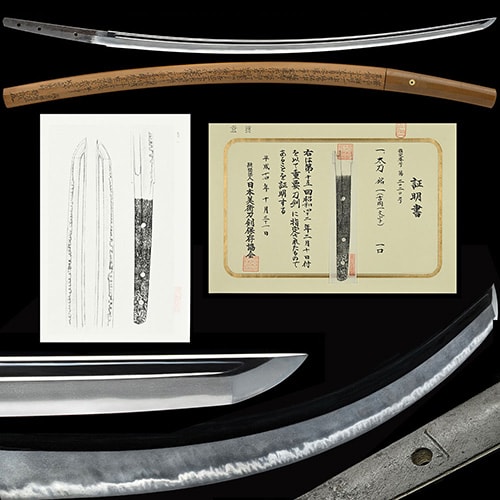
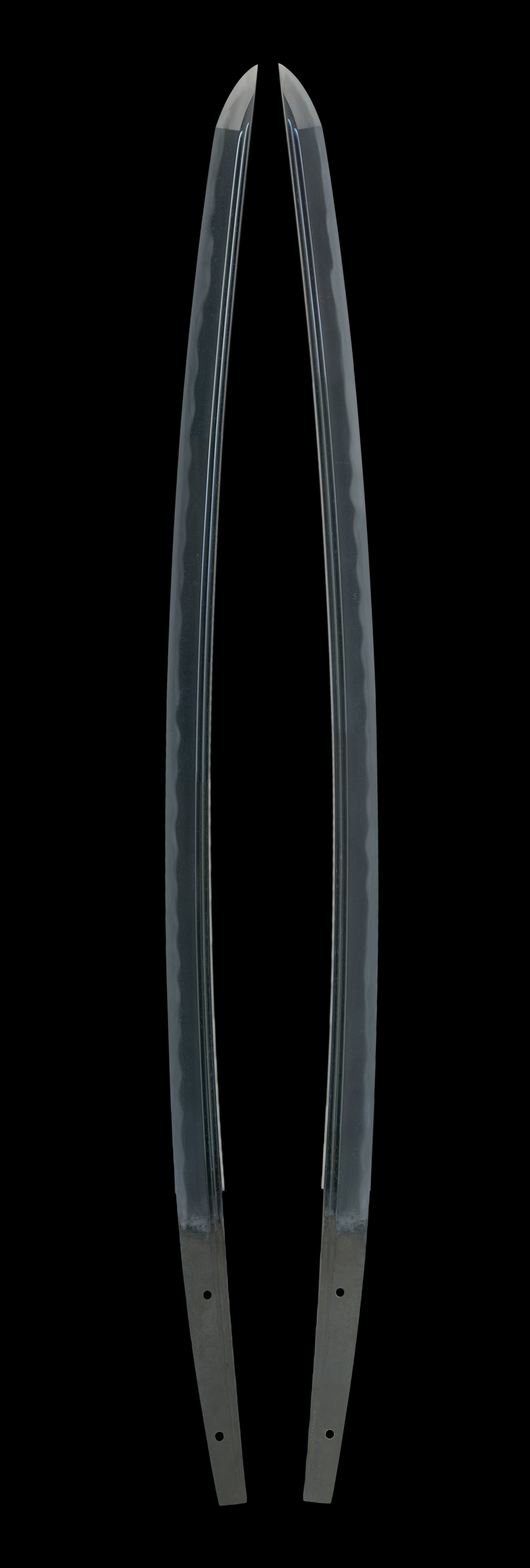
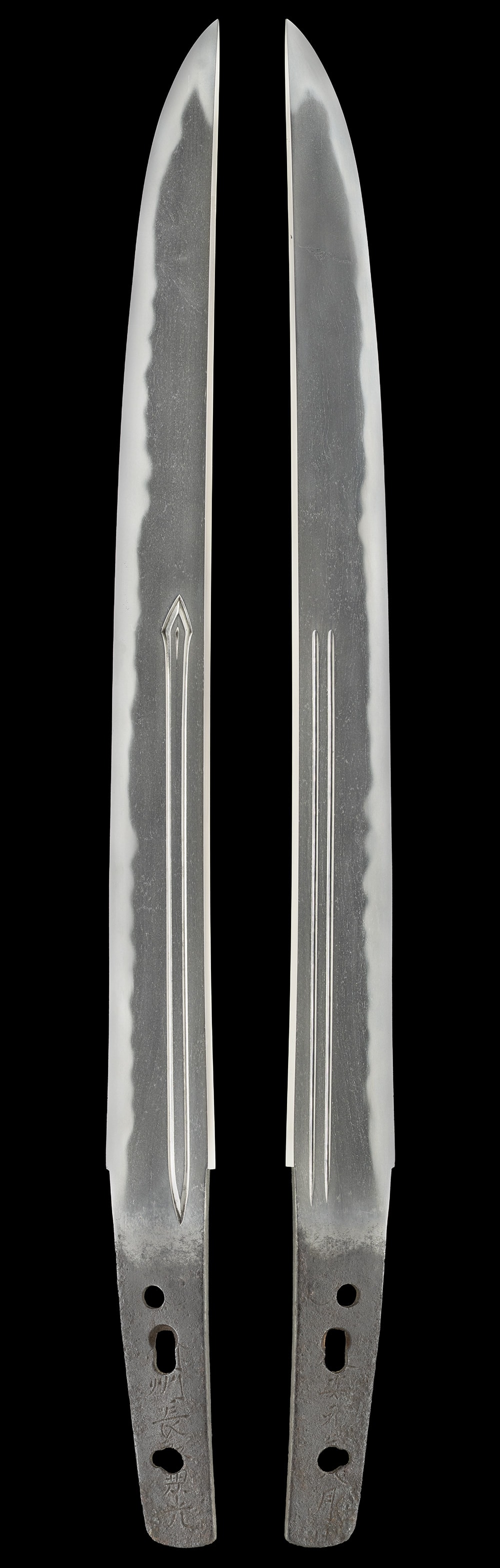
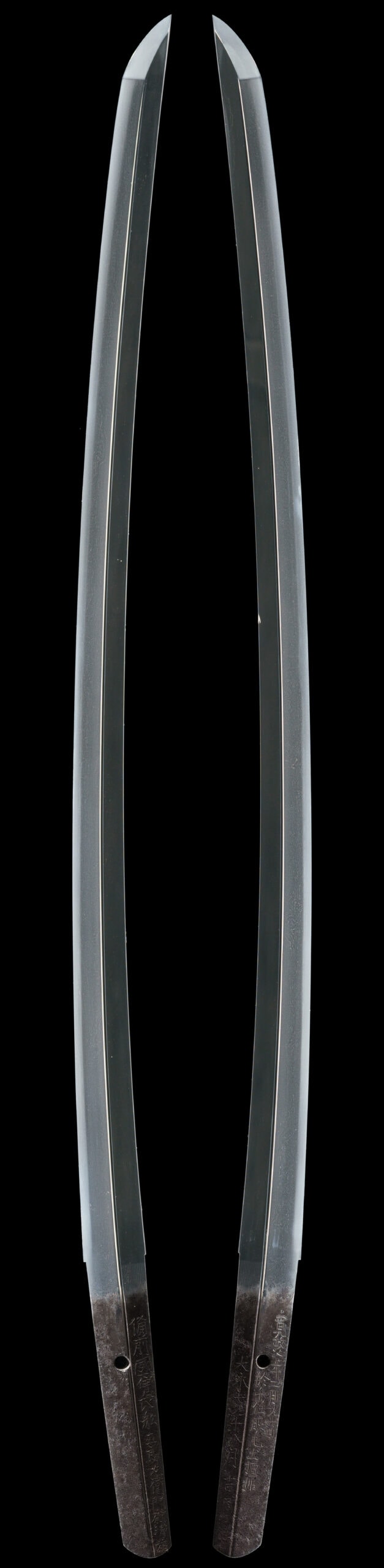
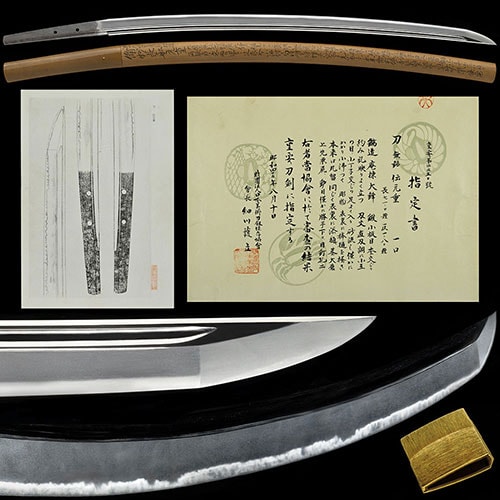
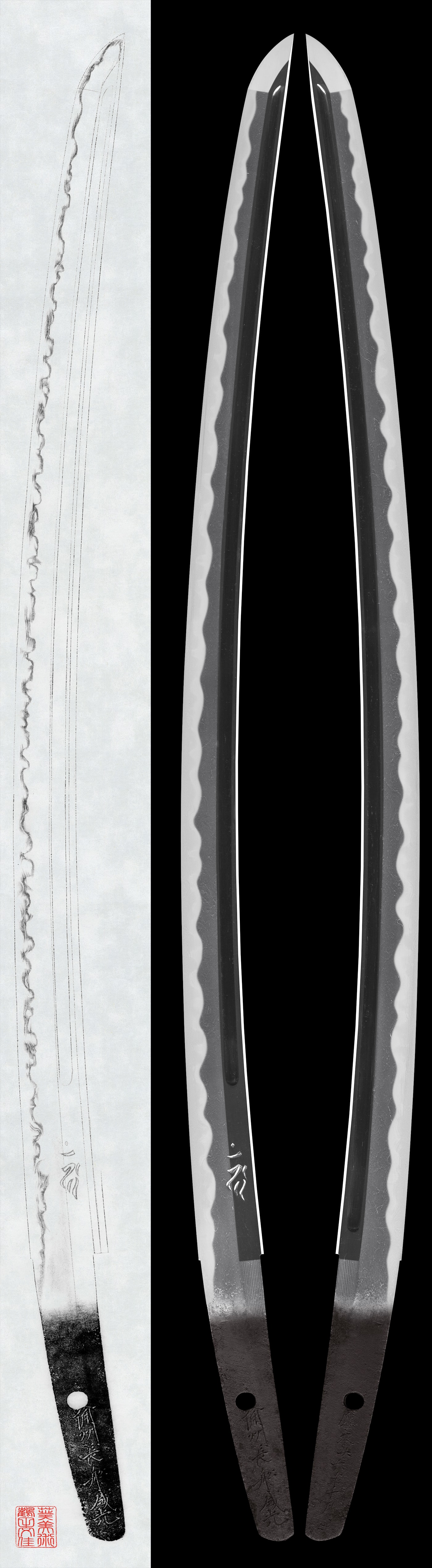
Yoshiie was a smith of the Fukuoka school in Province, active around the Kenryaku era (1211–1213), placing him as a comparatively early figure within that celebrated lineage. Sword reference works position him in the first generation of Fukuoka production, predating the mid- masters Yoshifusa and Norifusa. From the end of the period he is also associated with the designation "Iwato ," having served as jito (estate steward) of Iwato-sho in ; works bearing the longer inscription "Ichibishu Iwato-sho jito Saemon-no-jo Minamoto Yoshiie" and dated examples from the Gentoku era (1329–1331) confirm his documentary presence across a broad span of -period swordmaking.
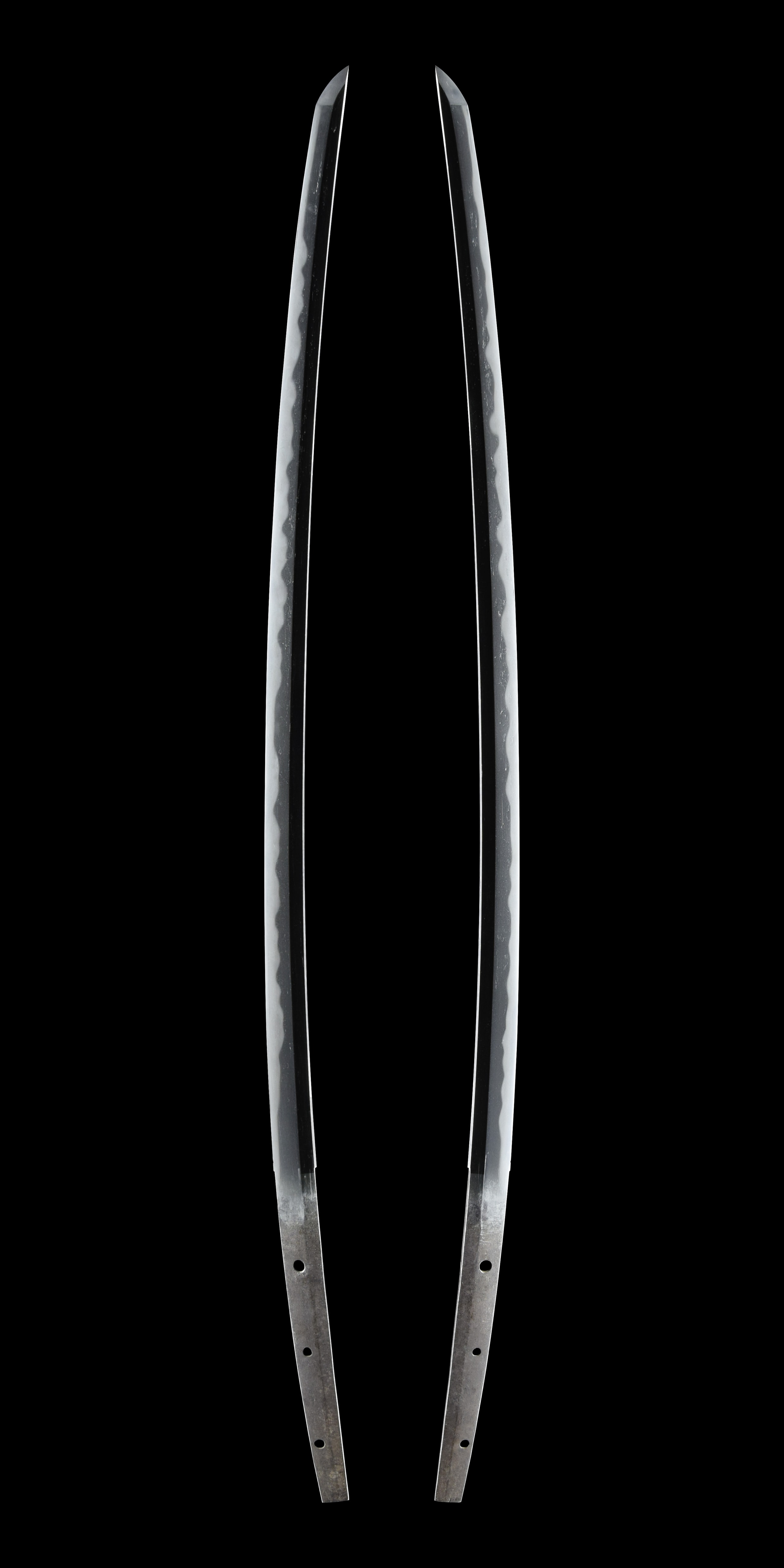
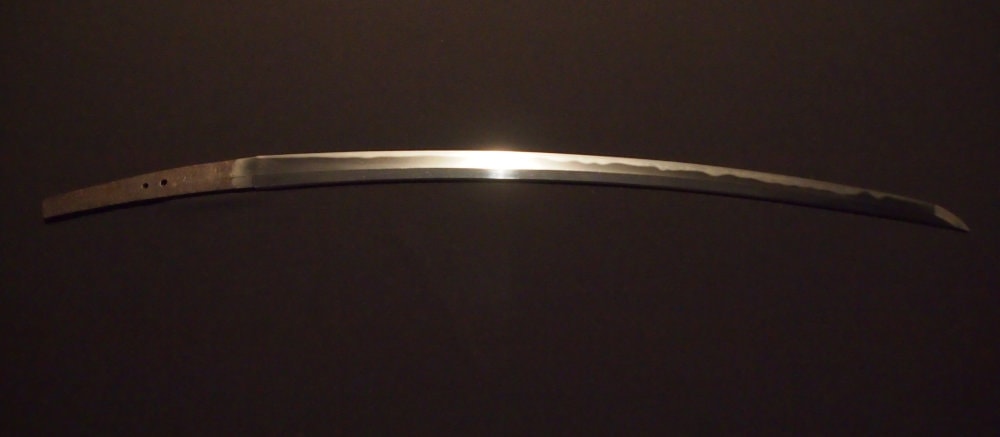
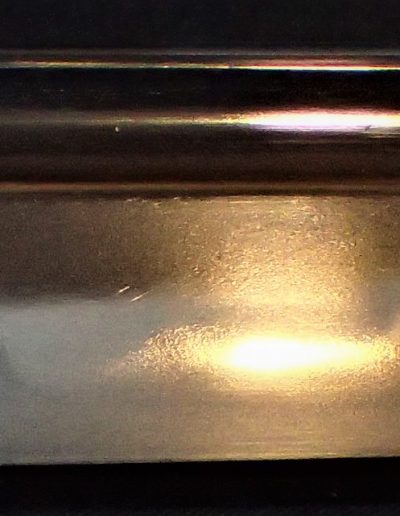
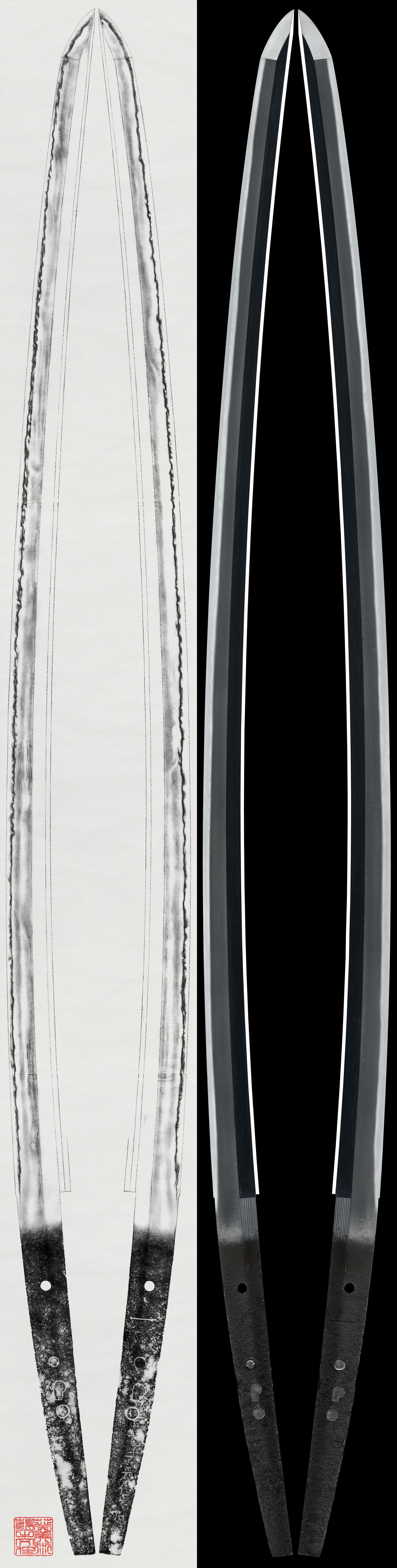
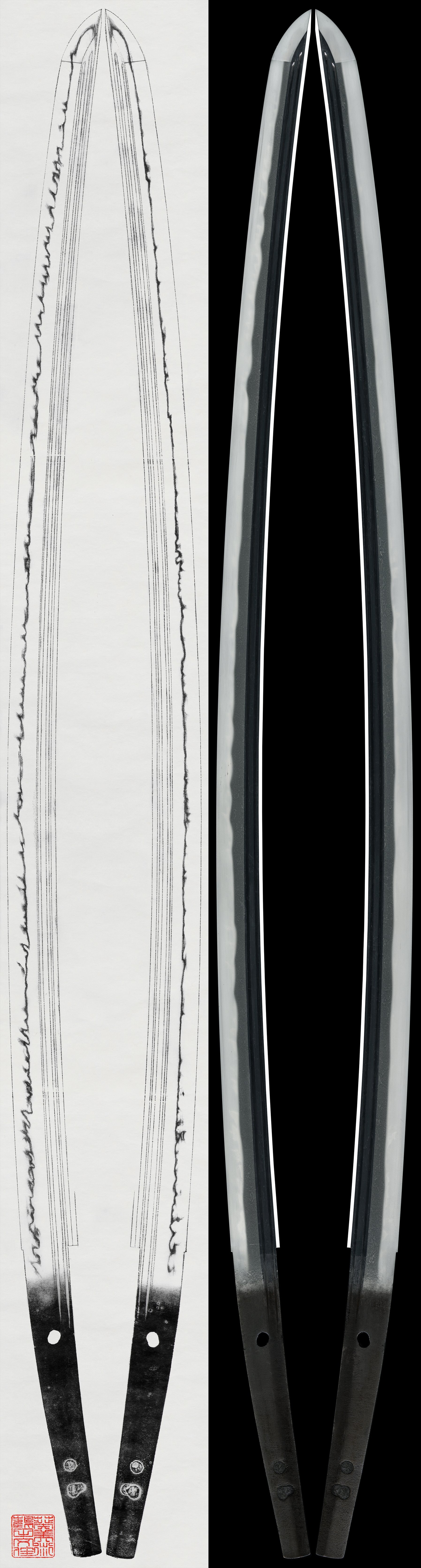
The characteristic of Yoshiie's work is an mixed with , with adhering well, present, and standing distinctly — hallmarks of the tradition. His typically begins with a -ba at the base, above which develops in a somewhat restrained pattern featuring pointed-headed , with and , , and and appearing throughout. The observes that compared with Yoshifusa and Norifusa, "the here is of a slightly smaller scale, and the blade shows a stronger presence of " — features that "vividly manifest the characteristics of an earlier-period smith within the Fukuoka school." Some works attributed to Yoshiie display a dense with ornate into which enter plentifully and are intermingled, contributing to a lively and decorative effect.
Yoshiie's designated works are consistently praised for the quality of both and . The panel describes his finest as — "sound and well-preserved" — with "excellent" workmanship, while his JuBi examples are valued both for their ornate tempering and for their documentary significance, several bearing dated inscriptions that serve as important reference material for the chronology. His position at the intersection of the Fukuoka and Iwato branches of the school, together with the early dating of his work, makes him a pivotal figure in understanding the development of the flamboyant tradition that would reach its zenith in the generations that followed.