NihontoWatch MonNihontoWatchBETA
MarketEncyclopedia
NihontoWatch Mon

NihontoWatchBETA

Market
Encyclopedia
Overview·Kantei·Designations·Provenance·Blade Forms·Signatures·Lineage·School
OverviewKanteiDesignationsProvenanceBlade FormsSignaturesLineageSchool
  1. Schools
  2. Ichimonji
  3. Fukuoka Ichimonji
  4. Tameto

Fukuoka Ichimonji Tameto

爲遠

Jūyō
Vol. 16, No. 119 · Katana

Fukuoka Ichimonji Tameto

爲遠

5 ranked works

ProvinceBizenEraKoan (1278–1288)PeriodKamakuraSchoolIchimonji>Fukuoka IchimonjiTraditionBizen-denFujishiroJo sakuToko Taikan900(top 10%)TypeSwordsmithCodeTAM132
2Jūyō Bijutsuhin
2Gyobutsu
1Jūyō Tōken

Overview

Tameto is a late- swordsmith of Karakawa, a locality on the border with , who is attached to the Fukuoka line. He is one of the comparatively few early names whose place is fixed by a signed and dated work: a reading no Karakawa-jū Saemon no Jō Fujiwara Tametō, with the reverse dated the first year of Bunpō, 1317. The published sources note that the Meizukushi treats him 'as drawing on the line of Fukuoka Korekuni' (古刀銘尽には福岡一文字為国の流れを汲むものとしているが、実際には), while adding in the breath that this is not in fact clearly established. What is certain is the steel itself, and the small body of his work agrees with itself closely enough that a single hand can be read across it.

His is a quiet hand within a flamboyant school. Where the mid- Fukuoka is the high clove-flower temper, Tametō works a , and his is never plain. On the dated the published sources describe a temper of built in a - manner, the carrying a moist quality, 'a in the manner, moist, with small mixed in and entering' (刃文互出来の直刃に濡れ、小互の目交じり足入る). The small and the set within an essentially straight line are the constant of his work, the activity that keeps the alive without ever opening into the showy of his schoolmates.

The is the other half of the reading. Over a tightly packed an rises clearly, the bright reflection of old steel, and the published commentary returns to it on each signed blade in the plain phrase, 'forged in , tightly packed, with rising' (鍛え小板目詰み、映り立つ). The shape carries its weight: one of the , though shortened, keeps 'a somewhat broad and a healthy figure' (磨上げながら、やや身幅広く健全な姿である), while its sibling, judged the hand, survives and slender with a slightly extended point and a pleasing . The forging is fine and the vivid; the temper sits quiet above it.

The other face of his record is the attributed to him. Here the is mixed with a -tendency and stands a little overall, the now faint rather than bright, and the slender undulates shallowly, mixing , and , entering well, running and adhering, the straight to a small round. The published sources accept the attribution on exactly the basis the signed work establishes: 'extant signed works by him are extremely few' (現存する有銘の作刀は極めて少く), and they are 'for the most part with an admixture of and ' (殆んど直刃仕立てに丁子小乱を交じえた出来である), so that in this sense, the published record holds, 'the traditional attribution may be accepted' (所伝は首肯し得る). With this smith it is the manner of the temper, not a personal flourish, that carries his hand into the unsigned blades.

For the collector he is a rare and quietly documented early name. The Fujishiro appraisers place him at the jō- level, and the Tōkō Taikan values him in the upper-middle range of the smiths. His survival is slight: no National Treasures and no Important Cultural Properties stand to his name, his record running instead through the prewar Bijutsuhin and a single , with a handful of further signed pieces known. The two closely related signed , judged the hand and one of them the dated 1317 blade, were certified Bijutsuhin before the war; of recorded whereabouts, one descended to Nomura Hisatsuna of Kagawa and the other to Ninomiya Kōjun of Niigata, while the was held in Yamaguchi. These are designated cultural property and long-held heritage rather than blades that pass readily through the market. A signed Tametō in private hands is among the rarer things a student of early could hope to encounter, a documented and dated link in the Karakawa branch of the , and one comes to light, when it does, only with patience.

Kantei

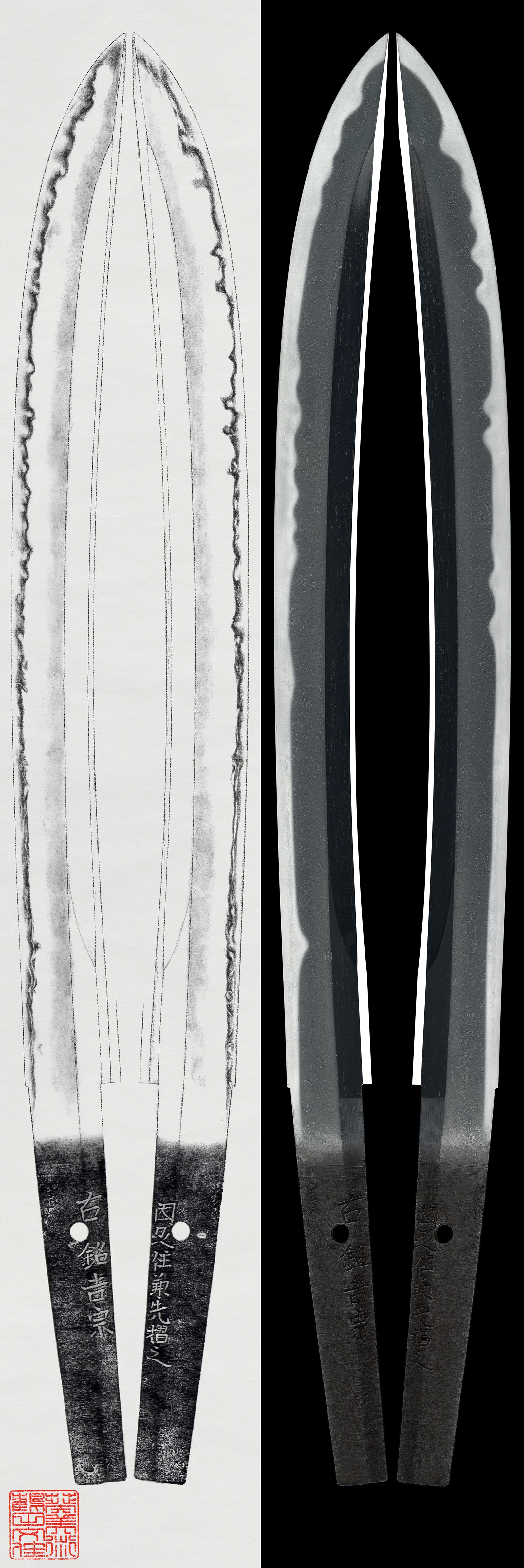
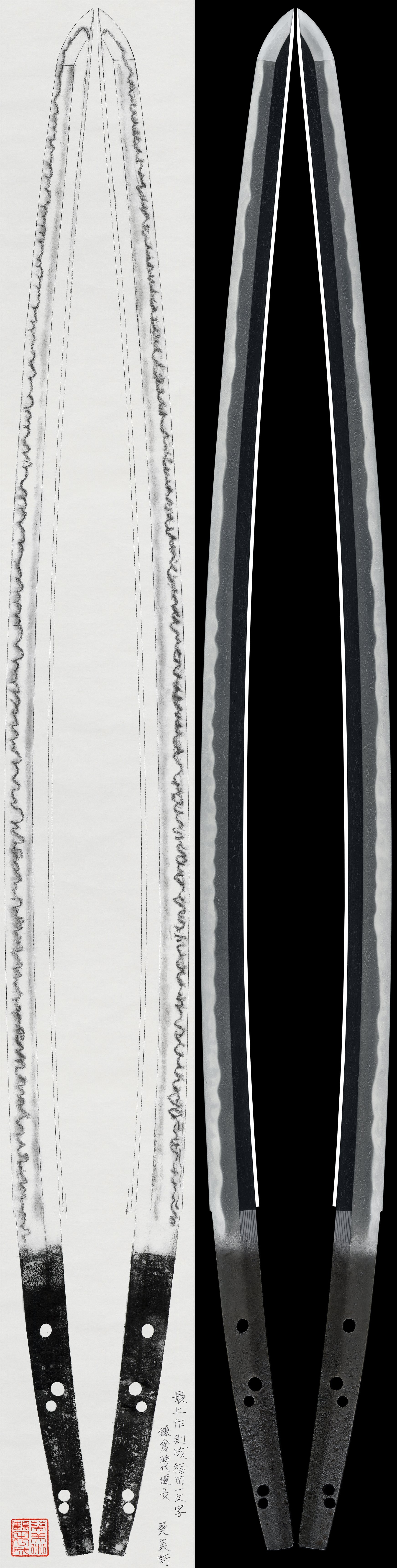
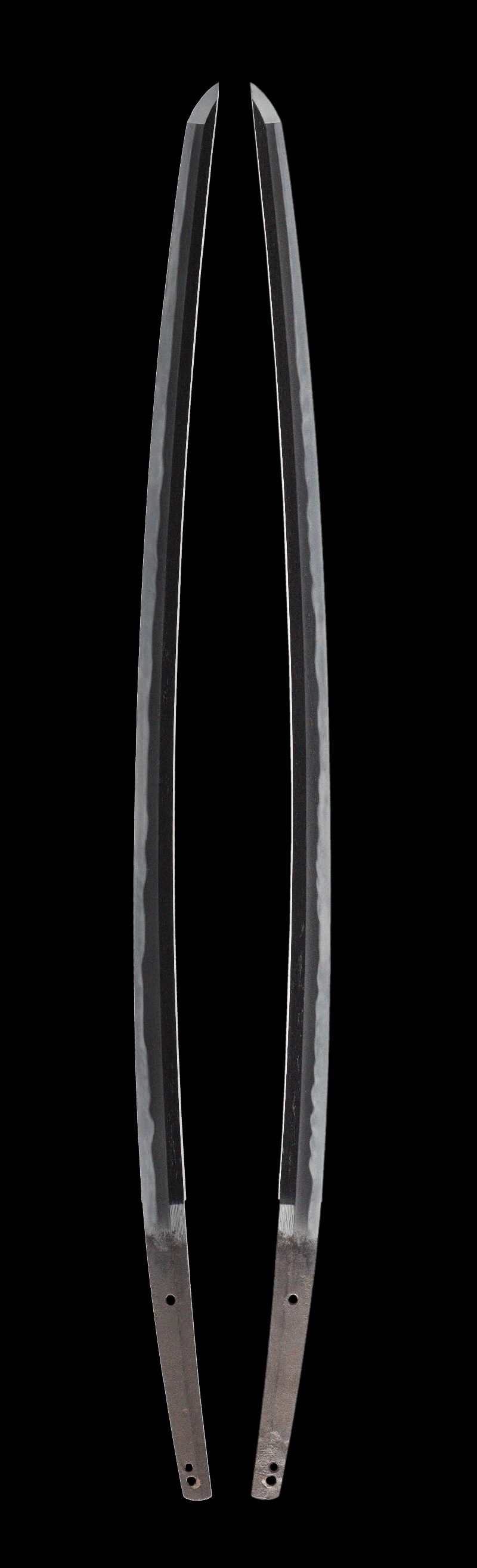
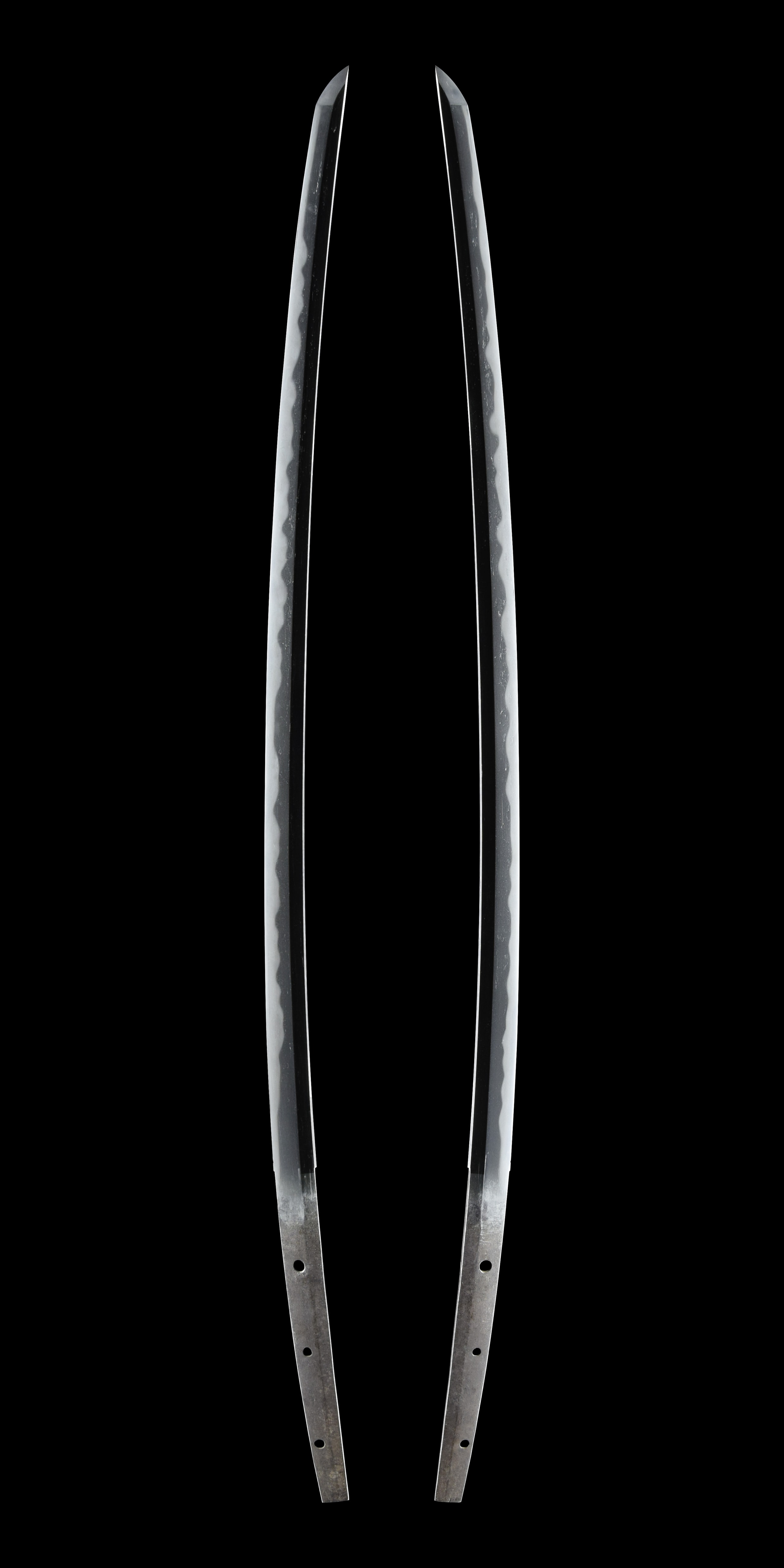
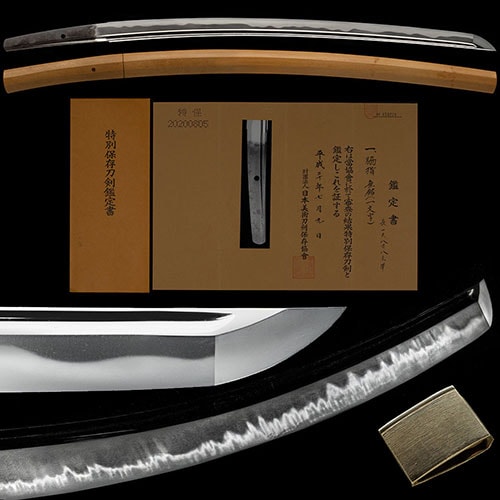
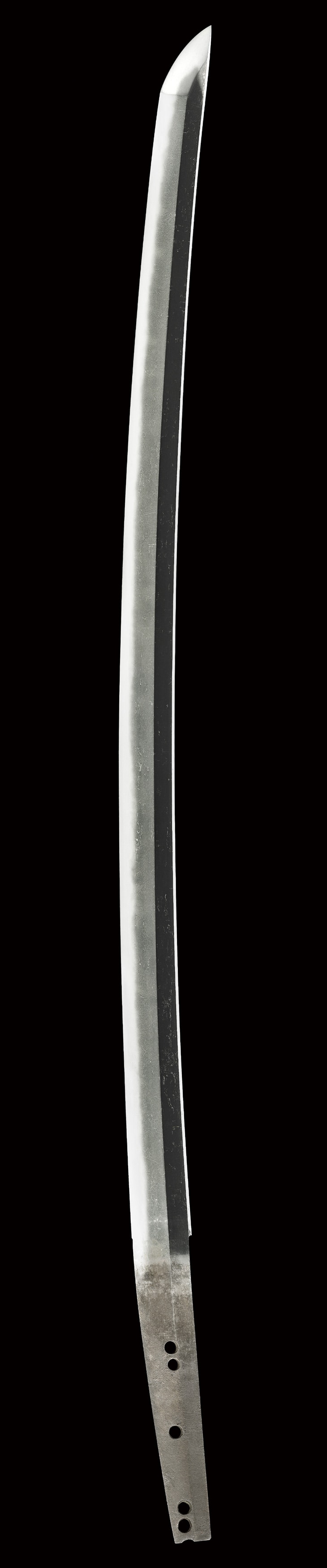
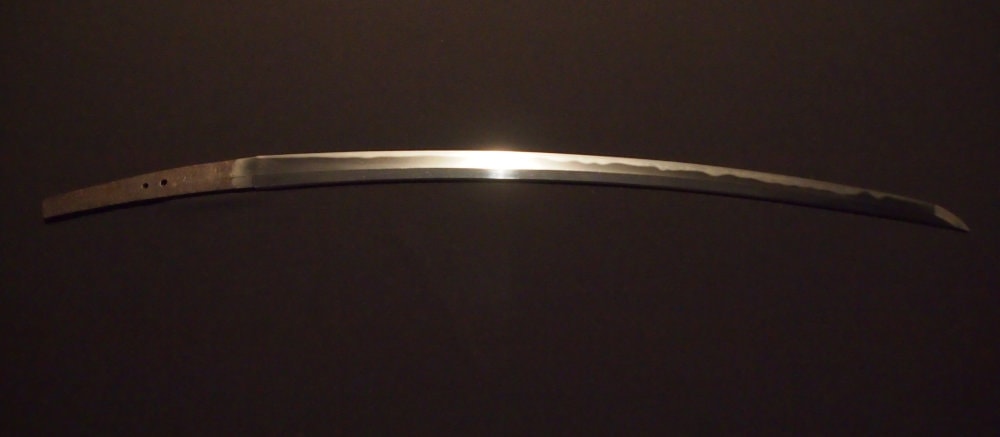
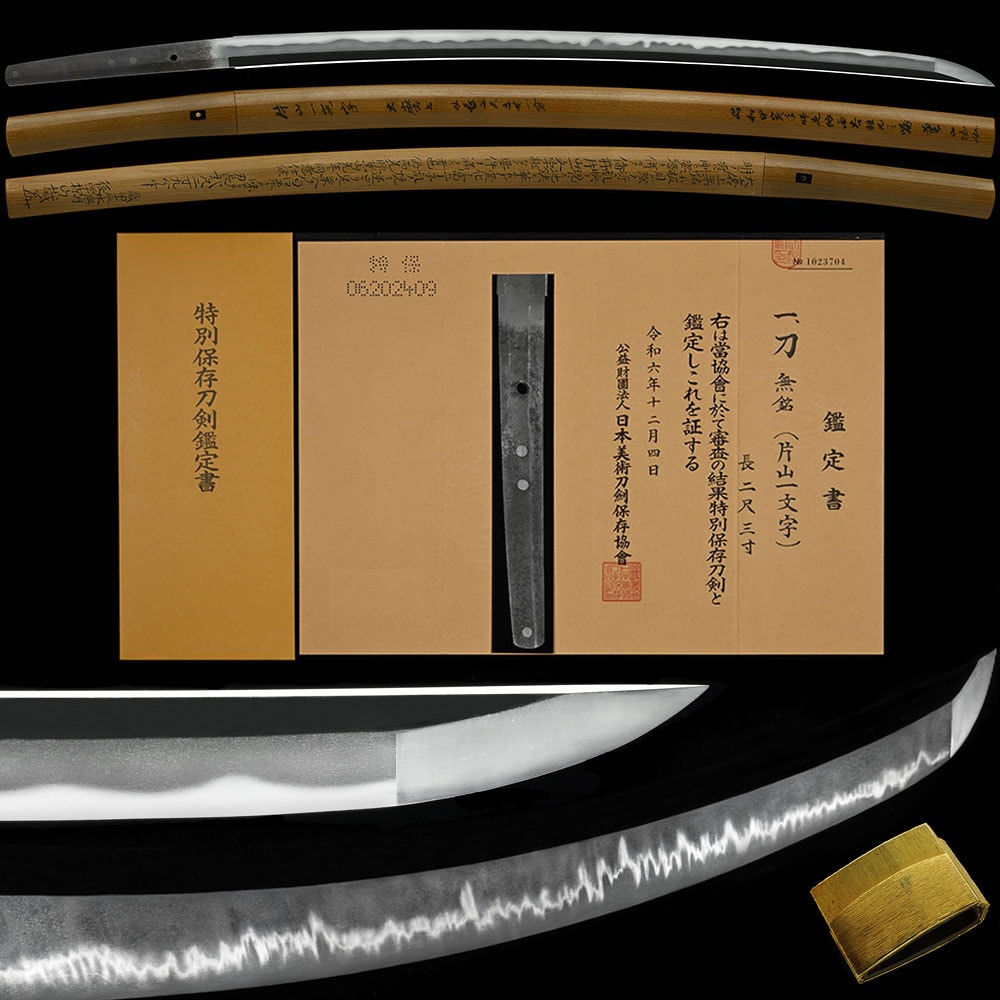
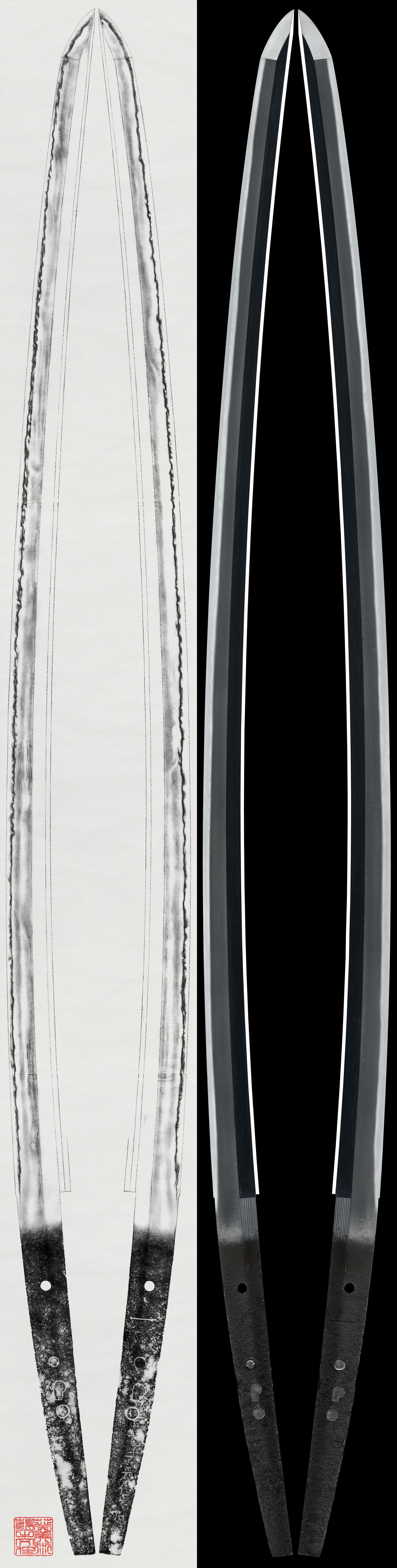
two faces of one scarce hand: the signed and dated tachi of Bizen Karakawa Tameto, a moist suguha worked in a gunome manner with ko-choji over a tight ko-itame and a rising utsuri, set against the o-suriage mumei katana attributed to him on a standing itame, whose quiet choji-touched suguha is itself the ground of the attribution

Tameto is a late- smith of the Karakawa locality, on the and border, attached to the Fukuoka line. He is one of the few names anchored by a signed and dated work: a reading no Karakawa-ju Saemon no Jo Fujiwara Tameto with the reverse date of the first year of Bunpo, 1317. The published sources note that the Meizukushi treats him as drawing on the line of Fukuoka Korekuni, though they add that this is not in fact clearly established. His signed work is scarce and consistent: a slender to slightly wide over a tightly forged with a clearly rising , tempered as a worked in a manner, the moist, with small and mixed in and entering. The other face of his record is the attributed to him, on a standing with -tendency and a faint , the slender shallowly undulating with , and , well adhered and the a small round. The published sources accept the traditional attribution of such work precisely because his signed pieces are so few and so distinctly built in this quiet, -touched manner.

Diagnostic discriminators

unique vs Fukuoka Ichimonji prime (flamboyant choji-midare)

unique vs plain suguha (no gunome activity)

Observation by phase

The signed and dated tachi (his anchor work)

His record is anchored by the signed , one of them dated. The finest reads no Karakawa-ju Saemon no Jo Fujiwara Tameto, with a reverse date of the first year of Bunpo, 1317. Though it keeps a sound, slightly wide body; a sibling judged the hand survives , slender, with a slightly extended and a pleasing . The ground is a tightly packed with a clearly rising . Over it the temper is fundamentally a worked in a manner, the carrying a moist quality, with small and on the a line, and mixed in and entering. This is the quiet, -touched that the published sources treat as the constant of his signed work.

Sugata 姿
Jigane 地鉄
Hamon 刃文

The o-suriage mumei katana (traditional attribution)

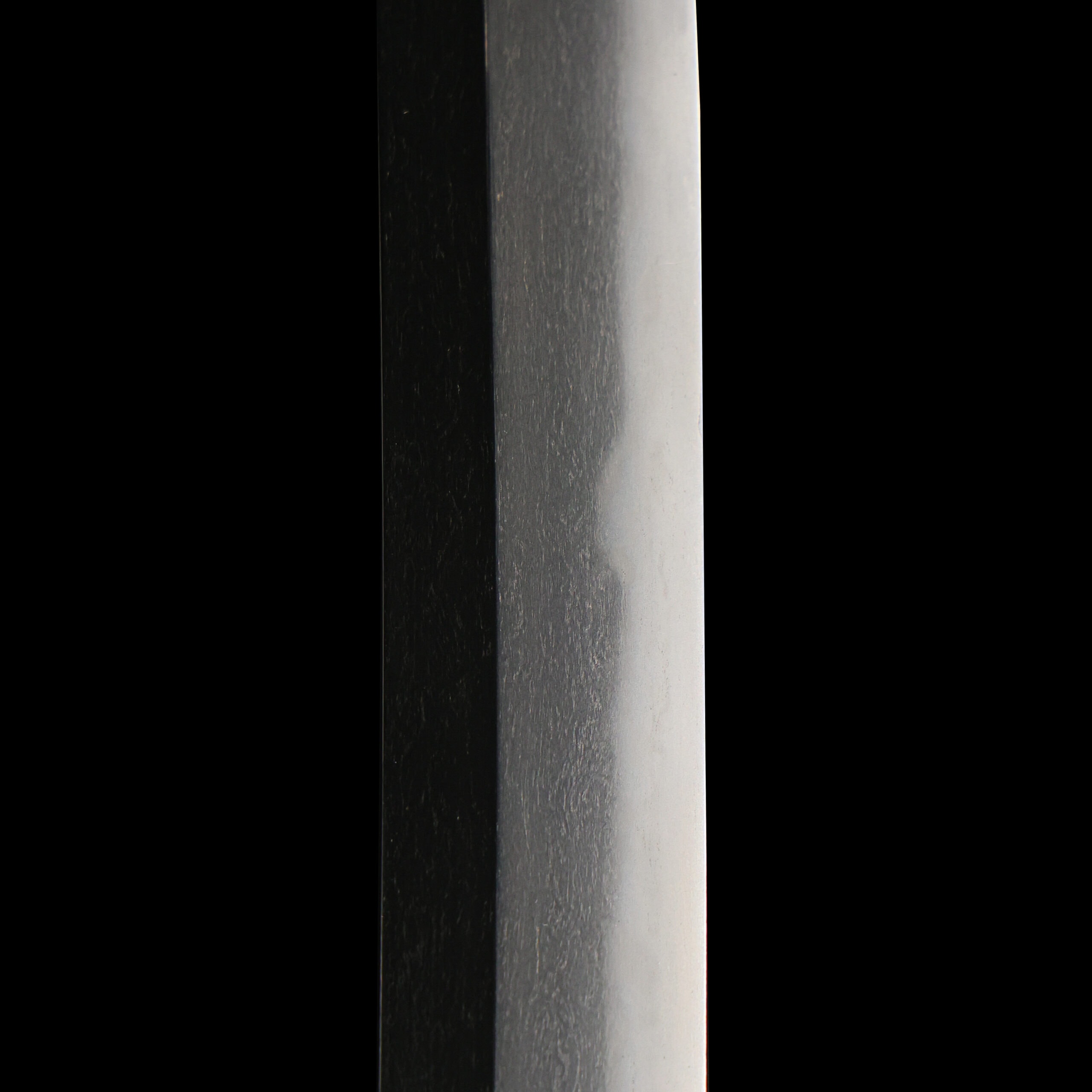
The other face of his record is the attributed to him. It keeps somewhat long dimensions with a slightly high and a even after great shortening. The ground is an mixed with -tendency, standing overall as , with a faint . The temper is a slender shallowly undulating, mixing , and , entering well, with and well adhered, the straight to a small round with a narrow tempering. The published sources state that extant signed Tameto are extremely few and are mostly built as with an admixture of and , and that in this sense the traditional attribution may be accepted; the manner of the temper, not a personal flourish, carries the attribution.

Jigane 地鉄
Hamon 刃文
Bōshi 帽子
Scholarship

The published sources record that the Koto Meizukushi treats Tameto as drawing on the line of Fukuoka Ichimonji Korekuni, but that in fact this is not clearly established. They add that extant signed works by him are extremely few and are mostly built as suguha with an admixture of choji and ko-midare, and that in this sense the traditional attribution of an o-suriage mumei katana may be accepted.

His name carries a transcription question across the corpus: the dated 1317 tachi is signed with the surname Fujiwara, while the Juyo explanation gives the surname Sugawara for the same Karakawa Tameto. He is one of the few Bizen names secured by a signed and dated work, the Bunpo 1 piece, which fixes him in the closing years of the Kamakura period.

Designations

Kokuhō—
Jūyō Bunkazai—
Jūyō Bijutsuhin2
Gyobutsu2
Tokubetsu Jūyō—
Jūyō Tōken1

Elite Standing

0.27 across 5 designated works

Top 9% among smiths

Provenance

7 documented provenances across certified works by Tameto

Provenance Standing

2 works held in elite collections across 7 documented provenances

Top 52% among smiths

Raw score: 1.97 / 10

Blade Forms

Distribution across 5 ranked works

Signatures

Signature types across 5 ranked works

Currently Available

Lineage

Tameto
Student
  1. 1.Tamenobu爲信

Fukuoka Ichimonji School

Other artisans of the Fukuoka Ichimonji school

  1. 1.Sukezane助眞44designated
  2. 2.Yoshifusa吉房1 for sale46designated
  3. 3.Norimune則宗8designated
  4. 4.Yoshihira吉平17designated
  5. 5.Sukekane助包6designated
  6. 6.Norikane則包7designated
  7. 7.Tamekiyo爲清5designated
  8. 8.Yoshimochi吉用10designated
  9. 9.Yoshimune吉宗6designated
  10. 10.Naganori長則17designated
  11. 11.Ichi一7designated
  12. 12.Sukeyoshi助吉1 for sale5designated