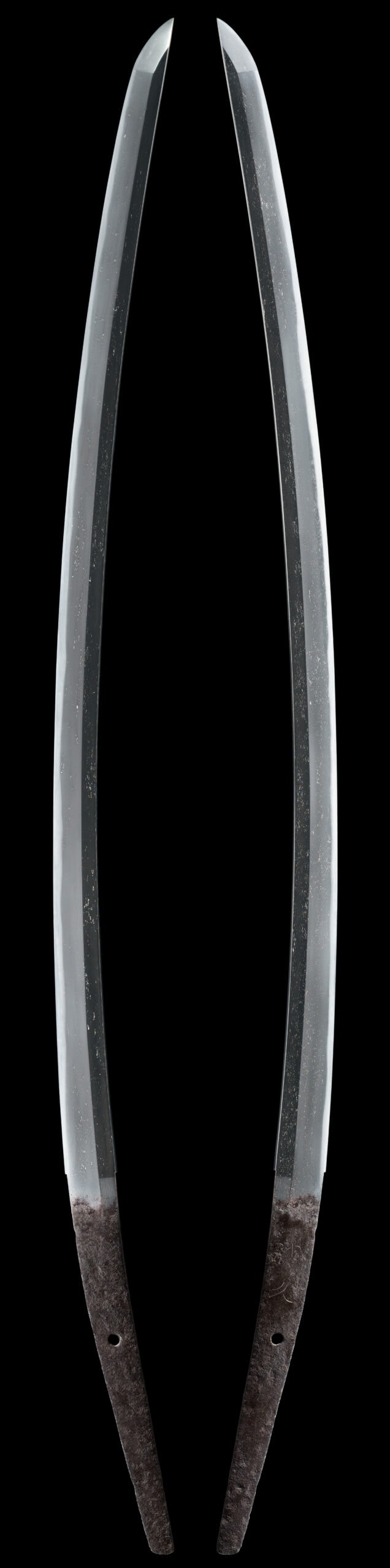
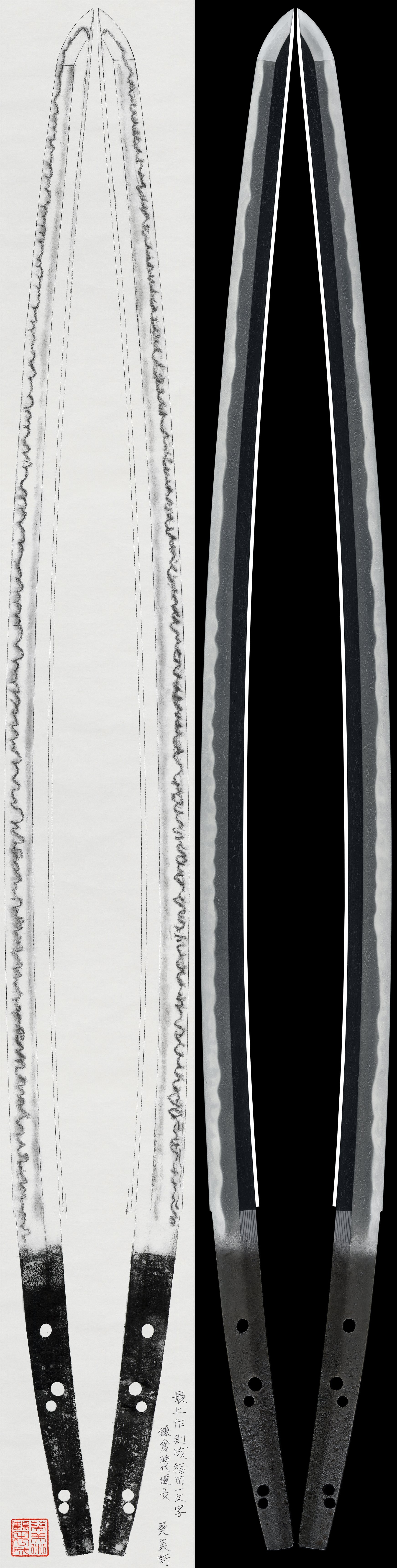
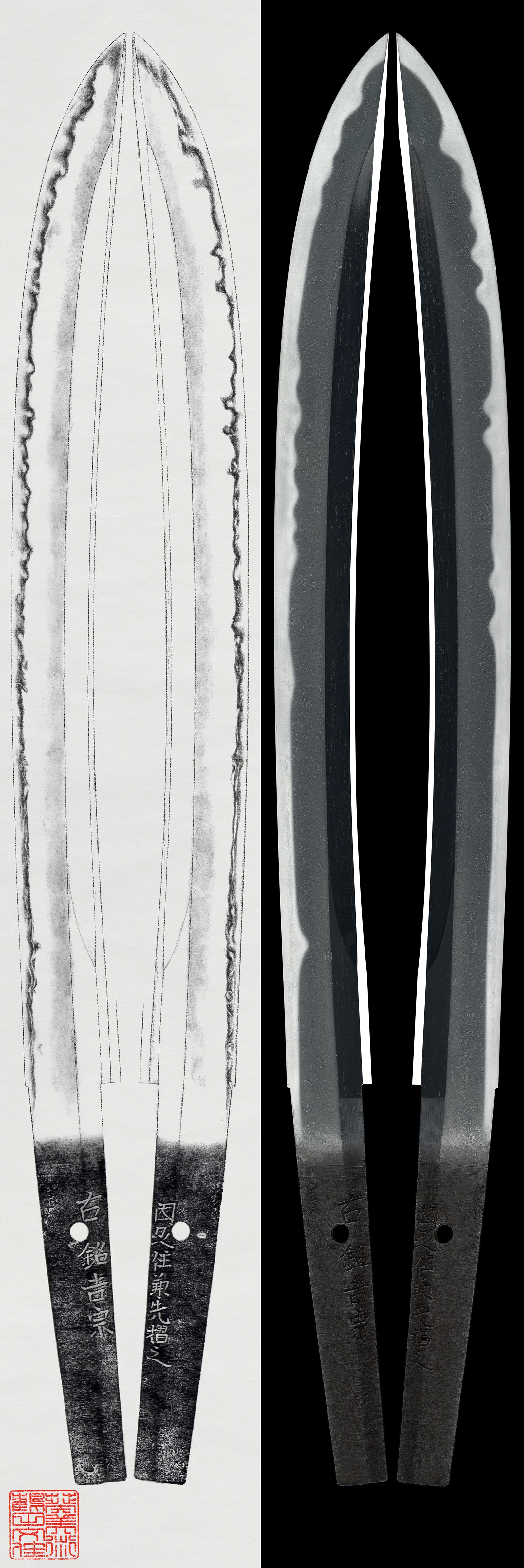
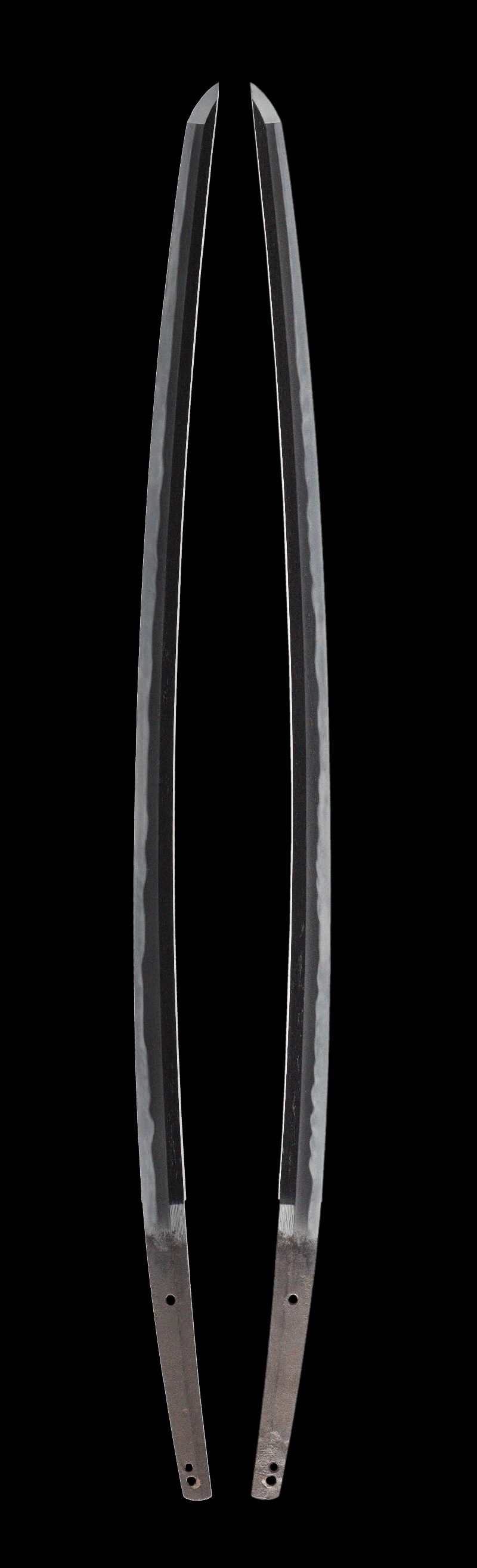
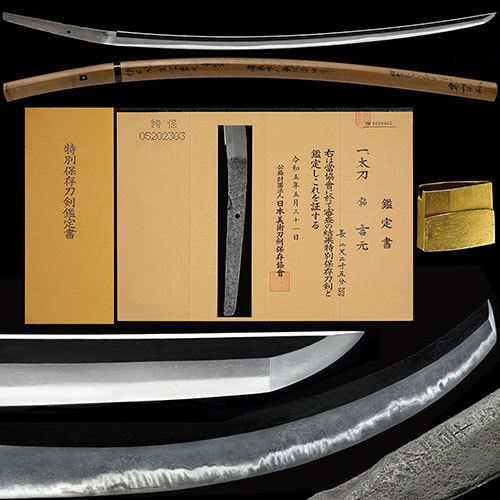
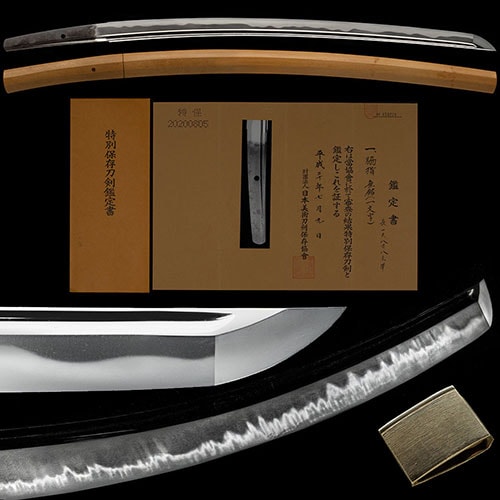
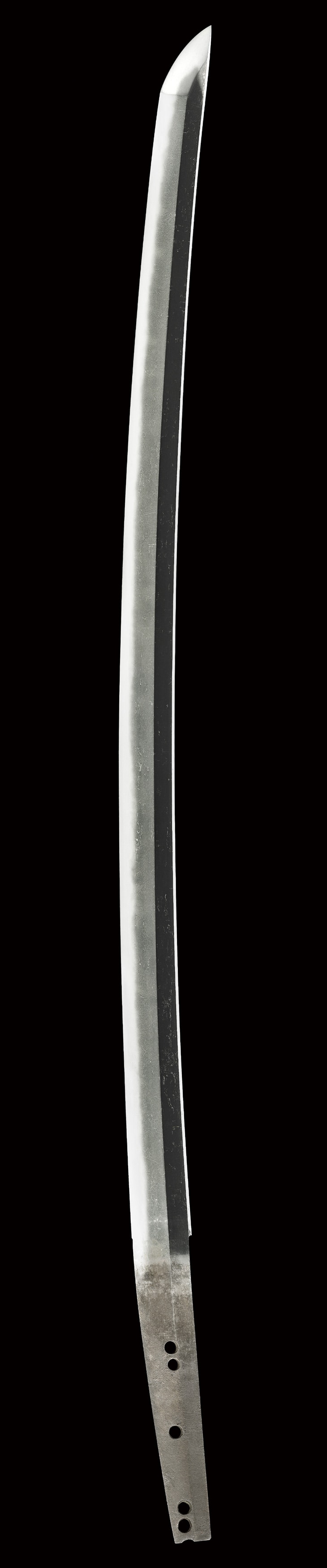
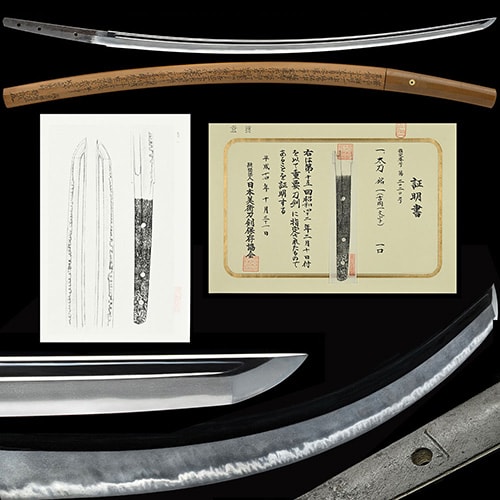
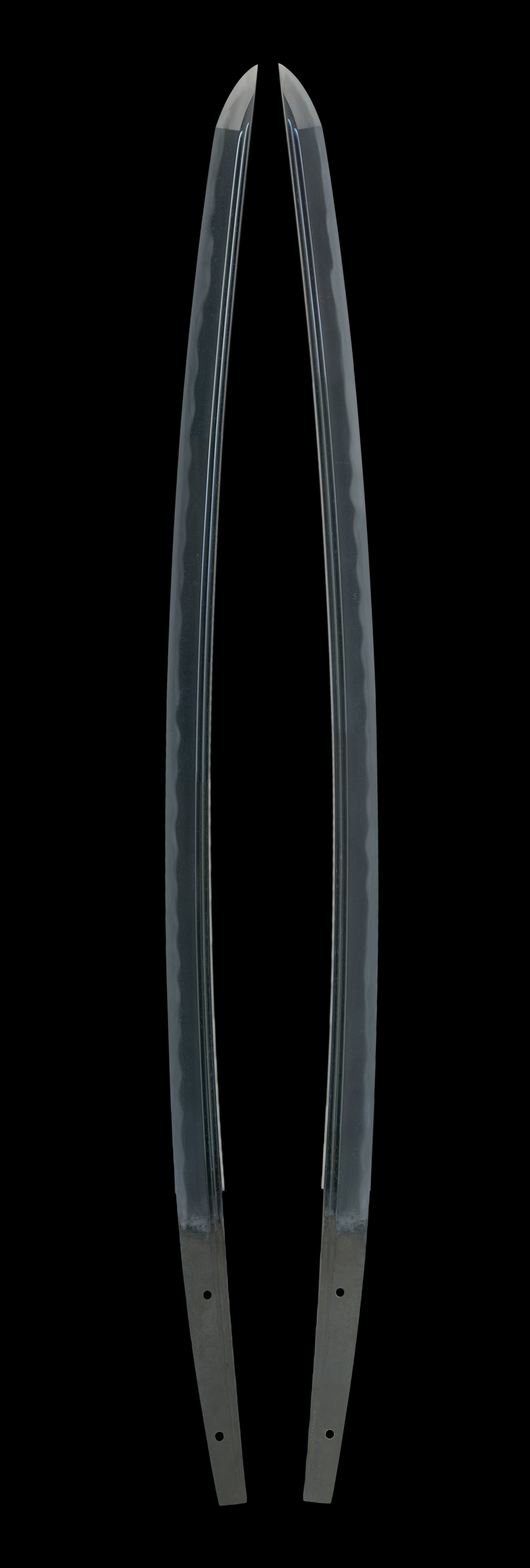
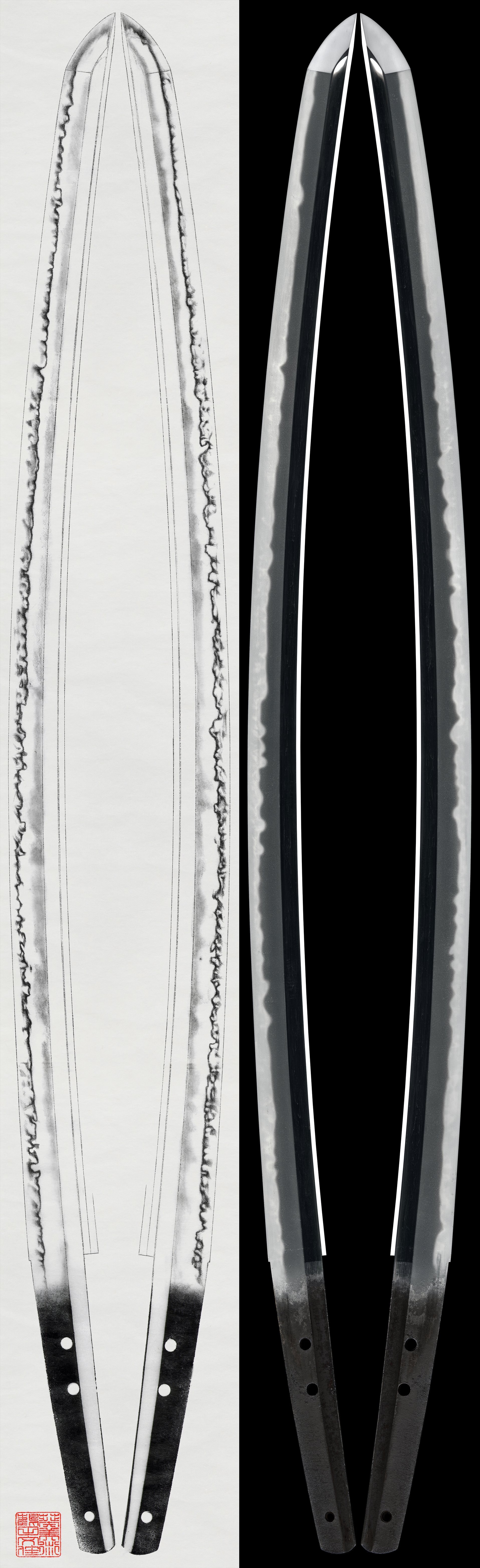
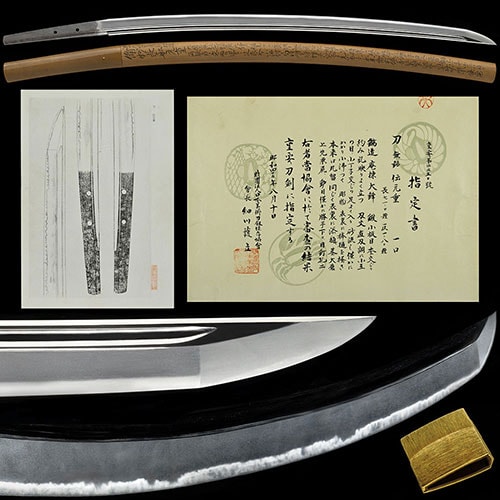
Sukemori is a Fukuoka smith of the middle period, signing the bare two characters of his name on the that carry it, and one of these the published sources call "one of the foremost superior works among Sukemori's pieces". He worked in within the school that arose in the early under Norimune, when the school had already moved past its classical opening into the broad, robust for which it is remembered. The published record is careful with his name from the outset, for the carries a Sukemori under , under Ko- and under the Fukuoka , and the manner of signing differs from blade to blade. From this the judges conclude that "it is thought there were multiple smiths working under the name", so what survives under the one signature is read as the output of more than one hand across two or three generations.
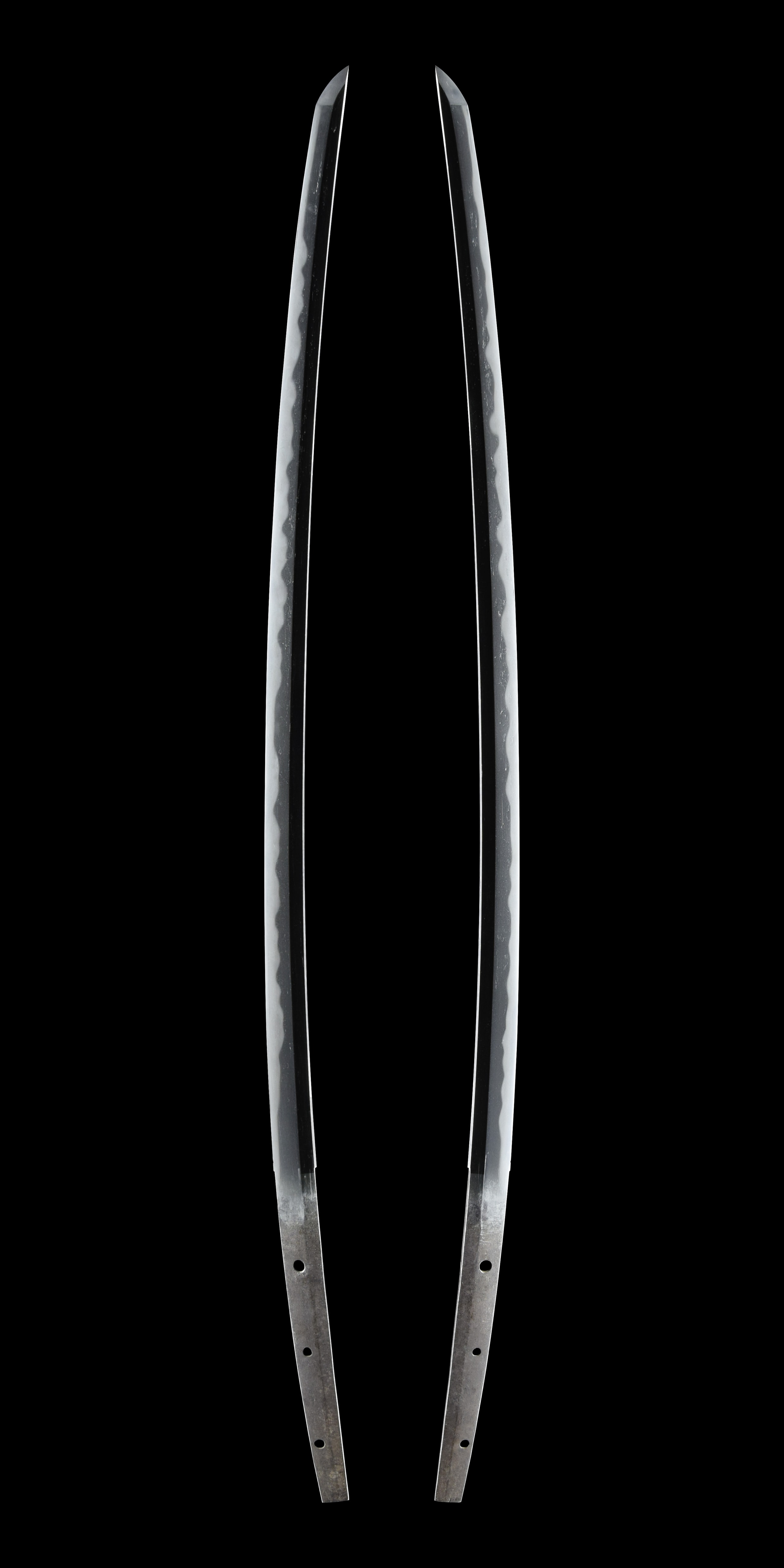
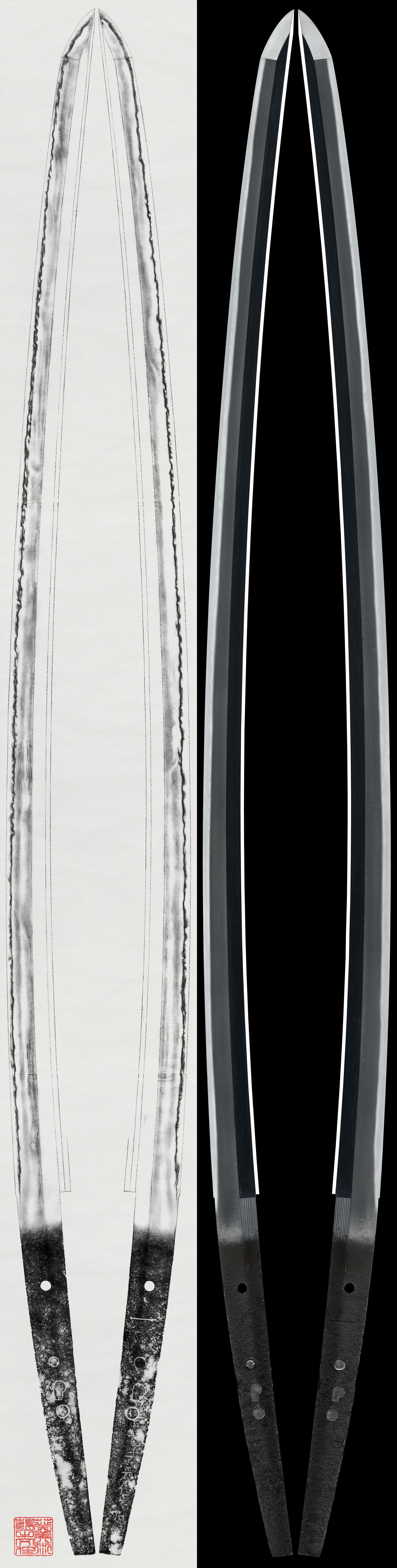
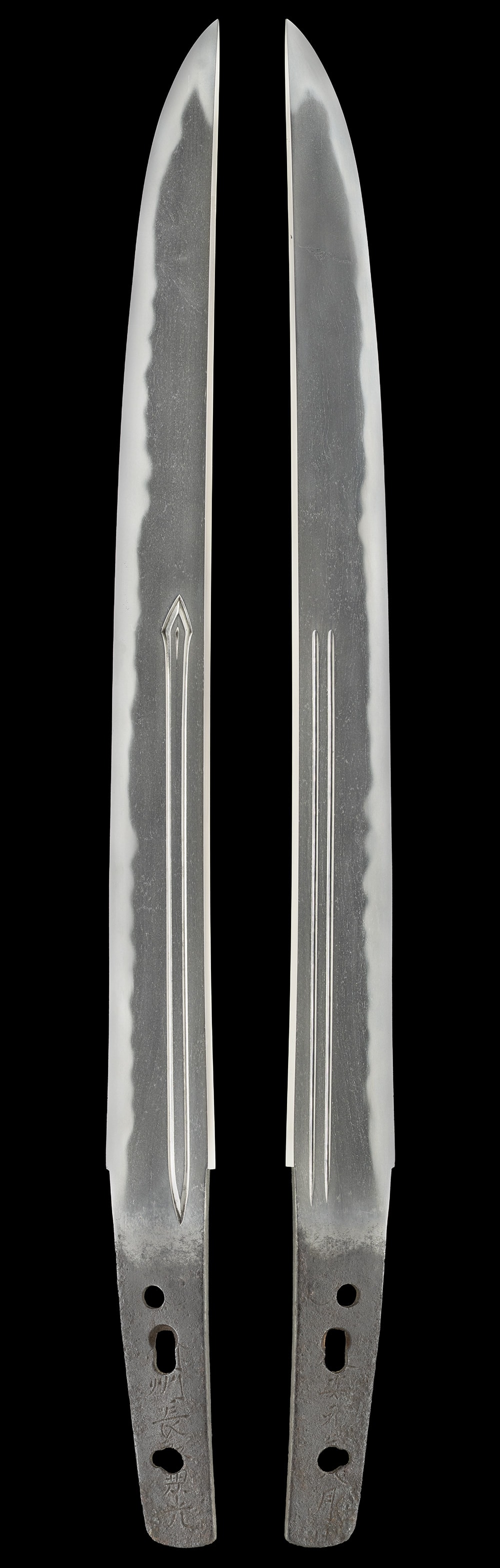
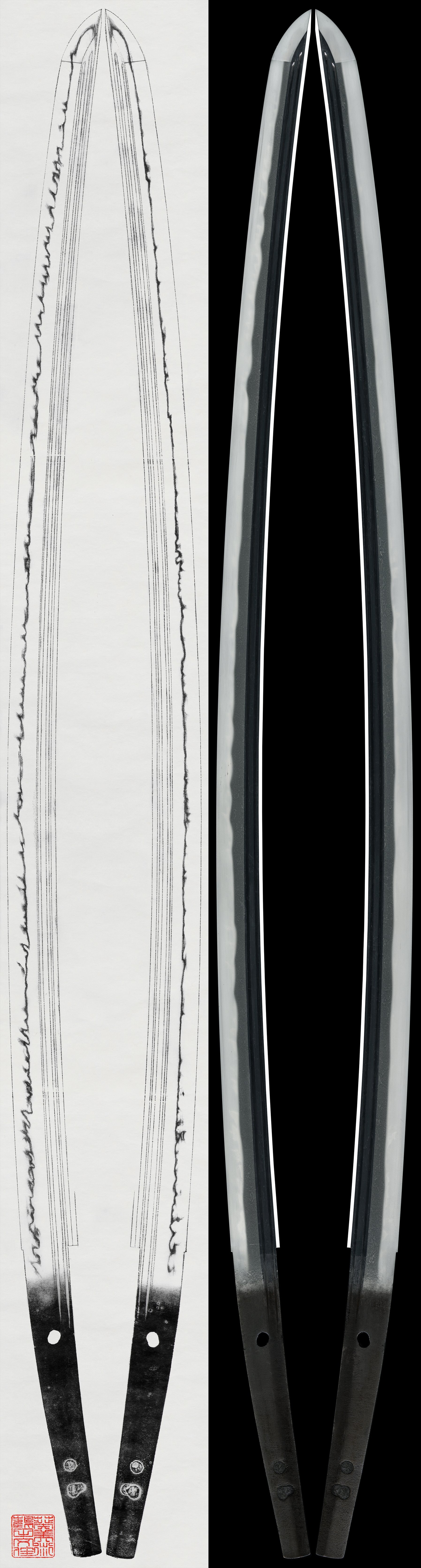
His recognized prime is the two-character signed of mid- shape, the body of standard width, the high and carried on toward the point, ending in a . Over a of that mixes in a flowing tendency and stands a little in places, with and a clear , he forges an extremely brilliant into which enter , and angular elements. The and are abundant, the deep and -dominant with gathering unevenly, and in the lower half a runs; on one the whole pattern leans into a reverse slant. It is this florid temper that the judges measure against the school's best, finding his finest "extremely brilliant and gorgeous" and holding that it "connects to the quality seen in the line as Yoshifusa". The runs and turns in a small , at the point, one example finishing pointed.
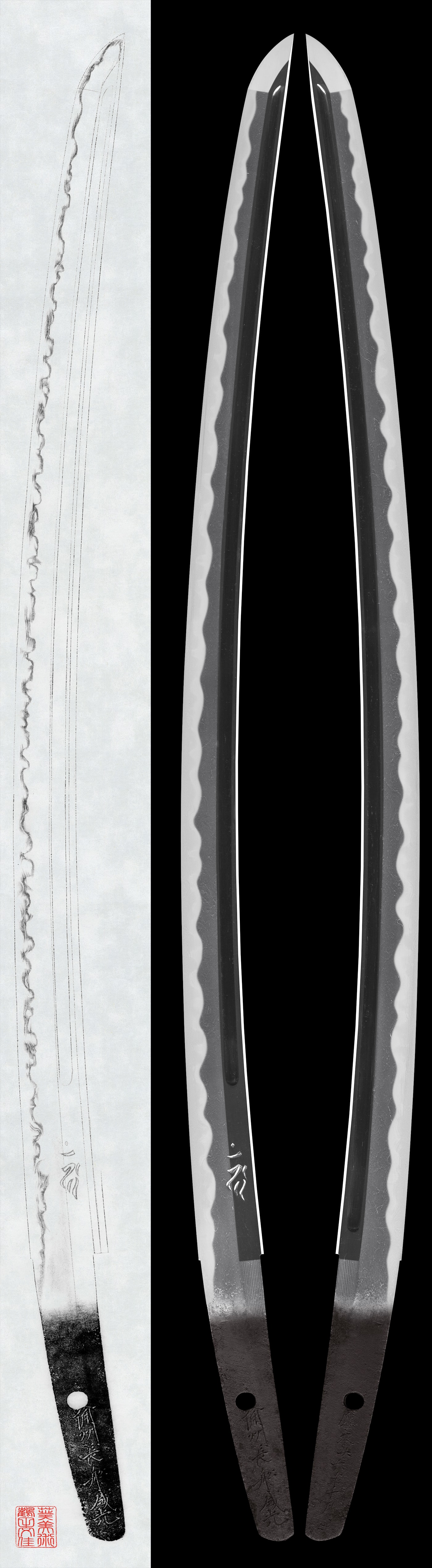
The is the constant beneath the flame. On the prime the is read as standing a little, the grain tending toward , with and the bright over which the temper sits; one piece mixes into the . Where the forging is allowed to tighten, as on his slender early work, it closes into a well-packed with and the grows quieter. The over it on those early pieces is correspondingly restrained, a wind-swept mixing in , deep in with well adhered, entering well, running and seen here and there, with a carved through both faces. So the name spans a wide under a brilliant temper on one side and a tight under a calm on the other.
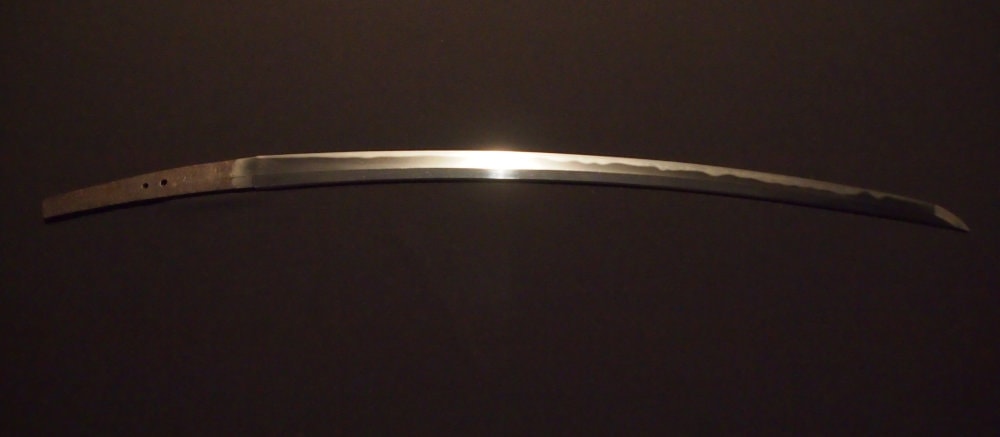
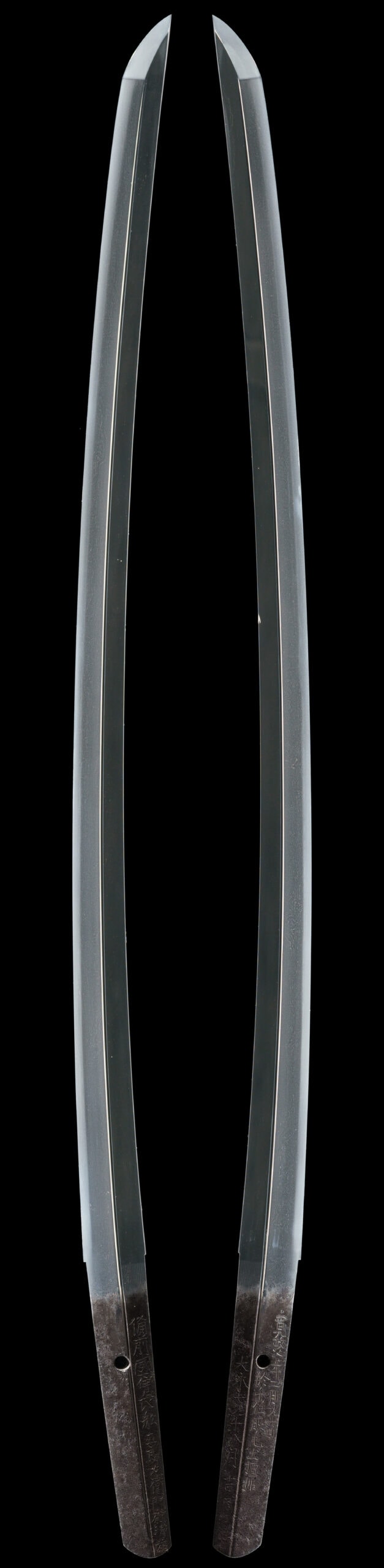
These are the two faces of his record. The first is the broad mid- , but keeping a high , in the flamboyant the published sources tie to Yoshifusa. The second is the slender, small-built early signed , , with high and pronounced and a , which the judges appraise as an early- work close to the manner. They note of these early pieces that the name and workmanship are "so similar in both signature manner and style" to that a given blade cannot always be assigned at a glance, and that with extant works few and none dated, the question is the harder. The two-character signature itself becomes part of the : on the mid- it is boldly cut with a fine chisel toward the near the tang, a manner the published sources record as "without other example".
What sets Sukemori within his school is exactly what the judges name. His brilliant over a standing and a clear places him in the mainstream Fukuoka manner of the mid-, the school then forging its splendid large-clove-flower in ; his finest is set beside Yoshifusa, and his early slender pieces look back to the classical from which the school grew. He is held apart from the plainer smiths by the brightness of his and the gathering of on his edge, and apart from his own quiet early register by the flame of his prime. The published sources judge both and intact, and of one shortened they write that "its form with pronounced combines elegance and strength".
For the collector Sukemori is a rare and problematic early name. Fujishiro grades him Jo , and the Toko Taikan values his work in the middle range. He has no National Treasures and no Important Cultural Properties; his record runs instead through two blades at the rank, three at , and a folded- at the prewar Bijutsuhin. Of recorded whereabouts his blades sit in long-held collections grounded in their own provenance: the transmitted in the Wakisaka family of Tatsuno in Harima, and the Bijutsuhin that passed from Kurokawa Fukusaburo to the Kurokawa Institute of Ancient Cultures, with a piece recorded at Jingu. Only a small number fall in the tradeable tiers, and most designated blades, in private hands or not, are held rather than traded; a signed Sukemori comes to light only seldom, so a privately held example is a notable thing for a collector to encounter, a document of how brilliantly, and how variously, the one name was worked.