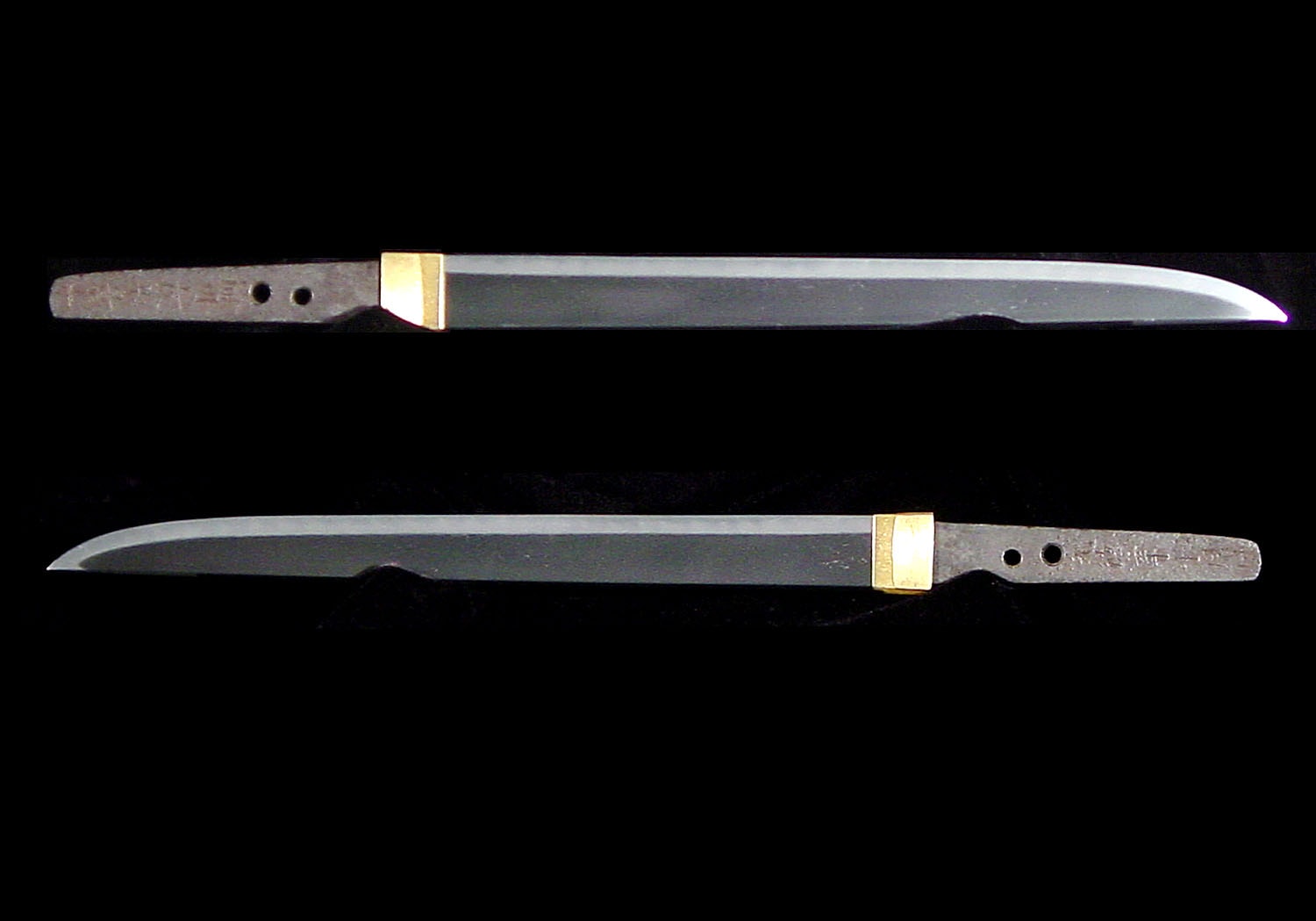
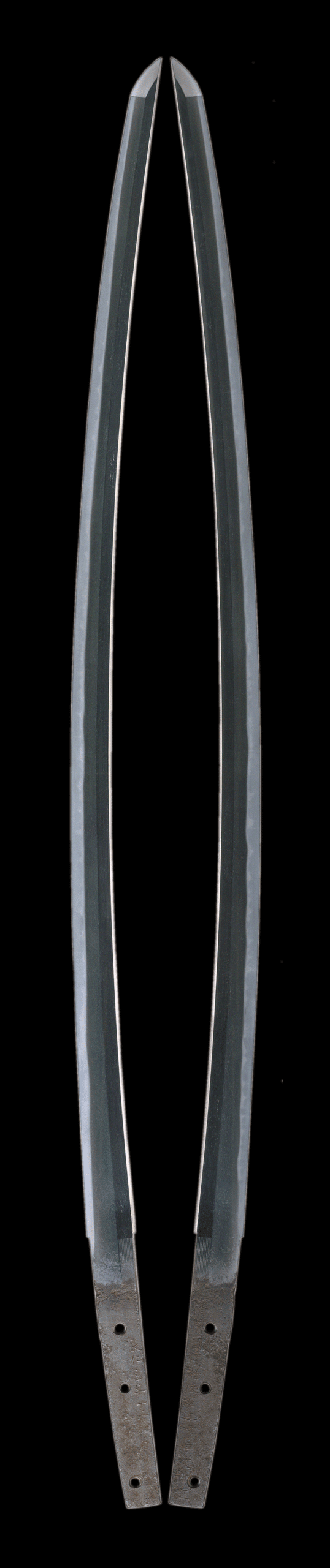
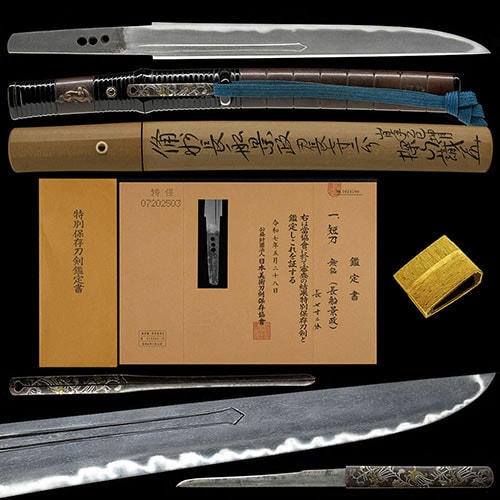
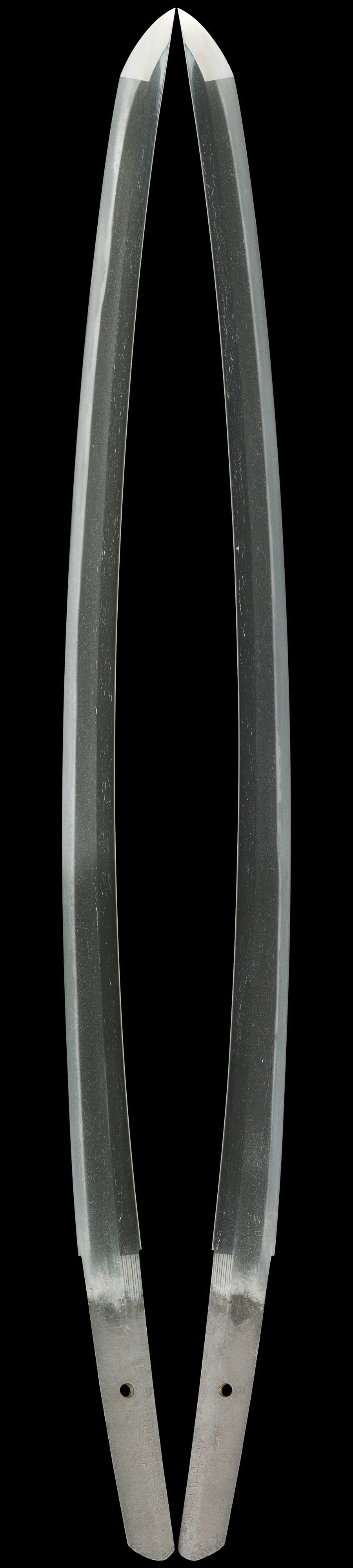
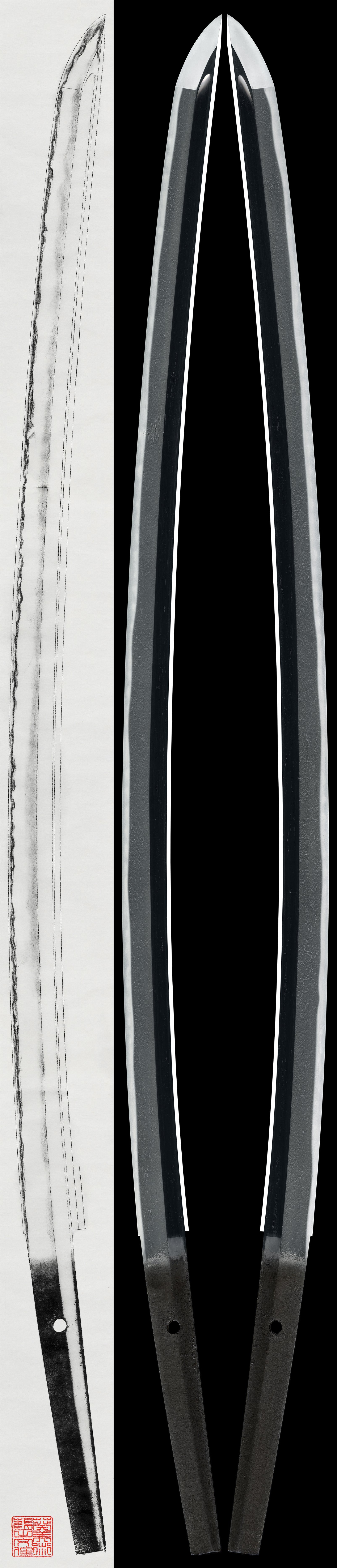
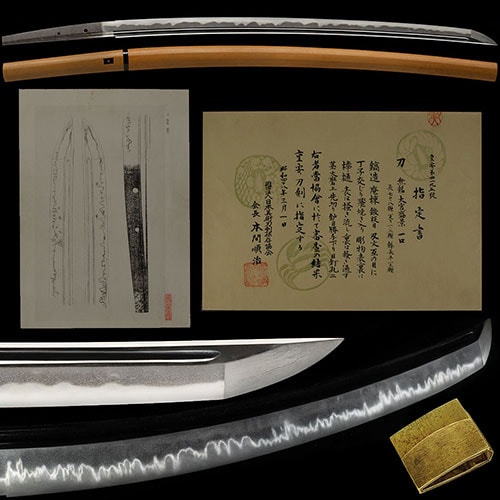
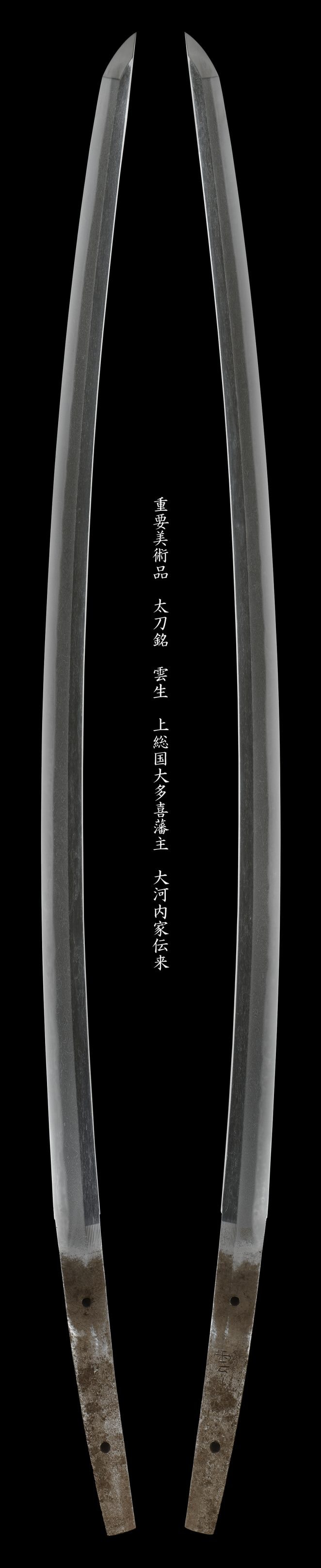
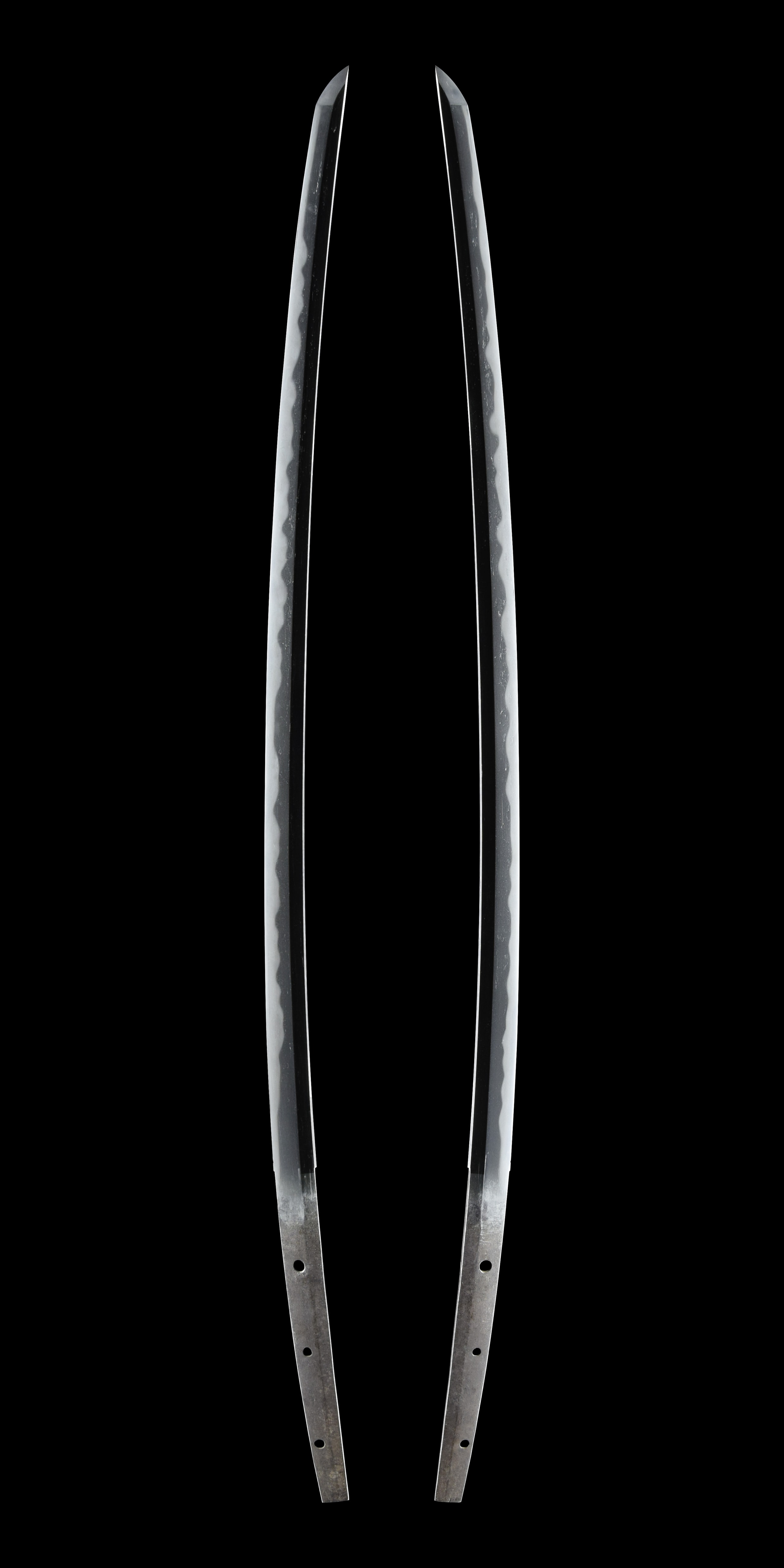
A single cut no -ju Sukenaga and dated the second month of Showa 1 (1312) settles a smith whose place had long been uncertain. Sword reference works record makers named Sukenaga under Fukuoka , Yoshioka and alike, and most of his surviving blades carry only the two characters of his name, so the published sources note that his lineage had remained unclear; the long signature and the date on this one , now a work, fix him as an hand of the late period, active around the Kagen and Showa eras. He belongs to the circle that formed around Nagamitsu, the master who gave the name its standing, and the 's published commentary on his dated calls the workmanship 「同時代の長光一門に極めて近似した出来口」, an output exceptionally close to that of the Nagamitsu lineage of the period. He is not of its central line, however, and the commentary observes of his signature that it 「長船主流とは思われない」, that the calligraphy does not appear to be that of the mainstream.
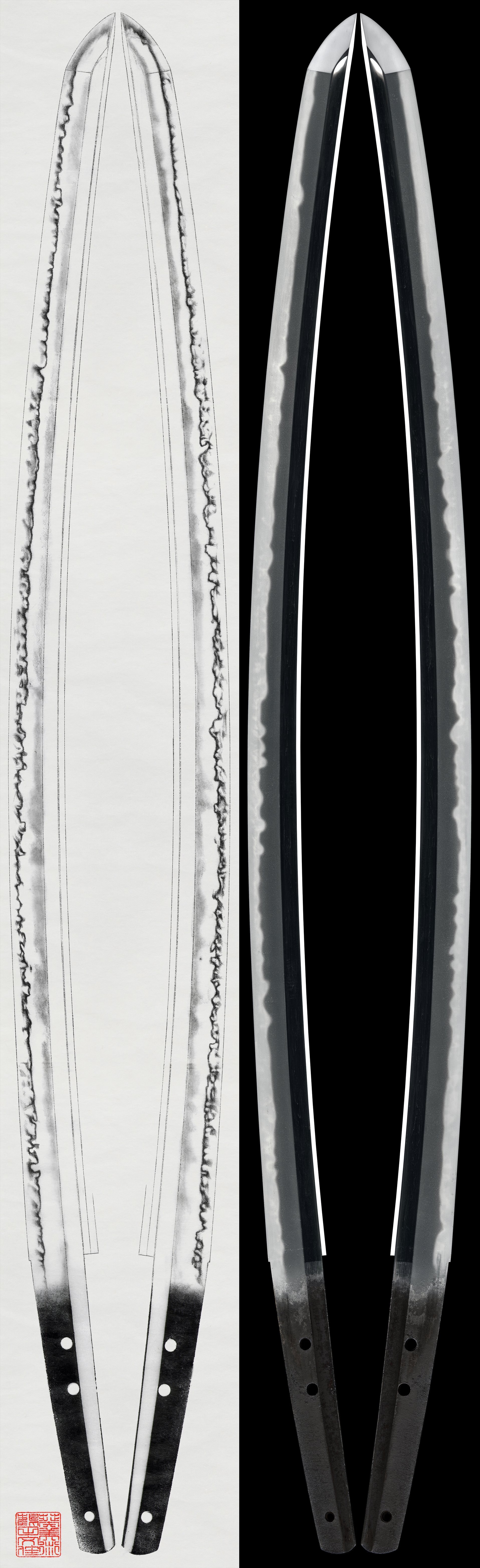
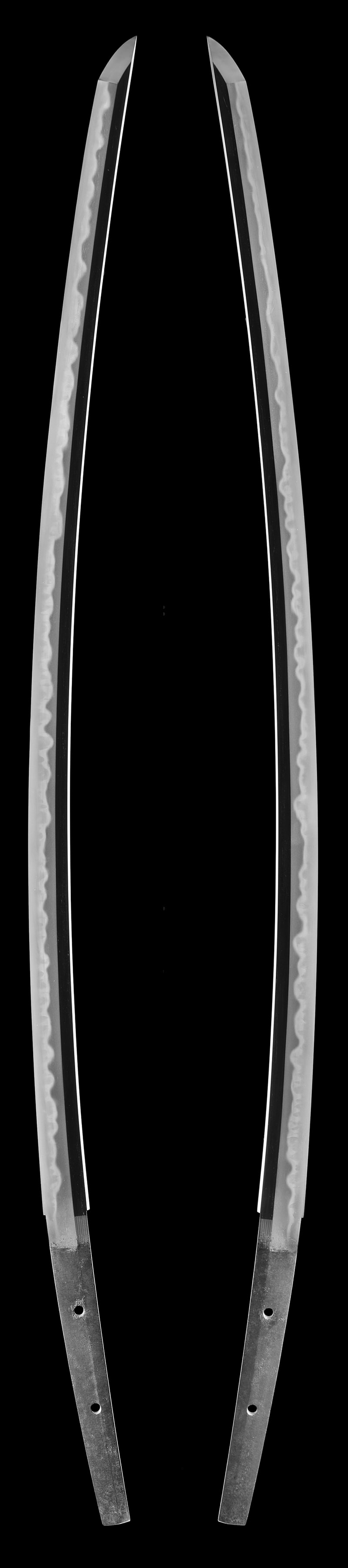
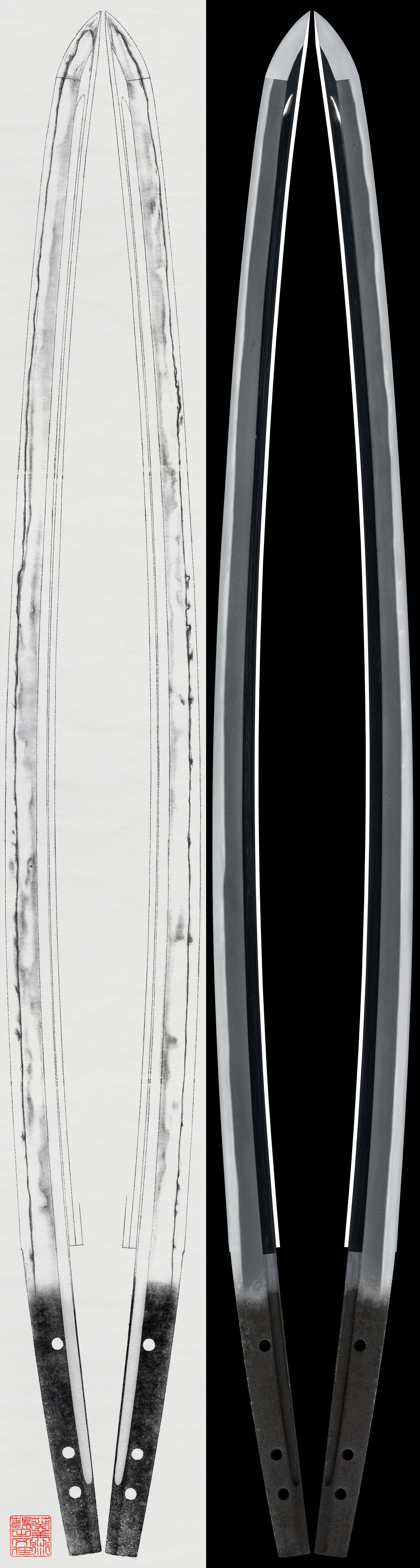
The hand that emerges from his blades is that of a specialist, and this is where he separates himself from the showy clove temper that dominates the school around him. He hardens a slender or medium base into which only small, restrained activity is set, , and the occasional , with entering well. The tightens rather than spreads, a controlled and quiet edge that the published commentary on one of his signed describes as 「匂口締りごころに淋しく」, the tending tight and somewhat spare. Where his contemporaries pursue a high, flamboyant , Sukenaga keeps a tempered, even line, and the published sources record plainly that he specialized in . The follows the calm logic, a shallow turning back in a small round point and tending toward , what the commentary reads as the threefold manner of the day.
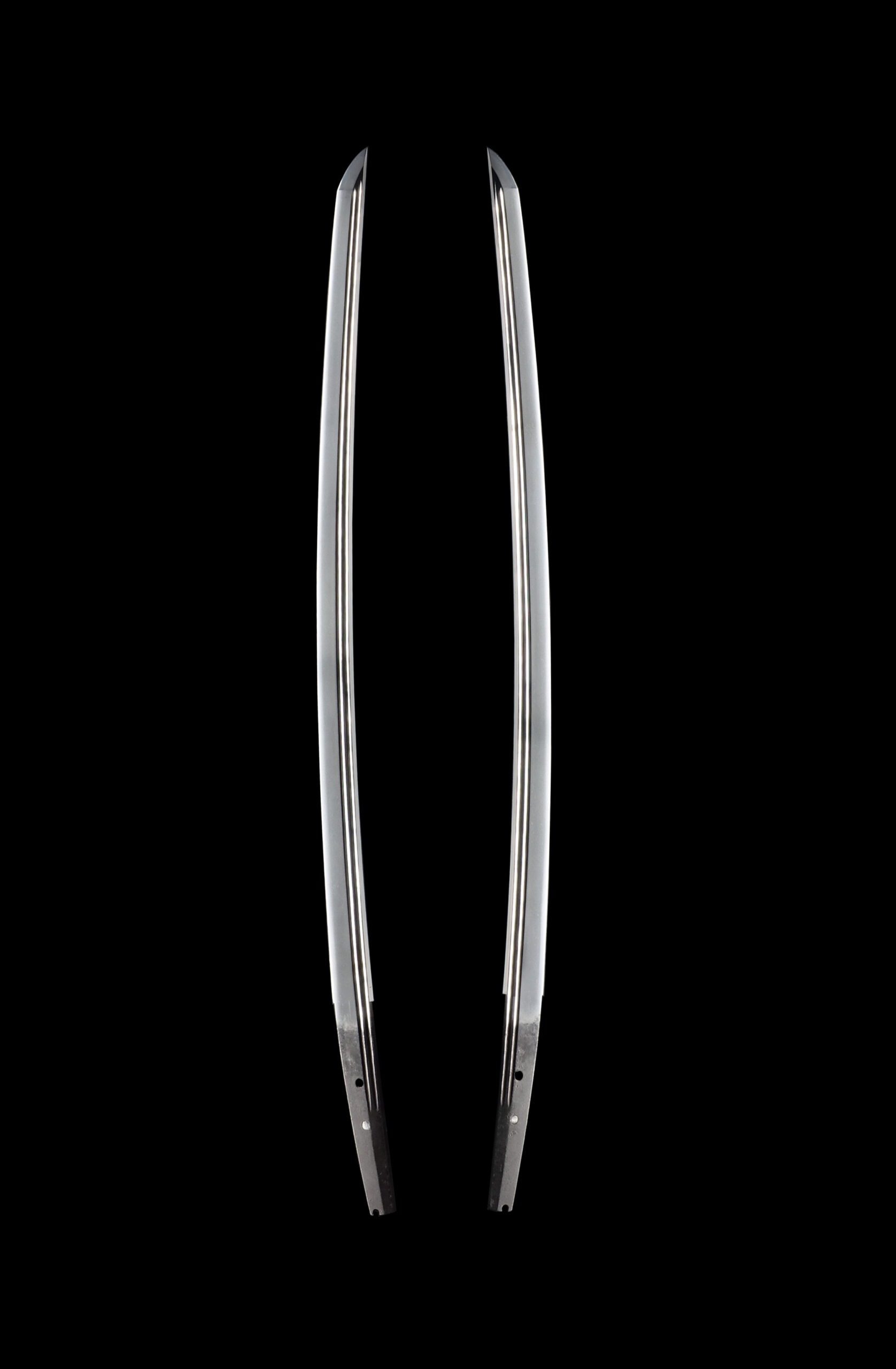
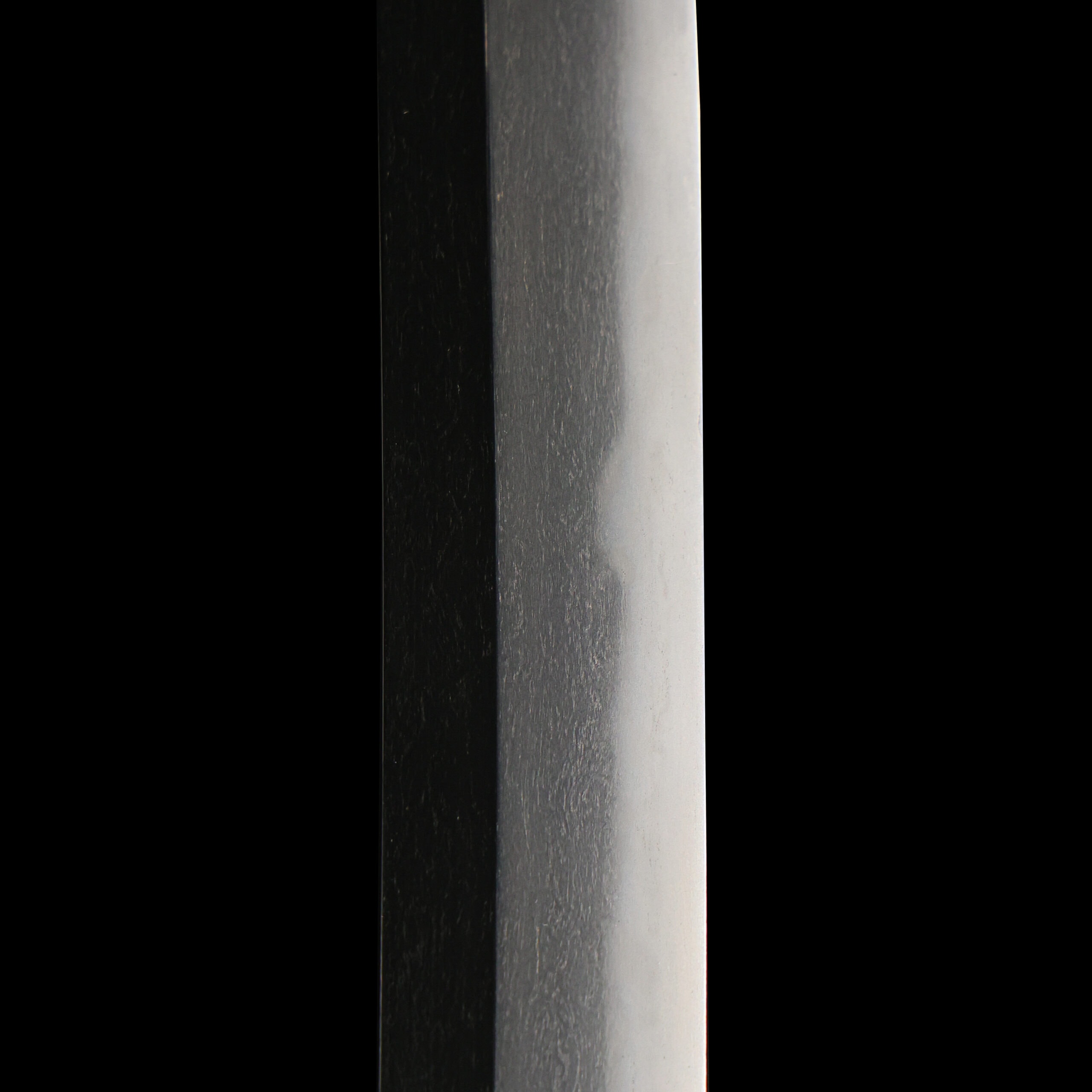
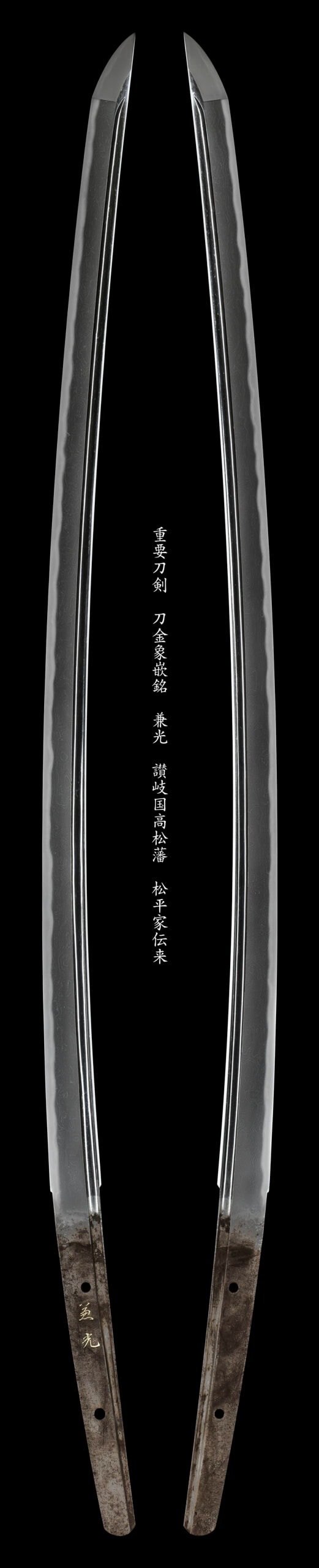
Beneath the temper lies the that marks every blade in his small body of work. He forges a tight , often a fine , mixed with and carrying , and over it a vivid stands clearly in every surviving example. This is the steel of the late , the reflection that the school shared, and on it his quiet is read. The shapes preserve the period: a slender with and , a small point, an elegant carriage that the commentary on his held by Jingu calls 「太刀姿が美しい」, a beautiful figure. run the length of both faces, carved kaki-nagashi or . The whole presents as a deliberately restrained hand, slender, tightly forged, over a bright irregular reflection.
His record divides into two registers rather than into periods, since his manner is consistent across his short career. The first is the signed work, anchored by the dated and a second long-signature blade of the Showa year, where the temper opens slightly to a medium carrying and over a -laden . The second is the body of two-character signed and attributions, the slender narrowing further to a fine in , the entering frequently. One shows a more standing, with , the open end of his range. Because the bare two-character signatures gave the early appraisers so little to work from, his lineage was settled only by the existence of the dated piece, and the published sources are candid that even now his standing does not reach that of Sanenaga or Kagemitsu, the higher names of the generation.
What sets him apart within that generation is therefore not a personal flourish but the proportion of his features, and this is how the published commentary draws the distinction. His attributions rest on the era and on the resemblance to the Nagamitsu line, read through the slender , the tightening and the threefold rather than through any one showy tell. The blades given to him are described as close to Sukenaga in manner while falling short of the ranking of his more celebrated contemporaries, and the commentary places him among the disciples of Nagamitsu's circle, beside such names as Nagamoto and Sanenaga whose work his own is said to resonate with. He is the quiet voice of late- , the alternative to the school's clove-temper mainstream, and his interest to the connoisseur lies precisely in that restraint set against a that is unmistakably .
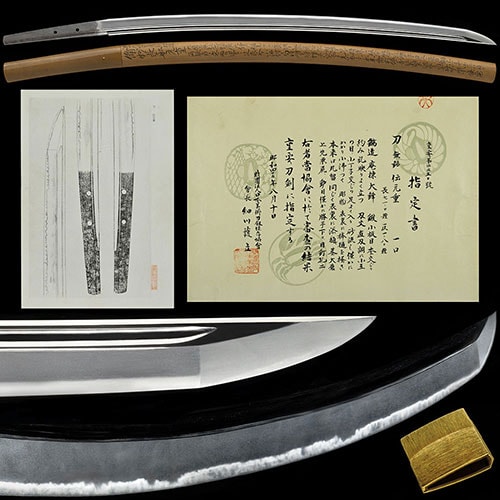
Sukenaga survives in only a handful of designated works, and the published commentary states it directly, that 「同銘の現存するものは少い」, that extant blades bearing this signature are few. The record reaches six designated swords, one at , four at and one at the prewar Bijutsuhin, with no National Treasures or Important Cultural Properties among them; the dated 1312 the calls 「現存稀な長船助長の代表的優品」, a representative superior work by the rarely extant Sukenaga and a documentary piece of high value. The provenance that survives is distinguished. One of his descended in the Tokugawa shogunal house, its recording its presentation by Lord Takechiyo; a is held by the Jingu shrine; and the Bijutsuhin blade passed through the Osaka collection of Kajima Isao. A privately held Sukenaga is among the less common things a collector of work could encounter, and when one of his signed or papered blades does appear it does so rarely, a landmark for the steadiness and the rarity together rather than for any extravagance of temper.