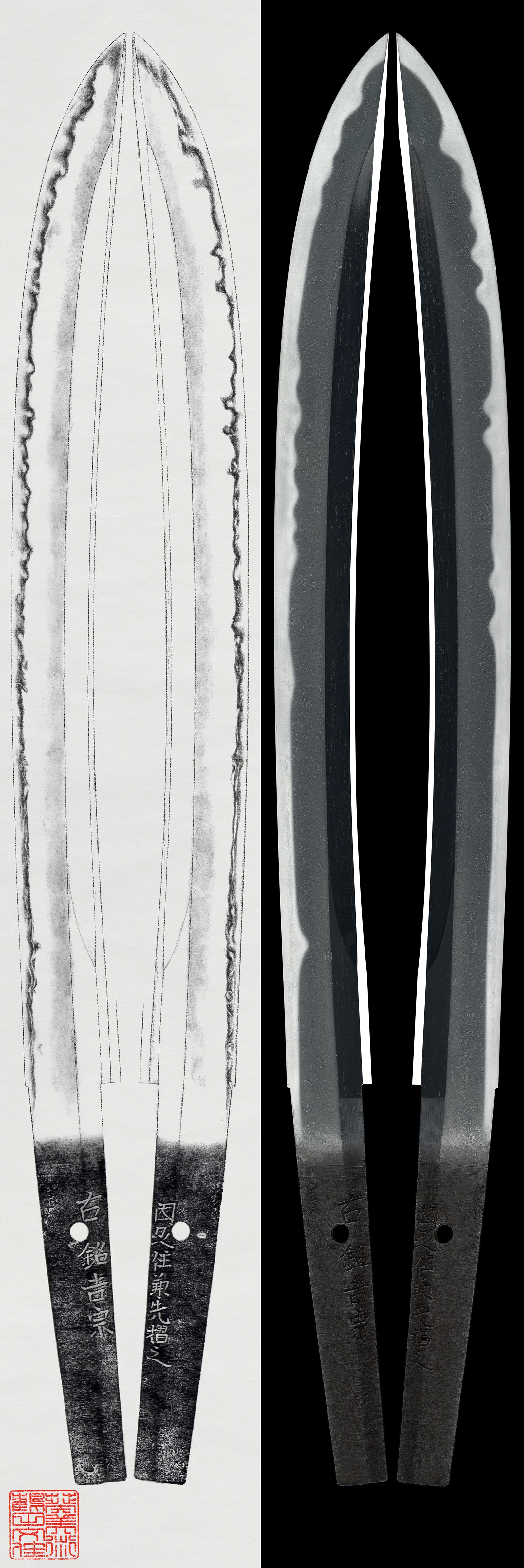
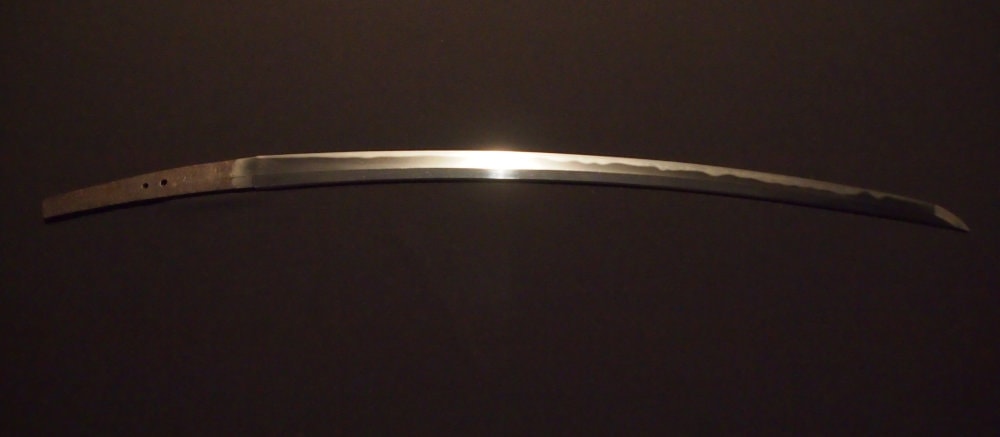
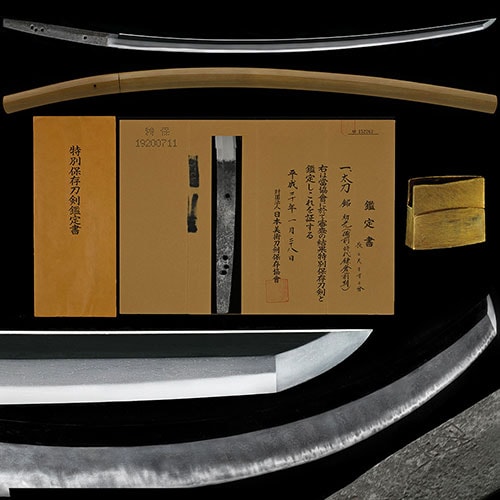
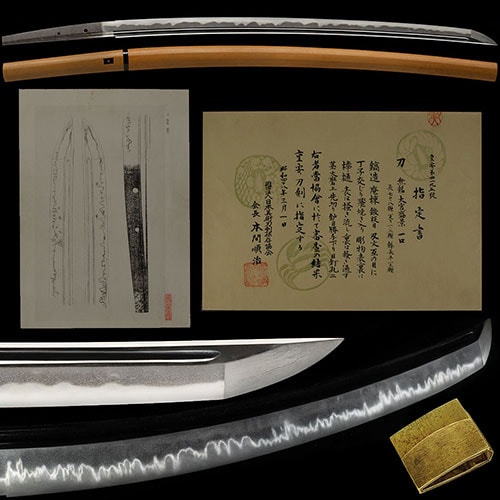
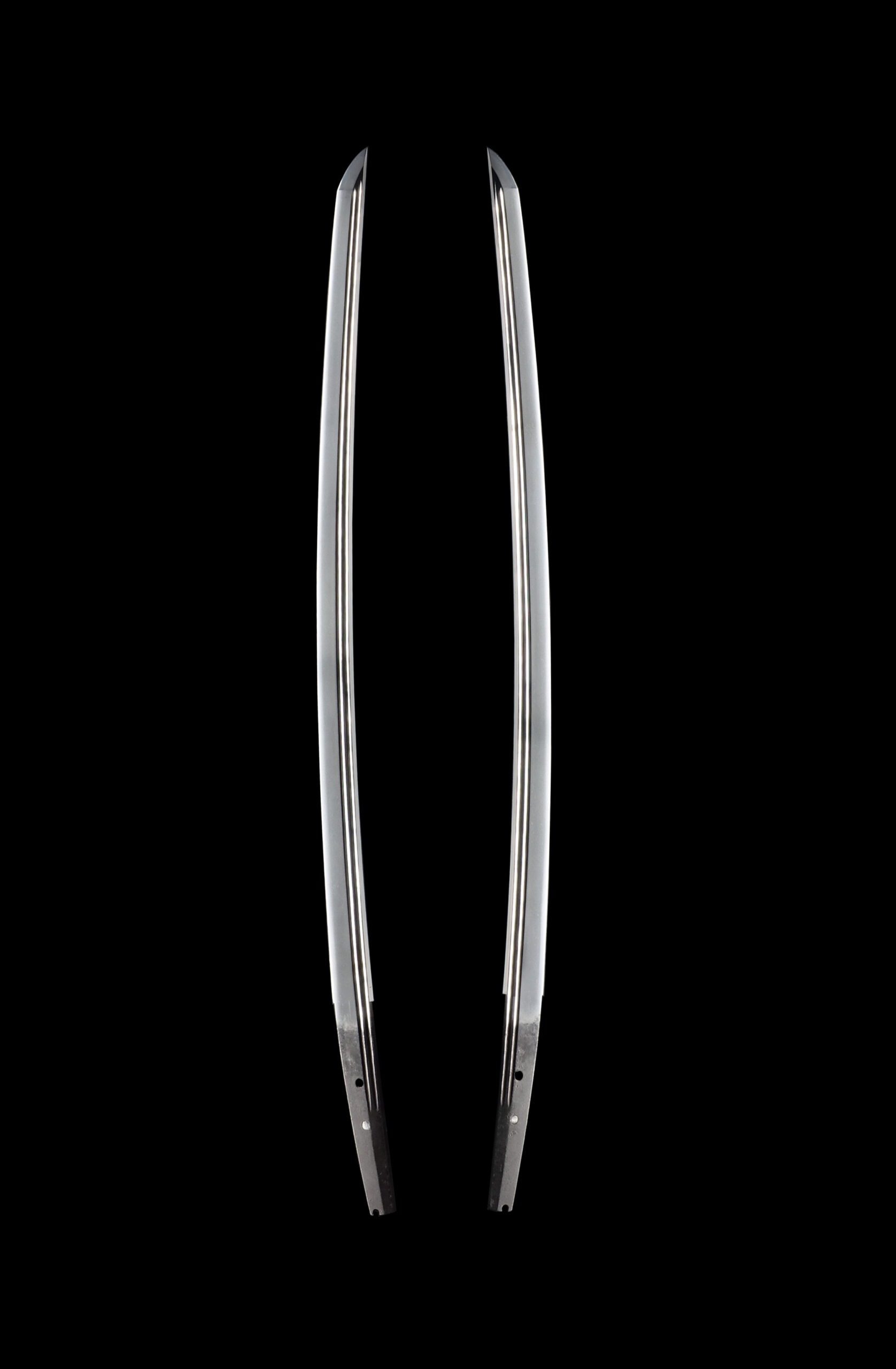
Suketsuna is a Fukuoka smith of the middle period whose name belongs to the moment the clove-flower temper began turning into steel. The published sources relate that he was, by tradition, a son of Fujigenji Sukezane, that he went down from to in together with his father, and that he became one of the smiths who laid the foundations of swordmaking. Like Sukezane he carries the separate appellation . The prewar Bijutsuhin entry on one of his signed puts the relationship in a sentence the school never improved on: "Suketsuna resembles his teacher Sukezane in producing many of bold, robust shape, and he tempers a full of strong ".
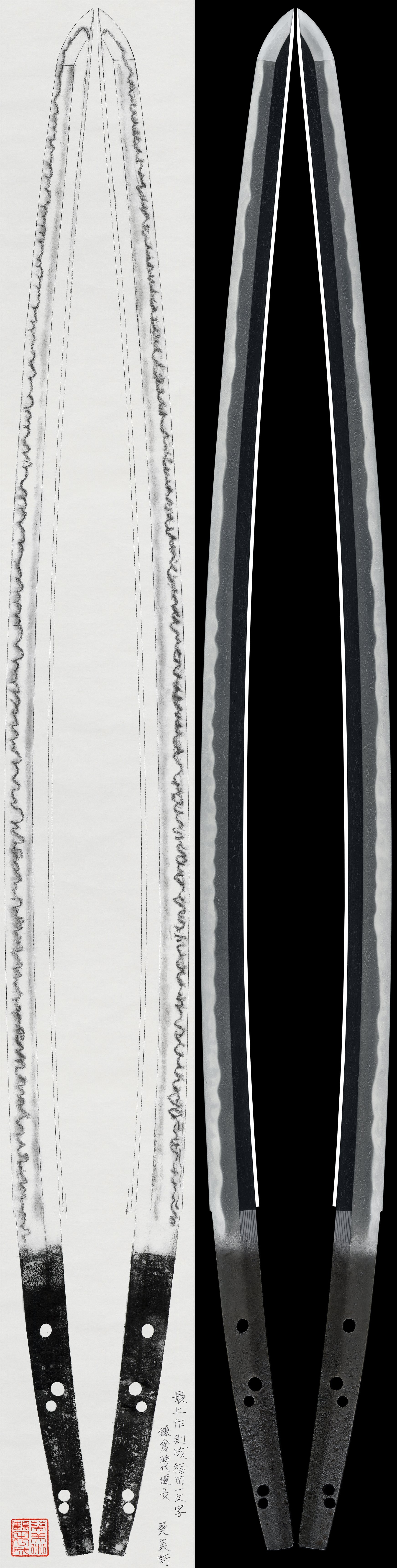
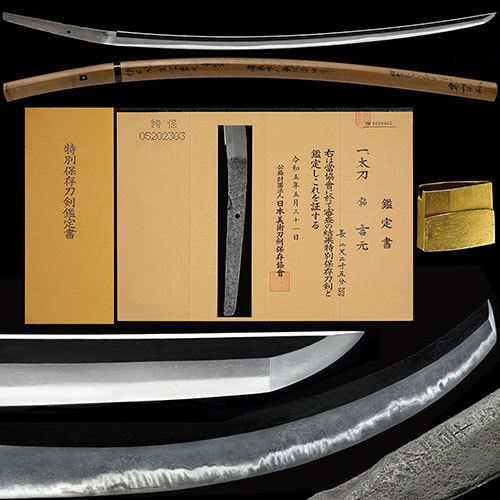
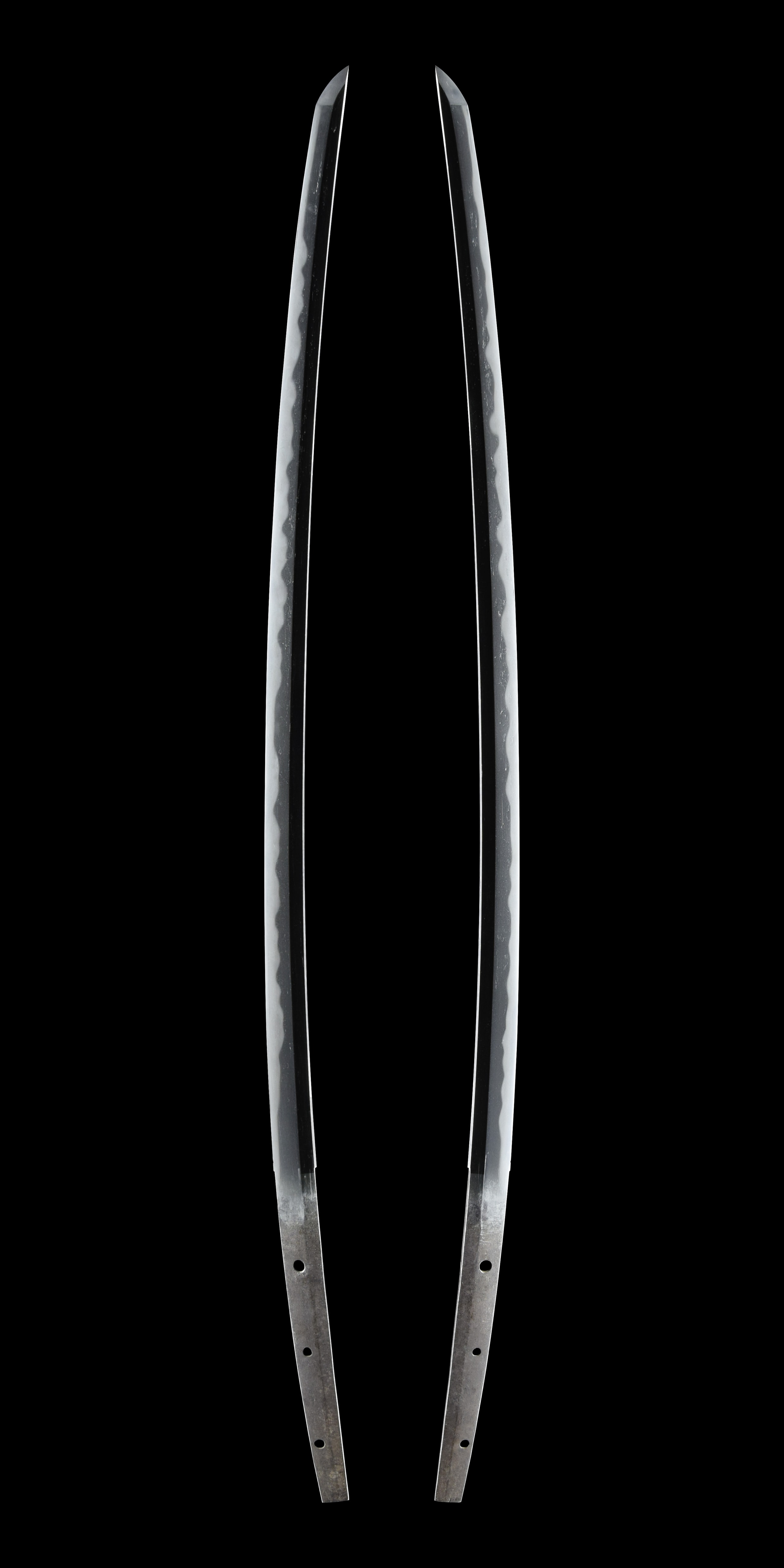
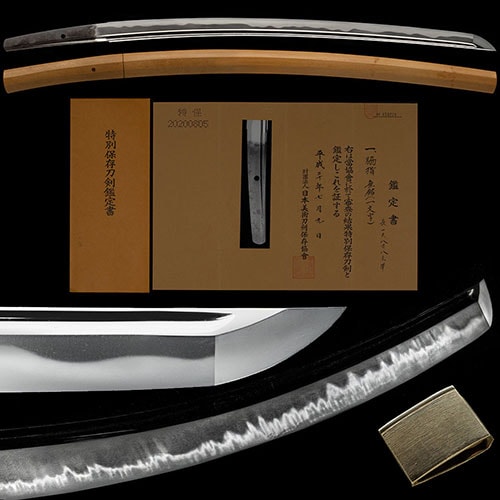
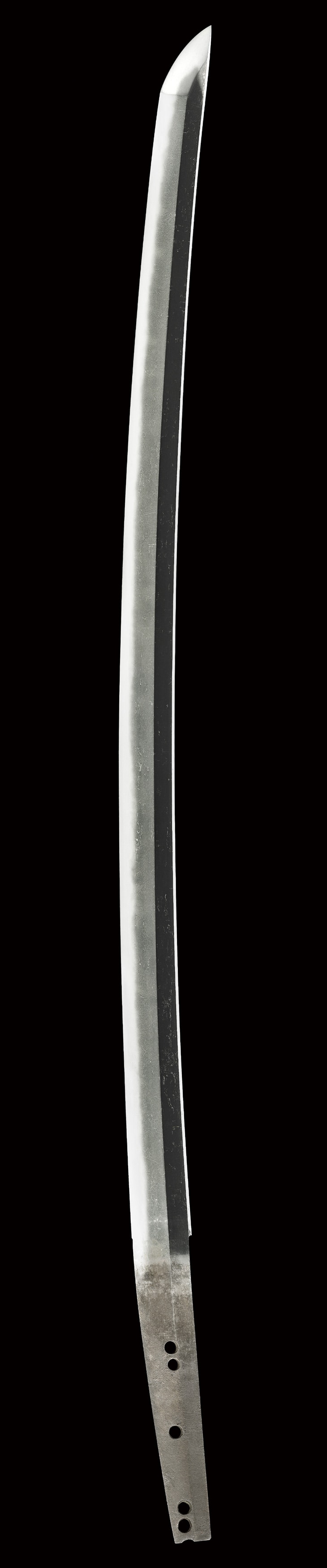
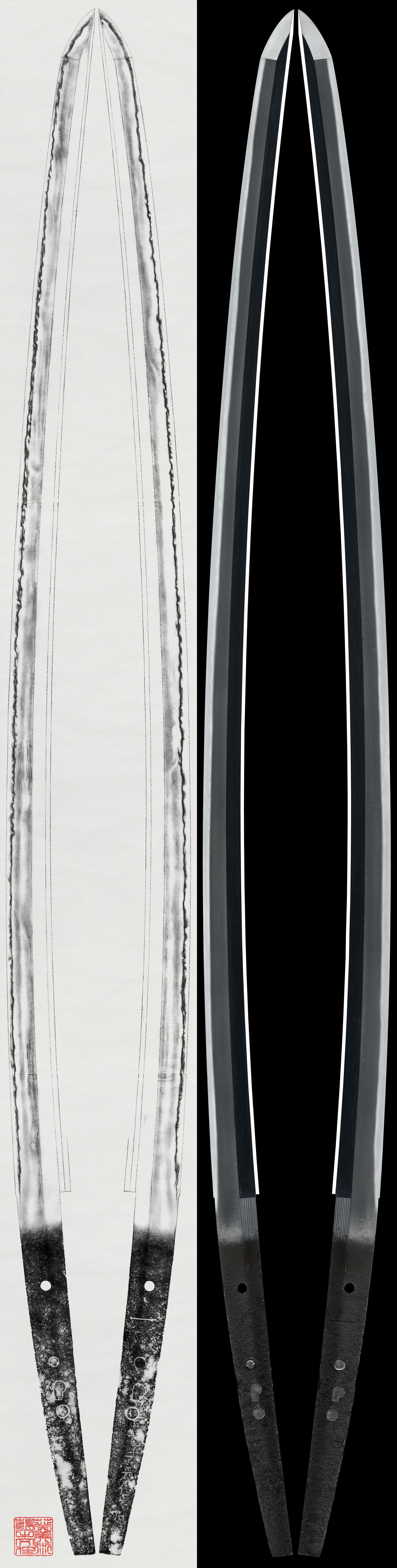
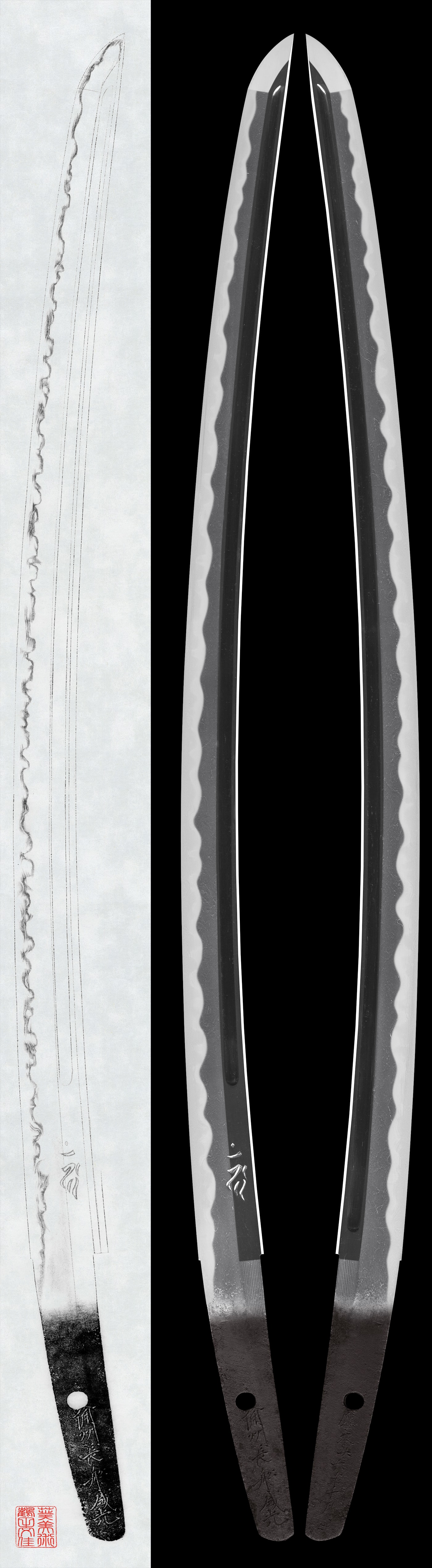
His hand is recognized through a single, visible contradiction. He forges a in the manner of , the showy clove pattern of his school, but he forges it in rather than the of , mixing and pointed-, the temper at times tending , the strong within the . Into that edge run frequent and , with in places and a bright . The published sources name the result plainly: while he tempers in the style, the is markedly stronger, so that the usual flavour is faint and the work departs from typical . On the point his record is read against his father: he is the more of the two, the one who, the judges write, "more frequently than Sukezane produces a that has left behind".
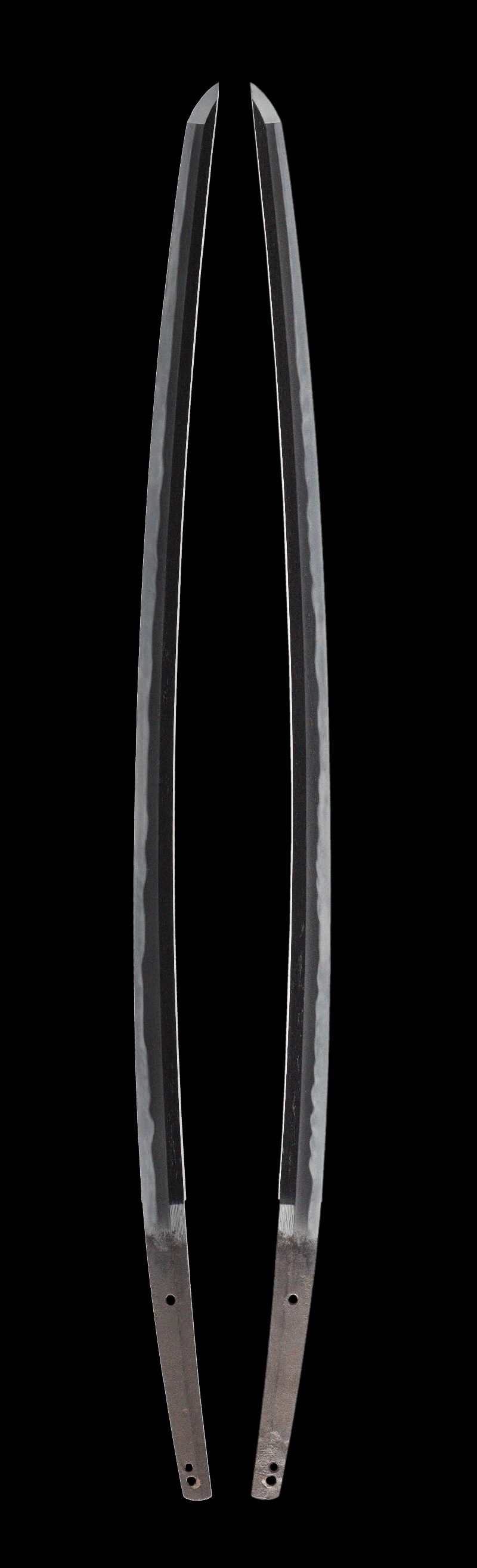
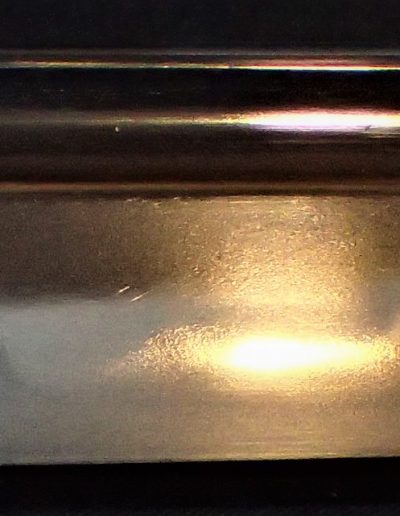
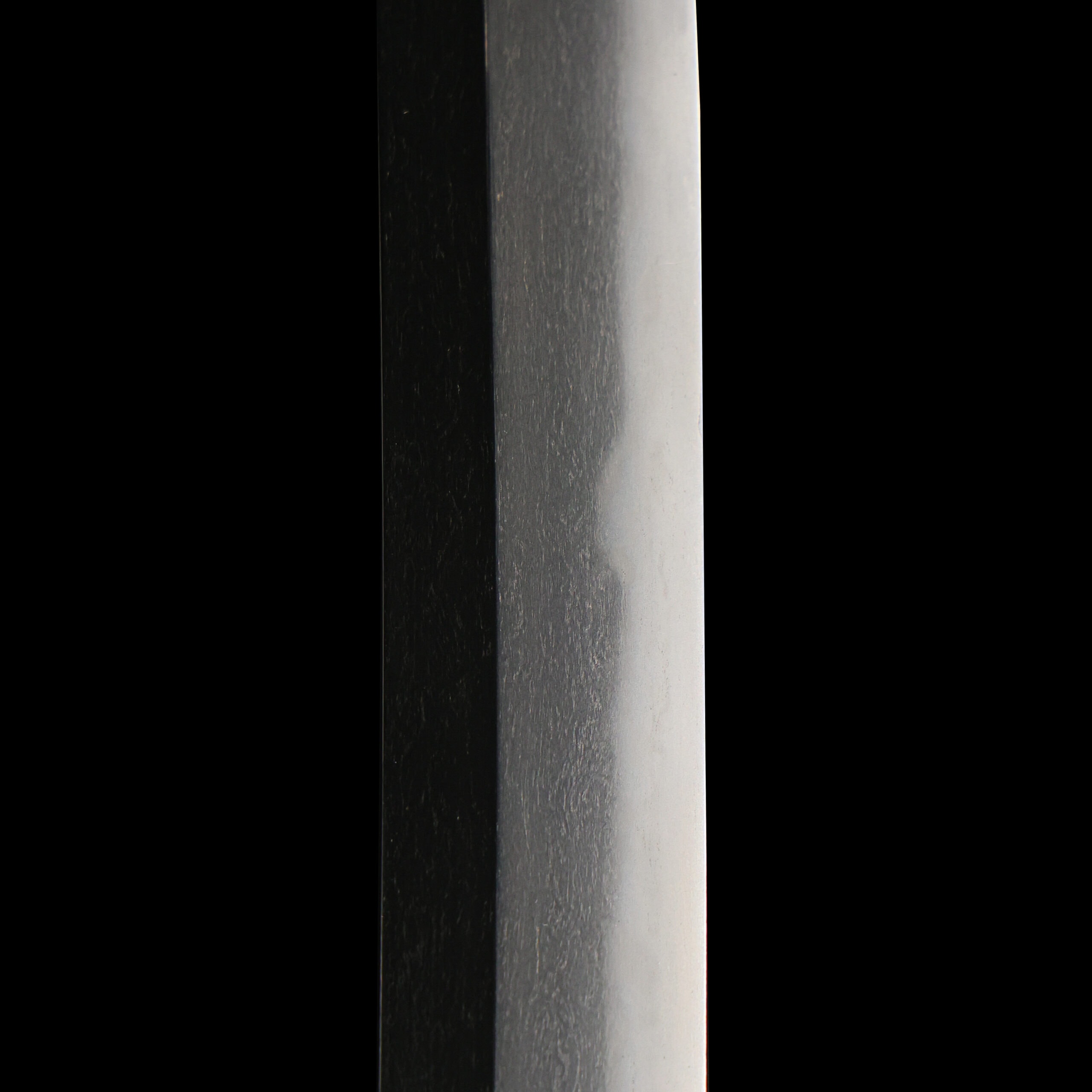
The carries the other half of the tell. Over a wide, robust body he forges an , mixed with and standing open in places, the grain set with thick and threads of ; on several blades a still rises, faint on some and clear on others. Where mainstream Fukuoka forges a tightly packed , Suketsuna's stands more open, and the judges make that standing grain the very point on which he is separated from his father. The is the third sign: it enters in a disturbed and sweeps to a small round or a brushed, flame-tinged point, more active than is usual for work, with a carved through on both faces.
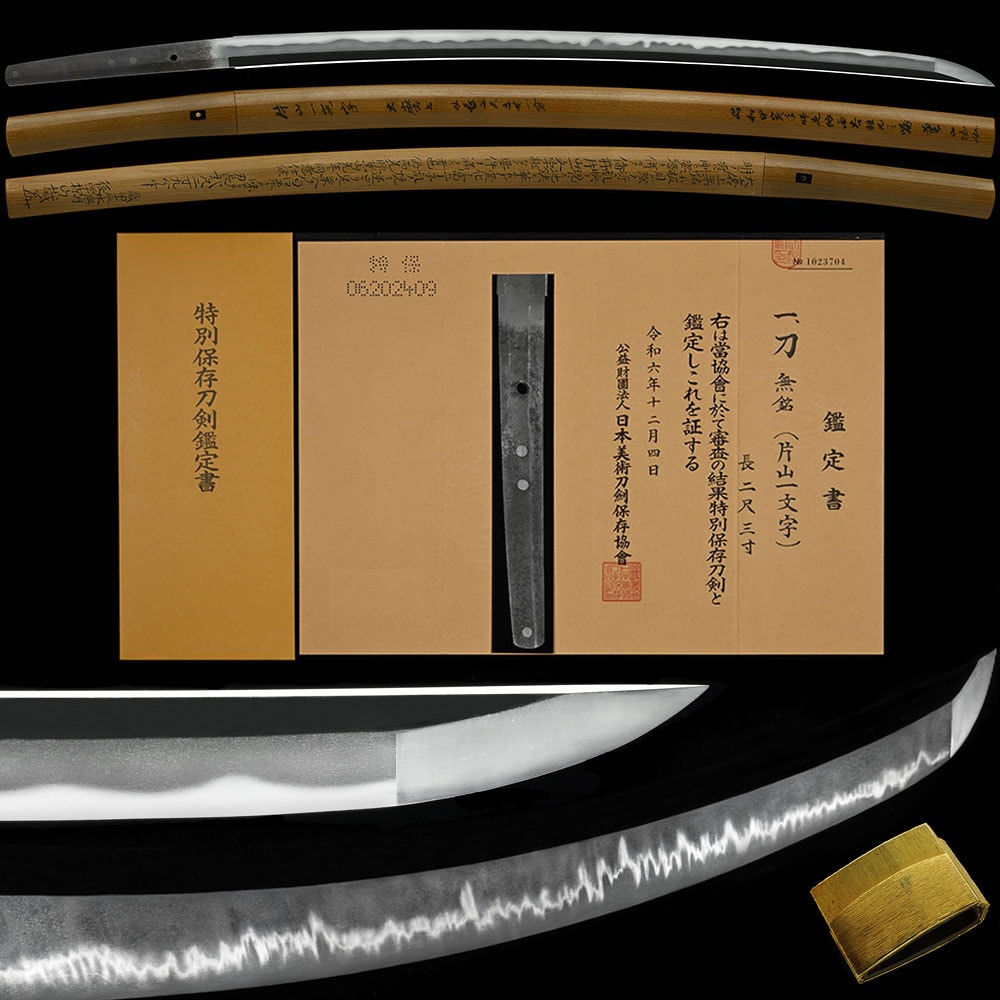
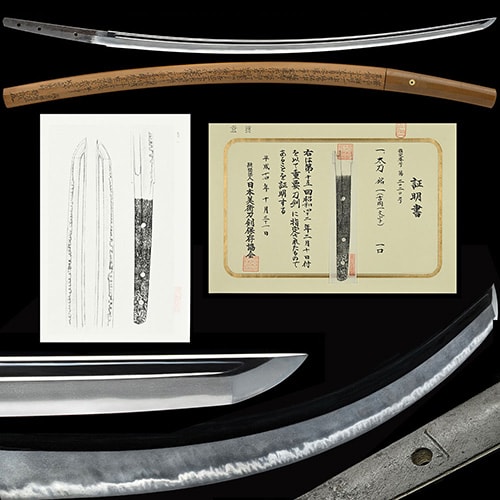
Two registers run through the record. The first and rarest is the signed : "extant signed works are extremely few", and they are the documentary anchor of the name. These are powerfully built, resembling Sukezane, tempering a flamboyant -laden the sources call quintessential of his hand; one late example mixes into a strongly -based temper, and from the normally sized two-character signature it carries the judges read late , since many of his works bear large, bold signatures and this one is taken as a difference of period within the man. The second and predominant register is the attributed to him, broad and dignified in mid- shape, several given the red appraisal inscription reading " ." One of these the published sources call the work that shows, even among his own pieces, "the strongest Sōshū-den character", its flame-like swept giving the blade an imposing, spirited presence.
What sets him apart from his neighbours is exactly what the judges name. From his father he is divided by the open, standing grain and the heavier interior activity of the ; from the quieter line he is divided by the strength of the and the and that carry into the edge. He stands beside Sukezane as one of the bridges by which the idiom passed into Sōshū-den at , a -trained hand reading itself, blade by blade, toward . The judges treat one of his signed as "excellent reference material for the study of Suketsuna", the scarcity of his signed work turned into method.
For the collector he is a rare early name, recorded mostly in attribution. He has no National Treasures; his record runs through one Important Cultural Property, two prewar Bijutsuhin , both signed, and the higher modern tiers. Eight of his blades fall in the and ranks, his Toko Taikan valuation set at 1,200,000 yen. His blades carry the provenance of long-held houses and collections: the Sakai family of Himeji in Harima, and the prewar owners Hashimoto Torakichi of Osaka and Saitō Shigeichirō of Tokyo on the two signed , with one example now in the Hayashibara Museum of Art. A signed Suketsuna comes to light only seldom, and even his attributed reach the market rarely; a privately held example is a notable thing for a collector to encounter, a document of how the passed into .