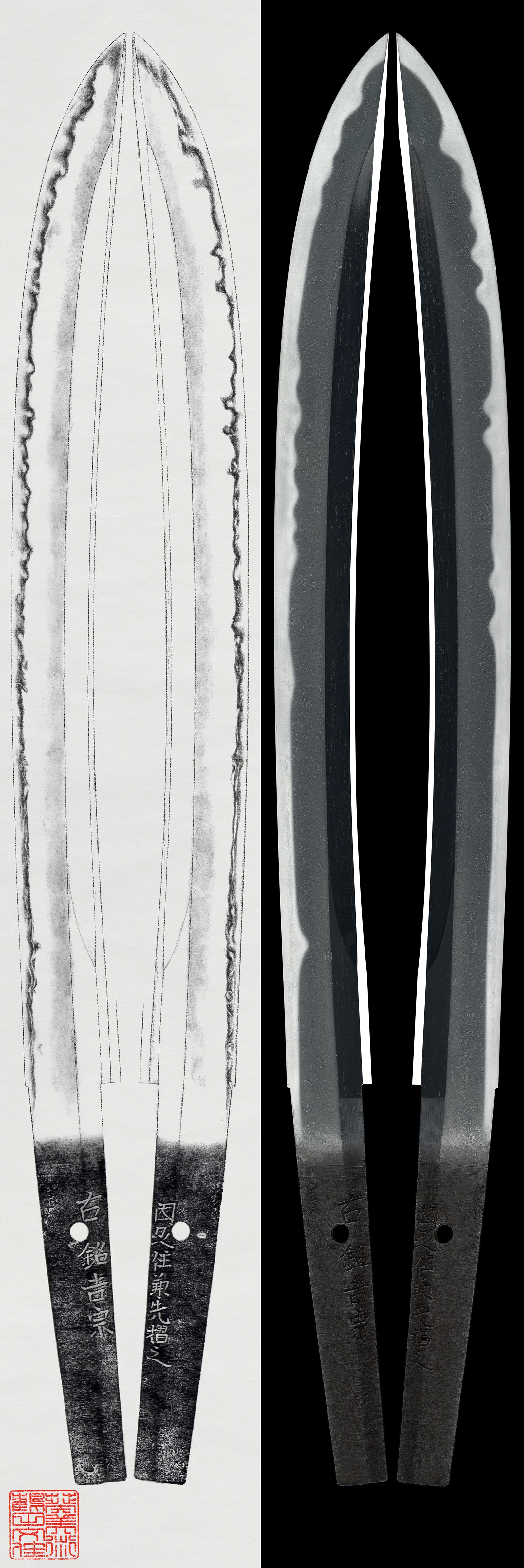
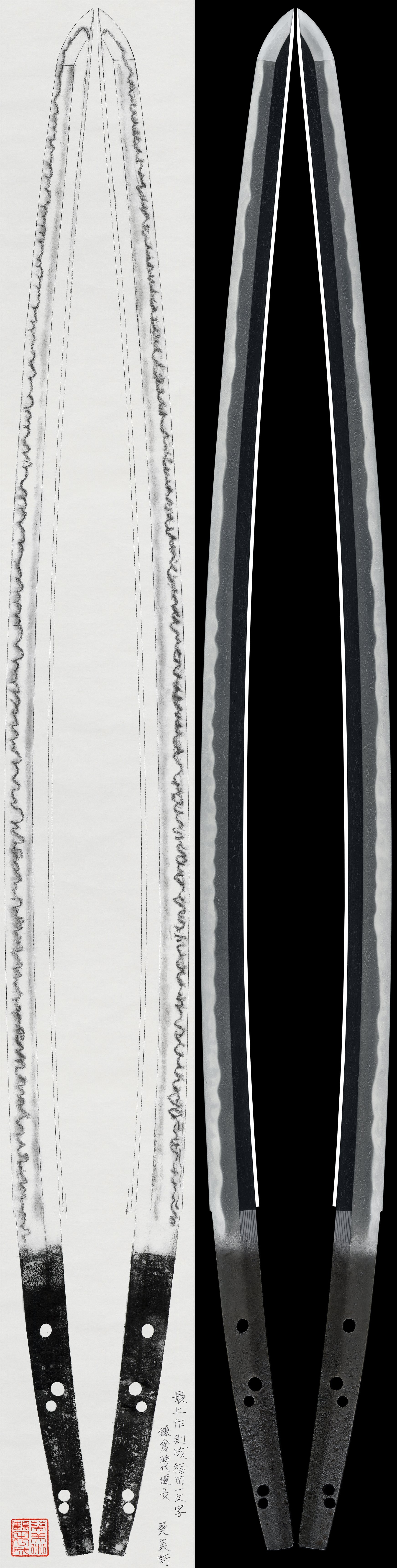
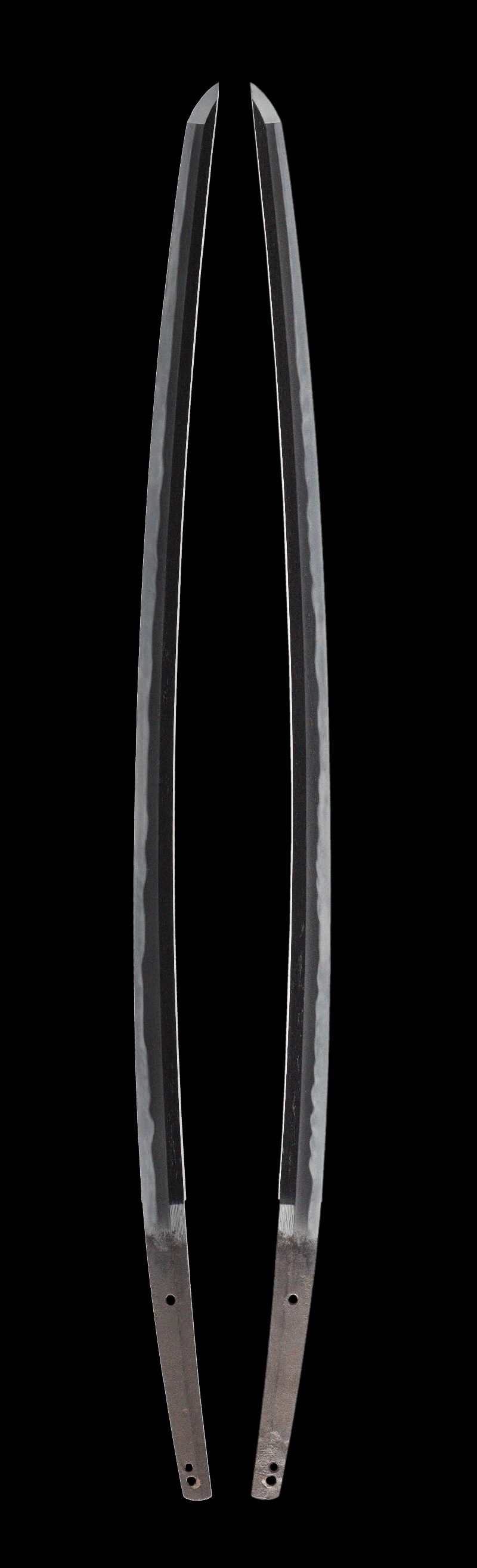
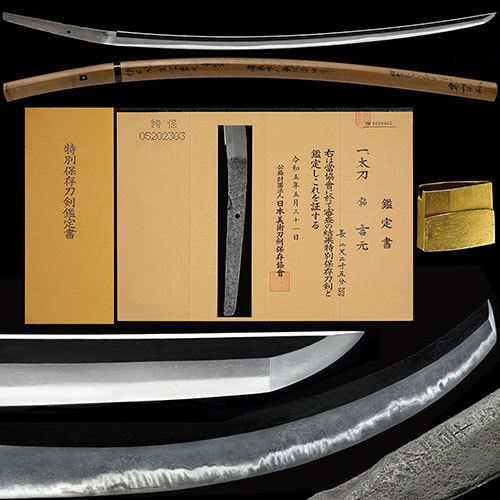
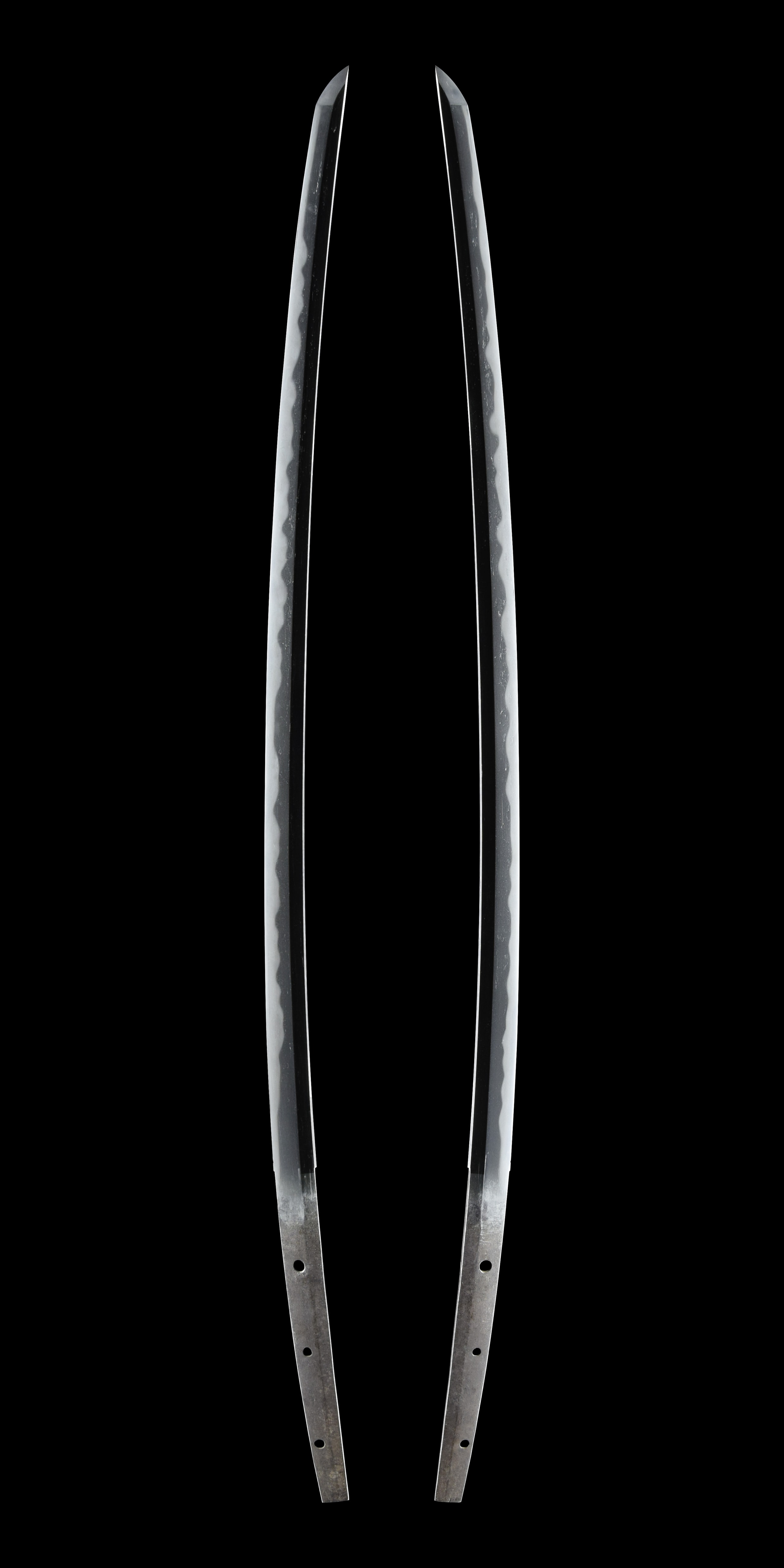
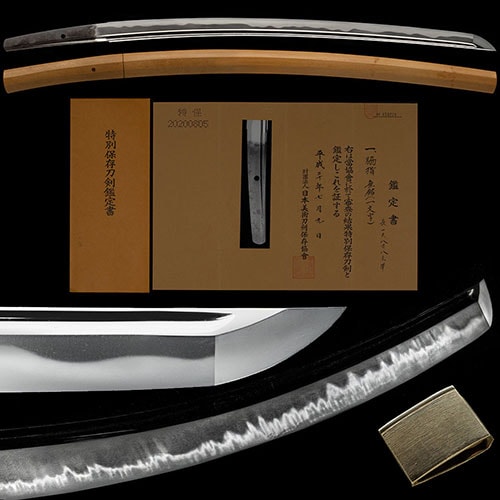
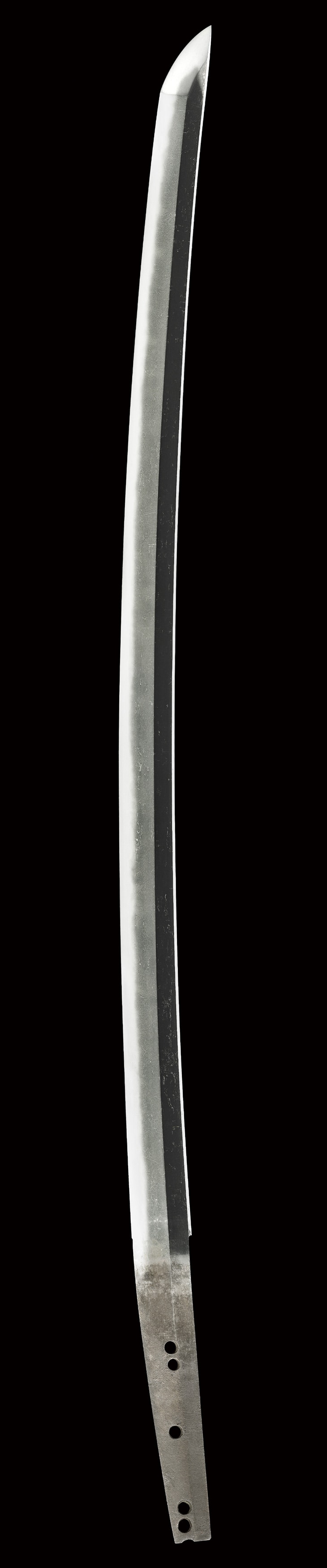
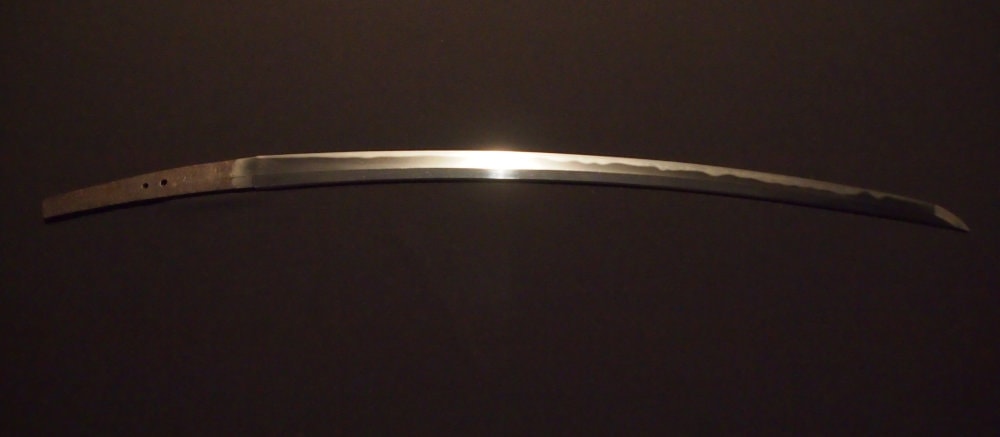
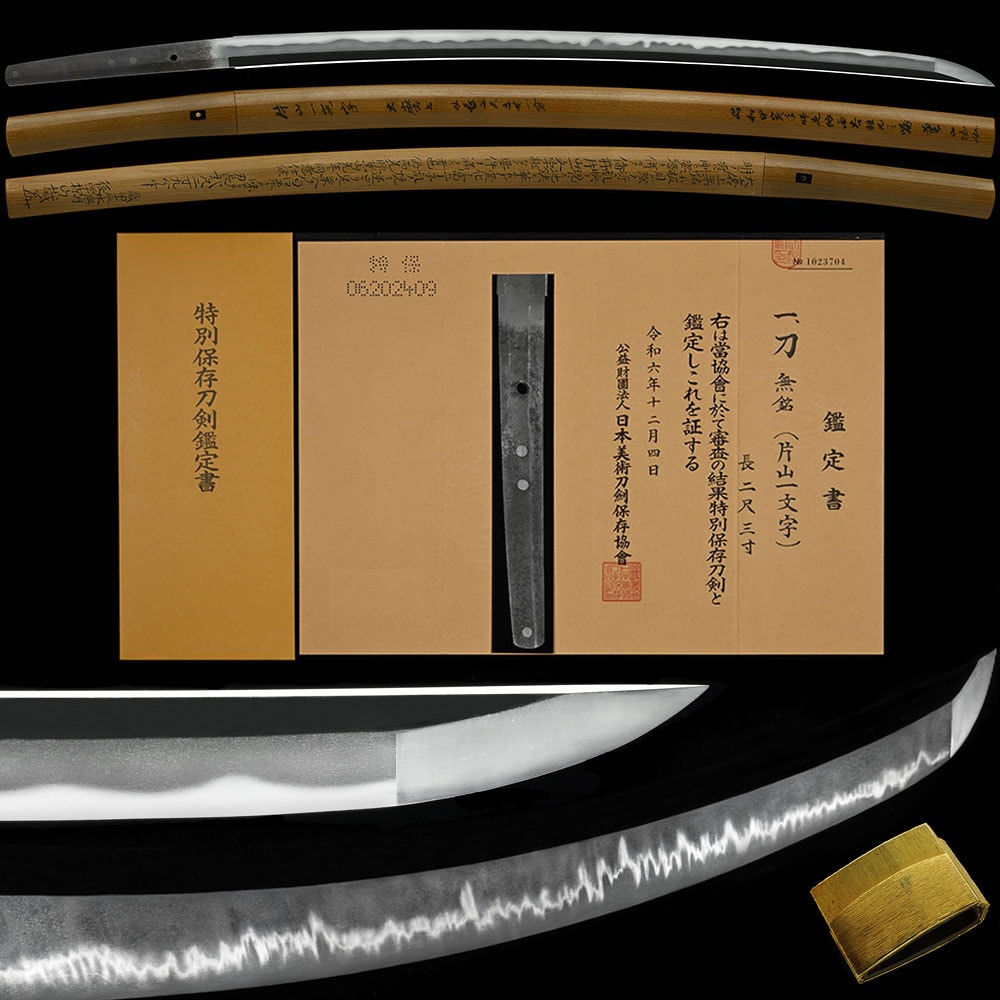
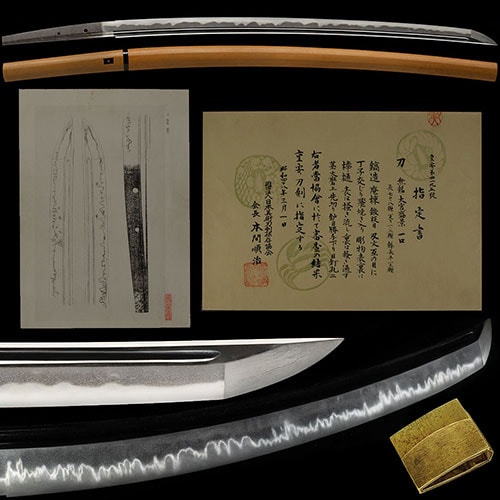
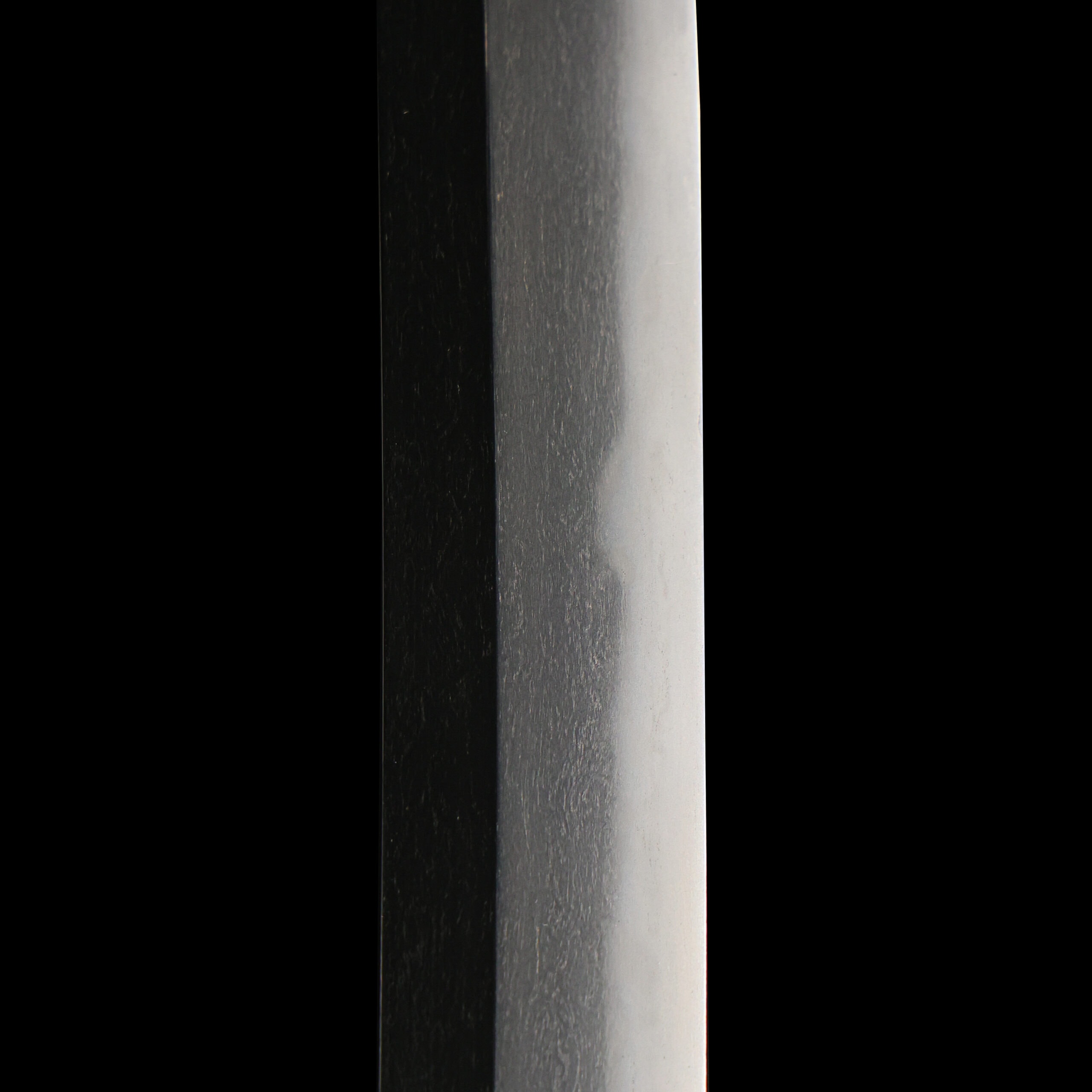
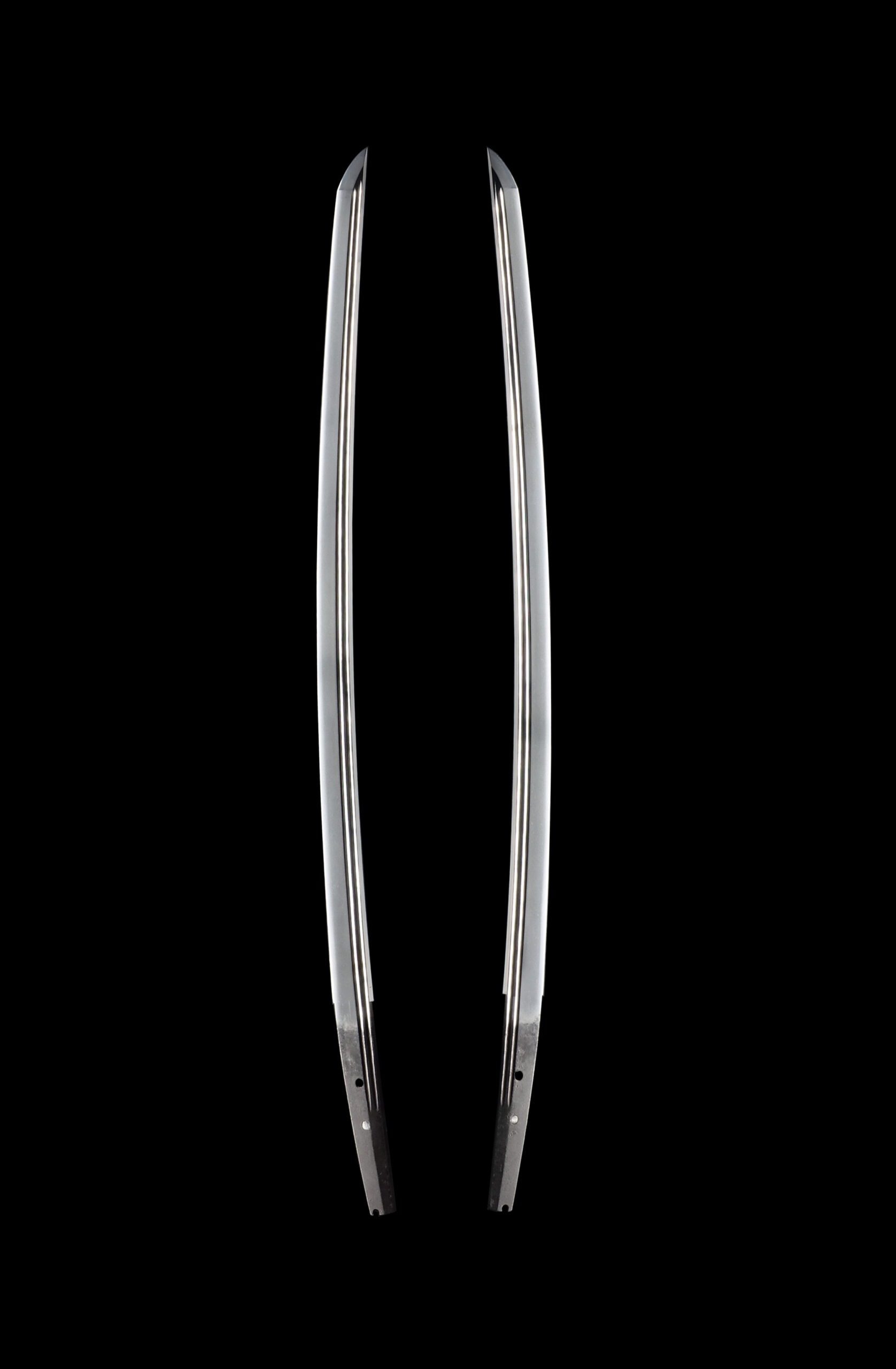
Yoshimochi (吉用) worked within the Fukuoka lineage of Province during the period. The Fukuoka group represents one of the most celebrated schools of the tradition, and Yoshimochi is recognized as a smith whose temperament distinguishes him from his peers through a comparatively restrained approach to the flamboyant style for which the school is renowned. Among his works, examples rendered in are also encountered, setting him apart from the more exuberant output typical of the Fukuoka mainstream.
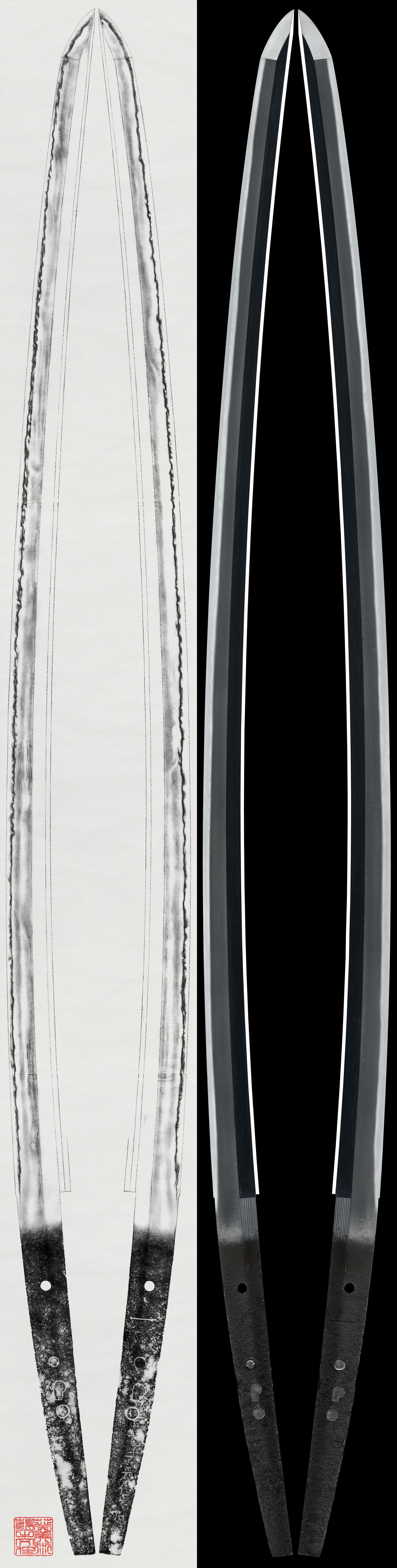
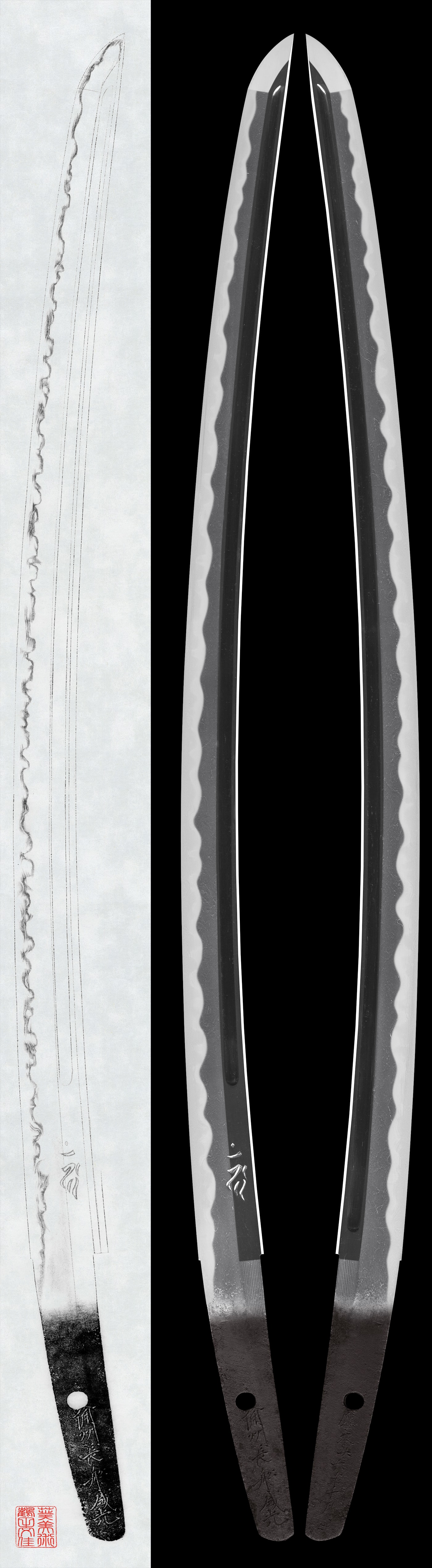
Yoshimochi's blades characteristically present an forging, at times mixed with , upon which stands out distinctly -- a hallmark of high-quality workmanship. His tends toward , often taking a -based pattern enriched with - elements, into which and enter abundantly. In his more ornate works, the temperline broadens into a wide with kaeruko ("tadpole") features that produce a decorative, showy effect. The in his -oriented works tends toward tightness (), yielding a refined and controlled impression. Signed examples retain elegant proportions with pronounced and , finished with a compact .
Yoshimochi occupies a distinctive position within the Fukuoka school as a smith whose versatility bridges the restrained and the flamboyant. His works demonstrate that the school's mastery extended beyond the bold for which it is most famous, encompassing quieter modes of expression executed with equal technical command. Blades bearing his name have been transmitted through notable collections, including the Tokugawa Reimeikai Foundation and the Mitsui family, attesting to the esteem in which his work has long been held.