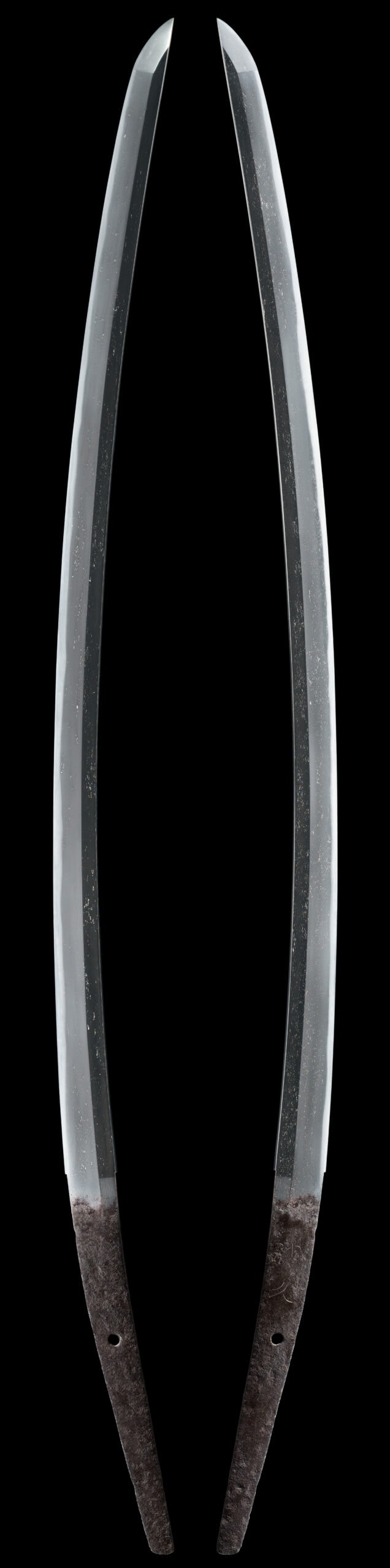
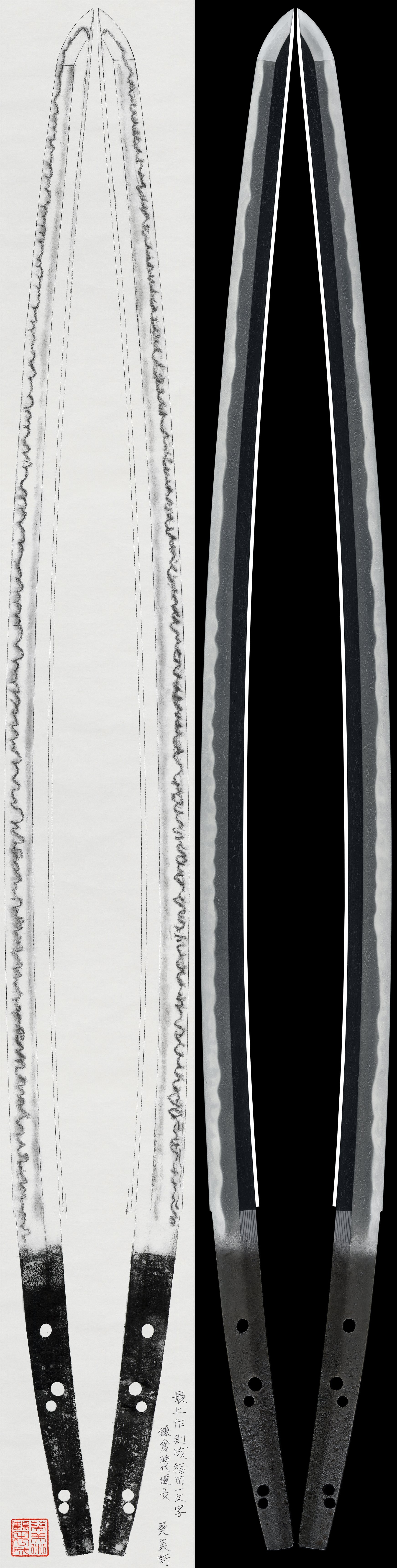
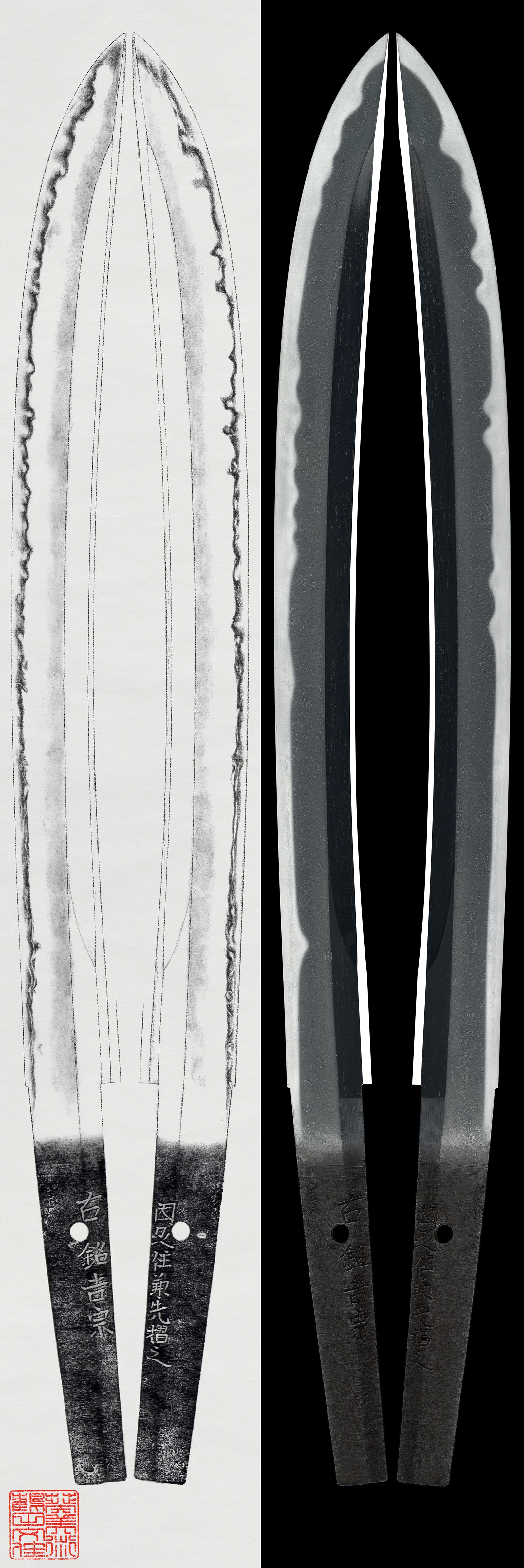
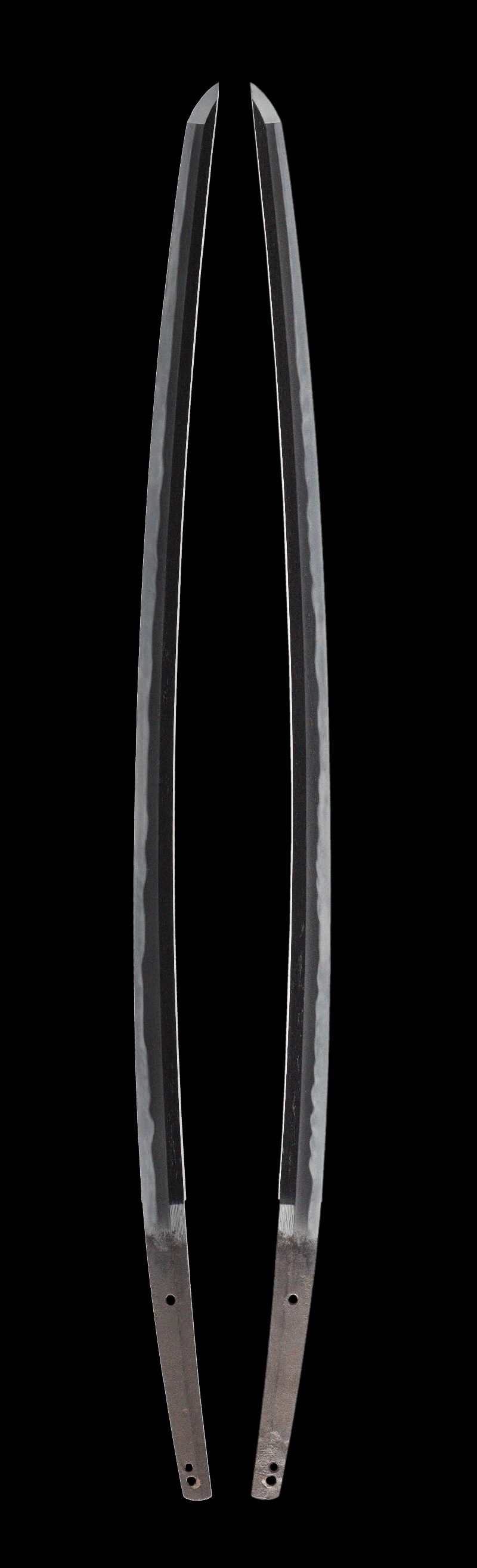
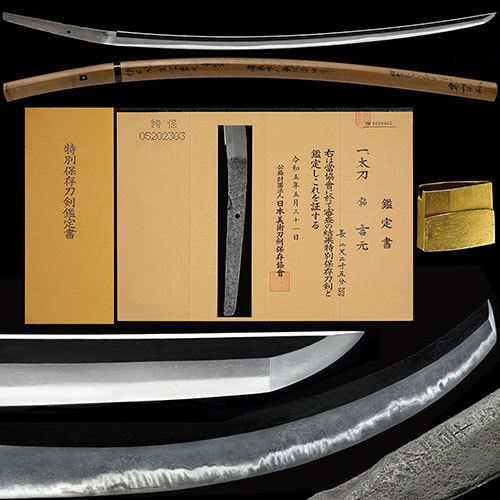
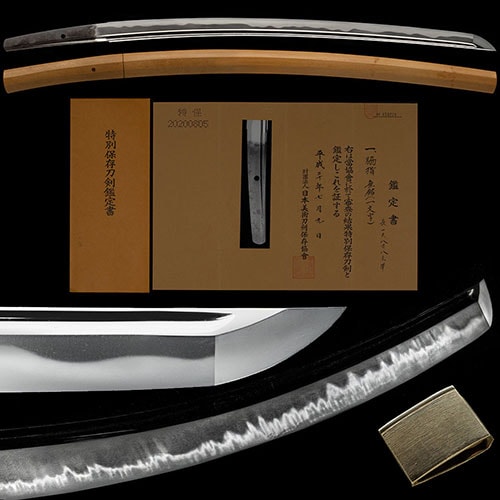
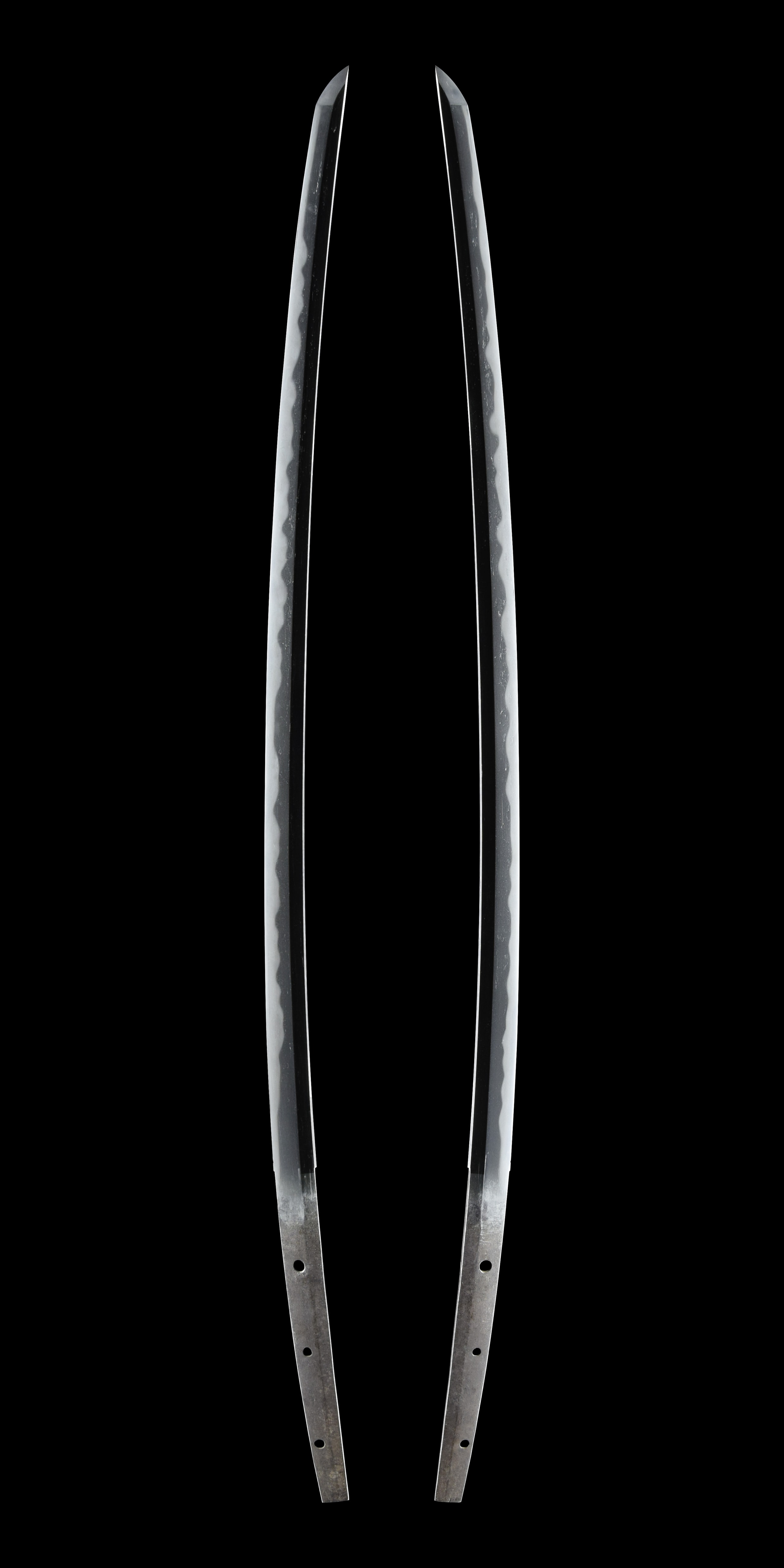
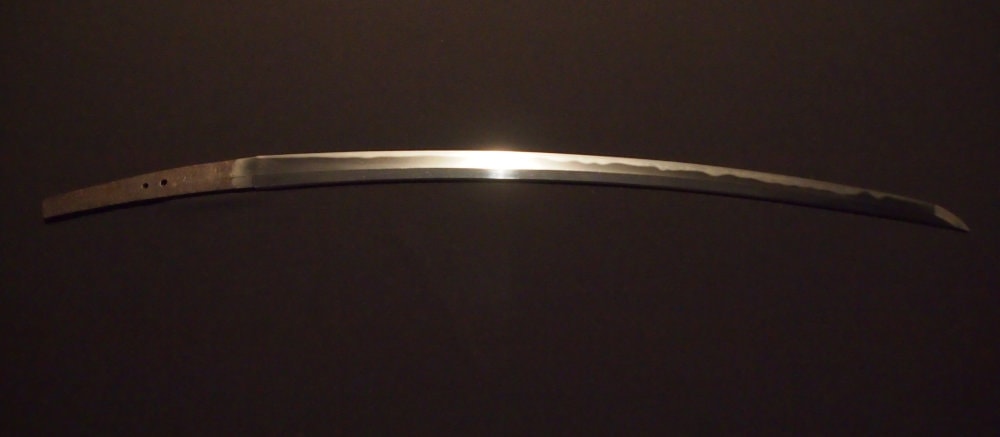
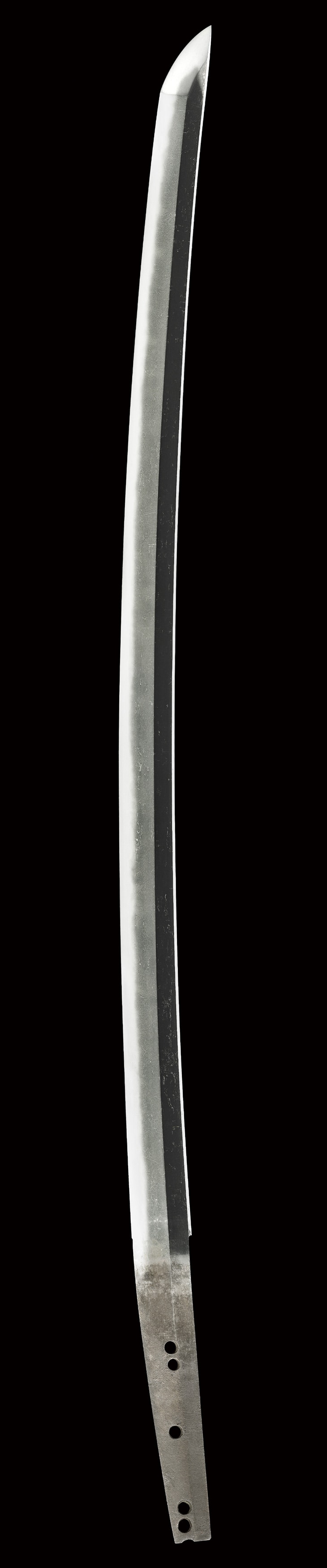
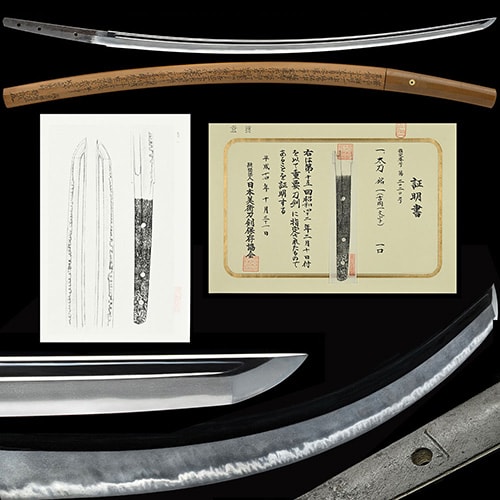
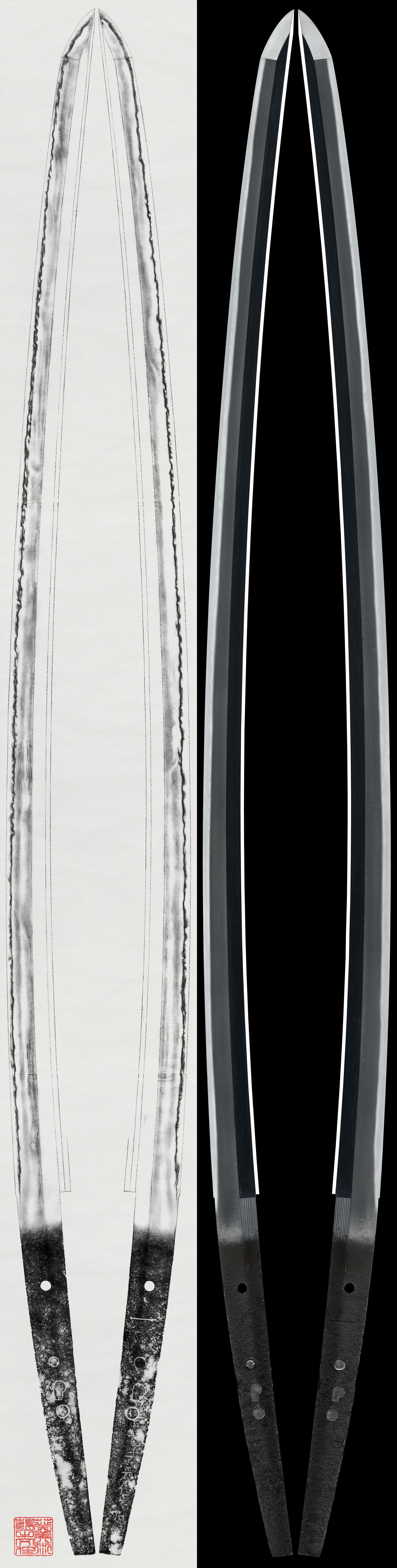
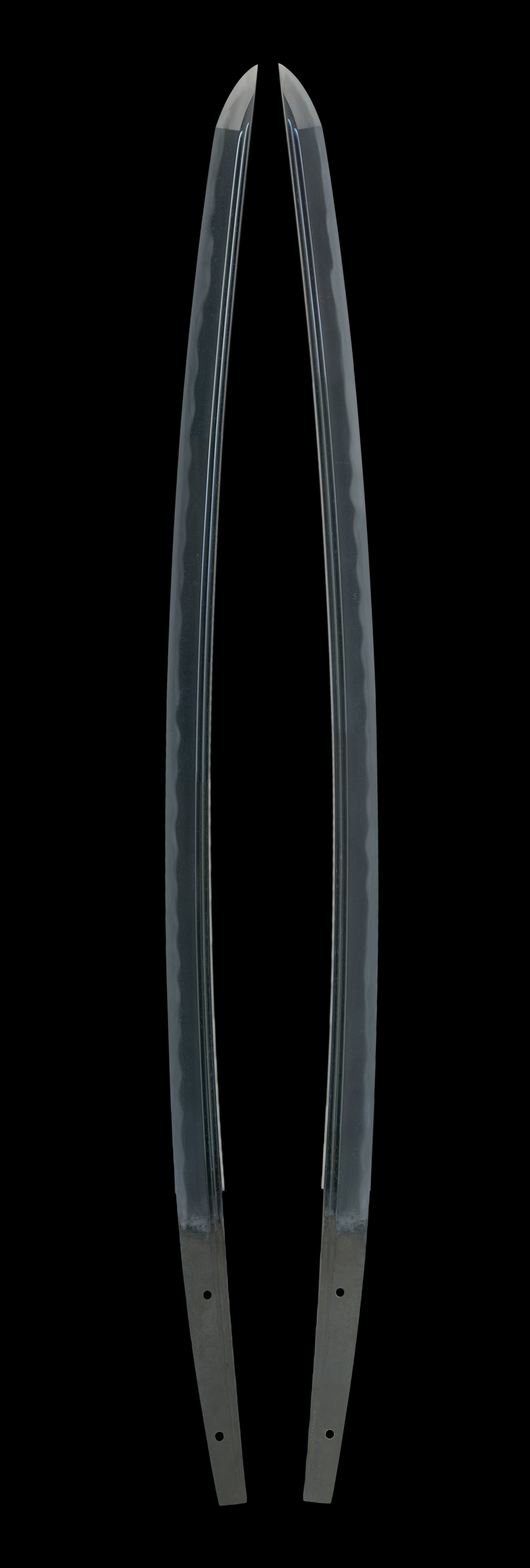
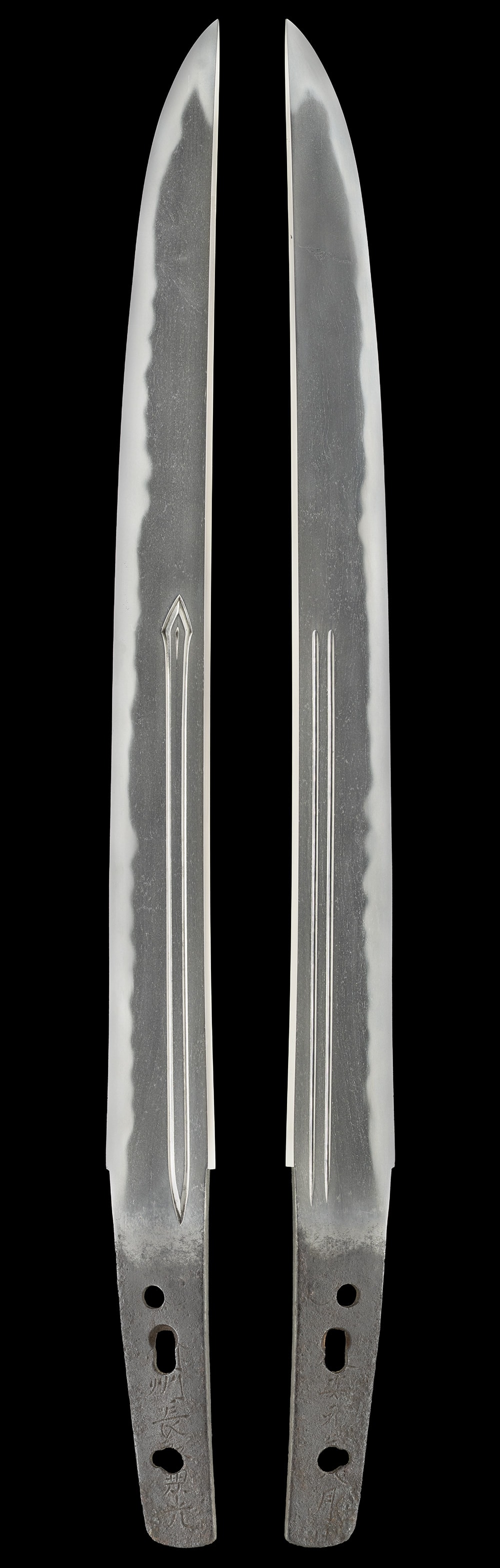
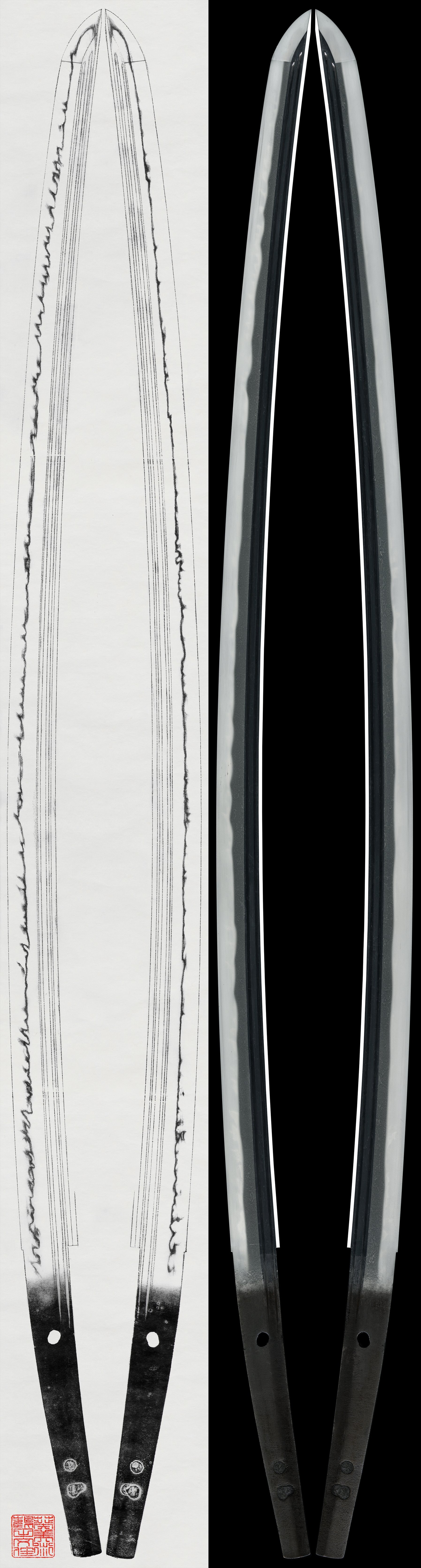
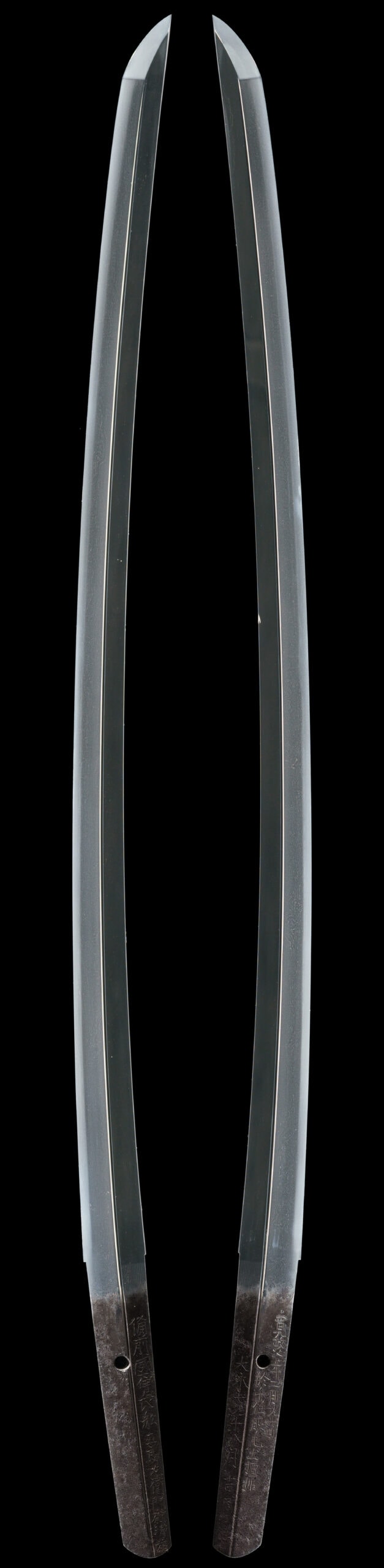
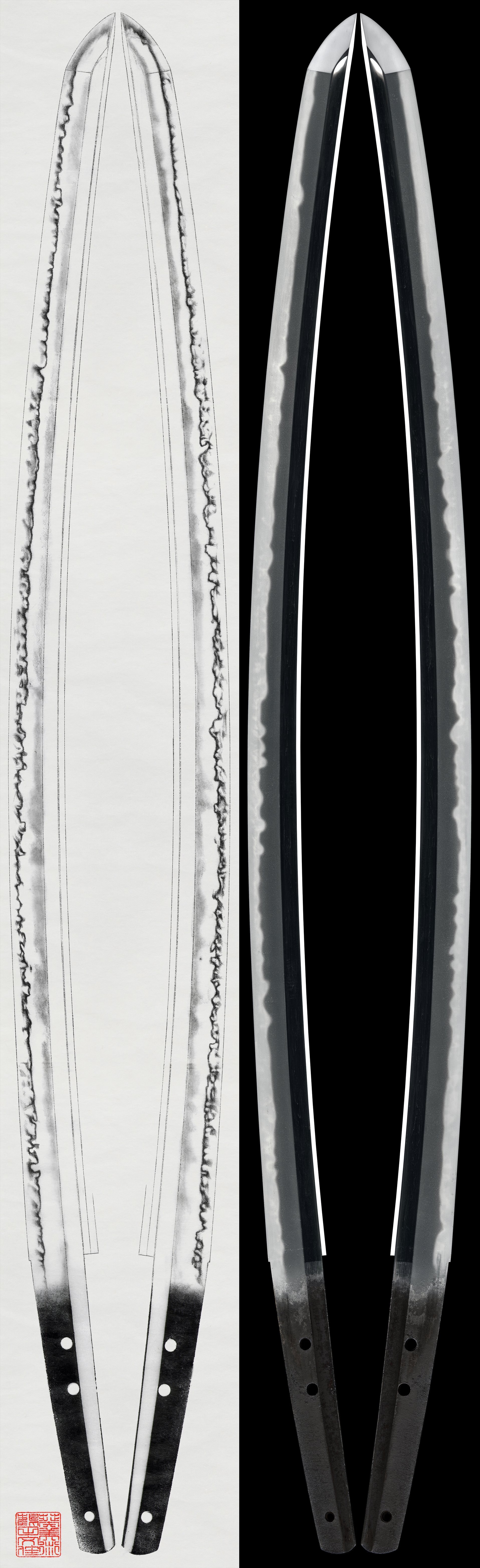
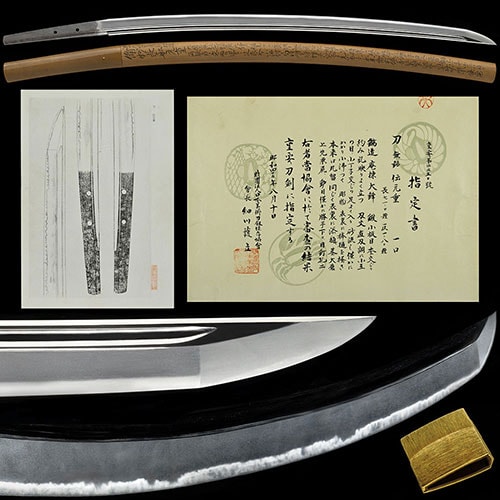
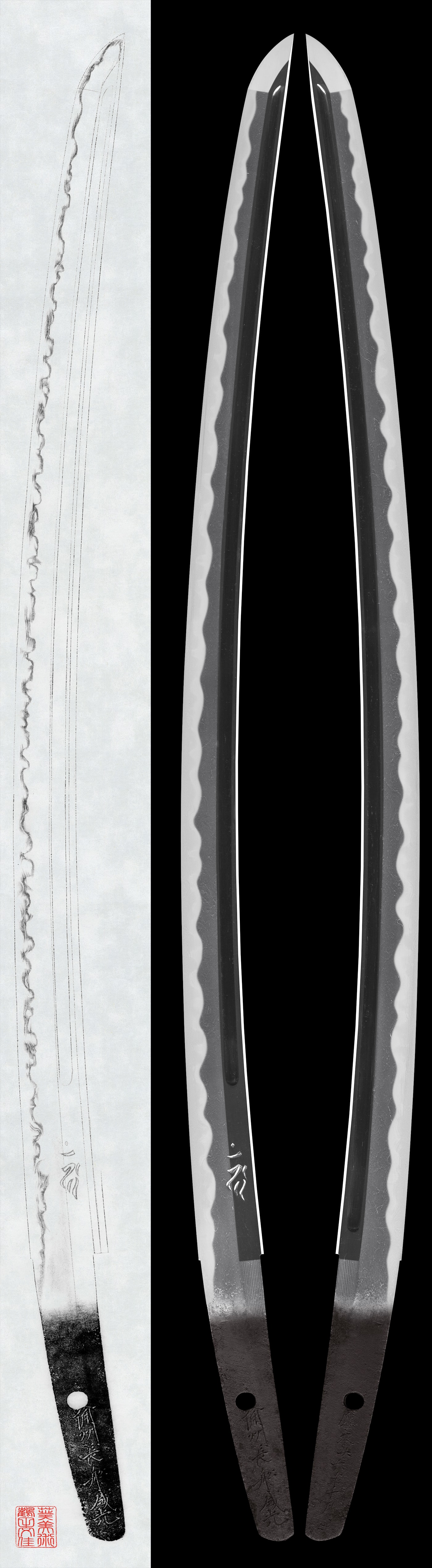
A designated at the 61st session in 2015 carries near the tip of its tang the two characters 助宗, cut boldly with a fine chisel, and stands eighty-three centimeters with a wide body, deep and an extended . It is one of only a handful of signed works that secure the name Sukemune within the Fukuoka school, the great line that arose in the early period and reached, by the middle of the thirteenth century, the most flamboyant the tradition ever produced. The published sources are careful to separate two smiths who bear this name. One is the Ko- Sukemune counted among the attendant forging group of the Retired Emperor Go-Toba, traditionally a son of the founder Norimune and called Ō- (大一文字); the other is the mid- Fukuoka Sukemune to whom every one of the surviving designated blades is appraised. Each designation states the distinction outright before placing its blade with the latter, a smith who worked a generation or more after the namesake, at the school's most luxuriant peak.
His hand is the mature Fukuoka manner carried at full strength. Over an mixed with he tempers a in which the discriminating compounds gather in profusion: large , the layered double-flower , and the frog-spawn -, the published record describing the school of this period as the stage where 大丁子・重花丁子・蛙子丁子が入り乱れ. The broadens in places, and enter abundantly, and run freely through a deep with , and on the finest of the signed the temper reads 匂口明るく冴える, bright and clear along its whole length. This is not the bare of school boilerplate but its fullest elaboration, the temper the published sources call 豪華で絢爛たる刃文の成熟, the luxuriant and brilliant ripening of the Fukuoka style.
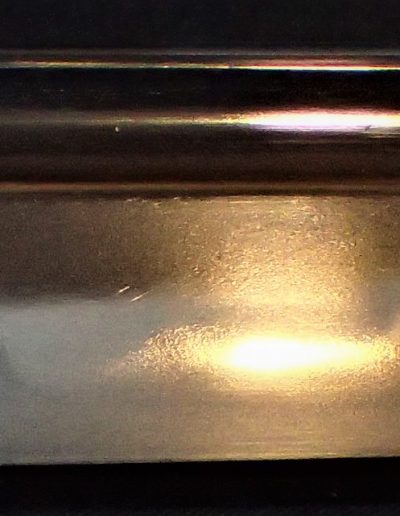
The is the steel that anchors the . An , often with worked in and a slight tendency to standing grain, carries , and the signed show entering frequently across a robust body of ample . Above it stands a , twice called vivid on the signed pieces, the speckled reflection of old steel that the published record describes as 乱れ映りが鮮やか. The answers the temper below it, running and turning in a rounded , on one piece leaning toward with slight before its rounded turnback. Where the school's is its voice, the vivid over a refined is its accent, and the two read together place a blade in the mid- Fukuoka workshop before the personal name is reached.
The small corpus divides into two registers the texts themselves draw. The prime is the signed flamboyant manner, an imposing of broad , thick and deep , the broadening and undulating, the whole effect splendidly ornate, the workmanship that one shortened bearing a reading 一助宗刀上ル is judged to share when the appraiser writes that it 華やかな作風を示し、よい出来である. Beside it runs a quieter register: an , slenderer with a narrow body and , high and pronounced , the leaning slightly to standing grain, the running into . Of this piece the published record judges its workmanship more brilliant in feeling than Sukemune's own signed work, with a wider hardened area, yet fully 古一文字として首肯し得る, acceptable as the Ko- tradition, marking precisely the boundary at which the two Sukemune meet. The signatures follow the school's own three forms, which the texts set out plainly: the single character 一 alone, the 一 set above an individual name, or the personal name by itself.
What distinguishes Sukemune within the school is the proportion of these features rather than any one of them in isolation. His is the school's flamboyance brought to its mid- ripeness, his stands vividly where a quieter Ko- would only faintly show it, and his on the best work is bright and clear rather than subdued. The of the 43rd-session preserves , the battle notches the published record reads as 武勲をものがたる切込み, speaking to martial use. The line he belongs to ran on from the mid- period into the , flourishing at Fukuoka, Yoshioka and Iwato and producing many fine smiths, and the published sources reckon it with one of the two great lineages of the age. Sukemune's flamboyant belongs to the Fukuoka stage of that arc, the school's most luxuriant manner before the Yoshioka makers carried the line forward.
The record under this name is small and entirely high in pedigree. Four blades hold official designation, all at the level, with no National Treasure or Important Cultural Property among them, and the smith's standing in the reference literature is registered by a Tōkō Taikan valuation of 2,000, among the higher figures for a master. Signed examples are so few that the published sources call this signed mid- Fukuoka 数少ない鎌倉中期の福岡一文字派助宗の有銘作として資料的にも貴重, valuable as documentary material in its own right. The blades that can be traced are heritage rather than merchandise: examples are preserved at Jingū, at Akiha Shrine in Tōtōmi, at a Hachiman shrine, and at the Tokyo National Museum, the last a blade that descended through Emperor Meiji to the statesman Tanaka Mitsuaki. A privately held Sukemune is among the rarest things a collector of could encounter, and when one does surface it is most often a of the flamboyant manner rather than the slenderer Ko- register, a landmark when it appears and a sword that places its owner directly at the school's most brilliant moment.