NihontoWatch MonNihontoWatchBETA
MarketEncyclopedia
NihontoWatch Mon

NihontoWatchBETA

Market
Encyclopedia
Overview·Kantei·Designations·Provenance·Blade Forms·Signatures·Lineage·School
OverviewKanteiDesignationsProvenanceBlade FormsSignaturesLineageSchool
  1. Schools
  2. Ichimonji
  3. Fukuoka Ichimonji
  4. Yoshimoto

Fukuoka Ichimonji Yoshimoto

吉元

Jūyō
Vol. 55, No. 48 · Katana

Fukuoka Ichimonji Yoshimoto

吉元

5 ranked works

ProvinceBizenEraRyakunin (1238–1239)PeriodKamakuraSchoolIchimonji>Fukuoka IchimonjiTraditionBizen-denGeneration1stTeacherSukeyoshiFujishiroJo sakuTypeSwordsmithCodeYOS512
2Jūyō Bijutsuhin
3Jūyō Tōken

Overview

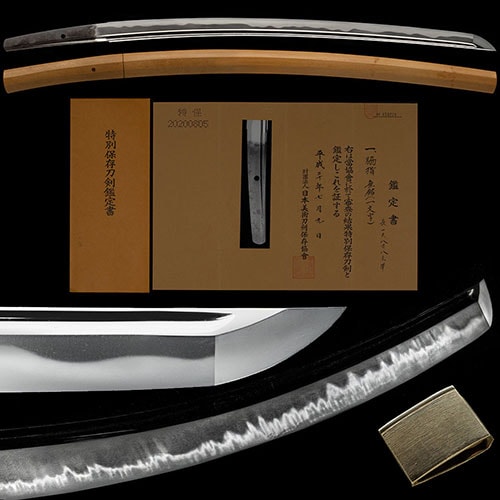
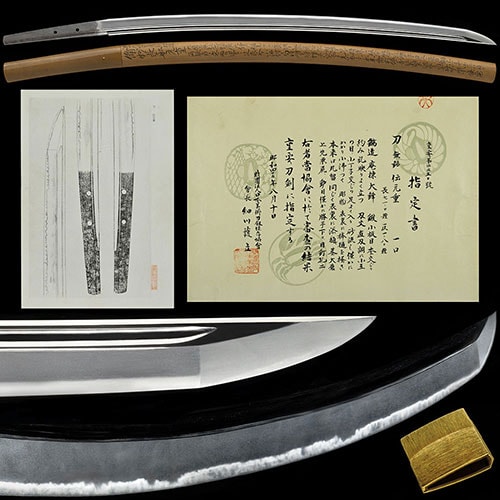
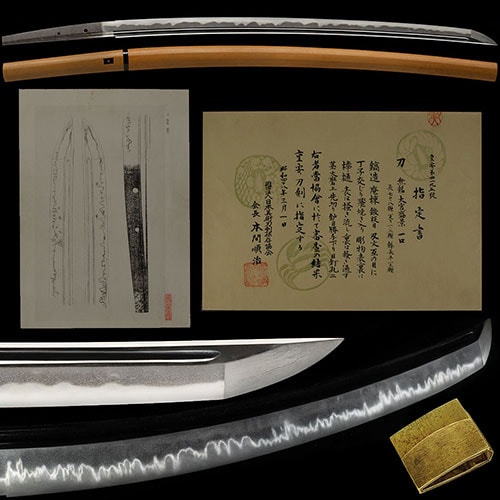
Yoshimoto is a smith of the Fukuoka group whose readable record is small and uncommonly distinguished: three blades at the rank, including a carrying a gold-inlaid signature, and two designated Bijutsuhin before the war, one of them published in the Kozan . The Fukuoka was the school that arose in the early period with Norimune as its founder and that, by the mid-, brought the temper to its most consciously decorative maturity, mixing large , layered double-flower and frog-spawn with abundant and . The name Yoshimoto sits across two lineages in the , one strand among the Fukuoka and one among the smiths, and the published sources note that the second generation later relocated to , recording of the first that "its second generation is said to have moved to ." One tradition transmits the first generation as a son of Yoshifusa, the school's foremost master of the flamboyant .

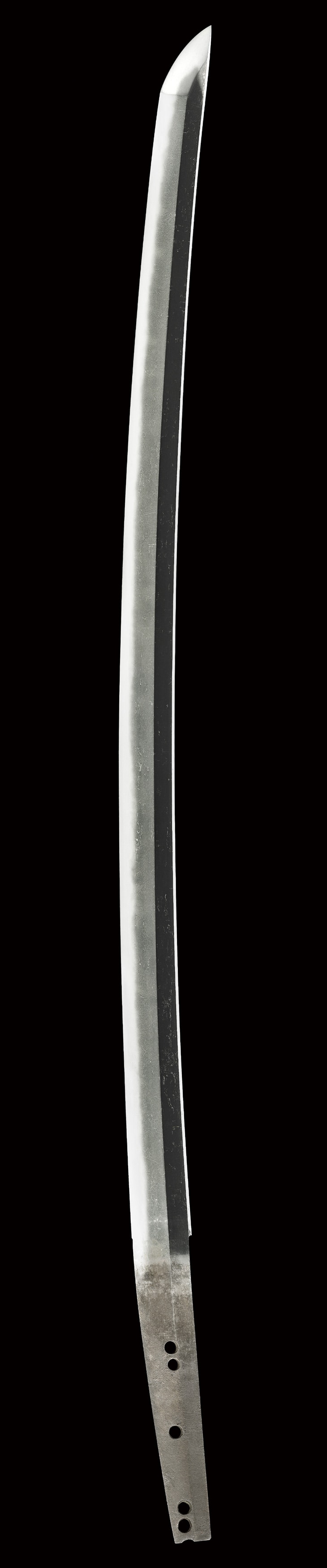
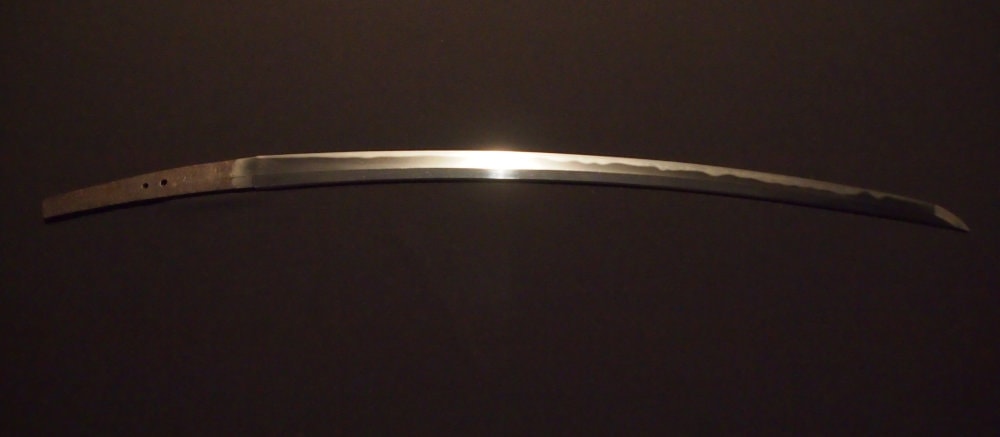
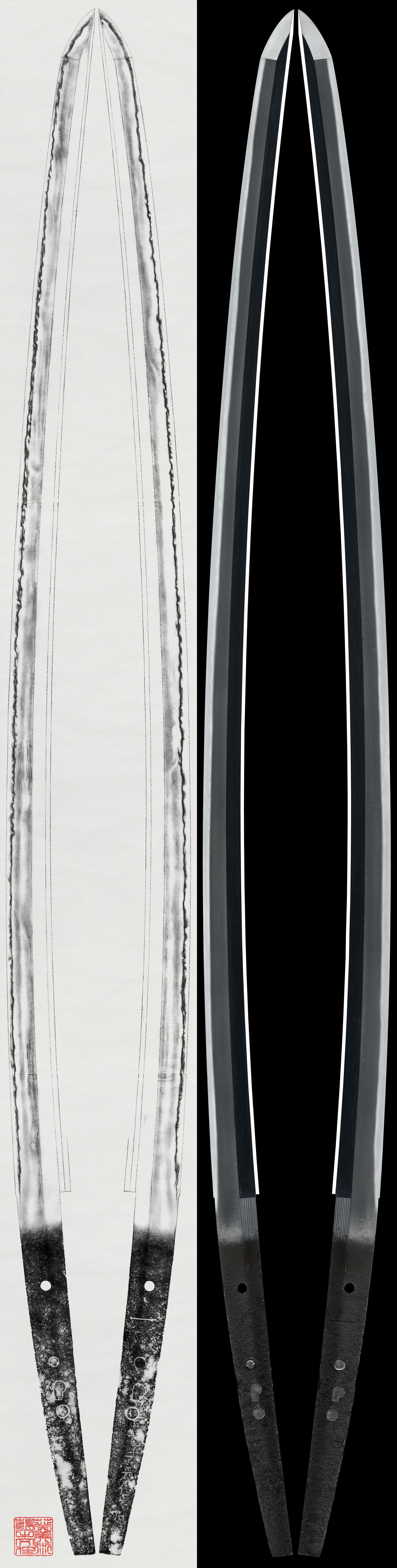
His hand is read in two manners. The first is an archaic, somewhat subdued early- : over a slender body with high and clear , ending in a , he forges an that runs in places and tends slightly to stand, a faint rising over it. The temper is a mixed with small irregularity and , breaking the line in places, entering well throughout, adhering and running, the straight with a tendency. On the slenderer of the signed the lower half settles toward a base and a chiba-, the speckled reflection of old steel, is discerned in the . The published sources read this restrained early work as archaic in , and form alike, holding that "its workmanship and shape are archaic in character and it is appraised to the early period."

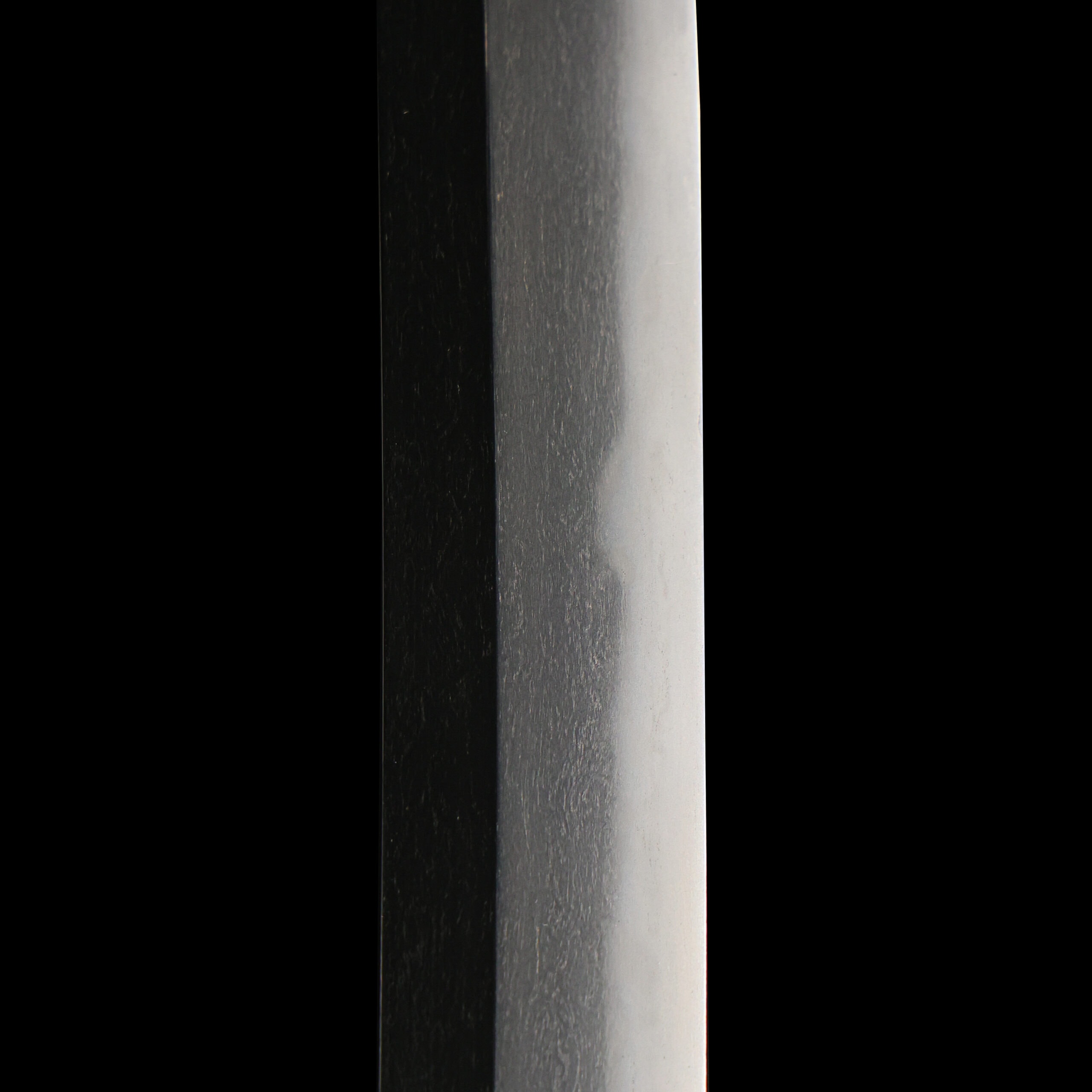
The carries his recognition as much as the temper. The forging is an , in one piece mixed with and running here and there, tending a little to stand, with attaching, and over it the rises. It is faint on the early and discerned as a chiba- on the shortened one, and it stands vividly on his mature , where a densely forged carries fine and beneath a clear reflection. The published sources call that bright in steel and well refined, writing of the that "the forging, with its vivid standing, is bright in steel color and well worked." The enters in with attaching, the fine and of his developed hand running through it, the straight or very shallowly and turning back in a small round.

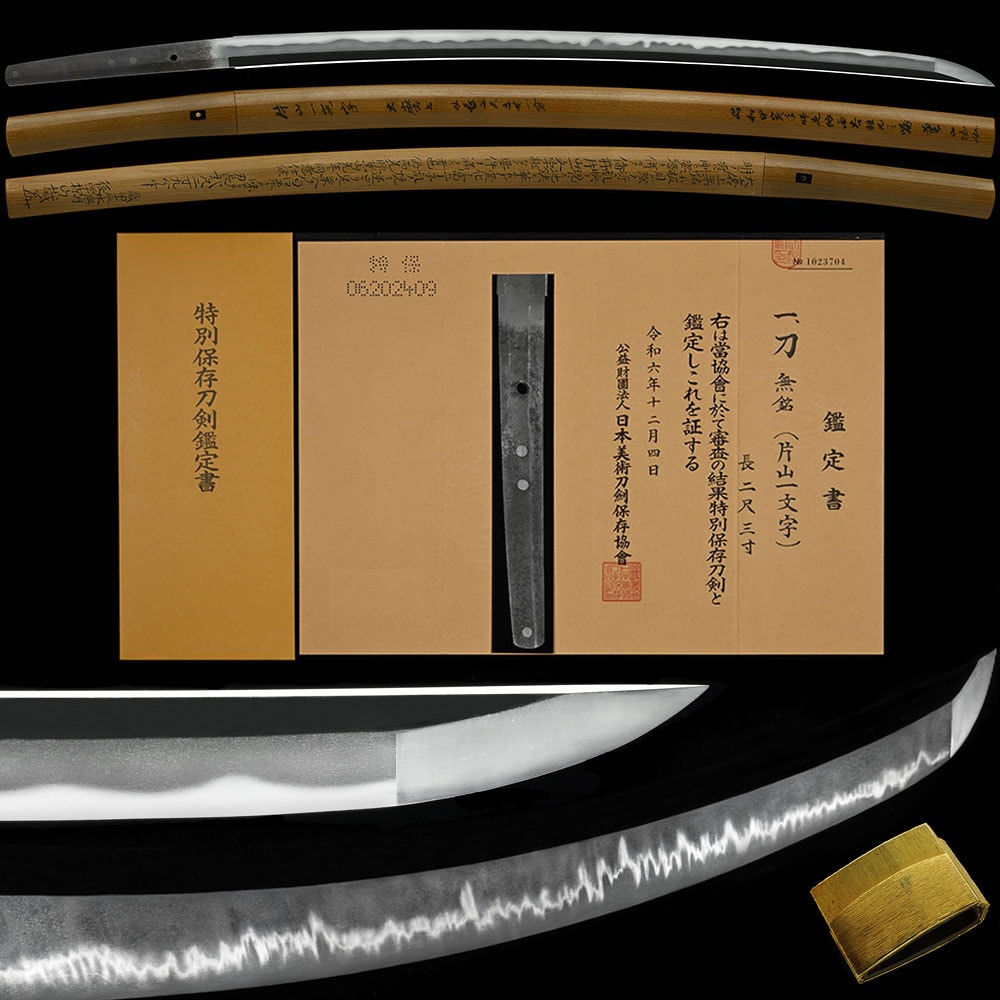
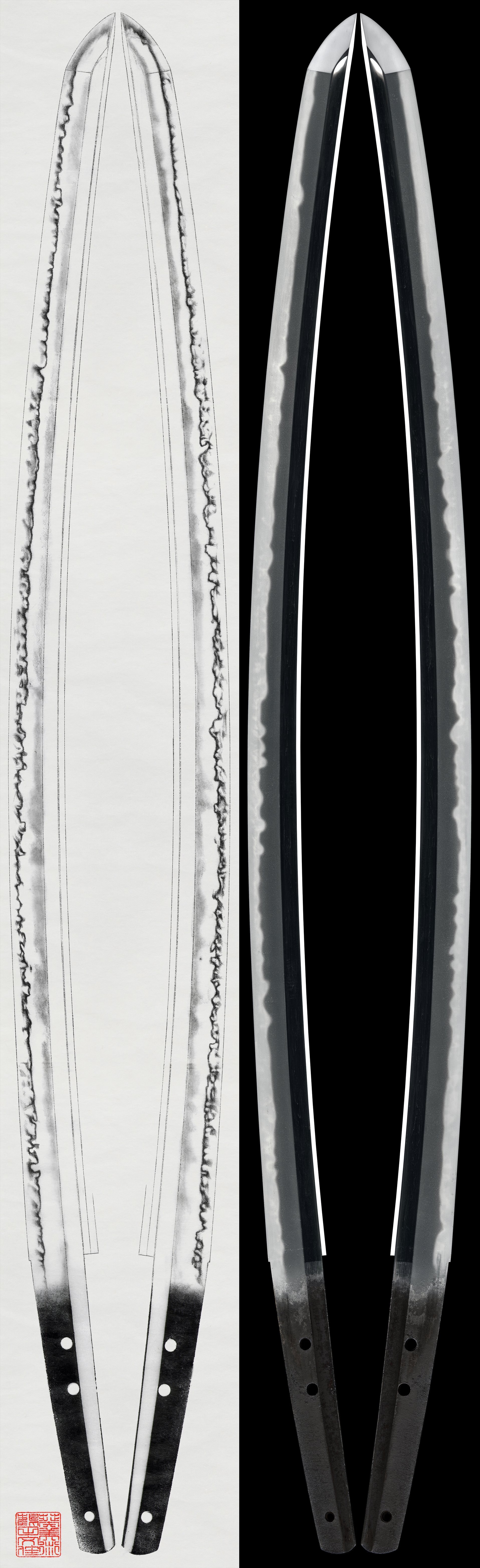
His shows the school's mature manner at its developed height and supplies the second of his two registers. Greatly shortened, the body somewhat wide with little difference between base and tip width, it retains with added curvature toward the tip and a , with carved through on both sides. The temper is a mixed with and ; in the upper half it rises high and varies in height to a splendid effect, and entering well, the bright and -dominant. This is the flamboyant the school is known for, where his early keep the calmer of the old tone, so a collector reads the two pieces as one smith working at the two ends of his school's range. The attribution itself rests on a connoisseur's judgment of manner, and the published sources locate it in the temper, holding that "compared with Yoshifusa, the slightly more restrained setting of the accords convincingly with the to Yoshimoto."

That last judgment places him within the Fukuoka rather than apart from it. His own grounded tells are the bright over a well-worked , the -toned early temper and the slightly calmer that the appraisers weighed against Yoshifusa's more exuberant hand, and these set him within the school without naming a rival's features. The recognized signed work belongs to the Fukuoka Yoshimoto, distinguished from the namesake by the archaic , and form of his early- , while the 's double entry and the recorded move of the second generation carry the name forward into the rising school. The published sources resolve the homonym on a Bijutsuhin by style and signature, judging that of the two Yoshimoto smiths "this one is thought to correspond to the former," the son of Yoshifusa in the Fukuoka line.

Yoshimoto is graded Jo- by Fujishiro, and his designated record, though small, is high: a gold-inlaid and two signed at the rank, and two signed recognized as Bijutsuhin in the prewar years, five designated works on record in all. One is published in the Kozan ; the Bijutsuhin pair appears in the Taikan, the Taishu and the Shinko Meito Zufu. The blades whose owners are recorded passed through private hands, Kikuchi Takashi of Kyoto and Honma Yusuke of holding the two Bijutsuhin at the time of their designation, the early recorded with private owners in Tokyo and abroad. No National Treasure or Important Cultural Property bears his name, so his work is not held out of reach in museums and shrines but survives in long-held private collections. A signed Yoshimoto is a rare thing, the more so an - example, which the published sources prize as reference material; one reaches the market only seldom, and a piece in this archaic Fukuoka hand rewards the patience of the collector who waits for it.
Kantei

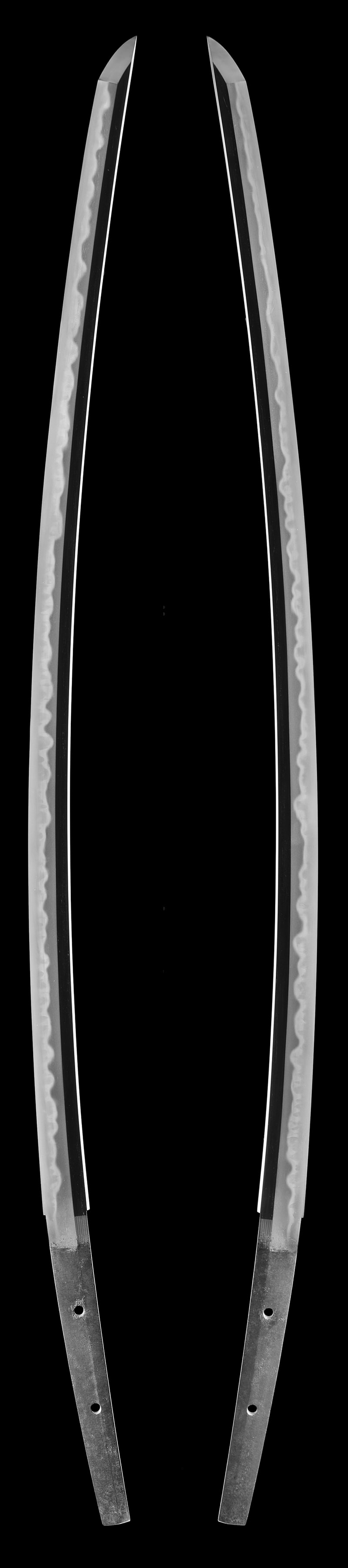
one Fukuoka Ichimonji hand read across two manners: the archaic, subdued early-Kamakura tachi tempered in a ko-choji with small irregularity and ko-gunome over a faintly utsuri-bearing itame, and the school's mature flamboyant choji-midare mixed with togariba over a densely forged ko-itame with vivid midare-utsuri

Yoshimoto is a Bizen smith of the Fukuoka Ichimonji group, the prestigious early-to-mid Kamakura Bizen school that arose with Norimune as its founder and that, by the mid-Kamakura period, brought the choji temper to its most consciously decorative and exuberant maturity. The Meikan enters several smiths named Yoshimoto under both the Fukuoka Ichimonji and the Osafune lines, and the published sources hold that the second generation later relocated to Osafune; one tradition transmits the first generation as a son of Yoshifusa. His readable record is a small body of signed tachi and one kinzogan-mei katana, all in two ways. The first is an archaic, somewhat subdued early-Kamakura manner: over a slender koshizori tachi he forges an itame, in places running and slightly standing, a faint midare-utsuri rising, and tempers a ko-choji mixed with small irregularity and ko-gunome, ashi entering, ko-nie adhering and sunagashi running, the boshi straight with a yakitsume tendency or a small round. The second is the school's mature, flamboyant hand: over a densely forged ko-itame with fine ji-nie, chikei and a vivid midare-utsuri he raises a choji-midare mixed with ko-choji and togariba, the upper half tempered high and varied in height to splendid effect, ashi and yo abundant, the nioiguchi bright and nioi-dominant with fine kinsuji and sunagashi. The published sources rank this an upper-level work of the Fukuoka Ichimonji tradition and ground the kiwame to Yoshimoto, rather than to Yoshifusa, in the slightly calmer setting of his habuchi. Signed Yoshimoto tachi survive in only a handful, so an ubu-mei example is held as valuable reference material.

Diagnostic discriminators

Observation by phase

The archaic ko-choji (his subdued early-Kamakura tachi)

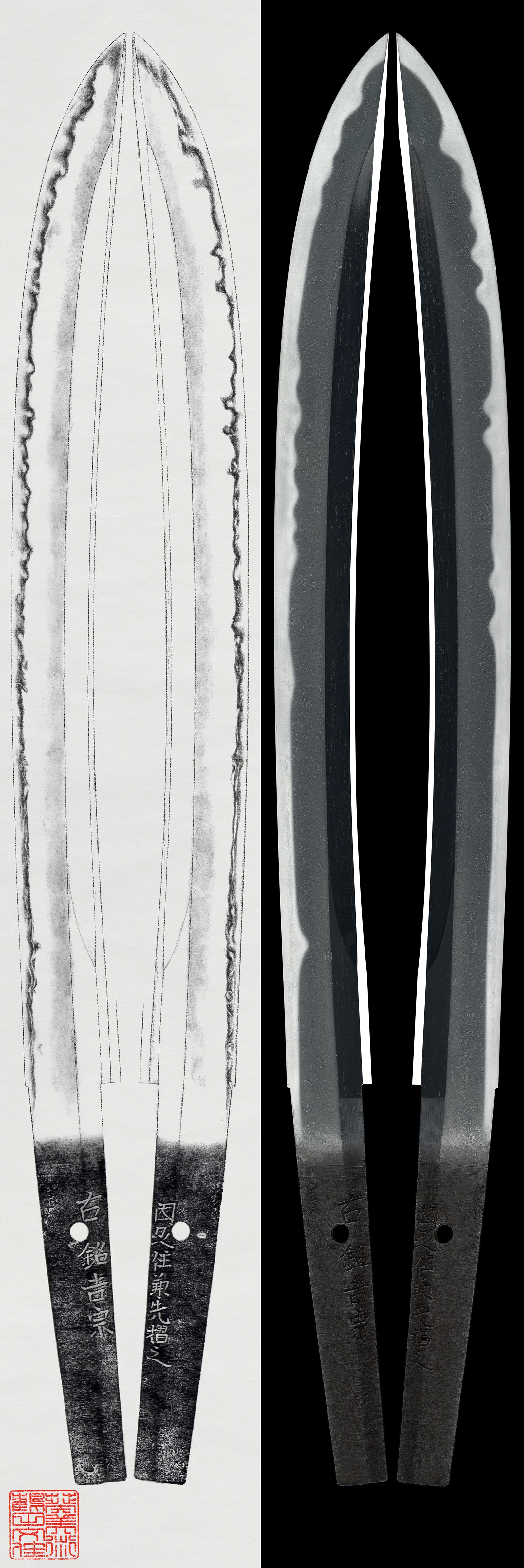
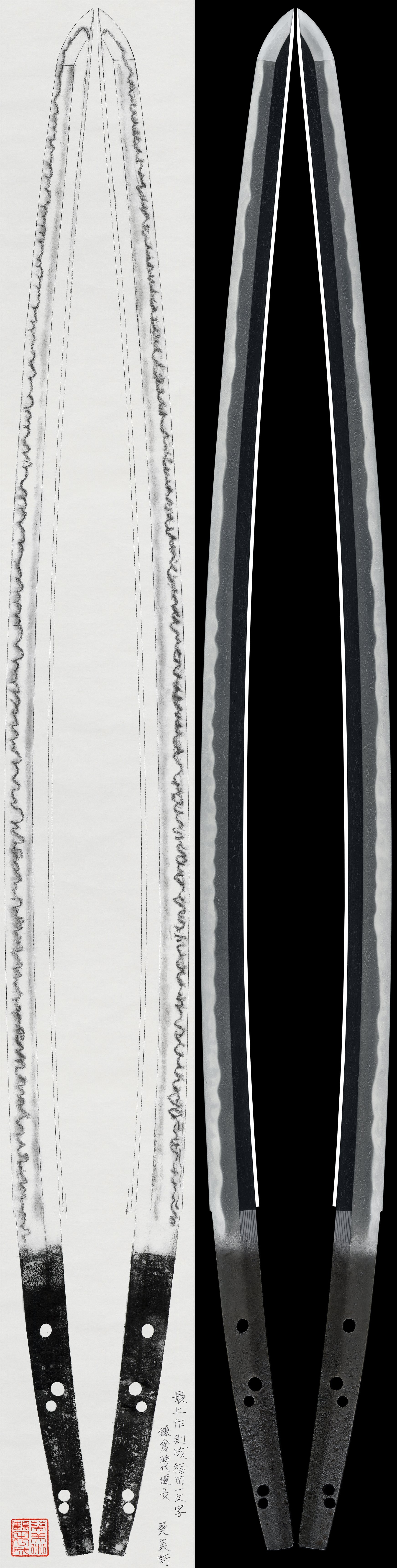
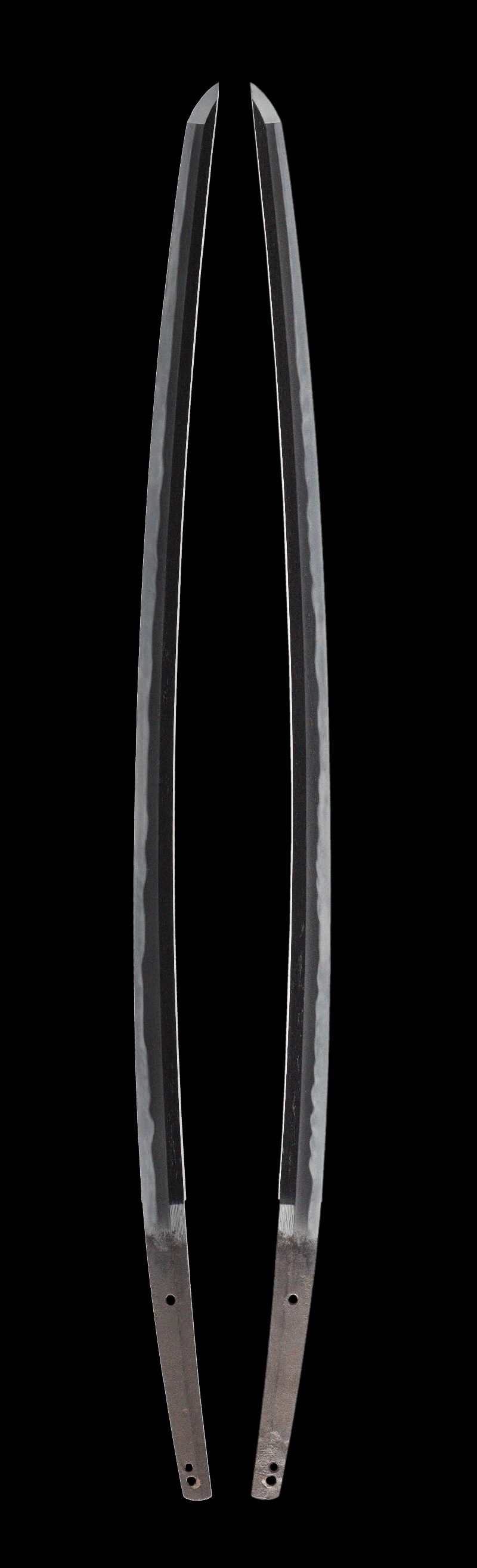
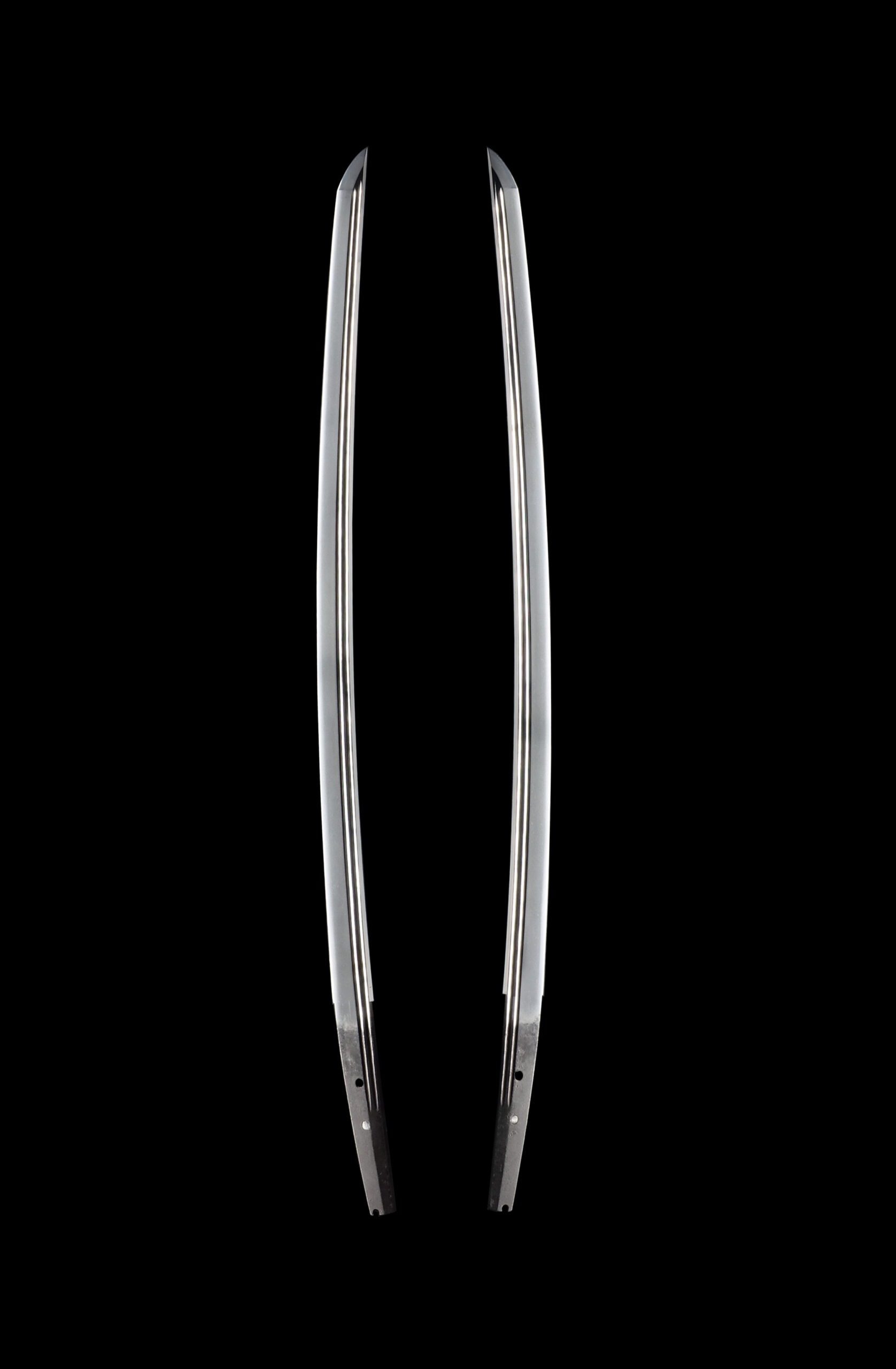
His core record is the signed tachi in the subdued early-Kamakura manner. The shape is the old Bizen bearing: a slender build with high koshizori and funbari on the ubu pieces, the curvature surviving even where the tang is shortened, running to a ko-kissaki. Over an itame, in places running and tending somewhat to stand, with mokume mixed on one piece, he sets ji-nie and raises a faint midare-utsuri, on the shortened tachi discerned as a jifu-utsuri. The temper is a ko-choji mixed with small irregularity and ko-gunome, in places becoming suguha-based lower on the blade, hotsure appearing, ashi entering well overall, ko-nie adhering and sunagashi running. The boshi is straight with a yakitsume tendency on the earliest piece, or tempered narrow and straight turning back in a ko-maru. The published sources read this as archaic in ji, ha and form, appraised as early Kamakura, somewhat subdued in appearance yet good in workmanship, and one of the pieces published in the Kozan Oshigata.

Sugata 姿
Jigane 地鉄
Hamon 刃文
Bōshi 帽子

The mature flamboyant choji-midare (the school's developed hand)

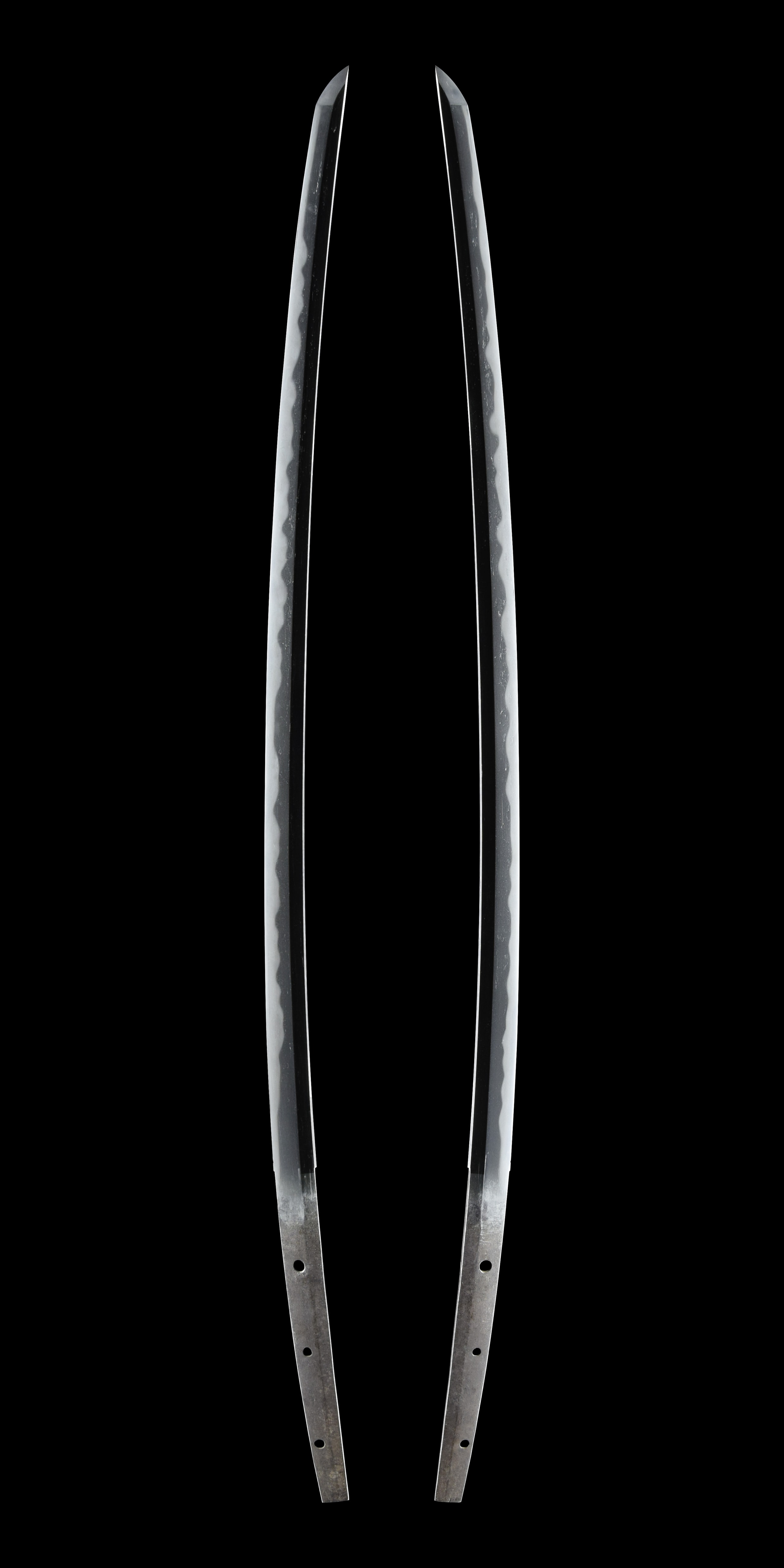
His one kinzogan-mei katana carries the Fukuoka Ichimonji manner at its developed height. Greatly shortened, the body somewhat wide with little difference between base and tip width, it still retains koshizori with added curvature toward the tip and a chu-kissaki, and bo-hi are carved through on both sides. Over a densely forged ko-itame with fine ji-nie and chikei entering, a vivid midare-utsuri stands out. The temper is a choji-midare mixed with ko-choji and togariba; in the upper half it rises high and varies in height to a splendidly decorative effect, ashi and yo entering well, the nioiguchi bright and nioi-dominant with attached ko-nie, fine kinsuji and sunagashi running throughout. The boshi is very shallowly midare-komi on both sides, turning back in a ko-maru. The published sources read the forging, with its bright steel and clear midare-utsuri, as well refined, and the hamon as lively in nioi and elegantly varied in height, appraising the whole an upper-level work of the school and an outstanding performance.

Sugata 姿
Jigane 地鉄
Hamon 刃文
Bōshi 帽子
Scholarship

The published sources record that in the Meikan several smiths named Yoshimoto are entered under both the Fukuoka Ichimonji and the Osafune lines, and that the second generation is said to have relocated to Osafune; one tradition transmits the first generation as a son of Yoshifusa. The recognized signed work is judged to belong to the Fukuoka Ichimonji Yoshimoto, its ji, ha and overall form archaic in character and appraised to the early Kamakura period.

On the kinzogan-mei katana the published sources give a developmental frame: the Fukuoka Ichimonji school, founded by Norimune in the early Kamakura period, came by the mid-Kamakura period to express choji in an ever more consciously decorative manner, and they read this katana as an upper-level work of that mature tradition, grounding the kiwame to Yoshimoto rather than Yoshifusa in the slightly calmer setting of his habuchi.

Designations

Kokuhō—
Jūyō Bunkazai—
Jūyō Bijutsuhin2
Gyobutsu—
Tokubetsu Jūyō—
Jūyō Tōken3

Elite Standing

0.02 across 5 designated works

Top 28% among smiths

Provenance

2 documented provenances across certified works by Yoshimoto

Provenance Standing

1 works held in elite collections across 2 documented provenances

Top 90% among smiths

Raw score: 1.78 / 10

Blade Forms

Distribution across 5 ranked works

Signatures

Signature types across 5 ranked works

Currently Available

Lineage

TeacherSukeyoshi
Yoshimoto
Student
  1. 1.Yoshimoto吉元

Fukuoka Ichimonji School

Other artisans of the Fukuoka Ichimonji school

  1. 1.Sukezane助眞44designated
  2. 2.Yoshifusa吉房1 for sale46designated
  3. 3.Norimune則宗8designated
  4. 4.Yoshihira吉平17designated
  5. 5.Sukekane助包6designated
  6. 6.Norikane則包7designated
  7. 7.Tamekiyo爲清5designated
  8. 8.Yoshimochi吉用10designated
  9. 9.Tameto爲遠5designated
  10. 10.Yoshimune吉宗6designated
  11. 11.Naganori長則17designated
  12. 12.Ichi一7designated