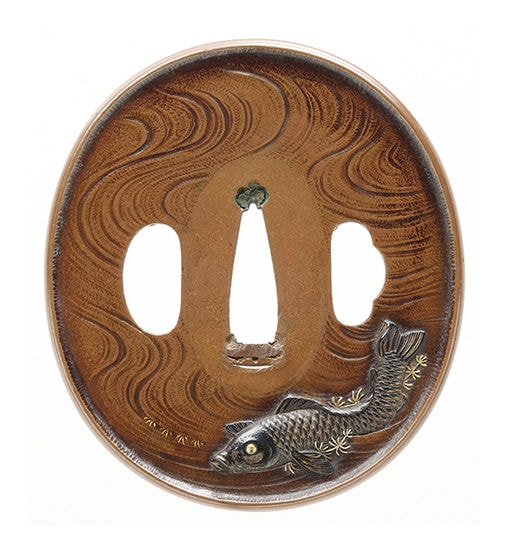
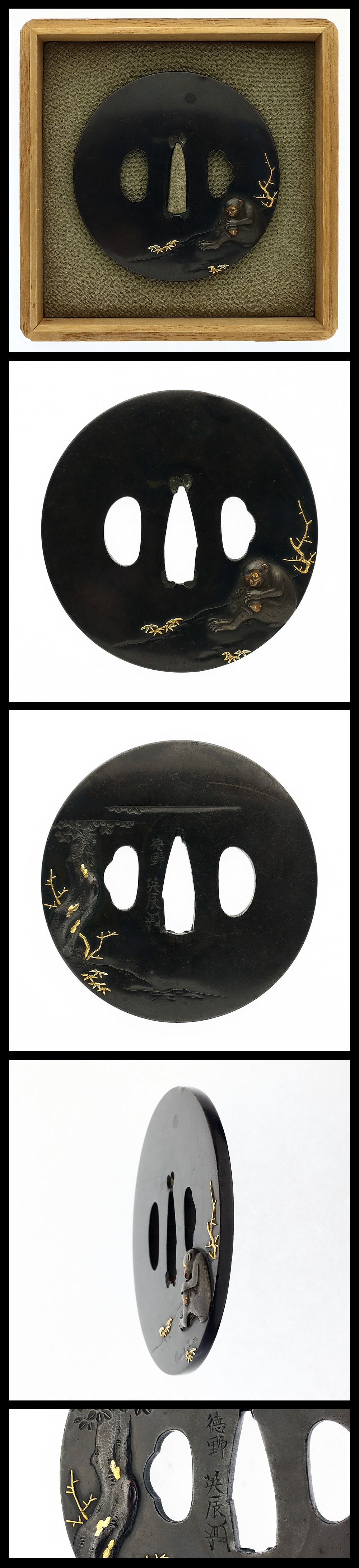
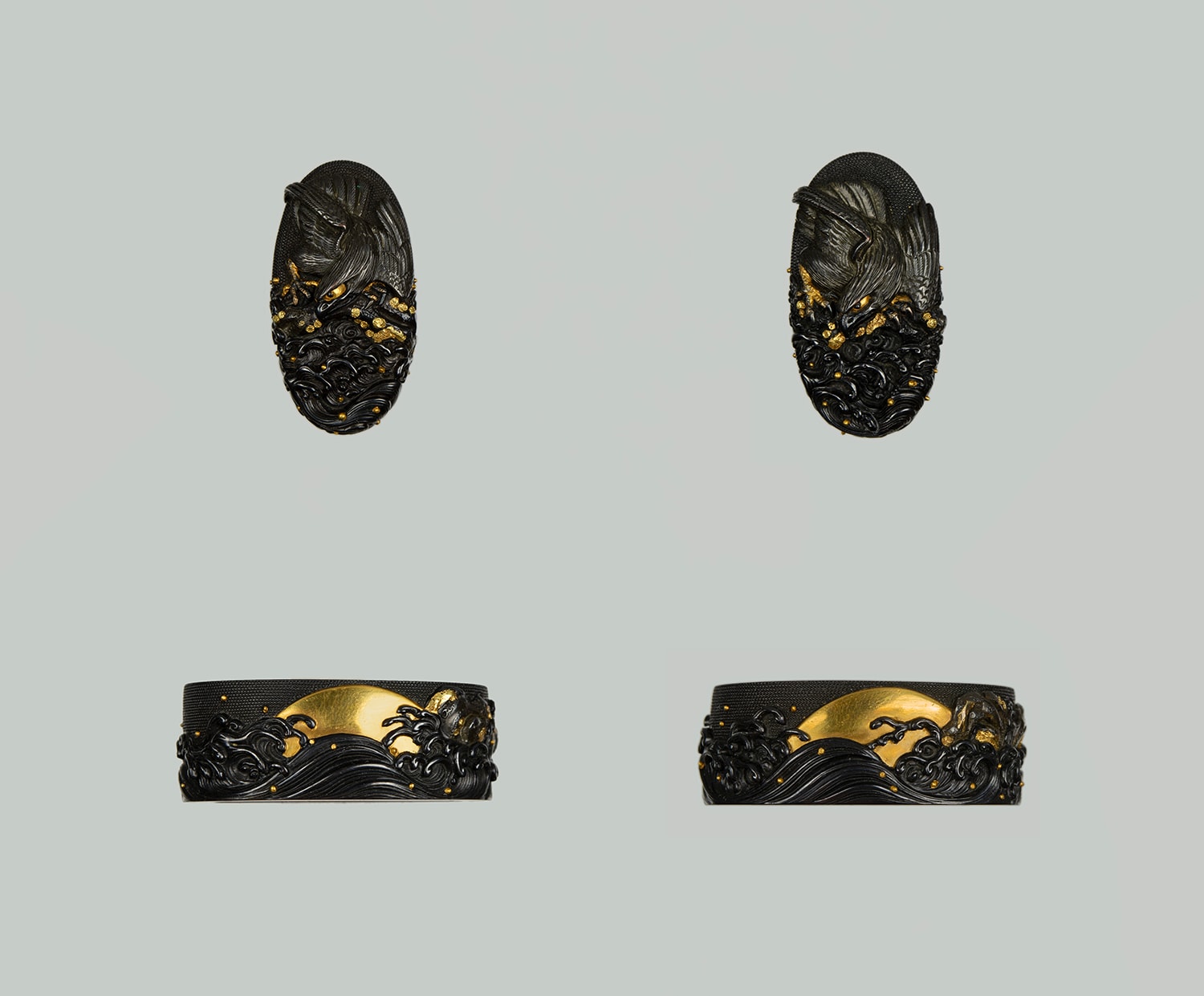
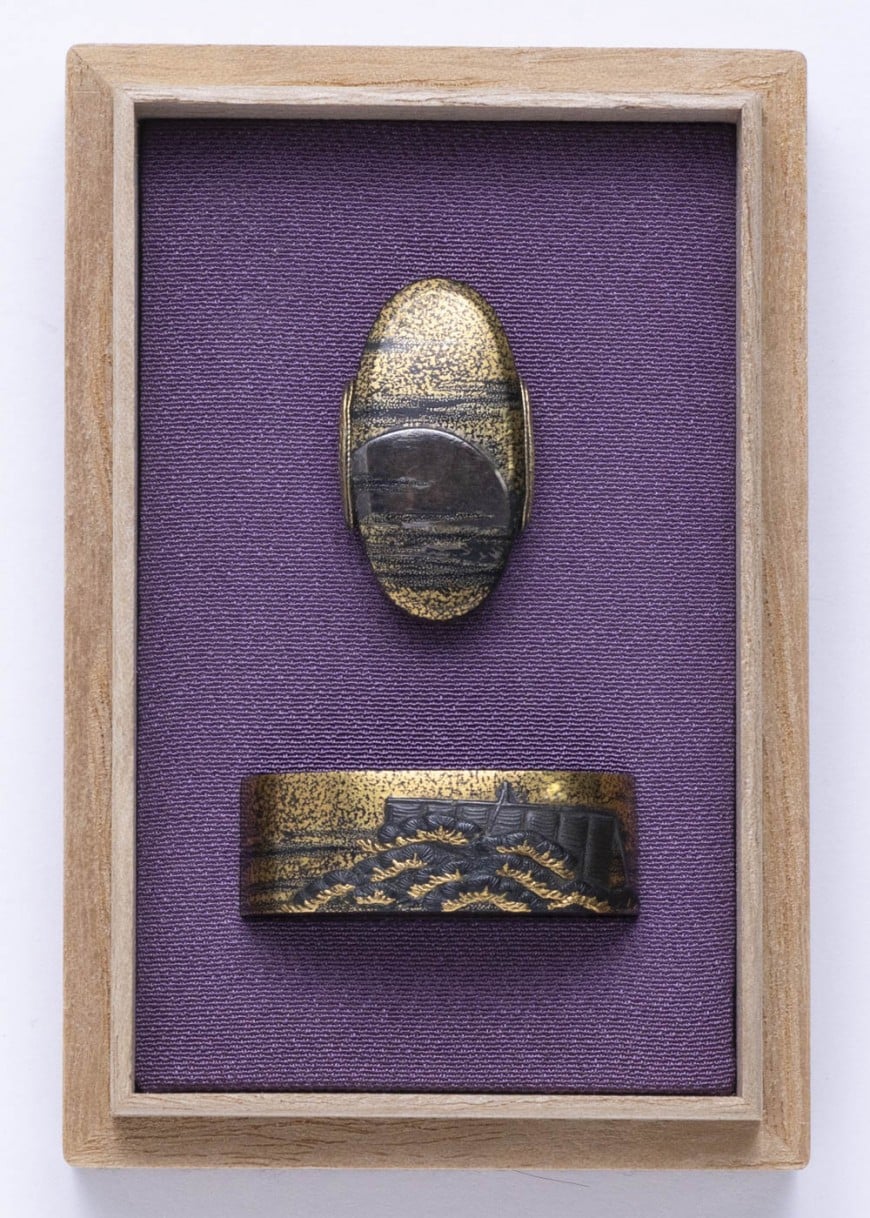
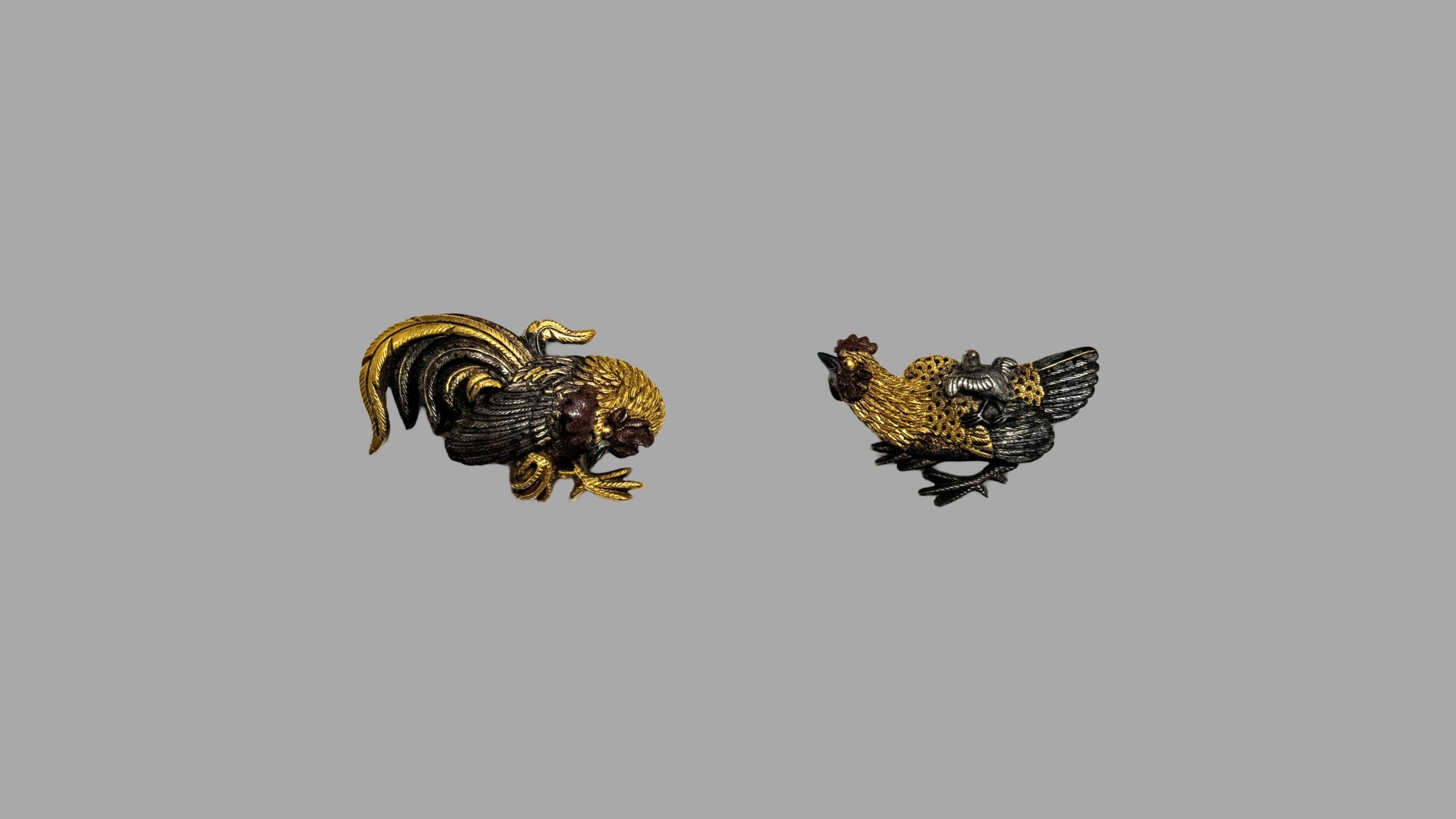
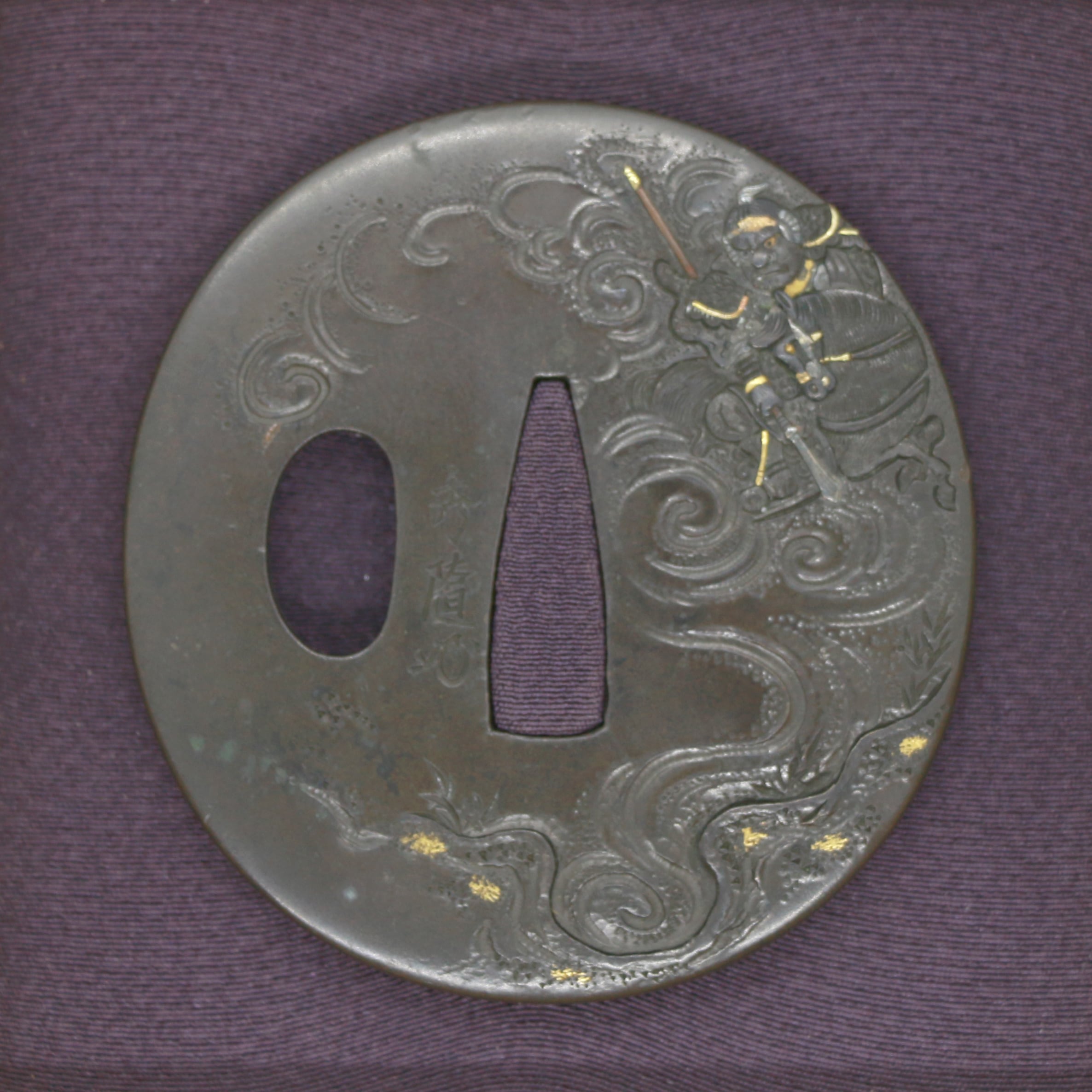
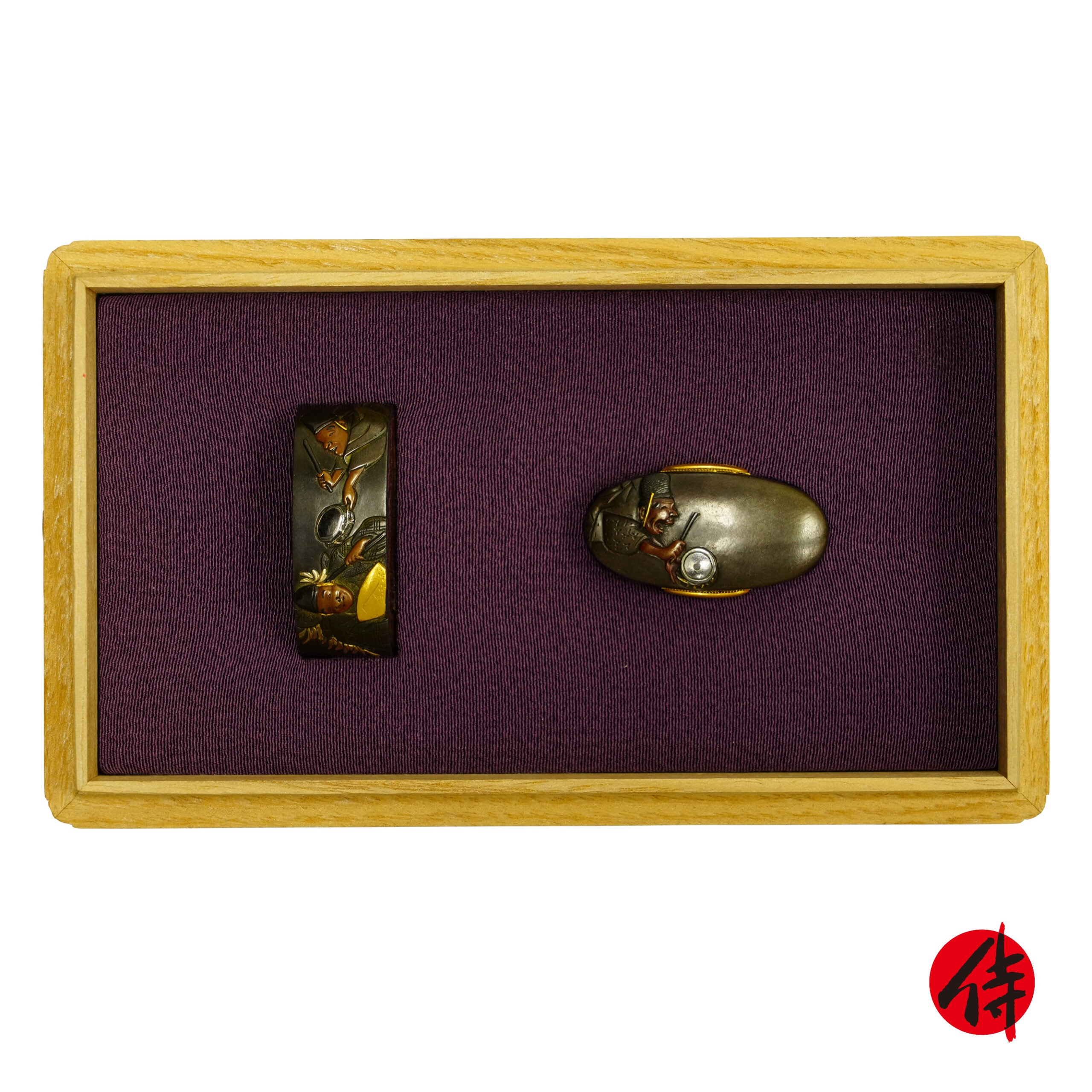
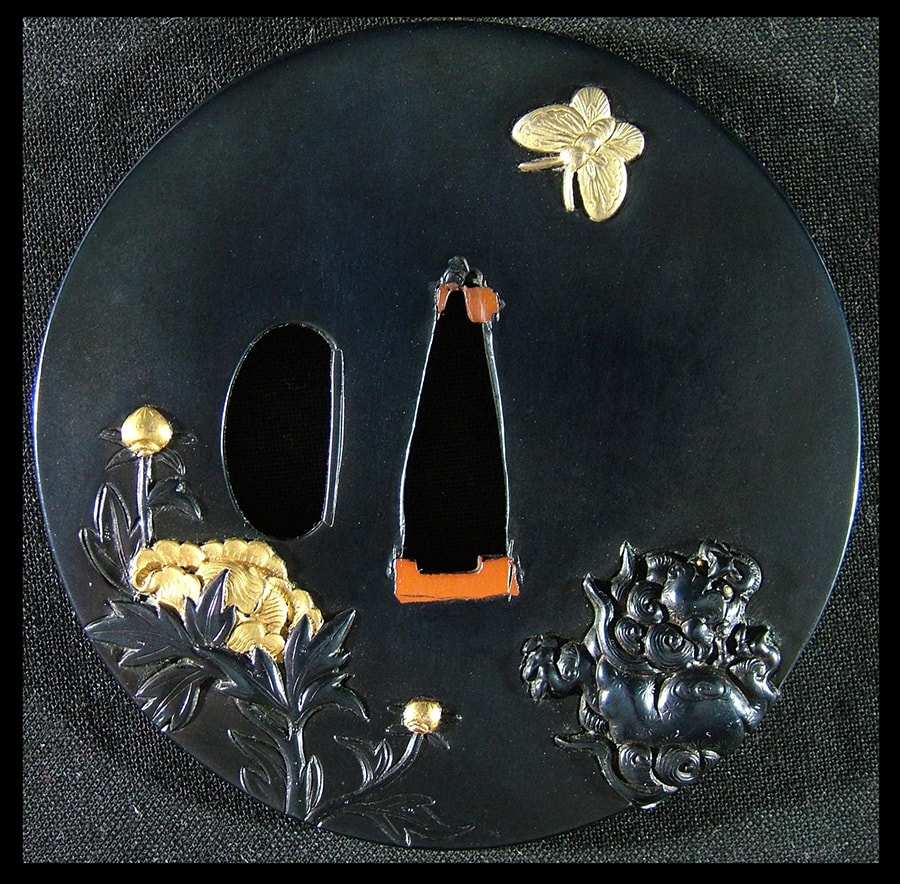
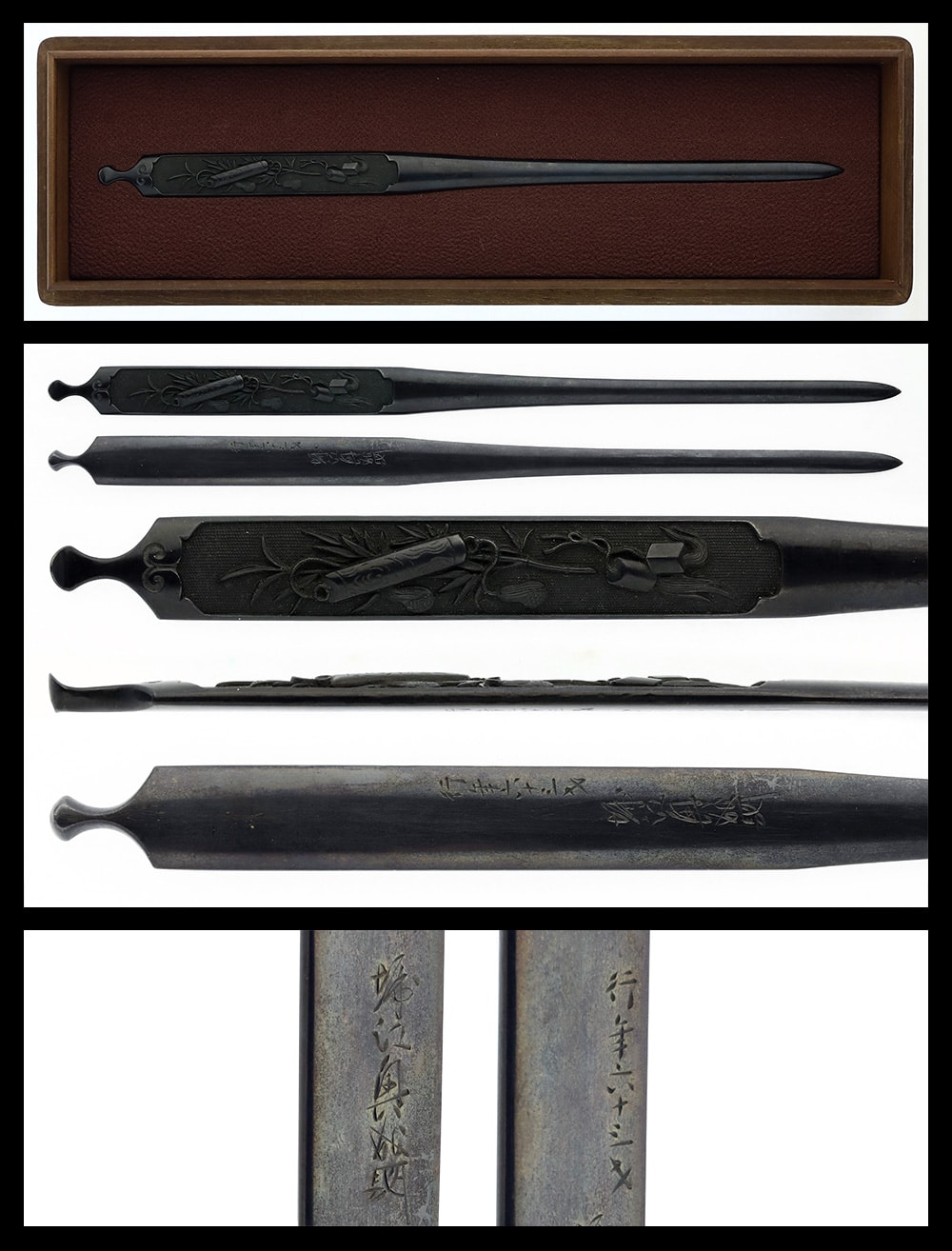
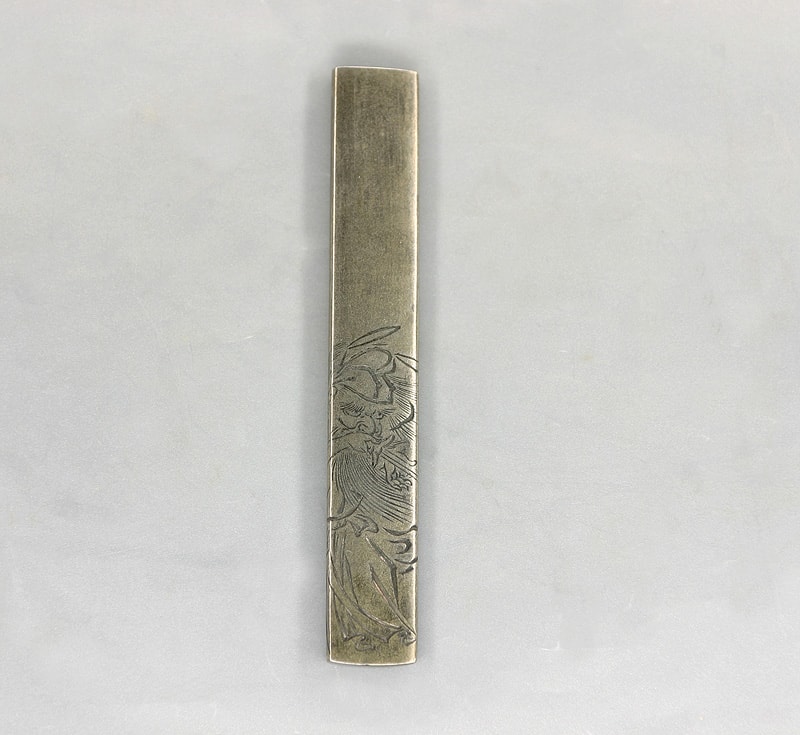
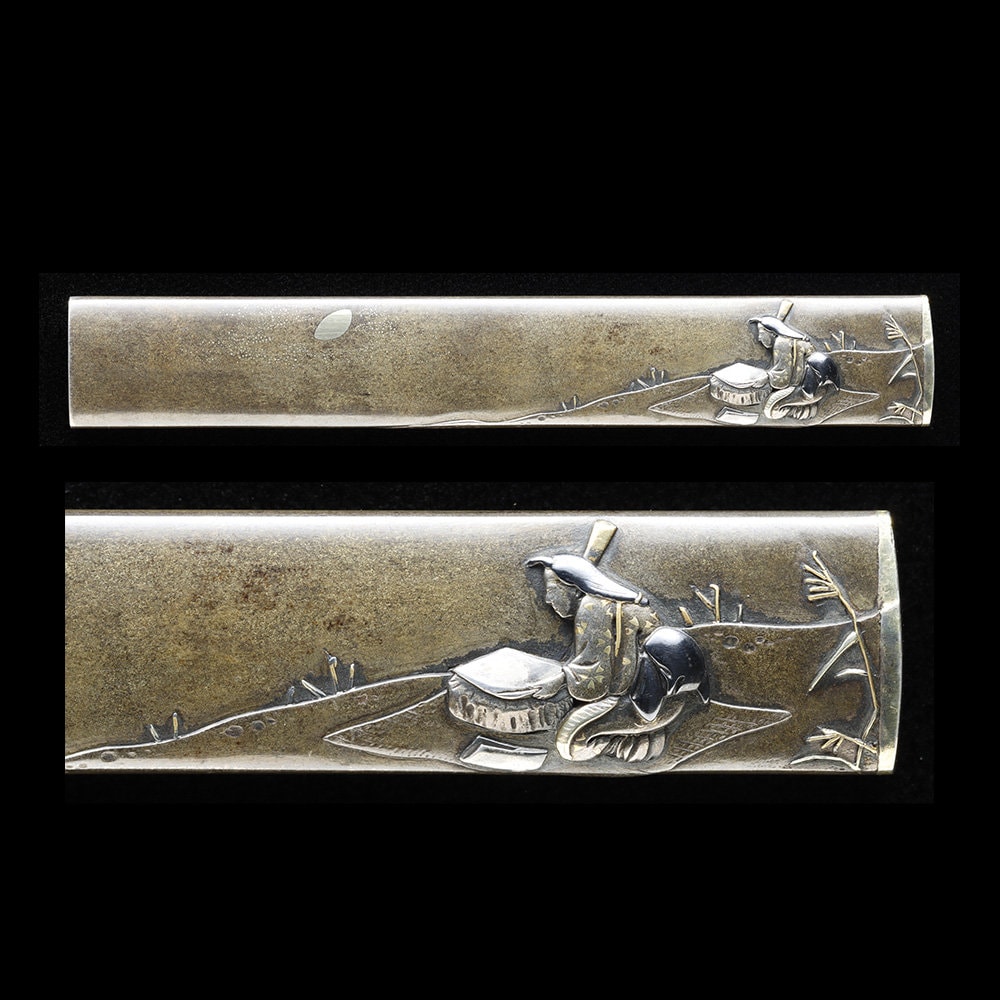
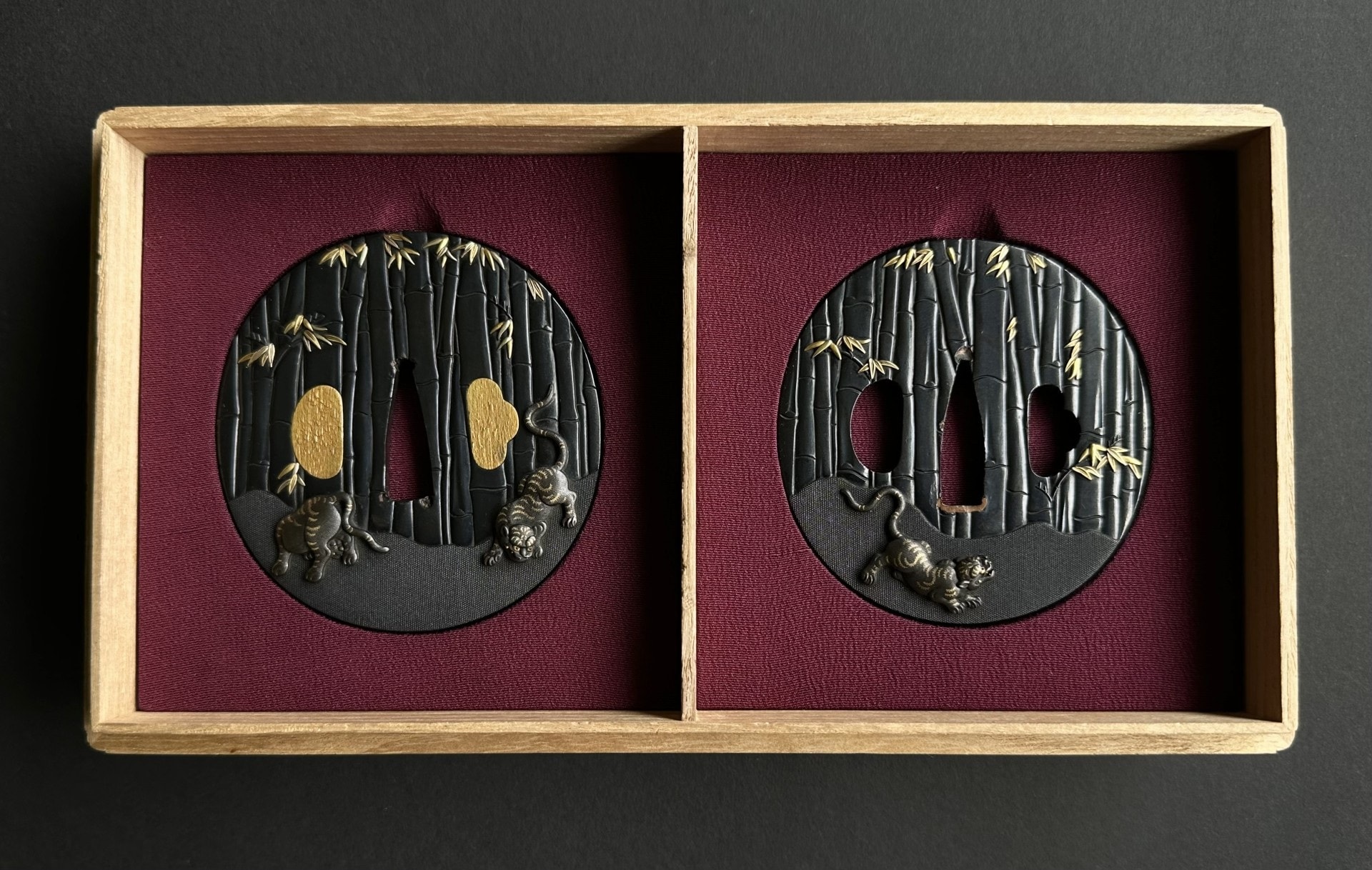
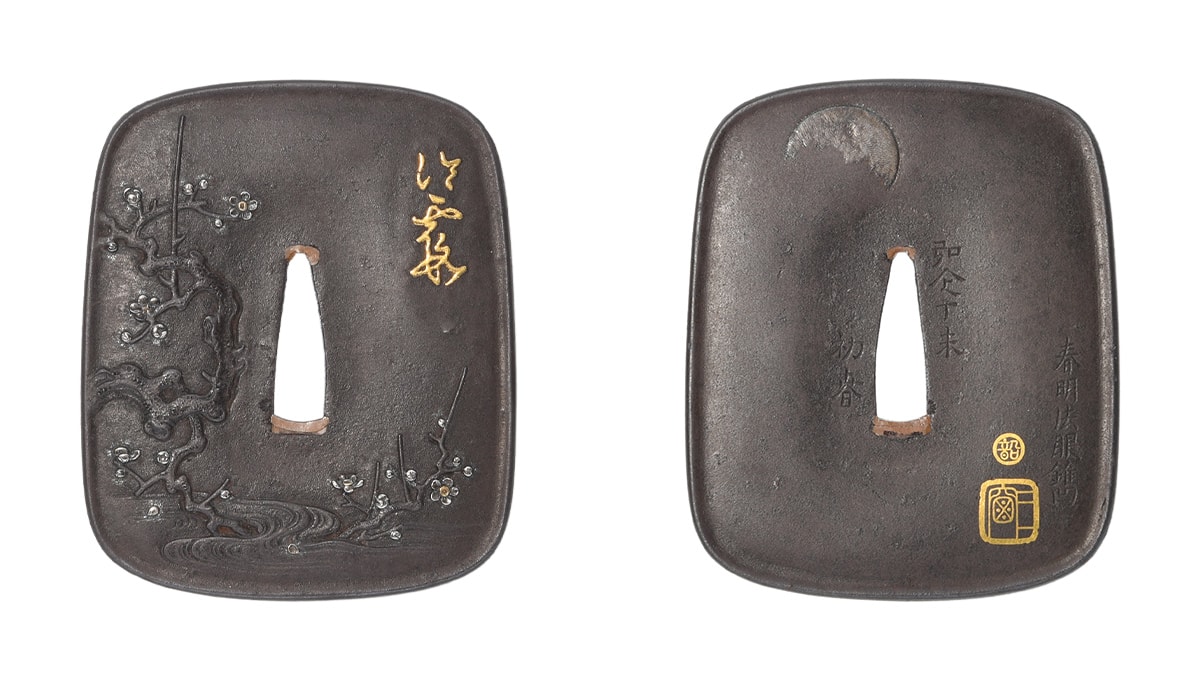
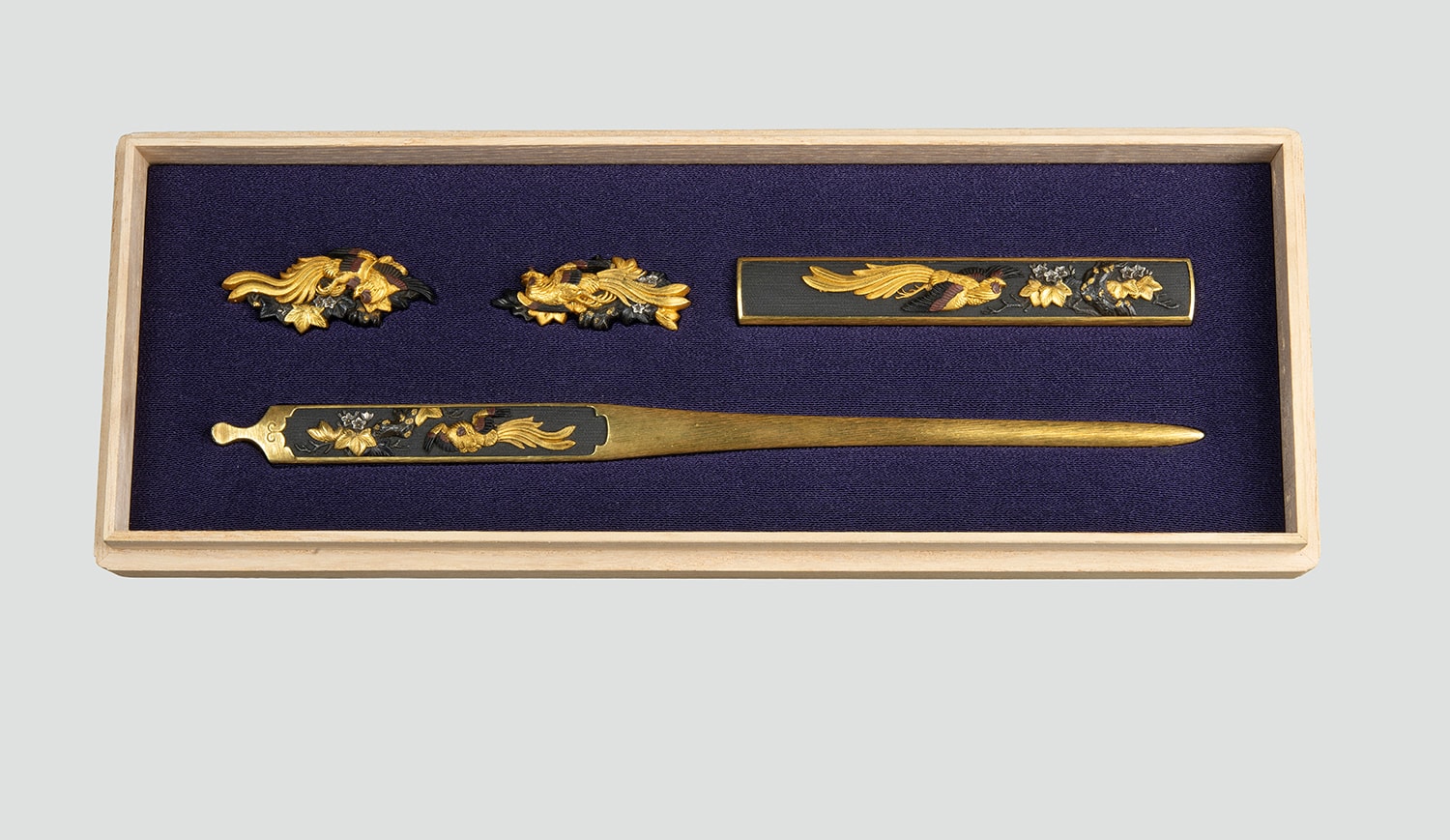
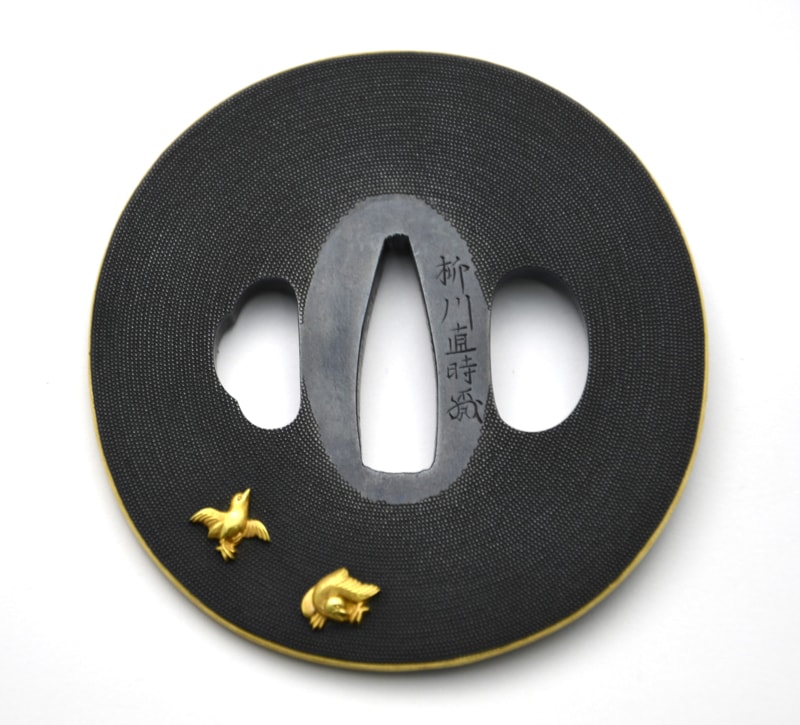
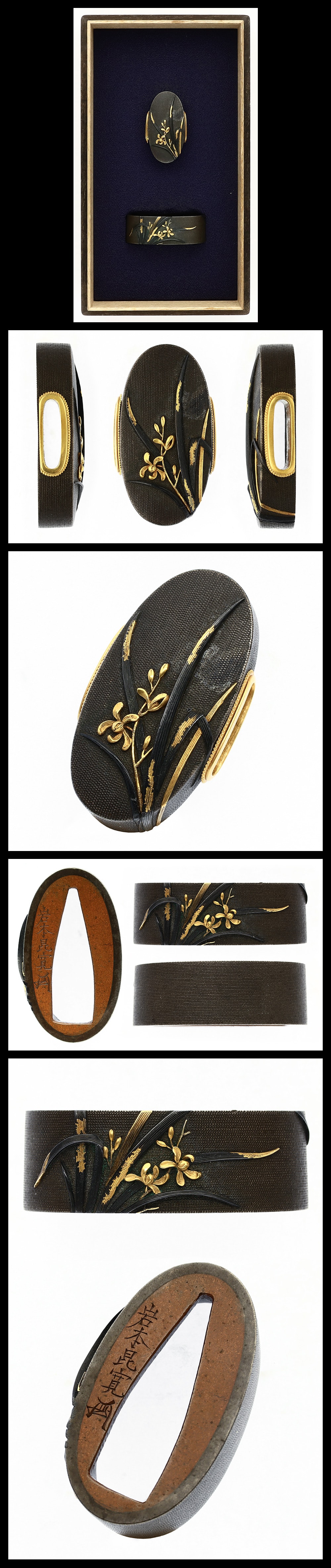
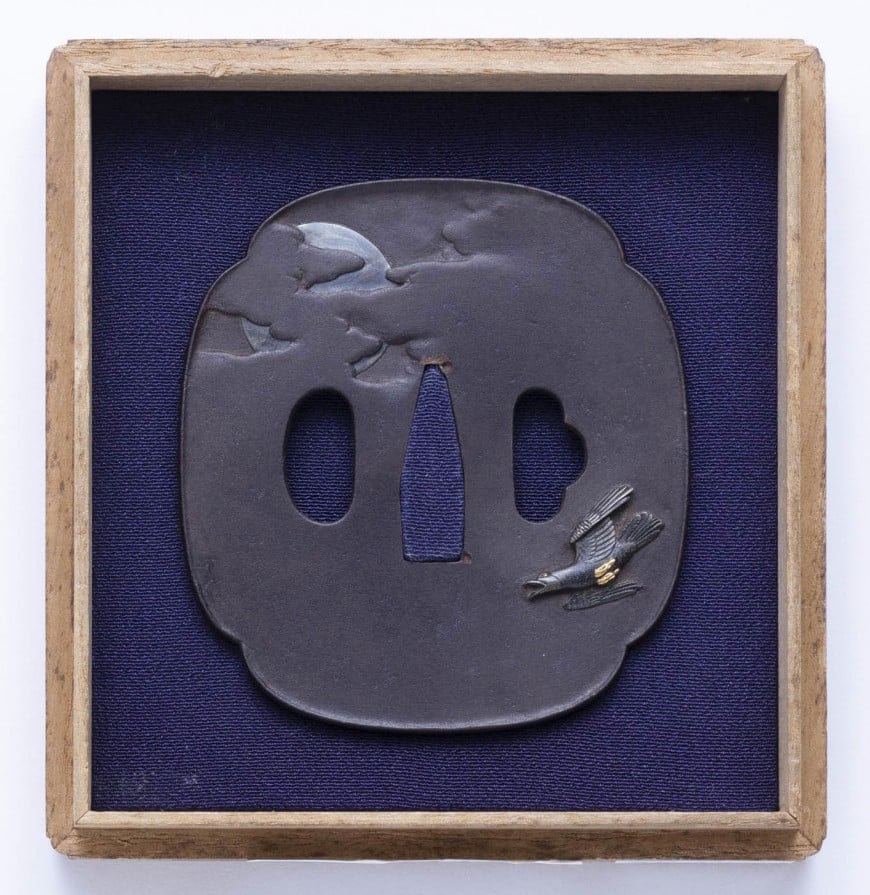
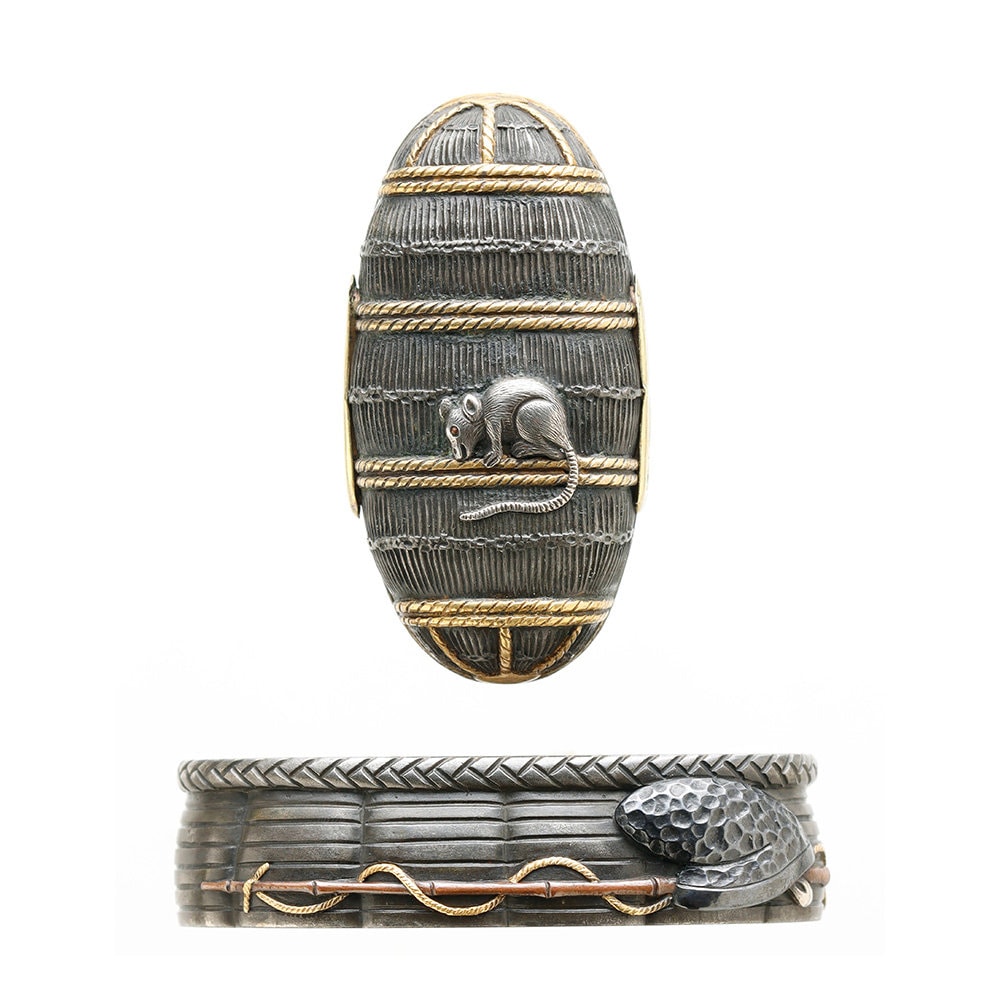
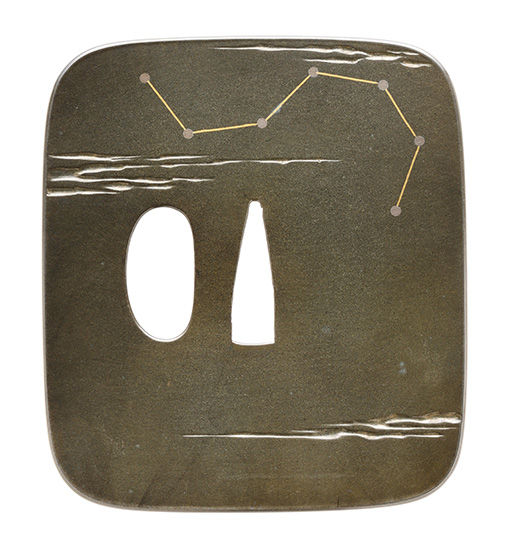
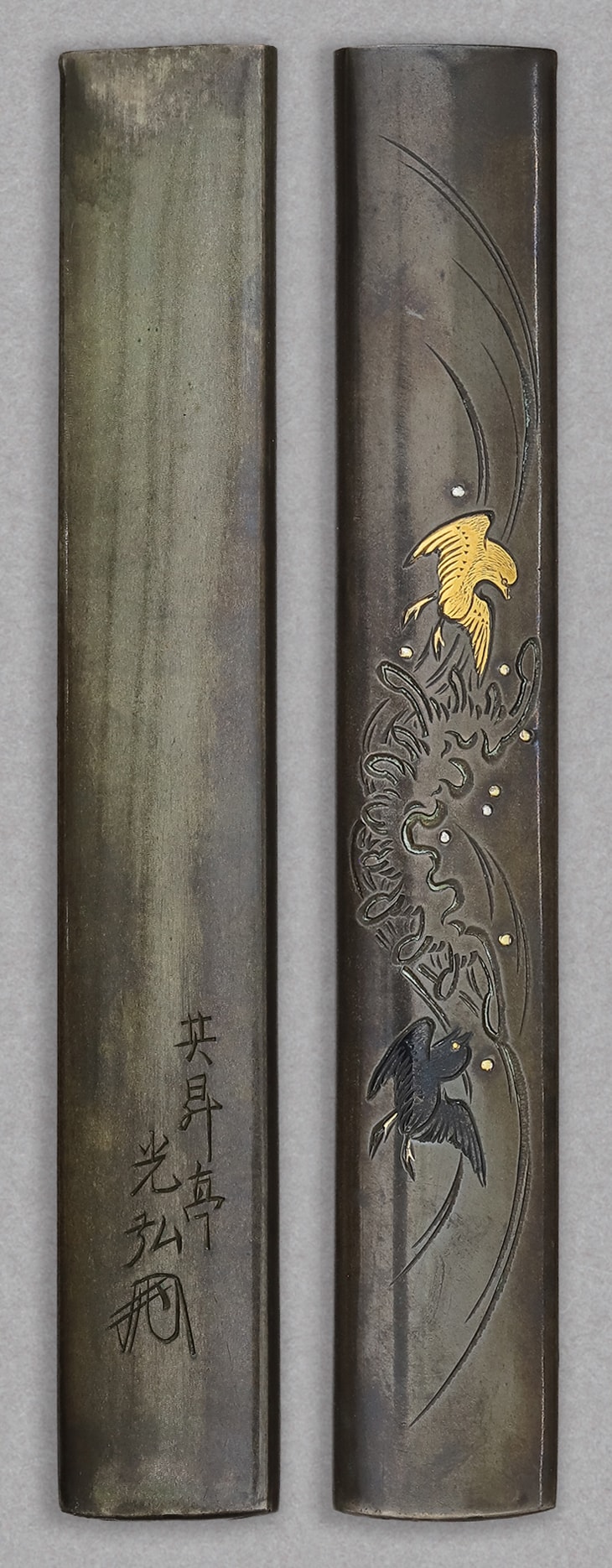
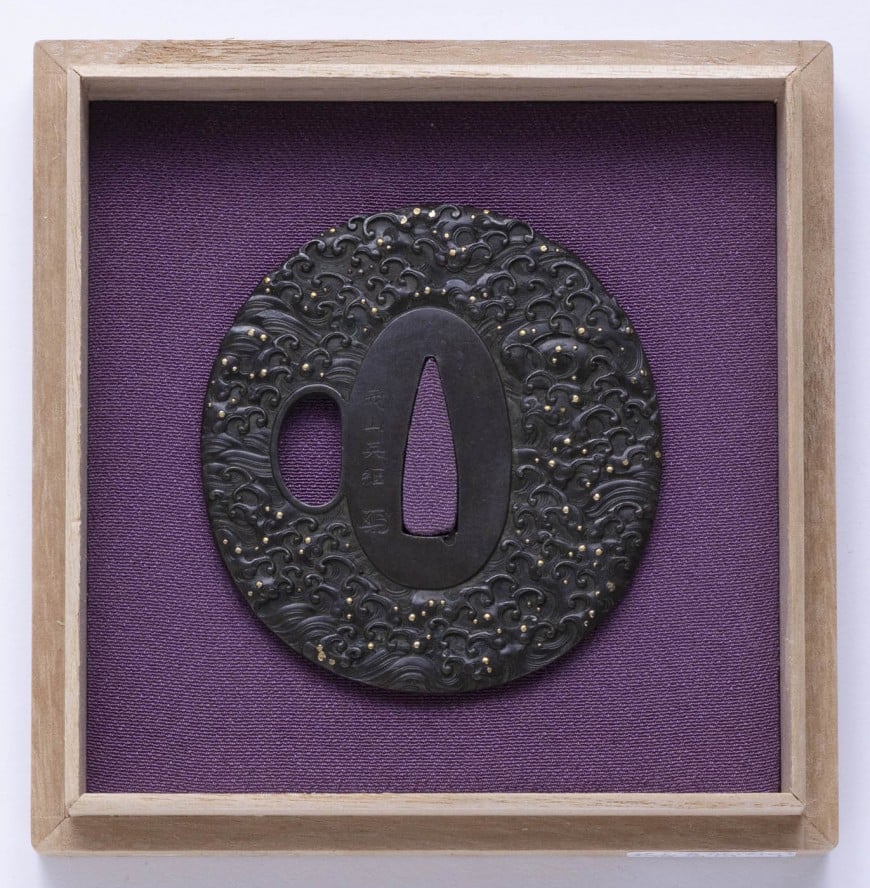
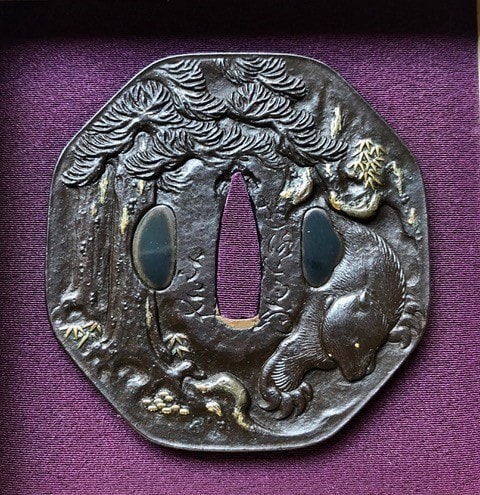
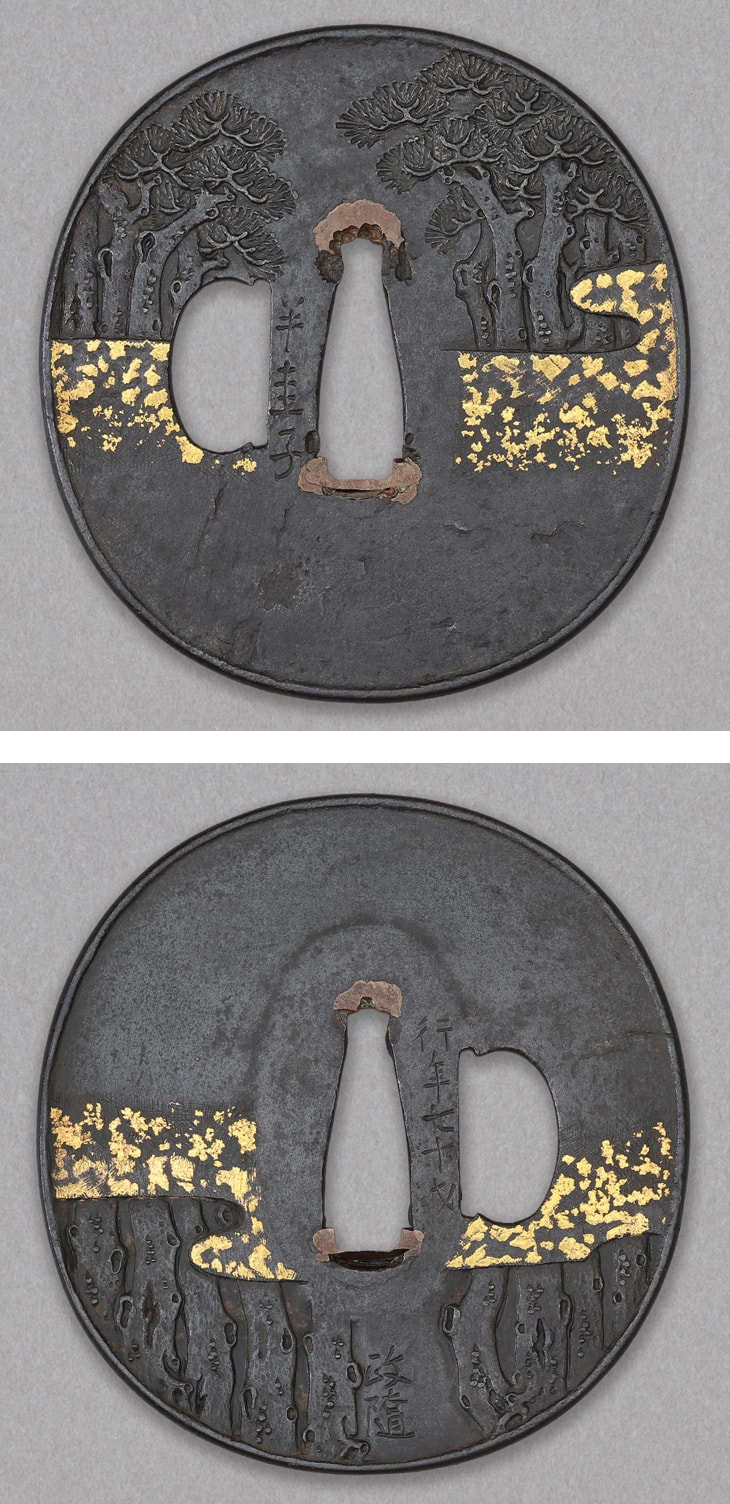
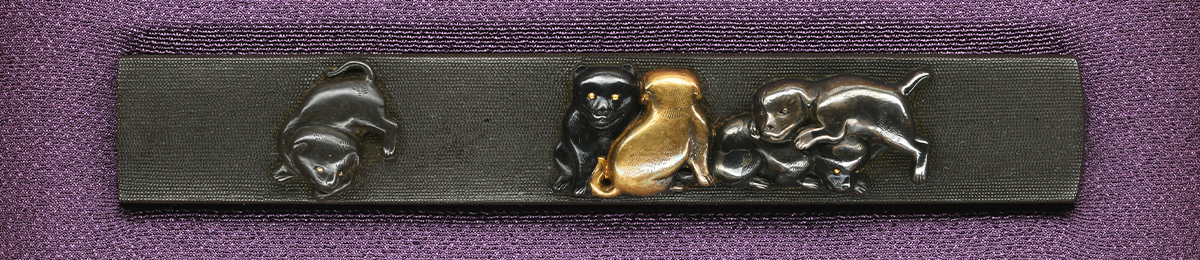
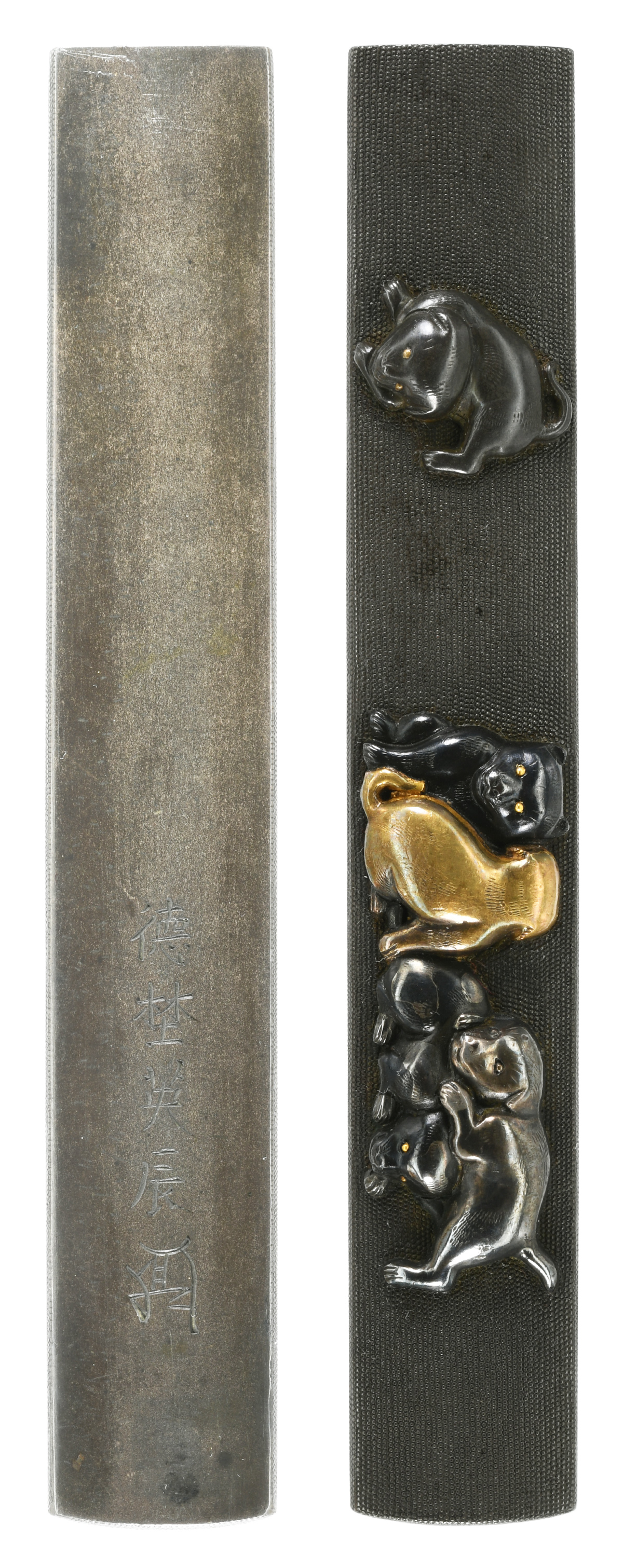
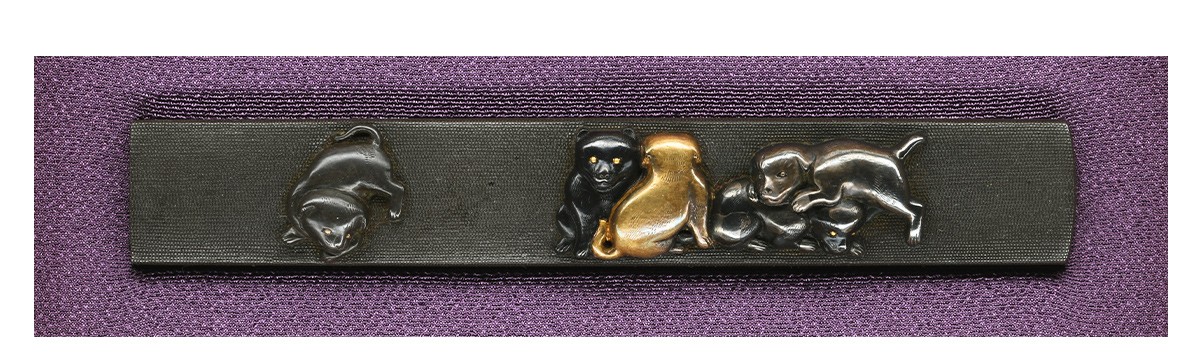
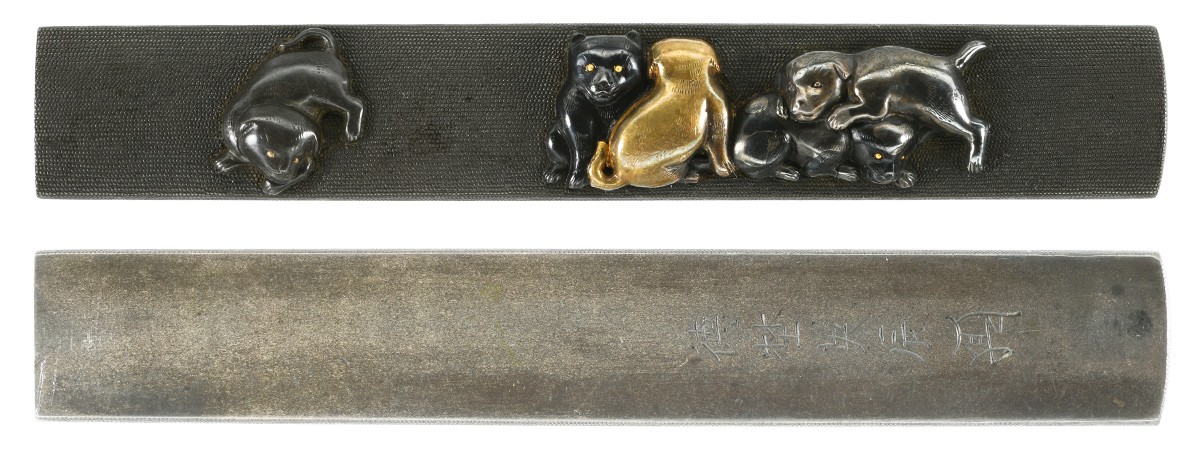
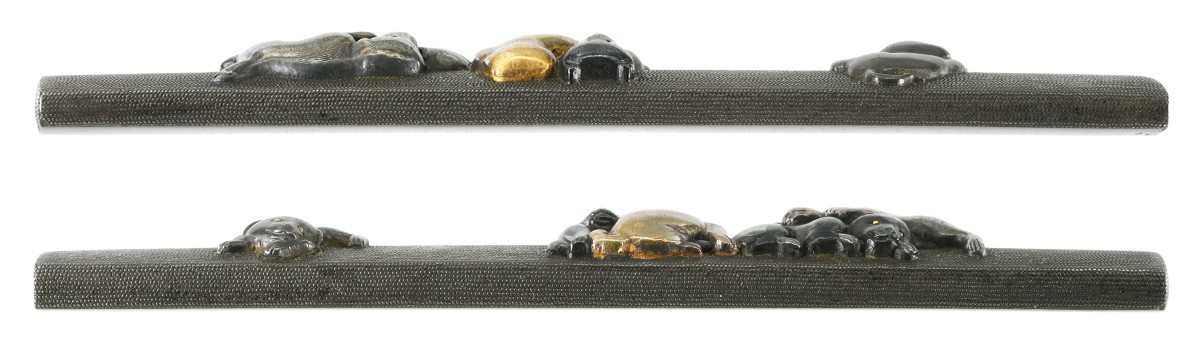
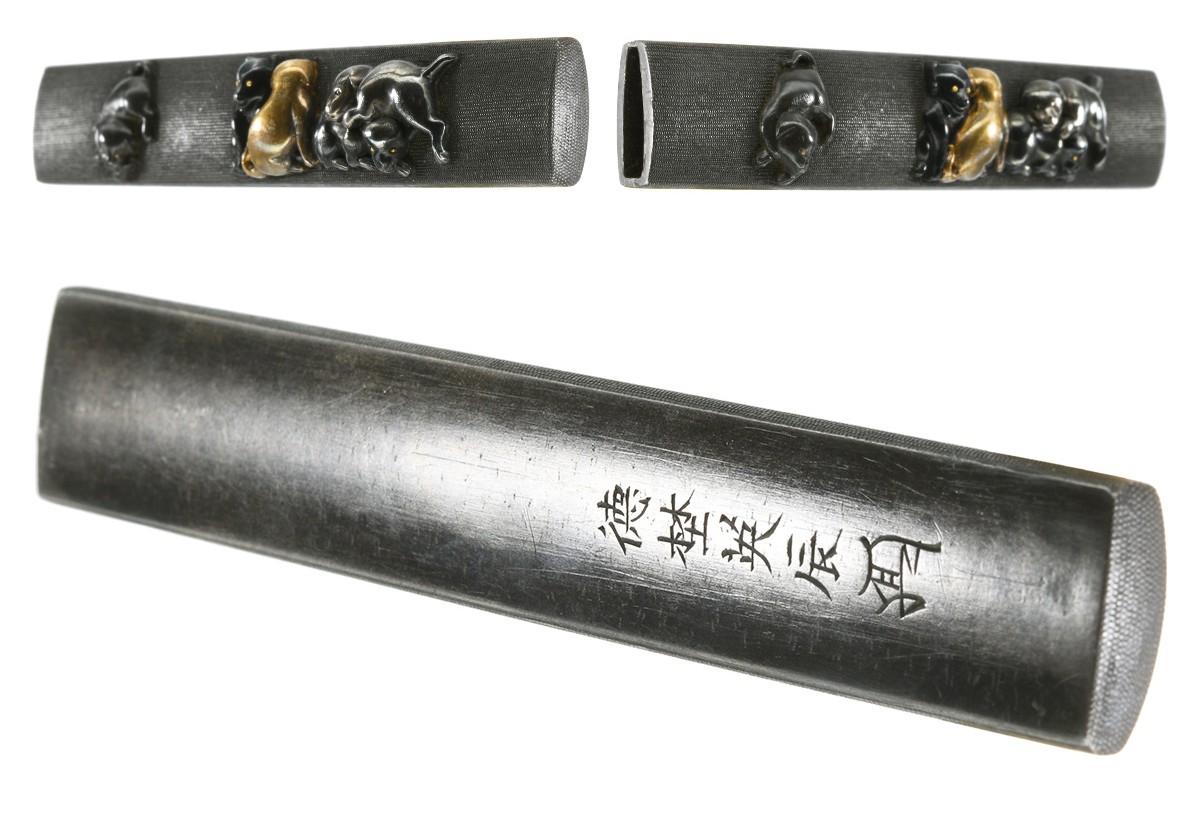
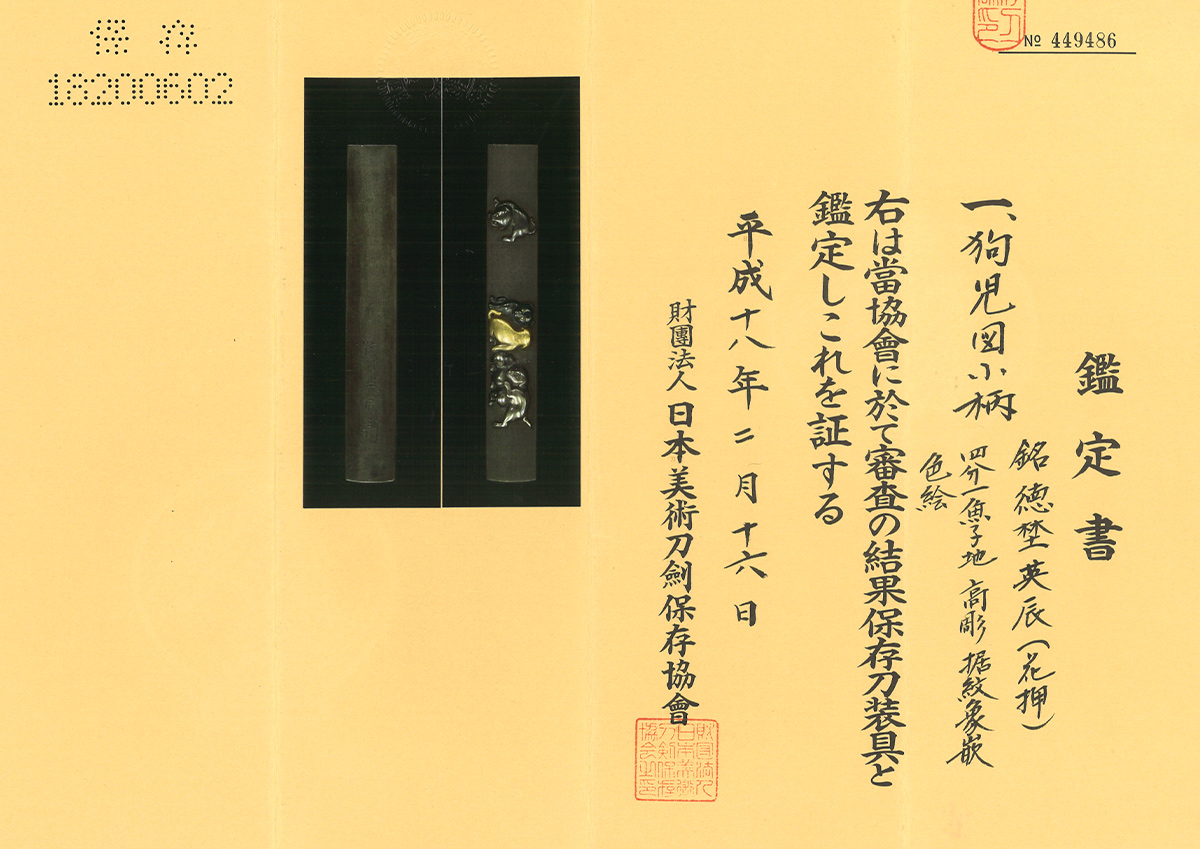
This is a kozuka by Tokuno Terutoki, featuring a Kuji-zu (puppy design) on a shibuichi nanako ground with high relief carving and inlay. It dates to the late Edo period and comes with an NBTHK Hozon Tosogu certificate. The kozuka is housed in a paulownia wood box.
Certificate reading — 銘 總埜英辰(花押)
 NihontoWatch
Edo
Omori Terutoki
Edo
Musashi
Hozon (NBTHK)
Machibori
2 pieces on the market now
Machibori · Edo
13 pieces on the market now
The Ōmori school was one of the great machibori (town-carving) lineages of Edo, founded in the first half of the eighteenth century by Ōmori Terumasa (大森英昌, also read Eishō), a direct disciple of Yokoya Sōmin. " A dated tsuba of Meiwa 7 (1770) anchors his mature activity, and the workshop remained rooted in the shogunal capital throughout its history — his pupil Hidetomo proudly signed works "Tōto, by the Sumida River" (東都隅田川辺). Learn more →
| Smith | Era | Designated |
|---|---|---|
| Teruhide英秀 | — | 15 |
| Chizuka Hisanori遅塚久則 | 1725-1795 | 9 |
| Horie Okinari堀江興成 | — | 7 |
| Terumitsu英満 | — | 4 |
| Terumasa英昌 | — | 0 |
Certifies a genuine fitting worth preserving: a correct signature, or, if unsigned, an identifiable era and school, with recognized artistic and craft value.
The NBTHK (Nihon Bijutsu Tōken Hozon Kyōkai, the Society for the Preservation of Japanese Art Swords) is a public-interest incorporated foundation founded in 1948 and supervised by Japan’s Agency for Cultural Affairs (Bunkachō); it is based at the Japanese Sword Museum in Tokyo. Its expert panels physically examine each submitted work (shinsa) and issue a certificate (kanteishō) ranking it by artistic and historical merit. NBTHK papers are the most widely recognized standard of authentication for Japanese swords and fittings.
NBTHK official siteNo cooling-off period or returns; refund only if the purchased sword is proven fake, capped at purchase price (excludes commission sales, accessories, auction items).
This is a kozuka by Tokuno Terutoki, featuring a Kuji-zu (puppy design) on a shibuichi nanako ground with high relief carving and inlay. It dates to the late Edo period and comes with an NBTHK Hozon Tosogu certificate. The kozuka is housed in a paulownia wood box.
Certificate reading — 銘 總埜英辰(花押)
NihontoWatchEdo
Omori Terutoki
Edo
Musashi
Hozon (NBTHK)
Machibori
2 pieces on the market now
Machibori · Edo
13 pieces on the market now
The Ōmori school was one of the great machibori (town-carving) lineages of Edo, founded in the first half of the eighteenth century by Ōmori Terumasa (大森英昌, also read Eishō), a direct disciple of Yokoya Sōmin. " A dated tsuba of Meiwa 7 (1770) anchors his mature activity, and the workshop remained rooted in the shogunal capital throughout its history — his pupil Hidetomo proudly signed works "Tōto, by the Sumida River" (東都隅田川辺). Learn more →
| Smith | Era | Designated |
|---|---|---|
| Teruhide英秀 | — | 15 |
| Chizuka Hisanori遅塚久則 | 1725-1795 | 9 |
| Horie Okinari堀江興成 | — | 7 |
| Terumitsu英満 | — | 4 |
| Terumasa英昌 | — | 0 |
Certifies a genuine fitting worth preserving: a correct signature, or, if unsigned, an identifiable era and school, with recognized artistic and craft value.
The NBTHK (Nihon Bijutsu Tōken Hozon Kyōkai, the Society for the Preservation of Japanese Art Swords) is a public-interest incorporated foundation founded in 1948 and supervised by Japan’s Agency for Cultural Affairs (Bunkachō); it is based at the Japanese Sword Museum in Tokyo. Its expert panels physically examine each submitted work (shinsa) and issue a certificate (kanteishō) ranking it by artistic and historical merit. NBTHK papers are the most widely recognized standard of authentication for Japanese swords and fittings.
NBTHK official siteNo cooling-off period or returns; refund only if the purchased sword is proven fake, capped at purchase price (excludes commission sales, accessories, auction items).