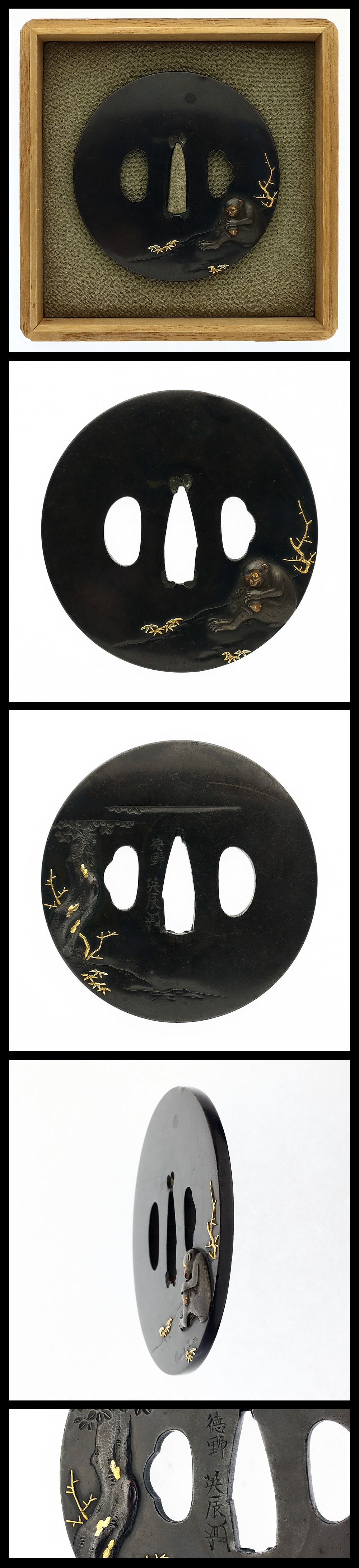
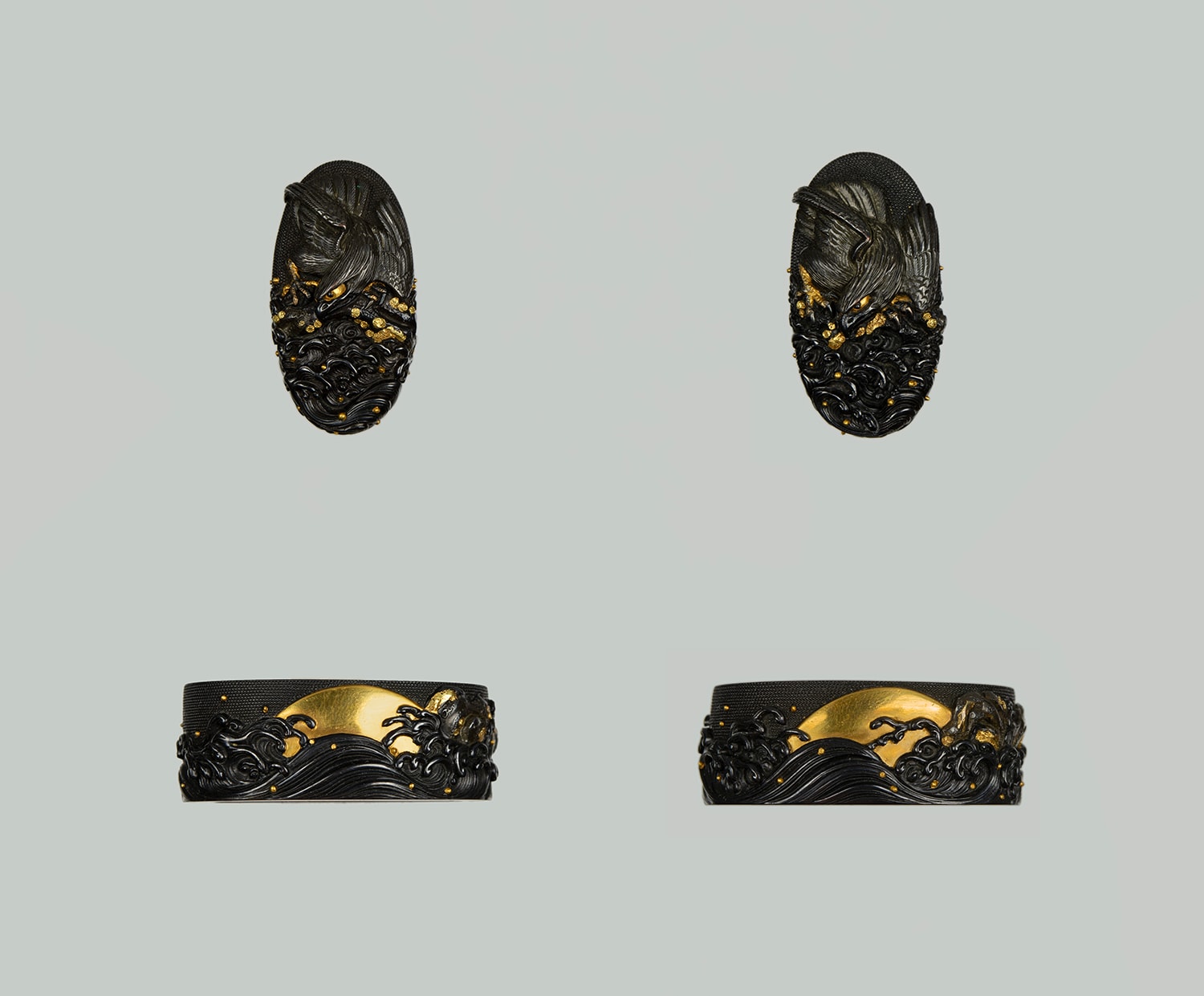
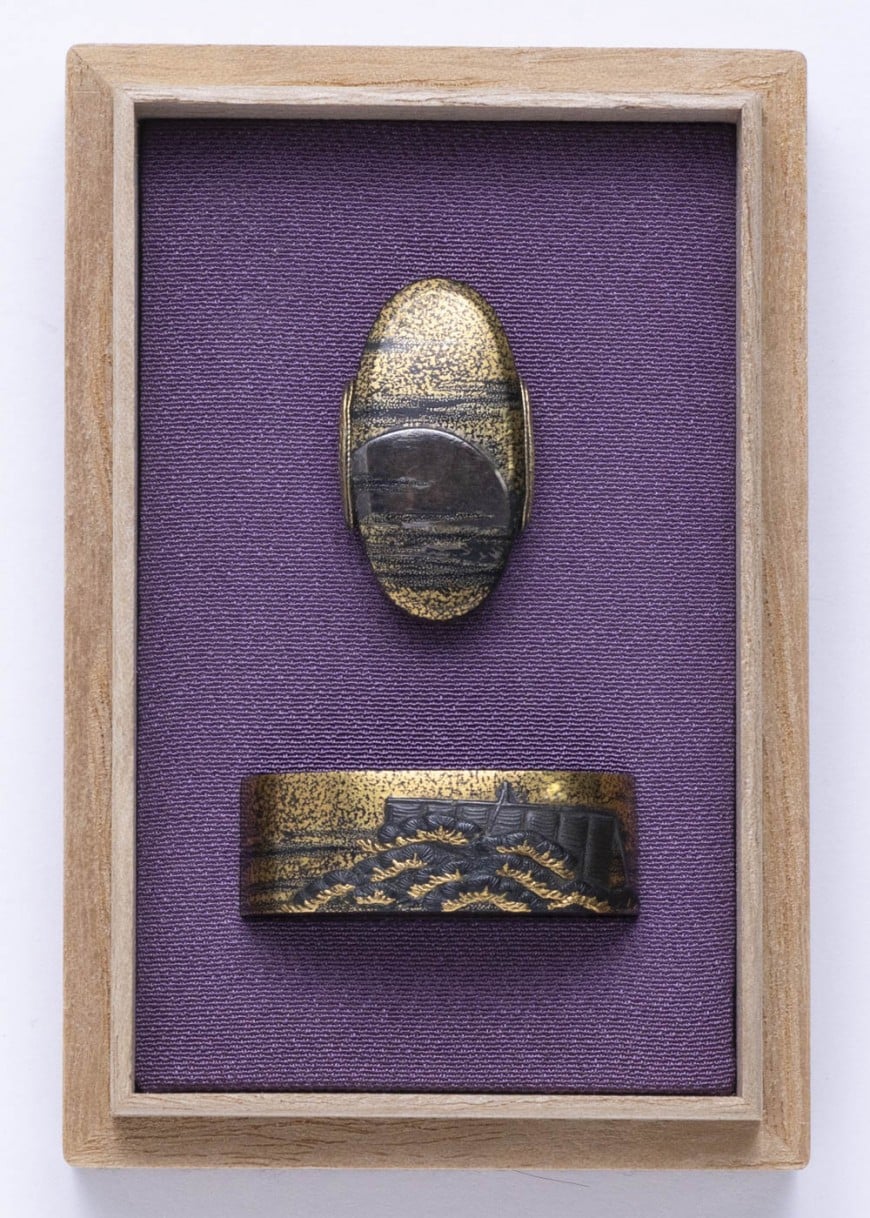
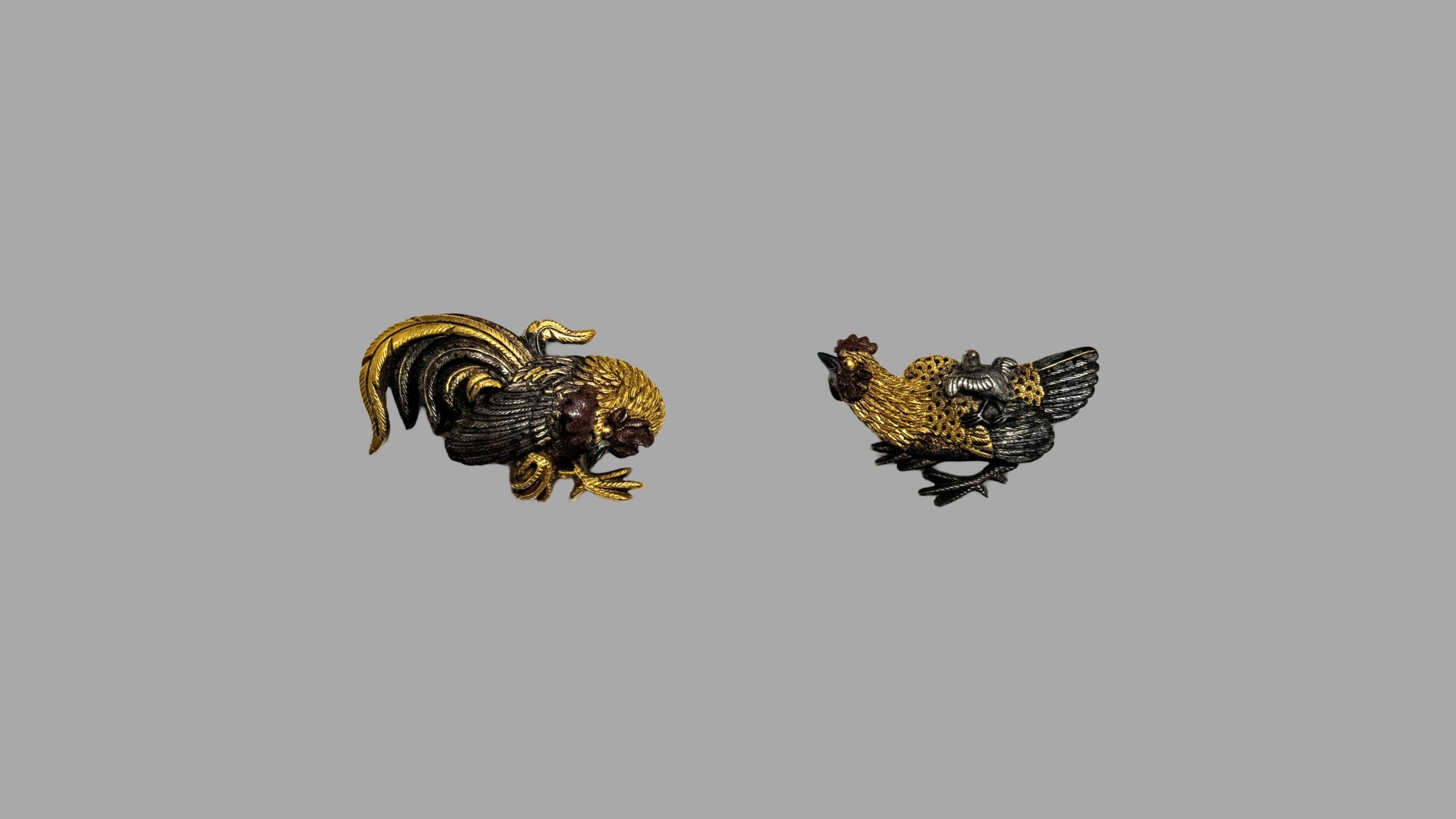
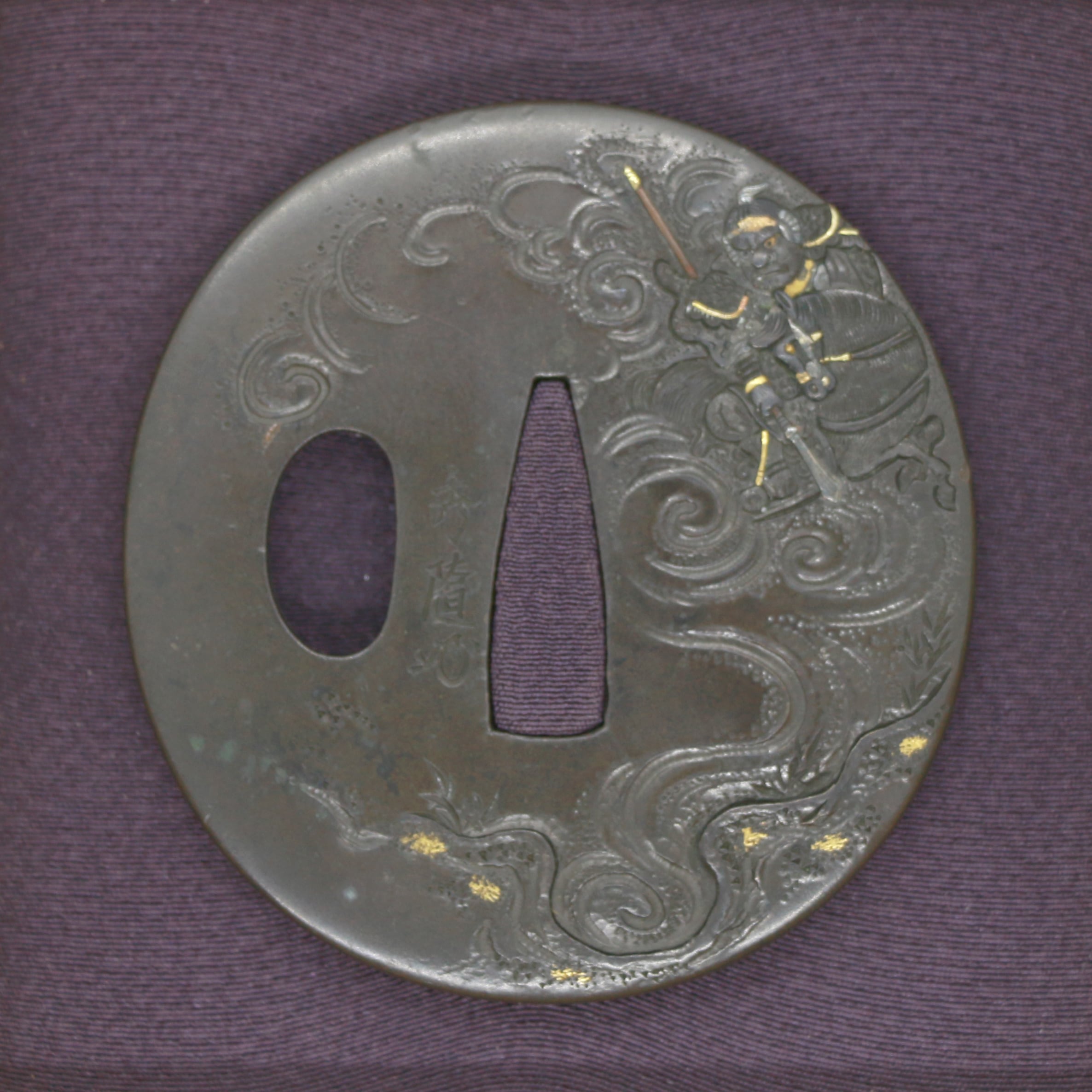
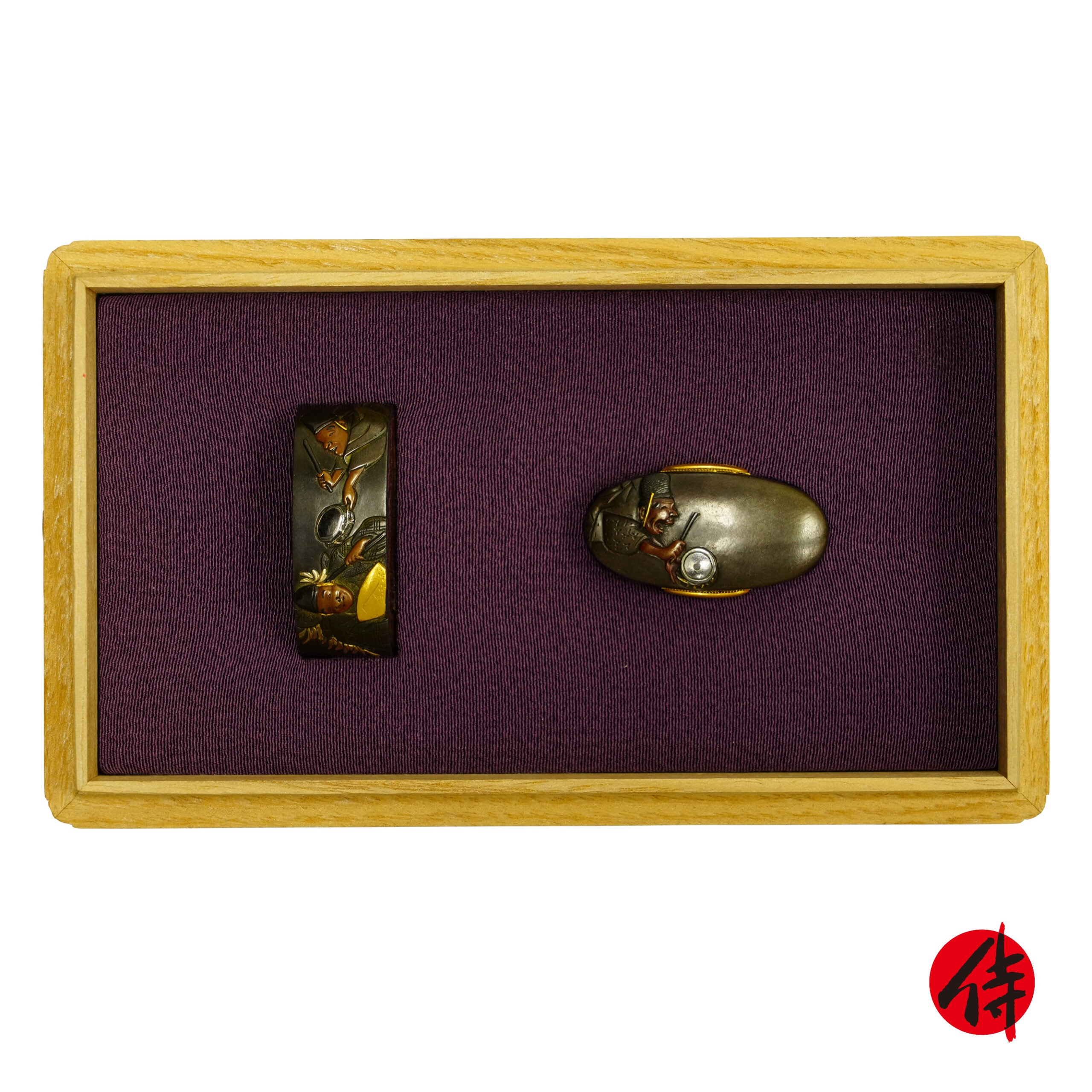
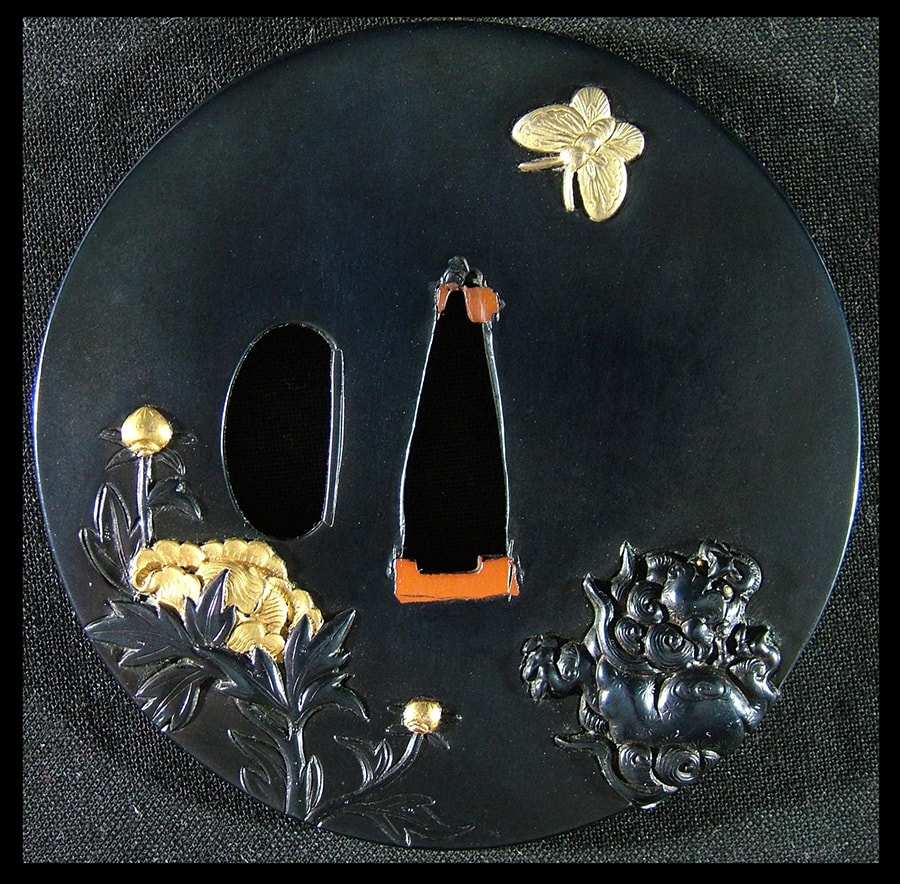
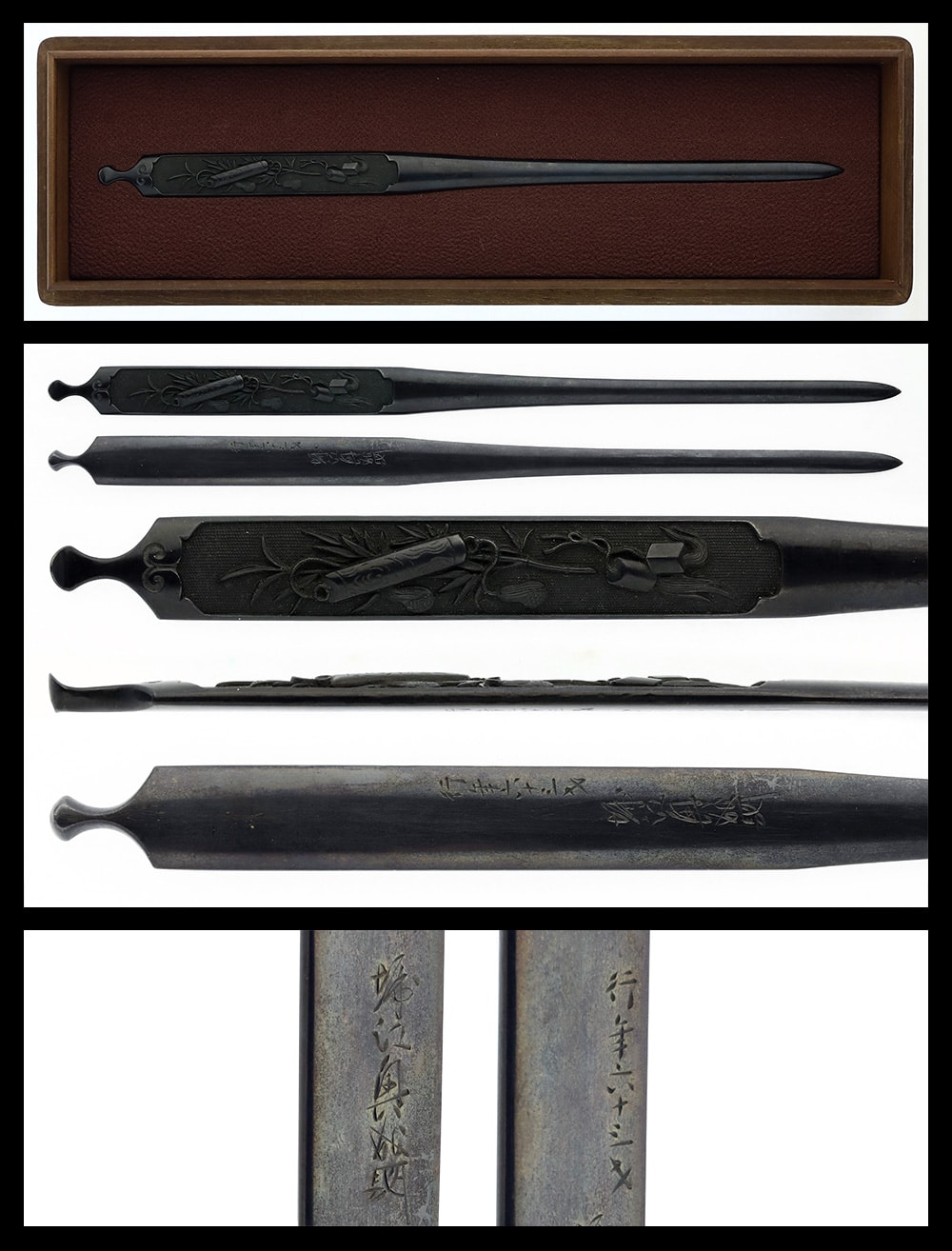
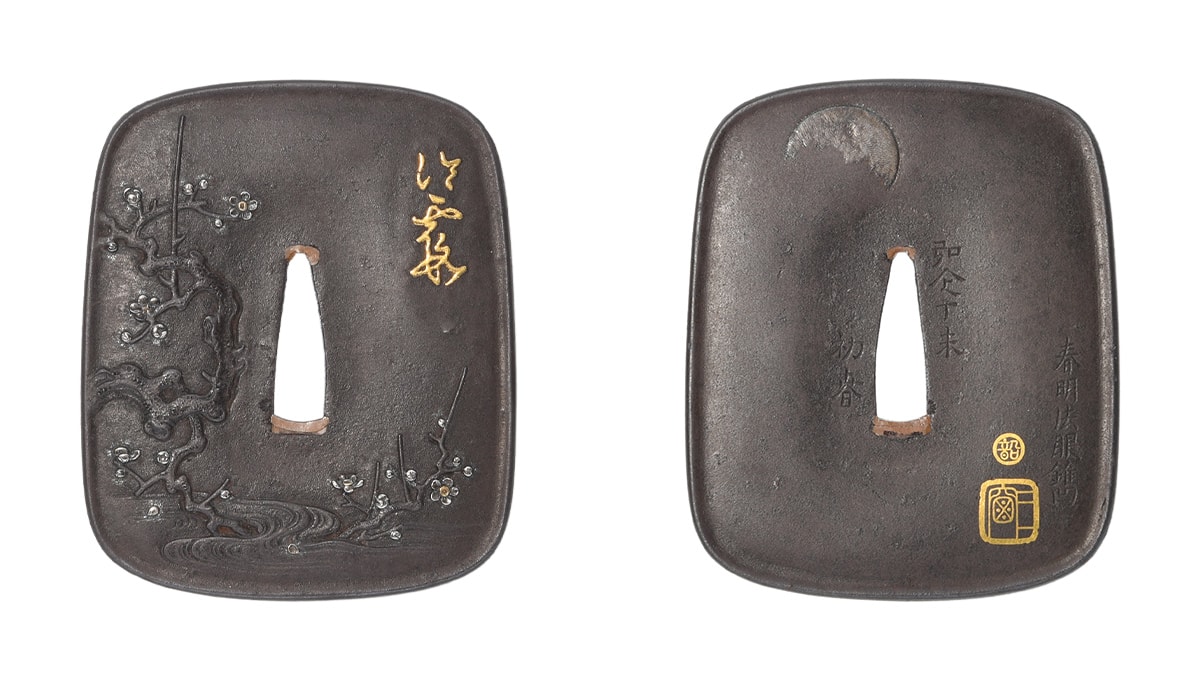
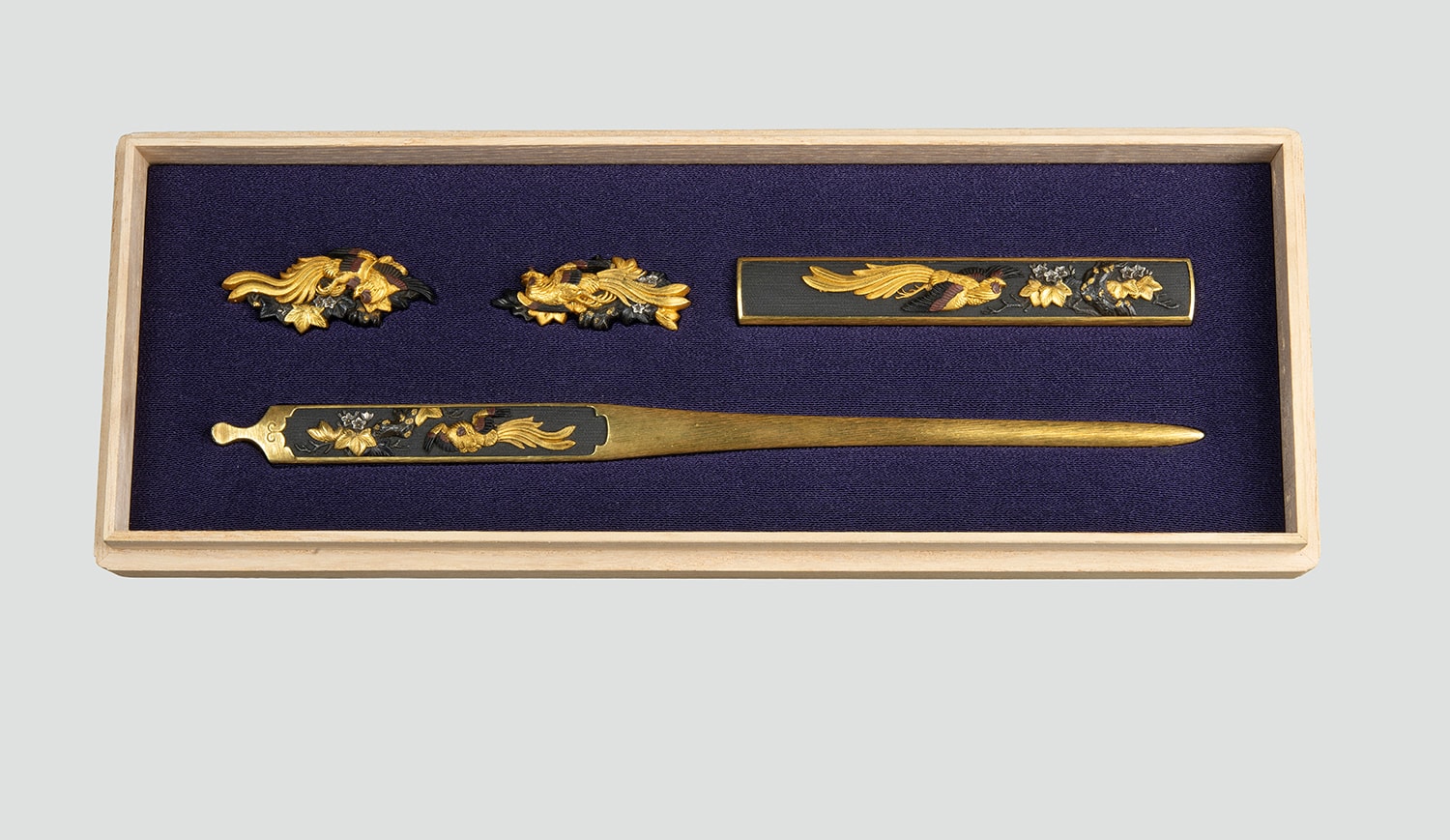
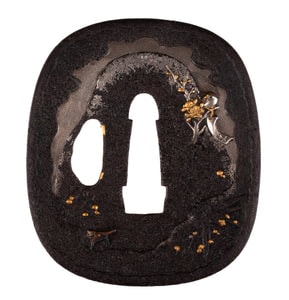
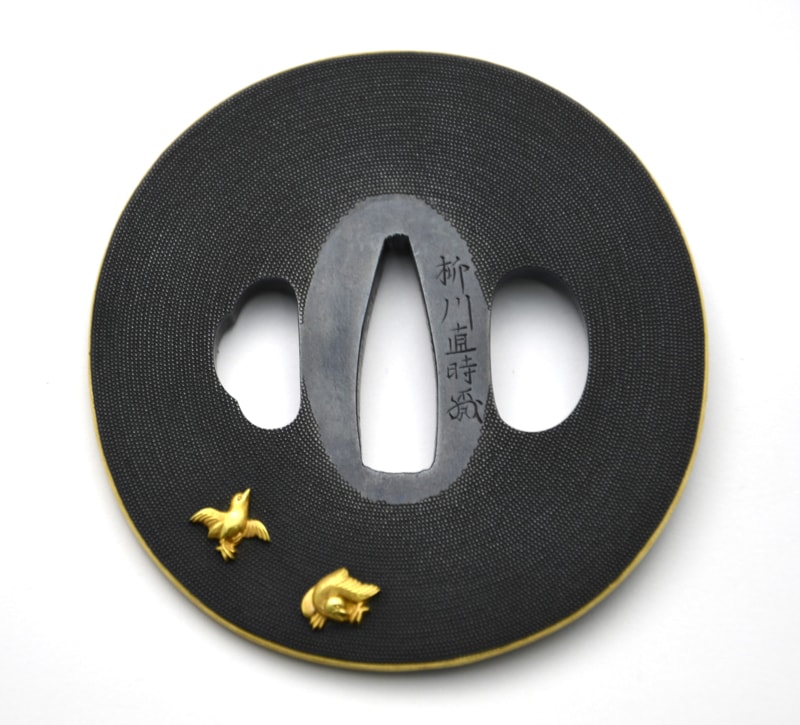
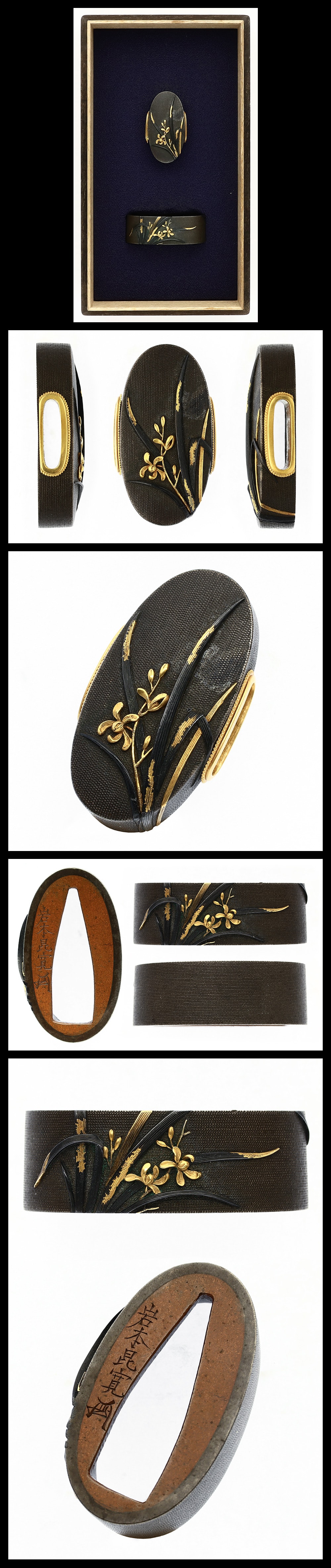
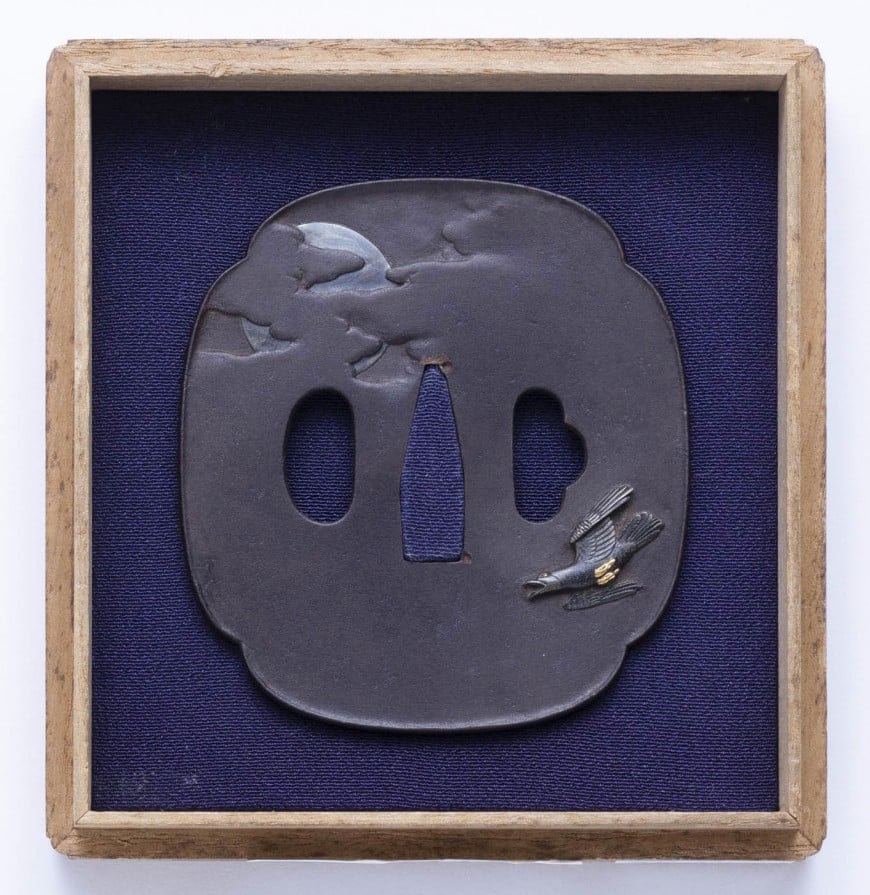
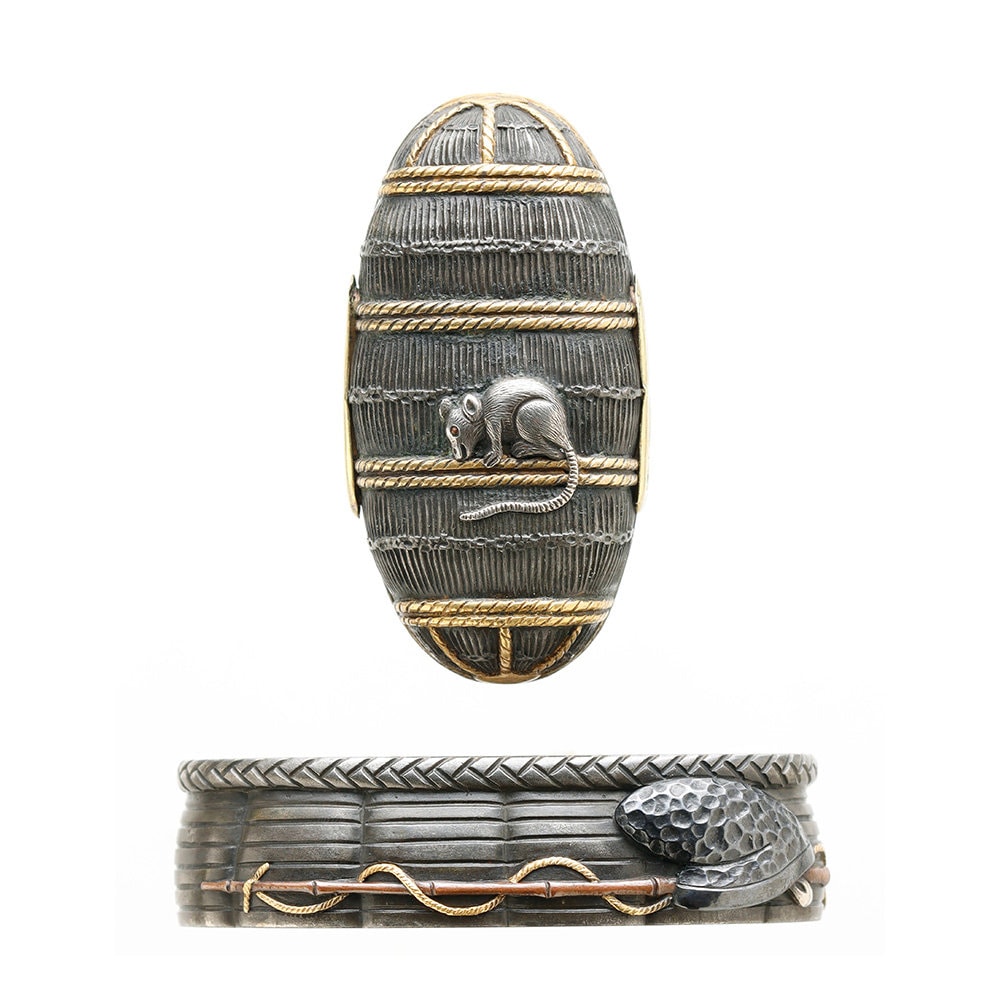
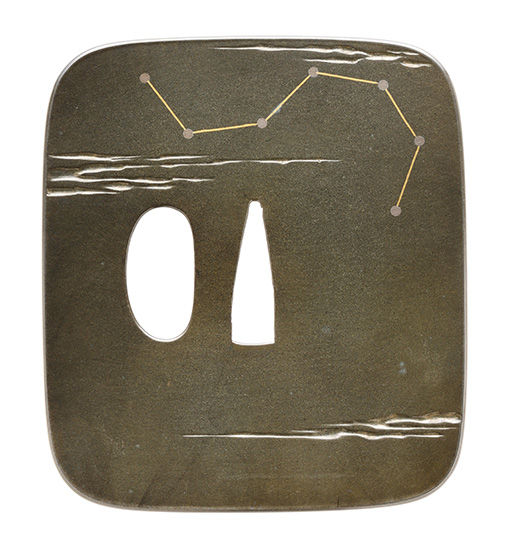
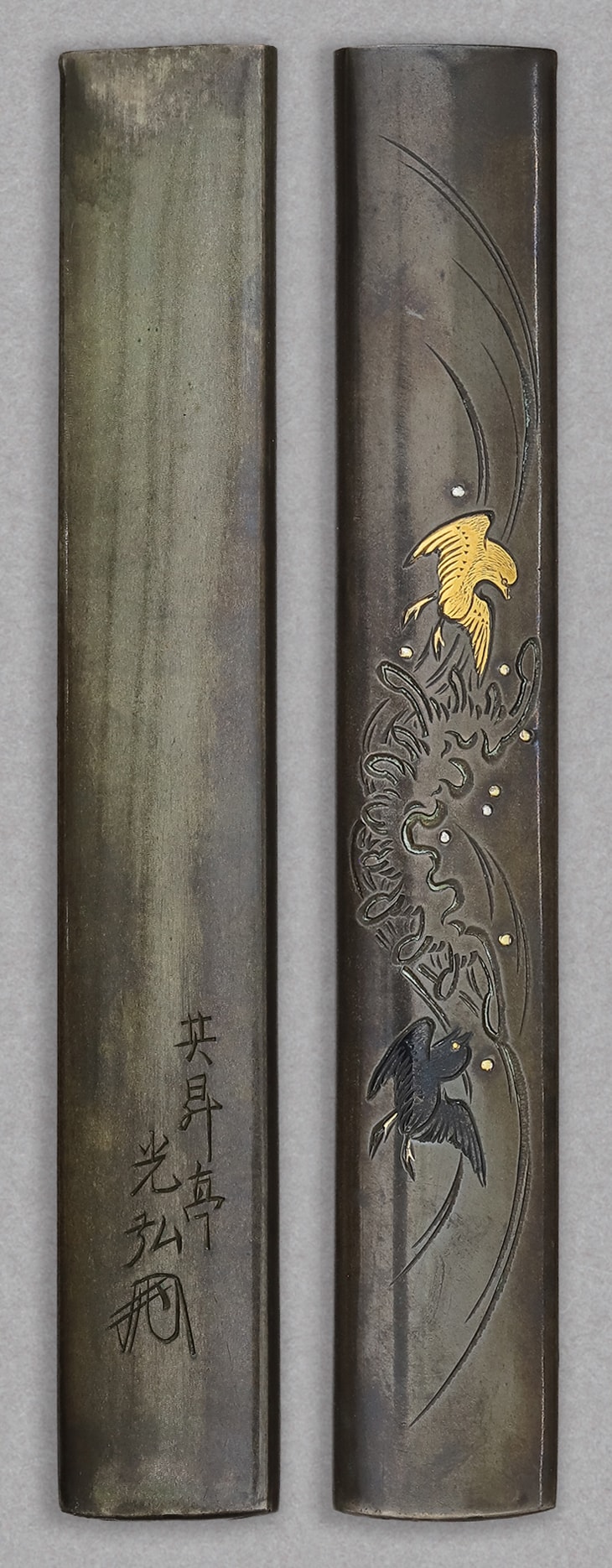
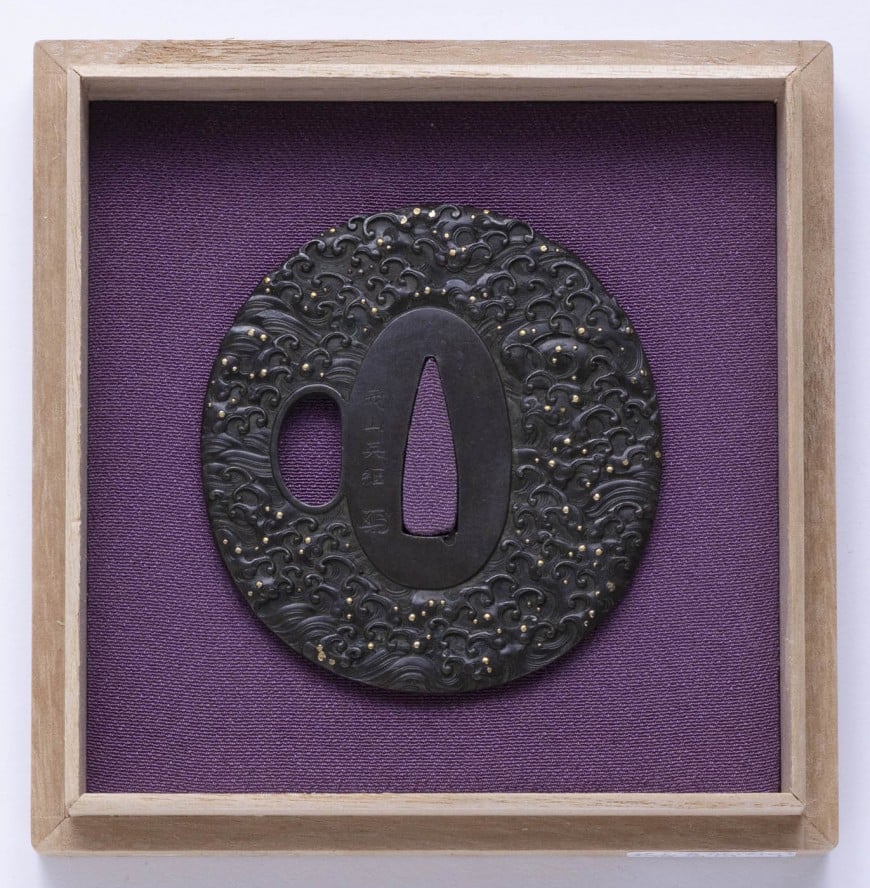
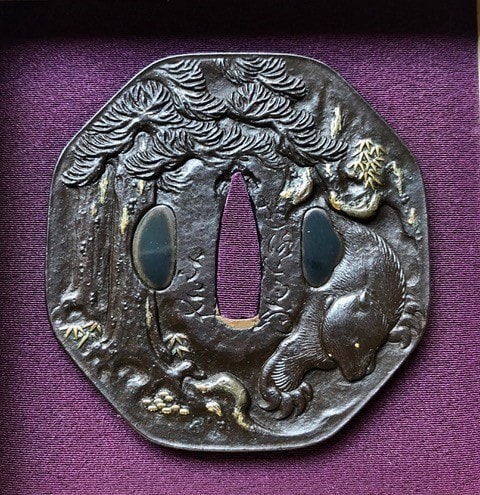
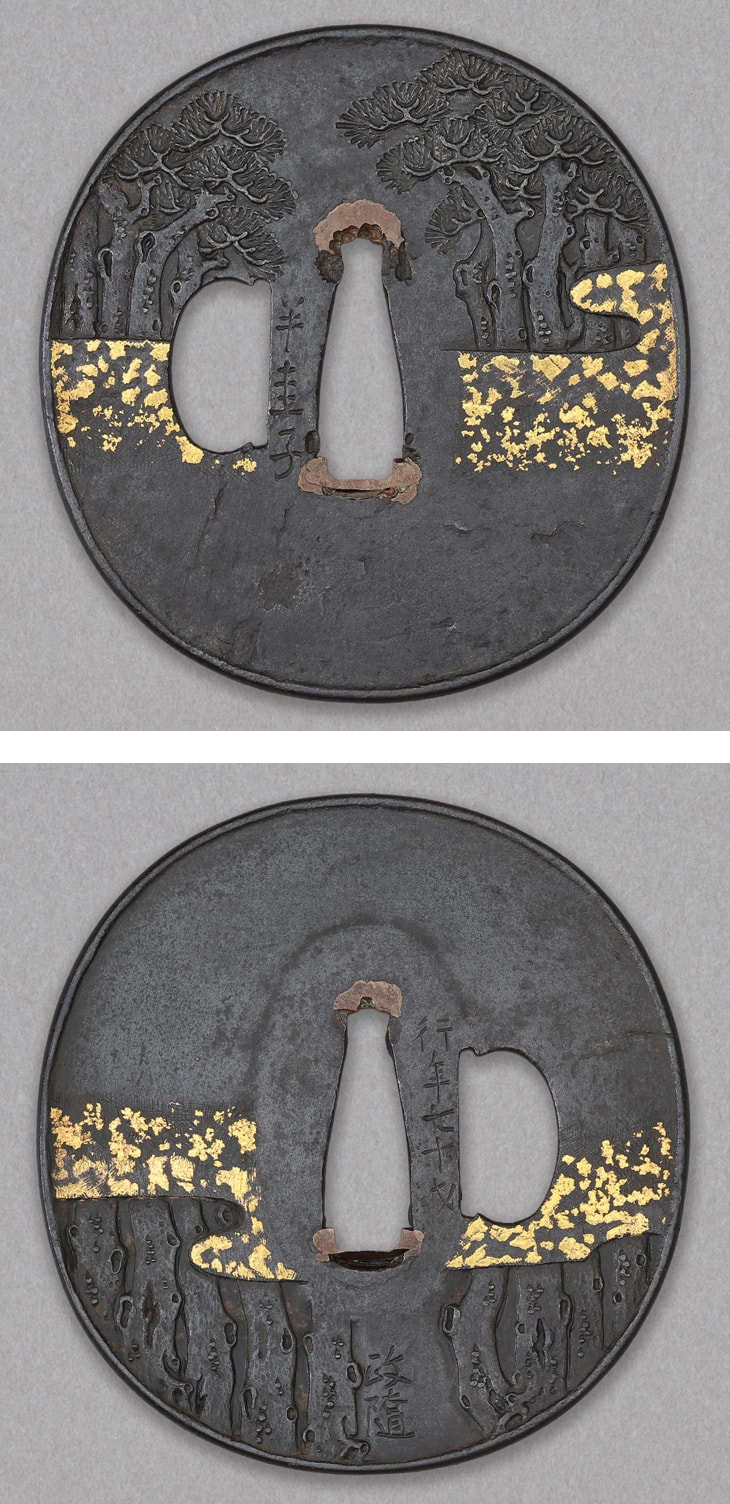
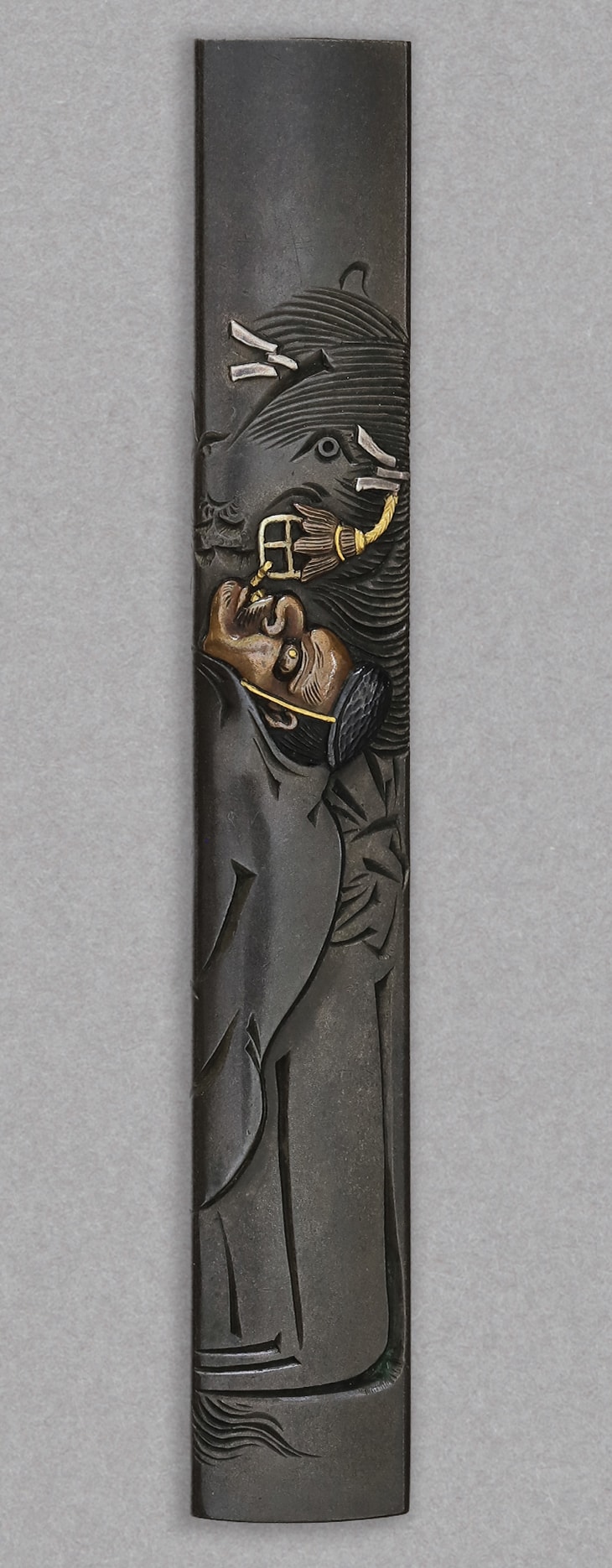
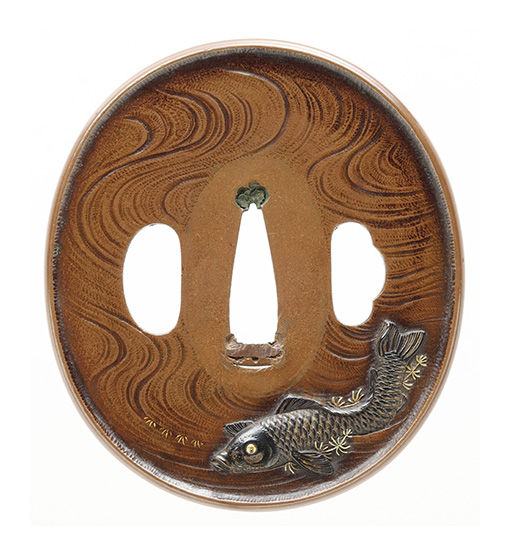
This tsuba features a dynamic design of carp amidst seaweed, signed by Tokuno Terutoki with his kao. Made in the late Edo period in Musashi province, it showcases high relief carving and intricate iroe (colored metal inlay) on a suaka ishime ground. The detailed work captures the powerful movement of the carp and the flow of water.
 NihontoWatch
mei · Edo
Omori Terutoki
Edo
Musashi
Signed
Hozon (NBTHK)
Machibori
2 pieces on the market now
Machibori · Edo
13 pieces on the market now
The Ōmori school was one of the great machibori (town-carving) lineages of Edo, founded in the first half of the eighteenth century by Ōmori Terumasa (大森英昌, also read Eishō), a direct disciple of Yokoya Sōmin. " A dated tsuba of Meiwa 7 (1770) anchors his mature activity, and the workshop remained rooted in the shogunal capital throughout its history — his pupil Hidetomo proudly signed works "Tōto, by the Sumida River" (東都隅田川辺). Learn more →
| Smith | Era | Designated |
|---|---|---|
| Teruhide英秀 | — | 15 |
| Chizuka Hisanori遅塚久則 | 1725-1795 | 9 |
| Horie Okinari堀江興成 | — | 7 |
| Terumitsu英満 | — | 4 |
| Terumasa英昌 | — | 0 |
Certifies a genuine fitting worth preserving: a correct signature, or, if unsigned, an identifiable era and school, with recognized artistic and craft value.
The NBTHK (Nihon Bijutsu Tōken Hozon Kyōkai, the Society for the Preservation of Japanese Art Swords) is a public-interest incorporated foundation founded in 1948 and supervised by Japan’s Agency for Cultural Affairs (Bunkachō); it is based at the Japanese Sword Museum in Tokyo. Its expert panels physically examine each submitted work (shinsa) and issue a certificate (kanteishō) ranking it by artistic and historical merit. NBTHK papers are the most widely recognized standard of authentication for Japanese swords and fittings.
NBTHK official siteIf, due to our fault, the item differs significantly from its proper condition, the item may be returned. Cooling-off is within one week of the item's arrival.
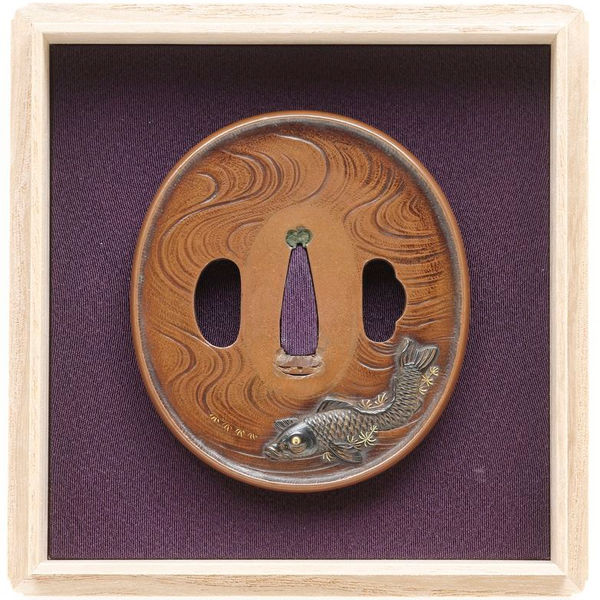
This tsuba features a dynamic design of carp amidst seaweed, signed by Tokuno Terutoki with his kao. Made in the late Edo period in Musashi province, it showcases high relief carving and intricate iroe (colored metal inlay) on a suaka ishime ground. The detailed work captures the powerful movement of the carp and the flow of water.
NihontoWatchmei · Edo
Omori Terutoki
Edo
Musashi
Signed
Hozon (NBTHK)
Machibori
2 pieces on the market now
Machibori · Edo
13 pieces on the market now
The Ōmori school was one of the great machibori (town-carving) lineages of Edo, founded in the first half of the eighteenth century by Ōmori Terumasa (大森英昌, also read Eishō), a direct disciple of Yokoya Sōmin. " A dated tsuba of Meiwa 7 (1770) anchors his mature activity, and the workshop remained rooted in the shogunal capital throughout its history — his pupil Hidetomo proudly signed works "Tōto, by the Sumida River" (東都隅田川辺). Learn more →
| Smith | Era | Designated |
|---|---|---|
| Teruhide英秀 | — | 15 |
| Chizuka Hisanori遅塚久則 | 1725-1795 | 9 |
| Horie Okinari堀江興成 | — | 7 |
| Terumitsu英満 | — | 4 |
| Terumasa英昌 | — | 0 |
Certifies a genuine fitting worth preserving: a correct signature, or, if unsigned, an identifiable era and school, with recognized artistic and craft value.
The NBTHK (Nihon Bijutsu Tōken Hozon Kyōkai, the Society for the Preservation of Japanese Art Swords) is a public-interest incorporated foundation founded in 1948 and supervised by Japan’s Agency for Cultural Affairs (Bunkachō); it is based at the Japanese Sword Museum in Tokyo. Its expert panels physically examine each submitted work (shinsa) and issue a certificate (kanteishō) ranking it by artistic and historical merit. NBTHK papers are the most widely recognized standard of authentication for Japanese swords and fittings.
NBTHK official siteIf, due to our fault, the item differs significantly from its proper condition, the item may be returned. Cooling-off is within one week of the item's arrival.