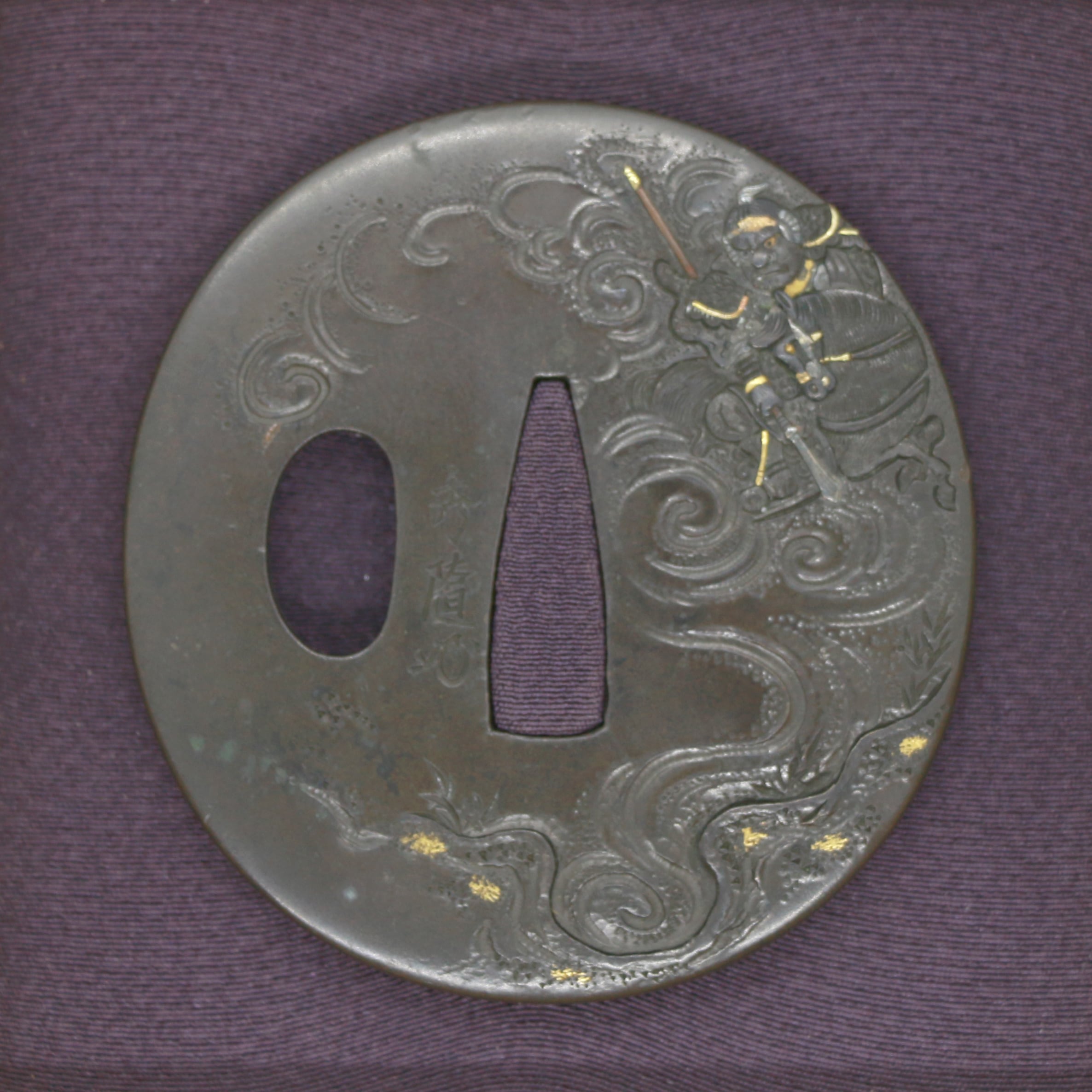
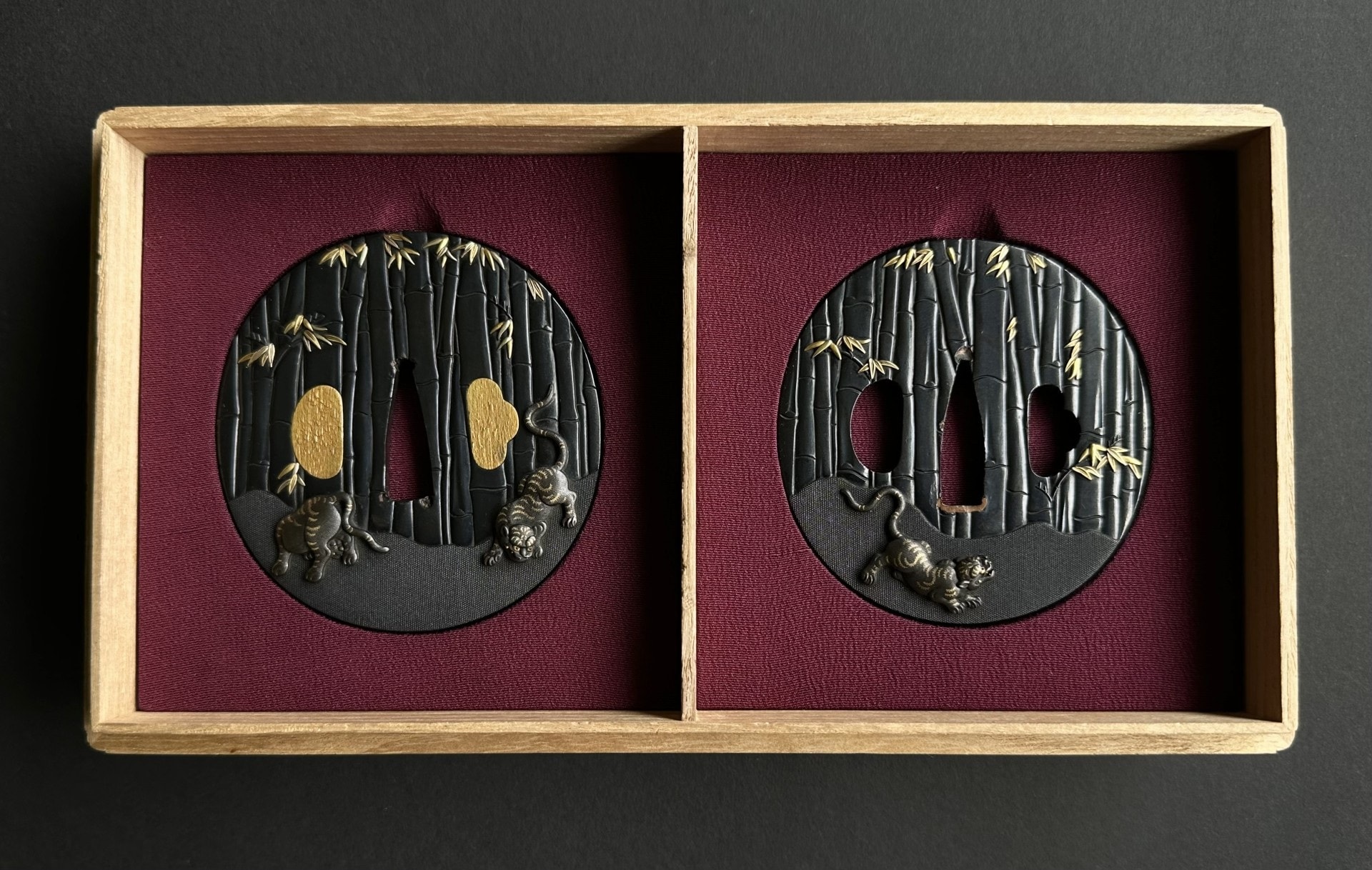
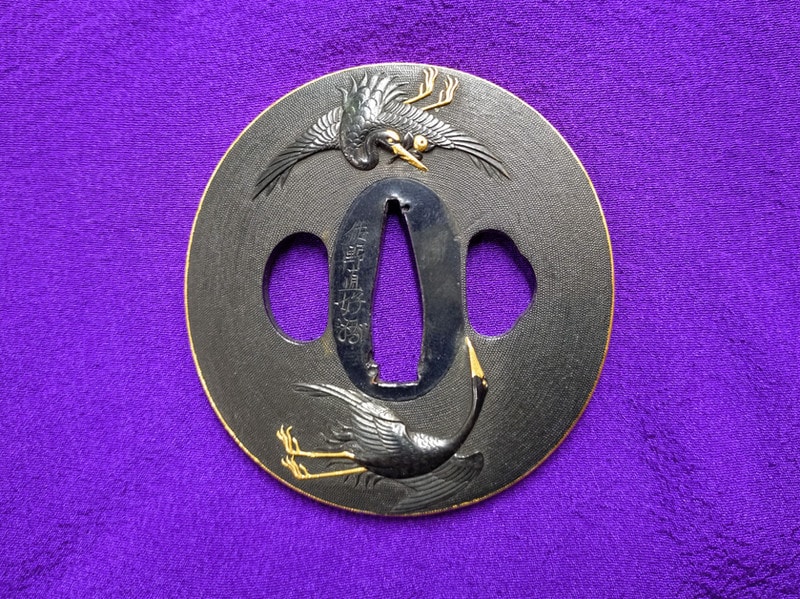
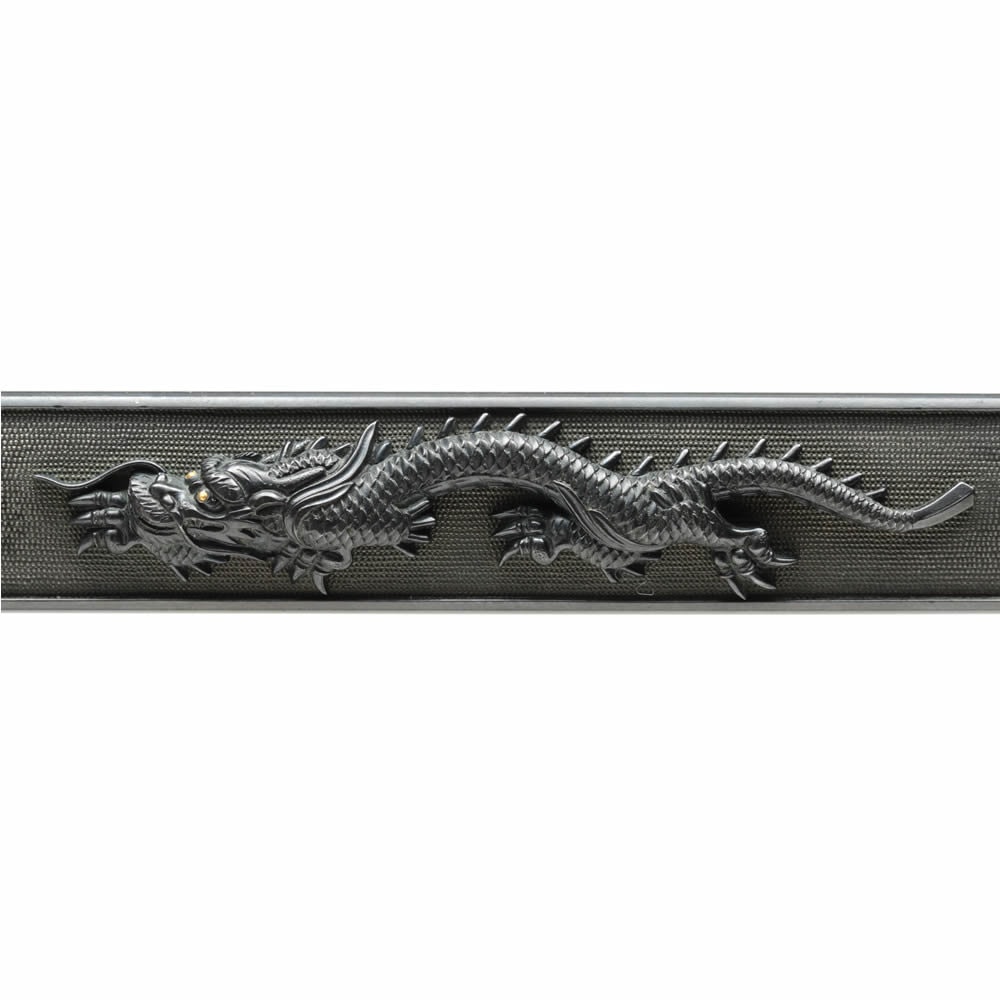
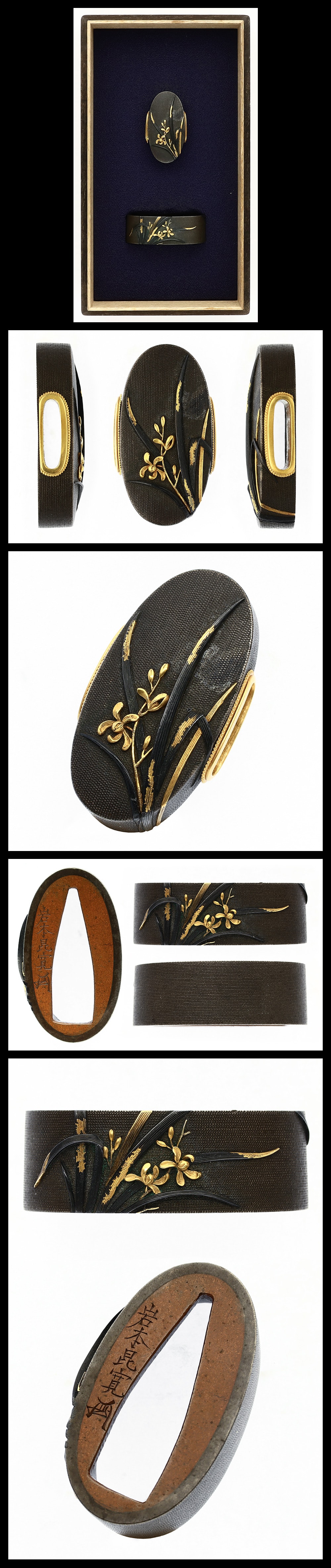
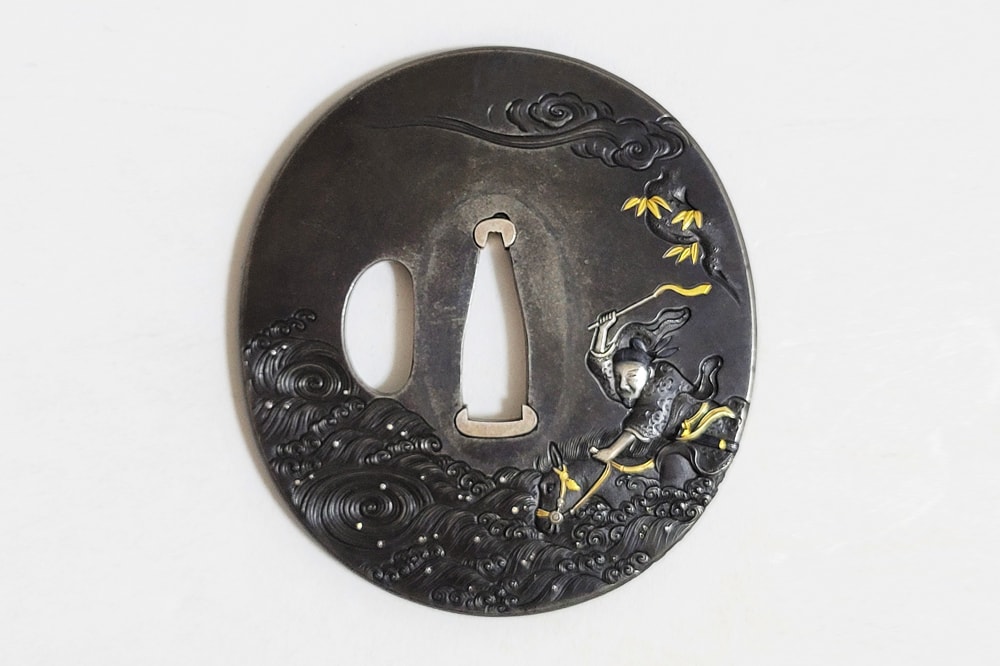
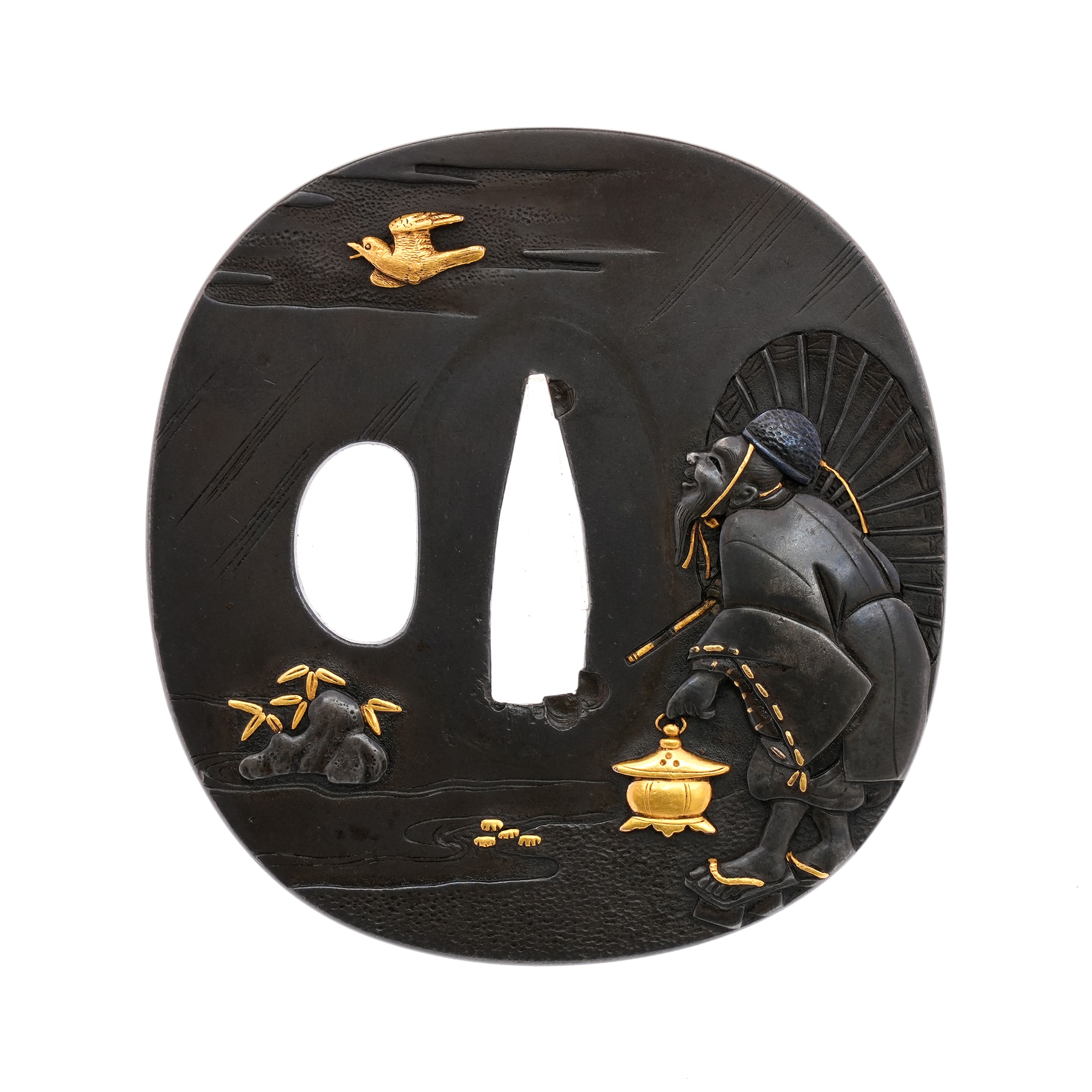
Horie Kosei first studied under Hamano Masayuki, using the name Masusui. In Meiwa 6 (1769), while still in his twenties, he encountered the death of his teacher Masayuki, after which he newly entered the school of Omori Eishu. He was granted permission to use one character from his master's name and changed his art name to Eishun. He also became affiliated as a disciple of Ozaki Naomasa, a craftsman of Goto lineage, absorbing the methods of the mainline house-carving tradition. After establishing himself independently he adopted the name Kosei. Later he served as a kakae-ko -- an officially retained craftsman -- of the Hachisuka house of Awa Province, and trained many pupils and successors within his circle.
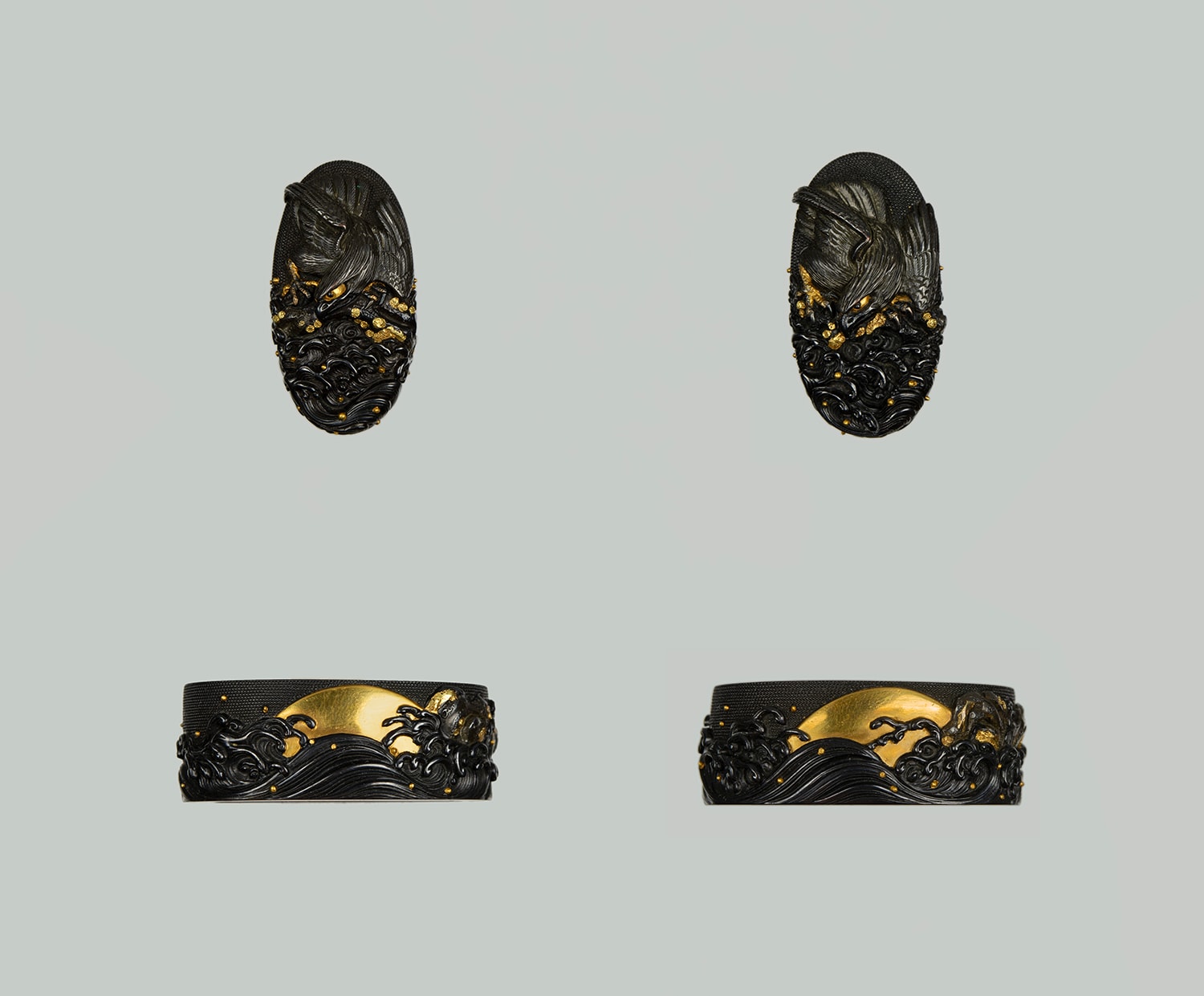
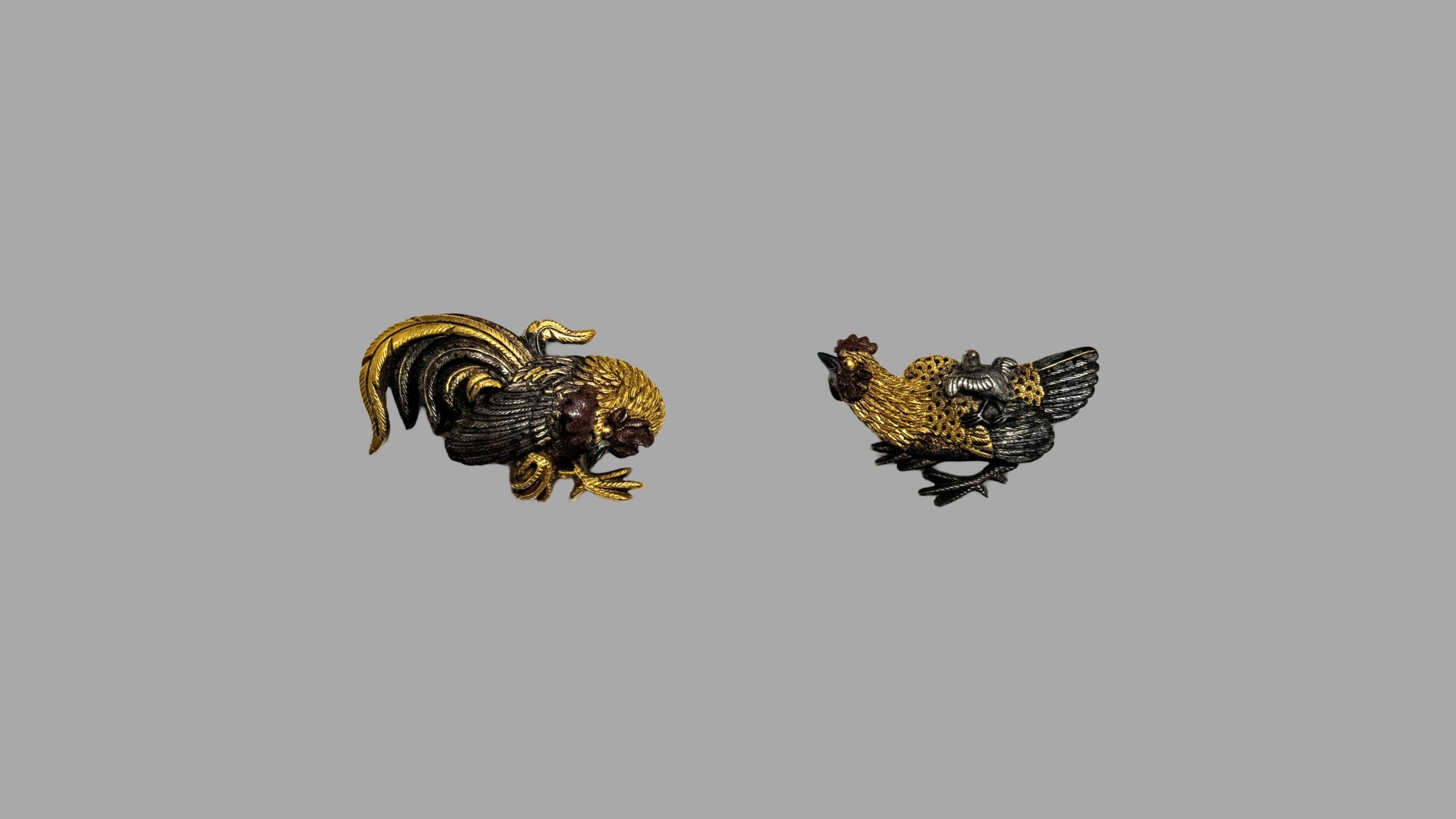
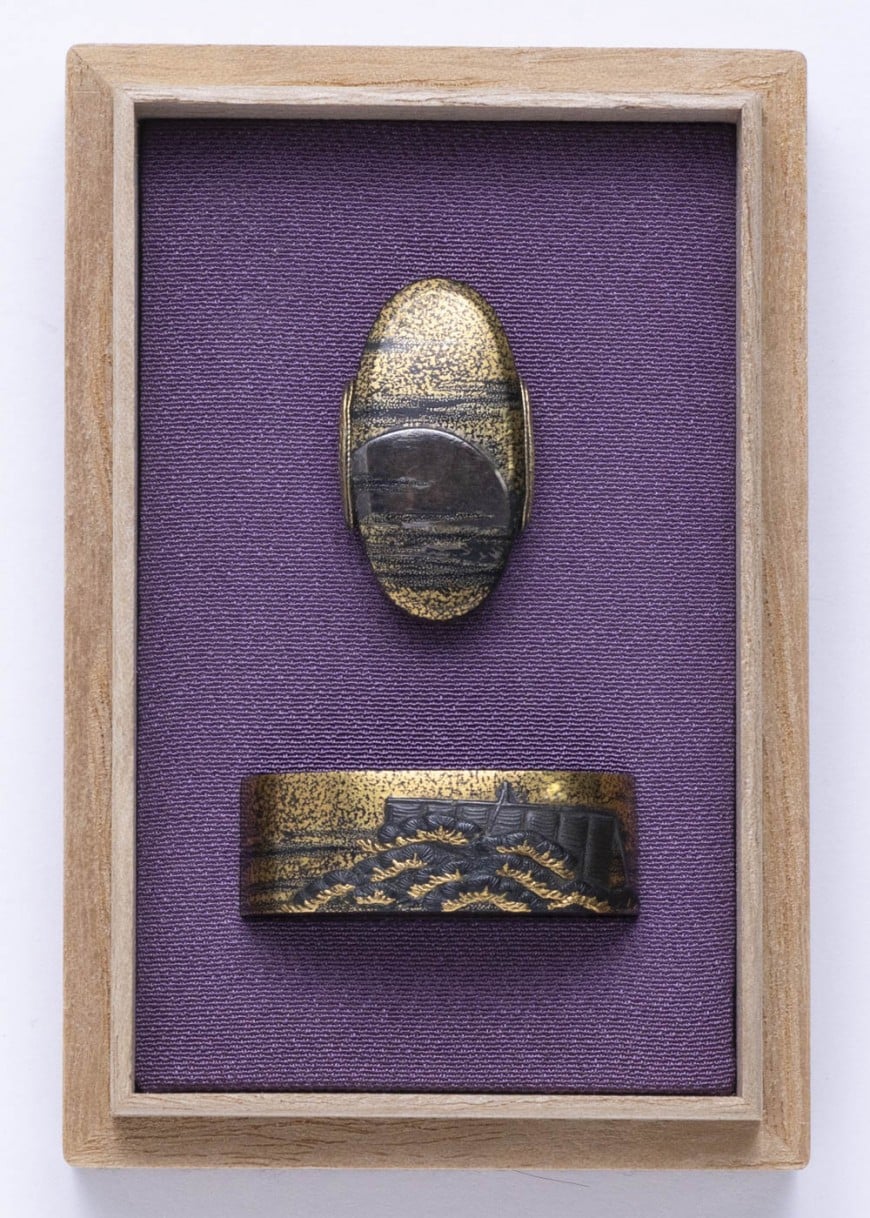
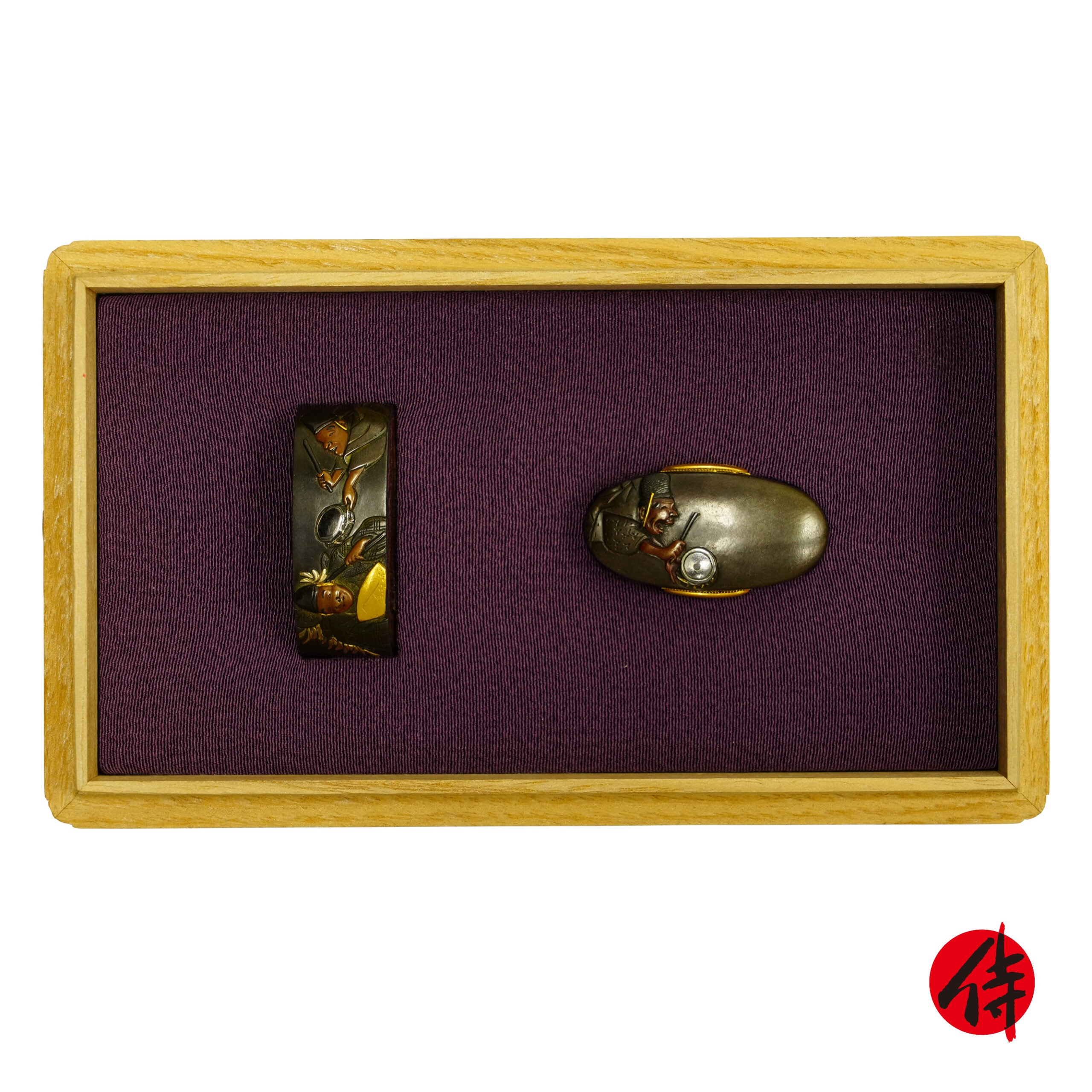
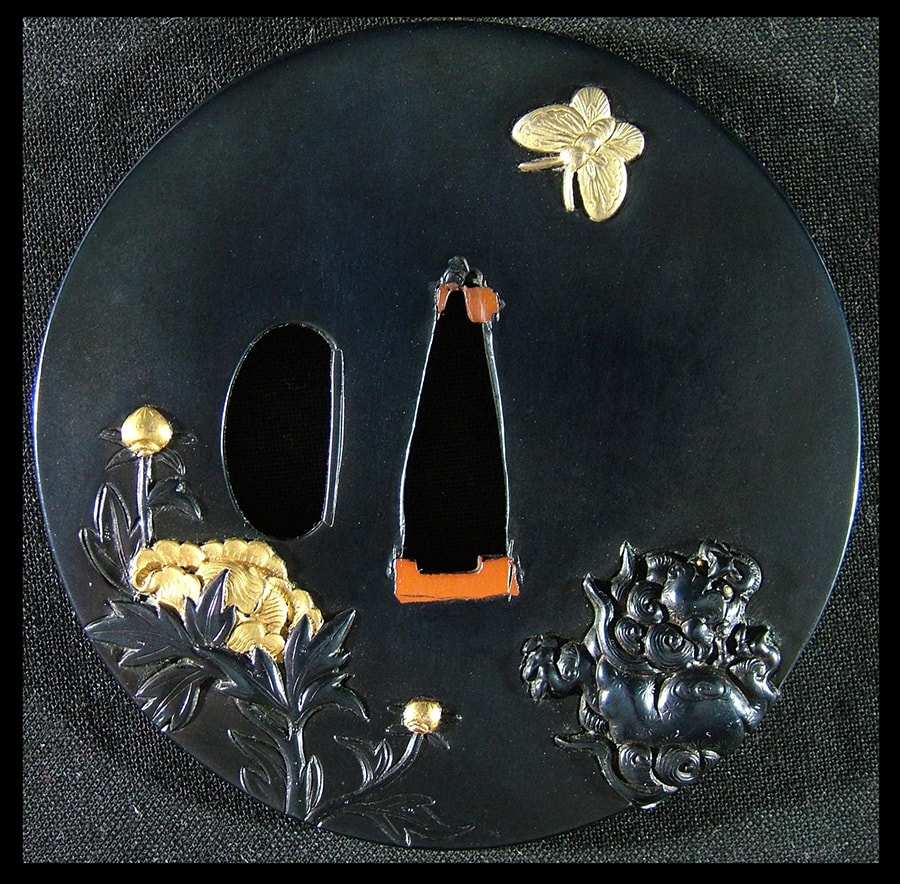
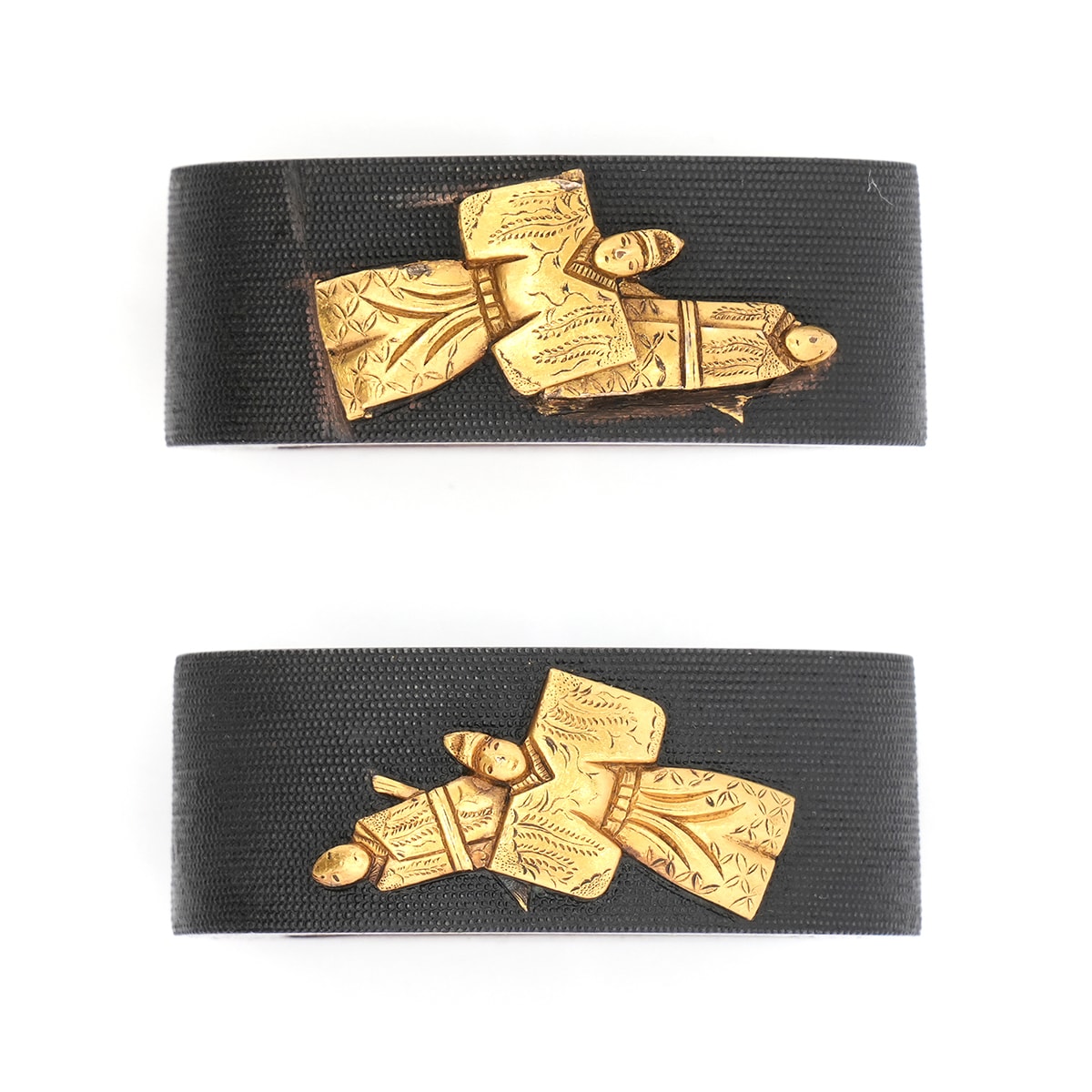
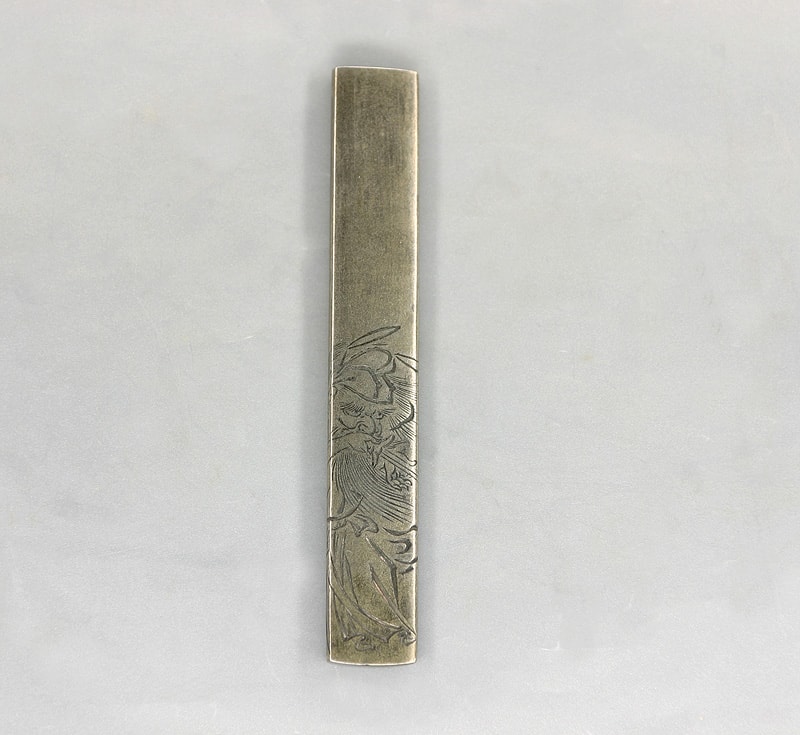
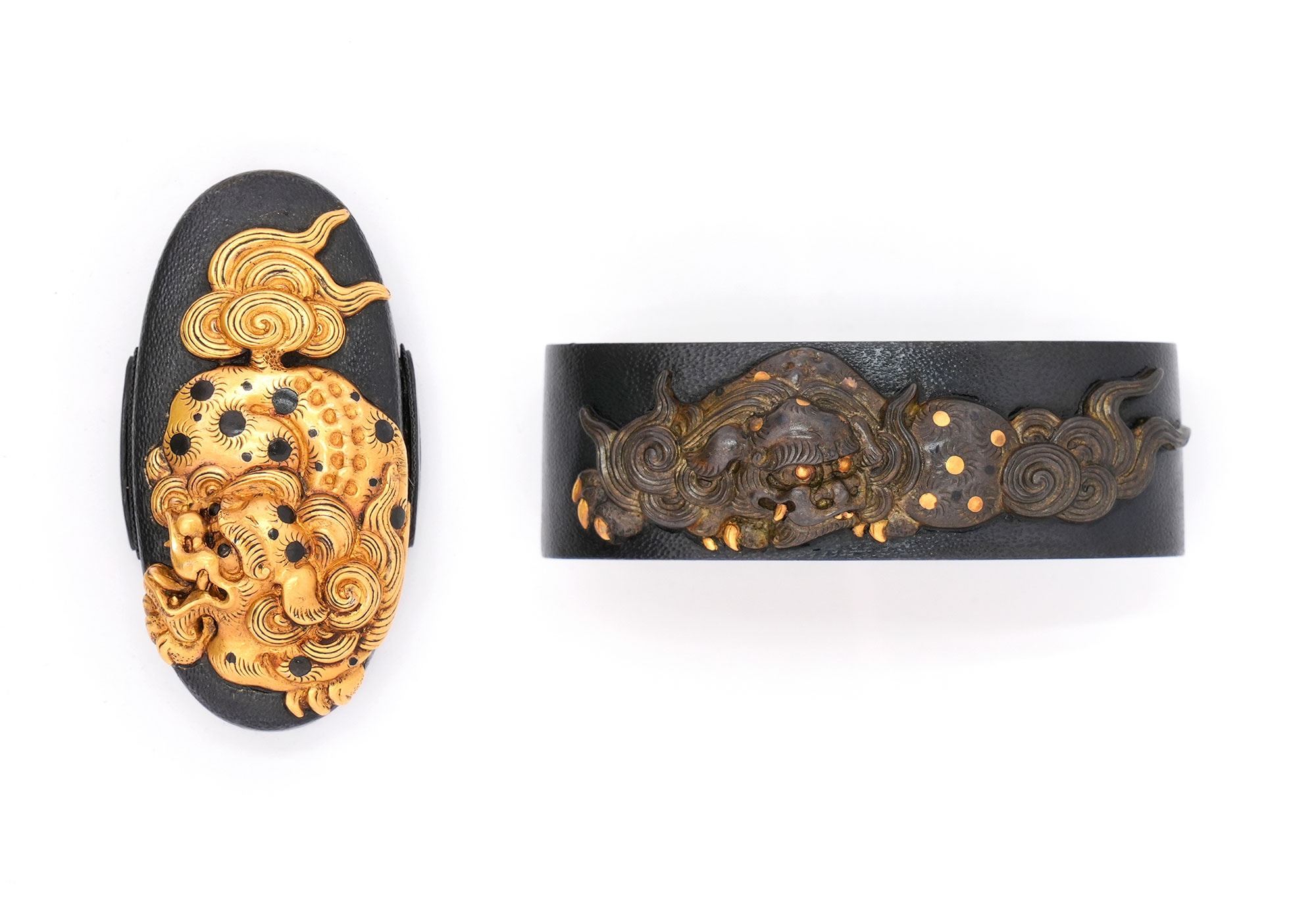
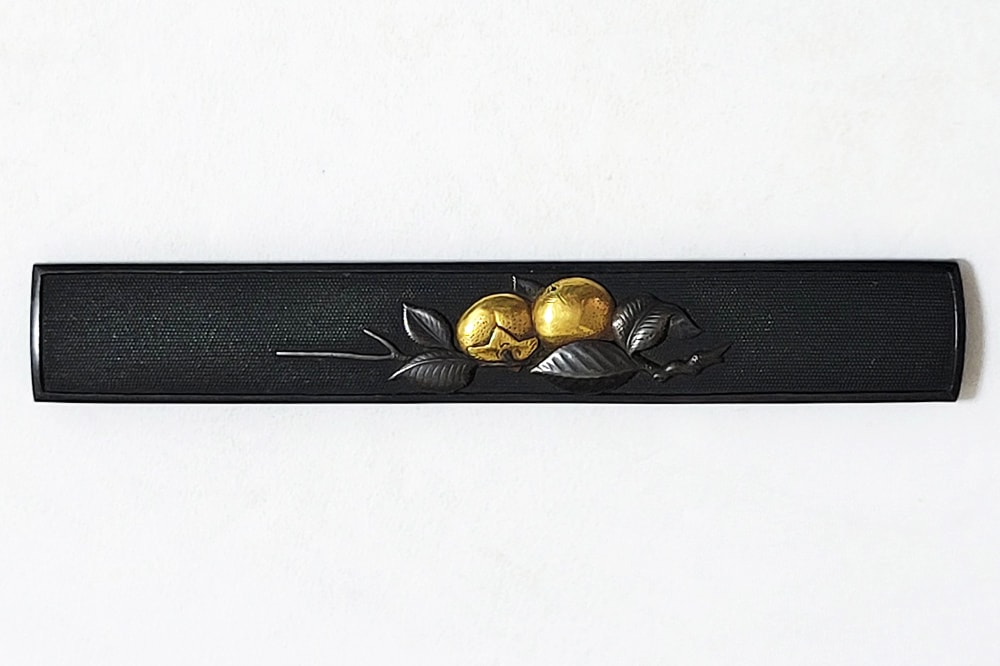
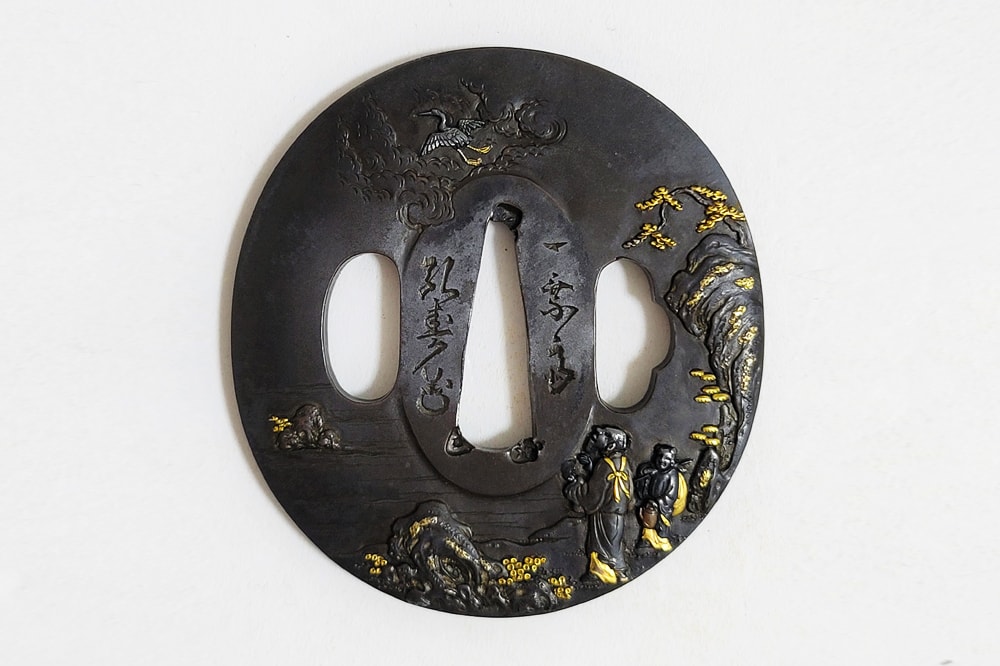
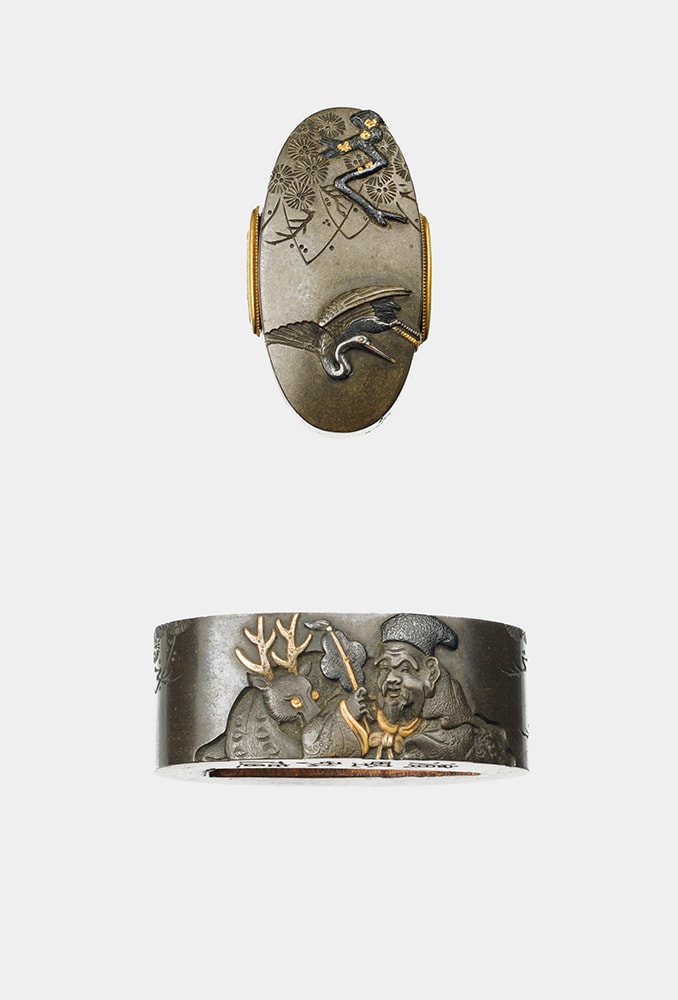
Kosei's technical command reflects the convergence of three lineages: the Hamano school's naturalism, the Omori school's structural discipline, and the Goto family's dignified and methods. His preferred materials are grounds enriched with polychrome inlay using gold, silver, and , often finished with reverse gilding ('). Compositions range from matched sets of saddled horses rendered with gold crests in the Goto manner, to the Twelve Months of Birds and Flowers -- an hereditary treasure of the Hachisuka house -- based on poetic designs from Fujiwara no Teika's . In his later years, works such as with shishi motifs employ kezuritsugi construction combining gold and to create visual variation. The , frequently executed in solid gold (), display richly modeled sculptural carving (yobori) of full, ample form.
The consistently characterizes Kosei's production as embodying a dignified style modeled after Goto taste, yet enlivened by the innovative character associated with . His works are described as possessing "high dignity" and "an elegant, courtly taste," with motifs treated in a "taut, crisp expression" that demonstrates "the full range of his abilities." Even in pieces that strongly emulate the Goto family style, the assessments note skill "well worth close attention" and a "chic, sophisticated design sense" with an "urbane, polished finish" -- qualities that distinguish Kosei as a consummate synthesizer of the major mid- metalworking traditions.