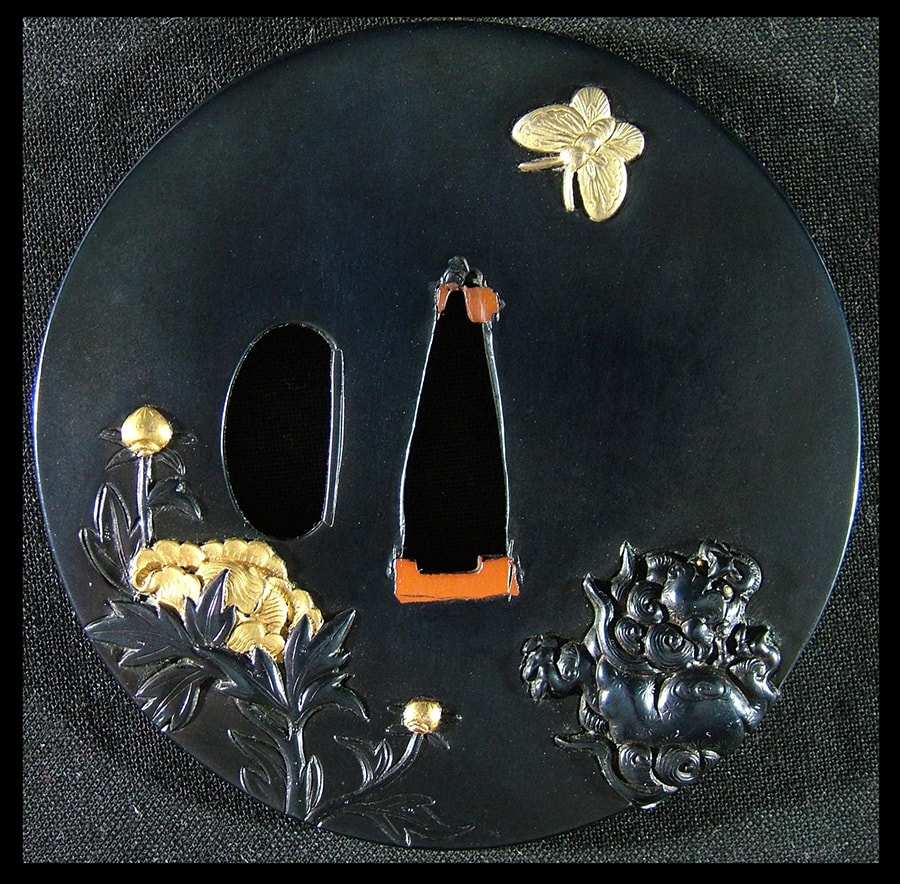
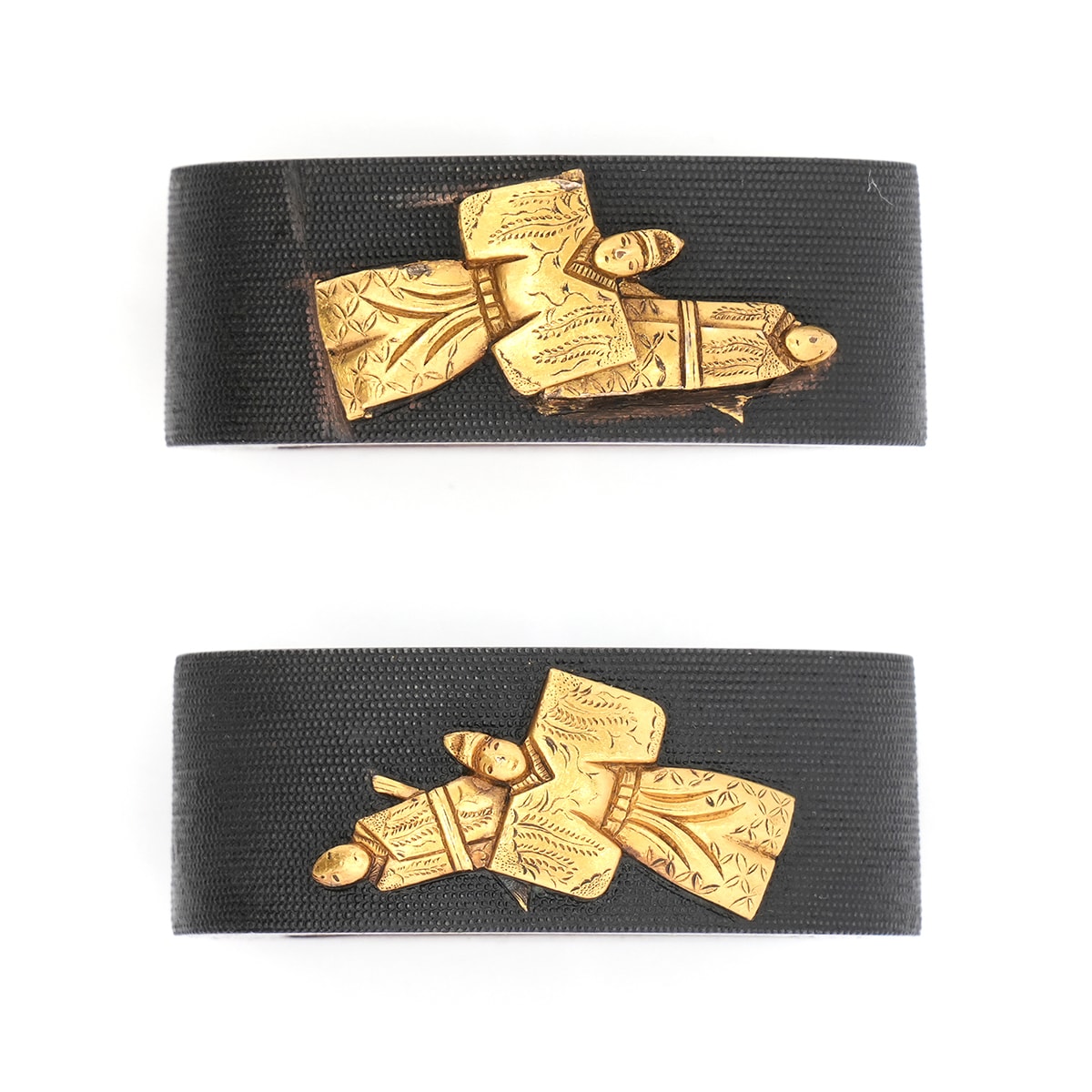
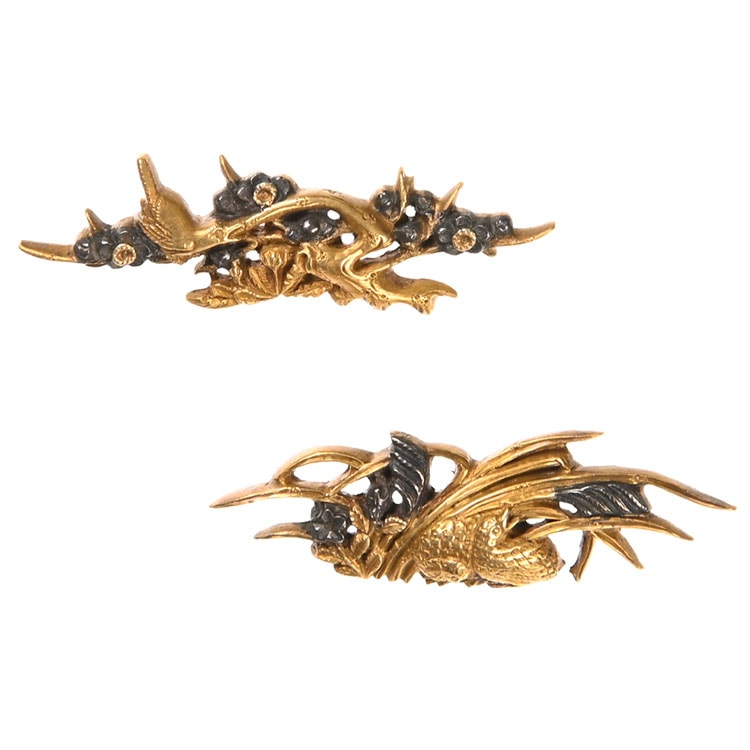
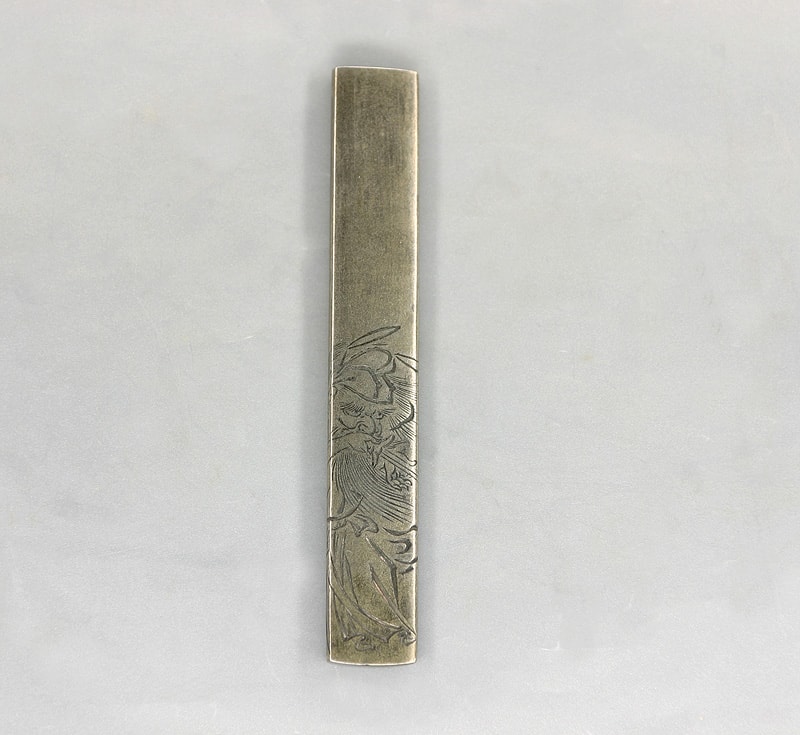
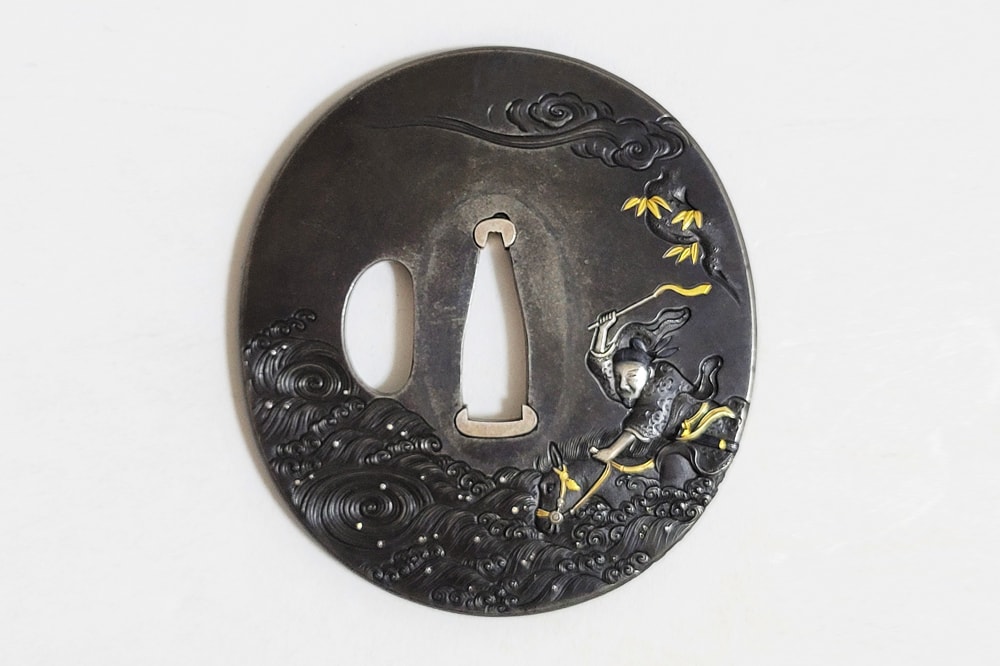
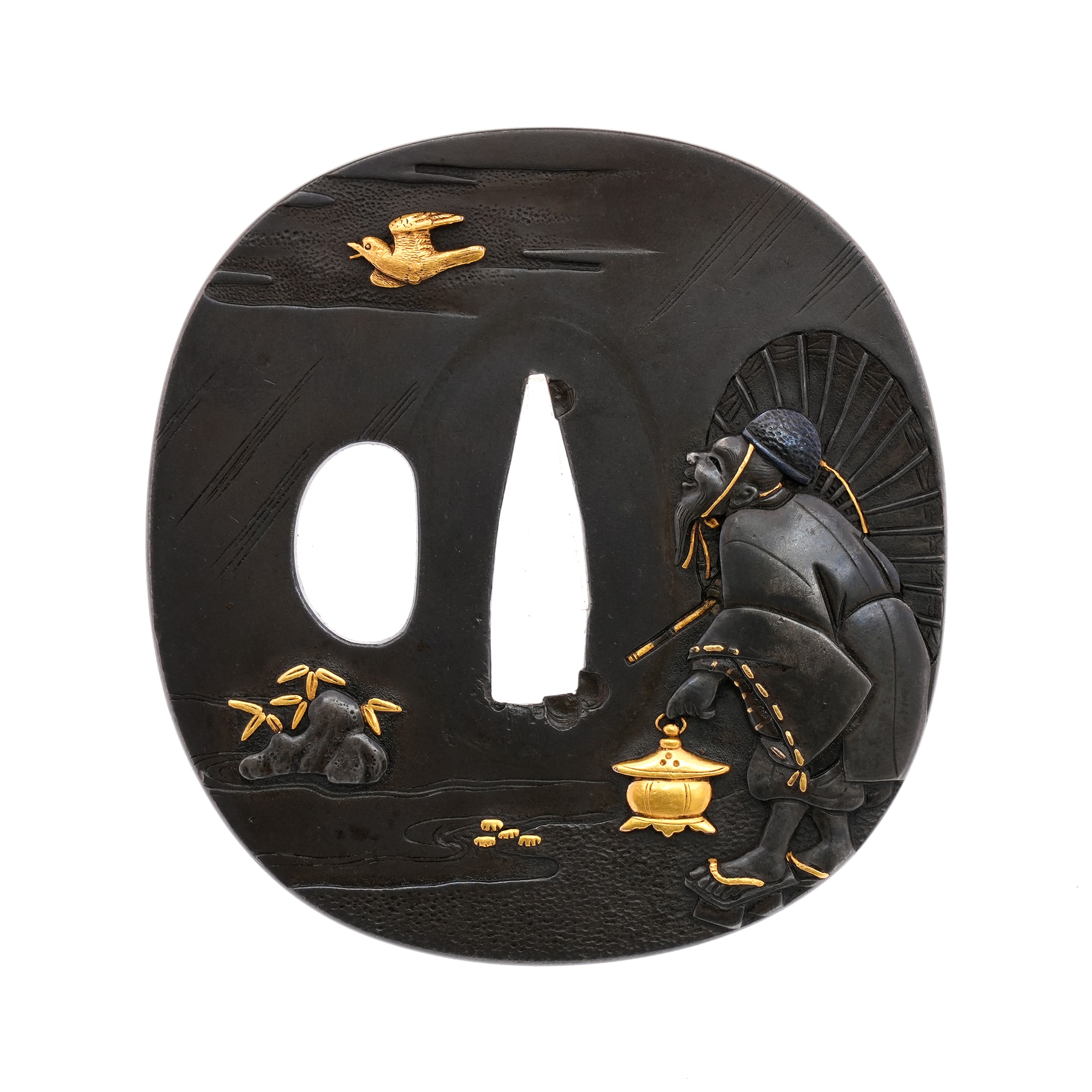
Otsuzuka Hisanori (active Kyōhō 10–Kansei 7; 1725–1795) was a samurai retainer of the Moriyama Domain, a cadet line of the Mito Tokugawa house, who studied the art of chōkin (metal carving) under Ōmori Teruhide. According to the Moriyama Hanshi Ryakuden, he was "gentle in disposition and earnest and strict in conduct," serving the third lord Yorihiro and the fourth lord Yoriaki as a page with a stipend of thirty . The Natsuo Chōkin Dan further observes that "I have yet to see a work in which he engraved his family name," noting that his carving methods are "worthy of appreciation" and that his is careful, tending toward "a brilliantly colored style." Hisanori thus occupied a distinctive position among late period metalworkers: a warrior-artist whose output was shaped by both martial discipline and refined aesthetic sensibility within the Ōmori lineage.
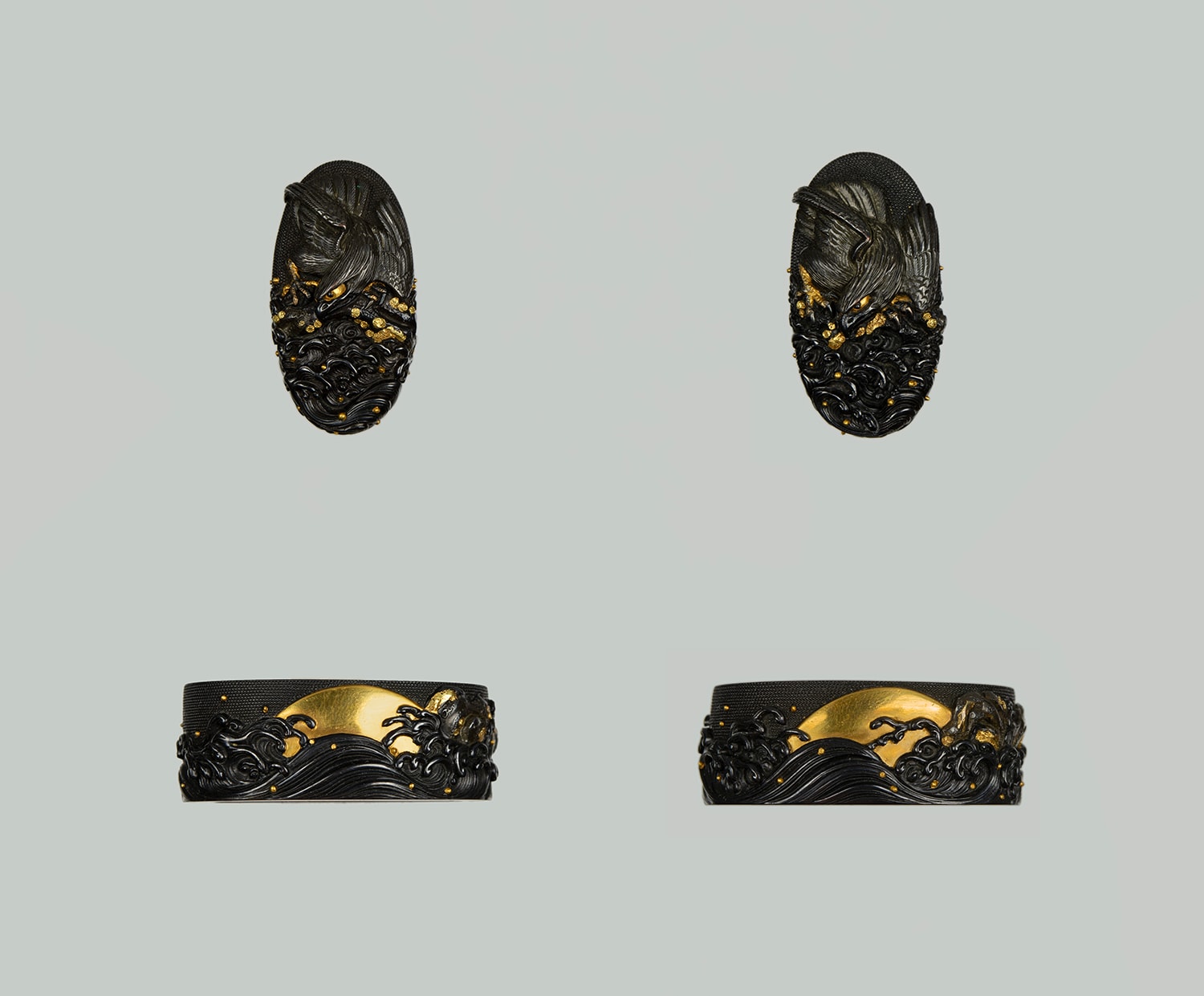
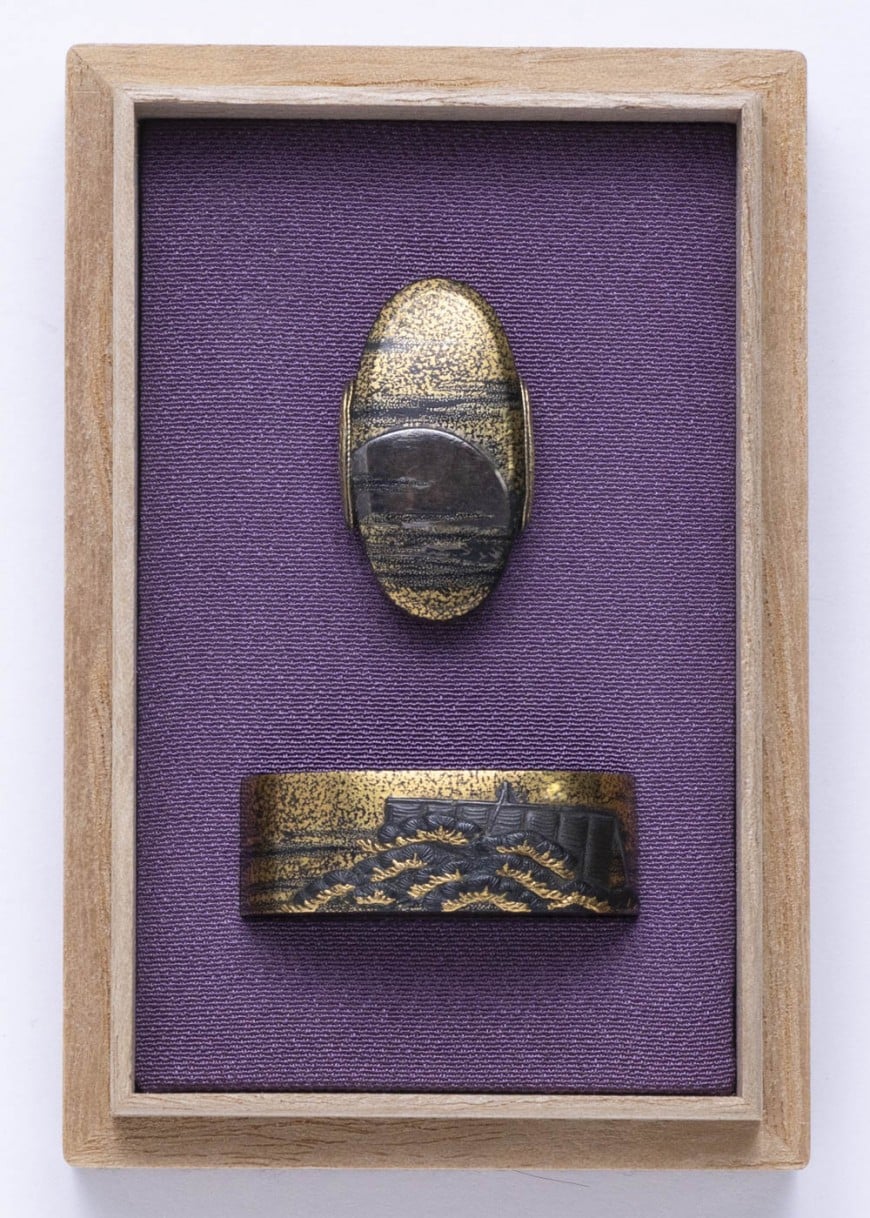
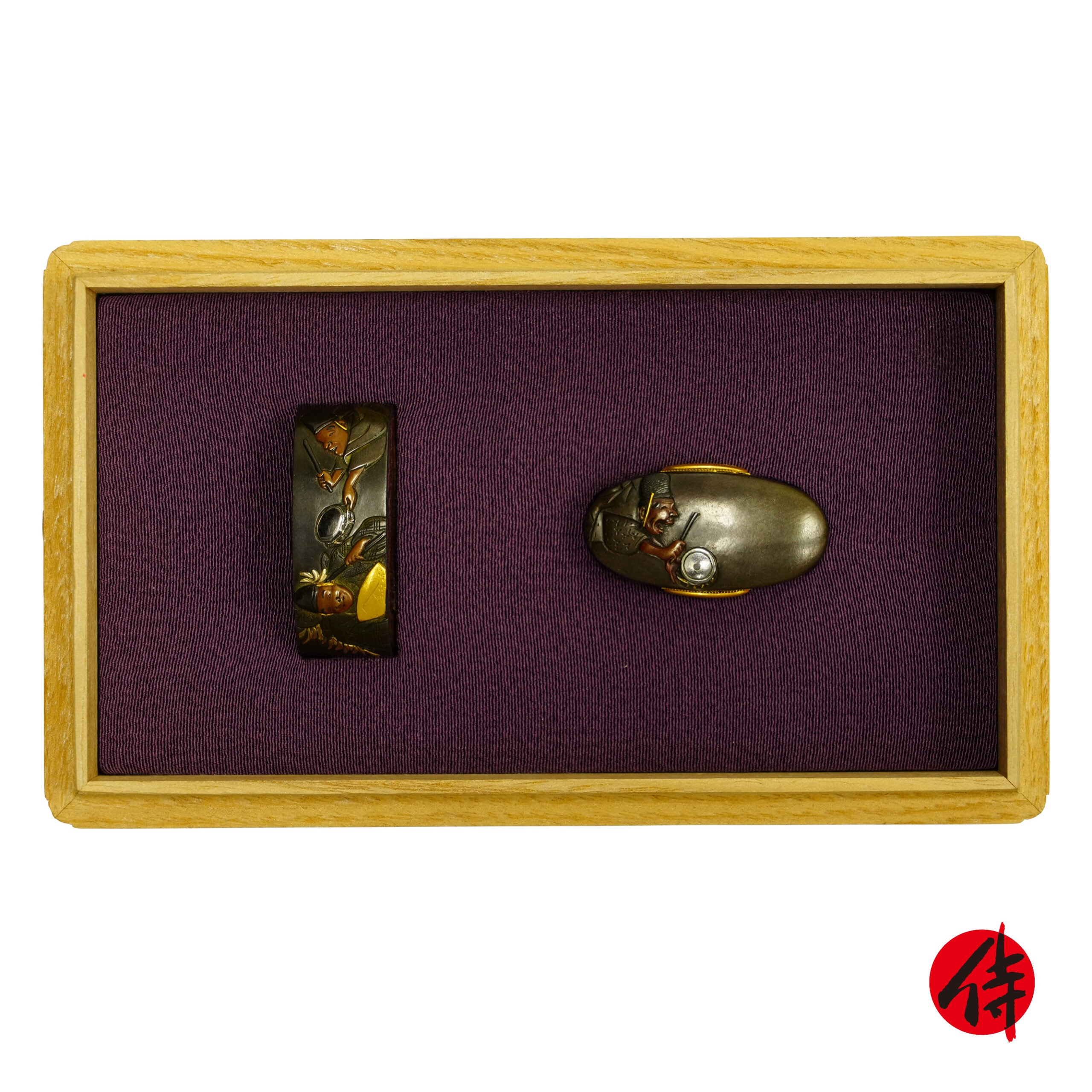
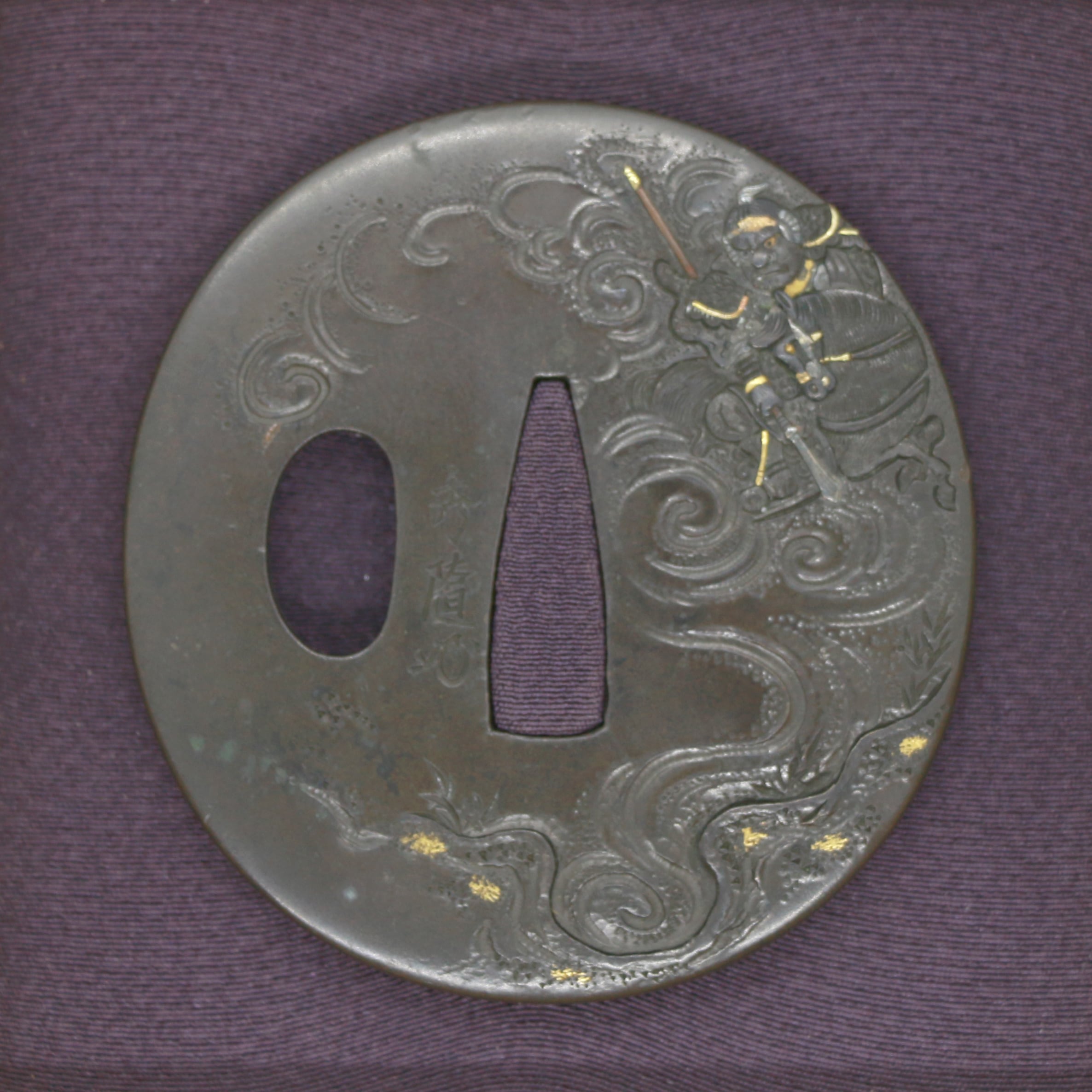
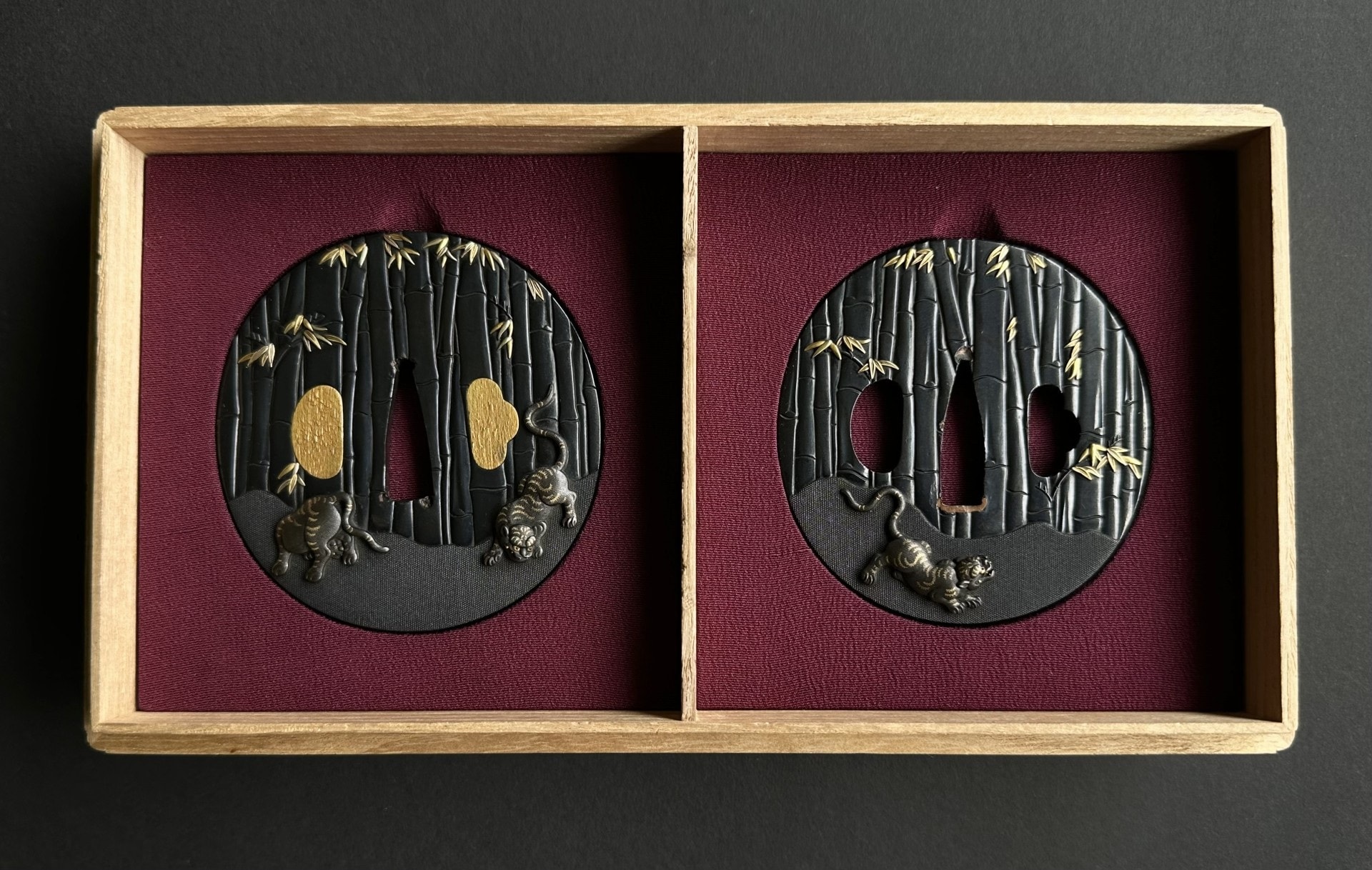
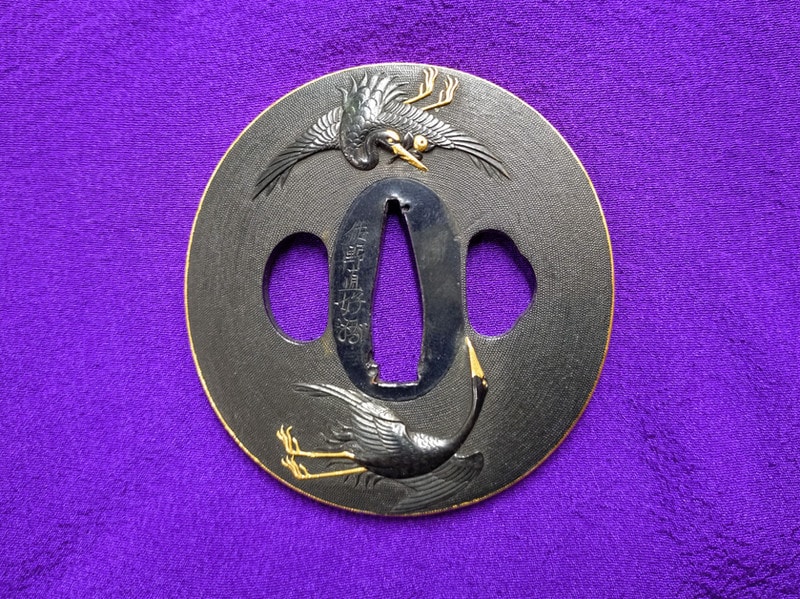
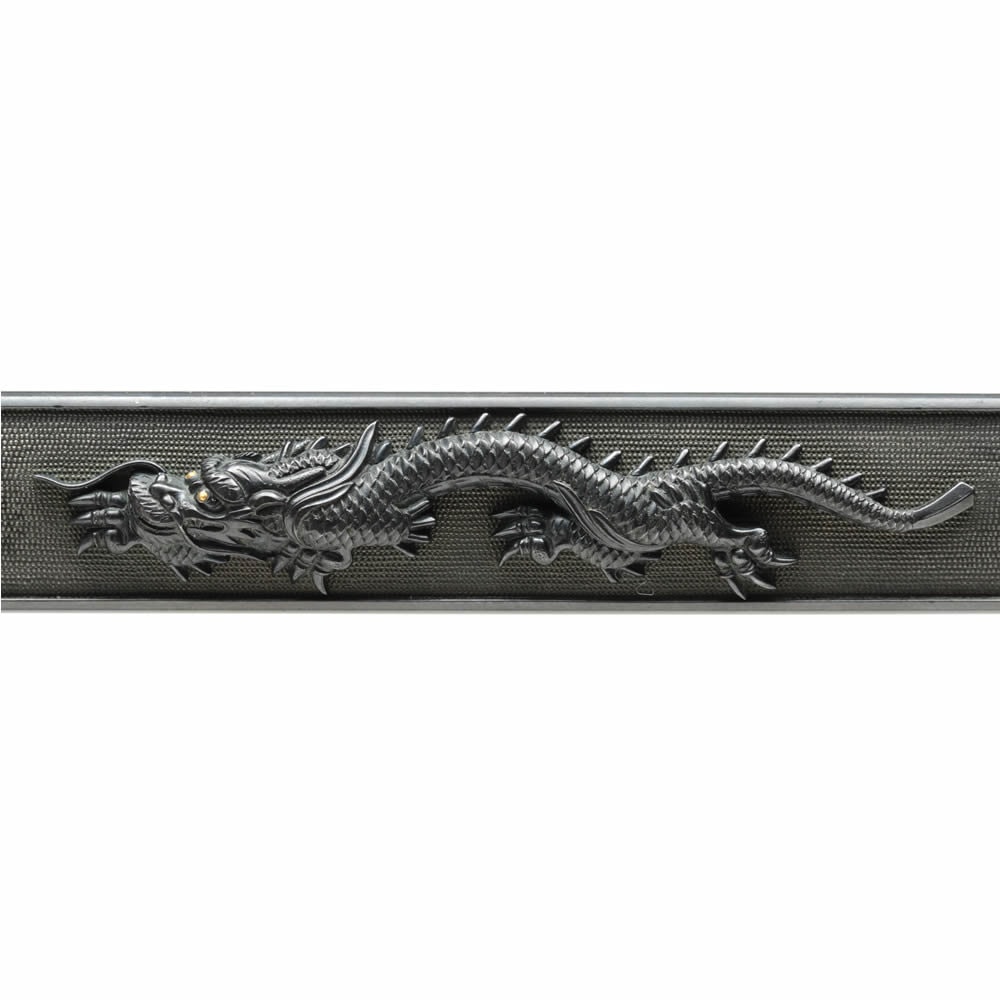
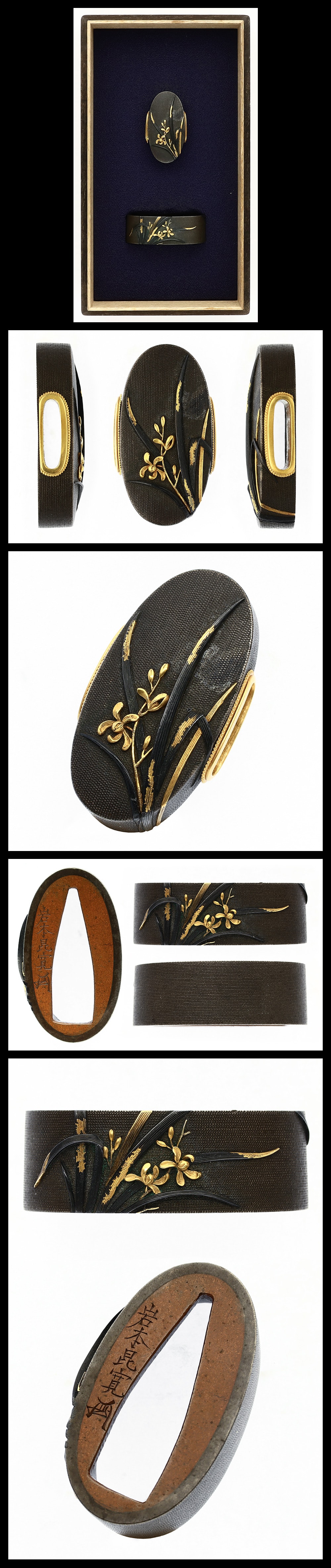
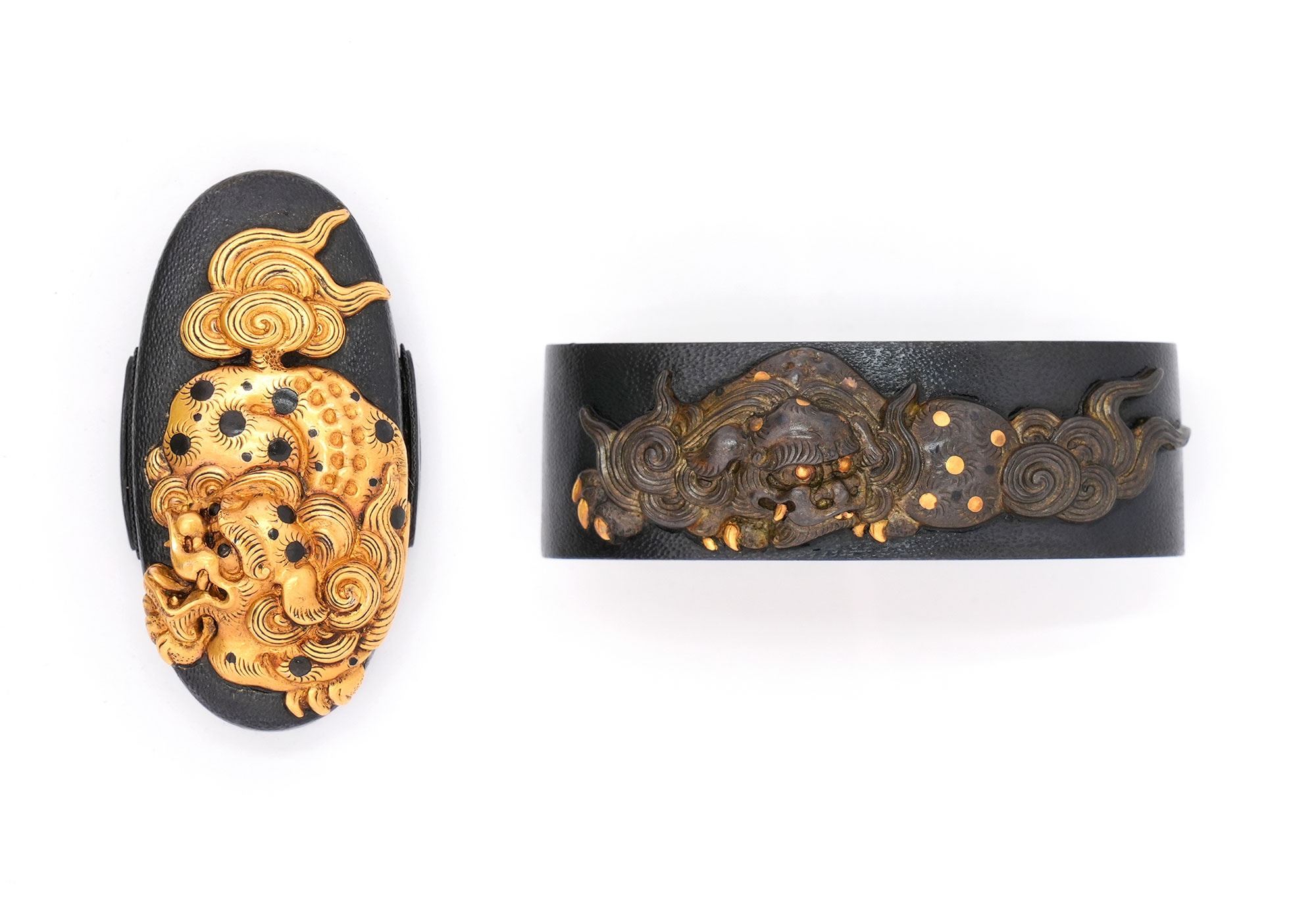
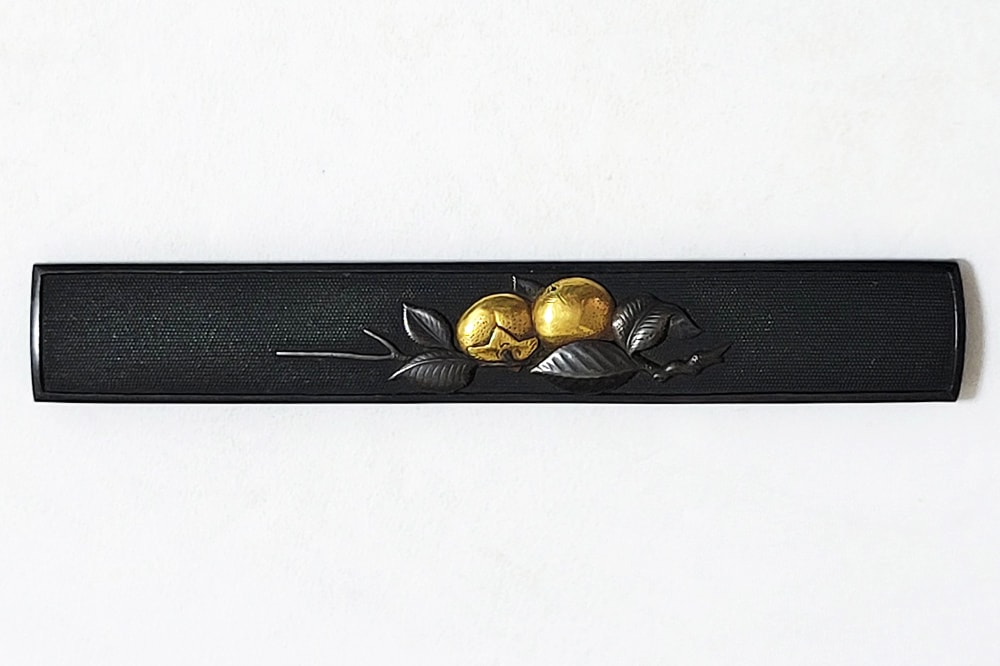
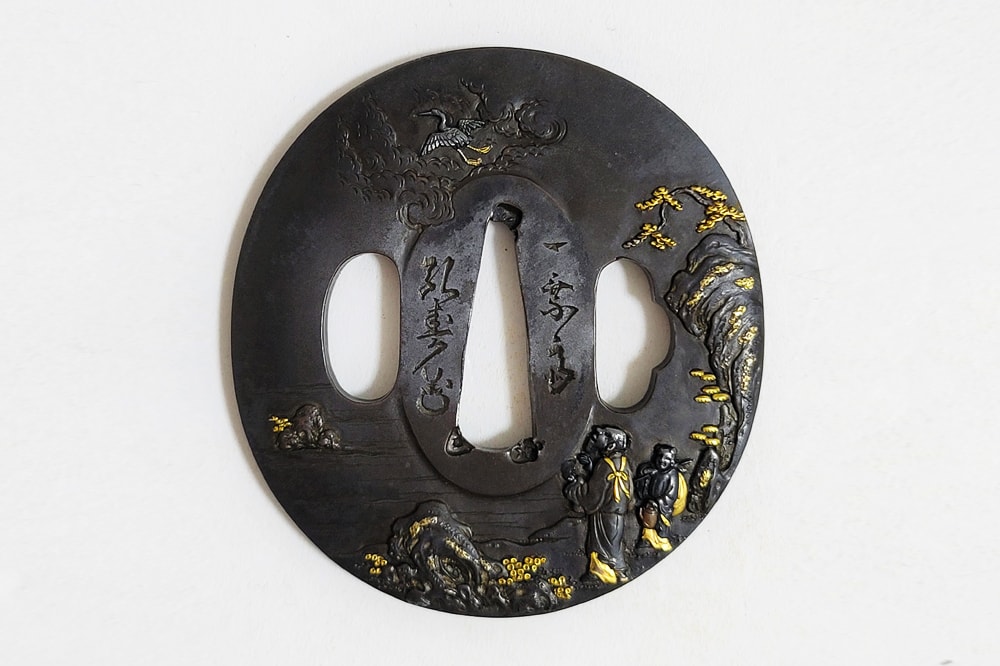
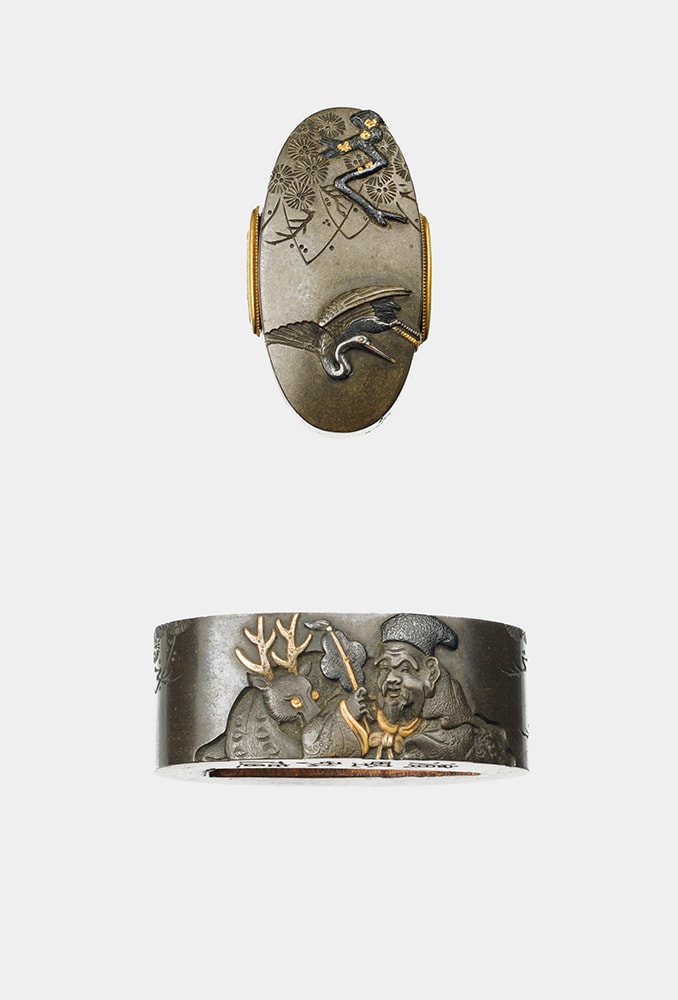
Hisanori devoted himself to metal carving with the pride of a warrior, and his dense, sumptuous inlay reached a singular level that won widespread admiration. He particularly excelled in designs of birds — peacocks and phoenixes — as well as figural subjects such as the Chinese heroes Guan Yu and Zhou Cang. His treatment of is immediately recognizable: the base metal is made thick, the (placement of flesh) is full and rounded, the raising from the reverse and the pressing-in from the front are emphatically contrasted, and the "waist" portion tightens as though cinched, producing an overall rounded contour. He further enhanced three-dimensionality by carving avian faces in a manner suggestive of fully rounded sculpture, achieving what the describes as "a truly sculptural effect." The employs a wide palette — gold, silver, , and hishoku-dō — applied with minute precision down to the smallest details.
Across his designated works, the consistently praises Hisanori's "dense, minute, and lustrous inlay work" as having reached "an individual, unsurpassed level." His pieces are recognized as fully demonstrating "the artist's particular strengths" and his "true strengths," with a "strongly three-dimensional manner rich in mass and presence." His distinctive sculptural conception of the form — thick ground, rounded modeling, cinched waist, and polychrome brilliance — constitutes a coherent personal idiom within the Ōmori school tradition. Hisanori's oeuvre stands as evidence that the samurai-artisan of the late period could achieve technical and expressive heights of the first order in the service of chōkin.