-Tōsōgu, 46th Session — Designated October 5, 2000
, : Katsurano Sekibun (桂野赤文)
Measurements (height): 7.8 cm (width): 7.5 cm Mimi thickness: 0.5 cm
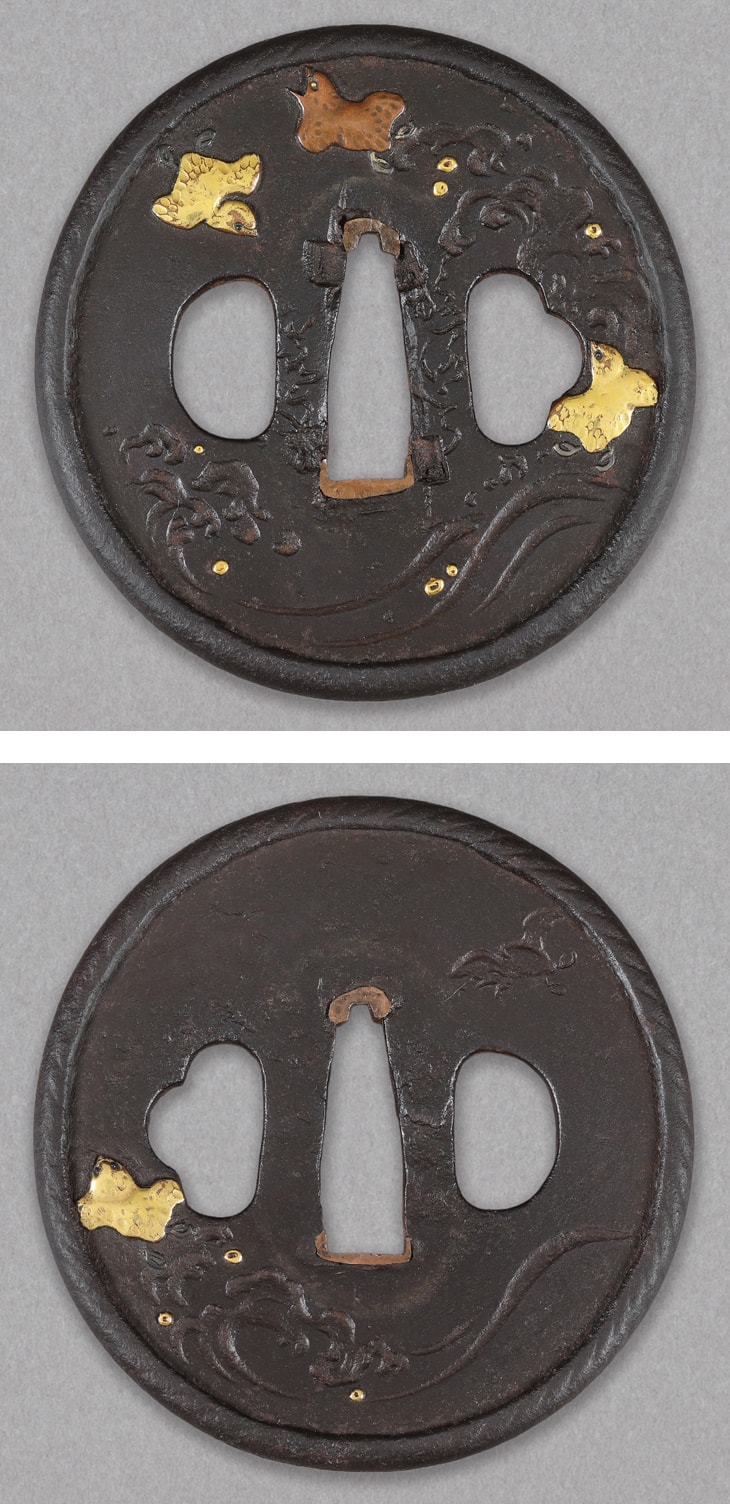
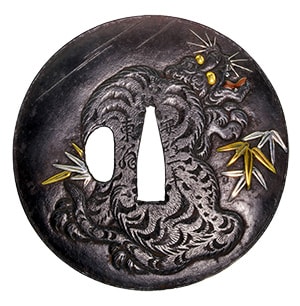
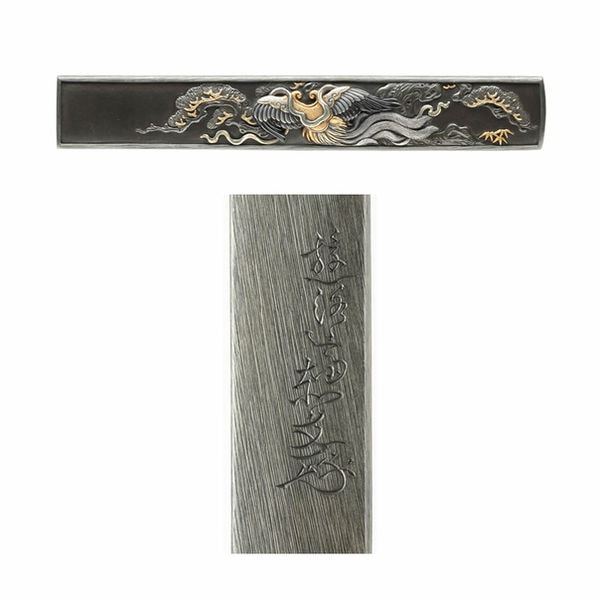
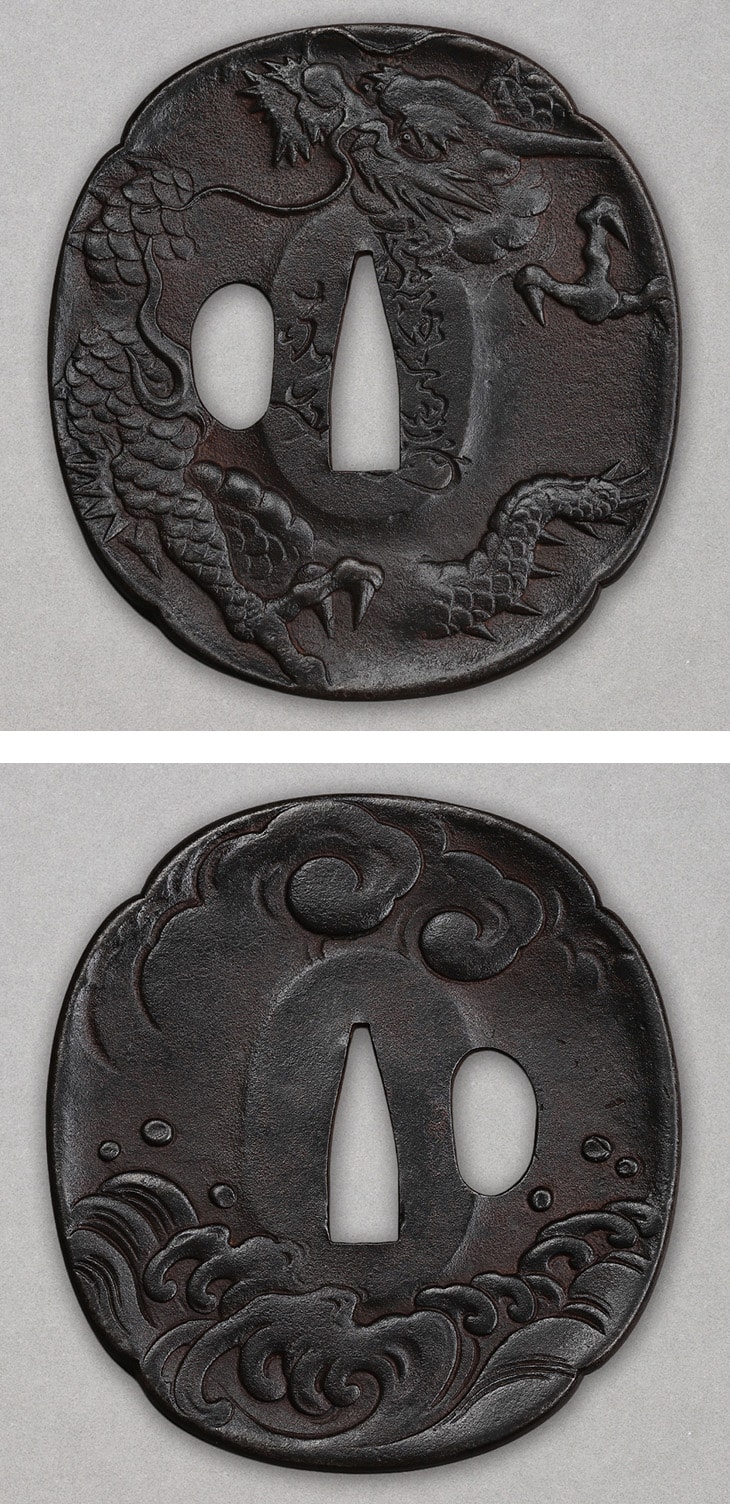
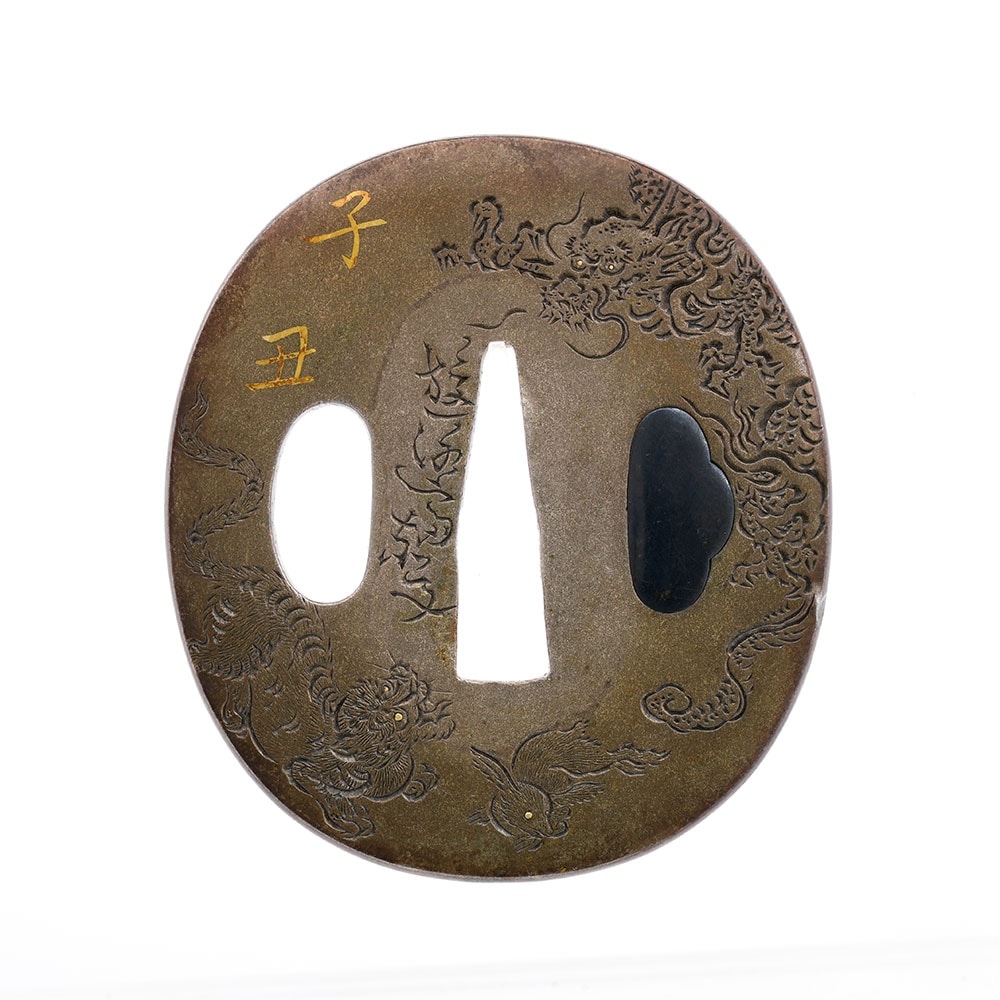
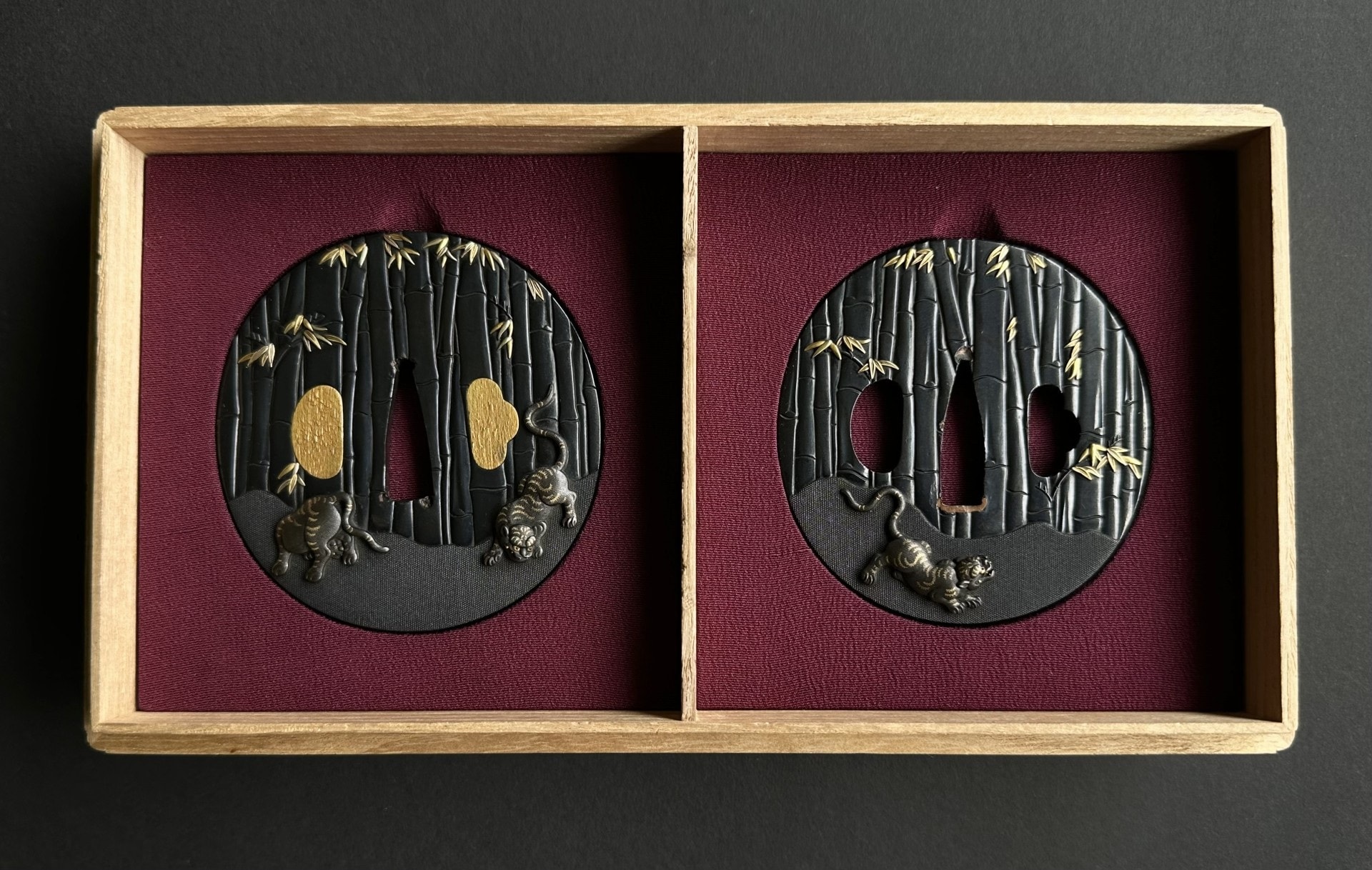
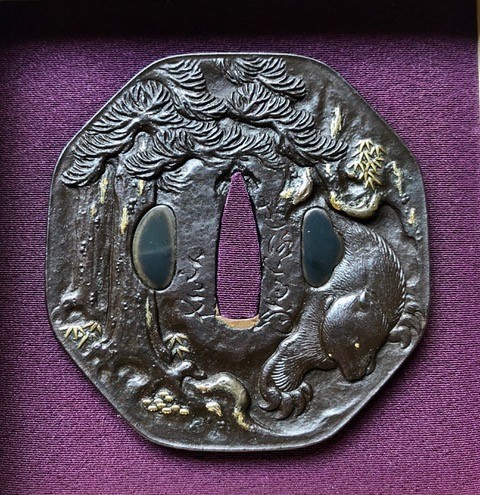
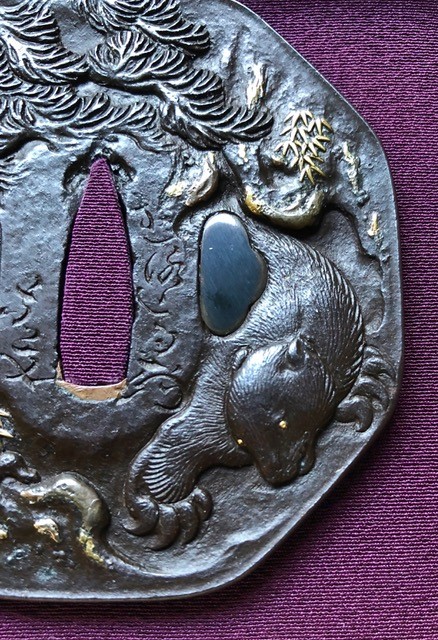
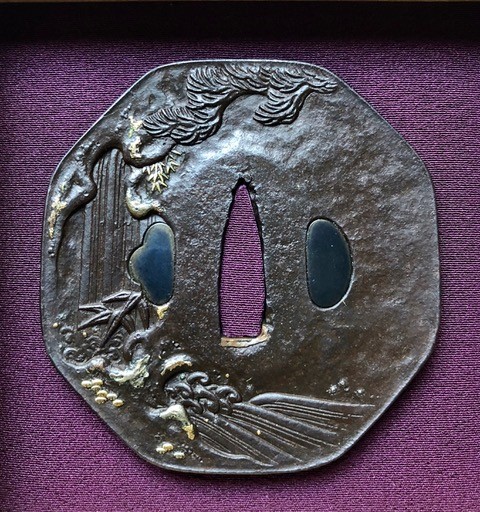
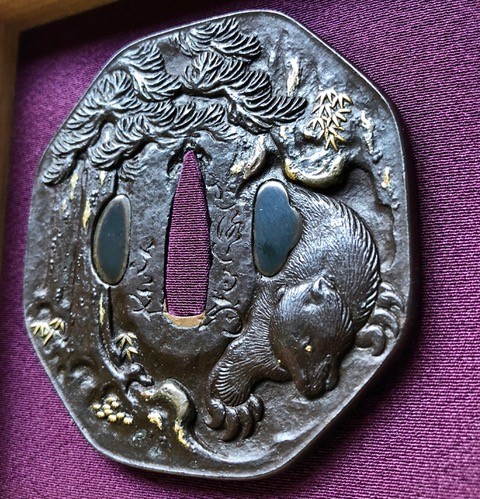
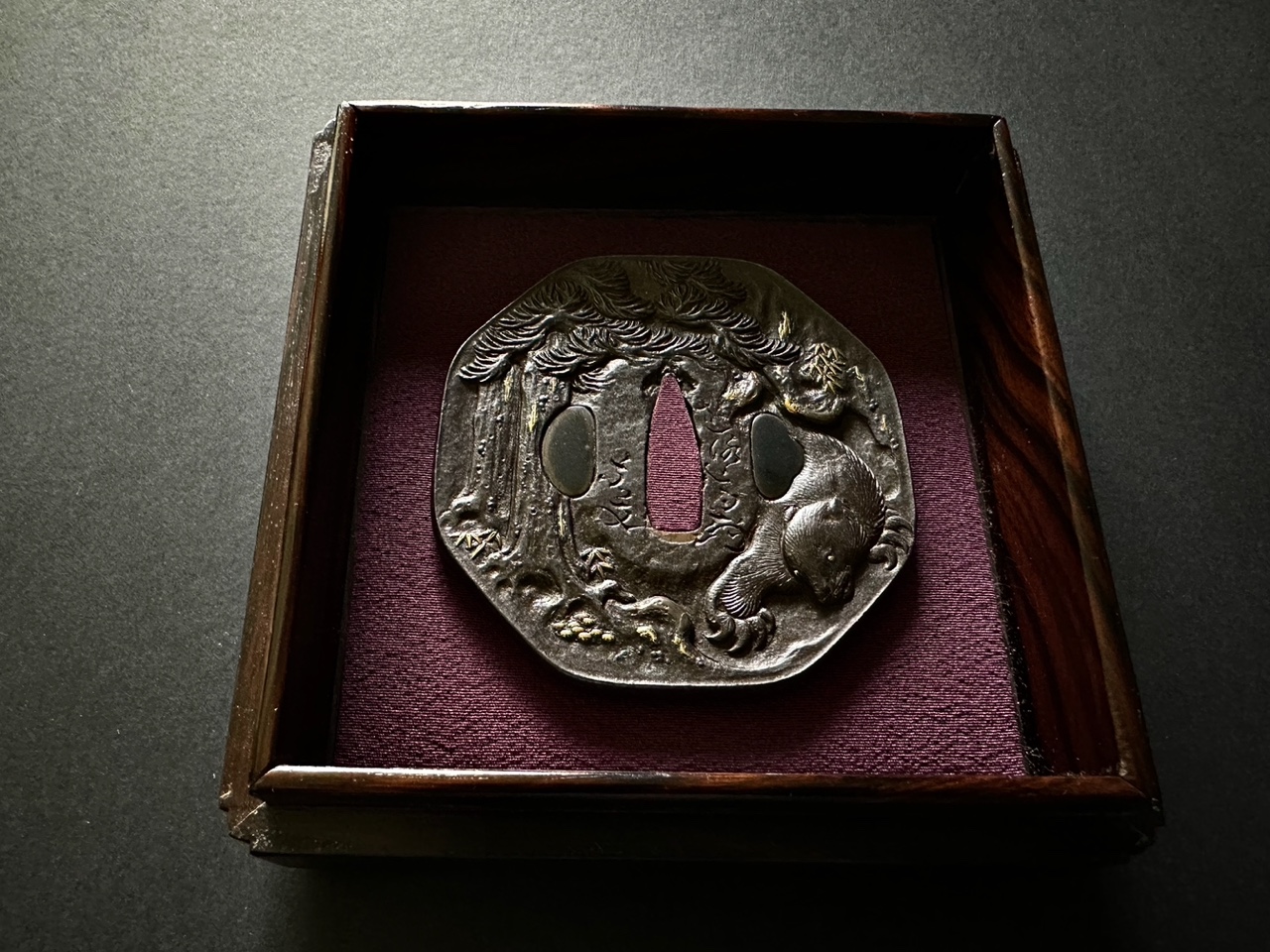
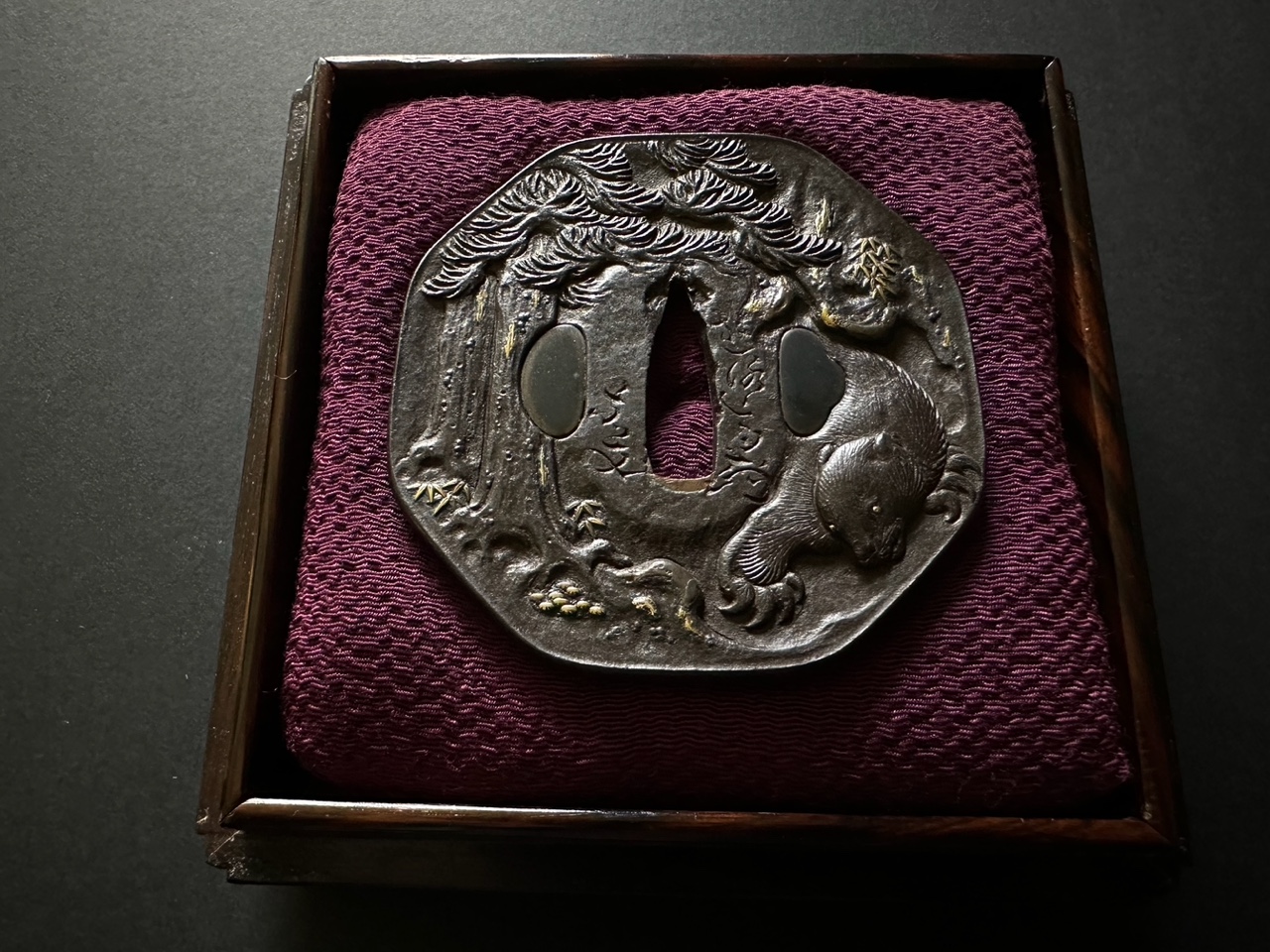
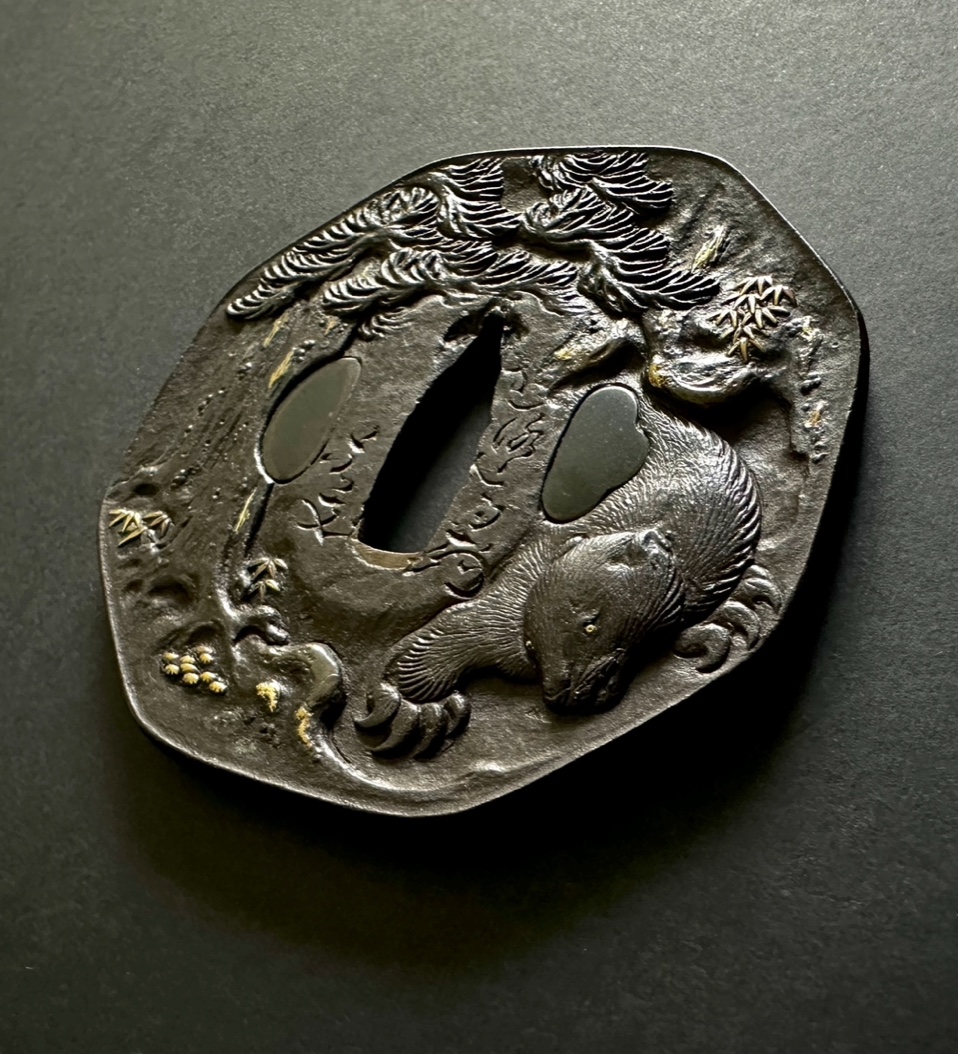
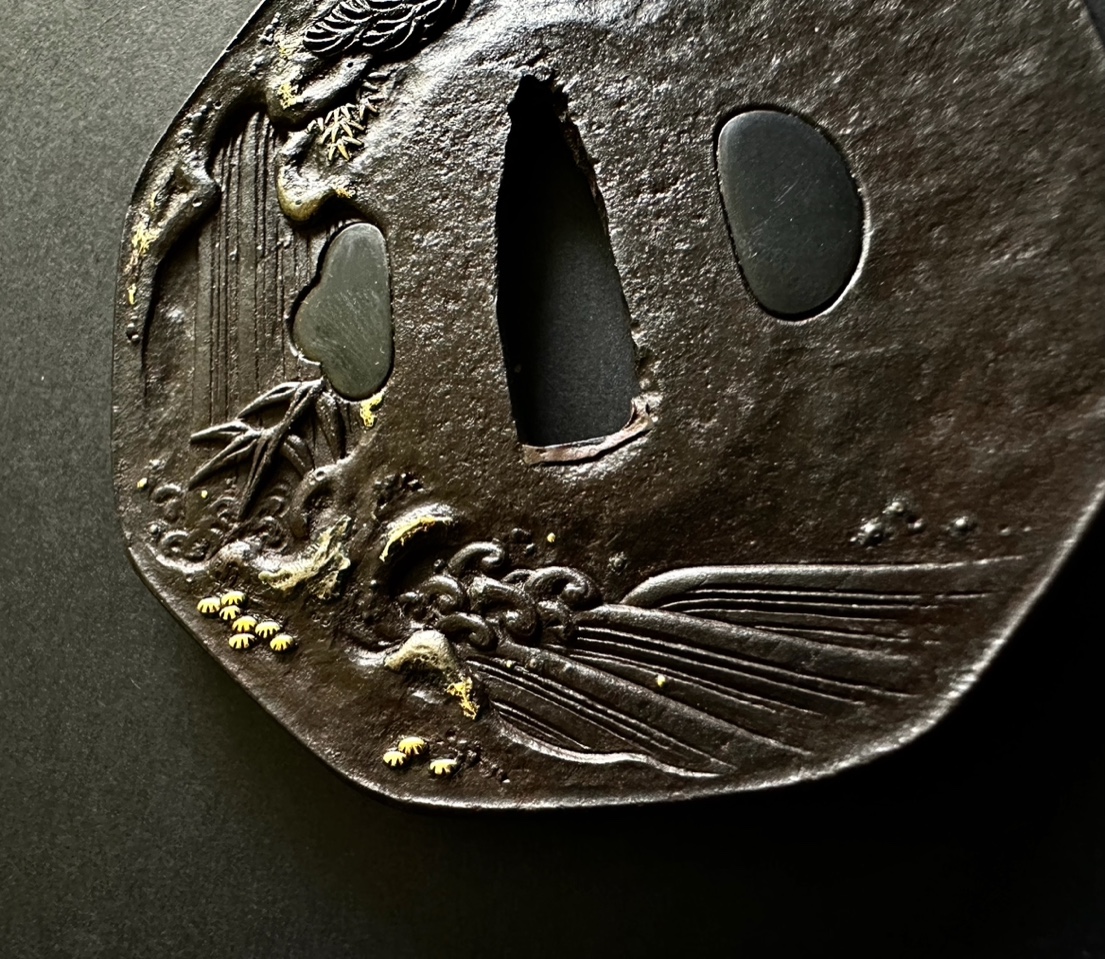
Description Form: Octagonal (hakkaku-gata) Material: Iron Construction: (one-piece plate) Surface: Hammered ground () Design: On the obverse, a bear in a forest; on the reverse, a waterfall Decoration: with ; inlaid using gold and silver Rim: rim with -nokoshi treatment : Two , both plugged with (akagane) Signature: “Yūrakusai” (遊洛斎) with
Artisan Katsurano Sekibun, art name (gō) Yūrakusai. A late- specialist noted for in iron and with high-relief carving and .
Era Late period.
Explanation Katsurano Sekibun was born in Kansei 2 (1790) in Murakami, Echigo Province. It is said that in his youth he went to and studied under the Hamano family; from his use of the art name Yūrakusai, it is also conjectured that he underwent training in Kyoto. In Bunsei 7 (1824) he became a retained craftsman (kakae-kō) of the Sakai house of the Shōnai domain. From Kōka 2 (1845) onward he settled permanently in Tsuruoka, and he died there in Meiji 8 (1875) at the age of eighty-seven.
Many of his works are . For the plate metal he frequently employed iron and , and he especially excelled in applying polychrome decoration in a high-relief mode (-bori). In addition, his repertoire includes , nikuai-bori, and various forms of inlay. In his he used a cursive script derived from the style of Kameda Bōsai, a calligrapher from his native Echigo. He took Tsuchiya Yasuchika as a model and steadily refined his skills, and as pictorial subjects he favored the carving of animals and birds.
This , executed in iron and adopting the Yasuchika-school octagonal form, is worked in with gold- and silver-inlaid . The obverse places a bear within a forest, while the reverse presents a waterfall; by employing perspective, the piece skillfully conveys the manner of a bear lurking deep in remote mountain terrain far from human habitation. Both the composition and the carving methods possess a high degree of refinement, and the work fully demonstrates Sekibun’s particular strengths.