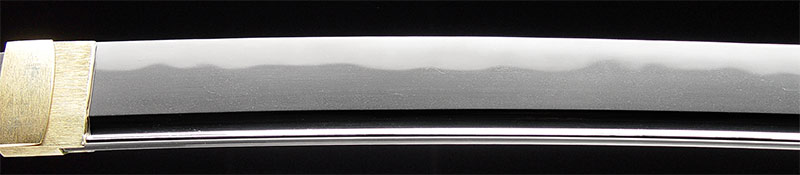
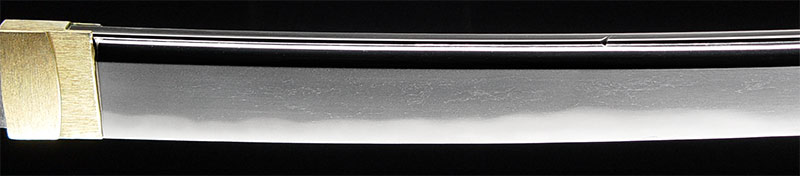
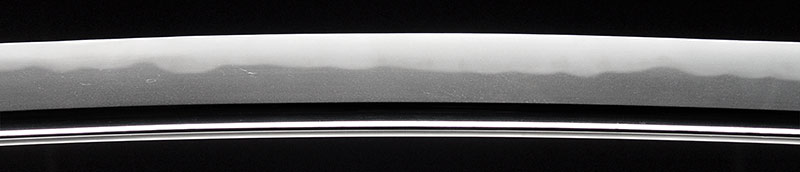
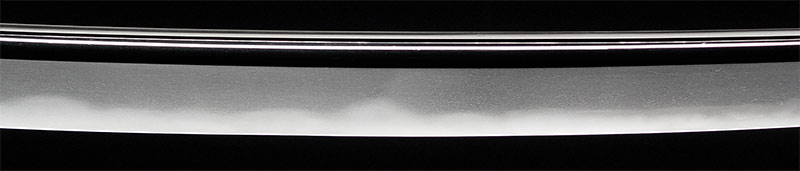
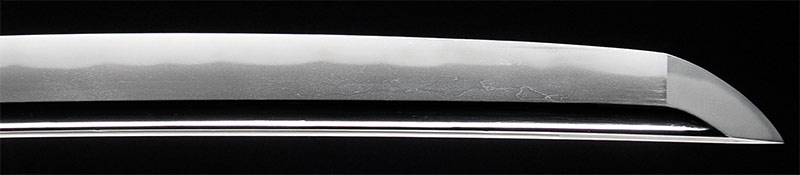
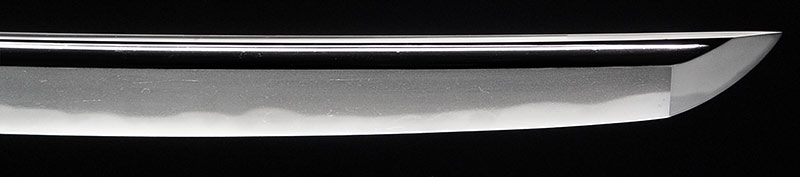
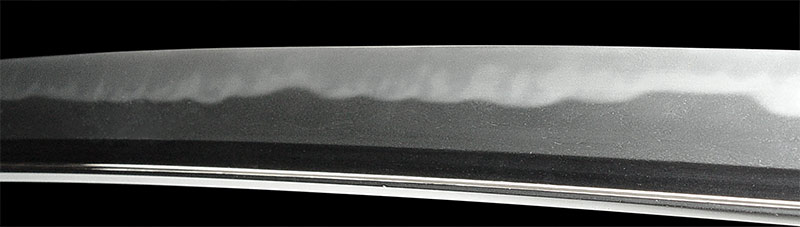
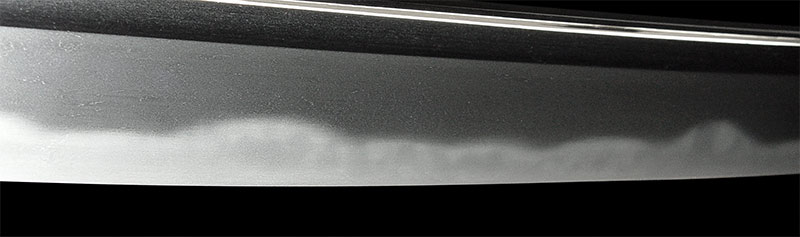
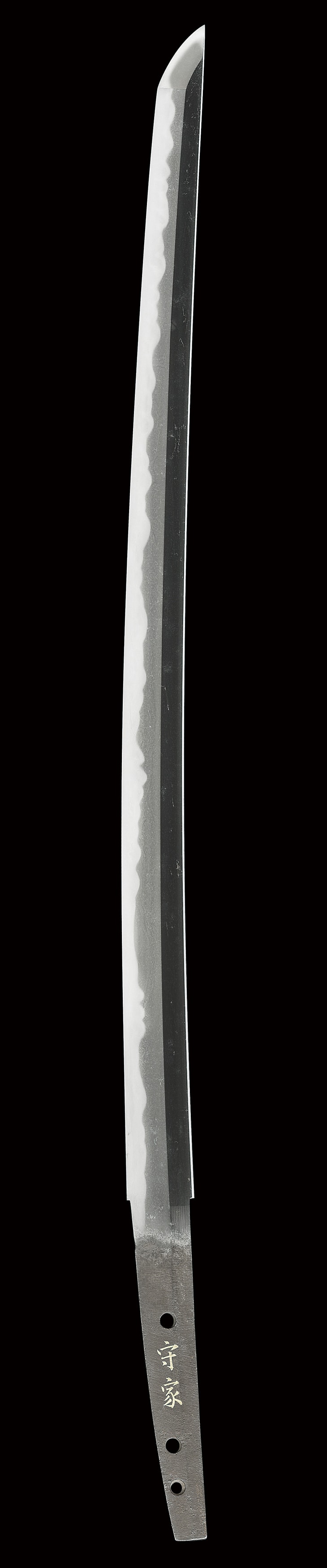
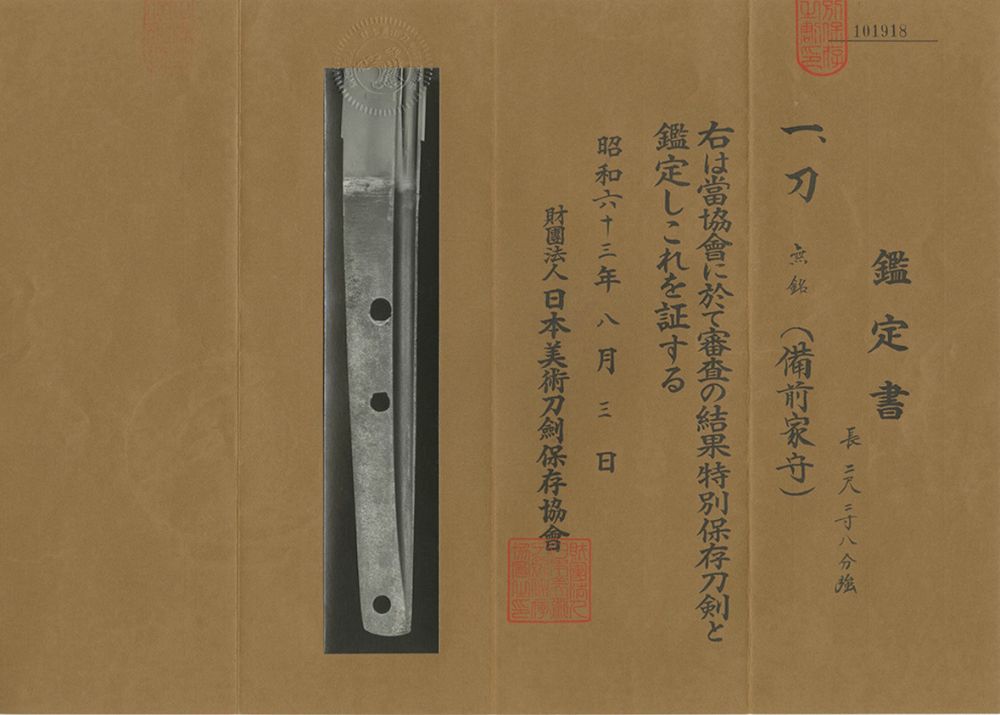
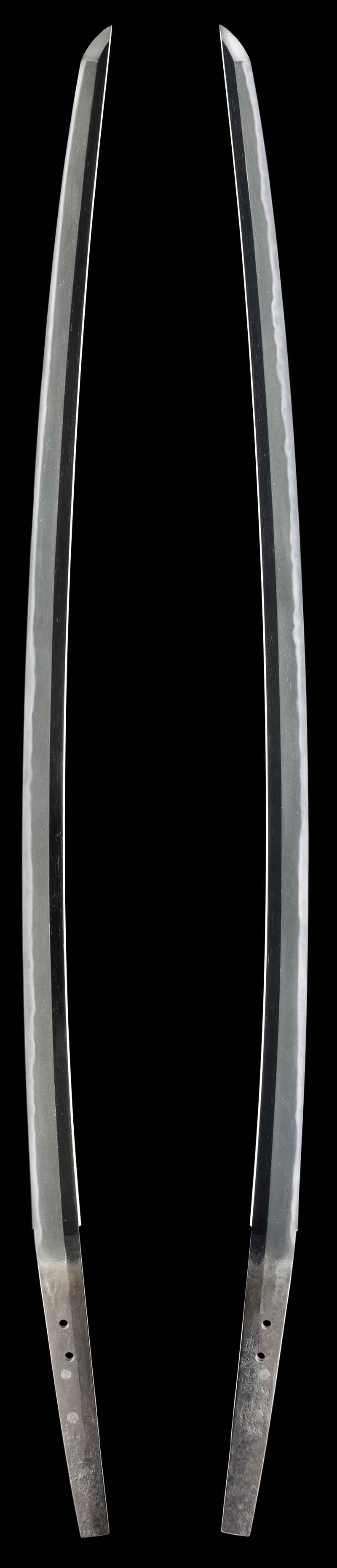
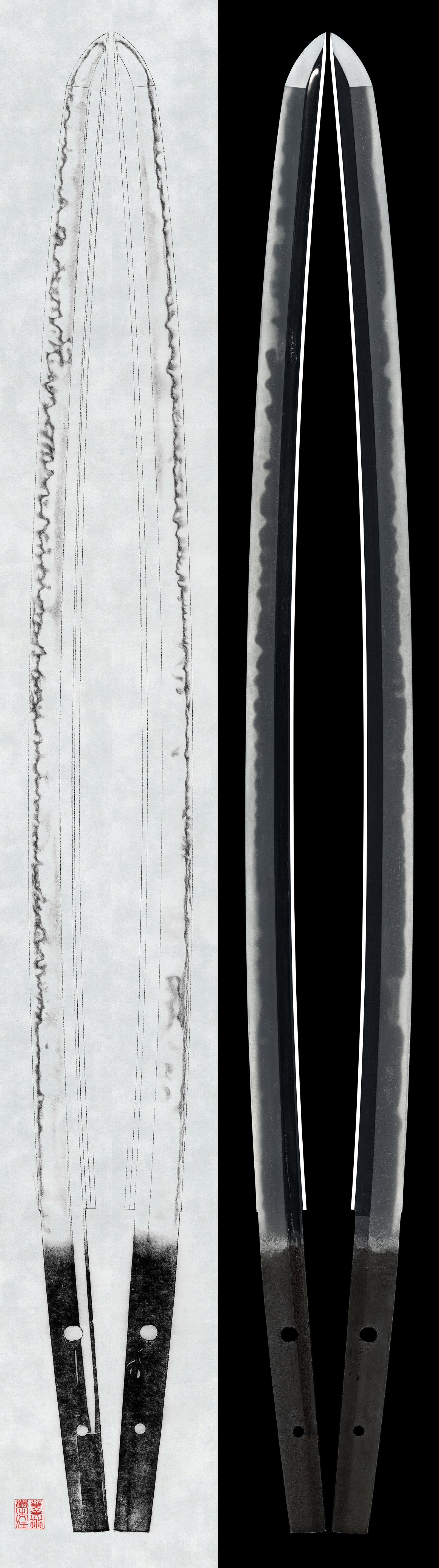
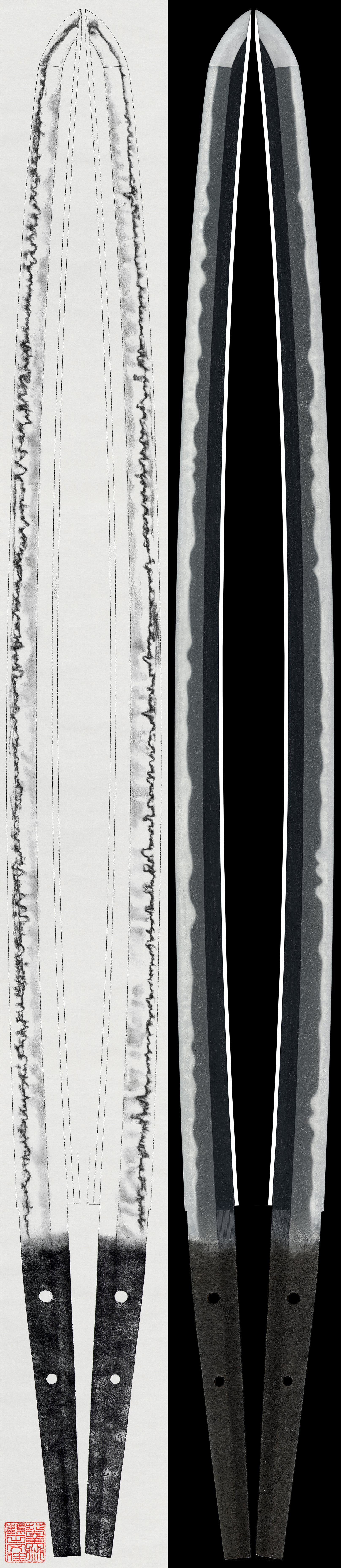
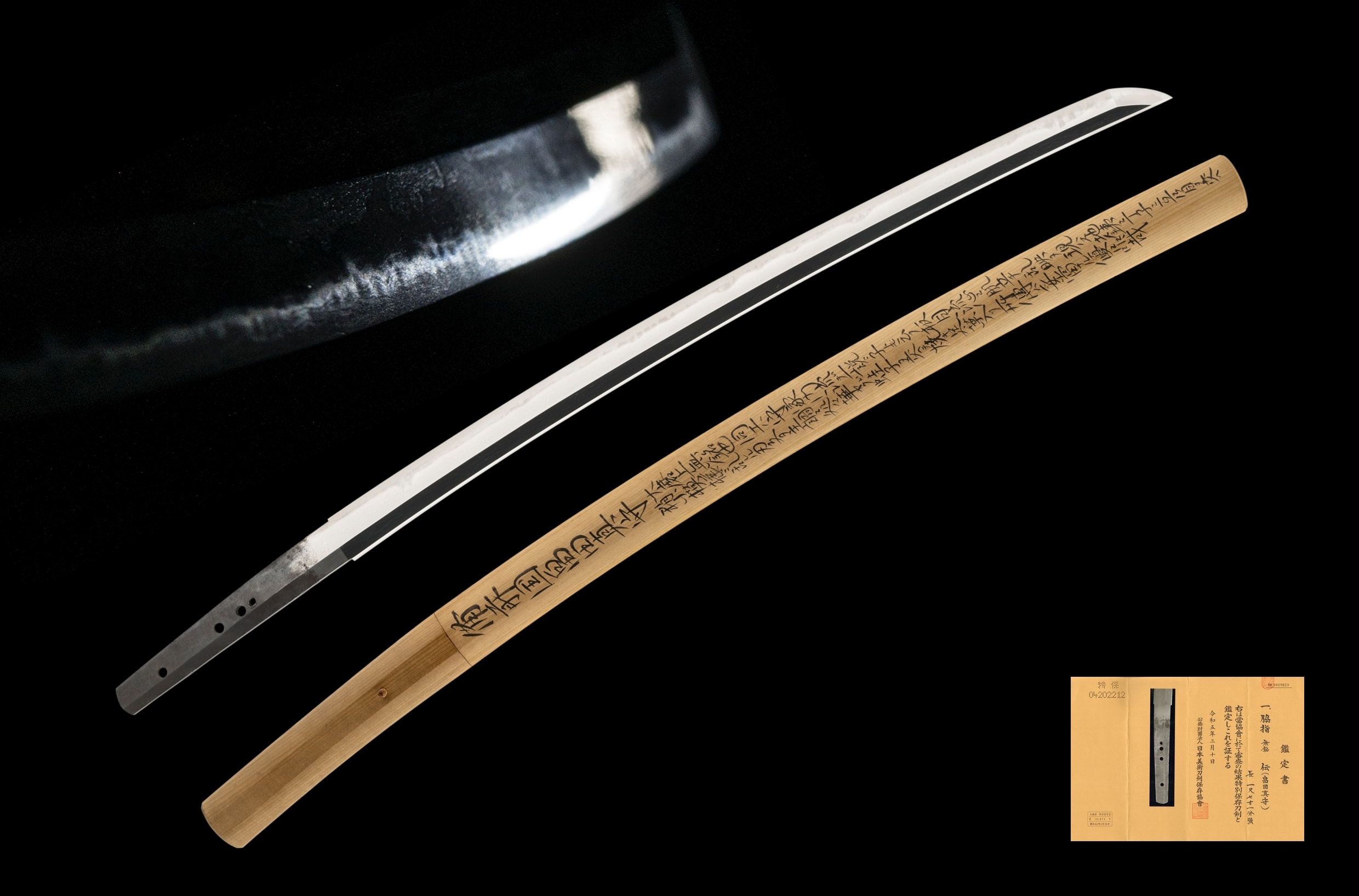
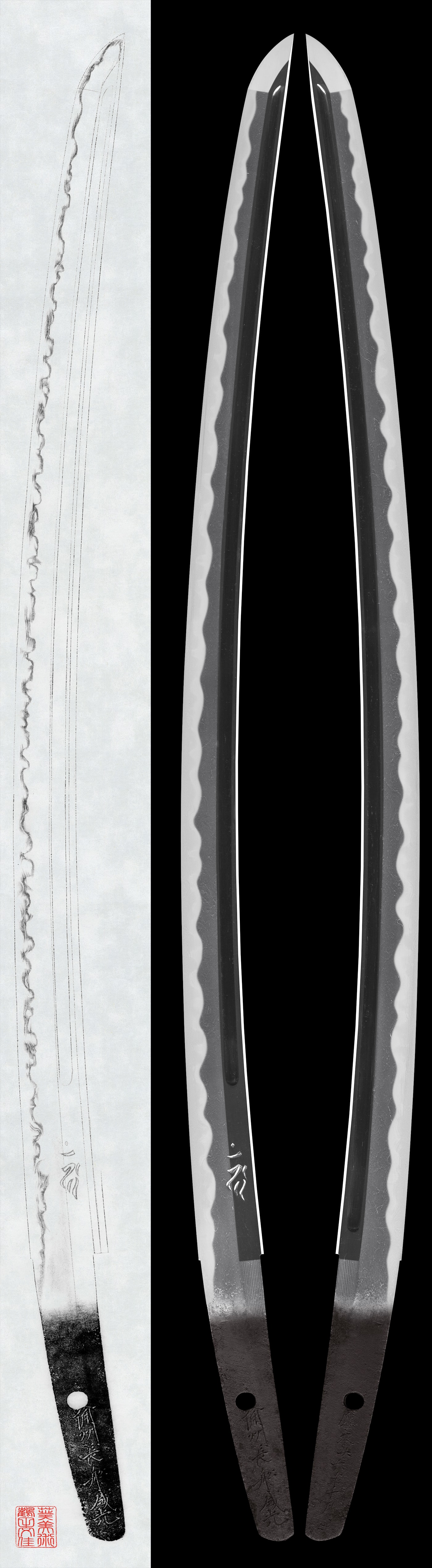
The Hatakeda school (畠田) takes its name from a hamlet in Bizen lying hard against Osafune village, and from that address its founder, Moriie, is called Hatakeda Moriie. The published sources place his line across the great middle decades of Kamakura, the earliest dated work a tachi of Bun'ei 9 (1272), with the name running on through the Nanbokucho years. The standard reading sets two generations under Moriie, the first contemporary with Osafune Mitsutada and the second with Nagamitsu, though the same designations are candid that a clean division of generations on the carved characters alone is difficult and remains a subject for future study, and that some advocate a single-smith theory. Neither Moriie nor his fellow Sanemori ever signed Hatakeda-ju (畠田住); their residence always reads Osafune, as in inscriptions such as Bizen no Kuni Osafune-ju Moriie[[c:1]], and from this the record concludes that Hatakeda was a small place-name within Osafune village itself. The meikan set the line under Moritsune of the Fukuoka Ichimonji school, and the school worked the same bright Bizen steel as the smiths around whom the Osafune tradition first took its classic form. Across decades of NBTHK commentary the Hatakeda manner is fixed in nearly the same sentence: the workmanship broadly resembles that of the contemporary Osafune smiths, yet the jigane tends to stand and the kawazuko-choji (蛙子丁子), the waist-pinched, tadpole-headed clove, is conspicuous in the tempered edge. The forging is itame run with mokume, tending to hada-dachi and to stand in the grain where the Osafune masters close into a tight ko-itame, carrying thick fine ji-nie, fine chikei, and a vivid midare-utsuri that rises on nearly every blade. Over that standing, utsuri-lit ji the school forges at full power a flamboyant choji-midare mixing fukuro-choji, juka-choji, ko-choji and gunome with the tadpole clove, ashi and yo entering vigorously, ko-nie attaching, tobiyaki and yubashiri about the monouchi, fine kinsuji and sunagashi running, and a bright nioiguchi; the boshi runs midare-komi to a ko-maru, often turning pointed and sweeping out in hakikake. Moriie carries this flamboyance at its boldest, his ha-nie the stronger and his clove the more insistent, with a quieter second register of kataochi-gunome and tight suguha-cho on his later pieces.
His pupil or son Sanemori reads one degree calmer, the midare tending toward a somewhat smaller pattern and the rise and fall less pronounced, his finest work at a glance recalling a superior Nagamitsu. Among the juniors, Mitsumori widens a nioi-based clove led by the tadpole heads, while the late Morinaga turns wholly toward a nie-laden, notare-based Soden-Bizen hand, and Morishige drifts toward the Osafune mainline as the school assimilated into it. To kantei a Hatakeda blade is to read the standing, utsuri-lit Bizen ji against the round-headed clove. Where the choji of Mitsutada and Nagamitsu swells round and full, the Hatakeda clove pinches at the waist, and on unsigned blades the deciding point is the kawazuko breaking into great clusters midway along the edge, the place where, the published record states, lies the point of attribution to Moriie. Against Fukuoka Ichimonji the Hatakeda ji stands more and the utsuri reads as the old Bizen reflection rather than the Ichimonji exuberance of pure clove; against the Osafune mainline the standing grain and the pinched clove give the line away, the kissaki tending to extend where Mitsutada and the Osafune smiths keep theirs compact. Moriie stands at the head of the school, graded Sai-jo saku by Fujishiro and ranked beside the Osafune founders, his blades carrying the histories of the great houses, the Tokugawa, Mitsui, Hosokawa, Uesugi and Okudaira among them, and held in such collections as the Tokyo and Kyoto National Museums, the Tokugawa Art Museum and the Eisei Bunko. Sanemori, Jo-jo saku, is the more approachable name, most of his circulating work osuriage mumei resting on the smaller-patterned tadpole clove, his signed and dated tachi rare events when they appear. For the Bizen collector a standing, kawazuko-laden ji-ha reads as Hatakeda almost on that count, a blade from the circle in which the Osafune tradition first took its classic shape. Learn more →