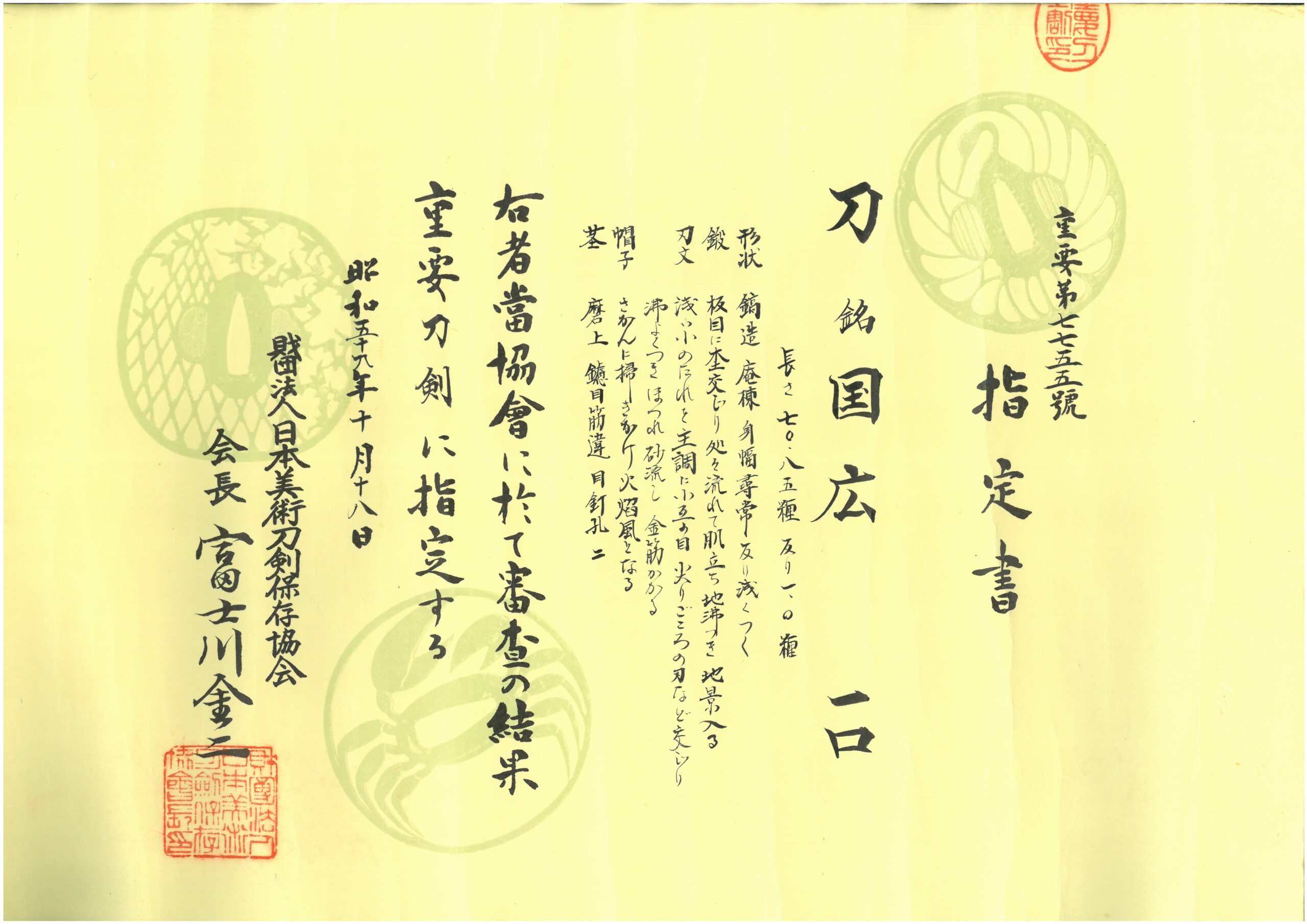
The Shintō era was largely invented in Kyōto: Umetada Myōju’s workshop trained the movement, Horikawa Kunihiro raised a generation, and the Hon’ami appraisers, who held no forge, governed the meaning of famous blades.
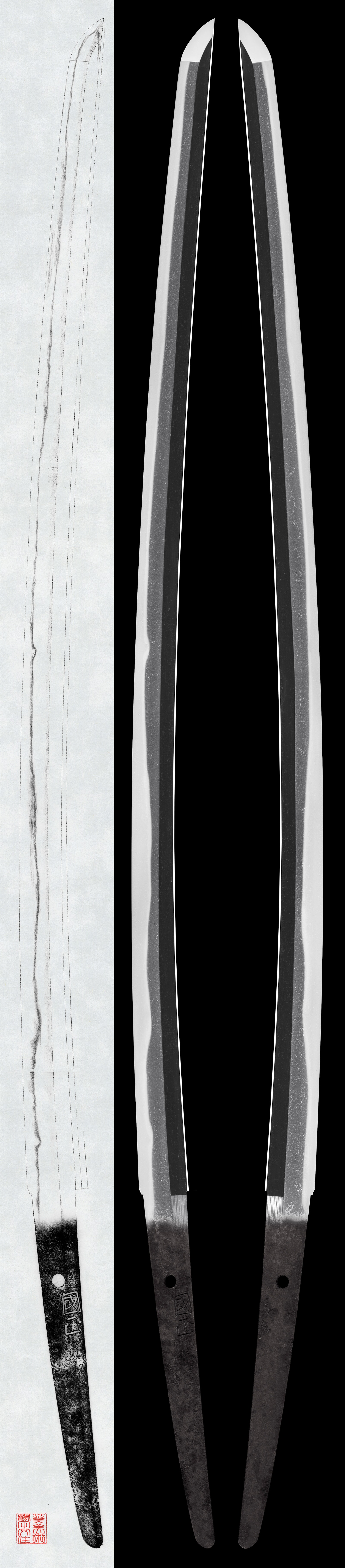
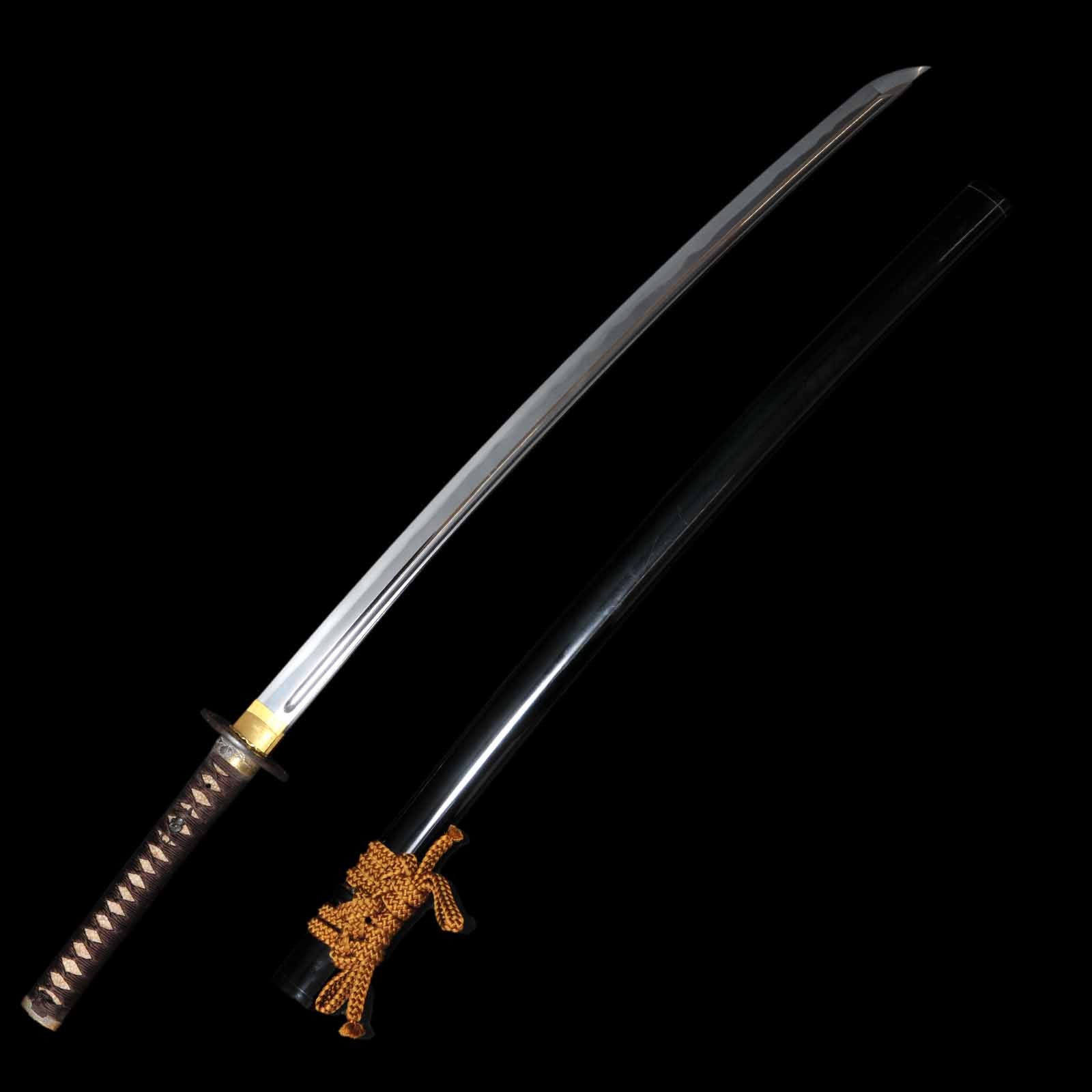
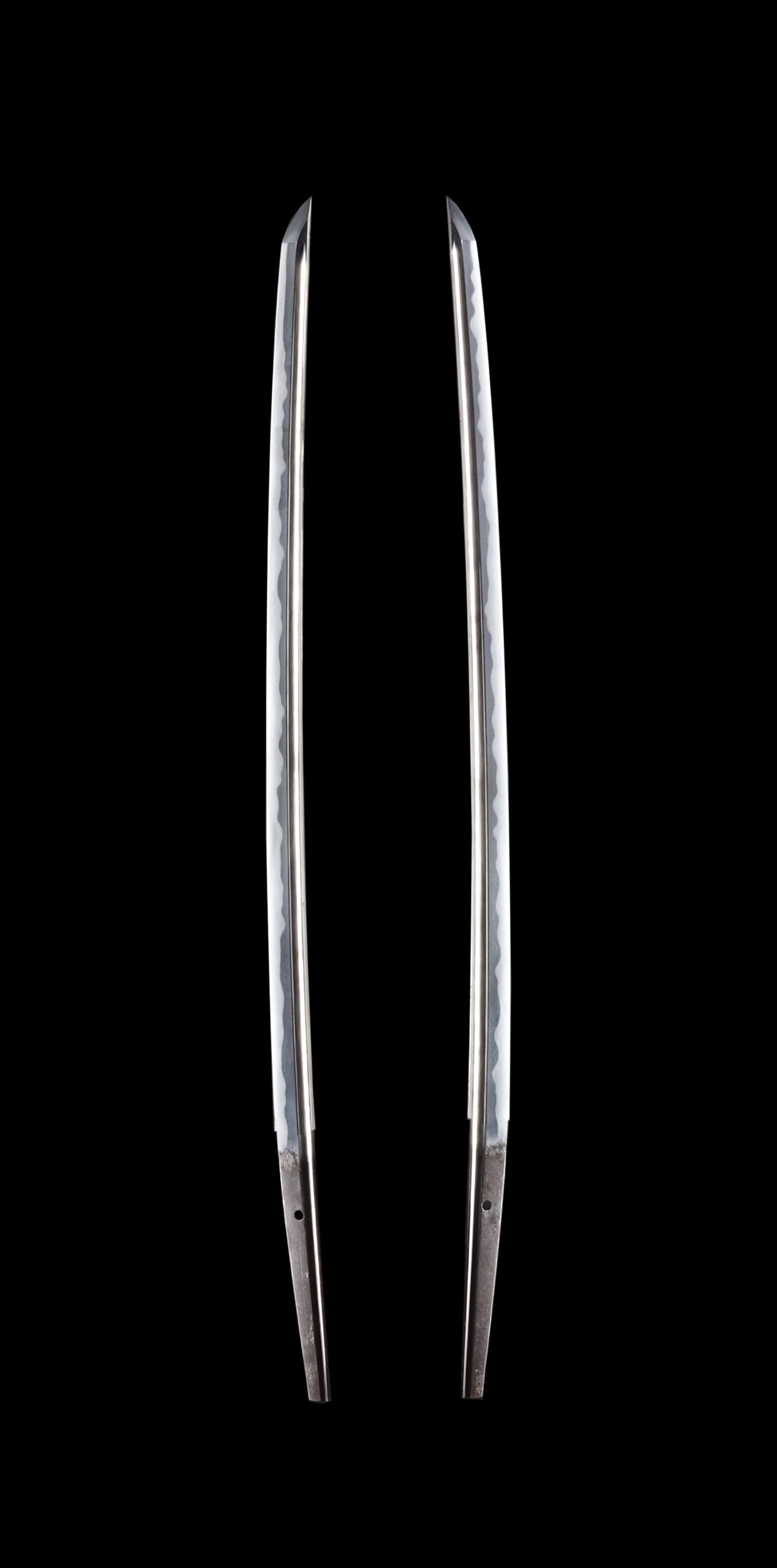
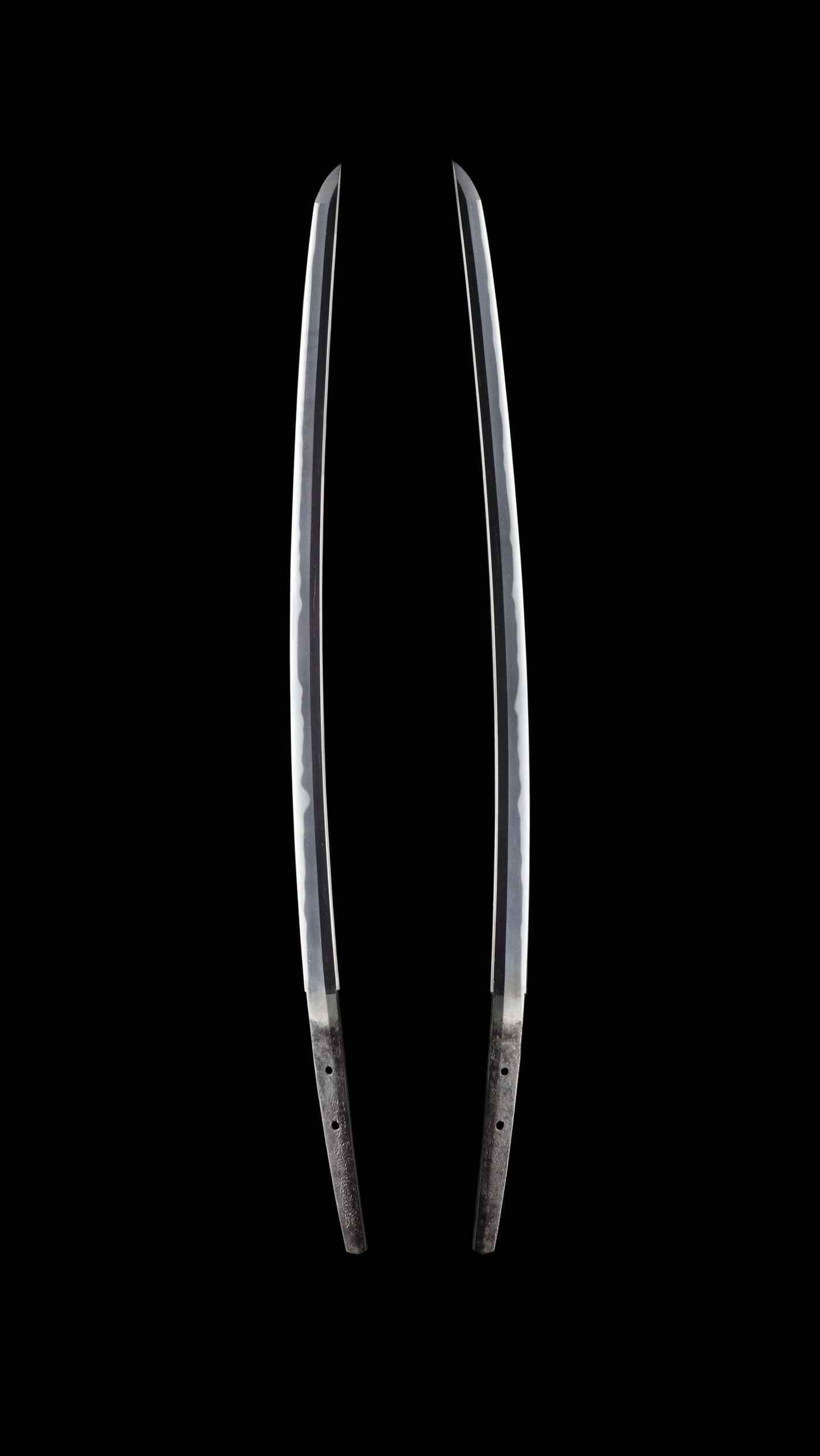
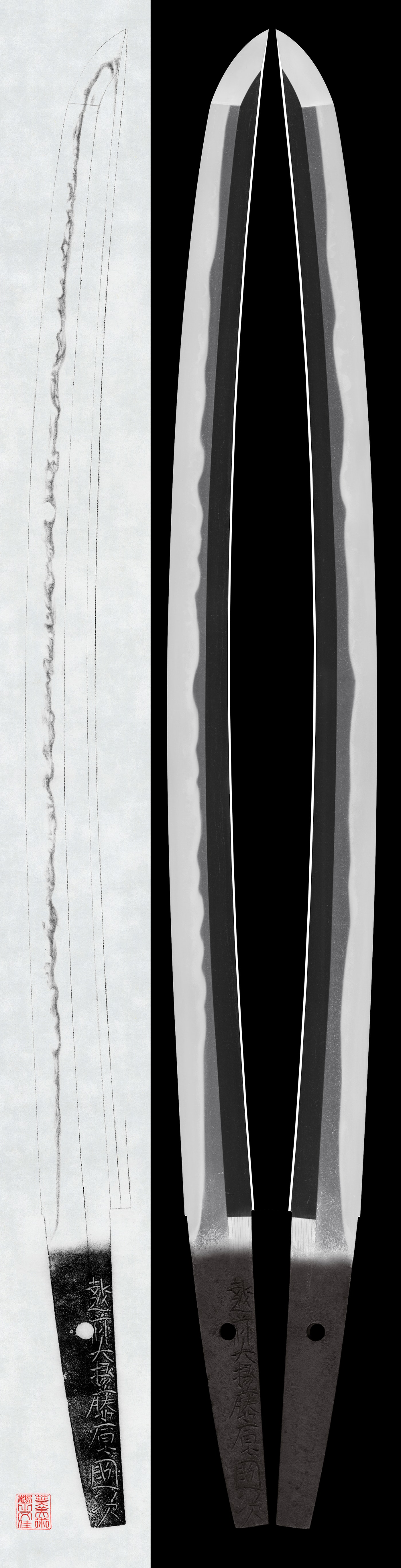
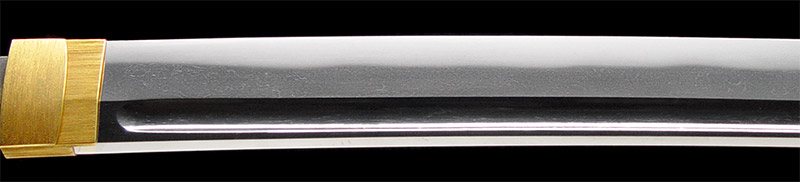
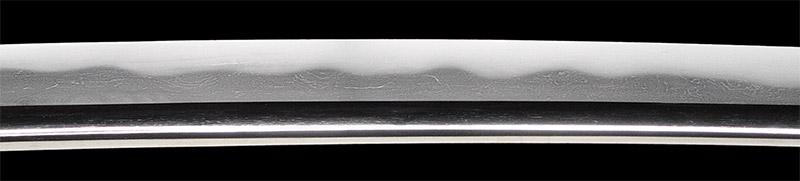
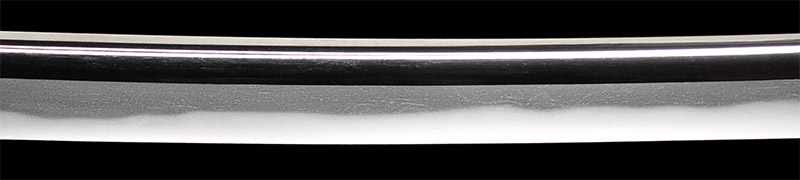
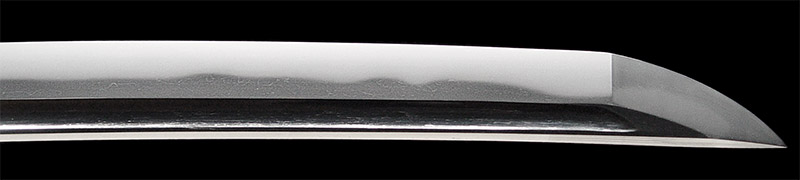
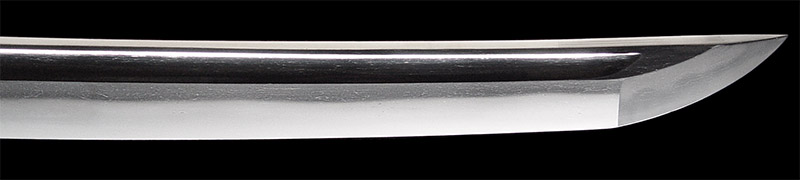
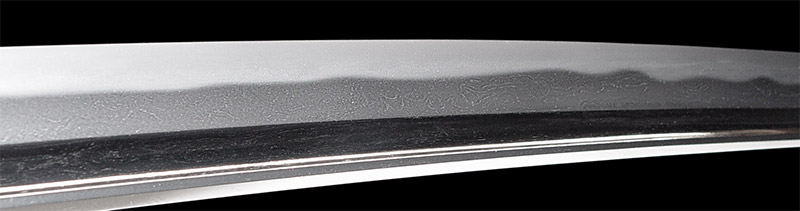
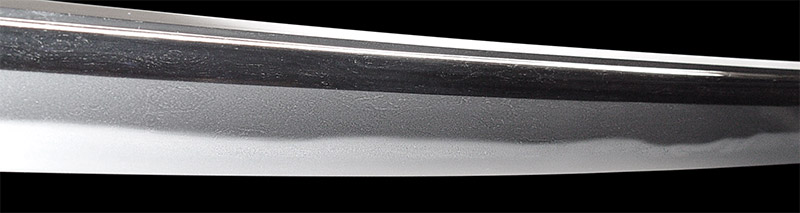
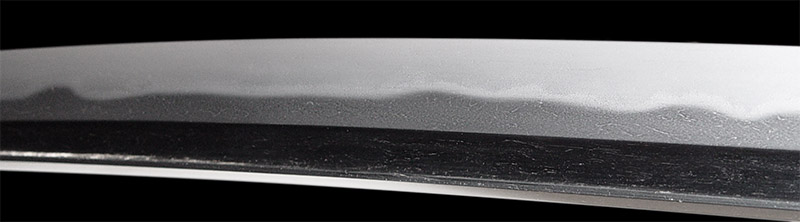
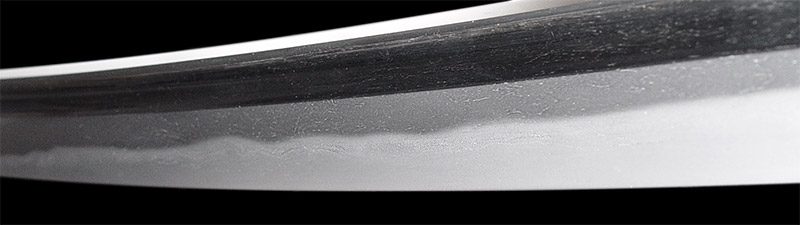
This is a katana by Kunimasa of the Horikawa school, dating to the early Edo period (1624). The blade features a notare gunome hamon and itame jigane. It comes with a koshirae with black lacquer saya and a shirasaya, and is accompanied by a Tokubetsu Hozon certificate from the NBTHK.
 NihontoWatch
mei · Horikawa · Genna (1615-1624) · nagasa 73.4cm · sori 1.6cm


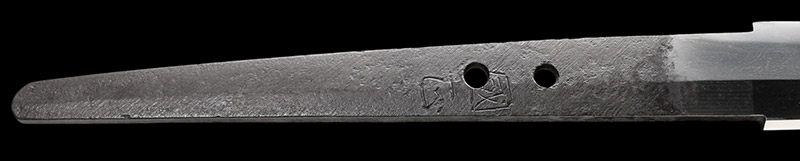
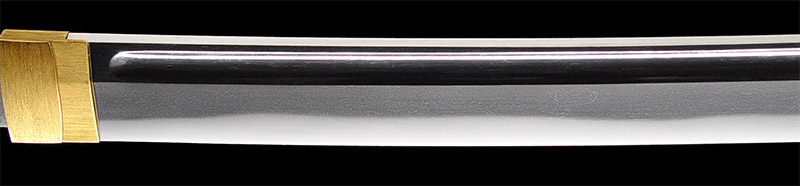


Horikawa (Kyoto Shinto, school of Horikawa Kunihiro) · Yamashiro · around 1615-1624
Tōken Taikan top 31%
2 pieces on the market now
Kunimasa worked in Kyoto in the opening years of the Edo period as a disciple of Horikawa Kunihiro, and the central problem his blades pose is how few of them there are. The published sources note that extant signed works by him are exceedingly small in number, and that no example with a long signature or a date is known, so that even his personal history remains largely unrecorded. The one piece of firm documentary footing is an ubu-mumei blade by his senior Kuniyasu on which Kunimasa added the inscription Kuniyasu shōsaku, Kunimasa[[c:1]], a collaboration that fixes him as a junior member within the Horikawa circle. From the close correspondence of his workmanship, his tang construction, and even his manner of cutting a signature to Kunihiro's own signed work, the published commentary reads him as a likely substitute maker for his master during the master's lifetime. Shintō Ichiran records of him only 「二字に切. 堀川国広門人」, that he signed in two characters and was a pupil of Horikawa Kunihiro, and adds nothing more.
His hand is the Horikawa manner in concentrated form. Over an itame mixed with mokume that stands up and at times runs into nagare, with an ō-itame element entering on the larger blades, he forges the loose, rough zanguri texture for which the school is known, the grain open and visible rather than tightly compacted. The temper is built on a ko-notare carried as the principal motif, into which gunome are mixed and, in places, an arrow-notch yahazu-like element; the nioi is deep, ko-nie adhere well, sunagashi run through the edge and kinsuji appear within it. A recurring tell of his work, and one the published sources treat as a feature of the school rather than a fault, is that the nioiguchi takes on a sunken, subdued shizumi character rather than standing bright across its whole length. The bōshi runs straight and turns back in a ko-maru with a swept hakikake, though on the wider blades it can run midare-komi to a pointed tip with a long kaeri.
The jigane is where the school speaks most clearly through him. Ji-nie gathers over the standing grain, sometimes coarse and clustered, sometimes a fine even sprinkling, and chikei enters along the open itame; on one katana a diagonal mizukage rises from just above the hamachi, the published description noting the grain 「区下より斜めに水影」, a water-shadow climbing from below the notch. The reading of this jigane is the heart of recognizing him, for it is neither the bright clear steel of a fine ko-itame nor a quiet uniform jigane but the standing, zanguri, slightly restless surface that the Horikawa smiths inherited from Kunihiro's Sōshū-leaning revival. The same Sōshū inflection governs the activity in the ha, the sunagashi and kinsuji and the deep nioi over nie, so that his blades read as a Kyoto shintō hand looking back through Kunihiro toward the older Sōshū tradition.
Within so small a corpus two strains can be told apart. The principal one is the Kyoto Horikawa manner described above, the substitute-maker's hand so close to Kunihiro that the tang and signature alone supported the attribution of substitution. A later strain shows a distinct silhouette, a clear difference between base and tip widths, a suggestion of funbari, deeper curvature and a compact chū-kissaki, a shape the published sources place in the Kan'ei and Shōhō years and read as the mark of a junior member of the group who continued to work after the master's death. Some of his blades carry an added inscription reading Bushū Edo jū[[c:2]], resident of Edo in Bushū, from which a second generation is presumed to have relocated eastward; once in Edo his work came to be confused with that of the Hōjōji Kunimasa line, a conflation the commentary is at pains to correct. Whether the move belongs to the smith himself or to a successor the published record leaves open, to await further study.
The documentary value of his surviving blades lies in how precisely they let the school be read off Kunihiro himself. The published commentary on his 33rd-session katana, naming the standing zanguri forging, the ji-nie and chikei, the ko-notare mixed with gunome, the sunagashi and kinsuji and the sunken nioiguchi, concludes that the blade 「堀川物の特色をよく示して出来がよい」, well demonstrates the characteristic traits of Horikawa work and is good in its making. His distinction is therefore drawn not by departure from his teacher but by fidelity to him, the resemblance of the work and the tang and the signature taken together as the very evidence that he served at Kunihiro's side. Against the wider field his blades stand apart through this concentrated Horikawa character rather than through any individual flamboyance, and the ko-notare-centered temper, the published sources allow, may itself be read as a personal hallmark within the school.
Kunimasa has six blades on record at the Jūyō level and none higher, with no National Treasure and no Important Cultural Property among them, which suits a smith of so small an output. The corpus carries no recorded provenance to daimyō houses or museums, and the holders named in the designation papers are private collectors of the Shōwa era rather than long-celebrated institutions, so that an honest account names no roll-call of famous owners. What the record does carry is the unusual closeness of expert judgment on the few blades that survive: his finest wakizashi is called 「門下中の一流工というべきであろう」, that he should be regarded as a first-rate craftsman among Kunihiro's students, while his best katana is named 「国正有銘作中の白眉」, the finest among his signed works. For the collector this is a smith encountered rarely and only as a signed work, since unsigned blades are not given to him; when one of his six recorded katana or his single wakizashi appears it is a Jūyō-level Horikawa piece valued as much for what it teaches about Kunihiro and his workshop as for itself, a quiet but instructive corner of the Kyoto shintō revival.
Where Kunimasa stands among comparable artisans: across all of nihontō, and within tradition, era, and period. The tiers (Foremost · Leading · Major · Notable) weigh official designations from the NBTHK and Japan's Agency for Cultural Affairs, together with historical honors of lasting repute such as the Sansaku and Meibutsu-chō.
Select a lens to see how it's measured.
Shinto · Yamashiro
81 pieces on the market now
At Ichijo Horikawa in Kyoto, from Keicho 4 (1599), Horikawa Kunihiro gathered the pupils whose work the published sources name with his own as the opening of the shinto age. Kunihiro himself reached forging late and by a roundabout road. Born Tanaka and serving as a warrior under the Ito of Obi castle in Hyuga, he wandered the provinces after that house fell, forging where he stopped, his earliest dated blade cut in Hyuga in Tensho 4 (1576); his itinerant Tensho-uchi looked to late Soshu and late Seki, often run toward a hitatsura-like effect over devotional carving. The settlement in Kyoto changed that. There his stated aim, the sources write, lay in the revival of the Soshu-den tradition, the leaning strongest toward Shizu, and around that ideal he trained the men who carried his manner forward: Dewa no Kami Kunimichi, Kuniyasu, Osumi no Jo Masahiro, Echigo no Kami Kunitomo, the elder Kunisada and Kunisuke, with later and minor hands reaching Settsu, Echizen and Edo. Many of them, born like the master at Obi, followed him from Hyuga to the capital. The shared vocabulary is read first in the steel. The school forges an itame mixed with mokume that stands up, the grain raised into the loose, granular surface the commentaries name outright, the zanguri hada particular to Horikawa work, with ji-nie lying thick and chikei entering; on many blades a mizukage rises obliquely from the machi. Over that ground the prime manner is the Keicho-shinto sugata, wide with little taper and an extended chu-kissaki or o-kissaki, the build likened to a Nanbokucho odachi cut down, tempered in a notare and gunome with thick nie, sunagashi and long kinsuji, the nioiguchi often sinking into shizumi. Within that frame the pupils diverge sharply.
Kunimichi runs the flamboyant Shizu copy fully out and turns his boshi pointed in the Mishina manner, the Sanpin boshi the school otherwise does not show. Masahiro keeps the same Soshu-den worked at lower temperature, his temper calm and his mokume conspicuous; Kuniyasu and Kunitsugu stand closest of all to the master and signed for him. Kunitomo turns alone toward late Seki, his gunome round-headed and his chisel the finest in the group, and the elder Kunisada and Kunisuke carry the zanguri steel south into Osaka, the latter keeping the Ishido clove he was born to. Hiroyuki holds suguha over a blackish steel that recalls old Yamato, and the two Echizen Kunikiyo forge a dark, dense hokkoku-gane under a calm chu-suguha. A collector seeks Horikawa because the school stands at a hinge: Kunihiro is read as the first hand of the new-sword age, and the line he taught runs forward into the Osaka tradition through Kunisada and Kunisuke and into Echizen through Kunikiyo. To kantei the work, read the steel first, the standing zanguri surface and the oblique mizukage, then the sinking nioiguchi and the Soshu-revival notare with its sunagashi and kinsuji; the individual hand declares itself in the departures, Kunimichi's pointed boshi, Kunitomo's Seki gunome and compact tang, Kuniyasu's reversed file marks and two-character mei, Hiroyuki's kiri-yasuri. The founder and his closest pupils sit at the top of the line, Kunihiro signing almost everything he made, the large kata-ochi two-character mei beside his long residence signatures; because Kuniyasu, Masahiro, Kunitsugu and Hiromi worked as his daisaku, a share of the blades signed Kunihiro are in fact theirs. Provenance runs through the houses of the founder's own story and of the country, the Hyuga Ito he had served, the Shimazu of Kagoshima, the Imperial Family and Toyotomi Hideyori, with the tachi Kunihiro dedicated to the Hataeda Hachimangu still in the shrine's keeping. A signed Horikawa blade reaches a private collection only from time to time, carrying on its nakago the hand with which the new sword begins. Learn more →
| Smith | Era | Designated |
|---|---|---|
| Kunihiro國廣 | 1573-1613 | 148 |
| Kunimichi國路 | 1615-1624 | 74 |
| Kunisada國貞 | 1624-1646 | 88 |
| Masahiro正弘 | 1596-1615 | 14 |
| Kunitomo國儔 | 1596-1615 | 27 |
Kyōto: the revival workshop
The Shintō era was largely invented in Kyōto: Umetada Myōju’s workshop trained the movement, Horikawa Kunihiro raised a generation, and the Hon’ami appraisers, who held no forge, governed the meaning of famous blades.
A Hozon-certified blade judged to show notably superior workmanship and a better state of preservation. The bar is higher: re-tempered blades and most unsigned Muromachi/Edo works are excluded.
The NBTHK (Nihon Bijutsu Tōken Hozon Kyōkai, the Society for the Preservation of Japanese Art Swords) is a public-interest incorporated foundation founded in 1948 and supervised by Japan’s Agency for Cultural Affairs (Bunkachō); it is based at the Japanese Sword Museum in Tokyo. Its expert panels physically examine each submitted work (shinsa) and issue a certificate (kanteishō) ranking it by artistic and historical merit. NBTHK papers are the most widely recognized standard of authentication for Japanese swords and fittings.
NBTHK official siteIf the item is not to your liking, please feel free to return it for any reason. Return shipping is the customer's responsibility. After the item arrives and we confirm it is in the same condition as at the time of sale, we transfer the refund to your designated account the same day. Purchases made at the store are outside the scope of cooling-off.
This is a katana by Kunimasa of the Horikawa school, dating to the early Edo period (1624). The blade features a notare gunome hamon and itame jigane. It comes with a koshirae with black lacquer saya and a shirasaya, and is accompanied by a Tokubetsu Hozon certificate from the NBTHK.
NihontoWatchmei · Horikawa · Genna (1615-1624) · nagasa 73.4cm · sori 1.6cm
Horikawa (Kyoto Shinto, school of Horikawa Kunihiro) · Yamashiro · around 1615-1624
Tōken Taikan top 31%
2 pieces on the market now
Kunimasa worked in Kyoto in the opening years of the Edo period as a disciple of Horikawa Kunihiro, and the central problem his blades pose is how few of them there are. The published sources note that extant signed works by him are exceedingly small in number, and that no example with a long signature or a date is known, so that even his personal history remains largely unrecorded. The one piece of firm documentary footing is an ubu-mumei blade by his senior Kuniyasu on which Kunimasa added the inscription Kuniyasu shōsaku, Kunimasa[[c:1]], a collaboration that fixes him as a junior member within the Horikawa circle. From the close correspondence of his workmanship, his tang construction, and even his manner of cutting a signature to Kunihiro's own signed work, the published commentary reads him as a likely substitute maker for his master during the master's lifetime. Shintō Ichiran records of him only 「二字に切. 堀川国広門人」, that he signed in two characters and was a pupil of Horikawa Kunihiro, and adds nothing more.
His hand is the Horikawa manner in concentrated form. Over an itame mixed with mokume that stands up and at times runs into nagare, with an ō-itame element entering on the larger blades, he forges the loose, rough zanguri texture for which the school is known, the grain open and visible rather than tightly compacted. The temper is built on a ko-notare carried as the principal motif, into which gunome are mixed and, in places, an arrow-notch yahazu-like element; the nioi is deep, ko-nie adhere well, sunagashi run through the edge and kinsuji appear within it. A recurring tell of his work, and one the published sources treat as a feature of the school rather than a fault, is that the nioiguchi takes on a sunken, subdued shizumi character rather than standing bright across its whole length. The bōshi runs straight and turns back in a ko-maru with a swept hakikake, though on the wider blades it can run midare-komi to a pointed tip with a long kaeri.
The jigane is where the school speaks most clearly through him. Ji-nie gathers over the standing grain, sometimes coarse and clustered, sometimes a fine even sprinkling, and chikei enters along the open itame; on one katana a diagonal mizukage rises from just above the hamachi, the published description noting the grain 「区下より斜めに水影」, a water-shadow climbing from below the notch. The reading of this jigane is the heart of recognizing him, for it is neither the bright clear steel of a fine ko-itame nor a quiet uniform jigane but the standing, zanguri, slightly restless surface that the Horikawa smiths inherited from Kunihiro's Sōshū-leaning revival. The same Sōshū inflection governs the activity in the ha, the sunagashi and kinsuji and the deep nioi over nie, so that his blades read as a Kyoto shintō hand looking back through Kunihiro toward the older Sōshū tradition.
Within so small a corpus two strains can be told apart. The principal one is the Kyoto Horikawa manner described above, the substitute-maker's hand so close to Kunihiro that the tang and signature alone supported the attribution of substitution. A later strain shows a distinct silhouette, a clear difference between base and tip widths, a suggestion of funbari, deeper curvature and a compact chū-kissaki, a shape the published sources place in the Kan'ei and Shōhō years and read as the mark of a junior member of the group who continued to work after the master's death. Some of his blades carry an added inscription reading Bushū Edo jū[[c:2]], resident of Edo in Bushū, from which a second generation is presumed to have relocated eastward; once in Edo his work came to be confused with that of the Hōjōji Kunimasa line, a conflation the commentary is at pains to correct. Whether the move belongs to the smith himself or to a successor the published record leaves open, to await further study.
The documentary value of his surviving blades lies in how precisely they let the school be read off Kunihiro himself. The published commentary on his 33rd-session katana, naming the standing zanguri forging, the ji-nie and chikei, the ko-notare mixed with gunome, the sunagashi and kinsuji and the sunken nioiguchi, concludes that the blade 「堀川物の特色をよく示して出来がよい」, well demonstrates the characteristic traits of Horikawa work and is good in its making. His distinction is therefore drawn not by departure from his teacher but by fidelity to him, the resemblance of the work and the tang and the signature taken together as the very evidence that he served at Kunihiro's side. Against the wider field his blades stand apart through this concentrated Horikawa character rather than through any individual flamboyance, and the ko-notare-centered temper, the published sources allow, may itself be read as a personal hallmark within the school.
Kunimasa has six blades on record at the Jūyō level and none higher, with no National Treasure and no Important Cultural Property among them, which suits a smith of so small an output. The corpus carries no recorded provenance to daimyō houses or museums, and the holders named in the designation papers are private collectors of the Shōwa era rather than long-celebrated institutions, so that an honest account names no roll-call of famous owners. What the record does carry is the unusual closeness of expert judgment on the few blades that survive: his finest wakizashi is called 「門下中の一流工というべきであろう」, that he should be regarded as a first-rate craftsman among Kunihiro's students, while his best katana is named 「国正有銘作中の白眉」, the finest among his signed works. For the collector this is a smith encountered rarely and only as a signed work, since unsigned blades are not given to him; when one of his six recorded katana or his single wakizashi appears it is a Jūyō-level Horikawa piece valued as much for what it teaches about Kunihiro and his workshop as for itself, a quiet but instructive corner of the Kyoto shintō revival.
Where Kunimasa stands among comparable artisans: across all of nihontō, and within tradition, era, and period. The tiers (Foremost · Leading · Major · Notable) weigh official designations from the NBTHK and Japan's Agency for Cultural Affairs, together with historical honors of lasting repute such as the Sansaku and Meibutsu-chō.
Select a lens to see how it's measured.
Shinto · Yamashiro
81 pieces on the market now
At Ichijo Horikawa in Kyoto, from Keicho 4 (1599), Horikawa Kunihiro gathered the pupils whose work the published sources name with his own as the opening of the shinto age. Kunihiro himself reached forging late and by a roundabout road. Born Tanaka and serving as a warrior under the Ito of Obi castle in Hyuga, he wandered the provinces after that house fell, forging where he stopped, his earliest dated blade cut in Hyuga in Tensho 4 (1576); his itinerant Tensho-uchi looked to late Soshu and late Seki, often run toward a hitatsura-like effect over devotional carving. The settlement in Kyoto changed that. There his stated aim, the sources write, lay in the revival of the Soshu-den tradition, the leaning strongest toward Shizu, and around that ideal he trained the men who carried his manner forward: Dewa no Kami Kunimichi, Kuniyasu, Osumi no Jo Masahiro, Echigo no Kami Kunitomo, the elder Kunisada and Kunisuke, with later and minor hands reaching Settsu, Echizen and Edo. Many of them, born like the master at Obi, followed him from Hyuga to the capital. The shared vocabulary is read first in the steel. The school forges an itame mixed with mokume that stands up, the grain raised into the loose, granular surface the commentaries name outright, the zanguri hada particular to Horikawa work, with ji-nie lying thick and chikei entering; on many blades a mizukage rises obliquely from the machi. Over that ground the prime manner is the Keicho-shinto sugata, wide with little taper and an extended chu-kissaki or o-kissaki, the build likened to a Nanbokucho odachi cut down, tempered in a notare and gunome with thick nie, sunagashi and long kinsuji, the nioiguchi often sinking into shizumi. Within that frame the pupils diverge sharply.
Kunimichi runs the flamboyant Shizu copy fully out and turns his boshi pointed in the Mishina manner, the Sanpin boshi the school otherwise does not show. Masahiro keeps the same Soshu-den worked at lower temperature, his temper calm and his mokume conspicuous; Kuniyasu and Kunitsugu stand closest of all to the master and signed for him. Kunitomo turns alone toward late Seki, his gunome round-headed and his chisel the finest in the group, and the elder Kunisada and Kunisuke carry the zanguri steel south into Osaka, the latter keeping the Ishido clove he was born to. Hiroyuki holds suguha over a blackish steel that recalls old Yamato, and the two Echizen Kunikiyo forge a dark, dense hokkoku-gane under a calm chu-suguha. A collector seeks Horikawa because the school stands at a hinge: Kunihiro is read as the first hand of the new-sword age, and the line he taught runs forward into the Osaka tradition through Kunisada and Kunisuke and into Echizen through Kunikiyo. To kantei the work, read the steel first, the standing zanguri surface and the oblique mizukage, then the sinking nioiguchi and the Soshu-revival notare with its sunagashi and kinsuji; the individual hand declares itself in the departures, Kunimichi's pointed boshi, Kunitomo's Seki gunome and compact tang, Kuniyasu's reversed file marks and two-character mei, Hiroyuki's kiri-yasuri. The founder and his closest pupils sit at the top of the line, Kunihiro signing almost everything he made, the large kata-ochi two-character mei beside his long residence signatures; because Kuniyasu, Masahiro, Kunitsugu and Hiromi worked as his daisaku, a share of the blades signed Kunihiro are in fact theirs. Provenance runs through the houses of the founder's own story and of the country, the Hyuga Ito he had served, the Shimazu of Kagoshima, the Imperial Family and Toyotomi Hideyori, with the tachi Kunihiro dedicated to the Hataeda Hachimangu still in the shrine's keeping. A signed Horikawa blade reaches a private collection only from time to time, carrying on its nakago the hand with which the new sword begins. Learn more →
| Smith | Era | Designated |
|---|---|---|
| Kunihiro國廣 | 1573-1613 | 148 |
| Kunimichi國路 | 1615-1624 | 74 |
| Kunisada國貞 | 1624-1646 | 88 |
| Masahiro正弘 | 1596-1615 | 14 |
| Kunitomo國儔 | 1596-1615 | 27 |
Kyōto: the revival workshop
The Shintō era was largely invented in Kyōto: Umetada Myōju’s workshop trained the movement, Horikawa Kunihiro raised a generation, and the Hon’ami appraisers, who held no forge, governed the meaning of famous blades.
A Hozon-certified blade judged to show notably superior workmanship and a better state of preservation. The bar is higher: re-tempered blades and most unsigned Muromachi/Edo works are excluded.
The NBTHK (Nihon Bijutsu Tōken Hozon Kyōkai, the Society for the Preservation of Japanese Art Swords) is a public-interest incorporated foundation founded in 1948 and supervised by Japan’s Agency for Cultural Affairs (Bunkachō); it is based at the Japanese Sword Museum in Tokyo. Its expert panels physically examine each submitted work (shinsa) and issue a certificate (kanteishō) ranking it by artistic and historical merit. NBTHK papers are the most widely recognized standard of authentication for Japanese swords and fittings.
NBTHK official siteIf the item is not to your liking, please feel free to return it for any reason. Return shipping is the customer's responsibility. After the item arrives and we confirm it is in the same condition as at the time of sale, we transfer the refund to your designated account the same day. Purchases made at the store are outside the scope of cooling-off.