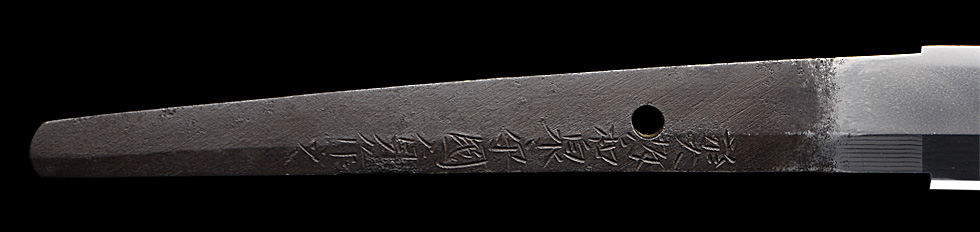
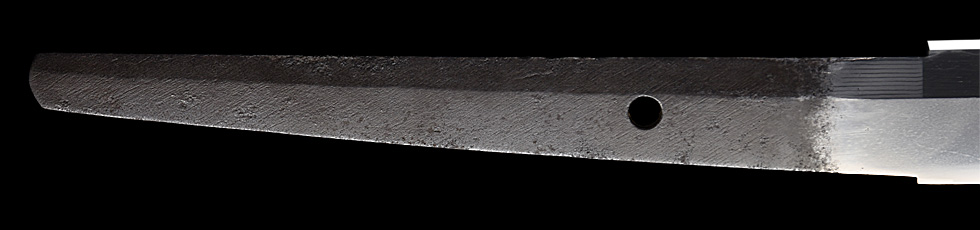
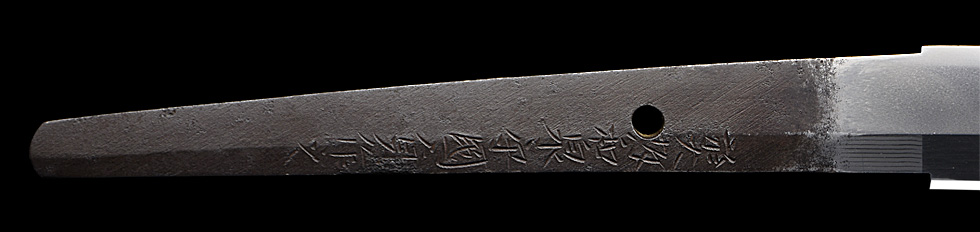
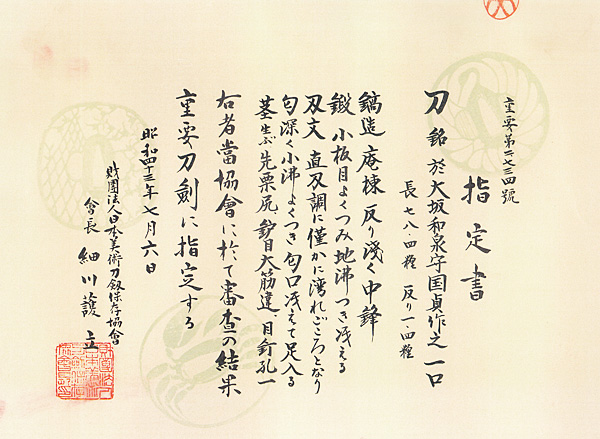
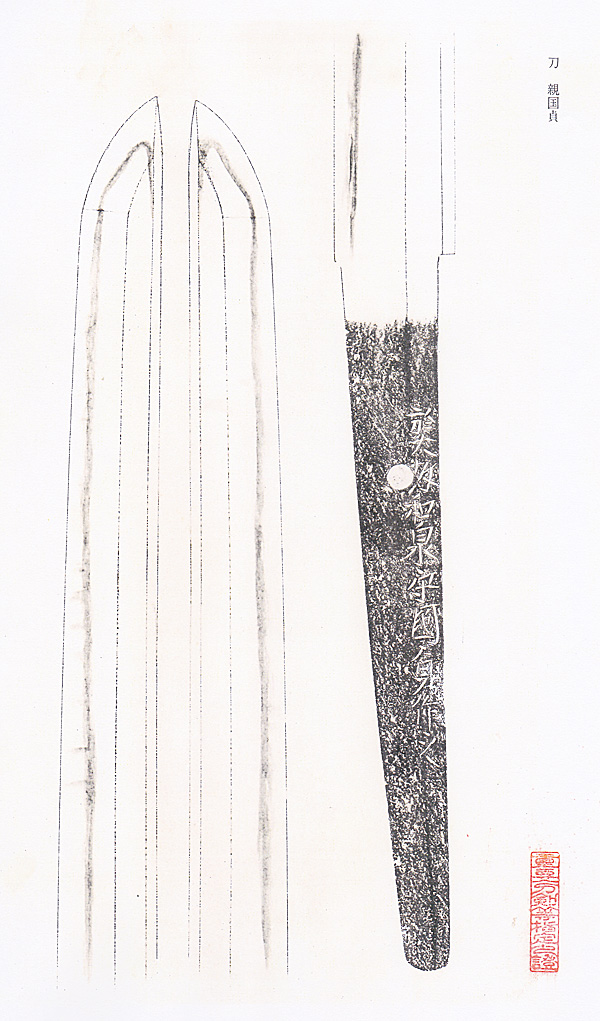
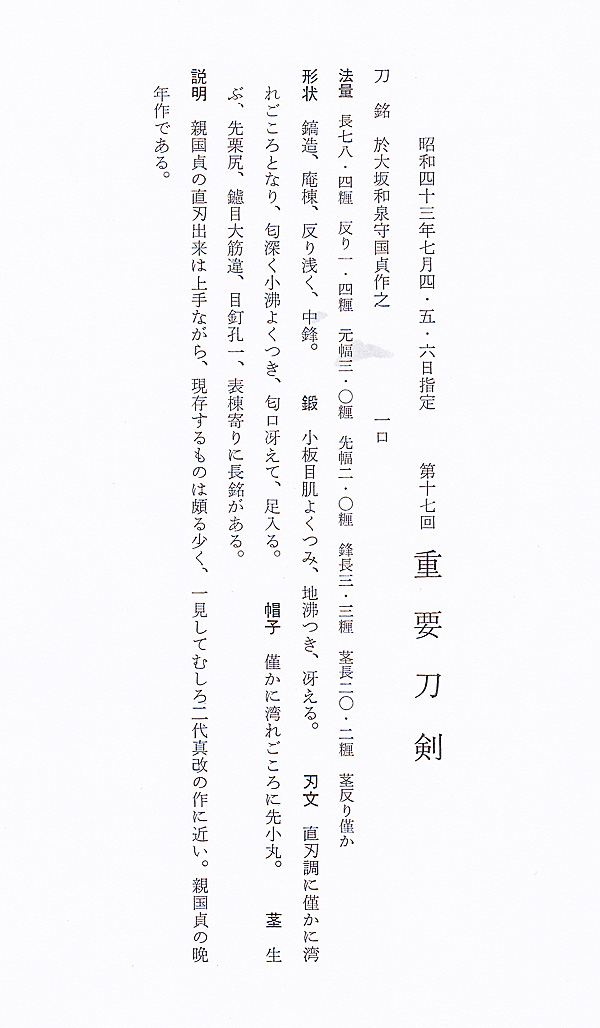
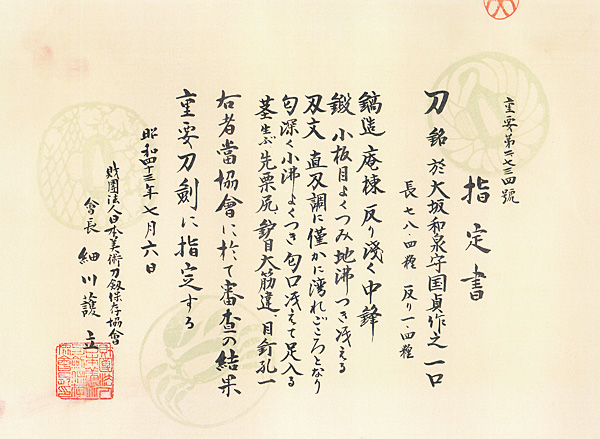
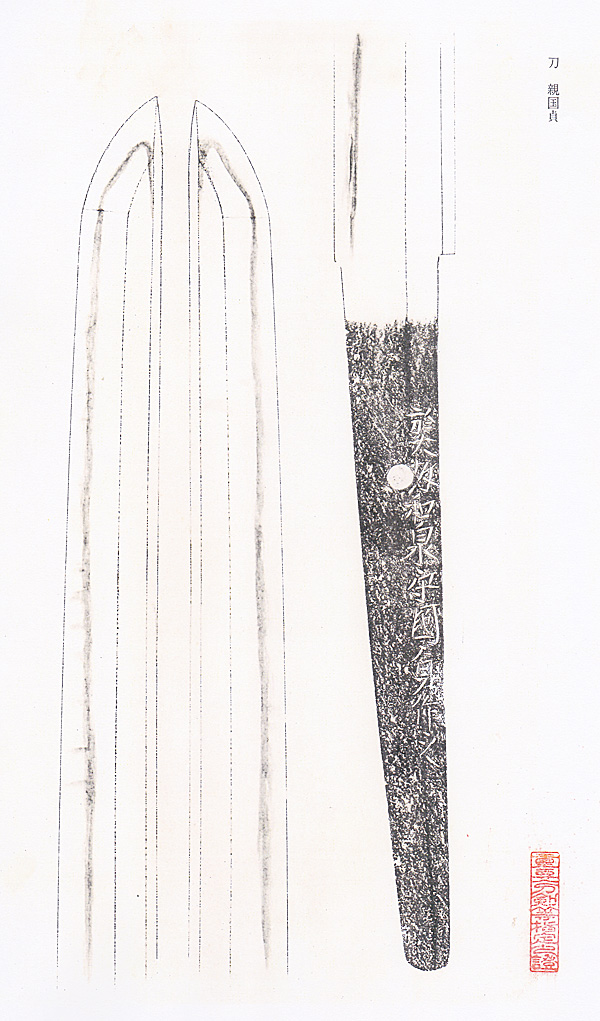
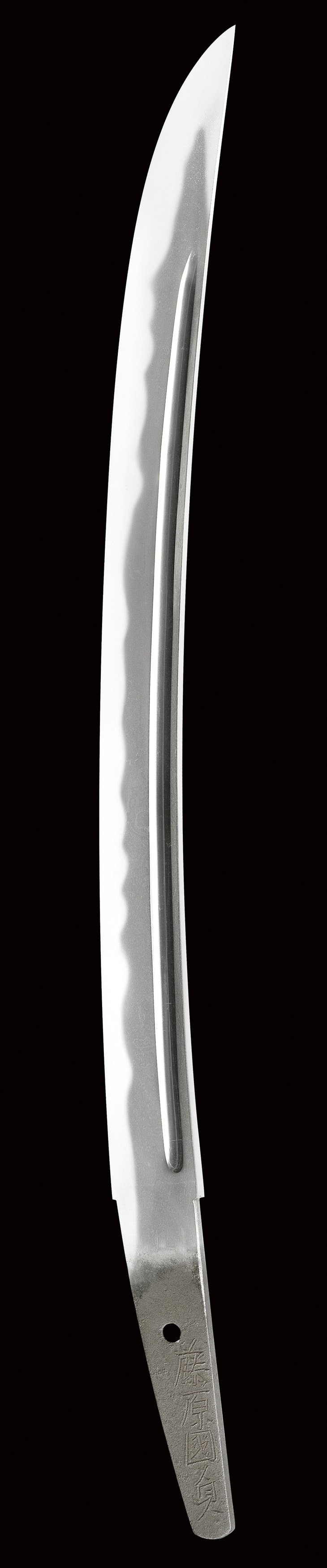
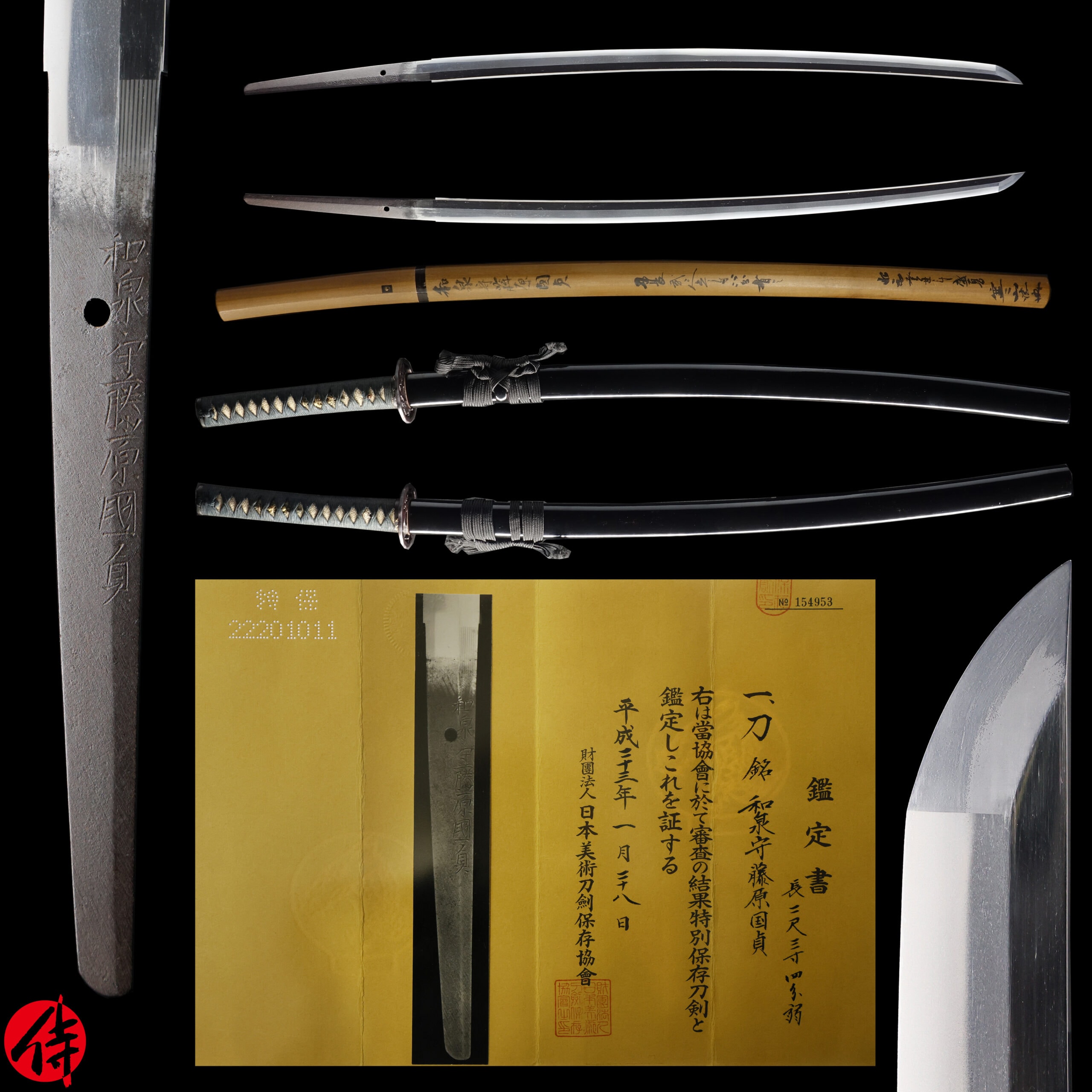
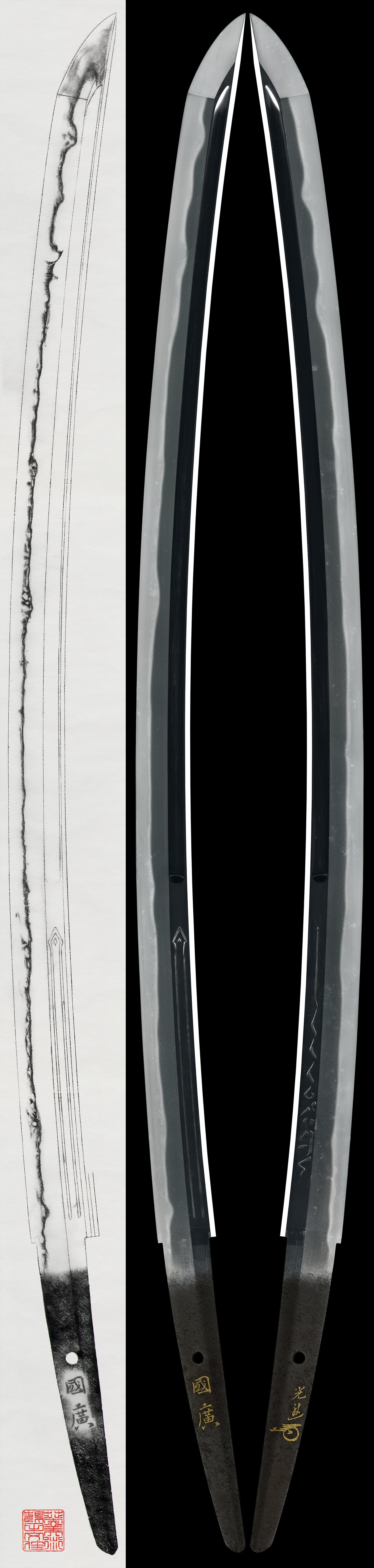
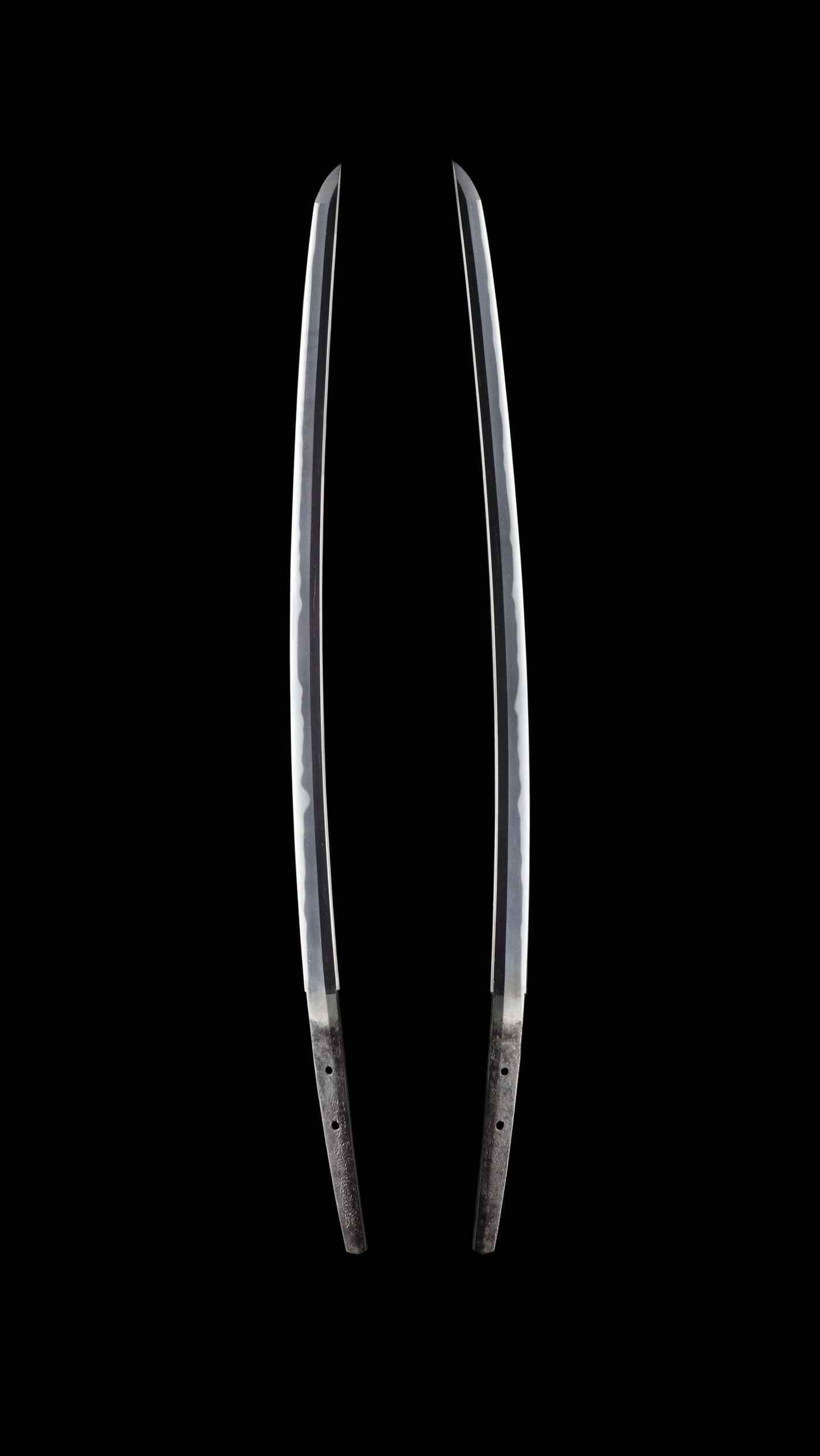
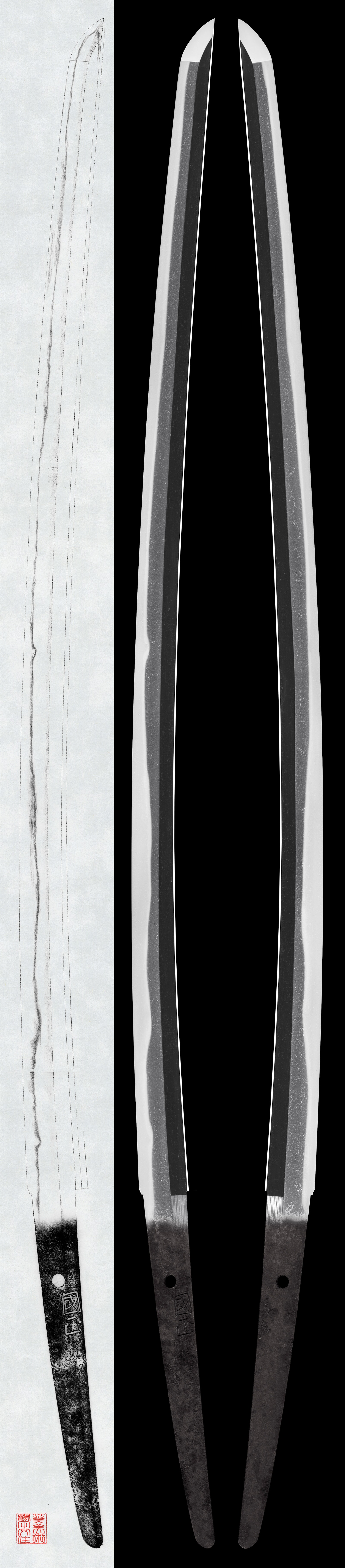
Izumi no Kami Kunisada signed himself, on a sword dated the eighth month of Genna 7, "Sesshu Osaka-ju Fujiwara Kunisada," and that one inscription fixes both the man and the moment: a Horikawa-trained smith already settled in Osaka, at the founding of what would become the city's own tradition of swordmaking. Collectors call him Oya Kunisada, "Kunisada the Elder," and the published sources are explicit that the name exists to separate him from his heir, written that he is so called "to distinguish him from his adopted son, Inoue Izumi no Kami Kunisada"[[c:1]], the man later known as Inoue Shinkai. He was born in Hyuga, went up to Kyoto, and is said to have entered the school of Horikawa Kunihiro; but Kunihiro died in Keicho 19 when Kunisada was only twenty-five, and the judges read his early style and signatures as in fact following his senior fellow-disciple, Echigo no Kami Kunitomo. He moved to Osaka with Kawachi no Kami Kunisuke, received the title Izumi no Kami in Genna 9, took the tonsure in old age under the name Dowa, and died in Keian 5 at the age of sixty-three, "one of the pioneers who opened the path for the Osaka smiths"[[c:2]].
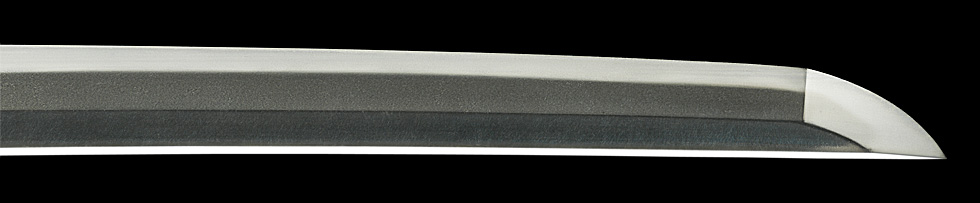
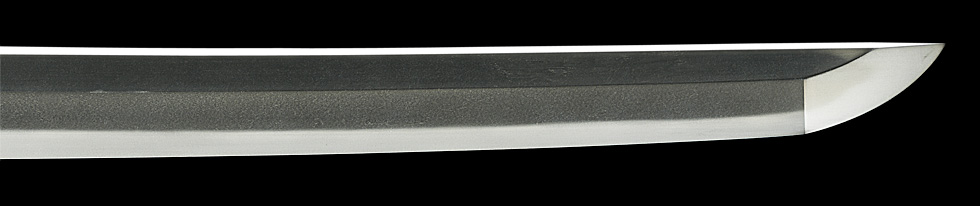
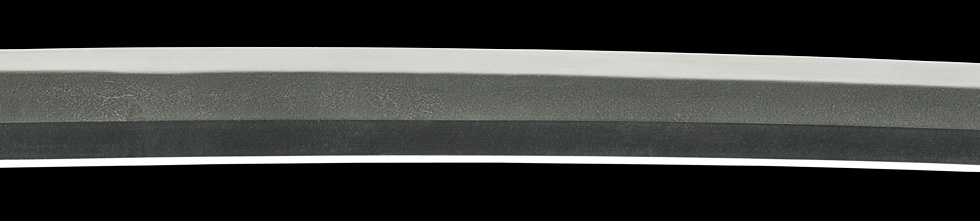
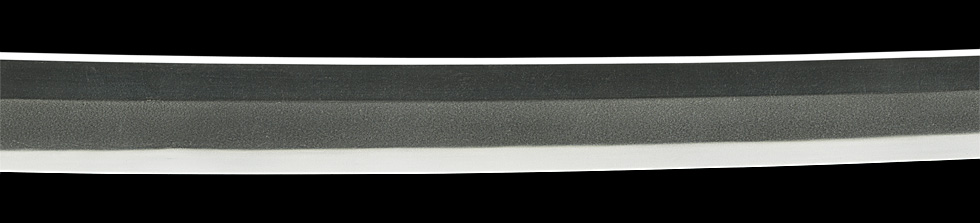
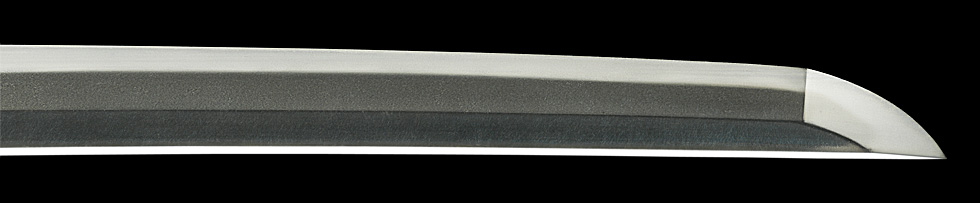
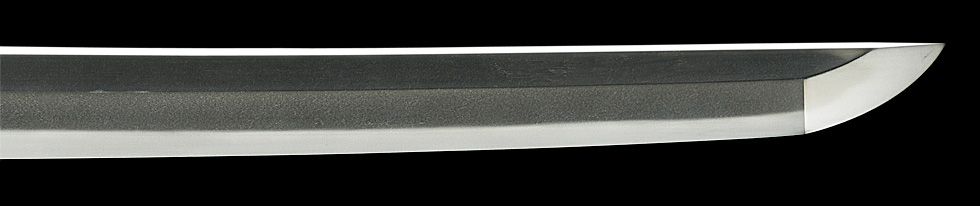
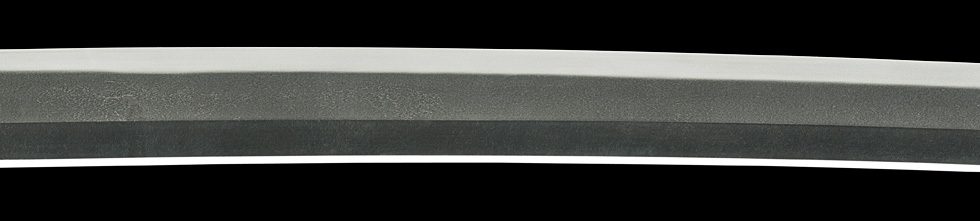
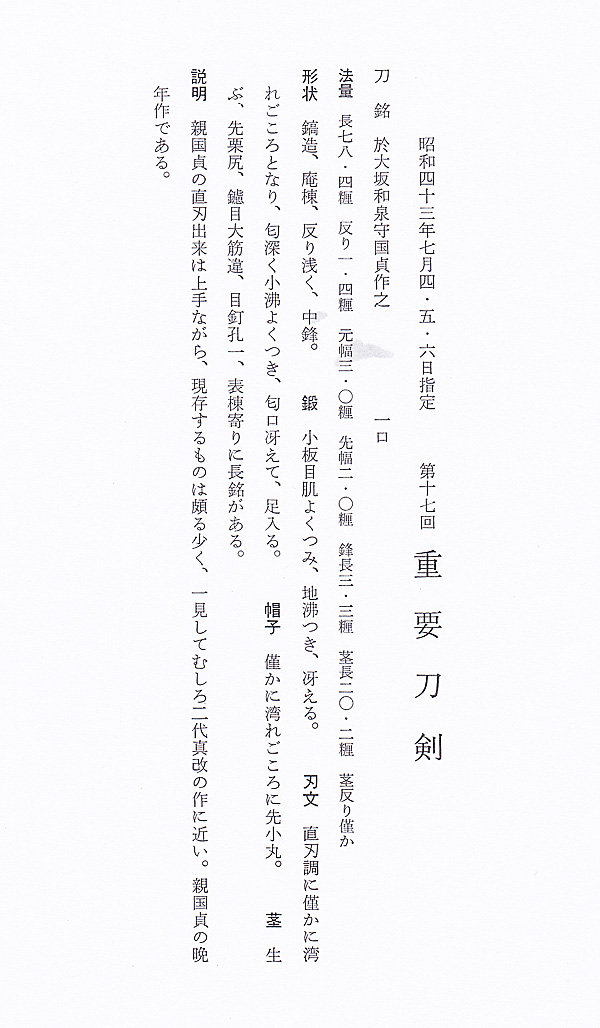
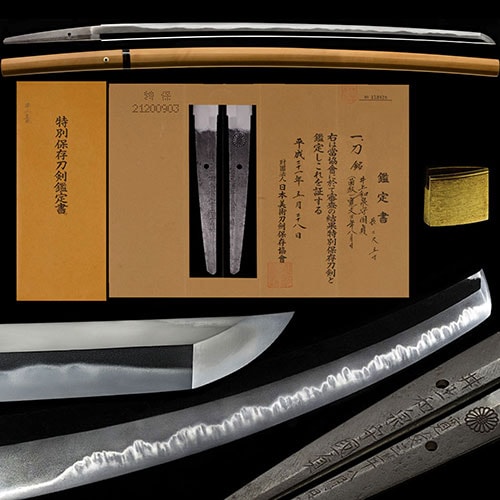
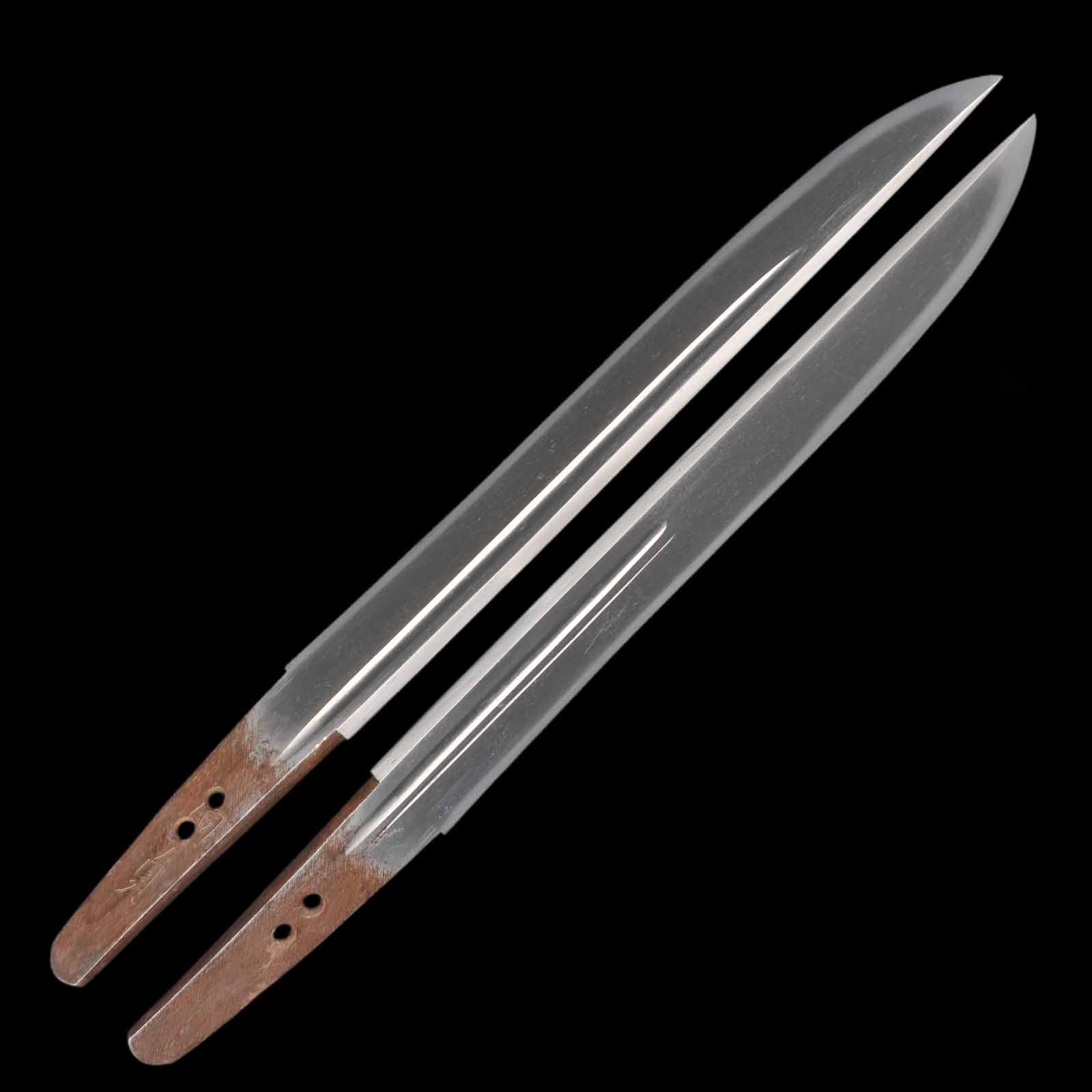
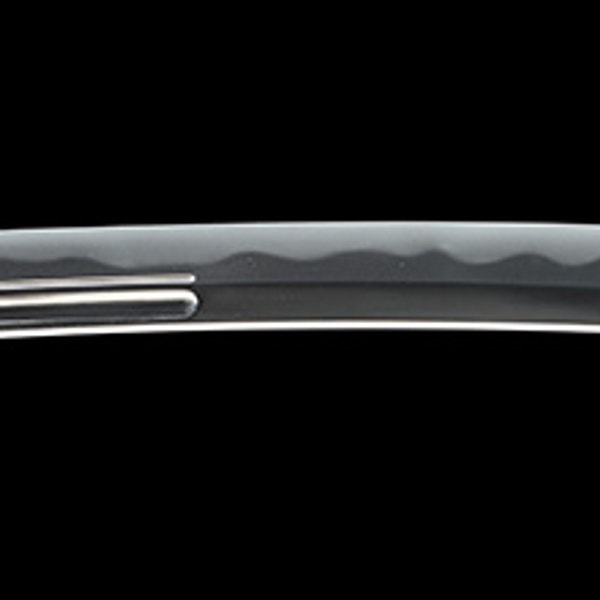
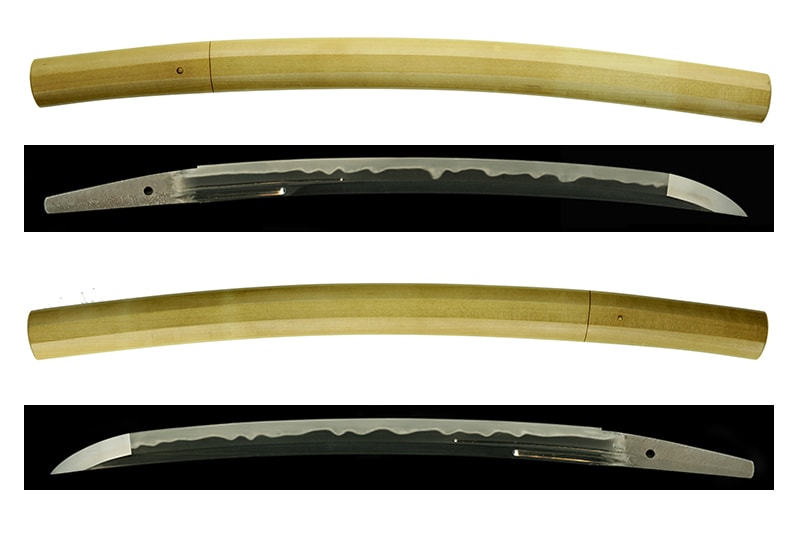
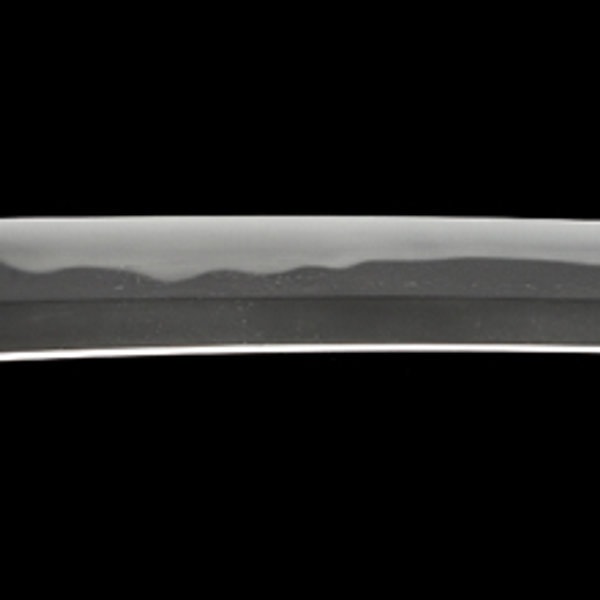
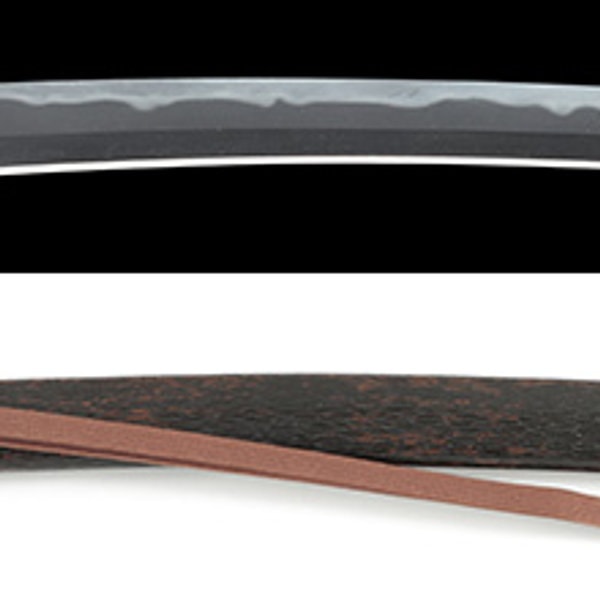
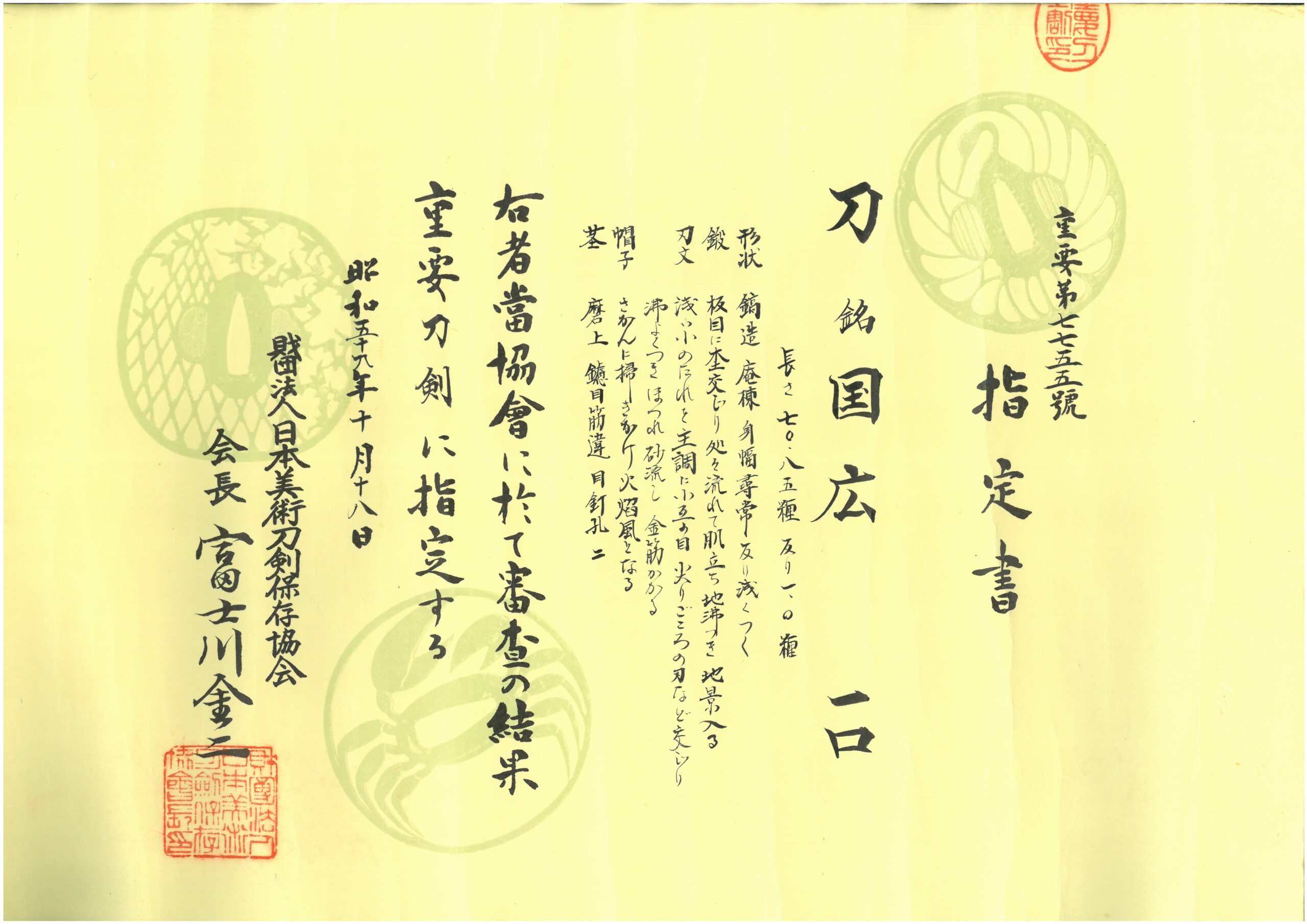
His recognized hand is a broad, imposing katana in the Keicho-shinto taste, wide in body with little taper from base to tip, thick in kasane, and carried out to an extended chu-kissaki or o-kissaki. The forging is itame, frequently mixed with mokume and tending to stand a little, hada-dachi, with thick ji-nie and chikei entering freely; where the grain opens, the published sources name it the loose, vigorous zanguri texture of the Horikawa school, the steel of his teacher carried into Osaka. This is the jigane his work is read on. Over that jigane he tempers a notare base into which he sets gunome, ko-gunome and choji, the line opening from a short straight yakidashi in the Edo manner, deep in nioi with ko-nie well adhered, sunagashi and kinsuji running through it, often with muneyaki and drifting tobiyaki. The boshi runs straight into a ko-maru or enters in midare with hakikake, turning back rather long or deep. On his finest blades he adds carving: a relief shin-no-kurikara dragon set within the groove, with a bonji and paired goma-bashi, work the judges call distinctive and superb and count among his tells.
The jigane is the steady base beneath the temper. Itame with thick ji-nie and frequent chikei appears across his oeuvre, sometimes standing into that rustic zanguri surface, sometimes drawing tight; the deep, bright nioiguchi and the ko-nie along the edge are constants, and the activity is carried in ashi and yo, in sunagashi and kinsuji, rather than in towering clove heads. Where one Tokubetsu Juyo katana of the 27th session widens and turns vigorous, the published sources find it "rather than resembling Kunitomo, his de-facto teacher, closer to the calm, unforced character of Kunihiro himself," naming the ko-maru-sagari boshi and the frequent muneyaki as the elder Kunisada's own marks. The nioiguchi at times deepens, at times falls subdued, and that deliberate variation in how the nie gathers is itself part of his manner.
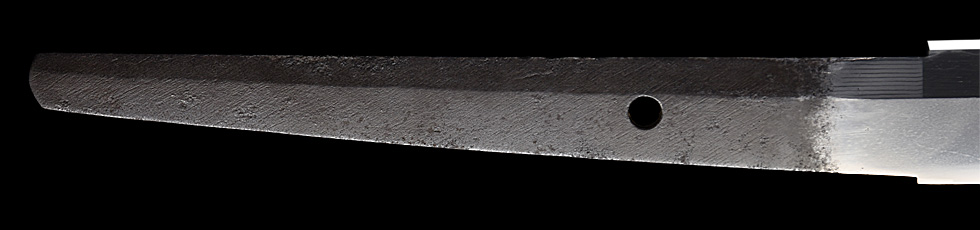
Three registers run through the work. The first is this prime notare-gunome katana over the bold Horikawa jigane. The second is a Soshu-leaning manner that looks back through his masters: the published sources read one Juyo katana as a Shizu-style piece made in emulation of his teacher, the choji not conspicuous yet the whole vigorous, and call a wakizashi an emulation of Soshu Sadamune, written "modelled on the manner of Soshu Sadamune, and well made"[[c:3]]. The third is a quiet, bright suguha of his late years, of which the judges note "the first generation's suguha work, though skillful"[[c:4]], survives in very few examples, and that such a blade "at a glance appears closer rather to that of the second-generation Shinkai"[[c:5]]. To these late years belong his cursive sosho signatures of the Dowa period, which the sources connect to his old age, when his second generation, Inoue Shinkai, is said to have served often as proxy in both forging and signing; whether a given cursive blade is the elder's own work or Shinkai's daimei, and whether such pieces should be read as a separate second-generation Shinkai Kunisada, remain matters the published record leaves open for further study.
What sets him apart is named in his own designation papers. Against the tightly packed ko-itame of the old Bizen and Yamashiro lines, his standing zanguri jigane and his notare opening from a straight yakidashi are the Osaka-shinto signature, not a Bizen choji; against his own son Shinkai's brighter, more refined steel, the elder's hand reads as the rougher, more vigorous root from which the Osaka tradition grew. The judges place him with Kawachi no Kami Kunisuke at the head of that movement, his de-facto teacher Kunitomo behind him and his master Kunihiro behind that, and his heir Shinkai carrying the name forward into its most celebrated generation.
For the collector he is a major Osaka-shinto name held within reach but never common. Fujishiro grades him Jo-jo saku. He has no National Treasures and no Important Cultural Properties; his record runs instead through the Juyo rank in number, with three Tokubetsu Juyo and several prewar Juyo Bijutsuhin, eighty-four blades standing in the Tokubetsu Juyo and Juyo tiers. The provenance that survives is distinguished: blades that passed through the Imperial Family, the Sanada house, and the Ito family of his native Hyuga, with one Juyo Bijutsuhin now held at the Sano Art Museum. The published sources reserve their highest words for his signed katana, calling one "a quintessential work of the first-generation Kunisada, especially deep and splendid in nioiguchi, an outstanding example among his works"[[c:6]], and another, the Soshu-flavoured Tokubetsu Juyo, simply "a blade after the elder Kunisada's own heart"[[c:7]]. Most of these are held rather than traded, and only a handful of the Tokubetsu Juyo and Juyo blades change hands in any decade; a signed Oya Kunisada in good condition comes to a private collector from time to time, with patience, and is a substantial acquisition when it does, a document of the founding of Osaka steel.