The Shintō era was largely invented in Kyōto: Umetada Myōju’s workshop trained the movement, Horikawa Kunihiro raised a generation, and the Hon’ami appraisers, who held no forge, governed the meaning of famous blades.
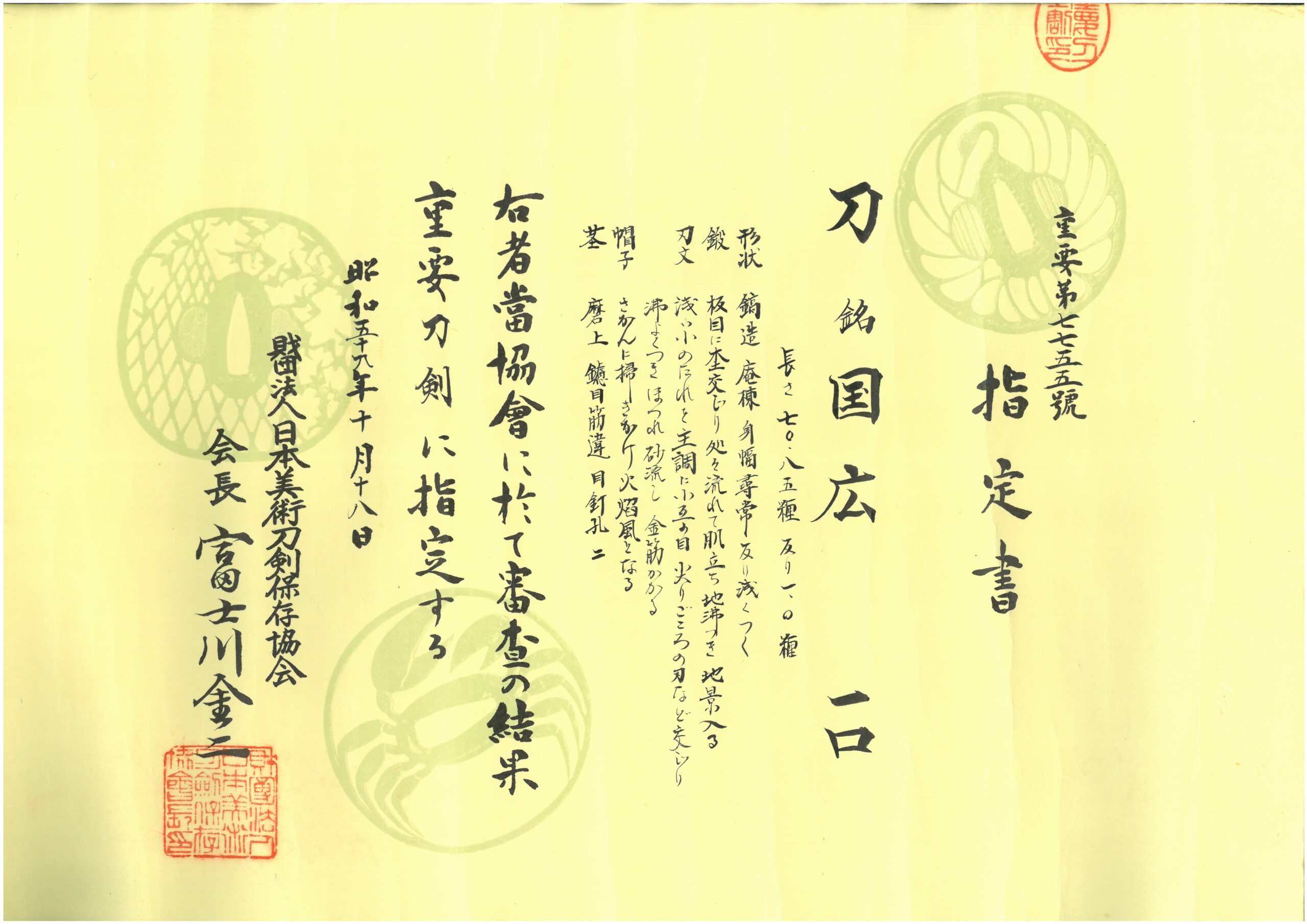
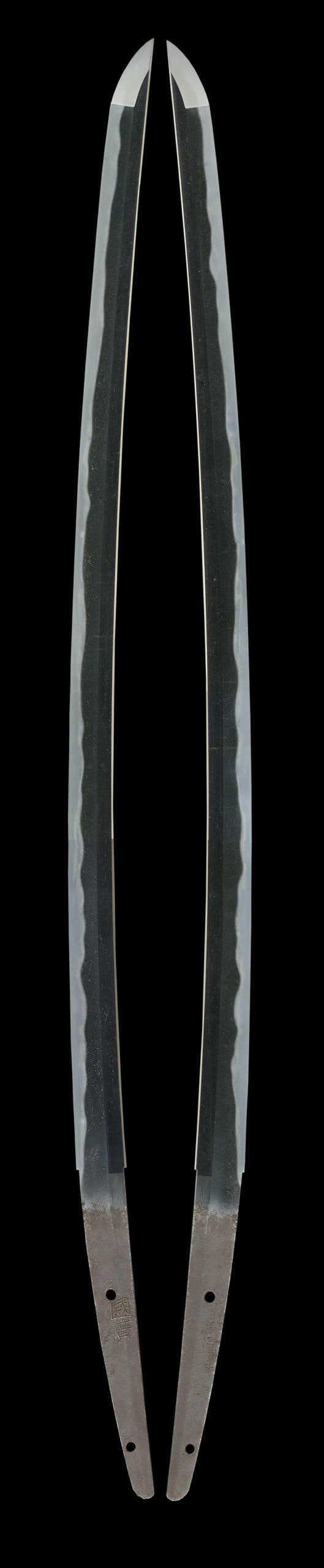
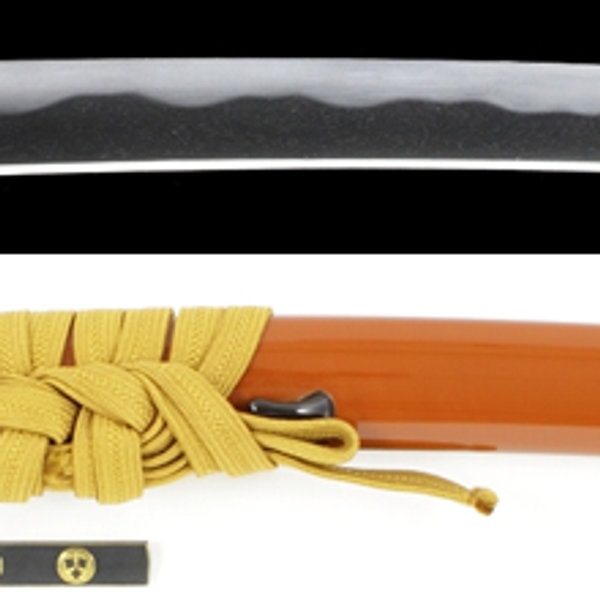
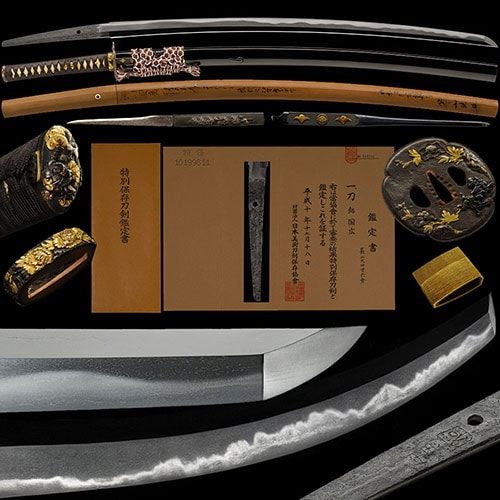
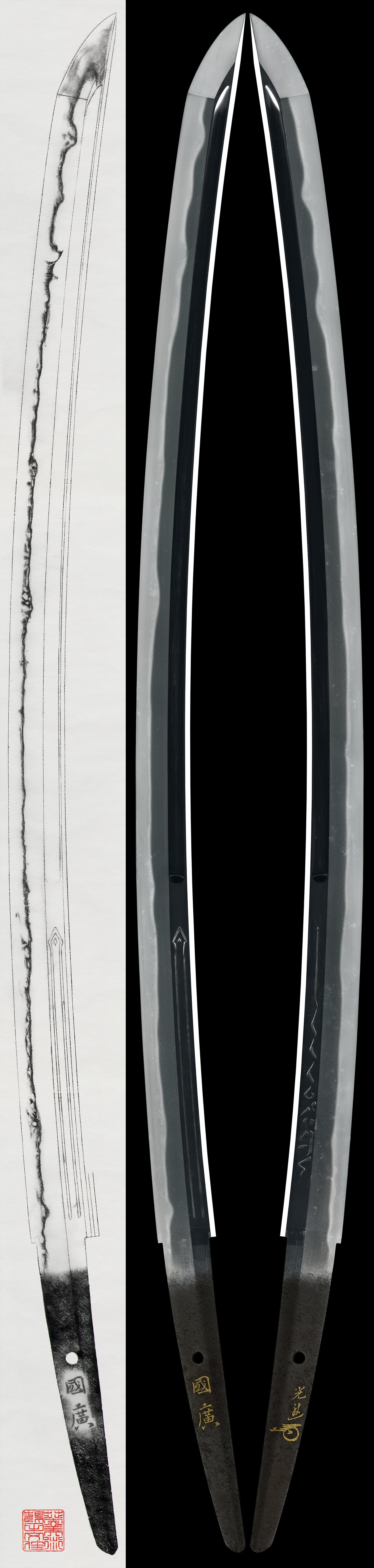
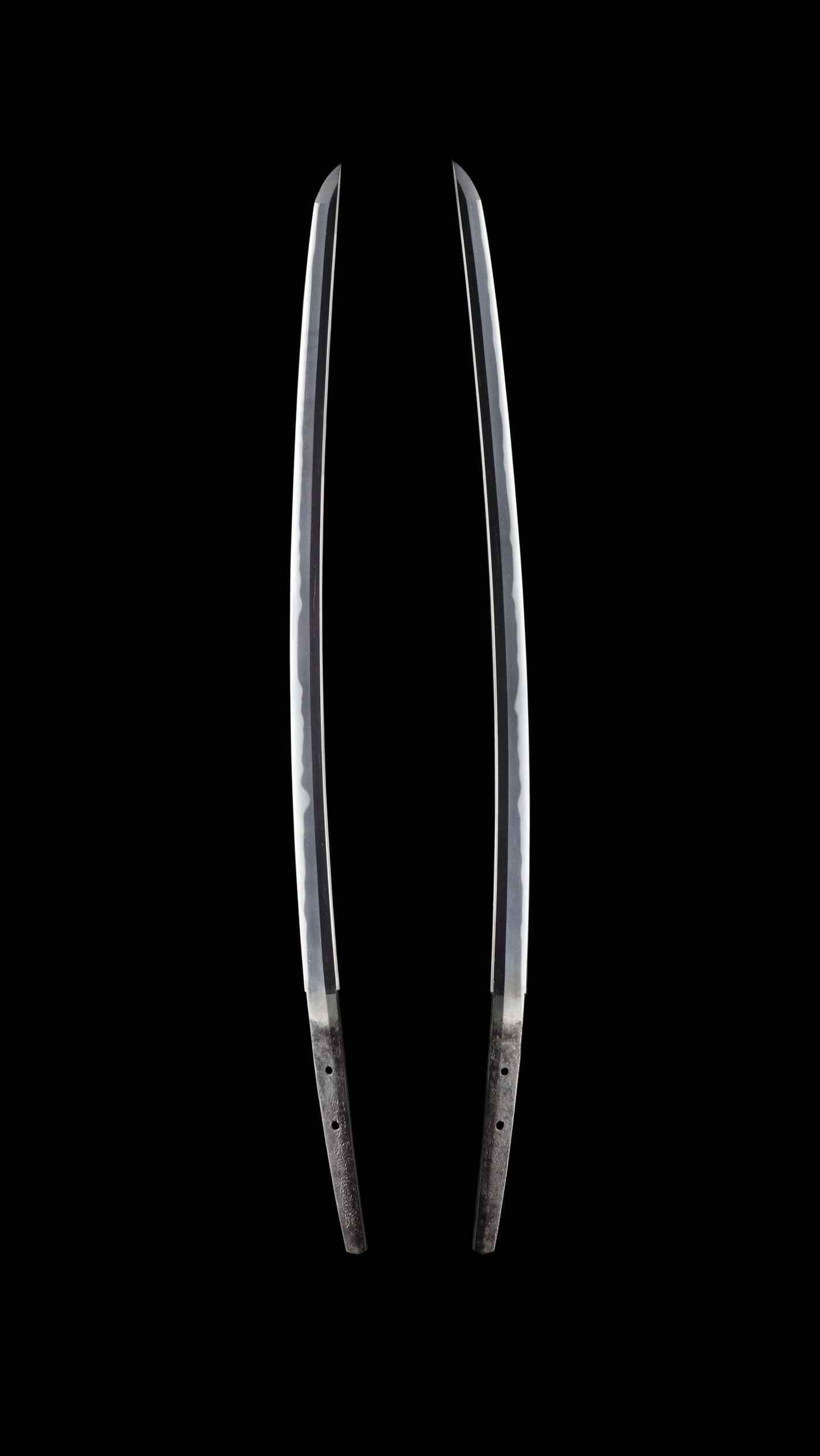
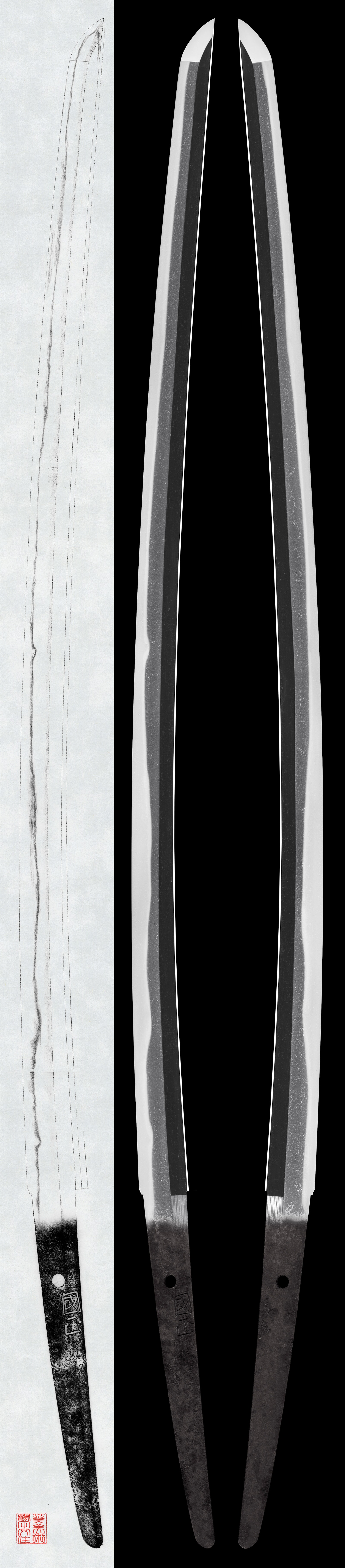
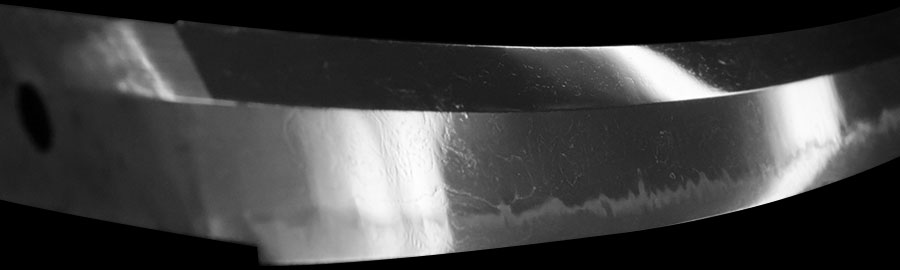
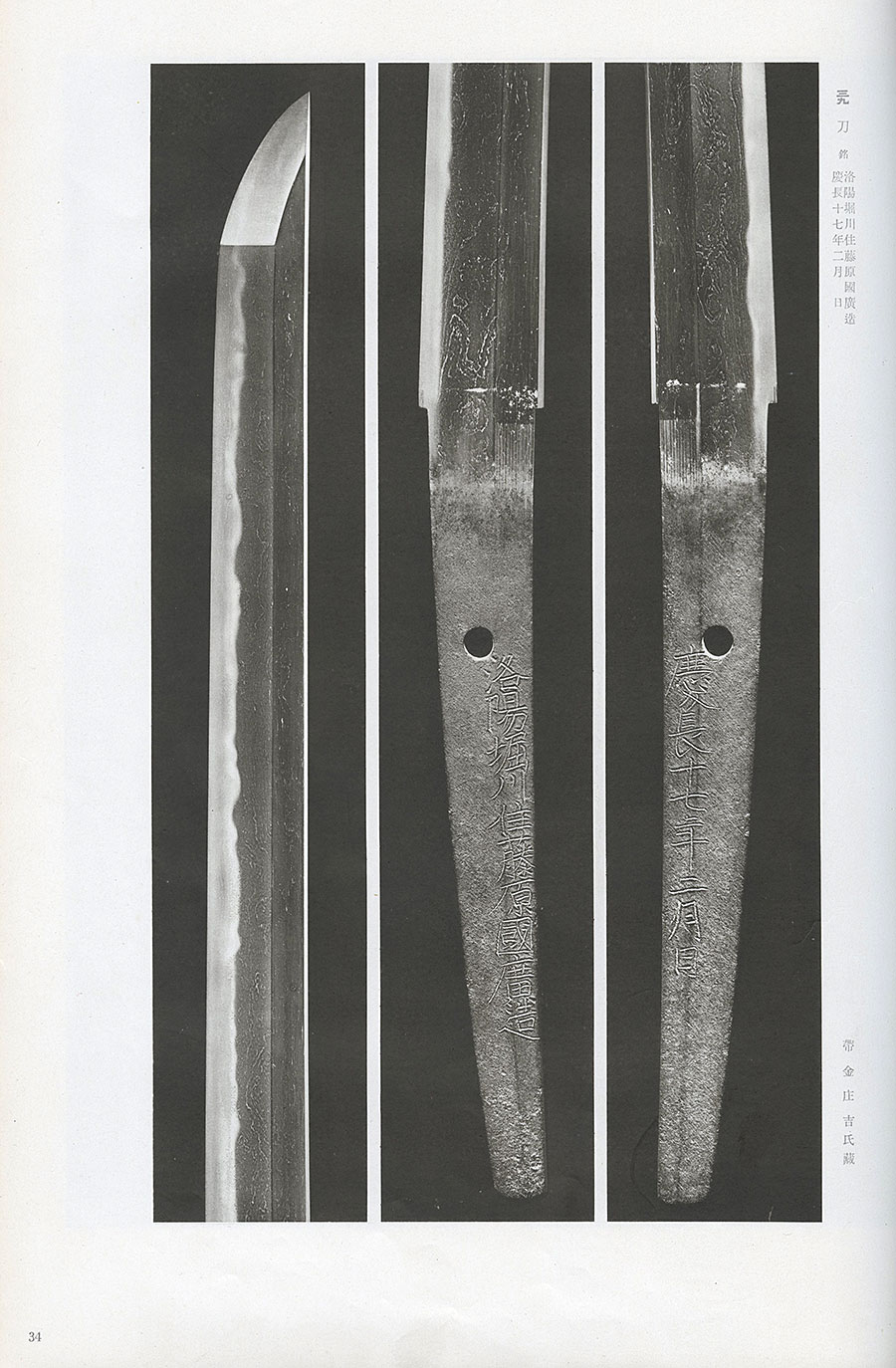
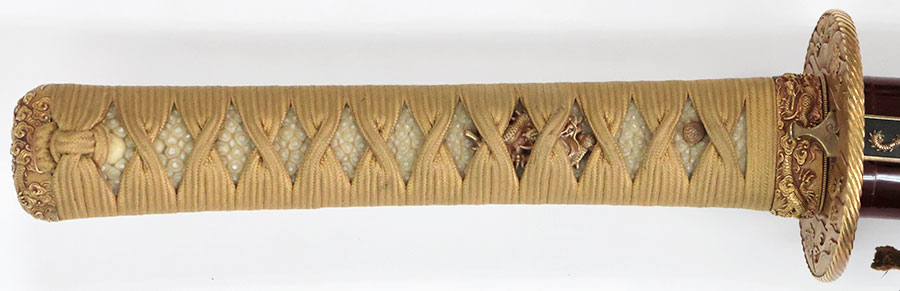
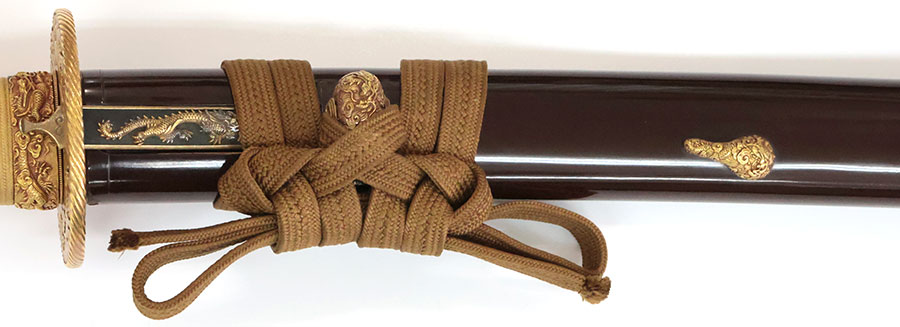
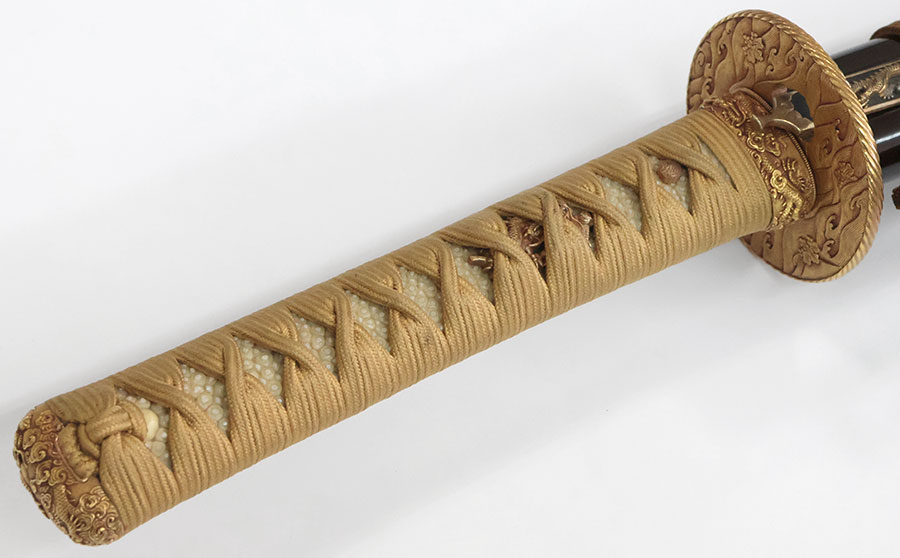
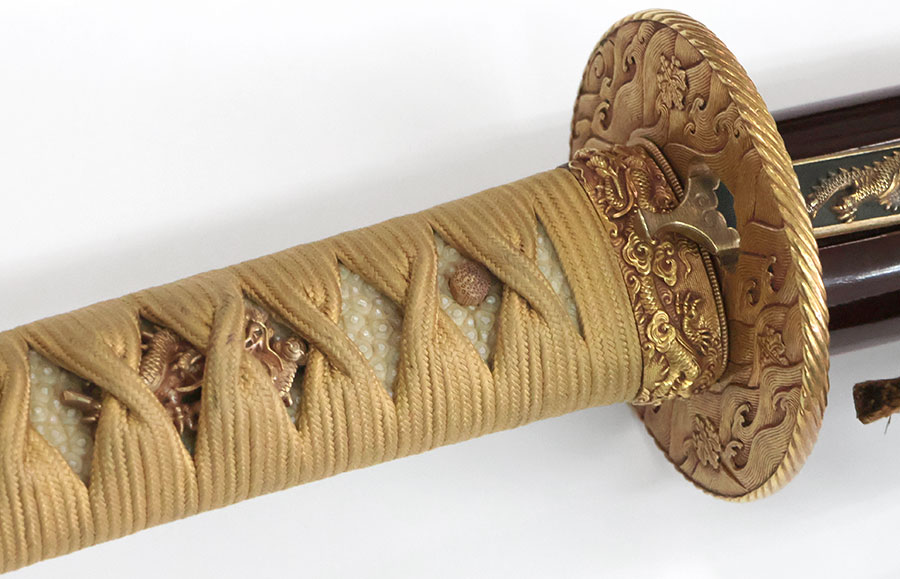
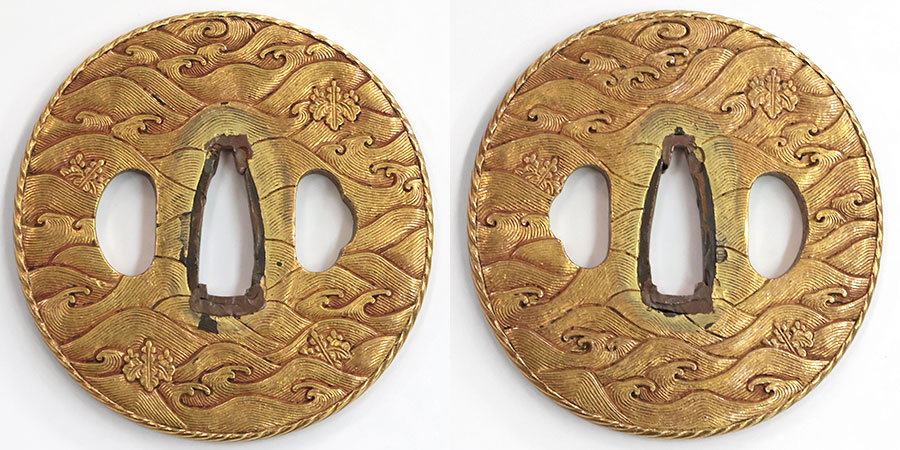
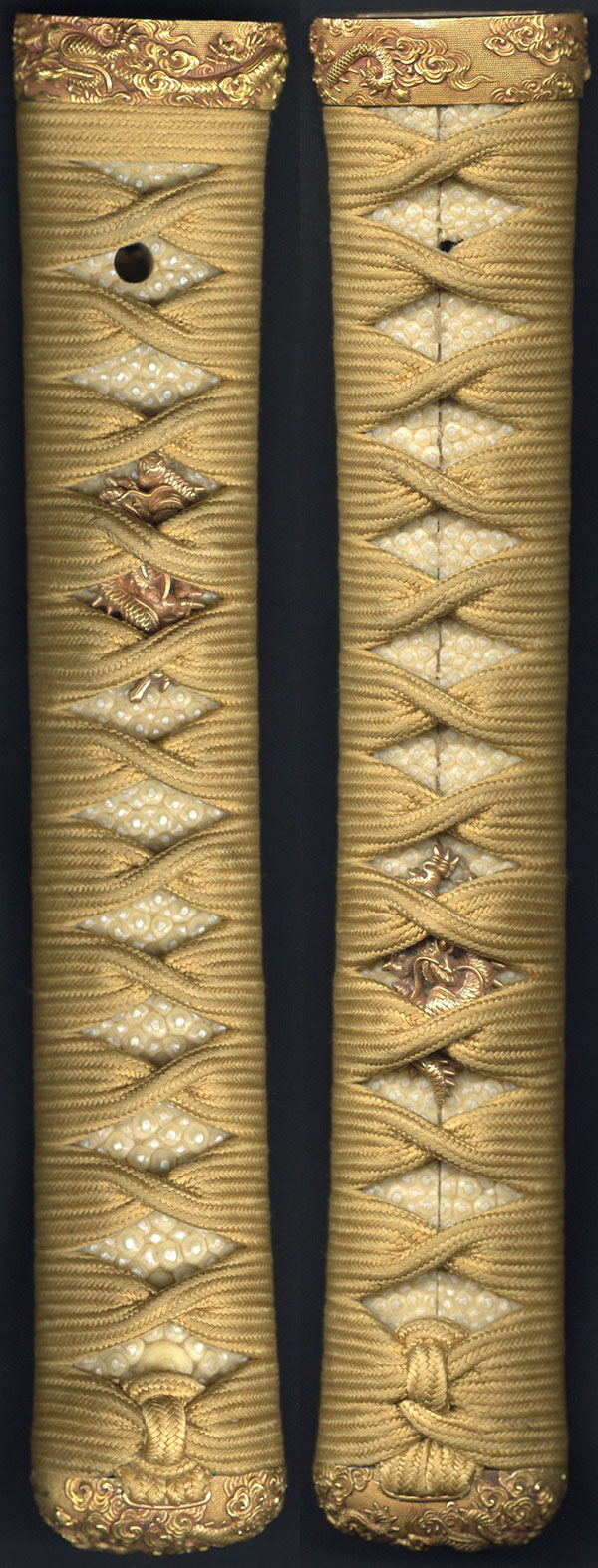
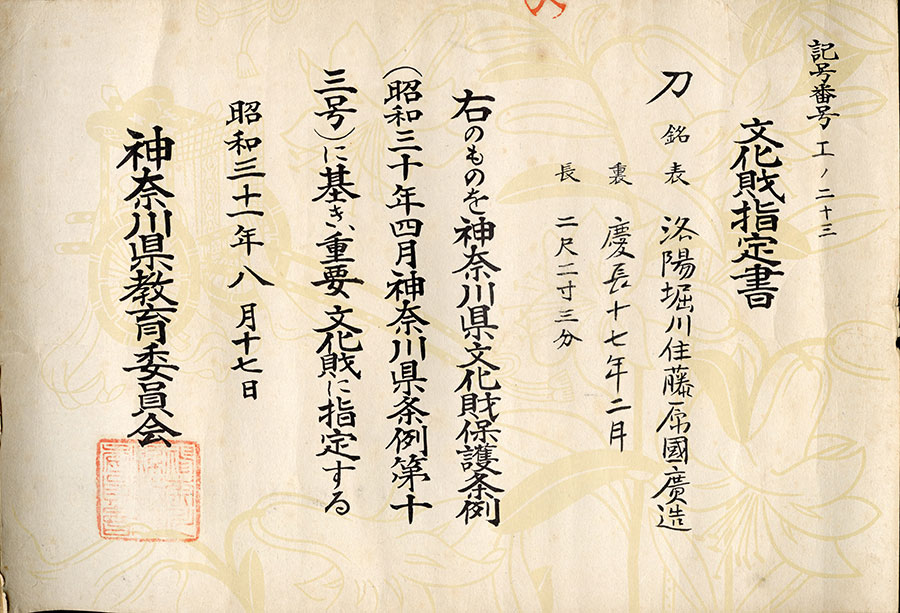
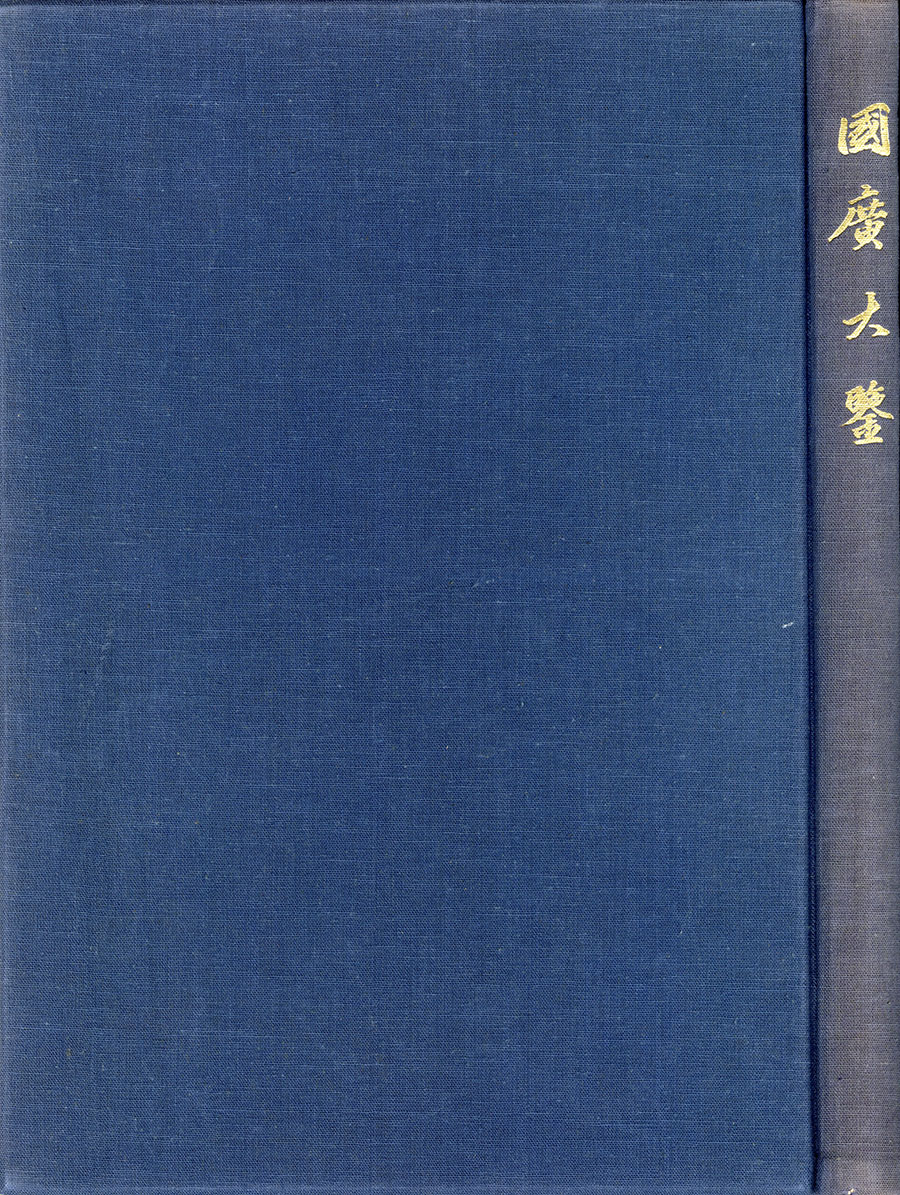
It has appeared, it has appeared—it is no exaggeration to say that a miracle has occurred with the appearance of this celebrated sword. The works of Horikawa Kunihiro, who is spoken of with deep respect as the "Founder of Shinto," are famous, yet surviving examples are rarely seen outside of places like the National Museum; he is a supreme master of the Shinto period with 11 blades designated as Juyo Bunkazai and 12 as Juyo Bijutsuhin. Works by Kunihiro with a date of Keicho 17 (1612) (414 years ago) were previously thought to be almost non-existent, making this sword so precious that it is no exaggeration to say it has finally emerged from legend. This is a significant work from 12 years after the Battle of Sekigahara, 2 years before the Osaka Winter Campaign, 7 years after the second Shogun Tokugawa Hidetada was appointed Seii Taishogun, and 2 years after the completion of Nagoya Castle. Horikawa Kunihiro was originally a bushi. From around age 44 in the first year of Tensho (1573) (453 years ago) until age 61 in Tensho 17 (1589), he wandered and forged swords in various parts of Kyushu, starting with Nisshu Furuya. In Tensho 18, he forged swords at the Ashikaga Gakko in Yashu (Tochigi Prefecture). Because the Odawara Hojo clan was destroyed by Toyotomi Hideyoshi in Tensho 18, and the Nagao clan perished at the same time, he lost his lord's house and went to the capital in Tensho 19 (1591) (435 years ago) at age 63. After that, he wandered the provinces again and settled in Kyoto after age 70 in Keicho 4 (1599) (427 years ago). Kunihiro is respected as the Founder of Shinto because his skill was preeminent and his ability to cultivate disciples was outstanding, producing many master smiths such as Dewa Daijo Kunimichi, Horikawa Kuniyasu, Echigo no Kami Kunitomo, Osumi no Jo Masahiro, Awa no Kami Ariyoshi, Heianjo Hiroyuki, Izumi no Kami Kunisada, and Kawachi no Kami Fujiwara Kunisuke. This sword exhibits a sugata in shinogi-zukuri with a difference between the moto-mihaba and saki-mihaba and a shallow sori. The jigane is forged in itame-hada mixed with o-hada and masame-hada, showing a "zanguri" texture. The ji is covered in ji-nie and contains fine chikei. The hamon is a mix of gunome with deep nioi and thick nie, showing a slight "kozumi" (condensed) feel; near the monouchi, kuichigai-ba is mixed in, and overall, ko-ashi enters and the nie is applied coarsely. The boshi is midare-komi with strong hakikake, fired with great spirit. While Horikawa Kunihiro is famous as the Founder of Shinto, because he settled in Horikawa, Kyoto, after age 70—an incredibly advanced age for that time—his actual works are extremely few. This sword is a legendary masterpiece with a precious nenkio. A magnificent koshirae adds further splendor to this Kunihiro blade. This celebrated sword by Kunihiro, designated as a Kanagawa Prefecture Juyo Bunkazai and published in the "Kunihiro Taikan," was entrusted to us by an old collector who said, "I have grown old, so please pass this to someone who will cherish it." Therefore, we are offering this precious Kunihiro sword, which normally would never appear on the market, at a special price. Please truly enjoy it.
Edo · nagasa 67.6cm · sori 1.4cm






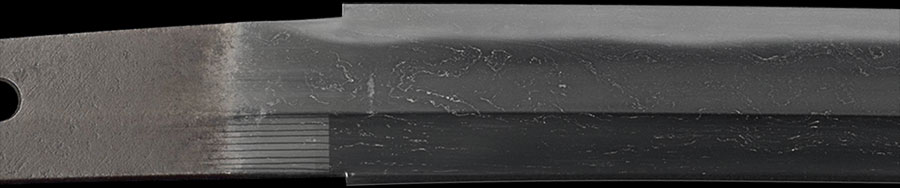





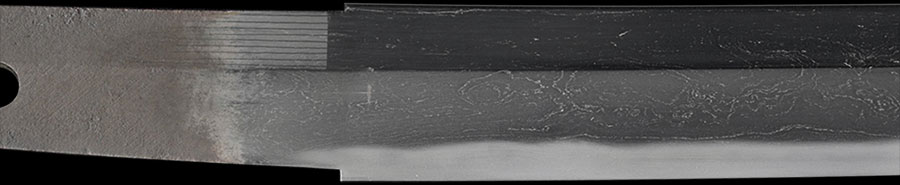

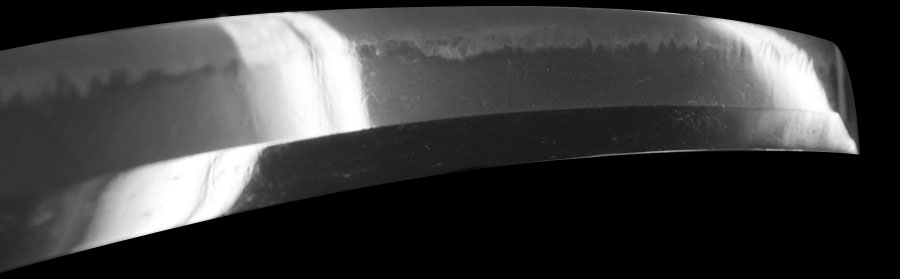
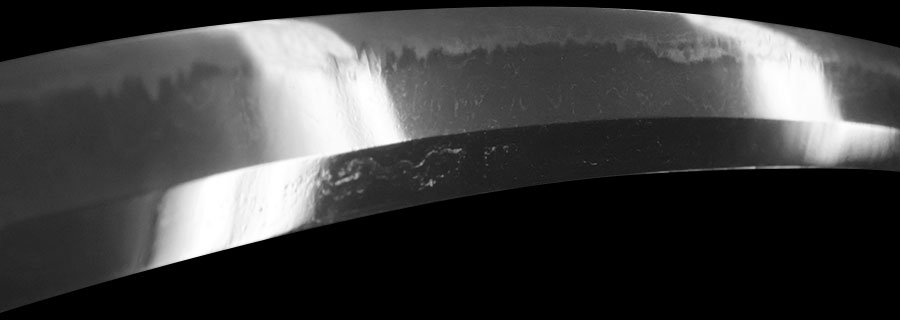
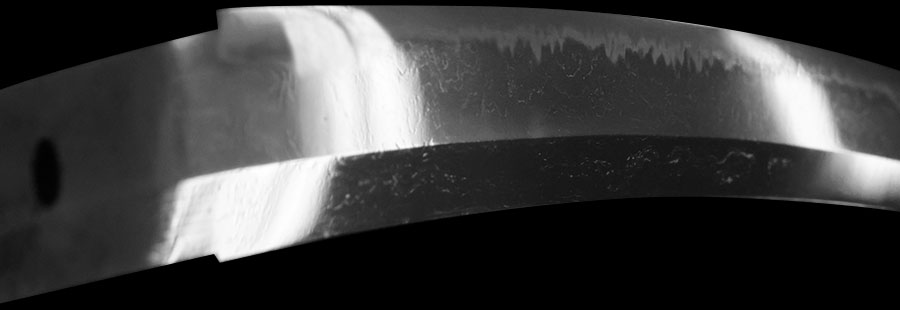
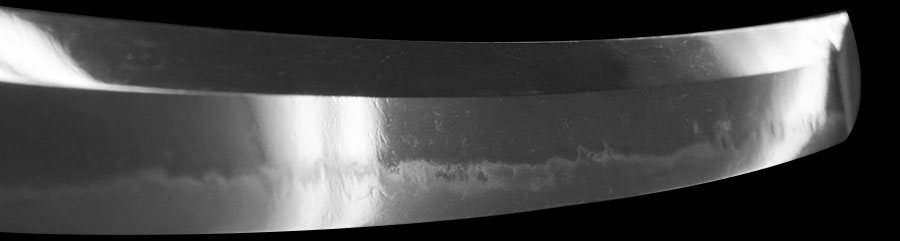
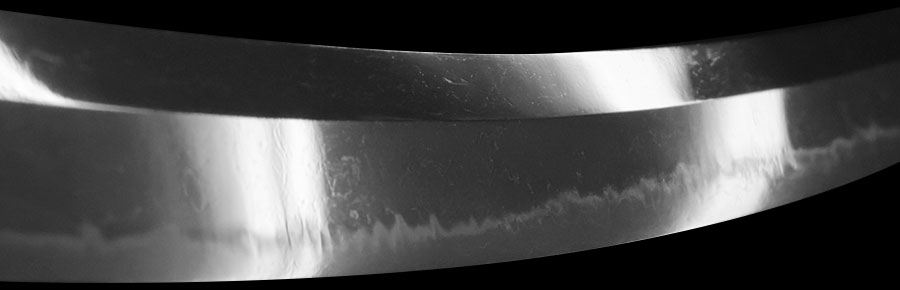



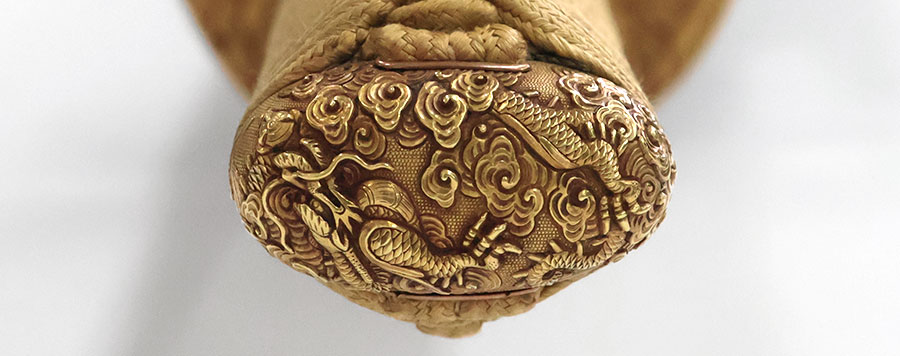




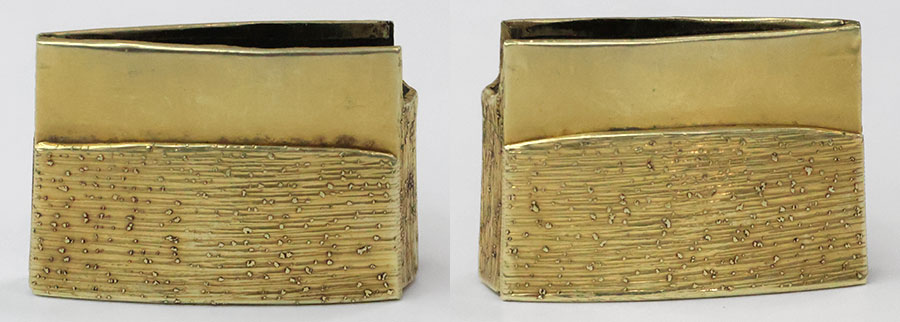
Horikawa (Yamashiro) · Yamashiro · around 1573-1613
Fujishiro Sai-jo saku · Tōken Taikan top 1%
5 pieces on the market now
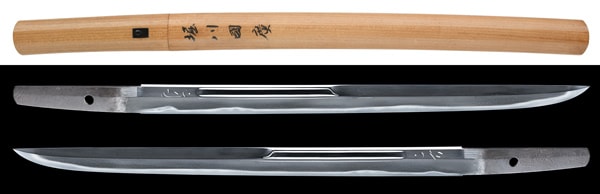
A long katana dated Tensho 4 (1576), signed in Hyuga, carries the oldest date of Horikawa Kunihiro, whom the published sources acclaim, with Umetada Myoju, as a founder of the shinto sword[[c:1]]. Tanaka Kunihiro served as a warrior under the Ito family, lords of Obi castle in Hyuga; after that house fell he wandered the provinces, forging where he stopped, and from Keicho 4 (1599) he settled at Ichijo Horikawa in Kyoto, trained many outstanding pupils, and is said to have died in Keicho 19 (1614). The registers make him a son of Sanetada or of Kunimasa. His designation texts open with one sentence repeated for half a century: his work divides broadly into two manners[[c:2]], the Tensho-uchi of the wandering years, looking to late Soshu and late Seki, and the Keicho-uchi after the settlement, modeled on the top Soshu masters. In technique, and equally in the pupils he raised, the same texts call him the first man of the shinto age[[c:3]].
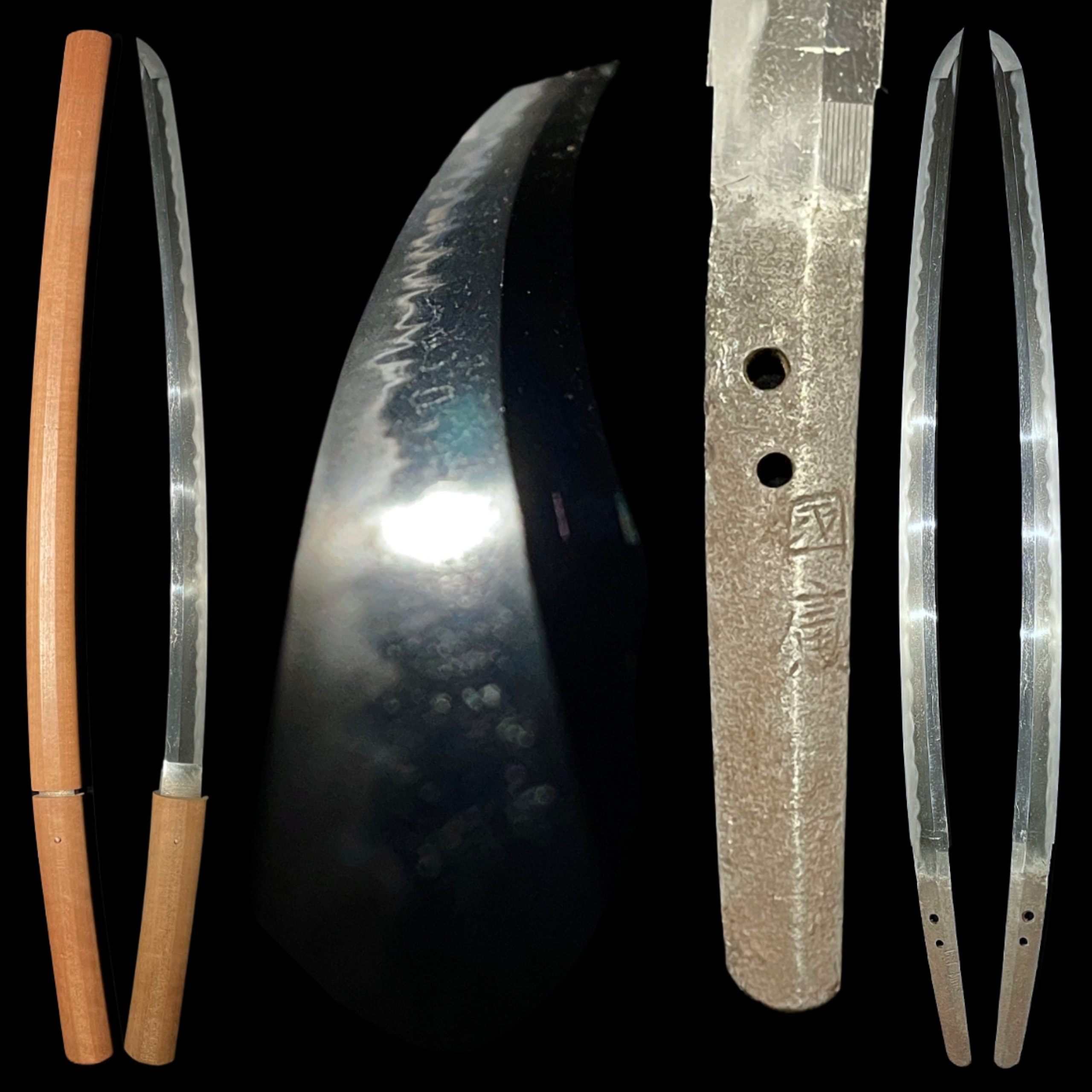
His jigane is the school's own: itame mixed with mokume and o-itame, the grain standing, in the rough, loose surface the texts name outright the zanguri hada peculiar to Horikawa work[[c:4]]; over it ji-nie lies minute and thick, and chikei enter finely. From above the machi a mizukage rises obliquely, on one Tokubetsu Juyo wakizashi noted as the mizukage that is his habit[[c:5]]. The habuchi carries a second tell: rough nie stands in uneven patches, the nioi width varies, and of one katana the published commentary writes that the slightly uneven temper and the sinking nioiguchi are Kunihiro's habits of hand[[c:6]]. He hardens the yakiba past the hamachi and widens the temper at the monouchi. Nearly everything is signed, the Keicho work above all with the large kata-ochi two-character mei beside the long residence signatures. He sets the mekugi-ana low, so that on a two-hole tang the plugged lower hole is the original[[c:7]].
The Keicho-uchi rests on a stated ideal: his goal, the sources write, lay in the revival of the Soshu tradition[[c:8]], and the leaning is strongest toward Shizu[[c:9]]. The katana of these years are wide, with little taper, shallow in sori, the chu-kissaki extended or grown to o-kissaki, a build the texts liken to a great Nanbokucho odachi cut down to a katana[[c:10]]; one Tokubetsu Juyo blade is read as a direct transcription of an o-suriage mumei Shizu, down to the half-worn look of its copied carvings. Over the zanguri kitae he tempers a shallow ko-notare mixed with gunome and pointed teeth, thick in nie, with kinsuji, sunagashi and yubashiri; the boshi runs sugu or shallowly undulating into ko-maru or o-maru, lightly swept. Beside the katana stand the wide, sun-nobi hira-zukuri wakizashi with mitsu-mune, the Momoyama form, where the copying reaches past Shizu: one Tokubetsu Juyo piece is judged in temper and carvings to recall Sadamune, and the manner of Sa is taken in so actively that the texts call one piece Samonji to the life[[c:11]].
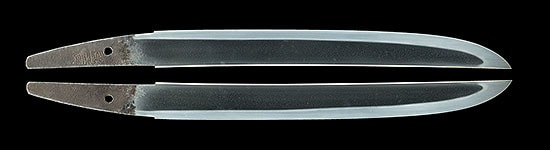
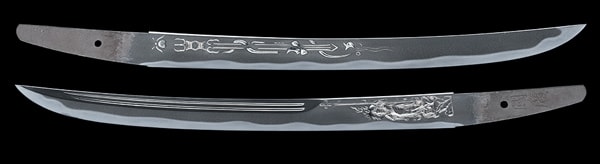
The Tensho-uchi is another smith at first sight: hira-zukuri wakizashi and small uchizori tanto with strong saki-zori, tempered in a gunome-midare mixing togariba and angular teeth, tobiyaki and muneyaki running to a hitatsura-like effect, the nioiguchi brighter than in his later work, and warrior deities, Daikokuten and Bishamonten, carved in a strong chisel. The sources read these blades as late Soshu and late Seki at a glance, and his itinerary is written into the mei themselves: the Furuya signatures of Hyuga, a katana signed as made in his days as a yamabushi (山伏時作), a blade forged at the Ashikaga school in Tensho 18 (1590), a Gifu collaboration with the senior Mino smith Daido, and work cut in Kyoto in Tensho 19 (1591). In carving he is paired with Myoju, in force, the sources allow, even his superior; Honma takes the horimono for the smith's own hand from the one manner running through every period. At the opposite pole stands a small, quiet class: suguha is rare in him[[c:12]], and these tanto and small wakizashi, their kitae finer than his norm, their nioiguchi tighter and brighter, are read as aimed at Shintogo Kunimitsu, Yukimitsu or Rai Kunimitsu. The texts pass one judgment on all this copying: he chews the model thoroughly and creates without artifice[[c:13]], so that even there the zanguri surface, the mizukage and the uneven nioiguchi give his hand away.
What he founded outlived him in the men he trained. From the school came Dewa no Daijo Kunimichi, Kuniyasu, Osumi no Jo Masahiro, Echigo no Kami Kunitomo and the elder Kunisada, the record tracing his manner onward in Kunimichi's small-patterned ha and Oya-Kunisada's carving. The last years belong partly to that workshop: among his dated works those of Keicho 15 (1610) are the most numerous, the sources note, a year falling by the traditional reckoning near his eighty-ninth; of this period one text concludes there is no way to take it but as almost entirely the disciples' daisaku and daimei[[c:14]]. The texts set this sharply apart from forgery: supervision was strict, and the blades of these years show no falling-off.
Fujishiro rates him Sai-jo saku. Of one hundred forty-eight designated works on record, one hundred forty-seven are signed and none unsigned; the single blade counted otherwise bears his large two-character mei beside the gold-inlaid cutting test of Yamano Kaemon Nagahisa, dated Kanbun 6 (1666), rare on his work. Twelve blades are Important Cultural Properties, patrimony outside the market, and twelve more are prewar Juyo Bijutsuhin; nine are Tokubetsu Juyo and one hundred thirteen Juyo, one hundred twenty-two blades in those two tiers. The tachi he dedicated to the Hataeda Hachimangu in Keicho 2 (1597), with an itomaki tachi koshirae transmitted as the donation of Emperor Go-Mizunoo, remains in the shrine's keeping. The provenance runs through the houses of his own story and of the country: blades handed down in the Hyuga Ito he had served; the sidearm of Iki Nagato no Kami Tadasumi, chief retainer of the Okayama Ikeda; pieces of the Tosa Yamauchi and of the great Shimazu house, one old scabbard inscribed for the use of lord Mitsuhisa[[c:15]]; transmissions reaching Toyotomi Hideyori and the Imperial Family; order pieces for Nagaoka Okimoto of the Hosokawa and the connoisseur Sawada Doen. What a private collector may realistically encounter is the Tokubetsu Juyo and Juyo tier, and even there a Kunihiro is held closely, coming to market only from time to time; when one appears, it carries on its nakago the signed hand of the smith with whom the new sword begins.
Where Kunihiro stands among comparable artisans: across all of nihontō, and within tradition, era, and period. The tiers (Foremost · Leading · Major · Notable) weigh official designations from the NBTHK and Japan's Agency for Cultural Affairs, together with historical honors of lasting repute such as the Sansaku and Meibutsu-chō.
Select a lens to see how it's measured.
Years he was demonstrably active, proven by signed-and-dated blades
Shinto · Yamashiro
79 pieces on the market now
At Ichijo Horikawa in Kyoto, from Keicho 4 (1599), Horikawa Kunihiro gathered the pupils whose work the published sources name with his own as the opening of the shinto age. Kunihiro himself reached forging late and by a roundabout road. Born Tanaka and serving as a warrior under the Ito of Obi castle in Hyuga, he wandered the provinces after that house fell, forging where he stopped, his earliest dated blade cut in Hyuga in Tensho 4 (1576); his itinerant Tensho-uchi looked to late Soshu and late Seki, often run toward a hitatsura-like effect over devotional carving. The settlement in Kyoto changed that. There his stated aim, the sources write, lay in the revival of the Soshu-den tradition, the leaning strongest toward Shizu, and around that ideal he trained the men who carried his manner forward: Dewa no Kami Kunimichi, Kuniyasu, Osumi no Jo Masahiro, Echigo no Kami Kunitomo, the elder Kunisada and Kunisuke, with later and minor hands reaching Settsu, Echizen and Edo. Many of them, born like the master at Obi, followed him from Hyuga to the capital. The shared vocabulary is read first in the steel. The school forges an itame mixed with mokume that stands up, the grain raised into the loose, granular surface the commentaries name outright, the zanguri hada particular to Horikawa work, with ji-nie lying thick and chikei entering; on many blades a mizukage rises obliquely from the machi. Over that ground the prime manner is the Keicho-shinto sugata, wide with little taper and an extended chu-kissaki or o-kissaki, the build likened to a Nanbokucho odachi cut down, tempered in a notare and gunome with thick nie, sunagashi and long kinsuji, the nioiguchi often sinking into shizumi. Within that frame the pupils diverge sharply.
Kunimichi runs the flamboyant Shizu copy fully out and turns his boshi pointed in the Mishina manner, the Sanpin boshi the school otherwise does not show. Masahiro keeps the same Soshu-den worked at lower temperature, his temper calm and his mokume conspicuous; Kuniyasu and Kunitsugu stand closest of all to the master and signed for him. Kunitomo turns alone toward late Seki, his gunome round-headed and his chisel the finest in the group, and the elder Kunisada and Kunisuke carry the zanguri steel south into Osaka, the latter keeping the Ishido clove he was born to. Hiroyuki holds suguha over a blackish steel that recalls old Yamato, and the two Echizen Kunikiyo forge a dark, dense hokkoku-gane under a calm chu-suguha. A collector seeks Horikawa because the school stands at a hinge: Kunihiro is read as the first hand of the new-sword age, and the line he taught runs forward into the Osaka tradition through Kunisada and Kunisuke and into Echizen through Kunikiyo. To kantei the work, read the steel first, the standing zanguri surface and the oblique mizukage, then the sinking nioiguchi and the Soshu-revival notare with its sunagashi and kinsuji; the individual hand declares itself in the departures, Kunimichi's pointed boshi, Kunitomo's Seki gunome and compact tang, Kuniyasu's reversed file marks and two-character mei, Hiroyuki's kiri-yasuri. The founder and his closest pupils sit at the top of the line, Kunihiro signing almost everything he made, the large kata-ochi two-character mei beside his long residence signatures; because Kuniyasu, Masahiro, Kunitsugu and Hiromi worked as his daisaku, a share of the blades signed Kunihiro are in fact theirs. Provenance runs through the houses of the founder's own story and of the country, the Hyuga Ito he had served, the Shimazu of Kagoshima, the Imperial Family and Toyotomi Hideyori, with the tachi Kunihiro dedicated to the Hataeda Hachimangu still in the shrine's keeping. A signed Horikawa blade reaches a private collection only from time to time, carrying on its nakago the hand with which the new sword begins. Learn more →
| Smith | Era | Designated |
|---|---|---|
| Kunihiro國廣 | 1573-1613 | 148 |
| Kunimichi國路 | 1615-1624 | 74 |
| Kunisada國貞 | 1624-1646 | 88 |
| Masahiro正弘 | 1596-1615 | 14 |
| Kunitomo國儔 | 1596-1615 | 27 |
Kyōto: the revival workshop
The Shintō era was largely invented in Kyōto: Umetada Myōju’s workshop trained the movement, Horikawa Kunihiro raised a generation, and the Hon’ami appraisers, who held no forge, governed the meaning of famous blades.
A Hozon-certified blade judged to show notably superior workmanship and a better state of preservation. The bar is higher: re-tempered blades and most unsigned Muromachi/Edo works are excluded.
The NBTHK (Nihon Bijutsu Tōken Hozon Kyōkai, the Society for the Preservation of Japanese Art Swords) is a public-interest incorporated foundation founded in 1948 and supervised by Japan’s Agency for Cultural Affairs (Bunkachō); it is based at the Japanese Sword Museum in Tokyo. Its expert panels physically examine each submitted work (shinsa) and issue a certificate (kanteishō) ranking it by artistic and historical merit. NBTHK papers are the most widely recognized standard of authentication for Japanese swords and fittings.
NBTHK official siteFor returns due to customer circumstances, the cost is the customer's responsibility. For returns due to our mis-shipment or a defective item, we bear the cost.
Price on request
It has appeared, it has appeared—it is no exaggeration to say that a miracle has occurred with the appearance of this celebrated sword. The works of Horikawa Kunihiro, who is spoken of with deep respect as the "Founder of Shinto," are famous, yet surviving examples are rarely seen outside of places like the National Museum; he is a supreme master of the Shinto period with 11 blades designated as Juyo Bunkazai and 12 as Juyo Bijutsuhin. Works by Kunihiro with a date of Keicho 17 (1612) (414 years ago) were previously thought to be almost non-existent, making this sword so precious that it is no exaggeration to say it has finally emerged from legend. This is a significant work from 12 years after the Battle of Sekigahara, 2 years before the Osaka Winter Campaign, 7 years after the second Shogun Tokugawa Hidetada was appointed Seii Taishogun, and 2 years after the completion of Nagoya Castle. Horikawa Kunihiro was originally a bushi. From around age 44 in the first year of Tensho (1573) (453 years ago) until age 61 in Tensho 17 (1589), he wandered and forged swords in various parts of Kyushu, starting with Nisshu Furuya. In Tensho 18, he forged swords at the Ashikaga Gakko in Yashu (Tochigi Prefecture). Because the Odawara Hojo clan was destroyed by Toyotomi Hideyoshi in Tensho 18, and the Nagao clan perished at the same time, he lost his lord's house and went to the capital in Tensho 19 (1591) (435 years ago) at age 63. After that, he wandered the provinces again and settled in Kyoto after age 70 in Keicho 4 (1599) (427 years ago). Kunihiro is respected as the Founder of Shinto because his skill was preeminent and his ability to cultivate disciples was outstanding, producing many master smiths such as Dewa Daijo Kunimichi, Horikawa Kuniyasu, Echigo no Kami Kunitomo, Osumi no Jo Masahiro, Awa no Kami Ariyoshi, Heianjo Hiroyuki, Izumi no Kami Kunisada, and Kawachi no Kami Fujiwara Kunisuke. This sword exhibits a sugata in shinogi-zukuri with a difference between the moto-mihaba and saki-mihaba and a shallow sori. The jigane is forged in itame-hada mixed with o-hada and masame-hada, showing a "zanguri" texture. The ji is covered in ji-nie and contains fine chikei. The hamon is a mix of gunome with deep nioi and thick nie, showing a slight "kozumi" (condensed) feel; near the monouchi, kuichigai-ba is mixed in, and overall, ko-ashi enters and the nie is applied coarsely. The boshi is midare-komi with strong hakikake, fired with great spirit. While Horikawa Kunihiro is famous as the Founder of Shinto, because he settled in Horikawa, Kyoto, after age 70—an incredibly advanced age for that time—his actual works are extremely few. This sword is a legendary masterpiece with a precious nenkio. A magnificent koshirae adds further splendor to this Kunihiro blade. This celebrated sword by Kunihiro, designated as a Kanagawa Prefecture Juyo Bunkazai and published in the "Kunihiro Taikan," was entrusted to us by an old collector who said, "I have grown old, so please pass this to someone who will cherish it." Therefore, we are offering this precious Kunihiro sword, which normally would never appear on the market, at a special price. Please truly enjoy it.
Edo · nagasa 67.6cm · sori 1.4cm
Horikawa (Yamashiro) · Yamashiro · around 1573-1613
Fujishiro Sai-jo saku · Tōken Taikan top 1%
5 pieces on the market now
A long katana dated Tensho 4 (1576), signed in Hyuga, carries the oldest date of Horikawa Kunihiro, whom the published sources acclaim, with Umetada Myoju, as a founder of the shinto sword[[c:1]]. Tanaka Kunihiro served as a warrior under the Ito family, lords of Obi castle in Hyuga; after that house fell he wandered the provinces, forging where he stopped, and from Keicho 4 (1599) he settled at Ichijo Horikawa in Kyoto, trained many outstanding pupils, and is said to have died in Keicho 19 (1614). The registers make him a son of Sanetada or of Kunimasa. His designation texts open with one sentence repeated for half a century: his work divides broadly into two manners[[c:2]], the Tensho-uchi of the wandering years, looking to late Soshu and late Seki, and the Keicho-uchi after the settlement, modeled on the top Soshu masters. In technique, and equally in the pupils he raised, the same texts call him the first man of the shinto age[[c:3]].
His jigane is the school's own: itame mixed with mokume and o-itame, the grain standing, in the rough, loose surface the texts name outright the zanguri hada peculiar to Horikawa work[[c:4]]; over it ji-nie lies minute and thick, and chikei enter finely. From above the machi a mizukage rises obliquely, on one Tokubetsu Juyo wakizashi noted as the mizukage that is his habit[[c:5]]. The habuchi carries a second tell: rough nie stands in uneven patches, the nioi width varies, and of one katana the published commentary writes that the slightly uneven temper and the sinking nioiguchi are Kunihiro's habits of hand[[c:6]]. He hardens the yakiba past the hamachi and widens the temper at the monouchi. Nearly everything is signed, the Keicho work above all with the large kata-ochi two-character mei beside the long residence signatures. He sets the mekugi-ana low, so that on a two-hole tang the plugged lower hole is the original[[c:7]].
The Keicho-uchi rests on a stated ideal: his goal, the sources write, lay in the revival of the Soshu tradition[[c:8]], and the leaning is strongest toward Shizu[[c:9]]. The katana of these years are wide, with little taper, shallow in sori, the chu-kissaki extended or grown to o-kissaki, a build the texts liken to a great Nanbokucho odachi cut down to a katana[[c:10]]; one Tokubetsu Juyo blade is read as a direct transcription of an o-suriage mumei Shizu, down to the half-worn look of its copied carvings. Over the zanguri kitae he tempers a shallow ko-notare mixed with gunome and pointed teeth, thick in nie, with kinsuji, sunagashi and yubashiri; the boshi runs sugu or shallowly undulating into ko-maru or o-maru, lightly swept. Beside the katana stand the wide, sun-nobi hira-zukuri wakizashi with mitsu-mune, the Momoyama form, where the copying reaches past Shizu: one Tokubetsu Juyo piece is judged in temper and carvings to recall Sadamune, and the manner of Sa is taken in so actively that the texts call one piece Samonji to the life[[c:11]].
The Tensho-uchi is another smith at first sight: hira-zukuri wakizashi and small uchizori tanto with strong saki-zori, tempered in a gunome-midare mixing togariba and angular teeth, tobiyaki and muneyaki running to a hitatsura-like effect, the nioiguchi brighter than in his later work, and warrior deities, Daikokuten and Bishamonten, carved in a strong chisel. The sources read these blades as late Soshu and late Seki at a glance, and his itinerary is written into the mei themselves: the Furuya signatures of Hyuga, a katana signed as made in his days as a yamabushi (山伏時作), a blade forged at the Ashikaga school in Tensho 18 (1590), a Gifu collaboration with the senior Mino smith Daido, and work cut in Kyoto in Tensho 19 (1591). In carving he is paired with Myoju, in force, the sources allow, even his superior; Honma takes the horimono for the smith's own hand from the one manner running through every period. At the opposite pole stands a small, quiet class: suguha is rare in him[[c:12]], and these tanto and small wakizashi, their kitae finer than his norm, their nioiguchi tighter and brighter, are read as aimed at Shintogo Kunimitsu, Yukimitsu or Rai Kunimitsu. The texts pass one judgment on all this copying: he chews the model thoroughly and creates without artifice[[c:13]], so that even there the zanguri surface, the mizukage and the uneven nioiguchi give his hand away.
What he founded outlived him in the men he trained. From the school came Dewa no Daijo Kunimichi, Kuniyasu, Osumi no Jo Masahiro, Echigo no Kami Kunitomo and the elder Kunisada, the record tracing his manner onward in Kunimichi's small-patterned ha and Oya-Kunisada's carving. The last years belong partly to that workshop: among his dated works those of Keicho 15 (1610) are the most numerous, the sources note, a year falling by the traditional reckoning near his eighty-ninth; of this period one text concludes there is no way to take it but as almost entirely the disciples' daisaku and daimei[[c:14]]. The texts set this sharply apart from forgery: supervision was strict, and the blades of these years show no falling-off.
Fujishiro rates him Sai-jo saku. Of one hundred forty-eight designated works on record, one hundred forty-seven are signed and none unsigned; the single blade counted otherwise bears his large two-character mei beside the gold-inlaid cutting test of Yamano Kaemon Nagahisa, dated Kanbun 6 (1666), rare on his work. Twelve blades are Important Cultural Properties, patrimony outside the market, and twelve more are prewar Juyo Bijutsuhin; nine are Tokubetsu Juyo and one hundred thirteen Juyo, one hundred twenty-two blades in those two tiers. The tachi he dedicated to the Hataeda Hachimangu in Keicho 2 (1597), with an itomaki tachi koshirae transmitted as the donation of Emperor Go-Mizunoo, remains in the shrine's keeping. The provenance runs through the houses of his own story and of the country: blades handed down in the Hyuga Ito he had served; the sidearm of Iki Nagato no Kami Tadasumi, chief retainer of the Okayama Ikeda; pieces of the Tosa Yamauchi and of the great Shimazu house, one old scabbard inscribed for the use of lord Mitsuhisa[[c:15]]; transmissions reaching Toyotomi Hideyori and the Imperial Family; order pieces for Nagaoka Okimoto of the Hosokawa and the connoisseur Sawada Doen. What a private collector may realistically encounter is the Tokubetsu Juyo and Juyo tier, and even there a Kunihiro is held closely, coming to market only from time to time; when one appears, it carries on its nakago the signed hand of the smith with whom the new sword begins.
Where Kunihiro stands among comparable artisans: across all of nihontō, and within tradition, era, and period. The tiers (Foremost · Leading · Major · Notable) weigh official designations from the NBTHK and Japan's Agency for Cultural Affairs, together with historical honors of lasting repute such as the Sansaku and Meibutsu-chō.
Select a lens to see how it's measured.
Years he was demonstrably active, proven by signed-and-dated blades
Shinto · Yamashiro
79 pieces on the market now
At Ichijo Horikawa in Kyoto, from Keicho 4 (1599), Horikawa Kunihiro gathered the pupils whose work the published sources name with his own as the opening of the shinto age. Kunihiro himself reached forging late and by a roundabout road. Born Tanaka and serving as a warrior under the Ito of Obi castle in Hyuga, he wandered the provinces after that house fell, forging where he stopped, his earliest dated blade cut in Hyuga in Tensho 4 (1576); his itinerant Tensho-uchi looked to late Soshu and late Seki, often run toward a hitatsura-like effect over devotional carving. The settlement in Kyoto changed that. There his stated aim, the sources write, lay in the revival of the Soshu-den tradition, the leaning strongest toward Shizu, and around that ideal he trained the men who carried his manner forward: Dewa no Kami Kunimichi, Kuniyasu, Osumi no Jo Masahiro, Echigo no Kami Kunitomo, the elder Kunisada and Kunisuke, with later and minor hands reaching Settsu, Echizen and Edo. Many of them, born like the master at Obi, followed him from Hyuga to the capital. The shared vocabulary is read first in the steel. The school forges an itame mixed with mokume that stands up, the grain raised into the loose, granular surface the commentaries name outright, the zanguri hada particular to Horikawa work, with ji-nie lying thick and chikei entering; on many blades a mizukage rises obliquely from the machi. Over that ground the prime manner is the Keicho-shinto sugata, wide with little taper and an extended chu-kissaki or o-kissaki, the build likened to a Nanbokucho odachi cut down, tempered in a notare and gunome with thick nie, sunagashi and long kinsuji, the nioiguchi often sinking into shizumi. Within that frame the pupils diverge sharply.
Kunimichi runs the flamboyant Shizu copy fully out and turns his boshi pointed in the Mishina manner, the Sanpin boshi the school otherwise does not show. Masahiro keeps the same Soshu-den worked at lower temperature, his temper calm and his mokume conspicuous; Kuniyasu and Kunitsugu stand closest of all to the master and signed for him. Kunitomo turns alone toward late Seki, his gunome round-headed and his chisel the finest in the group, and the elder Kunisada and Kunisuke carry the zanguri steel south into Osaka, the latter keeping the Ishido clove he was born to. Hiroyuki holds suguha over a blackish steel that recalls old Yamato, and the two Echizen Kunikiyo forge a dark, dense hokkoku-gane under a calm chu-suguha. A collector seeks Horikawa because the school stands at a hinge: Kunihiro is read as the first hand of the new-sword age, and the line he taught runs forward into the Osaka tradition through Kunisada and Kunisuke and into Echizen through Kunikiyo. To kantei the work, read the steel first, the standing zanguri surface and the oblique mizukage, then the sinking nioiguchi and the Soshu-revival notare with its sunagashi and kinsuji; the individual hand declares itself in the departures, Kunimichi's pointed boshi, Kunitomo's Seki gunome and compact tang, Kuniyasu's reversed file marks and two-character mei, Hiroyuki's kiri-yasuri. The founder and his closest pupils sit at the top of the line, Kunihiro signing almost everything he made, the large kata-ochi two-character mei beside his long residence signatures; because Kuniyasu, Masahiro, Kunitsugu and Hiromi worked as his daisaku, a share of the blades signed Kunihiro are in fact theirs. Provenance runs through the houses of the founder's own story and of the country, the Hyuga Ito he had served, the Shimazu of Kagoshima, the Imperial Family and Toyotomi Hideyori, with the tachi Kunihiro dedicated to the Hataeda Hachimangu still in the shrine's keeping. A signed Horikawa blade reaches a private collection only from time to time, carrying on its nakago the hand with which the new sword begins. Learn more →
| Smith | Era | Designated |
|---|---|---|
| Kunihiro國廣 | 1573-1613 | 148 |
| Kunimichi國路 | 1615-1624 | 74 |
| Kunisada國貞 | 1624-1646 | 88 |
| Masahiro正弘 | 1596-1615 | 14 |
| Kunitomo國儔 | 1596-1615 | 27 |
Kyōto: the revival workshop
The Shintō era was largely invented in Kyōto: Umetada Myōju’s workshop trained the movement, Horikawa Kunihiro raised a generation, and the Hon’ami appraisers, who held no forge, governed the meaning of famous blades.
A Hozon-certified blade judged to show notably superior workmanship and a better state of preservation. The bar is higher: re-tempered blades and most unsigned Muromachi/Edo works are excluded.
The NBTHK (Nihon Bijutsu Tōken Hozon Kyōkai, the Society for the Preservation of Japanese Art Swords) is a public-interest incorporated foundation founded in 1948 and supervised by Japan’s Agency for Cultural Affairs (Bunkachō); it is based at the Japanese Sword Museum in Tokyo. Its expert panels physically examine each submitted work (shinsa) and issue a certificate (kanteishō) ranking it by artistic and historical merit. NBTHK papers are the most widely recognized standard of authentication for Japanese swords and fittings.
NBTHK official siteFor returns due to customer circumstances, the cost is the customer's responsibility. For returns due to our mis-shipment or a defective item, we bear the cost.
Price on request
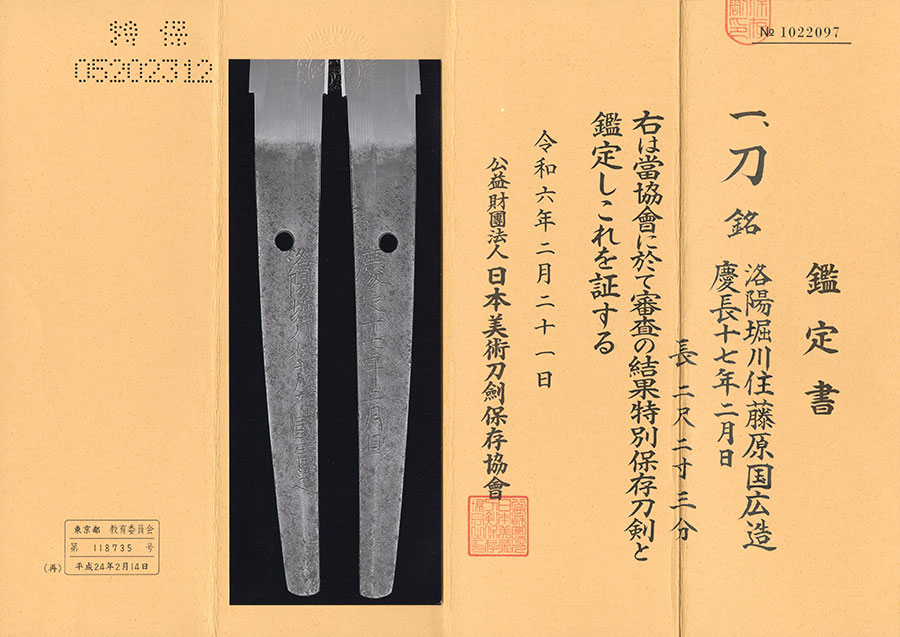
Certificate reading — 銘 洛陽堀川住藤原國廣造 慶長十七年二月日
Certificate reading — 銘 洛陽堀川住藤原國廣造 慶長十七年二月日