Around 1800 Suishinshi Masahide argued in his writings that the craft must return to the old masters’ methods: the fukkotō revival. His greatest successor Naotane worked convincingly in Bizen and Sōshū manners that had been dead for centuries.
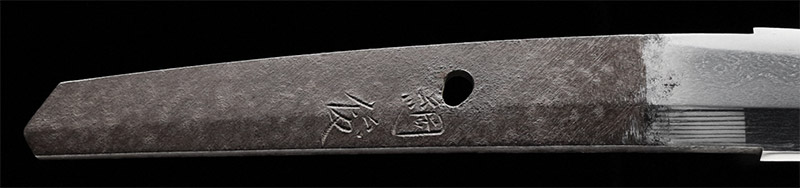
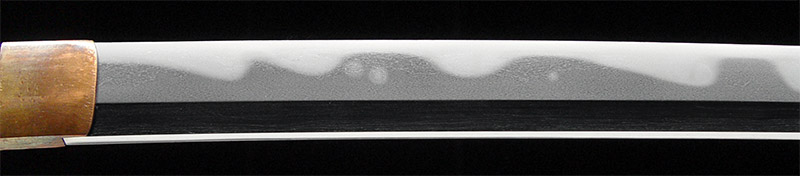
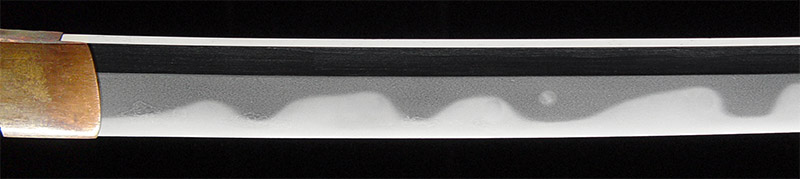
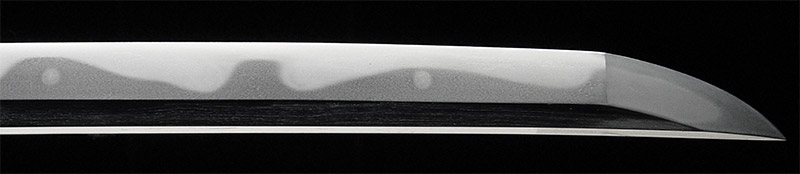
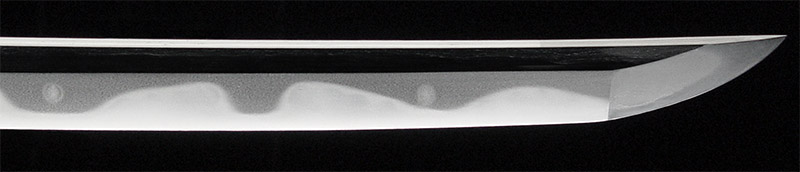
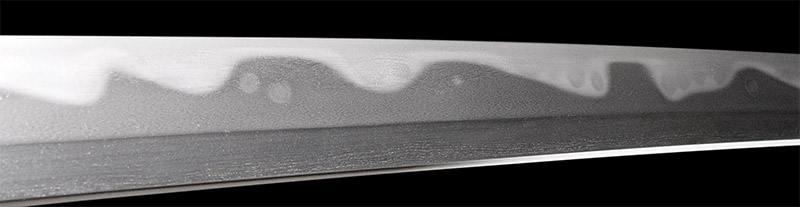
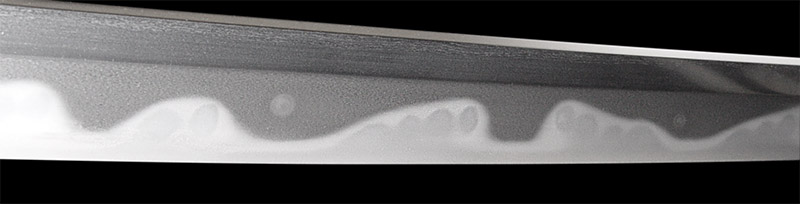
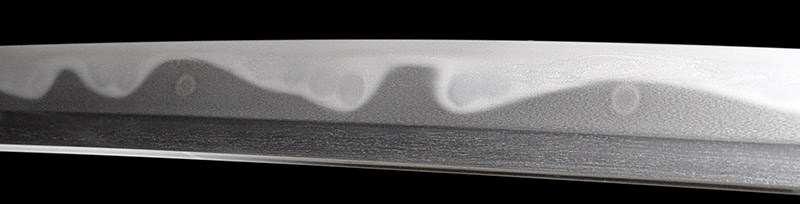
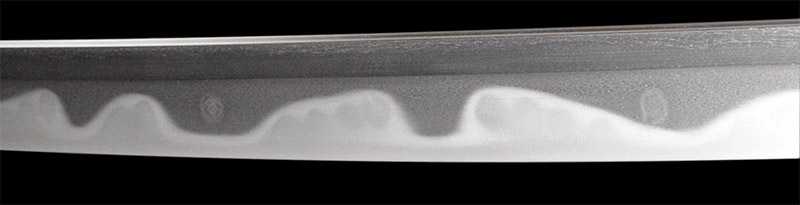
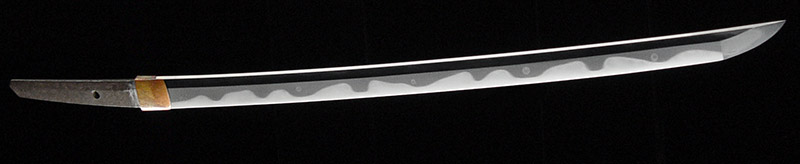
綱俊は出羽米沢の出身で、米沢藩主上杉家の藩工。備前伝の第一人者と呼ばれ、また、津田助廣の濤瀾刃を写して名を馳せる。水心子正秀門下に於いて固山宗次や細川正義などと共に人気を誇った。初銘は加藤綱俊と切り、文政頃から江戸麻布の上杉家中屋敷に住して鍛刀。のちに長運斉綱俊と名乗った。 本作は華やかな濤乱刃が目を引き、刃中には砂流しが働いて所々に玉を焼く。小板目肌は詰み、地沸と地景が入って大阪風の強い地鉄。迫力ある大きな切先は稲妻走って小丸に返る。茎は生ぶで大筋違の鑢目が掻かれ、文政頃の銘切りが見られる。地刃ともに冴えた助広張りの優刀。特別保存刀剣鑑定書附。
Offered by Tokka Biz
This piece has sold
Get an email when a new Suishinshi Masahide Tsunatoshi piece hits the market.


As written by the shop
Shinshinto · Musashi · around 1830-1844
Fujishiro Jo saku · Tōken Taikan top 37%
7 pieces on the market now
Tsunatoshi was originally from Yonezawa in Dewa Province; his personal name was Kato Hachiro, and he used the art name Chounsai. He served as a domain smith for the Uesugi clan, later going to Edo and taking up residence in Azabu. He died in Bunkyu 3 (1863) at the age of sixty-six. His active career is documented through dated works spanning the Tenpo era, with productions from Tenpo 9 (1838) through Tenpo 12 (1841) among those that have received Juyo designation.
Tsunatoshi's workmanship primarily followed the Bizen tradition. His specialty was a choji temper mixed with gunome in nioi-deki, with long ashi entering and the nioiguchi tending toward tightness; in addition, he produced suguha and toran-midare. The toran-flavored mode achieves a large o-gunome midare with tama-yaki, nie adhering somewhat unevenly, and hakikake at the boshi. Across all styles, his forging is characteristically a tightly compacted ko-itame that tends toward a muji-like appearance -- the plain, featureless-looking steel common in shinshinto work, though in Tsunatoshi's case worked with particular density and carrying ji-nie. His horimono are noteworthy: bo-hi with accompanying soe-bi, bonji, shinkurikara, gomabashi, and claws, at times executed by the smith's own hand as documented by tang inscriptions stating the carvings were by the maker himself.
Tsunatoshi's extant designated works include katana, wakizashi, and a matched daisho pair -- the survival of which as a set makes it "especially useful reference material" in the NBTHK's assessment. His productions range from imposing katana of 75.5 cm with extremely deep sori to hira-zukuri wakizashi with elaborate carving, and one piece retains its original payment receipt addressed to the commissioning patron, providing documentary evidence of the domain smith's working practice.
Where Tsunatoshi stands among comparable artisans: across all of nihontō, and within tradition, era, and period. The tiers (Foremost · Leading · Major · Notable) weigh official designations from the NBTHK and Japan's Agency for Cultural Affairs, together with historical honors of lasting repute such as the Sansaku and Meibutsu-chō.
Select a lens to see how it's measured.
Years he was demonstrably active, proven by signed-and-dated blades
Shinshinto · Musashi
70 pieces on the market now
At Hamachō in Edo, in the closing decades of the eighteenth century and the opening ones of the nineteenth, Suishinshi Masahide[[c:1]] gathered the school that would turn Japanese swordmaking back toward its medieval models. Born Kawabe Gihachirō at Akayu in Dewa in 1750, signing first as Suzuki Takahide and then Eikoku, he studied under the Shitahara smith Yoshihide of Musashi, took the name Masahide in An'ei 3, and served the Akimoto house of Yamagata before settling in Edo, where he worked for nearly fifty years. He is the founding figure of the shinshintō and the theorist of the fukko-tō (revival-sword) doctrine, the argument that the sword ought to return to its Kamakura forms. Around that teaching he drew a large body of pupils, among them Taikei Naotane, who would give the revival its fullest practical form, the future second Masayoshi (Hosokawa Morihide), and a wider Edo and provincial following that carried the program into the Mito, Yonezawa, Tsuyama, and Tatebayashi domains. The shared vocabulary of the school is the deliberate reach back into the koto traditions, worked over a tightly forged, often muji-toned ko-itame with thick ji-nie. Masahide's own prime hand was the Ōsaka-utsushi, the surging tōran-midare of Tsuda Sukehiro opening from a long yakidashi and the broad suguha after Inoue Shinkai, betrayed on even his closest copies by a blackish, coarse nie that spills from the ha into the ji. Naotane gave the revival its Bizen and Sōshū faces: a reverse-leaning chōji-midare with angular kaku-gunome and saka-ashi, modeled on the late-Kamakura Osafune masters Kagemitsu and Kanemitsu and anchored by a consciously revived midare-utsuri that no ordinary shinshintō steel carries, set beside a Sōshū notare with its whorled uzumaki-hada and coarse, striped nie. The pupils divided this inheritance along their own lines. Jirōtarō Naokatsu, Naotane's adopted son, took a Bizen-den led by a kataochi-gunome from Kanemitsu with a pervasive saka-gakari slant and chōji- or midare-utsuri in the ji.
Suishinshi Masatsugu reproduced Naotane's two traditions, Sōshū and Bizen, down to the cut of his signature. Through Masayoshi the Bizen current passed to his heir Hosokawa Masamori of Tsuyama, whose chōji clusters mixed with gunome-chōji and togariba. The Osaka wave traveled separately into Mito through Naoe Sukemasa, who set a Shinkai-styled suguha and a Sukehiro tōran over a clear ko-itame, while Chōunsai Tsunatoshi of the Uesugi service carried a nioi-deki chōji mixed with gunome, suguha, and tōran-midare, often with carving by his own hand. To kantei the school is to weigh a tradition consciously copied against the period marks the copy cannot shed: the constant of the line is that the hamon is never the pure nioi-deki of old Bizen but carries nie throughout, a difference the NBTHK names outright as the divide between koto and shinshintō. The revived utsuri in Naotane and Naokatsu, the spilling nie in Masahide, the whorled uzumaki-hada shared across the line, and the broad, thick-kasane late-Edo sugata are the surest tells, narrowed further by the school's habit of full, dated signatures that make these smiths among the most exactly knowable of their age. Masahide stands at the head as the teacher and theorist, his finest work in his Ōsaka copies rather than the doctrine he proclaimed; Naotane stands ahead of him in execution, his Bizen-den held the finest among the shinshintō. Their pupils define the late-Edo Osafune and Sōshū revivals as practiced through Edo and the domains, with Naokatsu and Masatsugu read as the next hands after Naotane and Masayoshi. The provenance of the school runs through domain commission and bestowal (Mito blades forged at the Kōrakuen by lordly order, Tsuyama and Yonezawa fief work, Naotane's Sanada daishō and a tachi recorded in Honma's inventory of the Imperial collection) rather than ancient daimyō transmission, fitting for a movement that, within a single generation at Edo, redrew the direction of nineteenth-century swordmaking by turning it back toward the old models. Learn more →
| Smith | Era | Designated |
|---|---|---|
| Naotane直胤 | 1801-1837 | 40 |
| Masahide正秀 | 1777-1817 | 28 |
| Sukemasa助政 | 1804-1825 | 8 |
| Jirotaro Naokatsu直勝 | 1805-1858 | 7 |
| Masayoshi正義 | 1791-1860 | 5 |
The Shinshintō revival
Around 1800 Suishinshi Masahide argued in his writings that the craft must return to the old masters’ methods: the fukkotō revival. His greatest successor Naotane worked convincingly in Bizen and Sōshū manners that had been dead for centuries.
A Hozon-certified blade judged to show notably superior workmanship and a better state of preservation. The bar is higher: re-tempered blades and most unsigned Muromachi/Edo works are excluded.
The NBTHK (Nihon Bijutsu Tōken Hozon Kyōkai, the Society for the Preservation of Japanese Art Swords) is a public-interest incorporated foundation founded in 1948 and supervised by Japan’s Agency for Cultural Affairs (Bunkachō); it is based at the Japanese Sword Museum in Tokyo. Its expert panels physically examine each submitted work (shinsa) and issue a certificate (kanteishō) ranking it by artistic and historical merit. NBTHK papers are the most widely recognized standard of authentication for Japanese swords and fittings.
NBTHK official siteIf the item is not to your liking, please feel free to return it for any reason. Return shipping is the customer's responsibility. After the item arrives and we confirm it is in the same condition as at the time of sale, we transfer the refund to your designated account the same day. Purchases made at the store are outside the scope of cooling-off.