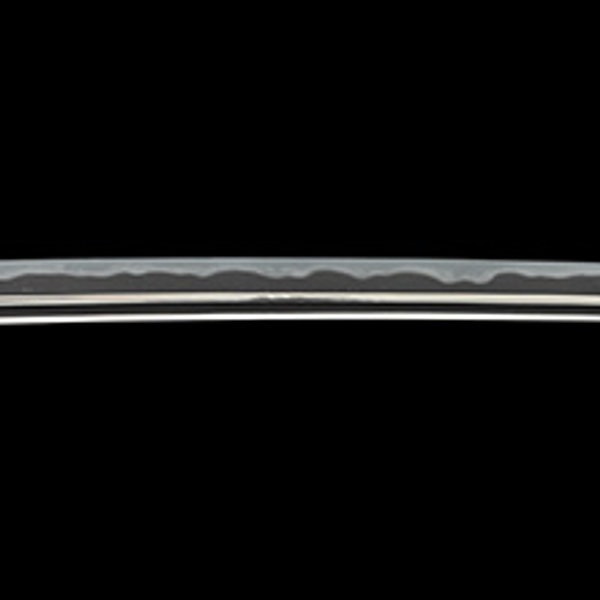
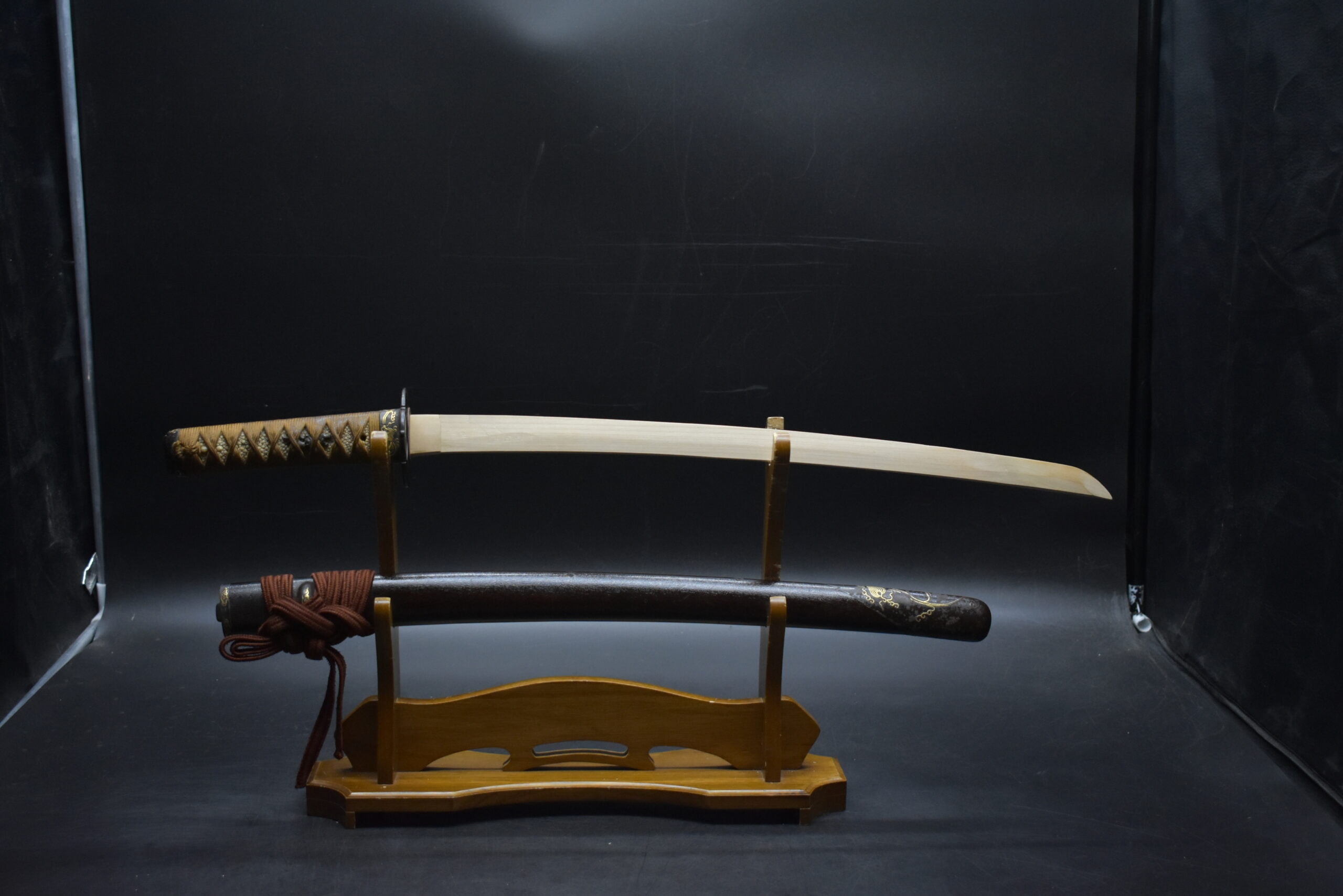
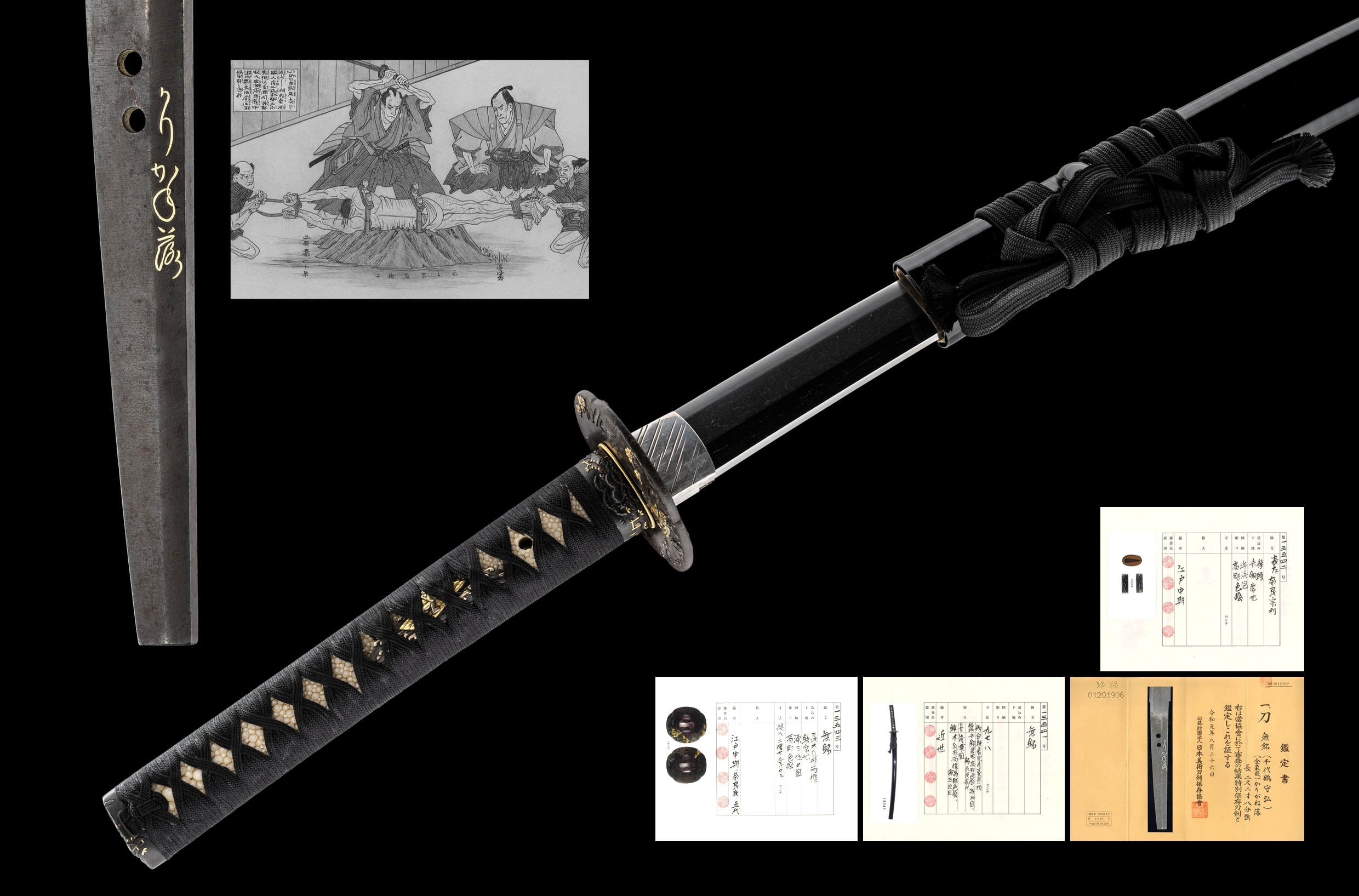
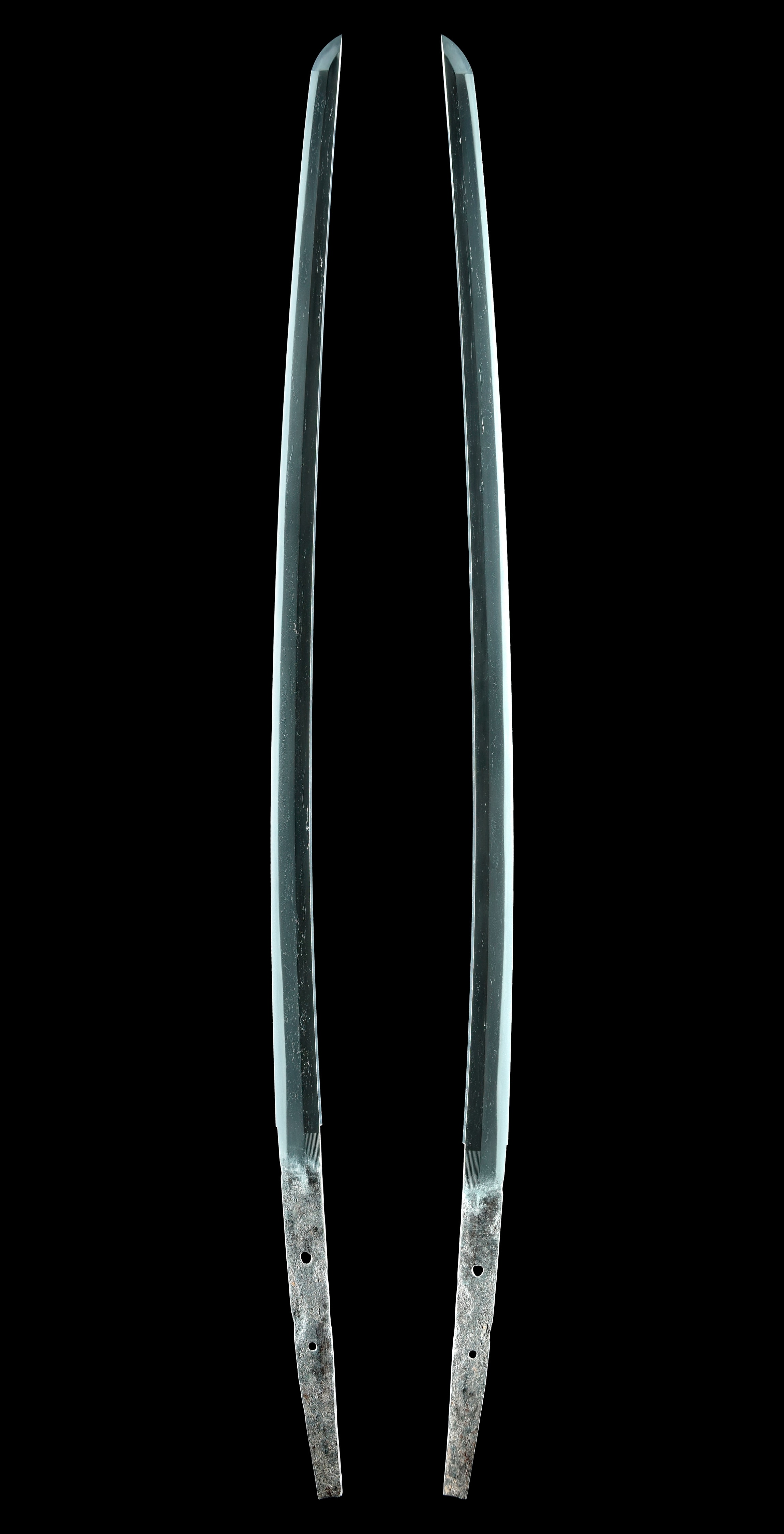
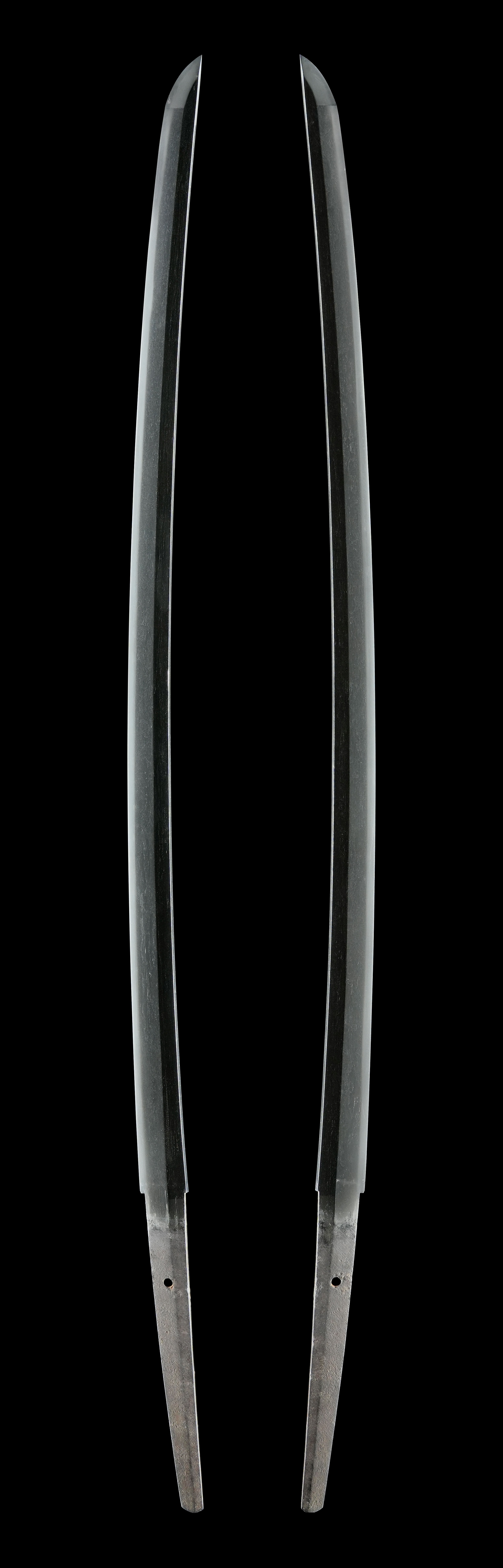
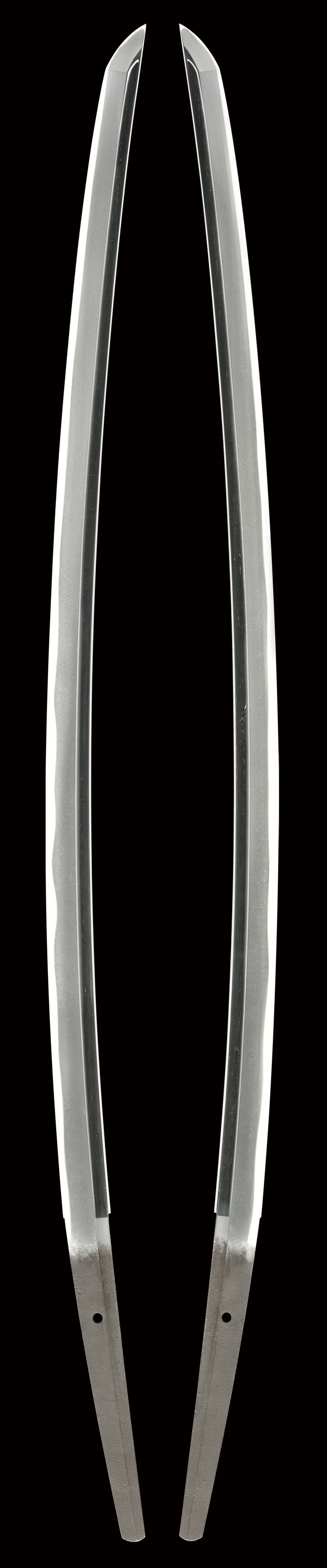
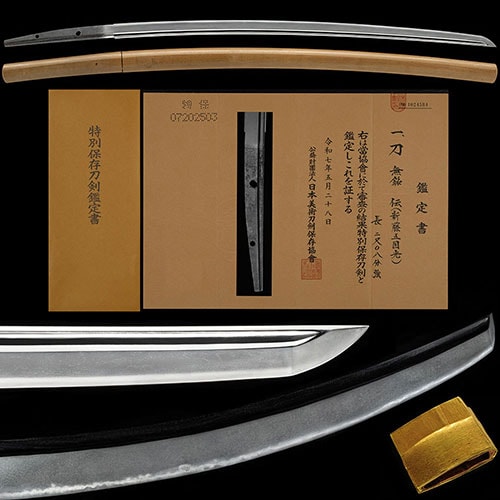
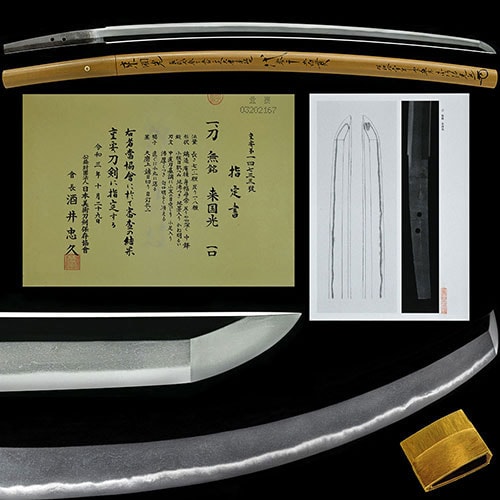
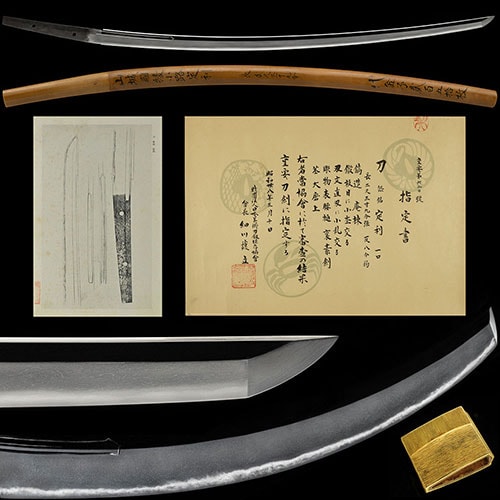
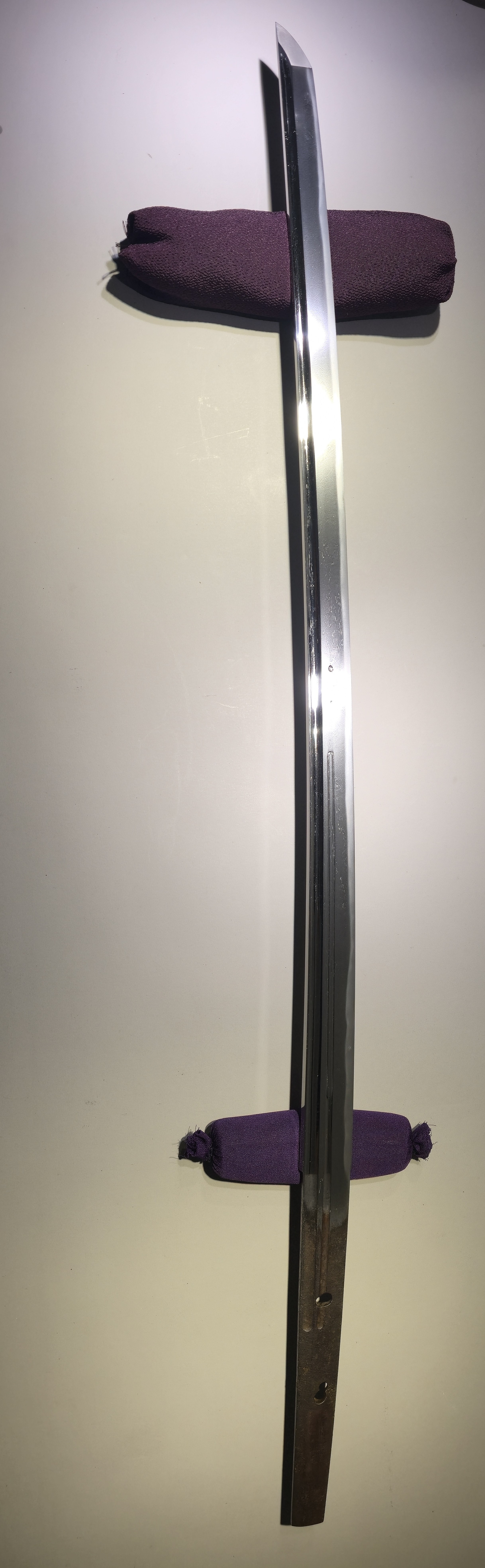
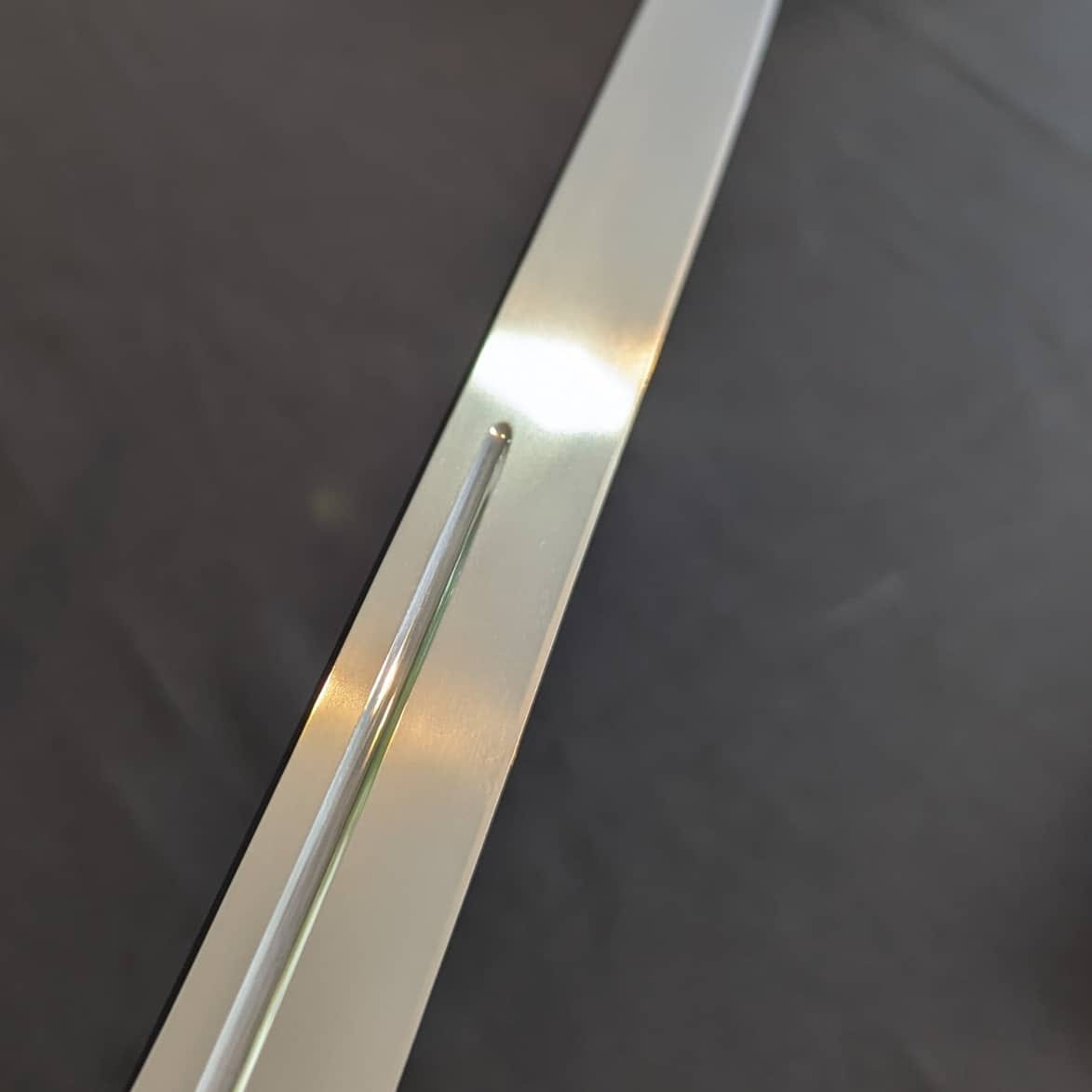
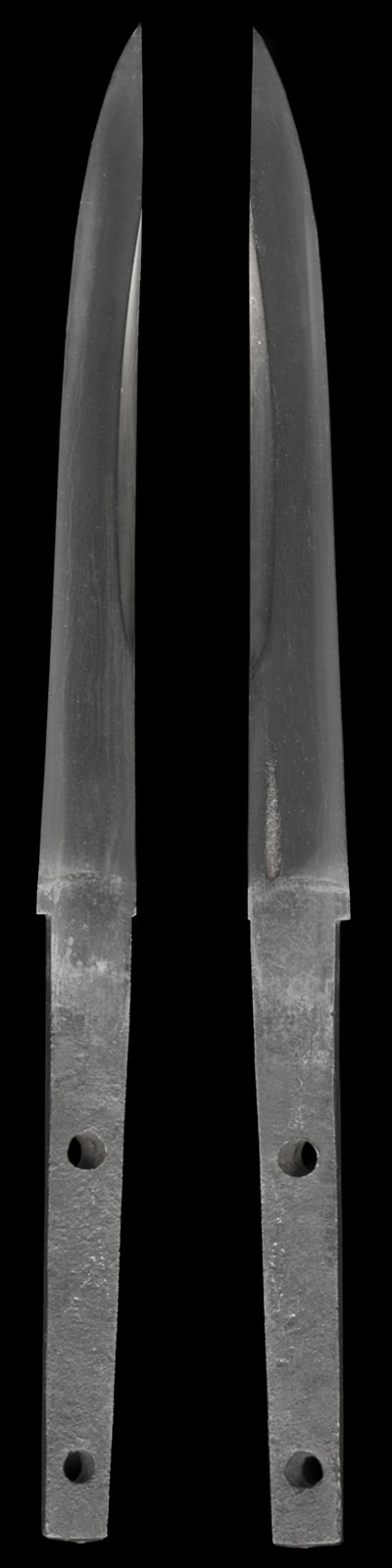
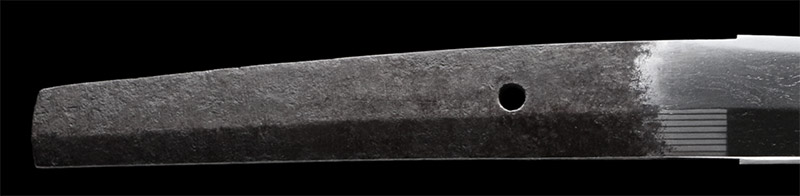
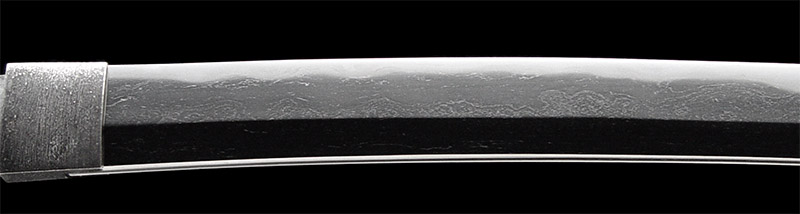
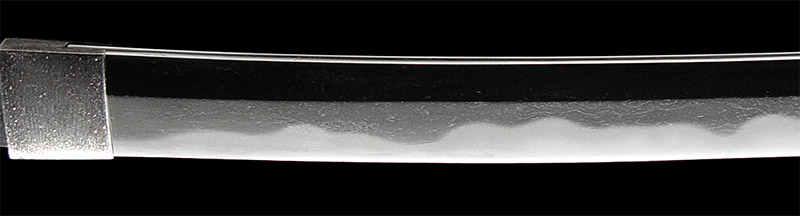
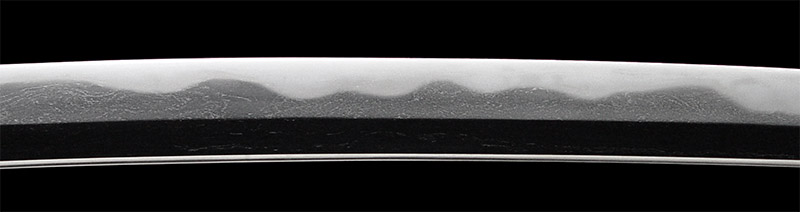
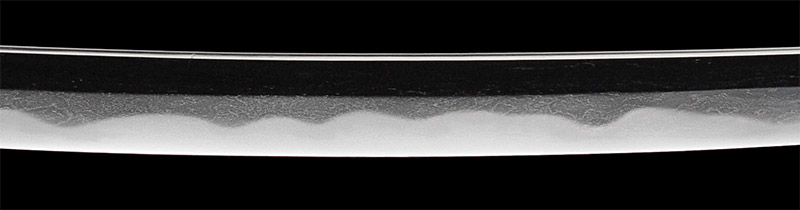
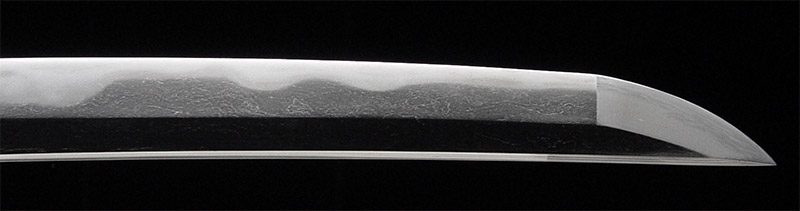
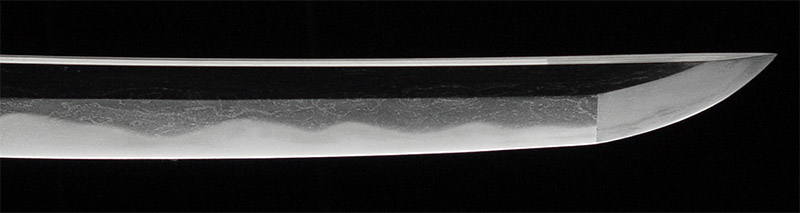
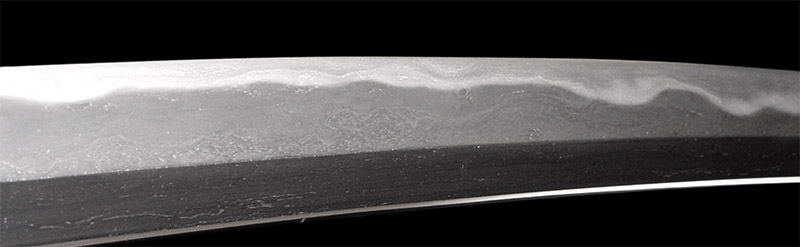
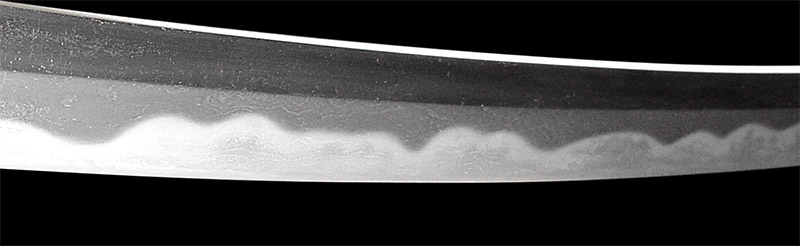
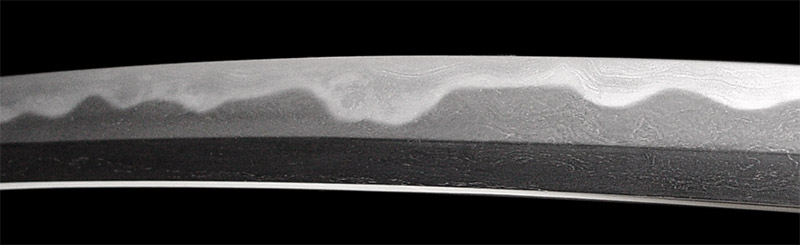
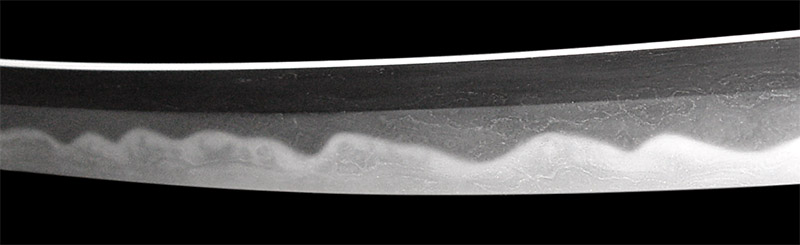
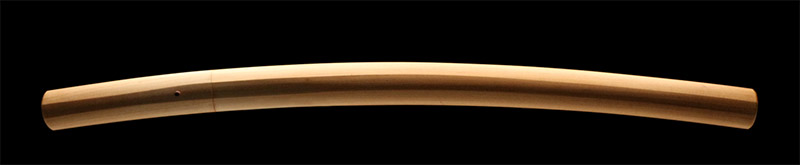
This is a wakizashi by Esshu Mitsuyuki, dating to the Nanbokucho period (1387). It features a gunome midare hamon and itame ni mokume jigane. The blade is accompanied by a NBTHK Hozon Token certificate.
 NihontoWatch
mumei · Esshu · Nanbokucho · nagasa 50.8cm · sori 1.4cm


Yamashiro-den · Echizen · around 1356-1361
Where Mitsuyuki stands among comparable artisans: across all of nihontō, and within tradition, era, and period. The tiers (Foremost · Leading · Major · Notable) weigh official designations from the NBTHK and Japan's Agency for Cultural Affairs, together with historical honors of lasting repute such as the Sansaku and Meibutsu-chō.
Select a lens to see how it's measured.
Yamashiro-den · Echizen
10 pieces on the market now
The Chiyozuru lineage took root in Echizen Province during the Nanbokuchō period, and the setsumei consistently trace its origin to Rai Kuniyasu (来国安). He is said to have been born in Yamashiro Province, with one tradition holding him a grandson of Rai Kunisue; he later moved to Echizen, where the meikan place him around the Jōji and Sadaji eras (ca.
1362 to 1368). A parallel tradition, recorded on the signed tachi attributed to Morihiro, names Chiyozuru Kuniyasu[[c:1]] as a disciple of Rai Kuniyasu and the founder of the line. Learn more →
| Smith | Era | Designated |
|---|---|---|
| Kuniyasu國安 | 1345-1350 | 4 |
| Ieyoshi家善 | 1487-1489 | 0 |
| Kagemori景守 | 1394-1428 | 0 |
| Munemitsu宗光 | 1441-1444 | 0 |
| Iemasa家正 | 1492-1501 | 0 |
Certifies a genuine blade worth preserving: a signature confirmed correct, or, if unsigned, an era, province, and school that the NBTHK can reliably identify.
The NBTHK (Nihon Bijutsu Tōken Hozon Kyōkai, the Society for the Preservation of Japanese Art Swords) is a public-interest incorporated foundation founded in 1948 and supervised by Japan’s Agency for Cultural Affairs (Bunkachō); it is based at the Japanese Sword Museum in Tokyo. Its expert panels physically examine each submitted work (shinsa) and issue a certificate (kanteishō) ranking it by artistic and historical merit. NBTHK papers are the most widely recognized standard of authentication for Japanese swords and fittings.
NBTHK official siteIf the item is not to your liking, please feel free to return it for any reason. Return shipping is the customer's responsibility. After the item arrives and we confirm it is in the same condition as at the time of sale, we transfer the refund to your designated account the same day. Purchases made at the store are outside the scope of cooling-off.
This is a wakizashi by Esshu Mitsuyuki, dating to the Nanbokucho period (1387). It features a gunome midare hamon and itame ni mokume jigane. The blade is accompanied by a NBTHK Hozon Token certificate.
NihontoWatchmumei · Esshu · Nanbokucho · nagasa 50.8cm · sori 1.4cm
Yamashiro-den · Echizen · around 1356-1361
Where Mitsuyuki stands among comparable artisans: across all of nihontō, and within tradition, era, and period. The tiers (Foremost · Leading · Major · Notable) weigh official designations from the NBTHK and Japan's Agency for Cultural Affairs, together with historical honors of lasting repute such as the Sansaku and Meibutsu-chō.
Select a lens to see how it's measured.
Yamashiro-den · Echizen
10 pieces on the market now
The Chiyozuru lineage took root in Echizen Province during the Nanbokuchō period, and the setsumei consistently trace its origin to Rai Kuniyasu (来国安). He is said to have been born in Yamashiro Province, with one tradition holding him a grandson of Rai Kunisue; he later moved to Echizen, where the meikan place him around the Jōji and Sadaji eras (ca.
1362 to 1368). A parallel tradition, recorded on the signed tachi attributed to Morihiro, names Chiyozuru Kuniyasu[[c:1]] as a disciple of Rai Kuniyasu and the founder of the line. Learn more →
| Smith | Era | Designated |
|---|---|---|
| Kuniyasu國安 | 1345-1350 | 4 |
| Ieyoshi家善 | 1487-1489 | 0 |
| Kagemori景守 | 1394-1428 | 0 |
| Munemitsu宗光 | 1441-1444 | 0 |
| Iemasa家正 | 1492-1501 | 0 |
Certifies a genuine blade worth preserving: a signature confirmed correct, or, if unsigned, an era, province, and school that the NBTHK can reliably identify.
The NBTHK (Nihon Bijutsu Tōken Hozon Kyōkai, the Society for the Preservation of Japanese Art Swords) is a public-interest incorporated foundation founded in 1948 and supervised by Japan’s Agency for Cultural Affairs (Bunkachō); it is based at the Japanese Sword Museum in Tokyo. Its expert panels physically examine each submitted work (shinsa) and issue a certificate (kanteishō) ranking it by artistic and historical merit. NBTHK papers are the most widely recognized standard of authentication for Japanese swords and fittings.
NBTHK official siteIf the item is not to your liking, please feel free to return it for any reason. Return shipping is the customer's responsibility. After the item arrives and we confirm it is in the same condition as at the time of sale, we transfer the refund to your designated account the same day. Purchases made at the store are outside the scope of cooling-off.