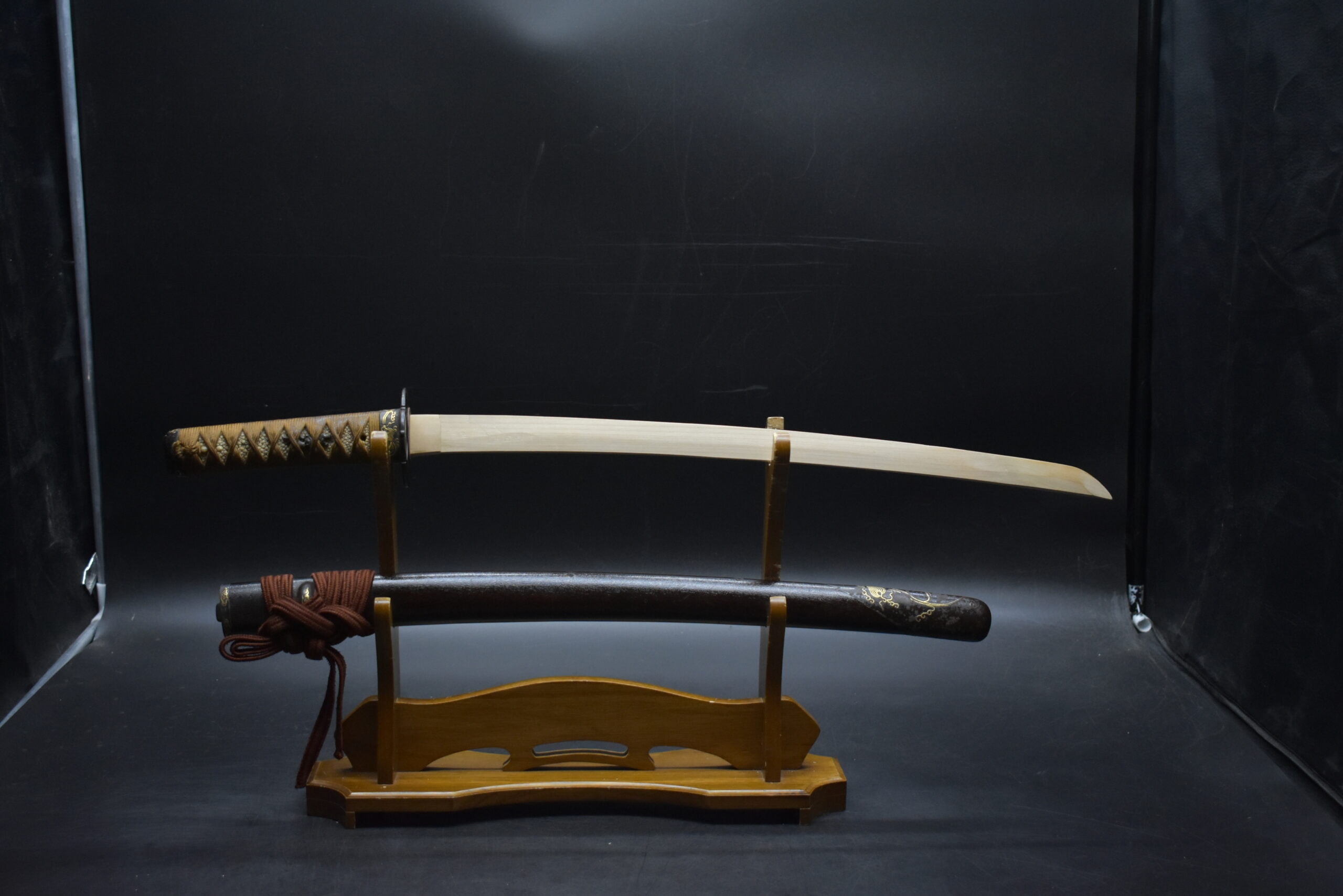
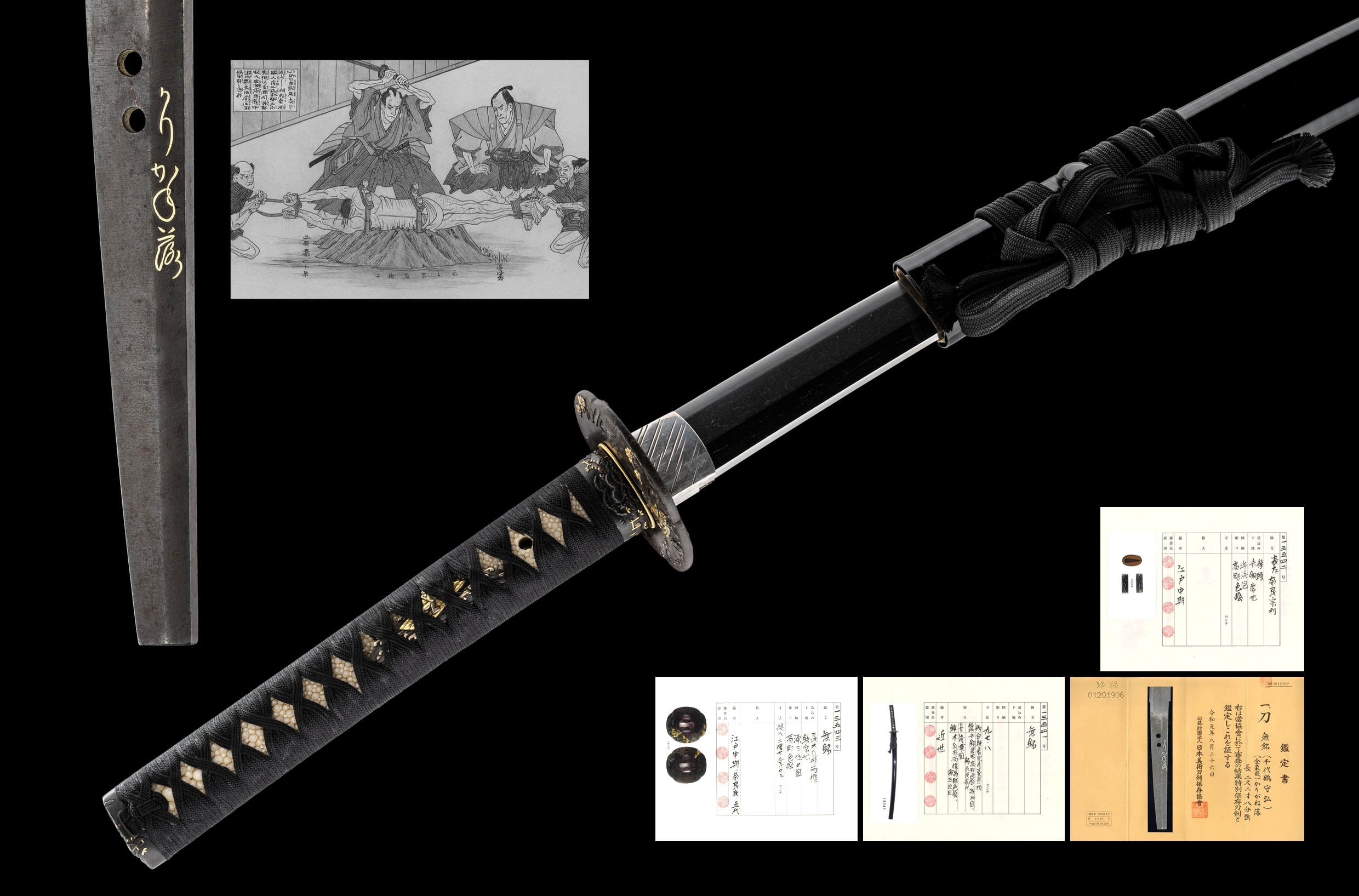
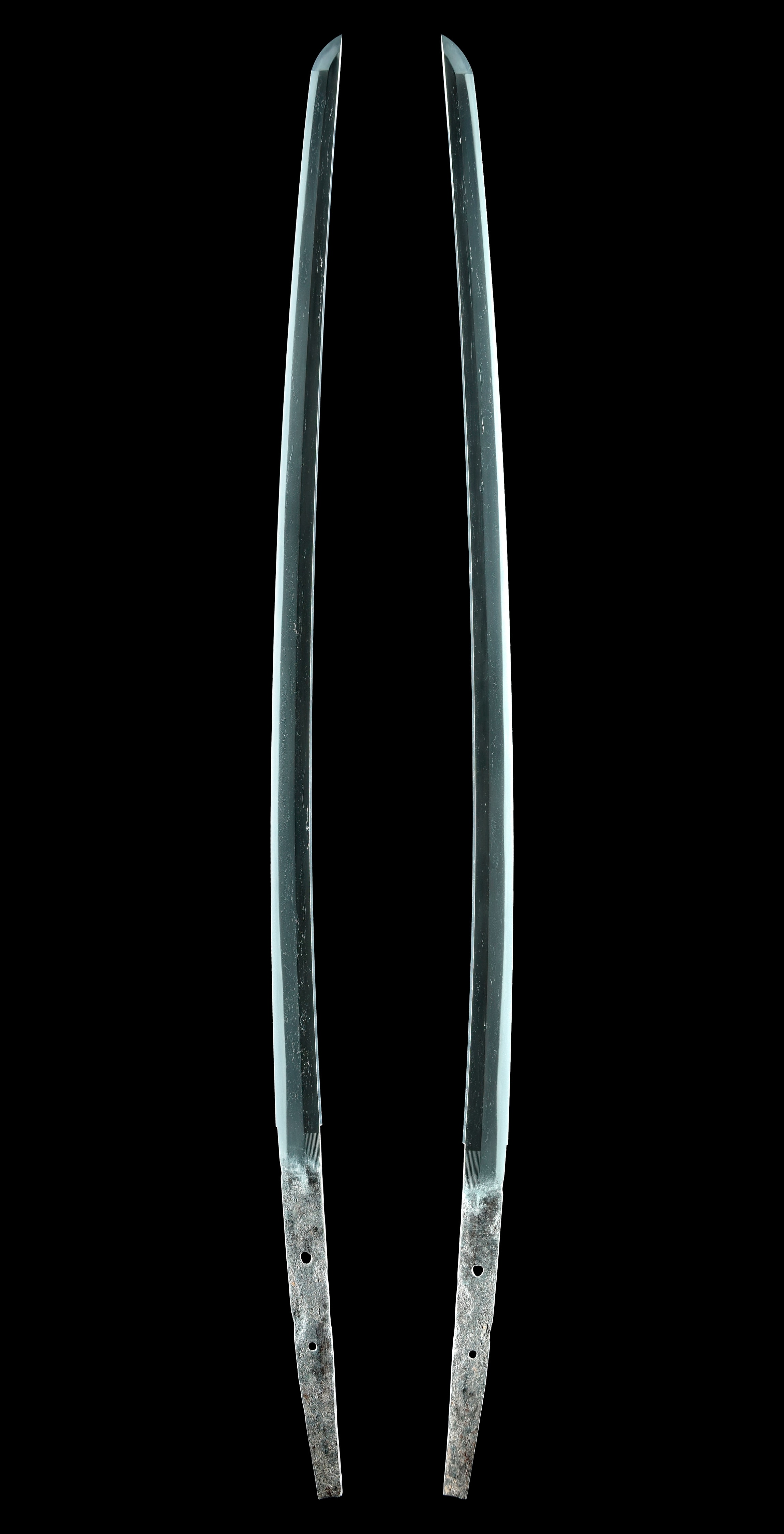
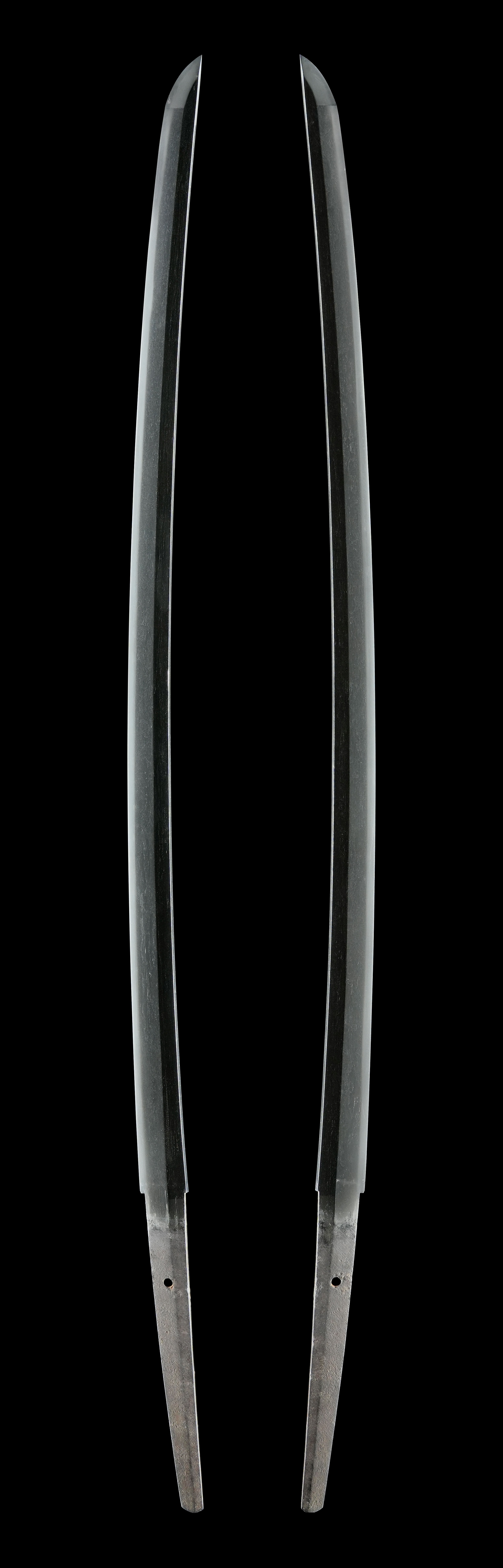
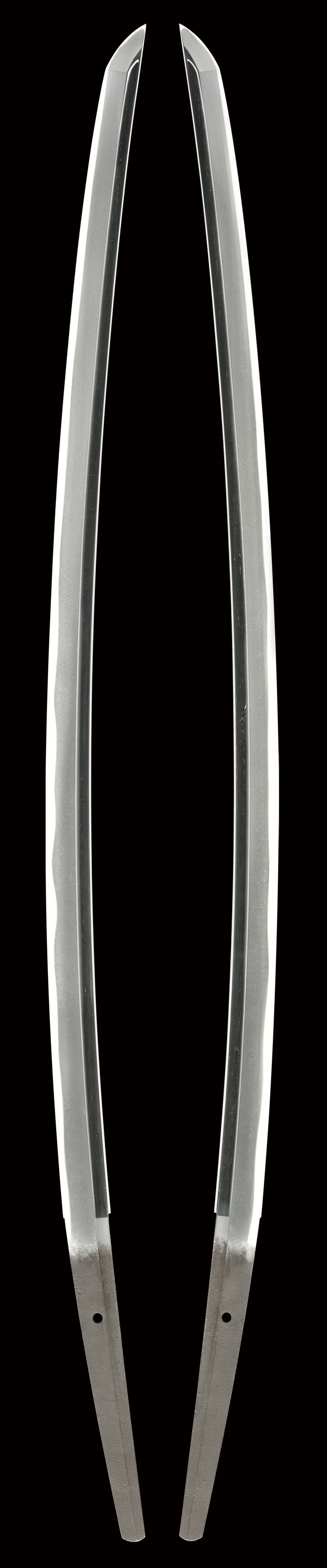
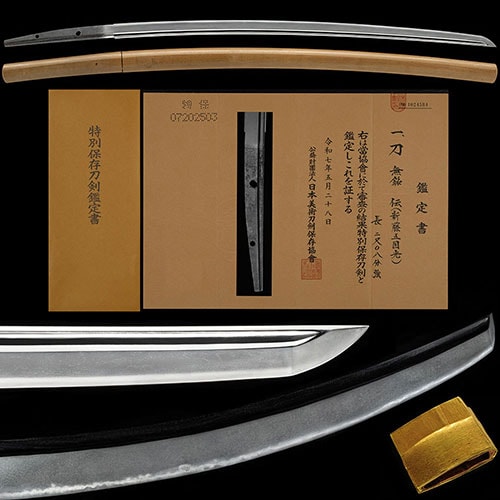
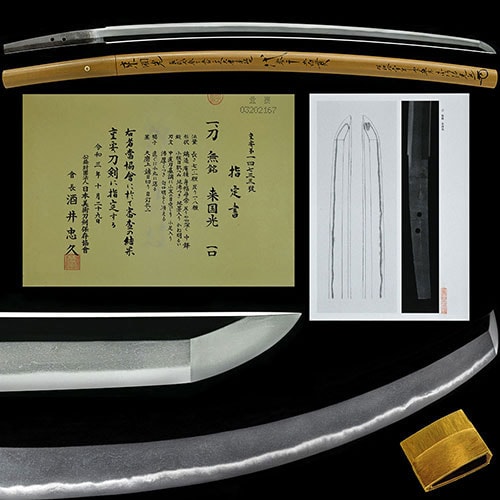
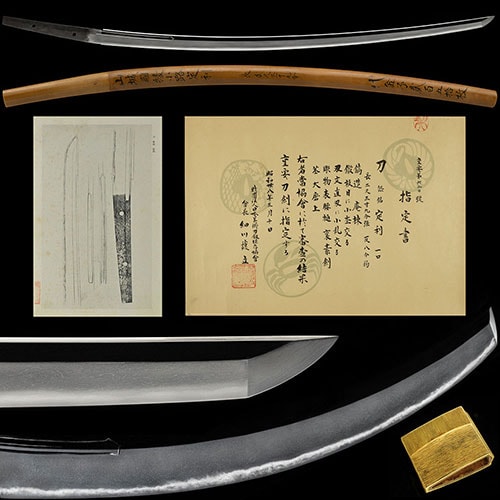
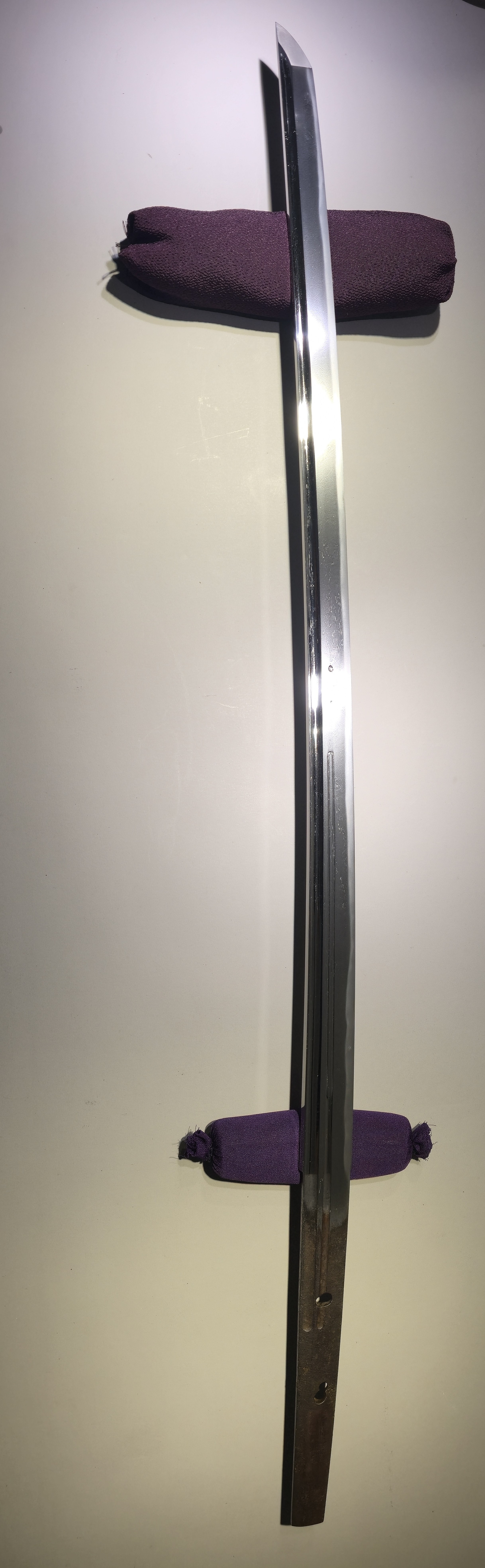
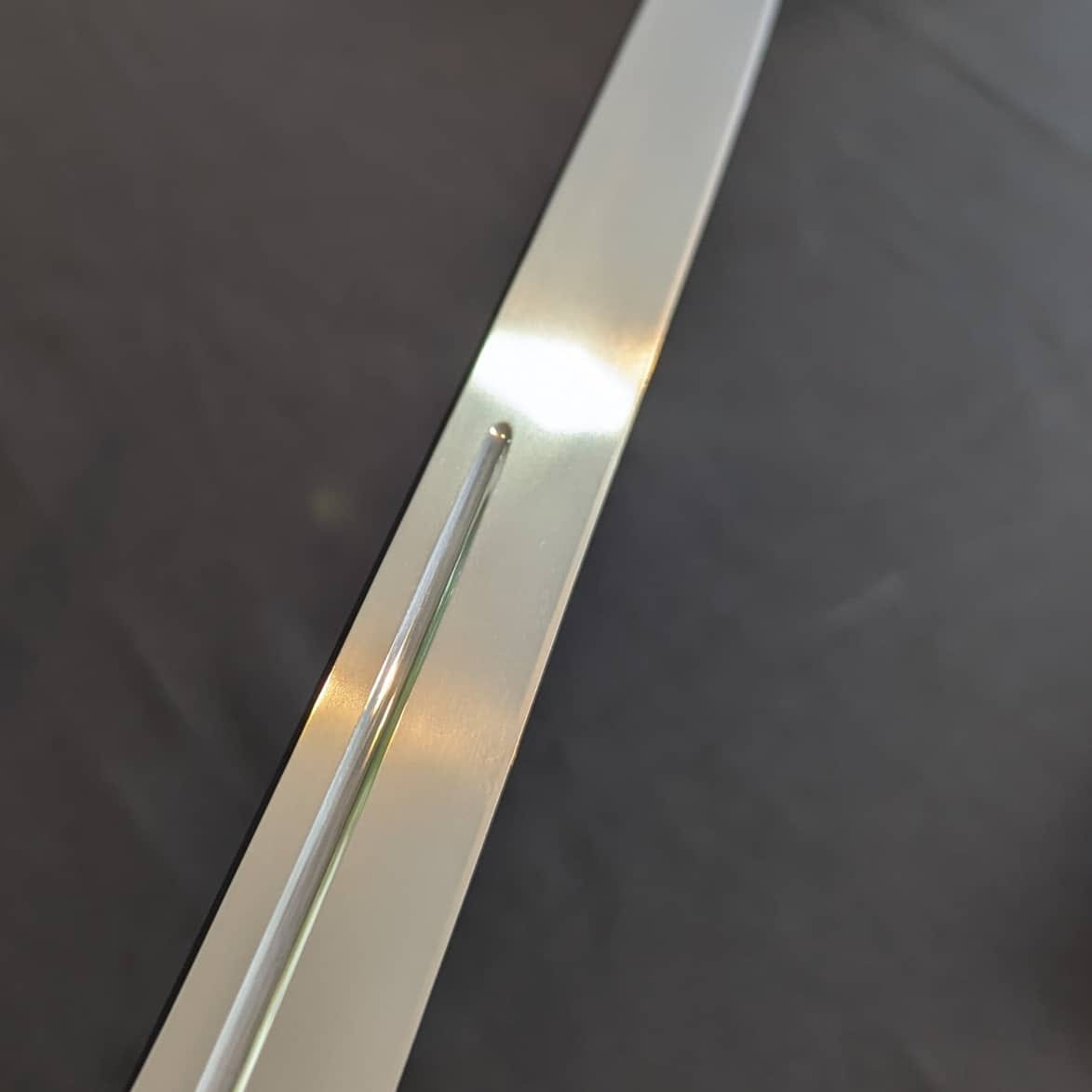
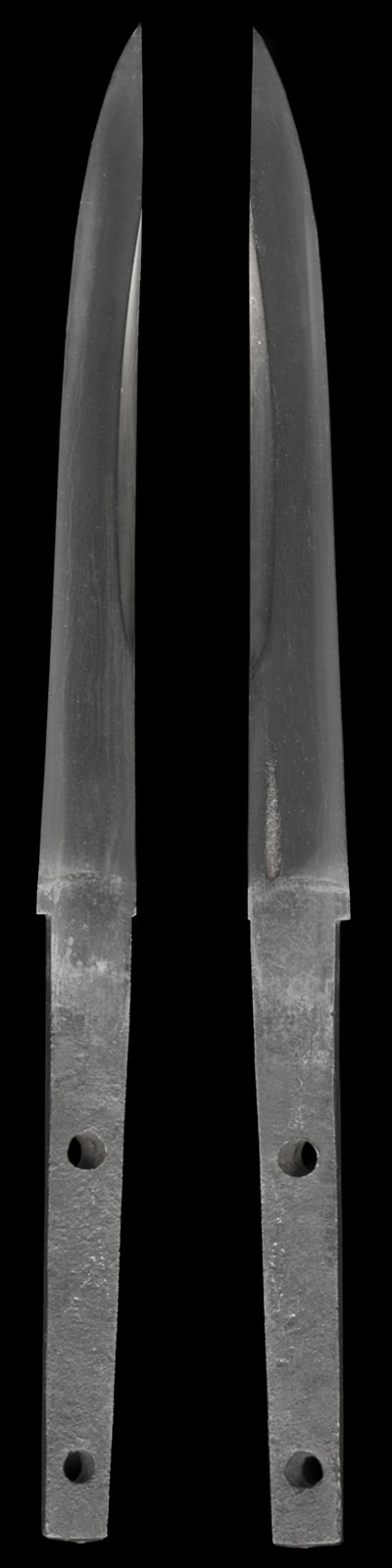
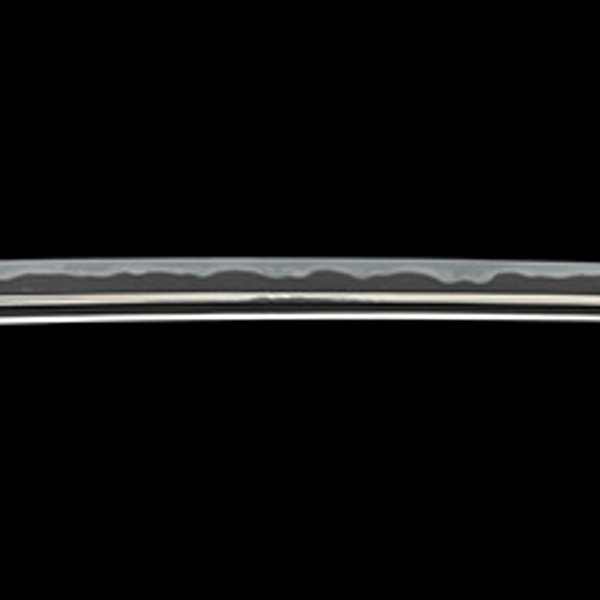
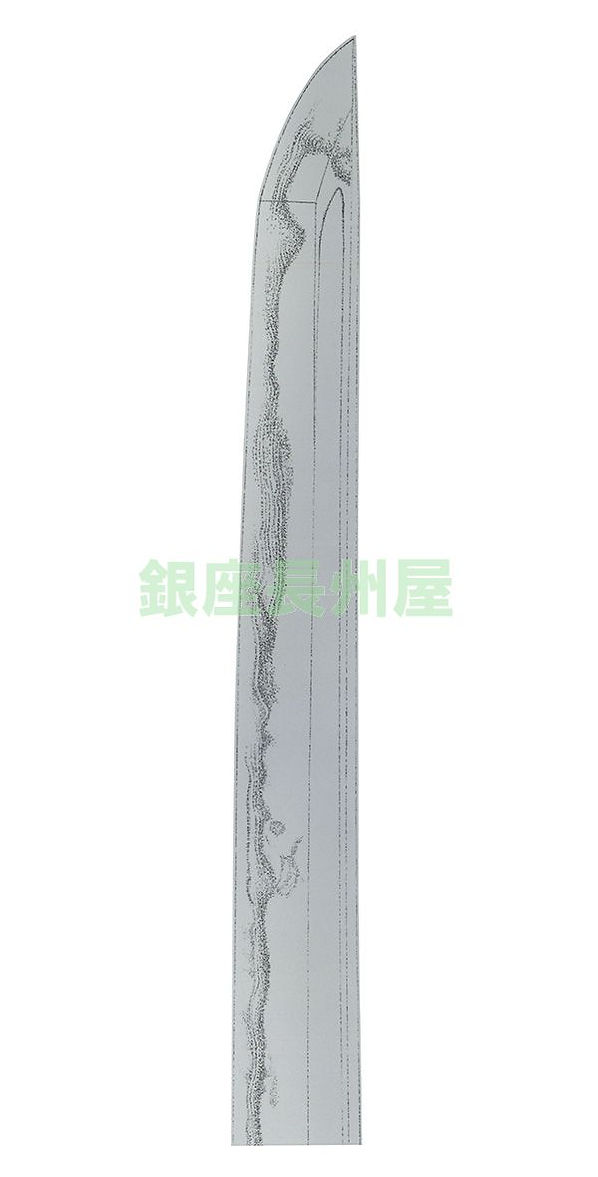
This is an o-suriage mumei katana attributed to Mitsuyuki of Echizen Province, active during the Nanbokucho period. Mitsuyuki is said to be a student of Kuniyuki and is known for works from the Kakei and Meitoku eras. He is an early smith in the Echizen school, preceding the Chiyozuru school which follows the Rai tradition.
 NihontoWatch
suriage-mumei · Chiyozuru · Nanbokucho
Yamashiro-den · Echizen · around 1356-1361
Where Mitsuyuki stands among comparable artisans: across all of nihontō, and within tradition, era, and period. The tiers (Foremost · Leading · Major · Notable) weigh official designations from the NBTHK and Japan's Agency for Cultural Affairs, together with historical honors of lasting repute such as the Sansaku and Meibutsu-chō.
Select a lens to see how it's measured.
Yamashiro-den · Echizen
10 pieces on the market now
The Chiyozuru lineage took root in Echizen Province during the Nanbokuchō period, and the setsumei consistently trace its origin to Rai Kuniyasu (来国安). He is said to have been born in Yamashiro Province, with one tradition holding him a grandson of Rai Kunisue; he later moved to Echizen, where the meikan place him around the Jōji and Sadaji eras (ca.
1362 to 1368). A parallel tradition, recorded on the signed tachi attributed to Morihiro, names Chiyozuru Kuniyasu[[c:1]] as a disciple of Rai Kuniyasu and the founder of the line. Learn more →
| Smith | Era | Designated |
|---|---|---|
| Kuniyasu國安 | 1345-1350 | 4 |
| Ieyoshi家善 | 1487-1489 | 0 |
| Kagemori景守 | 1394-1428 | 0 |
| Munemitsu宗光 | 1441-1444 | 0 |
| Iemasa家正 | 1492-1501 | 0 |
We could not find an authenticity certificate on the seller’s listing. Japanese swords and fittings are normally papered by the NBTHK (or the NTHK). Without one, the attribution is the seller’s own assessment and has not been independently verified — treat it with caution and ask the dealer about certification before buying.
If, due to our fault, the item differs significantly from its proper condition, the item may be returned. Cooling-off is within one week of the item's arrival.
This is an o-suriage mumei katana attributed to Mitsuyuki of Echizen Province, active during the Nanbokucho period. Mitsuyuki is said to be a student of Kuniyuki and is known for works from the Kakei and Meitoku eras. He is an early smith in the Echizen school, preceding the Chiyozuru school which follows the Rai tradition.
NihontoWatchsuriage-mumei · Chiyozuru · Nanbokucho
Yamashiro-den · Echizen · around 1356-1361
Where Mitsuyuki stands among comparable artisans: across all of nihontō, and within tradition, era, and period. The tiers (Foremost · Leading · Major · Notable) weigh official designations from the NBTHK and Japan's Agency for Cultural Affairs, together with historical honors of lasting repute such as the Sansaku and Meibutsu-chō.
Select a lens to see how it's measured.
Yamashiro-den · Echizen
10 pieces on the market now
The Chiyozuru lineage took root in Echizen Province during the Nanbokuchō period, and the setsumei consistently trace its origin to Rai Kuniyasu (来国安). He is said to have been born in Yamashiro Province, with one tradition holding him a grandson of Rai Kunisue; he later moved to Echizen, where the meikan place him around the Jōji and Sadaji eras (ca.
1362 to 1368). A parallel tradition, recorded on the signed tachi attributed to Morihiro, names Chiyozuru Kuniyasu[[c:1]] as a disciple of Rai Kuniyasu and the founder of the line. Learn more →
| Smith | Era | Designated |
|---|---|---|
| Kuniyasu國安 | 1345-1350 | 4 |
| Ieyoshi家善 | 1487-1489 | 0 |
| Kagemori景守 | 1394-1428 | 0 |
| Munemitsu宗光 | 1441-1444 | 0 |
| Iemasa家正 | 1492-1501 | 0 |
We could not find an authenticity certificate on the seller’s listing. Japanese swords and fittings are normally papered by the NBTHK (or the NTHK). Without one, the attribution is the seller’s own assessment and has not been independently verified — treat it with caution and ask the dealer about certification before buying.
If, due to our fault, the item differs significantly from its proper condition, the item may be returned. Cooling-off is within one week of the item's arrival.