NihontoWatch Mon

NihontoWatch

Market
Encyclopedia
Kantei
NihontoWatch Mon

NihontoWatch

Market
Encyclopedia
Kantei

Description

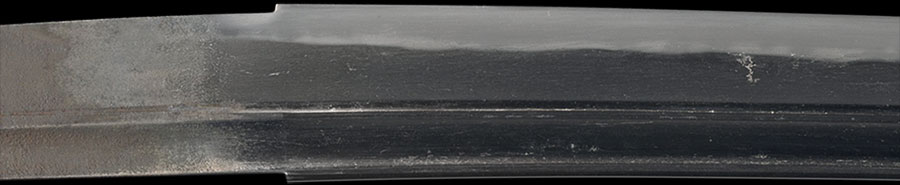
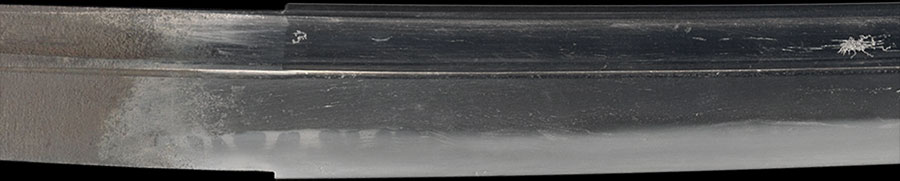
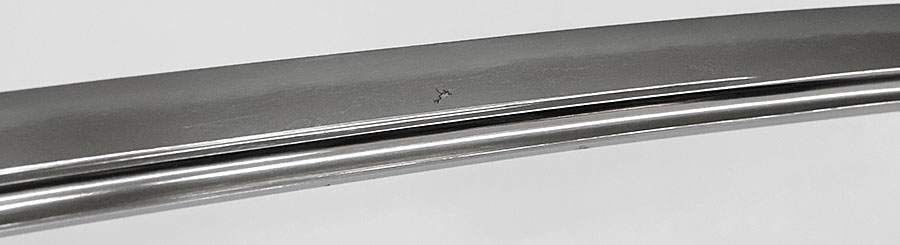
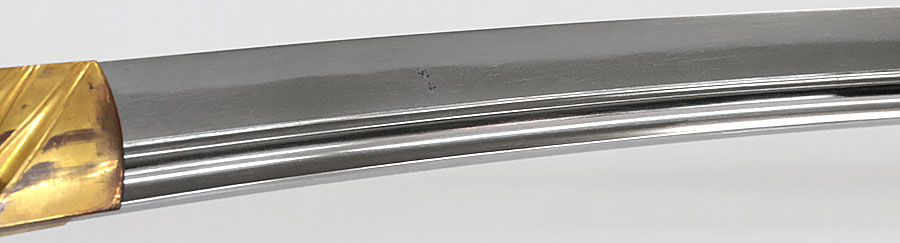
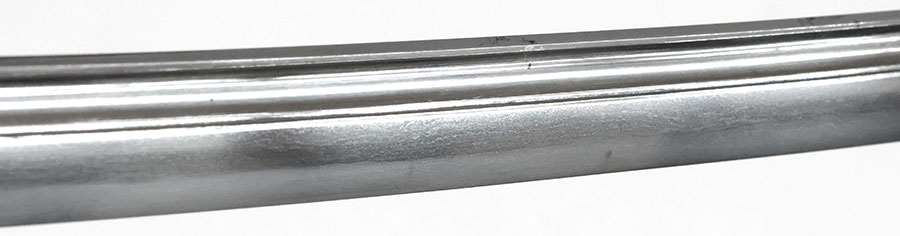
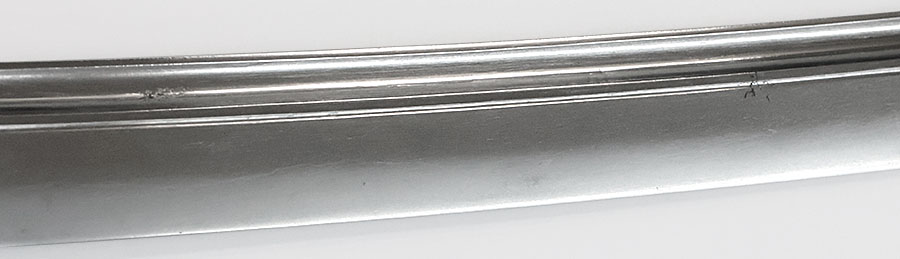
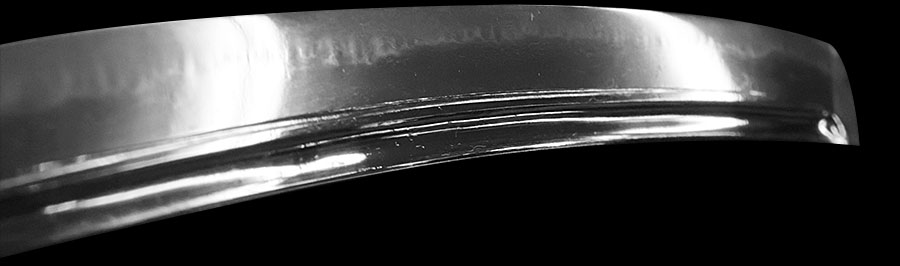
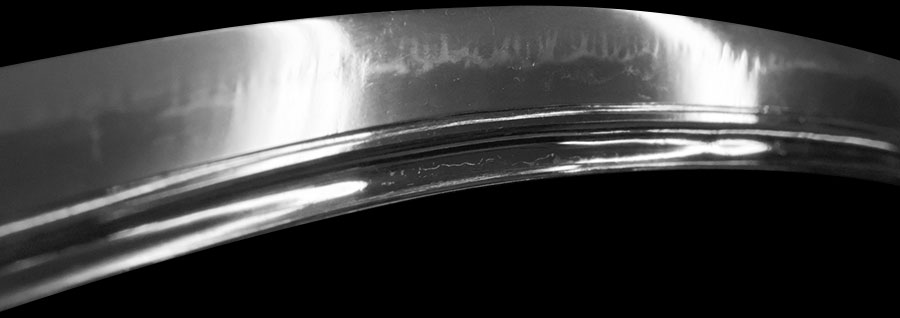
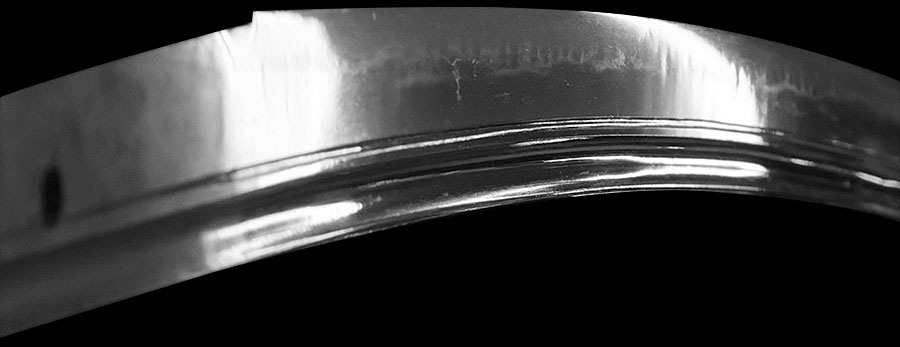
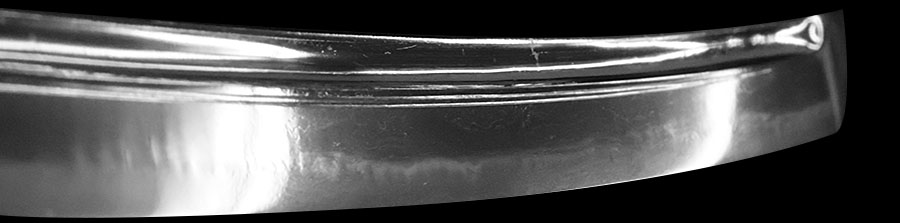
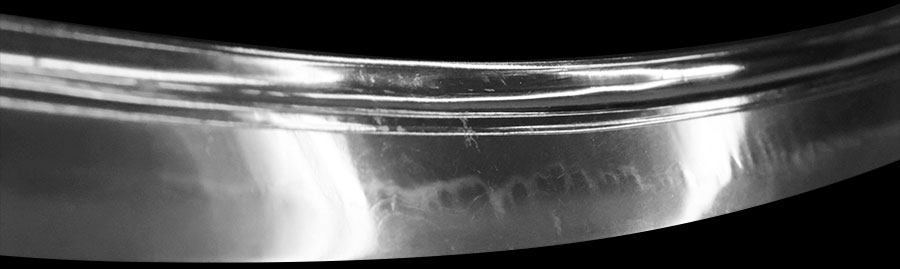
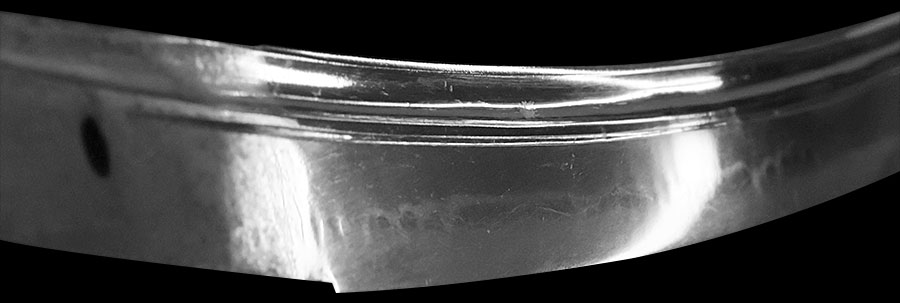
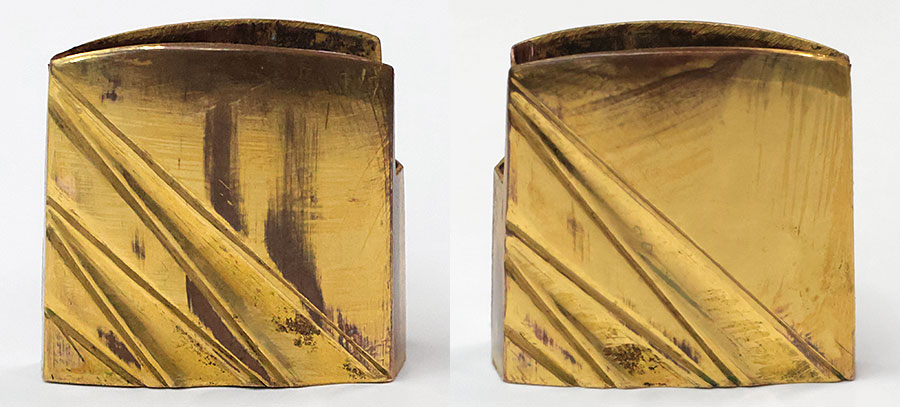
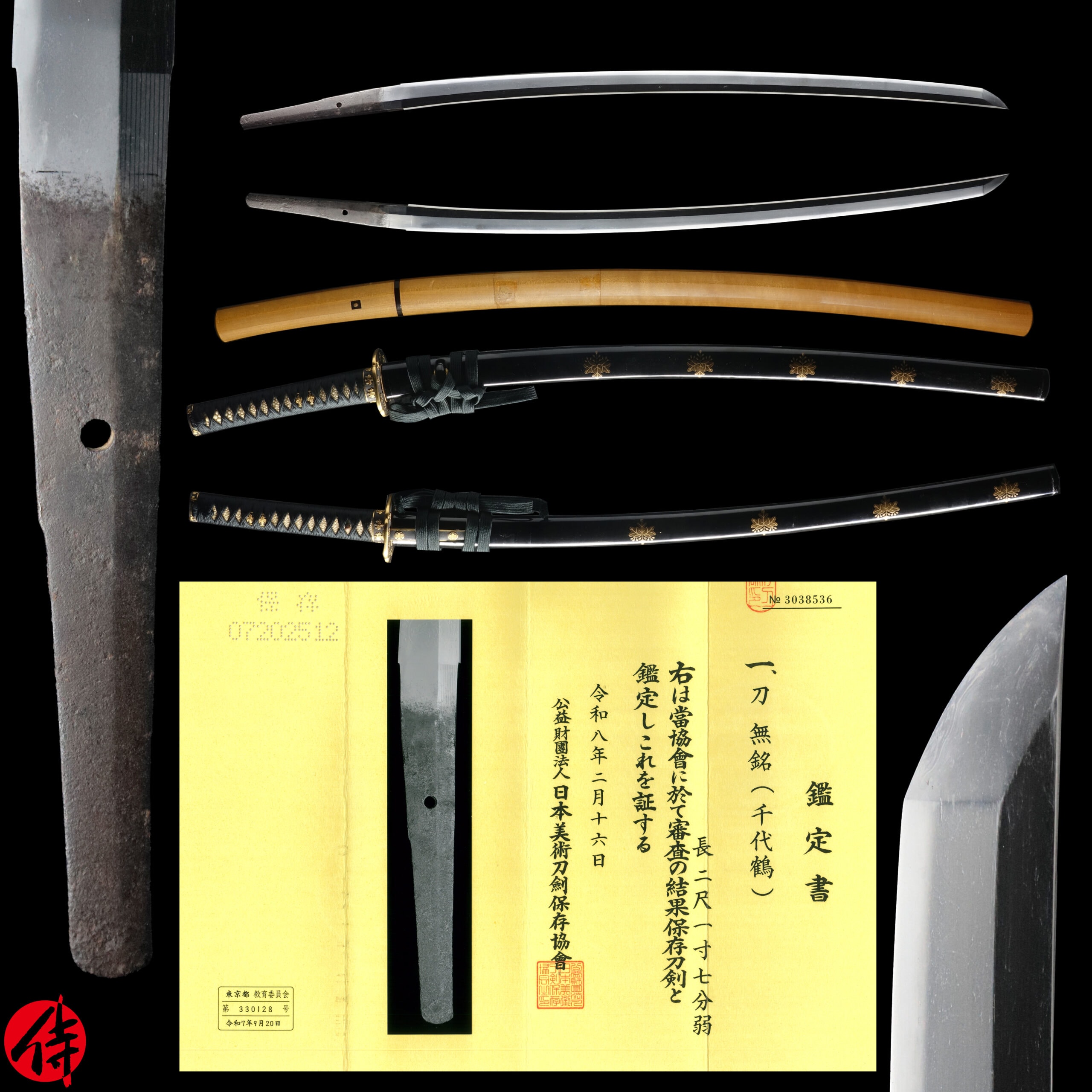
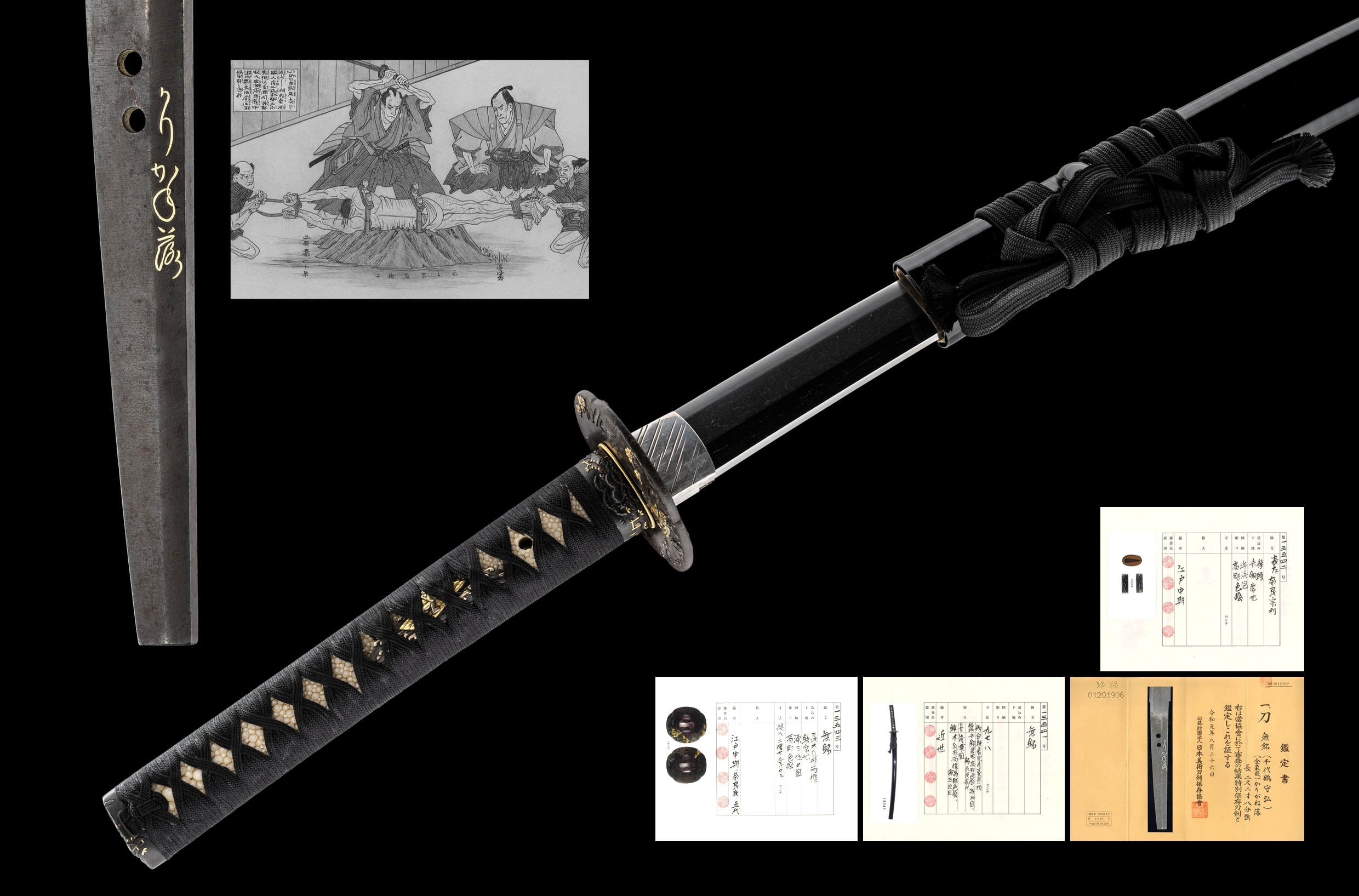
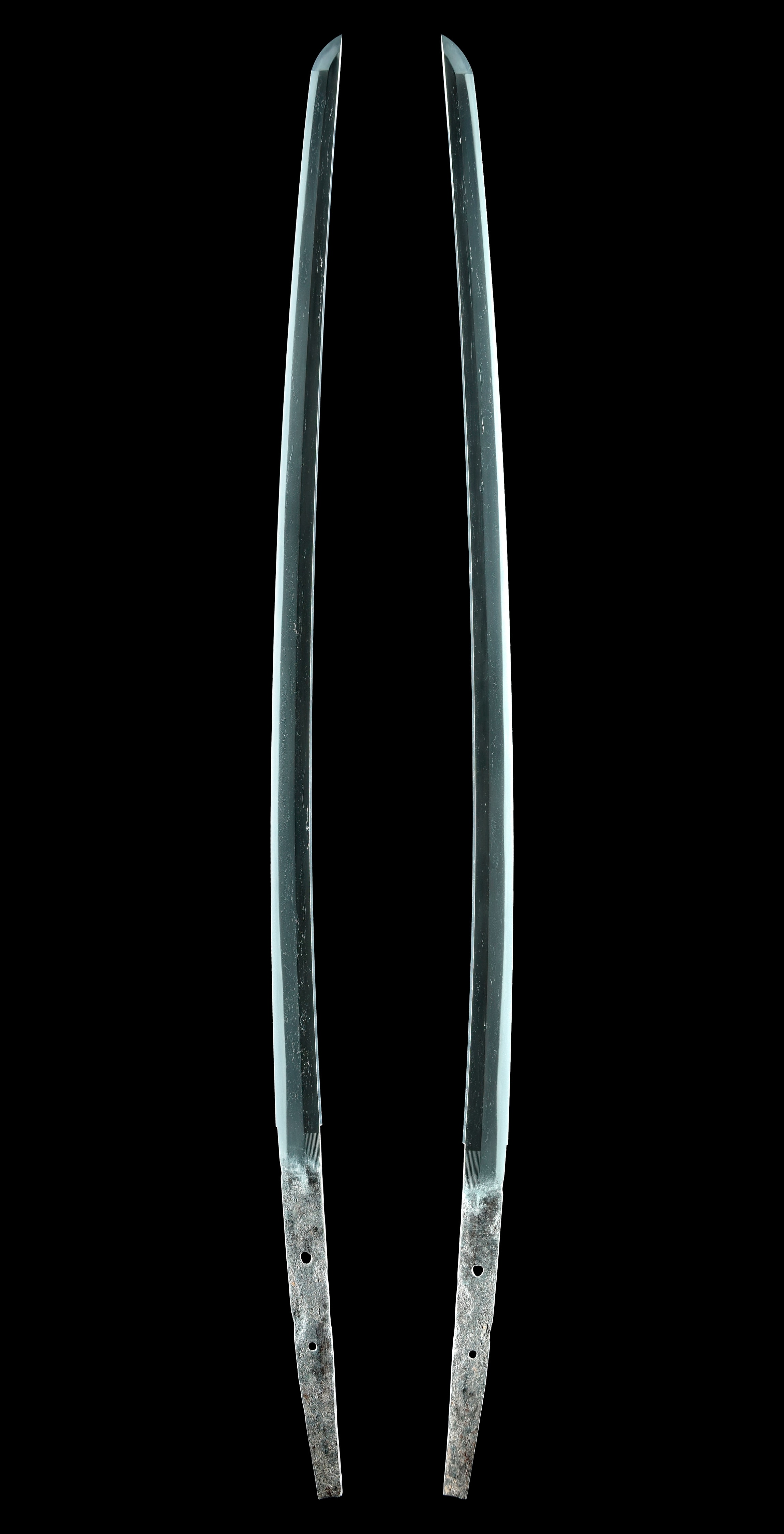
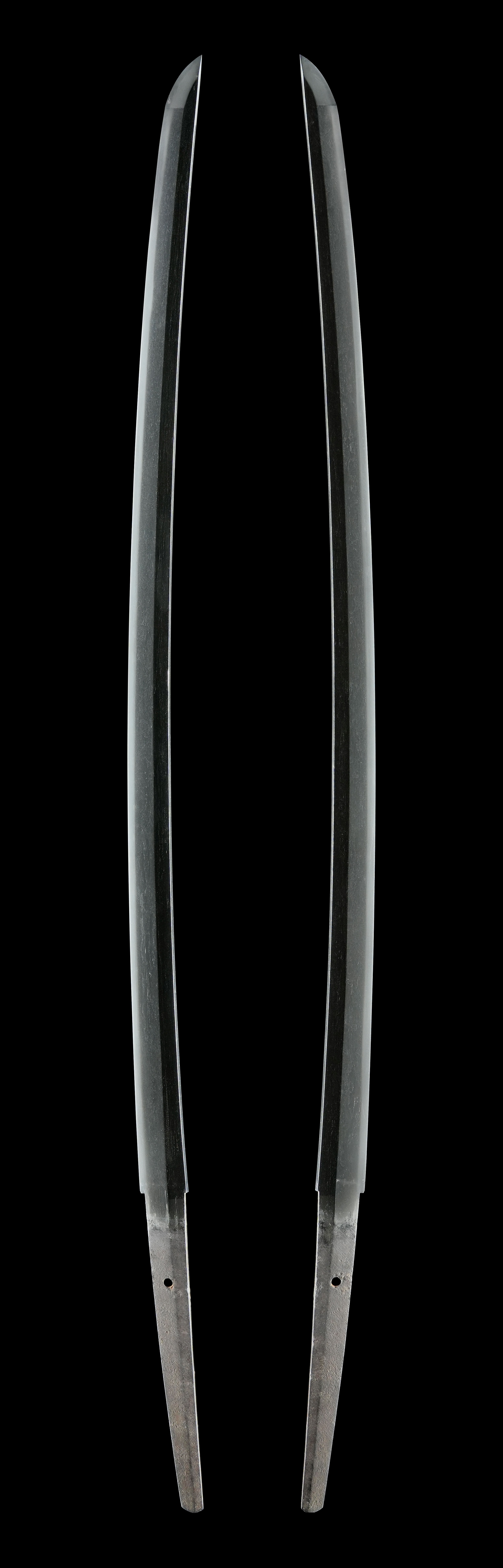
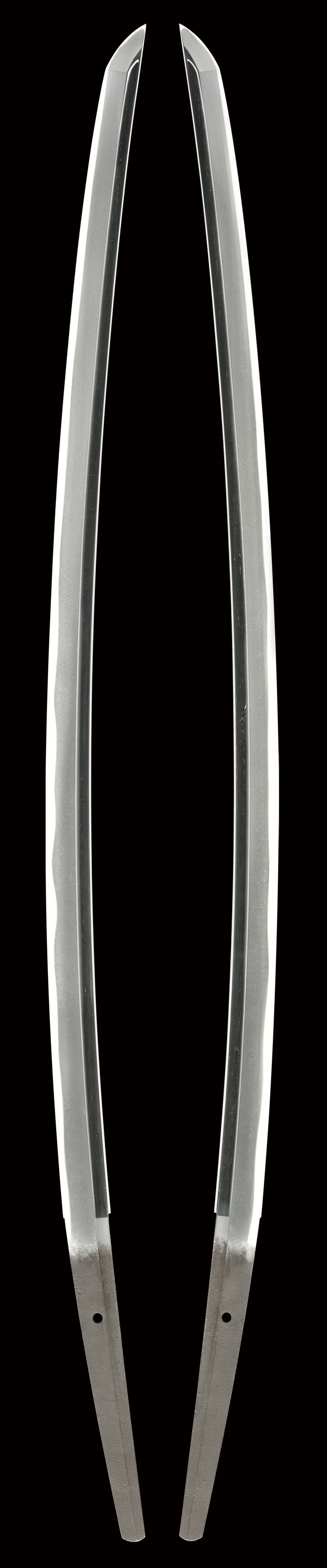
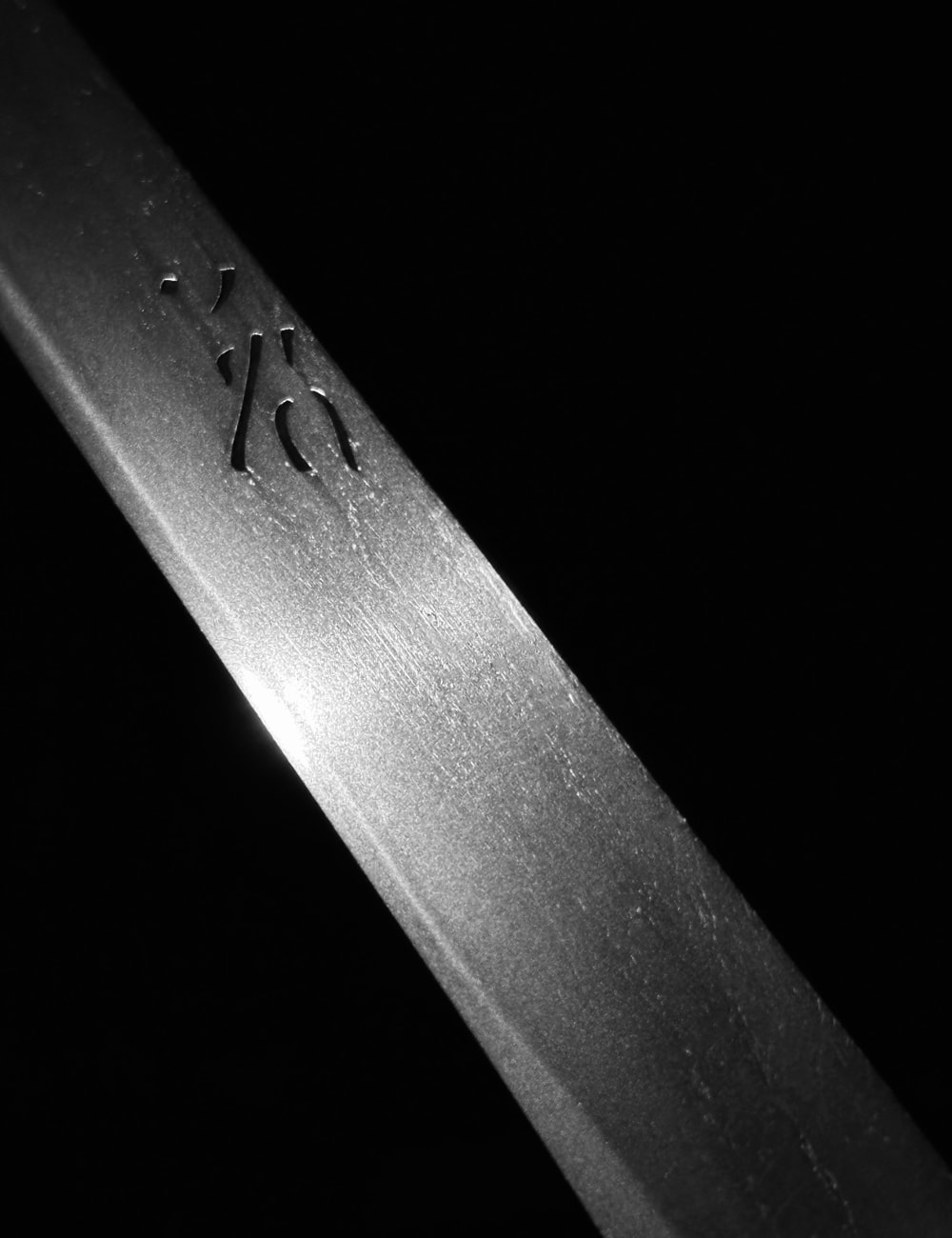
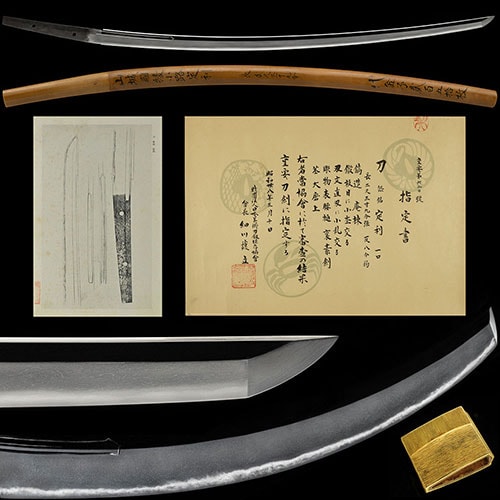
Weight (blade only): 703g It has appeared—a sword passed down through generations of an old family as a work by Yamashiro Rai Kunimitsu. However, in the recent Hozon Token shinsa (judgment), it was appraised as a mumei blade by the Chiyozuru school, a lineage of Yamashiro Rai Kuniyuki from the same era, around the Oan period of the Nanbokucho era (1368, 658 years ago). At the time this sword was forged, Ashikaga Yoshimitsu (who built Kinkaku-ji) had just celebrated his genpuku and begun his formal political career as Shogun; in Europe, it was a time 658 years ago when the Gascon lords' rebellion against King Edward’s heavy taxes led them to appeal to King Charles V of France, triggering the resumption of the Hundred Years' War just as it seemed to be ending. The Chiyozuru school is said to have originated when Yamashiro Rai Kuniyasu migrated to Echizen. This blade was originally a long tachi of 2 shaku 6 sun, but a later bushi, desperate to make this his personal sashiryo, shortened it to suit his own swordsmanship, resulting in its current mumei state. The moto-kasane and saki-kasane are both somewhat thick, and with the difference between the moto-mihaba and saki-mihaba, a slightly extended kissaki, and a graceful sori, it retains the robust and healthy sugata of the Nanbokucho period, feeling heavy in the hand even now. The jigane is a finely packed ko-itame hada, and the horimono consists of skillfully carved bo-hi with soe-hi. The hamon is in nioi-deki with ko-nie, featuring a Yamashiro Rai-style suguha mixed with gunome and warabite-choji; this is likely why it was passed down since ancient times as a work by Yamashiro Rai Kunimitsu. Although it was transmitted by an old family as a masterpiece by Rai Kunimitsu, the recent shinsa identified it as a Chiyozuru of the Rai lineage. As the owners have grown old, they have entrusted it to us to pass on at a low price to someone who will cherish it. While it will become a masterpiece if polished, there is currently some light rust from age, so we are offering it at a special bargain price. Please enjoy this celebrated sword that was long treasured as a Rai Kunimitsu.

Certificate Reading

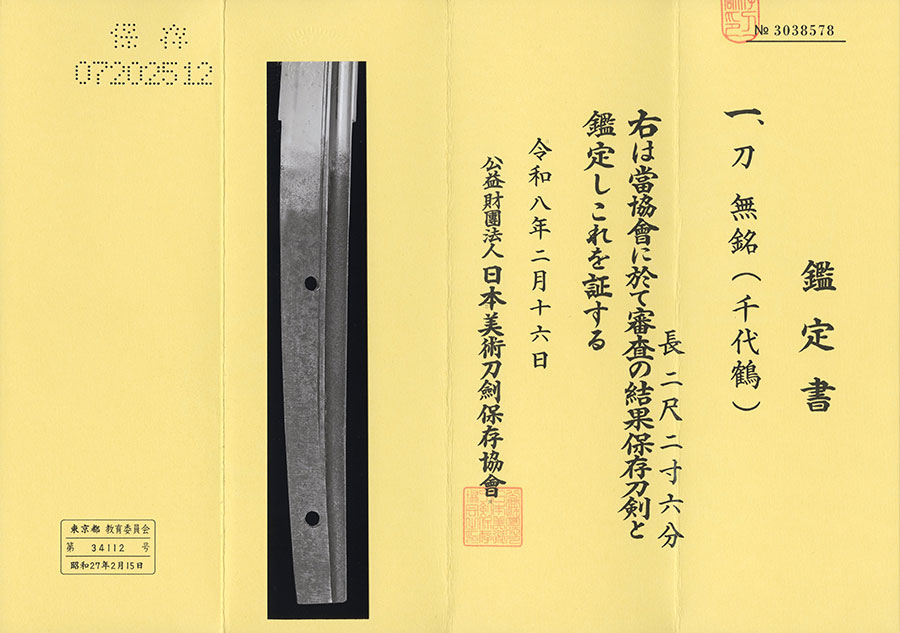
Certificate reading — 無銘(千代鶴)

NihontoWatch MonNihontoWatch
MarketEncyclopediaKantei
Swords›Yamashiro-den›Chiyozuru›Katana Mumei Chiyozuru (Attributed to Raikunimitsu) with NBTHK Hozon
katanaHozon
Chiyozuru School

Katana Mumei Chiyozuru (Attributed to Raikunimitsu) with NBTHK Hozon

mumei · Nanbokucho · nagasa 68.5cm · sori 1.8cm

¥650,000
Visit seller website →
Chiyozuru School — 1 of 26
Chiyozuru School — 2 of 26
Chiyozuru School — 3 of 26
Chiyozuru School — 4 of 26
Chiyozuru School — 5 of 26
Chiyozuru School — 6 of 26
Chiyozuru School — 7 of 26
Chiyozuru School — 8 of 26
Chiyozuru School — 9 of 26
Chiyozuru School — 10 of 26
Chiyozuru School — 11 of 26
Chiyozuru School — 12 of 26
Chiyozuru School — 13 of 26
Chiyozuru School — 14 of 26
Chiyozuru School — 15 of 26
Chiyozuru School — 16 of 26
Chiyozuru School — 17 of 26
Chiyozuru School — 18 of 26
Chiyozuru School — 19 of 26
Chiyozuru School — 20 of 26
Chiyozuru School — 21 of 26
Chiyozuru School — 22 of 26
Chiyozuru School — 23 of 26
Chiyozuru School — 24 of 26
Chiyozuru School — 25 of 26
Chiyozuru School — 26 of 26
1 / 26
1 / 26
Chiyozuru School — 1 of 26Chiyozuru School — 2 of 26Chiyozuru School — 3 of 26Chiyozuru School — 4 of 26Chiyozuru School — 5 of 26Chiyozuru School — 6 of 26Chiyozuru School — 7 of 26Chiyozuru School — 8 of 26Chiyozuru School — 9 of 26Chiyozuru School — 10 of 26Chiyozuru School — 11 of 26Chiyozuru School — 12 of 26Chiyozuru School — 13 of 26Chiyozuru School — 14 of 26Chiyozuru School — 15 of 26Chiyozuru School — 16 of 26Chiyozuru School — 17 of 26Chiyozuru School — 18 of 26Chiyozuru School — 19 of 26Chiyozuru School — 20 of 26Chiyozuru School — 21 of 26Chiyozuru School — 22 of 26Chiyozuru School — 23 of 26Chiyozuru School — 24 of 26Chiyozuru School — 25 of 26Chiyozuru School — 26 of 26
Measurements & details
Smith
Chiyozuru School
Type
Katana
School
Chiyozuru
Period
Nanbokucho
Province
山城
Signature
Unsigned(0% of this smith's designated works are signed)
Measurements
Nagasa 68.5cmSori 1.8cmMotohaba 3cmSakihaba 2.03cmKasane 0.76cm
Description

Weight (blade only): 703g It has appeared—a sword passed down through generations of an old family as a work by Yamashiro Rai Kunimitsu. However, in the recent Hozon Token shinsa (judgment), it was appraised as a mumei blade by the Chiyozuru school, a lineage of Yamashiro Rai Kuniyuki from the same era, around the Oan period of the Nanbokucho era (1368, 658 years ago). At the time this sword was forged, Ashikaga Yoshimitsu (who built Kinkaku-ji) had just celebrated his genpuku and begun his formal political career as Shogun; in Europe, it was a time 658 years ago when the Gascon lords' rebellion against King Edward’s heavy taxes led them to appeal to King Charles V of France, triggering the resumption of the Hundred Years' War just as it seemed to be ending. The Chiyozuru school is said to have originated when Yamashiro Rai Kuniyasu migrated to Echizen. This blade was originally a long tachi of 2 shaku 6 sun, but a later bushi, desperate to make this his personal sashiryo, shortened it to suit his own swordsmanship, resulting in its current mumei state. The moto-kasane and saki-kasane are both somewhat thick, and with the difference between the moto-mihaba and saki-mihaba, a slightly extended kissaki, and a graceful sori, it retains the robust and healthy sugata of the Nanbokucho period, feeling heavy in the hand even now. The jigane is a finely packed ko-itame hada, and the horimono consists of skillfully carved bo-hi with soe-hi. The hamon is in nioi-deki with ko-nie, featuring a Yamashiro Rai-style suguha mixed with gunome and warabite-choji; this is likely why it was passed down since ancient times as a work by Yamashiro Rai Kunimitsu. Although it was transmitted by an old family as a masterpiece by Rai Kunimitsu, the recent shinsa identified it as a Chiyozuru of the Rai lineage. As the owners have grown old, they have entrusted it to us to pass on at a low price to someone who will cherish it. While it will become a masterpiece if polished, there is currently some light rust from age, so we are offering it at a special bargain price. Please enjoy this celebrated sword that was long treasured as a Rai Kunimitsu.

About the school

Chiyozuru

千代鶴

Yamashiro-den · Echizen

12 pieces on the market now

›

The Chiyozuru lineage took root in Echizen Province during the Nanbokuchō period, and the setsumei consistently trace its origin to Rai Kuniyasu (来国安). He is said to have been born in Yamashiro Province, with one tradition holding him a grandson of Rai Kunisue; he later moved to Echizen, where the meikan place him around the Jōji and Sadaji eras (ca. 1362 to 1368). A parallel tradition, recorded on the signed tachi attributed to Morihiro, names Chiyozuru Kuniyasu[[c:1]] as a disciple of Rai Kuniyasu and the founder of the line. From this root descend the smiths the blades document: Morihiro (守弘), placed in the Kuniyasu line across two generations, the first set in the Ōei era (1394 to 1428) and the second in the Kakitsu (1441 to 1444) and Bun'an (1444 to 1449) eras; and Mitsuyuki of Tsuruga[[c:2]], recorded as a student of Echizen Kuniyuki and known from a rare Kakei-dated tantō. The Yamashiro inheritance runs through the whole group, even as the workmanship moves away from the Kyoto homeland into a provincial Hokuriku register. Two stylistic strands run through the corpus, and recognizing the hand means reading where a given blade falls between them. The Rai-derived work, seen in the katana attributed to Rai Kuniyasu, shows itame mixed with mokume and nagare-hada, the grain tending to stand (hada-dachi) with thick ji-nie and frequent chikei; the steel carries a whitish or, in places, slightly blackish cast that the setsumei read as a provincial inflection of Yamashiro.

The hamon on these is a chū-suguha mixed with ko-gunome, the edge breaking into hotsure, kuichigai-ba, and nijūba, with ashi, yō, kinsuji, and sunagashi running through and a bright nioiguchi; the bōshi enters midare-komi or shallow notare-komi, turning in ko-maru with hakikake, at times vigorous enough to give a flame-like (kaen) impression. The Morihiro strand turns toward a gunome-based midareba with a chōji tendency, tobiyaki, and muneyaki, the forging moving toward masame near the edge; the setsumei mark this gunome-toned, nie-laden manner as differing in character from the Rai style and proper to the later line. For kantei, the setsumei set the diagnostic problem plainly: a Chiyozuru blade can at first glance resemble the orthodox Yamashiro Rai work, particularly around Rai Kunimitsu, yet careful reading of the standing grain, the whitish or blackish jigane, and the rustic activity in the bōshi beyond what the Kyoto homeland shows directs the attribution to Echizen. The boldest Nanbokuchō pieces, wide in mihaba with ō-kissaki and muneyaki, invite comparison with Hokuriku contemporaries such as Etchū Tametsugu (越中為継), but the character of ji and ha keeps them within the Chiyozuru fold. Signed examples anchor the line: Morihiro tachi and a Kakitsu 1 (1441) dated wakizashi carrying his Tōzaemon no Jō name, and the Mitsuyuki tantō whose Kakei date makes it documentary material of high value, dated works of the group being extremely scarce. The Morihiro tachi of Jūyō-Bijutsuhin standing is recorded in the Kōzan Oshigata, Kokon Kajibikō, and Kantō Zuiroku. Across the corpus the line holds a distinct place among Nanbokuchō and early Muromachi Hokuriku smiths, carrying a Yamashiro pedigree into a workmanship the appraisers read as its own. Learn more →

4 recorded smiths11 designated works
Leading smiths
SmithEraDesignated
Kuniyasu國安1345-13504
Iemasa家正1492-15010
Ieyoshi家善1487-14890
Kagemori景守1394-14280
Ieyoshi家吉1429-14410
Explore the Chiyozuru school →

Historical context

The divided-courts war impoverished the court society that had sustained Kyōto’s most refined work. With the last Rai masters the classic line effectively closed, while Hasebe and Nobukuni carried the new Sōshū manner into the capital.

Yamashiro in the Nanbokuchō period →

NBTHK Certificate
Hozon Tōken保存刀剣
Sword Worthy of Preservation
›

Certifies a genuine blade worth preserving: a signature confirmed correct, or, if unsigned, an era, province, and school that the NBTHK can reliably identify.

Unsigned (attr. Chiyozuru School)
As written on the certificate
About the NBTHK›

The NBTHK (Nihon Bijutsu Tōken Hozon Kyōkai, the Society for the Preservation of Japanese Art Swords) is a public-interest incorporated foundation founded in 1948 and supervised by Japan’s Agency for Cultural Affairs (Bunkachō); it is based at the Japanese Sword Museum in Tokyo. Its expert panels physically examine each submitted work (shinsa) and issue a certificate (kanteishō) ranking it by artistic and historical merit. NBTHK papers are the most widely recognized standard of authentication for Japanese swords and fittings.

NBTHK official site→
Seller
N
Nipponto
Established 1953 · 73 yrs on the market
🇯🇵Ships from Japan
›
✓Verified dealernipponto.co.jp
Settles in JPY
✓Ships worldwide✓English supportPayPalCredit card
Return policy

For returns due to customer circumstances, the cost is the customer's responsibility. For returns due to our mis-shipment or a defective item, we bear the cost.

View all of Nipponto’s listings→View this item on the dealer’s site→

Previously sold — Chiyozuru School

Aoi Art
Tokuho
Katana - Tokuho - by Chiyozuru School - Unsigned (Chiyozuru Morihiro)Katana - Tokuho - by Chiyozuru School - Unsigned (Chiyozuru Morihiro)
Sold

Katana

ByChiyozuru School
SOLD
Choshuya
Katana - by Chiyozuru School - O-suriage Mumei Chiyozuru MorihiroKatana - by Chiyozuru School - O-suriage Mumei Chiyozuru Morihiro
Sold

Katana

ByChiyozuru School
SOLD
Samurai Museum
Hozon
Katana - Hozon - by Chiyozuru School - Attributed to Chiyozuru - Early Muromachi PeriodKatana - Hozon - by Chiyozuru School - Attributed to Chiyozuru - Early Muromachi Period
Sold

Katana

ByChiyozuru School
SOLD
Touken Komachi
Katana - by Chiyozuru School - Katana in Shirasaya: Chiyozuru MorihiroKatana - by Chiyozuru School - Katana in Shirasaya: Chiyozuru Morihiro
Sold

Katana

ByChiyozuru School
SOLD
World Seiyudo
Hozon
Katana - Hozon - by Chiyozuru School - Chiyozuru - NBTHK Hozon TokenKatana - Hozon - by Chiyozuru School - Chiyozuru - NBTHK Hozon Token
Sold

Katana

ByChiyozuru School
SOLD
E-sword
Tokuho
Katana - Tokuho - by Chiyozuru School - Mumei (Chiyozuru Morihiro)Katana - Tokuho - by Chiyozuru School - Mumei (Chiyozuru Morihiro)
Sold

Katana

ByChiyozuru School
SOLD
Samurai Museum
Hozon
Katana - Hozon - by Chiyozuru School - Attributed to Chiyozuru - NBTHK Hozon CertificateKatana - Hozon - by Chiyozuru School - Attributed to Chiyozuru - NBTHK Hozon Certificate
Sold

Katana

ByChiyozuru School
SOLD
Samurai Museum
Hozon
Katana - Hozon - by Chiyozuru School - Antique Japanese Sword Katana Attributed to Chiyozuru NBTHK Hozon CertificateKatana - Hozon - by Chiyozuru School - Antique Japanese Sword Katana Attributed to Chiyozuru NBTHK Hozon Certificate
Sold

Katana

ByChiyozuru School
SOLD

More from the Chiyozuru school

View all →
Eirakudo
Tokuho
Katana - Tokuho - by Chiyozuru Kuniyasu - Rai Kuniyasu from Echizen - Tokubetsu Hozon TokenKatana - Tokuho - by Chiyozuru Kuniyasu - Rai Kuniyasu from Echizen - Tokubetsu Hozon Token

Katana

ByChiyozuru Kuniyasu
¥1,500,000
Unique Japan
Tokuho
Katana - Tokuho - by Chiyozuru Morihiro - A Morihiro Tameshigiri KatanaKatana - Tokuho - by Chiyozuru Morihiro - A Morihiro Tameshigiri Katana

Katana

ByChiyozuru Morihiro
¥25,000
Sanmei
Tokuho
Katana - Tokuho - by Chiyozuru School - Unsigned ChiyotsuruKatana - Tokuho - by Chiyozuru School - Unsigned Chiyotsuru

Katana

ByChiyozuru School
¥850,000
Toushin
Hozon
Katana - Hozon - by Chiyozuru School - ChiyozuruKatana - Hozon - by Chiyozuru School - Chiyozuru

Katana

ByChiyozuru School
¥660,000
Choshuya
Tokuho
Katana - Tokuho - by Chiyozuru Morihiro - Unsigned (O-suriage) Chiyozuru Morihiro with Aogai mijin fuemaki nuri saya uchigatana koshiraeKatana - Tokuho - by Chiyozuru Morihiro - Unsigned (O-suriage) Chiyozuru Morihiro with Aogai mijin fuemaki nuri saya uchigatana koshirae

Katana

ByChiyozuru Morihiro
¥1,200,000
Nipponto
Hozon
Katana - Hozon - by Chiyozuru Morihiro - Katana Mumei Chiyozuru Morihiro (Attributed to Bitchu Katayama Ichimonji)Katana - Hozon - by Chiyozuru Morihiro - Katana Mumei Chiyozuru Morihiro (Attributed to Bitchu Katayama Ichimonji)

Katana

ByChiyozuru Morihiro
¥650,000
Yushindou
Tokuho
Katana - Tokuho - by Chiyozuru School - Mumei (Chiyozuru Morihiro) - Tokubetsu Hozon TokenKatana - Tokuho - by Chiyozuru School - Mumei (Chiyozuru Morihiro) - Tokubetsu Hozon Token

Katana

ByChiyozuru School
¥1,200,000
Toushin
Hozon
Katana - Hozon - by Chiyozuru School - Mumei (Chiyozuru)Katana - Hozon - by Chiyozuru School - Mumei (Chiyozuru)

Katana

ByChiyozuru School
¥770,000

More from the Yamashiro tradition

View all →
Choshuya
Jūyō
Tanto - Jūyō - by Rai Kunitoshi - Rai KunitoshiTanto - Jūyō - by Rai Kunitoshi - Rai Kunitoshi

Tantō

ByRai Kunitoshi
Ask
Samurai Nippon
Tokujū
Katana - Tokuju - by Awataguchi Kuniyoshi - Mumei (Attributed to Awataguchi Kuniyoshi)Katana - Tokuju - by Awataguchi Kuniyoshi - Mumei (Attributed to Awataguchi Kuniyoshi)

Katana

ByAwataguchi Kuniyoshi
Ask
Eirakudo
Tokuho
Katana - Tokuho - by Nobukuni School - Nobukuni - Tokubetsu Hozon TokenKatana - Tokuho - by Nobukuni School - Nobukuni - Tokubetsu Hozon Token

Katana

ByNobukuni School
¥1,200,000
Yazawa Shokai
Tokuho
Tachi - Tokuho - by Rai Kuniyuki - Consignment: Rai Kuniyuki Mid-Kamakura Period, Blade Length 69.7cm, Sori 1.9cm, in Shirasaya with Tachi KoshiraeTachi - Tokuho - by Rai Kuniyuki - Consignment: Rai Kuniyuki Mid-Kamakura Period, Blade Length 69.7cm, Sori 1.9cm, in Shirasaya with Tachi Koshirae

Tachi

ByRai Kuniyuki
¥3,000,000
Katanahanbai
Hozon
Tanto - Hozon - by Heianjo Nagayoshi - Heianjo NagayoshiTanto - Hozon - by Heianjo Nagayoshi - Heianjo Nagayoshi

Tantō

ByHeianjo Nagayoshi
¥1,350,000
Eirakudo
Jūyō
Tachi - Jūyō - by Ayanokoji Sadatoshi - Sadatoshi Tachi - Juyo TokenTachi - Jūyō - by Ayanokoji Sadatoshi - Sadatoshi Tachi - Juyo Token

Tachi

ByAyanokoji Sadatoshi
¥7,700,000
Choshuya
Tokuho
Tanto - Tokuho - by Rai Kunitoshi - Rai KunitoshiTanto - Tokuho - by Rai Kunitoshi - Rai Kunitoshi

Tantō

ByRai Kunitoshi
¥4,300,000
Choshuya
Tokuho
Katana - Tokuho - by Enju Kunitoki - Kinpun mei Kunitoki, Hon'a (Koson oshigata)Katana - Tokuho - by Enju Kunitoki - Kinpun mei Kunitoki, Hon'a (Koson oshigata)

Katana

ByEnju Kunitoki
¥2,700,000

Swords

  • Katana
  • Wakizashi
  • Tantō
  • Tachi
  • Naginata
  • Yari

Fittings

  • Tsuba
  • Fuchi-Kashira
  • Kozuka
  • Menuki

Armor

  • Kabuto
  • Samurai Armor

By Certification

  • Tokujū
  • Jūyō
  • Tokuho
  • Hozon

Resources

  • Dealer Directory
  • Artist Directory
  • The Daily Kantei
  • Glossary
  • Browse All
Nihontowatch© 2026
TermsPrivacyCookiesAbout

Description

Weight (blade only): 703g It has appeared—a sword passed down through generations of an old family as a work by Yamashiro Rai Kunimitsu. However, in the recent Hozon Token shinsa (judgment), it was appraised as a mumei blade by the Chiyozuru school, a lineage of Yamashiro Rai Kuniyuki from the same era, around the Oan period of the Nanbokucho era (1368, 658 years ago). At the time this sword was forged, Ashikaga Yoshimitsu (who built Kinkaku-ji) had just celebrated his genpuku and begun his formal political career as Shogun; in Europe, it was a time 658 years ago when the Gascon lords' rebellion against King Edward’s heavy taxes led them to appeal to King Charles V of France, triggering the resumption of the Hundred Years' War just as it seemed to be ending. The Chiyozuru school is said to have originated when Yamashiro Rai Kuniyasu migrated to Echizen. This blade was originally a long tachi of 2 shaku 6 sun, but a later bushi, desperate to make this his personal sashiryo, shortened it to suit his own swordsmanship, resulting in its current mumei state. The moto-kasane and saki-kasane are both somewhat thick, and with the difference between the moto-mihaba and saki-mihaba, a slightly extended kissaki, and a graceful sori, it retains the robust and healthy sugata of the Nanbokucho period, feeling heavy in the hand even now. The jigane is a finely packed ko-itame hada, and the horimono consists of skillfully carved bo-hi with soe-hi. The hamon is in nioi-deki with ko-nie, featuring a Yamashiro Rai-style suguha mixed with gunome and warabite-choji; this is likely why it was passed down since ancient times as a work by Yamashiro Rai Kunimitsu. Although it was transmitted by an old family as a masterpiece by Rai Kunimitsu, the recent shinsa identified it as a Chiyozuru of the Rai lineage. As the owners have grown old, they have entrusted it to us to pass on at a low price to someone who will cherish it. While it will become a masterpiece if polished, there is currently some light rust from age, so we are offering it at a special bargain price. Please enjoy this celebrated sword that was long treasured as a Rai Kunimitsu.

Certificate Reading

Certificate reading — 無銘(千代鶴)

NihontoWatch MonNihontoWatch
MarketEncyclopediaKantei
Swords›Yamashiro-den›Chiyozuru›Katana Mumei Chiyozuru (Attributed to Raikunimitsu) with NBTHK Hozon
katanaHozon
Chiyozuru School

Katana Mumei Chiyozuru (Attributed to Raikunimitsu) with NBTHK Hozon

mumei · Nanbokucho · nagasa 68.5cm · sori 1.8cm

¥650,000
Visit seller website →
Chiyozuru School — 1 of 26
Chiyozuru School — 2 of 26
Chiyozuru School — 3 of 26
Chiyozuru School — 4 of 26
Chiyozuru School — 5 of 26
Chiyozuru School — 6 of 26
Chiyozuru School — 7 of 26
Chiyozuru School — 8 of 26
Chiyozuru School — 9 of 26
Chiyozuru School — 10 of 26
Chiyozuru School — 11 of 26
Chiyozuru School — 12 of 26
Chiyozuru School — 13 of 26
Chiyozuru School — 14 of 26
Chiyozuru School — 15 of 26
Chiyozuru School — 16 of 26
Chiyozuru School — 17 of 26
Chiyozuru School — 18 of 26
Chiyozuru School — 19 of 26
Chiyozuru School — 20 of 26
Chiyozuru School — 21 of 26
Chiyozuru School — 22 of 26
Chiyozuru School — 23 of 26
Chiyozuru School — 24 of 26
Chiyozuru School — 25 of 26
Chiyozuru School — 26 of 26
1 / 26
1 / 26
Chiyozuru School — 1 of 26Chiyozuru School — 2 of 26Chiyozuru School — 3 of 26Chiyozuru School — 4 of 26Chiyozuru School — 5 of 26Chiyozuru School — 6 of 26Chiyozuru School — 7 of 26Chiyozuru School — 8 of 26Chiyozuru School — 9 of 26Chiyozuru School — 10 of 26Chiyozuru School — 11 of 26Chiyozuru School — 12 of 26Chiyozuru School — 13 of 26Chiyozuru School — 14 of 26Chiyozuru School — 15 of 26Chiyozuru School — 16 of 26Chiyozuru School — 17 of 26Chiyozuru School — 18 of 26Chiyozuru School — 19 of 26Chiyozuru School — 20 of 26Chiyozuru School — 21 of 26Chiyozuru School — 22 of 26Chiyozuru School — 23 of 26Chiyozuru School — 24 of 26Chiyozuru School — 25 of 26Chiyozuru School — 26 of 26
Measurements & details
Smith
Chiyozuru School
Type
Katana
School
Chiyozuru
Period
Nanbokucho
Province
山城
Signature
Unsigned(0% of this smith's designated works are signed)
Measurements
Nagasa 68.5cmSori 1.8cmMotohaba 3cmSakihaba 2.03cmKasane 0.76cm
Description

Weight (blade only): 703g It has appeared—a sword passed down through generations of an old family as a work by Yamashiro Rai Kunimitsu. However, in the recent Hozon Token shinsa (judgment), it was appraised as a mumei blade by the Chiyozuru school, a lineage of Yamashiro Rai Kuniyuki from the same era, around the Oan period of the Nanbokucho era (1368, 658 years ago). At the time this sword was forged, Ashikaga Yoshimitsu (who built Kinkaku-ji) had just celebrated his genpuku and begun his formal political career as Shogun; in Europe, it was a time 658 years ago when the Gascon lords' rebellion against King Edward’s heavy taxes led them to appeal to King Charles V of France, triggering the resumption of the Hundred Years' War just as it seemed to be ending. The Chiyozuru school is said to have originated when Yamashiro Rai Kuniyasu migrated to Echizen. This blade was originally a long tachi of 2 shaku 6 sun, but a later bushi, desperate to make this his personal sashiryo, shortened it to suit his own swordsmanship, resulting in its current mumei state. The moto-kasane and saki-kasane are both somewhat thick, and with the difference between the moto-mihaba and saki-mihaba, a slightly extended kissaki, and a graceful sori, it retains the robust and healthy sugata of the Nanbokucho period, feeling heavy in the hand even now. The jigane is a finely packed ko-itame hada, and the horimono consists of skillfully carved bo-hi with soe-hi. The hamon is in nioi-deki with ko-nie, featuring a Yamashiro Rai-style suguha mixed with gunome and warabite-choji; this is likely why it was passed down since ancient times as a work by Yamashiro Rai Kunimitsu. Although it was transmitted by an old family as a masterpiece by Rai Kunimitsu, the recent shinsa identified it as a Chiyozuru of the Rai lineage. As the owners have grown old, they have entrusted it to us to pass on at a low price to someone who will cherish it. While it will become a masterpiece if polished, there is currently some light rust from age, so we are offering it at a special bargain price. Please enjoy this celebrated sword that was long treasured as a Rai Kunimitsu.

About the school

Chiyozuru

千代鶴

Yamashiro-den · Echizen

12 pieces on the market now

›

The Chiyozuru lineage took root in Echizen Province during the Nanbokuchō period, and the setsumei consistently trace its origin to Rai Kuniyasu (来国安). He is said to have been born in Yamashiro Province, with one tradition holding him a grandson of Rai Kunisue; he later moved to Echizen, where the meikan place him around the Jōji and Sadaji eras (ca. 1362 to 1368). A parallel tradition, recorded on the signed tachi attributed to Morihiro, names Chiyozuru Kuniyasu[[c:1]] as a disciple of Rai Kuniyasu and the founder of the line. From this root descend the smiths the blades document: Morihiro (守弘), placed in the Kuniyasu line across two generations, the first set in the Ōei era (1394 to 1428) and the second in the Kakitsu (1441 to 1444) and Bun'an (1444 to 1449) eras; and Mitsuyuki of Tsuruga[[c:2]], recorded as a student of Echizen Kuniyuki and known from a rare Kakei-dated tantō. The Yamashiro inheritance runs through the whole group, even as the workmanship moves away from the Kyoto homeland into a provincial Hokuriku register. Two stylistic strands run through the corpus, and recognizing the hand means reading where a given blade falls between them. The Rai-derived work, seen in the katana attributed to Rai Kuniyasu, shows itame mixed with mokume and nagare-hada, the grain tending to stand (hada-dachi) with thick ji-nie and frequent chikei; the steel carries a whitish or, in places, slightly blackish cast that the setsumei read as a provincial inflection of Yamashiro.

The hamon on these is a chū-suguha mixed with ko-gunome, the edge breaking into hotsure, kuichigai-ba, and nijūba, with ashi, yō, kinsuji, and sunagashi running through and a bright nioiguchi; the bōshi enters midare-komi or shallow notare-komi, turning in ko-maru with hakikake, at times vigorous enough to give a flame-like (kaen) impression. The Morihiro strand turns toward a gunome-based midareba with a chōji tendency, tobiyaki, and muneyaki, the forging moving toward masame near the edge; the setsumei mark this gunome-toned, nie-laden manner as differing in character from the Rai style and proper to the later line. For kantei, the setsumei set the diagnostic problem plainly: a Chiyozuru blade can at first glance resemble the orthodox Yamashiro Rai work, particularly around Rai Kunimitsu, yet careful reading of the standing grain, the whitish or blackish jigane, and the rustic activity in the bōshi beyond what the Kyoto homeland shows directs the attribution to Echizen. The boldest Nanbokuchō pieces, wide in mihaba with ō-kissaki and muneyaki, invite comparison with Hokuriku contemporaries such as Etchū Tametsugu (越中為継), but the character of ji and ha keeps them within the Chiyozuru fold. Signed examples anchor the line: Morihiro tachi and a Kakitsu 1 (1441) dated wakizashi carrying his Tōzaemon no Jō name, and the Mitsuyuki tantō whose Kakei date makes it documentary material of high value, dated works of the group being extremely scarce. The Morihiro tachi of Jūyō-Bijutsuhin standing is recorded in the Kōzan Oshigata, Kokon Kajibikō, and Kantō Zuiroku. Across the corpus the line holds a distinct place among Nanbokuchō and early Muromachi Hokuriku smiths, carrying a Yamashiro pedigree into a workmanship the appraisers read as its own. Learn more →

4 recorded smiths11 designated works
Leading smiths
SmithEraDesignated
Kuniyasu國安1345-13504
Iemasa家正1492-15010
Ieyoshi家善1487-14890
Kagemori景守1394-14280
Ieyoshi家吉1429-14410
Explore the Chiyozuru school →

Historical context

The divided-courts war impoverished the court society that had sustained Kyōto’s most refined work. With the last Rai masters the classic line effectively closed, while Hasebe and Nobukuni carried the new Sōshū manner into the capital.

Yamashiro in the Nanbokuchō period →

NBTHK Certificate
Hozon Tōken保存刀剣
Sword Worthy of Preservation
›

Certifies a genuine blade worth preserving: a signature confirmed correct, or, if unsigned, an era, province, and school that the NBTHK can reliably identify.

Unsigned (attr. Chiyozuru School)
As written on the certificate
About the NBTHK›

The NBTHK (Nihon Bijutsu Tōken Hozon Kyōkai, the Society for the Preservation of Japanese Art Swords) is a public-interest incorporated foundation founded in 1948 and supervised by Japan’s Agency for Cultural Affairs (Bunkachō); it is based at the Japanese Sword Museum in Tokyo. Its expert panels physically examine each submitted work (shinsa) and issue a certificate (kanteishō) ranking it by artistic and historical merit. NBTHK papers are the most widely recognized standard of authentication for Japanese swords and fittings.

NBTHK official site→
Seller
N
Nipponto
Established 1953 · 73 yrs on the market
🇯🇵Ships from Japan
›
✓Verified dealernipponto.co.jp
Settles in JPY
✓Ships worldwide✓English supportPayPalCredit card
Return policy

For returns due to customer circumstances, the cost is the customer's responsibility. For returns due to our mis-shipment or a defective item, we bear the cost.

View all of Nipponto’s listings→View this item on the dealer’s site→

Previously sold — Chiyozuru School

Aoi Art
Tokuho
Katana - Tokuho - by Chiyozuru School - Unsigned (Chiyozuru Morihiro)Katana - Tokuho - by Chiyozuru School - Unsigned (Chiyozuru Morihiro)
Sold

Katana

ByChiyozuru School
SOLD
Choshuya
Katana - by Chiyozuru School - O-suriage Mumei Chiyozuru MorihiroKatana - by Chiyozuru School - O-suriage Mumei Chiyozuru Morihiro
Sold

Katana

ByChiyozuru School
SOLD
Samurai Museum
Hozon
Katana - Hozon - by Chiyozuru School - Attributed to Chiyozuru - Early Muromachi PeriodKatana - Hozon - by Chiyozuru School - Attributed to Chiyozuru - Early Muromachi Period
Sold

Katana

ByChiyozuru School
SOLD
Touken Komachi
Katana - by Chiyozuru School - Katana in Shirasaya: Chiyozuru MorihiroKatana - by Chiyozuru School - Katana in Shirasaya: Chiyozuru Morihiro
Sold

Katana

ByChiyozuru School
SOLD
World Seiyudo
Hozon
Katana - Hozon - by Chiyozuru School - Chiyozuru - NBTHK Hozon TokenKatana - Hozon - by Chiyozuru School - Chiyozuru - NBTHK Hozon Token
Sold

Katana

ByChiyozuru School
SOLD
E-sword
Tokuho
Katana - Tokuho - by Chiyozuru School - Mumei (Chiyozuru Morihiro)Katana - Tokuho - by Chiyozuru School - Mumei (Chiyozuru Morihiro)
Sold

Katana

ByChiyozuru School
SOLD
Samurai Museum
Hozon
Katana - Hozon - by Chiyozuru School - Attributed to Chiyozuru - NBTHK Hozon CertificateKatana - Hozon - by Chiyozuru School - Attributed to Chiyozuru - NBTHK Hozon Certificate
Sold

Katana

ByChiyozuru School
SOLD
Samurai Museum
Hozon
Katana - Hozon - by Chiyozuru School - Antique Japanese Sword Katana Attributed to Chiyozuru NBTHK Hozon CertificateKatana - Hozon - by Chiyozuru School - Antique Japanese Sword Katana Attributed to Chiyozuru NBTHK Hozon Certificate
Sold

Katana

ByChiyozuru School
SOLD

More from the Chiyozuru school

View all →
Eirakudo
Tokuho
Katana - Tokuho - by Chiyozuru Kuniyasu - Rai Kuniyasu from Echizen - Tokubetsu Hozon TokenKatana - Tokuho - by Chiyozuru Kuniyasu - Rai Kuniyasu from Echizen - Tokubetsu Hozon Token

Katana

ByChiyozuru Kuniyasu
¥1,500,000
Unique Japan
Tokuho
Katana - Tokuho - by Chiyozuru Morihiro - A Morihiro Tameshigiri KatanaKatana - Tokuho - by Chiyozuru Morihiro - A Morihiro Tameshigiri Katana

Katana

ByChiyozuru Morihiro
¥25,000
Sanmei
Tokuho
Katana - Tokuho - by Chiyozuru School - Unsigned ChiyotsuruKatana - Tokuho - by Chiyozuru School - Unsigned Chiyotsuru

Katana

ByChiyozuru School
¥850,000
Toushin
Hozon
Katana - Hozon - by Chiyozuru School - ChiyozuruKatana - Hozon - by Chiyozuru School - Chiyozuru

Katana

ByChiyozuru School
¥660,000
Choshuya
Tokuho
Katana - Tokuho - by Chiyozuru Morihiro - Unsigned (O-suriage) Chiyozuru Morihiro with Aogai mijin fuemaki nuri saya uchigatana koshiraeKatana - Tokuho - by Chiyozuru Morihiro - Unsigned (O-suriage) Chiyozuru Morihiro with Aogai mijin fuemaki nuri saya uchigatana koshirae

Katana

ByChiyozuru Morihiro
¥1,200,000
Nipponto
Hozon
Katana - Hozon - by Chiyozuru Morihiro - Katana Mumei Chiyozuru Morihiro (Attributed to Bitchu Katayama Ichimonji)Katana - Hozon - by Chiyozuru Morihiro - Katana Mumei Chiyozuru Morihiro (Attributed to Bitchu Katayama Ichimonji)

Katana

ByChiyozuru Morihiro
¥650,000
Yushindou
Tokuho
Katana - Tokuho - by Chiyozuru School - Mumei (Chiyozuru Morihiro) - Tokubetsu Hozon TokenKatana - Tokuho - by Chiyozuru School - Mumei (Chiyozuru Morihiro) - Tokubetsu Hozon Token

Katana

ByChiyozuru School
¥1,200,000
Toushin
Hozon
Katana - Hozon - by Chiyozuru School - Mumei (Chiyozuru)Katana - Hozon - by Chiyozuru School - Mumei (Chiyozuru)

Katana

ByChiyozuru School
¥770,000

More from the Yamashiro tradition

View all →
Choshuya
Jūyō
Tanto - Jūyō - by Rai Kunitoshi - Rai KunitoshiTanto - Jūyō - by Rai Kunitoshi - Rai Kunitoshi

Tantō

ByRai Kunitoshi
Ask
Samurai Nippon
Tokujū
Katana - Tokuju - by Awataguchi Kuniyoshi - Mumei (Attributed to Awataguchi Kuniyoshi)Katana - Tokuju - by Awataguchi Kuniyoshi - Mumei (Attributed to Awataguchi Kuniyoshi)

Katana

ByAwataguchi Kuniyoshi
Ask
Eirakudo
Tokuho
Katana - Tokuho - by Nobukuni School - Nobukuni - Tokubetsu Hozon TokenKatana - Tokuho - by Nobukuni School - Nobukuni - Tokubetsu Hozon Token

Katana

ByNobukuni School
¥1,200,000
Yazawa Shokai
Tokuho
Tachi - Tokuho - by Rai Kuniyuki - Consignment: Rai Kuniyuki Mid-Kamakura Period, Blade Length 69.7cm, Sori 1.9cm, in Shirasaya with Tachi KoshiraeTachi - Tokuho - by Rai Kuniyuki - Consignment: Rai Kuniyuki Mid-Kamakura Period, Blade Length 69.7cm, Sori 1.9cm, in Shirasaya with Tachi Koshirae

Tachi

ByRai Kuniyuki
¥3,000,000
Katanahanbai
Hozon
Tanto - Hozon - by Heianjo Nagayoshi - Heianjo NagayoshiTanto - Hozon - by Heianjo Nagayoshi - Heianjo Nagayoshi

Tantō

ByHeianjo Nagayoshi
¥1,350,000
Eirakudo
Jūyō
Tachi - Jūyō - by Ayanokoji Sadatoshi - Sadatoshi Tachi - Juyo TokenTachi - Jūyō - by Ayanokoji Sadatoshi - Sadatoshi Tachi - Juyo Token

Tachi

ByAyanokoji Sadatoshi
¥7,700,000
Choshuya
Tokuho
Tanto - Tokuho - by Rai Kunitoshi - Rai KunitoshiTanto - Tokuho - by Rai Kunitoshi - Rai Kunitoshi

Tantō

ByRai Kunitoshi
¥4,300,000
Choshuya
Tokuho
Katana - Tokuho - by Enju Kunitoki - Kinpun mei Kunitoki, Hon'a (Koson oshigata)Katana - Tokuho - by Enju Kunitoki - Kinpun mei Kunitoki, Hon'a (Koson oshigata)

Katana

ByEnju Kunitoki
¥2,700,000

Swords

  • Katana
  • Wakizashi
  • Tantō
  • Tachi
  • Naginata
  • Yari

Fittings

  • Tsuba
  • Fuchi-Kashira
  • Kozuka
  • Menuki

Armor

  • Kabuto
  • Samurai Armor

By Certification

  • Tokujū
  • Jūyō
  • Tokuho
  • Hozon

Resources

  • Dealer Directory
  • Artist Directory
  • The Daily Kantei
  • Glossary
  • Browse All
Nihontowatch© 2026
TermsPrivacyCookiesAbout
NihontoWatch Mon

NihontoWatch

Market
Encyclopedia
Kantei
NihontoWatch Mon

NihontoWatch

Market
Encyclopedia
Kantei