Sixty years of war between two courts drove blades long and broad, and Osafune met the demand: Kanemitsu and Chōgi led forges serving the provincial warriors who did the fighting, while Sōshū influence arrived with the armies to create Sōden-Bizen.
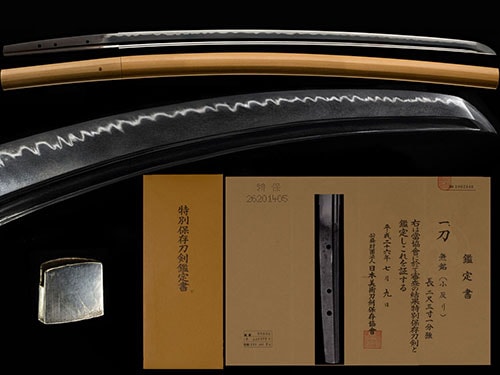
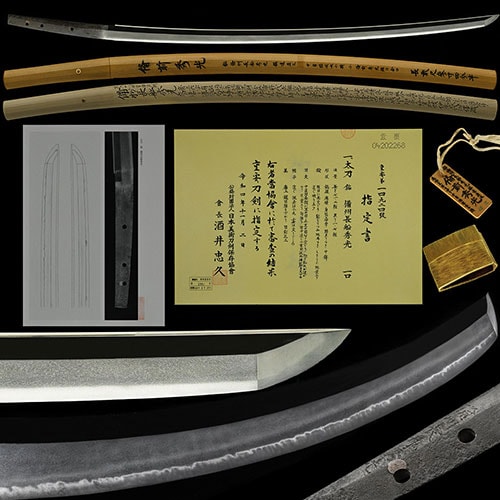
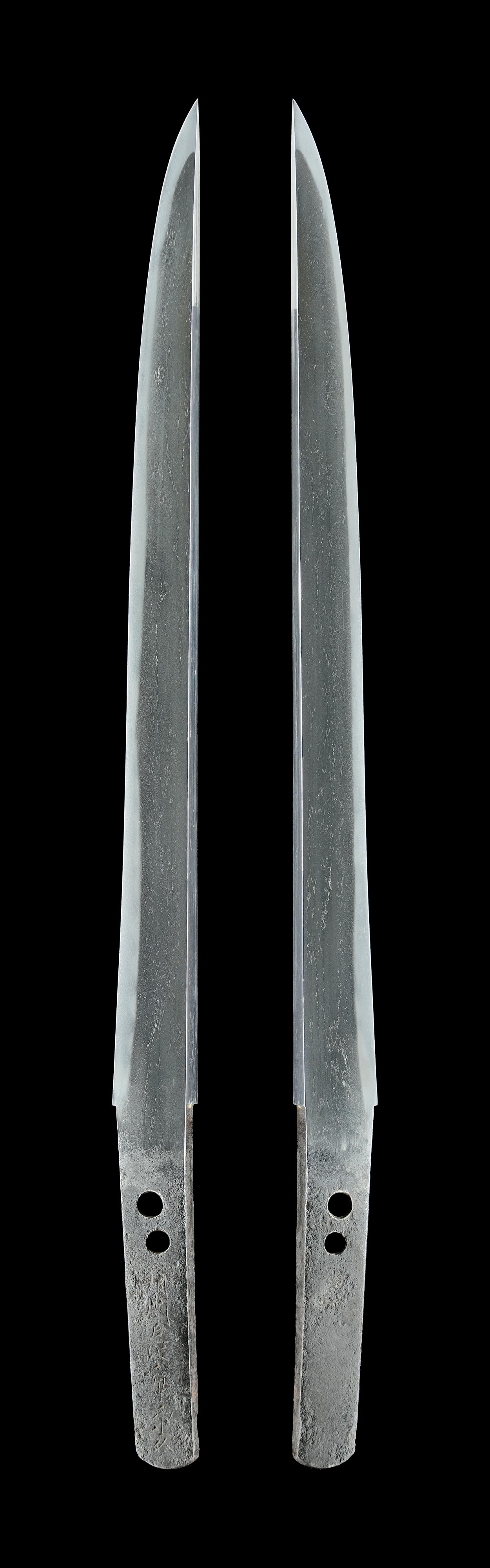
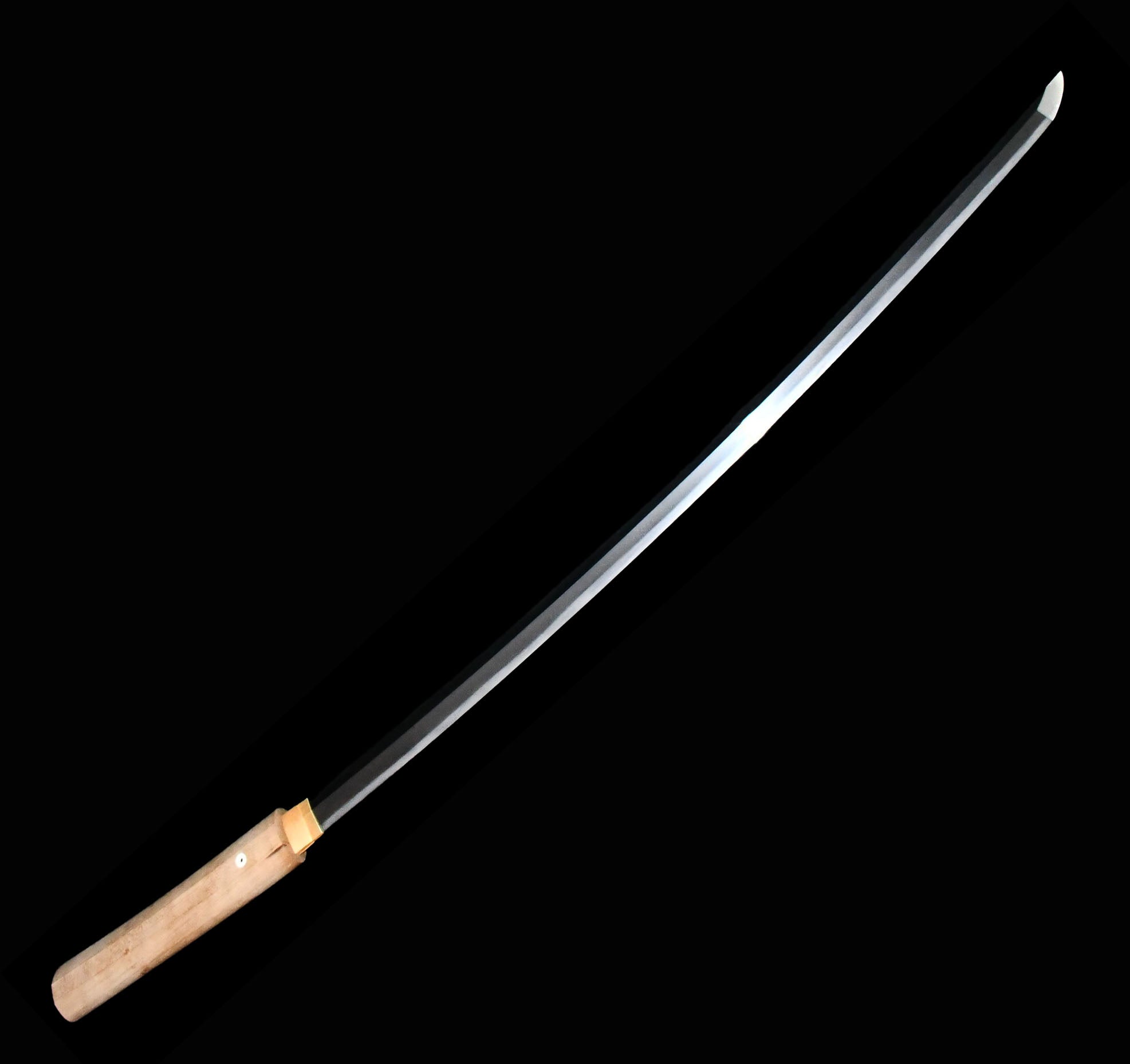
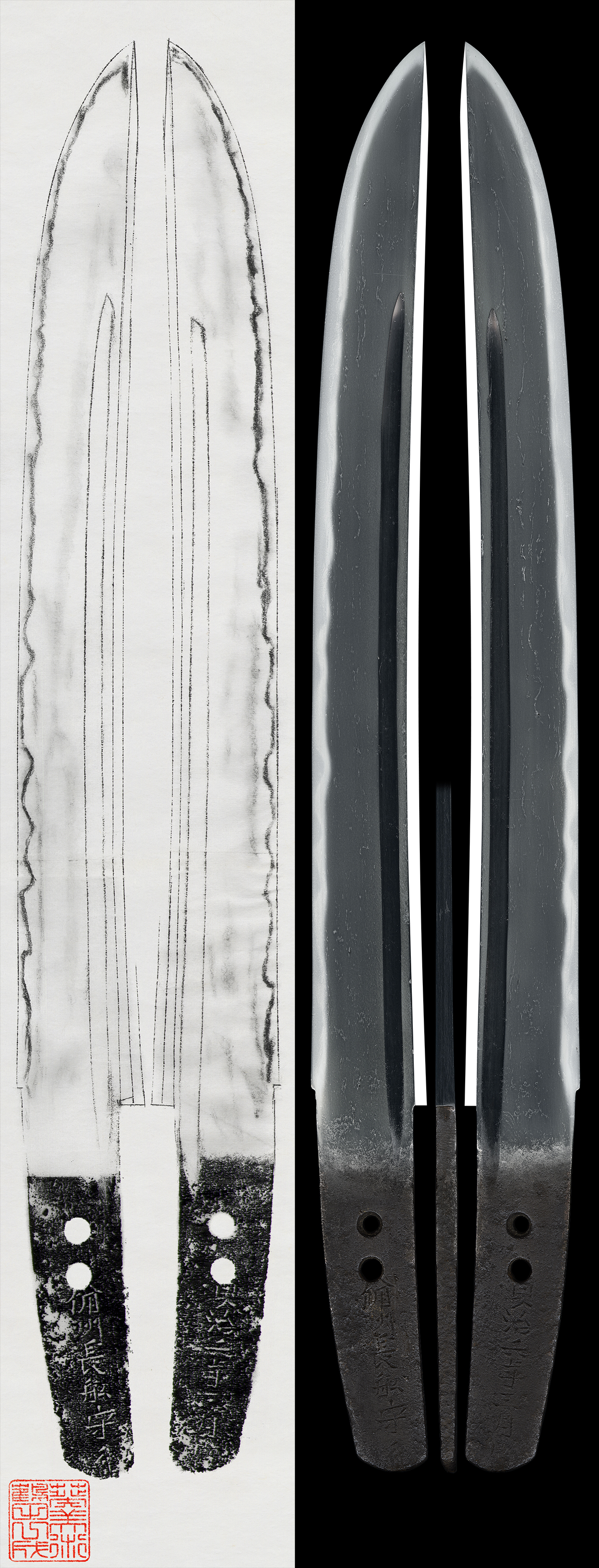
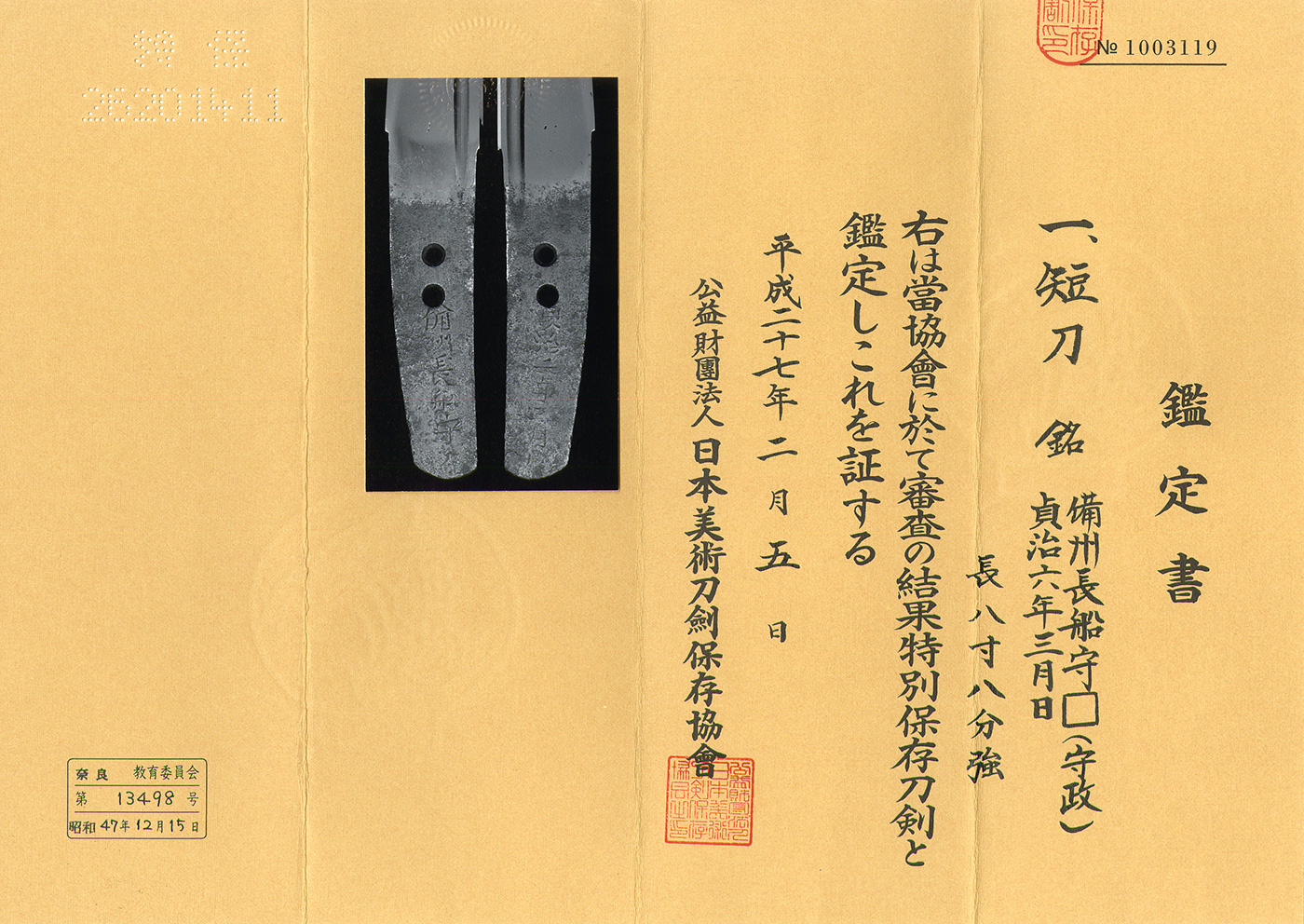
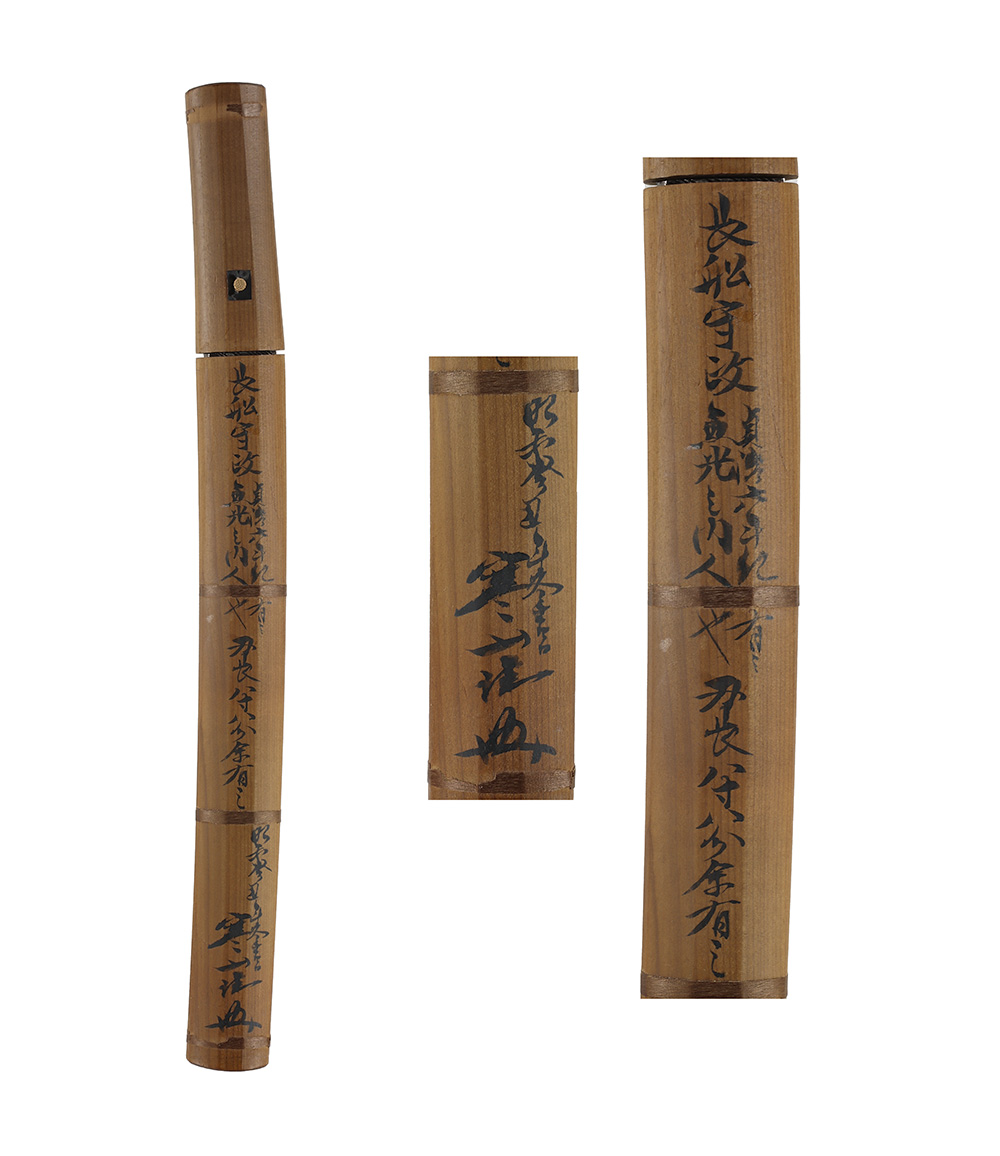
This is a tanto by Bishu Osafune Morimasa, dated March, Joji 6 (1367) from the Nanbokucho period. It features a well-forged ko-itame hada with visible utsuri and a ko-nie-deki hamon. The blade comes with both shirasaya and koshirae, and is accompanied by an NBTHK Tokubetsu Hozon Token certificate.
Auction status: live on sword-auction.com.
 NihontoWatch
mei · Osafune · Teiji (1362-1368) ND · nagasa 26.7cm · sori 0.3cm



Bizen-den · Bizen · around 1362-1368
Fujishiro Jo saku · Tōken Taikan top 23%
1 piece on the market now
Where Morimasa stands among comparable artisans: across all of nihontō, and within tradition, era, and period. The tiers (Foremost · Leading · Major · Notable) weigh official designations from the NBTHK and Japan's Agency for Cultural Affairs, together with historical honors of lasting repute such as the Sansaku and Meibutsu-chō.
Select a lens to see how it's measured.
Bizen-den · Bizen
25 pieces on the market now
The Kozori (小反り) form a loose body of Bizen smiths who worked at and around Osafune in the closing decades of the Nanbokucho period and on into early Muromachi, and the NBTHK defines them less by descent than by exclusion: they are the late-Osafune hands who fall outside the specific lineages of Kanemitsu, Chogi, Motoshige and the Omiya group, gathered under one name as a convenience. The reading of the name itself has been explained in several ways, and the published sources are candid that it resists a clean definition; the prevailing sense is the ko-sori, the slight or shallow reverse-curvature of the blades, the shape running to a deep koshizori with marked funbari and a small point in the older pieces and growing heavy in the kasane toward Oei. The body has no single founder. Smiths such as Moromitsu (師光), recorded as the father of the Oei master Morimitsu, anchor the group through dated tachi; Iesuke and Iemori carry Hatakeda blood; Nariie descends from Kagehide; Morisuke, Shigeyoshi, Tsunehiro, Hidemitsu, Motomasa and others fill out the periphery, several of whose lines run several generations and whose precise generation-by-generation reading the institution leaves to further study. Across these hands runs a shared vocabulary, and the recurring word for it is scale. The jigane is the constant: an itame mixed with mokume and nagare, the grain standing a little (hada-tachi), fine ji-nie attaching, dark chikei-toned and at times jifu-like passages crossing the steel, and over it the midare-utsuri (sometimes a bo-utsuri or straight sugu-utsuri) that places the group squarely in the Bizen-den. The temper is nioi-based with ko-nie, built on a shallow ko-notare into which the smiths set ko-gunome running connected and threaded, pointed togariba, angular squared elements, open-waisted koshi-biraki gunome and modest choji, the whole kept small and crowded (kozumu), with ko-ashi and yo entering and fine sunagashi and kinsuji playing through. The boshi answers in midare-komi, pointing or settling to a ko-maru with hakikake.
Within the shared idiom each hand has its tell: Moromitsu tempers the most subdued, low-lying midare; Nariie's gunome crowds where Kanemitsu's opens; Hidemitsu and Hidemitsu of the Koreha branch lean to a reverse-slanting saka-gakari and saka-ashi near the Aoe manner, and turn now and then to a quiet chu-suguha; Tsunehiro favours a kataochi-like gunome; Iesuke and Iemori, working into Oei, open the valleys toward the early-Muromachi pattern. A collector seeks Kozori for legibility rather than flourish. Many of the best survivors are ubu, signed and dated tachi, and that dated file (Joji, Oan, Eiwa, Shitoku, Eitoku, Meitoku into Oei) gives the late history of Osafune a year-by-year spine, prized as reference material for the period; the names also map a province pulled between the Northern and Southern courts, Morisuke's Joji dates reading as Northern Court alignment. To kantei the group is to read it against its neighbours: the small, crowded, nioi-toned midare and the standing itame with kawarigane chikei separate it from the bolder, more uniform gunome of the Kanemitsu mainline of the Nanbokucho height, while the open koshi-biraki valleys and the heavier, sakizori late sugata point forward to and distinguish it from the more decorative Oei-Bizen of Morimitsu and Yasumitsu (a threshold several Kozori blades, in NBTHK phrasing, already anticipate). Among the members the institution ranks Moromitsu and Nariie high (Nariie held equal to the Kanemitsu pupil Masamitsu), Iesuke beside the leading Oei names, and Hidemitsu the leading hand of the Koreha branch. Provenance, though thinly recorded for some, reaches real houses: blades descend through the Kuroda, Kaga Maeda, Shonai Sakai and Hojo families, with examples in the Hayashibara Museum and the national museums, and the occasional Imperial line. A signed, dated Kozori blade comes to hand only from time to time, a quiet, datable window onto Osafune as it closed its Nanbokucho age. Learn more →
| Smith | Era | Designated |
|---|---|---|
| Hidemitsu秀光 | 1375-1392 | 19 |
| Iesuke家助 | 1394-1428 | 11 |
| Nariie成家 | 1352-1362 | 21 |
| Iemori家守 | 1377-1406 | 15 |
| Moromitsu師光 | 1375-1390 | 7 |
Sixty years of war between two courts drove blades long and broad, and Osafune met the demand: Kanemitsu and Chōgi led forges serving the provincial warriors who did the fighting, while Sōshū influence arrived with the armies to create Sōden-Bizen.
A Hozon-certified blade judged to show notably superior workmanship and a better state of preservation. The bar is higher: re-tempered blades and most unsigned Muromachi/Edo works are excluded.
The NBTHK (Nihon Bijutsu Tōken Hozon Kyōkai, the Society for the Preservation of Japanese Art Swords) is a public-interest incorporated foundation founded in 1948 and supervised by Japan’s Agency for Cultural Affairs (Bunkachō); it is based at the Japanese Sword Museum in Tokyo. Its expert panels physically examine each submitted work (shinsa) and issue a certificate (kanteishō) ranking it by artistic and historical merit. NBTHK papers are the most widely recognized standard of authentication for Japanese swords and fittings.
NBTHK official siteIf you wish to return an item, please notify us within 3 days of receipt. After this period we cannot accept cancellations. Please ship the return to us within 5 business days. Cancellation is conditional on the item being kept in the same condition as at the time of sale, so please handle it with care.
This is a tanto by Bishu Osafune Morimasa, dated March, Joji 6 (1367) from the Nanbokucho period. It features a well-forged ko-itame hada with visible utsuri and a ko-nie-deki hamon. The blade comes with both shirasaya and koshirae, and is accompanied by an NBTHK Tokubetsu Hozon Token certificate.
Auction status: live on sword-auction.com.
NihontoWatchmei · Osafune · Teiji (1362-1368) ND · nagasa 26.7cm · sori 0.3cm
Bizen-den · Bizen · around 1362-1368
Fujishiro Jo saku · Tōken Taikan top 23%
1 piece on the market now
Where Morimasa stands among comparable artisans: across all of nihontō, and within tradition, era, and period. The tiers (Foremost · Leading · Major · Notable) weigh official designations from the NBTHK and Japan's Agency for Cultural Affairs, together with historical honors of lasting repute such as the Sansaku and Meibutsu-chō.
Select a lens to see how it's measured.
Bizen-den · Bizen
25 pieces on the market now
The Kozori (小反り) form a loose body of Bizen smiths who worked at and around Osafune in the closing decades of the Nanbokucho period and on into early Muromachi, and the NBTHK defines them less by descent than by exclusion: they are the late-Osafune hands who fall outside the specific lineages of Kanemitsu, Chogi, Motoshige and the Omiya group, gathered under one name as a convenience. The reading of the name itself has been explained in several ways, and the published sources are candid that it resists a clean definition; the prevailing sense is the ko-sori, the slight or shallow reverse-curvature of the blades, the shape running to a deep koshizori with marked funbari and a small point in the older pieces and growing heavy in the kasane toward Oei. The body has no single founder. Smiths such as Moromitsu (師光), recorded as the father of the Oei master Morimitsu, anchor the group through dated tachi; Iesuke and Iemori carry Hatakeda blood; Nariie descends from Kagehide; Morisuke, Shigeyoshi, Tsunehiro, Hidemitsu, Motomasa and others fill out the periphery, several of whose lines run several generations and whose precise generation-by-generation reading the institution leaves to further study. Across these hands runs a shared vocabulary, and the recurring word for it is scale. The jigane is the constant: an itame mixed with mokume and nagare, the grain standing a little (hada-tachi), fine ji-nie attaching, dark chikei-toned and at times jifu-like passages crossing the steel, and over it the midare-utsuri (sometimes a bo-utsuri or straight sugu-utsuri) that places the group squarely in the Bizen-den. The temper is nioi-based with ko-nie, built on a shallow ko-notare into which the smiths set ko-gunome running connected and threaded, pointed togariba, angular squared elements, open-waisted koshi-biraki gunome and modest choji, the whole kept small and crowded (kozumu), with ko-ashi and yo entering and fine sunagashi and kinsuji playing through. The boshi answers in midare-komi, pointing or settling to a ko-maru with hakikake.
Within the shared idiom each hand has its tell: Moromitsu tempers the most subdued, low-lying midare; Nariie's gunome crowds where Kanemitsu's opens; Hidemitsu and Hidemitsu of the Koreha branch lean to a reverse-slanting saka-gakari and saka-ashi near the Aoe manner, and turn now and then to a quiet chu-suguha; Tsunehiro favours a kataochi-like gunome; Iesuke and Iemori, working into Oei, open the valleys toward the early-Muromachi pattern. A collector seeks Kozori for legibility rather than flourish. Many of the best survivors are ubu, signed and dated tachi, and that dated file (Joji, Oan, Eiwa, Shitoku, Eitoku, Meitoku into Oei) gives the late history of Osafune a year-by-year spine, prized as reference material for the period; the names also map a province pulled between the Northern and Southern courts, Morisuke's Joji dates reading as Northern Court alignment. To kantei the group is to read it against its neighbours: the small, crowded, nioi-toned midare and the standing itame with kawarigane chikei separate it from the bolder, more uniform gunome of the Kanemitsu mainline of the Nanbokucho height, while the open koshi-biraki valleys and the heavier, sakizori late sugata point forward to and distinguish it from the more decorative Oei-Bizen of Morimitsu and Yasumitsu (a threshold several Kozori blades, in NBTHK phrasing, already anticipate). Among the members the institution ranks Moromitsu and Nariie high (Nariie held equal to the Kanemitsu pupil Masamitsu), Iesuke beside the leading Oei names, and Hidemitsu the leading hand of the Koreha branch. Provenance, though thinly recorded for some, reaches real houses: blades descend through the Kuroda, Kaga Maeda, Shonai Sakai and Hojo families, with examples in the Hayashibara Museum and the national museums, and the occasional Imperial line. A signed, dated Kozori blade comes to hand only from time to time, a quiet, datable window onto Osafune as it closed its Nanbokucho age. Learn more →
| Smith | Era | Designated |
|---|---|---|
| Hidemitsu秀光 | 1375-1392 | 19 |
| Iesuke家助 | 1394-1428 | 11 |
| Nariie成家 | 1352-1362 | 21 |
| Iemori家守 | 1377-1406 | 15 |
| Moromitsu師光 | 1375-1390 | 7 |
Sixty years of war between two courts drove blades long and broad, and Osafune met the demand: Kanemitsu and Chōgi led forges serving the provincial warriors who did the fighting, while Sōshū influence arrived with the armies to create Sōden-Bizen.
A Hozon-certified blade judged to show notably superior workmanship and a better state of preservation. The bar is higher: re-tempered blades and most unsigned Muromachi/Edo works are excluded.
The NBTHK (Nihon Bijutsu Tōken Hozon Kyōkai, the Society for the Preservation of Japanese Art Swords) is a public-interest incorporated foundation founded in 1948 and supervised by Japan’s Agency for Cultural Affairs (Bunkachō); it is based at the Japanese Sword Museum in Tokyo. Its expert panels physically examine each submitted work (shinsa) and issue a certificate (kanteishō) ranking it by artistic and historical merit. NBTHK papers are the most widely recognized standard of authentication for Japanese swords and fittings.
NBTHK official siteIf you wish to return an item, please notify us within 3 days of receipt. After this period we cannot accept cancellations. Please ship the return to us within 5 business days. Cancellation is conditional on the item being kept in the same condition as at the time of sale, so please handle it with care.