The monasteries that had sustained Yamato lost ground through the Muromachi period, and the schools thinned with them; Sue-Tegai kept the old masame manner alive in quantity. The burning of Tōdaiji’s Great Buddha hall in 1567 closed the temple age.
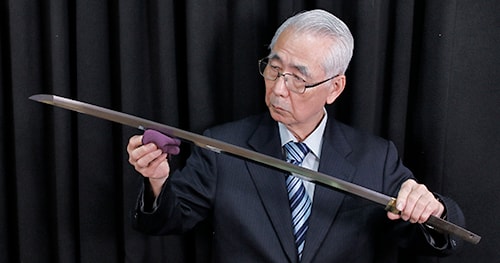
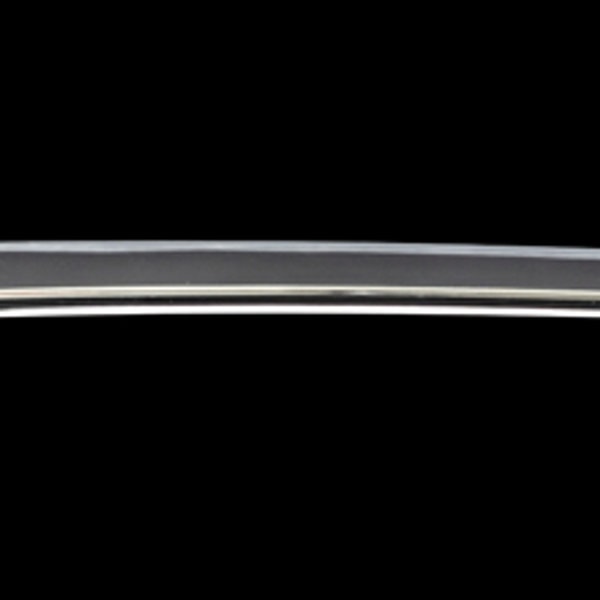
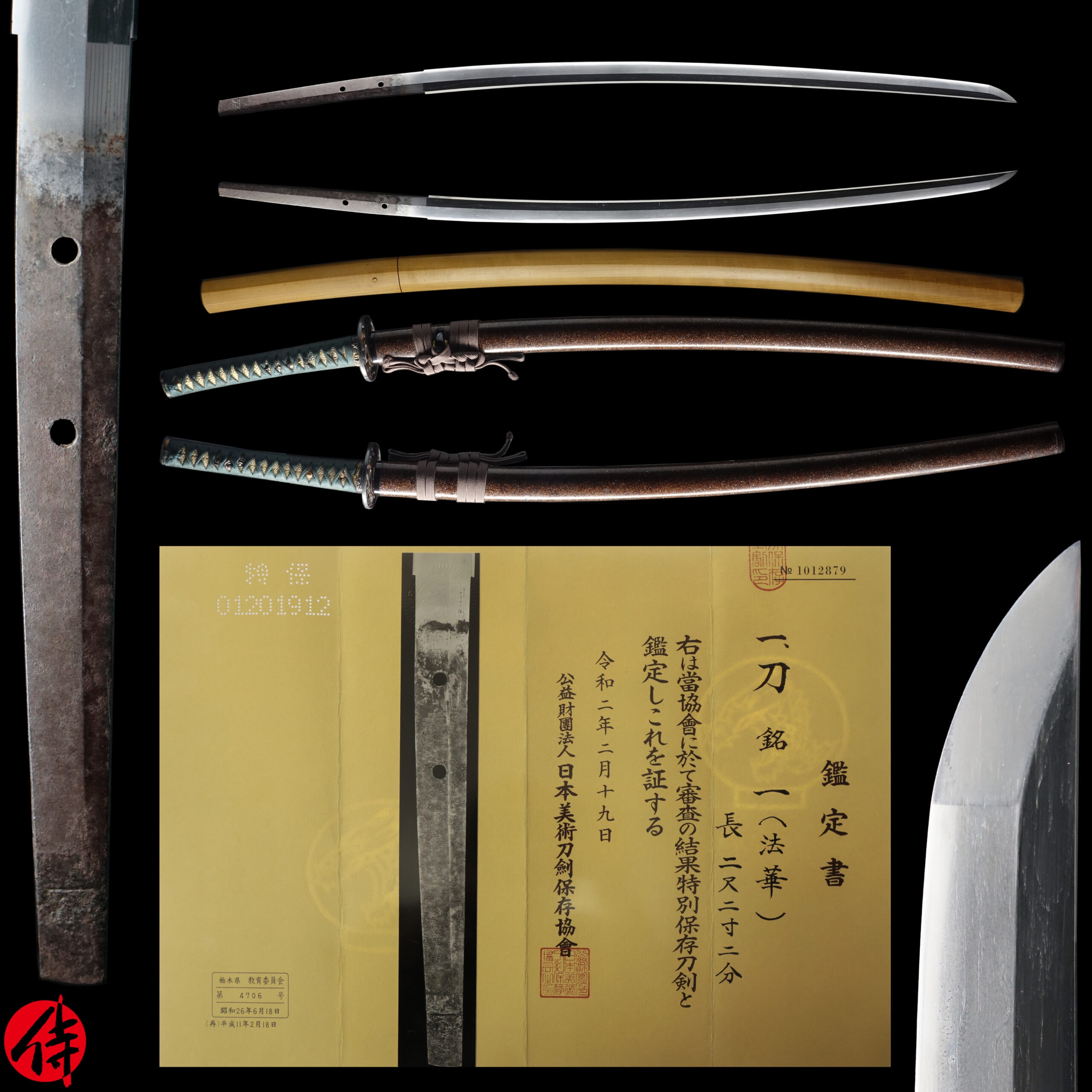
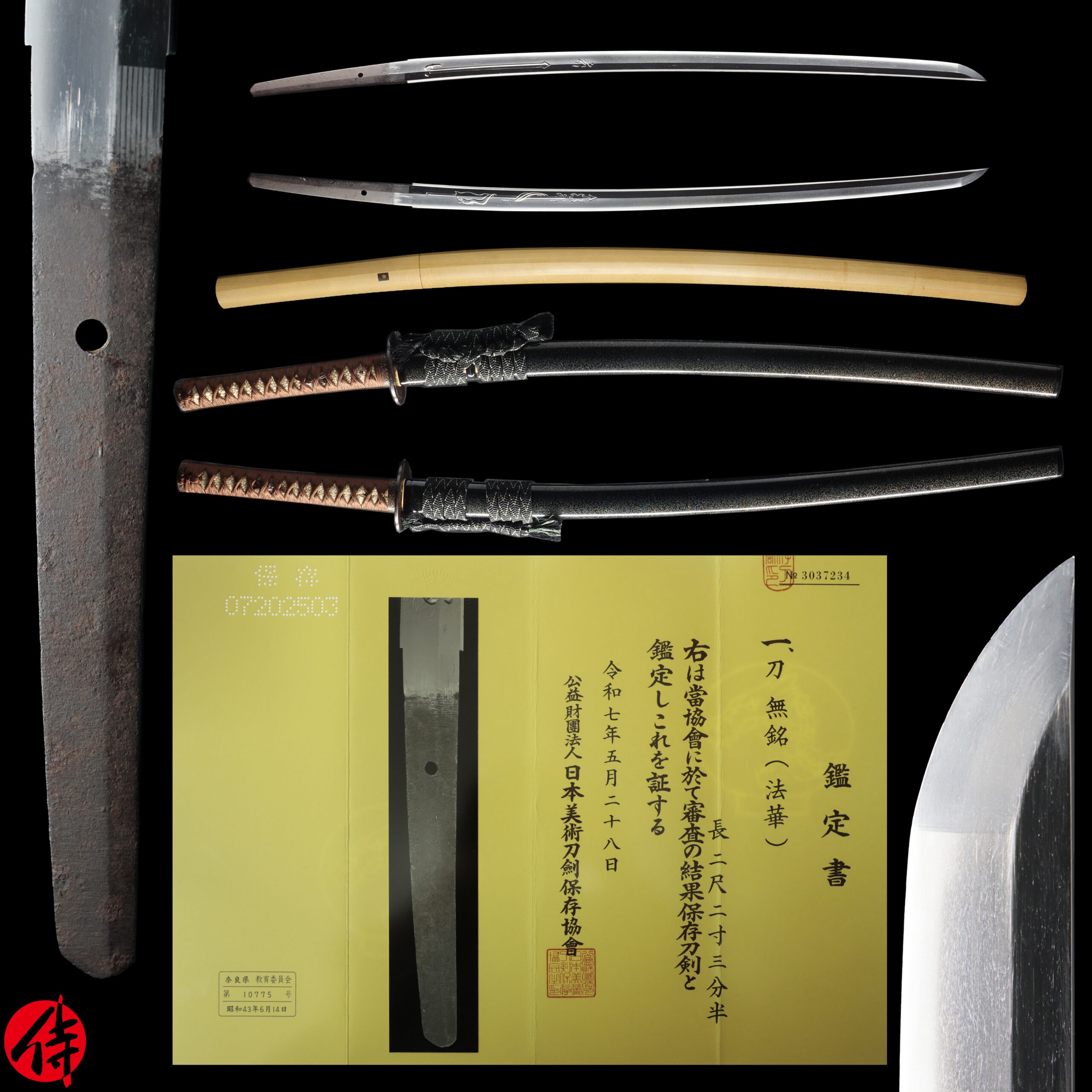
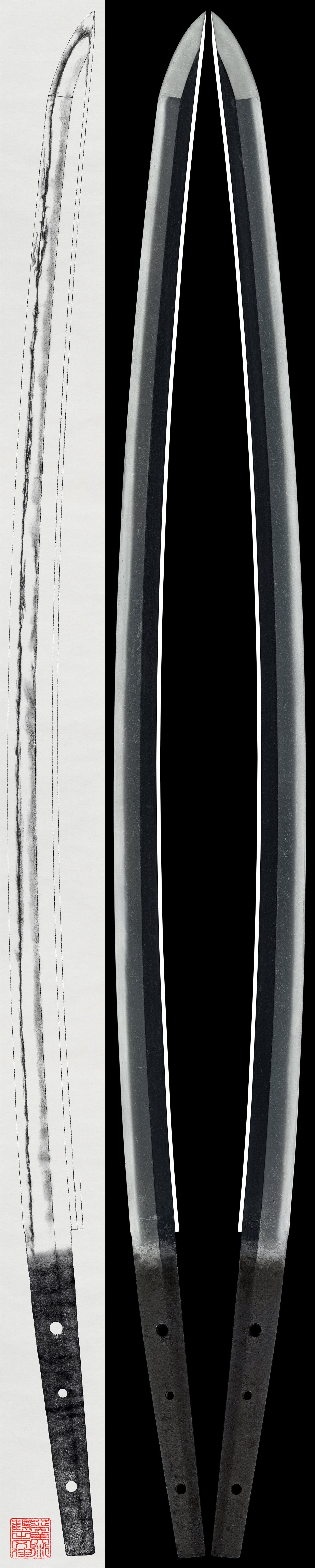
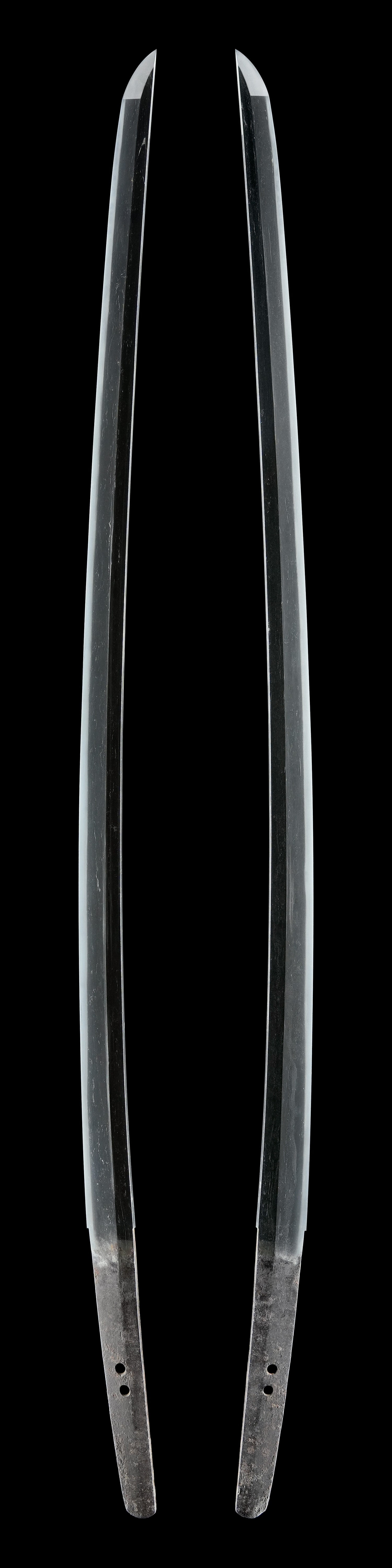
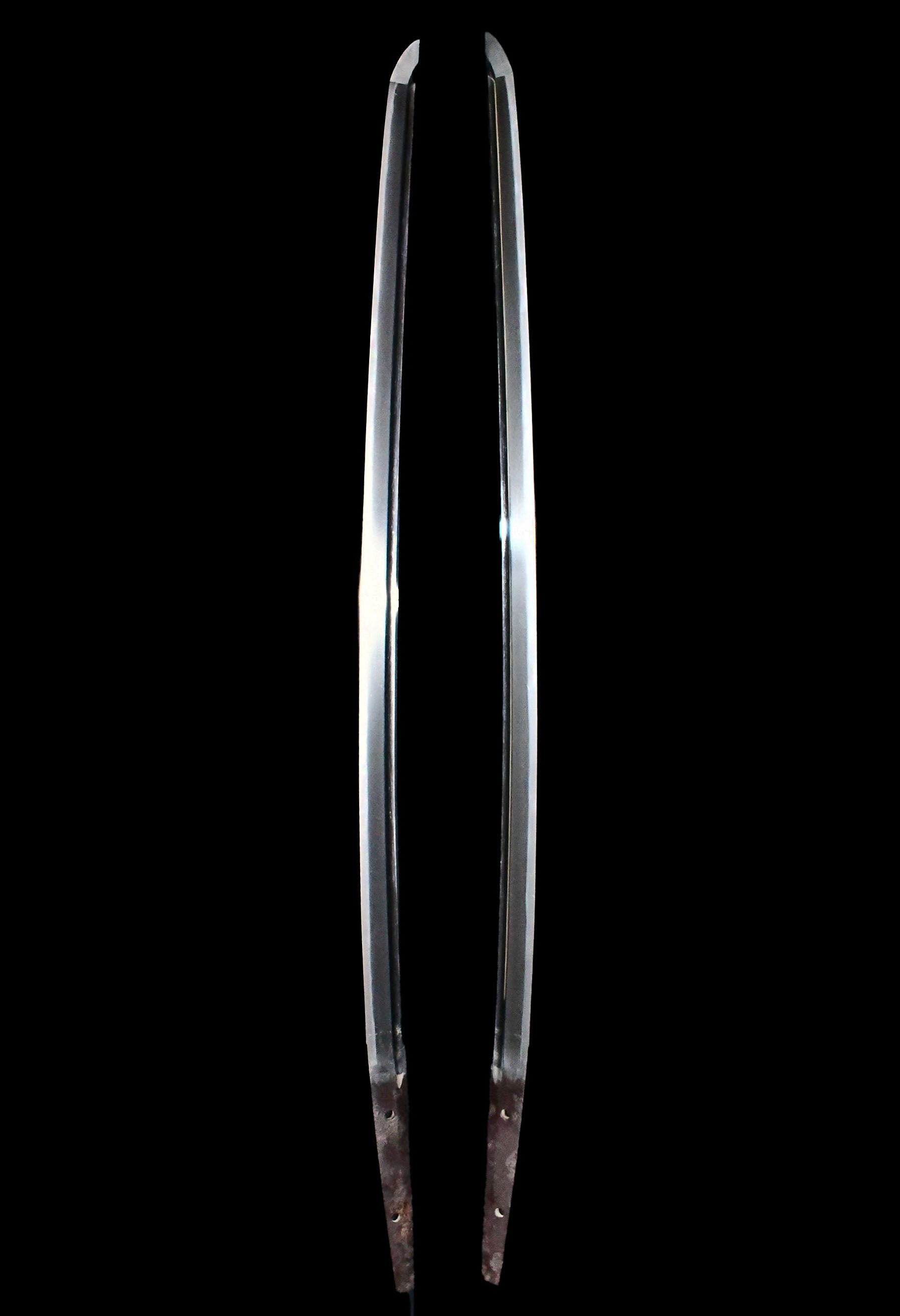
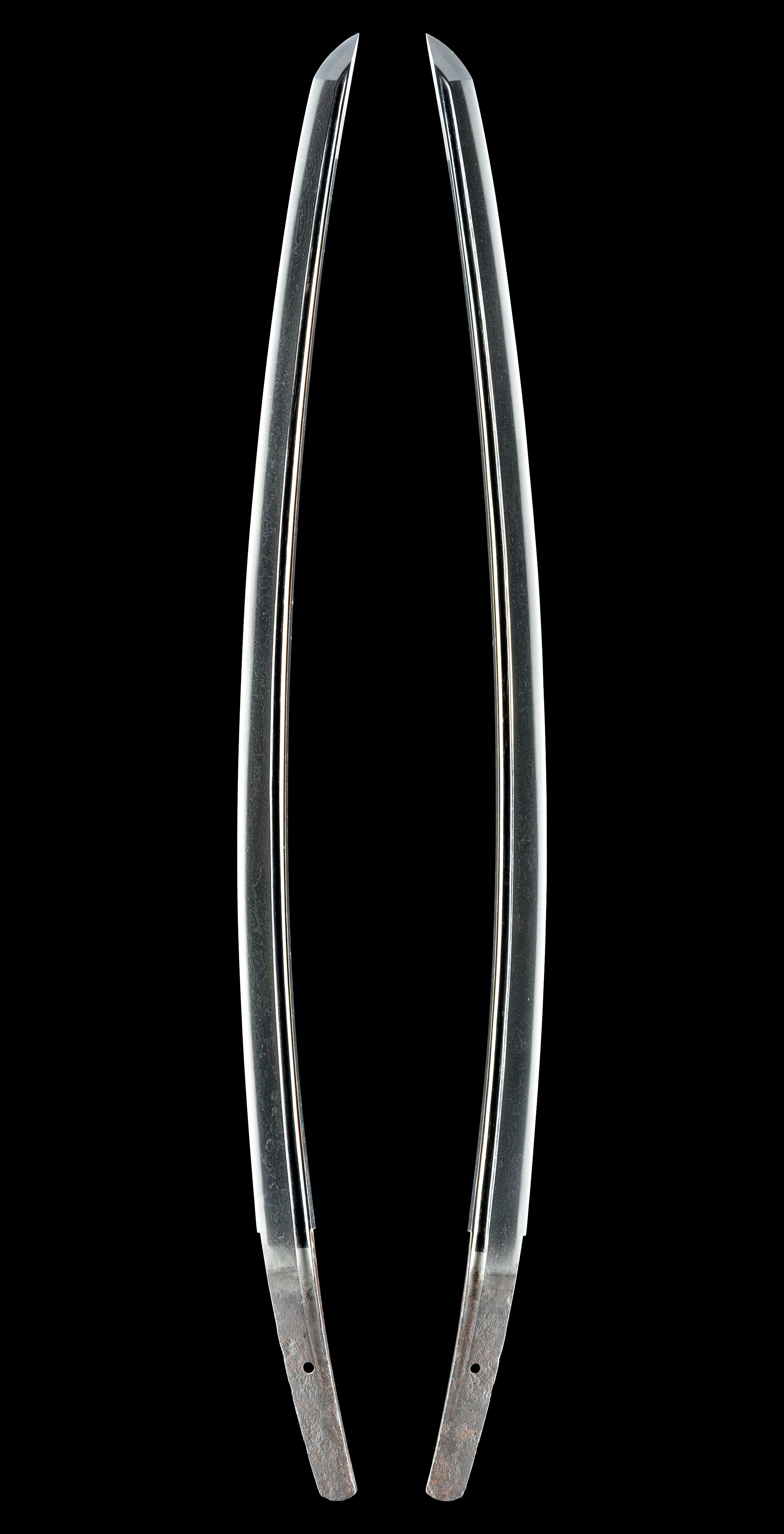
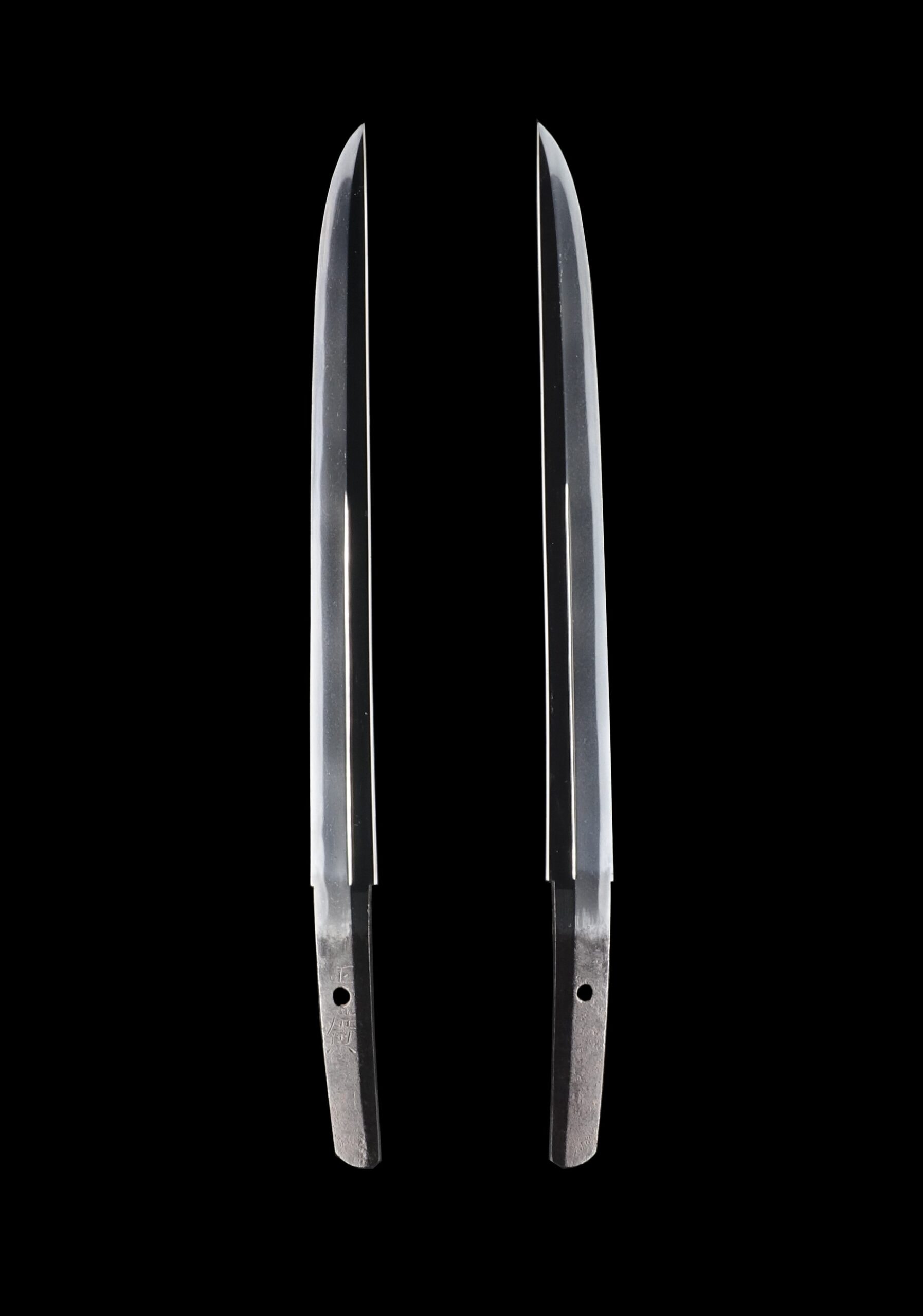
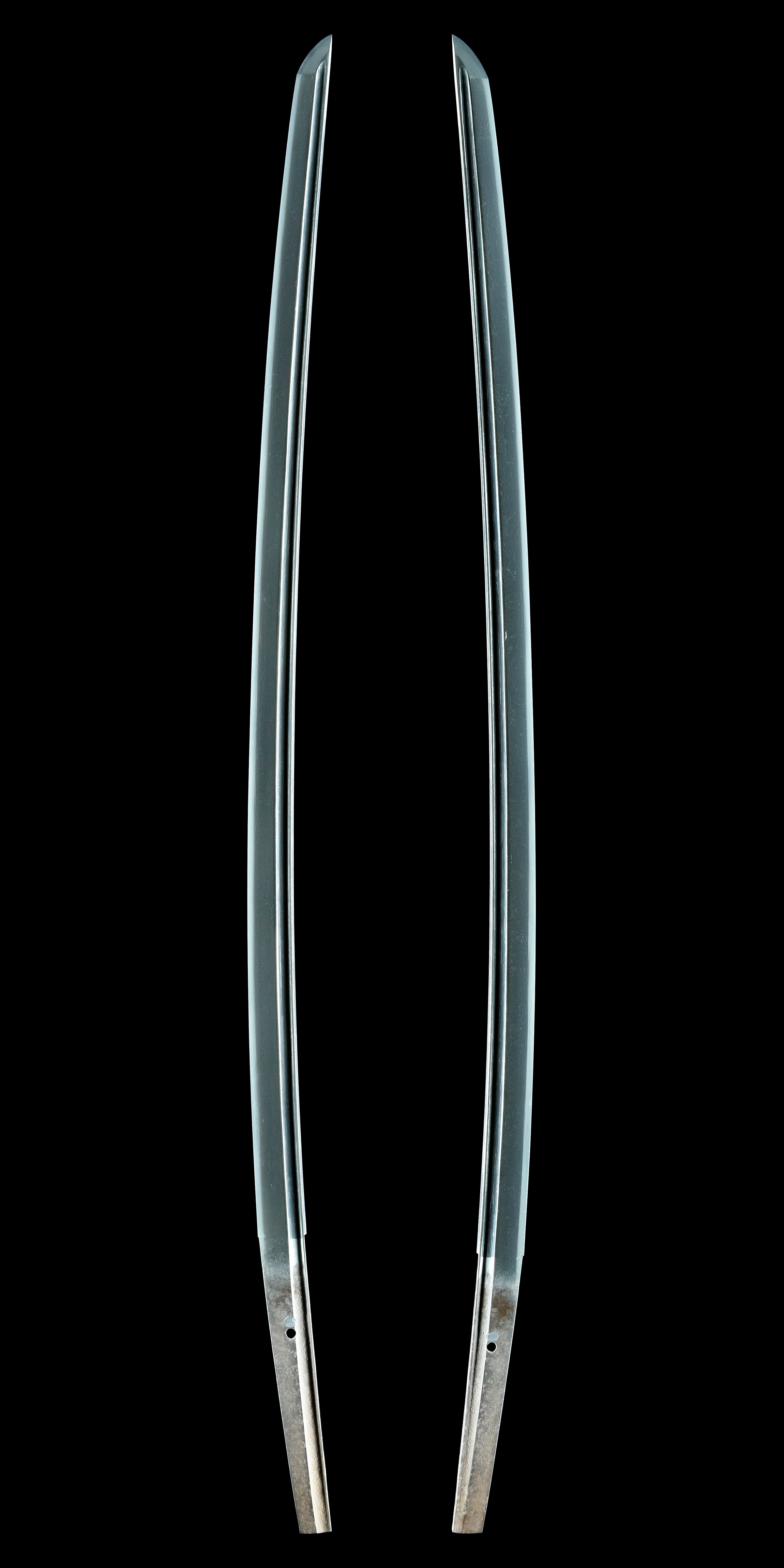
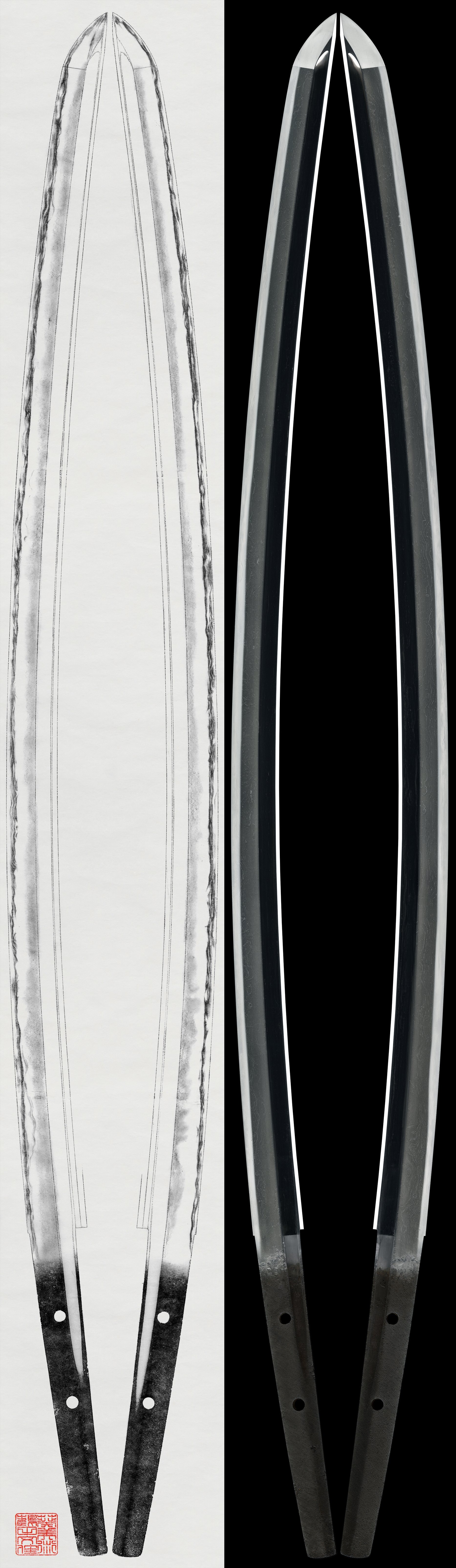
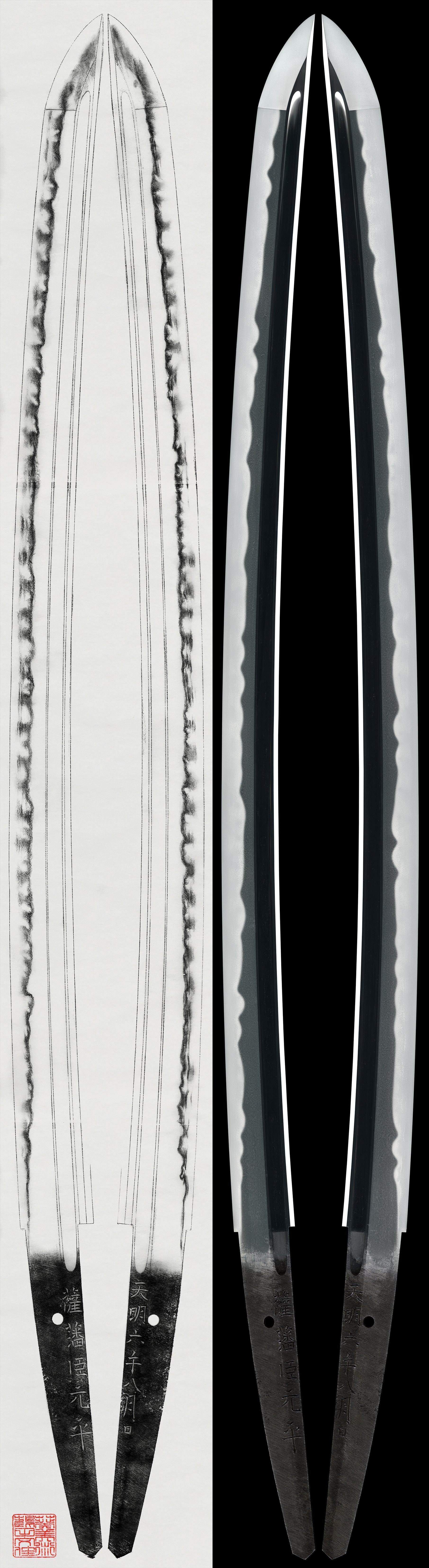
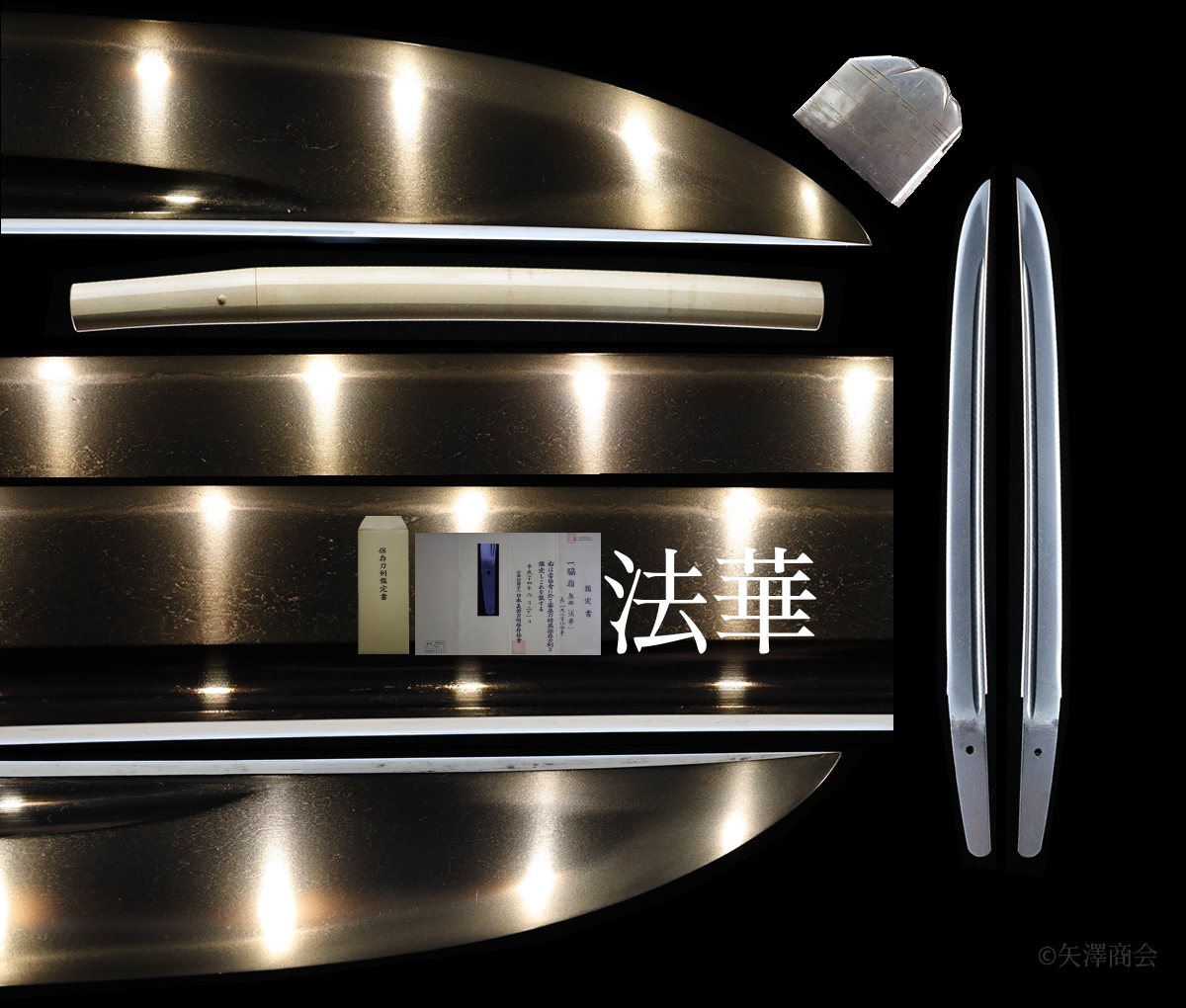
This is a Hozon Token certified wakizashi attributed to the Hokke school, known for its moist jigane and excellent workmanship. The blade features a straight hamon with small nie and a tight nioiguchi, along with a ko-itame hada mixed with mokume. The Hokke school flourished in Bizen province from the Nanbokucho to early Muromachi periods, with most of their works being mumei.
 NihontoWatch
mumei · Hokke · Muromachi · nagasa 39cm · sori 0.3cm



Yamato-den · Bingo
8 pieces on the market now
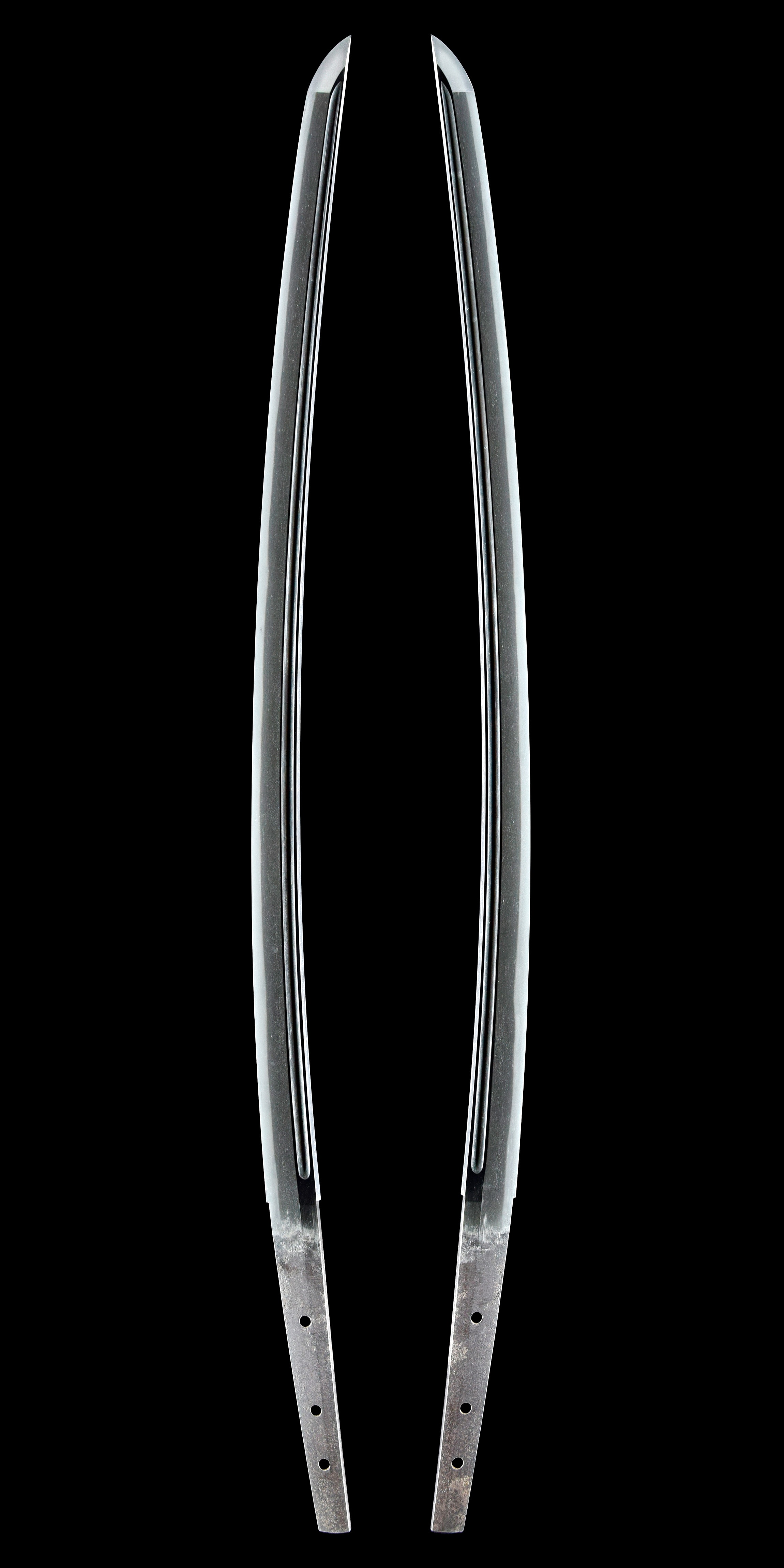
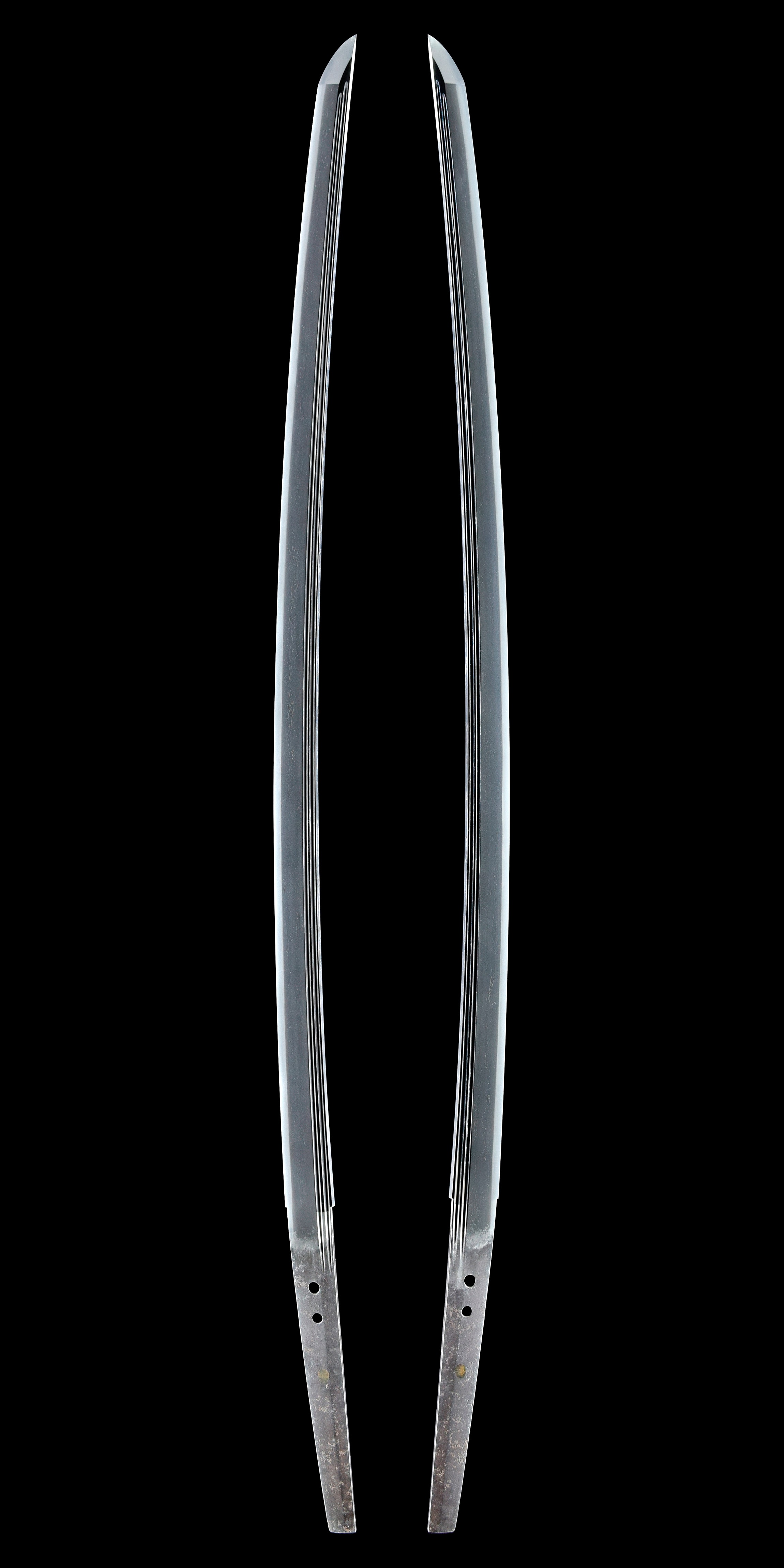
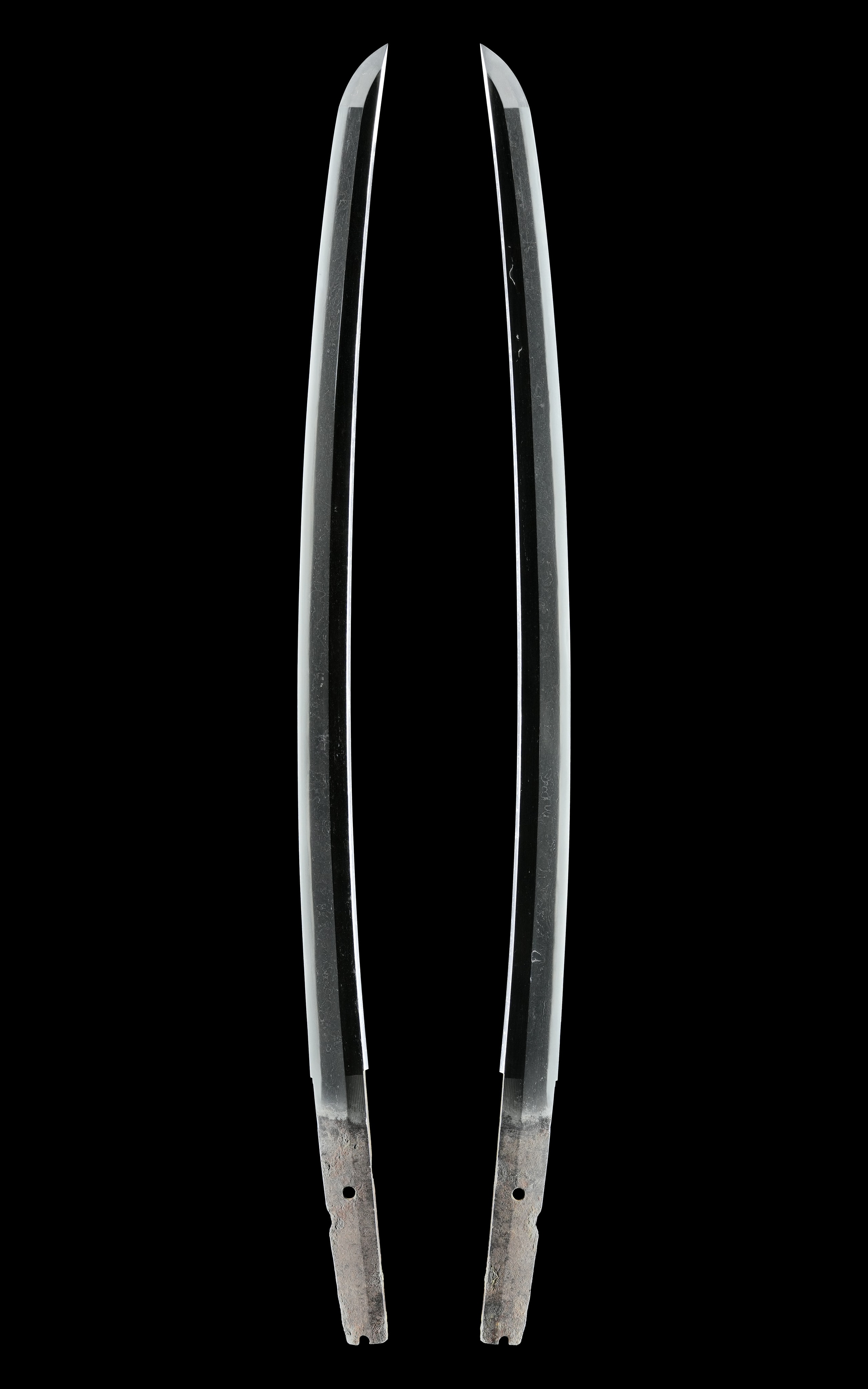
Bingo province, in the late Kamakura into the Nanbokuchō and Muromachi periods, hosted a cluster of workshops that the setsumei repeatedly set apart from the better-known Mihara line. The reference work Kokon Meizukushi Taizen is cited again and again as locating the Hokke (法華) line among the makers of Ashida District (葦田郡), a genealogy presented as distinct from the so-called Mihara tradition, with Sukekuni (助國) named as its founding progenitor. The fuller designation is Hokke Ichijō[[c:1]], and several setsumei record that the smiths styled themselves with the surname-like "Ichijō," signing variously "Hokke Ichijō," "Hokke saku," "Ichijō saku," or simply the single character "Ichi"[[c:2]]. One account traces the founder Ichijō to a son of Mihara Masaiye, framing the group as a branch of the Mihara or Kokubunji sphere even as the workshop record treats it as its own hand. The setsumei name a roster of these makers: Ichijō, who left a kodachi signed "Ichijō saku" and a joint tachi by Ichijō Morie and Ichijō Moriyuki dated Chōroku 3 (1459); Kaneyasu, Yukiyoshi, Shigeie, and Nobukane, whose Ōei-era tantō survives signed; Shigeyasu (重安, and the homophone 重康), Shigeyoshi (重吉), Suetsugu (季次), Yoshitsugu (吉次), Kanetsugu (金次) of the Kusado settlement, and Chikatsugu (親次), several of whom the appraisers assign to Bingo on the strength of a "Bishū-jū" residence and a Nanbokuchō date. Read across the corpus, a shared manner emerges. The kitae is itame mixed with mokume, frequently running into nagare or tending toward masame near the edge, with conspicuous hada-dachi (standing grain); ji-nie and chikei gather, and a shirake-utsuri or whitish utsuri-like cast stands out, the steel often described as somewhat blackish. The hamon is a low, restrained suguha or suguha-chō carrying connected ko-gunome and gunome, with ashi and yō, nioi-dominant temper with ko-nie, and a nioiguchi that inclines toward shizumi (a sinking, subdued quality), at times softening to urumi; hotsure, uchi-noke, kuichigai-ba, kinsuji, and sunagashi recur within the ha. The bōshi divides into two recognized manners the setsumei themselves contrast: a yakizume finish that reads as a Yamato-den temperament, and a tip that grows slightly togari and turns back with a long kaeri.
Within this vocabulary the hands diverge. The signed Ichijō kodachi and the Chikatsugu tachi lean to a ko-midare with ko-chōji that the appraisers liken to neighbouring Aoe and Bizen-den work, while Shigeyasu and Shigeyoshi run to wider sun-nobi hira-zukuri with aligned yakigashira and abundant nie, so the group is presented as distinct hands sharing a province rather than one unified workshop. For kantei the setsumei offer concrete separators. The Yamato temperament, the shirake ground, the standing grain, and the shizumi nioiguchi mark the work off from mainline Bizen-den, whose chōji and clear utsuri the Hokke blades only echo through the Aoe-flavoured examples. Against Mihara, the appraisers note that the Hokke jiba evokes Mihara but the nie in both ji and ha runs one step stronger, and the bōshi turns back more deeply; the "Ichijō" surname usage and the linked ko-gunome of the midsection further fix the attribution. Provenance and documentary weight cluster around dated, signed pieces: the Chōroku 3 Ichijō Morie and Moriyuki tachi of unusual length, made for a commemorative demand; Shigeyasu's Ōan and Sadaji dates and the naginata-naoshi recording Jōji 4, Ōan 1, and Ōan 2; the Meitoku Kanetsugu associated with Kusado Sengen (草戸千軒), the buried medieval town excavated near the Kusado smiths. A mumei Ichijō katana carries a Hon'ami Kōchū origami. The standing of the school in the register rests on this evidentiary spine: a Bingo line, Yamato-inflected and Mihara-adjacent, whose signed and dated survivals let the appraisers read a coherent provincial character without collapsing its several smiths into a single lineage. Learn more →
| Smith | Era | Designated |
|---|---|---|
| Shigeyasu重安 | 1362-1373 | 5 |
| Hokke Ichijo法華一乗 | 1394-1573 | 4 |
| Nobukane信兼 | 987-1596 | 1 |
| Shigeyoshi重吉 | 1362-1369 | 1 |
| Kanetsugu金次 | 1532-1555 | 1 |
Yamato in the Muromachi period
The monasteries that had sustained Yamato lost ground through the Muromachi period, and the schools thinned with them; Sue-Tegai kept the old masame manner alive in quantity. The burning of Tōdaiji’s Great Buddha hall in 1567 closed the temple age.
Certifies a genuine blade worth preserving: a signature confirmed correct, or, if unsigned, an era, province, and school that the NBTHK can reliably identify.
The NBTHK (Nihon Bijutsu Tōken Hozon Kyōkai, the Society for the Preservation of Japanese Art Swords) is a public-interest incorporated foundation founded in 1948 and supervised by Japan’s Agency for Cultural Affairs (Bunkachō); it is based at the Japanese Sword Museum in Tokyo. Its expert panels physically examine each submitted work (shinsa) and issue a certificate (kanteishō) ranking it by artistic and historical merit. NBTHK papers are the most widely recognized standard of authentication for Japanese swords and fittings.
NBTHK official site¥380,000
This is a Hozon Token certified wakizashi attributed to the Hokke school, known for its moist jigane and excellent workmanship. The blade features a straight hamon with small nie and a tight nioiguchi, along with a ko-itame hada mixed with mokume. The Hokke school flourished in Bizen province from the Nanbokucho to early Muromachi periods, with most of their works being mumei.
NihontoWatchmumei · Hokke · Muromachi · nagasa 39cm · sori 0.3cm
Yamato-den · Bingo
8 pieces on the market now
Bingo province, in the late Kamakura into the Nanbokuchō and Muromachi periods, hosted a cluster of workshops that the setsumei repeatedly set apart from the better-known Mihara line. The reference work Kokon Meizukushi Taizen is cited again and again as locating the Hokke (法華) line among the makers of Ashida District (葦田郡), a genealogy presented as distinct from the so-called Mihara tradition, with Sukekuni (助國) named as its founding progenitor. The fuller designation is Hokke Ichijō[[c:1]], and several setsumei record that the smiths styled themselves with the surname-like "Ichijō," signing variously "Hokke Ichijō," "Hokke saku," "Ichijō saku," or simply the single character "Ichi"[[c:2]]. One account traces the founder Ichijō to a son of Mihara Masaiye, framing the group as a branch of the Mihara or Kokubunji sphere even as the workshop record treats it as its own hand. The setsumei name a roster of these makers: Ichijō, who left a kodachi signed "Ichijō saku" and a joint tachi by Ichijō Morie and Ichijō Moriyuki dated Chōroku 3 (1459); Kaneyasu, Yukiyoshi, Shigeie, and Nobukane, whose Ōei-era tantō survives signed; Shigeyasu (重安, and the homophone 重康), Shigeyoshi (重吉), Suetsugu (季次), Yoshitsugu (吉次), Kanetsugu (金次) of the Kusado settlement, and Chikatsugu (親次), several of whom the appraisers assign to Bingo on the strength of a "Bishū-jū" residence and a Nanbokuchō date. Read across the corpus, a shared manner emerges. The kitae is itame mixed with mokume, frequently running into nagare or tending toward masame near the edge, with conspicuous hada-dachi (standing grain); ji-nie and chikei gather, and a shirake-utsuri or whitish utsuri-like cast stands out, the steel often described as somewhat blackish. The hamon is a low, restrained suguha or suguha-chō carrying connected ko-gunome and gunome, with ashi and yō, nioi-dominant temper with ko-nie, and a nioiguchi that inclines toward shizumi (a sinking, subdued quality), at times softening to urumi; hotsure, uchi-noke, kuichigai-ba, kinsuji, and sunagashi recur within the ha. The bōshi divides into two recognized manners the setsumei themselves contrast: a yakizume finish that reads as a Yamato-den temperament, and a tip that grows slightly togari and turns back with a long kaeri.
Within this vocabulary the hands diverge. The signed Ichijō kodachi and the Chikatsugu tachi lean to a ko-midare with ko-chōji that the appraisers liken to neighbouring Aoe and Bizen-den work, while Shigeyasu and Shigeyoshi run to wider sun-nobi hira-zukuri with aligned yakigashira and abundant nie, so the group is presented as distinct hands sharing a province rather than one unified workshop. For kantei the setsumei offer concrete separators. The Yamato temperament, the shirake ground, the standing grain, and the shizumi nioiguchi mark the work off from mainline Bizen-den, whose chōji and clear utsuri the Hokke blades only echo through the Aoe-flavoured examples. Against Mihara, the appraisers note that the Hokke jiba evokes Mihara but the nie in both ji and ha runs one step stronger, and the bōshi turns back more deeply; the "Ichijō" surname usage and the linked ko-gunome of the midsection further fix the attribution. Provenance and documentary weight cluster around dated, signed pieces: the Chōroku 3 Ichijō Morie and Moriyuki tachi of unusual length, made for a commemorative demand; Shigeyasu's Ōan and Sadaji dates and the naginata-naoshi recording Jōji 4, Ōan 1, and Ōan 2; the Meitoku Kanetsugu associated with Kusado Sengen (草戸千軒), the buried medieval town excavated near the Kusado smiths. A mumei Ichijō katana carries a Hon'ami Kōchū origami. The standing of the school in the register rests on this evidentiary spine: a Bingo line, Yamato-inflected and Mihara-adjacent, whose signed and dated survivals let the appraisers read a coherent provincial character without collapsing its several smiths into a single lineage. Learn more →
| Smith | Era | Designated |
|---|---|---|
| Shigeyasu重安 | 1362-1373 | 5 |
| Hokke Ichijo法華一乗 | 1394-1573 | 4 |
| Nobukane信兼 | 987-1596 | 1 |
| Shigeyoshi重吉 | 1362-1369 | 1 |
| Kanetsugu金次 | 1532-1555 | 1 |
Yamato in the Muromachi period
The monasteries that had sustained Yamato lost ground through the Muromachi period, and the schools thinned with them; Sue-Tegai kept the old masame manner alive in quantity. The burning of Tōdaiji’s Great Buddha hall in 1567 closed the temple age.
Certifies a genuine blade worth preserving: a signature confirmed correct, or, if unsigned, an era, province, and school that the NBTHK can reliably identify.
The NBTHK (Nihon Bijutsu Tōken Hozon Kyōkai, the Society for the Preservation of Japanese Art Swords) is a public-interest incorporated foundation founded in 1948 and supervised by Japan’s Agency for Cultural Affairs (Bunkachō); it is based at the Japanese Sword Museum in Tokyo. Its expert panels physically examine each submitted work (shinsa) and issue a certificate (kanteishō) ranking it by artistic and historical merit. NBTHK papers are the most widely recognized standard of authentication for Japanese swords and fittings.
NBTHK official site¥380,000