 NihontoWatchNihontoWatch
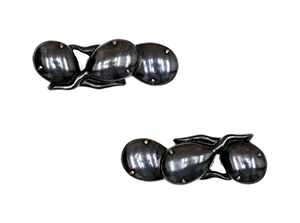
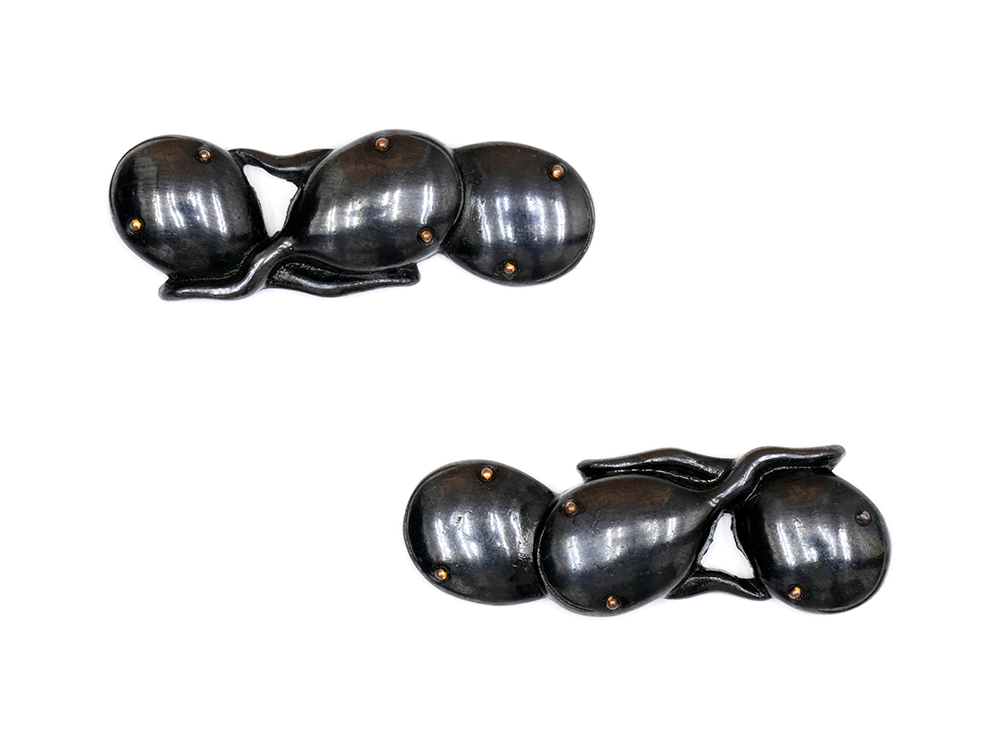
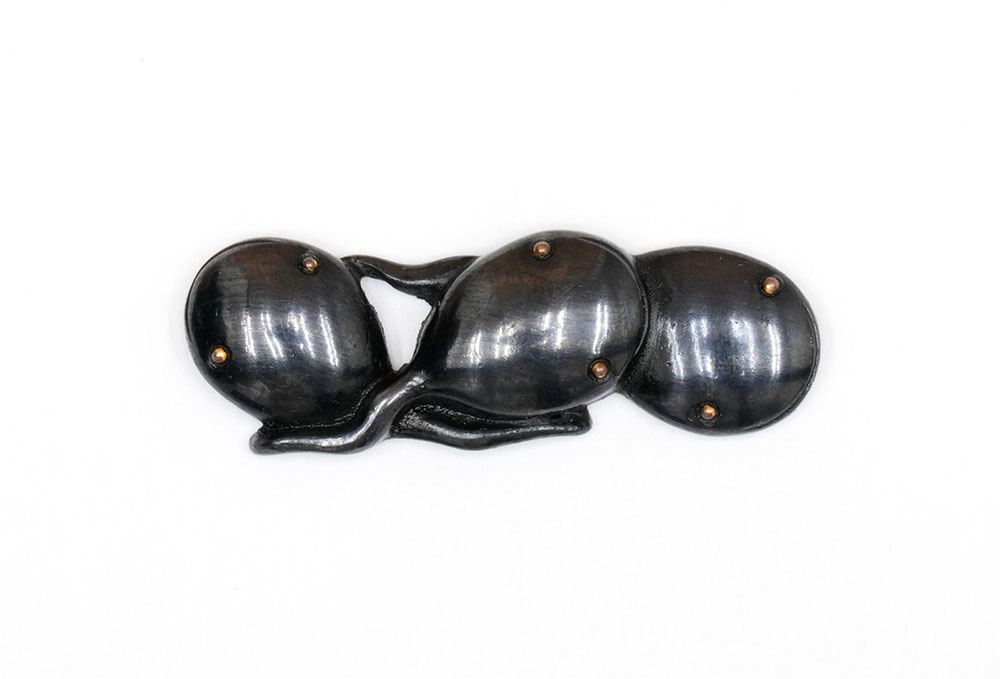
Shakudo-ji. It is a truly charming work.
NihontoWatchOffered by Toushin
Funada Ikkin is a name with Jūyō-designated work, and we couldn’t find current papers for this piece. Treat the name as unproven until papers say otherwise. It is also priced far below papered work by makers of this standing. — Hoshi Ask me first
2 on the market

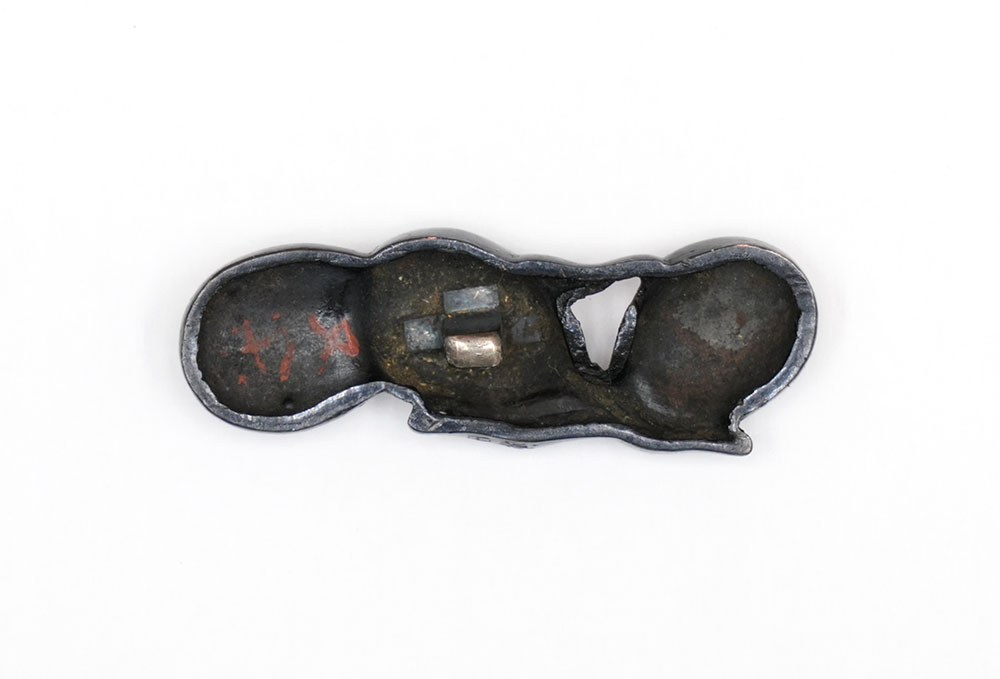
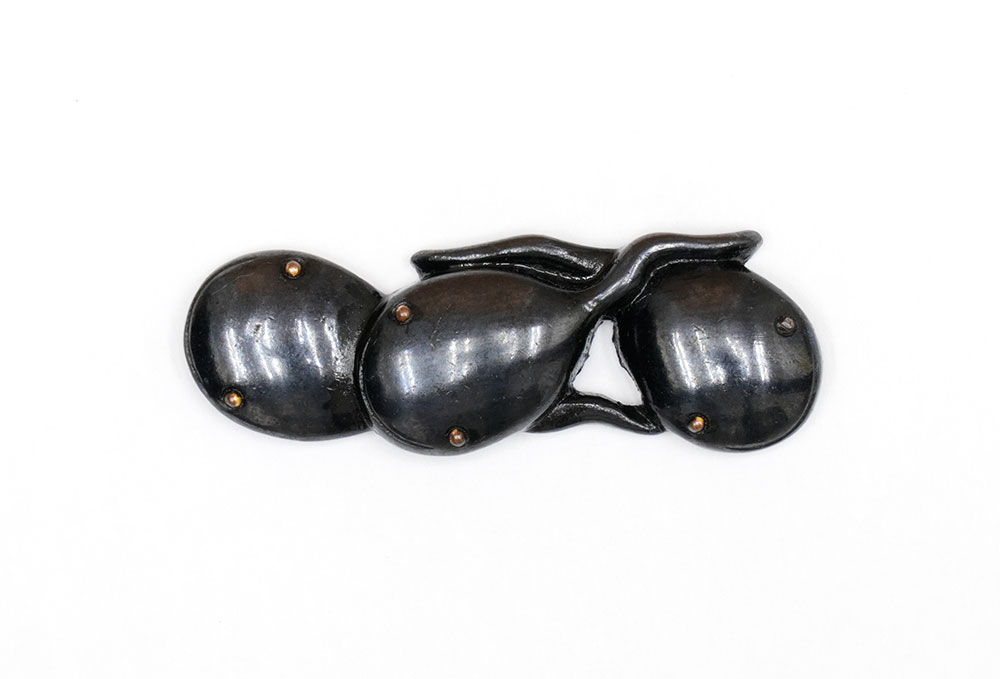
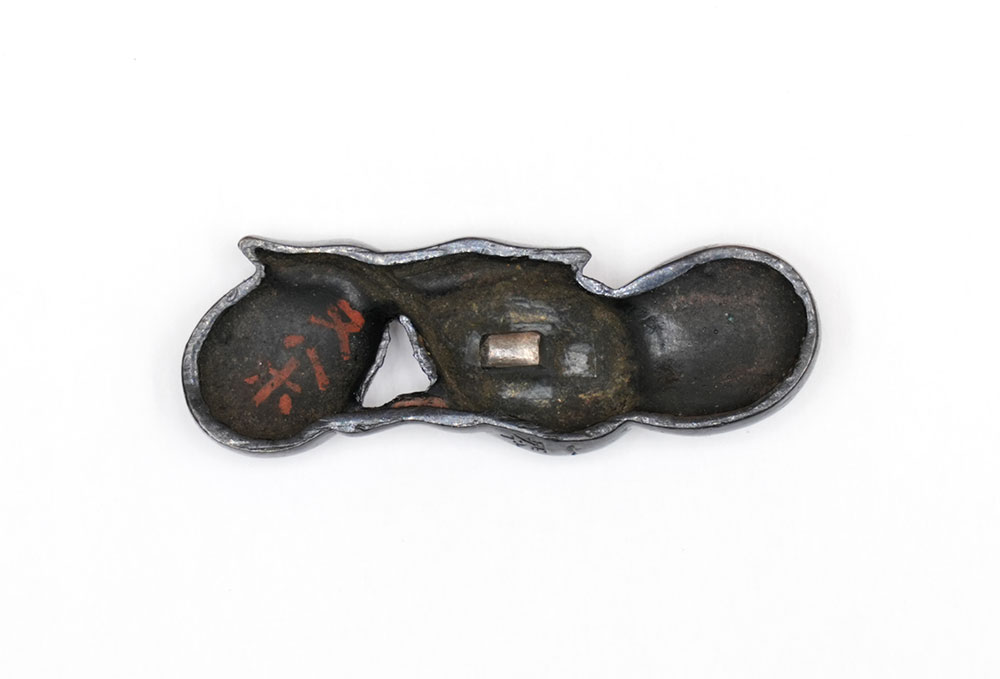
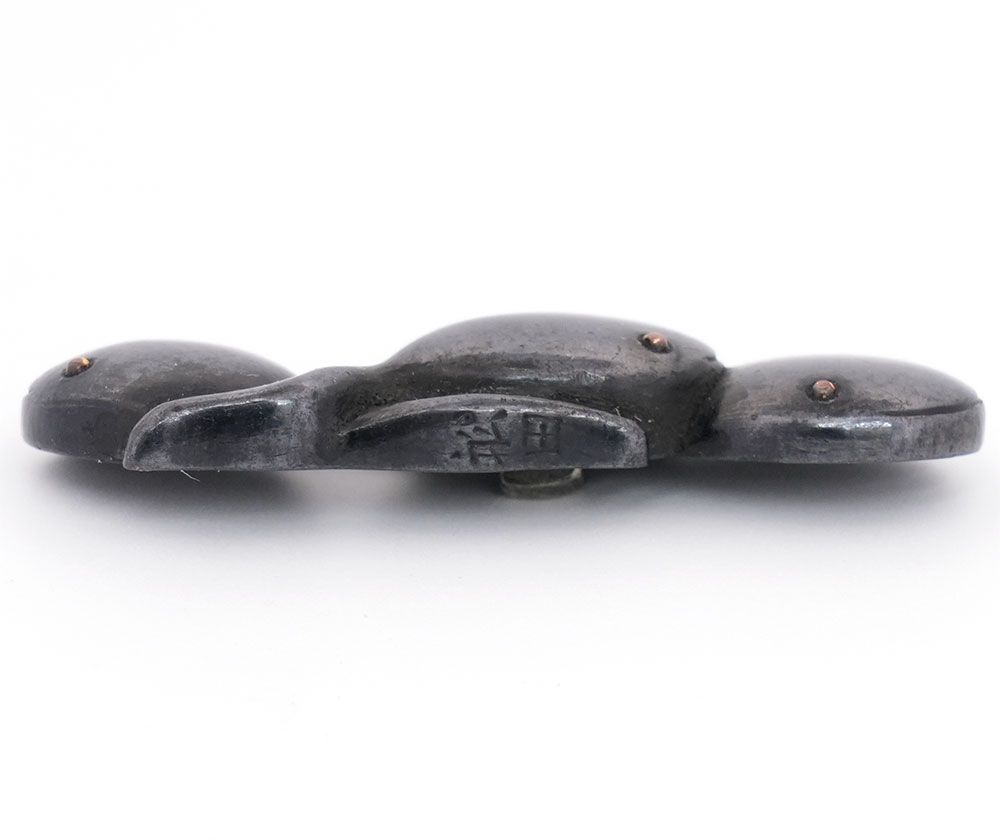
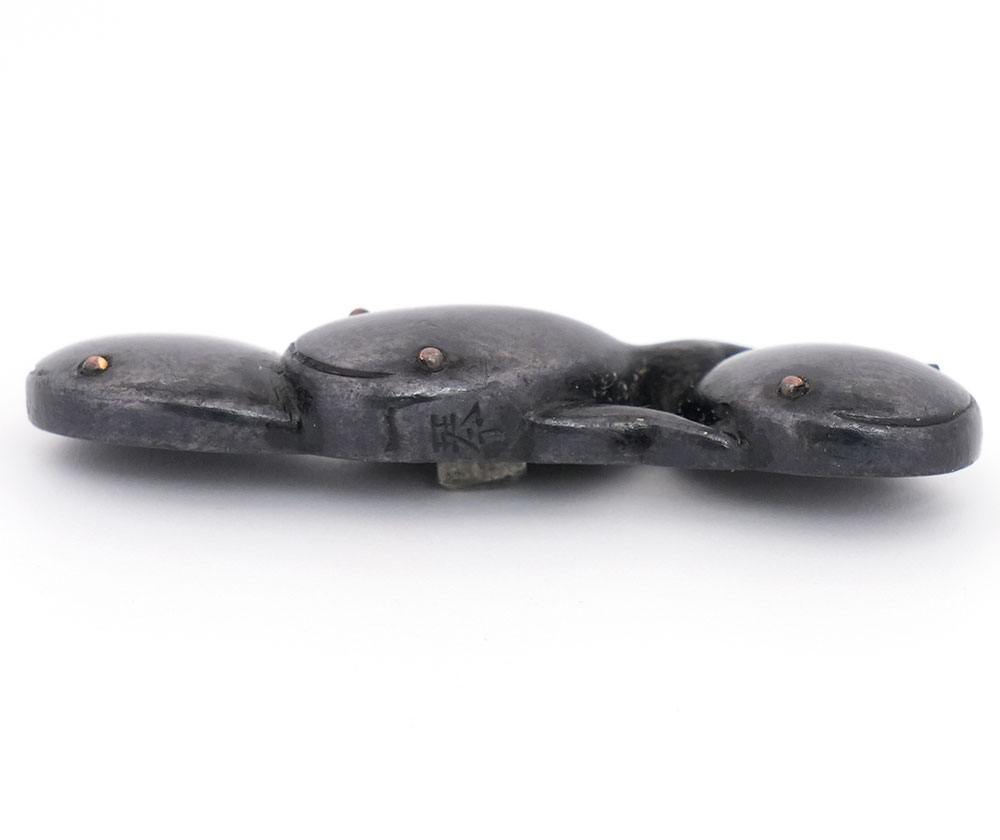
Funada Ikkin
late Edo (1812–1863)
As written by the shop
Machine translation from the shop's Japanese · may contain errors ·
Iebori · Dewa / Edo / Yamashiro
2 pieces on the market now
Funada Ikkin signed his finest dragon mitokoromono with the name of his province and the poetic era-name Shohei, "Ushu Shonai-ju Funada Ikkin Yoshinaga" with his kao, and made it, the published sources record, on the order of his lord, the Sakai house of Shonai, in Koka 2 (1845), when he was thirty-four. He was born in Bunka 9 (1812) at Tsuruoka in Dewa-Shonai, the son of Funada Kantsune, a pupil of Iwamoto Kanri. Losing his father young, he was raised by Kumagai Yoshinobu after his mother remarried, and in Bunsei 9 (1826), at fifteen, he went to Edo to study under Kumagai Yoshiyuki. In Bunsei 11 (1828), at seventeen, he entered the school of Goto Ichijo and trained there for seven years in Kyoto. He then returned to Edo, opened his own workshop and became the retained metalworker of the Sakai house. He died in Bunkyu 3 (1863) at the age of fifty-two. His family name was Funada, his art-name Ikkin and his given name Yoshinaga, and he signs Funada Ikkin Yoshinaga, Funada Ikkin, or at times simply Ikkin.
The published sources place him first among Ichijo's pupils. They call him a leading pupil and the prodigy of the Ichijo school, and with Imai Nagatake, Hashimoto Isshi, Nakagawa Issho and Wada Isshin he was counted among the Five Tigers of that school. Kano Natsuo, they record, named him the first of the five and the most skilled at high relief: "Ikkin is the first among them and excels above all in high-relief carving"[[c:1]]. The NBTHK's commentary adds that he was skilled in both takabori and katakiribori, but that in kosuki-bori, the scooping chisel cut deep or shallow at will, he admitted no rival. Ichijo himself, the published sources say, was moved to lament that "kosuki-bori lies beyond my reach"[[c:2]].
His material is the orthodox one of his Goto-derived training. The kozuka and kogai are of shakudo nanako-ji, carved in takabori with gold crest work and iroe, the reverse plates covered in gold, and the menuki are worked in solid gold in full katachibori. On the tsuba and fuchi-kashira the shakudo is left with a hammered tsuchime-ji or a stone-textured surface, carved in kosuki-bori and kebori with gold and silver hira-zogan. Of one such set of the Four Gentlemen the commentary writes that "the kosuki-bori, free in its depth and shallowness, is splendid"[[c:3]], the gold and silver flat inlay setting off the shakudo, the whole filled with a clear, refined elegance. On a dai-sho tsuba pair of the same subject, dated Bunkyu 2 (1862), a trace of the favourite kosuki chisel shows in the carving of the plum, and the shakudo itself is described as having character rather than being flat.
His subjects are those of the Ichijo school and the Goto house. The Four Gentlemen, orchid, bamboo, chrysanthemum and plum, the published sources call a theme in which the Ichijo school most excelled, and they return to it on several sets. The crawling dragon is an established Goto subject, and one record calls the dragon unusual in his work. Of the Shonai dragon set the commentary writes that the modelling is "especially full and overflowing with power"[[c:4]], the chisel vivid, triangular strokes used to effect on the horns, cheeks and feet, and calls it "a work to be named the finest among his pieces"[[c:5]]. In another of its records his skill there is said to approach his master's, "a work overflowing with power and skill"[[c:6]]. A second dragon set, in shakudo alone with slender coiling dragons, is "a strong work by Ikkin, bracing and full of spirit"[[c:7]]. His range also takes in the Wago-shin deities of harmony, a Fuji-crossing dragon with the Shakkyo lions, a group of tigers and leopards across a complete koshirae fitting set, and an Okina dancer in gold hira-zogan on a polished shibuichi kozuka, of which the commentary writes that "one is made to see that he is indeed a gifted talent of the Ichijo school"[[c:8]].
The published record measures him against his teacher throughout. A set of the Four Gods carries the qilin and phoenix that appear in Ichijo's own work, and his Okina kozuka follows a composition also found among Ichijo's pieces; again and again the commentary says his skill approaches his master's. One dai-sho tsuba pair of the Four Gentlemen is signed as made after an under-drawing by the Hokkyo Ichijo, the large guard by Ikkin and the small by his fellow pupil Hashimoto Isshi, yet the manner is Ichijo's own. From it the NBTHK draws a documentary conclusion: "it may be inferred that among works bearing Ichijo's signature there were included substitute works by his many pupils"[[c:9]]. On another set the small menuki alone were supplied by his colleague Nakagawa Issho.
Ikkin's record is eleven works designated Juyo Tosogu, two of them raised to Tokubetsu Juyo, and every one carries his signature. Dated pieces run from Koka 2 (1845) through the Kaei era to Bunkyu 2 (1862), and several carry his workshop address, "at Imuke-no-sato in Buyo," in Edo. Sets were made on the order of the Sakai lords, among them the Shonai dragon set and the Four Gods set of Ansei 2 (1855), which passed down in the Shonai Sakai house. The shakudo dragon set is kept in a Ryushido box with an inscription by Ikeda Takao. No current institutional holder is recorded against his work. Signed sets by a master of his standing among Ichijo's pupils come to light from time to time rather than often, and a kosuki-bori tsuba or a dragon set in high relief represents the side of his art the published sources praise most.
Where Ikkin stands among comparable artisans: across all of nihontō, and within tradition, era, and period. The tiers (Foremost · Leading · Major · Notable) weigh official designations from the NBTHK and Japan's Agency for Cultural Affairs, together with historical honors of lasting repute such as the Sansaku and Meibutsu-chō.
Select a lens to see how it's measured.
Iebori · Kyoto
35 pieces on the market now
" Ichijo was the fifth-generation head of the Shichiroemon house, a cadet branch of the Goto family, and trained under Hanzaemon Kamejo before succeeding to the headship at fifteen. His imperial commissions -- fittings for Emperor Kokaku in 1824 and Emperor Komei in 1862 -- earned him the ranks of Hokyo and Hogen respectively, and his atelier in Kyoto attracted a circle of gifted disciples who extended his aesthetic into the Bakumatsu and early Meiji periods. Among them, the celebrated "Five Tigers" (Goko) -- Funada Ikkin, Imai Nagatake, Hashimoto Isshi, Nakagawa Issho, and Wada Isshin -- together with the master's younger brother Goto Koran, constituted one of the most prolific and technically accomplished workshops in the history of Japanese tosogu production. The collective technical identity of the Ichijo school rests upon a foundation of shakudo nanako-ji of surpassing fineness -- described as "minute and orderly, deep and limpid," meriting the appellation kinume-nanako -- upon which elaborate pictorial compositions are built through takabori enriched by polychrome iroe employing gold, silver, shakudo, shibuichi, and suaka. Ichijo himself established the artistic direction by shifting from the canonical iebori subjects of dragons and lions toward compositions centered on close observation (shasei), rendering grasses, flowers, insects, birds, and landscapes with meticulous carving and refined dignity. This painterly sensibility pervades the entire school. Nagatake brought a distinctive ornamental density, arranging seasonal plants across entire surfaces with richly varied colored metals.
" Ikkin developed an unrivaled command of kosuki-bori -- a bold, thick chiseling technique that even Ichijo conceded was "beyond my own reach[[c:1]]" -- and his dragon subjects carried a distinctive forcefulness. " Isshin absorbed the hereditary vocabulary while concentrating creative zeal into individual passages of invention, and Issho achieved works of luxurious, courtly elegance through refined kinu-nanako and precise kebori. Koran, working in a manner akin to his elder brother yet "finished with an even more delicate and nuanced sensibility," brought the Shichiroemon branch to its most accomplished expression. Across the school, the favored tsuba form is the sumi-iri mokko-gata, and many works exhibit chuya shitate -- "day-and-night" construction using contrasting alloys on obverse and reverse. Complete daisho soroe kanagu sets, coordinated around seasonal, auspicious, or literary-historical themes, represent the school's highest format. " This standard was transmitted faithfully through the circle. " The school's productions are consistently praised for an elevated, Kyoto-inflected refinement that balances splendor and restraint in just measure. Learn more →
| Smith | Era | Designated |
|---|---|---|
| Goto Ichijo後藤一乗 | — | 91 |
| Tomei東明 | — | 30 |
| Nagatake永武 | — | 13 |
| Ikkin一琴 | — | 11 |
| Issho一匠 | 1828-1876 | 10 |
We could not find an authenticity certificate on the seller’s listing. Japanese swords and fittings are normally papered by the NBTHK (or the NTHK). Without one, the attribution is the seller’s own assessment and has not been independently verified — treat it with caution and ask the dealer about certification before buying.
As a rule we do not accept returns, except when we have sent a different item from the one ordered or when there is a significant discrepancy between the description and the item. If you wish to return an item, please contact us within 3 days of its arrival and then send it back.
¥88,000