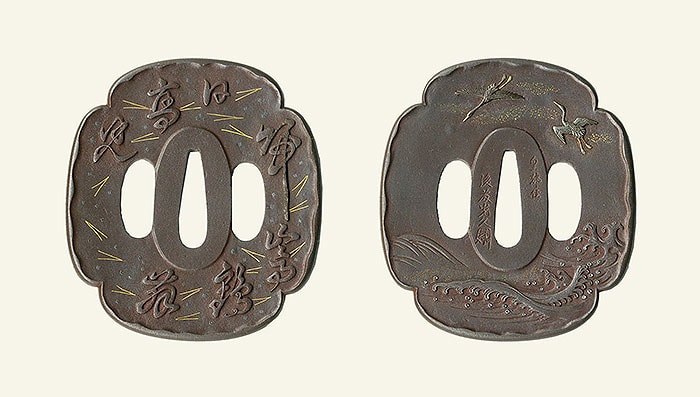
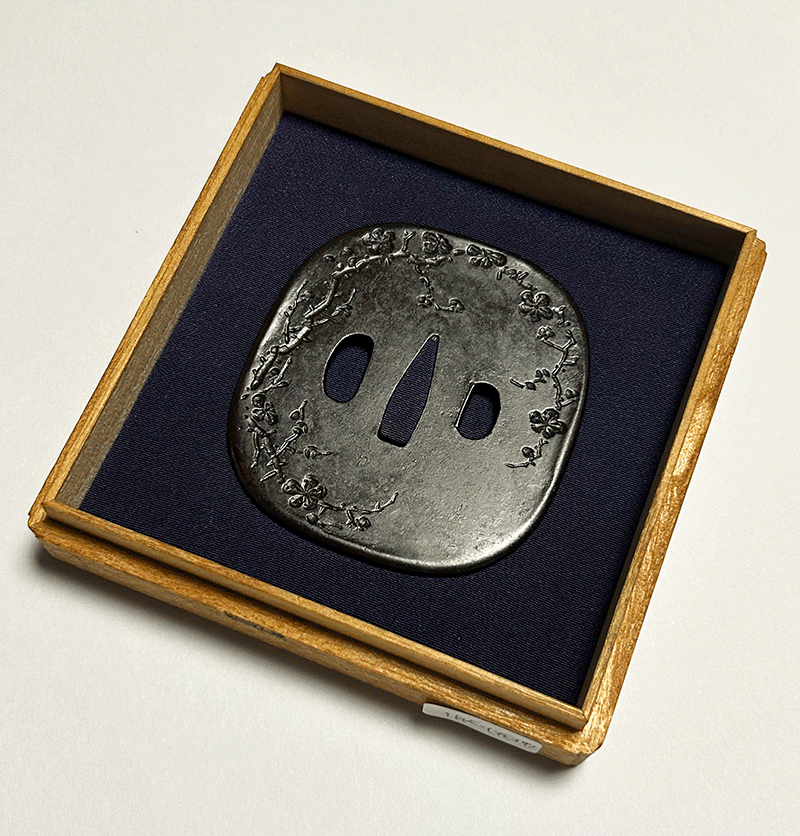
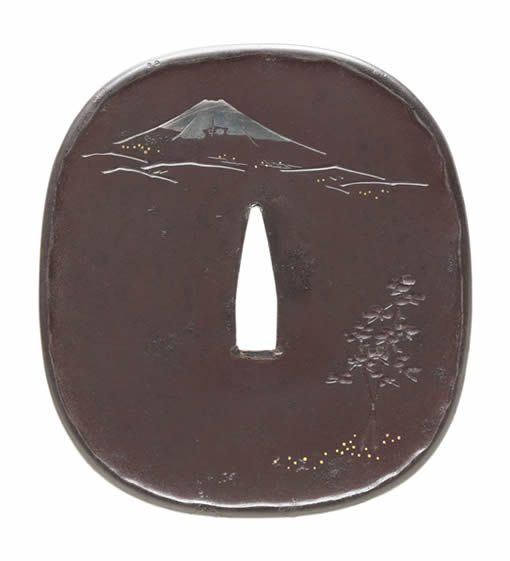
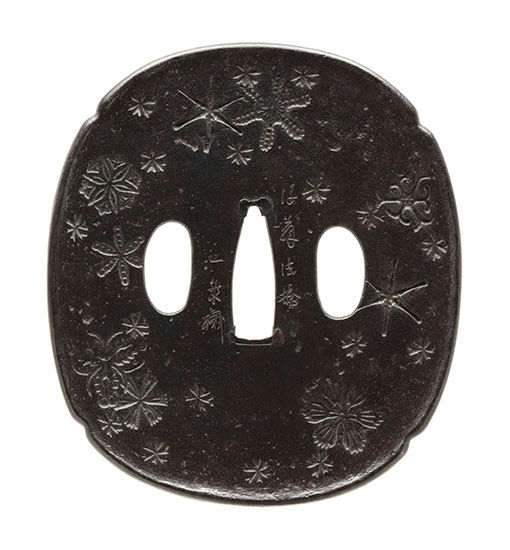
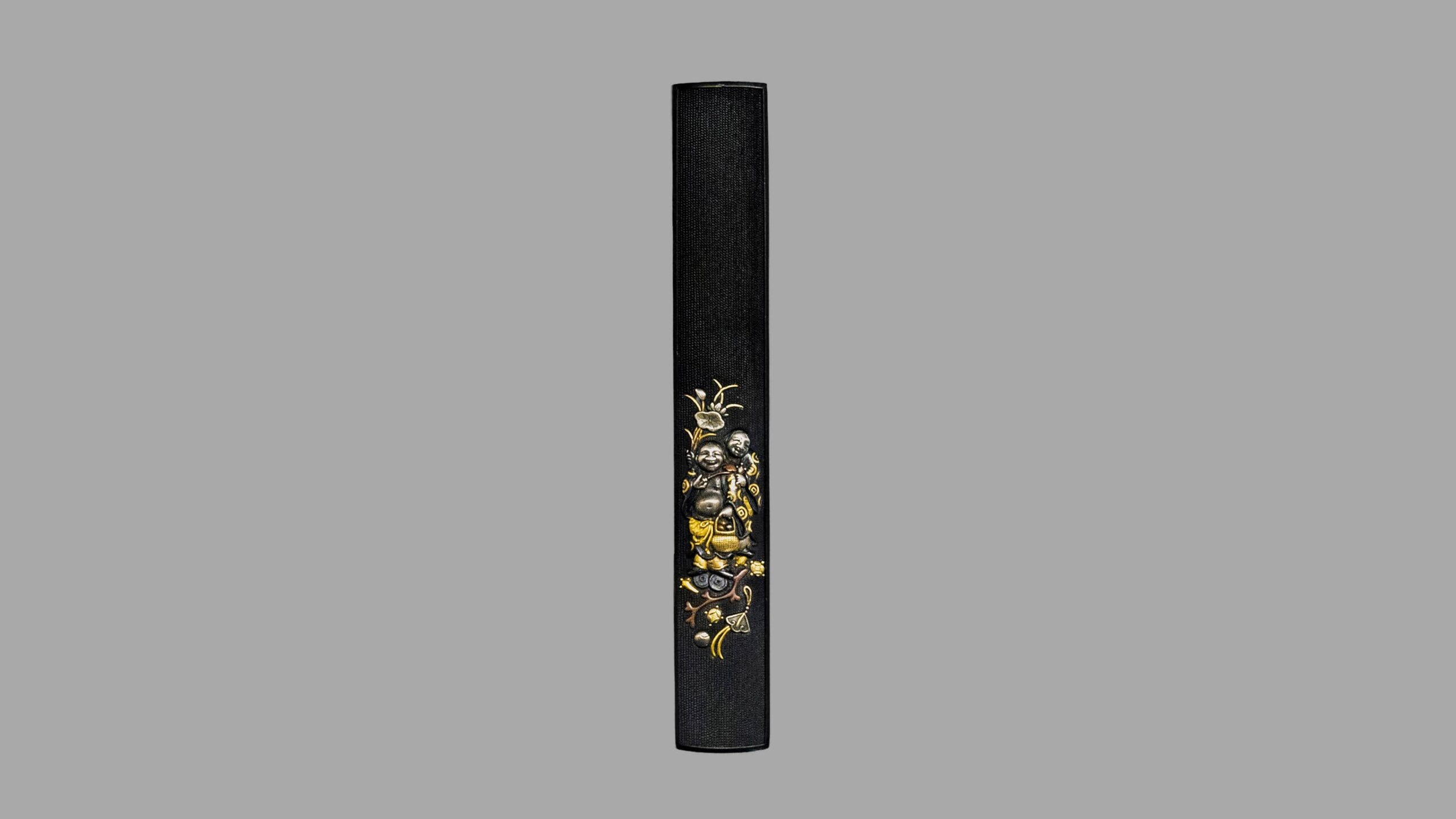
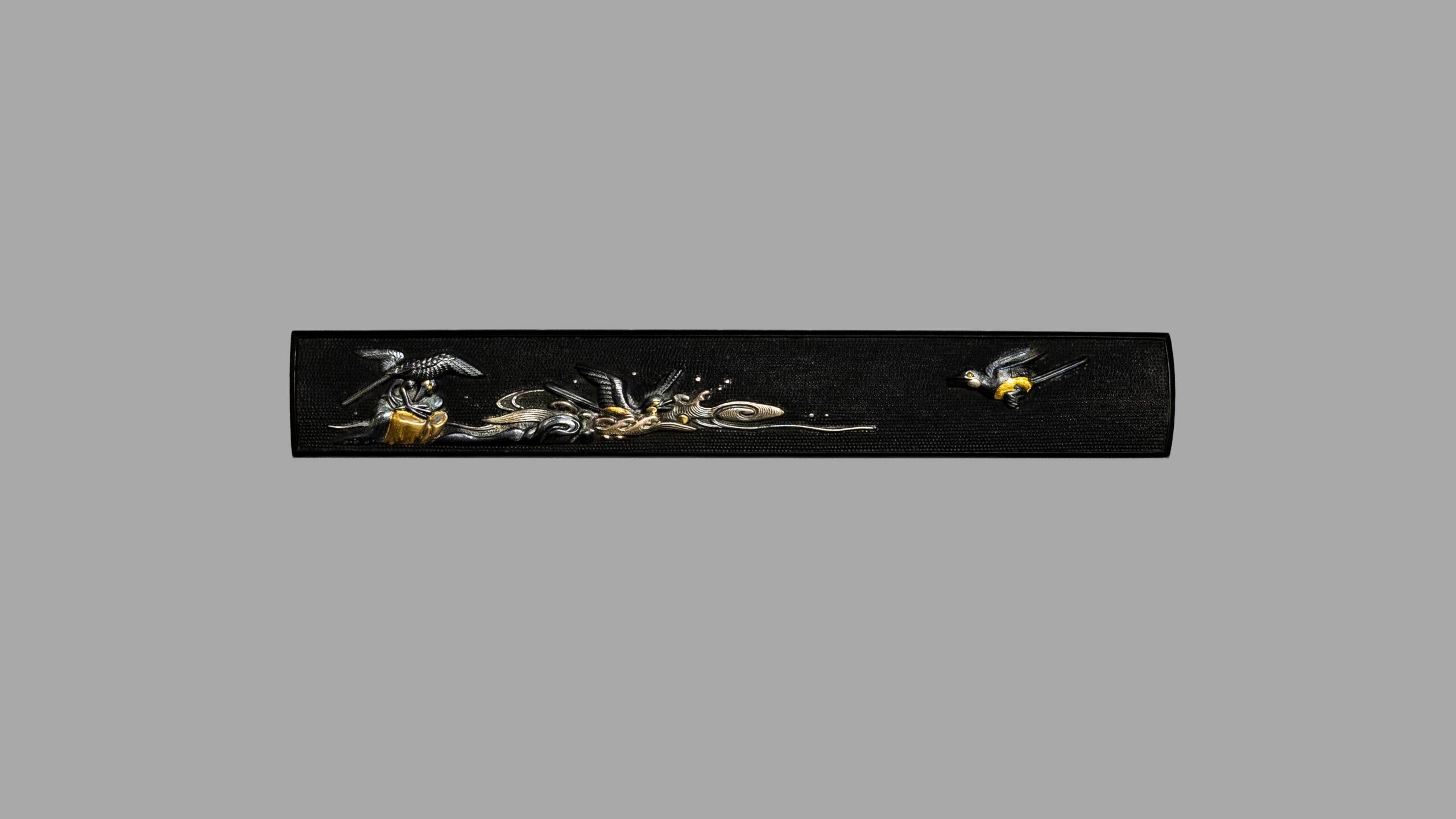
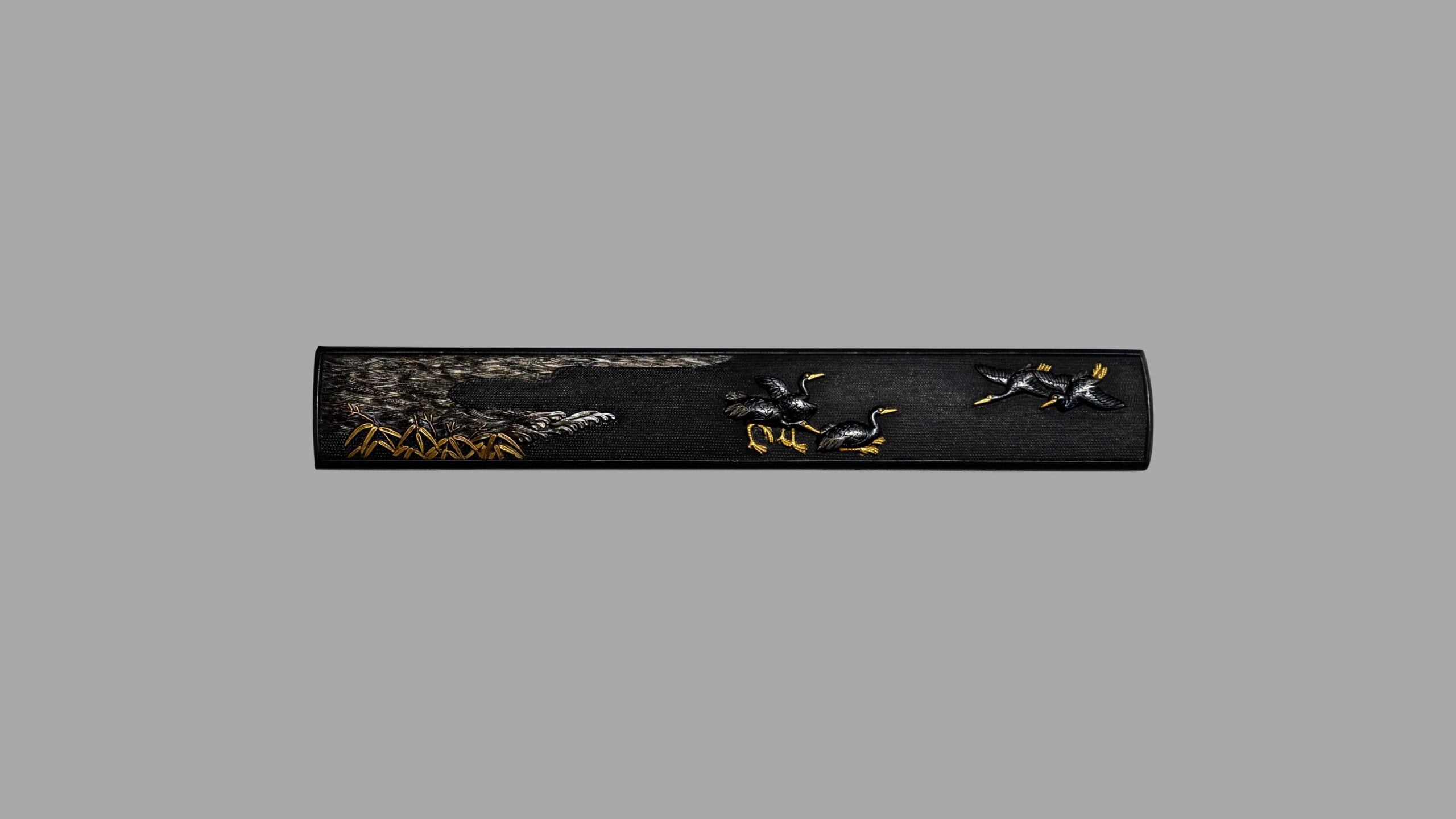
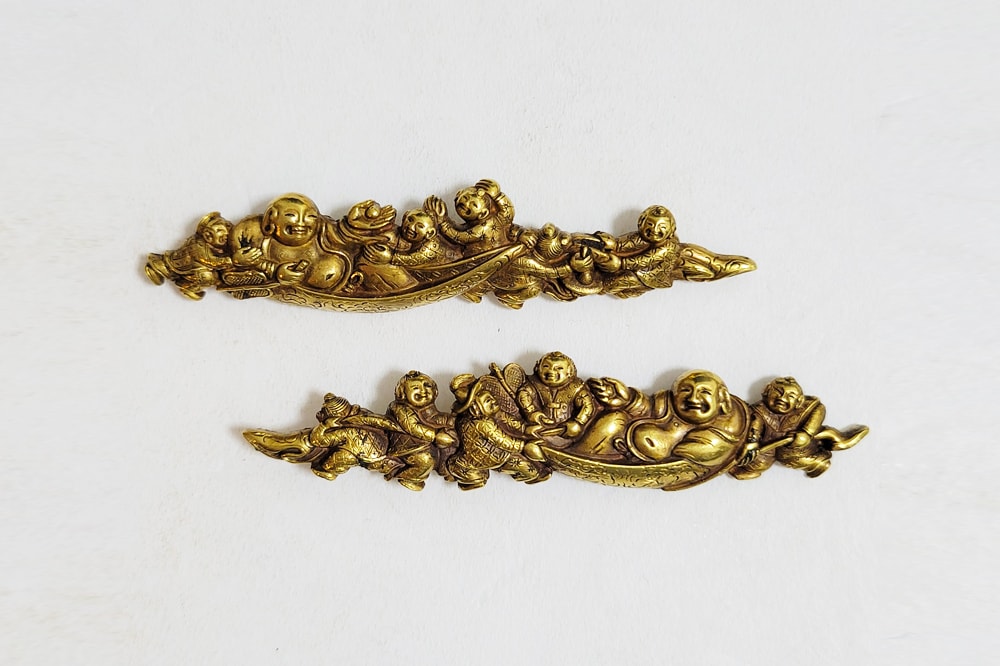
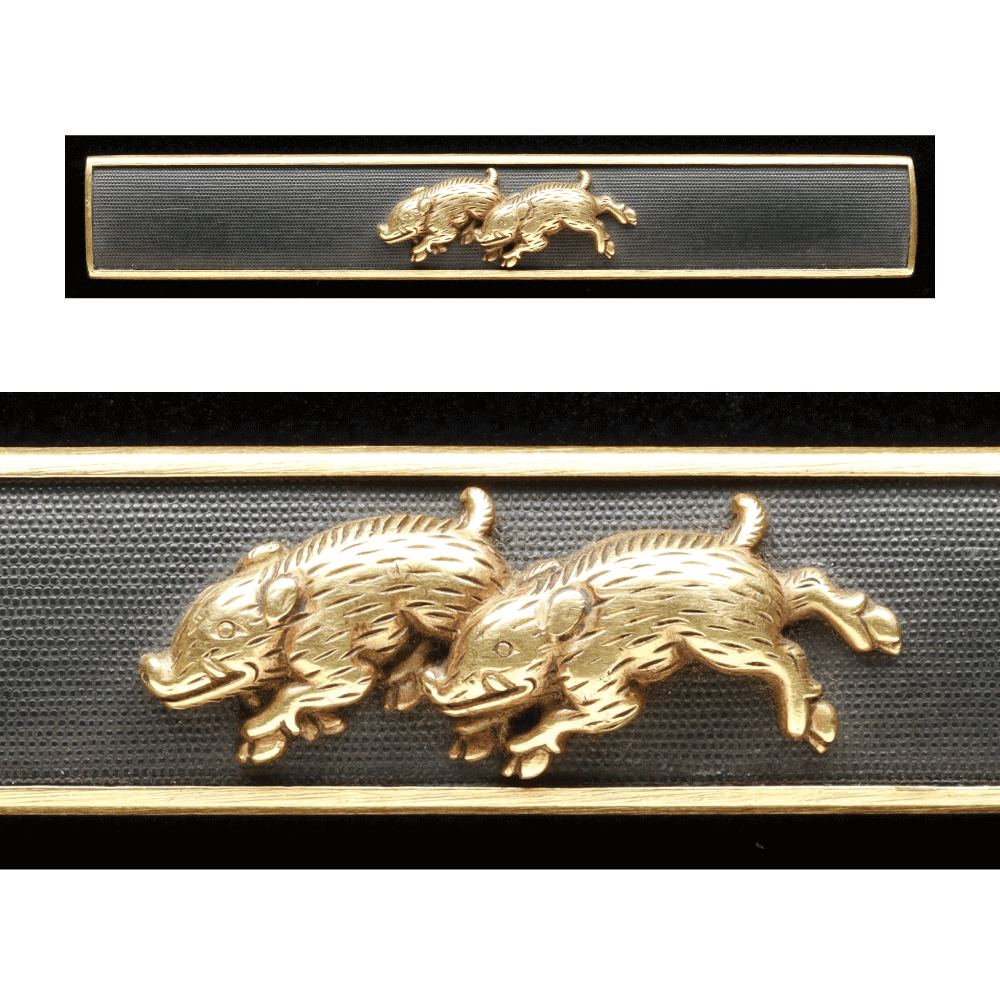
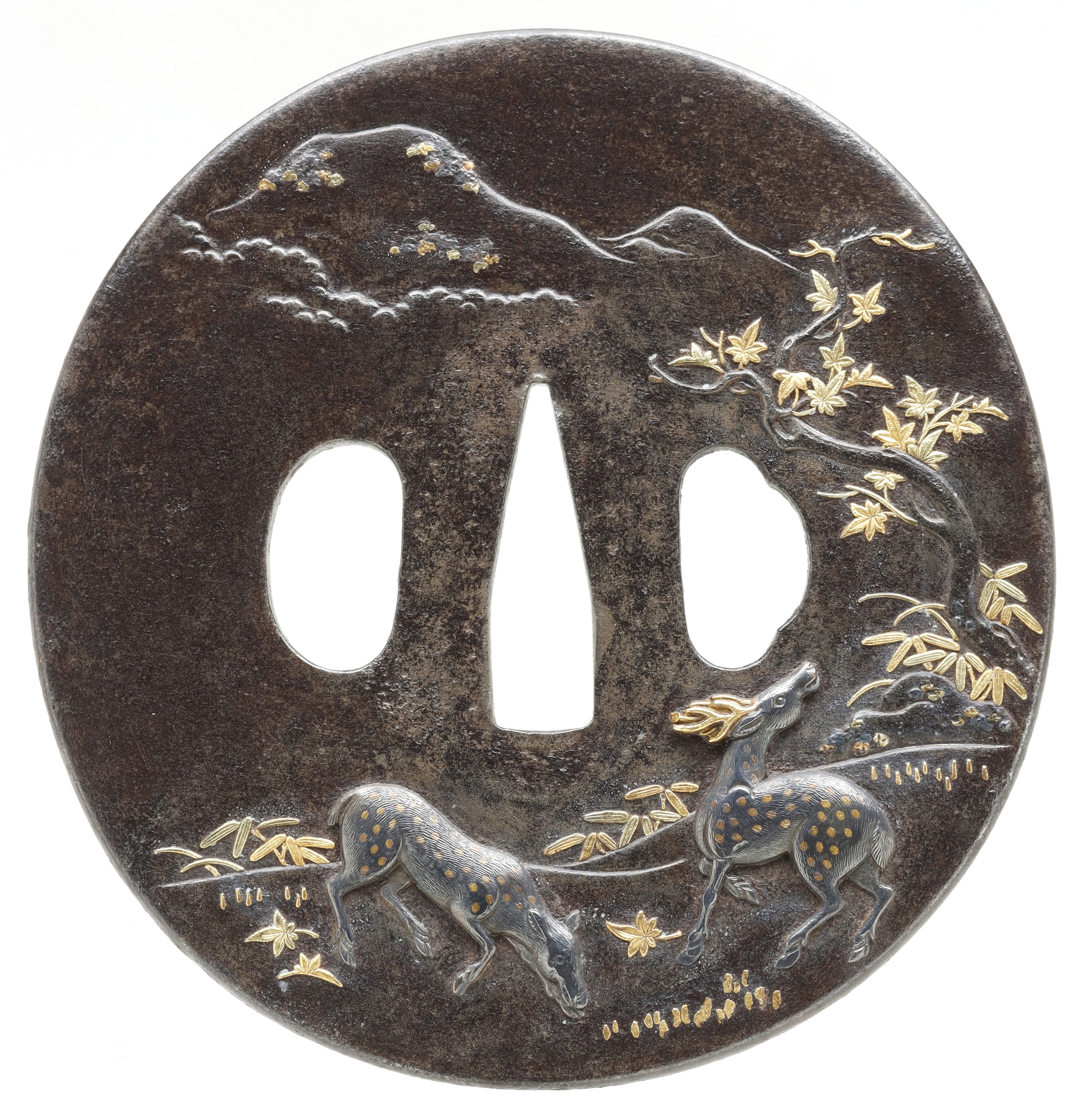
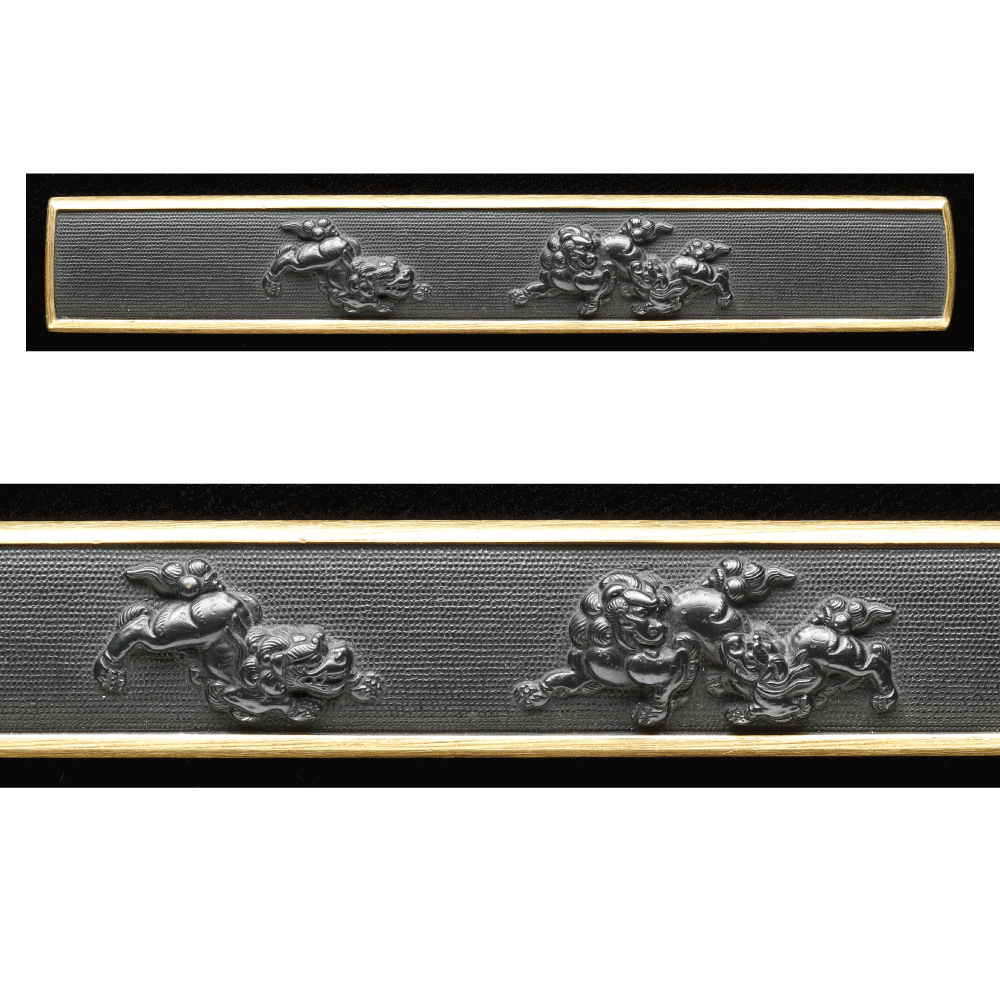
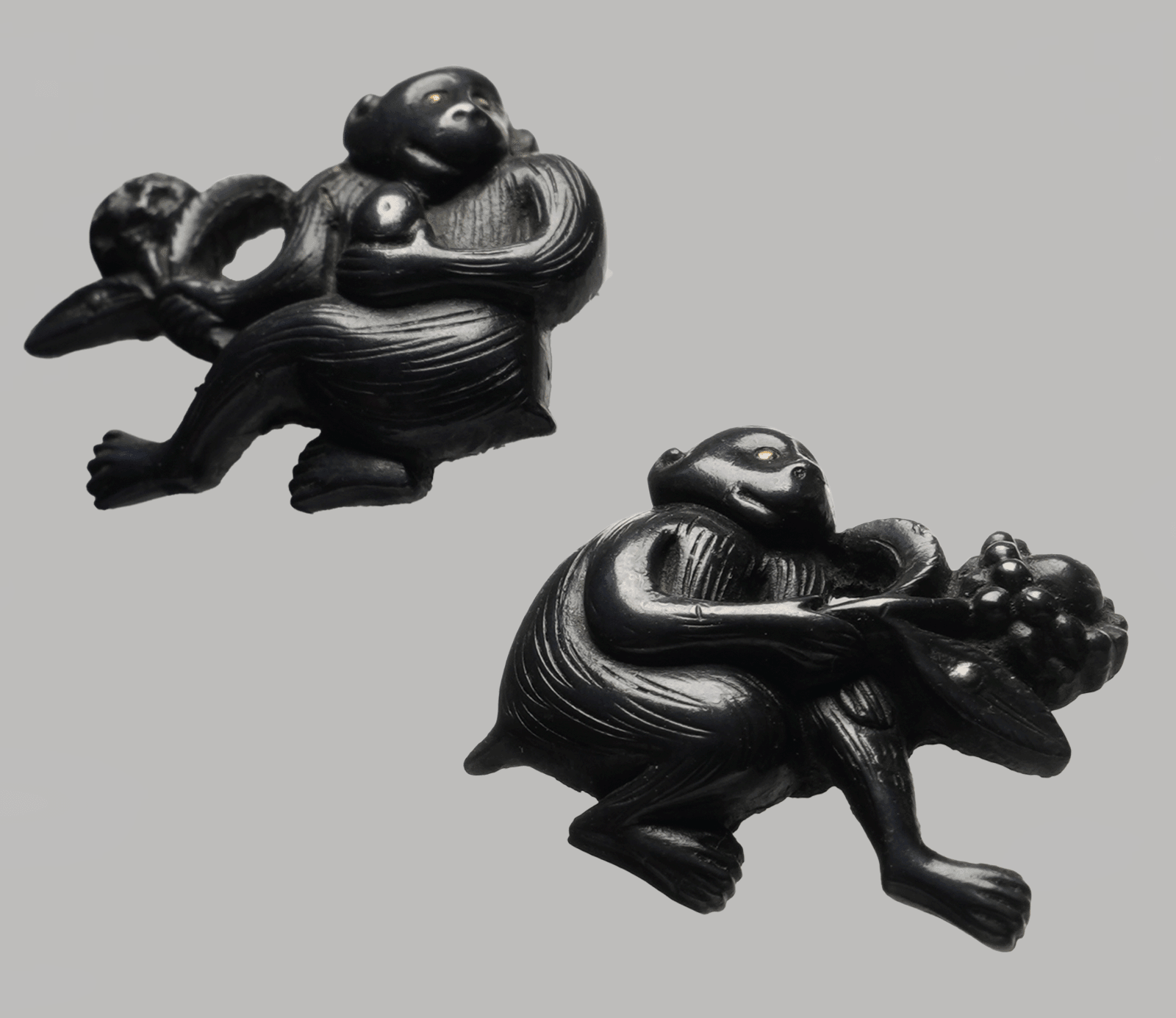
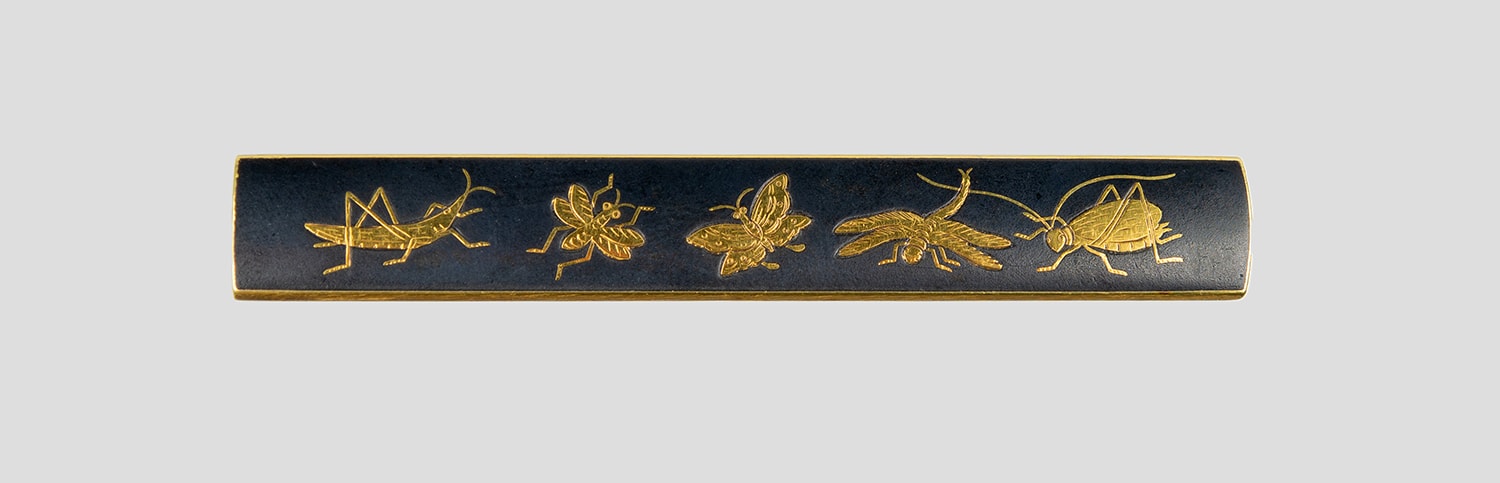
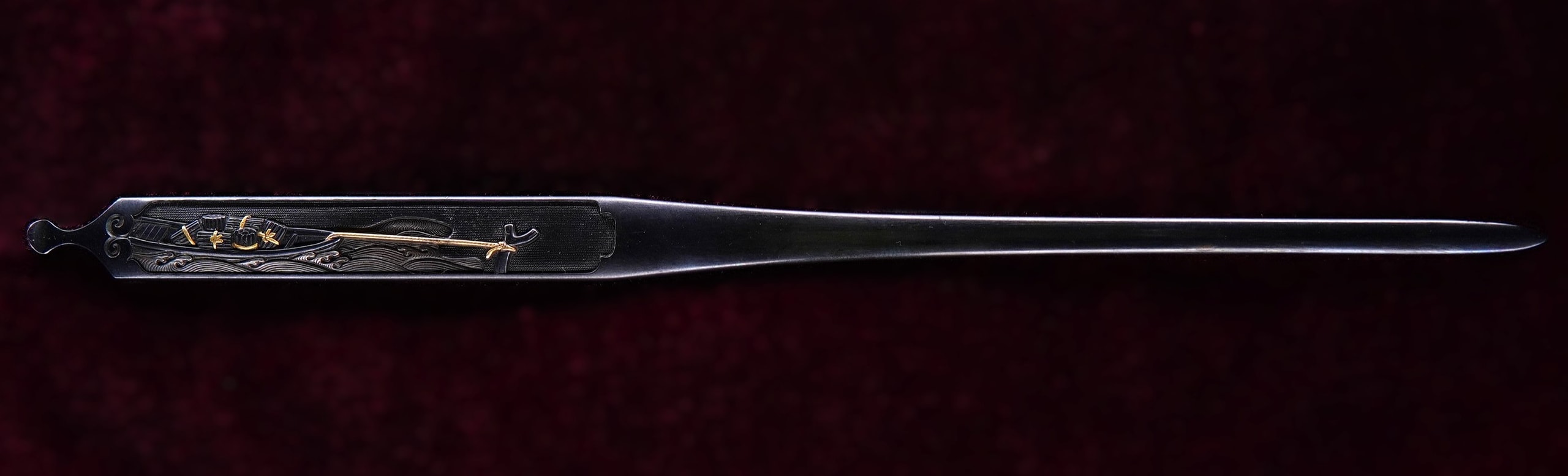
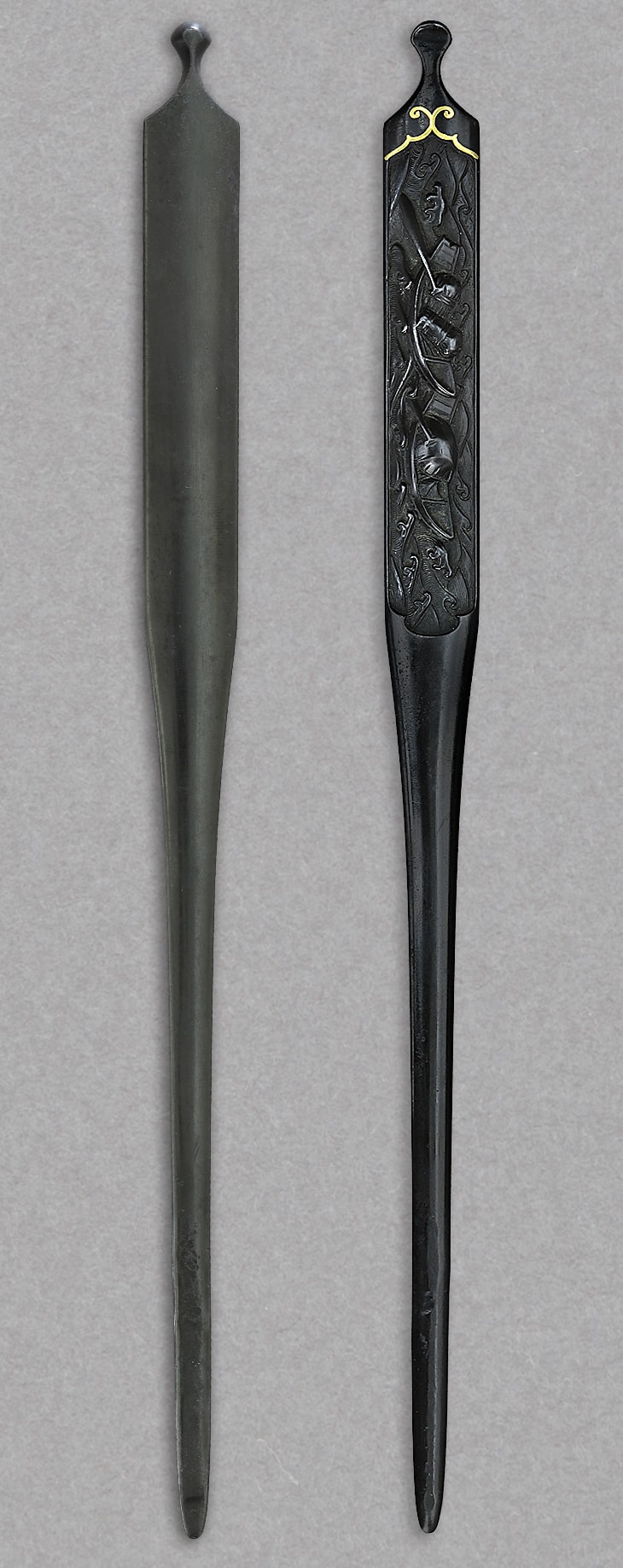
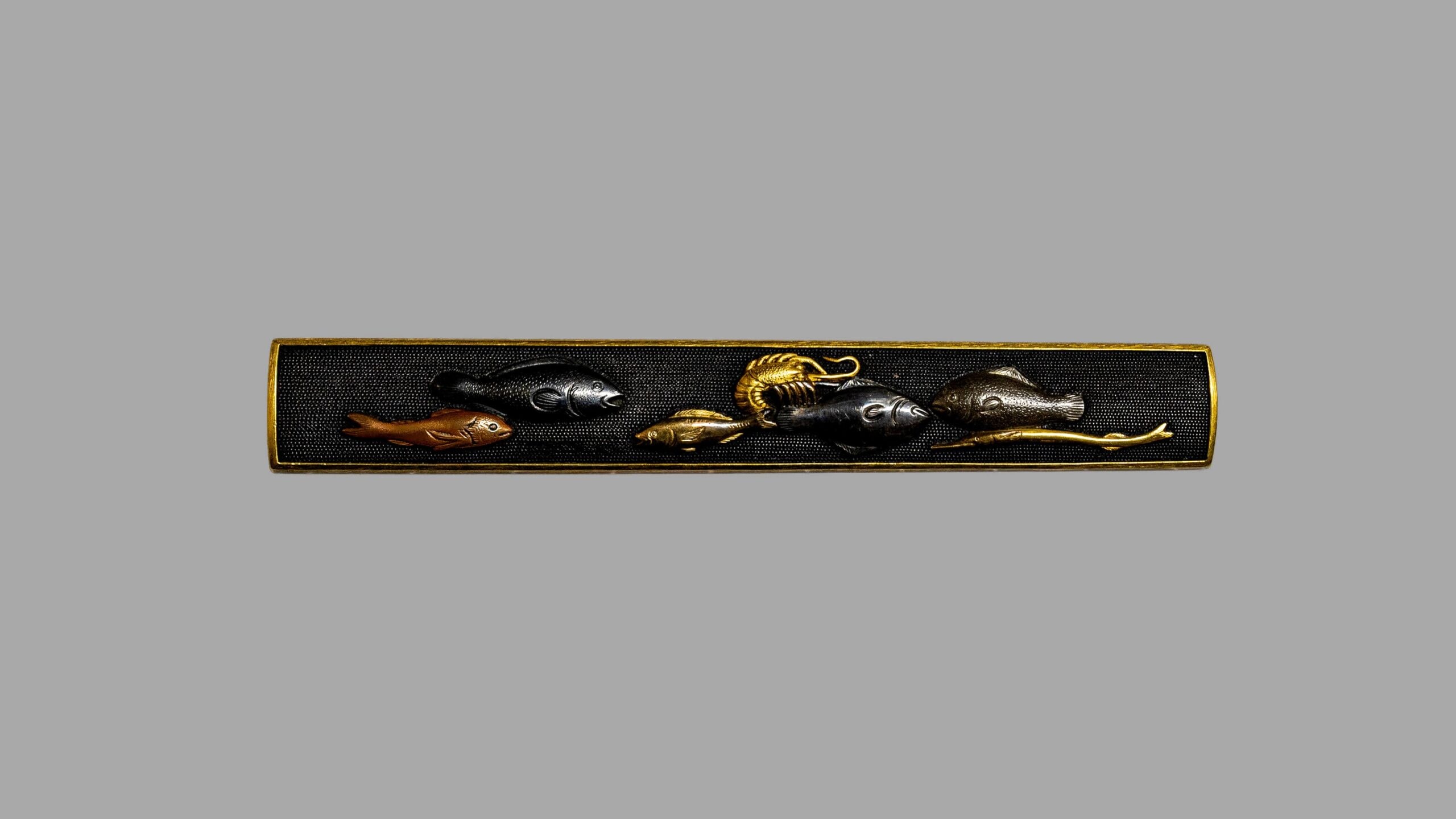
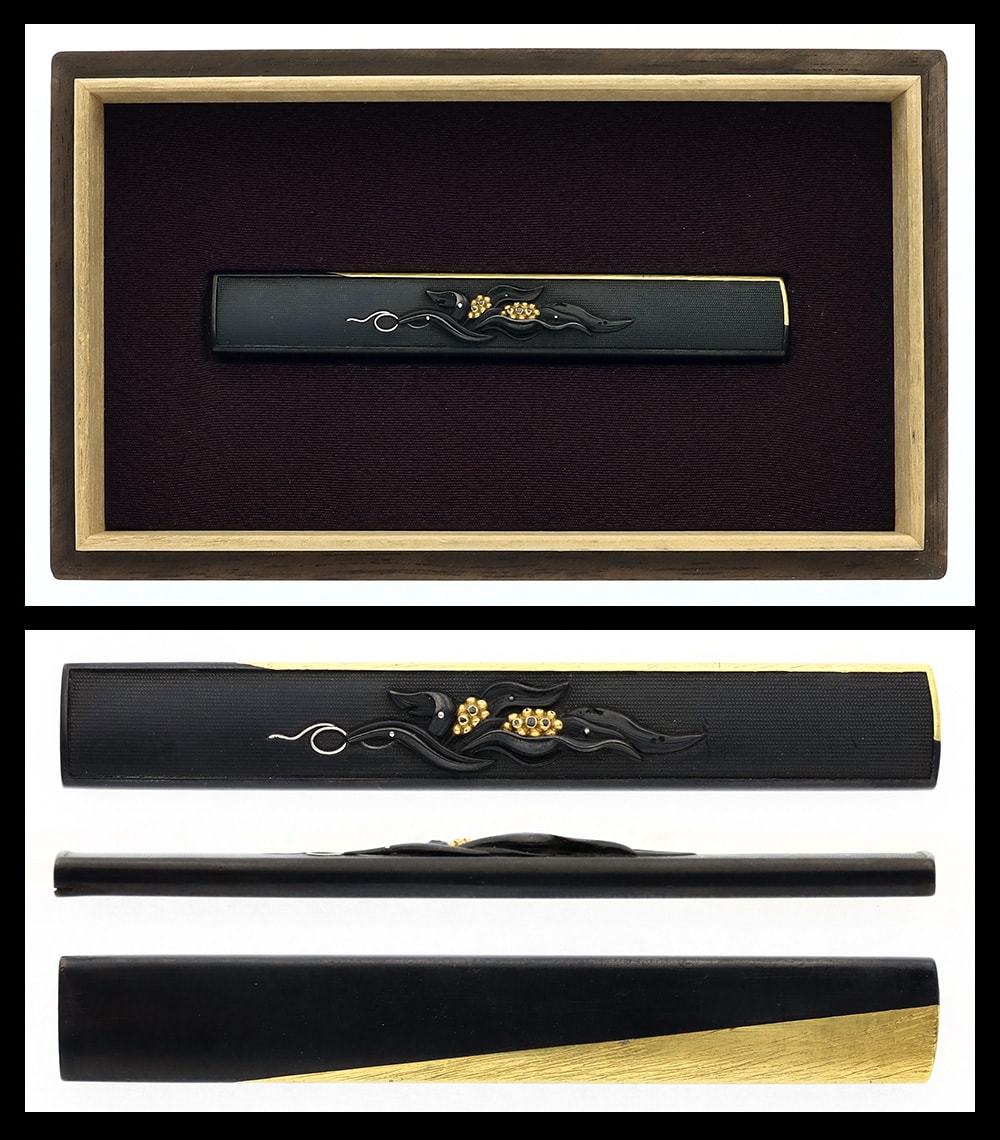
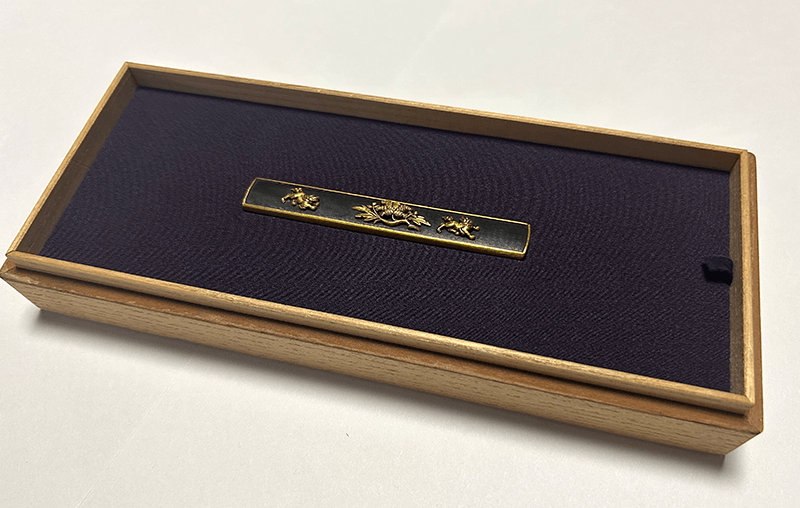
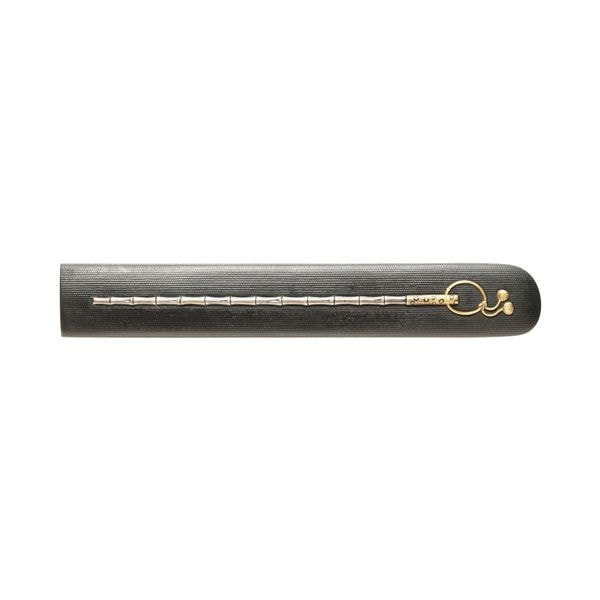
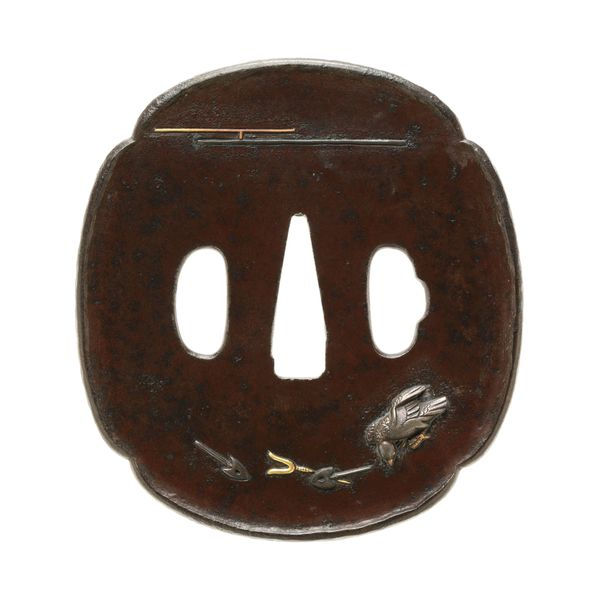
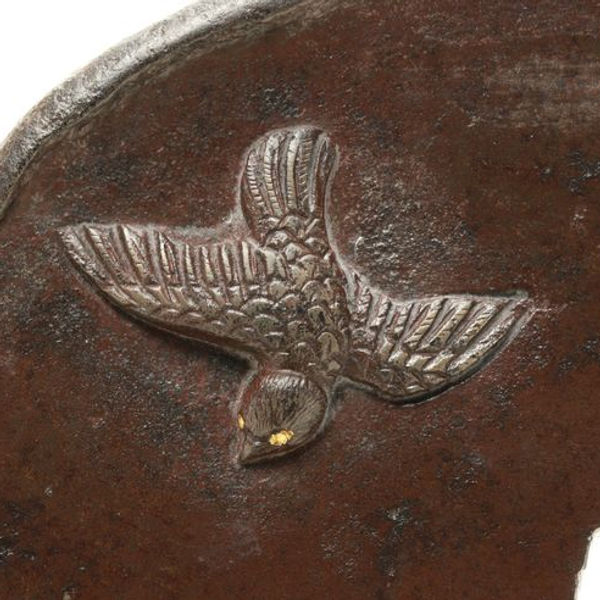
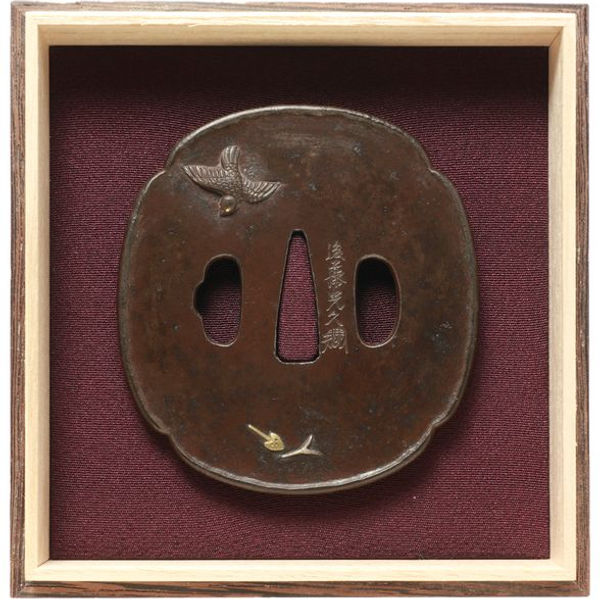
This tsuba features a pigeon and arrowheads motif, crafted in the late Edo period in Kyoto, Yamashiro province. It is made of iron in a mokko-gata shape with high-relief inlay and colored enamel on a turned-back rim. The design, attributed to Goto Mitsuhisa, reflects a sense of transience and nostalgia, possibly influenced by the turbulent times.
 NihontoWatch
mei · Goto Ichijo · Edo
Iebori · around 1670
1 piece on the market now
Where Mitsuhisa stands among comparable artisans: across all of nihontō, and within tradition, era, and period. The tiers (Foremost · Leading · Major · Notable) weigh official designations from the NBTHK and Japan's Agency for Cultural Affairs, together with historical honors of lasting repute such as the Sansaku and Meibutsu-chō.
Select a lens to see how it's measured.
Iebori · Kyoto
74 pieces on the market now
The Waki-Goto tradition designates the branch and collateral lines of the Goto mainline (soke) that sustained the family's metalworking legacy across generations while extending its reach beyond the central house in Kyoto and later Edo. The Goto family itself constituted the preeminent dynasty of sword-fitting craftsmen in Japanese history, serving successive shogunal families from the Muromachi period through the Edo era. Their work, designated iebori ("house carving"), was distinguished from the machibori ("town carving") produced for general market demand. Among the most important Waki-Goto lines were the Rihei house, established by Teijo (the ninth mainline master) and continued through Etsujo, who anchored the tradition in Kaga Province under Maeda patronage; the various mainline heads themselves -- Kojo (fourth generation), Renjo (tenth generation), and Teijo -- who shaped the canonical vocabulary; and the later Shichiroemon branch, which produced Ichijo and Koran, the terminal masters who brought the Goto heritage to its culminating expression in the Bakumatsu period. The technical vocabulary of the Waki-Goto lineages adheres with remarkable fidelity to the orthodox manner established by the founding patriarch Yujo. The characteristic ground is shakudo finished with impeccably regular nanako-ji, praised across generations for its orderly precision and deep, limpid quality. Upon this lustrous black surface, motifs are rendered through takabori and sukidashi takabori (raised high-relief carving) enriched by gold and silver iroe, with solid gold nikubori and sculptural yobori employed for menuki. The canonical Goto subjects -- dragons, lions (shishi), kirin, and clouds -- recur throughout the lineage, transmitted according to established conventions and executed with meticulous niku-dori (modulation of sculpted flesh). Kojo, identified as second in ability only to the founder, introduced preparatory drawings (shita-e) by Kano masters and is credited with originating warrior-figure and dragon-and-tiger motifs within the house.
His works display the Momoyama spirit -- heroic, dynamic, and brimming with vitality. Teijo's carving is characterized as restrained and meticulous, achieving a crisp, controlled effect, while Renjo inherited his father's methods and introduced fresh elements: robust and magnificent carving that "raises the peaks high and drives the valleys deep," recalling the grand manner of the early generations. Etsujo, transmitting the mainline aesthetic into Kaga, maintained a standard "in no way inferior to that of Teijo," and his contributions are credited with fostering the flourishing of Kaga metalwork. The later Shichiroemon branch, under Ichijo and Koran, shifted toward compositions grounded in close observation from life -- birds, flowers, and landscapes -- while sustaining the ancestral foundation of nanako-ji grounds, polychrome iroe, and chuya shitate (day-and-night construction). Across all branches, signed works are characterized as exceedingly rare and of high documentary value. The Waki-Goto tradition represents the mechanism by which the Goto house's artistic achievement was preserved, transmitted, and adapted across nearly five centuries. " The Rihei branch's transplantation to Kaga ensured that the tradition flourished beyond its Kyoto and Edo centers, while the Shichiroemon branch's culmination in Ichijo produced an artist whose command of the full kinko repertoire "adorned the shaft-end" of the entire Goto lineage. Works from across the Waki-Goto branches have been transmitted through distinguished collections -- the Konoike merchant house, the Hachisuka and Maeda daimyo families -- and carry origami appraisals from successive Goto masters assigning valuations of exceptional magnitude. In its collective continuity and its capacity to adapt the iebori heritage to changing tastes while preserving its essential dignity, the Waki-Goto tradition stands as one of the most remarkable dynasties in the decorative arts of Japan. Learn more →
| Smith | Era | Designated |
|---|---|---|
| Kojo光乗 | 1480-1670 | 5 |
| Munetomo/Sochi宗知 | — | 0 |
| Morimura Atsutaka守邨厚隆 | — | 0 |
| Taijo泰乗 | — | 0 |
| Mitsuharu光治 | — | 0 |
A Hozon-certified fitting of notably superior craftsmanship and condition, often with signature or workmanship of high reference value.
The NBTHK (Nihon Bijutsu Tōken Hozon Kyōkai, the Society for the Preservation of Japanese Art Swords) is a public-interest incorporated foundation founded in 1948 and supervised by Japan’s Agency for Cultural Affairs (Bunkachō); it is based at the Japanese Sword Museum in Tokyo. Its expert panels physically examine each submitted work (shinsa) and issue a certificate (kanteishō) ranking it by artistic and historical merit. NBTHK papers are the most widely recognized standard of authentication for Japanese swords and fittings.
NBTHK official siteIf, due to our fault, the item differs significantly from its proper condition, the item may be returned. Cooling-off is within one week of the item's arrival.
¥230,000
This tsuba features a pigeon and arrowheads motif, crafted in the late Edo period in Kyoto, Yamashiro province. It is made of iron in a mokko-gata shape with high-relief inlay and colored enamel on a turned-back rim. The design, attributed to Goto Mitsuhisa, reflects a sense of transience and nostalgia, possibly influenced by the turbulent times.
NihontoWatchmei · Goto Ichijo · Edo
Iebori · around 1670
1 piece on the market now
Where Mitsuhisa stands among comparable artisans: across all of nihontō, and within tradition, era, and period. The tiers (Foremost · Leading · Major · Notable) weigh official designations from the NBTHK and Japan's Agency for Cultural Affairs, together with historical honors of lasting repute such as the Sansaku and Meibutsu-chō.
Select a lens to see how it's measured.
Iebori · Kyoto
74 pieces on the market now
The Waki-Goto tradition designates the branch and collateral lines of the Goto mainline (soke) that sustained the family's metalworking legacy across generations while extending its reach beyond the central house in Kyoto and later Edo. The Goto family itself constituted the preeminent dynasty of sword-fitting craftsmen in Japanese history, serving successive shogunal families from the Muromachi period through the Edo era. Their work, designated iebori ("house carving"), was distinguished from the machibori ("town carving") produced for general market demand. Among the most important Waki-Goto lines were the Rihei house, established by Teijo (the ninth mainline master) and continued through Etsujo, who anchored the tradition in Kaga Province under Maeda patronage; the various mainline heads themselves -- Kojo (fourth generation), Renjo (tenth generation), and Teijo -- who shaped the canonical vocabulary; and the later Shichiroemon branch, which produced Ichijo and Koran, the terminal masters who brought the Goto heritage to its culminating expression in the Bakumatsu period. The technical vocabulary of the Waki-Goto lineages adheres with remarkable fidelity to the orthodox manner established by the founding patriarch Yujo. The characteristic ground is shakudo finished with impeccably regular nanako-ji, praised across generations for its orderly precision and deep, limpid quality. Upon this lustrous black surface, motifs are rendered through takabori and sukidashi takabori (raised high-relief carving) enriched by gold and silver iroe, with solid gold nikubori and sculptural yobori employed for menuki. The canonical Goto subjects -- dragons, lions (shishi), kirin, and clouds -- recur throughout the lineage, transmitted according to established conventions and executed with meticulous niku-dori (modulation of sculpted flesh). Kojo, identified as second in ability only to the founder, introduced preparatory drawings (shita-e) by Kano masters and is credited with originating warrior-figure and dragon-and-tiger motifs within the house.
His works display the Momoyama spirit -- heroic, dynamic, and brimming with vitality. Teijo's carving is characterized as restrained and meticulous, achieving a crisp, controlled effect, while Renjo inherited his father's methods and introduced fresh elements: robust and magnificent carving that "raises the peaks high and drives the valleys deep," recalling the grand manner of the early generations. Etsujo, transmitting the mainline aesthetic into Kaga, maintained a standard "in no way inferior to that of Teijo," and his contributions are credited with fostering the flourishing of Kaga metalwork. The later Shichiroemon branch, under Ichijo and Koran, shifted toward compositions grounded in close observation from life -- birds, flowers, and landscapes -- while sustaining the ancestral foundation of nanako-ji grounds, polychrome iroe, and chuya shitate (day-and-night construction). Across all branches, signed works are characterized as exceedingly rare and of high documentary value. The Waki-Goto tradition represents the mechanism by which the Goto house's artistic achievement was preserved, transmitted, and adapted across nearly five centuries. " The Rihei branch's transplantation to Kaga ensured that the tradition flourished beyond its Kyoto and Edo centers, while the Shichiroemon branch's culmination in Ichijo produced an artist whose command of the full kinko repertoire "adorned the shaft-end" of the entire Goto lineage. Works from across the Waki-Goto branches have been transmitted through distinguished collections -- the Konoike merchant house, the Hachisuka and Maeda daimyo families -- and carry origami appraisals from successive Goto masters assigning valuations of exceptional magnitude. In its collective continuity and its capacity to adapt the iebori heritage to changing tastes while preserving its essential dignity, the Waki-Goto tradition stands as one of the most remarkable dynasties in the decorative arts of Japan. Learn more →
| Smith | Era | Designated |
|---|---|---|
| Kojo光乗 | 1480-1670 | 5 |
| Munetomo/Sochi宗知 | — | 0 |
| Morimura Atsutaka守邨厚隆 | — | 0 |
| Taijo泰乗 | — | 0 |
| Mitsuharu光治 | — | 0 |
A Hozon-certified fitting of notably superior craftsmanship and condition, often with signature or workmanship of high reference value.
The NBTHK (Nihon Bijutsu Tōken Hozon Kyōkai, the Society for the Preservation of Japanese Art Swords) is a public-interest incorporated foundation founded in 1948 and supervised by Japan’s Agency for Cultural Affairs (Bunkachō); it is based at the Japanese Sword Museum in Tokyo. Its expert panels physically examine each submitted work (shinsa) and issue a certificate (kanteishō) ranking it by artistic and historical merit. NBTHK papers are the most widely recognized standard of authentication for Japanese swords and fittings.
NBTHK official siteIf, due to our fault, the item differs significantly from its proper condition, the item may be returned. Cooling-off is within one week of the item's arrival.
¥230,000