 NihontoWatchNihontoWatch
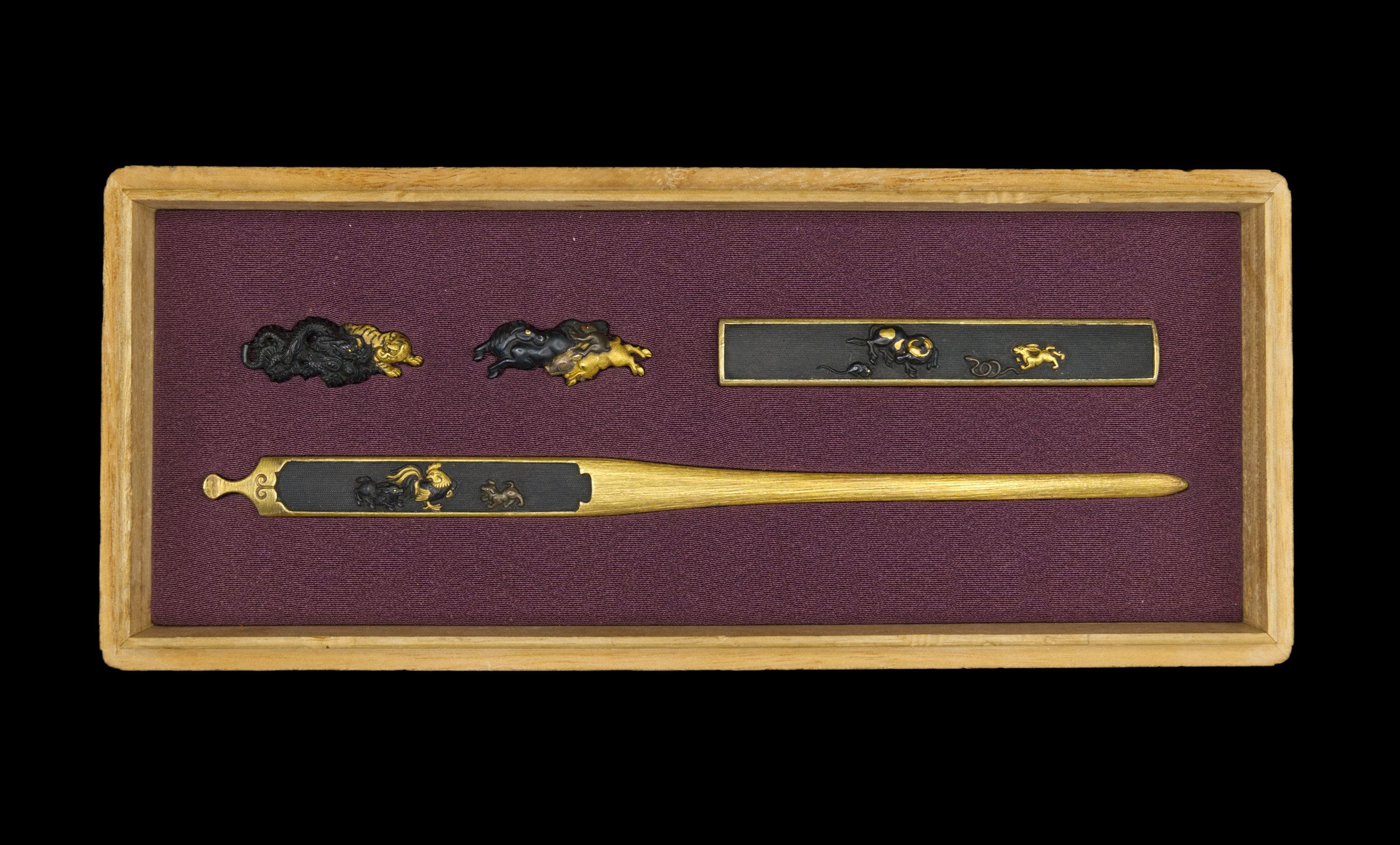
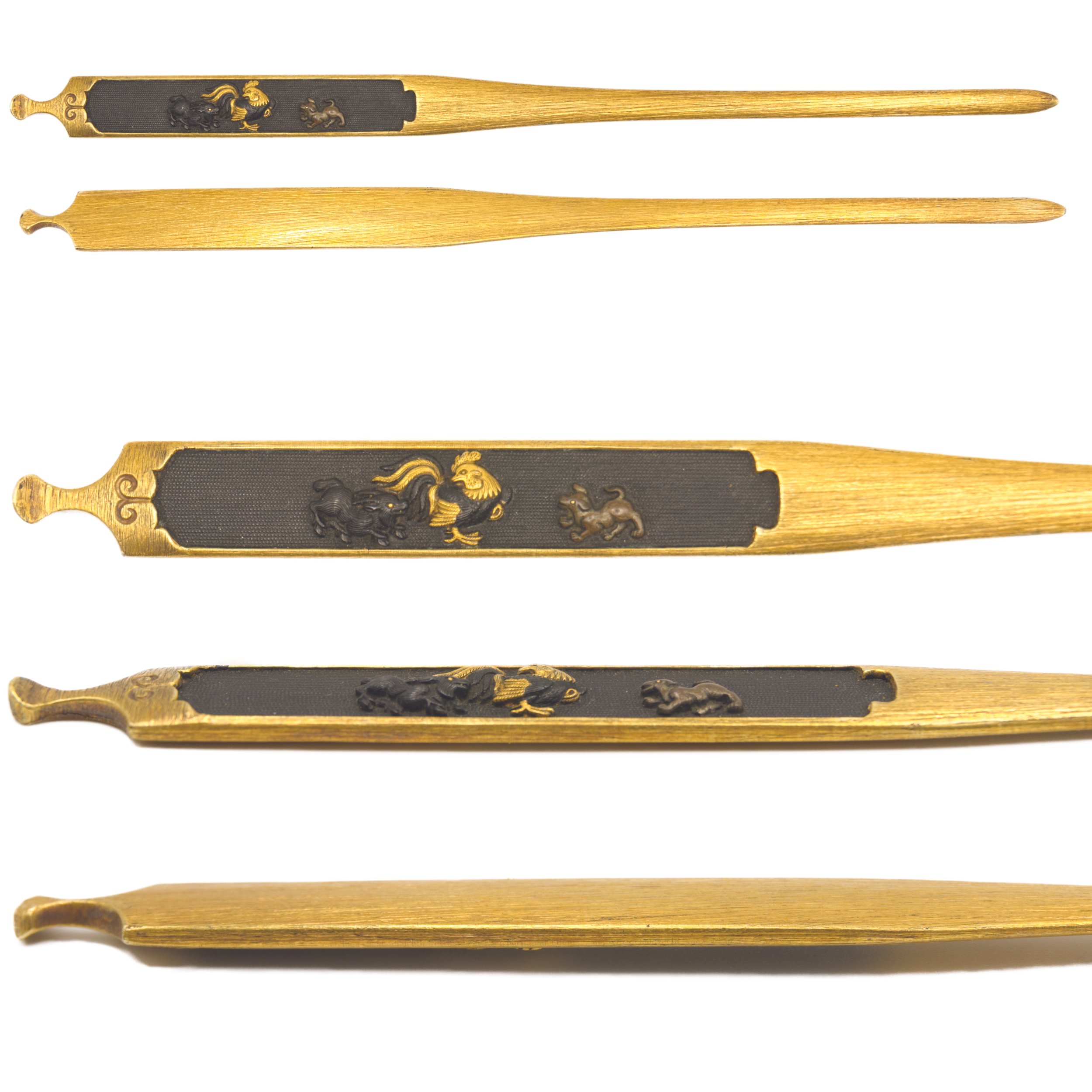
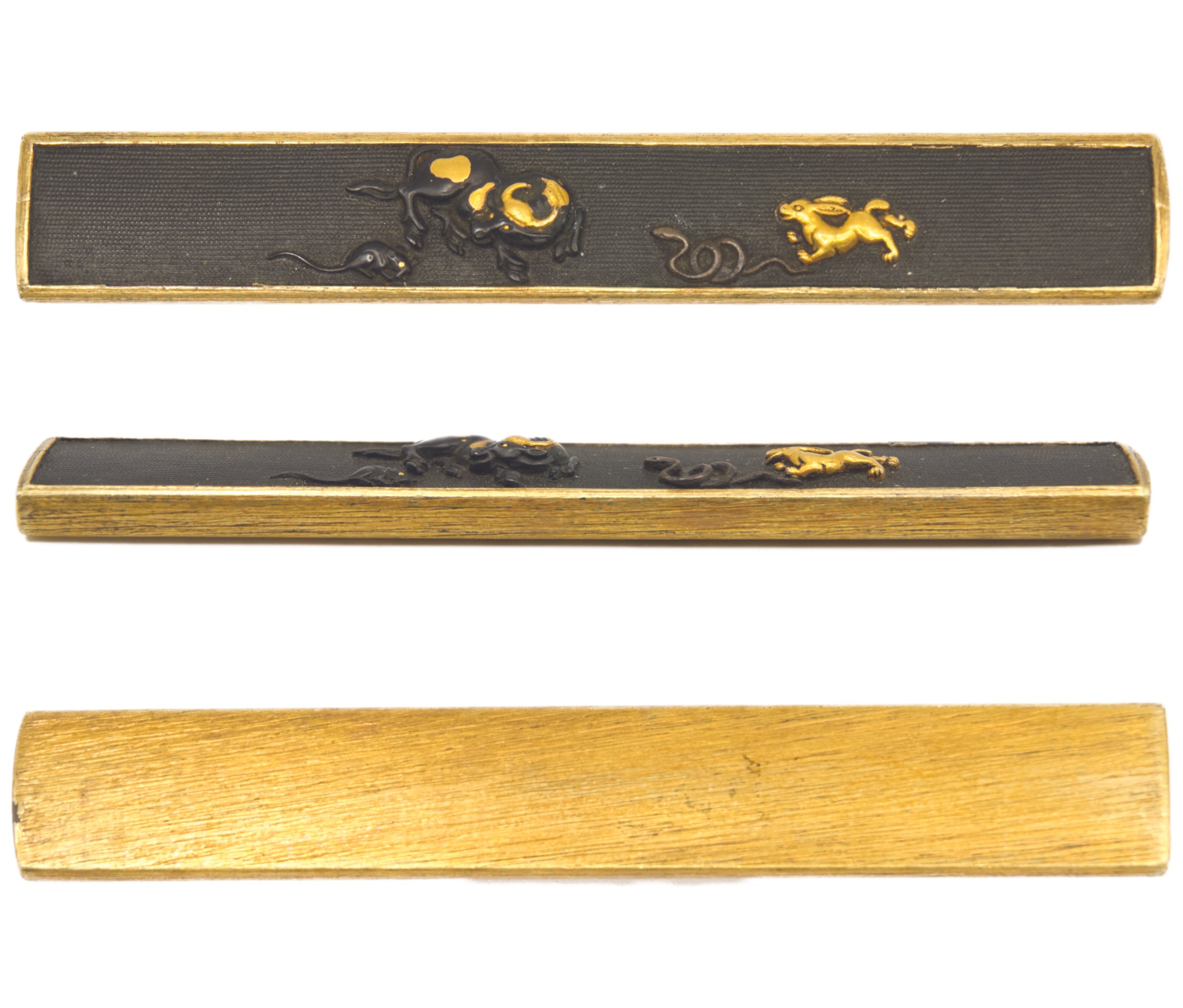
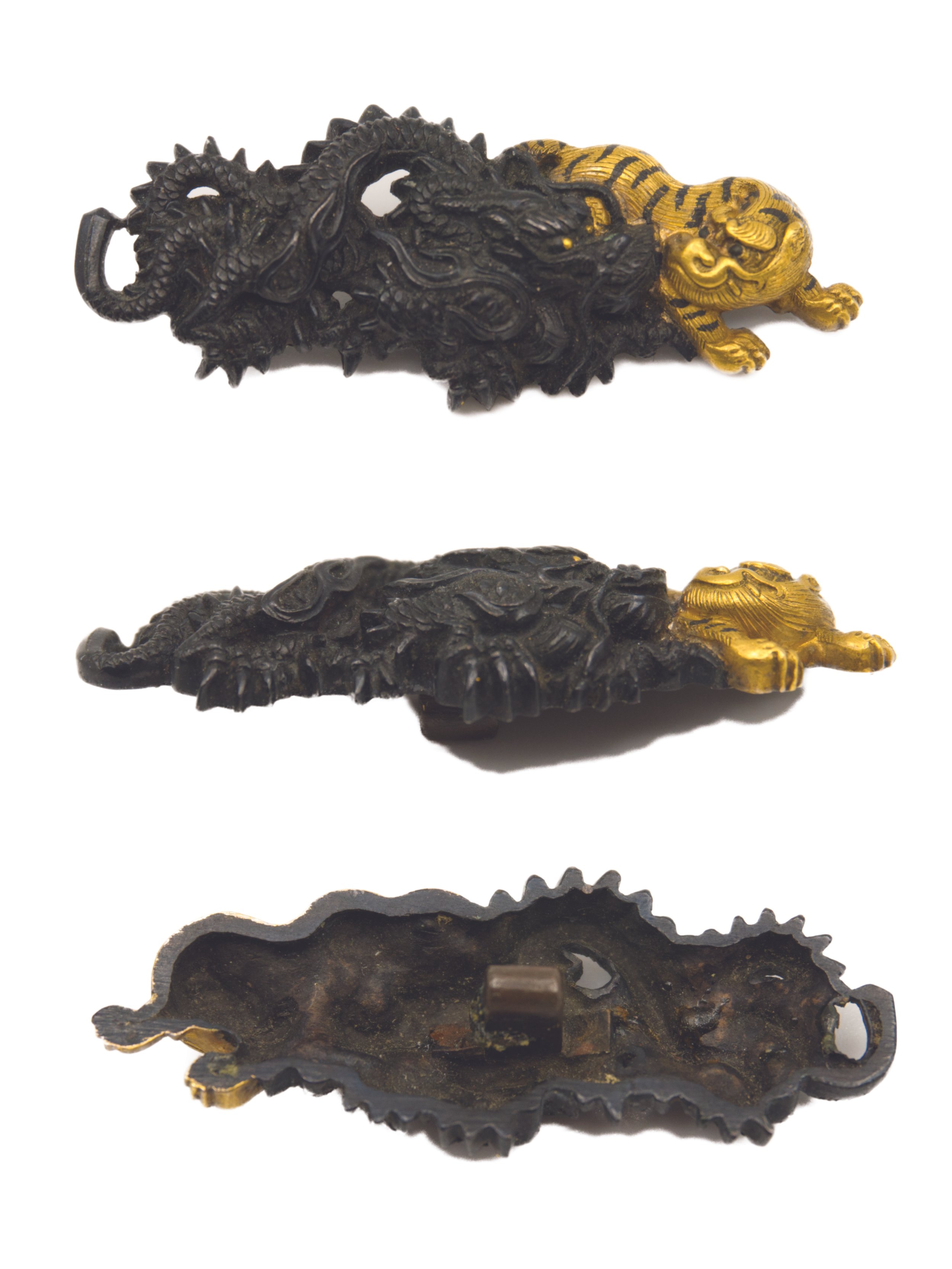
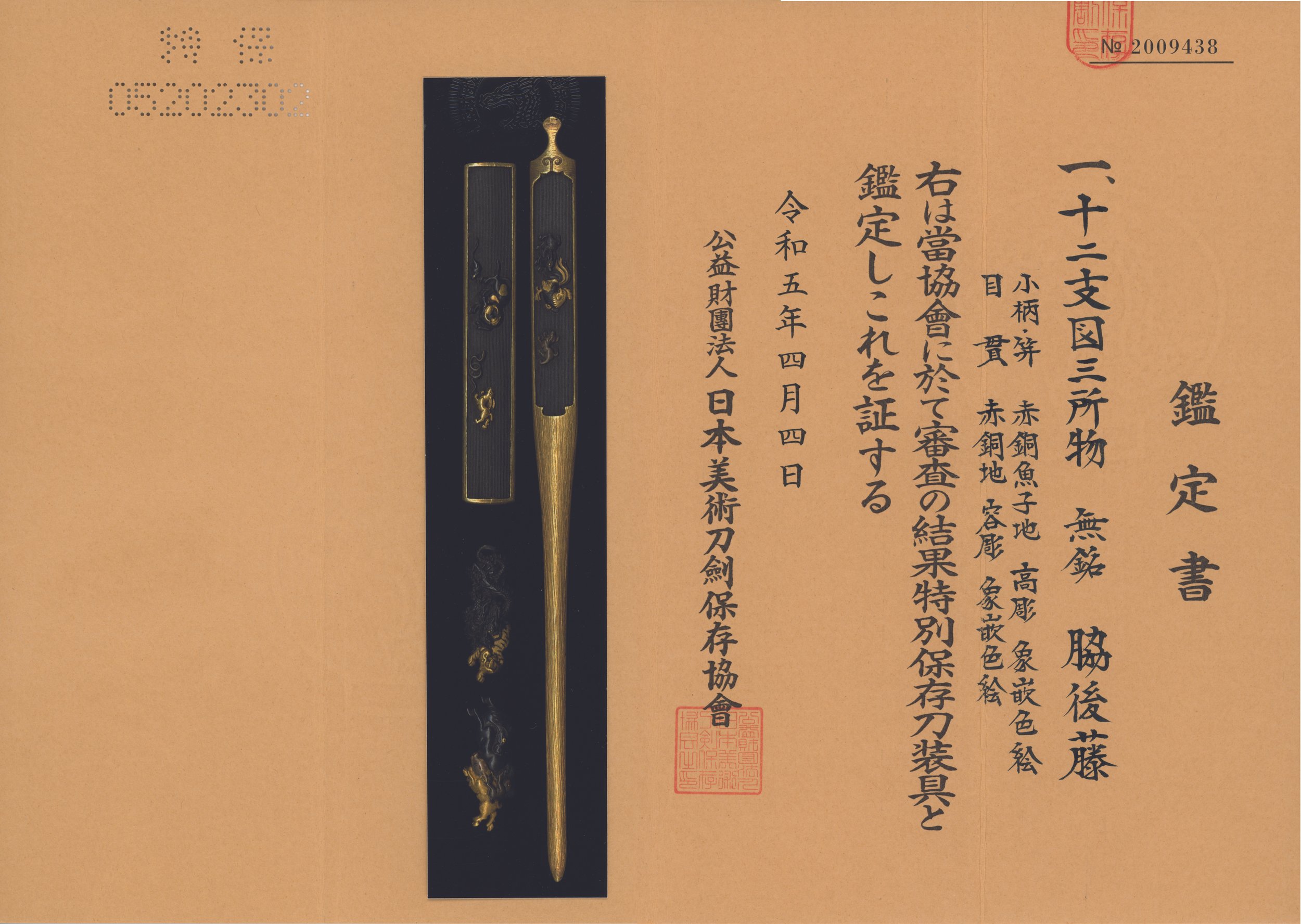
Waki Goto Mitokoromono Set – Twelve Zodiac Animals This refined mitokoromono set is the work of Waki Goto, a branch lineage of the prestigious Goto family active during the Edo period. The Waki Goto line was closely associated with the main Goto house and produced fittings of high technical quality, often intended for upper-class samurai and daimyō use. Their work is known for precise carving, well-controlled relief, and tasteful use of gold on shakudō grounds. The present set consists of kozuka, kogai, and a pair of menuki, unified by a rare and highly appealing theme: the complete set of the Twelve Zodiac Animals (十二支), distributed thoughtfully across the fittings rather than concentrated on a single piece. The fittings are executed on a shakudō ground, with finely worked surfaces and selective gold and copper inlay, consistent with orthodox Goto aesthetics. The animals are rendered in compact, sculptural relief, balancing charm with formality. An approach typical of Edo-period Goto work intended for daily wear rather than purely ceremonial mounts. Zodiac Composition Menuki (pair): One menuki depicts the Dragon and Tiger, while the other shows the Horse, Monkey, and Boar. Kozuka: Decorated with the Ox, Rat, Snake, and Rabbit Kogai: Rooster, Dog, and Goat—completing the full zodiac cycle across the set. Bringing together all twelve zodiac animals within a single mitokoromono set is both iconographically rare and conceptually elegant, reflecting careful planning rather than later assembly. The consistency of material, workmanship, and theme strongly supports the integrity of the set as a unified work. This is an excellent example of Edo-period Waki Goto craftsmanship, combining cultural symbolism, fine metalwork, and strong collectability. Equally suitable for a high-quality koshirae or as a standalone display set for a serious tosogu collection.
Certificate reading — 無銘(脇後藤)
NihontoWatchOffered by Toukentakarado

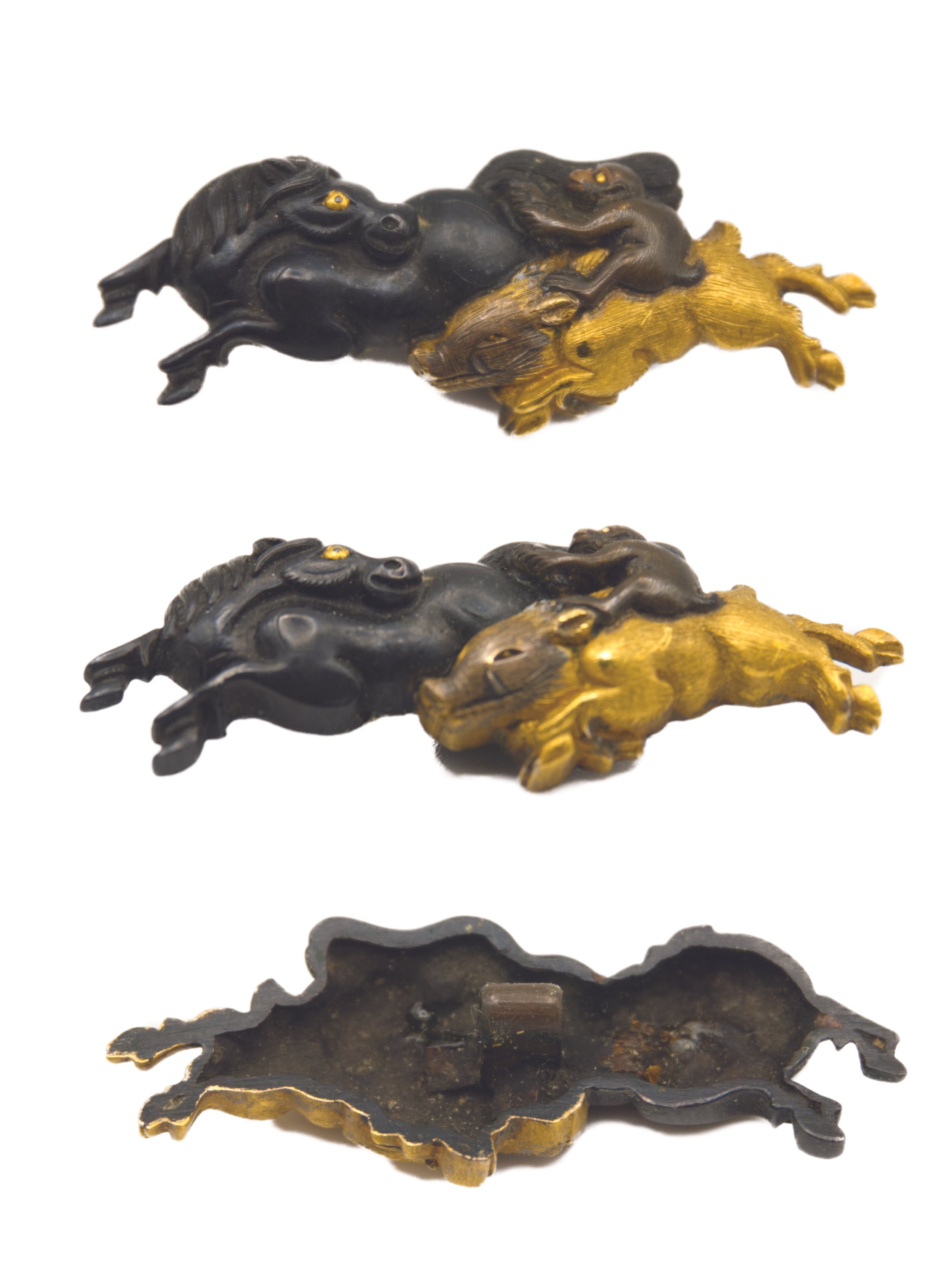
Waki-Goto School
Edo
Unsigned
Tokuho (NBTHK)
Machine translation of the shop's Japanese ·
Iebori · Kyoto
75 pieces on the market now
The Waki-Goto tradition designates the branch and collateral lines of the Goto mainline (soke) that sustained the family's metalworking legacy across generations while extending its reach beyond the central house in Kyoto and later Edo. The Goto family itself constituted the preeminent dynasty of sword-fitting craftsmen in Japanese history, serving successive shogunal families from the Muromachi period through the Edo era. Their work, designated iebori ("house carving"), was distinguished from the machibori ("town carving") produced for general market demand. Among the most important Waki-Goto lines were the Rihei house, established by Teijo (the ninth mainline master) and continued through Etsujo, who anchored the tradition in Kaga Province under Maeda patronage; the various mainline heads themselves -- Kojo (fourth generation), Renjo (tenth generation), and Teijo -- who shaped the canonical vocabulary; and the later Shichiroemon branch, which produced Ichijo and Koran, the terminal masters who brought the Goto heritage to its culminating expression in the Bakumatsu period. The technical vocabulary of the Waki-Goto lineages adheres with remarkable fidelity to the orthodox manner established by the founding patriarch Yujo. The characteristic ground is shakudo finished with impeccably regular nanako-ji, praised across generations for its orderly precision and deep, limpid quality. Upon this lustrous black surface, motifs are rendered through takabori and sukidashi takabori (raised high-relief carving) enriched by gold and silver iroe, with solid gold nikubori and sculptural yobori employed for menuki. The canonical Goto subjects -- dragons, lions (shishi), kirin, and clouds -- recur throughout the lineage, transmitted according to established conventions and executed with meticulous niku-dori (modulation of sculpted flesh). Kojo, identified as second in ability only to the founder, introduced preparatory drawings (shita-e) by Kano masters and is credited with originating warrior-figure and dragon-and-tiger motifs within the house.
His works display the Momoyama spirit -- heroic, dynamic, and brimming with vitality. Teijo's carving is characterized as restrained and meticulous, achieving a crisp, controlled effect, while Renjo inherited his father's methods and introduced fresh elements: robust and magnificent carving that "raises the peaks high and drives the valleys deep," recalling the grand manner of the early generations. Etsujo, transmitting the mainline aesthetic into Kaga, maintained a standard "in no way inferior to that of Teijo," and his contributions are credited with fostering the flourishing of Kaga metalwork. The later Shichiroemon branch, under Ichijo and Koran, shifted toward compositions grounded in close observation from life -- birds, flowers, and landscapes -- while sustaining the ancestral foundation of nanako-ji grounds, polychrome iroe, and chuya shitate (day-and-night construction). Across all branches, signed works are characterized as exceedingly rare and of high documentary value. The Waki-Goto tradition represents the mechanism by which the Goto house's artistic achievement was preserved, transmitted, and adapted across nearly five centuries. " The Rihei branch's transplantation to Kaga ensured that the tradition flourished beyond its Kyoto and Edo centers, while the Shichiroemon branch's culmination in Ichijo produced an artist whose command of the full kinko repertoire "adorned the shaft-end" of the entire Goto lineage. Works from across the Waki-Goto branches have been transmitted through distinguished collections -- the Konoike merchant house, the Hachisuka and Maeda daimyo families -- and carry origami appraisals from successive Goto masters assigning valuations of exceptional magnitude. In its collective continuity and its capacity to adapt the iebori heritage to changing tastes while preserving its essential dignity, the Waki-Goto tradition stands as one of the most remarkable dynasties in the decorative arts of Japan. Learn more →
| Smith | Era | Designated |
|---|---|---|
| Korejo是乗 | 1818-1830 | 3 |
| Munetomo/Sochi宗知 | — | 0 |
| Morimura Atsutaka守邨厚隆 | — | 0 |
| Taijo泰乗 | — | 0 |
| Mitsuharu光治 | — | 0 |
A Hozon-certified blade judged to show notably superior workmanship and a better state of preservation. The bar is higher: re-tempered blades and most unsigned Muromachi/Edo works are excluded.
The NBTHK (Nihon Bijutsu Tōken Hozon Kyōkai, the Society for the Preservation of Japanese Art Swords) is a public-interest incorporated foundation founded in 1948 and supervised by Japan’s Agency for Cultural Affairs (Bunkachō); it is based at the Japanese Sword Museum in Tokyo. Its expert panels physically examine each submitted work (shinsa) and issue a certificate (kanteishō) ranking it by artistic and historical merit. NBTHK papers are the most widely recognized standard of authentication for Japanese swords and fittings.
NBTHK official siteWe offer a three-day inspection period. To initiate a return, you must notify us within three days of the package being delivered. Once we confirm your request, you have seven days to ship the item back to us. The item must be returned in its original condition, including all accompanying documents, certificates, and packaging materials. The buyer is responsible for covering the shipping costs and insurance for the return shipment.
¥750,000