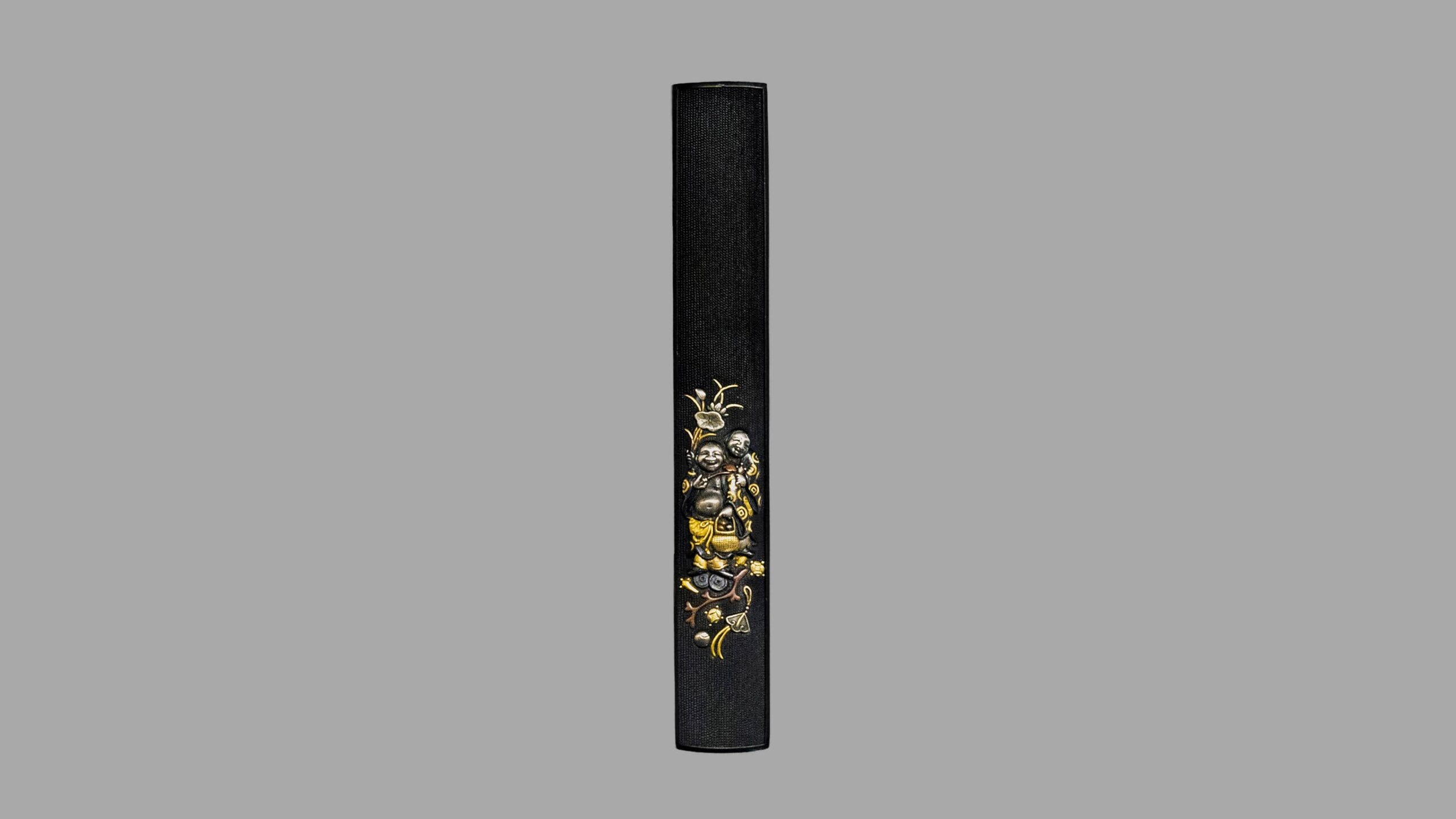
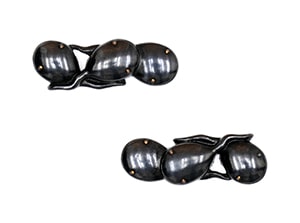
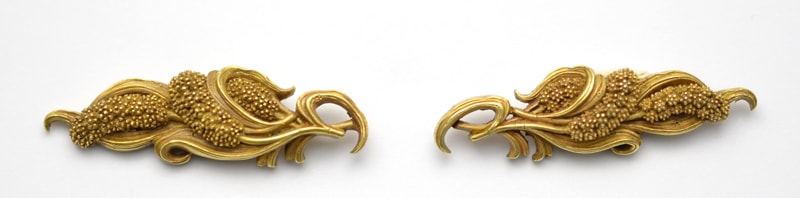
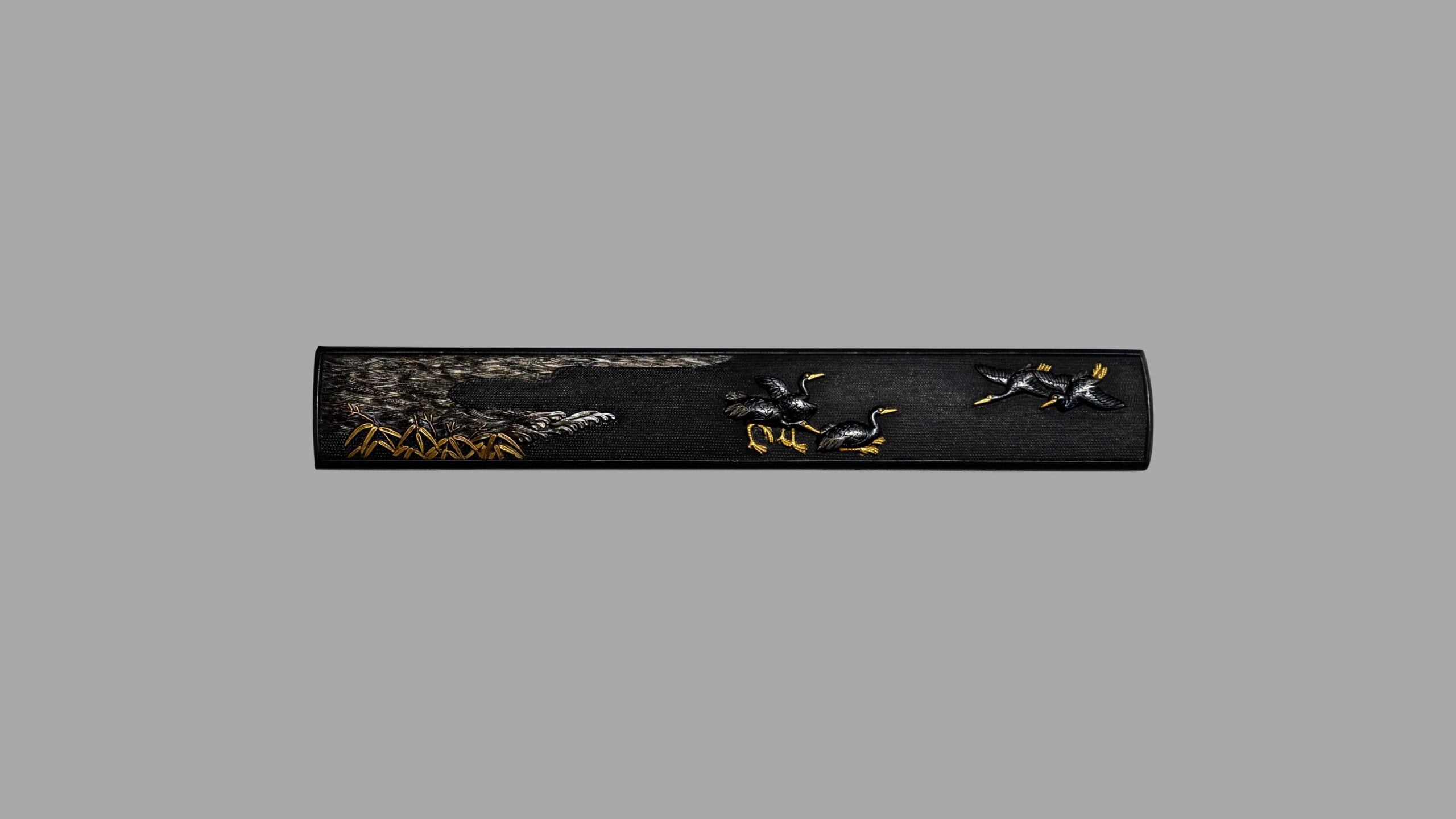
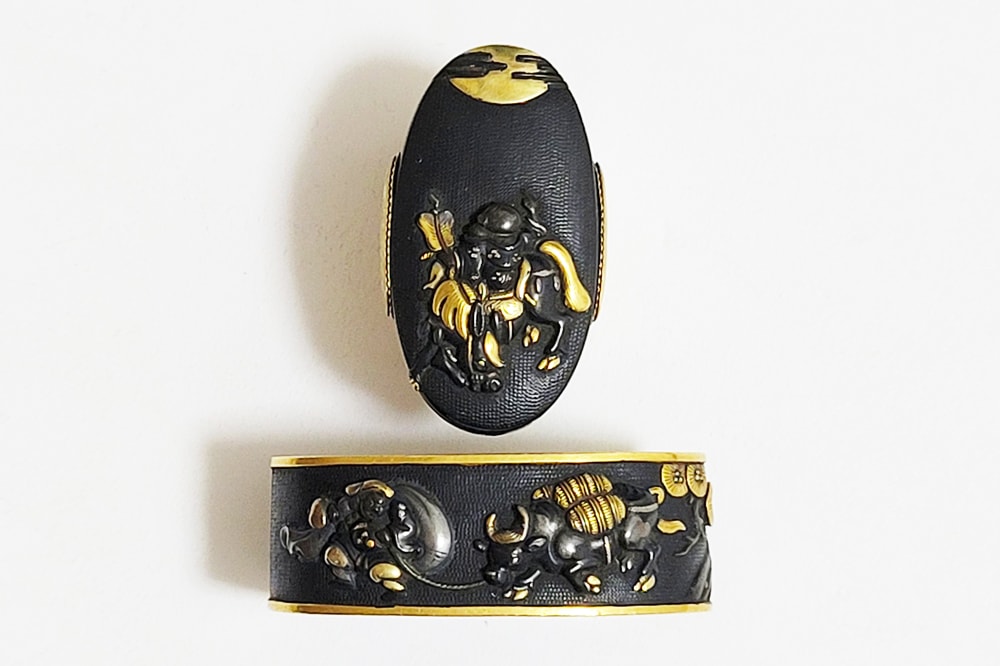
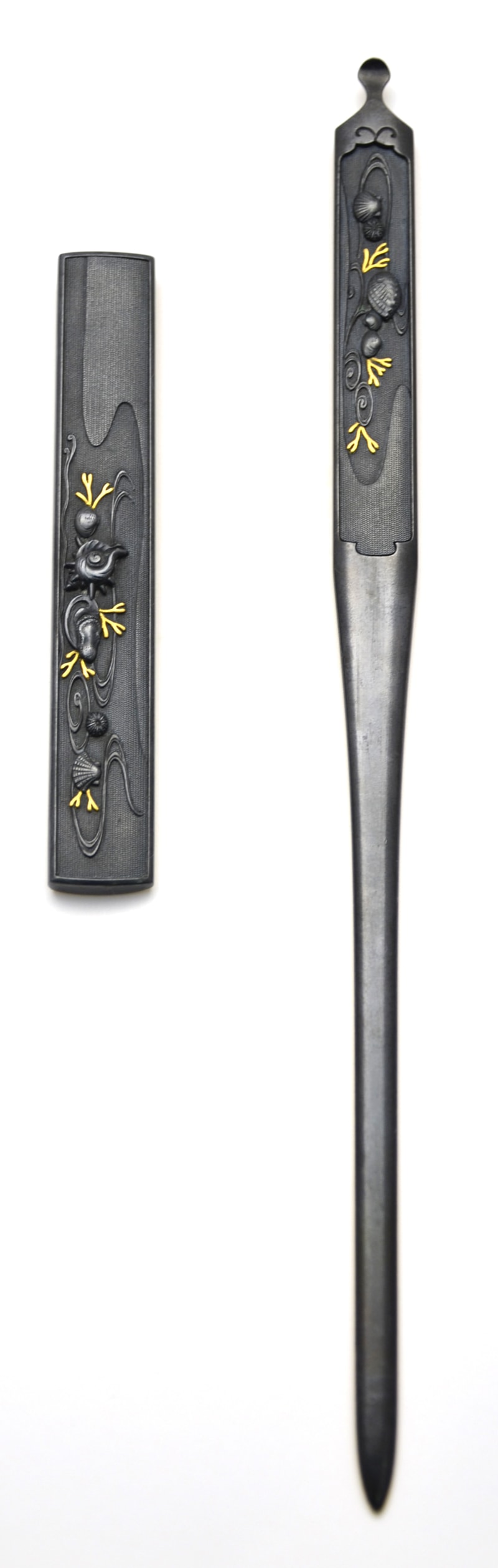
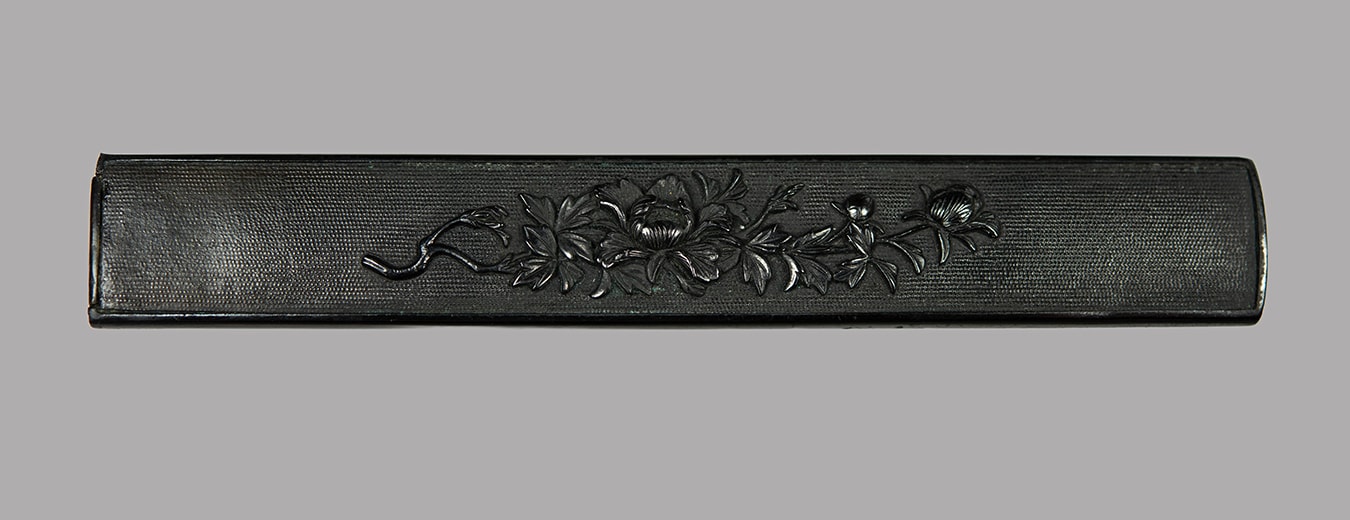
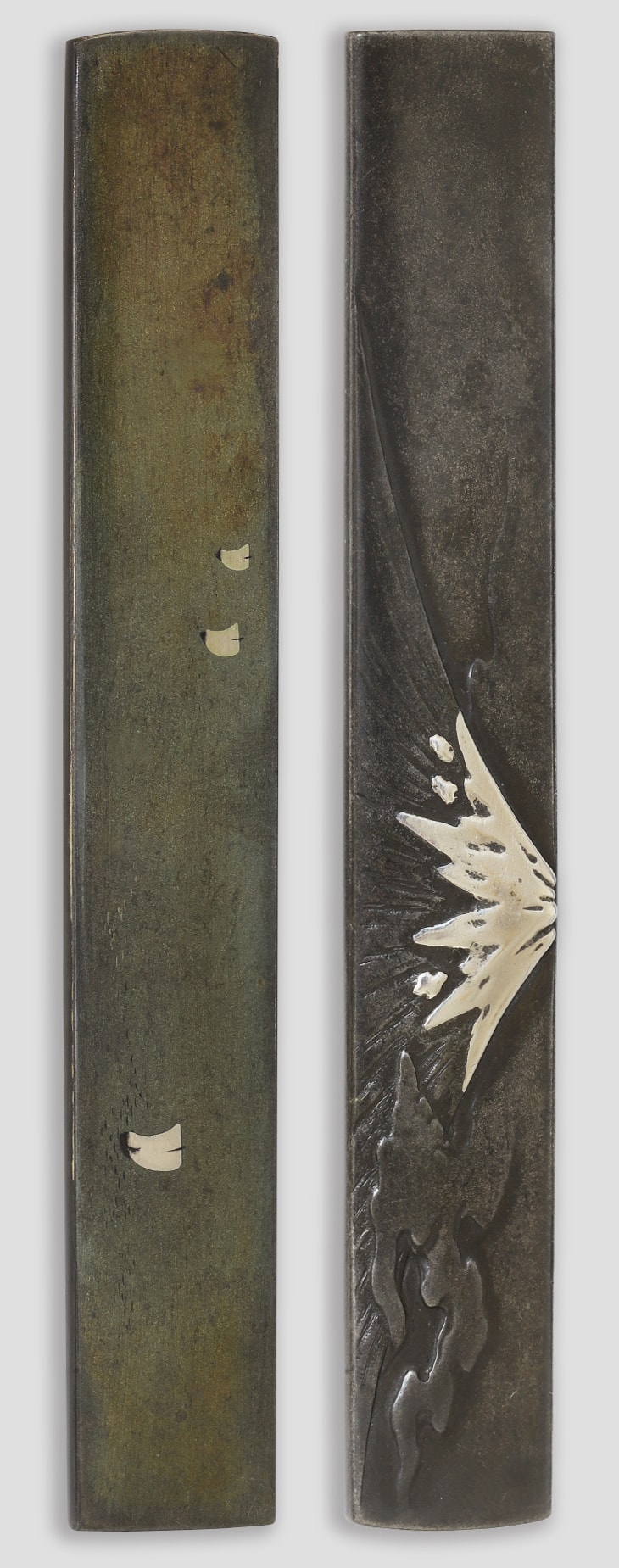
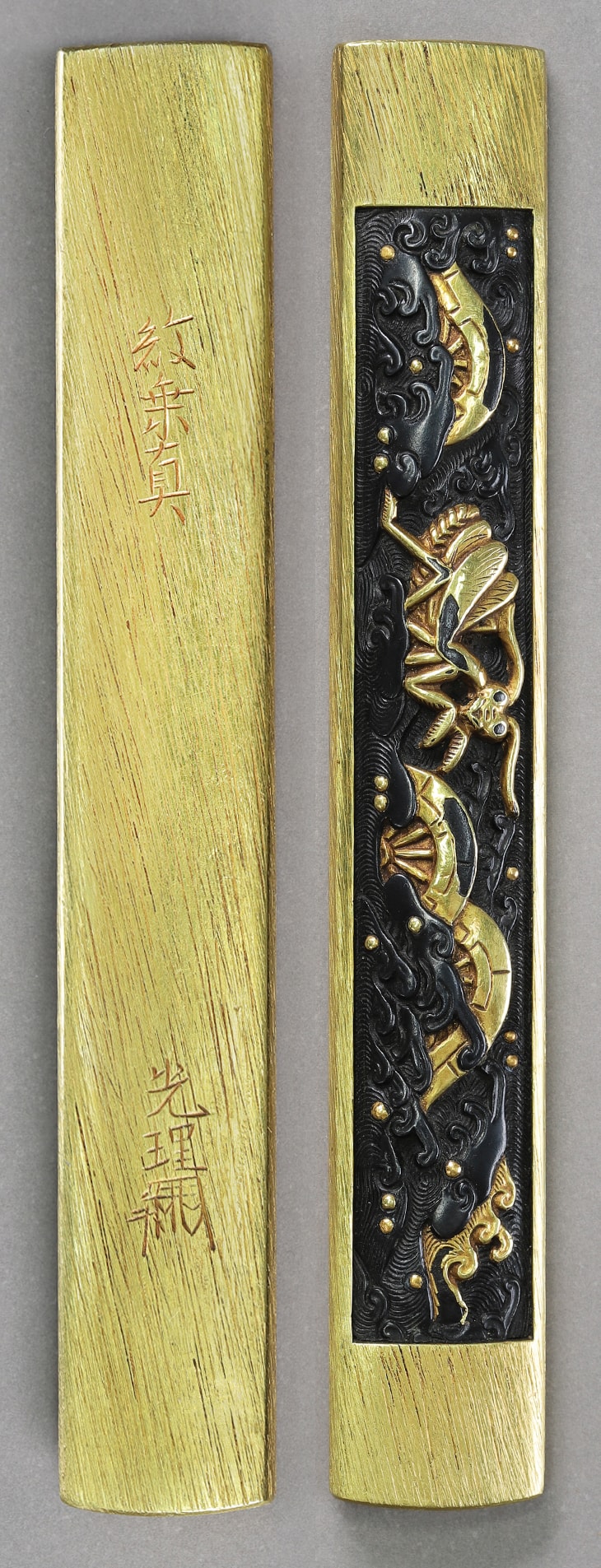
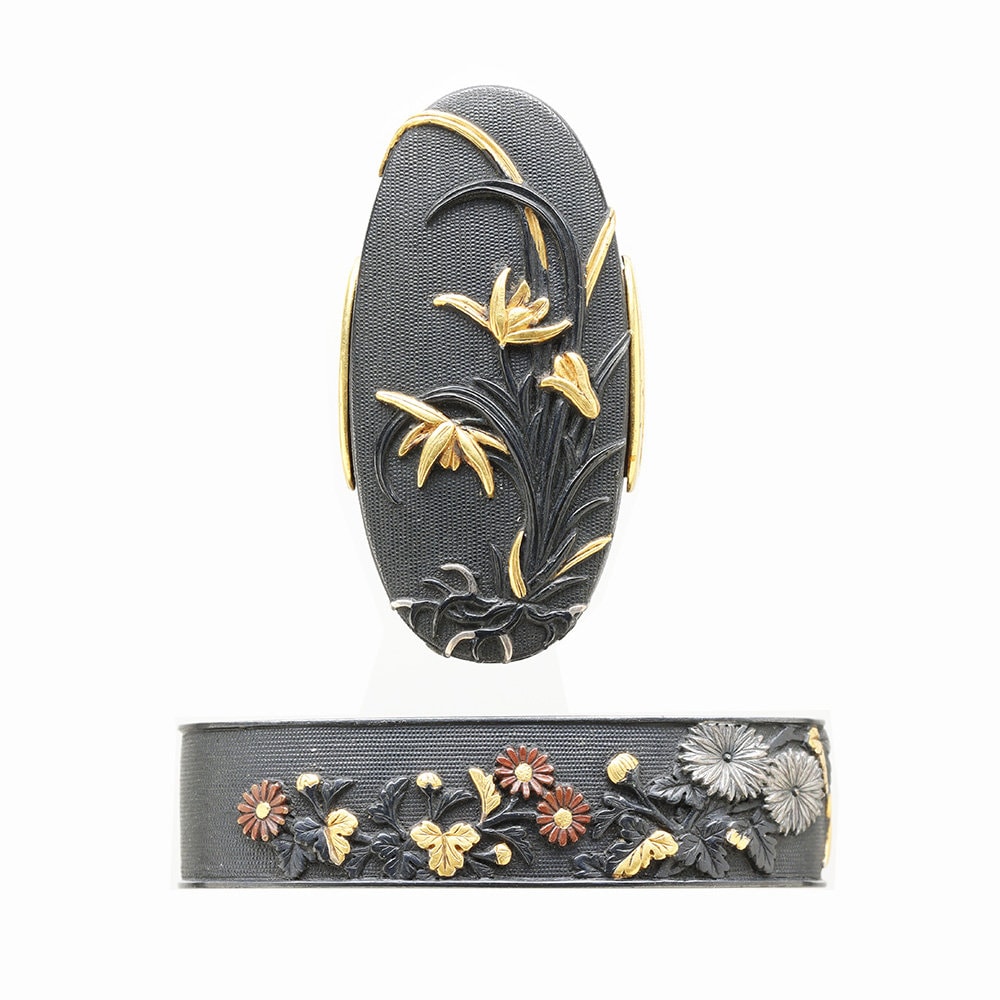
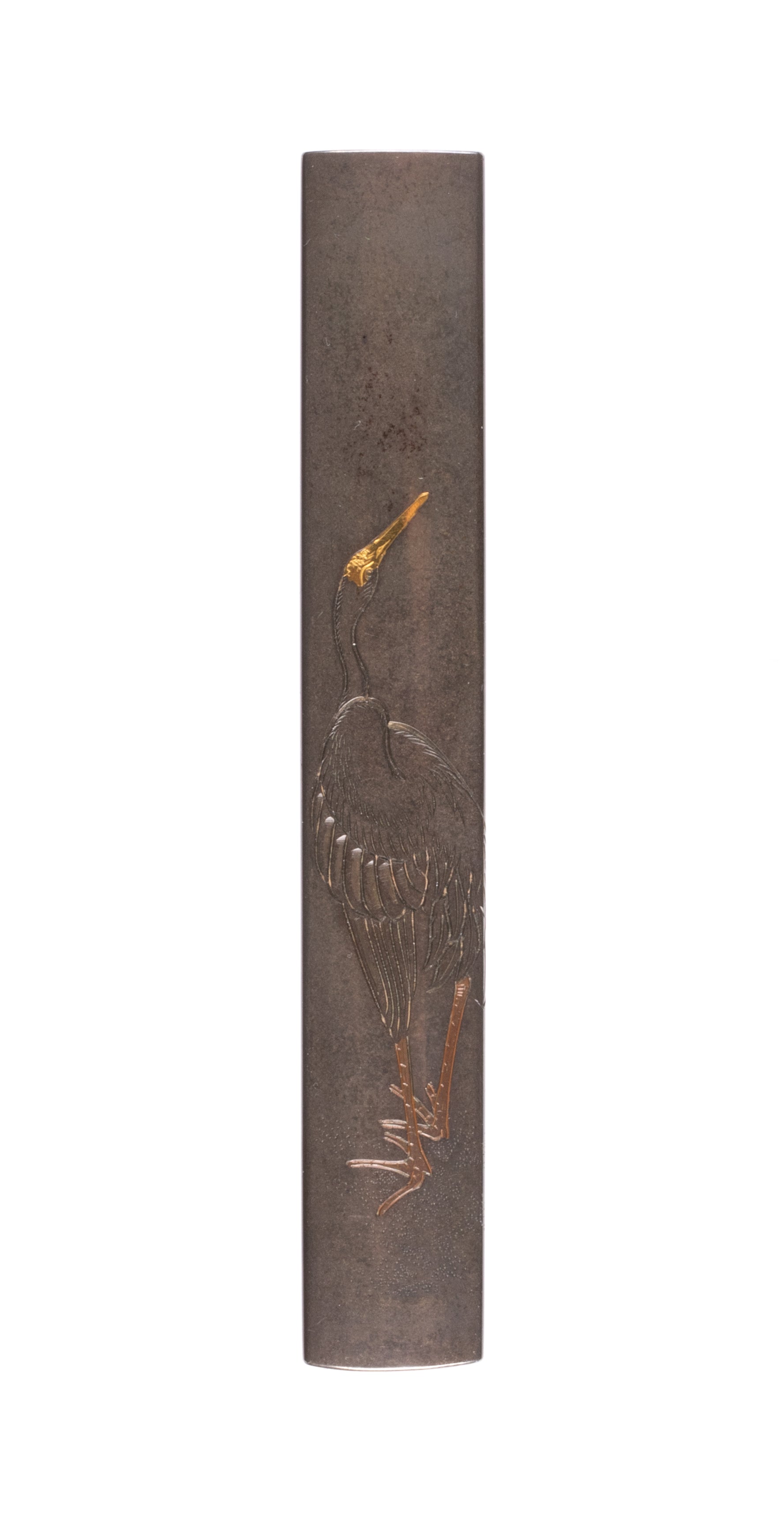
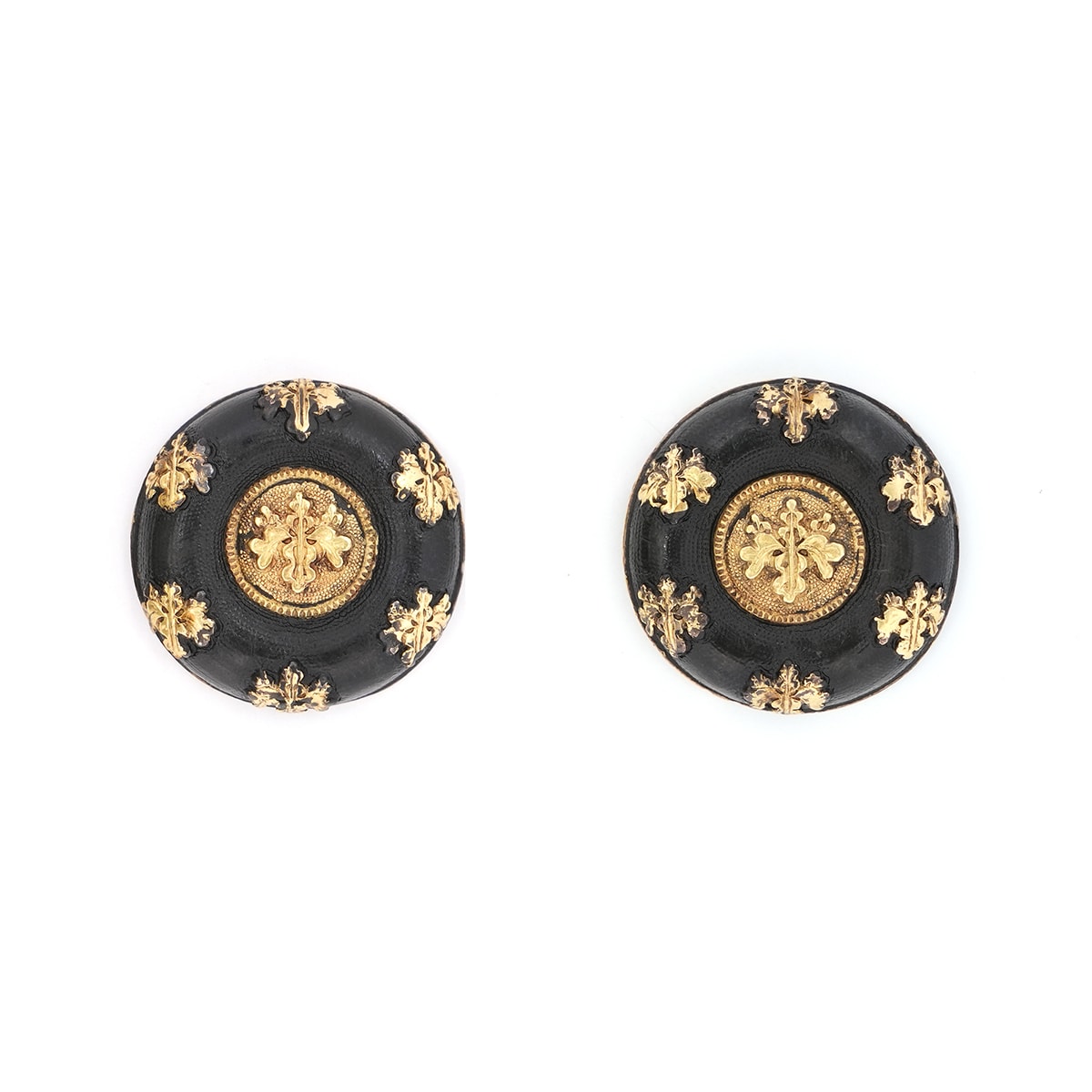
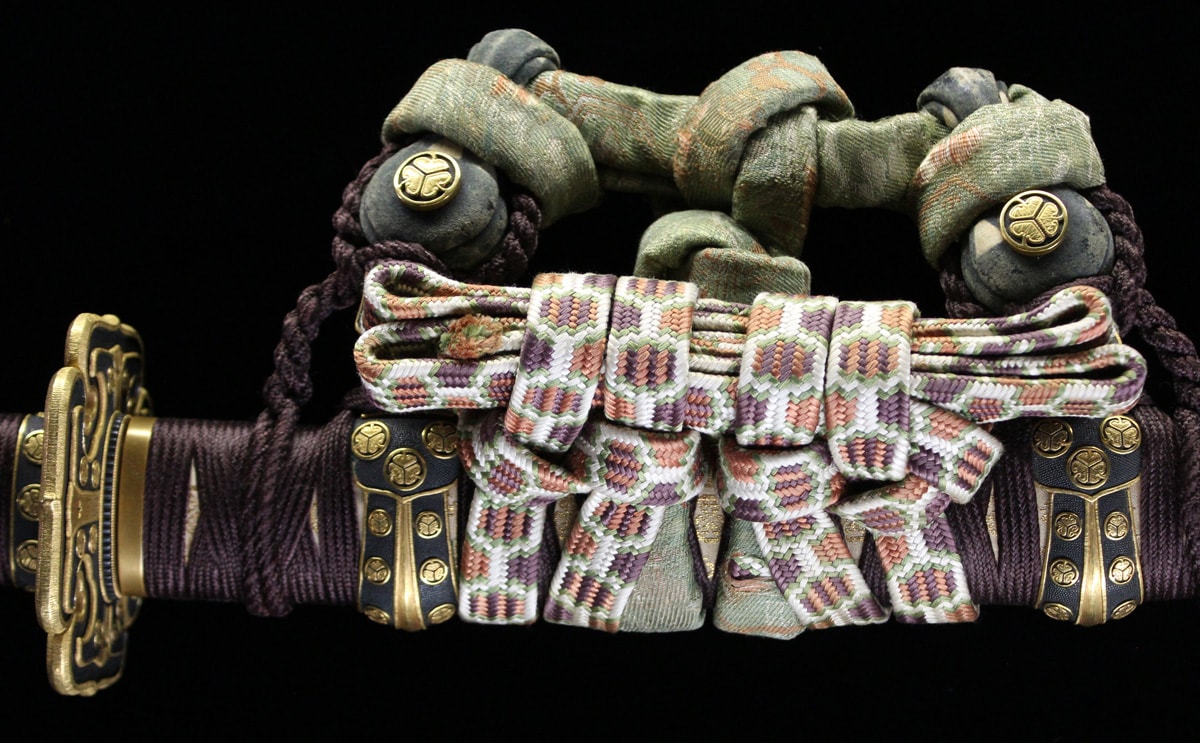
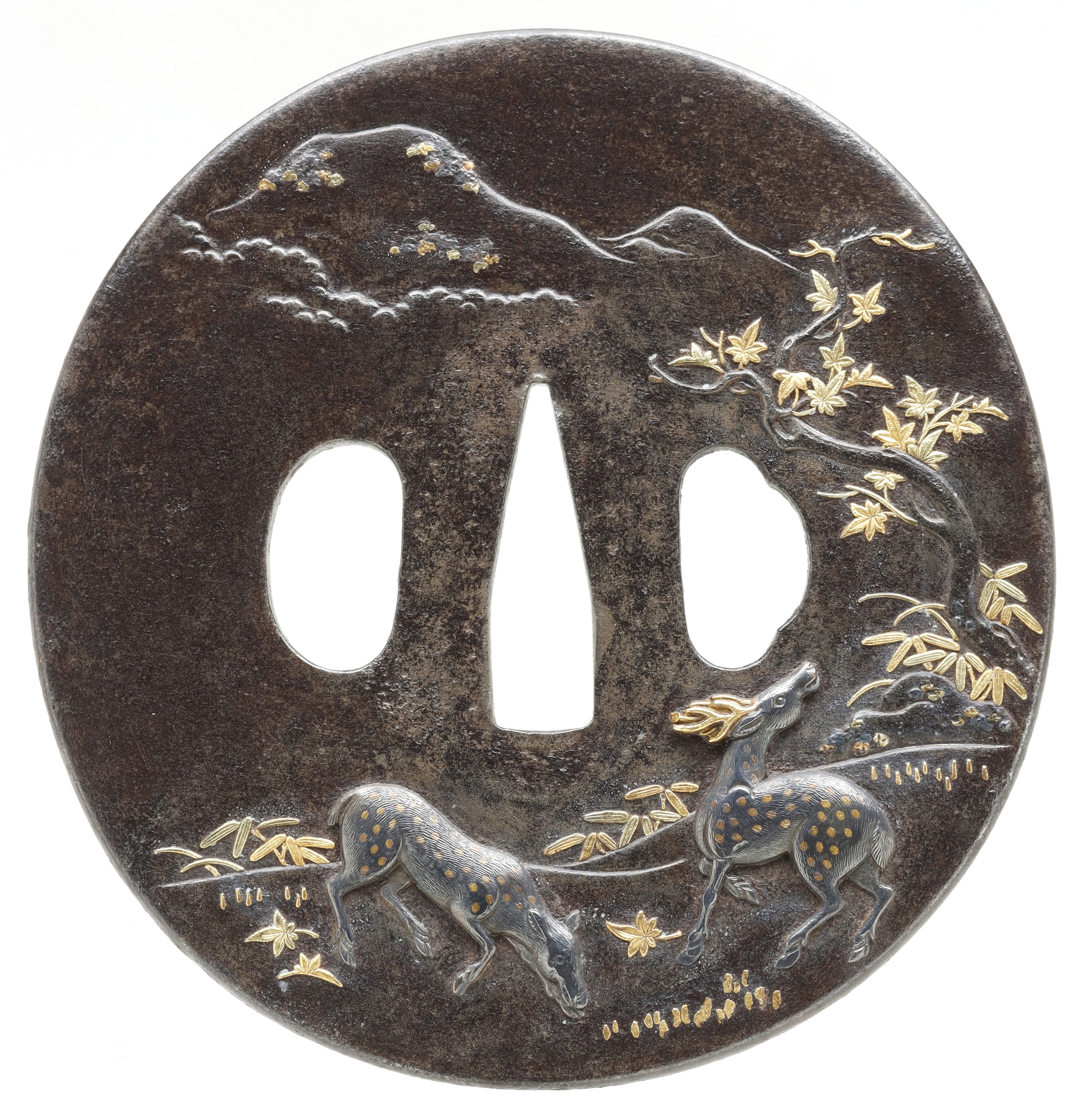
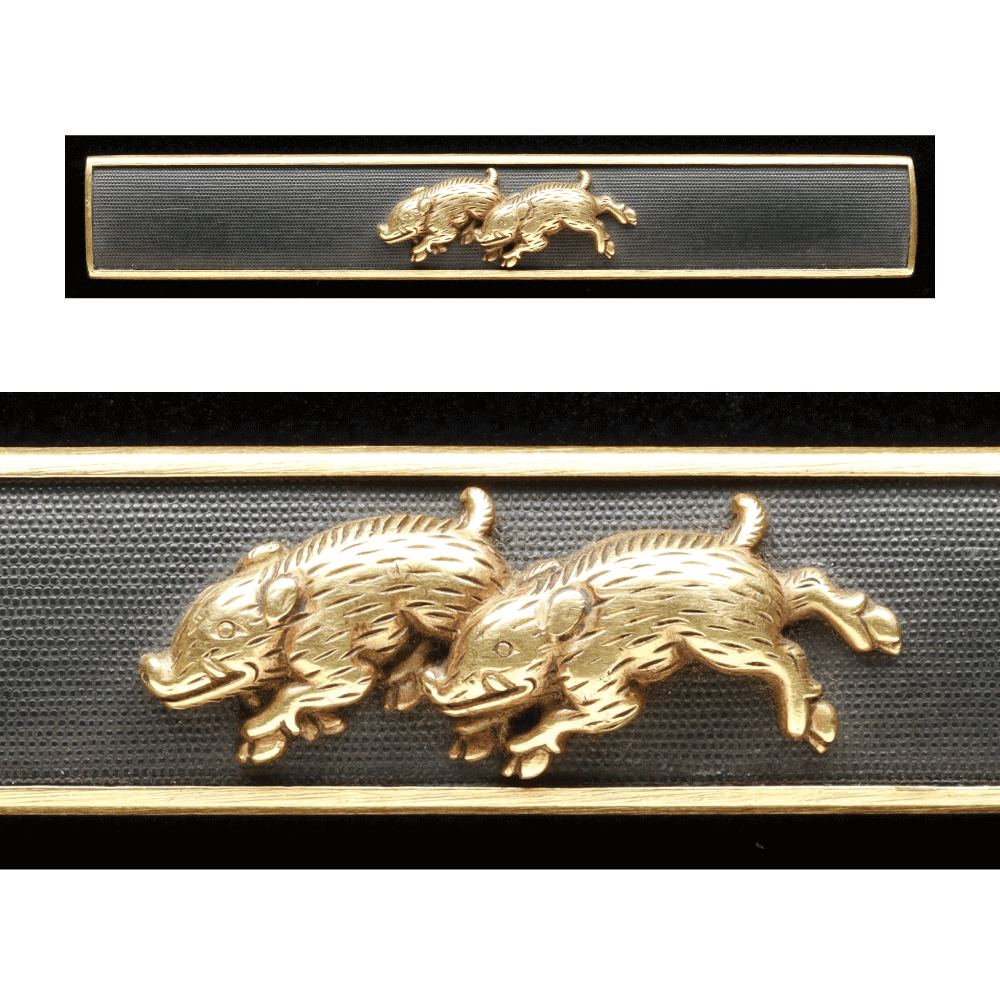
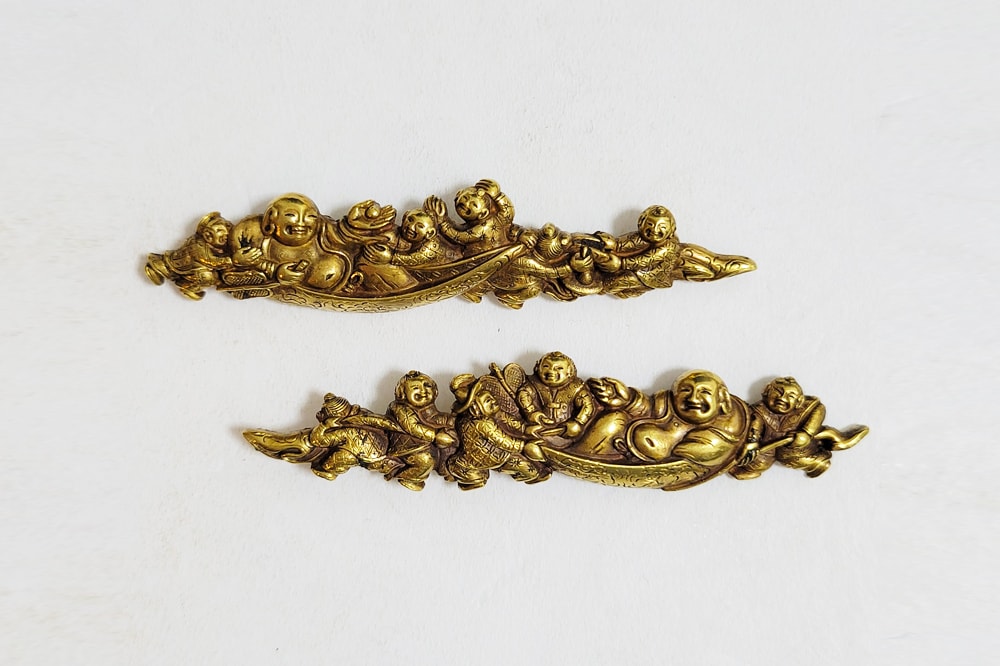
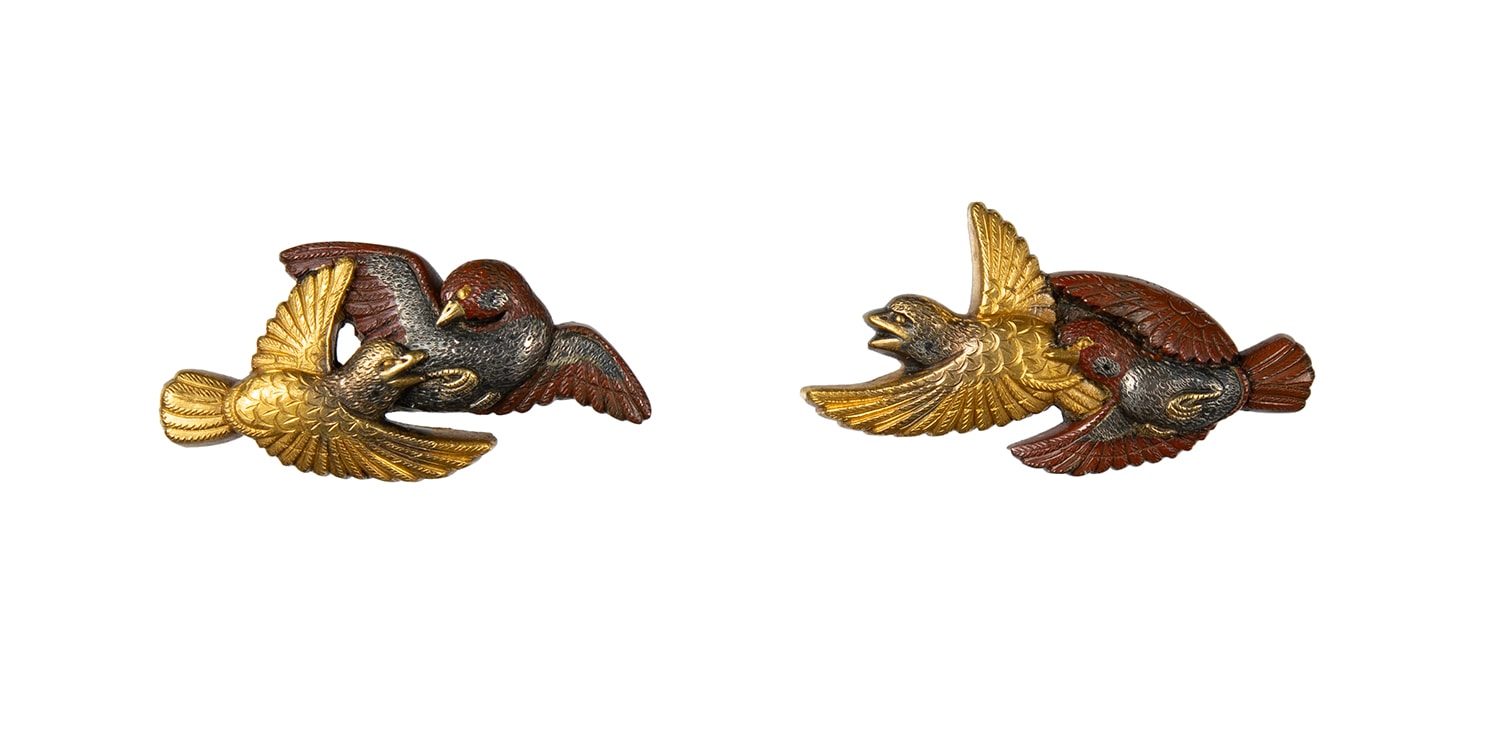
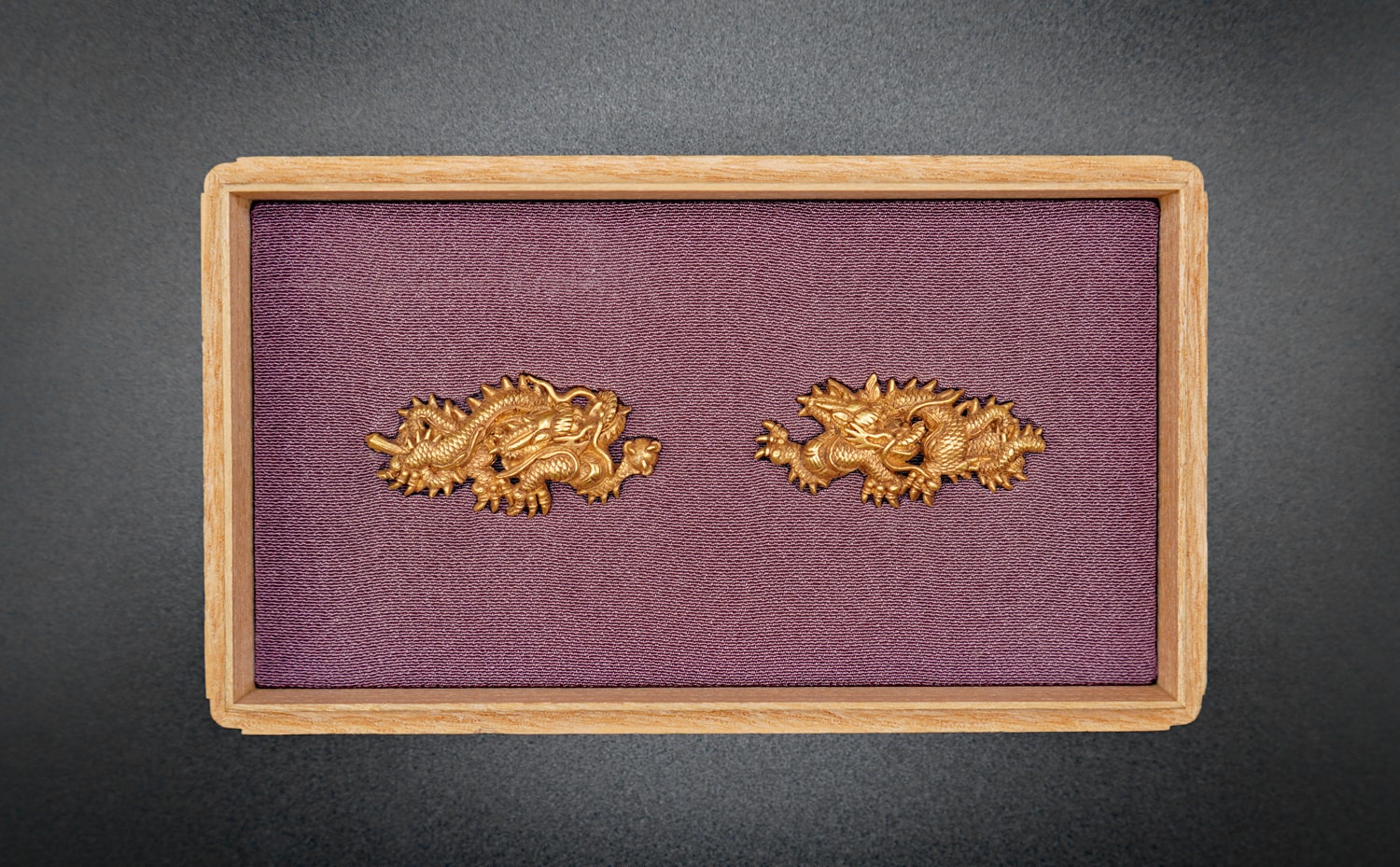
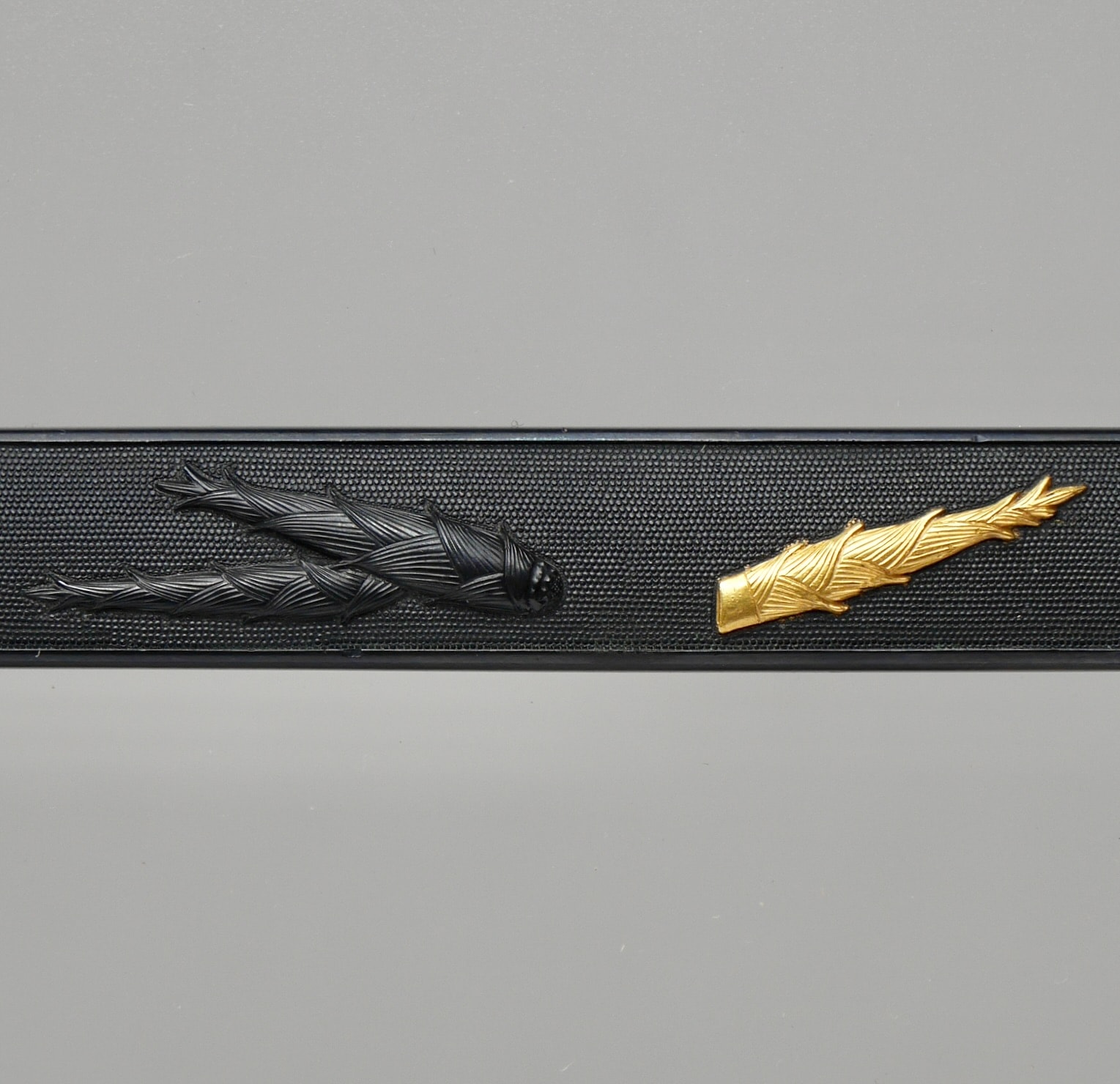
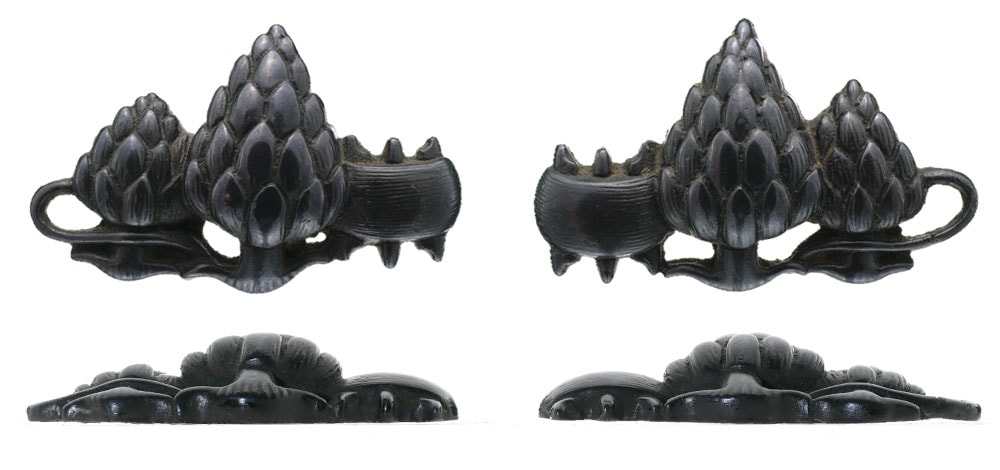
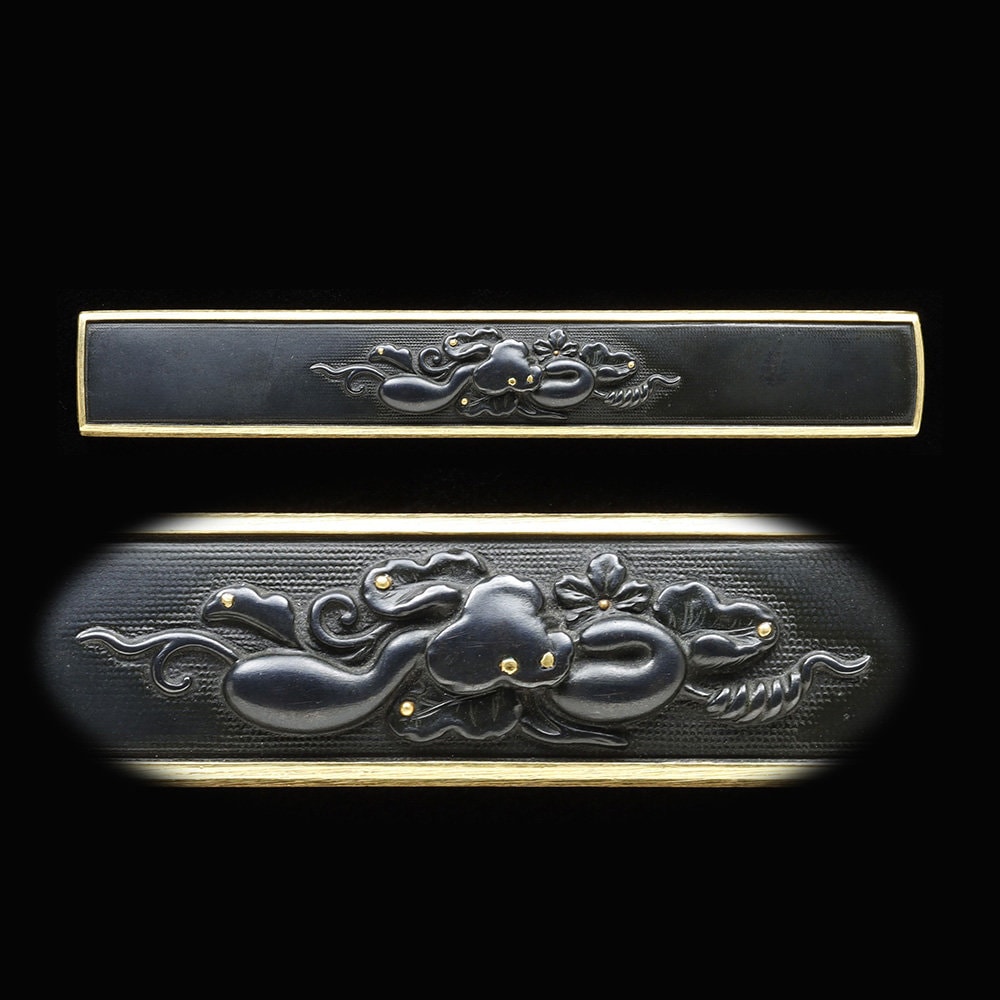
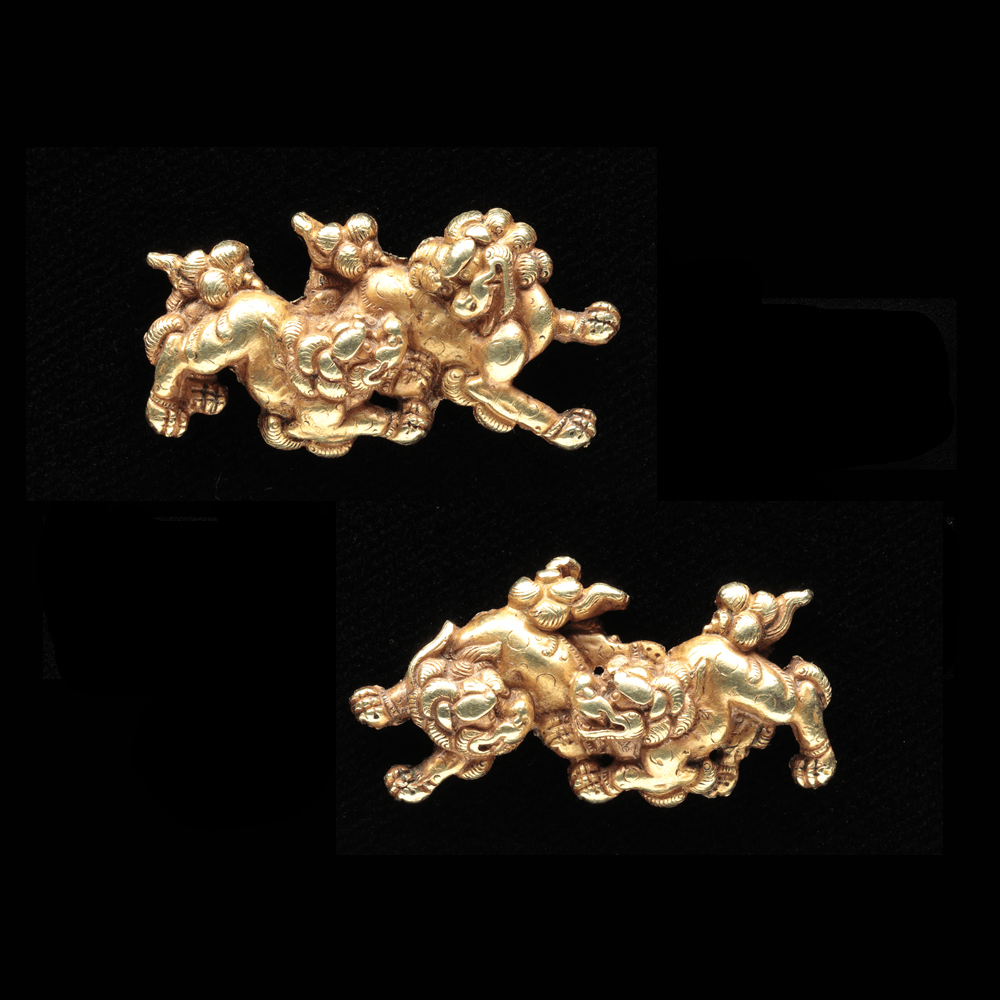
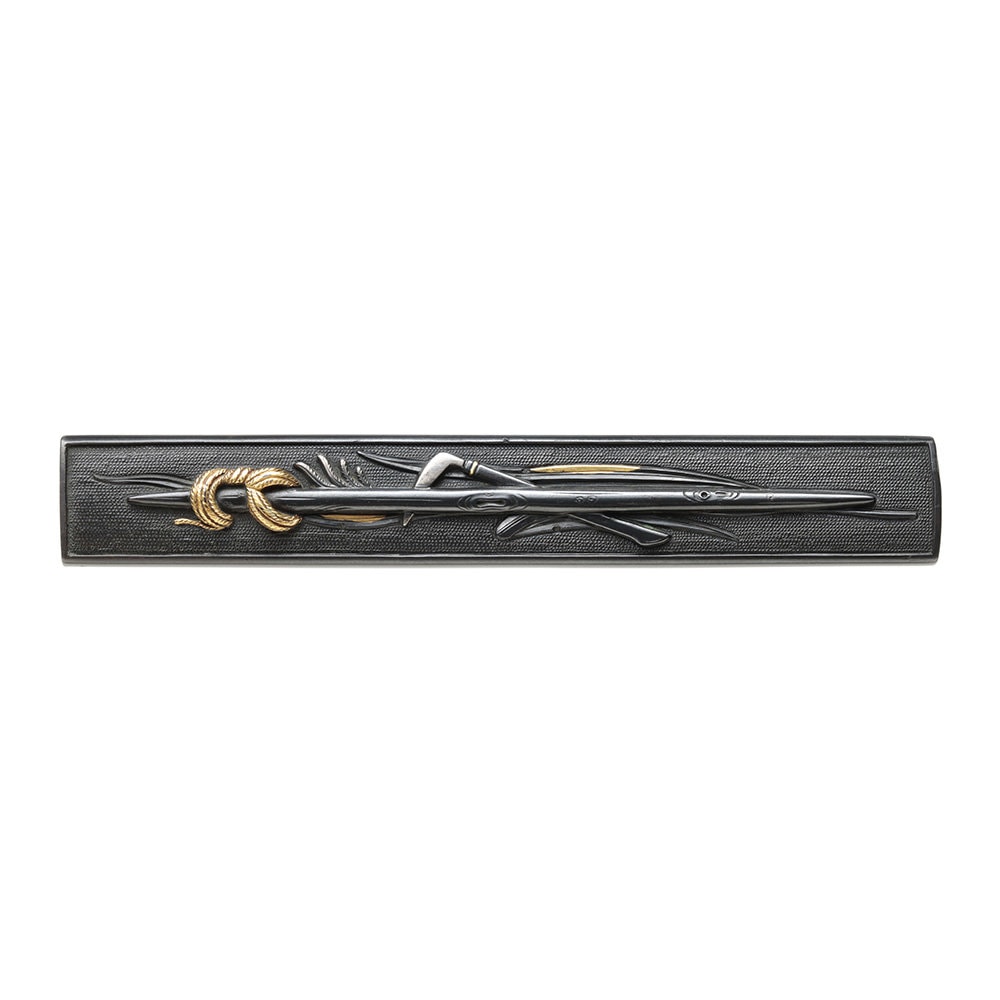
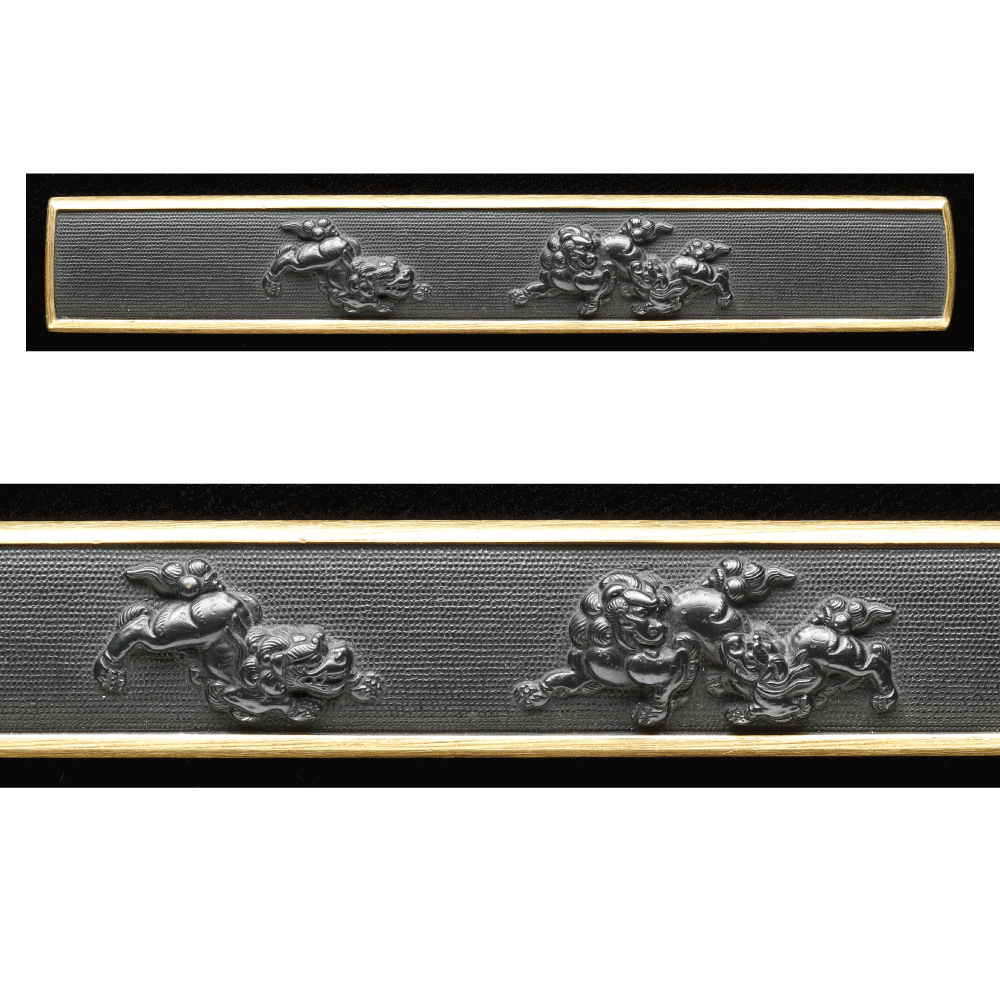
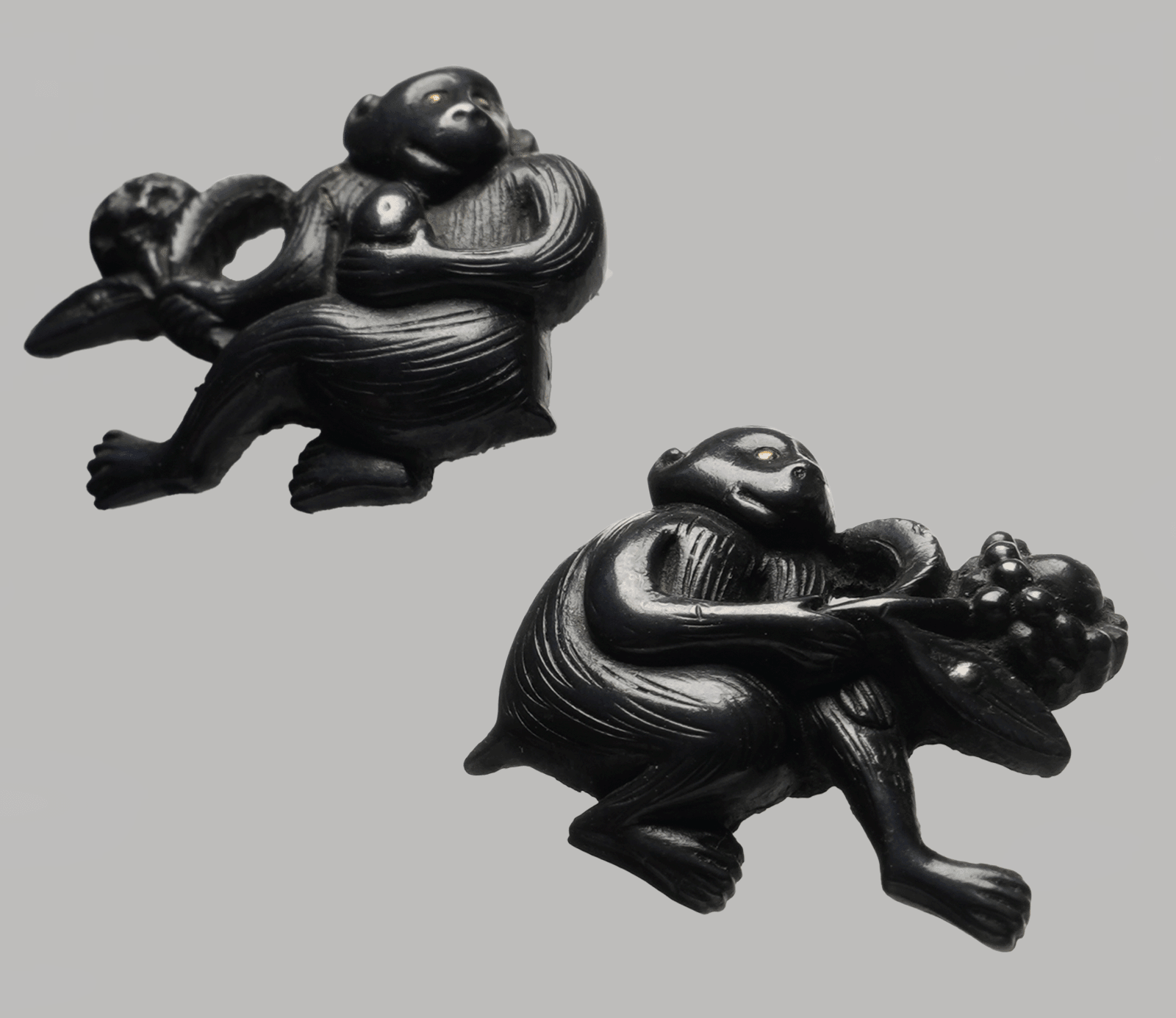
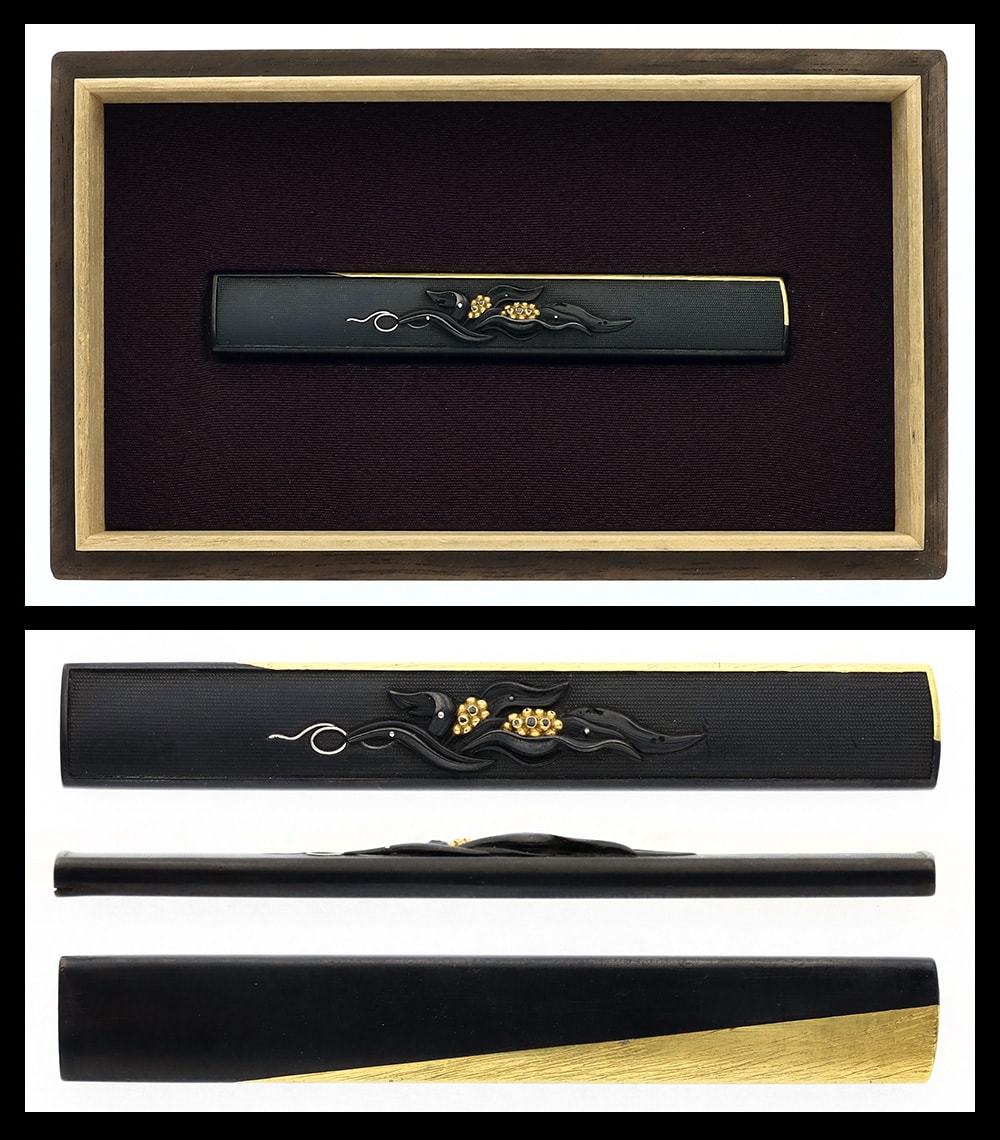
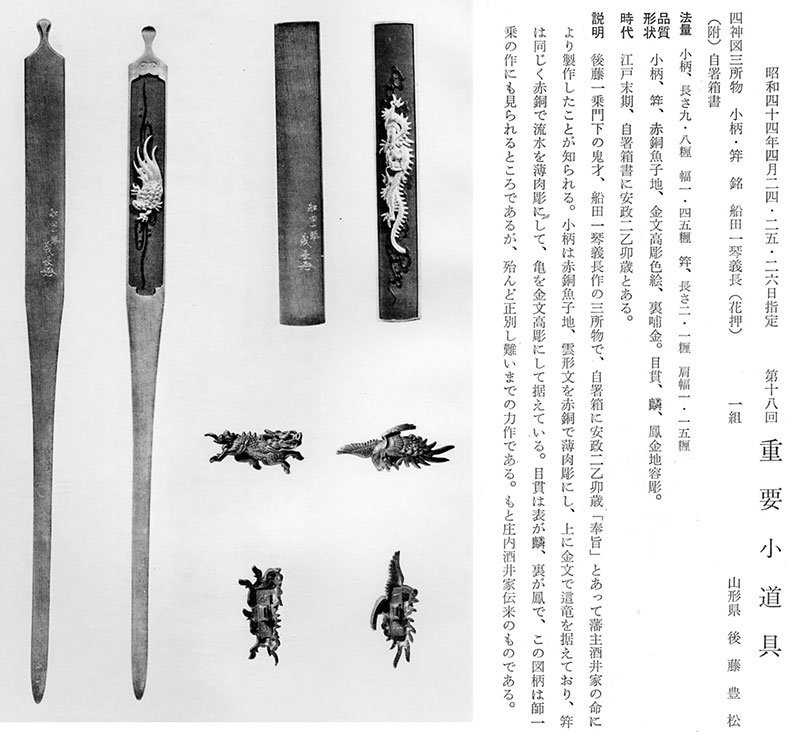
This is a Juyo Tosogu designated mitokoromono by Funada Ikkin Yoshinaga, a metalworker for the Shonai Sakai family. Made in the Edo period (19th Century), it features thin relief carving of cloud patterns on a shakudo nanako ground, with the four auspicious beasts (dragon, kirin, sacred turtle, phoenix) rendered in gold high relief. This exceptional work, comparable to those of his master Goto Ichijo, was transmitted through the Shonai Sakai family until modern times.
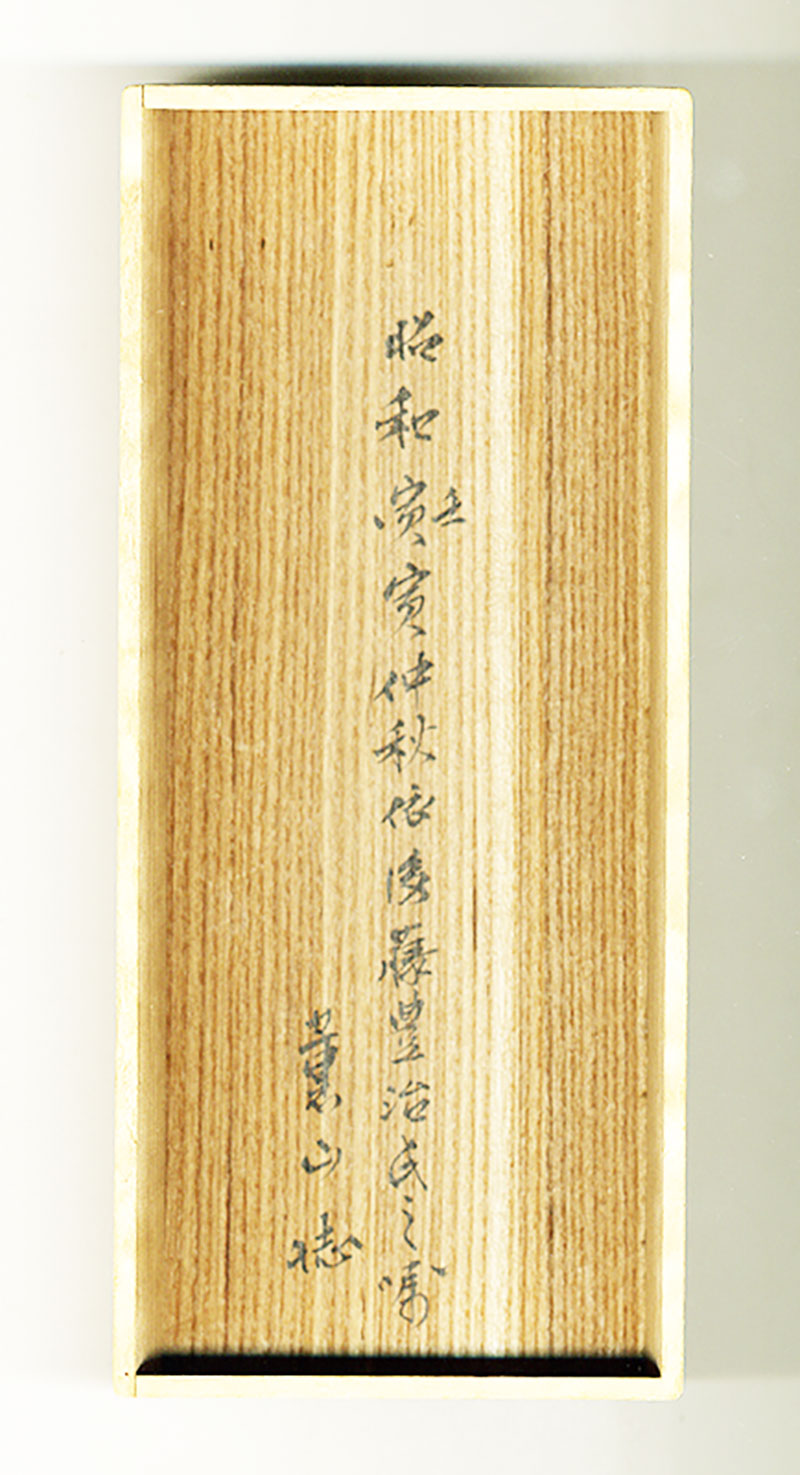
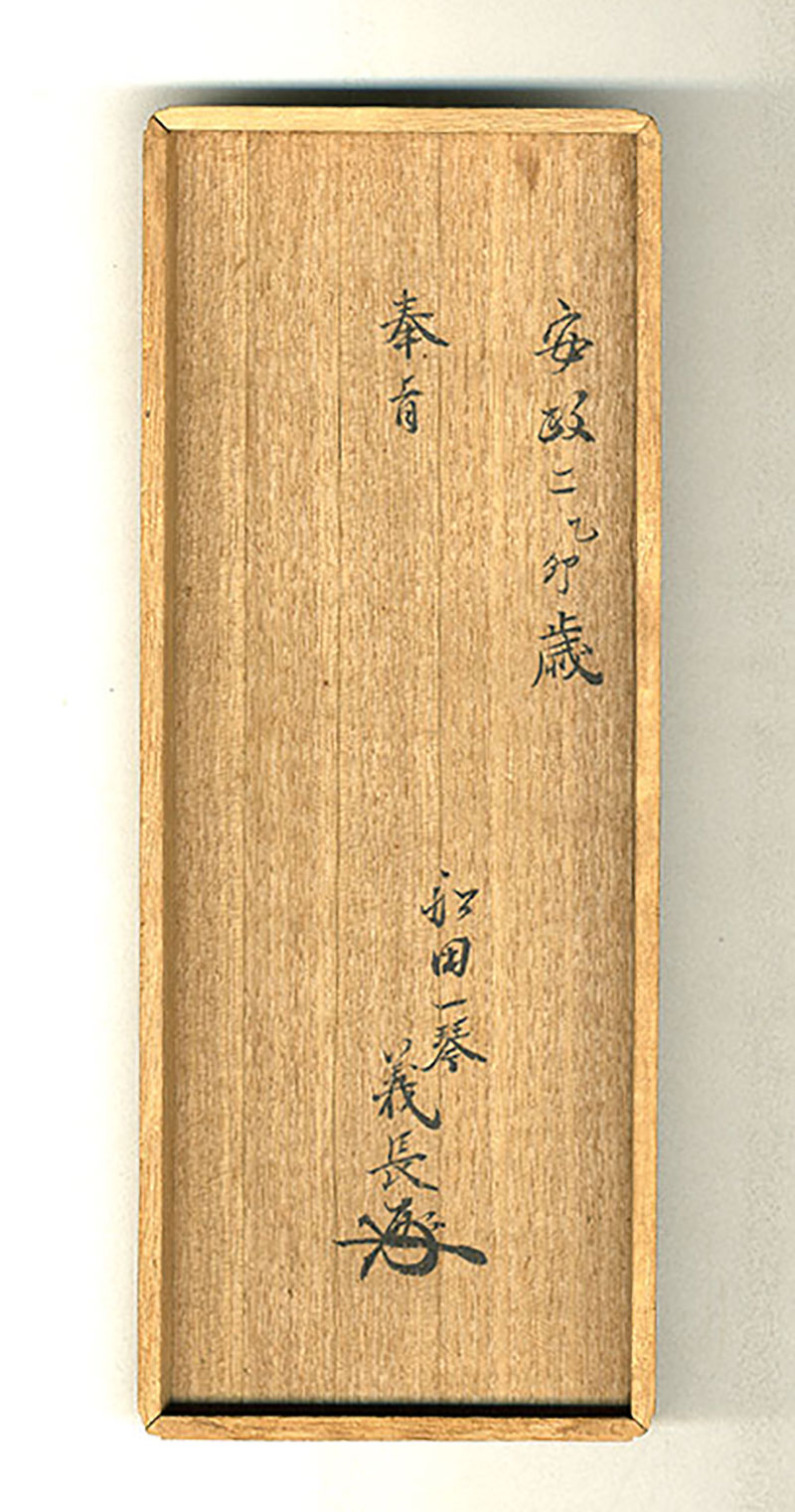
後藤一乗門下の鬼才、船田一琴義長作の三所物で、自署箱に安政二乙卯歳「奉旨」とあって藩主酒井家の命により製作したことが知られる。小柄は赤銅魚子地、雲形文を赤銅で薄肉彫にし、上に金文で這竜を据えており、笄は同じく赤銅で流水を薄肉彫にして、亀を金文高彫にして据えている。目貫は表が麟、裏が鳳で、この図柄は師一乗の作にも見られるところであるが、殆んど正別し難いまでの力作である。もと庄内酒井家伝来のものである。
 NihontoWatch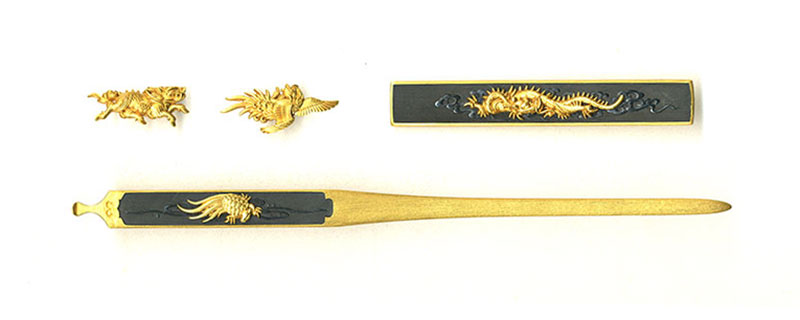
Ichijo Ikkin
Edo
Signed
Jūyō #18 (NBTHK)
Iebori · Dewa / Edo / Yamashiro
2 pieces on the market now
Funada Ikkin was born in Shonai in Dewa Province, the son of Funada Hirotsune, himself a pupil of Iwamoto Kanri. In Bunsei 9 (1826), at the age of fifteen, Ikkin went to Edo and studied under Kumagai Yoshiyuki before entering the school of Goto Ichijo in Bunsei 11 (1828), where he trained for seven years in Kyoto. He then returned to Edo, established himself independently, and became a retained artisan of the Sakai family of Shonai. He died in Bunkyu 3 (1863) at the age of fifty-two. The NBTHK consistently identifies him as "one of the foremost disciples" within the circle of Goto Ichijo, a position reinforced across multiple designations that place him at the summit of Ichijo's school.
Ikkin was highly proficient in both takabori and katakiribori, but it is in kosuki-bori that his reputation is singular: in this technique "he admitted no rival," and even his teacher Ichijo is said to have lamented that "kosuki-bori is beyond my own reach."[[c:3]] His work on shakudo ground -- whether nanako-ji or tsuchime-ji -- demonstrates precise control of depth and shallowness in the carving[[c:2]], and his application of gold and silver hira-zogan and iroe is repeatedly described as deft and accomplished. He favored traditional subjects of the Goto house, rendering the shikunshi (Four Gentlemen) and the crawling dragon -- a canonical okagei motif -- with an inventive, distinctive expression that nonetheless honors the lineage from which it springs.
The NBTHK's evaluations return consistently to a vocabulary of power tempered by refinement. His dragon sansho-mono is called "a dignified, forceful work in which Ikkin's vigor and commanding spirit are fully evident[[c:1]]," while his shikunshi sets are praised for "a clear, refined elegance." Of his kozuka depicting the Wago-shin, the assessment is direct: "a painstaking work demonstrating the highest level of skill among the disciples of Goto Ichijo[[c:4]]." The recurring judgment that his ability "comes very close to rivalling his master" places Funada Ikkin at the foremost rank of late Edo tosogu artists working within the Ichijo tradition.
Where Ikkin stands among comparable artisans: across all of nihontō, and within tradition, era, and period. The tiers (Foremost · Leading · Major · Notable) weigh official designations from the NBTHK and Japan's Agency for Cultural Affairs, together with historical honors of lasting repute such as the Sansaku and Meibutsu-chō.
Select a lens to see how it's measured.
Iebori · Kyoto
34 pieces on the market now
" Ichijo was the fifth-generation head of the Shichiroemon house, a cadet branch of the Goto family, and trained under Hanzaemon Kamejo before succeeding to the headship at fifteen. His imperial commissions -- fittings for Emperor Kokaku in 1824 and Emperor Komei in 1862 -- earned him the ranks of Hokyo and Hogen respectively, and his atelier in Kyoto attracted a circle of gifted disciples who extended his aesthetic into the Bakumatsu and early Meiji periods. Among them, the celebrated "Five Tigers" (Goko) -- Funada Ikkin, Imai Nagatake, Hashimoto Isshi, Nakagawa Issho, and Wada Isshin -- together with the master's younger brother Goto Koran, constituted one of the most prolific and technically accomplished workshops in the history of Japanese tosogu production. The collective technical identity of the Ichijo school rests upon a foundation of shakudo nanako-ji of surpassing fineness -- described as "minute and orderly, deep and limpid," meriting the appellation kinume-nanako -- upon which elaborate pictorial compositions are built through takabori enriched by polychrome iroe employing gold, silver, shakudo, shibuichi, and suaka. Ichijo himself established the artistic direction by shifting from the canonical iebori subjects of dragons and lions toward compositions centered on close observation (shasei), rendering grasses, flowers, insects, birds, and landscapes with meticulous carving and refined dignity. This painterly sensibility pervades the entire school. Nagatake brought a distinctive ornamental density, arranging seasonal plants across entire surfaces with richly varied colored metals.
" Ikkin developed an unrivaled command of kosuki-bori -- a bold, thick chiseling technique that even Ichijo conceded was "beyond my own reach[[c:1]]" -- and his dragon subjects carried a distinctive forcefulness. " Isshin absorbed the hereditary vocabulary while concentrating creative zeal into individual passages of invention, and Issho achieved works of luxurious, courtly elegance through refined kinu-nanako and precise kebori. Koran, working in a manner akin to his elder brother yet "finished with an even more delicate and nuanced sensibility," brought the Shichiroemon branch to its most accomplished expression. Across the school, the favored tsuba form is the sumi-iri mokko-gata, and many works exhibit chuya shitate -- "day-and-night" construction using contrasting alloys on obverse and reverse. Complete daisho soroe kanagu sets, coordinated around seasonal, auspicious, or literary-historical themes, represent the school's highest format. " This standard was transmitted faithfully through the circle. " The school's productions are consistently praised for an elevated, Kyoto-inflected refinement that balances splendor and restraint in just measure. Learn more →
| Smith | Era | Designated |
|---|---|---|
| Goto Ichijo後藤一乗 | — | 91 |
| Tomei東明 | — | 31 |
| Nagatake永武 | — | 14 |
| Ikkin一琴 | — | 11 |
| Issho一匠 | 1828-1876 | 10 |
A blade of top-grade workmanship and condition, formally judged to rank with a nationally recognized Important Art Object (Jūyō Bijutsuhin). Awarded only at the NBTHK’s competitive annual examination.
Of Japan’s roughly 2.5 million registered swords, only 12,357 (about 1 in 202) have ever attained Jūyō.
The NBTHK (Nihon Bijutsu Tōken Hozon Kyōkai, the Society for the Preservation of Japanese Art Swords) is a public-interest incorporated foundation founded in 1948 and supervised by Japan’s Agency for Cultural Affairs (Bunkachō); it is based at the Japanese Sword Museum in Tokyo. Its expert panels physically examine each submitted work (shinsa) and issue a certificate (kanteishō) ranking it by artistic and historical merit. NBTHK papers are the most widely recognized standard of authentication for Japanese swords and fittings.
NBTHK official siteCustomer-initiated returns accepted within two days of arrival; return shipping paid by customer and fees non-refundable. Returns/refunds unavailable for overseas deliveries.