The twentieth century nearly killed the craft twice: wartime distortion, then the occupation ban. The NBTHK’s founding in 1948 and licensed forging from 1953 rebuilt the sword as an art, crowned by Living National Treasures and the mukansa rank.
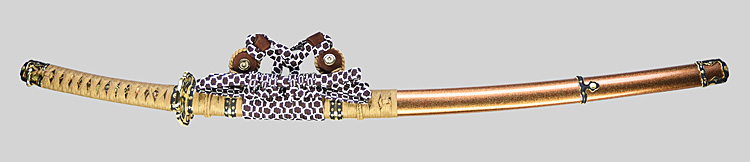
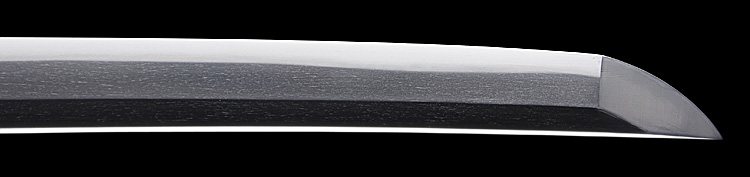
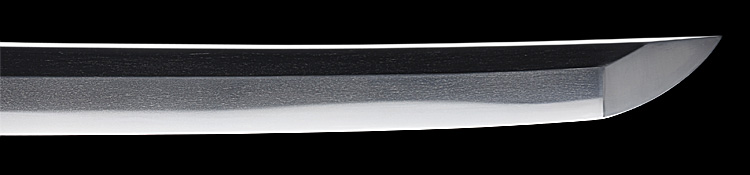
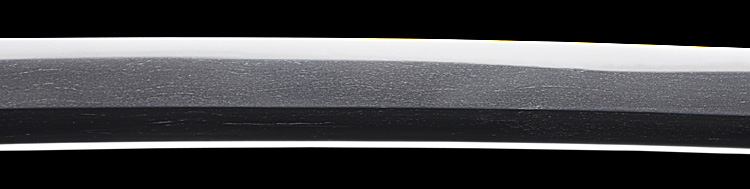
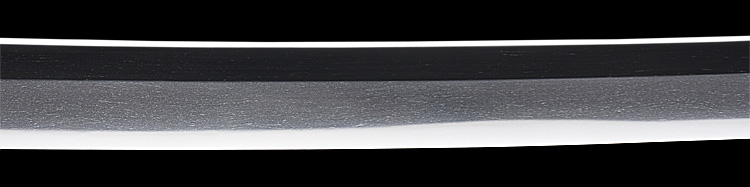
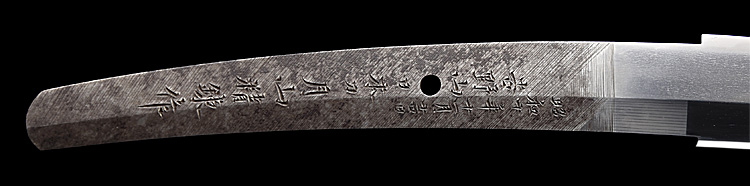
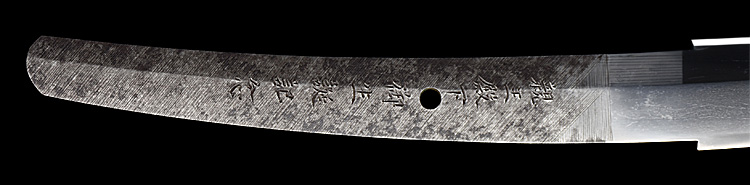
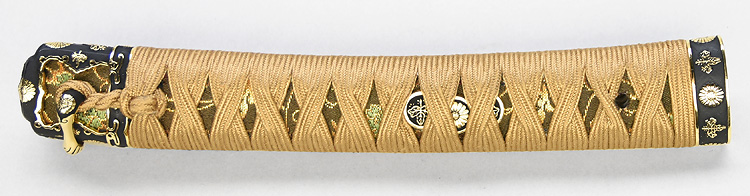
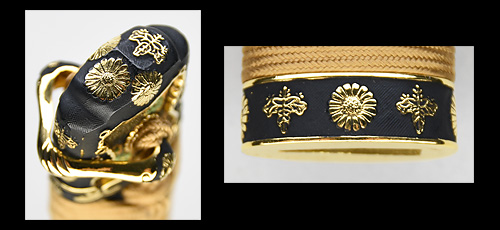
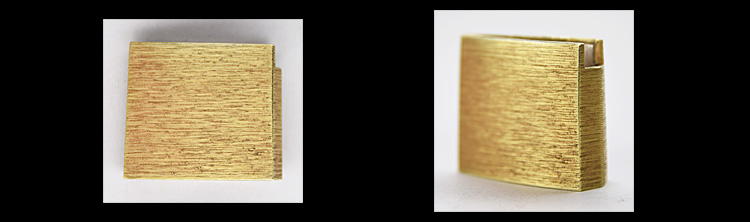
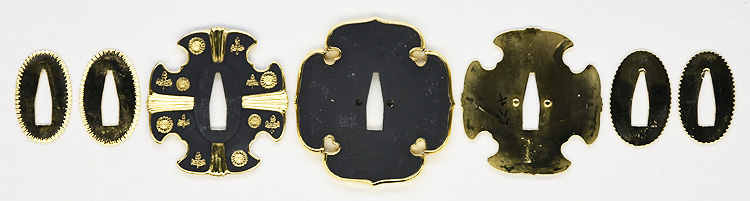
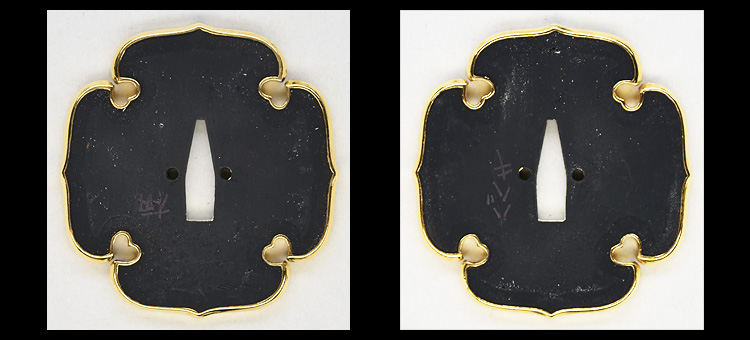
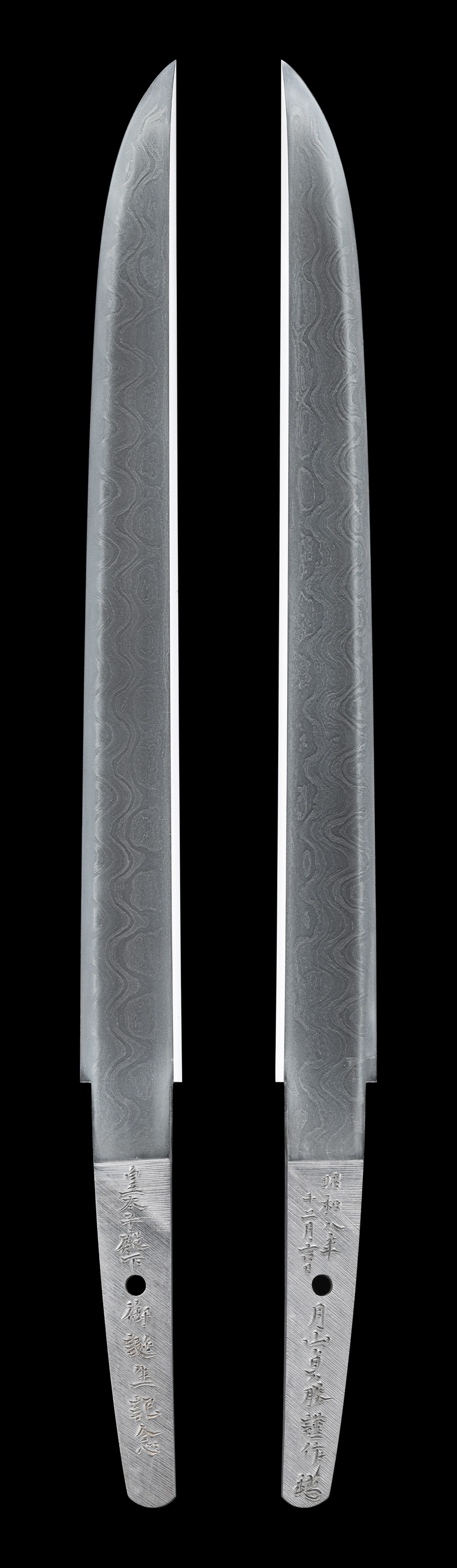
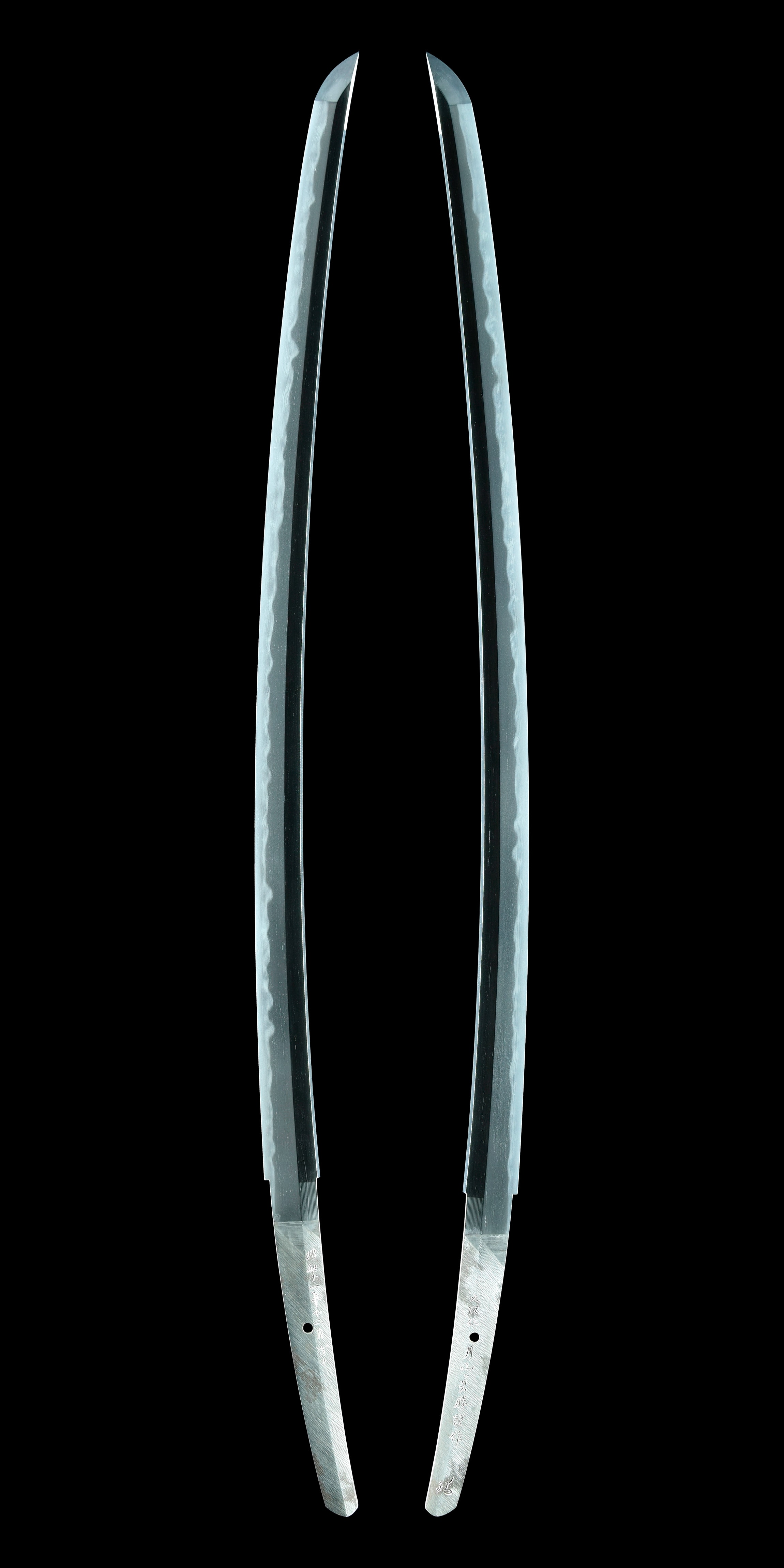
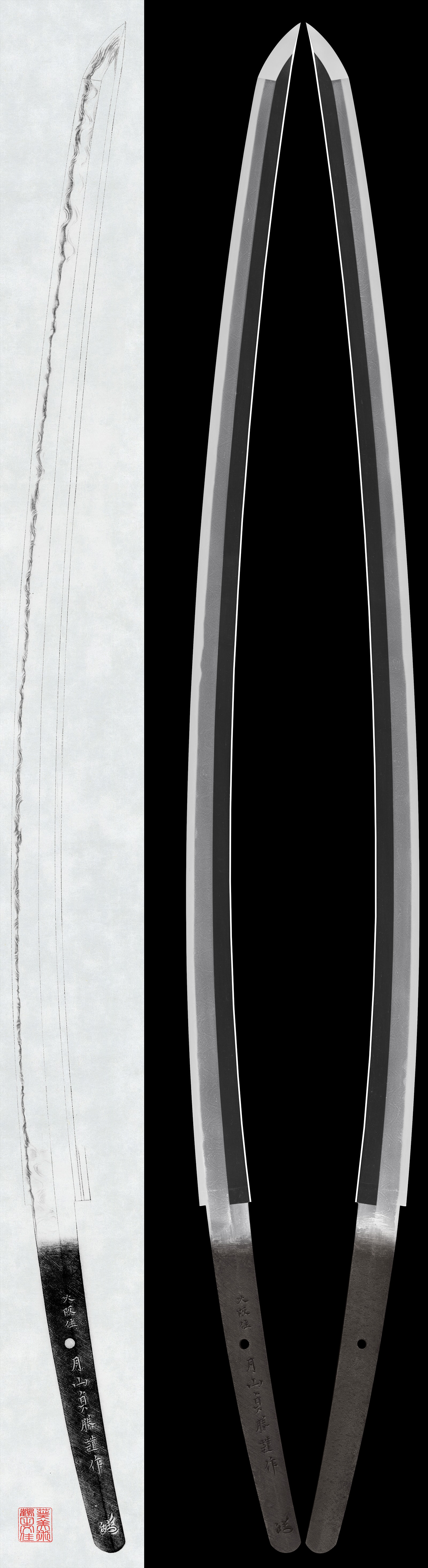
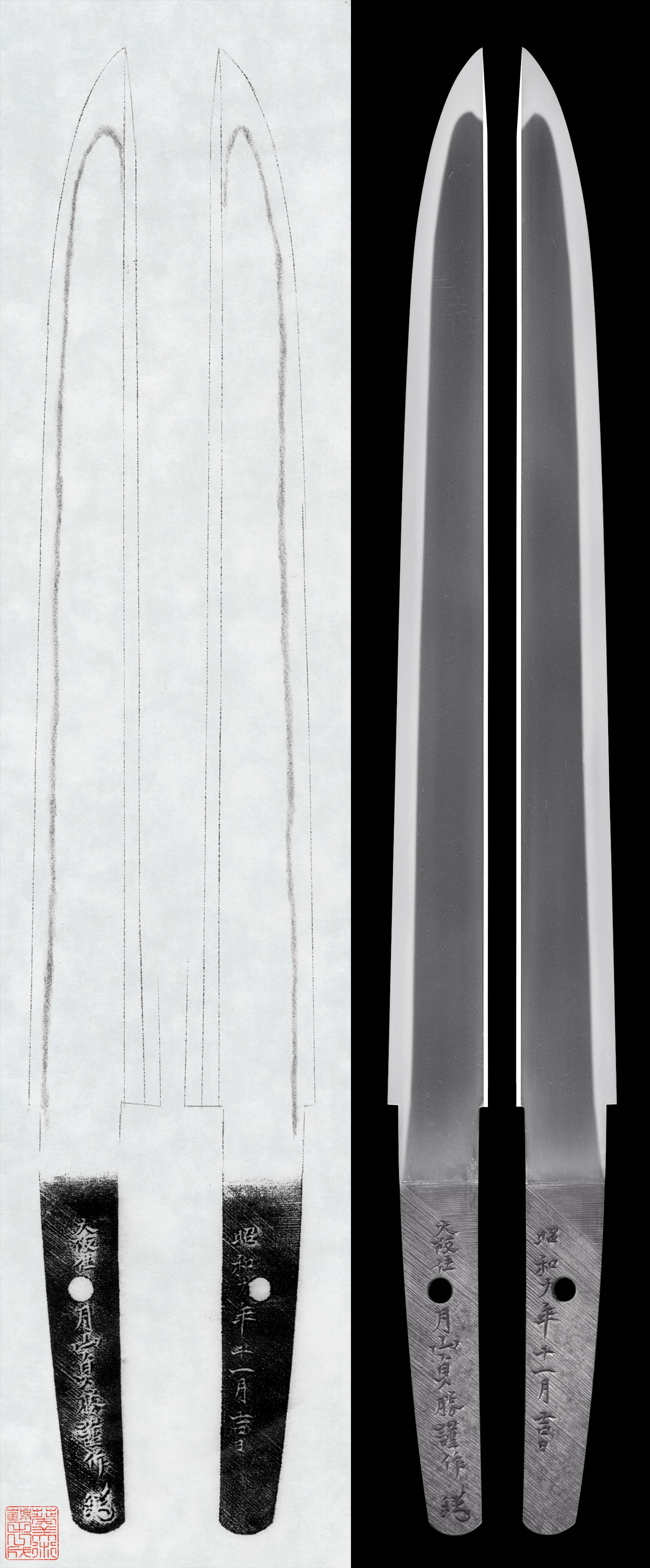
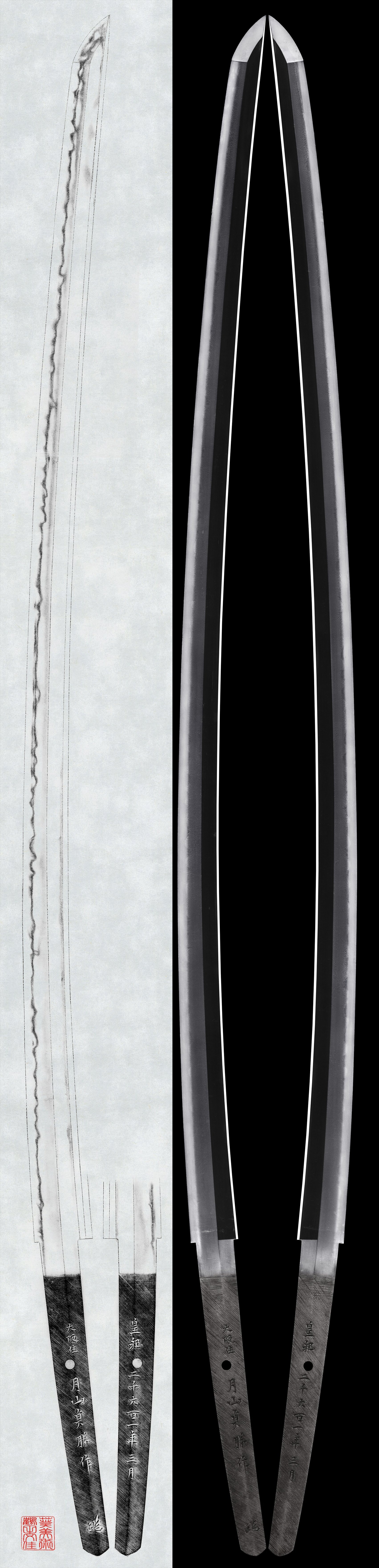
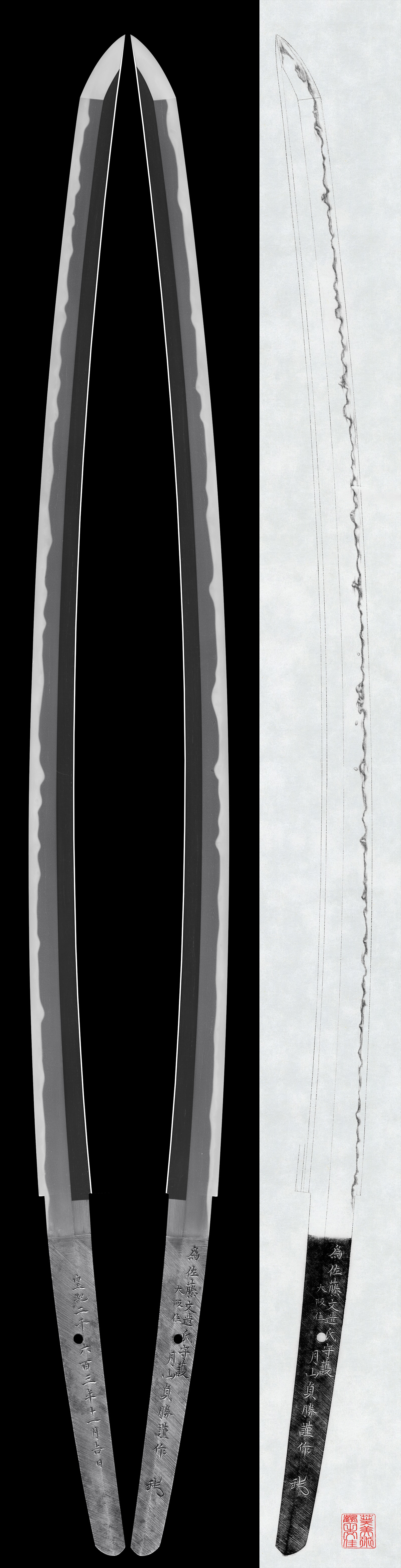
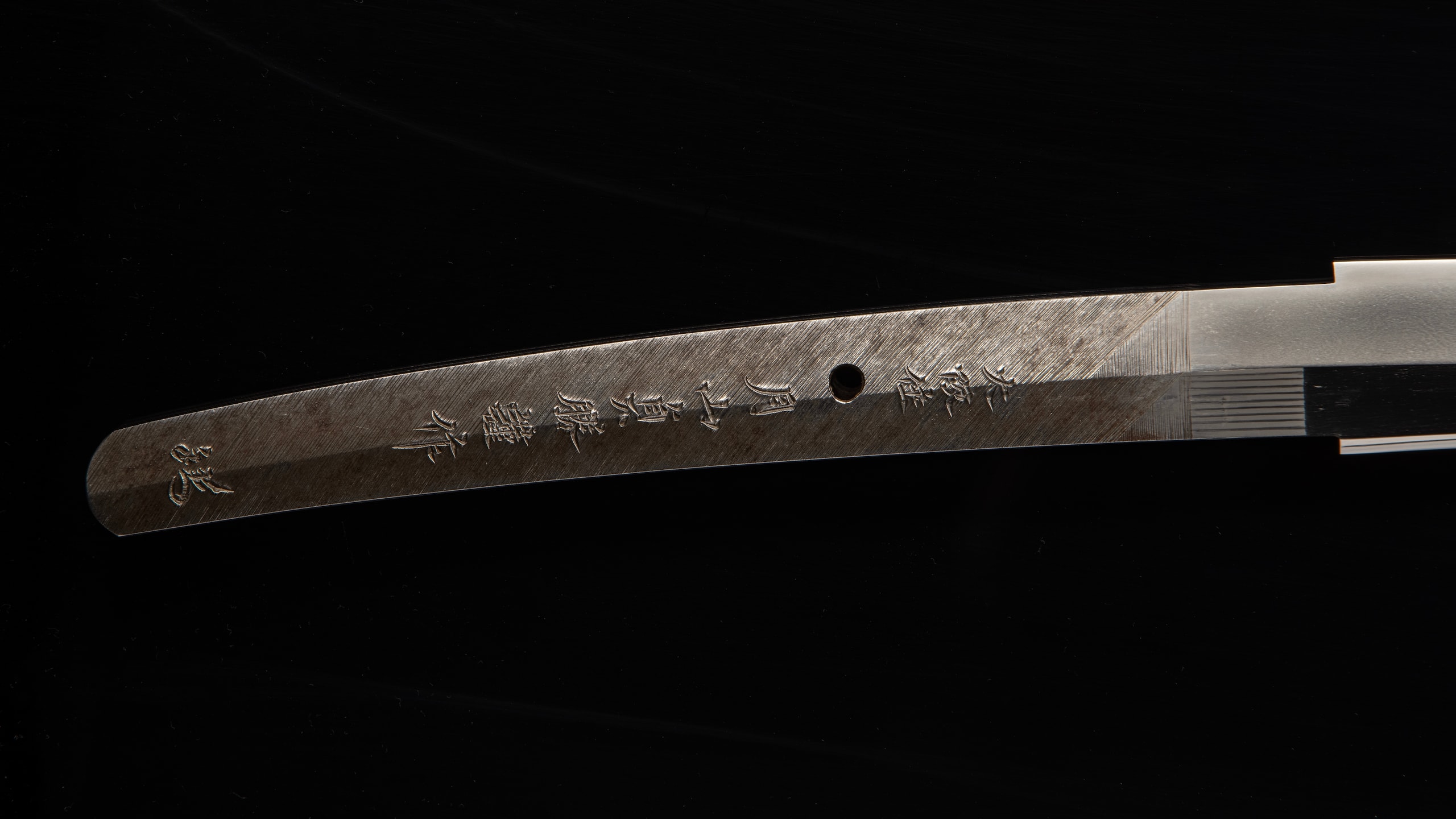
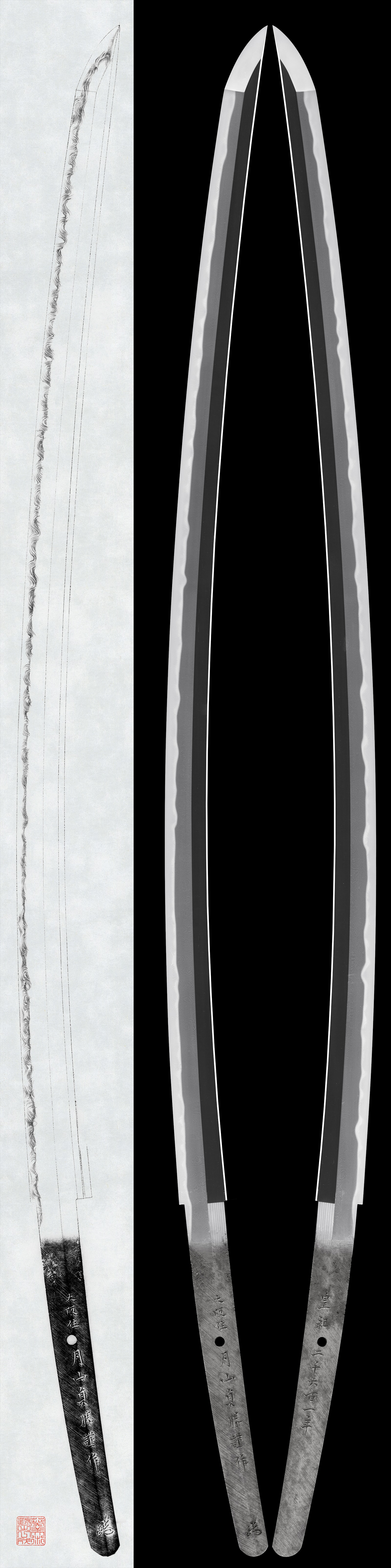
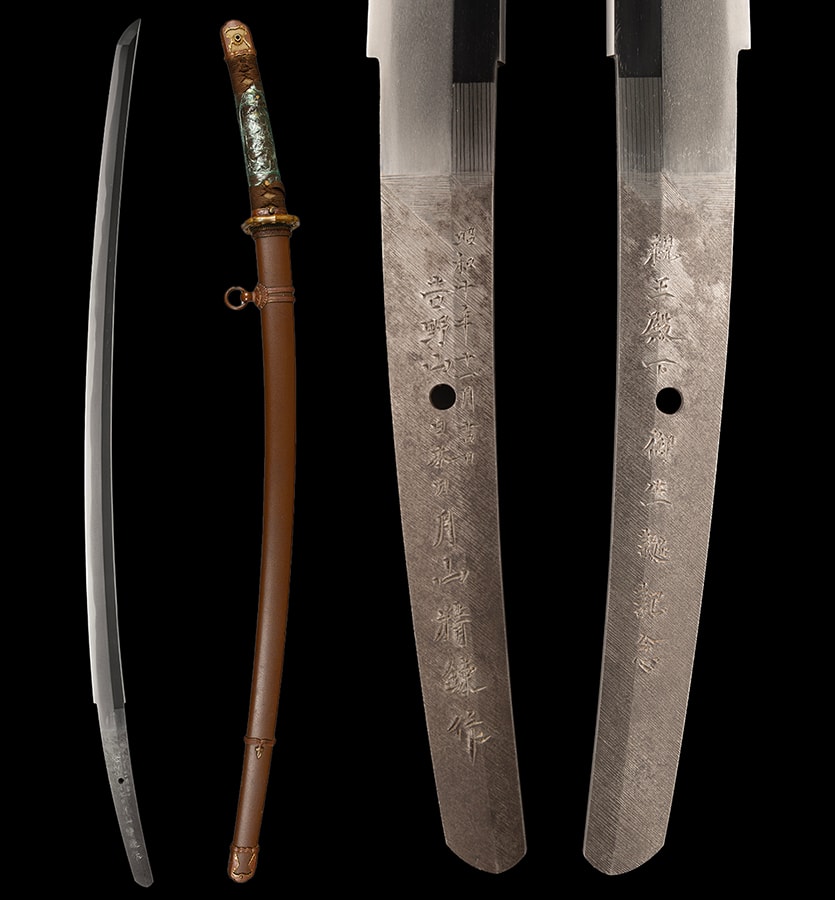
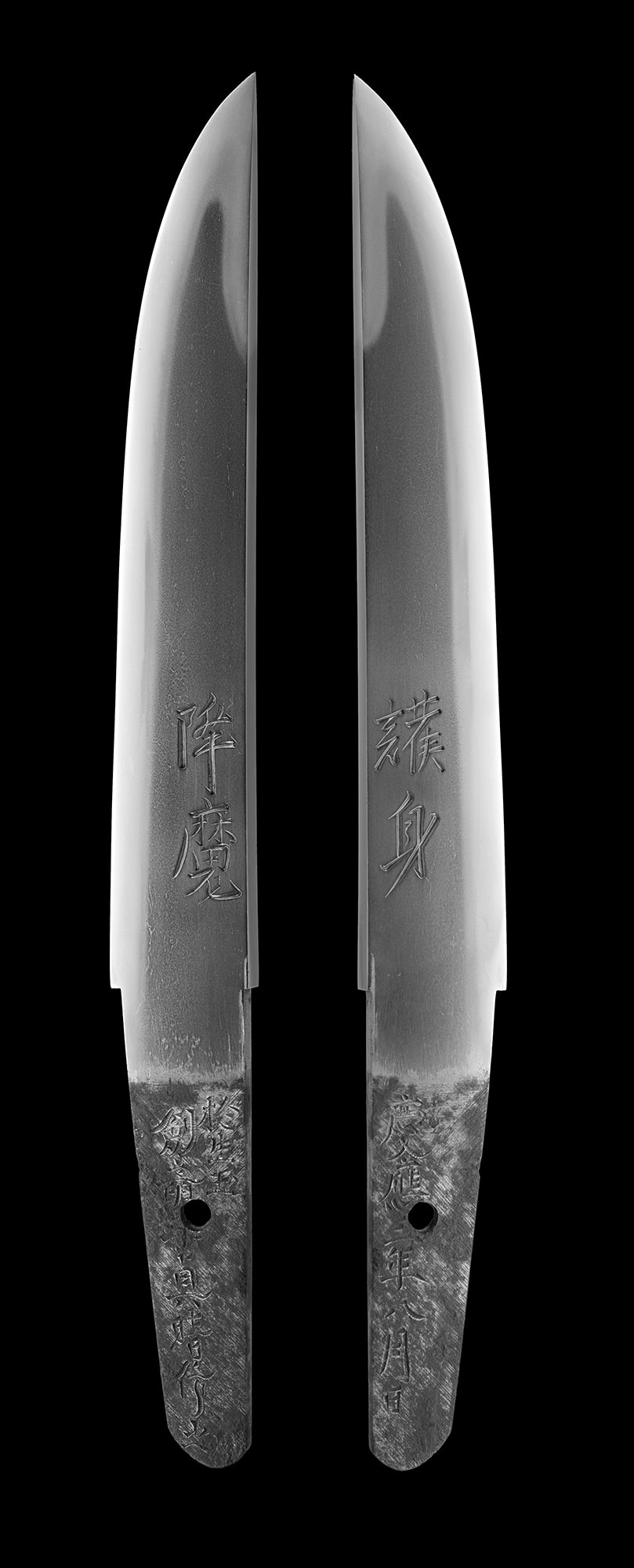
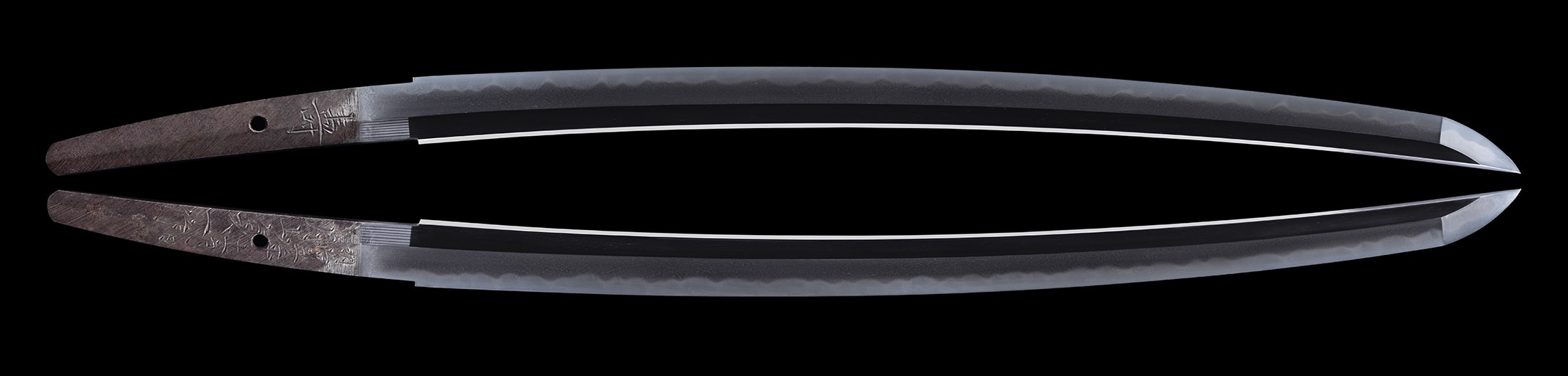
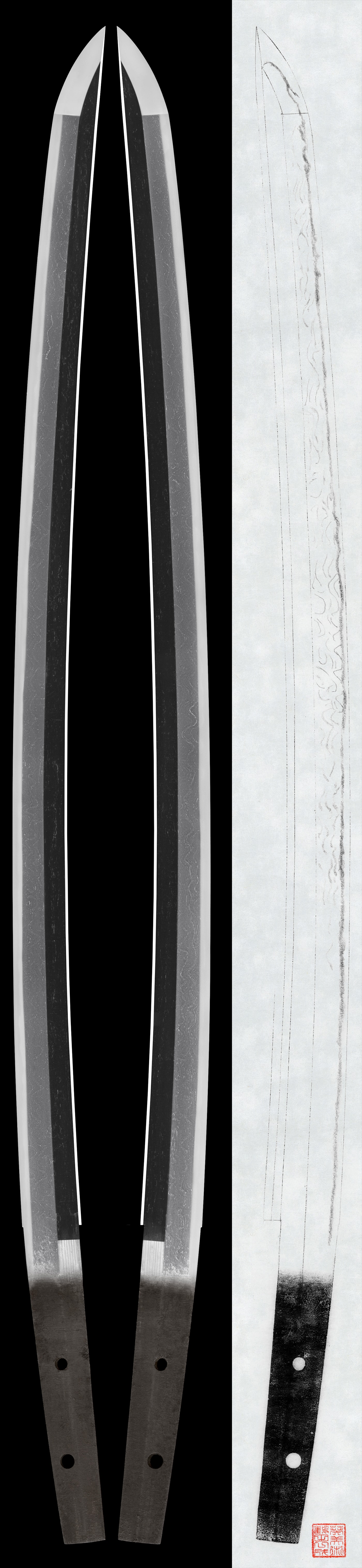
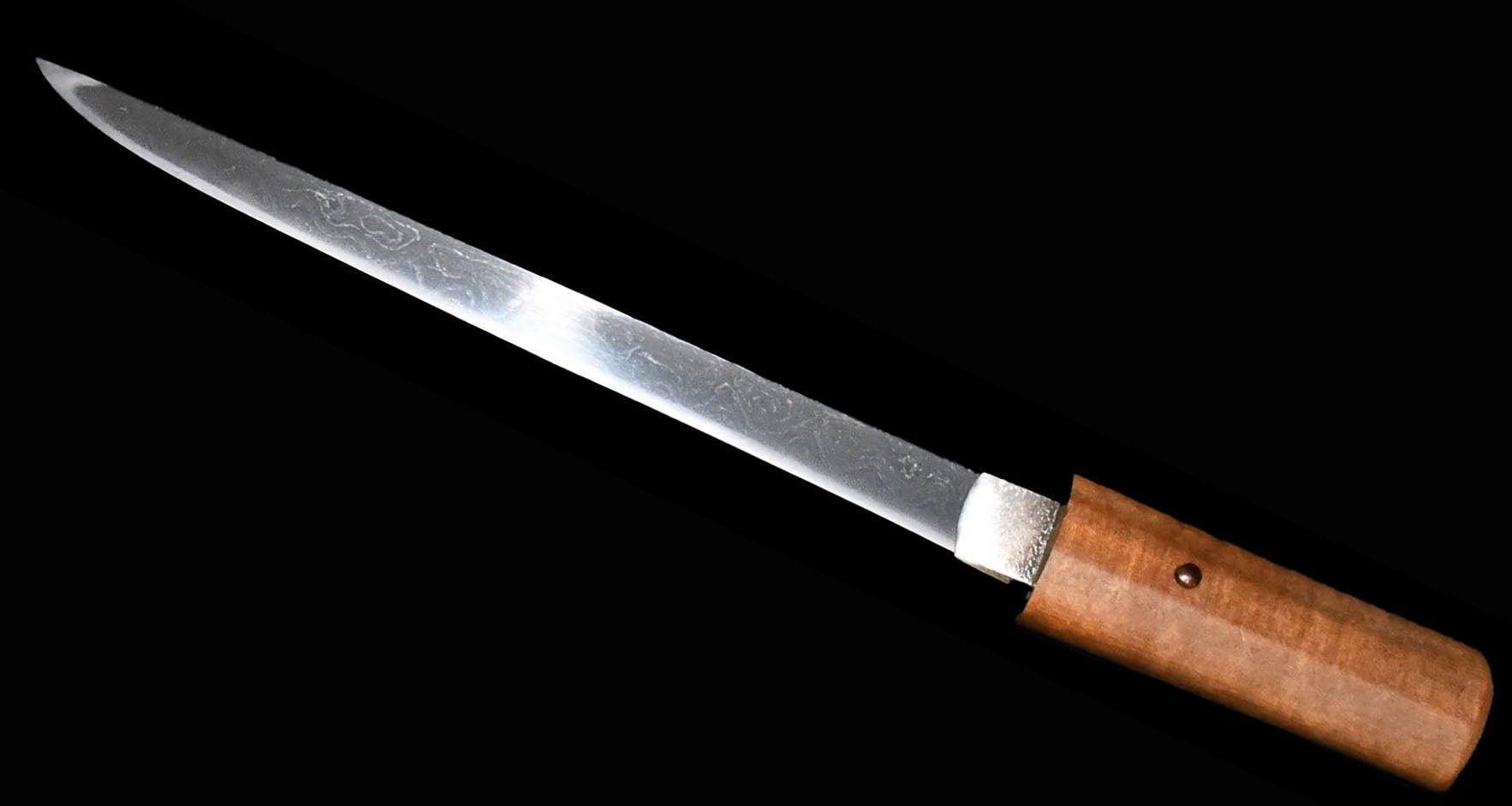
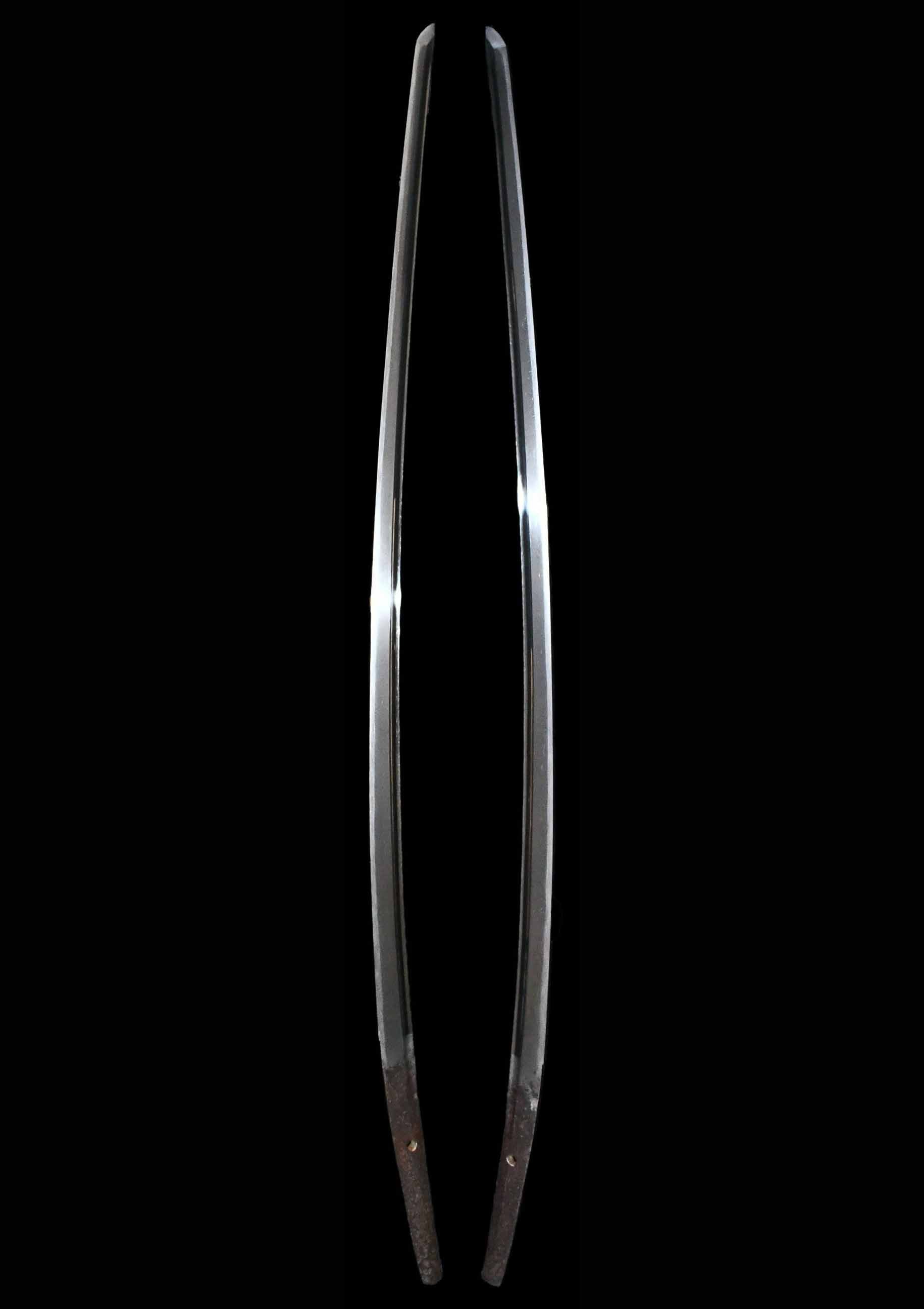
This katana was made by Gassan Sadakatsu in November of Showa 10 (1935) in Yoshinoyama, Osaka, commemorating the birth of a Prince (Prince Hitachi). It features a hon-zukuri mitsumune construction with an ubu-nakago, a tight masame-hada with thick ji-nie and fine chikei. The hamon is chu-suguha based with gunome and pointed sections, a soft nioiguchi with abundant ko-nie, ko-ashi, yo, and active kinsuji and sunagashi. It comes with a modern kin-nashiji itomaki tachi koshirae and is certified Tokubetsu Hozon by the NBTHK.
 NihontoWatch
mei · Gassan · Showa · nagasa 68.2cm · sori 1.8cm


Shinshinto · Osaka · around 1926-1989
Fujishiro Jo saku · Tōken Taikan top 60%
13 pieces on the market now
Shinshinto · Settsu
41 pieces on the market now
| Smith | Era | Designated |
|---|---|---|
| Sadaharu貞晴 | 1865-1868 | 0 |
| Sadayoshi貞吉 | 1926-1989 | 0 |
| Yoshiaki吉明 | 1844-1848 | 0 |
| Naonobu直信 | 1854-1860 | 0 |
| Sadayoshi貞吉 | 1830-1863 | 0 |
The twentieth century nearly killed the craft twice: wartime distortion, then the occupation ban. The NBTHK’s founding in 1948 and licensed forging from 1953 rebuilt the sword as an art, crowned by Living National Treasures and the mukansa rank.
A Hozon-certified blade judged to show notably superior workmanship and a better state of preservation. The bar is higher: re-tempered blades and most unsigned Muromachi/Edo works are excluded.
The NBTHK (Nihon Bijutsu Tōken Hozon Kyōkai, the Society for the Preservation of Japanese Art Swords) is a public-interest incorporated foundation founded in 1948 and supervised by Japan’s Agency for Cultural Affairs (Bunkachō); it is based at the Japanese Sword Museum in Tokyo. Its expert panels physically examine each submitted work (shinsa) and issue a certificate (kanteishō) ranking it by artistic and historical merit. NBTHK papers are the most widely recognized standard of authentication for Japanese swords and fittings.
NBTHK official siteWithin one week of the item's arrival (cooling-off is possible within Japan only). For defects that differ from the purchase conditions, we will accept the return and refund the payment. For other cases such as overseas, we will consult separately.
This katana was made by Gassan Sadakatsu in November of Showa 10 (1935) in Yoshinoyama, Osaka, commemorating the birth of a Prince (Prince Hitachi). It features a hon-zukuri mitsumune construction with an ubu-nakago, a tight masame-hada with thick ji-nie and fine chikei. The hamon is chu-suguha based with gunome and pointed sections, a soft nioiguchi with abundant ko-nie, ko-ashi, yo, and active kinsuji and sunagashi. It comes with a modern kin-nashiji itomaki tachi koshirae and is certified Tokubetsu Hozon by the NBTHK.
NihontoWatchmei · Gassan · Showa · nagasa 68.2cm · sori 1.8cm
Shinshinto · Osaka · around 1926-1989
Fujishiro Jo saku · Tōken Taikan top 60%
13 pieces on the market now
Shinshinto · Settsu
41 pieces on the market now
| Smith | Era | Designated |
|---|---|---|
| Sadaharu貞晴 | 1865-1868 | 0 |
| Sadayoshi貞吉 | 1926-1989 | 0 |
| Yoshiaki吉明 | 1844-1848 | 0 |
| Naonobu直信 | 1854-1860 | 0 |
| Sadayoshi貞吉 | 1830-1863 | 0 |
The twentieth century nearly killed the craft twice: wartime distortion, then the occupation ban. The NBTHK’s founding in 1948 and licensed forging from 1953 rebuilt the sword as an art, crowned by Living National Treasures and the mukansa rank.
A Hozon-certified blade judged to show notably superior workmanship and a better state of preservation. The bar is higher: re-tempered blades and most unsigned Muromachi/Edo works are excluded.
The NBTHK (Nihon Bijutsu Tōken Hozon Kyōkai, the Society for the Preservation of Japanese Art Swords) is a public-interest incorporated foundation founded in 1948 and supervised by Japan’s Agency for Cultural Affairs (Bunkachō); it is based at the Japanese Sword Museum in Tokyo. Its expert panels physically examine each submitted work (shinsa) and issue a certificate (kanteishō) ranking it by artistic and historical merit. NBTHK papers are the most widely recognized standard of authentication for Japanese swords and fittings.
NBTHK official siteWithin one week of the item's arrival (cooling-off is possible within Japan only). For defects that differ from the purchase conditions, we will accept the return and refund the payment. For other cases such as overseas, we will consult separately.

















![Tanto - Hozon - by Gassan Sadayoshi - Fuyou Asahi, Ansei Hebidoshi 8gatsuhi (Attributed to Gassan Sadayoshi) [NBTHK Hozon]](/_next/image?url=https%3A%2F%2Fitbhfhyptogxcjbjfzwx.supabase.co%2Fstorage%2Fv1%2Fobject%2Fpublic%2Flisting-images%2Ftoyuukai%2FL519985%2F02.jpg&w=2560&q=90)