The curved, ridged tachi took its classic form in the Heian provinces while the court refined its culture in the capital. Its patrons were the military nobility whose feuds ended in the Genpei War, and whose blades became heirlooms almost at once.
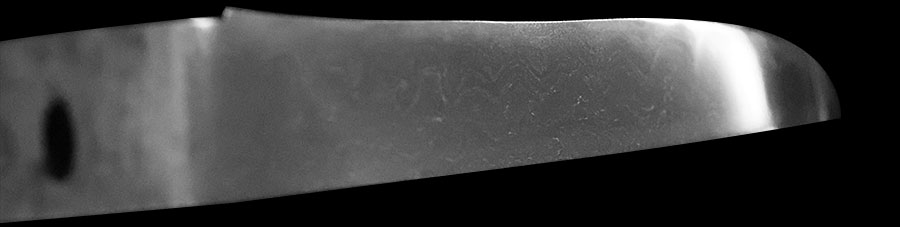
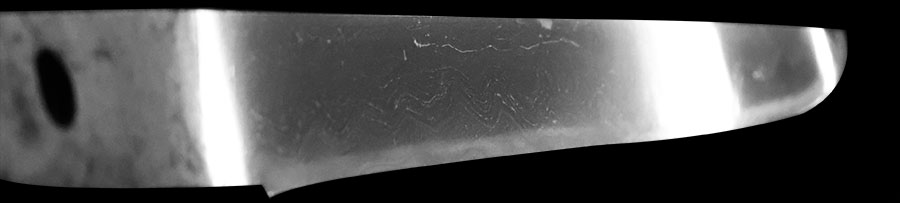
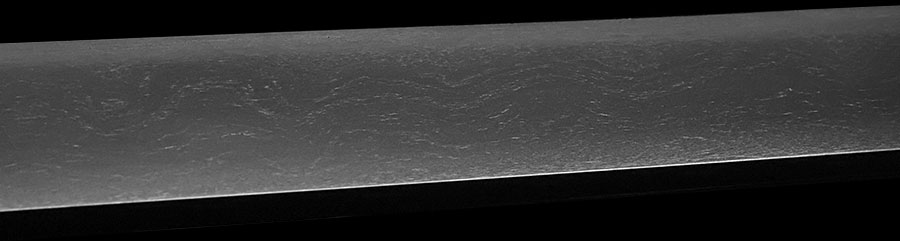
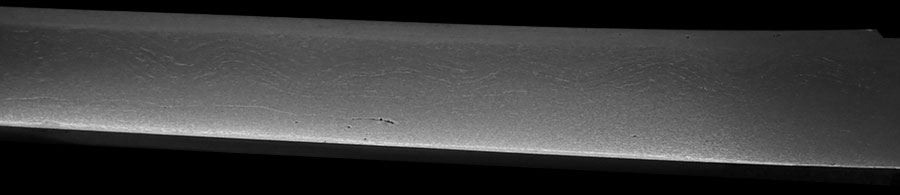
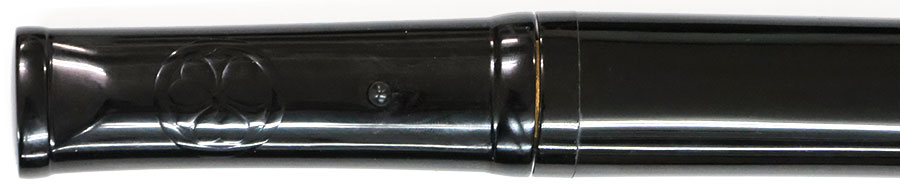
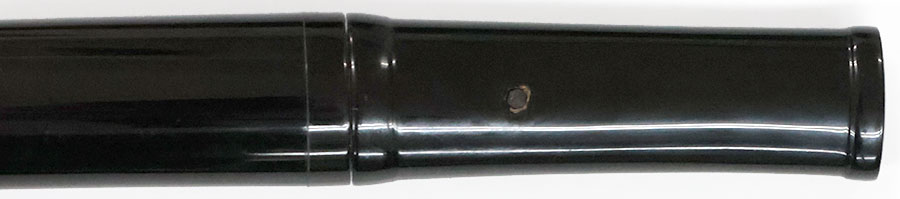
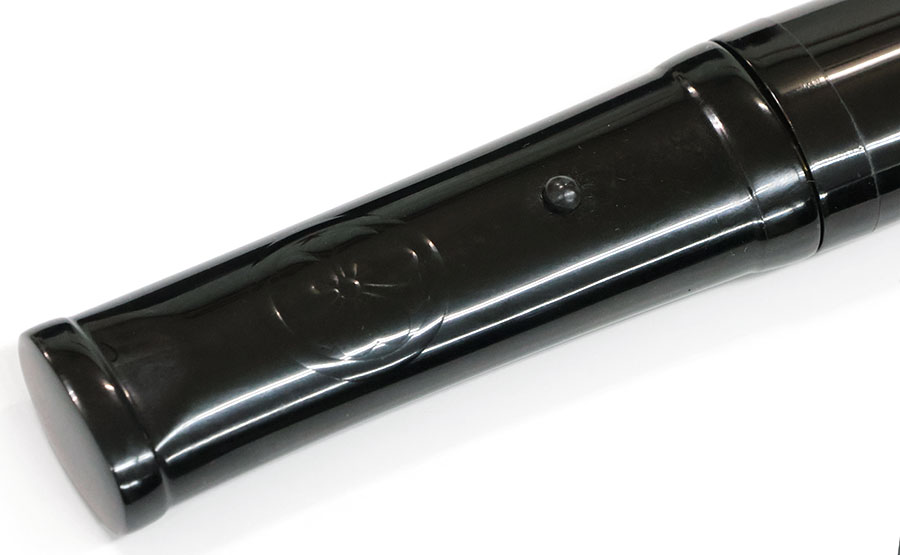
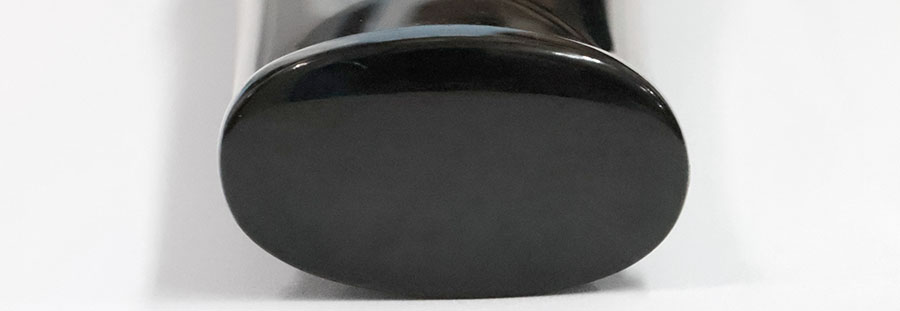
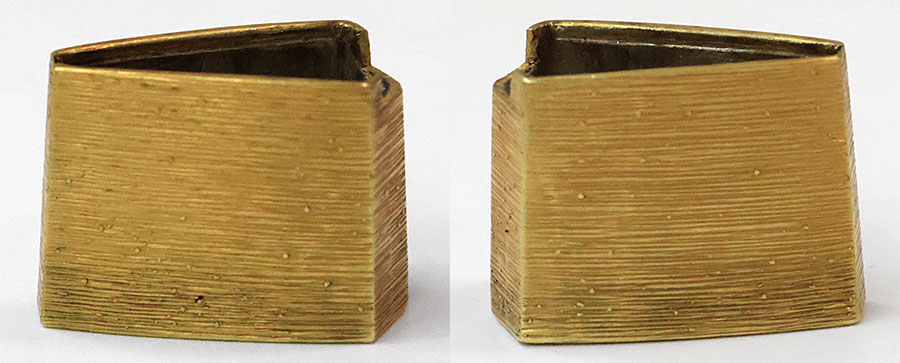
It’s here, it’s here! A precious *tango* of *Ko-Gassan* from over 500 years ago, featuring the *ayasugi-hada* that everyone loves, has arrived. Looking at the origins of the *Gassan* school, names like Onio-maru, Yukitsune, and Gan-u-maru appear as far back as the Heian period, but unfortunately, no extant works by them remain. As one of the lineages starting from the early dawn of the Japanese sword, the *Gassan* of Dewa in Oshu is exceedingly famous. This *tanto* is an old example among extant *Gassan* works, dating to around the 14th year of Bunmei (circa 1482) in the Muromachi period (544 years ago)—exactly the time when Ashikaga Yoshimasa established Ginkaku-ji in Higashiyama. It is a precious *tanto* from an old era just as the *Gassan* smiths, centered around Mount Gassan of the Dewa Sanzan (Yamagata Prefecture), were beginning to flourish. As eras changed and time passed, pressured by swords from Honshu and subject to wear and tear, works of *Ko-Gassan* have become extremely rare. The *mune* of this *tanto* is *shin-no-mune*, with a thick *moto-kasane* and a difference between the *moto-mihaba* and *saki-mihaba*. It presents a healthy *tanto-sugata* with no *sori*. The *jigane* displays the typical, unique *Gassan ayasugi-hada*; the *ayasugi-hada* resembles large standing waves that interact with the *hamon*. The *hamon* is a *ko-nie* based *ko-gunome-ba* entwined with the *ayasugi*, making it a truly superior and precious *tanto*. The *koshirae*, a *kuro-ro aikuchi koshirae*, adds further elegance to this *Gassan tanto*. Please enjoy this precious *Ko-Gassan tanto*, which serves as the foundation for the six generations—Gassan Sadayoshi, Gassan Sadakazu, Gassan Sadakatsu, Gassan Sadakazu, Gassan Sadatoshi, and Gassan Sadanobu—who, as descendants of Oshu Gassan at the end of the Edo period, became disciples of Suishinshi Masahide and established the Osaka Gassan line. On this occasion, we received this from an old family who said, "We have grown old, so please pass this on at a low price to someone who will cherish it," and thus we are offering it at a special bargain price. Please enjoy this precious *Gassan tanto* with its magnificent *ayasugi-hada*.
Heian · nagasa 19cm


Wakimono · Dewa
52 pieces on the market now
Mount Gassan rises among the Dewa Sanzan, the three sacred peaks of northern Japan bound to the mountain asceticism of Shugendō, and the swordsmiths who took the mountain's name worked in its shadow in Ōshū, Dewa Province. The setsumei record that smiths signing "Gassan" are noted in the Kanchiin-bon Meizukushi as early as the Heian period, and the lineage's oldest surviving signed blade is a tachi simply signed Gassan, kept at the Gassan Shrine and judged to date from the late Nanbokuchō to early Muromachi period. Around that same early Nanbokuchō moment the corpus places Gassan Nagamitsu, whose signed tachi answers to the "Ushū Gassan group, around the Ryakuō era" recorded in the Meikan, and Shōgun, a Nanbokuchō hand sometimes identified with Gunshō, dated Genchū 3 (1386). A later branch is carried by Gassan Chikanori, working into the mid and late Muromachi (an ubu wakizashi dated Eishō 9, 1512). The line was revived in Osaka in the closing Tokugawa and Meiji years by Gassan Sadayoshi and his adopted son Gassan Sadakazu, who endured the Haitōrei edict and was appointed Teishitsu Gigei-in (Artist to the Imperial Household) in Meiji 39; his own adopted son Gassan Sadaichi continued the title into Taishō. The forging is the school's signature. " Over the itame base the grain flows (nagare) and tends to stand; ji-nie adheres and chikei enter, and the northern steel takes a dark, metal-like (kana-iro) hue read as Ōshū temperament.
The temper of the old line is a suguha whose nioiguchi is shizumi (subdued), at times mixed with gunome and ko-midare and softened toward urumi, the bōshi turning back in ko-maru. Departures within the corpus mark the lineage's range: Chikanori's late work can drop the ayasugi entirely and absorb Sue-Bizen and Osafune manners, while the Osaka revival smiths command itame with thick ji-nie, flamboyant nie-laden midare, kinsuji, and sunagashi in a full Sōshū idiom, and both Sadakazu and Sadaichi added meticulous horimono, from Bishamonten kurikara to taki kaen Fudō and dragon carvings carved by the same hand that forged the blade. For recognition the setsumei point first to the wave-grain ayasugi and the subdued, often slightly urumi northern nioiguchi, and where these recede, to the dark steel and standing grain that still betray an Ōshū hand. Signed examples of the old line are described as extremely rare, which raises the documentary weight of Nagamitsu's tachi and Shōgun's dated tantō. Provenance threads through the school's own sanctuary: the founding tachi and an Important Art Object tachi both reside at the Dewa Sanzan and Gassan Shrines. The Osaka revival is anchored in the Imperial collection, where Sadaichi tantō signed Teishitsu Gigeiin survive, alongside a Sadakazu wakizashi made on commission for Prince Kuni. Across six centuries the setsumei track a single mountain workshop, from the subdued ayasugi of the Dewa founders through a Muromachi offshoot that turned toward Bizen, to the Imperial-rank carvers of Osaka who reproduced the old wave-grain while mastering the wider traditions. Learn more →
| Smith | Era | Designated |
|---|---|---|
| Naonori直則 | 1830-1844 | 0 |
| Toshiyasu俊安 | 1504-1521 | 0 |
| Nagahisa長久 | 1334-1338 | 0 |
| Kiyoyasu清安 | 1532-1555 | 0 |
| Tomosada友定 | 1532-1555 | 0 |
The curved, ridged tachi took its classic form in the Heian provinces while the court refined its culture in the capital. Its patrons were the military nobility whose feuds ended in the Genpei War, and whose blades became heirlooms almost at once.
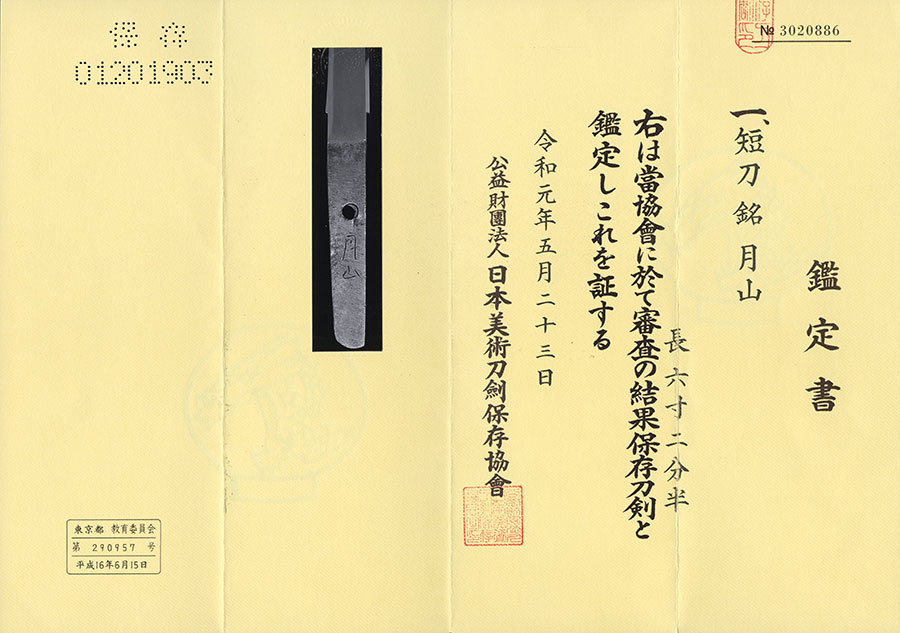
Certifies a genuine blade worth preserving: a signature confirmed correct, or, if unsigned, an era, province, and school that the NBTHK can reliably identify.
The NBTHK (Nihon Bijutsu Tōken Hozon Kyōkai, the Society for the Preservation of Japanese Art Swords) is a public-interest incorporated foundation founded in 1948 and supervised by Japan’s Agency for Cultural Affairs (Bunkachō); it is based at the Japanese Sword Museum in Tokyo. Its expert panels physically examine each submitted work (shinsa) and issue a certificate (kanteishō) ranking it by artistic and historical merit. NBTHK papers are the most widely recognized standard of authentication for Japanese swords and fittings.
NBTHK official siteFor returns due to customer circumstances, the cost is the customer's responsibility. For returns due to our mis-shipment or a defective item, we bear the cost.
It’s here, it’s here! A precious *tango* of *Ko-Gassan* from over 500 years ago, featuring the *ayasugi-hada* that everyone loves, has arrived. Looking at the origins of the *Gassan* school, names like Onio-maru, Yukitsune, and Gan-u-maru appear as far back as the Heian period, but unfortunately, no extant works by them remain. As one of the lineages starting from the early dawn of the Japanese sword, the *Gassan* of Dewa in Oshu is exceedingly famous. This *tanto* is an old example among extant *Gassan* works, dating to around the 14th year of Bunmei (circa 1482) in the Muromachi period (544 years ago)—exactly the time when Ashikaga Yoshimasa established Ginkaku-ji in Higashiyama. It is a precious *tanto* from an old era just as the *Gassan* smiths, centered around Mount Gassan of the Dewa Sanzan (Yamagata Prefecture), were beginning to flourish. As eras changed and time passed, pressured by swords from Honshu and subject to wear and tear, works of *Ko-Gassan* have become extremely rare. The *mune* of this *tanto* is *shin-no-mune*, with a thick *moto-kasane* and a difference between the *moto-mihaba* and *saki-mihaba*. It presents a healthy *tanto-sugata* with no *sori*. The *jigane* displays the typical, unique *Gassan ayasugi-hada*; the *ayasugi-hada* resembles large standing waves that interact with the *hamon*. The *hamon* is a *ko-nie* based *ko-gunome-ba* entwined with the *ayasugi*, making it a truly superior and precious *tanto*. The *koshirae*, a *kuro-ro aikuchi koshirae*, adds further elegance to this *Gassan tanto*. Please enjoy this precious *Ko-Gassan tanto*, which serves as the foundation for the six generations—Gassan Sadayoshi, Gassan Sadakazu, Gassan Sadakatsu, Gassan Sadakazu, Gassan Sadatoshi, and Gassan Sadanobu—who, as descendants of Oshu Gassan at the end of the Edo period, became disciples of Suishinshi Masahide and established the Osaka Gassan line. On this occasion, we received this from an old family who said, "We have grown old, so please pass this on at a low price to someone who will cherish it," and thus we are offering it at a special bargain price. Please enjoy this precious *Gassan tanto* with its magnificent *ayasugi-hada*.
Heian · nagasa 19cm


Wakimono · Dewa
52 pieces on the market now
Mount Gassan rises among the Dewa Sanzan, the three sacred peaks of northern Japan bound to the mountain asceticism of Shugendō, and the swordsmiths who took the mountain's name worked in its shadow in Ōshū, Dewa Province. The setsumei record that smiths signing "Gassan" are noted in the Kanchiin-bon Meizukushi as early as the Heian period, and the lineage's oldest surviving signed blade is a tachi simply signed Gassan, kept at the Gassan Shrine and judged to date from the late Nanbokuchō to early Muromachi period. Around that same early Nanbokuchō moment the corpus places Gassan Nagamitsu, whose signed tachi answers to the "Ushū Gassan group, around the Ryakuō era" recorded in the Meikan, and Shōgun, a Nanbokuchō hand sometimes identified with Gunshō, dated Genchū 3 (1386). A later branch is carried by Gassan Chikanori, working into the mid and late Muromachi (an ubu wakizashi dated Eishō 9, 1512). The line was revived in Osaka in the closing Tokugawa and Meiji years by Gassan Sadayoshi and his adopted son Gassan Sadakazu, who endured the Haitōrei edict and was appointed Teishitsu Gigei-in (Artist to the Imperial Household) in Meiji 39; his own adopted son Gassan Sadaichi continued the title into Taishō. The forging is the school's signature. " Over the itame base the grain flows (nagare) and tends to stand; ji-nie adheres and chikei enter, and the northern steel takes a dark, metal-like (kana-iro) hue read as Ōshū temperament.
The temper of the old line is a suguha whose nioiguchi is shizumi (subdued), at times mixed with gunome and ko-midare and softened toward urumi, the bōshi turning back in ko-maru. Departures within the corpus mark the lineage's range: Chikanori's late work can drop the ayasugi entirely and absorb Sue-Bizen and Osafune manners, while the Osaka revival smiths command itame with thick ji-nie, flamboyant nie-laden midare, kinsuji, and sunagashi in a full Sōshū idiom, and both Sadakazu and Sadaichi added meticulous horimono, from Bishamonten kurikara to taki kaen Fudō and dragon carvings carved by the same hand that forged the blade. For recognition the setsumei point first to the wave-grain ayasugi and the subdued, often slightly urumi northern nioiguchi, and where these recede, to the dark steel and standing grain that still betray an Ōshū hand. Signed examples of the old line are described as extremely rare, which raises the documentary weight of Nagamitsu's tachi and Shōgun's dated tantō. Provenance threads through the school's own sanctuary: the founding tachi and an Important Art Object tachi both reside at the Dewa Sanzan and Gassan Shrines. The Osaka revival is anchored in the Imperial collection, where Sadaichi tantō signed Teishitsu Gigeiin survive, alongside a Sadakazu wakizashi made on commission for Prince Kuni. Across six centuries the setsumei track a single mountain workshop, from the subdued ayasugi of the Dewa founders through a Muromachi offshoot that turned toward Bizen, to the Imperial-rank carvers of Osaka who reproduced the old wave-grain while mastering the wider traditions. Learn more →
| Smith | Era | Designated |
|---|---|---|
| Naonori直則 | 1830-1844 | 0 |
| Toshiyasu俊安 | 1504-1521 | 0 |
| Nagahisa長久 | 1334-1338 | 0 |
| Kiyoyasu清安 | 1532-1555 | 0 |
| Tomosada友定 | 1532-1555 | 0 |
The curved, ridged tachi took its classic form in the Heian provinces while the court refined its culture in the capital. Its patrons were the military nobility whose feuds ended in the Genpei War, and whose blades became heirlooms almost at once.
Certifies a genuine blade worth preserving: a signature confirmed correct, or, if unsigned, an era, province, and school that the NBTHK can reliably identify.
The NBTHK (Nihon Bijutsu Tōken Hozon Kyōkai, the Society for the Preservation of Japanese Art Swords) is a public-interest incorporated foundation founded in 1948 and supervised by Japan’s Agency for Cultural Affairs (Bunkachō); it is based at the Japanese Sword Museum in Tokyo. Its expert panels physically examine each submitted work (shinsa) and issue a certificate (kanteishō) ranking it by artistic and historical merit. NBTHK papers are the most widely recognized standard of authentication for Japanese swords and fittings.
NBTHK official siteFor returns due to customer circumstances, the cost is the customer's responsibility. For returns due to our mis-shipment or a defective item, we bear the cost.