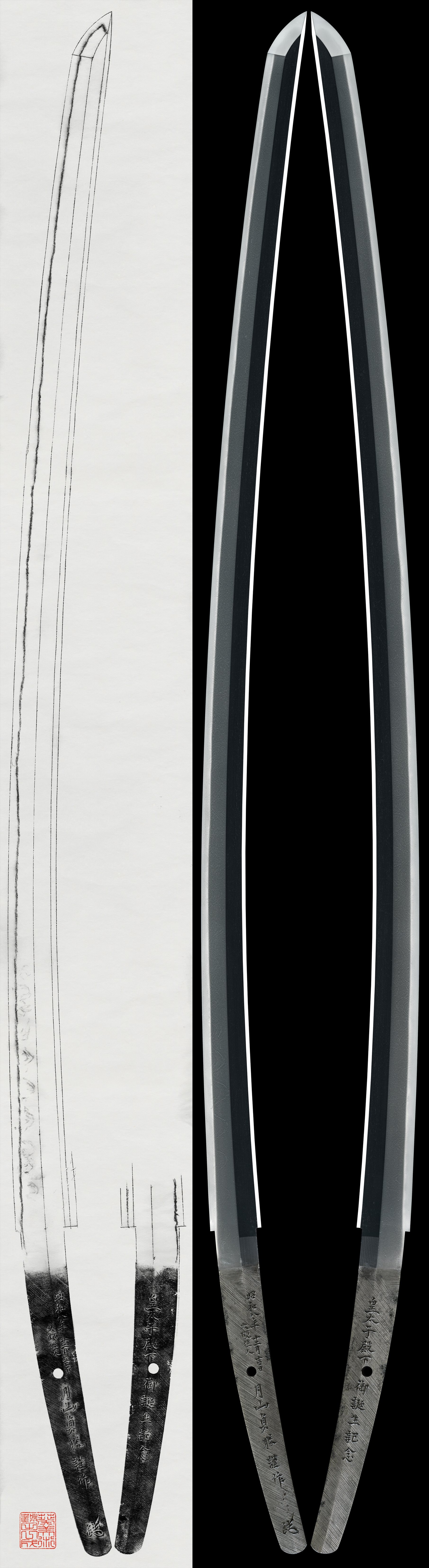
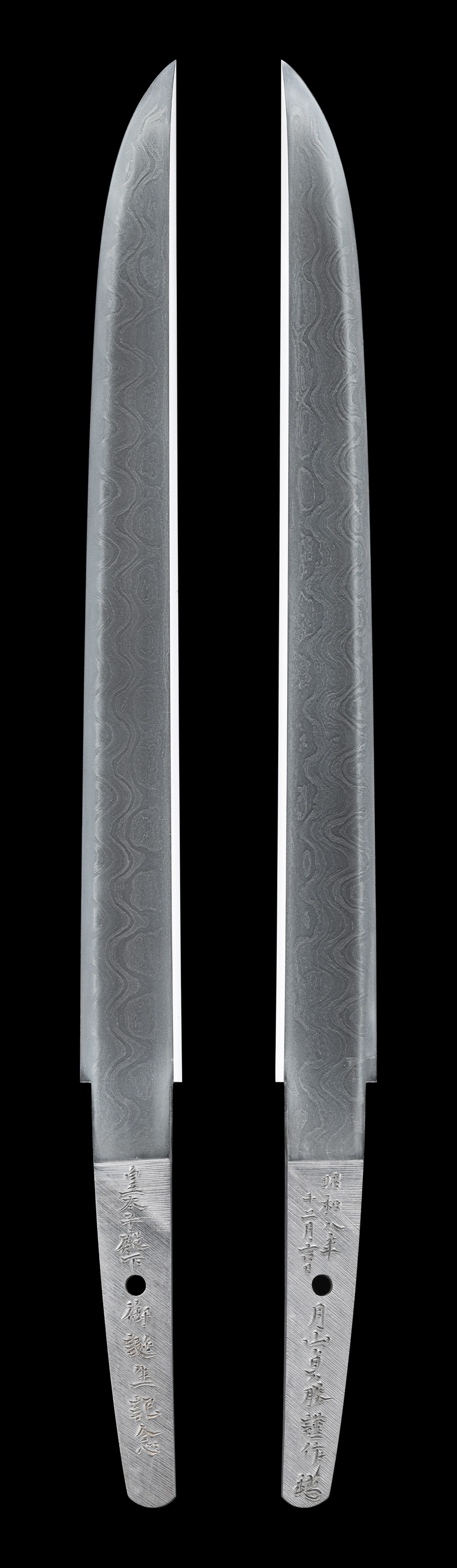
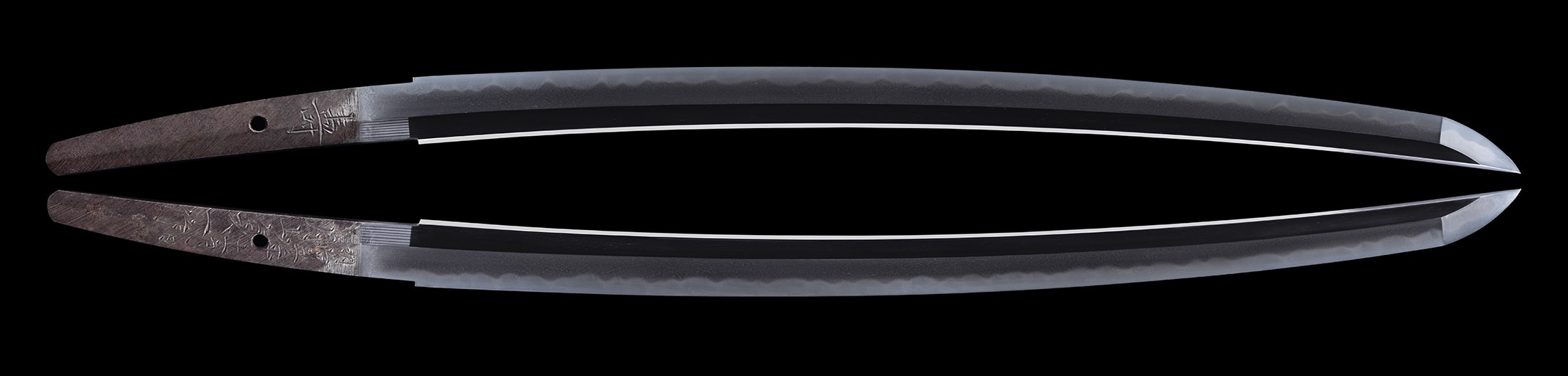
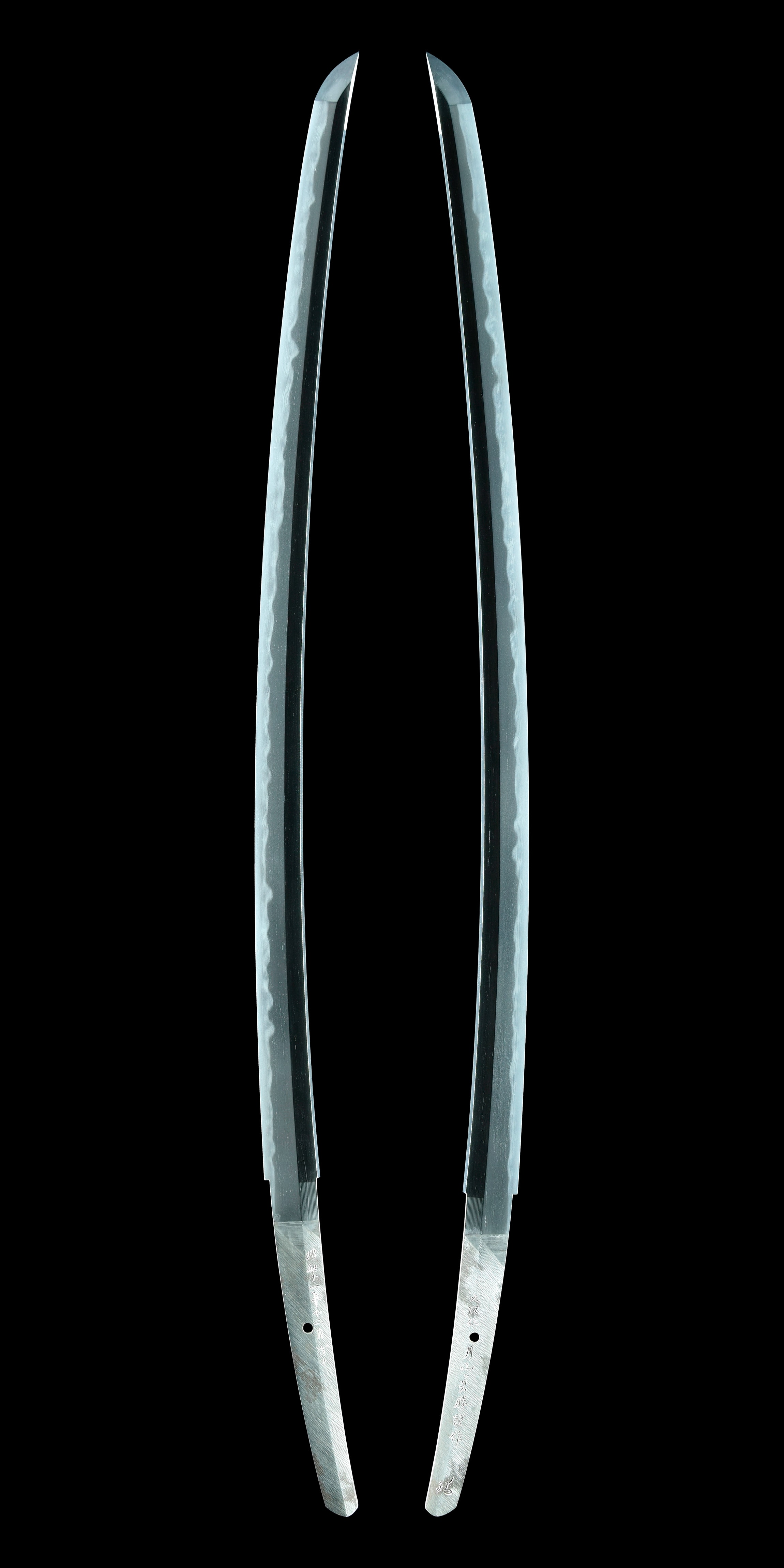
Sadayoshi belonged to the school founded by in the early period -- a lineage that broke decisively from the classical Kyushu manner of workmanship to establish a new style rooted in the - tradition. Sadayoshi is traditionally regarded as the son of Yasuyoshi, himself a son of , placing him among the accomplished second-generation disciples collectively termed Sue-. Sword reference works situate his activity around the Bunwa era (1352-1356). Extant signed works are exceedingly few, and the great majority of blades attributed to him are and , identified through careful appraisal of their workmanship. Among the group's many talented smiths -- Yasuyoshi, Yukihiro, Yoshisada, Kunihiro, Hiroyuki, and Hiroyasu -- Sadayoshi is distinguished by his preference for a comparatively calm, -based approach to tempering, a quality that has long served as the principal criterion for attributions to his hand.
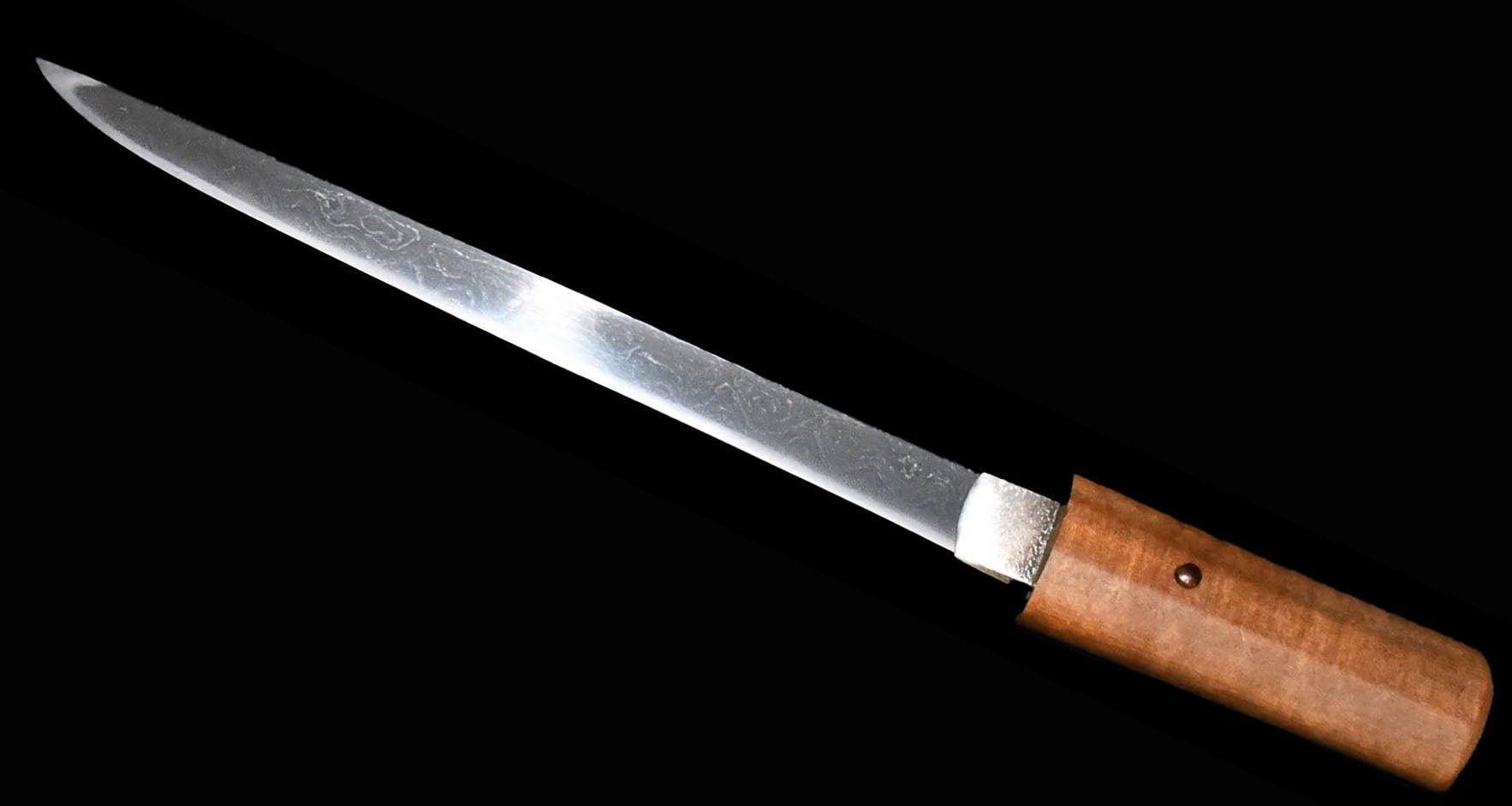
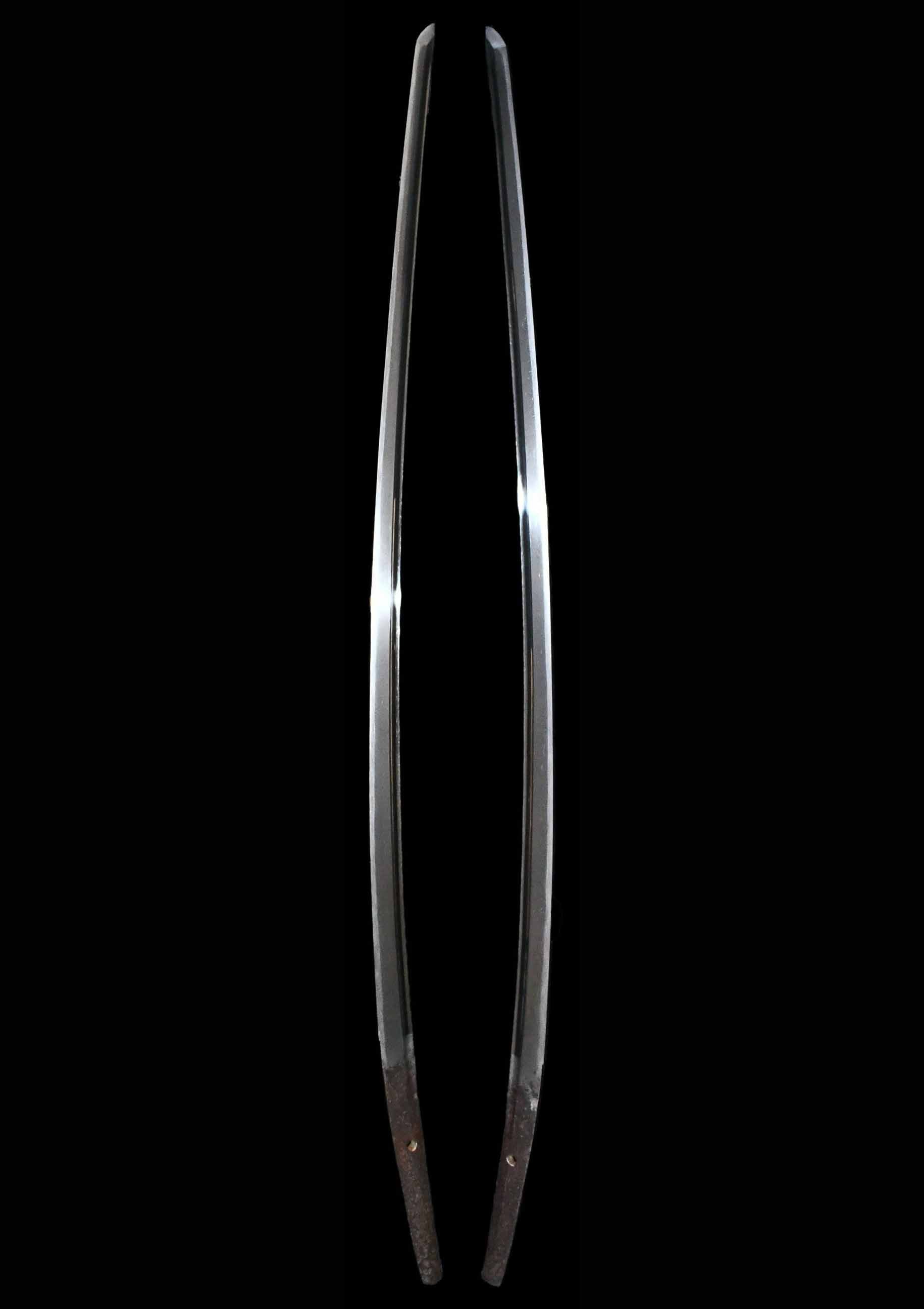
His blades characteristically present the bold, imposing of the period: wide with little taper between base and tip, shallow , and extended or , reflecting the Enbun-Joji style of the mid-fourteenth century. The forging shows mixed with , , and , with the grain often standing out and thickly adhering interwoven with fine . The steel tends toward a slightly blackish or dark tone with scattered -like textures. His , while fundamentally -based, takes on a gentle undulation, mixing , , and occasional -like elements; and enter well, the is deep, and thick adheres -- sometimes becoming uneven with coarser intermixed. Along the , , uchi-noke, -like effects, and small appear, while and run conspicuously throughout. The is perhaps his most recognizable feature: characteristically rising with a -like thrust, becoming sharply pointed, and turning back with vigorous -- a trait shared across the lineage but particularly pronounced in his work.
Across his twenty designated blades, this combination of commanding -period form with a restrained yet powerfully -laden temper creates works of considerable force and dignity. Several examples bear construction, attesting to the martial utility these blades once served, while one preserves a cutting inscription and a red-lacquer reading "" on the tang. The consistency of his approach -- broad , bright , profuse internal activities, and that distinctive pointed -- renders his hand identifiable even among the many accomplished smiths of this prolific school.