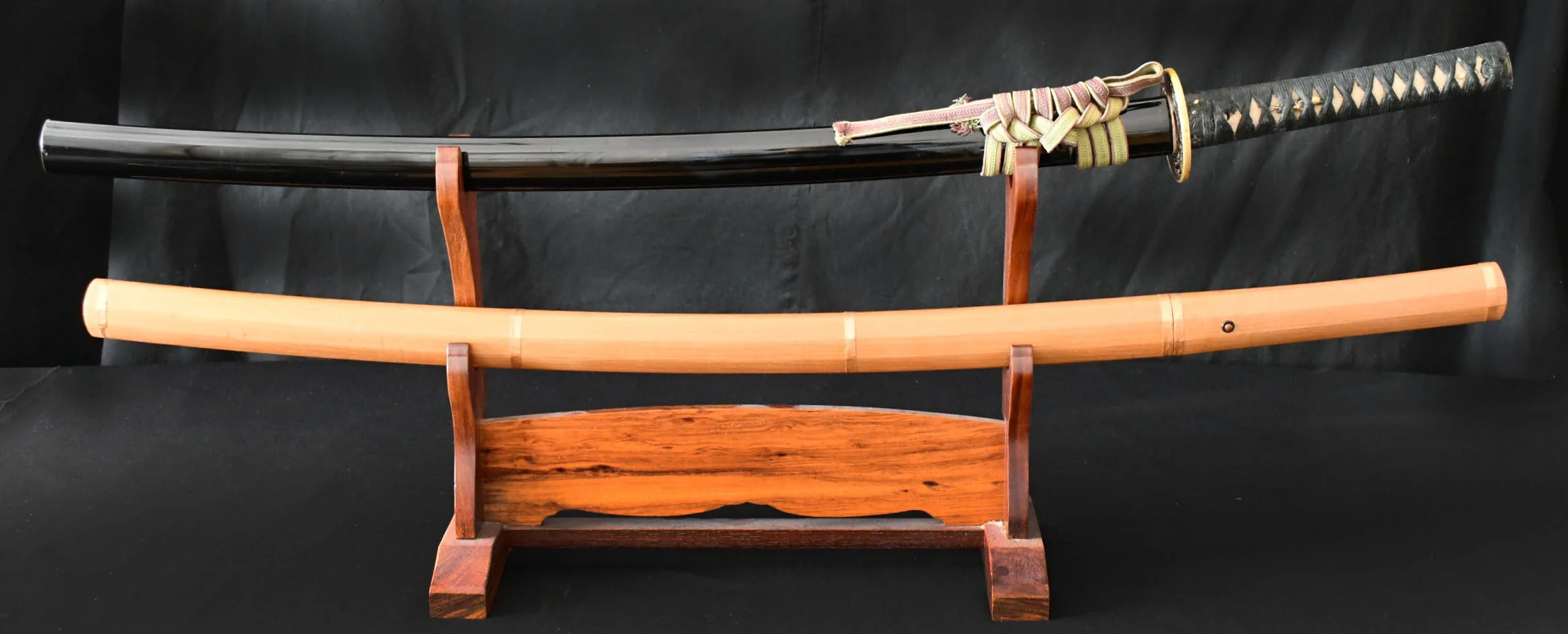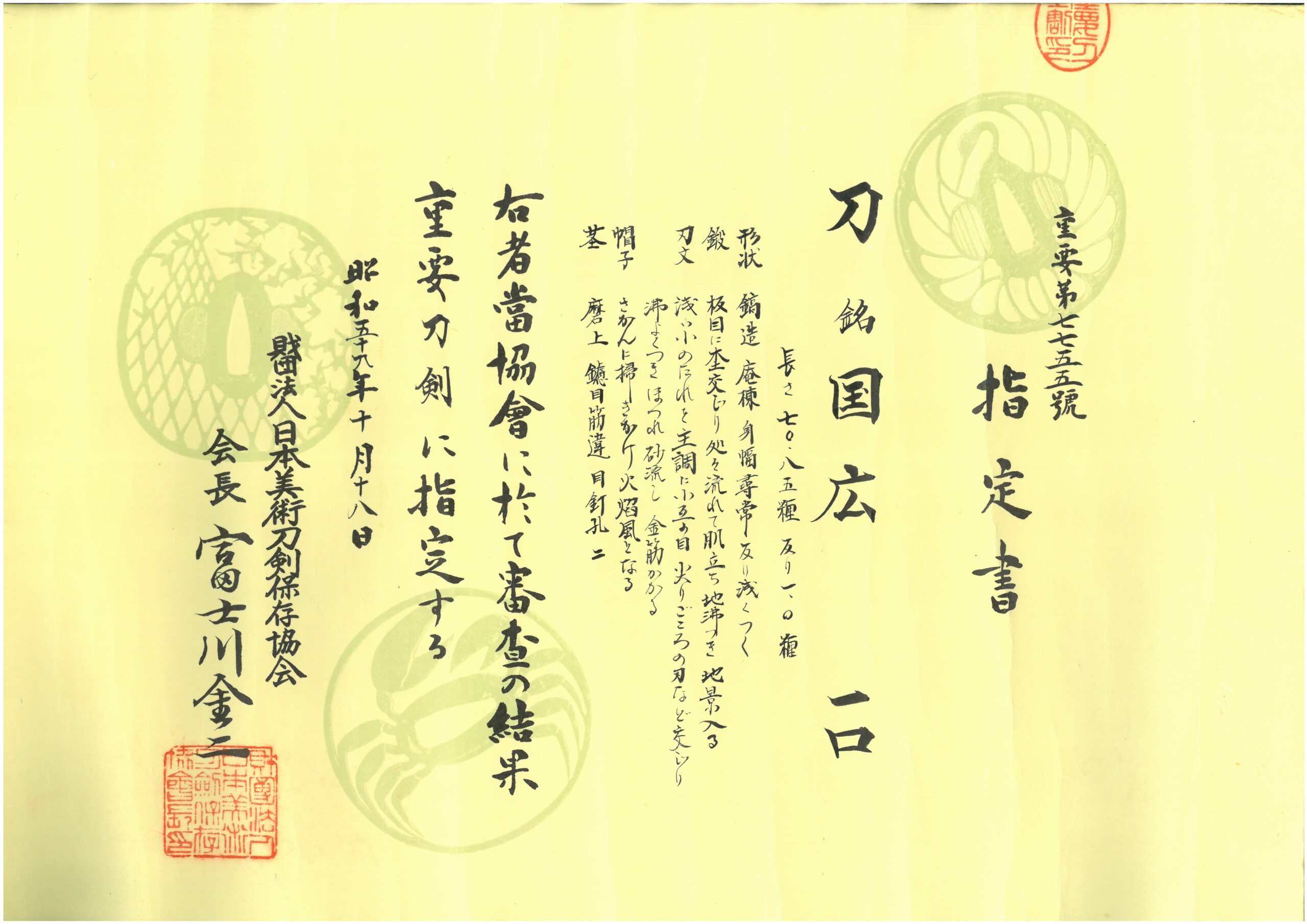

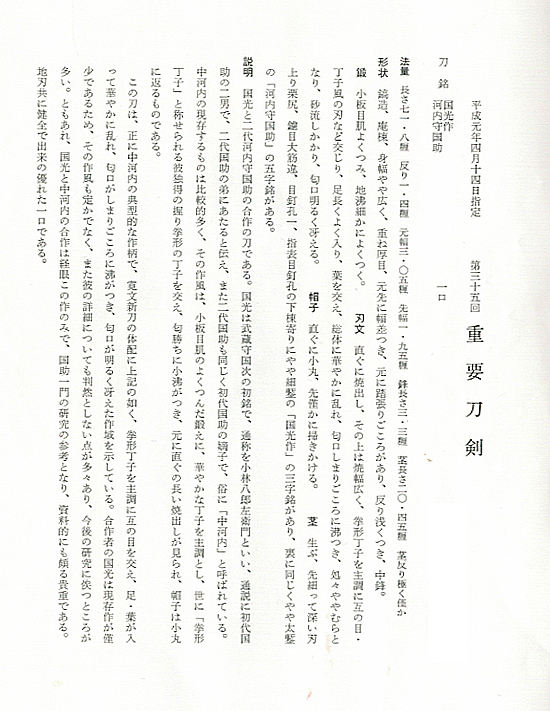
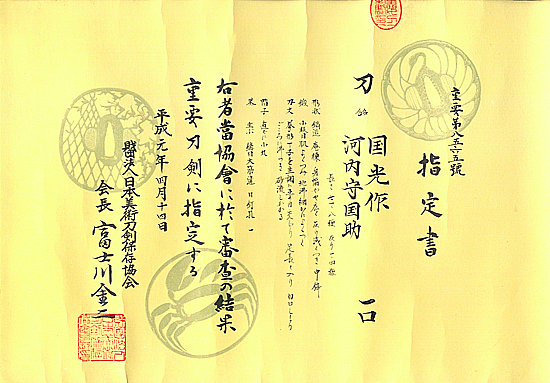
-, 35th Session — Designated April 14, 1989
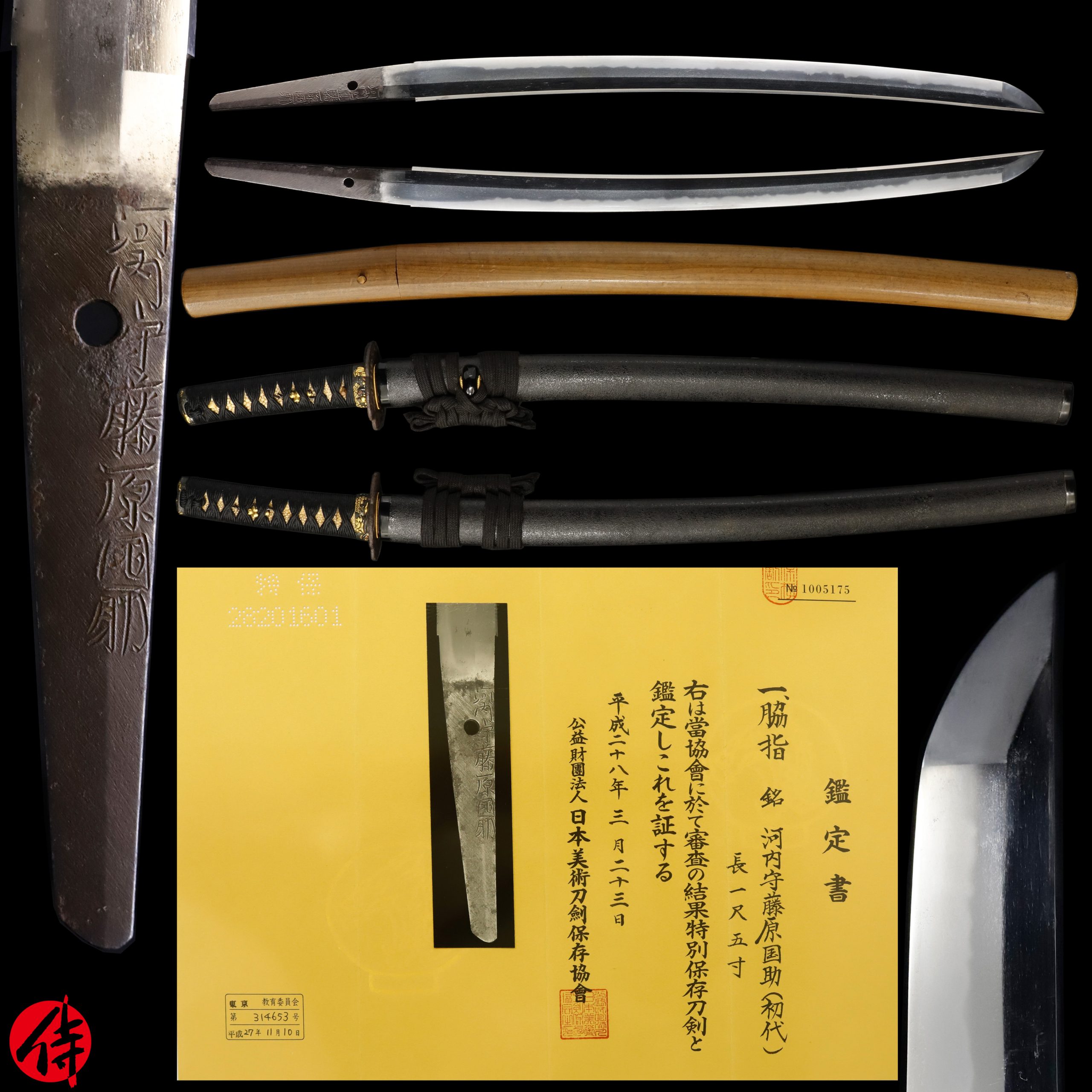
, : Kunimitsu (国光) and Kawachi no Kami Kunisuke (河内守国助)
Measurements 71.8 cm, 1.4 cm, 3.05 cm, 1.95 cm, 3.3 cm, 20.45 cm
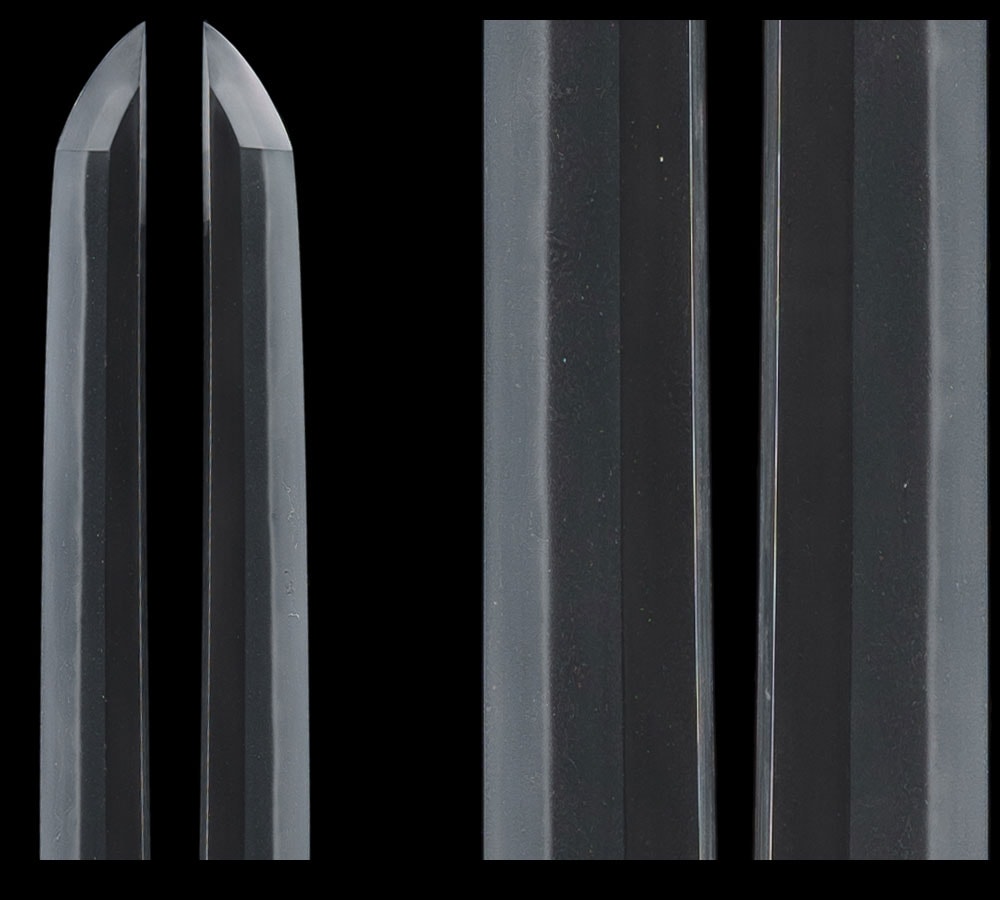
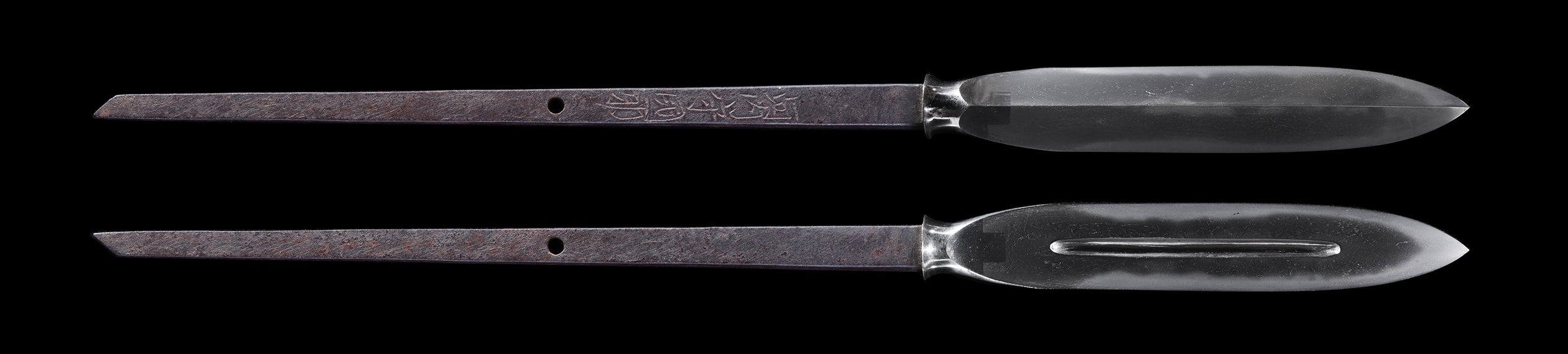
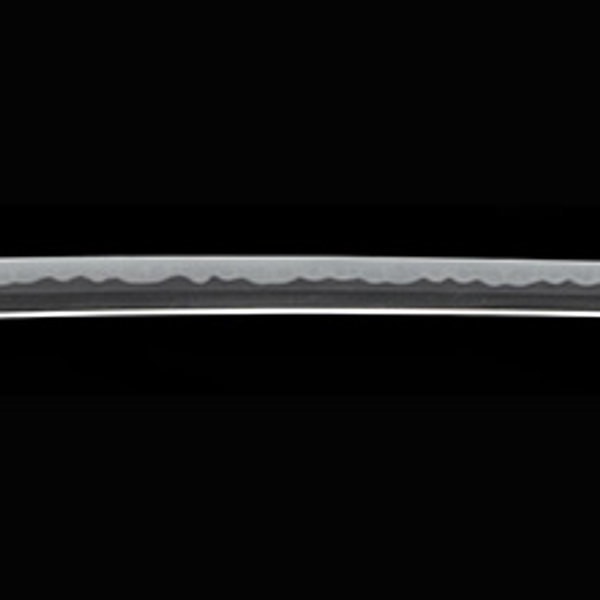
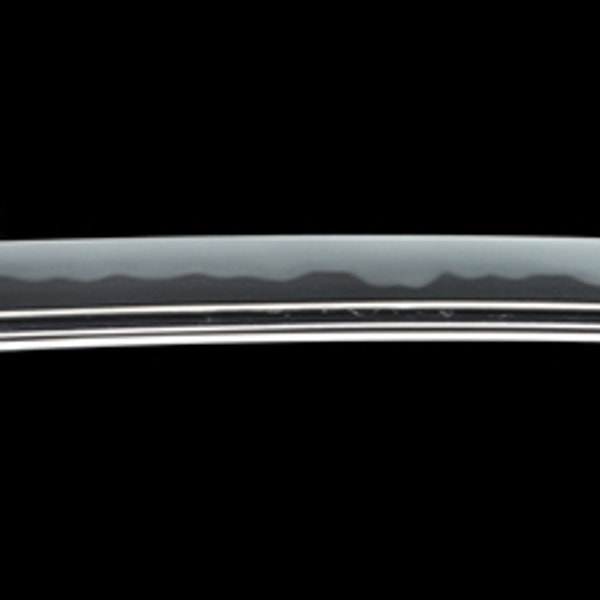
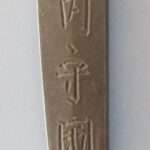
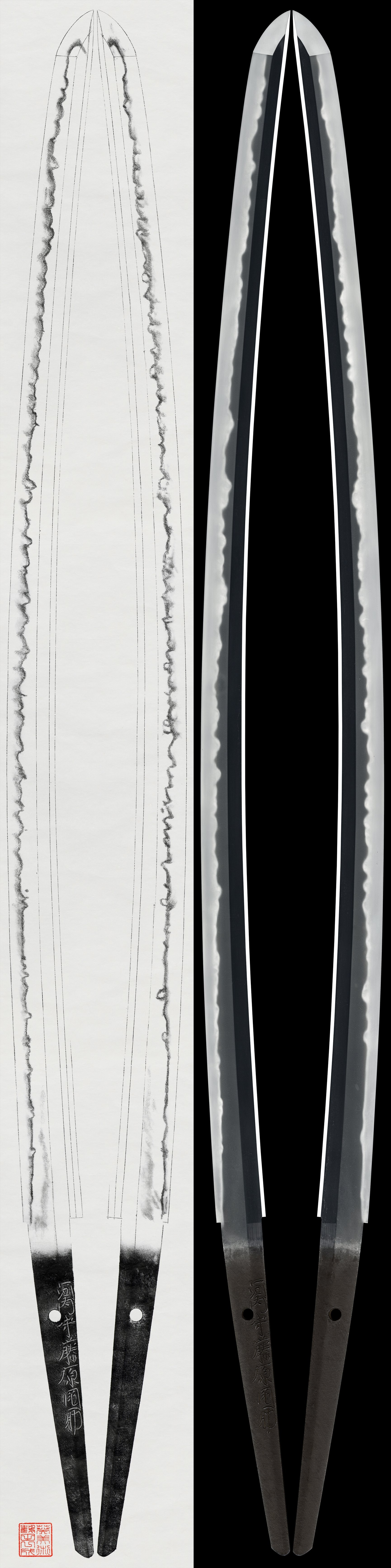
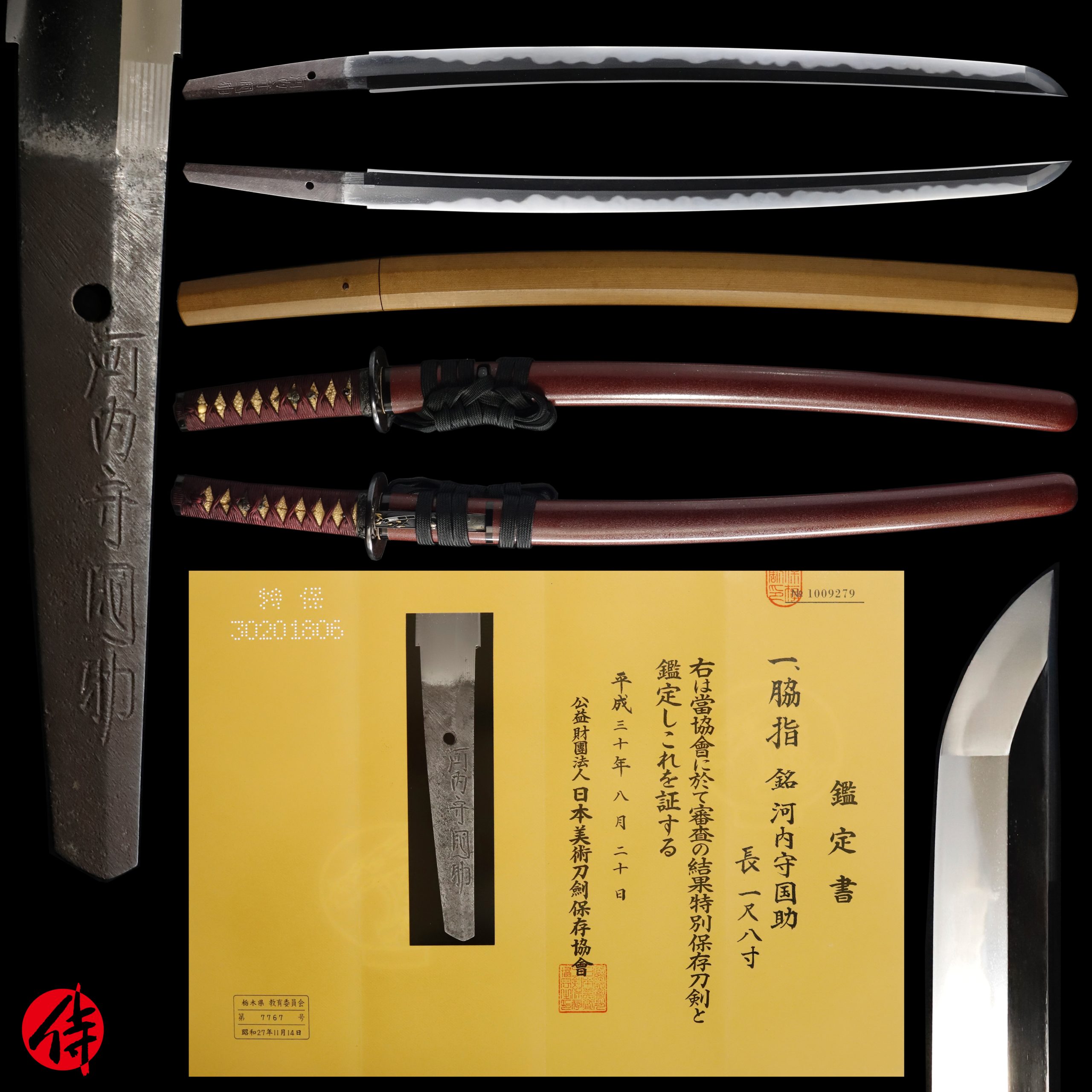
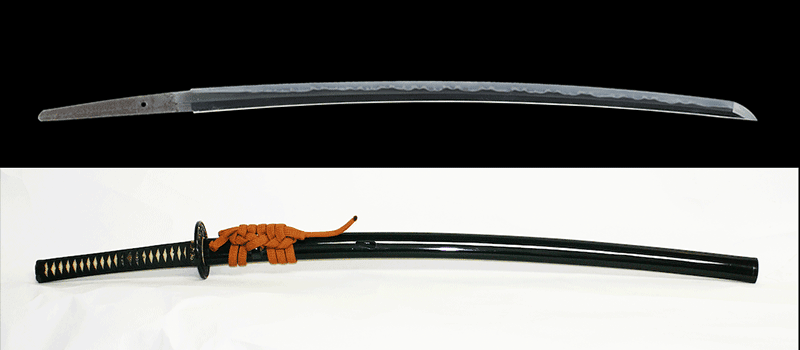
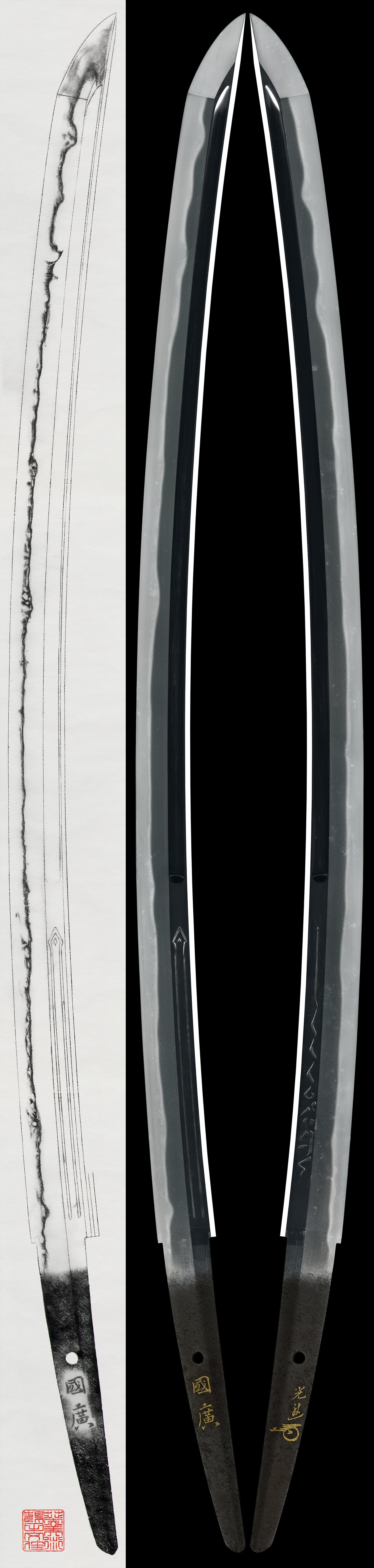
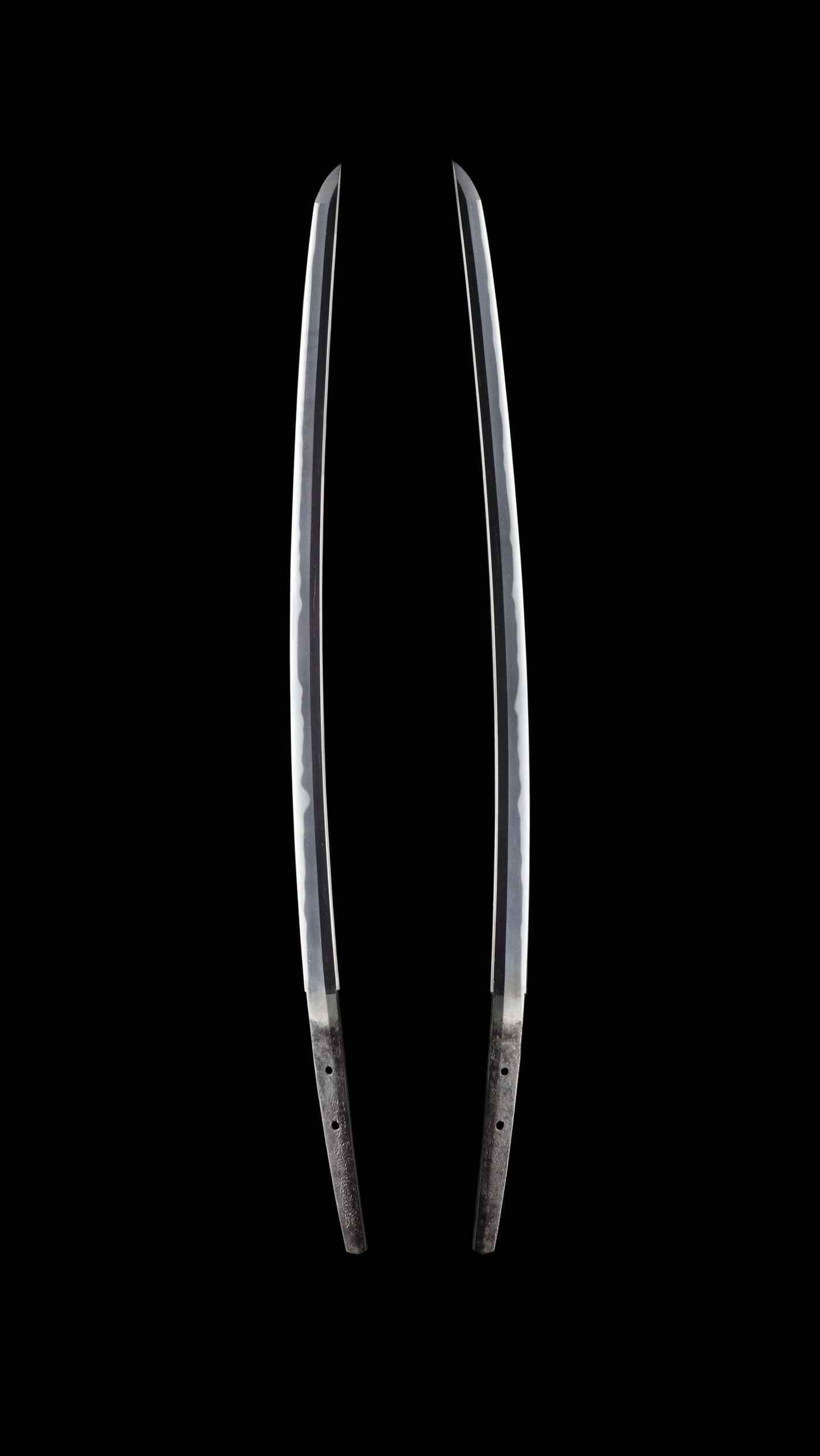
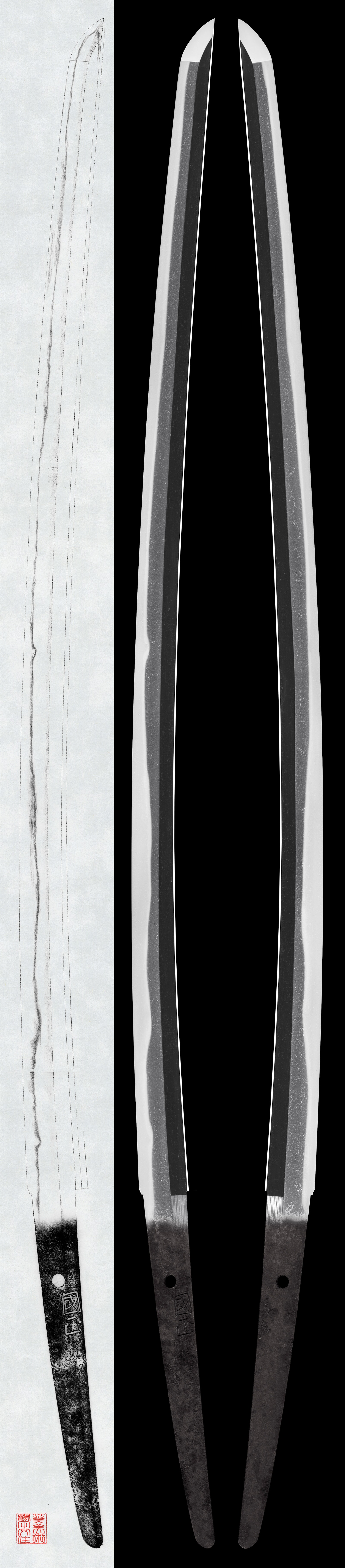
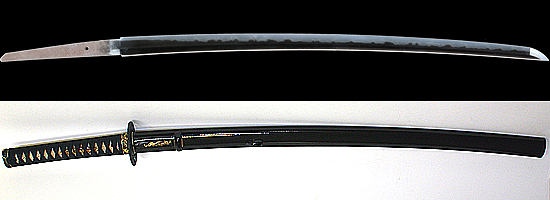
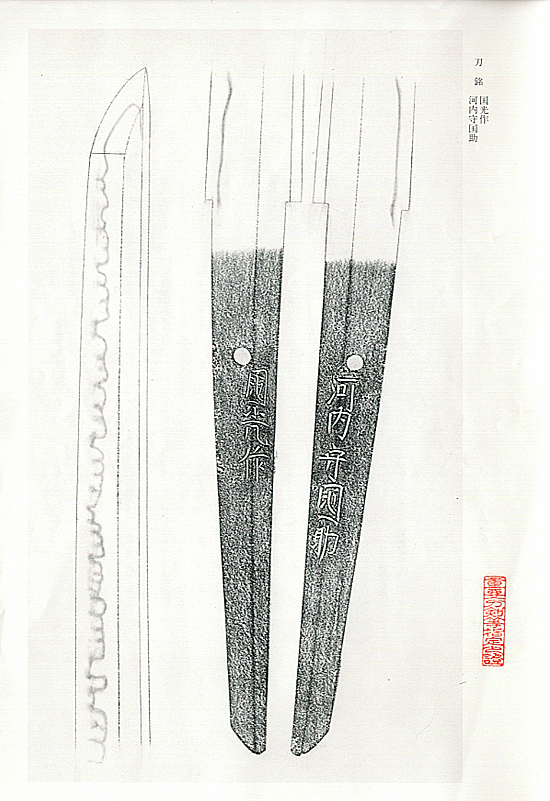
Description Keijō: , ; somewhat wide; rather thick; noticeable taper from base to tip with a suggestion of at the base; shallow ; . : Well-forged , tightly packed; fine adheres well. : Begins with ; above that the becomes broad, featuring as the main theme “ ” (fist-shaped ), with and -like elements intermixed; long enter well, with also appearing; overall it forms a brilliant, florid ; the shows a tightened tendency with forming, becoming somewhat uneven in places; is seen, and the is bright and clear. : with ; the point shows slight . : None. : ; tapers toward the tip; deep ; are large ; one . On the , below the and somewhat toward the , there is a three-character signature “Kunimitsu ” (国光作) cut with a relatively fine chisel; on the , there is a five-character signature “Kawachi no Kami Kunisuke” (河内守国助) cut with a somewhat thicker chisel.
Artisan A collaboration () by Kunimitsu (国光) and the second-generation Kawachi no Kami Kunisuke (河内守国助), known as “Nakakawachi.”
Era period, -era .
Explanation This is a collaborative by Kunimitsu and the second-generation Kawachi no Kami Kunisuke. “Kunimitsu” was the first name used by no Kami Kunitsugu; his common name was Kobayashi Hachirōzaemon. According to the prevailing tradition, he was the second son of the first-generation Kunisuke and thus the younger brother of the second-generation Kunisuke. The second-generation Kunisuke, likewise, is said to have been the legitimate heir of the first-generation Kunisuke, and is popularly known as “Nakakawachi.”
Extant works by Nakakawachi are comparatively numerous. His style is characterized by a tightly forged with fine , and a flamboyant as the main theme, intermixing his distinctive clenched-fist-shaped —known in the world as “ .” The temper tends toward with small ; one often sees a long, straight at the base; and the turns back in .
This is precisely a typical example of Nakakawachi’s workmanship. In keeping with the - form, it displays, as described above, as the main motif with intermingled; and enter, producing a brilliant, lively ; adheres with a tightened tendency in the ; and it shows a workmanship range in which the is bright and clear.
Because extant works by the collaborating smith Kunimitsu are very few, his style is not firmly established, and there remain many unclear points regarding his details; much is left to future research. In any case, this is the only work known to the present examiners that is a collaboration between Kunimitsu and Nakakawachi, and it serves as reference material for the study of the Kunisuke lineage; it is also extremely valuable as documentation. The and are (sound and well-preserved), and this is an excellently made blade.